
 The United States Office of War Information and World War Two Propaganda: Photographic Images of Black Schooling in Washington, D.C.
Abstract
This essay examines photographic images of African American schoolchildren in the racially segregated schools of Washington, D.C. during World War II. Our sample derives from a collection of images taken by the U.S. government’s Office of War Information (OWI) in 1942 intended to document how Black schools were contributing to the war effort on the American Homefront. Through a semiotic analysis of the signs and symbols embedded in visual meaning, we argue that these photographs simultaneously illustrate African Americans’ educational and civic aspirations while also foreshadowing their growing discontent and civil rights activism that would emerge a generation later.
Keywords:
Black students; school segregation; propaganda
Resumo
Este artigo analisa fotografias de estudantes afro-americanos em escolas racialmente segregadas de Washington, D.C. durante a Segunda Guerra Mundial. Nossa amostra provém de uma coleção de imagens produzidas em 1942 pelo Escritório de Informação de Guerra (OWI) do governo dos Estados Unidos, com o propósito de documentar como as escolas negras estavam contribuindo para o esforço de guerra no front doméstico. Por meio de uma análise semiótica dos signos e símbolos presentes nessas imagens, discutimos como essas fotografias não apenas retratam as aspirações educacionais e cívicas dos afro-americanos, mas também antecipam seu crescente descontentamento e o ativismo pelos direitos civis que emergiria uma geração depois.
Palavras-chave:
aluno negro; segregação escolar; propaganda
Resumen
Este ensayo examina imágenes fotográficas de estudiantes afroamericanos en escuelas racialmente segregadas de Washington, D.C. durante la Segunda Guerra Mundial. Nuestra amostra proviene de una colección de imágenes tomadas por la Oficina de Información de Guerra (OWI) del gobierno de los Estados Unidos en 1942, con el propósito de documentar cómo las escuelas negras estaban contribuyendo al esfuerzo de guerra en el frente interno estadounidense. A través de un análisis semiótico de los signos y símbolos incrustados en el significado visual, argumentamos que estas fotografías ilustran simultáneamente las aspiraciones educativas y cívicas de los afroamericanos, al tiempo que anticipan su creciente descontento y activismo por los derechos civiles que surgiría una generación más tarde.
Palabras clave:
estudiante negro; segregación escolar; propaganda
Introduction
Photographic images of schools and schoolchildren constitute valuable artifacts for historians of education, as they have the potential to highlight aspects of school life, childhood, and material culture in ways that can be less visible in written archival sources. In this essay, we examine photographic images of African American schoolchildren in the racially segregated schools of Washington, D.C. during World War II. Our sample derives from a collection of images taken by the U.S. government’s Office of War Information (OWI) in 1942 intended to document how Black schools were contributing to the war effort on the American Homefront (Library of Congress, n.d.). Some of the photographs in this collection would be included in the OWI’s 1943 controversial propaganda pamphlet, Negroes and the War (Owen, 1942), which aimed to elicit Black Americans’ support for the United States’ involvement in World War II (Porter, 2013; Carson, 1995; Winkler, 1974). These photographs, taken by photojournalist Marjory Collins, were originally commissioned to be used as propaganda. When viewed through a semiotic lens, however, they reveal ambivalence and a struggle for agency in the pursuit of improving Black education-especially when considering the historical context in which they were produced and how contemporary audiences might interpret them.
World War II widely impacted all levels of American education, affecting even the youngest attendees of the public school system. Many political and educational leaders believed that the value of democracy inculcated in students needed to be bolstered in order to protect and preserve the nation. This was echoed by the National Education Association in 1944, which stated that schools should teach students how to live according to the principles of American democracy so that they could contribute to a peaceful and equitable world order (Kandel, 1948). However, this message struck a different chord with Black students, who, almost one decade after the end of the war, would still be forced to attend segregated schools. While the feeling of second-class citizenship made some adult Black Americans skeptical about sacrificing for the war on behalf of a nation that had historically marginalized them, Black schoolchildren were subjected to a modified patriotism-centric curriculum during World War II that sought to mobilize the school and its students for the war effort (Porter, 2013; Dorn, 2007).
Three related themes emerge from our analysis of these photographic images. The first is African Americans’ enthusiastic and earnest quest for learning, corroborating what we know about their clandestine campaign for literacy during enslavement and their pursuit of schooling as a means of empowerment in the decades following Emancipation. However, amid decades of separate and unequal schooling, mandated by law in all of the former slaveholding states including the nation’s capital in Washington, D.C., many Black Americans may have been cynical about the prospects of receiving an education that would break societal barriers limiting their opportunities. It would not be until 1954 the Supreme Court of the United States would rule in Brown v. Board of Education that racially segregated schools were unconstitutional-an opinion that also sparked widespread resistance among white Americans. A second theme from these photographs entails the plethora of classroom artifacts for instruction and learning, many of which were intended explicitly for the purpose of mobilizing the school for the war effort on the Homefront. The visibility of these materials, such as defense stamp posters and model airplanes, encourages viewers to believe that Black students and educators were fully in support of the nation’s involvement in World War II-just like thousands of schools across the United States in the early 1940s. However, many African Americans felt some degree of skepticism about sacrificing for war against fascism overseas while continuing to endure systemic racism at home. The “Double V” campaign-calling for “Victory Abroad and Victory at Home” through the defeat of fascism and the advancement of equal rights for African Americans-along with OWI publications such as Negroes and the War, sought to persuade hesitant Black Americans to invest in the war effort. A third theme is the prevalence of the American flag in the classroom, which symbolized the school’s and students’ patriotism as loyal American citizens willing to make sacrifices for their nation. At the same time, however, a shadow of the flag is often visible, which suggests the existence of two nations: one for whites and another for African Americans as second-class citizens. Black students’ national loyalty and pride may therefore be seen as ambivalent. These photographic images encourage us to consider that there were limits to how far Black schools would go in supporting the war on the Homefront. They simultaneously illustrate African Americans’ educational and civic aspirations while also foreshadow their growing discontent and civil rights activism that would emerge a generation later.
Analyzing visual artifacts
Some historians of education have recently embraced photographs as primary source evidence (Bieze, 2008; Grosvenor & Macnab, 2015; Miquel-Lara, Sureda Garcia, & Comas Rubi, 2021; Priem, 2017). Our study incorporates a semiotic analysis on the historical significance of photographs of Black schoolchildren taken during World War II in the nation’s capital, viewing them as artifacts of both propaganda and education. Rooted in the work of semioticians such as Ferdinand de Saussure, Charles Sanders Peirce, and further developed by Roland Barthes, semiotic analysis examines the signs and symbols embedded in visual media and how they communicate meaning (Saussure, 1916; Peirce, 1931), emphasizing the interplay between the signifier (the visual elements of the photograph) and the signified (the ideas or concepts those elements represent). This analysis allows for the exploration of not only what is visible in the image but also the cultural codes and ideologies it represents, involving the dissection of photographs into their denotative and connotative meanings.
According to Barthes, the denotative level addresses the literal content of the image, while the connotative level delves into its cultural and ideological meanings (Barthes, 1977). A photograph of children participating in wartime educational activities, for example, might denote their involvement in patriotic programs, but its connotation could suggest broader themes such as indoctrination, nationalism, or the role of education in societal control, as demonstrated in some of Collins’ photographs. Connotation adds a second layer of meaning to a photograph and happens at different stages of its creation, such as choosing the subject, editing, framing, and arranging the image. This process turns the photograph into a coded message, giving it cultural and symbolic significance beyond its basic content (Barthes, 1977). Additionally, semiotic analysis encourages researchers to consider the role of the audience in interpreting photographs. Stuart Hall’s encoding/decoding model suggests that meaning is not fixed but negotiated between the creator and viewer (Hall, 1980). This perspective invites questions about how contemporary viewers might have understood wartime propaganda versus how modern audiences might interpret these images. Such an approach accounts for the dynamic relationship among the photograph, its creator, and its audience.
Understanding the photograph’s function in its original setting, whether as a tool for propaganda, education, or personal documentation, is important in comprehending where photographs are situated in their historical and social context. Penny Tinkler suggests that researchers must consider the visual elements-composition, lighting, and framing-alongside textual or oral sources to gain a fuller understanding of the image’s possible meanings (Tinkler, 2013). Additionally, Tinkler highlights the value of triangulating photographic analysis with other sources, such as textual records, oral histories, or contemporaneous accounts. This approach enriches the understanding of photography by embedding it in a narrative that considers multiple perspectives. When analyzing these dimensions, researchers are encouraged to ask questions about the intended audience, the photographer’s choices, and the image’s reception over time. One final consideration is reflexivity in the research process. Tinkler cautions against imposing modern interpretations onto historical photographs, advocating for an approach that respects the original context while recognizing the evolving nature of meaning (Tinkler, 2013). This critical, multi-faceted methodology allows researchers to uncover the layered narratives and ideological messages embedded in photographs, making them powerful tools for social and historical inquiry.
We conceptualize these photographs not only as two-dimensional images but also as three-dimensional objects, paying close attention to their temporality. This temporal dimension allows us to explore how photographs, as representations of the past, shape people’s perceptions and uses of them. Central to our methodology is the application of five lines of inquiry, as suggested by Tinkler: identifying basic details, scrutinizing images, considering material evidence, conducting contextual research, and reflecting on meaning. We recognize photographs as tools for exploring social and cultural life, mapping ideas, understanding how and why images are created, and drawing inspiration (Tinkler, 2013). Through these methods, we view photographs as a lens to understand the broader social and historical contexts of efforts to improve Black education during WWII and the pre-Brown era.
Office of War Information (OWI)
On June 13, 1942, United States President Franklin D. Roosevelt established the Office of War Information (OWI) with the purpose of streamlining federal information about the United States’ involvement in World War II to the public. Questions soon emerged about whether the office was primarily for reporting news or spreading propaganda. Government propaganda typically promotes a state’s ideology and the society’s dominant cultural values. It intends to persuade audiences to prize those values and to act accordingly. Although some American citizens and political leaders viewed propaganda with disdain, there is little question that the OWI engaged in propaganda both domestically and internationally. Recognizing that photojournalism was widely regarded as the most factual-and also the most compelling-of all media, the OWI frequently employed photographs to foster public support for the war (Winkler, 1974; Weinberg, 1968; Porter, 2013; Koppes & Black, 1977; Carson, 1995).
OWI’s domestic branch enlisted advertising principles in promoting specific war-related agendas to the public. This decision would alienate some of its writers who had been following more idealistic principles in the publishing of information pamphlets. Many of them would resign from their positions as a result. Internationally, the OWI distributed photographs of American life that depicted the United States as a morally virtuous nation while diminishing its ongoing domestic conflicts. For example, OWI officials directed their staff to portray African Americans “‘in a casual, matter-of-fact way’” (Winkler, 1974, p. 107). This meant that domestic racial conflicts should be cast as a challenge that American democracy could address and resolve in its never-ending march toward societal improvement (Winkler, 1974; Weinberg, 1968).
Marjory Collins was a photojournalist who joined OWI’s domestic branch in October 1942. Although she disdained the photographic genre that would “‘manipulate people into natural looking poses… [in creating] …sensational stories of ordinary people,’” Collins contributed to assignments celebrating the nation’s dominant cultural values (Carson, 1995, p. 126). Yet she retained a critical view of those kinds of visual representations of American life. “‘We were to take pictures to show what a good, kind, country the U.S. was,’” Collins later recollected, “‘In other words, we were to photograph the American Dream: the successful Negro, the quaint democratic small town…powerful productive industry. There was usually something contrived in the photographs we took for the OWI’” (Carson, 1995, pp. 128-129). One prominent aesthetic feature of the “contrived” images of the American Homefront that Collins disliked was the utilization of artificial light. Although Collins did sometimes use that technique, it tended to be less obvious to the viewer. Some of Collins’ visual portrayals of American life, moreover, were neither glamorous nor celebratory (Carson, 1995).
Amid racial conflicts in American cities and on military bases, and a long history of institutionalized racism, some African Americans were skeptical about making sacrifices for the war. The OWI aimed to engage with African Americans through press releases and visual illustrations to Black newspapers, some of which promoted the Double V campaign of defeating fascism overseas and racism at home. The OWI’s most prominent effort to that end was through its 72-page illustrated pamphlet, Negroes and the War. Roughly two and a half million copies were distributed primarily to Black audiences domestically and to 300,000 Blacks in the Armed Forces in early 1943. The pamphlet opened with an essay by African American journalist, Chandler Owen, urging Black Americans to support the United States in the war effort, because German victory would make life appreciably worse for them. Although the cover illustration depicted dozens of Black soldiers at attention, most of the photographs and captions in the volume celebrated African Americans’ cultural achievements (Porter, 2013; Gosnell, 1946).
The booklet proved to be controversial and would contribute to the OWI’s eventual demise. First, some African Americans were skeptical of its narrative of racial progress while minimizing references to centuries of slavery and the endurance of racial segregation. In that sense, the booklet was not advocating for the rights of African Americans. It was instead urging them to support the United States in the war for fear of something worse. Second, many white audiences viewed Negroes and the War with hostility, some of whom labeled the brochure as “communist” and insulting to white Americans. Some of the ensuing political criticism towards the OWI was severe-primarily from Southern Congressmen who accused it of promoting racial equality. In the spring of 1943, Congress slashed OWI’s budget and prohibited it from producing pamphlets intended for domestic audiences. The OWI was ultimately discontinued in 1944, a year before the war ended (Porter, 2013; Gosnell, 1946; Koppes & Black, 1977; Winkler, 1974; Weinberg, 1968).
In this essay, we analyze nine photographs Collins took in 1942 at three Black schools in Washington, D.C.: Slater-Langston (Grammar) School, Banneker Junior High School, and Armstrong Technical High School (DC Historic Sites, n.d.). These were part of a set of 85 images she had taken that are housed in the Library of Congress as Lot 216. Four of Collins’ photographs would be featured in Negroes and the War. Her images utilize the popular “day-in-the-life” format (All About Photo, n.d.), depicting one Black family and various schoolchildren as they engaged in work, play, and home life. While Collins’ work contributed to the photographic study of African Americans as part of the OWI’s propaganda efforts, it also faced criticism from those who believed that her photos showed too much of the “seamy side of life” (Palmer as cited in All About Photo, n.d.).
Black education in Washington D.C. before desegregation
While the postwar era further advanced efforts to increase educational equity for African Americans, particularly through landmark cases such as Brown v. Board of Education and the push for racial desegregation amid strong Southern resistance, Collins’ photographs of Black schoolchildren during World War II show well-maintained Black schools replete with books, supplies, and equipment-not to mention well-dressed Black schoolchildren. These images and depictions were not representative of the state of Black education in other parts of the nation. Prior to World War II, the disparity between white and Black secondary school graduation rates were grim, with African Americans graduating at only one-third the rate of white Americans. This was especially true in parts of the rural South, where high schools for African Americans were rare (Rury & Hill, 2012). Although approximately 1.6 million Black Americans moved from the South to Northern and Midwestern cities during the First Great Migration (Digital Public Library of America, n.d.), spurred by World War I and the prospect of war-related jobs and opportunities, Black educational opportunities in these more progressive cities were, at best, incrementally improved.
During the Second Great Migration, which coincided with World War II, the gap between black and white high school graduates began narrowing as approximately 5 million Black Americans moved to urban centers in the West and North (Gregory, n.d.). This demographic shift, along with other factors, led to increases in Black attendance and graduation rates. By 1980, the white high school graduation rate became only about 20% higher than the Black graduation rate (Rury & Hill, 2012). These trends were evident across the country, with the most dramatic improvement occurring in the South. While the rise in Black high school graduation rates between 1940 and 1980 is often attributed to the end of legalized segregation following Brown v. Board of Education (1954), it frequently overlooks the equally critical efforts Black communities undertook for educational equity within the framework of segregation prior to 1954.
These initiatives, which sometimes resulted in walkouts and protests, aimed to improve the conditions and quality of schools attended by Black students, ensuring they could receive an education equivalent to that of any other child in the U.S. The overshadowing of these initiatives can be attributed to the disruptive and polarizing nature of school desegregation, particularly from the perspective of White Americans, many of whom engaged in various forms of resistance. Black demands for the improvement and availability of secondary schools had been both widespread and impactful during the pre-Brown era, though often eclipsed by the struggles of post-Brown integration efforts (Rury & Hill, 2012). If not for these earlier efforts, which often resulted in unmet demands, the National Association for the Advancement of Colored People (NAACP) might not have strategically shifted from litigating to improve segregated schools to demanding integration with white schools.
In Washington D.C., the African American population before and during World War II remained relatively stable, comprising about 25-35% of the general population. The most significant demographic shift occurred in the 1950s when Blacks became the majority (Miller & Gillette, 1994). Many African Americans from North Carolina and other southern states had moved to Washington, D.C., during the Second Great Migration (Schweitzer, 2016). Although the nation’s capital was still culturally considered part of “the South,” as a border city, it was less overt in its segregation practices, lacking the prominent "Black" and "White Only" signs common in the Deep South. Nevertheless, segregation in schools and public spaces remained widespread. Black newcomers to the area might have been surprised and confused to find that, although public transportation was integrated, restaurants, movie theaters, and clothing stores were not. Moreover, there were no posted signs affirming formal segregation practices. Instead, residents of Washington, D.C., including African Americans, maintained mixed segregation practices primarily through custom and regulation rather than officially posted signage (Miller & Gillette, 1994).
By the start of World War II, however, this began to change as students from Howard University, arguably the nation’s most prestigious historically Black college and university, organized sit-in campaigns to protest the racial segregation still prevalent in establishments across the city. They sought to challenge the customary practice of barring African Americans from public establishments in an effort to secure true democracy domestically, paralleling the U.S.’s fight for democracy internationally. World War II magnified the irony of the United States fighting for freedom abroad while continuing to treat African Americans as second-class citizens at home. This precedent of maintaining separate establishments for Blacks and Whites inspired Howard students to support the Double V Campaign. They believed that using sit-in techniques to push for desegregation could serve as a model for others across the country. These sit-ins predated the better-known student sit-ins of 1960 in Greensboro, North Carolina, and were driven by the conviction that the same spirit of unity and determination fueling the war effort could also be harnessed to fight for equity at home (Brown, 2000). By the following decade, segregation began breaking down more quickly in Washington, D.C., than in other Southern cities.
Photographic Depictions of Black Schooling in the Nation’s Capital
Quest for literacy and empowerment
Since before the Emancipation Proclamation was issued in 1863, enslaved African Americans in the South had been learning to read and write clandestinely, risking severe corporal punishment if they were caught. After emancipation, those who had learned to read while enslaved, known as “rebel literates” (Anderson, 1988, p. 17), led the movement for freed African Americans to continue teaching one another to read and write as a means of advancing their socio-economic mobility and access to opportunities (Rury & Hill, 2012). The ongoing thirst for literacy-extending beyond just reading and writing to a broader desire for learning-is evident in the photos in this section.
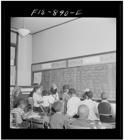
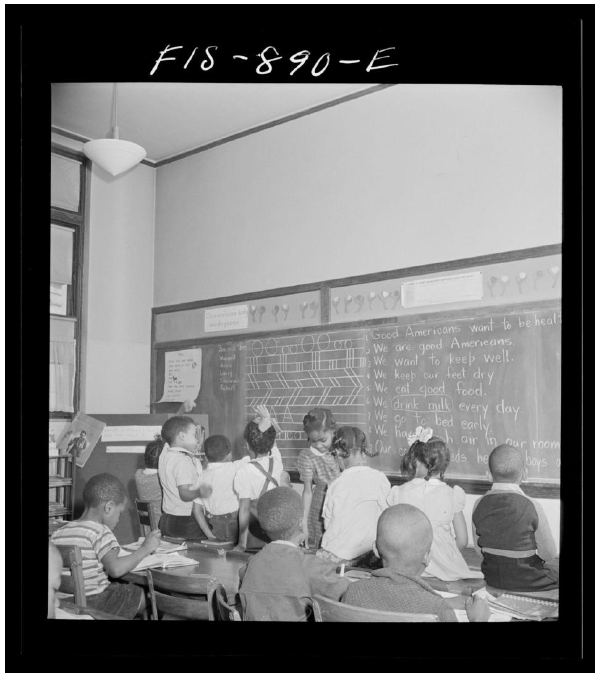
Washington, D.C. Discussion in a Negro grammar school. March 1942. Photograph by Marjory Collins.
Collins’ photo in Figure 1 depicts eleven Black schoolchildren in a first-grade classroom, with 8 of them positioned at the front of the room, all but one facing the blackboard. The remaining 3 children are seated at their desks. The children appear engaged, and their movement is evident: one standing boy’s hands appear blurry, while a standing girl has her hand raised. Another standing girl, who is not facing the blackboard, seems to be focused on an item on a desk, possibly as part of the activity. The blackboard contains a slate with nine sentences and spaces for students to practice writing with chalk. To the left of the blackboard, a poster board displays a “scrapbook” made by a student named Kenneth, featuring a photograph of a white soldier on the cover, reflecting patriotic imagery, as does the content of the blackboard sentences used in the reading and writing lesson. These sentences emphasize hygiene and healthy habits-dry feet, nutrition, sufficient sleep, well-ventilated living spaces, and drinking milk-connecting these practices to good citizenship and patriotism.
Additionally, the left-hand side of the blackboard lists five students’ names under the heading “Spic and Span,” possibly indicating their responsibility for maintaining classroom cleanliness or recognizing them for neatness and orderliness. Most of the students appear to be independently following the lesson prepared for them. It is possible that three children on the left side of the photo, with raised hands, are seeking the teacher’s response (who is not visible). The photo conveys Black schoolchildren, even as young as first graders, aspire to be good American citizens. They are portrayed as literate, serious, and well-behaved. This image is also indicative of African Americans’ deep value of literacy as a means of empowerment and desire to take ownership of their education, even during periods of enslavement and racial segregation. According to de Saussure’s (1916) semiotic theory, the written text on the chalkboard functions as a sign, in which the physical words convey a signified concept of American identity, health, and discipline, reinforcing social values through structured language. The image represents the children’s earnest motivation to learn and their eagerness to pursue education. Furthermore, the photograph reflects the OWI’s intent to depict young Black schoolchildren as both literate and patriotic, reinforcing the idea that they were good citizens during a time of national crisis. Such portrayals, however, took place within the reality of a racially segregated city, which remained so by the end of the war despite multiple protests by the Black community and white allies to end segregation practices (Miller & Gillette, 1994). Most Black viewers of this image during the early 1940s would have seen it as highlighting something they already knew: the growing improvements in their children’s health and literacy. The great migrations to the North and West, including to Washington, D.C., despite its mixed segregation practices, led many Black Americans to urban areas with better education and healthcare systems.
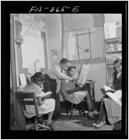
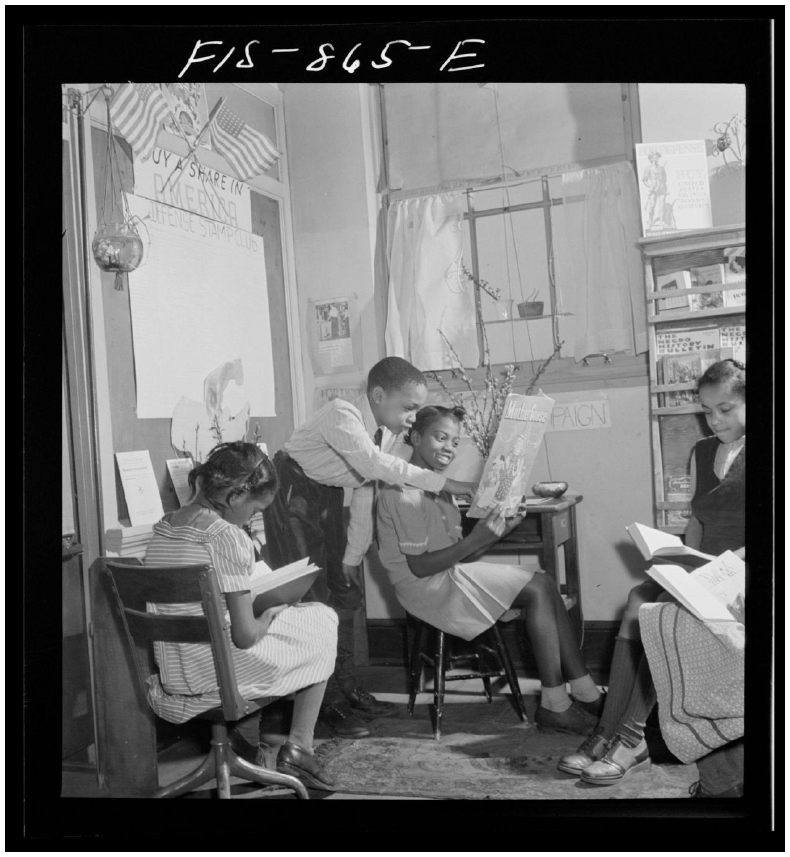
Washington, D.C. reading corner in a Negro grammar school classroom. March 1942. Photograph by Marjory Collins.
The theme of literacy and empowerment is also evident in Figure 2 depicting five Black elementary-aged school children occupying a corner of the classroom, which the teacher has designated as a reading area. The space is defined by a rug visible at the bottom of the photograph. Artificial light, coming from the right of the camera, illuminates the faces of the two central subjects-a girl and a boy reading an oversized, illustrated Mother Goose nursery rhymes book. Three other girls are seated with books on their laps, though the two girls on the right are only partially visible and the other has her book turned toward the viewer. The books they are holding appear to be lengthy and likely not illustrated. In the background, there is a wooden book/magazine rack containing various reading materials, including issues of The Negro History Bulletin. Atop the rack stands a poster depicting a Revolutionary War soldier urging people to buy U.S. Savings Bonds and Stamps for national defense. On the blackboard on the adjacent wall is a handmade poster titled “Buy a Share in America,” with the phrase “Defense Stamp Club” below it. The poster lists the names of students who have purchased defense stamps, and two small American flags are crisscrossed near its top.
This photograph highlights the capability and interest of young Black children in reading independently and collaboratively, set against a backdrop that reinforces wartime mobilization on the Homefront. The reminder to buy defense stamps, prominently positioned behind the central boy and girl, underscores the idea that, regardless of age or youth, all Americans must make sacrifices for the war. Additionally, the oversized nursery book implies that the level of comprehension or understanding is secondary to instilling a sense of patriotism. The symbolism suggests that even a basic, elementary engagement with reading aligns with the larger message of national responsibility. While the central children read a simple nursery book, the other girls are holding more substantial books in terms of length and content. However, the disparity in the types of books being read raises a question: why is there such a stark difference in the reading materials when all the children appear to be roughly the same age? Tinkler argues that working with photos that generate questions (as opposed to using them to answer questions as a means to an end) is where scholarly value emerges and can be further developed (Tinkler, 2013).
Knowing that Collins disdained artificial lighting, she could be hinting to the viewer to pay attention to the details to recognize that it might be a staged photograph. If the photo was, in fact, not staged, then the girls on the outskirts of the frame could represent more literate or intellectually advanced individuals, suggesting a division within the group that was reflective in the broader societal distinctions between more literate, higher-class Black individuals and those less privileged. From the end of World War II through the Civil Rights Movement, the Black middle class expanded in unprecedented ways. Indeed, Black viewers of this photograph may have more readily recognized the differences in the children’s reading materials as evidence of Black students-and, by extension, their families-striving beyond working class status (Cole & Omari, 2003). As Tinkler notes, what viewers see in photographs is “determined by the discourses and everyday knowledge within which the image is situated” (Tinkler 2013, p. 6). The positioning and framing of the children highlight these nuanced dynamics, inviting the viewer to consider the complexities of literacy, class, and patriotism within the Black community during the war era.
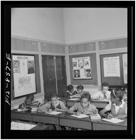
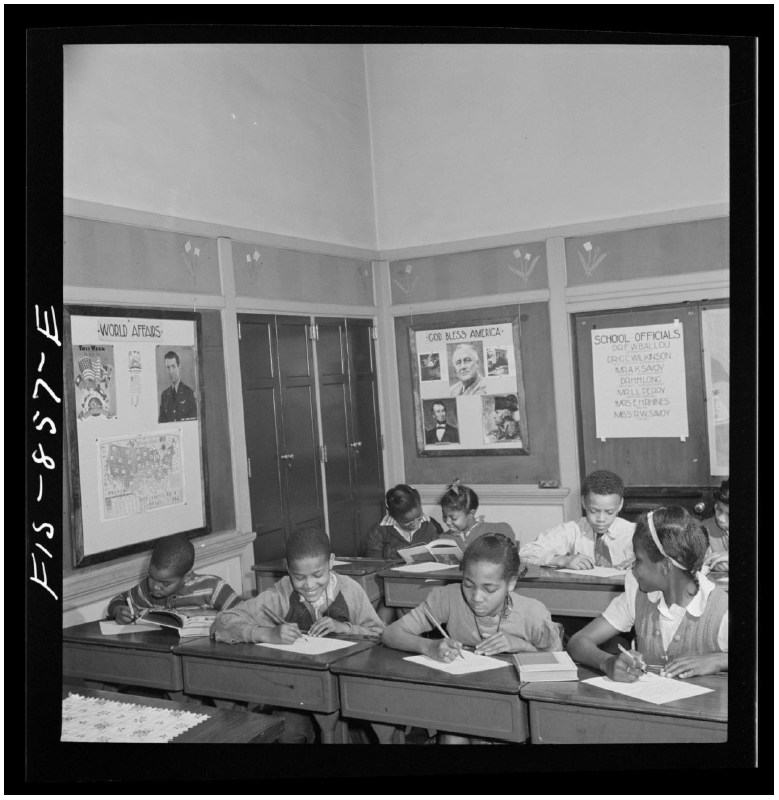
Washington, D.C. composition class in a Negro grammar school. March 1942. Photograph by Marjory Collins.
The absence of a teacher in Figure 3 reinforces a strong sense of independence, continuing to convey messages of self-empowerment. The photo captures two rows of students seated at their desks, likely engaged in completing an assignment. The students are positioned in the bottom third of the frame. Above them, the middle third is occupied by posters titled “World Affairs,” “God Bless America,” and “School Officials.” The top third of the image is a blank expanse of white wall space. The composition is illuminated by artificial light, with no discernible use of flash, and the perspective is from the teacher’s desk. The image suggests that Black schoolchildren are literate, diligent, and committed to their education. Their neat attire and focused demeanor underscore the significance of academic success. The “God Bless America” poster prominently features President Franklin D. Roosevelt at the center, with Abraham Lincoln depicted in the lower-left corner and George Washington depicted in the lower-right corner. Positioned above the students, these white figures - both historical and contemporary - serve as visual symbols of authority and oversight, reinforcing a hierarchical dynamic. According to Peirce’s (1931) triadic model of signs, this placement evokes a historical parallel with slavery, in which those in power exercised surveillance over the oppressed to enforce compliance.
Regarding these figures on a connotative level, we ask: What did the images of Roosevelt, Lincoln, and Washington mean to the Black schoolchildren in the photo, as well as to Black viewers of the photograph? Roosevelt’s image is the largest, likely because he was the sitting president at the time. Lincoln and Washington are smaller and placed at the bottom. Yet both were prominent figures in American history-Lincoln for his role in the emancipation of enslaved people, and Washington as the nation's first president. Tinkler’s analytic framework orients our interpretations to the historical period in which the photo was taken (Tinkler, 2013). As such, Roosevelt’s time as president, marked by the Great Depression and World War II, left an ambiguous legacy for African Americans. Although African Americans pressed for change through initiatives such as the Double V campaign, the Roosevelt administration limited its response to prohibiting discrimination in defense-related industries, without confronting wider structural inequalities affecting Black life (Sutherland, 2020). Additionally, while figures such as Lincoln were upheld as prominent historical actors within white-patriarchal American narratives and taught as national heroes in schools, their symbolic authority was not necessarily revered by Black communities in the same way (Hudson, 2008).
Lastly, the blank white wall occupying the top third of the image introduces a contrasting interpretation. It symbolizes the students’ potential for intellectual and personal growth, suggesting a future beyond the limitations imposed by the educational and societal structures depicted in the middle third. The blankness of this space does not come under the authority of the figures on the poster but instead invites the possibility of progress and achievement unbound by historical constraints. In the bottom-right corner, a female student glances back, her gaze directed toward a door situated near her classmates. The photographer captures a poignant moment when her expression and posture suggest an awareness of education as a pathway to liberation. The door, symbolically positioned in the frame, represents an escape from restrictive learning shaped by white ideologies, such as the notion that democracy should be defended abroad but not equally pursued at home. From her position in the photo, she shares the point of view of the audience and sees the entirety of the classroom as the viewer does. The white wall space above her underscores this vision, offering a powerful metaphor for untapped potential and the possibility of transformation.
Mobilization through classroom artifacts
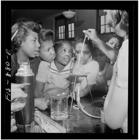
Washington, D.C. science class in a Negro high school. March 1942. Photograph by Marjory Collins.
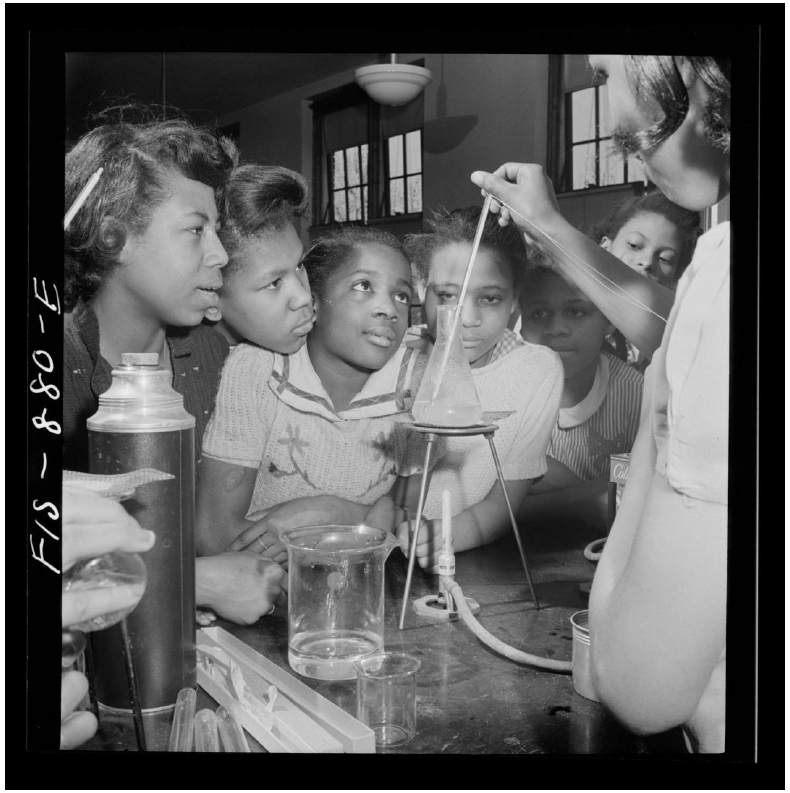
The facial expressions of the female students in Figure 4 capture the moment when Black students’ earnest quest for learning extends beyond mere literacy. Their expressions of concentration and awe while observing the laboratory experiment before them exemplify this generation’s continuation of educational empowerment. This juncture intersected with the nation’s need to infuse existing courses in the sciences, mathematics, and physical education with war-related topics. Additionally, more than two-thirds of the nation’s high schools adopted a Victory Corps for community service and conserving resources. Schools also became the sites for war-related activities such as selling war bonds and stamps, registering soldiers, assisting the Junior Red Cross and disseminating ration books.1 In these ways, World War Two’s impact on American schools was both swift and pervasive (Cohen, 1992; Stanford University School of Education Faculty, 1943; Studebaker, 1942).
In Figure 4, six African American girls gathered around a laboratory table, actively engaged in a chemistry demonstration involving a glass beaker and a liquid substance, appearing both interested and capable of understanding the activity. It is conducted by a female who is either a teacher or another student, who is partially visible on the right side of the frame. The students are closely grouped together, leaning in to watch the experiment, which serves as the central focus of the image. During the early 20th century, science in the United States increasingly had become a male-dominated field, a trend reflected in secondary school curricula (Tolley, 2003). These students’ faces, nearly all fully visible, with particular emphasis on the third girl, express curiosity, engagement, and a sense of wonder as they focus on the beaker and the individual conducting the demonstration. Above and behind them are classroom windows that represent science as a pathway out of the prescribed limitations imposed by white American expectations. The photographer captures their focused attention and the hands-on nature of the activity, emphasizing their ability to engage deeply in science rather than simply being subjected to its forces. Given that an almost identical photo was included in Negroes and the War and considering the OWI pamphlet’s aim to foster Black Americans’ support for World War II, the image may have been intended to depict Black females as fully capable of excelling in scientific experiments and work.
This image symbolizes resilience and the pursuit of knowledge, particularly in science education, during a time when African American students faced significant barriers to accessing educational resources. It illustrates that Black schoolchildren had a genuine interest in and aptitude for learning about chemistry and the physical sciences. Tinkler would describe our interpretation as engaging with the institutional framework of reflecting on meaning, as we rely on our understanding of the Negroes and the War pamphlet, which aimed to produce meaning through the power of publication (Tinkler, 2013). Additionally, by identifying the photograph’s placement within the pamphlet, analyzing its role in World War II propaganda, and examining the significance of science education during the war, we underscore the contextual research strand of Tinkler’s key lines of inquiry-an approach that enables us to draw out the image’s connotative meanings. Black viewers of this photo may have responded to it with the same attitude as in Figure 1: aware that they were fully capable of excelling in any academic field, yet denied the social equality necessary to do so. In contrast, white viewers may have perceived the image as a threat to their own livelihoods, given that Black Americans had historically been restricted to limited occupational roles following emancipation.
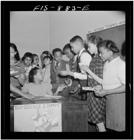
Washington, D.C. students selling war stamps in a Negro high school. March 1942. Photograph by Marjory Collins.
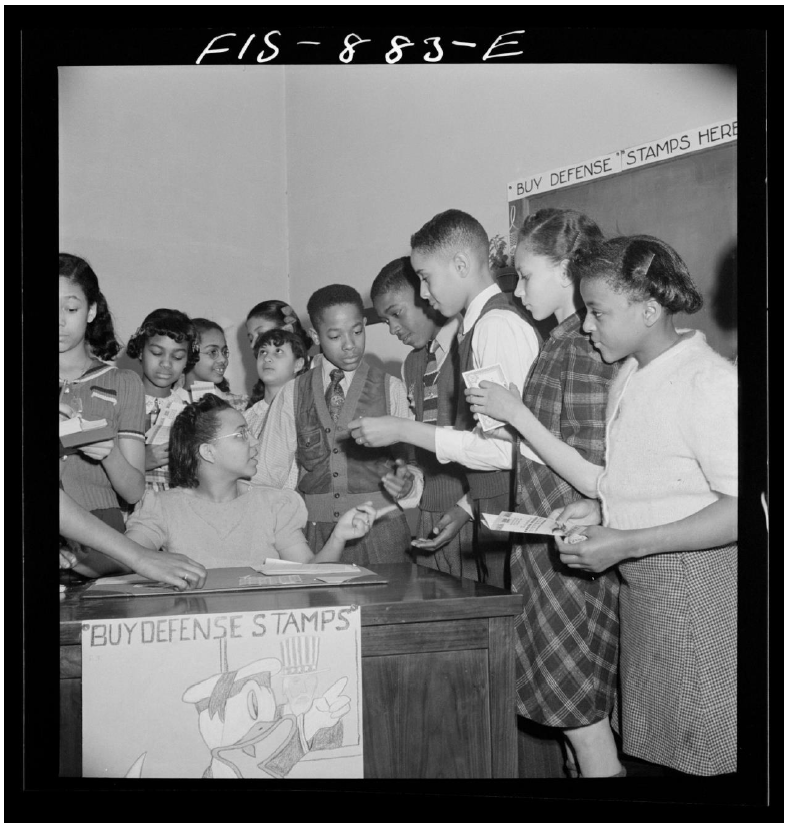
Engaged in selling and purchasing defense stamps within a school setting, the eleven Black schoolchildren in Figure 5 serve as a prime example of domestic war mobilization efforts in schools. The students (pre-adolescent boys and girls), likely in junior high school, are gathered in one corner of a classroom, with 9 of them standing in line to buy defense stamps. As with Figure 2, Collins continued to capture images that both directly and indirectly reinforce the idea that students should support the war financially by purchasing defense stamps. One girl is seated at a polished wooden table, sized more like a teacher’s desk than a student’s, and is pointing her finger while making eye contact with one of the standing boys. Her seated position and gesture convey a sense of pedagogical authority, while the others remain standing, seemingly waiting to complete their transactions. Another female student, standing next to the seated girl, appears to be recording the transactions. The students’ actions give them an air of adulthood or respectability as citizens. However, a hand-drawn poster tacked to the front of the table, featuring an illustration of Disney’s Donald Duck, serves as a reminder that they are still children.
In the poster, Donald Duck is depicted speaking the words “Buy Defense Stamps” with an upward-pointing finger mirroring the seated girl’s gesture. Behind him, a bearded figure representing “Uncle Sam” adds a longstanding personification of the United States to the imagery. This combination of a popular children’s character and a national symbol underscores that Black schools are contributing to the nation during a time of crisis. In this photograph, the children are portrayed as loyal and generous citizens, despite the pervasive exclusion and discrimination they faced. Yet it remains unclear how much resentment or indifference many Black youth and Black Americans may have felt in light of this contradiction. When we take this historical context into account, Tinkler posits that we derive polysemic meanings (Tinkler, 2013). In other words, we began with the photograph’s literal meaning-what is directly depicted-and interpreted it through a historical lens to arrive at a more nuanced understanding. Historians of a different field might offer additional or alternative interpretations of what is depicted. As historians of education, we pay particular attention to the students’ ages, the activities in which they are engaged, and any visible writing that can help us understand what is taking place. By capturing images of Black schoolchildren engaged in wartime activities, Collins may prompt viewers to reconsider the notion of a unified and universal patriotism, suggesting instead that such patriotism is conditional and open to scrutiny.
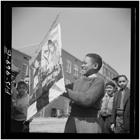
Washington, D.C. pupil of Banneker Junior High School with a kite he made. March 1942. Photograph by Marjory Collins.
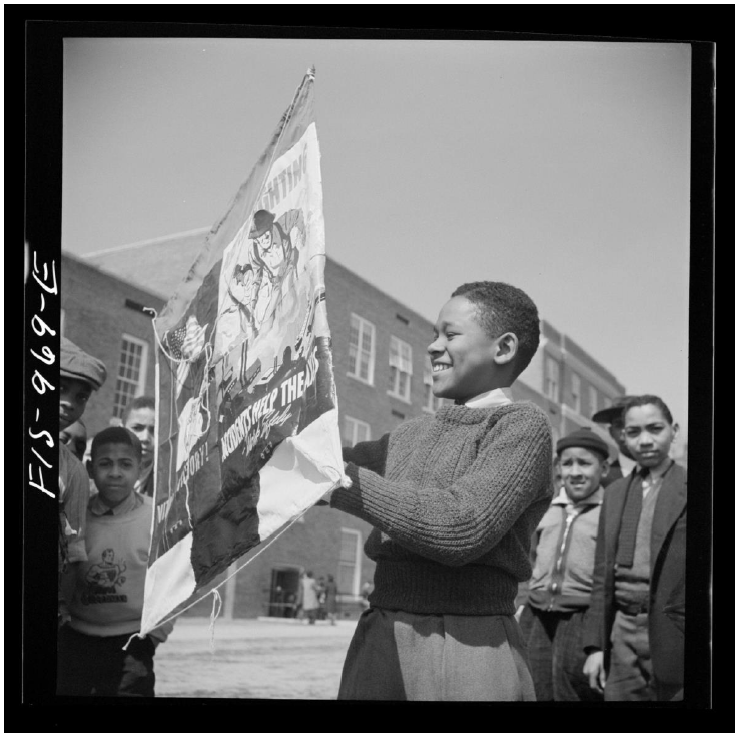
Emblems of patriotism-flags, posters, and, in this case, a male student with a self-made kite displaying wartime propaganda-often serve as visual cues of nationalistic support and engagement. Standing outside a multi-storied school building, the student proudly looks at his kite composed of two war-related posters. One of the images on the banner is an American flag, while the other contains text reading “Victory!” and “Incidents Help the Axis-Work Safely.” The text urging people to work safely is accompanied by an image of a domestic factory. In the upper-right portion of the banner, there is an animated illustration of two soldiers in combat. These visual elements on the kite serve as signifiers, conveying specific ideological messages about loyalty and duty, as Saussure (1916) might note. The boy is smiling, his countenance radiating a sense of accomplishment, which suggests that he assembled the flag as an act of patriotism. He is the only one smiling, in contrast to the expressions of his peers, who observe him and the banner with a mix of curiosity and perhaps a hint of mystery.
Behind and on either side of the flag-bearing boy, multiple classmates, all boys, are visible, appearing to look directly at the photographer or camera. As the central figure holds the banner, he gazes at it from behind. It is unclear whether his smile reflects pride in the banner itself or something on its reverse side, hidden from the audience. The boys surrounding him offer no additional context, emphasizing his isolation in both his smiling expression and his act of flag-holding. The text on the banner is part of wartime propaganda urging workers to avoid accidents to maintain industrial efficiency. The underlying message warns that accidents would slow production and inadvertently aid the enemy-the Axis Powers. This message raises questions about how some Black Americans during the war may have perceived the framing of worker safety solely in terms of its utility to the U.S. war effort. With this point in mind, perhaps the surrounding boys are expressing skepticism. It may be to their chagrin to observe their fellow classmate fully embracing such propaganda, knowing that the reality after the war would likely see the safety and well-being of Black Americans cease to be a priority.
Tinkler builds upon traditional semiotic analysis by incorporating Michel Foucault’s intertextual approach, which involves reading the photograph in relation to other images and texts from the same period. In this case, we focus on the slogan “Incidents Help the Axis.” World War II propaganda often relied on similar slogans such as “Stamp Out the Axis” and “Careless Matches Aid the Axis” (Library of Congress, n.d.) to mobilize the public on the Homefront. This messaging appears to conflict with the goals of the Double V campaign, which sought to draw attention to the hypocrisy of fighting for freedom abroad while denying it at home. This tension underscores a broader awareness of the systemic inequities that persisted despite calls for patriotic unity during the war.
Shadowy implications of second-class citizenship
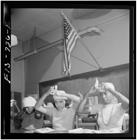
Washington, D.C. first aid class at Banneker Junior High School. March 1942. Photograph by Marjory Collins.
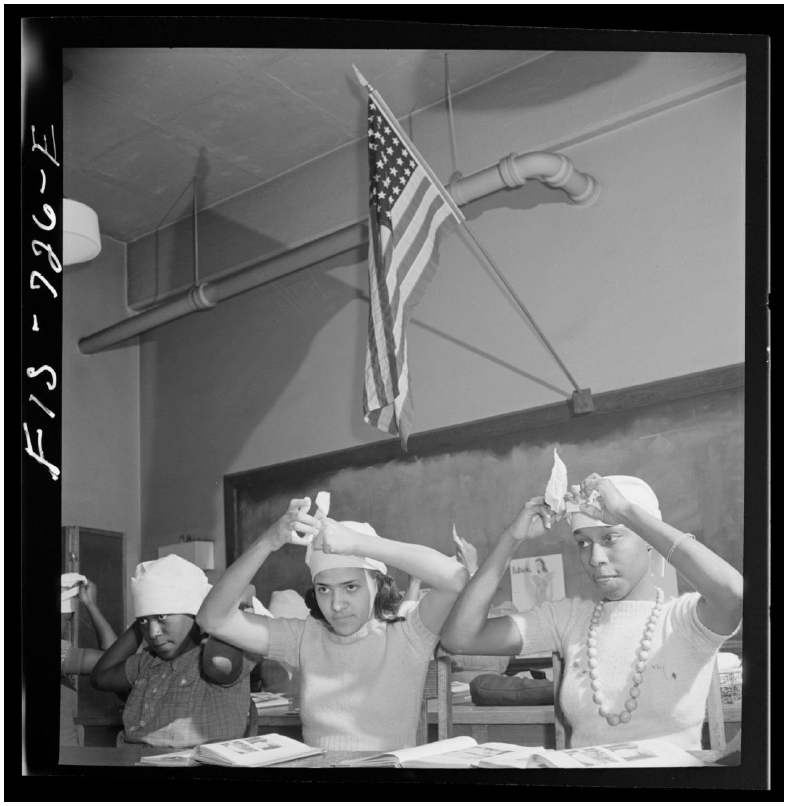
Ambiguity and reconsideration of the absoluteness of democratic ideals, such as equality, justice, and the rule of law, begin to arise when applying a semiotic lens to examine the embedded meanings in Collins’ photographs. Figure 7, for example, depicts three Black female school children tying head coverings in what appears to be a lesson on first aid. The American flag hangs prominently above them, with its shadow extending into the upper left quadrant of the photo. The three students, simultaneously engaged in tying the head coverings, symbolize learning in unison-a sign of order and unity. The presence of the flag underscores the loyalty of the school and its students to the nation. While the students should be the main subjects of the photo, the large hanging flag and its prominent shadow to the left ultimately capture the audience’s attention. The photographer’s use of artificial light from the right, which causes the flag to cast a shadow to the left, is very possibly intentional. Tinkler suggests that the incorporation of shadows alludes to darkness, weight, and gloominess, connecting these elements to specific historical meanings (Tinkler, 2013). This deliberate lighting invites the audience to reflect on the darker implications of the American flag, suggesting a deeper commentary on the nation and its concept of patriotism. From a distance, the shadow may create the illusion of two different flags hanging: one for white Americans and the others for Blacks as second-class citizens.
Because a handful of Collins’ photos from Lot 216 were published in the pamphlet Negroes and the War, we can reasonably deduce that the other photos from this collection had likely been considered as well. Given that Collins was aware of the purpose for which she was commissioned, she may have chosen to take photographs that could convey multiple meanings to different audiences. As Tinkler suggests, considering the photographer’s intent in relation to the context of production provides another avenue for analysis (Tinkler, 2013). If this particular image had been included in the pamphlet, a white audience might have interpreted it similarly to earlier figures-as evidence that African Americans were also contributing to the war effort-while a Black viewer might have focused more on the shadow of the flag and head coverings of the students.
Though the students appear to be tying head coverings, the purpose of their work remains unclear. The act of covering or obscuring the girls’ heads could serve as a visual metaphor for the blocking of knowledge, information, or anything deemed unpatriotic or un-American. Anything not considered patriotic or American is relegated to the shadow of the flag, representing darkness and fear of the unknown. Among the three students, the one on the left appears darkest due to the direction of the light source and the way the students are positioned. She is beneath the shadow of the flag, which aligns with the framing of the photo and the placement of the subjects relative to the light. The progression from light to shadow-from right to left-creates a sense of growing darkness and uncertainty. This composition conveys a subtle warning to “stay in the light,” or metaphorically, to remain aligned with what is considered “white,” in order to stay within the grace and brightness of the American flag and all it represents. This photo is a powerful visual metaphor that encourages Black students to remain under the supposed protection and oversight of white Americans.
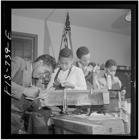
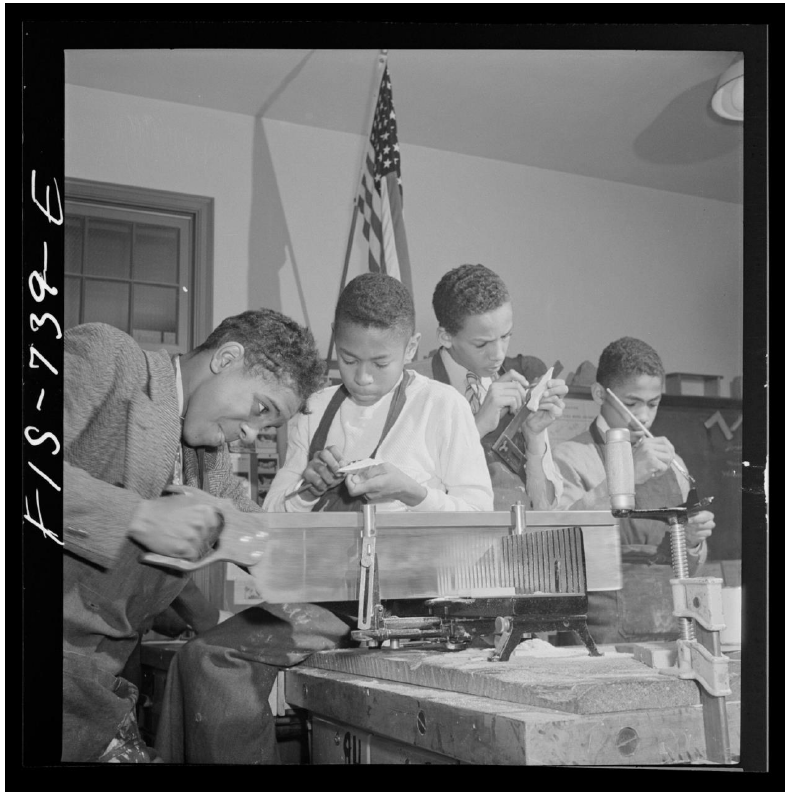
Washington, D.C. students constructing model airplanes for the U.S. Navy at Armstrong Technical High School. March 1942. Photograph by Marjory Collins.
While the image of two crossed flags (as shown in Figure 2) is a common depiction of national unity, its representation here in Figure 8 may prompt reconsideration when examined alongside the other elements of the photo. Depicting four students building model airplanes in a woodshop classroom, this image conveys that Black students are industrious, hardworking, and engaged in patriotic activities. One boy is caught mid-motion, sawing a piece of wood, his hand blurred due to the movement. The boys are working on separate pieces, though their arrangement suggests an assembly line-like process. Their construction of model airplanes, which was a common student civilian activity during wartime to help identify Allied aircrafts, also recalls the Hampton-Tuskegee model of Black education that emphasized hard work through manual labor. From a Saussurean (1916) perspective, the tools and woodworking equipment in the students’ hands signify that Black vocational training was a socially constructed pathway reflective of broader racial and economic hierarchies. The saw, chisel, and brush are not merely wood crafting tools; their significance lies in the fact that they are held by Black students. African Americans have a long history of being subjected to forced manual labor and limited to vocational training-systems that have historically confined them to the blue-collar class and restricted their upward mobility. In this image, the boys holding these tools evoke a socially constructed value system shaped by a cultural and historical structure of opposition, in which Black labor has been both essential and marginalized.
The students’ labor, whether in crafting models or real aircraft, can be framed as being limited to construction rather than piloting, navigation, or combat roles. The focus of the image reinforces this division, with the boys and their tools prominently foregrounded, ensuring the audience sees their roles clearly as builders but not as aviators. The labor depicted in this image can be interpreted as subjugated under the guise of a woodshop class. Notably, the teacher is absent from the photograph, as is the case in nearly all of the photographs in our sample. The boys are highly focused on their tasks, their attention fixed on the details, demonstrating precision and dedication to ensure the model airplanes are built correctly. Artificial light, coming from the right side of the frame, casts a shadow of the American flag on the wall at the back of the room. Its subtle placement in the background and symbolic overseeing of the boys, serves as a reminder of the broader context of patriotism and war during this period. While the flag does not dominate the frame as prominently as in Figure 7, its presence reinforces the boys’ participation in a collective national effort, with each fulfilling his classed role. From the perspective of white viewers at the time, this image-where the boys are depicted as assemblers rather than operators of the model aircraft-may have aligned with the culturally dominant interpretation, or what Hall (1980) would describe as the “preferred reading” most palatable to white audiences of the era.
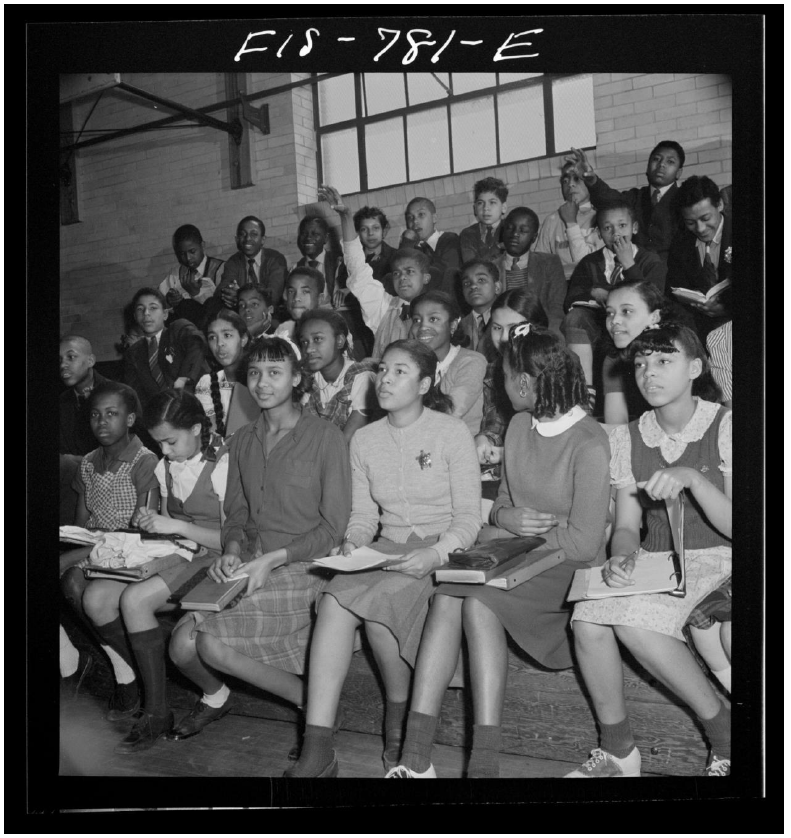
Washington, D.C. student council meeting at Banneker Junior High School. March 1942. Photograph by Marjory Collins.
The final photo of our study shows 28 early adolescent boys and girls seated in four rows on a wooden gymnasium bleacher (see Figure 9). The boys occupy the back two rows (with one exception), while the girls sit in the front two rows. The photo does not capture the entire width of the bleachers or all of the students seated. There appears to be artificial lighting coming from the photographer’s position, as shadows of several boys are projected onto the brick wall behind and to their left. The camera’s low position centers the faces of most girls in the front row near the middle of the photograph. The students’ facial expressions are vivid and varied. One girl in the front row is looking directly at the camera with a hint of a smile and at least six are looking directly at the camera. Overall, the students appear engaged. Peirce’s (1931) theory would consider the students’ raised hands as an index, signaling engagement and a desire to participate, while the structured seating arrangement symbolizes obedience and conformity within a segregated educational system. Some students focus on the instructor or an unseen subject of attention, while others are drawn to the presence of the photographer. The varying gazes-some directly at the camera, others elsewhere-reveal the photographer’s presence in the environment.
One girl in the front row, toward the right side of the frame, is turning to look back. She partially obscures the face of the girl seated behind her. While it seems the turned-girl might be looking at the boy in the third row with his hand raised, we cannot discern her intent. This moment invites the viewer to wonder whether something is happening beyond the obvious and limited visual cues. Another boy seated in the back row also has his hand raised. He is also looking directly at the camera, creating a duality: he is engaged in the current moment by the raising of his hand while simultaneously acknowledging the viewer. For some students, those absorbed in the moment, their attention is fixed on the here and now. For others, those looking toward the camera or showing disengagement, their thoughts may be elsewhere, perhaps in a different time or space. The lack of uniformity among the students’ facial expressions adds layers of meaning to the photograph. For instance, the girl turning back could be signaling something to the boy with his hand raised, his expression resolute and seemingly prepared to speak. These subtle exchanges suggest that the students know something we, as viewers, do not. While there are no explicit references to the war in this photo, it leaves us in a state of uncertainty, highlighting the implicit dynamics of what the war may have symbolized for Black Americans and whether they actually believed in contributing or not. Tinkler suggests that “images cannot relay underlying social relationships” (Tinkler, 2013, p. 41). In our case, this means that the uncertainty seen in this photograph cannot reveal the students’ exact feelings about whether they genuinely believed in being part of the war effort.
Final remarks
In this study, we highlight how photographs, as primary sources, can serve as a powerful methodological tool for historical inquiry, allowing researchers to uncover layers of meaning embedded in visual representations of the past. This approach underscores the active role of viewers in interpreting historical photographs and demonstrates how meaning is both constructed and understood. Drawing primarily on Penny Tinkler’s framework, we emphasize the necessity of contextualizing images within their material, temporal, and social dimensions. We demonstrate that these photographs are more than historical records. They are complex cultural artifacts that reflect both resilience and exclusion, contributing to a deeper historical understanding of Black education and racial segregation in the United States.
Our analysis of this sample of OWI photographs taken by Marjory Collins in Washington, D.C., in 1942, contributes to our understanding of African American education during the final decades of legally mandated racial segregation in the United States in several ways. First, in viewing schoolchildren as earnest in their quest for learning, often in well-equipped classrooms, we see visual evidence of high academic standards and seriousness of purpose in Black education (Siddle Walker, 2001; Anderson, 1988). We also recognize that Black schools in Southern cities like Washington, D.C. were generally better resourced than schools in rural regions (Rury & Hill, 2012; Harley, 1982). But in noting the barriers to economic opportunities and civic equality that African Americans encountered, we also consider how these realities may have diminished the enthusiasm of Black students and teachers. Our account thus aligns with historical studies on the juxtaposition of educational motivation and achievement amid unequal school resources and societal discrimination (Fairclough, 2001; Fultz, 1995; Allen & Jewell, 1995). Second, in examining visual evidence of classroom materials for war mobilization, we gain an impression that these Black schools in Washington, D.C. were fully on board with defending the Homefront. But we are also mindful of the ambivalence that many of the children in these photographs may have felt about donating their time, effort, and possibly their lives for fighting fascism abroad when democracy was not in evidence for them at home (Delmont, 2022; Perry, 2002). Third, the prominent presence of the American flag, often accompanied by its shadow, symbolizes the existence of two nations. The physical flag itself often represents the ideals of civil liberty and social equality, while its shadow reminds viewers that African Americans often found themselves in a different United States where they endured the limitations of second-class citizenship.
In these ways, our analysis of this kind of photographic evidence as primary sources complements historical scholarship utilizing written archival data about professionalism and high academic standards in Black schooling, while racial segregation and economic discrimination limited educational resources and societal opportunities for Black Americans. It is especially symbolic that these OWI photographs, intended primarily for encouraging African Americans to express their national loyalty by supporting the war effort, were of schoolchildren in the nation’s capital that remained racially segregated. Whether or not we believe these photos were staged, we see these Black students as being aware of these obstacles and actively engaged in the broader fight for educational equality.
References
- Allen, W. R., & Jewell, J. O. (1995). African American education since An American dilemma. Daedalus, 124(1), 77-100.
-
All About Photo. (n.d.). Marjory Collins. https://www.all-about-photo.com/photographers/photographer/1647/marjory-collins
» https://www.all-about-photo.com/photographers/photographer/1647/marjory-collins - Anderson, J. D. (1988). The education of Blacks in the South, 1860-1935. University of North Carolina Press.
-
Austermuhle, M. (2016, September 23). When Blacks fled the South, D.C. became home for many from North Carolina. WAMU 88.5. https://wamu.org/story/16/09/23/when_blacks_fled_the_south_dc_became_home_for_many_from_north_carolina/
» https://wamu.org/story/16/09/23/when_blacks_fled_the_south_dc_became_home_for_many_from_north_carolina/ - Barthes, R. (1977). Image-music-text. Fontana Press.
- Bieze, M. (2008). Booker T. Washington and the art of self-representation. Peter Lang.
- Brown v. Board of Education of Topeka, 347 U.S. 483 (1954).
-
Brown, F. B. (2000). NAACP-sponsored sit-ins by Howard University students in Washington, D.C., 1943-1944. The Journal of Negro History, 85(4), 274-286. https://doi.org/10.2307/2649077
» https://doi.org/10.2307/2649077 - Carson, J. C. (1995). Interpreting national identity in the time of war: Competing views in the U.S. Office of War Information (OWI) photography, 1940-1945 (Doctoral dissertation, Boston University).
- Cohen, R. D. (1992). Schooling Uncle Sam’s children: Education in the USA, 1941-1945. In R. Lowe (Ed.), Education and the Second World War: Studies in schooling and social change (pp. 46-58). Falmer Press.
-
Cole, E. R., & Omari, S. R. (2003). Race, class, and the dilemma of upward mobility for African Americans. Journal of Social Issues, 59(4), 785-802. https://doi.org/10.1046/j.0022-4537.2003.00088.x
» https://doi.org/10.1046/j.0022-4537.2003.00088.x -
DC Historic Sites. (n.d.). John Mercer Langston School. https://historicsites.dcpreservation.org/items/show/713
» https://historicsites.dcpreservation.org/items/show/713 - de Saussure, F. (1916). Course in general linguistics. McGraw-Hill.
- Delmont, M. L. (2022). Half American: The epic story of African Americans fighting World War II at home and abroad. Viking.
-
Digital Public Library of America. (n.d.). The Great Migration. https://dp.la/primary-source-sets/the-great-migration
» https://dp.la/primary-source-sets/the-great-migration - Dorn, C. (2007). American education, democracy, and the Second World War. Palgrave Macmillan.
- Fairclough, A. (2001). Teaching equality: Black schools in the age of Jim Crow. University of Georgia Press.
-
Fultz, M. (1995). African American teachers in the South, 1890-1940: Powerlessness and the ironies of expectation and protest. History of Education Quarterly, 35(4), 401-422. https://doi.org/10.2307/369513
» https://doi.org/10.2307/369513 -
Gosnell, H. F. (1946). Obstacles to domestic pamphleteering by OWI in World War II. Journalism Quarterly, 23(4), 360-369. https://doi.org/10.1177/107769904602300405
» https://doi.org/10.1177/107769904602300405 -
Gregory, J. N. (n.d.). The second great migration. University of Washington. https://faculty.washington.edu/gregoryj/second_great_migration.htm
» https://faculty.washington.edu/gregoryj/second_great_migration.htm -
Grosvenor, I., & Macnab, N. (2015). Photography as an agent of transformation: Education, community and documentary photography in postwar Britain. Paedagogica Historica, 51(1-2), 117-135. https://doi.org/10.1080/00309230.2014.997594
» https://doi.org/10.1080/00309230.2014.997594 -
Hall, S. (1980/2003). Culture, media, language: Working papers in cultural studies, 1972-1979. Routledge. https://doi.org/10.4324/9780203381182
» https://doi.org/10.4324/9780203381182 -
Harley, S. (1982). Beyond the classroom: The organizational lives of Black female educators in the District of Columbia, 1890-1930. Journal of Negro Education, 51(3), 254-265. https://doi.org/10.2307/2294908
» https://doi.org/10.2307/2294908 -
Hudson, J. B. (2008). Abraham Lincoln: An African American perspective. The Register of the Kentucky Historical Society, 106(3-4), 513-535. https://www.jstor.org/stable/23388015
» https://www.jstor.org/stable/23388015 - Kandel, I. L. (1948). The impact of war upon American education. University of North Carolina Press.
-
Koppes, C. R., & Black, G. D. (1977). What to show the world: The Office of War Information and Hollywood, 1942-1945. The Journal of American History, 64(1), 87-105. https://doi.org/10.2307/1899666
» https://doi.org/10.2307/1899666 - Library of Congress. (n.d.). Lot 216, “Washington, D.C. March 1942. Activities in Negro elementary, junior high, and technical high schools” [Photograph]. Prints and Photographs Reading Room.
-
Library of Congress. (n.d.). Works Progress Administration posters. https://www.loc.gov/collections/works-progress-administration-posters/
» https://www.loc.gov/collections/works-progress-administration-posters/ -
Miller, F. M., & Gillette, H. (1994). Race relations in Washington, D.C., 1878-1955: A photographic essay. Journal of Urban History, 21(1), 57-80. https://doi.org/10.1177/009614429402100103
» https://doi.org/10.1177/009614429402100103 -
Miquel-Lara, A., Sureda Garcia, B., & Comas Rubí, F. (2021). Photography and education in Republican soldier newspapers in Spain (1936-1939). Paedagogica Historica, 57(5), 588-610. https://doi.org/10.1080/00309230.2020.1722851
» https://doi.org/10.1080/00309230.2020.1722851 - Owen, C. (1942). Negroes and the war [Pamphlet]. Office of War Information.
- Peirce, C. S. (1931). Collected papers of Charles Sanders Peirce. Harvard University Press.
-
Perry, E. L., Jr. (2002). It’s time to force a change: The African-American press’ campaign for a true democracy during World War II. Journalism History, 28(2), 85-95. https://doi.org/10.1080/00947679.2002.12062620
» https://doi.org/10.1080/00947679.2002.12062620 - Porter, A. (2013). Paper bullets: The Office of War Information and American World War II print propaganda (Doctoral dissertation, Boston University).
-
Priem, K. (2017). Beyond the collapse of language? Photographs of children in postwar Europe as performances and relational objects. Paedagogica Historica, 53(6), 683-696. https://doi.org/10.1080/00309230.2017.1300927
» https://doi.org/10.1080/00309230.2017.1300927 - Rury, J. L., & Hill, S. A. (2012). The African American struggle for secondary schooling, 1940-1980: Closing the graduation gap. Teachers College Press.
-
Schweitzer, A. M. (2016, September 23). When Blacks fled the South, D.C. became home for many from North Carolina. WAMU 88.5. https://wamu.org/story/16/09/23/when_blacks_fled_the_south_dc_became_home_for_many_from_north_carolina/
» https://wamu.org/story/16/09/23/when_blacks_fled_the_south_dc_became_home_for_many_from_north_carolina/ -
Siddle Walker, V. (2001). African American teaching in the South, 1940-1960. American Educational Research Journal, 38(4), 751-780. https://doi.org/10.3102/00028312038004751
» https://doi.org/10.3102/00028312038004751 - Stanford University School of Education Faculty. (1943). Education in wartime and after. D. Appleton-Century.
-
Studebaker, J. W. (1942). What the secondary schools can do to help win this war. The Bulletin of the National Association of Secondary School Principals, 26(101), 11-17. https://doi.org/10.1177/019263654202610103
» https://doi.org/10.1177/019263654202610103 -
Sutherland, G. (2020). Civil rights and the Black experience during the New Deal era: Limitations and possibilities, 1932-1948 (Master’s thesis, Bard College). https://digitalcommons.bard.edu/history_mat/10
» https://digitalcommons.bard.edu/history_mat/10 - Tinkler, P. (2013). Using photographs in social and historical research. SAGE.
- Tolley, K. (2003). The science education of American girls: A historical perspective. RoutledgeFalmer.
-
Weinberg, S. (1968). What to tell America: The writers’ quarrel in the Office of War Information. The Journal of American History, 55(1), 73-89. https://doi.org/10.2307/1890975
» https://doi.org/10.2307/1890975 - Winkler, A. M. (1974). Politics and propaganda: The Office of War Information, 1942-1945 (Doctoral dissertation, Yale University).
-
Note:
This article is part of the dossier “Photography as a Source for Research in the History of Education”. The set of texts was jointly evaluated by the associate editor responsible, within the scope of the RBHE Editorial Board, as well as by the dossier proponents.
-
1
The nation’s need for soldiers and industrial employees led hundreds of thousands of students to withdraw from their studies. Many of those who remained in school participated in new federally-funded vocational and pre-induction classes for training those who would later serve in the military or in war-related occupations. These included nurse training, military drill, mechanics and aeronautics.
-
Peer review rounds:
R1: three invitations; two reports received.
-
How to cite this article:
Cheng, P., Canellas, B. G. da C., & Terzian, S. G. The United States Office of War Information and World War Two Propaganda: Photographic Images of Black Schooling in Washington, D.C. Revista Brasileira de História da Educação, 25, e391. DOI: https://doi.org/10.4025/rbhe.v25.2025.e391
-
Funding:
The RBHE has financial support from the Brazilian Society of History of Education (SBHE) and the Editorial Program (Call No. 30/2023) of the National Council for Scientific and Technological Development (CNPq).
-
Licensing:
This article is published under the Creative Commons Attribution 4.0 (CC-BY 4) license.
-
Data availability:
The authors state that all data used in the research were made publicly available and can be accessed through the website of the Library of Congress (United States), Prints and Photographs Division, Lot 216, at the following link: https://www.loc.gov/search/?fa=partof:lot+216&sp=1
Edited by
The authors state that all data used in the research were made publicly available and can be accessed through the website of the Library of Congress (United States), Prints and Photographs Division, Lot 216, at the following link: https://www.loc.gov/search/?fa=partof:lot+216&sp=1

 Note. Source: Library of Congress, Prints and Photographs Division, LC-DIG-fsa-8d27343.
 Note. Source: Library of Congress, Prints and Photographs Division, LC-DIG-fsa-8d20277.
 Note. Source: Library of Congress, Prints and Photographs Division, LC-DIG-fsa-8d20269.
 Note. Source: Library of Congress, Prints and Photographs Division, LC-DIG-fsa-8d20291.
 Note. Source: Library of Congress, Prints and Photographs Division, LC-DIG-fsa-8d20294.
 Note. Source: Library of Congress, Prints and Photographs Division, LC-DIG-fsa-8d20381.
 Library of Congress, Prints and Photographs Division, LC-DIG-fsa-8d20205.
 Note. Source: Library of Congress, Prints and Photographs Division, LC-DIG-fsa-8d20218.
 Note. Source: Library of Congress, Prints and Photographs Division, LC-DIG-fsa-8d20259.