Systematic review and meta-analysis of myopia prevalence in Brazilian school children
ABSTRACT
Introduction: Myopia is a growing global concern and there is a lack of studies on its prevalence among Brazilian schoolchildren.
Methods: This study aimed to determine the prevalence of myopia in Brazilian children aged 3–18 years through a review and meta-analysis of published studies. Eleven high-quality studies were analyzed following the 2022 PRISMA guidelines. Prevalence was calculated using a meta-analysis, considering the heterogeneity among the studies.
Results: The overall crude prevalence of myopia in Brazilian children was 7.65%. There was no significant association with the age of the children examined and no significant temporal trend was observed. Approximately one in 13 Brazilian schoolchildren had myopia.
Conclusion: Given the increased exposure of Brazilian youth to the risk factors for myopia, it is crucial to monitor myopia in the country. Further studies are required to address and prevent myopia in Brazil.
Keywords:
Myopia; Prevalence; Child; Brazil
RESUMO
Introdução: A miopia é uma preocupação global crescente, estudos sobre sua prevalência entre os brasileiros ainda são escassos.
Métodos: Este estudo teve como objetivo determinar a prevalência de miopia em crianças brasileiras com idades entre 3 e 18 anos por meio de uma revisão sistemática e meta-análise. Seguindo as diretrizes PRISMA de 2022, onze estudos foram analisados. A prevalência foi calculada usando uma meta-análise, considerando a heterogeneidade entre os estudos.
Resultados: A prevalência bruta geral de miopia em crianças brasileiras foi de 7,65%. Não houve associação significativa com a idade das crianças examinadas, e não foi observada uma tendência temporal significativa. Aproximadamente um em treze escolares brasileiros tem miopia.
Conclusão: Dado o aumento da exposição da juventude brasileira aos fatores de risco conhecidos da miopia, é crucial monitorar a miopia no país. Estudos adicionais são imperativos para abordar e prevenir a miopia no Brasil.
Descritores:
Miopia; Prevalência; Criança; Brasil
INTRODUCTION
Uncorrected refractive errors are the most common cause of visual impairment, affecting an estimated one billion people worldwide.(1) Myopia is the most common refractive error and is a significant cause of ocular morbidity, particularly in school-aged children and young adults. Globally, myopia is reaching pandemic proportions due to changing lifestyles and modern technology, especially mobile devices.(2) In 2001, 22.9% of the world’s population had myopia, which is predicted to increase to 49.8% by 2050, affecting 4.8 billion people, an increase of 117% in 50 years. According to a 2015 report, an estimated 1.89 billion people worldwide have myopia, and 170 million have high myopia.(3)
The reported prevalence of myopia in children aged 5–17 years ranges from 1.2% in Mechi Zone, Nepal, to 73.0% in South Korea.(4, 5) Within 15 years, the prevalence of myopia increased from 79.5 to 87.7% in Chinese schoolchildren with a mean age of 18.5±0.7 years.(6) In South African schoolchildren aged 5 to 15 years, the reported prevalence of myopia was only 2.9% with retinoscopy and 4.0% with autorefraction.(7) However, the authors noted that the prevalence increased to 9.6% at 15 years of age.
The increase in myopia prevalence has a significant economic impact because it is associated with other eye diseases and visual impairment. Uncorrected myopia between -1.50 D and -4.00 D can impair vision to the point that it is considered a cause of moderate visual impairment or blindness. High myopia, usually defined as spherical equivalent ≥5.00 D, has the risk of potentially blinding eye diseases such as retinal holes, retinal tears, retinal degeneration, retinal detachment, and myopic macular degeneration.(3, 8-10) Uncorrected myopia has enormous social, economic, psychological, and developmental implications.(10) The financial cost of refractive errors, including nearsightedness, is estimated to be approximately $202 billion annually, far exceeding the expense of other eye diseases.(11)
The increasing prevalence of myopia has led to research on the possible mechanisms underlying its development, with two main themes emerging. The first is the role of nature (genetic influences) and the second is an environmental influence (environmental effects, including lifestyle). Understanding the mechanisms underlying myopia development is also being explored to control myopia. However, due to significant regional differences in culture, habits, socioeconomic status, education level, and urbanization, there is uncertainty regarding the exact extent of myopia exposure in school-aged children and its development over time.(12)
Over the past few decades, urbanization has changed the lifestyles and behaviors of people worldwide. For example, in 1950, Brazil’s urban population was 30 million, reaching almost 190 million by 2010. Moreover, following the emergence of technology, children spend extended periods completing school assignments and engaging in various activities on their mobile devices, including gaming.(13)
Urbanization has also changed the lifestyles and behaviors of people in Brazil. Almost 90% of Brazil’s population resides in one of the 5,568 urban cities. As a result, Brazil’s children and young adults participate more in indoor and nearby work activities when compared with previous generations. In addition, following the emergence of technology, children spend extended periods completing school assignments and engaging in various activities on their mobile devices including gaming. These factors are believed to contribute to myopia development and progression.(14-16)
Considering the current increase in the incidence of myopia, this systematic review and meta-analysis aimed to assess the prevalence of Myopia in Brazilian children between three–20 years old.
METHODS
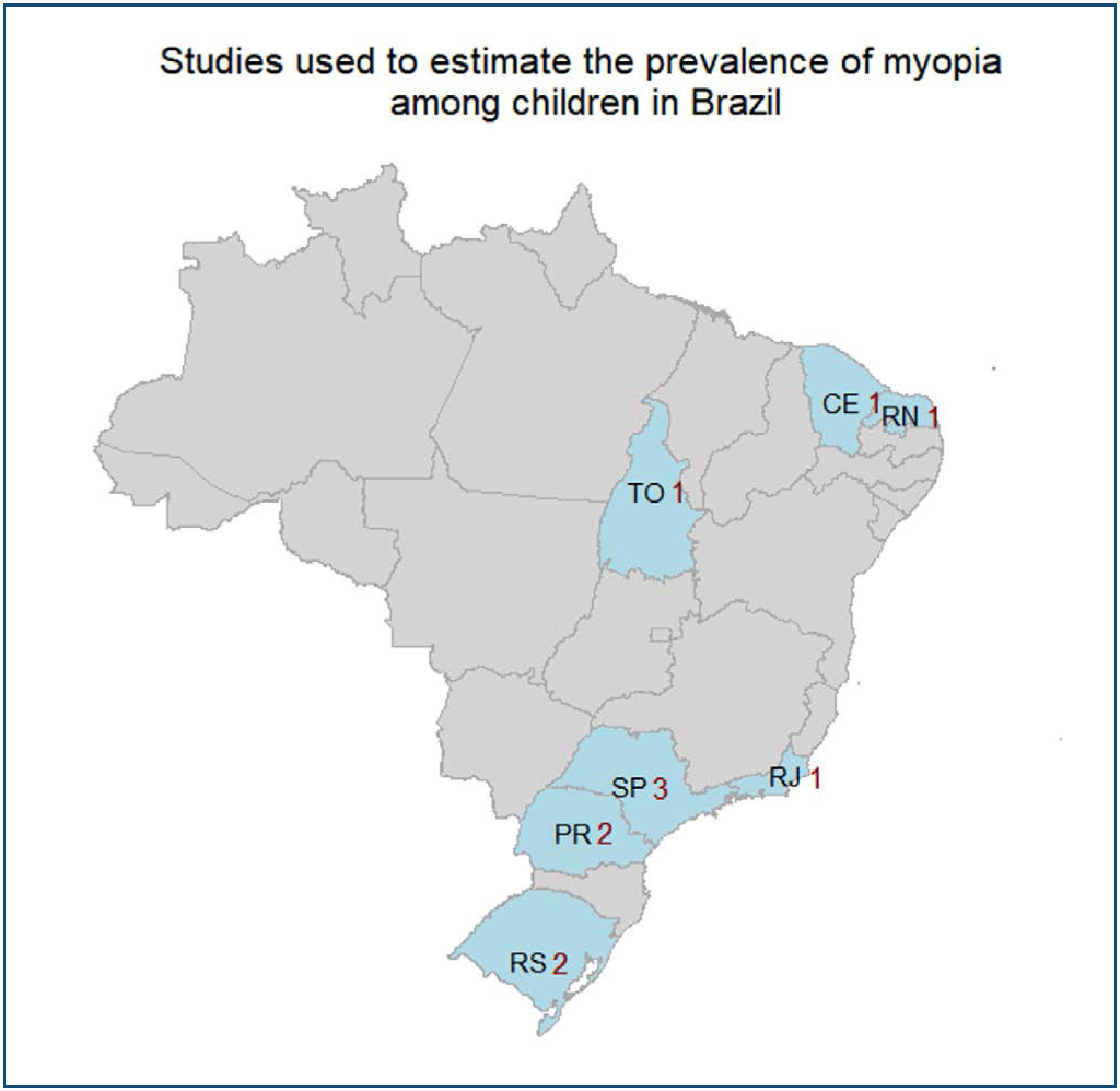
The meta-analysis considered the characteristics of research that revealed the prevalence of myopia among Brazilian school-age children. We found 11 studies approaching the prevalence of myopia in school children conducted in different Brazilian states (Figure 1).
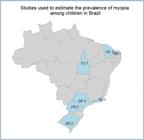
Number of studies of the prevalence of myopia in Brazil per state where they were conducted.
This meta-analysis was carried out following the methodological recommendations of the Preferred Reporting Items for Systematic Reviews and Meta-Analyses (PRISMA) 2020.
The terms ("Refractive Error" OR "Myopia" AND "Children" OR "Prevalence" AND "Brazil") were used for the search. Search terms were used to query the Web of Science, Scientific Electronic Library Online [Scielo], and PubMed databases. The searches started on April 15, 2023 and ended on May 24, 2023. References from all the studies included, previous systematic reviews, and meta-analyses were manually searched for additional studies. Two authors independently extracted data using predefined search criteria and quality assessment. The full articles of eligible publications were then scrutinized. Only studies that met the following criteria were included in the meta-analysis.
This review included English and Portuguese studies published from 1975 to 2023 that investigated the prevalence of refractive error among schoolchildren aged 5 to 18 years. In addition, the review included studies published that employed an observational cross-sectional study design, had a clear description of the sampling technique, stated the method of measuring refractive error (cycloplegic or non-cycloplegic refraction), as well as objective or subjective refraction, stated the criteria for defining myopia (spherical equivalent ≥0.50D of myopia) and were either school-based or population-based.(28-30)
The search criteria resulted in 96 articles. Subsequently, these studies were inspected and selected according to the type of population from which the sample originated, the possibility of delimitation by age, and the availability of specific myopia prevalence data. Data from people with comorbidities in their selection, data from the hospital population, and data with doubts about the delimitation of the age range were discarded, leaving the set of publications that used data from the general population or school populations.
Information on the use of cycloplegia and the method (objective or subjective) of measuring refractive error was recorded in each study, as well as the prevalence of myopia and sample size.
STATISTICAL METHODS
Meta-analysis was conducted using R version 4.2.3 (2023-03-15 curt) -- "Shortstop Beagle" (R Foundation for Statistical Computing, Vienna, Austria). The "meta" package was used to generate forest plots that show the prevalence of myopia in school children, in individual studies, and their corresponding weight, as well as the pooled prevalence with associated 95% confidence intervals (CI).(31) The tunnel plot was used to report the potential bias and minor/significant study effects. Begg’s test was used to assess asymmetry.(32) The prevalence was subdivided into separate datasets based on cycloplegic or non-cycloplegic refraction and the use of objective or subjective methods to evaluate the refractive error. For this purpose, the studies were classified into cycloplegic and objective refraction measures (complete method group) and non-cycloplegic and subjective refractive error evaluation (incomplete method group). Also, to study a possible variation of the prevalence of myopia related to age, the average age in the reported studies was used in a meta-regression model. A similar meta-regression model was used to investigate the variation of the prevalence according to the year of data collection.(33)
The estimation of the prevalence of myopia among Brazilian children was carried out in this meta-analysis using the "random effects" calculation method after the transformation of the original proportions into "logit" values, i.e., log(p/(1-p)) with the weights calculated by the method of the inverse of the variances of proportions.
RESULTS
Prevalence of myopia in Brazilian school-aged children
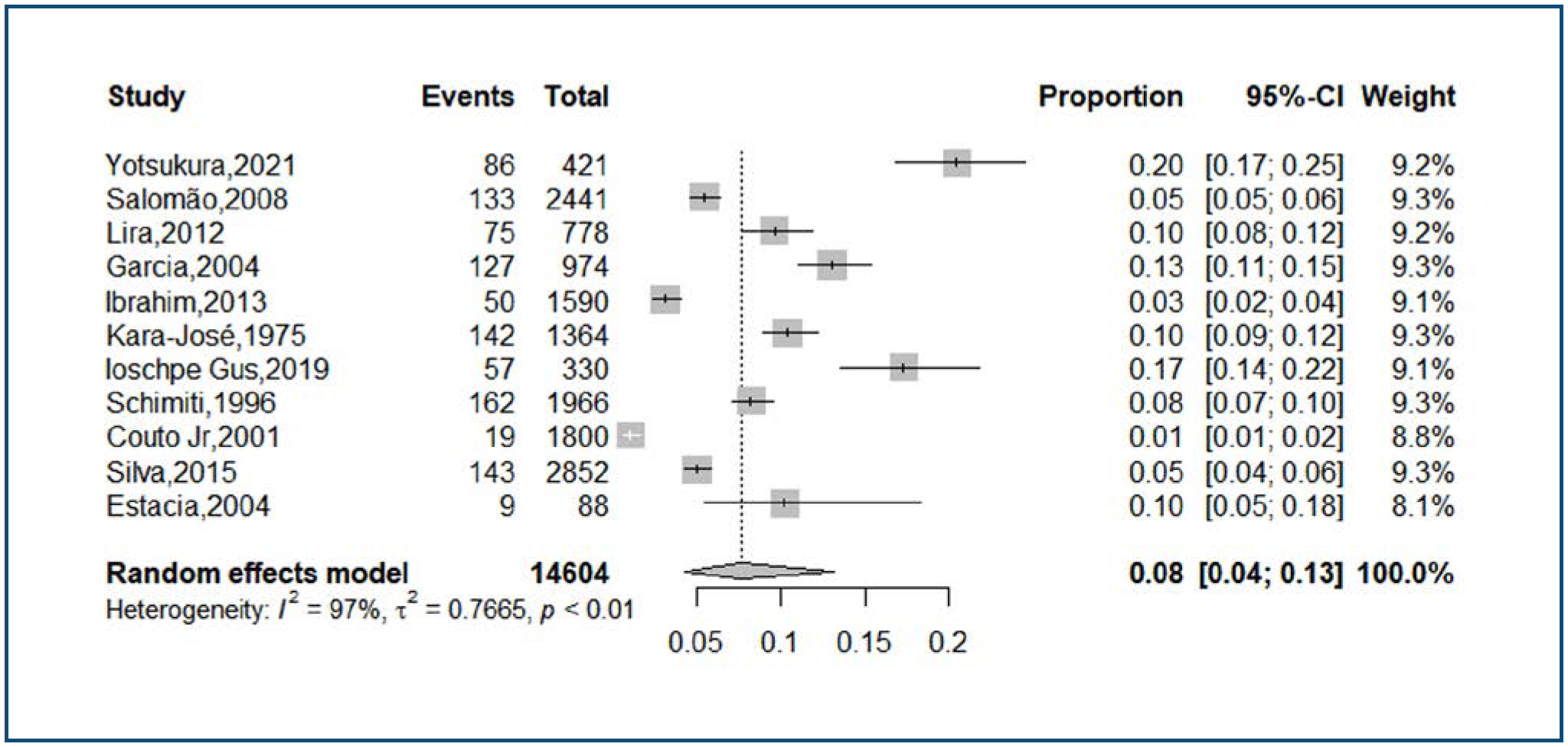
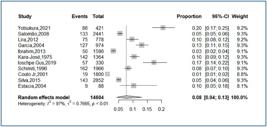
A heterogeneity test obtained for the different studies showed a high level of inconsistency (I2=97%), indicating the use of a Random Effect Model in all the meta-analyses conducted. The number of children aged 5–18 years included in the study ranged from 88 for a study conducted in Rio Grande do Sul to 2852 for another study conducted in Paraná. The prevalence of myopia reported in these studies ranged from 1 to 20%.
The estimated prevalence of myopia in Brazil (7.65%; 95%CI: 4.3, 13.1) was significant (p<0.05) once its confidence interval excluded the value zero (Figure 2).
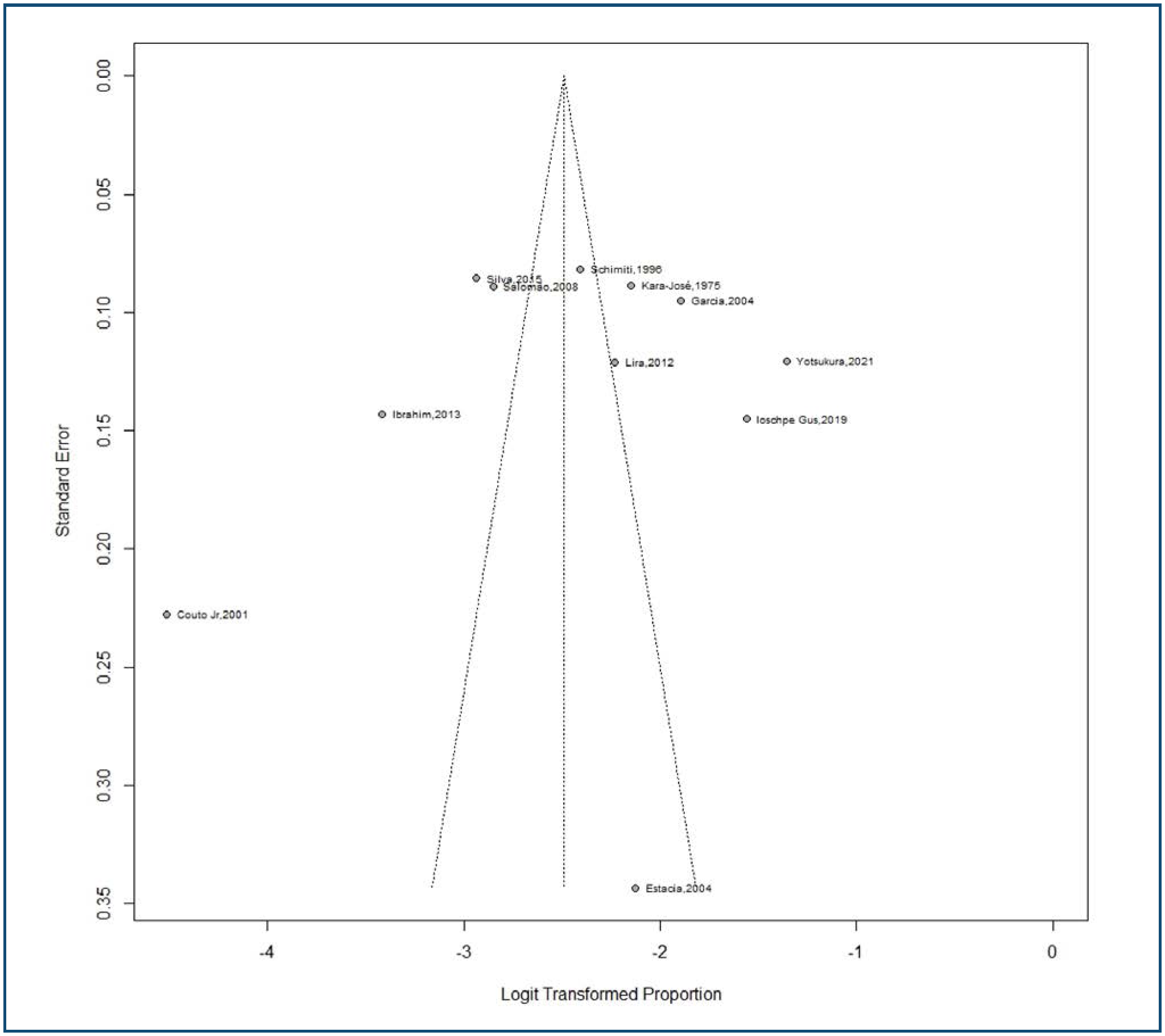
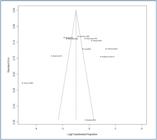
Funnel plot and Begg’s test for asymmetry indicated homogeneity (z=0.08; p=0.9379); i.e., eventual biased outliers had no significant overall effect in the estimate obtained (Figure 3).
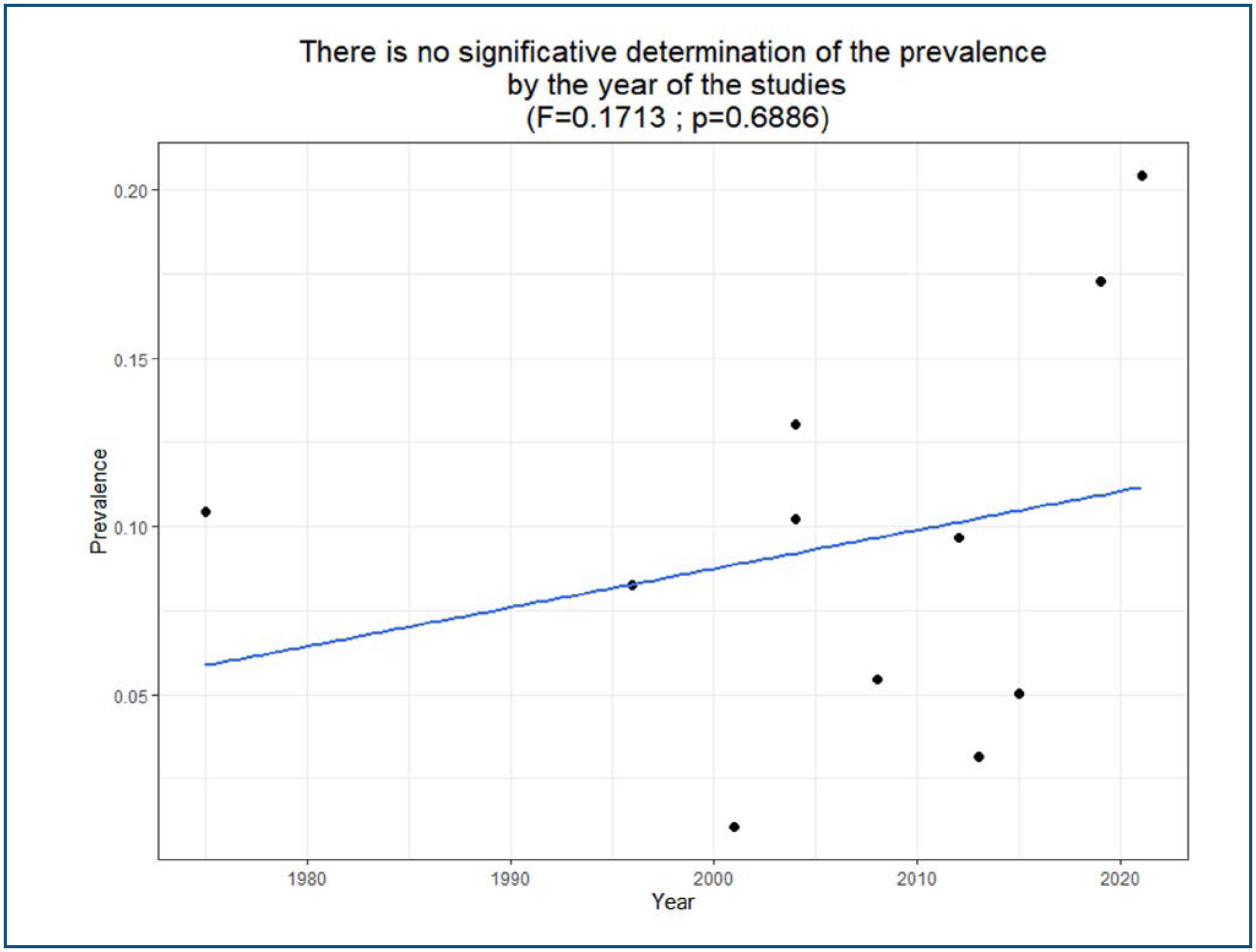
A meta-regression analysis of myopia showed that the proportion of myopia increased as the date of the studies advanced. Still, this relationship was not statistically significant (p=0.6886) (Figure 4).
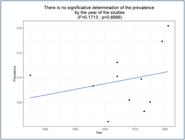
According to meta-regression analysis, the percentage of myopia grew as the publishing year grew, but this association was not statistically significant.
In addition, meta-regression analysis of myopia by the average age of children in the studies showed that the proportion of myopia increased as age increased. Still, this relationship was not statistically significant (p=0.7815) (Figure 5).
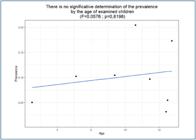
According to meta-regression analysis, the percentage of myopia grew as the age of examined children grew, but this association was not statistically significant.
DISCUSSION
Prevalence of myopia
The present study provides recent estimates of myopia prevalence in Brazilian children using data from 11 studies conducted over five decades. The prevalence of myopia defined as SER ≥0.50D of myopia in school children across Brazil was 7.65% (95% CI 4.35-13,14).
The variation in the reported prevalence of myopia between studies was 19.37%. Although the regional variations in myopia prevalence found in this study are consistent with Foster and Jiang’s statement that "Considerable regional difference exists from country to country even within the same geographical area", it remains unclear why these variations exist.(34) While the criteria to define refractive error is often cited as the reason for the variation in the prevalence of refractive errors, including myopia, between studies, this may not be the case in our study because only studies that defined myopia as a spherical equivalent of ≥0.50D were included.
The overall low prevalence of myopia across Brazil is consistent with other studies that reported a lower myopia prevalence in Western children than in Asian children.(35) It is worth noting that in the five studies included in the current review, the reported prevalence of myopia was greater than 10%. Of these, four studies(20, 22, 23, 27) used cycloplegic refraction, which is thought to estimate the prevalence of myopia more accurately.(17, 20, 22, 23, 27) Yotsukura reported the highest prevalence of myopia in Brazil, although the measures were performed using cyclopean.(17) The lower prevalence of myopia in Couto Júnior compared with other regions may be related to the differences in genetic predisposition to myopia development and culture.(36-38) Although the role of genetics in myopia development and progression has been reported to be small, it is believed to play a role in an individual’s susceptibility to environmental risk factors for myopia.(39) In addition, several studies have shown the significant involvement of environmental factors, such as near work (writing, reading, and working on a computer), in myopia development.(36-38) In many states of Brazil, children do not start education and learning at the same early age as in other Asian countries. Therefore, Brazilian children are exposed to less near work and are more involved in outdoor activities, resulting in a lower risk of developing myopia than their Asian counterparts. This assertion is supported by the fact that, in 2020, the pre-primary school enrolment rate in the most populous state in Brazil (SP) was 79.12%, compared with 89.12% in 2012 in China (the most populous country in Asia).(13,40) However, a recent investigation has shown that more precise objective measures are required to draw definitive conclusions about the relationship between myopia and near work.(41)
Despite the relatively low prevalence of myopia among Brazilian children, there is a need to monitor the prevalence of myopia among children in this region, given the increased access to and use of mobile devices among the Brazilian population, including children. It is crucial to consider the higher reported increase in the prevalence of myopia in the last two studies.(17,23) It is assumed that nowadays, urban children have more access and exposure to near work, including mobile devices, and fewer outdoor activities than their counterparts in rural areas.
Age differences in myopia prevalence
No significant determination between the prevalence of myopia and the age of examined children was found (p=0.7815). The slightly higher prevalence of myopia between the two age groups shows a tendency for myopia prevalence to increase with age, which is consistent with previous studies from elsewhere.(42,43) This increase in myopia prevalence is thought to be associated with the increasing growth of the eyeball. The influence of gender on the prevalence of myopia has not been unequivocal in the literature,(44-47) with some suggesting that the slightly higher prevalence in females may be related to the different ages of onset of puberty between boys and girls.(48) Other factors that could account for the reported apparent higher prevalence of myopia in girls include limited outdoor activity time than in boys.(49)
Prevalence of myopia by refraction technique (cycloplegic and non-cycloplegic)
The present study demonstrated that cycloplegic refraction resulted in significantly lower estimates of myopia prevalence than non-cycloplegic refraction, consistent with previous studies.(50-52) It has been reported that non-cycloplegic refraction overestimates the prevalence of myopia, yields a non-reliable measurement of the association of myopia risk factors,(51,53) and hence cycloplegic refraction is regarded as the gold standard for measuring myopia. Over half of the studies in this review utilized cycloplegic refraction, which is particularly important in this age group where the difference between cycloplegic and non-cycloplegic refraction is relatively high.(52,54) The fact that non-cycloplegic refraction often results in the overestimation of myopia may have, in part, accounted for the high prevalence reported in Yotsukura.(17) Unfortunately, we could not demonstrate that cycloplegic refraction results in a lower variability of measured refractive error than non-cycloplegic refraction. Non-cycloplegic refraction may reflect the variable accommodative state during the refraction of children of different ages.(55) This finding underscores the need to appropriately control accommodation when performing refraction, especially in young children with a higher amplitude of accommodation and in whom accommodation is more active.
Implications of the study: consequences of the research
For the first time, a systematic review and meta-analysis have been conducted to determine the prevalence of myopia among Brazilian schoolchildren and how it varies with age and refraction method. As previously mentioned, compared to other regions like Southeast Asia, the frequency of myopia in Brazil seems to be low. Future prevalence studies might use the baseline data from this study as a baseline for comparison to establish a trend in myopia epidemiology in this group. This review also supports that, in contrast to cycloplegic refraction, non-cycloplegic refraction overstated the prevalence of myopia and produced more variable estimations of refractive errors. Researchers and decision-makers may be misled by how myopia prevalence data from non-cycloplegic refraction are interpreted. Therefore, it is advised that any studies examining the prevalence of myopia in children employ cycloplegic refraction.
Strengths and limitations of the review
There are some restrictions on this review. First, due to the small number of research results published, this review did not prove the trend in the prevalence of myopia among Brazilian schoolchildren. Second, the results were probably biased toward studies in states where the results were provided in subjective refraction and non-cycloplegic measures. Thirdly, due to the lack of prevalent studies of myopia in Brazil, the current review did not establish the prevalence of epidemiology of myopia in this population. The selection of studies that employed a consistent definition of myopia (i.e., 0.50DS of myopia) allowed for a better comparison in the reported prevalence of myopia, despite these limitations. Additionally, studies conducted in unselected groups were not included in the analysis, including hospital-based studies and those that failed to provide proof of sampling. Finally, the robustness of the study designs used in each chosen study was also assessed.
CONCLUSIONS
In conclusion, this study’s systematic review and meta-analysis revealed that myopia is less common among Brazilian kids than in other places of the world. It can be misleading to estimate the prevalence of myopia using non-cycloplegic refraction because the results are more significant and less consistent. As more youngsters in this region are exposed to known risk factors for myopia development, such as access to mobile devices, increased near work, increased online or remote learning, and limited outdoor time, keeping an eye on the myopia trend is crucial. Future research is required to understand the impact of ethnicity on the prevalence of myopia in Brazil, as the comparison and inclusion of the various ethnic groups (Black, White, Asian) in the same area would add valuable information about any differences in the prevalence of myopia among the different ethnic groups in Brazil.
REFERENCES
- 1 World Health Organization (WHO). World report on vision. Geneva: WHO; 2019. 180 p.
- 2 Holden BA, Fricke TR, Wilson DA, Jong M, Naidoo KS, Sankaridurg P, et al. Global Prevalence of Myopia and High Myopia and Temporal Trends from 2000 through 2050. Ophthalmology. 2016;123(5):1036-42.
- 3 Holden BA, Jong M, Davis S, Wilson D, Fricke T, Resnikoff S. Nearly 1 billion myopes at risk of myopia-related sight-threatening conditions by 2050 - time to act now. Clin Exp Optom. 2015;98(6):491-3.
- 4 Pan CW, Ramamurthy D, Saw SM. Worldwide prevalence and risk factors for myopia. Ophthalmic Physiol Opt. 2012;32(1):3-16.
- 5 Grzybowski A, Kanclerz P, Tsubota K, Lanca C, Saw SM. A review on the epidemiology of myopia in school children worldwide. BMC Ophthalmol. 2020;20(1):27.
- 6 Chen M, Wu A, Zhang L, Wang W, Chen X, Yu X, et al. The increasing prevalence of myopia and high myopia among high school students in Fenghua city, eastern China: a 15-year population-based survey. BMC Ophthalmol. 2018;18(1):159.
- 7 Naidoo KS, Raghunandan A, Mashige KP, Govender P, Holden BA, Pokharel GP, et al. Refractive error and visual impairment in African children in South Africa. Invest Ophthalmol Vis Sci. 2003;44(9):3764-70.
- 8 Kempen JH, Mitchell P, Lee KE, Tielsch JM, Broman AT, Taylor HR, et al. The prevalence of refractive errors among adults in the United States, Western Europe, and Australia. Arch Ophthalmol. 2004;122(4):495-505.
- 9 Tedja MS, Haarman AEG, Meester-Smoor MA, Kaprio J, Mackey DA, Guggenheim JA, et al. IMI - Myopia Genetics Report. Invest Ophthalmol Vis Sci. 2019;60(3):M89-m105.
- 10 Congdon N, Burnett A, Frick K. The impact of uncorrected myopia on individuals and society. Community Eye Health. 2019;32(105):7-8.
- 11 Fricke TR, Holden BA, Wilson DA, Schlenther G, Naidoo KS, Resnikoff S, et al. Global cost of correcting vision impai ment from uncorrected refractive error. Bull World Health Organ. 2012;90(10):728-38.
- 12 Rudnicka AR, Owen CG, Nightingale CM, Cook DG, Whincup PH. Ethnic differences in the prevalence of myopia and ocular biometry in 10- and 11-year-old children: the Child Heart and Health Study in England (CHASE). Invest Ophthalmol Vis Sci. 2010;51(12):6270-6.
- 13 Instituto Brasileiro de Geografia e EStatística (IBGE). Censo demográfico. Rio de Janeiro: IBGE; 2022.
- 14 Hepsen IF, Evereklioglu C, Bayramlar H. The effect of reading and near-work on the development of myopia in emmetropic boys: a prospective, controlled, three-year follow-up study. Vision Research. 2001;41(19):2511-20.
- 15 Ip JM, Saw SM, Rose KA, Morgan IG, Kifley A, Wang JJ, et al. Role of near work in myopia: findings in a sample of Australian school children. Invest Ophthalmol Vis Sci. 2008;49(7):2903-10.
- 16 Huang HM, Chang DS, Wu PC. The Association between Near Work Activities and Myopia in Children-A Systematic Review and Meta-Analysis. PLoS One. 2015;10(10):e0140419.
- 17 Yotsukura E, Torii H, Ozawa H, Hida RY, Shiraishi T, Corso Teixeira I, et al. Axial Length and Prevalence of Myopia among Schoolchildren in the Equatorial Region of Brazil. J Clin Med. 2020;10(1).
- 18 Salomão SR, Cinoto RW, Berezovsky A, Mendieta L, Nakanami CR, Lipener C, et al. Prevalence and causes of visual impairment in low-middle income school children in Sao Paulo, Brazil. Invest Ophthalmol Vis Sci. 2008;49(10):4308-13.
- 19 Lira RP, Espirito Santo IF, do Valle GL, Maziero D, Passos TH, Arieta CE. Refractive error in school children in Campinas, Brazil. Arq Bras Oftalmol. 2014;77(3):203-4.
- 20 Garcia CA, Oréfice F, Nobre GF, Souza Dde B, Rocha ML, Vianna RN. [Prevalence of refractive errors in students in Northeastern Brazil]. Arq Bras Oftalmol. 2005;68(3):321-5.
- 21 Moraes Ibrahim F, Moraes Ibrahim M, Pomepo de Camargo JR, Veronese Rodrigues Mde L, Scott IU, Silva Paula J. Visual impairment and myopia in Brazilian children: a population-based study. Optom Vis Sci. 2013;90(3):223-7.
- 22 Kara-José N, Holzchuh N, Temporini ER. [Refractive errors in school children in the city of São Paulo, Brazil]. Bol Oficina Sanit Panam. 1984;96(4):326-33. Spanish.
- 23 Gus PI, Maman RS, Lengler AD, Arteche MA, Martins A, Leivas G, et al. Prevalence of myopia among children from public schools in Southern Brazil. Rev Bras Oftalmol.2024;83:e0024.
- 24 Schimiti RB, Costa VP, Gregui MJF, Kara-José N, Temporini ER. Prevalence of refractive errors and ocular disorders in preschool and school children of Ibiporã - PR, Brazil (1989 to 1996). Arq Bras Oftalmol. 2001;64(5):379-84.
- 25 Couto Júnior AdS, Pinto GR, Oliveira DAd, Holzmeister D, Portes ALF, Neurauter R, et al. Prevalência das ametropias e oftalmopatias em crianças pré-escolares e escolares em favelas do Alto da Boa Vista, Rio de Janeiro, Brasil. Rev Bras Oftalmol. 2007;66(5):304-8.
- 26 Silva MBR, Siqueira Anacleto FS, Reinert CL, Durães GB, Hoyama E, Matsuo T, et al. Prevalence of refractive errors in preschool and school children of Londrina, Paraná, Brazil. Invest Ophthalmol Vis Scie. 2017;58(8):2375.
- 27 Estacia P, Stramari LM, Schuch SB, Negrello D, Donato L. Prevalência de erros refrativos em escolares da primeira série do ensino fundamental da região Nordeste do Rio Grande do Sul. Revista Brasileira de Oftalmologia. 2007;66(5):297-303.
- 28 Saxena R, Vashist P, Tandon R, Pandey RM, Bhardawaj A, Menon V, et al. Prevalence of Myopia and Its Risk Factors in Urban School Children in Delhi: The North India Myopia Study (NIM Study). PLOS ONE. 2015;10(2):e0117349.
- 29 Saxena R, Vashist P, Tandon R, Pandey RM, Bhardawaj A, Gupta V, et al. Incidence and progression of myopia and associated factors in urban school children in Delhi: The North India Myopia Study (NIM Study). PLoS One. 2017;12(12):e0189774.
- 30 Luo HD, Gazzard G, Liang Y, Shankar A, Tan DT, Saw SM. Defining myopia using refractive error and uncorrected logMAR visual acuity >0.3 from 1334 Singapore school children ages 7-9 years. Br J Ophthalmol. 2006;90(3):362-6.
- 31 Harrer M, Cuijpers P, Furukawa T, Ebert D. Doing Meta-Analysis with R: A Hands-On Guide: CRC Press; 2021.
- 32 Begg CB, Mazumdar M. Operating characteristics of a rank correlation test for publication bias. Biometrics. 1994;50(4):1088-101.
- 33 Viechtbauer W. Conducting meta-analyses in R with the metafor package. J Statist Softw. 2010;36(3):1-48.
- 34 Foster PJ, Jiang Y. Epidemiology of myopia. Eye (Lond). 2014;28(2):202-8.
- 35 Rudnicka AR, Kapetanakis VV, Wathern AK, Logan NS, Gilmartin B, Whincup PH, et al. Global variations and time trends in the prevalence of childhood myopia, a systematic review and quantitative meta-analysis: implications for aetiology and early prevention. Br J Ophthalmol. 2016;100(7):882-90.
- 36 Goldschmidt E, Jacobsen N. Genetic and environmental effects on myopia development and progression. Eye (Lond). 2014;28(2):126-33.
- 37 Armarnik S, Lavid M, Blum S, Wygnanski-Jaffe T, Granet DB, Kinori M. The relationship between education levels, lifestyle, and religion regarding the prevalence of myopia in Israel. BMC Ophthalmol. 2021;21(1):136.
- 38 Lim LT, Gong Y, Ah-Kee EY, Xiao G, Zhang X, Yu S. Impact of parental history of myopia on the development of myopia in mainland china school-aged children. Ophthalmol Eye Dis. 2014;6:31-5.
- 39 Sherwin JC, Reacher MH, Keogh RH, Khawaja AP, Mackey DA, Foster PJ. The association between time spent outdoors and myopia in children and adolescents: a systematic review and meta-analysis. Ophthalmology. 2012;119(10):2141-51.
-
40 TheGlobalEconomy.com. The Global Economy.com. Business and economic data for 200 countries. [cited 2024 Aug 6]. [Available from: https://www.theglobaleconomy.com/indicators_list.php
» https://www.theglobaleconomy.com/indicators_list.php - 41 Gajjar S, Ostrin LA. A systematic review of near work and myopia: measurement, relationships, mechanisms and clinical corollaries. Acta Ophthalmol. 2022;100(4):376-87.
- 42 French AN, Morgan IG, Burlutsky G, Mitchell P, Rose KA. Prevalence and 5- to 6-year incidence and progression of myopia and hyperopia in Australian schoolchildren. Ophthalmology. 2013;120(7):1482-91.
- 43 Hashemi H, Fotouhi A, Mohammad K. The age- and gender-specific prevalences of refractive errors in Tehran: the Tehran Eye Study. Ophthalmic Epidemiol. 2004;11(3):213-25.
- 44 Maul E, Barroso S, Munoz SR, Sperduto RD, Ellwein LB. Refractive Error Study in Children: results from La Florida, Chile. Am J Ophthalmol. 2000;129(4):445-54.
- 45 Czepita D, Mojsa A, Ustianowska M, Czepita M, Lachowicz E. Role of gender in the occurrence of refractive errors. Ann Acad Med Stetin. 2007;53(2):5-7.
- 46 Quek TP, Chua CG, Chong CS, Chong JH, Hey HW, Lee J, et al. Prevalence of refractive errors in teenage high school students in Singapore. Ophthalmic Physiol Opt. 2004;24(1):47-55.
- 47 Zhao J, Mao J, Luo R, Li F, Munoz SR, Ellwein LB. The progression of refractive error in school-age children: Shunyi district, China. Am J Ophthalmol. 2002;134(5):735-43.
- 48 National Research Council Committee on V. Myopia: Prevalence and Progression. Washington (DC): National Academies Press (US) Copyright © National Academy of Sciences.; 1989.
- 49 Gong JF, Xie HL, Mao XJ, Zhu XB, Xie ZK, Yang HH, et al. Relevant factors of estrogen changes of myopia in adolescent females. Chin Med J (Engl). 2015;128(5):659-63.
- 50 Lundberg K, Suhr Thykjaer A, Sϕgaard Hansen R, Vestergaard AH, Jacobsen N, Goldschmidt E, et al. Physical activity and myopia in Danish children-The CHAMPS Eye Study. Acta Ophthalmol. 2018;96(2):134-41.
- 51 Fotouhi A, Morgan IG, Iribarren R, Khabazkhoob M, Hashemi H. Validity of noncycloplegic refraction in the assessment of refractive errors: the Tehran Eye Study. Acta Ophthalmol. 2012;90(4):380-6.
- 52 Fotedar R, Rochtchina E, Morgan I, Wang JJ, Mitchell P, Rose KA. Necessity of cycloplegia for assessing refractive error in 12-year-old children: a population-based study. Am J Ophthalmol. 2007;144(2):307-9.
- 53 Morgan IG, Iribarren R, Fotouhi A, Grzybowski A. Cycloplegic refraction is the gold standard for epidemiological studies. Acta Ophthalmol. 2015;93(6):581-5.
- 54 Hu YY, Wu JF, Lu TL, Wu H, Sun W, Wang XR, et al. Effect of cycloplegia on the refractive status of children: the Shandong children eye study. PLoS One. 2015;10(2):e0117482.
- 55 Ovenseri-Ogbomo G, Osuagwu UL, Ekpenyong BN, Agho K, Ekure E, Ndep AO, et al. Systematic review and meta-analysis of myopia prevalence in African school children. PLoS One. 2022;17(2):e0263335.