 Mindfulness for obsessive-compulsive disorder: a systematic review and meta-analysis
Abstract
Objective: To evaluate the efficacy of mindfulness-based interventions for adults with obsessive-compulsive disorder.
Methods: A systematic review and meta-analysis were conducted according to Cochrane Handbook guidelines. Two independent reviewers selected randomized controlled trials (RCTs) comparing mindfulness-based interventions with active control interventions, including cognitive/behavioral techniques and psychoeducation. The outcomes were obsessive-compulsive symptoms, dropout rates, anxiety, depressive symptoms, mindfulness skills, and quality of life.
Results: A total of 6 RCTs (n = 499; mean age = 32.8 years; mean disorder duration = 9.83 years) were included, with interventions lasting from 2 to 48 weeks. The certainty of evidence ranged from low to high. Mindfulness did not significantly differ from cognitive-behavioral techniques (CBT) regarding reduced obsessive-compulsive symptoms (standardized mean difference [SMD] = -0.08; 95%CI -0.35-0.18), dropout rates (risk ratio = 1.00; 95%CI 0.69-1.43), anxiety (SMD = -0.28; 95%CI -0.57-0.00), or depression (SMD = -0.07; 95%CI -0.26-0.11). A small but clinically non-relevant improvement in mindfulness skills was observed (SMD = 0.24; 95%CI 0.01 to 0.48), although quality of life findings were inconsistent and could not be pooled for analysis.
Conclusion: Mindfulness-based interventions did not differ significantly from CBT, which included well-established obsessive-compulsive disorder treatments such as exposure with response prevention, psychoeducation, and cognitive restructuring.
Registration number: PROSPERO CRD42020200874.
Keywords:
Obsessive-compulsive disorder; mindfulness; meditation; psychotherapy; systematic review
Introduction
Description of the condition
According to a recent systematic review of 34 studies on obsessive-compulsive disorder (OCD) in adults (145,429 participants), the lifetime prevalence of OCD in the general population is 1.3% (1% in men, 1.5% in women).1 Approximately 51% of OCD cases are severe.2 Cross-sectional studies have highlighted an association between OCD and suicide attempts, with at least one attempt reported in 11% of OCD patients in Brazil,3 25% of those in the United Kingdom,4 and 14% in a global sample.5 In the United States, the annual estimated cost of OCD treatment, including both direct and indirect expenses, is USD 10 billion.6 Meanwhile, a Chinese study involving 639 patients from tertiary hospitals identified an annual per capita treatment cost of USD 3,465.88 (95%CI USD 3,199.65-USD 3,732.11).7
Description of the intervention
Psychological treatment for OCD typically includes psychoeducation (for patients, family members, and school teachers/administrators), cognitive restructuring, and behavioral techniques, such as exposure and response prevention (ERP).8-10 Recently, mindfulness-based interventions (MBIs) have also been integrated into some of these approaches.
Mindfulness, which originated from Buddhist meditation practices, was introduced to the West in 1979 by Jon Kabat-Zinn at the University of Massachusetts through his 8-week stress reduction program known as MB stress reduction.11 Building on this foundation, Segal et al.12 developed MB cognitive therapy for to prevent depression relapse, and this approach has since been adapted for various disorders, including OCD.
MBIs emphasize the cultivation of present-moment awareness and acceptance without judgment.11,13 In the context of OCD, this helps patients recognize the transient nature of their obsessive thoughts and compulsive urges, thereby enabling them to observe these experiences without reacting to them. By fostering a non-judgmental awareness of their internal experiences, patients can develop healthier responses to their obsessions and reduce their compulsive behaviors.14,15 MBIs encourage patients to accept their thoughts and feelings as they are, without engaging in compulsive behaviors, thus potentially reducing the likelihood of relapse and improving overall well-being.14,15
The first-line treatment for OCD includes antidepressants such as selective serotonin reuptake inhibitors (or clomipramine) and/or cognitive-behavioral therapy (CBT) with ERP. Although the American Psychiatric Association and the National Institute for Health and Care Excellence consider ERP to be the gold standard for OCD treatment,16,17 long-term effectiveness of ERP is around 50% because the technique is highly aversive to some patients and results in early dropout rates between 20% and 30%, in addition to post-intervention relapse rates of up to 50% within 6 months.18-20 MBIs have been proposed as a complementary approach, but the evidence supporting their efficacy remains limited, and further rigorous studies are required to determine their true impact on treatment outcomes in OCD.21
How the intervention works
MBIs offer a compelling alternative for OCD treatment by addressing several critical aspects of the disorder: 1) facilitating habituation – directing voluntary attention to obsessive thoughts could aid in the habituation process, allowing patients to gradually become less responsive to them. This process is supported by early research suggesting that focused attention on obsessions can reduce their impact over time22,23; 2) interrupting automatic mental compulsions – mindfulness practices encourage individuals to observe and describe their thoughts without judgment. By cultivating awareness, patients can disrupt the automatic mental compulsions often triggered by obsessive thoughts, such as the impulse to neutralize or suppress them24; 3) promoting acceptance through metaphorical experiences – mindfulness techniques often include metaphorical exercises, such as visualizing obsessive thoughts as “clouds in the sky” that pass through the mind. This practice fosters an attitude of acceptance, helping patients recognize that these thoughts are transient mental events rather than absolute facts.14 By reframing their relationship with these thoughts, patients can reduce the urge to escape from them and instead accept them as part of their mental landscape.
Initial case reports have shown that mindfulness is efficacious for OCD treatment, suggesting potential avenues for future research.25-27 Furthermore, randomized controlled trials (RCTs) have provided evidence of the effectiveness of MBIs for OCD, particularly compared to inactive comparators such as waiting lists28-30 or no treatment.31
Why is this review important?
Although four systematic reviews have been published on the effectiveness of MBIs for OCD, significant methodological limitations are evident across these studies. Riquelme-Marin et al.32 did not pre-publish a protocol, introducing a high risk of bias (RoB) related to deviation from the intended intervention and selective reporting. Additionally, the review included non-RCTs and limited its search to English and Spanish.
Similarly, Chien et al.33 included RCTs and quasi-RCTs in a systematic review comparing mindfulness with both active and inactive controls. However, the search was restricted to studies published in English and included studies with varying designs in the same meta-analysis, potentially compromising the validity of the findings. Baskaya et al.34 also conducted a systematic review on mindfulness for OCD, including RCTs and non-RCTs, but the search was limited to English and Turkish and they combined studies with different designs in a single meta-analysis.
Although a well-designed protocol by Burkle et al.35 on mindfulness and acceptance techniques for OCD was registered in the International Prospective Register of Systematic Reviews (PROSPERO), their review included RCTs and non-RCTs in the same forest plot.
These limitations raise questions about the true efficacy of mindfulness for OCD in diverse populations. While some preliminary evidence points to benefits, the lack of well-designed systematic reviews and the methodological heterogeneity of the studies included in previous reviews make it difficult to draw robust conclusions.
Given these limitations, our systematic review was conducted according to the rigorous methodological standards of the Cochrane Handbook for Systematic Reviews of Interventions36 and was reported according to the Preferred Reporting Items for Systematic Reviews and Meta-Analyses (PRISMA) checklist.37 The entire process was meticulously conducted by two independent reviewers, with any discrepancies resolved by a third reviewer, thus ensuring a high level of reliability and a low RoB.
Our systematic review compared the efficacy of MBIs vs. cognitive-behavioral techniques or other active controls, such as psychoeducation, for reducing OC symptoms and dropout rates.
Methods
This systematic review’s protocol was registered in PROSPERO (number CRD42020200874) on August 24, 2020 under the title “Mindfulness for the treatment of OCD: a systematic review protocol.” In March 2024, we amended the protocol to include “cognitive or behavior techniques or psychoeducation” (active controls) as a comparator type, since psychoeducational strategies have also been studied as a means of reducing OCD symptoms and of secondary prevention. We also changed one primary outcome, which, in the original protocol, was too vague (“treatment side effects”), to a dichotomic and clinically significant outcome: “dropout rate.”
Criteria for considering studies for this review
Types of studies
The inclusion criteria were prospective RCTs involving parallel groups or a within-person cluster design, or the first phase of a crossover study comparing mindfulness strategies to CBT or psychoeducation for adults with OCD. We imposed no restrictions on language, publication date, or status of the retrieved records.
The exclusion criteria were RCTs comparing mindfulness strategies to inactive control conditions, such as waiting list or no treatment, and non-RCTs, such as cohorts, case-control, and case reports. We also excluded studies in which mindfulness was integrated into third-wave cognitive therapy, such as acceptance and commitment therapy38 or dialectical behavioral therapy,39 because the specific effect of mindfulness cannot be isolated in these approaches. Including them would have increased heterogeneity and compromised the consistency of our analysis. We excluded studies involving children and adolescents.
Types of participants
Adult patients (at least 18 years of age) diagnosed with OCD according to a standard diagnostic instrument, such as the DSM-III or higher, the ICD-9 or higher, or the Yale-Brown Obsessive-Compulsive Scale (Y-BOCS),40,41 with a total score > 12 or an obsession or compulsion subscore > 8.
Types of interventions
We included studies that evaluated the effects of mindfulness strategies/interventions or manualized mindfulness interventions, such as MB stress reduction or MB cognitive therapy, compared to any active control intervention (i.e., psychoeducation or cognitive or behavioral techniques, such as ERP, cognitive restructuring, etc.). Studies with inactive comparators, such as waiting list or no treatment, were not included in this review.
Types of outcome measures
Primary outcomes: (a) Mean OC symptom reduction according to the Y-BOCS,40,41 the Obsessive-Compulsive Inventory-Revised,42 or another standardized severity scale; and (b) dropout rate, assessed by counting events.
Secondary outcomes: (a) Reduction of anxiety symptoms according to the Hamilton Anxiety Rating Scale,43 the Beck Anxiety Inventory,44 or an equivalent scale; (b) reduction of depressive symptoms according to the Montgomery-Åsberg Depression Rating Scale,45 the Beck Depression Inventory,46 the Hamilton Depression Rating Scale,47 or an equivalent scale; (c) quality of life (QoL) according to the Medical Outcomes Study 36-Item Short-Form Health Survey,48 the World Health Organization Quality of Life assessment (WHOQOL), the WHOQOL-Bref,49 or an equivalent scale; (d) mindfulness skills according to the Five Facet Mindfulness Questionnaire,50,51 the Southampton Mindfulness Questionnaire,52 or another standardized scale.
Search methods for identifying studies
We aimed to identify all relevant RCTs comparing mindfulness interventions to any active comparator, such as psychoeducation, cognitive or behavioral techniques, etc., regardless of language or publication status (published, unpublished, in press, or in progress).
Electronic searches
The electronic search was conducted in several databases, as well as in RCT registration platforms and the grey literature. The search was updated until June 24, 2024. The detailed search strategies used in each database are presented in Supplementary Table S1. We also searched for trials in the reference lists of included studies.
Data collection and analysis
Study selection
Two review authors (VTC and EAP) screened the titles and abstracts after removing duplicates, identifying potentially eligible studies from the selected databases according to the eligibility criteria. Conflicts about decisions were resolved by a third independent reviewer (NCJ). After this phase, the full texts were acquired and their eligibility was reassessed, and the reasons for exclusion were recorded. When necessary, we contacted the authors of the primary studies for further information. Finally, we merged published reports from the same study. The entire screening process was performed using Rayyan software.53
Data extraction and management
Using Excel software, two authors (EAP and NCJ) independently extracted the data from the included studies regarding methods (study design, units of randomization, and analysis), participants (country, total sample size, age, sex, inclusion, and exclusion criteria), interventions (number of participants randomized to each group, therapy type, frequency, and duration of therapy), and outcomes (as defined above). In cases of missing data, we contacted the authors (by email or phone) for additional information and did not perform an imputation method, analyzing only the available data. Disagreements were resolved by consensus and, if necessary, a third author was called in to resolve conflicts.
Assessing risk of bias in the included studies
Two review authors (EAP and NCJ) independently assessed the RoB of each outcome in the included trials using the Cochrane RoB tool 2 (RoB2) as recommended in the Cochrane Handbook for Systematic Reviews of Interventions.36 Any disagreements were resolved by consensus, and the following definitions were used in the RoB assessment: bias arising from the randomization process, bias due to deviation from the intended intervention, bias due to missing outcome data, bias in outcome measurement, and bias due to selective reporting.
We focused the assessment on the effects of intervention assignment at baseline (intention-to-treat). We answered signaling questions in each domain for each outcome with one of the five possible answers in the RoB2 tool (Yes, Probably yes, No, Probably no, and No information), classifying each as “low risk of bias,” “some concerns,” or “high risk of bias” according to the algorithm result. The overall risk-of-bias decision for each outcome was the least favorable assessment across the domains.
Measures of treatment effect
For continuous primary and secondary outcomes (e.g., Y-BOCS scores), we measured the mean difference (MD) and 95%CI if all retrieved records provided data on the same scale or the standardized MD (SMD) if different scales were used. For dichotomous primary outcomes (e.g., adverse events), we calculated risk ratios (RR) and 95%CI; a RR of 1 indicates no difference in risk between the two groups; a RR ≤ 1 means the event is less likely to occur in the experimental group than in the control group; a RR ≥ 1 indicates that the event is more likely to occur in the experimental group than the control group.
Unit of analysis issues
The unit of analysis for both parallel group and crossover trials was individuals in the treatment arm compared to those in the control arm. In the meta-analysis, only the first phase of crossover trials was included since the design is not suitable for evaluating psychological interventions due to the potential for carry-over effects. For trials with more than two relevant treatment arms, comparisons were analyzed in pairs. For multi-arms studies, we extracted data related to the comparison of interest (mindfulness vs. CBT) to perform pairwise meta-analysis.
Missing data
We used results from the intention-to-treat analyses, rather than per-protocol/efficacy analyses.
Assessment of heterogeneity
We assessed statistical heterogeneity using the Cochran Q test to determine the strength of the evidence that the heterogeneity was genuine. We considered a threshold of p < 0.1 as indicative of heterogeneity (genuine variation in effect sizes). The I2 statistic was also used, being interpreted as follows: < 25% (no heterogeneity), 25% to 49% (low heterogeneity), 50% to 74% (moderate heterogeneity), and ≥ 75% (high heterogeneity).
Assessment of reporting bias
If our meta-analysis included a minimum of 10 studies, the reporting bias assessment would have included funnel plots and the Egger test to detect publication bias.
Data synthesis
A random-effects meta-analysis was the default type. We conducted a meta-analysis only when the participants, interventions, comparisons, and outcomes were deemed sufficiently similar to ensure a clinically meaningful result. When data permitted, we used random-effects models to perform meta-analyses for each comparison in R software.54
Statistical analysis was performed according to the recommendations of the Cochrane Handbook for Systematic Reviews of Interventions.36 For individual trials, we compiled risk ratios (for dichotomous outcomes) and MDs (for continuous outcomes) with 95%CIs, using a random‐effects meta‐analysis when the results of two or more similar studies could be pooled). Intention‐to‐treat analysis was used insofar as possible. The data were analyzed in R software, and the forest plots were accompanied by RoB analysis according to RoB2 scores.
We constructed ‘summary of findings’ tables using GRADEpro GDT software (https://gdt.gradepro.org/app/) for all review outcomes.
Subgroup analysis and heterogeneity assessment
We intended to perform subgroup analysis in cases of heterogeneity, considering the following variables: 1) number of sessions, i.e., four or more sessions attended vs. fewer than four sessions attended; 2) types of intervention and control conditions; 3) OCD severity; 4) OCD type – predominantly obsessive, mixed, or predominantly compulsive; 5) dimensions of OCD symptoms, i.e., aggressive, sexual, religious, cleanliness, organizational/perfectionism, or hoarding; 6) comorbid conditions, i.e., clinically significant depression, as this may affect compliance with treatment and motivation; and 7) mode of intervention delivery, i.e., individual or group sessions, as these modalities may differ in efficacy.
Sensitivity analysis
A sensitivity analysis was performed for each outcome, investigating the influence of high RoB studies on the results, the influence of unpublished studies (excluding trials for which only abstracts were available), and the influence of sponsorship by excluding industry-funded studies.
Results
Study selection
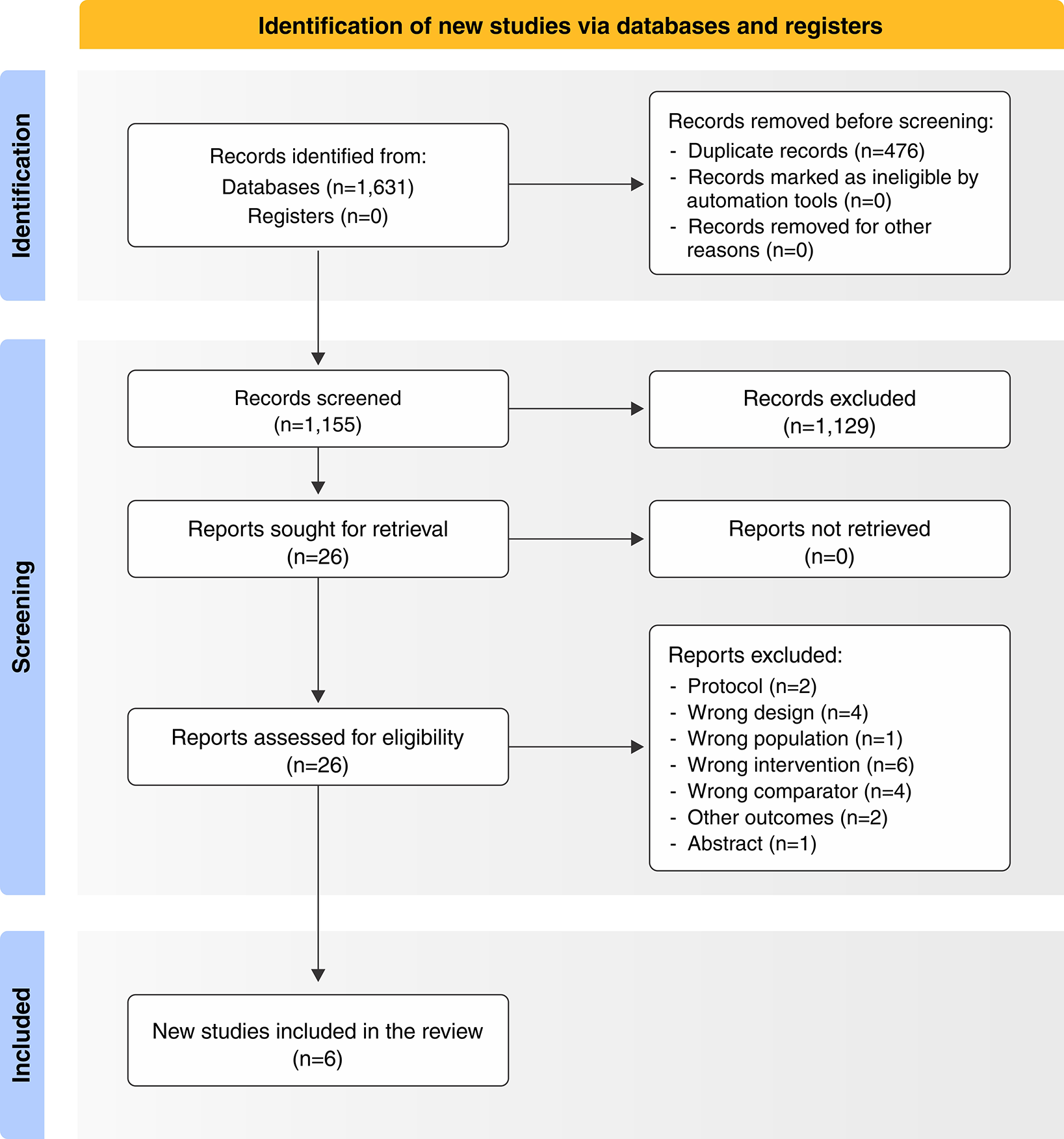
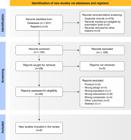
The systematic search resulted in 1,631 records (Figure 1). After removing 476 duplicates, 1,155 were retained for title and abstract screening. Twenty-six were deemed relevant for full-text reading were retrieved. After a complete review of the texts, six studies were identified and were included in this systematic review. The reasons for excluding the remaining articles are listed in Supplementary Table S2. No ongoing studies or studies awaiting classification were found.
Study and patient characteristics
The characteristics of the included studies are summarized in Table 1.55-60 The six studies were parallel group RCTs. Two studies56,60 had three arms. Two other studies were bicentric,55,56 while the other studies were single-center.57-60 The total time of therapy sessions was 400 minutes,57 420 to 480 min,58 1,200 min,55,59 1,650 min,60 or 2,880 min.56 The total duration of the interventions was 2 weeks,57 8 weeks,55 10 weeks,59,60 12 weeks,58 or 48 weeks.56 The post-intervention follow-up durations were none,58 4 weeks,55,60 or 6 months.55,56,59,60 The studies were conducted in Europe (3),55,57,59 Asia (1),58,60 or North America (1).56 A total of 499 participants with OCD were included. The mean age of those treated with MB strategies was 32.80 years (SD = 5.31); the mean disease duration was 9.83 years, and 57% were women.
Intervention characteristics
Table 1 presents an overview of the implemented treatment programs. Eleven independent interventions followed established treatment protocols: 1) MB cognitive therapy,55,58,60 2) MB-ERP,59 3) detached mindfulness,57 4) MB stress reduction,56 5) ERP,59 6) psychoeducation for OCD,55,60 7) cognitive restructuring,57 8) stress management training,58 9) selective serotonin reuptake inhibitors,60 10) inference-based CBT,56 and 11) appraisal-based CBT.56
The duration of interventions ranged from four57 to 48 sessions56 (median = 10.5 sessions), with session lengths between 3558 and 150 minutes60 (median =110 minutes), over a period of 1 to 2.3 months.
Outcomes
Primary outcomes
All six studies55-60 assessed the effects of mindfulness on OC symptoms using the Y-BOCS scale, five of them utilized Y-BOCS-I,55-58,60 and one study59 used Y-BOCS-II and also all six studies provided data on the dropout rate.
Secondary outcomes
Secondary outcome measurement methods varied across studies. Anxiety was measured using the Hamilton Anxiety Rating Scale60 and the Beck Anxiety Inventory.56 Depressive symptoms were assessed with the Beck Depression Inventory-I56 or -II,55,57,59 the Montgomery-Åsberg Depression Rating Scale,58 and the Hamilton Rating Scale for Depression.60 QoL was evaluated in two studies using the WHOQOL-Bref.55,58 Mindfulness skills were assessed in four studies55,58-60 using the short-form Five Facet Mindfulness Questionnaire,59,60 the Kentucky Inventory of Mindfulness Skills,55 and the Freiburg Mindfulness Inventory.58
Risk of bias
Figure 2 summarizes the results of the RoB assessment for each outcome in the included studies. Five studies55-59 were classified as having some concerns regarding OC symptom reduction, while one study60 was classified as having a high risk of overall bias. Two studies55,57 had some concerns regarding the randomization process and deviation from the intended intervention. Five studies55-59 had some concerns regarding outcome assessment. Zhang et al.60 deviated from the intended intervention and loss parameters and involved issues with the outcome measures.
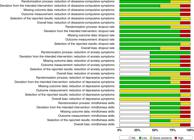
In relation to obsessive-compulsive symptoms, two studies55,57 were classified as having some concerns due to randomization issues and selective outcome reporting.55 One study60 was classified as having a high RoB due to deviation from the intended intervention and participant losses during follow-up. Regarding anxiety and depressive symptom reduction, two studies56,58 had outcome measurement issues, and one study60 was classified as having a high RoB due to deviation from the planned intervention, data losses during follow-up, and outcome measurement issues. Three studies raised concerns regarding mindfulness skills: one due to randomization issues,55 three55,58,59 due to outcome measurement issues, and two55,60 regarding selective outcome reporting. Zhang et al.60 was classified as having a high RoB for the above mentioned reasons.
Intervention effects
We combined the effects of MB treatments across the six outcomes measured immediately after the intervention, including the primary outcomes of OC symptom reduction and dropout rate and the secondary outcomes of anxiety reduction, depression reduction, QoL, and mindfulness skills. The forest plots for the meta-analyses of the effects of mindfulness treatment are shown in Figures 3 to 7.
Primary outcomes
Obsessive-compulsive symptoms
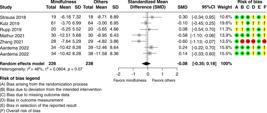
Across six studies55-60 (n = 464), MBIs and CBT reduced obsessive-compulsive symptoms (Figure 3) on the Y-BOCS, with a mean difference of -0.51 points (95%CI -2.25 to 1.16) favoring MBIs. Heterogeneity was moderate (I2 = 48%), and sensitivity analysis (excluding the high-RoB study) yielded similar results (SMD = 0.00, 95%CI -0.25 to 0.24; I2 = 32%). At 4 weeks and 6 months of follow-up, no significant differences were found between MBIs and CBT (SMD = -0.03, 95%CI -0.43 to 0.37; and SMD = 0.04, 95%CI -0.17 to 0.25, respectively), with low heterogeneity (I2 = 9% and 0%) and sensitivity results. According to GRADE (Supplementary Table S3), the certainty of evidence was moderate across all time points, indicating no statistically significant difference between MBIs and CBT for reducing or maintaining reductions in obsessive-compulsive symptoms.
Dropout rates
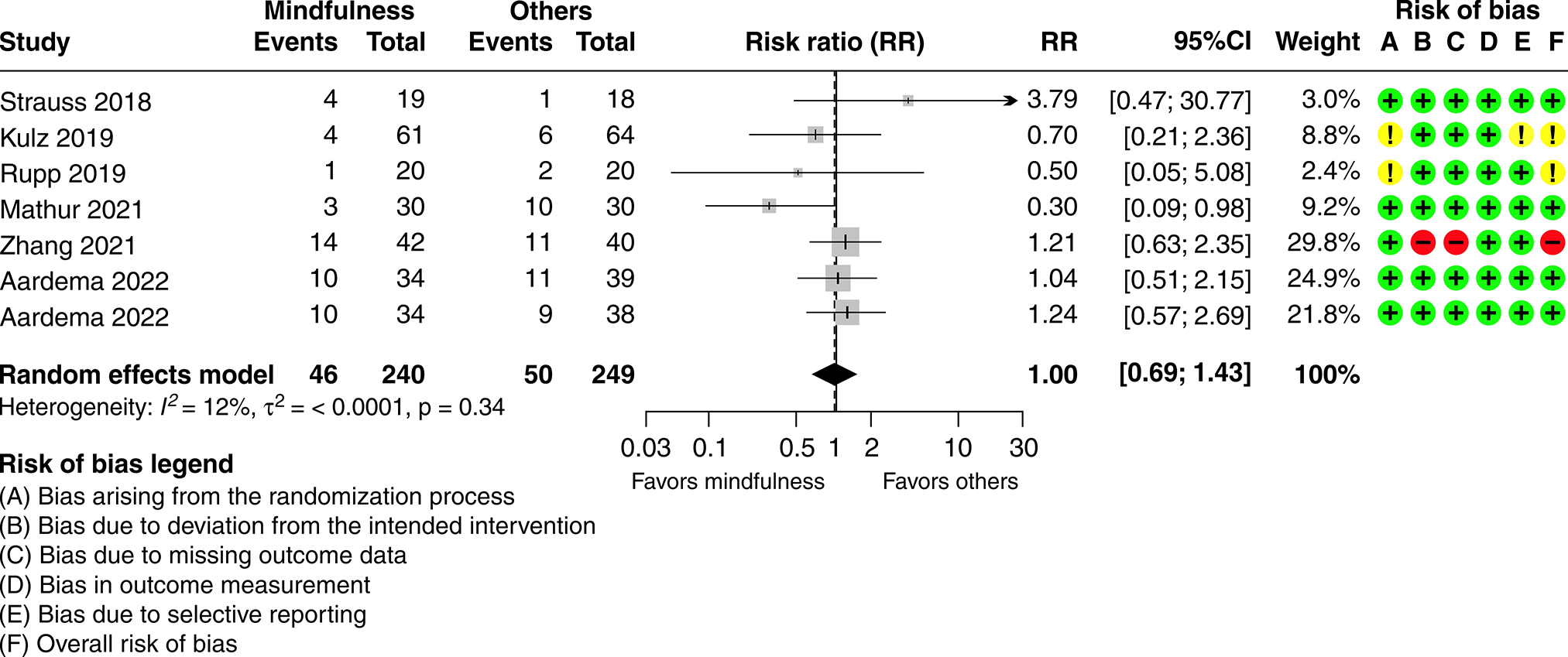
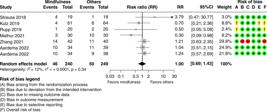
Across six studies55-60 (n = 455), there was no significant difference in treatment dropout rates between MBIs and CBT (RR = 1.00, 95%CI 0.69 to 1.43; I2 = 12%) (Figure 4). In the best-case scenario, MBIs had a 31% lower dropout rate than CBT, whereas in the worst case, dropouts were 43% higher. Sensitivity analysis excluding the high-RoB study60 yielded similar results (RR = 0.90, 95%CI 0.57 to 1.43; I2 = 21%; p = 0.28), confirming the robustness of the findings. According to GRADE (Supplementary Table S3), the certainty of evidence was moderate, indicating no meaningful difference between MBIs and CBT. At 6 months of follow-up, based on four studies55,56,59,60 (n= 355), dropout rates remained comparable between groups (RR = 0.99, 95%CI 0.77 to 1.27; I2 = 0%), with sensitivity analysis excluding Zhang et al.60 yielding similar results (SMD = 0.98, 95%CI 0.73 to 1.31; I2 = 0%), and the moderate-certainty evidence did not support a difference in dropout rates over time (Supplementary Follow-up Results).
Secondary outcomes
Anxiety symptoms
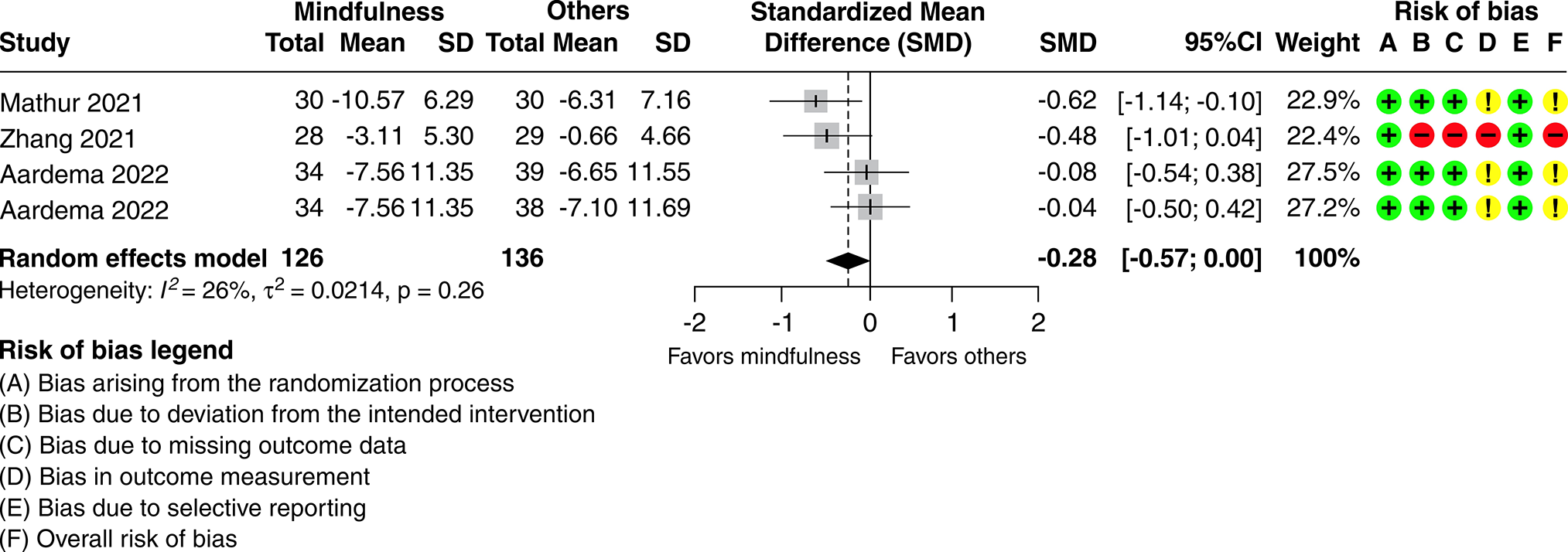
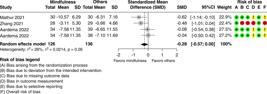
Across three studies58-60 (n = 228), MBIs led to greater short-term reduction in anxiety symptoms than CBT (SMD = -0.28, 95%CI -0.57 to 0.00; I2 = 26%) (Figure 5), equivalent to a mean difference of -3.27 points (95%CI -6.66 to 0.00) on the Beck Anxiety Inventory (0-63 scale). Heterogeneity was low, and sensitivity analysis excluding the high-RoB study60 rendered the effect non-significant (SMD = -0.23, 95%CI -0.58 to 0.12; I2 = 39%). According to GRADE (Supplementary Table S3), the certainty of evidence was moderate, suggesting there is no difference between MBIs and CBT in relation to anxiety symptoms. At 6 months of follow-up (two studies56,60; n = 168), the reduction in anxiety relative to CBT was not maintained (SMD = 0.02, 95%CI -0.26 to 0.30; I2 = 10%), with moderate-certainty evidence indicating no long-term difference between the groups (Supplementary Follow-up Results).
Depressive symptoms
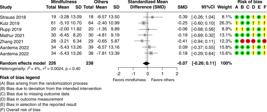
Across six studies55-60 (n = 430), there was no significant difference in depressive symptoms between the MBI and CBT groups (SMD = -0.07, 95%CI -0.26 to 0.11; I2 = 4%) (Figure 6). Heterogeneity was not significant, and sensitivity analysis excluding the high-RoB study60 confirmed similar results (SMD = -0.03, 95%CI -0.22 to 0.17; I2 = 0%), supporting the robustness of findings. According to GRADE (Supplementary Table S3), the certainty of evidence was high, indicating no difference between MBIs and CBT in reducing depressive symptoms among patients with OCD. At 4 weeks of follow-up (two studies57,60; n = 96), no significant differences were observed between groups (SMD = -0.07, 95%CI -0.52 to 0.39; I2 = 21%), with low heterogeneity and GRADE low-certainty evidence. At 6 months of follow-up (four studies55,56,59,60; n = 330), depressive outcomes remained equivalent between MBIs and CBT (SMD = 0.00, 95%CI -0.20 to 0.21; I2 = 0%), with sensitivity analysis confirming stability of results (SMD = 0.06, 95%CI -0.16 to 0.29; I2 = 0%) and moderate-certainty evidence indicating no long-term difference between groups (Supplementary Follow-up Results).
Quality of life
Two studies55,58 compared quality of life in the MBIs and CBT groups; however, the results could not be pooled due to differences in outcome measurement scales. Külz et al.55 used the WHOQOL-BREF global score, finding a mean increase of 10.50 points (SD = 20.91) the MBI group, compared to a 1.60-point increase (SD = 20.38) in the OCD-prolonged exposure group. Mathur et al.58 reported domain-specific outcomes in the WHOQOL-BREF, showing small between-group differences: physical (+8.25 vs. +6.42), psychological (+7.66 vs. +9.07), social (+3.54 vs. +12.64), and environmental (+7.75 vs. +6.86). According to GRADE, there is low-certainty evidence that MBIs do not differ from CBT in quality of life improvement.
Mindfulness skills
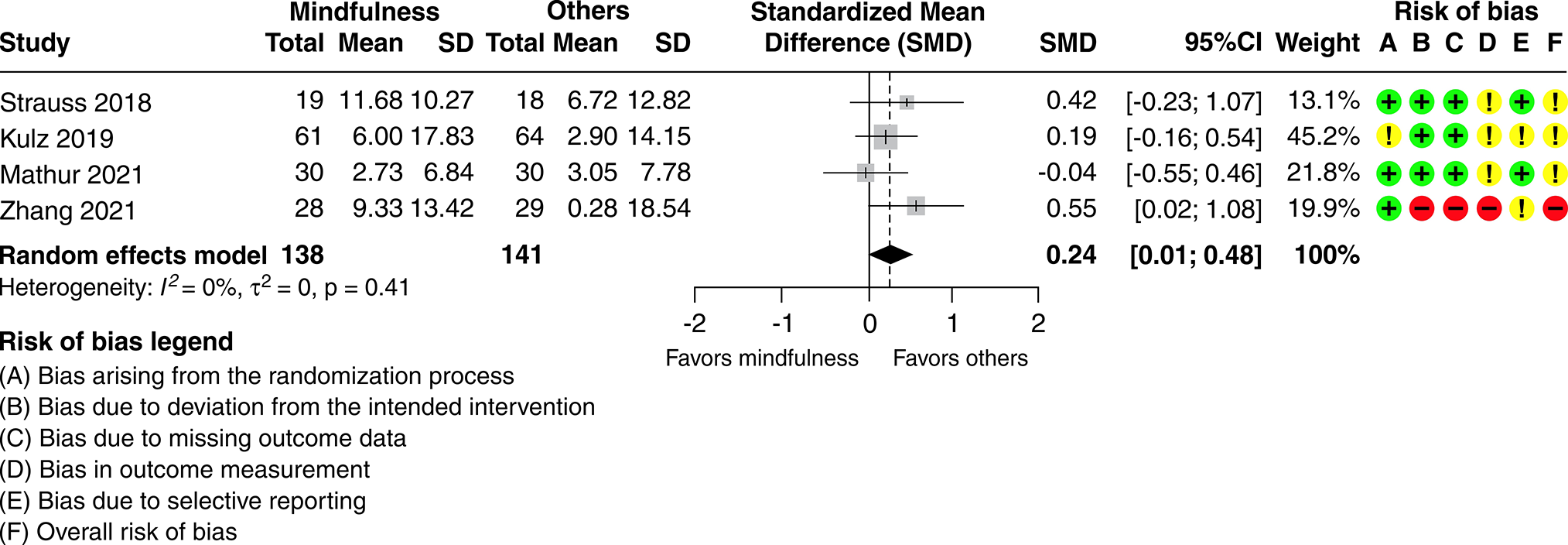
Across four studies55,58-60 (n = 279), MBIs significantly increased mindfulness skills compared with CBT (SMD = 0.24, 95%CI 0.01 to 0.48; I2 = 0%) (Figure 7), corresponding to a mean improvement of 3.07 points (95%CI 0.13 to 6.15) on the Five Facet Mindfulness Questionnaire (range 39-195; higher = better). Sensitivity analysis excluding the high-RoB study60 slightly reduced the effect size, indicating little to no difference (SMD = 0.17, 95%CI -0.10 to 0.43; I2 = 0%). According to GRADE (Supplementary Table S3), the certainty of evidence was moderate, suggesting that MBIs modestly enhance mindfulness skills compared with CBT. At 6 months of follow-up (three studies55,59,60; n = 219), no significant difference was observed between the MBI and CBT groups (SMD = 0.23, 95%CI -0.04 to 0.50; I2 = 0%), with sensitivity analysis confirming the stability of results (SMD = 0.21, 95%CI -0.09 to 0.52; I2 = 0%) and GRADE moderate-certainty evidence indicating little or no long-term effect (Supplementary Follow-up Results).

Certainty of evidence
Certainty of evidence, which was assessed according to GRADE criteria, is shown in Supplementary Table S3.
Subgroup analysis and heterogeneity assessment
Although subgroup analyses and meta-regression were prespecified, we refrained from performing them because the evidence per subgroup was sparse. Given the limited number of contributing studies and a total sample of 499, dividing the data would markedly reduce statistical power and increase the risk of spurious subgroup effects.
We reported pooled random-effects estimates for each outcome, and heterogeneity is shown on the corresponding forest plots. Results from sensitivity analyses by RoB in presented Supplementary Table S4.
Discussion
Summary of Main Findings
This is the first methodologically rigorous systematic review, conducted in accordance with the Cochrane Handbook for Interventions Studies36 and reported according to the PRISMA checklist,37 to compare MBIs with CBT techniques for adults with OCD regarding reductions in obsessive-compulsive, anxiety, and depressive symptoms, treatment dropout rates, mindfulness skills, and quality of life.
Obsessive-compulsive symptoms
Analysis of six studies55-60 including 464 participants showed no difference between MBIs and CBT in reducing obsessive-compulsive symptoms (SMD = -0.08, 95%CI -0.35 to 0.18). The “CBT techniques” group comprised psychotherapeutic interventions widely recognized as first-line treatments for OCD (ERP, psychoeducation, and cognitive restructuring) which serve as robust, evidence-based comparators.
Although MBIs were not found to be superior, their apparent equivalence to these gold-standard interventions suggests MBIs may be a viable alternative for patients who cannot tolerate ERP or prefer different approaches. This finding should be interpreted cautiously, as the moderate heterogeneity (I2 = 48%) indicates methodological variability across studies, likely related to sample composition, intervention format, treatment duration, or adherence.
As shown in the forest plot of reduction of obsessive-compulsive symptoms (Figure 3), four studies55-57,59 were consistent in showing no difference between groups. The heterogeneity appears to be driven by Mathur et al.58 and Zhang et al.,60 which reported greater efficacy of MBIs over comparators (stress-management training and psychoeducation, respectively). However, Zhang et al.60 had major methodological limitations and high overall risk of bias, although its exclusion in sensitivity analysis did not alter the results, reinforcing moderate-certainty evidence that MBIs are as effective as CBT-based interventions for OCD.
At 4 weeks and 6 months of follow-up, no significant differences emerged between MBIs and CBT, indicating comparable maintenance of treatment effects over time.
Exploratory data
The observed heterogeneity likely stems from Mathur et al.58 and Zhang et al.,60 which showed that MB cognitive therapy was more efficacious that stress management training and OCD-prolonged exposure therapy, respectively, while the remaining four trials found no differences between groups. However, sensitivity analysis excluding Zhang’s high-risk study60 did not change conclusions.
Exploratory comparisons suggest possible cultural and demographic influences: both positive studies were conducted in Asia, where meditation-based practices may be more culturally familiar; they included a higher proportion of men (∼67% vs 60-70% women in others) and younger participants (28-29 years vs 30-38 years) than other studies.
Another relevant aspect is the type of MBI used: Mathur et al.,58 Zhang et al.,60 and Külz et al.55 applied MB cognitive therapy, whereas others used MB-ERP, detached mindfulness, or MB stress reduction. Although Külz et al.55 found no difference in Y-BOCS scores, Obsessive Compulsive Inventory-Revised61 outcomes favored MB cognitive therapy, suggesting possible specificity for certain subgroups. Moreover, some comparators (e.g., stress-management training) are not standard CBT approaches for OCD, which may also explain the variation.
These findings remain exploratory, as formal subgroup analysis was not feasible given the limited sample size (n = 464).
Dropout rates
No significant difference was found in treatment dropout rates between MBIs and CBT (RR = 1.00, 95%CI 0.69 to 1.43), with moderate-certainty evidence. This indicates that MBIs offered neither substantial advantages nor disadvantages in treatment adherence, contrary to the expectation that mindfulness would reduce dropouts due to its less aversive nature than ERP. Typical dropout rates for CBT in psychiatric disorders average around 17%,10 while ERP for OCD ranges from 20% to 30%,8 consistent with our present review’s findings (MBIs = 19.17%; CBT = 20.08%). Heterogeneity was not significant (I2 = 12%), and the 6-month follow-up meta-analysis showed similar results (I2 = 0%), confirming that mindfulness does not lead to higher dropout rates than CBT.
Anxiety and depressive symptoms
For anxiety symptoms, the meta-analysis showed a statistically but not clinically significant difference favoring MBIs over CBT (SMD = -0.28, 95%CI -0.57 to 0.00; I2 = 26%), with moderate-certainty evidence. However, this effect was not robust: after excluding Zhang et al.60 in the sensitivity analysis, the difference disappeared (SMD = -0.23, 95%CI -0.58 to 0.12; I2 = 39%). At 6 months of follow-up, no differences were found between groups. A similar pattern emerged for depressive symptoms, with no significant difference between MBIs and CBT (SMD = -0.07, 95%CI -0.26 to 0.11). The high-certainty evidence indicates that MBIs and CBT are equally effective in reducing anxiety and depressive symptoms in patients with OCD.
Quality of life
Quality of life was evaluated in two studies,55,58 but a meta-analysis was not possible due to differences in outcome measures. Both studies suggested improved quality of life in the MBI group compared with CBT, but the evidence remains insufficient to draw firm conclusions. Future research using standardized measures is needed to better assess the impact of MBIs on this outcome.
Mindfulness skills
MBIs improved mindfulness skills compared with other strategies (SMD = 0.24, 95%CI 0.01 to 0.48). However, when Zhang et al.60 was excluded in the sensitivity analysis, the difference was no longer significant (SMD = 0.17, 95%CI -0.10 to 0.43; I2 = 0%). According to GRADE, the certainty of evidence was moderate, suggesting that MBIs may lead to slight but uncertain improvements in mindfulness skills compared with CBT.
Completeness and applicability of the evidence
In this review, the certainty of the evidence on the effects of MBIs compared to CBT (ERP, cognitive restructuring, psychoeducation, and stress management training) in adult outpatients with OCD ranged from low to high (generally moderate). The applicability of the results is strengthened by the geographical diversity of the studies but is limited by heterogeneity in both mindfulness interventions (MB cognitive therapy, MB stress reduction, and detached mindfulness) and the comparators.
The inclusion of participants with varying degrees of OCD severity enhances the generalizability of the findings. Thus, the findings are most applicable to adult outpatients with mild to moderate OCD who have access to structured mindfulness programs administered by trained professionals.
Certainty of evidence
The certainty of evidence ranged from low to high across outcomes. The certainty of evidence for most outcomes was moderate, as shown in Supplementary Table S3.
Potential bias in the review process
Although rigorous strategies were employed to minimize potential bias, some limitations must be considered when interpreting the findings. First, publication bias cannot be completely ruled out. Despite extensive searches across multiple databases and trial registries, unpublished or negative studies may have been missed, potentially overestimating the effects of the interventions. Second, although no language restrictions were applied, most databases prioritize English-language or internationally indexed publications, which may have limited the identification of studies from different cultural or regional contexts. Third, although study selection and data extraction were performed independently by two reviewers, with disagreements resolved by a third, some subjective judgment bias regarding study eligibility or RoB assessment may have occurred. Finally, some meta-analyses included few studies and had small sample sizes, which could reduce the precision of estimates and increase the risk of imprecise conclusions. These limitations are common to most systematic reviews and highlight the need for cautious interpretation, especially when applying the results directly to clinical practice.
Subgroup analyses
Given the limited evidence per potential moderator (overall n = 499 across trials), conducting subgroup analyses or meta-regression would likely yield underpowered and unstable estimates, increasing the risk of spurious findings.
Agreement and disagreement with other studies or reviews
As discussed earlier, this review is the first in the literature to fully adhere to the Cochrane Handbook for Systematic Reviews of Interventions.36 Previous reviews involved important methodological flaws and were thus not suitable for direct comparison.
Although this study does not involve major methodological limitations, some points should be noted. First, the heterogeneity of the interventions and the diversity of symptom measurement scales may have influenced comparisons and modulated the effects of mindfulness. In addition, the lack of sufficient data on QoL limits the interpretation of this outcome.
Nevertheless, this review has important strengths. It is the first to include only RCTs, the most appropriate design for intervention assessment. All follow-up periods were analyzed to evaluate the overall trajectory of the effects of mindfulness in OCD. This was also the only review to conduct sensitivity analyses and assess the certainty of the evidence, strengthening the reliability of the findings.
Implications for practice
MBIs showed comparable effectiveness to CBT techniques, with no significant differences in reducing OCD symptoms, dropout rates, anxiety, depression, or mindfulness skills. Importantly, the comparator groups consisted of active, evidence-based treatments (such as ERP, psychoeducation, and cognitive restructuring) rather than inactive controls or waitlist conditions, suggesting that MBIs can achieve outcomes similar to established therapies. Therefore, MBIs may serve as a viable alternative or adjunctive option for patients who lack access to, cannot tolerate, or do not adequately respond to first-line CBT approaches, offering a flexible and patient-centered therapeutic strategy.
Implications for research
This review identified key gaps for future research. Larger, well-designed randomized controlled trials with extended follow-up are needed to increase the precision and reliability of effect estimates for MBIs in OCD treatment. Future studies should conduct subgroup analyses to examine moderators such as baseline OCD severity, comorbidities (e.g., depression or anxiety), prior treatment resistance, and individual characteristics (e.g., baseline mindfulness levels or cognitive styles). Additionally, there is a pressing need to standardize mindfulness protocols, as the current variability (e.g., MB cognitive therapy, MB stress reduction, detached mindfulness) hinders cross-study comparability. Researchers should use established, well-documented interventions and report implementation details clearly. Finally, outcome assessments should include clinically meaningful measures such as quality of life, social and occupational functioning, and potential adverse effects to provide a more comprehensive understanding of the real-world therapeutic value of MBIs. These recommendations aim to strengthen the current evidence base and support more robust, clinically relevant conclusions about the role of MBIs in OCD management.
Differences between the protocol and the final review
The protocol was registered in PROSPERO (CRD42020200874) on August 24, 2020. In March 2024, we amended the protocol to expand the comparator group to include cognitive or behavioral techniques or psychoeducation (active controls) and to redefine one primary outcome, specifying “dropout rate” instead of the original vague outcome “treatment side effects.”
Supplementary Materials
Supplementary Material
Data availability statement
The data that support this study are available in the body of the paper and/or supplementary materials.
References
- 1 Fawcett EJ, Power H, Fawcett JM. Women are at greater risk of OCD than men: a meta-analytic review of OCD prevalence worldwide. J Clin Psychiatry. 2020;81:19r13085.
- 2 Kessler RC, Chiu WT, Demler O, Walters EE. Prevalence, severity, and comorbidity of 12-month DSM-IV disorders in the National Comorbidity Survey Replication. Arch Gen Psychiatry. 2005;62:617-27.
- 3 Torres AR, Ramos-Cerqueira ATA, Ferrão YA, Fontenelle LF, do Rosário MC, Miguel EC. Suicidality in obsessive-compulsive disorder. J Clin Psychiatry. 2011;72:17-26.
- 4 Torres AR, Ramos-Cerqueira ATA, Torresan RC, Domingues MS, Hercos ACR, Guimarães ABC. Prevalence and associated factors for suicidal ideation and behaviors in obsessive-compulsive disorder. CNS Spectr. 2007;12:771-8.
- 5 Dell’Osso B, Benatti B, Arici C, Palazzo C, Altamura AC, Hollander E, et al. Prevalence of suicide attempt and clinical characteristics of suicide attempters with obsessive-compulsive disorder: a report from the International College of Obsessive-Compulsive Spectrum Disorders (ICOCS). CNS Spectr. 2018;23:59-66.
- 6 Hollander E, Doernberg E, Shavitt R, Waterman RJ, Soreni N, Veltman DJ, et al. The cost and impact of compulsivity: A research perspective. European Neuropsychopharmacology. 2016;26:800-9.
- 7 Yang W, Tang Z, Wang X, Ma X, Cheng Y, Wang B, et al. The cost of obsessive-compulsive disorder (OCD) in China: a multi-center cross-sectional survey based on hospitals. Gen Psychiatr. 2021;34:e100632.
- 8 Fineberg NA, Hollander E, Pallanti S, Walitza S, Grünblatt E, Dell’Osso BM, et al. Clinical advances in obsessive-compulsive disorder: a position statement by the International College of Obsessive-Compulsive Spectrum Disorders. Int Clin Psychopharmacol. 2020;35:173-93.
- 9 Baruah U, Pandian RD, Narayanaswamy JC, Bada Math S, Kandavel T, Reddy YCJ. A randomized controlled study of brief family-based intervention in obsessive-compulsive disorder. J Affect Disord. 2018;225:137-46.
- 10 Abramowitz JS, Taylor S, McKay D. Potentials and limitations of cognitive treatments for obsessive-compulsive disorder. Cogn Behav Ther. 2005;34:140-7.
- 11 Kabat-Zinn J, Hanh TN. Full catastrophe living: using the wisdom of your body and mind to face stress, pain, and illness. New York: Delta Trade Paperbacks; 2009.
- 12 Segal Z, Williams J, Teasdale JD. Mindfulness-based cognitive therapy for depression: a new approach to preventing relapse. New York: Guilford Press; 2001.
- 13 Bishop SR, Lau M, Shapiro S, Carlson L, Anderson ND, Carmody J, et al. Mindfulness: a proposed operational definition. Clin Psychol Sci Pract. 2004;11:230-41.
- 14 Baer RA. Mindfulness training as a clinical intervention: a conceptual and empirical review. Clin Psychol Sci Pract. 2003;10:125-43.
- 15 Teasdale JD, Segal ZV, Williams JMG, Ridgeway VA, Soulsby JM, Lau MA. Prevention of relapse/recurrence in major depression by mindfulness-based cognitive therapy. J Consult Clin Psychol. 2000;68:615-23.
- 16 Koran LM, Hanna GL, Hollander E, Nestadt G, Simpson HB. American Psychiatric Association. Practice guideline for the treatment of patients with obsessive-compulsive disorder. Am J Psychiatry. 2007;164:5-53.
-
17 National Institute for Health and Care Excellence. Obsessive-compulsive disorder. Evidence update September 2013. A summary of selected new evidence relevant to NICE clinical guideline 31 ‘Obsessive-compulsive disorder: core interventions in the treatment of obsessive-compulsive disorder and body dysmorphic disorder’ (2005). Evidence Update 47. London: NICE; 2013 [cited 2025 Aug 20]. https://www.nice.org.uk/guidance/cg31/evidence/evidence-update-194847085
» https://www.nice.org.uk/guidance/cg31/evidence/evidence-update-194847085 - 18 Abramowitz JS, Blakey SM, Reuman L, Buchholz JL. New directions in the cognitive-behavioral treatment of OCD: theory, research, and practice. Behav Ther. 2018;49:311-22.
- 19 Aderka IM, Anholt GE, van Balkom AJLM, Smit JH, Hermesh H, Hofmann SG, et al. Differences between early and late drop-outs from treatment for obsessive-compulsive disorder. J Anxiety Disord. 2011;25:918-23.
- 20 Farris SG, McLean CP, Van Meter PE, Simpson HB, Foa EB. Treatment response, symptom remission, and wellness in obsessive-compulsive disorder. J Clin Psychiatry. 2013;74:685-90.
- 21 Janardhan Reddy Y, Sundar AS, Narayanaswamy JC, Math SB. Clinical practice guidelines for obsessive-compulsive disorder. Indian J Psychiatry. 2017;59:S74-S90.
- 22 Grayson JB, Foa EB, Steketee G. Habituation during exposure treatment: distraction vs attention-focusing. Behav Res Ther. 1982;20:323-8.
- 23 Grayson JB, Foa EB, Steketee GS. Exposure in vivo of obsessive-compulsives under distracting and attention-focusing conditions: replication and extension. Behav Res Ther. 1986;24:475-9.
- 24 Najmi S, Kuckertz JM, Amir N. Automatic avoidance tendencies in individuals with contamination-related obsessive-compulsive symptoms. Behav Res Ther. 2010;48:1058-62.
- 25 Hannan SE, Tolin D. Mindfulness- and acceptance-based behavior therapy for obsessive-compulsive disorder. In: Orsillo SM, Roemer L, editors. Acceptance and mindfulness-based approaches to anxiety. Boston: Springer; 2005. p. 271-99.
- 26 Fairfax H. The use of mindfulness in obsessive-compulsive disorder: suggestions for its application and integration in existing treatment. Clin Psychol Psychother. 2008;15:53-9.
- 27 Didonna F. Mindfulness and obsessive-compulsive disorder: developing a way to trust and validate one’s internal experience. In: Didonna F, editor. Clinical handbook of mindfulness. New York: Springer; 2009. p. 189-202.
- 28 Hanstede M, Gidron Y, Nyklíček I. The effects of a mindfulness intervention on obsessive-compulsive symptoms in a non-clinical student population. J Nerv Ment Dis. 2008;196:776-9.
- 29 Hawley LL, Rector NA, DaSilva A, Laposa JM, Richter MA. Technology-supported mindfulness for obsessive-compulsive disorder: self-reported mindfulness and EEG correlates of mind wandering. Behav Res Ther. 2021;136:103757.
- 30 Key BL, Rowa K, Bieling P, McCabe R, Pawluk EJ. Mindfulness-based cognitive therapy as an augmentation treatment for obsessive-compulsive disorder. Clin Psychol Psychother. 2017;24:1109-20.
- 31 Madani NAM, Kananifar N, Atashpour SH, Habil M. The effects of mindfulness group training on the rate of obsessive-compulsive disorder symptoms on the women in Isfahan City (Iran). Int Med J. 2013;20:13-7.
- 32 Riquelme-Marín A, Rosa-Alcázar AI, Ortigosa-Quiles JM. Mindfulness-based psychotherapy in patients with obsessive-compulsive disorder: a meta-analytical study. Int J Clin Health Psychol. 2022;22:100321.
- 33 Chien WT, Tse MK, Chan HYL, Cheng HY, Chen L. Is mindfulness-based intervention an effective treatment for people with obsessive-compulsive disorder? A systematic review and meta-analysis. J Obsessive Compuls Relat Disord. 2022;32:100712.
- 34 Başkaya E, Özgüç S, Tanrıverdi D. Examination of the effectiveness of mindfulness-based cognitive therapy on patients with obsessive-compulsive disorder: systematic review and meta-analysis. Issues Ment Health Nurs. 2021;42:998-1009.
- 35 Bürkle JJ, Schmidt S, Fendel JC. Mindfulness- and acceptance-based programmes for obsessive-compulsive disorder: a systematic review and meta-analysis. J Anxiety Disord. 2025;110:102977.
-
36 Higgins JPT, Thomas J, Chandler J, Cumpston M, Li T, Page MJ, et al. Cochrane handbook for systematic reviews of interventions. Version 6.5 (updated August 2024). 2024 [cited 2025 Aug 20]. www.training.cochrane.org/handbook
» www.training.cochrane.org/handbook - 37 Page MJ, McKenzie JE, Bossuyt PM, Boutron I, Hoffmann TC, Mulrow CD, et al. The PRISMA 2020 statement: an updated guideline for reporting systematic reviews. BMJ. 2021;n71.
- 38 Hayes SC, Strosahl KD, Wilson KG. Acceptance and commitment therapy: the process and practice of mindful change. 2nd ed. New York: Guilford Press; 2011.
- 39 Linehan M. Cognitive behavioral treatment of borderline personality disorder. New York: Guilford Press; 1993.
- 40 Goodman WK. The Yale-Brown Obsessive Compulsive Scale. I. Development, use, and reliability. Arch Gen Psychiatry. 1989;46:1006-11.
- 41 Goodman WK. The Yale-Brown Obsessive Compulsive Scale. II. Validity. Arch Gen Psychiatry. 1989;46:1012-6.
- 42 Foa EB, Huppert JD, Leiberg S, Langner R, Kichic R, Hajcak G, et al. The Obsessive-Compulsive Inventory: development and validation of a short version. Psychol Assess. 2002;14:485-96.
- 43 Hamilton M. The assessment of anxiety states by rating. Br J Med Psychol. 1959;32:50-5.
- 44 Beck AT, Epstein N, Brown G, Steer RA. An inventory for measuring clinical anxiety: psychometric properties. J Consult Clin Psychol. 1988;56:893-7.
- 45 Montgomery SA, Åsberg M. A new depression scale designed to be sensitive to change. Br J Psychiatry. 1979;134:382-9.
- 46 Beck AT. An inventory for measuring depression. Arch Gen Psychiatry. 1961;4:561-71.
- 47 Hamilton M. A rating scale for depression. J Neurol Neurosurg Psychiatry. 1960;23:56-62.
- 48 Ware JE, Sherbourne CD. The MOS 36-item short-form health survey (SF-36). I. Conceptual framework and item selection. Med Care. 1992;30:473-83.
- 49 Skevington SM, Lotfy M, O’Connell KA. The World Health Organization’s WHOQOL-BREF quality of life assessment: psychometric properties and results of the international field trial. A report from the WHOQOL Group. Qual Life Res. 2004;13:299-310.
- 50 Baer RA, Smith GT, Hopkins J, Krietemeyer J, Toney L. Using self-report assessment methods to explore facets of mindfulness. Assessment. 2006;13:27-45.
- 51 Baer RA, Smith GT, Lykins E, Button D, Krietemeyer J, Sauer S, et al. Construct validity of the five facet mindfulness questionnaire in meditating and nonmeditating samples. Assessment. 2008;15:329-42.
- 52 Chadwick P, Hember M, Symes J, Peters E, Kuipers E, Dagnan D. Responding mindfully to unpleasant thoughts and images: reliability and validity of the Southampton Mindfulness Questionnaire (SMQ). Br J Clin Psychol. 2008;47:451-5.
- 53 Ouzzani M, Hammady H, Fedorowicz Z, Elmagarmid A. Rayyan – a web and mobile app for systematic reviews. Syst Rev. 2016;5:210.
- 54 R Core Team. R: a language and environment for statistical computing. Vienna: R Foundation for Statistical Computing; 2024.
- 55 Külz AK, Landmann S, Cludius B, Rose N, Heidenreich T, Jelinek L, et al. Mindfulness-based cognitive therapy (MBCT) in patients with obsessive-compulsive disorder (OCD) and residual symptoms after cognitive behavioral therapy (CBT): a randomized controlled trial. Eur Arch Psychiatry Clin Neurosci. 2019;269:223-33.
- 56 Aardema F, Bouchard S, Koszycki D, Lavoie ME, Audet JS, O’Connor K. Evaluation of inference-based cognitive-behavioral therapy for obsessive-compulsive disorder: a multicenter randomized controlled trial with three treatment modalities. Psychother Psychosom. 2022;91:348-59.
- 57 Rupp C, Jürgens C, Doebler P, Andor F, Buhlmann U. A randomized waitlist-controlled trial comparing detached mindfulness and cognitive restructuring in obsessive-compulsive disorder. PLoS One. 2019;14:e0213895.
- 58 Mathur S, Sharma MP, Balachander S, Kandavel T, Reddy YJ. A randomized controlled trial of mindfulness-based cognitive therapy vs stress management training for obsessive-compulsive disorder. J Affect Disord. 2021;282:58-68.
- 59 Strauss C, Lea L, Hayward M, Forrester E, Leeuwerik T, Jones AM, et al. Mindfulness-based exposure and response prevention for obsessive compulsive disorder: findings from a pilot randomised controlled trial. J Anxiety Disord. 2018;57:39-47.
- 60 Zhang T, Lu L, Didonna F, Wang Z, Zhang H, Fan Q. Mindfulness-based cognitive therapy for unmedicated obsessive-compulsive disorder: a randomized controlled trial with 6-month follow-up. Front Psychiatry. 2021;12:645024.
- 61 Foa EB, Huppert JD, Leiberg S, Langner R, Kichic R, Hajcak G, Salkovskis PM. The Obsessive-Compulsive Inventory: development and validation of a short version. Psychol Assess. 2002;14:485-96.
-
How to cite this article:
Perin EA, Carvas Junior N, Civile VT, Moreira RZ, Melnik T. Mindfulness strategies for obsessive-compulsive disorder: a systematic review and meta-analysis. Braz J Psychiatry. 2026;48:e20254214. Epub 2025 Aug 7. http://doi.org/10.47626/1516-4446-2025-4214
Edited by
-
Handling Editor:
Thiago Fidalgo