 Synthesis and anthelmintic activity of aminochalcones against multiresistant Haemonchus contortus
Abstract
The objective of this study was to synthesize and evaluate the in vitro activity of aminochalcones against Haemonchus contortus eggs and adults. Aminochalcones 1 and 2 were synthesized using Claisen–Schmidt condensation and characterized using Fourier-transform infrared spectroscopy, nuclear magnetic resonance, and mass spectrometry. The activity of both aminochalcones was assessed in the egg hatch test and that of aminochalcone 1 was further evaluated in the adult worm motility test using multiresistant H. contortus. The chemical structures of the synthesized compounds were confirmed, and changes induced in eggs and adults were assessed using scanning electron microscopy (SEM). Aminochalcones 1 and 2 inhibited larvae hatching by 98.70 and 99.89%, respectively, at concentrations of 0.25 and 1 mg/mL. SEM images revealed structural and morphological changes in eggs treated with both compounds. After 12 h of exposure to aminochalcone 1 (1.25 mg/mL), all adult nematodes were immobile, and wrinkling of the cuticle was observed. These findings indicate the ovicidal effect of aminochalcones and the inhibition of worm motility by aminochalcone 1. Our preliminary study demonstrated, for the first time, the anthelmintic activity of this class of compounds against gastrointestinal nematodes of small ruminants and suggest further anthelmintic evaluation.
Keywords:
Small ruminants; active compounds; structural modifications; antiparasitic effect; gastrointestinal nematodes
Resumo
O objetivo deste estudo foi sintetizar e avaliar o efeito in vitro de aminochalconas contra Haemonchus contortus. Aminochalconas 1 e 2 foram sintetizadas usando condensação de Claisen-Schmidt e caracterizadas usando espectroscopia de infravermelho com transformada de Fourier, ressonância magnética nuclear e espectrometria de massa. A atividade de ambas as aminochalconas foi avaliada no teste de eclosão de ovos e a da aminochalcona 1 foi avaliada posteriormente no teste de motilidade de nematódeos adultos utilizando H. contortus multiresistente. As estruturas químicas dos compostos sintetizados foram confirmadas e as alterações induzidas em ovos e adultos foram avaliadas usando microscopia eletrônica de varredura (MEV). As aminochalconas 1 e 2 inibiram a eclosão larvar em 98,70 e 99,89%, respectivamente, nas concentrações de 0,25 e 1 mg/mL. Imagens de MEV revelaram mudanças estruturais e morfológicas em ovos tratados com ambos os compostos. Após 12 h de exposição à aminochalcona 1 (1,25 mg/mL), todos os nematódeos estavam imóveis e foi observado enrugamento da cutícula. Esses achados indicam o efeito ovicida das aminochalconas e a inibição da motilidade dos nematódeos pela aminochalcona 1. Nosso estudo demonstrou, pela primeira vez, a atividade anti-helmíntica dessa classe de compostos contra nematódeoss gastrointestinais de pequenos ruminantes e sugere adicional avaliação anti-helmíntica.
Palavras-chave:
Pequenos ruminantes; compostos ativos; modificações estruturais; efeito antiparasitário; nematódeos gastrintestinais
Introduction
Haemonchosis is caused by Haemonchus contortus, a hematophagous nematode that inhabits the abomasum of small ruminants, leading to decreased growth and fecundity rates and increased mortality (Flay et al., 2022). This parasite is one of the most prevalent gastrointestinal nematodes (GIN) in herds grown under grazing conditions in the subtropical and tropical regions, leading to significant economic losses in the livestock sector (Besier et al., 2016).
GIN control involves the use of commercial anthelmintics. However, the effectiveness of these drugs has declined due to the accelerated development of anthelmintic resistance (Ploeger & Everts, 2018). To this end, several studies have investigated and demonstrated the anthelmintic effects of plant-derived products, such as essential oils, extracts, and bioactive compounds (Katiki et al., 2017; Carlis et al., 2019; Davuluri et al., 2019; Aguiar et al., 2022; Barbosa et al., 2023).
Chalcones are aromatic ketones with an α, β-unsaturated carbonyl system joining two aromatic rings. They belong to a class of open-chain flavonoids (Jasim et al., 2021) and are present in several plant genera. They are extensively used in traditional medicine for therapeutic purposes and structural modifications have been shown to confer unique biological properties to chalcones, potentially enhancing their interactions with specific molecular targets (Zhou & Xing, 2015). The biological properties of chalcones include antibacterial, antifungal (Abreu et al., 2024) and antiparasitic (Bezerra et al., 2023) activities. The activity of hybrid benzimidazolyl-chalcone derivatives was in vitro evaluated against H. contortus larvae and some compounds demonstrated interesting effect (Ouattara et al., 2011). In addition, in vitro activity of two ferrocenyl chalcones designed (2E)-1-ferrocenyl-3-(3-chlorophenyl)prop-2-en-1-one and (2E)-1-ferrocenyl-3-(3-methylphenyl)prop-2-en-1-one against H.contortus larvae has been confirmed (Vázquez-Bravo et al., 2020). Furthermore, chalcone designed 1,3-diaryl-2-propen-1-one in vitro inhibited larval motility and development of H. contortus (Taki et al., 2021).
Aminochalcones constitute an important class of chalcones that contain an –NR2 group on either ring A or ring B (Irfan et al., 2020). However, their effect on H. contortus eggs and adults has not yet been demonstrated to date. Thus, the aim of this study was to synthesize, to evaluate the in vitro efficacy of aminochalcones against H. contortus eggs and adults and to verify their effects on worm morphology.
Material and Methods
Synthesis and characterization of aminochalcones
The aminochalcones,viz. (2E)-1-(4'-Aminophenyl)-3-(4-Dimethylaminophenyl)-prop-2-en-1-one (aminochalcone 1) and (2E,4E)-1-(4-Aminophenyl)-5-phenylpenta-2,4-dien-1-one (aminochalcone 2) were synthesized by Claisen–Schmidt condensation under basic conditions (Bhat et al., 2005). A solution of p-aminoacetophenone (2 mmol) in ethanol (5 mL) was added to a solution of benzaldehyde (2 mmol) in ethanol (5 mL) containing 10 drops of 50% (v/v) sodium hydroxide, and the resulting mixture was stirred for 48 h. The mixture was filtered under vacuum, washed with cold water to pH 7.0 and analyzed using thin-layer chromatography (TLC). The compounds (aminochalcones 1 and 2) were characterized using Fourier transform infrared (FT-IR), nuclear magnetic resonance (NMR) and mass spectrometry (MS).
Anthelmintic assays
Recovery of H. contortus eggs and adults
A lamb was housed in a metabolic cage and treated with 5 mg/kg of levamisole (Ripercol®, Zoetis, Brazil), 0.2 mg/kg of ivermectin (Ivomec®, Boehringer-Ingelheim, Brazil), and 2.5 mg/kg of monepantel (Zolvix®, Novartis, Brazil), single dose on alternate days (Barbosa et al., 2023). After total clearance of natural GIN infection, confirmed by fecal egg counts (FEC) and coproculture, the lamb was uniquely infected by oral inoculation withthird-stage larvae (L3) of H. contortus. Haemonchus contortus Kokstad (KOK) isolate was used as a reference because it is resistant to benzimidazoles, levamisole, and macrocyclic lactones. The isolate was provided by Institut National de Recherche pour l'Agriculture, l'Alimentation et l'Environnement (INRAE), Nouzilly, France. The choose of aminochalcones concentrations used in the anthelmintic assays was based on their solubility and findings of others studies with active compounds.
Egg hatching test (EHT)
The EHT was performed according to the method described by Coles et al. (2006). To recover H. contortus eggs, feces were collected directly from animal harboring a monospecific infection with the KOK isolate and processed according to the technique described by Hubert & Kerboeuf (1992). Briefly, 250 μL of an egg suspension containing approximately 100 fresh eggs was incubated for 48 h at 27 ˚C with 250 μL of aminochalcone 1 in the concentration range of 0.25–0.015625 mg/mL or aminochalcone 2 in the concentration range of 1.0–0.0625 mg/mL. Lugol's iodine solution was added to stop larval hatching, and the eggs and first-stage larvae (L1) were counted under a light microscope. This test was conducted with two controls: 3% Tween (Sigma-Aldrich®) in phosphate-buffered saline (PBS) was the negative control and 0.1 mg/mL thiabendazole (Sigma-Aldrich®) was the positive control. Three repetitions with five replicates for each treatment and control group were performed.
Adult worm motility test (AWMT)
AWMT was performed according to the method described by Hounzangbe-Adote et al. (2005). The experimentally infected lamb was euthanized by chemical method. For this, the sedation was followed by general anesthesia with thiopental. After confirmation of animal unconsciousness and loss of reflex, potassium chloride was administrated. To obtain the parasites, the abomasum was removed, opened, and placed in a saline solution maintained at 37 ˚C. Females adult H. contortus were quickly collected and placed into 24-well plates at a density of three worms/plate (in 500 μL of PBS enriched with 4% penicillin/streptomycin (Sigma-Aldrich®) at 37 ˚C). After incubation for 1 h (37 ˚C, 5% CO2), 500 μL of aminochalcone 1 was placed in each well at the following concentrations: 2.5 to 0.15625 mg/mL. The negative control was 3% Tween in PBS. After incubation for 3, 6, 9, and 12 h, the motility and survival of the adult worms were observed under an inverted microscope. Survival or death of the parasite was confirmed by a soft touch using a syndesmotome. Five replicates were used for each treatment and control group.
Scanning electron microscopy (SEM) processing of eggs and adults
Haemonchus contortus eggs exposed to the highest concentrations of aminochalcone 1 (0.25 mg/mL) and 2 (1.0 mg/mL), and the controls (negative and positive) were analyzed using SEM. At least 10 eggs showed the same pattern of change. Ten microliter samples containing eggs were deposited on aluminum stubs with double-sided carbon adhesive tape and observed. This methodology was adapted from Zarza-Albarrán et al. (2020).
The medial region of H. contortus adults was evaluated using SEM. Parasites exposed to 1.25 mg/mL aminochalcone 1 for 12 hours and the negative control were randomly selected and fixed in a 2.5% glutaraldehyde solution in 0.1 M sodium cacodylate buffer for 72 h. The parasites were then dehydrated in a gradual ethanol concentration system (15, 30, 50, 70, and 90% for 1 h each and 100% three times for 30 min in each treatment). After 24h, the samples were dried using a K850 critical point drying apparatus (Quorum Technologies Ltd., UK), mounted on stubs, and coated with gold-palladium (Barbosa et al., 2023).
For visualization, a microscope (FEI Company® (USA) with an accelerating voltage of 15 kV was used. The magnification was set at 8.000× for eggs and 110× for adults, following which possible qualitative changes were observed.
Statistical analysis
In the EHT, the effects of aminochalcones 1 and 2 were determined using the following equation: [number of eggs/(number of eggs + number of L1)] × 100. The motility of adult worm streated with aminochalcone 1 was evaluated according to the following formula: number of motile worms/total number of worms per well.
Initially, the data of the EHT and AWMT were analyzed and the assumptions of normality and homogeneity were satisfactorily fulfilled (p>0.05). The percentage of hatching larvae in EHT was analyzed by one-way analysis of variance (ANOVA) to evaluate the effect of each aminochalcone (1 and 2) followed by Tukey’s test using GraphPad® Prism 8.0. The results of the AWMT were analyzed by ANOVA with repeated measures to evaluate the effect of aminochalcone 1 followed by Tukey’s test using SPSS® 23.0 program for Windows. The effective concentrations of aminochalcones to inhibit 50% (EC50) of larvae hatching and adult motility were determined by the probit linear regression model using SPSS® 23.0 program for Windows.
Results
The structures of aminochalcones 1 and 2 were determined by NMR, IR, and MS as shown below.
(2E)-1-(4’-aminophenyl)-3-(4-dimethyaminophenyl)-prop-2-en-1-one (1)
Orange solid (Yield: 35.66%), m.p. 169 - 170oC; FT-IR (KBr, νcm-1): 3500, 3460, 1610, 1570, 1350, 1160, 980. 1H-NMR (CD3OD, 300 MHz): δ 7.57 (d, H-2/H-6, J = 8.85 Hz), 6.69 (d, H-3/H-5, J = 8.76 Hz), 7.89 (d, H-2’/H-6’, J = 8.73 Hz), 6.76 (d, H- 3’/H-5’, J = 8.88 Hz), 7.46 (d, H-α, J = 15.39 Hz), 7.68 (d, H-β, J = 15.39 Hz), 3.02 (s, 2CH3). 13C-NMR (CD3OD, 75 MHz): δ C-1 124.7, C-2/C-6 131.5, C-3/C-5 113.3, C-4 153.8, 2CH3 40.4, C-1’ 128.4, C-2’/C-6’ 132.3, C-3’/C-5’ 114.6, C-4’ 155.2, C-α 117.6, C-β 145.8, C=O 190.8. MS (EI) m/z (M+. 266), calculated for C17H18N2O/266.
(2E,4E)-1-(4-aminophenyl)-5-phenylpenta-2,4-dien-1-one (2)
Dark orange solid (Yield: 34%), m.p. 151,8 - 152oC; FT-IR (KBr, νcm-1): 3458, 3376, 1635, 1611, 1576 1564. 1H-NMR (CD3OD, 300 MHz): δ 7.26 – 7.35 (m, Ar), 7.84 (d, H-2`/H-6`, J = 8.79 Hz). 6.67 (d, H-3`/H-5`, J = 8.76 Hz). 7.00 – 7.25 (m, H-α, H-7, H- 8), 7.38 (ddd, H-β, J = 15.96, 8.43, 1.65 Hz). 13C-NMR (CD3OD, 75 MHz): δ C-1 138.0, C-2/C-6 128.7, C-3/C-5 130.0, C-4 128.4, C-7 126.8, C-8 142.6, C-1` 127.7, C- 2`/C-6` 132.5, C-3`/C-5` 114.6, C-4`155.6, C-α 130.5, C-β 144.6, C=O 190.3. MS (EI) m/z (M+. 253), calculated for C17H15NO/253.
The effects of aminochalcones 1 and 2 on the EHT are shown in Table 1. Aminochalcone 1 had an efficacy greater than 98% at a concentration of 0.25 mg/mL, whereas aminochalcone 2 inhibited 99% of the larvae hatching at a concentration of 1.0 mg/mL. These results did not differ significantly from those of the positive controls (p>0.05). The EC50 values for aminochalcones 1 and aminochalcone 2 were 0.10 mg/mL and 0.19 mg/mL, respectively, and the effects were dose-dependent.
Effect (mean ± standard error of mean) of (E)-1-(4-aminophenyl)-3- (4-(dimethylamino)phenyl)prop-2-en-1-one (Aminochalcone 1) and (2E,4E)-1-(4-aminofenil)-5-fenilpenta-2,4-dien-1-one (Aminochalcone 2) on Haemonchus contortus egg hatching.
The effect of aminochalcone 1 on H. contortus motility is shown in Table 2. Aminochalcone 1 reduced worm motility in a concentration and time-dependent manner. At the highest concentration tested (2.5 mg/mL), aminochalcone 1 treatment led to a rapid reduction in worm motility at the first observation (3 h post treatment). Total inhibition of worm motility was also observed at concentrations of 1.25, 0.625, and 0.3125 mg/mL after 6, 9, and 12 h of exposure, respectively. The EC50 value was 0.17 mg/mL at 12 h post-exposure. Worm motility in the negative control (Tween 80®) was 100% 12 h post-exposure.
Effect (mean ± standard error of mean) of (E)-1-(4-aminophenyl)-3-(4-(dimethylamino)phenyl)prop-2-en-1-one (Aminochalcone 1) on inhibition of adult Haemonchus contortus motility.
Figure 1 shows H. contortus eggs and adults after treatment with synthetic aminochalcones and controls. In the negative control (Figure 1A), the eggs exhibited intact morphology and a smooth eggshell surface. Treatment with both aminochalcones (Figures 1C and 1D) resulted in the loss of eggshell morphology, including cracks in the morula and formation of intracellular spaces, similar to the effect observed in the positive control (thiabendazole) (Figure 1B). SEM micrographs also showed alterations in adult H. contortus after in vitro exposure to aminochalcone 1 (Figure 1F). The main change observed was wrinkling of the longitudinal cuticular rigdes. The longitudinal cuticular ridges well preserved in the negative control group (Figure 1E).
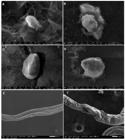
Haemonchus contortus treated with aminochalcones and controls observed under a scanning electron microscope. (A) Eggs - Negative control (Tween); (B) Eggs - Positive control (thiabendazole); (C) Eggs - Aminochalcone 1 (0.25 mg/mL); (D) Eggs - Aminochalcone 2 (0.25 mg/mL); (E) Adults - Negative control (Tween); (F) Adults - Aminochalcone 1 (1.25 mg/mL).
Discussion
Currently, only a few classes of anthelmintic drugs are commercially available, including benzimidazoles, imidazothiazoles, tetrahydropyrimidines, macrocyclic lactones, amino acetonitrile derivatives, and salicylanilides. However, anthelmintic resistance in nematode populations is a serious global problem (Ploeger & Everts, 2018). Due to the increasing prevalence of anthelmintic resistance, there is an urgent need for concerted efforts to identify novel strategies for the development of new effective drugs.
In the present study, we investigated the potential anthelmintic effects of aminochalcones on H. contortus eggs and adults resistant to synthetic anthelmintics. To the best of our knowledge, this is the first study to assess the activity of aminochalcones against H. contortus eggs and adults.
Aminochalcones 1 and 2 demonstrated promising efficacy in the EHT. The ovicidal effect of aminochalcone 1 (EC50 = 0.10 mg/mL) and aminochalcone 2 (EC50 = 0.19 mg/mL) against H. contortus was superior to other synthethic compounds, such as linalool (EC50 = 0.29 mg/mL), eugenol (EC50 = 0.57 mg/mL), vanilin (EC50 = 0.57 mg/mL), cineole (EC50 = 4.74 mg/mL) and limonene (EC50 = 207.56 mg/mL) (Katiki et al., 2017). Both aminochalcones also showed ovicidal efficacy against H. contortus superior to that of other open-chain flavonoids. Zarza-Albarrán et al. (2020) evaluated galloyl flavonoids from Acacia farnesiana and demonstrated their activity against H. contortus eggs. The ethyl acetate fraction of the hydroalcoholic extract showed the best ovicidal effect, with EC50 of 0.51 mg/mL. Furthermore, luteolin and 4′-O-methylcatechin exhibited no ovicidal activity against H. contortus (Delgado- Núñez et al., 2020).
The ovicidal effect of aminochalcones evaluated in our study can be a consequence of the presence of an α,β-unsaturated double bond. The α,β-unsaturated functionality is one of the most reactive substructures commonly found in both synthetic and natural molecules, responsible for pharmacological activities (Arshad et al., 2017). The higher number of nitrogen atoms in the chemical structure of aminochalcone1 may have contributed to its superior efficacy; therefore, its effect was evaluated in the AWMT. However, this is a preliminary study and pharmacological activity of aminochalcones should be clarified in future studies.
SEM images of H. contortus eggs following treatment with aminochalcones 1 and 2 revealed alterations in eggshell morphology. Our results corroborated those of Delgado-Núñez et al. (2020), who verified the significant disruption of cellular architecture, including cracks in the morula and formation of intracellular spaces, in H. contortus eggs exposed to isorhamnetin, a flavonoid from Prosopis laevigata leaves. Further, according to Zarza-Albarrán et al. (2020), SEM analyses of H. contortus eggs exposed to organic fractions from A. farnesiana showed the presence of granular structures attached to the eggshell.
The AWMT is used to evaluate the in vitro action of natural and synthetic compounds and can be used in tandem with SEM to assess changes in the morphology of adult nematodes (Aguiar et al., 2022; Barbosa et al., 2023). Herein, aminochalcone 1 completely inhibited the motility of H. contortus at the highest concentrations tested (2.5 to 0.625 mg/mL). Turani et al. (2024) synthesized a series of chalcones using a biochar-derived catalyst obtained from the pyrolysis of tree-pruning waste, resulting in a library compatible with various functional chemical groups. The effects of these compounds against C. elegans adults, a nematode widely used as a model organism for anthelmintic drug discovery, were evaluated. Among the tested chalcones, compound 3 exhibited the highest efficacy. The synthesis of this compound involved the use of benzaldehyde and acetophenone, which were also used in our experiments for the synthesis of aminochalcone 1. The similar chemical structure can explain the efficacy of aminochalcone 1 against H. contortus adults.
Furthermore, aminochalcone 1 demonstrated superior efficacy against motile worms compared to the other investigated flavonoids. Davuluri et al. (2019) evaluated the efficacy of flavonoid-rich extracts from Anacardium occidentale and Artocarpus heterophyllus against H. contortus adults. The EC50 values were 1.04 and 2.39 mg/mL, respectively. This suggests that aminochalcone 1 has good potential in reducing adult motility, further reinforcing its role as an effective alternative to other flavonoid-based treatments. The finding of compounds with promising in vitro effects on the adult is important because this stage is the pathogenic form of H. contortus. The adult is responsible for the clinical signs and reduced productivity observed inhosts.
The position of the substituents on the chalcone rings plays an essential role in their pharmacological activities. Chalcones designated as 4 and 5 by Turani et al. (2024) exhibited lower efficacy against C. elegans than chalcone 3 and its methoxy-containing analog (chalcone 6). The presence of an amino group at the para position of aminochalcone 1 may have contributed to its efficacy against H. contortus adults. Electron-donating groups, such as amino groups, increase the electronic density of the molecule, favoring molecular interactions with biological targets (Irfan et al., 2020), such as enzymes present in the nematode cuticle.
Aguiar et al. (2022) also demonstrated wrinkling of the longitudinal cuticular ridges in H. contortus adults treated with carvone. Carlis et al. (2019) verified the structural changes induced in larvae isolated from L3 migration inhibition test performed on Piper cubeba, and the main changes observed were associated with the cuticle. Based on these experimental results, phosphomethyltransferase (PMT) was selected by Borges et al. (2023) as the molecular target for in silico studies. These authors demonstrated that hinokinin, a lignan from P. cubeba, could inhibit PMT-2 by altering the synthesis of phosphocholine, consequently affecting the cuticle of H. contortus larvae. Since aminochalcone 1 also affected the cuticle of H. contortus in this current study, in silico studies should be performed to evaluate its interaction with PMT. These aforementioned studies have contributed to the search for promising new targets for the development of agents with anthelmintic properties.
This study indicated that aminochalcones have ovicidal activity against H. contortus and that aminochalcone 1 has superior inhibitory effects on larvae hatching, including inhibition of adult worm motility. Alterations in eggshell morphology and disruptions in nematode cuticle integrity were observed, suggesting that these compounds affected the structural integrity of H. contortus. These findings indicate that aminochalcones 1 and 2 are promising candidates for the development of novel anthelmintic agents. Future studies should investigate their in vivo efficacy, safety, and pharmacokinetics to validate their therapeutic potential.
Acknowledgements
The authors thank the Centro Nordestino de Aplicação e Uso da Ressonância Magnética Nuclear (CENAUREMN) and the Central Analítica-Universidade Federal do Ceará (UFC)/CT-INFRA/MCT-SISANO/Pró Equipamentos.
-
How to cite:
Barbosa MLF, Braga AP, Ferreira KVMM, Oliveira RF, Pereira RS, Rocha LO, et al. Synthesis and anthelmintic activity of aminochalcones against multiresistant Haemonchus contortus. Rev Bras Parasitol Vet 2025; 34(3): e005825. https://doi.org/10.1590/S1984-29612025046
-
Financial support
The authors are grateful to Coordenação de Aperfeiçoamento de Pessoal de Nível Superior (CAPES) (Grant 23038.002940/2021-44), Fundação Cearense de Apoio ao Desenvolvimento Científico e Tecnológico (FUNCAP) (Grant UNI-0210 00337.01.00/23) and Conselho Nacional de Desenvolvimento Científico e Tecnológico (CNPq) (Grant 406522/2021-9) for financial support. Mr. Barbosa has received a research scholarship from FUNCAP and Dr. Santos received financial support from CNPq-PQ (Grant 306008/2022-0).
-
Ethics declaration
All the experimental procedures on these animals were approved by the Ethics Committee for the Use of Animals of the Universidade Estadual do Ceará (Protocol number: 018265831-2023).
Data availability
Data will be made available on request.
References
- Abreu FOMS, Holanda T, Nascimento JF, Pinheiro HN, Castelo RM, Santos HS, et al. Evaluation of the antibacterial and antifungal capacity of nanoemulsions loaded with synthetic chalcone derivatives Di-Benzyl Cinnamaldehyde and Benzyl 4-Aminochalcone. J Renew Mater 2024; 12(2): 285-304. .
-
Aguiar AARM, Araújo JV Fo, Pinheiro HN, Campelo MS, Ribeiro WLC, Melo ACFL, et al. In vitro anthelmintic activity of R-carvone nanoemulsions towards multiresistant Haemonchus contortus. Parasitology 2022; 149(12): 1631-1641. http://doi.org/10.1017/S0031182022001135 PMid:36052509.
» http://doi.org/10.1017/S0031182022001135 -
Arshad L, Jantan T, Bukhari SNA, Haque A. Immunosuppressive effects of natural α,β-unsaturated carbonyl-based compounds, and their analogs and derivatives, on immune cells: A review. Front Pharmacol 2017; 8: 22. http://doi.org/10.3389/fphar.2017.00022 PMid:28194110.
» http://doi.org/10.3389/fphar.2017.00022 -
Barbosa MLF, Ribeiro WLC, Araújo JV Fo, Pereira RCA, André WPP, Melo ACFL, et al. In vitro anthelmintic activity of Lippia alba essential oil chemotypes against Haemonchus contortus. Exp Parasitol 2023; 244: 108439. http://doi.org/10.1016/j.exppara.2022.108439 PMid:36464130.
» http://doi.org/10.1016/j.exppara.2022.108439 -
Besier RB, Kahn LP, Sargison ND, Van Wyk JA. The pathophysiology, ecology, and epidemiology of Haemonchus contortus infection in small ruminants. Adv Parasitol 2016; 93: 95-143. http://doi.org/10.1016/bs.apar.2016.02.022 PMid:27238004.
» http://doi.org/10.1016/bs.apar.2016.02.022 -
Bezerra LL, Almeida-Neto FWQ, Marinho MM, Oliveira LS, Teixeira AMR, Bandeira PN, et al. Synthesis of aminochalcones and in silico evaluation of their antiparasitic potential against Leishmania. J Biomol Struct Dyn 2023; 41(13): 6434-6441. http://doi.org/10.1080/07391102.2022.2103030 PMid:35894999.
» http://doi.org/10.1080/07391102.2022.2103030 -
Bhat BA, Dhar KL, Puri SC, Saxena AK, Shanmugavel M, Qazi GN. Synthesis and biological evaluation of chalcones and their derived pyrazoles as potential cytotoxic agents. Bioorg Med Chem Lett 2005; 15(12): 3177-3180. http://doi.org/10.1016/j.bmcl.2005.03.121 PMid:15893928.
» http://doi.org/10.1016/j.bmcl.2005.03.121 -
Borges A, Oliveira IP, Lescano CH, Parreira RLT, Orenha RP, Laurentiz RS. Molecular interaction analysis of the lignans from Piper cubeba in complex with Haemonchus contortus phosphomethyltransferase. Vet Parasitol 2023; 321: 110001. http://doi.org/10.1016/j.vetpar.2023.110001 PMid:37549491.
» http://doi.org/10.1016/j.vetpar.2023.110001 -
Carlis MSP, Féboli A, Laurentiz AC, Filardi RS, Oliveira AHP, Silva MLA, et al. In vitro anthelmintic activity of the crude hydroalcoholic extract of Piper cubeba fruits and isolated natural products against gastrointestinal nematodes in sheep. Vet Parasitol 2019; 275: 108932. http://doi.org/10.1016/j.vetpar.2019.108932 PMid:31600614.
» http://doi.org/10.1016/j.vetpar.2019.108932 -
Coles GC, Jackson F, Pomroy WE, Prichard RK, von-Samson-Himmelstjerna G, Silvestre A, et al. The detection of anthelmintic resistance in nematodes of veterinary importance. Vet Parasitol 2006; 136(3-4): 167-185. http://doi.org/10.1016/j.vetpar.2005.11.019 PMid:16427201.
» http://doi.org/10.1016/j.vetpar.2005.11.019 -
Davuluri T, Chennuru S, Pathipati M, Krovvidi S, Rao GS. In vitro anthelmintic activity of three tropical plant extracts on Haemonchus contortus. Acta Parasitol 2019; 65(1): 11-18. http://doi.org/10.2478/s11686-019-00116-x PMid:31552583.
» http://doi.org/10.2478/s11686-019-00116-x -
Delgado-Núñez EJ, Zamilpa A, González-Cortazar M, Olmedo-Juárez A, Cardoso-Taketa A, Sánchez-Mendoza E, et al. Isorhamnetin: a nematocidal flavonoid from Prosopis laevigata leaves against Haemonchus contortus eggs and larvae. Biomolecules 2020; 10(5): 773. http://doi.org/10.3390/biom10050773 PMid:32429307.
» http://doi.org/10.3390/biom10050773 -
Flay KJ, Hill FI, Muguiro DHA. Review: Haemonchus contortus infection in pasture-based sheep production systems, with a focus on the pathogenesis of anaemia and changes in haematological parameters. Animals (Basel) 2022; 12(10): 1238. http://doi.org/10.3390/ani12101238 PMid:35625083.
» http://doi.org/10.3390/ani12101238 -
Hounzangbe-Adote MS, Paolini V, Fouraste I, Moutairou K, Hoste H. In vitro effects of four tropical plants on three life-cycle stages of the parasitic nematode, Haemonchus contortus. Res Vet Sci 2005; 78(2): 155-160. http://doi.org/10.1016/j.rvsc.2004.05.009 PMid:15563923.
» http://doi.org/10.1016/j.rvsc.2004.05.009 -
Hubert J, Kerboeuf D. A microlarval development assay for the detection of anthelmintic resistance in sheep nematodes. Vet Rec 1992; 130(20): 442-446. http://doi.org/10.1136/vr.130.20.442 PMid:1621342.
» http://doi.org/10.1136/vr.130.20.442 -
Irfan R, Mousavi S, Alazmi M, Saleem RSZ. A comprehensive review of aminochalcones. Molecules 2020; 25(22): 5381. http://doi.org/10.3390/molecules25225381 PMid:33213087.
» http://doi.org/10.3390/molecules25225381 -
Jasim HA, Nahar L, Jasim MA, Moore SA, Ritchie KJ, Sarker SD. Chalcones: synthetic chemistry follows where nature leads. Biomolecules 2021; 11(8): 1203. http://doi.org/10.3390/biom11081203 PMid:34439870.
» http://doi.org/10.3390/biom11081203 -
Katiki LM, Barbieri AME, Araujo RC, Veríssimo CJ, Louvandini H, Ferreira JFS. Synergistic interaction of ten essential oils against Haemonchus contortus in vitro. Vet Parasitol 2017; 243: 47-51. http://doi.org/10.1016/j.vetpar.2017.06.008 PMid:28807309.
» http://doi.org/10.1016/j.vetpar.2017.06.008 -
Ouattara M, Sissouma D, Koné MW, Menan HE, Touré SA, Ouattara L. Synthesis and anthelmintic activity of some hybrid benzimidazolyl-chalcone derivatives. Trop J Pharm Res 2011; 10(6): 767-775. http://doi.org/10.4314/tjpr.v10i6.10
» http://doi.org/10.4314/tjpr.v10i6.10 -
Ploeger HW, Everts RR. Alarming levels of anthelmintic resistance against gastrointestinal nematodes in sheep in the Netherlands. Vet Parasitol 2018; 262: 11-15. http://doi.org/10.1016/j.vetpar.2018.09.007 PMid:30389005.
» http://doi.org/10.1016/j.vetpar.2018.09.007 -
Taki AC, Jabbar A, Kurz T, Lungerich B, Ma G, Byrne JJ, et al. Three small molecule entities (MPK18, MPK334 and YAK308) with activity against Haemonchus contortus in vitro. Molecules 2021; 26(9): 2819. http://doi.org/10.3390/molecules26092819 PMid:34068691.
» http://doi.org/10.3390/molecules26092819 -
Turani O, Castro MJ, Vazzana J, Mendioroz P, Volpe MA, Gerbino DC, et al. Potent anthelmintic activity of chalcones synthesized by an effective green approach. ChemMedChem 2024; 19(13): e202400071. http://doi.org/10.1002/cmdc.202400071 PMid:38573571.
» http://doi.org/10.1002/cmdc.202400071 -
Vázquez-Bravo J, Aguilar-Marcelino L, Castañeda-Ramírez GS, Santos-Pérez I, Arroyo-Carmona RE, Bernès S, et al. In vitro nematicidal activity of two ferrocenyl chalcones against larvae of Haemonchus contortus (L3) and Nacobbus aberrans (J2). J Helminthol 2020; 94: e190. http://doi.org/10.1017/S0022149X2000070X PMid:32912343.
» http://doi.org/10.1017/S0022149X2000070X -
Zarza-Albarrán MA, Olmedo-Juárez A, Rojo-Rubio R, Mendoza-de Gives P, González-Cortazar M, Tapia-Maruri D, et al. Galloyl flavonoids from Acacia farnesiana pods possess potent anthelmintic activity against Haemonchus contortus eggs and infective larvae. J Ethnopharmacol 2020; 249: 112402. http://doi.org/10.1016/j.jep.2019.112402 PMid:31739102.
» http://doi.org/10.1016/j.jep.2019.112402 -
Zhou B, Xing C. Diverse molecular targets for chalcones with varied bioactivities. Med Chem (Los Angeles) 2015; 5(8): 388-404. http://doi.org/10.4172/2161-0444.1000291 PMid:26798565.
» http://doi.org/10.4172/2161-0444.1000291
Edited by
-
Assistant Editor:
Livio Martins Costa Júnior