 Occurrence of zoonotic parasites in economically important fish species from the Northeastern region of Brazil
Abstract
This study aimed to identify and analyze zoonotic parasites found in Scomberomorus cavalla and Trichiurus lepturus collected from the Mundaú-Manguaba Estuarine Lagoon Complex (CELMM), considering their commercial relevance and the associated risks to food safety and public health. A total of 34 fish were obtained from local fishermen, including 30 T. lepturus and four S. cavalla. The fish were necropsied and their internal organs were examined to identify parasites. Prevalence, abundance, and mean intensity of parasitic infections were calculated. In T. lepturus, the most prevalent (20%) nematode was Contracaecum sp., predominantly found in the coelomic cavity. In S. cavalla, the most frequently observed one (100% prevalence) was Hysterothylacium sp., with infections disseminated in the stomach, intestine, liver, and coelomic cavity. All identified parasites were documented for the first time in fish collected from this estuarine complex, CELMM, in Brazil, expanding their known geographical and ecological distribution. The presence of zoonotic parasites in commercially sold fish from CELMM poses a significant public health risk. Therefore, stringent sanitary inspection measures and public awareness initiatives are essential to mitigate contamination risks and ensure the quality of fish products intended for human consumption.
Keywords:
Public health; fish consumption; nematodes
Resumo
Este estudo teve como objetivo identificar e analisar parasitos zoonóticos encontrados em Scomberomorus cavalla e Trichiurus lepturus coletados do Complexo Estuarino Lagunar Mundaú-Manguaba (CELMM), considerando sua relevância comercial e os riscos associados à segurança alimentar e saúde pública. Um total de 34 peixes foram obtidos de pescadores locais, incluindo 30 Trichiurus lepturus e quatro Scomberomorus cavalla. Os peixes foram necropsiados e seus órgãos internos foram examinados à procura de parasitos. Prevalência, abundância média e intensidade média da infecção parasitária foram calculadas. Em T. lepturus, o nematódeo com maior prevalência (20%) foi Contracaecum sp., predominantemente encontrado na cavidade celômica. Em S. cavalla, Hysterothylacium sp. obteve a maior prevalência (100%), com infecção disseminada pelo estômago, intestino, fígado e cavidade celômica. Todos os parasitos identificados foram documentados pela primeira vez em peixes coletados nesse complexo estuarino, CELMM, do Brasil, expandindo sua distribuição geográfica e ecológica. A presença de parasitos zoonóticos em peixes comercializados vindos do CELMM impõe um risco significativo à saúde pública. Portanto, medidas para inspeções sanitárias rigorosas e iniciativas de conscientização pública são essenciais para mitigar riscos de contaminação e garantir a qualidade do pescado pretendido para consumo humano.
Palavras-chave:
Saúde pública; consumo de peixe; nematódeos
Introduction
Although often overlooked in studies on biodiversity and ecology, fish parasites are essential components of biodiversity (Sures, 2008). The occurrence of zoonotic parasites in fish raises concerns about food safety, as these organisms can cause severe diseases, leading to significant public health issues (Cardia & Bresciani, 2012). The risk of contamination increases when these parasites migrate into the fish musculature (Okumura et al., 1999). Given the growing preference among Brazilians for social and cultural food habits inspired by oriental cuisine, the demand for raw fish dishes such as sushi and sashimi has increased, presenting new challenges for food safety and public health (Cruz et al., 2010; Gomes et al., 2020).
Nematode parasites from the families Anisakidae and Raphidascarididae are frequently found in marine fish, and humans may become accidental hosts through the consumption of raw or undercooked contaminated fish (Nonković et al., 2025). Parasitic infections associated with anisakids have become a major focus of emerging research in foodborne disease risk and public health, with various countries dedicating efforts to understanding host-parasite dynamics and associated infection processes (Lam et al., 2024).
Scomberomorus cavalla (Cuvier, 1829), commonly known as king mackerel, has a broad geographical distribution, occurring along the eastern coast of the Americas from Massachusetts, USA, to southern Brazil (Figueiredo & Menezes, 2000). In Brazil, the species' commercial importance is reflected in consumption data (Dias et al., 2011).
Similarly, Trichiurus lepturus (Linnaeus, 1758), popularly called largehead hairtail, is found in tropical and temperate waters worldwide (Menezes et al., 2003). It ranks among the top six most heavily fished species globally (Bittar et al., 2008). Both S. cavalla and T. lepturus are of considerable importance not only due to their commercial appeal and high fishing volume but also because of the public health and food safety challenges they pose. Additionally, in both host species analyzed in this study, the presence of zoonotic potential nematodes has already been recorded and in many regions of the world, in studies such as Klein (1973), Oliveira da Silva et al. (2000a), Dias et al. (2011) and Youssir et al. (2017).
Despite the strong interconnection between aquatic ecosystems, health, economy, and parasitism, fish parasites are not as researched as those of other hosts in the field of parasitology. As both of the fish species here analyzed for parasites are economically significant, this study aimed to search for and identify zoonotic parasites found in the S. cavalla and T. lepturus collected from the Mundaú-Manguaba Estuarine Lagoon Complex (CELMM), specially being an environment that holds significant local commercial importance.
Material and Methods
Study area
The Mundaú-Manguaba Estuarine Lagoon Complex (CELMM) consists of the Mundaú Lagoon, covering approximately 23 km2. Together with the Manguaba Lagoon, it forms a complex with a total area of approximately 55 km2 (Tamano et al., 2015). The Complex stands out not only for its habitat diversity but also for its abundant fishery resources, which include various fish and macrocrustacean species (Tamano et al., 2015). Located in the state of Alagoas, Brazil, the complex holds both ecological and socio-economic significance. Ecologically, it provides a vital habitat for a rich biodiversity, featuring freshwater areas, mangroves, brackish waters, restinga vegetation, and beaches, which support a complex food web and serve as a nursery for numerous marine species (Arceo-Carranza et al., 2021). From an economic perspective, CELMM sustains fisheries that are crucial for local livelihoods and the regional economy (Salles, 1995).
Fish analysis
The fish used in this study were purchased from local fishermen in the vicinity of CELMM between April 2022 and April 2023. Ethical approval from the Animal Use Ethics Committee (CEUA) was not required, as the fish were already dead when acquired. The total length of each fish was measured and each one was compared to the length at first maturity, to confirm that the fish had reached sexual maturity, according to fishbase (Froese & Pauly, 2026). A total of 34 fish specimens were necropsied, including 30 T. lepturus and four S. cavalla. The intestines, liver, gonads, and stomach were removed and agitated with water, so the existing parasites would loosen to facilitate the collection. The coelomic cavity was also washed with water to search for parasites in transit from the internal organs to the muscle. The material was then filtered using a 75 μm sieve and examined under a stereoscopic microscope using individual Petri dishes (Eiras et al., 2000). The muscular tissue of the fish was not filleted nor analyzed.
Parasite analysis
Parasite preparing techniques followed established protocols, as they were stored in 70% ethanol, then put on lactophenol for clarification (Eiras et al., 2000). For morphological analysis at the generic level, the specimens were then observed under a Nikon Eclipse E200 microscope, where morphometric analysis was conducted. Images were captured using an Opticam OPZTS camera with 5.3 megapixels and an Opticam 0400S microscope with a 10.5-megapixel camera. The taxonomic classification and morphological terminology for anisakid and raphidascaridid larvae followed dichotomous keys by Tavares & Luque (2006) and prevalence, average abundance and average intensity were calculated according to Bush et al. (1997).
Mapping of parasite registry
Occurrence maps for parasites (Anisakidae and Raphidascaridiidae) found infecting the fish species analyzed in this study were developed using the software QGIS, with the WGS84 datum (EPSG 7030) (QGIS, 2025) and the coordinates for previous registers from around the world were obtained from the studies mentioned in Tables 1 and 2.
Records of parasitic infections by nematodes with zoonotic potential in T. lepturus from different locations.
Records of parasitic infections by nematodes with zoonotic potential in S. cavalla from different locations.
Results
The total length of T. lepturus averaged 57.69 ± 6.36 cm, while S. cavalla measured 49.625 ± 3.56 cm, meaning all the collected specimens, from both species, had already reached maturity, although were considered to be on the younger side. Of the 34 fish necropsied, 16 out of 30 T. lepturus specimens and all four S. cavalla specimens were infected with zoonotic nematodes.
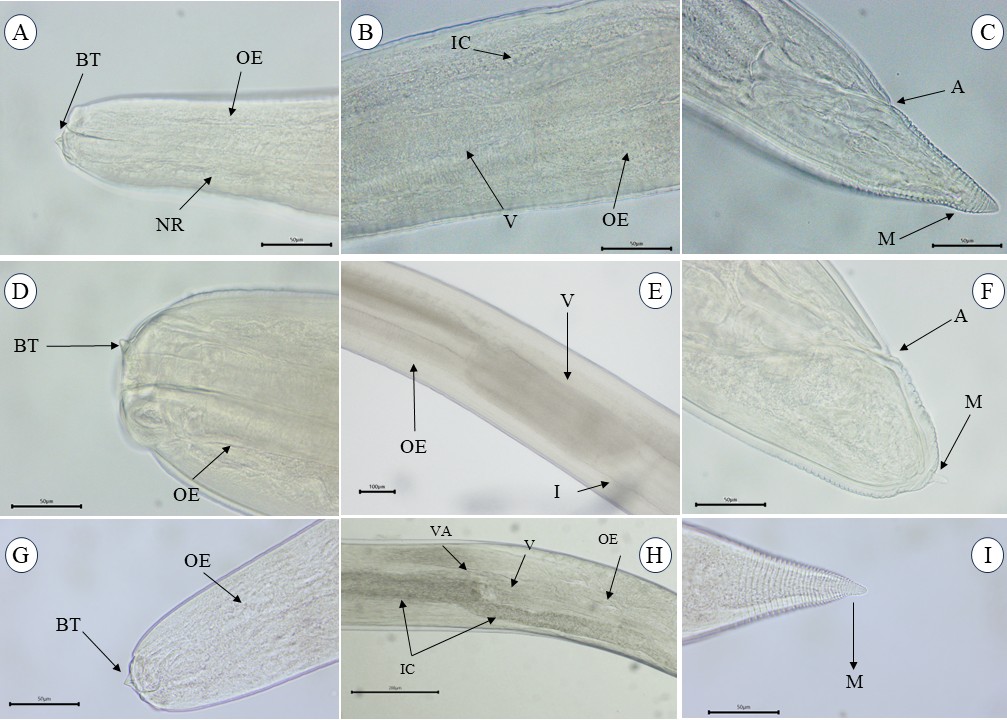
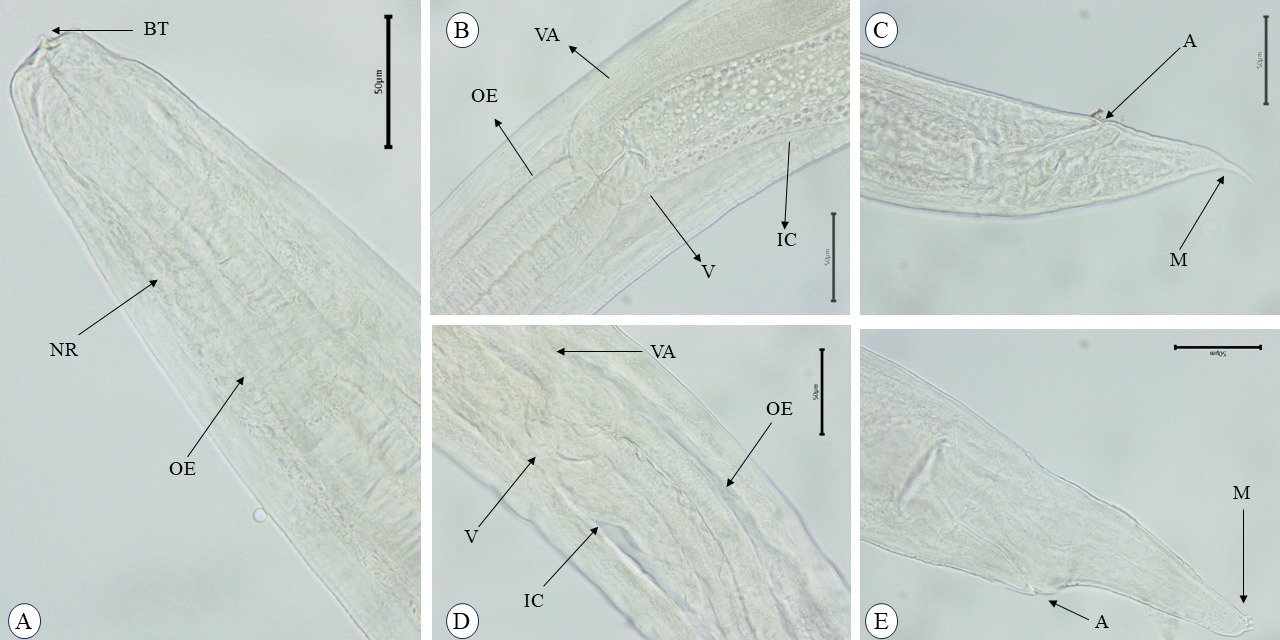
Five nematode genera were found, all in stages L3 or L4: Anisakis (Figure 1), Contracaecum (Figure 1), Terranova (Figure 1) (Anisakidae), Hysterothylacium (Figure 2) and Raphidascaris (Figure 2) (Raphidascaridiidae). The first two were found only in T. lepturus and Terranova sp., only in S. cavalla. Although Terranova sp. is now a taxon inquirendum, we have decided to keep the previous classification, due to our specimens not fitting the description keys from both new genera (Euterranova sp. and Neoterranova sp. Moravec & Justine, 2020) (Moravec & Justine, 2020).
Nematodes from the Anisakidae family. A-C:Terranovasp. A-Showing the anterior end, with boring tooth (BT), oesophagus (OE) and nerve ring (NR). B- Ventriculus (V), intestinal caecum (IC) and oesophagus (OE). C- Posterior end, with the anus (A) and lack of mucron (M). D-E:Anisakissp. D- Anterior end in 40x magnification, presenting boring tooth (BT) and oesophagus (OE). E- Midsection of the parasite showing the oesophagus (OE), ventriculus (V) and intestine (I). F- Posterior end, with mucron (M) and anus (A). G-I:Contracaecumsp. G- Anterior end, showing boring tooth (BT) and oesophagus (OE). H- Midsection of the body, with intestinal caecum (IC), oesophagus (OE), ventriculus (V) and the ventricular appendix (VA). I- Posterior end showing the lack of mucron (M).
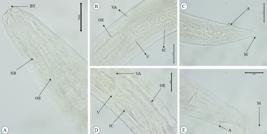
Nematodes from Raphidascaridiidae. A-C:Raphidascarissp. A- Anterior end, showing boring tooth (BT), nerve ring (NR) and oesophagus (OE). B- Midsection, showing the oesophagus, ventriculus (V), ventricular appendix (VA) and the intestinal caecum (IC). C- Posterior end, showing anus (A) and mucron (M). D-E:Hysterothylaciumsp. D- Midsection with oesophagus (OE), intestinal caecum (IC), ventriculus (V) and ventricular appendix (VA). E- posterior end showing anus (A) and mucron (M).
In T. lepturus, the most prevalent nematode was Contracaecum sp. (20%), with the coelomic cavity being the most common site of infection (Table 1). Conversely, in S. cavalla, Hysterothylacium sp. was the most prevalent nematode (100%), with infection sites occurring similarly in the stomach, intestine, liver, and coelomic cavity (Table 2).
Discussion
Overall, the present study revealed distinct patterns of nematode infection between the host species analyzed, while also highlighting novel host–parasite associations and expanding the known geographic distribution of these taxa along the Alagoas coast. Infection by the nematodes in T. lepturus was predominantly caused by larvae of the genus Contracaecum, a parasite previously reported at high prevalence in other locations for this host species (Oliveira da Silva et al., 2000a, b) (Table 1). Meanwhile, S. cavalla exhibited the highest prevalence of Hysterothylacium sp. (Table 2), marking the first recorded occurrence of this genus in this host species.
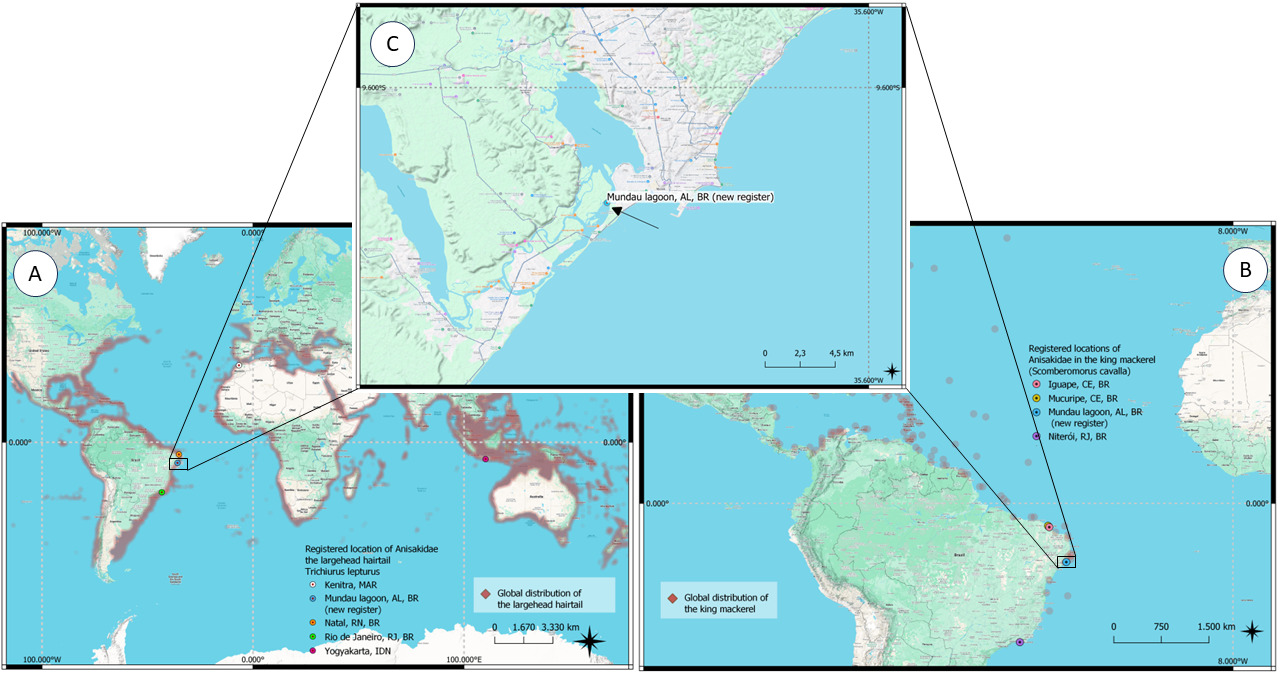
All parasites identified in this study are being documented for the first time parasitizing fish collected in this location, thereby expanding their known geographic distribution (Figure 3), (keeping in mind the migration pattern of these fish species and their estimate age) especially when Alagoas is only the third world location to have registered such parasites in S. cavalla and the fourth Brazilian state for T. lepturus, enhancing the importance of this study.
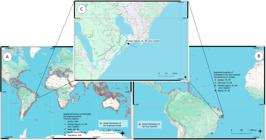
Maps of the global distribution of Trichiurus lepturus (A) and Scomberomorus cavalla (B) with the new locality register of occurrence of Anisakidae (Mundaú Lagoon, Alagoas, Brazil) (C).
The prevalence, average abundance and average intensity of the parasites from T. lepturus (Table 1) found in this study were low compared to the previous studies done on this species. That could be explained by the age of the fish, since, for example, in Oliveira da Silva et al. (2000b), the fish averaged 122.7 ± 8.6 (108-148) cm, which is double the size of the ones analyzed in this study. Therefore, it should be taken into account that the feeding habits are slightly different and that could alter the parasitic load in the fish (Nakamura & Parin, 1993). As for S. cavalla (Table 2), considering the parasites solely as nematodes and compared to the study conducted by Dias et al. (2011), the fish in this study did present higher prevalence of the nematodes, however if only each genera is taken into consideration, we cannot compare the results, since the parasites found are from different genera.
Anisakidosis and anisakiasis result from the ingestion of infective larvae from the family Anisakidae, with A. simplex, Pseudoterranova decipiens, and C. osculatum being the most relevant species in public health (Souza et al., 2016). This zoonotic disease occurs frequently due to the broad diversity of fish species affected by these parasites (Santos et al., 2020). In this study, Anisakis and Contracaecum species were reported parasitizing T. lepturus, a species commonly used raw in Japanese-like cuisine, reinforcing the significance of this study.
In both species studied, parasites were found in the coelomic cavity and internal organs. While their presence in the mesentery poses a lower zoonotic risk, there remains the possibility of larval migration into fish musculature after capture and freezing (Alves et al., 2020). Most of the studies done in parasitology for these fish species have not registered the presence of these zoonotic nematodes in the muscle, except for Youssir et al. (2017), however even then, the prevalence was low and as appointed by the authors, the larvae was “rarely observed in the musculature”.
The life cycle of the parasites should also have a substantial weight when looking at sites of infection, since the nematodes found in this research were larvae (L3 or L4) (Figures 1 and 2) and therefore the fish examined were not their definitive host and within these intermediate hosts their preferred location is the gastrointestinal tract, as seen in the studies referenced in this paper (Klein, 1973; Oliveira da Silva et al., 2000a, b; Carvalho & Luque, 2011; Setyobudi et al., 2011; Cavalcanti et al., 2012; Borges et al., 2012; Dias et al., 2011; Youssir et al., 2017)
Food safety is a fundamental issue, however it is not as closely monitored as it should be, since it was possible to buy the fish and find parasites with the potential to infect humans, although Brazil has a set of laws and guidelines that in theory protects the population from that exactly. Article 6, Paragraph 1 of Law No. 8.080/90 highlights the importance of sanitary surveillance, under the responsibility of the National Health Surveillance Agency (Anvisa), aimed at preventing foodborne diseases from consuming unsafe products (Brasil, 1990). To ensure safety, Decree No. 9.013 of March 29, 2017, establishes strict guidelines for the control and treatment of animal-derived products. Article 212 reinforces parasite control according to the regulations of the Ministry of Agriculture, Livestock, and Supply (MAPA) (Brasil, 2017), while Article 214 allows for the conditional use of products, provided there is no health risk. Article 215 recommends methods such as freezing, salting, and heating to reduce or eliminate parasites in food, and Article 499 determines that products with extensive muscular parasite infections are unsuitable for consumption (Neto, 2020).
Strict inspections and sanitary control are essential to ensure food safety in fish products (Seta et al., 2017). Due to the high contamination risk in their natural environment, frequent exposure, and processing conditions, fish are highly susceptible to bacterial and parasitic contamination (Paiva et al., 2018). In this scenario, fish and their derivatives, commonly consumed by the population, may harbor parasites that pose health risks when ingested accidentally (Silva et al., 2008).
In Brazil, especially in the Northeast, fish consumption is significantly high, with an annual per capita average of 15 kg in the region and 9 kg nationwide, where fishing is a key economic activity (Brasil, 2017). Literature reports indicate cases where consuming cooked fish may not completely eliminate health risks, as certain parasite proteins are heat-resistant and can trigger anaphylactic reactions (Bao et al., 2019).
A substantial increase in anisakid infections worldwide has been observed over the past three decades (Silva et al., 2008). A systematic literature review provided recent data estimating a global incidence rate of 0.32 per 1,000,000 inhabitants (Orphanet, 2024). Japan stands out as the country with the highest estimated anisakiasis cases (Ohnishi et al., 2023). However, with the growing detection of Anisakis larvae in the country, Japanese consumers have become increasingly cautious about food safety (Hochberg & Hamer, 2010).
The consumption of raw fish in Brazil, including species such as S. cavalla and T. lepturus, has been rising in popularity. These fish are highly accepted commercially and may be consumed in both oriental cuisine practices and improperly prepared dishes (Masson & Pinto, 1998).
As the muscular tissue was not fully analyzed, it is understandable that the quantitative methods in this study might not be completely accurate, however that doesn’t take away the risk of infection by eating these fish if parasitized, especially as the abundance may have been underestimated and adding to that, as mentioned previously, only one of all the studies done on Anisakidae parasitizing these fish species did register their presence in the muscle (Youssir et al., 2017).
Considering these facts and the increasing consumption of raw fish in Brazil, proper preparation and inspection practices are crucial in reducing the incidence of parasitic infections.
Conclusion
Brazil has various regions with high fish consumption. This study highlights the need for increasing inspection, specially of fish that are sold fresh. These findings are essential for assessing the real risks associated with fish consumption in Brazil, even more so with the increase in consumption of raw or undercooked fish. More studies like this one can help with defining sanitary public policies and ensure food safety.
Acknowledgements
We thank Victor Lopes for the insights on this paper and the National Council for Scientific and Technological Development for the research grant assigned to V. Doro Abdallah (Grant 304498/2022-0).
Data availability
The data used in this paper will be available to the public.
-
How to cite:
Torres NC, Rosa BM, Oliveira SLP, Moraes BM, Lins BM, Azevedo RK, et al. Occurrence of zoonotic parasites in economically important fish species from the Northeastern region of Brazil. Rev Bras Parasitol Vet 2026; 35(3): e005526. https://doi.org/10.1590/S1984-29612026034
-
Finnancial suport
FAPEAL (process E:60030.0000000161/2022).
-
Ethics declaration
Authorization by the Ethics Committee on Animal Use was not necessary, as the fish were bought as for consumption (Associated process: 23065.015257/2026-54).
References
-
Alves AM, Souza GTR, Takemoto RM, Melo CM, Madi RR, Jeraldo VLS. Nematodas Anisakidae Skrjabin & Karokhin, 1945 and Raphidascarididae Hartwich, 1954 nematodes in Lutjanidae (Pisces: Perciformes) from the Brazilian Northeast Coast. Braz J Biol 2020; 80(2): 255-265. https://doi.org/10.1590/1519-6984.190350 PMid:31017235.
» https://doi.org/10.1590/1519-6984.190350 -
Arceo-Carranza D, Chiappa-Carrara X, López RC, Arenas CY. Mangroves as feeding and breeding grounds. In: Rastogi RP, Phulwaria M, Gupta DK, editors. Mangroves: ecology, biodiversity and management Singapore: Springer; 2021. p. 63-95. https://doi.org/10.1007/978-981-16-2494-0_3
» https://doi.org/10.1007/978-981-16-2494-0_3 -
Bao M, Pierce GJ, Strachan NJ, Pascual S, González-Muñoz M, Levsen A. Human health, legislative, and socioeconomic issues caused by the fish-borne zoonotic parasite Anisakis: challenges in risk assessment. Trends Food Sci Technol 2019; 86: 298-310. https://doi.org/10.1016/j.tifs.2019.02.013
» https://doi.org/10.1016/j.tifs.2019.02.013 -
Bittar VT, Castello BFL, Beneditto APM. Hábito alimentar do peixe-espada adulto, Trichiurus lepturus, na costa norte do Rio de Janeiro, sudeste do Brasil. Biotemas 2008; 21(2): 83-90. https://doi.org/10.5007/2175-7925.2008v21n2p83
» https://doi.org/10.5007/2175-7925.2008v21n2p83 -
Borges JN, Cunha LFG, Santos HLC, Monteiro-Neto C, Santos CP. Morphological and molecular diagnosis of anisakid nematode larvae from cutlassfish (Trichiurus lepturus) off the coast of Rio de Janeiro, Brazil. PLoS One 2012; 7(7): e40447. https://doi.org/10.1371/journal.pone.0040447 PMid:22792329.
» https://doi.org/10.1371/journal.pone.0040447 - Brasil. Lei no. 8.080, September 19, 1990. Dispõe sobre as condições para a promoção, proteção e recuperação da saúde, a organização e o funcionamento dos serviços correspondentes e dá outras providências. Diário Oficial da República Federativa do Brasil, Brasília, DF, set. 1990.
- Brasil. Ministério da Agricultura e Pecuária - MAPA. Decreto nº 9.013, de 29 de março de 2017. Regulamenta a Lei nº 1.283, de 18 de dezembro de 1950, e a Lei nº 7.889, de 23 de novembro de 1989, que dispõem sobre a inspeção industrial e sanitária de produtos de origem animal. Diário Oficial da República Federativa do Brasil, Brasília, DF, mar. 2017.
-
Bush AO, Lafferty KD, Lotz JM, Shostak AW. Parasitology meets ecology on its own terms: Margolis et al. revisited. J Parasitol 1997; 83(4): 575-583. https://doi.org/10.2307/3284227 PMid:9267395.
» https://doi.org/10.2307/3284227 - Cardia DFF, Bresciani KDS. Helmintoses zoonóticas transmitidas pelo consumo inadequado de peixes. Vet Zootec 2012; 19(1): 55-65.
-
Carvalho A, Luque J. Seasonal variation in metazoan parasites of Trichiurus lepturus (Perciformes: Trichiuridae) of Rio de Janeiro, Brazil. Braz J Biol 2011; 71(3): 771-782. https://doi.org/10.1590/S1519-69842011000400024 PMid:21881803.
» https://doi.org/10.1590/S1519-69842011000400024 -
Cavalcanti ETS, Takemoto RM, Alves LC, Chellappa S. First report of metazoan fish parasites with zoonotic potential in Scomberomorus brasiliensis and Trichiurus lepturus from the coastal waters of Rio Grande do Norte, Brazil. Mar Biodivers Rec 2012; 5: e40. https://doi.org/10.1017/S1755267212000292
» https://doi.org/10.1017/S1755267212000292 - Cruz AR, Souto PCS, Ferrari CKB, Allegretti SM, Arrais-Silva WW. Endoscopic imaging of the first clinical case of anisakidosis in Brazil. Rev Sci Parasitol 2010; 11(2): 97-100.
-
Dias FJE, São Clemente SC, Pinto RM, Knoff M. Anisakidae nematodes and Trypanorhyncha cestodes of hygienic importance infecting the king mackerel Scomberomorus cavalla (Osteichthyes: Scombridae) in Brazil. Vet Parasitol 2011; 175(3-4): 351-355. https://doi.org/10.1016/j.vetpar.2010.10.014 PMid:21115292.
» https://doi.org/10.1016/j.vetpar.2010.10.014 - Eiras JC, Takemoto RM, Pavanelli GC. Métodos de estudo e técnicas de laboratório em parasitologia de peixes Maringá: Editora Eduem; 2000.
- Figueiredo JL, Menezes NA. Manual de peixes marinhos do Sudeste do Brasil. VI. Teleostei (5) São Paulo: Museu de Zoologia, Universidade de São Paulo; 2000.
-
Froese R, Pauly D, editors. FishBase [online]. World Wide Web Electronic Publication; 2026 [cited 2026 Jul 2]. Available from: https://www.fishbase.org
» https://www.fishbase.org -
Gomes KO, Alves FBA, Ferreira ACAO, Silva CMS, Silva ICR, Orsi DC. Microbiological Quality Assessment of Sashimi and Sushi Sold in the Federal District, Brazil. J Food Nutr Res (Newark) 2020; 8(11): 687-692. https://doi.org/10.12691/jfnr-8-11-10
» https://doi.org/10.12691/jfnr-8-11-10 -
Hochberg NS, Hamer DH. Anisakidosis: perils of the deep. Clin Infect Dis 2010; 51(7): 806-812. https://doi.org/10.1086/656238 PMid:20804423.
» https://doi.org/10.1086/656238 -
Klein VLM. Helmintos parasitos das espécies Scomberomorus cavalla (Cuvier) e Scomberomorus maculatus (Mitchill) do litoral cearense: contracaecum fortalezae sp. n. (Nematoda, Ascaridoidea). Mem Inst Oswaldo Cruz 1973; 71(1-2): 199-202. https://doi.org/10.1590/S0074-02761973000100013
» https://doi.org/10.1590/S0074-02761973000100013 -
Lam RY, See MS, Sharom-Harrison F, Ahamad Zakeri H, Harun NO. Host specificity, infection dynamics, and allergenicity in Anisakis spp. infestation: a review. UMT JUR 2024; 6(2): 62-75. https://doi.org/10.46754/umtjur.v6i2.459
» https://doi.org/10.46754/umtjur.v6i2.459 -
Masson ML, Pinto RA. Perigos potenciais associados ao consumo de alimentos derivados de peixe cru. Bol Cent Pesqui Process Aliment 1998; 16(1): 71-84. https://doi.org/10.5380/cep.v16i1.13940
» https://doi.org/10.5380/cep.v16i1.13940 - Menezes NA, Buckup PA, Figueiredo JL, Moura RL. Catálogo de Espécies de Peixes Marinhos do Brasil São Paulo: Museu de Zoologia, Universidade de São Paulo; 2003.
-
Moravec F, Justine JL. Erection of Euterranova n. gen. and Neoterranova n. gen. (Nematoda, Anisakidae), with the description of E. dentiduplicata n. sp. and new records of two other anisakid nematodes from sharks off New Caledonia. Parasite 2020; 27: 58. https://doi.org/10.1051/parasite/2020053 PMid:33186094.
» https://doi.org/10.1051/parasite/2020053 - Nakamura I, Parin NV. Snake mackerels and cutlassfishes of the world (families Gempylidae and Trichiuridae). An annotated and illustrated catalogue of the snake mackerels, snoeks, escolars, gemfishes, sackfishes, domine, oilfish, cutlassfishes, scabbardfishes, hairtails, and frostfishes known to date Rome: FAO; 1993. FAO Species Catalogue, vol. 15.
- Neto DB. O estado mundial da pesca e aquicultura em 2020. Mares (Altamira) 2020; 2(2): 111-114.
-
Nonković D, Tešic V, Šimat V, Karabuva S, Medić A, Hrabar J. Anisakidae and Anisakidosis: a public health perspective. Pathogens 2025; 14(3): 217. https://doi.org/10.3390/pathogens14030217 PMid:40137702.
» https://doi.org/10.3390/pathogens14030217 -
Ohnishi T, Banzai A, Hara-Kudo Y, Sugiyama H. Prevalence and abundance of Anisakis larvae in ready-to-eat mackerel products in Japan. Int J Food Microbiol 2023; 395: 110181. https://doi.org/10.1016/j.ijfoodmicro.2023.110181 PMid:37001481.
» https://doi.org/10.1016/j.ijfoodmicro.2023.110181 -
Okumura MPM, Pérez ACA, Espíndola AE Fo. Principais zoonoses parasitárias transmitidas por pescado - revisão. Rev Educ Contin CRMV-SP 1999; 2(2): 66-80. https://doi.org/10.36440/recmvz.v2i2.3386
» https://doi.org/10.36440/recmvz.v2i2.3386 -
Oliveira da Silva L, Luque JL, Ramos Alves D. Metazoários parasitos do peixe espada, Trichiurus lepturus (Osteichthyes: Trichiuridae) do litoral do estado do Rio de Janeiro, Brasil. Parasitol Día 2000a; 24(3-4): 97-101. https://doi.org/10.4067/S0716-07202000000300005
» https://doi.org/10.4067/S0716-07202000000300005 - Oliveira da Silva L, Luque JL, Ramos Alves D, Paraguassú AR. Ecologia da comunidade de metazoários parasitos do peixe-espada Trichiurus lepturus Linnaeus (Osteichthyes, Trichiuridae) do litoral do estado do Rio de Janeiro, Brasil. Rev Bras Zoociênc 2000b; 2(2): 115-133.
-
Orphanet. Prevalence and incidence of rare diseases: bibliographic data. Prevalence, incidence, or number of published cases listed by diseases (in alphabetical order) [online]. Paris: Orphanet; 2024. (Orphanet Report Series, Rare Diseases Collection). [cited 2026 Jul 2]. Available from: <orpha.net>.
» orpha.net - Paiva MJM, Anjos ES, Costa RF, Zuniga ADG. Avaliação das condições higiênico-sanitárias da comercialização de pescado em feiras livres de Palmas-TO. Rev Desafios 2018; 5(4): 117-123.
-
QGIS Development Team - QGIS. QGIS Geographic Information System [online]. Open Source Geospatial Foundation Project; 2025. Available in: http://qgis.osgeo.org
» http://qgis.osgeo.org - Salles V. Guia Ambiental – Litoral de Alagoas. 2. ed. Maceió: Secretaria de Planejamento; IMA: 1995.
- Santos MJ, Rangel LF, Caldeira AJR. Anisaquíase, uma zoonose subestimada globalmente, causada por Anisakis spp. Rev Anápolis Digital 2020; 12(3): 21-40.
-
Seta MH, Oliveira CVS, Pepe VLE. Health protection in Brazil: the National Sanitary Surveillance System. Cien Saude Colet 2017; 22(10): 3225-3234. https://doi.org/10.1590/1413-812320172210.16672017 PMid:29069179.
» https://doi.org/10.1590/1413-812320172210.16672017 -
Setyobudi E, Soeparno S, Helmiati S. Infection of Anisakis sp. larvae in some marine fishes from the southern coast of Kulon Progo, Yogyakarta. Biodiversitas (Surak) 2011; 12(1): 34-37. https://doi.org/10.13057/biodiv/d120107
» https://doi.org/10.13057/biodiv/d120107 -
Silva ML, Matté GR, Matté MH. Aspectos sanitários da comercialização de pescado em feiras livres da cidade de São Paulo, SP/Brasil. Rev Inst Adolfo Lutz 2008; 67(3): 208-214. https://doi.org/10.53393/rial.2008.67.32767
» https://doi.org/10.53393/rial.2008.67.32767 - Souza ME, Cardoso EO, Leal LA, de Lima TMP, Toledo RCC. Anisakidose humana: zoonose com risco potencial para consumidores de pescado cru. Vet Zootec 2016; 23(1): 25-37.
-
Sures B. Environmental Parasitology. Interactions between parasites and pollutants in the aquatic environment. Parasite 2008; 15(3): 434-438. https://doi.org/10.1051/parasite/2008153434 PMid:18814718.
» https://doi.org/10.1051/parasite/2008153434 -
Tamano LTO, Araujo DDM, Lima BBCD, Silva FNFD, Silva JD. Socioeconomia e saúde dos pescadores de Mytella falcata da Lagoa Mundaú, Maceió-AL. Bol Mus Para Emílio Goeldi Ciênc Hum 2015; 10(3): 699-710. https://doi.org/10.1590/1981-81222015000300011
» https://doi.org/10.1590/1981-81222015000300011 - Tavares LER, Luque JL. Sistemática, biologia e importância em saúde coletiva das larvas de Anisakidae (Nematoda: Ascaridoidea) parasitas de peixes ósseos marinhos do Estado do Rio de Janeiro, Brasil. In: Silva-Souza AT, editor. Sanidade de organismos aquáticos no Brasil Maringá: Abrapoa; 2006. p. 297-328.
- Youssir S, M’Bareck I, Shawket N, Hassouni T, El Kharrim K, Belghyti D. Cutlassfish infestation (Trichiurus lepturus) by Anisakis simplex larvae in the Moroccan Atlantic coast. J Entomol Zool Stud 2017; 5(3): 1857-1861.
Edited by
-
Assistant Editor:
Mauricio Laterça Martins