 Destination image and its effect on tourist behavioral intentions: systematic review
Abstract
Destination image constitutes a fundamental predictor of tourism behavior. The present study aims to analyze the effect of destination image on tourists’ behavioral intentions through a systematic review that explores the elements that make up this relationship in the three stages of travel. Based on the analysis of 78 studies published between 2010 and 2024 in high-impact academic journals, this paper provides a holistic view of how destination image’s cognitive, affective, and conative dimensions shape tourists’ decisions and behaviors before, during, and after the trip. The results show that destination image is key in shaping the intention to visit in the pre-trip stage, place attachment during the trip, and post-visit satisfaction and loyalty. In addition, research gaps were identified, such as the need to explore the impact of new technologies on destination image. Practical implications suggest that effective DI management can improve tourist satisfaction and loyalty.
Keywords
Destination image; Cognitive image; Affective image; Overall image; Behavioral intentions
Resumo
A imagem do destino constitui um preditor fundamental do comportamento turístico. O presente estudo visa analisar o efeito da imagem do destino nas intenções comportamentais dos turistas por meio de uma revisão sistemática que explora os elementos que compõem essa relação nas três etapas da viagem. Com base na análise de 78 estudos publicados entre 2010 e 2024 em periódicos acadêmicos de alto impacto, este artigo oferece uma visão holística de como as dimensões cognitiva, afetiva e conativa da imagem do destino moldam as decisões e os comportamentos dos turistas antes, durante e depois da viagem. Os resultados mostram que a imagem do destino é fundamental para moldar a intenção de visitar o local na fase pré-viagem, o apego ao lugar durante a viagem e a satisfação e fidelização pós-viagem. Além disso, foram identificadas lacunas na pesquisa, como a necessidade de explorar o impacto das novas tecnologias na imagem do destino. As implicações práticas sugerem que uma gestão eficaz da imagem do destino pode melhorar a satisfação e a fidelização dos turistas.
Palavras-chave
Imagem do destino; Imagem cognitiva; Imagem afetiva; Imagem geral; Intenções comportamentais
Resumen
La imagen del destino constituye un predictor fundamental del comportamiento turístico. El presente estudio tiene como objetivo analizar el efecto de la imagen del destino en las intenciones de comportamiento de los turistas a través de una revisión sistemática que explora los elementos que conforman esta relación en las tres etapas del viaje. A partir del análisis de 78 estudios publicados entre 2010 y 2024 en revistas académicas de alto impacto, este artículo ofrece una visión holística de cómo las dimensiones cognitiva, afectiva y conativa de la imagen del destino moldean las decisiones y comportamientos de los turistas antes, durante y después del viaje. Los resultados muestran que la imagen del destino es clave para conformar la intención de visita en la etapa previa al viaje, el apego al lugar durante la estancia y la satisfacción y lealtad posteriores a la visita. Además, se identificaron brechas de investigación, como la necesidad de explorar el impacto de las nuevas tecnologías en la imagen del destino. Las implicaciones prácticas sugieren que una gestión efectiva de la imagen del destino puede mejorar la satisfacción y fidelización de los turistas.
Palabras clave
Imagen del destino; Imagen cognitiva; Imagen afectiva; Imagen global; Intenciones de comportamiento
1 INTRODUCTION
Tourism has grown significantly in recent decades due to globalization and demand for unique experiences. Studying travelers’ behavioral intentions (BI) is decisive for destination development (Chen & Tsai, 2007; Karim et al., 2023; Qu et al., 2011). A fundamental antecedent of tourism behavior is destination image (DI) (Stylidis et al., 2015), recognized as a powerful management tool to drive the tourism industry in the global market (Afshardoost & Eshaghi, 2020) and receiving significant attention for its predictive role in destination selection and travel behavior (Baloglu, 2000).
The DI and BI relationship can be classified into three stages: pre-trip, during, and post-trip (Ren et al., 2021). Tourists’ pre-trip behavior refers to the intention and decision to travel; during the trip, it includes place attachment-brand attachment; and post-trip encapsulates satisfaction, loyalty, revisit intention, recommendation intention, and word-of-mouth (Chu et al., 2022).
Given the central role of DI in tourism research, numerous literature reviews have examined different aspects of this construct. Early reviews focused on the conceptualization and measurement of DI (Echtner & Ritchie, 2003; Gallarza et al., 2002; Pike, 2002), while later studies analyzed trends in DI research and identified emerging themes and methodological developments (Stepchenkova & Mills, 2010; Huang et al., 2021; Primananda et al., 2022). More recent studies have also explored specific dimensions of DI and its relationship with tourism outcomes (Chu et al., 2022; Wang et al., 2023).
Despite this growing body of literature, research on DI and tourists’ BI remains fragmented. Many studies examine specific relationships—such as DI and satisfaction, loyalty, or revisit intention—without integrating these findings within the broader tourist journey. Moreover, most existing reviews either focus on particular aspects of DI or analyze limited periods of the literature. Only a few studies have explicitly addressed the relationship between DI and BI, and these generally focus on specific behavioral outcomes or particular stages of the trip (Afshardoost & Eshaghi, 2020; Borlido & Kastenholz, 2021).
In addition, the digital transformation of tourism has significantly reshaped the processes through which DI are formed and disseminated. The growing influence of social media, user-generated content, virtual reality, and artificial intelligence in destination marketing and tourist decision-making has altered the way tourists perceive destinations and how DI translates into BI (Lam et al., 2020; Lin et al., 2021). These technological developments indicate that traditional conceptualizations of the DI–BI relationship may not fully capture the complexity of contemporary tourism dynamics.
Consequently, the growing number of studies examining DI and tourists’ BI has produced a fragmented body of knowledge dispersed across different contexts, variables, and stages of the tourist experience. Although numerous studies have explored specific relationships between DI and behavioral outcomes, no systematic review has comprehensively synthesized how the DI–BI relationship evolves across the different stages of the tourist journey. This fragmentation highlights the need for integrative research capable of consolidating these findings into a coherent framework that clarifies how DI influences BI throughout the entire travel cycle.
The present study aims to analyze the influence of DI on tourists’ BI across the different stages of the travel experience: pre-trip, during-trip, and post-trip. As well as identifying the current state of research and its gaps to propose future research. While previous reviews have examined specific dimensions of destination image or focused on particular behavioral outcomes, this study distinguishes itself by integrating the DI–BI relationship across the three stages of the tourist journey. By adopting a stage-based perspective, this review provides a more comprehensive and dynamic understanding of how destination image influences tourist behavior, moving beyond fragmented approaches that analyze isolated variables or limited timeframes. This integrative perspective contributes to a more coherent theoretical understanding of the DI–BI relationship as a process that evolves across the travel experience.
1.1 Destination image
Since the 1970s, DI has been extensively studied for its relevance in marketing and destination management (Cherifi et al., 2014; Fu et al., 2016; Hosany et al., 2006; Stepchenkova & Li, 2014; Sun et al., 2015; Tan, 2017). Most researchers consider the DI as a multidimensional construct (Añaña et al., 2016; Chu et al., 2022; Su et al., 2020), which is approached from different approaches: conceptualization, structure, formation, and measurement (Lai, 2018).
There is currently quite a consensus in the literature that DI is the sum of beliefs, impressions, and opinions that a person has about a certain place or destination (Baloglu & Brinberg, 1997; Crompton, 1979; Kotler et al., 1993; Lai et al., 2018; Sun et al., 2021; Zhang et al., 2014). Previous studies recognize three types of images: pre-visit image, during-visit image, and post-visit image (Gholamhosseinzadeh et al., 2021; Martín et al., 2017) because tourists’ image perception towards a destination varies according to these travel stages (Kim et al., 2019). Hence, DI is important because of its predictive role in destination selection and travel behavior (Baloglu, 2000). Also, recent studies highlight that elements such as culture, sustainability, and territorial identity significantly influence how destinations are perceived by tourists and how they are positioned within increasingly competitive tourism markets (Silva & Souza, 2018; Wang et al., 2023; Zhang et al., 2021).
Regarding the conceptual structure of DI, Echtner & Ritchie (1991) proposed the three continuous components classified into six dimensions: Functional-Psychological, Attributes-Holistic, and Common-Unique from previous revisions of definitions. On the other hand, Gartner (1994) proposes the three components that make up the DI: cognitive, affective, and conative. Bramwell and Rawding (1996) conceptualized a new approach to understanding DI by defining them in the dimensions of projected and perceived images.
A large body of previous research reveals the role of cognitive and affective images in tourists’ BI (Bigne et al., 2009; Chew & Jahari, 2014; Hosany et al., 2006). The cognitive image comprises knowledge and beliefs about a destination’s attributes, resources, and attractions (Govers et al., 2007; Papadimitriou et al., 2015), functional- tangible, and intangible components (Añaña et al., 2016; Jani & Nguni, 2016; Papadimitriou et al., 2018). Affective image refers to the feelings and emotions that a destination evokes in visitors (Hallmann et al., 2015; Prayag & Ryan, 2012; Stepchenkova & Li, 2012). The interactions of cognitive and affective perceptions give rise to the overall image through a comprehensive evaluation of the place (Baloglu & McCleary, 1999; Stern & Krakover, 1993). Or as posited by Josiassen et al. (2016) a DI construct, determined as an overall evaluative perception of a tourist towards a destination.
The conative dimension of image is the active consideration of tourists towards a place as a potential travel destination (Gartner, 1994). Authors such as Bagozzi (1992) define conative as a behavioral disposition, prior or antecedent to intention. However, the term conation has been used interchangeably with intention or desire (White, 2014). The tourism literature has not paid sufficient attention to the conative aspects of DI, and its importance in predicting behavioral attitudes and intentions (Tasci, 2009; White, 2014).
Although these conceptualizations have significantly contributed to understanding destination image, each framework presents certain limitations when capturing the complexity of tourists’ perceptions. For instance, models based on the cognitive–affective–conative structure provide a comprehensive representation of the psychological processes underlying destination evaluation. However, they may oversimplify the dynamic and context-dependent nature of destination image formation. Similarly, approaches that distinguish between projected and perceived images highlight the role of marketing communication and destination branding, yet they may not fully account for tourists’ experiential and emotional responses during the travel process. These debates illustrate that DI remains a multifaceted and evolving construct, which has important implications for tourism research, particularly when examining its influence on tourists’ BI across different stages of the travel experience.
1.2. Behavioral intentions
Despite the importance of BI as a predictor of tourist behavior, an important theoretical challenge remains the gap between intentions and actual behavior. While strong intentions generally increase the likelihood of performing a behavior, empirical studies have shown that intentions do not always translate into real actions. This intention–behavior gap has received increasing attention in tourism research, as various situational, psychological, and contextual factors may influence whether tourists ultimately act on their intentions. Recent studies have examined the mechanisms that reinforce the relationship between intentions and behavior and recognize the influence of factors such as experience, satisfaction, destination attachment, and contextual conditions throughout the travel process.
BI has become a fundamental variable to measure the success of a tourism destination, remaining a crucial area of research in the fields of marketing and tourism (Prayag et al., 2013). BI, as the immediate antecedent of actual behavior (Fishbein & Ajzen, 1975), has been one of the most studied topics in the field of tourism. This refers to the intended future behavior of an individual (Oliver & Swan, 1989) and is considered fundamental to predict actual behavior (Hsu et al., 2010).
According to Perugini & Bagozzi (2004), BI as partial planning involves some forms of commitment and are predicted by pre-intention variables, such as affective or conative aspects of the image (White, 2014). Likewise, strong intentions provide better predictions of behavior, thus reducing the gap between intention and behavior (Conner & Norman, 2022).
Moreover, these BI can be classified as favorable or unfavorable. Favorable intentions reflect conative loyalty (Chen and Chen, 2010) and encompass actions such as positive recommendation or word of mouth, paying a higher price, higher spending, and continued loyalty (Ardani et al., 2019). For example, a positive image of the destination increases the tendency of tourists to rate it positively, which in turn reinforces their predisposition to return and recommend it to others (Bigné et al., 2001; De Nisco et al., 2015).
BI is an essential variable in tourism, because it allows to examine the motives of travelers in the selection of destinations, as well as their behaviors in the stages of the trip (Baloglu, 2000; Afshardoost & Eshaghi, 2020). Previous studies on the impact of Di on tourist behaviors have been based primarily on pre- and post-trip behaviors (Borlido & Kastenholz, 2021). For researchers and tourism managers the most favorable variables for pre- and post-visit BI constitute intention to visit (Fu et al., 2016), intention to revisit (Loi et al., 2017) and intention to recommend (Prayag & Ryan, 2012; Molinillo et al., 2018).
Numerous academic studies have evidenced the effect of DI on BI. Pre-trip; as an attraction variable (Kim, 2018; Sancho & Alvarez, 2010; Zhang et al., 2014), trip intention (Lee & Jeong, 2018; Elahi et al., 2020), choice or decision (Añaña et al., 2016; Agapito et al., 2013; Bigne et al., 2001; Chon, 1991; Echtner & Ritchie, 1991; Farmaki, 2012; Gallarza et al., 2002; Heitmann, 2011; Konecnik & Gartner, 2007; Mayo, 1973; Mendes-Filho et al. , 2018; Tasci & Gartner, 2007), during the trip; perception/experience (Añaña et al., 2016; Chen & Tsai, 2007; Liu et al., 2015), attitude/preference (Deng & Li, 2014; Al-Kwifi, 2015), place attachment (Jiang et al., 2017; Liu et al. (2020), and post-trip satisfaction (Jeong & Kim, 2020; Kim, 2018; Nikolova & Hassan, 2013; Pearce, 1997; Prayag & Ryan, 2012, Veasna et al. 2013), satisfaction/loyalty (Albaity & Melhem, 2017; Kim, 2018; Tasci et al., 2022; Xue & Lee, 2020), return or revisit destination (Chew & Jahari, 2014; Loi et al., 2017; San Martín et al., 2018; Stylos et al., 2016, 2017; Woosnam et al., 2020); WOM/eWOM and BI (Agapito et al, 2013; Bigné et al., 2001; Konecnik & Gartner, 2007, Papadimitriou et al., 2015; Qu et al., 2011; Stylidis et al., 2017: Tan, 2017).
Over time, research has examined the relationship between DI and tourists’ BI through different theoretical perspectives, explaining how the cognitive, affective, and conative dimensions of destination image influence tourists’ behavioral responses throughout the travel experience. Understanding how these approaches have evolved and interacted in literature is essential for interpreting the diverse empirical findings in this field. Therefore, the present review builds on these conceptual foundations to organize and synthesize existing studies on the DI–BI relationship across the pre-trip, during-trip, and post-trip stages.
2 METHODOLOGY
The systematic review followed the SALSA framework (Grant & Booth, 2009), which structures the review process into four stages: search, appraisal, synthesis, and analysis. Within the appraisal stage, the PRISMA guidelines (Page et al., 2021) were used to ensure transparency in the identification, screening, and selection of studies. To ensure a systematic and transparent review process, this study is guided by the following research question: How does destination image (DI) influence tourists’ behavioral intentions (BI) across the different stages of the travel experience (pre-trip, during-trip, and post-trip)?
As shown in Table 1, during the Search phase, the databases Scopus and Web of Science were consulted using the keywords “destination image” and “behavioral intentions” to identify tourism-related articles published between 2010 and 2024. These terms were selected because, in this study, they are conceptualized as umbrella constructs encompassing a wide range of cognitive, affective, and conative dimensions, as well as multiple behavioral outcomes such as revisit intention, recommendation, and loyalty. This broad conceptualization allows for capturing the conceptual heterogeneity present in the literature and facilitates a systematic and integrative synthesis of the DI–BI relationship across different contexts and stages of the travel experience.
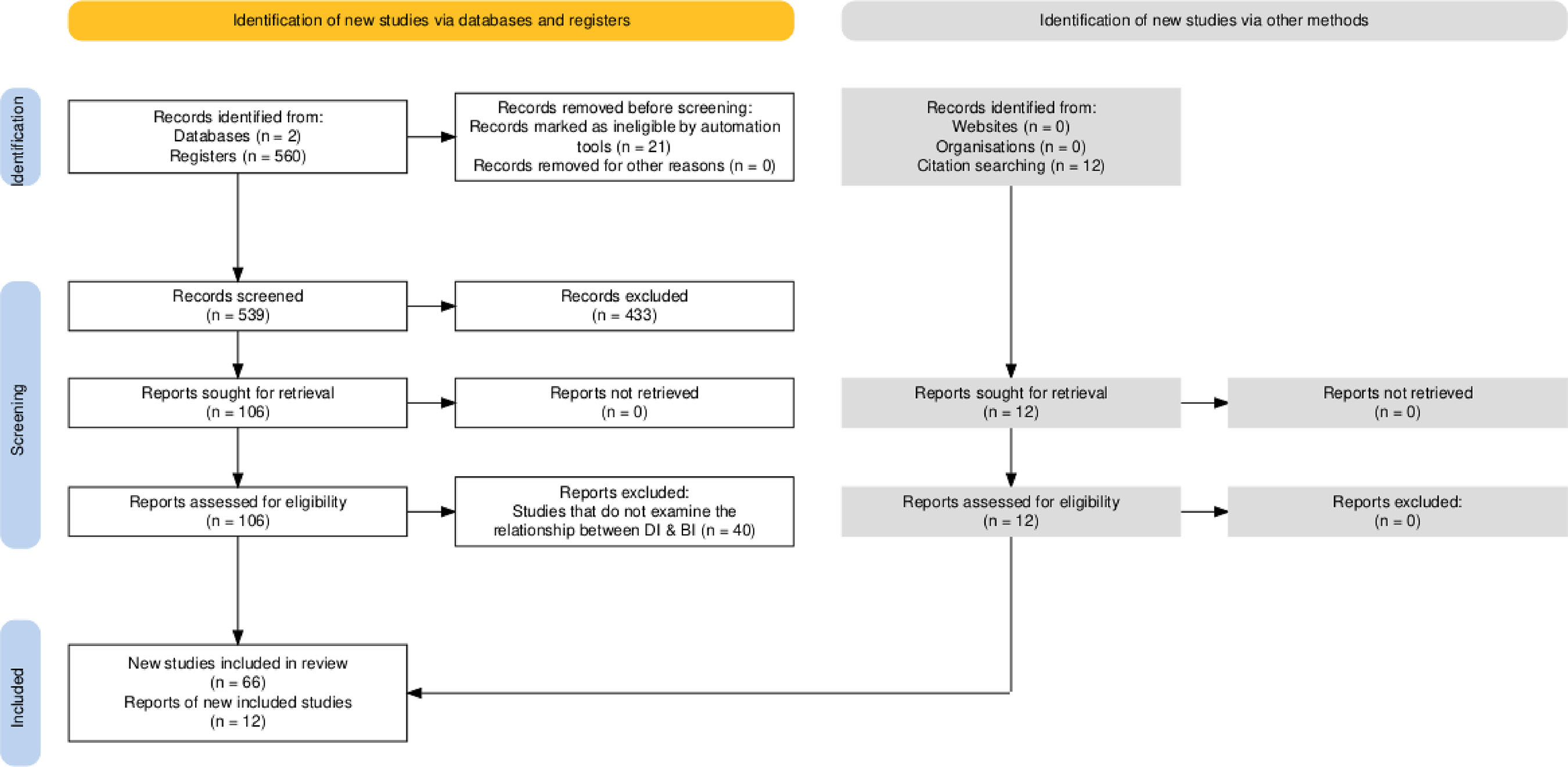
In the Evaluation phase, 560 articles were screened and duplicates were removed. Subsequently, 62 articles published in the top 10 tourism journals ranked by Scimago (SJR 2023) and indexed in SSCI were selected. Additionally, 12 highly cited articles were included to capture influential contributions in the DI–BI literature. These studies were identified through citation counts retrieved from Scopus and Web of Science and selected when they ranked among the most cited within the initial search results, regardless of journal ranking. In total, 78 articles were selected for in-depth analysis. The procedures described above are summarized in Table 1.
Specifically, the search strategies followed for the two databases consulted are presented in Table 2:
In the Synthesis stage, the papers selected were coded based on a protocol consisting of 18 variables grouped into four categories shown in Table 3 below:
In the Analysis phase, the selected studies were examined through content analysis to identify the main themes, variables, and relationships reported in the literature. Particular attention was given to the relationships between destination image (DI) and tourists’ behavioral intentions (BI), as well as to the antecedents, mediators, moderators, and outcomes associated with this relationship. The findings were then organized according to the three stages of the travel experience: pre-trip, during-trip, and post-trip.
To ensure the reliability of the coding process, the selected articles were independently coded by two researchers using the predefined coding variables. Any discrepancies were discussed and resolved through consensus. A bibliometric analysis was conducted using Zotero for reference management and Bibliometrix to generate frequency tables and thematic maps.
The search and evaluation procedures are illustrated in Figure 1 using the PRISMA 2020 flow diagram (Page et al., 2021), in total 78 articles were included.
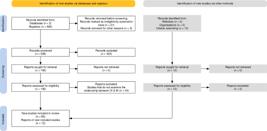
Flowchart of the paper selection process based on the Preferred Reporting Elements for Systematic Reviews and Meta-Analyses
3 FINDINGS
Performance analysis involves quantitative assessment of data based on activity indicators (Mingers & Leydesdorff, 2015). This section analyzes the field’s performance with the evaluation of productivity (publications), impact (citations), and contributors (authors, sources, countries) by using different metrics to determine the most relevant authors, journals, institutions, and countries within the research area.
3.1. Characteristics of the journals
In Table 4, 50% of the selected journals are published by Elsevier Ltd., and 80% are headquartered in the United Kingdom. Among those with the most publications on this subject are Tourism Management (23), and with the same number, Journal of Travel Research and Journal of Destination Marketing and Management (16). These journals have the longest-lived journals are one with more than 50 years of experience, while three are more than 40 years old, one is more than 30 years old and the other is 30 years old. The youngest dates from 2012.
Journals with the most publications on the subject, ranking, publisher, country, number of publications selected, and citations per document in the last 2 years
From the information included in the Scimago Journal Ranking database, all the journals are in the first quartile. Of the journals that accumulate the most papers Tourism Management has an impact factor in third place and is fourth in total citations; Journal of Travel Research is second in impact factor and seventh in total citations, while Journal of Destination Marketing & Management is eighth in the ranking and tenth in total citations.
3.2. Scientific production
Research findings are generally disseminated through the number of published articles, which indicate progress in a specific scientific field. The field exhibits strong academic impact, with high citation rates and contributions from diverse authors and sources.
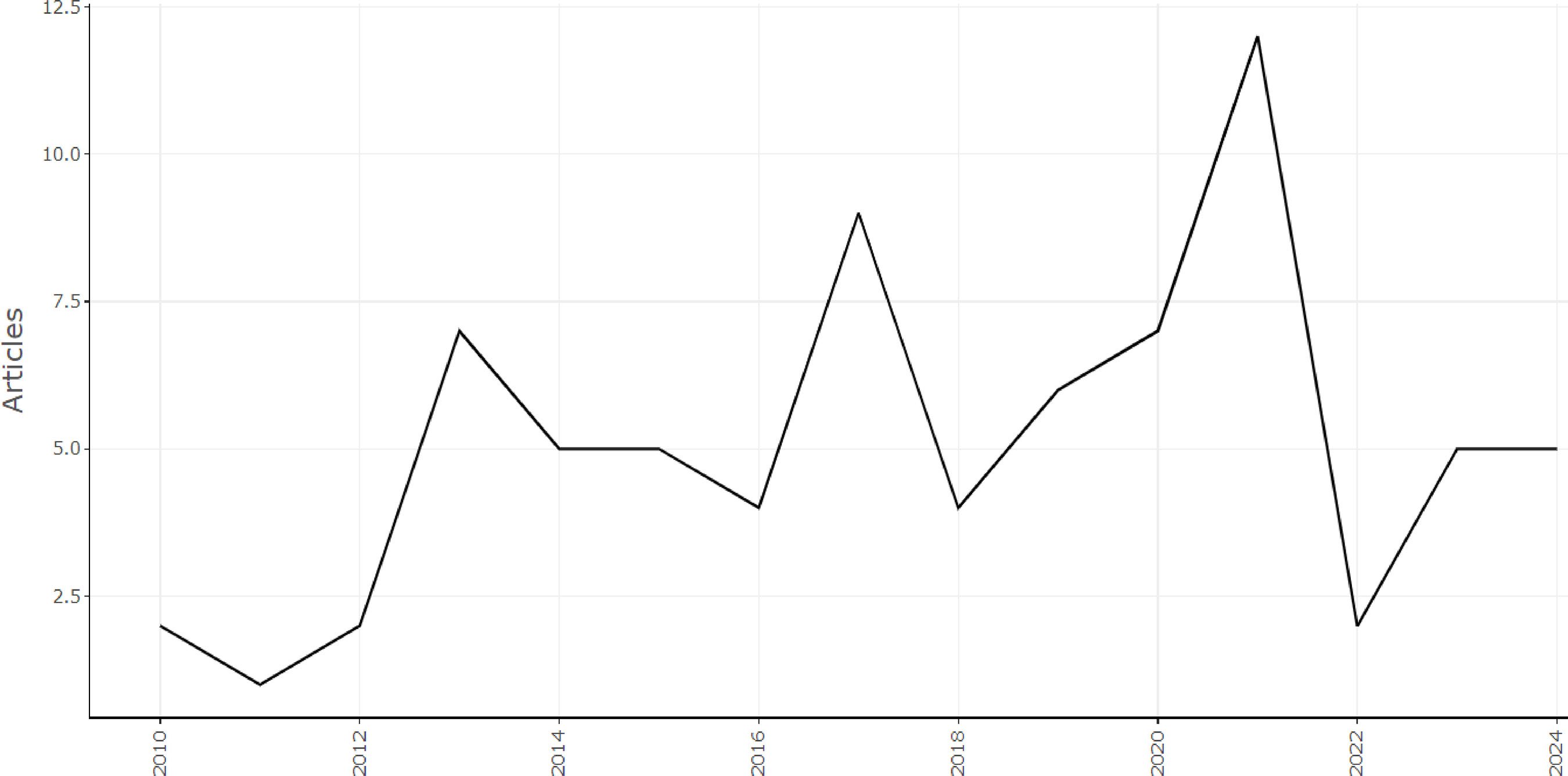
The annual growth rate of publications in this field is 6.76%, indicating a steady increase in academic interest over time. Figure 2 illustrates an overall upward trend in scientific production from 2010 to 2024, albeit with notable fluctuations. The first significant increase occurred in 2013, with eight articles published, following three years of modest output of one or two articles annually. Subsequently, a slight decline is observed during 2014-2016, with four or five publications per year. The year 2017 marks another notable uptick in production. However, the peak was reached in 2021 with twelve publications, followed by a considerably less prolific 2022 regarding tourism publications in this field.
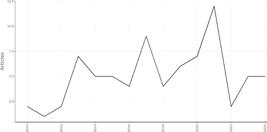
This decline may reflect disruptions in tourism research following the COVID-19 pandemic, especially in the tourism sector, which peaked globally in 2020 and 2021. Many researchers and institutions experienced delays in publishing, conducting fieldwork, accessing data, and finalizing manuscripts. Furthermore, priorities may have shifted from the academic topics analyzed towards more immediate and crisis-driven topics, such as resilience, recovery, and crisis management, rather than focusing on destination image. Therefore, we understand that this decline should be seen more as a temporary consequence of the context than as a permanent loss of academic interest in destination image research.
An analysis of scientific production, based on the countries of affiliation of the authors, reveals that research output is predominantly concentrated in a few leading nations, as shown in Table 5. China leads in citations, followed by the USA, Australia, UK and South Korea, indicating strong academic contributions from these regions.
3.3. Authors and organization
This bibliometric analysis identified a total of 220 authors, with only three single-author documents, as presented in Table 6. On average, each document includes 3.16 co-authors, highlighting the strong emphasis on teamwork within this research area. Additionally, 52.63% of the documents feature international co-authorship, further under-scoring the global scope and collaborative nature of research in this field.
Interestingly, more than 92% of authors in our dataset produced only one publication, while a smaller group has published three articles, as detailed in Table 7. This finding suggests that expertise in destination image is highly concentrated among a few scholars, each with low production output, with a maximum of three articles.
3.4. Document contents
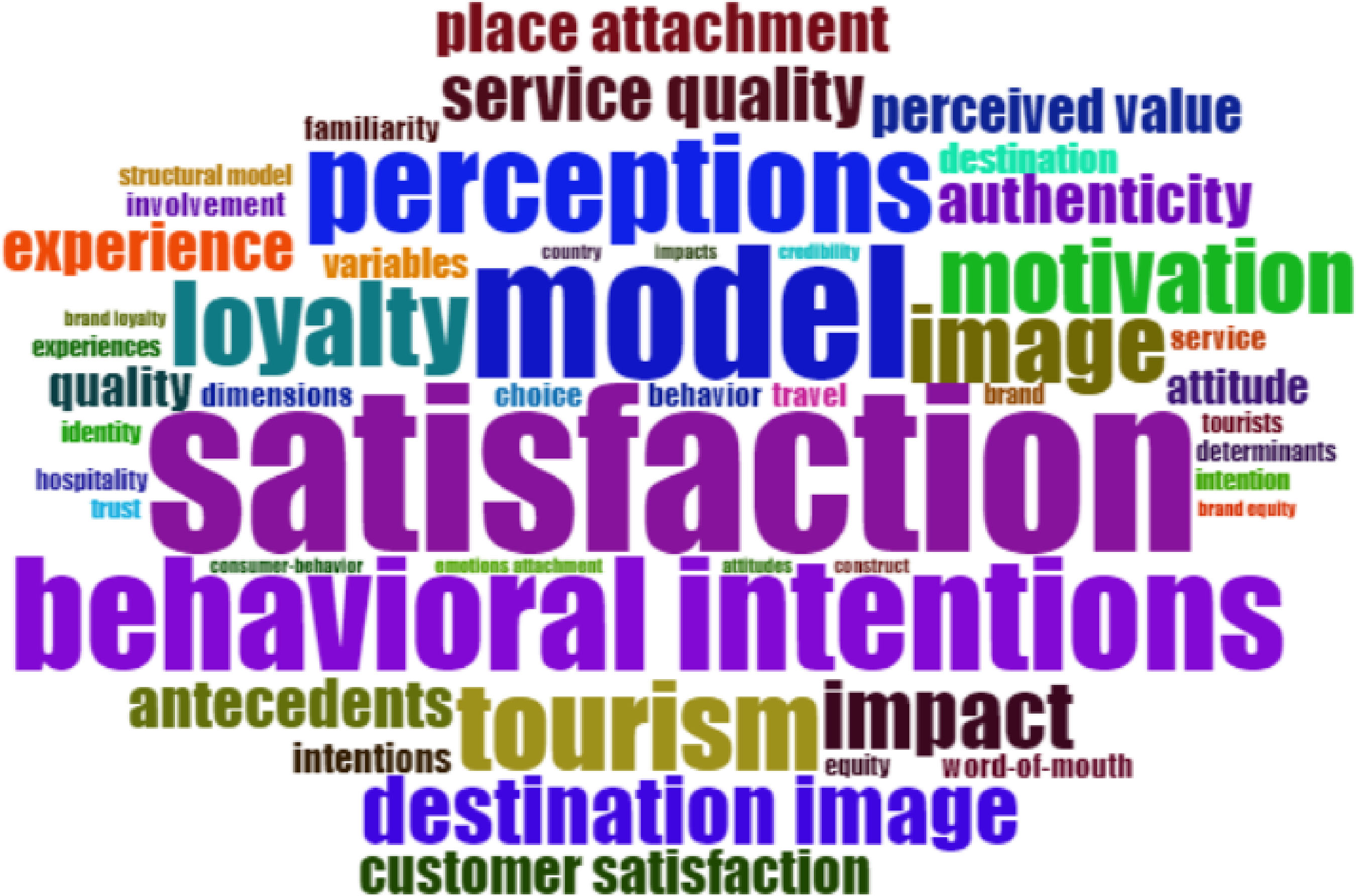
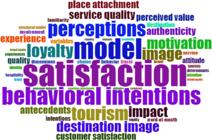
The word frequency analysis, represented in Figure 3 by a word cloud, provides a clear picture of the main themes and concepts explored in the analyzed literature. Terms such as “satisfaction” (34 times) and “model” (27 times) are the most frequently mentioned, indicating that much of the research in this area focuses on conceptual models and customer satisfaction. Another recurring theme is “behavioral intentions” (23), focusing on understanding tourists' behavior and attitudes. Furthermore, concepts such as “perceptions” (20), “loyalty” (17), “image” (16), and “destination image” (14) emphasize brand loyalty and destination perceptions. Less common but still notable terms such as “authenticity,” “service quality,” “location connection,” and “experience” reflect vital factors that influence tourists' behavior and decision-making processes.
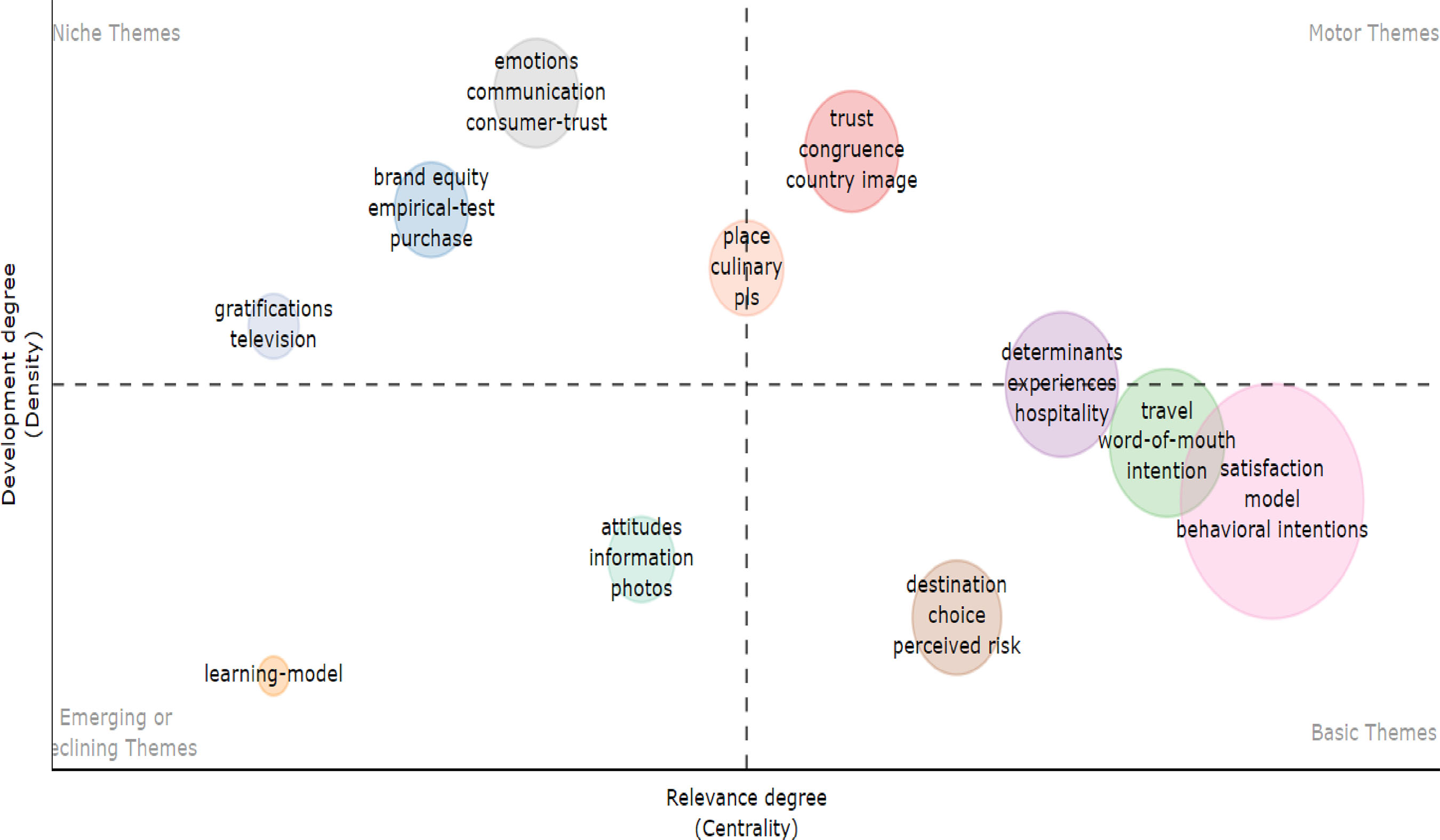
The strategic thematic map provides a two-dimensional visualization of topic development within the dataset. This visualization is based on the centrality and density of the keywords in the analyzed data. Centrality (x-axis) reflects the relevance of a given topic to the overall development of the research field. At the same time, density (y-axis) identifies that topic's degree of internal development (Cobo et al., 2011). The thematic map presented in Figure 4 was generated by Biblioshiny, based on 322 keyword units.
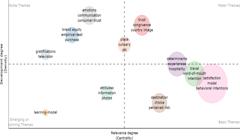
Basic themes in the lower-right quadrant are identified as central topics to the field but remain relatively underdeveloped. The most prominent cluster in this analysis falls within this category and can be labeled as “satisfaction,” which includes terms such as “satisfaction” (34 occurrences), “model” (27), and “behavioral intentions” (23). These results indicate the strong historical focus of tourism research on explaining tourists’ post-visit responses through satisfaction-based models. Although these themes are central to understanding the DI–BI relationship, further work could explore how these constructs interact with emerging factors such as digital engagement, co-creation experiences, and technology-mediated tourism interactions.
Clusters located in the upper-right quadrant are considered motor themes, as they exhibit both high centrality and high density. The “trust” cluster illustrates this category, highlighting the increasing importance of trust-related constructs in tourism research. Keywords such as “trust,” “country image,” and “congruence” emphasize the role of credibility, authenticity, and destination–tourist congruence in shaping tourists’ behavioral responses. This trend demonstrates the growing relevance of relational and psychological factors in the formation of DI and its influence on BI, particularly in contexts where tourists rely heavily on digital information and online interactions.
Niche themes appear in the upper-left quadrant and represent highly specialized topics with strong internal development but limited connections to the broader research field. The cluster related to “brand value” reflects the application of branding perspectives within tourism research. Terms such as “brand equity,” “purchase,” and “empirical test” indicate a focus on consumer-oriented approaches derived from marketing literature. While these themes are conceptually well developed, their integration with the broader DI–BI framework remains limited.
The lower-left quadrant contains themes with low centrality and density, which typically represent emerging or declining topics. In this analysis, the cluster including keywords such as “attitudes,” “information,” and “photos” appears in this category. These topics point to increasing interest in how tourists’ perceptions are shaped by the information they consume, particularly through visual and digital media. Considering the rapid digital transformation of tourism, these themes may represent emerging directions in the study of how digital content influences destination image and subsequent BI.
Table 8 provides a comprehensive overview of studies that explore how destination image (DI) and other related variables influence various aspects of tourist behavior, such as travel intentions, behavioral intentions, place attachment, satisfaction, and loyalty. The table is organized chronologically and categorizes the studies based on three distinct phases of the tourist experience: pre-trip, during-trip, and post-trip. Each study highlights the independent and dependent variables investigated, as well as the positive path relations identified in their analyses.
A cross-stage comparison of the studies summarized in Table 8 reveals several consistent patterns. First, mediating variables such as satisfaction and place attachment emerge as central mechanisms linking destination image to behavioral intentions, particularly in the during- and post-trip phases. Second, the structure of the DI–BI relationship varies across stages: cognitive evaluations dominate the pre-trip phase, emotional and experiential factors become more prominent during the trip, and evaluative and loyalty-related outcomes prevail in the post-trip stage.
These findings indicate that the DI–BI relationship operates through distinct but interconnected mechanisms that evolve across the tourist journey, reinforcing the need for a stage-based and process-oriented understanding of how destination image influences behavioral intentions.
In the pre-trip phase, the studies analyzed primarily examine the influence of destination image (DI) on visit intention (INT) and travel decision-making (TD). This relationship represents one of the most established relationships in literature. Several studies show that a positive destination image significantly increases tourists’ intention to visit a destination, highlighting the importance of maintaining a strong and favorable image to attract potential tourists (Al-Kwifi, 2015; Chaulagain et al., 2019; Qiu & Zuo, 2023).
Beyond this direct relationship, the literature also identifies mediating mechanisms that explain how DI influences behavioral intentions. For example, Fu, Ye, and Xiang (2016) and Choi et al. (2018) demonstrate that cognitive image (DI1) and affective image (DI2) mediate the influence of factors such as information credibility (IQ) and personal involvement (PI) on travel intention. These findings indicate that both rational evaluations and emotional perceptions play a critical role in shaping tourists’ decision-making before travel.
Some studies further show that the overall image of a country can influence the perceived image of specific destinations within that country (Chaulagain et al., 2019; Qiu & Zou, 2023). This suggests that tourism promotion strategies should consider both national and local branding, particularly for destinations that depend on national reputation to attract international visitors.
During the travel stage, the literature emphasizes the role of destination image in shaping tourists’ emotional experiences and connections with the destination. In particular, studies focus on how DI influences place attachment (PA) and subsequent behavioral intentions.
Research by Jiang et al. (2017) shows that destination image influences existential authenticity (AUT), which subsequently strengthens place attachment. Similarly, Liu et al. (2020) find that brand authenticity (BA) and affective brand loyalty (ABL) influence affective destination image (DI2), which in turn reinforces place attachment. These findings demonstrate that emotional responses and perceived authenticity during the travel experience are crucial for fostering stronger connections between tourists and destinations.
Other studies highlight the role of event image (EI) in shaping destination perceptions. Deng and Li (2014) show that event image can influence destination image, which subsequently affects tourists’ behavioral intentions and overall attitudes toward the destination. This relationship is particularly relevant for destinations that rely on events to strengthen their attractiveness and stimulate revisit and recommendation behaviors.
In recent years, the effects of destination image on travelers’ post-trip behavior have been studied more deeply by academics compared to pre-trip and on-trip behaviors. Research in this phase focuses primarily on revisit intention, recommendation intention, satisfaction, and loyalty, which represent the most common outcomes of a positive destination image. Numerous studies demonstrate that a favorable destination image directly increases tourists’ revisit intentions (Kim, 2012; Assaker & Hallak, 2013; De Nisco et al., 2015; Han et al., 2019) and recommendation intentions (Papadimitriou et al., 2015; Stylidis et al., 2017). These results indicate that tourists who hold positive perceptions of a destination are more likely not only to return but also to share their experiences with others.
A further recurring pattern in the literature is the mediating role of satisfaction, which significantly influences loyalty and behavioral intentions following the travel experience. Studies such as Kim et al. (2015), Lv et al. (2020), and Marques et al. (2021) show that positive post-visit perceptions significantly increase tourist satisfaction, which subsequently influences loyalty and behavioral intentions. In many cases, satisfaction acts as a key mediator between destination image and revisit or recommendation intentions (Assaker & Hallak, 2013; Chen & Phou, 2013; Li et al., 2021).
Research also highlights the importance of the cognitive and affective components of DI in shaping post-visit behavior. Studies by Stylos et al. (2017) and Marques et al. (2021) demonstrate that both dimensions jointly influence satisfaction, loyalty, and recommendation intentions, indicating that tourists’ rational evaluations and emotional experiences together determine their long-term relationship with a destination.
Additional factors such as memorable tourism experiences (MTEs), authenticity, and place attachment also play an important role in post-trip behavioral outcomes. Studies by Kim (2018) and Zhang et al. (2018) show that memorable experiences strengthen destination image and increase revisit and recommendation intentions. Similarly, Souiden et al. (2017) and Rasoolimanesh et al. (2021a) highlight the importance of authenticity and place attachment in fostering loyal tourist behavior.
Nevertheless, it is important to clarify that Table 8 summarizes the positive relationships identified between DI variables and BI outcomes, while the literature indicates that the DI–BI relationship involves multiple interacting mechanisms and variations in its effects. Although many studies report direct relationships, others show that the influence of DI on behavioral intentions often operates indirectly through mediating variables such as satisfaction, place attachment, authenticity, and trust. These variations suggest that the impact of destination image is contingent on contextual, experiential, and psychological factors.
From a broader perspective, the variables identified in literature can be classified into four main categories. Antecedents include factors such as information credibility, personal involvement, event image, country image, and memorable tourism experiences, which contribute to shaping destination image before or during travel. Mediators frequently identify in the literature include satisfaction, place attachment, authenticity, and trust, which explain how destination image translates into behavioral intentions. Moderators include contextual and individual factors such as tourist experience, cultural background, information sources, and destination type, which influence the strength of the DI–BI relationship. Finally, the most common consequences of a positive destination image are revisit intention, recommendation intention, loyalty, and word-of-mouth, confirming the central role of DI as a predictor of tourist behavior.
These stage-specific differences reinforce the dynamic nature of the DI–BI relationship, highlighting how its underlying mechanisms evolve throughout the tourist journey. Rather than operating as a static association, destination image influences behavioral intentions through context-dependent processes that vary across the pre-trip, during-trip, and post-trip phases.
The empirical findings identified in this review align with several theoretical frameworks discussed in the literature. The relationship between destination image and behavioral intentions is consistent with the Theory of Planned Behavior (Ajzen, 1991), which emphasizes the role of attitudes in shaping behavioral intentions. Similarly, the mediating role of satisfaction corresponds with Expectation–Confirmation Theory (Oliver & Swan, 1989), which explains how post-consumption evaluations influence future behavioral responses. Together, these theoretical perspectives support the interpretation of the DI–BI relationship as a dynamic process in which cognitive perceptions, emotional responses, and post-consumption evaluations interact throughout the travel experience.
The analysis also highlights several promising directions for future research. Greater attention should be given to digital innovation and emerging technologies, including social media, artificial intelligence, and immersive technologies, which increasingly shape tourists’ perceptions of destinations. Further research could also examine changes in tourist behavior, particularly in relation to co-creation experiences and digital engagement. Longitudinal studies would help clarify how destination image evolves over time and influences behavioral intentions across different travel stages. In addition, negative destination perceptions remain relatively underexamined in literature and deserve further exploration.
Future studies could also expand the bibliometric scope by examining the relative proportion of DI–BI research within tourism journals, as well as exploring country-level differences by considering contextual factors such as research policies, academic networks, and market characteristics. Moreover, applying advanced bibliometric techniques, such as co-citation analysis and collaboration network analysis, would allow the identification of research clusters and schools of thought, providing a deeper understanding of the intellectual structure of the field. Finally, multi-method research designs that combine quantitative and qualitative approaches may provide deeper insights into the complex dynamics of the DI–BI relationship.
4 CONCLUSIONS
This study proposes an integrative framework that conceptualizes the relationship between destination image (DI) and tourists’ behavioral intentions (BI) as a dynamic, stage-dependent process across the tourist journey. By synthesizing evidence from the literature, the framework integrates antecedents, mediators, and outcomes within a unified structure that captures how cognitive, affective, and evaluative mechanisms interact over time, thereby contributing to a process-oriented and stage-based theoretical understanding of the DI–BI relationship.
Unlike previous reviews, which have predominantly examined isolated relationships, specific behavioral outcomes, or limited stages of the travel experience, this study advances the literature by offering a comprehensive and temporally structured perspective of the DI–BI relationship. By explicitly linking the pre-trip, during-trip, and post-trip phases, this framework provides a more systematic understanding of how destination image influences behavioral intentions through interconnected processes rather than fragmented associations.
From a theoretical perspective, the analysis also shows that the relationship between DI and BI is not always direct, as it often operates through mediating mechanisms such as satisfaction, place attachment, authenticity, and memorable tourism experiences. From a managerial perspective, the findings highlight the need for Destination Marketing Organizations (DMOs) to manage destination image strategically throughout the tourist journey. Strengthening cognitive and affective perceptions before travel, facilitating authentic experiences during the visit, and encouraging positive post-trip engagement are key elements for fostering tourist loyalty and positive word-of-mouth.
The study also identifies several avenues for future research, particularly regarding the role of digital technologies and immersive experiences, differences among tourist segments, and the need for longitudinal and multi-method approaches to better capture the dynamic nature of destination image. Beyond managerial implications, the results also have social relevance, as effective destination image management can support more sustainable tourism development by promoting authentic experiences and strengthening connections between tourists and local communities.
-
Como Citar:
Más, R. J. L., & Díaz-Contino, C. G. (2026). Destination image and its effect on tourist behavioral intentions: systematic review. Revista Brasileira de Pesquisa em Turismo, São Paulo, 20, e-3259, 2026. https://doi.org/10.7784/rbtur.v20.3259
-
Revisado em pares.
Declaration of Data Availability
Data should be requested from the author via email: rjlm2@ua.es
REFERENCES
-
Afshardoost, M., & Eshaghi, M. S. (2020). Destination image and tourist behavioural intentions: A meta-analysis. Tourism Management, 81, 104154. https://doi.org/10.1016/j.tourman.2020.104154
» https://doi.org/10.1016/j.tourman.2020.104154 -
Agapito, D., Valle, P. & Mendes, J. (2013). The cognitive-affective-conative model of destination image: A confirmatory analysis. Journal of Travel & Tourism Marketing, 30(5), 471–481. https://doi.org/10.1080/10548408.2013.803393
» https://doi.org/10.1080/10548408.2013.803393 -
Ajzen, I. (1991). The theory of planned behavior. Organizational Behavior and Human Decision Processes, 50(2), 179–211. https://doi.org/10.1016/0749-5978(91)90020-T
» https://doi.org/10.1016/0749-5978(91)90020-T -
Al-Ansi, A., & Han, H. (2019). Role of halal-friendly destination performances, value, satisfaction, and trust in generating destination image and loyalty. Journal of Destination Marketing & Management, 13, 51-60. https://doi.org/10.1016/j.jdmm.2019.05.007
» https://doi.org/10.1016/j.jdmm.2019.05.007 -
Al-Ansi, A., Kim, S., Xu, Y., Chen, C., Chua, B., & Han, H. (2024). Wellness Tourism Attributes and Tourist Outcomes: An Analysis of Configurational Effects. Journal of Travel Research 64(5). https://doi.org/10.1177/00472875241237262
» https://doi.org/10.1177/00472875241237262 -
Albaity, M. & Melhem, S.B. (2017). Novelty seeking, image, and loyalty: The mediating role of satisfaction and moderating role of length of stay: International tourists’ perspective. Tourism Management Perspectives, 23, 30–37. https://doi.org/10.1016/j.tmp.2017.04.001
» https://doi.org/10.1016/j.tmp.2017.04.001 -
Al-Kwifi, O.S. (2015). The impact of destination images on tourists’ decision making: A technological exploratory study using fMRI. Journal of Hospitality and Tourism Technology, 6(2), 174-194. https://doi.org/10.1108/JHTT-06-2015-0024
» https://doi.org/10.1108/JHTT-06-2015-0024 -
Añaña, E. da S., Anjos, F. A. dos, & Pereira, M. de L. (2016). Imagem de destinos turísticos: Avaliação à luz da teoria da experiência na economia baseada em serviços. Revista Brasileira de Pesquisa em Turismo, 10(2), 309–329. https://doi.org/10.7784/rbtur.v10i2.1093
» https://doi.org/10.7784/rbtur.v10i2.1093 -
Ardani, W., Rahyuda K., Giantari I. G. A. K., Sukaatmadja I. P. G. (2019). Customer satisfaction and behavioral intentions in tourism: A literature review. International Journal of Applied Business and International Management, 4(3), 84–93. https://doi.org/10.32535/ijabim.v4i3.686
» https://doi.org/10.32535/ijabim.v4i3.686 -
Aria, M., & Cuccurullo, C. (2017). bibliometrix: An R-tool for comprehensive science mapping analysis. Journal of Informetrics, 11(4), 959-975. https://doi.org/10.1016/j.joi.2017.08.007
» https://doi.org/10.1016/j.joi.2017.08.007 -
Assaker, G., & Hallak, R. (2013). Moderating Effects of Tourists’ Novelty-Seeking Tendencies on Destination Image, Visitor Satisfaction, and Short- and Long-Term Revisit Intentions. Journal of Travel Research, 52(5), 600-613. https://doi.org/10.1177/0047287513478497
» https://doi.org/10.1177/0047287513478497 -
Bagozzi, R. P. (1992). The self-regulation of attitudes, intentions, and behavior. Social Psychology Quarterly, 55(2), 178–204. https://doi.org/10.2307/2786945
» https://doi.org/10.2307/2786945 -
Baloglu, S. (2000). A path analytic model of visitation intention involving information sources, socio-psychological motivations, and destination image. Journal of Travel & Tourism Marketing, 8(3), 81–90. https://doi.org/10.1300/J073v08n03_05
» https://doi.org/10.1300/J073v08n03_05 -
Baloglu, S., & McCleary, K. (1999). A model of destination image formation. Annals of Tourism Research, 26, 4, 868-897. https://doi.org/10.1016/S0160-383(99)00030-4
» https://doi.org/10.1016/S0160-383(99)00030-4 -
Bigne, J.E., Sanchez, M.I., & Sanchez, J. (2001) Tourism Image, Evaluation Variables and after purchase Behaviour: Inter-Relationship. Tourism Management, 22(6), 607-616. https://doi.org/10.1016/S0261-5177(01)00035-8
» https://doi.org/10.1016/S0261-5177(01)00035-8 -
Borlido, T., & Kastenholz, E. (2021). Destination image and on-site tourist behaviour: A systematic literature review. Revista Turismo & Desenvolvimento, 36(1), 63-80. https://doi.org/10.34624/rtd.v1i36.8405
» https://doi.org/10.34624/rtd.v1i36.8405 -
Campo-Martínez, S., Garau-Vadell, J. B., & Martínez-Ruiz, M. P. (2010). Factors influencing repeat visits to a destination: The influence of group composition. Tourism Management, 31(6), 862-870. https://doi.org/10.1016/j.tourman.2009.08.013
» https://doi.org/10.1016/j.tourman.2009.08.013 -
Chaulagain, S., Wiitala, J., & Fu, X. (2019). The impact of country image and destination image on US tourists’ travel intention. Journal of Destination Marketing & Management, 12, 1-11. https://doi.org/10.1016/j.jdmm.2019.01.005
» https://doi.org/10.1016/j.jdmm.2019.01.005 -
Chen, C.F. & Chen, F.S. (2010) Experience Quality, Perceived Value, Satisfaction and Behavioral Intentions for Heritage Tourists. Tourism Management, 31, 29-35. http://dx.doi.org/10.1016/j.tourman.2009.02.008
» https://doi.org/10.1016/j.tourman.2009.02.008 -
Chen, C.F., & Phou, S. (2013). A closer look at destination: Image, personality, relationship and loyalty. Tourism Management, 36, 269-278. https://doi.org/10.1016/j.tourman.2012.11.015
» https://doi.org/10.1016/j.tourman.2012.11.015 -
Chen, C.F. and Tsai, D. (2007) How Destination Image and Evaluative Factors Affect Behavioral Intentions? Tourism Management, 28, 1115-1122. https://doi.org/10.1016/j.tourman.2006.07.007
» https://doi.org/10.1016/j.tourman.2006.07.007 -
Cheng, P., Wang, W., & Yang, S. (2024). Doing the right thing: How to persuade travelers to adopt pro-environmental behaviors?. An elaboration likelihood model perspective. Journal of Hospitality and Tourism Management, 59, 191-209. https://doi.org/10.1016/j.jhtm.2024.04.009
» https://doi.org/10.1016/j.jhtm.2024.04.009 -
Cherifi, B., Smith, A., Maitland, R., & Stevenson, N. (2014). "Destination images of non-visitors. Annals of Tourism Research, 49, 190-202. https://doi.org/10.1016/j.annals.2014.09.008
» https://doi.org/10.1016/j.annals.2014.09.008 -
Chew, E., & Jahari, S. (2014). Destination image as a mediator between perceived risks and revisit intention: A case of post-disaster Japan. Tourism Management, 40, 382-393. https://doi.org/10.1016/j.tourman.2013.07.008
» https://doi.org/10.1016/j.tourman.2013.07.008 -
Choe, J., & Kim, S. (2018). Effects of tourists’ local food consumption value on attitude, food destination image, and behavioral intention. International Journal of Hospitality Management, 71, 1-10. https://doi.org/10.1016/j.ijhm.2017.11.007
» https://doi.org/10.1016/j.ijhm.2017.11.007 -
Choi, Y., Hickerson, B., & Kerstetter, D. (2018). Understanding the Sources of Online Travel Information. Journal of Travel Research, 57(1), 116-128. https://doi.org/10.1177/0047287516683833
» https://doi.org/10.1177/0047287516683833 -
Chon, K. S. (1991). Tourism destination image modification process: Marketing implications. Tourism Management, 12(2), 68–72. http://dx.doi.org/10.1016/0261-5177(91)90030-W
» https://doi.org/10.1016/0261-5177(91)90030-W -
Chu, Q., Bao, G., & Sun, J. (2022). Progress and Prospects of Destination Image Research in the Last Decade. Sustainability, 14, 10716. https://doi.org/10.3390/su141710716
» https://doi.org/10.3390/su141710716 -
Cobo, M. J., López-Herrera, A. G., Herrera-Viedma, E., & Herrera, F. (2011). An approach for detecting, quantifying, and visualizing the evolution of a research field: A practical application to the Fuzzy Sets Theory field. Journal of Informetrics, 5(1), 146-166. https://doi.org/10.1016/j.joi.2010.10.002
» https://doi.org/10.1016/j.joi.2010.10.002 -
Conner M., & Norman P. (2022). Understanding the intention-behavior gap: The role of intention strength. Frontiers in Psychology, 13 https://doi.org/10.3389/fpsyg.2022.923464
» https://doi.org/10.3389/fpsyg.2022.923464 -
De Nisco, A., Mainolfi, G., Marino, V., & Napolitano, M. R. (2015). Tourism satisfaction effect on general country image, destination image, and post-visit intentions. Journal of Vacation Marketing, 21(4), 305-317. https://doi.org/10.1177/1356766715577502
» https://doi.org/10.1177/1356766715577502 -
Deng, Q., & Li, M. (2014). A Model of Event-Destination Image Transfer. Journal of Travel Research, 53(1), 69-82. https://doi.org/10.1177/0047287513491331
» https://doi.org/10.1177/0047287513491331 -
Ding, H., & Hung, K. (2021). The antecedents of visitors? Flow experience and its influence on memory and behavioral intentions in the music festival context. Journal of Destination Marketing & Management, 19. https://doi.org/10.1016/j.jdmm.2020.100551
» https://doi.org/10.1016/j.jdmm.2020.100551 -
Echtner, C.M., & Ritchie, J.R.B. (2003). The meaning and measurement of destination image:[Reprint of original article published in v. 2, no. 2, 1991: 2-12.]. Journal of Tourism Studies, 14(1), 37–48. https://citeseerx.ist.psu.edu/document?repid=rep1&type=pdf&doi=acbdab8d9ce90ba48e056d42b9270aa43feeafff
» https://citeseerx.ist.psu.edu/document?repid=rep1&type=pdf&doi=acbdab8d9ce90ba48e056d42b9270aa43feeafff -
Elahi, A., Moradi, E., & Saffari, M. (2020). Antecedents and consequences of tourists’ satisfaction in sport event: Mediating role of destination image. Journal of Convention & Event Tourism, 21(2), 123–154. doi:10.1080/15470148.2020.1731726
» https://doi.org/10.1080/15470148.2020.1731726 -
Farmaki, A. (2012). An exploration of tourist motivation in rural settings: The case of Troodos, Cyprus. Tourism Management Perspectives, 2(2-3), 72-78. https://doi.org/10.1016/j.tmp.2012.03.007
» https://doi.org/10.1016/j.tmp.2012.03.007 - Fishbein, M., & Ajzen, I. (1975). Belief, Attitude, Intention, and Behavior: An Introduction to Theory and Research. Reading, MA: Addison-Wesley.
-
Fu, H., Ye, B., & Xiang, J. (2016). Reality TV, audience travel intentions, and destination image. Tourism Management, 55, 37-48. https://doi.org/10.1016/j.tourman.2016.01.009
» https://doi.org/10.1016/j.tourman.2016.01.009 -
Gallarza, M.G., Saura, I.G., & Garcı́a, H.C. (2002). Destination image. Annals of Tourism Research, 29(1), 56–78. https://doi.org/10.1016/S0160-7383(01)00031-7
» https://doi.org/10.1016/S0160-7383(01)00031-7 -
Gartner, W.C. (1994). Image formation process. Journal of Travel & Tourism Marketing, 2(2-3), 191–216. https://doi.org/10.1300/J073v02n02_12
» https://doi.org/10.1300/J073v02n02_12 -
Govers, R., Go, F., & Kumar, K. (2007). Promoting Tourism Destination Image. Journal of Travel Research, 46(1), 15-23. https://doi.org/10.1177/00472875073023
» https://doi.org/10.1177/00472875073023 -
Grant, M.J., & Booth, A. (2009). A Typology of Reviews: An Analysis of 14 Review Types and Associated Methodologies. Health Information & Libraries Journal, 26, 91-108. http://dx.doi.org/10.1111/j.1471-1842.2009.00848.x
» https://doi.org/10.1111/j.1471-1842.2009.00848.x -
Gunn, C.A. (1972). Vacationscape: Designing Tourist Regions: (Bureau of Business Research, The University of Texas at Austin, Austin, Texas, 1972, 238 pp., $8.00.). Journal of Travel Research, 11(3), 24-24. https://doi.org/10.1177/004728757301100306
» https://doi.org/10.1177/004728757301100306 -
Gursoy, D., Chen, J., & Chi, C. (2014). Theoretical examination of destination loyalty formation. International Journal of Contemporary Hospitality Management, 26(5), 809-827. https://doi.org/10.1108/IJCHM-12-2013-0539
» https://doi.org/10.1108/IJCHM-12-2013-0539 -
Hallmann, K., Zehrer, A., & Müller, S. (2015). Perceived Destination Image: An Image Model for a Winter Sports Destination and Its Effect on Intention to Revisit. Journal of Travel Research, 54(1), 94-106. https://doi.org/10.1177/0047287513513161
» https://doi.org/10.1177/0047287513513161 -
Han, H., Al-Ansi, A., Olya, H., & Kim, W. (2019). Exploring halal-friendly destination attributes in South Korea: Perceptions and behaviors of Muslim travelers toward a non-Muslim destination. Tourism Management, 71, 151-164. https://doi.org/10.1016/j.tourman.2018.10.010
» https://doi.org/10.1016/j.tourman.2018.10.010 - Heitmann, S. (2011). Tourist behaviour and tourism motivation. In Research themes for tourism, 31-44. Wallingford UK: CABI.
-
Hosany, S., Ekinci, Y., & Uysal, M. (2006). Destination Image and Destination Personality: An application of branding theories to tourism places. Journal of Business Research, 9 (5), 638-642. https://doi.org/10.1016/j.jbusres.2006.01.001
» https://doi.org/10.1016/j.jbusres.2006.01.001 -
Hsu, C. H., Cai, L. A., & Li, M. (2010). Expectation, Motivation, and Attitude: A Tourist Behavioral Model. Journal of Travel Research, 49(3), 282-296. https://doi.org/10.1177/0047287509349266
» https://doi.org/10.1177/0047287509349266 -
Huang, R.Y., Chang, W.J., & Chang, C.Y. (2021). Destination image analysis and its strategic implications: a literature review from 1990 to 2019. International Journal of Tourism & Hospitality Reviews, 8(1), 30–50. https://doi.org/10.18510/ijthr.2021.813
» https://doi.org/10.18510/ijthr.2021.813 - Hunt, J. (1971). Image: A factor in tourism Colorado State University Press.
-
Hunt, J. (1975). Image as a Factor in Tourism Development. Journal of Travel Research, 13(3), 1–7. https://doi.org/10.1177/0047287575013003
» https://doi.org/10.1177/0047287575013003 -
Jiang, Y., Ramkissoon, H., Mavondo, F. T., & Feng, S. (2017). Authenticity: The Link Between Destination Image and Place Attachment. Journal of Hospitality Marketing & Management, 26(2), 105-124. https://doi.org/10.1080/19368623.2016.1185988
» https://doi.org/10.1080/19368623.2016.1185988 -
Jani, D., & Nguni, W. (2016). Pre-trip vs. post-trip destination image variations: A case of inbound tourists to Tanzania. Tourism: An International Interdisciplinary Journal, 64(1), 27-40. http://hdl.handle.net/20.500.11810/4460
» http://hdl.handle.net/20.500.11810/4460 -
Josiassen, A., Assaf, A. G., Woo, L., & Kock, F. (2016). The Imagery-Image Duality Model: An Integrative Review and Advocating for Improved Delimitation of Concepts. Journal of Travel Research, 55(6), 789-803. https://doi.org/10.1177/0047287515583358
» https://doi.org/10.1177/0047287515583358 -
Josiassen, A., & George Assaf, A. (2013). Look at me—I am flying: The influence of social visibility of consumption on tourism decisions. Annals of Tourism Research, 40, 155-175. https://doi.org/10.1016/j.annals.2012.08.007
» https://doi.org/10.1016/j.annals.2012.08.007 -
Karim, R.A., Rabiul, M.K., & Arfat, S.M. (2023). Factors influencing tourists’ behavioural intentions towards beach destinations: the mediating roles of destination experience and destination satisfaction. Journal of Hospitality and Tourism Insights. Ahead-of-print No. ahead-of-print. https://doi.org/10.1108/JHTI-04-2023-0276
» https://doi.org/10.1108/JHTI-04-2023-0276 -
Kim, J.-H. (2018). The Impact of Memorable Tourism Experiences on Loyalty Behaviors: The Mediating Effects of Destination Image and Satisfaction. Journal of Travel Research, 57(7), 856-870. https://doi.org/10.1177/0047287517721369
» https://doi.org/10.1177/0047287517721369 -
Kim, K., Hallab, Z., & Kim, J. N. (2012). The Moderating Effect of Travel Experience in a Destination on the Relationship Between the Destination Image and the Intention to Revisit. Journal of Hospitality Marketing & Management, 21(5), 486-505. https://doi.org/10.1080/19368623.2012.626745
» https://doi.org/10.1080/19368623.2012.626745 -
Kim, M., Jung, T., Kim, W., & Fountoulaki, P. (2015). Factors affecting British revisit intention to Crete, Greece: High vs. Low spending tourists. Tourism Geographies, 17(5), 815-841. https://doi.org/10.1080/14616688.2015.1062908
» https://doi.org/10.1080/14616688.2015.1062908 -
Lai, M. Y., Wang, Y., & Khoo-Lattimore, C. (2020). Do Food Image and Food Neophobia Affect Tourist Intention to Visit a Destination? The Case of Australia. Journal of Travel Research, 59(5), 928-949. https://doi.org/10.1177/0047287519867144
» https://doi.org/10.1177/0047287519867144 -
Lam, J., Ismail, H., & Lee, S. (2020). From desktop to destination: User-generated content platforms, co-created online experiences, destination image and satisfaction. Journal of Destination Marketing & Management, 18 https://doi.org/10.1016/j.jdmm.2020.100490
» https://doi.org/10.1016/j.jdmm.2020.100490 -
Lee, W., & Jeong, C. (2018). Effects of pro-environmental destination image and leisure sports mania on motivation and pro-environmental behavior of visitors to Korea’s national Parks. Journal of Destination Marketing & Management, 10, 25-35. https://doi.org/10.1016/j.jdmm.2018.05.005
» https://doi.org/10.1016/j.jdmm.2018.05.005 -
Lee, C.-K., Kang, S., Reisinger, Y., & Kim, N. (2012). Incongruence in Destination Image: Central Asia Region. Tourism Geographies, 14(4), 599-624. https://doi.org/10.1080/14616688.2012.647325
» https://doi.org/10.1080/14616688.2012.647325 -
Lee, K.-H., & Kim, D.-Y. (2017). Explicit and implicit image cognitions toward destination: Application of the Single-Target Implicit Association Test (ST-IAT). Journal of Destination Marketing and Management, 6(4), 396-406. https://doi.org/10.1016/j.jdmm.2016.06.006
» https://doi.org/10.1016/j.jdmm.2016.06.006 -
Li, F. S., & Ma, J. (2024). The effect of implied motion in travel photographs on visit intention: The mediating role of mental imagery. Tourism Management, 104 https://doi.org/10.1016/j.tourman.2024.104919
» https://doi.org/10.1016/j.tourman.2024.104919 -
Li, T., Liu, F., & Soutar, G. (2021). Experiences, post-trip destination image, satisfaction and loyalty: A study in an ecotourism context. Journal of Destination Marketing & Management, 19 https://doi.org/10.1016/j.jdmm.2020.100547
» https://doi.org/10.1016/j.jdmm.2020.100547 -
Lin, M., Liang, Y., Xue, J., Pan, B., & Schroeder, A. (2021). Destination image through social media analytics and survey method. International Journal of Contemporary Hospitality Management, 33(6), 2219-2238. https://doi.org/10.1108/IJCHM-08-2020-0861
» https://doi.org/10.1108/IJCHM-08-2020-0861 -
Liu, Y., Hultman, M., Eisingerich, A. B., & Wei, X. (2020). How does brand loyalty interact with tourism destination? Exploring the effect of brand loyalty on place attachment. Annals of Tourism Research, 81, 102879. https://doi.org/10.1016/j.annals.2020.102879
» https://doi.org/10.1016/j.annals.2020.102879 -
Loi, L.T.I., So, A.S.I., Lo, I.S. and Fong, L.H.N. (2017). Does the Quality of Tourist Shuttles Influence Revisit Intention through Destination Image and Satisfaction? The Case of Macao. Journal of Hospitality & Tourism Management, 32, 115-123. https://doi.org/10.1016/j.jhtm.2017.06.002
» https://doi.org/10.1016/j.jhtm.2017.06.002 -
Loung, T. B. (2023). Eco-destination image, environment beliefs, ecotourism attitudes, and ecotourism intention: The moderating role of biospheric values. Journal of Hospitality and Tourism Management, 57, 315-326. https://doi.org/10.1016/j.jhtm.2023.11.002
» https://doi.org/10.1016/j.jhtm.2023.11.002 - Mayo, E. J. (1973). Regional images and regional travel behavior. In The travel research association fourth annual conference proceedings, 211–218.
-
Marques, C., Vinhas Da Silva, R., & Antova, S. (2021). Image, satisfaction, destination and product post-visit behaviours: How do they relate in emerging destinations? Tourism Management, 85, 104293. https://doi.org/10.1016/j.tourman.2021.104293
» https://doi.org/10.1016/j.tourman.2021.104293 -
Mendes-Filho, L., Mills, A. M., Tan, F. B., & Milne, S. (2018). Empowering the traveler: an examination of the impact of user-generated content on travel planning. Journal of Travel & Tourism Marketing, 35(4), 425–436. https://doi.org/10.1080/10548408.2017.1358237
» https://doi.org/10.1080/10548408.2017.1358237 -
Mingers, J., & Leydesdorff, L. (2015). A review of theory and practice in scientometrics. European Journal of Operational Research, 246(1), 1-19. https://doi.org/10.1016/j.ejor.2015.04.002
» https://doi.org/10.1016/j.ejor.2015.04.002 -
Molinillo, S., Liébana-Cabanillas, F., Anaya-Sánchez, R., & Buhalis, D. (2018). DMO online platforms: image and intention to visit. Tourism Management, 65, 116- 130. https://doi.org/10.1016/j.tourman.2017.09.021
» https://doi.org/10.1016/j.tourman.2017.09.021 -
Nikolova, M. & Hassan, S. (2013). Nation branding effects on retrospective global evaluation of past evaluation of past travel experiencies. Journal of Business Research, 66(6), 752-758. https://doi.org/10.1016/j.jbusres.2011.09.014
» https://doi.org/10.1016/j.jbusres.2011.09.014 -
Oliver, R. L., & Swan, J. E. (1989). Equity and disconfirmation perceptions as influences on merchant and product satisfaction. Journal of Consumer Research, 16(3), 372–383. https://doi.org/10.1086/209223
» https://doi.org/10.1086/209223 -
Page, M. J., McKenzie, J. E., Bossuyt, P. M., Boutron, I., Hoffmann, T. C., Mulrow, C. D., ... & Alonso-Fernández, S. (2021). Declaración PRISMA 2020: una guía actualizada para la publicación de revisiones sistemáticas. Revista Española de Cardiología, 74(9), 790-799. https://doi.org/10.1016/j.recesp.2021.06.016
» https://doi.org/10.1016/j.recesp.2021.06.016 -
Papadimitriou, D., Apostolopoulou, A., & Kaplanidou, K. (2015). Destination Personality, Affective Image, and Behavioral Intentions in Domestic Urban Tourism. Journal of Travel Research, 54(3), 302-315. https://doi.org/10.1177/0047287513516389
» https://doi.org/10.1177/0047287513516389 -
Pearce, D. (1997). Competitive destination analysis in Southeast Asia. Journal of Travel Research, 35(4), 16-24. https://doi.org/10.1177/004728759703500403
» https://doi.org/10.1177/004728759703500403 -
Perugini, M., & Bagozzi, R. P. (2004). The distinction between desires and intentions. European Journal of Social Psychology, 34(1), 69–84. https://doi.org/10.1002/ejsp.186
» https://doi.org/10.1002/ejsp.186 -
Pike, S. (2002). Destination Image Analysis. A Review of 142 Papers from 1973 to 2000. Tourism Management, 23, 541-549. https://doi.org/10.1016/S0261-5177(02)00005-5
» https://doi.org/10.1016/S0261-5177(02)00005-5 -
Prayag, G., Hosany, S., Muskat, B., & Del Chiappa, G. (2017). Understanding the Relationships between Tourists’ Emotional Experiences, Perceived Overall Image, Satisfaction, and Intention to Recommend. Journal of Travel Research, 56(1), 41-54. https://doi.org/10.1177/0047287515620567
» https://doi.org/10.1177/0047287515620567 -
Prayag, G., & Ryan, C. (2012). Antecedents of Tourists’ Loyalty to Mauritius: The Role and Influence of Destination Image, Place Attachment, Personal Involvement, and Satisfaction. Journal of Travel Research, 51(3), 342-356. https://doi.org/10.1177/0047287511410321
» https://doi.org/10.1177/0047287511410321 -
Primananda, P., Yasa, N., Sukaatmadja, I.P. & Setiawan, P. (2022). Destination Image Development in Tourism: Literature Review. International Journal of Research and Innovation in Social Science, (IJRISS), 6(7), 198-202. DOI: 10.47772/IJRISS.2022.6713
» https://doi.org/10.47772/IJRISS.2022.6713 -
Qiu, Q., & Zuo, Y. (2023). “Intangible cultural heritage” label in destination marketing toolkits: Does it work and how? Journal of Hospitality and Tourism Management, 56, 272-283. https://doi.org/10.1016/j.jhtm.2023.06.025
» https://doi.org/10.1016/j.jhtm.2023.06.025 -
Qu, Z., Cao, X., Ge, H., & Liu, Y. (2021). How does national image affect tourists’ civilized tourism behavior?. The mediating role of psychological ownership. Journal of Hospitality and Tourism Management, 47, 468-475. https://doi.org/10.1016/j.jhtm.2021.04.019
» https://doi.org/10.1016/j.jhtm.2021.04.019 -
Qu, H., Kim, L., & Im, H. (2011). A model of destination branding: Integrating the concepts of the branding and destination image. Tourism Management, 32(3), 465–476. https://doi.org/10.1016/j.tourman.2010.03.014
» https://doi.org/10.1016/j.tourman.2010.03.014 -
Rasoolimanesh, S. M., Seyfi, S., Hall, C. M., & Hatamifar, P. (2021a). Understanding memorable tourism experiences and behavioural intentions of heritage tourists. Journal of Destination Marketing and Management, 21 https://doi.org/10.1016/j.jdmm.2021.100621
» https://doi.org/10.1016/j.jdmm.2021.100621 -
Rasoolimanesh, S. M., Seyfi, S., Rastegar, R., & Hall, C. M. (2021b). Destination image during the COVID-19 pandemic and future travel behavior: The moderating role of past experience. Journal of Destination Marketing and Management, 21. https://doi.org/10.1016/j.jdmm.2021.100620
» https://doi.org/10.1016/j.jdmm.2021.100620 -
Ren, Y.H.; Wen, J.C.; Chiung, Y.C. (2021). Destination Image Analysis and its Strategic Implications: A Literature Review from 1990 to 2019. International Journal of Tourism & Hospitality Reviews, 8, 30–50. https://doi.org/10.18510/ijthr.2021.813
» https://doi.org/10.18510/ijthr.2021.813 -
Sancho-Esper, F., & Alvarez Rateike, J. (2010). Tourism destination image and motivations: The Spanish perspective of Mexico. Journal of Travel & Tourism Marketing, 27(4), 349-360. https://doi.org/10.1080/10548408.2010.481567
» https://doi.org/10.1080/10548408.2010.481567 -
San Martín, H., Herrero, A., & García de los Salmones, M. del M. (2018). An integrative model of destination brand equity and tourist satisfaction. Current Issues in Tourism, 22(16), 1992–2013. https://doi.org/10.1080/13683500.2018.1428286
» https://doi.org/10.1080/13683500.2018.1428286 -
Silva, A. S., & Souza, A. G. de. (2018). Cultura, sustentabilidade e a imagem de destinos turísticos: Um estudo comparativo nas sub-regiões do Brasil. Revista Brasileira de Pesquisa em Turismo, 12(3), 124–153. https://doi.org/10.7784/rbtur.v12i3.1417
» https://doi.org/10.7784/rbtur.v12i3.1417 -
Soltani, M., Nejad, N., Azad, F., Taheri, B., & Gannon, M. (2021). Food consumption experiences: A framework for understanding food tourists’ behavioral intentions. International Journal of Contemporary Hospitality Management, 33(1), 75-100. https://doi.org/10.1108/IJCHM-03-2020-0206
» https://doi.org/10.1108/IJCHM-03-2020-0206 -
Souiden, N., Ladhari, R., & Chiadmi, N. E. (2017). Destination personality and destination image. Journal of Hospitality and Tourism Management, 32, 54-70. https://doi.org/10.1016/j.jhtm.2017.04.003
» https://doi.org/10.1016/j.jhtm.2017.04.003 -
Stepchenkova, S. & Li, X. (2014). Destination image: Do top-of-mind associations say it all?. Annals of Tourism Research, 45, 46-62. https://doi.org/10.1016/j.annals.2013.12.004
» https://doi.org/10.1016/j.annals.2013.12.004 -
Stepchenkova, S. & Li, X. (2012). Chinese outbound tourists’ destination image of America: Part I. Journal of Travel Research, 51(3), 250–266. https://doi.org/10.1177/0047287511410349
» https://doi.org/10.1177/0047287511410349 -
Stepchenkova, S., & Mills, J. (2010). Destination Image: A Meta-Analysis of 2000-2007 Research. Journal of Hospitality Marketing & Management, 19: 6, 575-609. http://dx.doi.org/10.1080/19368623.2010.493071
» https://doi.org/10.1080/19368623.2010.493071 -
Stern, E. & Krakover, S. (1993). The formation of a composite urban image. Geographical Analysis, 25(2), 130-146. https://doi.org/10.1111/j.1538-4632.1993.tb00285.x
» https://doi.org/10.1111/j.1538-4632.1993.tb00285.x -
Stylidis, D., Belhassen, Y., & Shani, A. (2015). Three Tales of a City: Stakeholders’ Images of Eilat as a Tourist Destination. Journal of Travel Research, 54(6), 702-716. https://doi.org/10.1177/0047287514532373
» https://doi.org/10.1177/0047287514532373 -
Stylidis, D., Shani, A., & Belhassen, Y. (2017). Testing an integrated destination image model across residents and tourists. Tourism Management, 58, 184-195. https://doi.org/10.1016/j.tourman.2016.10.014
» https://doi.org/10.1016/j.tourman.2016.10.014 -
Stylos, N., & Bellou, V. (2019). Investigating Tourists’ Revisit Proxies: The Key Role of Destination Loyalty and Its Dimensions. Journal Of Travel Research, 58(7), 1123-1145. https://doi.org/10.1177/0047287518802100
» https://doi.org/10.1177/0047287518802100 -
Stylos, N., Vassiliadis, C., Bellou, V., & Andronikidis, A. (2016). Destination images, holistic images and personal normative beliefs: Predictors of intention to revisit a destination. Tourism Management, 53, 40-60. https://doi.org/10.1016/j.tourman.2015.09.006
» https://doi.org/10.1016/j.tourman.2015.09.006 -
Sun, X., Geng-Qing Chi, C., & Xu, H. (2013). Developing destination loyalty: the case of Hainan island. Annals of Tourism Research, 43, 547-577. https://doi.org/10.1016/j.annals.2013.04.006
» https://doi.org/10.1016/j.annals.2013.04.006 -
Tan, W.K. (2017). Repeat visitation: A study from the perspective of leisure constraint, tourist experience, destination images, and experiential familiarity. Journal of Destination Marketing & Management, 6(3), 233–242. https://doi.org/10.1016/j.jdmm.2016.04.003
» https://doi.org/10.1016/j.jdmm.2016.04.003 -
Tasci, A. (2009). A Semantic Analysis Of Destination Image Terminology. Tourism Review International, 13(1), 65-78. https://doi.org/10.3727/154427209789130648
» https://doi.org/10.3727/154427209789130648 -
Tasci, A. & Gartner, W. (2007). Destination image and its functional relationships. Journal of Travel Research, 45(4), 413-425. https://doi.org/10.1177/0047287507299
» https://doi.org/10.1177/0047287507299 -
Tasci, A., Gartner, W., & Cavusgil, S. (2007). Conceptualization and operationalization of destination image. Journal of Hospitality & Tourism Research, 31(2), 194–223. doi:10.1177/1096348006297290
» https://doi.org/10.1177/1096348006297290 -
Tasci, A., Uslu, A., Stylidis, D., & Woosnam, K. (2022). Place-Oriented or People-Oriented Concepts for Destination Loyalty: Destination Image and Place Attachment versus Perceived Distances and Emotional Solidarity. Journal of Travel Research, 61(2), 430-453. https://doi.org/10.1177/0047287520982377
» https://doi.org/10.1177/0047287520982377 -
Tavitiyaman, P., Qu, H., Tsang, W.-S. L., & Lam, C.-W. R. (2021). The influence of smart tourism applications on perceived destination image and behavioral intention: The moderating role of information search behavior. Journal of Hospitality and Tourism Management, 46, 476-487. https://doi.org/10.1016/j.jhtm.2021.02.003
» https://doi.org/10.1016/j.jhtm.2021.02.003 -
Usakli, A., & Baloglu, S. (2011). Brand personality of tourist destinations: An application of self-congruity theory. Tourism Management, 32(1), 114-127. https://doi.org/10.1016/j.tourman.2010.06.006
» https://doi.org/10.1016/j.tourman.2010.06.006 -
Veasna, S., Wu, W.-Y., & Huang, C.-H. (2013). The impact of destination source credibility on destination satisfaction: The mediating effects of destination attachment and destination image. Tourism Management, 36, 511-526. https://doi.org/10.1016/j.tourman.2012.09.007
» https://doi.org/10.1016/j.tourman.2012.09.007 -
White, C. J. (2014). Ideal standards and attitude formation: A tourism destination perspective. International Journal of Tourism Research, 16(5), 441–449. https://doi.org/10.1002/jtr.1938
» https://doi.org/10.1002/jtr.1938 -
Woosnam, K., Stylidis, D., & Ivkov, M. (2020). Explaining conative destination image through cognitive and affective destination image and emotional solidarity with residents. Journal of Sustainable Tourism, 28(6), 917-935. https://doi.org/10.1080/09669582.2019.1708920
» https://doi.org/10.1080/09669582.2019.1708920 -
Zhang, H., Fu, X., Cai, L., & Lu, L. (2014). Destination image and tourist loyalty: A meta-analysis. Tourism Management, 40, 213-223. https://doi.org/10.1016/j.tourman.2013.06.006
» https://doi.org/10.1016/j.tourman.2013.06.006 -
Zhang, H., Wu, Y., & Buhalis, D. (2018). A model of perceived image, memorable tourism experiences and revisit intention. Journal of Destination Marketing & Management, 8, 326-336. https://doi.org/10.1016/j.jdmm.2017.06.004
» https://doi.org/10.1016/j.jdmm.2017.06.004 -
Zhang, Y., Li, X., Su, Q., & Hu, X. (2017). Exploring a theme park’s tourism carrying capacity: A demand-side analysis. Tourism Management, 59, 564-578. https://doi.org/10.1016/j.tourman.2016.08.019
» https://doi.org/10.1016/j.tourman.2016.08.019
Edited by
-
Editor
Thiago de Luca Sant'Ana Ribeiro.

 (PRISMA 2020)