 Biodigesters: social technology for reducing energy insecurity in rural communities of the semi-arid region
ABSTRACT
Proper waste management is a major worldwide concern; waste is disposed of directly into the environment, affecting water, soil and air quality. The development and production of green energy sources is strongly encouraged in modern society. The aim of this study, in accordance with Sustainable Development Goals (SDGs) 1, 2 and 7 of the 2030 Agenda of the UN, is to combine the correct disposal of animal waste with the generation of energy to mitigate the energy insecurity of families in an extremely vulnerable semi-arid region in the north-east of the country using biodigesters. To this end, a conceptual proposal was drawn up for a low-cost, easy-to-maintain and easy-to-use biodigester. A small-scale prototype was used to assess its operation by evaluating the main factors that affect biogas production (pH, temperature and the biomass properties: total solids, fixed solids, volatile solids, concentration of volatile fatty acids and C/N ratio). Evaluation of the test prototype gave satisfactory results that corroborate other studies and make it possible to propose an economically viable and efficient full-scale biodigester for biogas production.
Key words
Biogas; Thermal energy; Family farming; Vulnerability; Forquilha.
INTRODUCTION
At the United Nations Conference on Sustainable Development in Rio de Janeiro in 2012, the 17 Sustainable Development Goals (SDGs) were presented as a global call to end poverty, protect the environment and the climate, and ensure that people around the world could enjoy peace and prosperity and contribute to achieving the goals of the 2030 Agenda (UNO, 2012).
The main reasons for the proposed study lie in the effort to align with the SDGs, especially SDG 1 (eradicate poverty), SDG 2 (no hunger and sustainable agriculture) and SDG 7 (clean and affordable energy).
The population of the semi-arid region of Brazil is estimated at 27,830,765 inhabitants, or 12% of the population of the country, of which 63% live in urban areas and 37% in rural areas (SUDENE, 2021), making it the most populous semi-arid region in the world (Marengo; Cunha; Alves, 2016). This population not only lives with the adversities of the hostile climate of the region, but also has a human development index (HDI) that ranges from low to very low for 60% of the municipalities in the area with a population greater than 9 million inhabitants (IBGE, 2010). These indices demonstrate the extreme socioeconomic vulnerability of the population.
According to Gioda (2019), the Northeast is heavily dependent on the use of firewood as a source of thermal energy for preparing food, with firewood being the second most used fuel for cooking (IBGE, 2018). The increased price of gas cylinders, unemployment, and the Covid 19 pandemic have led to an increase in the use of firewood for preparing food in Brazil, especially in the Northeast. According to Gioda, Tonietto and Leon (2019), exposure to gasses from wood combustion in the domestic environment can cause severe health problems and even death. Diseases related to air pollution in the home are ranked fifth worldwide (Gioda; Tonietto; Leon, 2019).
Considering the above, the use of biodigesters for producing biogas from livestock waste with the aim of meeting the demand of farming families in the semi-arid region of Brazil for thermal energy to cook food is presented as a feasible hypothesis. The aim of this study was to propose a low-cost, easy-to-maintain and easy-to-use biodigester, capable of generating thermal energy to meet the needs of family farmers at the community level.
MATERIAL AND METHODS
The study was developed in two stages. The first stage was carried out in the district of Forquilha, Ceará, and consisted in characterising the consumption and demand for thermal energy, and evaluating the technical conditions necessary for the installation of biodigesters for producing thermal energy in rural residences of family farmers. The second stage was carried out in the city of Fortaleza and consisted in developing the small-scale biodigester prototype, characterising biogas production, and developing a full-scale conceptual project of the proposed biodigester.
Description of the geographical location of the study
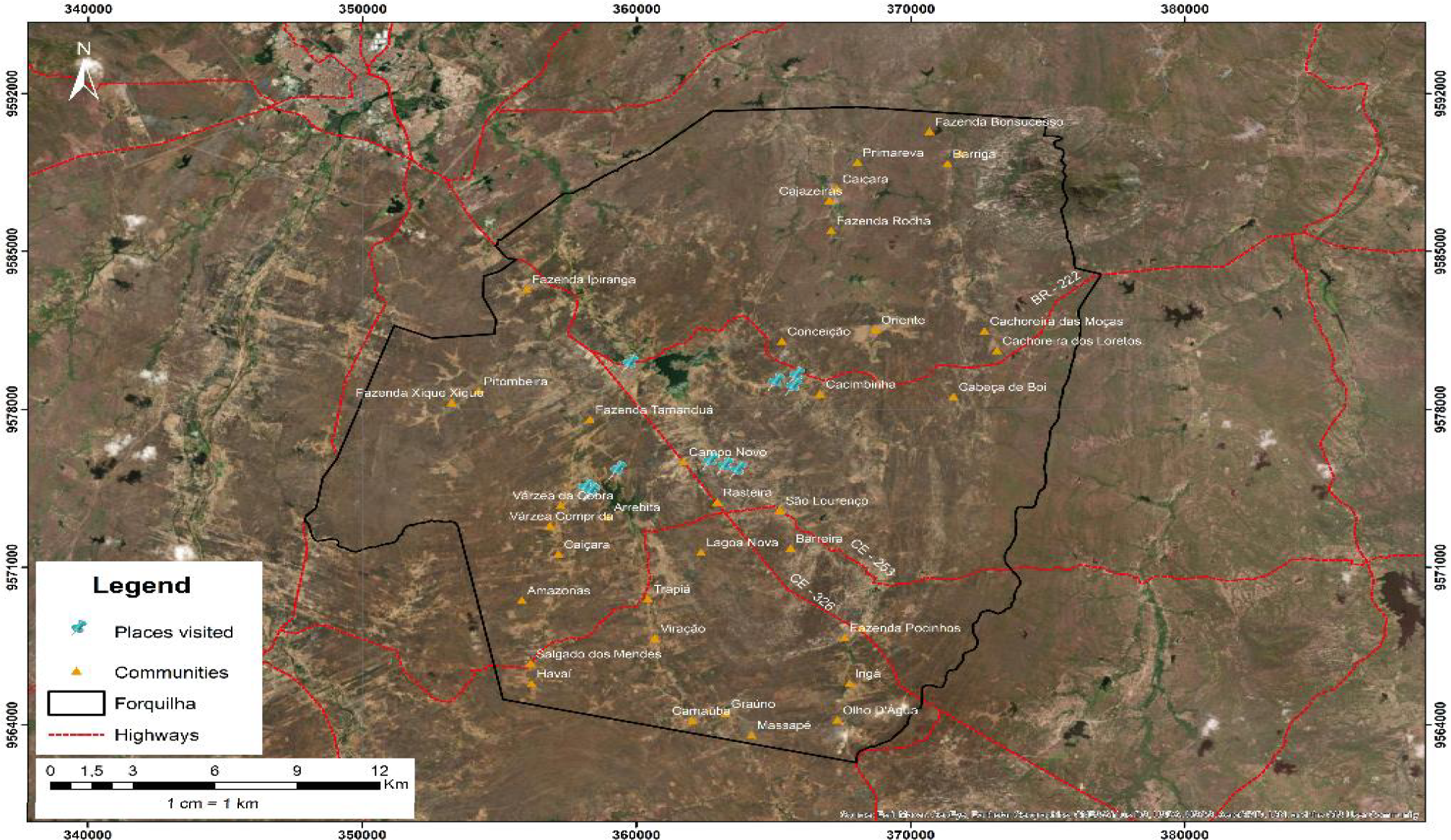
The district of Forquilha is located in the northwest of the state of Ceará (Figure 1), in the hydrographic basin of the Acaraú River, and covers an area of 517.0 km2 (IBGE, 2010).
According to Cogerh (2007), the climate in the region is tropical, with an average annual temperature of 27.5 ºC. During October and November, the average maximum temperature is 36.8 ºC, with an average minimum of 21.4 ºC in July. According to the Köppen and Geiger classification (1928), the climate is type Bsh, warm semi-arid, characterised by scarce and irregular rainfall, high temperatures and high evaporation. The average annual rainfall over a 60-year period (1920 - 1981) was 679.0 mm. The rainfall regime is characterised by an irregular distribution throughout the year, with a dry period of 6 to 7 months, causing inter-annual droughts.
The second stage of the study was carried out at the Laboratory for the Investigation of Accidents with Agricultural Machinary (LIMA) of the Department of Agricultural Engineering of the Federal University of Ceará, Campus do Pici, in the city of Fortaleza. According to Köppen and Geiger the climate in Fortaleza is classified as type Aw (Köppen; Geiger, 1928), with an average annual temperature of 26.3 °C and average annual rainfall of 1448 mm.
The research for this study was carried out in triplicate during September, October and November of 2019, when the maximum and minimum temperatures were 23.2 °C and 29.9 °C, 23.7 °C and 30.2 °C, and 24 °C and 30.4 °C, respectively.
Characterisation of the consumption and demand for thermal energy in the homes of rural farming families in the district of Forquilha.
Visits were made to the homes of 10 family farmers in the district of Forquilha during March 2020. The farmers reported their current sources of thermal energy, the amount of thermal energy consumed per month, and the number of homeowners on the property. The technical conditions required for installing the biodigesters on each property were also evaluated, as were the acceptance and interest of the farmers in adopting this technology as a source of thermal energy for cooking.
Biogas Production System
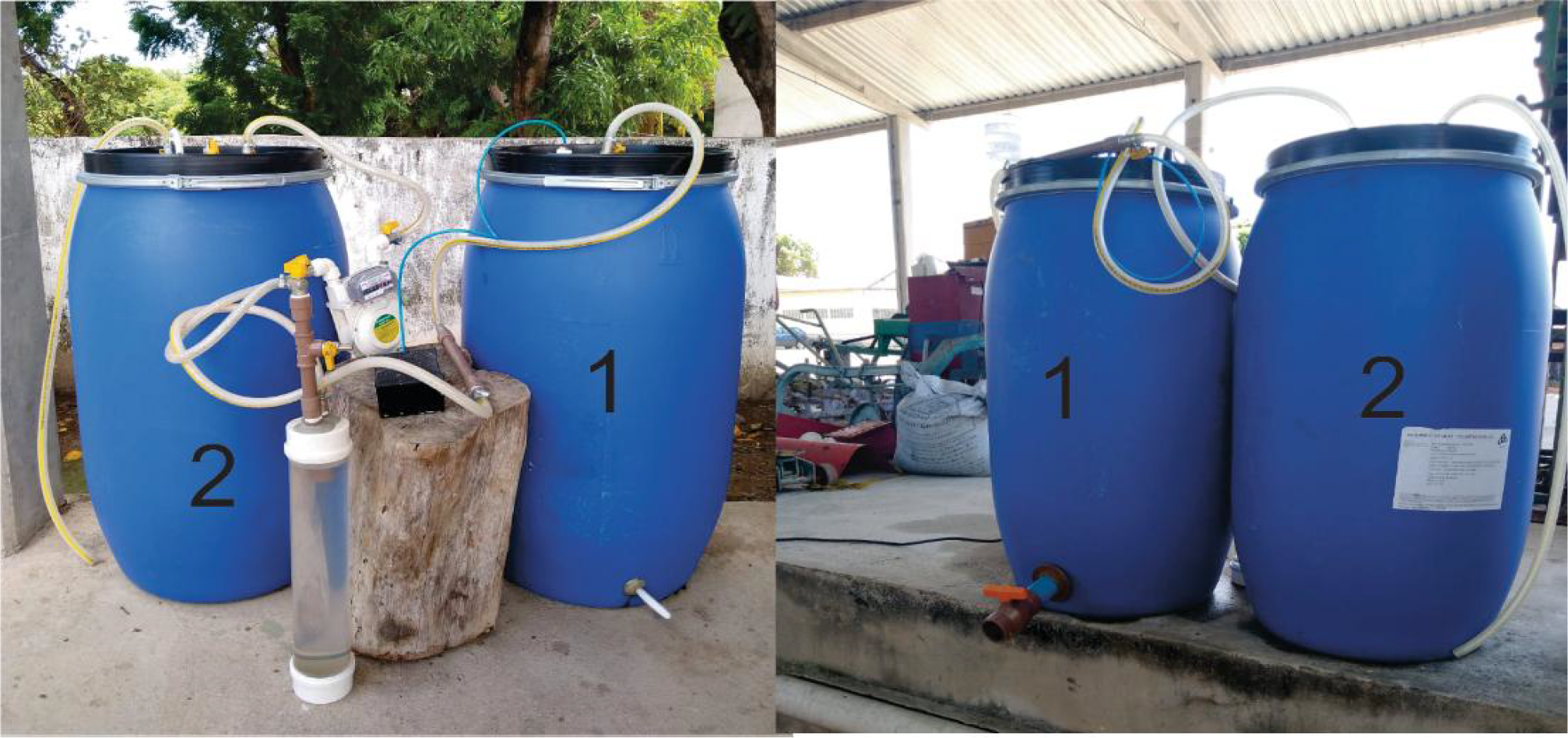
The system used for producing the biogas is shown in Figure 2. The system consists of a chemical reactor with a capacity of 200 L, gasometer, bubbler, filter - with steel wool as packing material, gas metering system, and pressure measurement. The first reservoir works as a chemical reactor, where the mixture of organic matter and water undergoes a process of anaerobic fermentation; the resulting gas is transported to the second reservoir via connecting hoses. Before reaching the second reservoir, the biogas passes through a circuit of two filters, the first, a 100 mm tube with water, which acts as a bubbler, and the second, a 25 mm tube, which contains steel wool. These filters remove part of the impurities from the biogas by means of chemical reactions. The second reservoir works as a gasometer, i.e. a place where the biogas is stored, and which can be used as a gas cylinder.
The composition of the biogas depends on the biomass used as substrate and the operating conditions of the biodigester (Wang et al., 2023). In this study, 50 kg of fresh cattle manure was used as the biomass, diluted in 50 L of water in a 1:1 ratio.
The hydraulic retention time of the biodigester was set to 30 days (Feng et al., 2023), with the biodigester operating at an average temperature of 30 °C. Based on earlier studies, methanogenic bacteria are sensitive to the ambient temperature, and can be found in a wide range of temperatures, from 0 °C to 97 °C. Bacteria found from 30 °C to 40 °C are considered mesophilic (Zhang et al., 2019). A fed-batch regime was adopted, and the biomass was disturbed once a day by moving the reservoir from side to side by hand.
To assess the seal on the tanks, tests were carried out using compressed air from a compressor, and then checking whether any biogas was leaking from the cover. The tank has an O-ring on the cover and a metal clamp that affords an adequate seal, preventing the gas from leaking and air from entering the tank.
Steps for characterising biogas production
To evaluate and characterise the production of biogas using cattle manure under the climate conditions of Ceará, the following operating parameters that directly affect biogas production were investigated: pH, temperature, and the biomass characteristics: total solids, fixed solids, volatile solids, concentration of volatile fatty acids and C/N ratio (Haque et al., 2022). The volume of biogas produced in each cycle was also measured, and the methane concentration was determined. By evaluating these factors, it was possible to verify the efficiency of the proposed biodigester.
All measurements were taken in triplicate, with the results expressed as the mean, mode and mean standard deviation. Statistical values were determined using the Minitab® software.
A pH meter (AK88, Akso) and a thermometer (MV - 364, Minipa) were used to measure the pH and temperature, respectively. A rod thermometer attached to the chemical reactor allowed the internal temperature of the biodigester to be measured daily. The results included the initial temperature, final temperature and pH, while the mode value was used to show the pH and temperature during anaerobic digestion.
Volatile Fatty Acids (VFA) were determined using the Kapp methodology as per Standard Methods (APHA, 2005), using samples taken at the start and end of the anaerobic digestion process.
Total, fixed and volatile solids were determined by the gravimetric method in a muffle furnace at the start and end of the anaerobic digestion process, on samples of pure manure and diluted biomass, as per Standard Methods (APHA, 2005).
The C/N ratio was determined in samples of biomass using the muffle method established by Goldin (1987), again at the start and end of the anaerobic digestion process.
The produced volume of biogas was measured using an analogue diaphragm gas meter (G2.5, Deaflex). The methane concentration of the biogas was determined by the volumetric analysis method, using the portable kit for analysing the concentration of gases in biogas provided by Embrapa (Kunz; Sulzbach, 2007).
Conceptual design of the full-scale biodigester
Determining the size of the biodigester
The ratio between the daily organic load and hydraulic retention time was used to determine the volume of the biodigester. The daily organic load was based on the average volume of organic matter generated by production animals from family farms in the district of Forquilha, which, on average includes 12 adult pigs. The biogas production data in Praciano et al. (2020) were also used as a reference to determine the size of the biodigester.
Conceptual design of the full-scale biodigester
The conceptual project is the phase of the product development process related to the search for, and the creation, presentation and selection of solutions. (Rozenfeld et al., 2006).
The conceptual design of the biodigester was based on existing products and aimed to meet the needs of the target users, who are farming families in the semi-arid region of the Northeast. As such, solutions were considered that used readily available materials that were of low cost, easy to install without the need for specialised labour, and easy to maintain. The conceptual design of the biodigester was created using the SolidEdge software.
Evaluation of the economic viability of the conceptual project
To assess the economic viability of the conceptual design of the proposed biodigester, the simple payback period was calculated (Ross; Westerfield; Jordan, 2008). The payback period is the time it takes to pay back the initial investment until the accumulated profit is equal to the value of that investment. This is usually measured in months or years, and expressed as a unit of time.
RESULTS AND DISCUSSION
To characterise the consumption and demand for thermal energy of family farmers, visits were made to 10 families in the district of Forquilha, Ceará. Figure 3 shows the location of the family farmers that were visited.
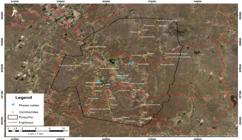
In Forquilha, one fiscal module (an official Brazilian measurement of agricultural land) is equal to 50 ha (INCRA, 1980). The rural properties visited have between 7 and 15 ha, where subsistence agricultural is practised employing family labour. The families that were visited consist of 4 to 8 people, with an average of 6 members.
The farmers grow the following crops: maize (Zea mays), beans (Vigna unguiculata), cassava (Manihot esculenta) and forage (especially elephant grass - Pennisetum purpureum). Production is for their own consumption and to feed the animals raised on the property.
Livestock includes a few animals, the principal animals being chickens, between 20 and 40, and dairy cows, between 2 and 5. These animals are reared for family consumption. Between 8 to 12 female pigs are also bred for commercial purposes. Breeding pigs for sale is a characteristic of the farmers in the district of Forquilha.
For cooking food, the main source of thermal energy is cooking gas (LPG). The families all reported consuming one 13-kg cylinder per month. A cylinder of gas is sold in the area for BRL110.00 (February 2022), equal to 10% of the minimum wage. Firewood and coal are also used as a source of thermal energy, but only for food that requires longer cooking times, such as beans and some proteins. Firewood is used more than charcoal as it is available on the property. The amount of wood consumed varies greatly due to the different species and varying levels of humidity, and was estimated to be 1 m3 per month.
The technical conditions on all the farms that were visited were suitable for installing a biodigester to produce biogas. However, some adjustments were necessary: for example, in the way the animals were managed. To make the best use of the organic material, it was necessary for the animals to be kept in total confinement. Pigs and poultry are already bred in confinement, while cattle are kept in semi-confinement. In order to confine these animals, it is necessary to preserve the cultivated forage as hay or silage so that food is available for the animals throughout the year and there is no need to allow the animals out to graze. The farmers were also asked about their interest in purchasing a biodigester to produce biogas, and all expressed an interest in trying out the technology.
Managing the biodigester is simple, but it is necessary for farmers who acquire this technology to receive training and technical support, especially to carry out maintenance when required. Although operation and maintenance are straightforward and do not require specialised labour, monitoring is necessary during the adaptation period.
Biogas production was evaluated using a small-scale biodigester prototype. Figure 4 shows the biogas production system that was based on the conceptual proposal presented in the Material and Methods section.
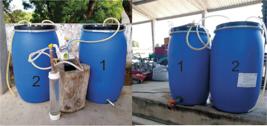
Small-scale biodigester prototype (for evaluation), in the experimental area of the Department of Agricultural Engineering
The main factors that interfere with biogas production (Haque et al., 2022) were evaluated to verify the efficiency of the proposed biodigester. The results are shown in Table 1.
The pH was monitored during the anaerobic fermentation process of the fresh cattle manure using the prototype biodigester in batch mode for biogas production. Most acetogenic bacteria live in a pH between 6.7 and 7.4, with the optimal range between 7.0 and 7.2 (Feng et al., 2018; Lay et al., 1997; Scherzinger; Kaltschmitt; Elbanhawy, 2022). The first stages of anaerobic digestion are hydrolysis and acidogenesis, during which the optimal pH is reported to be between 5.5 and 6.5 (Feng et al., 2018; Scherzinger; Kaltschmitt; Elbanhawy, 2022). The pH values seen in the present research are therefore in line with those suggested as acceptable. Şenol et al. (2019) found a pH value of 6.88, which corroborates the values found in this study.
The pH of the manure can affect performance during the anaerobic fermentation stages if it is very alkaline or very acidic, because, although microorganisms act in different pH ranges, the population of methanogenic bacteria responsible for methane production is very sensitive to variations in pH (Romero et al., 2021; Veroneze et al., 20192).
The manure used in this study comes from a rural family farming unit; the animals have no defined breed and are used for milk production. The pH of cattle manure is directly linked to the diet, which, when rich in concentrates, for example, can cause rumen acidosis, significantly altering the pH of the manure (Faccenda et al., 2019). Sodium carbonate, commercially known as soda ash, can be used to correct the pH of the manure, thereby preventing biogas production from being impaired. The material is inexpensive and readily available to the rural producer.
The pH at the end of anaerobic digestion is that of the digested manure and is related to the use of the by-product of the process, the biofertiliser, which, as it contains a significant concentration of nutrients, can be used as a soil fertiliser. The pH of the digested manure is higher than that of the initial biomass, as shown in Table 1 (Romero et al., 2021; Slepetiene et al., 20192). The use of biofertilisers, which generally have a pH < 8, can help to correct the soil pH when applied to acidic soils.
During the anaerobic digestion process, the temperature of the biomass was monitored daily. In anaerobic digestion, the operating temperature is divided into three categories; psychrophilic (> 20 °C), mesophilic (< 35 °C) and thermophilic (< 55 °C) (Kumar; Samadder, 2020). In this study, the operating temperature is classified as mesophilic, the most-common category when using biodigesters and studying biogas production (Kumar; Samadder, 2020; Raposo et al., 2012). The mesophilic process appears to be more stable, with less accumulation of volatile fatty acids and a higher methane concentration. (Kumar; Samadder, 2020).
The concentration of total, fixed and volatile solids was determined in the biomass before and after anaerobic digestion. The biomass had a total-solids concentration of 8%, classifying the process as wet anaerobic digestion, since the concentration of total solids was less than 10% (Liotta et al., 2014). Anaerobic digestion occurs in biomass with a total-solids concentration between 5% and 35% (Lin et al., 2018). An et al. (2017) report that the best biogas production is obtained from biomass containing 20% total solids. Benbelkacem et al. (2015), state that at a concentration of 8% total solids, production was 1.5 times greater than at the other concentrations under study. The ideal total-solids concentration for the greatest biogas production varies considerably depending on the type of organic matter. Volatile solids represented 80% of total solids and showed a reduction of 15%. These results corroborate those of Ahmadi-Pirlou et al. (2017), who state that these values are within the range that show good results for biogas production.
The concentration of volatile fatty acids is an important parameter in monitoring biogas production. The excessive accumulation of VFA causes a reduction in pH values, which can lead to a severe reduction in the population of methanogenic bacteria, affecting biogas production and reducing the production of methane (Kumar; Samadder, 2020).
For Ren et al. (2018), a stable biodigester operates at VFA concentrations between 50 and 250 mg L-1. This confirms the values found in this study and shows that the process was stable for this parameter. Volatile fatty acids accumulate when their production exceeds their consumption, so that by the end of this process the VFA concentration is expected to fall.
The high concentration of VFA can be corrected by adding NaHCO3 or zero valent iron. Gao et al. (2015) found that the use of this resource not only inhibited the accumulation of VFA, but also increased biogas production by 48%.
The C/N ratio of the biomass used to produce the biogas was 13.28 (± 2.13). Cattle manure has a low C/N ratio (Kumar; Samadder, 2020); for an effective anaerobic digestion process, the ideal C/N ratio should be between 20 and 30. However, some researchers use a wider range of ratios (e.g. sewage sludge and cattle manure, which have a C/N ratio of less than 20). Tsapekos et al. (2018) state that the ideal C/N ratio of cattle manure is 16.90.
The C/N ratio found in this study was 13.28 (± 2.13), and taking into account the standard deviation, 15.41 can be considered a very close value to that suggested by Tsapekos et al. (2018). The low C/N ratio can inhibit biogas production due to the small number of lipids and soluble carbohydrates that can increase biomethanation (Tsapekos et al., 2018), reduce pH values, and increase the accumulation of VFA and the production of ammonia (Kumar; Samadder, 2020; Ren et al., 2018).
The results for the amount of biogas that was produced are shown below. These values are similar to those obtained by other researchers under similar conditions, meaning that the low C/N ratio was not an inhibiting factor in biogas production.
Veroneze et al. (2019) investigated biogas production in prototypes of biodigesters that were similar to the one studied here, albeit evaluating biogas production using pig manure and differing does of glycerine. The researchers found a daily production of 1.16 L L-1 day-1 for the treatment with no glycerine (the control treatment). Bi et al. (2020) obtained a production of 1.48 L L-1 day-1 using cattle manure as biomass, corroborating the results of other researchers under similar conditions.
The biogas under evaluation had a methane concentration of 65%, in line with Bi et al. (2020), who found a concentration of 67% methane in biogas generated from cattle manure with a hydraulic retention time of 25 days.
In view of the above, generating biogas using the proposed small-scale biodigester prototype (for evaluation) comprising 200-ml plastic reservoirs, and using manure from mixed-breed cattle under the climate conditions of Ceará, is feasible, with the results obtained in this characterisation of biogas production corroborating those found in other studies. The biodigester prototype showed good results with no gas leaks. There were no structural factors that compromised biogas production, showing the prototype to be resistant to the semi-arid climate, even when exposed to the sun, and demonstrating that a full-scale biodigester using the same concept and construction is feasible.
To measure the volume of a full-scale biodigester, an average daily load of pig manure equal to that produced by 10 adult animals per day was adopted. According to Barros et al. (2019), an adult pig produces an average of 2.35 kg of manure per day and 5.8 kg of manure + urine. Furthermore, according to Saviotti et al. (2016), 1 m3 of manure contains an average of 650 kg. Therefore, assuming a hydraulic retention time (HRT) of 30 days, the biodigester volume should be at least 2.7 m3.
A volume of 5 m3 was adopted, as the proposed biodigester consists of rigid walls, unlike the traditional Chinese and Indian models that have mobile bells, or the Canadian model that uses an inflatable tarpaulin. The proposed model also requires a larger volume for the gas to accumulate. A volume of 5 m3 was adopted since this is the most widely available size of reservoir on the market. The biodigester would have the capacity to generate the same amount of energy as up to six gas cylinders per month, meeting the energy demand at the community level. Furthermore, the biogas reservoir can be altered to serve more than one family.
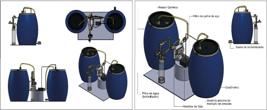
The conceptual design of the proposed full-scale biodigester is shown in Figure 5. The reservoir adopted to function as a chemical reactor is a polyethylene water tank with a volume of 5 m3, available wherever construction materials are sold. This reservoir is made up of the same material as the 200-L tanks used in the biodigester prototype.
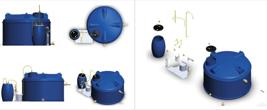
The chemical reactor is connected by hose to the purification filters, the first being a 25 mm PVC tube packed with steel wool and the second an acrylic tube, 3 mm thick and 100 mm in diameter, filled with water, which acts as a bubbler. The filters are also connected by hose to the gas meter, which connects to the gasometer (200 L polyethylene tank) where the produced gas accumulates. At the end of the 30-day HRT cycle, the gasometer can be replaced by another similar tank, so that a new cycle can begin, and the full gasometer, which functions as a gas cylinder, can be taken to the farmer's home.
All the elements used in construction are readily available, i.e. easily found on the market, affordable and easy to assemble. All parts are of the screw-on type; the only tools used in the assembly was a drill with a cup saw blade, glue for the pipes, and thread seal tape. The prototype is classified as TRL 5 (technological readiness) and MRL 5 (manufacturing readiness) (Mankins, 1995).
As of February 2022, the final cost of the proposed prototype was around BRL 3,637.00. To calculate the payback period, it is necessary to estimate the biogas production of one month, adopting the average value of manure produced daily by 10 adult pigs. According to BGS (2021), each adult pig produces 6 kg of manure and 0.13 m3 of biogas per day, equal to 0.08 kg of LPG. Therefore, 10 adult animals produce 39 m3 of biogas per month. This is equivalent to two 13-kg LPG cylinders. Considering that the average consumption of a farming family of four people in the district of Forquilha is one gas cylinder, and that this is sold for BRL 110.00, the payback period of the investment to acquire the biodigester is 33 months.
For the proposed biodigester to be economically accessible to farmers, a suitable line of credit was sought to finance the project. Such a line of credit is Agroamigo Sol of the Banco do Nordeste. A full financial simulation of the biodigester project was carried out. The simulation assumed an input of 5%, equal to BRL 185.00, a grace period of six months, required to set up the project and begin stable biogas production, and 36 instalments, given that the payback period is 33 months.
The value assigned to the energy consumed each month is adjusted to reflect current increases. The instalments decrease in value, the first instalment being BRL125.02 and the last, BRL 98.60. For the first six instalments, the cost of a 13-kg gas cylinder is higher, an amount that is already part of the budget of family farmers in the district of Forquilha; the difference, however, does not exceed BRL 15.00 and therefore does not make it impossible to finance the biodigester.
It can be said that the proposed conceptual project is viable and economically accessible to the target group of this research, which are farming families in the semi-arid region of the Northeast, using as reference the energy consumption profile of groups of family farmers in the district of Forquilha, Ceará.
The distribution and installation of biodigesters should be promoted by public policies as a technology for social change, similar to the Federal Government's cistern programme, which has reduced the water demand of the same population investigated in this study.
Two products are generated by the biodigester by the end of the production process: biogas and biofertiliser. The biogas can be converted into thermal energy for cooking food, while the biofertiliser can be used to nourish the soil of productive areas and for water-efficient irrigation, since the biofertiliser has two fractions, one liquid and the other solid. Growing a variety of crops of high nutritional value in these productive areas can alleviate the food insecurity of the population.
CONCLUSION
A small-scale biodigester prototype was built for evaluation, and the biogas production was characterised, giving results that were satisfactory and consistent with the literature. The prototype was highly resistant, showing no leaks or compromising wear of the structural elements. Based on the results, a conceptual design for a full-scale biodigester was proposed, using the same construction as the prototype. The farming families participating in the research have an average of six members, use one 13-kg gas cylinder per month, and an average of 1 m3 of firewood for cooking food and raising production animals (poultry, pigs and cattle). The proposed conceptual project was represented in a computer drawing and was budgeted at BRL 3.670.37. The payback period was 33 months, considering a monthly consumption of one cylinder of cooking gas (LPG). A financial simulation in 36 instalments was also carried out for the project, using Agroamigo Sol from the Banco do Nordeste as the line of credit. The value of the instalments decreased, the first being BRL 125.02, and the last, BRL 98.64. As such, the project proved to be economically viable.
ACKNOWLEDGMENTS
The authors wish to thank the Fundação Cearense de Apoio ao Desenvolvimento Científico e Tecnológico - FUNCAP for the doctoral scholarship awarded to the lead author. The authors would also like to thank the Conselho Nacional de Desenvolvimento Cientifico e Tecnologico (CNPq) for their financial support of the Project ‘Social technologies and integrated sustainability actions to guarantee water, energy and food security at the community level in the semi-arid region of Ceará’ approved MCTIC/CNPq No 19/2017 - NEXUS I: Research and Development in Integrated and Sustainable Actions to Guarantee Water, Energy and Food Security in the Caatinga and Cerrado Biomes. Coordinated by Professor Adryane Gorayeb PhD. The authors further wish to thank the Conselho Nacional de Desenvolvimento Cientifico e Tecnologico (CNPq) for their financial support of the Project ‘Integrated actions of social technologies to reduce the vulnerability of communities inserted in areas susceptible to desertification’ approved CNPq/MCTIC/MDS No 36/2018 - Social technology. Coordinated by Professor Jader de Oliveira Santos PhD.
REFERENCES
-
AHMADI-PIRLOU, M. et al Mesophilic co-digestion of municipal solid waste and sewage sludge: effect of mixing ratio, total solids, and alkaline pretreatment. International Biodeterioration & Biodegradation, v. 125, p. 97-104, nov. 2017. DOI: http://dx.doi.org/10.1016/j.ibiod.2017.09.004
» http://dx.doi.org/10.1016/j.ibiod.2017.09.004 -
AN, D. et al Effects of total solids content on performance of sludge mesophilic anaerobic digestion and dewaterability of digested sludge. Waste Management, v. 62, p. 188-193, abr. 2017. DOI: http://dx.doi.org/10.1016/j.wasman.2017.01.042
» http://dx.doi.org/10.1016/j.wasman.2017.01.042 - APHA. Standard methods for the examination ofwater and watwater 21 st ed. Washington, 2005.
- BARROS, Evandro Carlos et al Potencial agronômico dos dejetos suínos. 2019. EMBRAPA. Disponível em: chrome-extension://efaidnbmnnnibpcajpcglclefindmkaj/https://www.infoteca.cnptia.embrapa.br/infoteca/bitstream/doc/1117243/1/final9052.pdf. Acesso em: 02 jul. 2024.
-
BGS. Saiba como fazer o cálculo da produção de biogás. 2021. Disponível em: https://www.bgsequipamentos.com.br/calculo-da-producao-de-biogas/ Acesso em: 9 set. 2021.
» https://www.bgsequipamentos.com.br/calculo-da-producao-de-biogas/ -
BENBELKACEM, H. et al Towards optimisation of the total solid content in high-solid (dry) municipal solid waste digestion. Chemical Engineering Journal, v. 273, p. 261-267, ago. 2015. DOI: http://dx.doi.org/10.1016/j.cej.2015.03.048
» http://dx.doi.org/10.1016/j.cej.2015.03.048 -
BI, S. et al Effect of hydraulic retention time on anaerobic co-digestion of cattle manure and food waste. Renewable Energy, v. 150, p. 213-220, maio 2020. DOI: http://dx.doi.org/10.1016/j.renene.2019.12.091
» http://dx.doi.org/10.1016/j.renene.2019.12.091 -
COGERH. Açude Forquilha: inventário ambiental. 2007. Disponível em: http://portal.cogerh.com.br/wp-content/uploads/pdf/inventarios/2008/Inventario%20Ambiental%20do%20Acude%20Forquilha.pdf Acesso em: 12 jan. 2023.
» http://portal.cogerh.com.br/wp-content/uploads/pdf/inventarios/2008/Inventario%20Ambiental%20do%20Acude%20Forquilha.pdf -
FACCENDA, A. et al Nutrient digestibility and ruminal parameters of cattle fed dried brewers grains and Saccharomyces cerevisiae. Livestock Science, v. 225, p. 109-115, jul. 2019. DOI: http://dx.doi.org/10.1016/j.livsci.2019.05.003
» http://dx.doi.org/10.1016/j.livsci.2019.05.003 -
FENG, D.et al Continuous electromethanogenesis of propionate wastewater: effect of external voltage and hydraulic retention time. Chemical Engineering Journal, v. 454, p. 140267, fev. 2023. DOI: http://dx.doi.org/10.1016/j.cej.2022.140267
» http://dx.doi.org/10.1016/j.cej.2022.140267 -
FENG, L. et al Methane emission during on-site pre-storage of animal manure prior to anaerobic digestion at biogas plant: effect of storage temperature and addition of food waste. Journal Of Environmental Management, v. 225, p. 272-279, nov. 2018. DOI: http://dx.doi.org/10.1016/j.jenvman.2018.07.079
» http://dx.doi.org/10.1016/j.jenvman.2018.07.079 -
GAO, S. et al Evaluation the anaerobic digestion performance of solid residual kitchen waste by NaHCO3 buffering. Energy Conversion And Management, v. 93, p. 166-174, mar. 2015. DOI: http://dx.doi.org/10.1016/j.enconman.2015.01.010
» http://dx.doi.org/10.1016/j.enconman.2015.01.010 -
GIODA, A. Características e procedência da lenha usada na cocção no Brasil. Estudos Avançados, v. 33, n. 95, p. 133-150, jan. 2019. DOI: http://dx.doi.org/10.1590/s0103-4014.2019.3395.0009
» http://dx.doi.org/10.1590/s0103-4014.2019.3395.0009 -
GIODA, A.; TONIETTO, G. B.; LEON, A. P. de. Exposição ao uso da lenha para cocção no Brasil e sua relação com os agravos à saúde da população. Ciência & Saúde Coletiva, v. 24, n. 8, p. 3079-3088, ago. 2019. DOI: http://dx.doi.org/10.1590/1413-81232018248.23492017
» http://dx.doi.org/10.1590/1413-81232018248.23492017 - GOLDIN, A. Reassessing the use of loss-on-ignition for estimating organic matter content in noncalcareous soils. Communications in Soil Science and Plant Analysis, v. 18 p. 1111-1116, 1987.
-
HAQUE, S. et al Recent update on anaerobic digestion of paddy straw for biogas production: advancement, limitation and recommendations. Environmental Research, v. 215, p. 114292, dez. 2022. DOI: http://dx.doi.org/10.1016/j.envres.2022.114292.html?=&t=series-historicas>. Acesso em: 12 jan. 2023.
» http://dx.doi.org/10.1016/j.envres.2022.114292.html?=&t=series-historicas -
IBGE. Censo agropecuário: resultados definitivos. Rio de Janeiro, 2017. 109 p. Disponível em: https://biblioteca.ibge.gov.br/visualisacao/periodicos/3096/agro_2017_resultados_definitivos.pdf Acesso em: 23 out. 2021.
» https://biblioteca.ibge.gov.br/visualisacao/periodicos/3096/agro_2017_resultados_definitivos.pdf -
IBGE. Índice de Desenvolvimento Humano 2010. Disponível em: https://cidades.ibge.gov.br/brasil/pesquisa/37/1991 Acesso em: 12 jan. 2023.
» https://cidades.ibge.gov.br/brasil/pesquisa/37/1991 -
IBGE. Produção da Extração Vegetal e da Silvicultura - PEVS: series históricas. 2018. Disponível em: https://www.ibge.gov.br/estatisticas-novoportal/economicas/agricultura-e-pecuaria/9105-producao-da-extracao-vegetal-e-da-silvicultura Acesso em: 29 jul. 2018.
» https://www.ibge.gov.br/estatisticas-novoportal/economicas/agricultura-e-pecuaria/9105-producao-da-extracao-vegetal-e-da-silvicultura -
INCRA. Instrução Especial/INCRA/nº 20 1980. Disponível em: https://www.gov.br/incra/pt-br/centrais-de-conteudos/legislacao/ie20_1980.pdf Acesso em: 14 jan. 2023.
» https://www.gov.br/incra/pt-br/centrais-de-conteudos/legislacao/ie20_1980.pdf - KÖPPEN, W.; GEIGER, R. Klimate der Erde. Gotha: Verlag Justus Perthes, 1928. Wall-map 150cmx200cm.
-
KUMAR, A.; SAMADDER, S. R. Performance evaluation of anaerobic digestion technology for energy recovery from organic fraction of municipal solid waste: a review. Energy, v. 197, p. 117253-117263, abr. 2020. DOI: http://dx.doi.org/10.1016/j.energy.2020.117253
» http://dx.doi.org/10.1016/j.energy.2020.117253 -
KUNZ, A.; SULZBACH, A. Kit biogás portátil Concórdia: Embrapa, 2007. Disponível em: https://ainfo.cnptia.embrapa.br/digital/bitstream/item/60188/1/CUsersPiazzonDocuments16775.pdf Acesso em: 19 set. 2021.
» https://ainfo.cnptia.embrapa.br/digital/bitstream/item/60188/1/CUsersPiazzonDocuments16775.pdf -
LAY, J.-J.; LI, Y.-Y.; NOIKE, T. Influences of pH and moisture content on the methane production in high-solids sludge digestion. Water Research, v. 31, n. 6, p. 1518-1524, jun. 1997. DOI: http://dx.doi.org/10.1016/s0043-1354(96)00413-7
» http://dx.doi.org/10.1016/s0043-1354(96)00413-7 -
LIN, L. et al Improving the sustainability of organic waste management practices in the food-energy-water nexus: a comparative review of anaerobic digestion and composting. Renewable and Sustainable Energy Reviews, v. 89, p. 151-167, jun. 2018. DOI: http://dx.doi.org/10.1016/j.rser.2018.03.025
» http://dx.doi.org/10.1016/j.rser.2018.03.025 -
LIOTTA, F. et al Effect of total solids content on methane and volatile fatty acid production in anaerobic digestion of food waste. Waste Management & Research, v. 32, n. 10, p. 947-953, out. 2014. DOI: http://dx.doi.org/10.1177/0734242x14550740
» http://dx.doi.org/10.1177/0734242x14550740 -
MANKINS, J. C. Technology Readiness Levels A White Paper. April 6, 1995. Advanced Concepts Office. Office of Space Access and Technology. NASA. Disponível em: http://www.artemisinnovation.com/images/TRL_White_Paper_2004-Edited.pdf Acesso em: 12 jan. 2023.
» http://www.artemisinnovation.com/images/TRL_White_Paper_2004-Edited.pdf -
MARENGO, J. et al A seca de 2012-15 no semiárido do Nordeste do Brasil no contexto histórico. Revista Climanálise, v. 4, n. 1, p. 49-54, out. 2016. Disponível em: http://climanalise.cptec.inpe.br/~rclimanl/revista/pdf/30anos/marengoetal.pdf Acesso em: 12 jan. 2023.
» http://climanalise.cptec.inpe.br/~rclimanl/revista/pdf/30anos/marengoetal.pdf -
ONU. Os objetivos de desenvolvimento sustentável no Brasil 2012. Disponível em: https://brasil.un.org/ Acesso em: 12 jan. 2023.
» https://brasil.un.org/ -
PRACIANO, A. C. et al Contribuição de biodigestores para a agricultura familiar. Energia na Agricultura, v. 35, n. 1, p. 95-106, 20 mar. 2020. DOI: http://dx.doi.org/10.17224/EnergAgric.2020v35n1p95-106
» http://dx.doi.org/10.17224/EnergAgric.2020v35n1p95-106 -
REN, Y. et al A comprehensive review on food waste anaerobic digestion: research updates and tendencies. Bioresource Technology, v. 247, p. 1069-1076, jan. 2018. DOI: http://dx.doi.org/10.1016/j.biortech.2017.09.109
» http://dx.doi.org/10.1016/j.biortech.2017.09.109 -
ROMERO, C. M. et al Effects of feeding a pine-based biochar to beef cattle on subsequent manure nutrients, organic matter composition and greenhouse gas emissions. Science of the Total Environment, v. 812, p. 152267, mar. 2022. DOI: http://dx.doi.org/10.1016/j.scitotenv.2021.152267
» http://dx.doi.org/10.1016/j.scitotenv.2021.152267 -
RAPOSO, F.; LARUBIA, M. A. de; FERNÁNDEZ-CEGRÍ, V.; BORJA, R.. Anaerobic digestion of solid organic substrates in batch mode: an overview relating to methane yields and experimental procedures. Renewable And Sustainable Energy Reviews, [s.l.], v. 16, n. 1, p. 861-877, jan. 2012. Elsevier BV. http://dx.doi.org/10.1016/j.rser.2011.09.008
» http://dx.doi.org/10.1016/j.rser.2011.09.008 - ROZENFELD, Henrique; FORCELLINI. Fernando Antônio; AMARAL; Daniel Capaldo; TOLEDO; José Carlos. SILVA; Sergio Luis; ALLIPRANDINI; Dário Henrique. SCALICE. Régis Kovacs. Gestão de desenvolvimento de produtos: uma referência para melhoria do processo. 8. ed. São Paulo: Saraiva, 2014. 541 p.
- ROSS, S. A.; WESTERFIELD, R.; JORDAN, B. D. Administração financeira 8. ed. São Paulo: Mcgrawhill, 2008.
-
SAVIOTTI, B. et al Suinocultura de baixa emissão de carbono [Brasília]: Embrapa, 2016. Disponível em: https://www.embrapa.br/documents/1355242/0/Biog%C3%A1sFert+-+Suinocultura+de+baixa+emiss%C3%A3o+de+carbono.pdf Acesso em: 9 set. 2021.
» https://www.embrapa.br/documents/1355242/0/Biog%C3%A1sFert+-+Suinocultura+de+baixa+emiss%C3%A3o+de+carbono.pdf -
SCHERZINGER, M.; KALTSCHMITT, M.; ELBANHAWY, Amr Y. Anaerobic biogas formation from crops’ agricultural residues: modeling investigations. Bioresource Technology, v. 359, p. 127497, set. 2022. DOI: http://dx.doi.org/10.1016/j.biortech.2022.127497
» http://dx.doi.org/10.1016/j.biortech.2022.127497 -
ŞENOL, H. et al Anaerobic digestion of cattle manure, corn silage and sugar beet pulp mixtures after thermal pretreatment and kinetic modeling study. Fuel, v. 263, p. 116651-116656, mar. 2019. DOI: http://dx.doi.org/10.1016/j.fuel.2019.116651
» http://dx.doi.org/10.1016/j.fuel.2019.116651 -
SLEPETIENE, A. et al The potential of digestate as a biofertiliser in eroded soils of Lithuania. Waste Management, v. 102, p. 441-451, fev. 2019. DOI: http://dx.doi.org/10.1016/j.wasman.2019.11.008
» http://dx.doi.org/10.1016/j.wasman.2019.11.008 -
SUDENE. Delimitação do Semiárido - 2021: relatório final. Recife, 2021. Disponível em: https://www.gov.br/sudene/pt-br/centrais-de-conteudo/02semiaridorelatorionv.pdf Acesso em: 12 jan. 2023.
» https://www.gov.br/sudene/pt-br/centrais-de-conteudo/02semiaridorelatorionv.pdf -
TSAPEKOS, P. et al Co-digestion and model simulations of source separated municipal organic waste with cattle manure under batch and continuously stirred tank reactors. Energy Conversion and Management, v. 159, p. 1-6, mar. 2018. DOI: http://dx.doi.org/10.1016/j.enconman.2018.01.002
» http://dx.doi.org/10.1016/j.enconman.2018.01.002 -
VERONEZE, M. L. et al Production of biogas and biofertiliser using anaerobic reactors with swine manure and glycerin doses. Journal of Cleaner Production, v. 213, p. 176-184, mar. 2019. DOI: http://dx.doi.org/10.1016/j.jclepro.2018.12.181
» http://dx.doi.org/10.1016/j.jclepro.2018.12.181 -
WANG, Q. et al Biogas generation from biomass as a cleaner alternative towards a circular bioeconomy: artificial intelligence, challenges, and future insights. Fuel, v. 333, p. 126456, fev. 2023. DOI: http://dx.doi.org/10.1016/j.fuel.2022.126456
» http://dx.doi.org/10.1016/j.fuel.2022.126456 -
ZHANG, Le; LOH, Kai-chee; ZHANG, Jingxin. Enhanced biogas production from anaerobic digestion of solid organic wastes: current status and prospects. Bioresource Technology Reports, [s.l.], v. 5, p. 280-296, jul. 2024. Elsevier BV. http://dx.doi.org/10.1016/j.biteb.2018.07.005
» http://dx.doi.org/10.1016/j.biteb.2018.07.005
Edited by
-
Editor-in-Chief: Prof. Daniel Albiero - daniel.albiero@gmail.com