 Rooting response in contrasting genotypes of Coffea canephora using IBA
Resumo
Indole butyric acid (IBA) is a type of auxin that is widely used in the asexual propagation of plants as it optimises the rooting response. In a scenario of climate change, where thermal and water stress are imminent, the use of technology has proven to be one way of stimulating the morphological characteristics of the roots, which can help mitigate the stress. The aim of this study was to identify differing characteristics between two genotypes, comparing the effect of water deficit on C. canephora, and to evaluate the effects of applying IBA on these characteristics when producing seedlings from cuttings. An experiment was set up using a randomised block design in a 2 x 2 factorial scheme where the first factor consisted of the genotypes (LB1 and 02) and the second, the applications of IBA. After 120 days, the morphological and anatomical characteristics of the seedlings were evaluated, and the data were submitted to analysis of variance, Tukey’s test at 5% probability, and correlation and principal component analysis using the R Studio software. There was no interaction between IBA and genotype for the shoot system of the seedlings. However, there was an effect of genotype on the other characteristics, where genotype 02 showed an increase in dry matter, changes in the size of the anatomical structures, and changes in root architecture, with an increase in surface area and length of the fine roots, while LB1 showed an increase in the root attributes only. As a result, IBA proves to be a strategic resource for the expression of characteristics in the rooting of genotype 02, affording improvements in seedling quality.
INTRODUCTION
The production of conilon coffee (Coffea canephora x Pierre ex Fröher) is one of the main economic activities in Brazil, with record-breaking production and exports on the world market. However, in the context of climate change, a decline in coffee production is predicted due to the occurrence of temperatures greater than 42 ºC, and water restrictions as a result of low rainfall, seasonality and water deficit (Martins et al., 2018). It is therefore essential to improve our knowledge, not only in the selection of drought-tolerant genotypes, as suggested by (Damatta et al., 2018), but also in propagation technology, especially with regard to rooting.
As conilon coffee is allogamous, presenting self-incompatibility and, consequently, high genetic variability (Martins et al., 2019), plants are commonly propagated from cuttings due to the heritability of the characteristics of the mother plant, uniform crop development, and increases in fruit quality and yield (Bettoni et al., 2015).
However, even in plant propagation, the root characteristics of conilon coffee are considered highly complex genetic mechanisms, coordinated by various genes, where the expression of root development depends more on the genetic background than on the propagation methods per se (Silva et al., 2020).
Pioneering research that addressed contrasting characteristics in conilon coffee focused on tolerance to water stress, describing tolerant materials as having mechanisms to maintain water potential, a greater capacity to retain leaf area, support gas exchange and deepen the root system, whereas sensitive genotypes have a poorly developed root system, with osmotic adaptation and tissue rigidity that do nothing to minimise water loss (Moraes et al., 2020).
Knowledge of genotypic behaviour has currently advanced to include such topics as transcriptional memory triggered by multiple exposure to drought, distribution of the root system, and seasonal variation in nutrient concentration (Oliosi et al., 2020). However, there are few studies that combine conilon coffee genotypes with hormonal substances, such as auxin, especially in root formation.
Auxin is known to be a hormonal substance that regulates several aspects of plant growth, including organogenesis, cell elongation and the perception of tropism, and despite being widely used in the production of seedlings from cuttings due to its role in the formation of adventitious roots, its use in coffee is still limited to somatic embryogenesis and micropropagation (Quintana-Escobar et al., 2019).
Indole-3-butyric acid (IBA) is the most commonly reported form of exogenous auxin. Results from its use in agricultural crops include improved rooting, increased root length and dry matter accumulation, seedling uniformity and increased survival (Khandaker et al., 2022). However, it is important to note that the stimulating effect of IBA not only varies with genotype, but also has a maximum concentration, with subsequent increases in the substance having an inhibitory effect on seedling formation (Tamura et al., 2022).
In view of the above, the aim of this study was to identify the characteristics that differ between two genotypes, comparing the effect of water deficit on C. canephora, and evaluating the effects of applying IBA on these characteristics when producing seedlings from cuttings.
MATERIAL AND METHODS
Setting up the experiment and defining the treatments
The experiment was carried out on the Experimental Farm of the Capixaba Institute for Research, Technical Assistance and Rural Extension (INCAPER) in Linhares, with funding from the project for the ‘Development of strategies to improve water use efficiency in conilon coffee seedlings’, approved by the Brazilian Consortium for Coffee Research (Consórcio Pesquisa Café).
The experiment was set up using a randomised block design in a 2 x 2 factorial scheme. The first factor consisted of the genotype, with two levels: the contrasting rooting genotypes, LB1 and 02. The second factor was the treatment, again with two levels: whether or not indole-3-butyric acid (IBA) was applied in plant propagation. Each plot consisted of 27 plants with 5 replications.
The treatments were defined based on an earlier experiment (unpublished data) conducted in a randomised block design with split plots, and consisted of the rooting of cuttings from five contrasting genotypes during propagation (A1, LB1, 143, 02 and 748) and concentrations of indole-3-butyric acid (0, 500, 1000, 1500 and 2000 ppm), while the sub plot comprised two seasons for collecting the cuttings (summer and winter). After 154 days in a greenhouse, the seedlings were evaluated for the following morphological parameters: stem length and diameter, number of leaves, leaf area, SPAD index, and root, shoot and total dry matter.
Preparing the cuttings and setting up the experiment
The herbaceous cuttings used in the experiment were acquired from a clonal garden in Vila Valério, Espírito Santo, considering a standard stem length of 4 cm, with one pair of leaves sectioned into 1/3 their original area and a straight cut at the upper and lower ends of the stem (Verdin-Filho et al., 2020). The cuttings were first immersed for five minutes in a solution containing fungicide (Carbomax® 500 SC). After draining the excess fungicide, the cuttings were treated with IBA.
The cuttings from the plot that included IBA were immersed to a depth of 5 cm for three hours in 10 mL of a solution containing 400 ppm IBA (Sigma-Aldrich) solubilised in 0.5 M NaOH. The cuttings that were not treated with IBA were immersed to a depth of 5 cm in distilled water for three hours.
Following preparation, the cuttings were buried in an upright position to 2/3 of their length in 280 cm3 plastic tubes containing Max Fértil® plant substrate and 2 g per plant Osmocote Plus® formulation 15-10-10 + micronutrients. The seedlings were then grown in the nursery for 120 days, with nutrition, irrigation and phytosanitary management as recommended for the production of Conilon coffee seedlings (Segatto et al., 2004).
Reviews and statistics
Following their time in the nursery, 10 central plants from each plot were sent for morphological evaluation, where the stem length (SL) was measured using a ruler, considering the distance from the neck to the apex of the stem; the stem diameter (SD) was determined 5 cm above the collar using a digital calliper; the number of leaves was determined by counting the leaves from a height of 2.5 cm above the collar; and the leaf area was estimated using the Li-Cor 3100 leaf area meter.
All the shoot material (stems and leaves) from these destructive analyses, together with the respective root systems, were separated by organ (root, stem and leaves), packed in paper bags and placed in a forced air circulation oven at 65 ºC to constant weight. The material was then weighed on an analytical balance (QUINTIX3102-10BR) with a precision of 0.01 g to determine the root (RDM), shoot (SDM) and total (TDM) dry matter.
The Dickson Quality Index (Dickson; Leaf; Hosner, 1960) was calculated based on the above variables, considering the TDM and the relationship between stem length and stem diameter, and matter distribution between the shoots and roots:
Four plants from each experimental plot were used to evaluate the root architecture and anatomy. Five samples of completely expanded leaves were collected from the middle third of the plant, fragments of stem internodes from the middle of the plant, and root fragments from 5 cm above the cap. These materials were fixed in formalin-acetic acid-alcohol solution (70% FAA) for 48 hours and then stored in 70% alcohol.
Cross-sections of the stem, root and midrib of preserved leaves were taken, bleached with sodium hypochlorite and stained with Safrablue. Epidermal impression was adopted for the paradermal sections of the leaves, applying universal instant adhesive (Super-Bonder®) (Segatto et al., 2004). Biometric measurements of the xylem vascular elements were taken as per Segatto et al. (2004). At the end of this stage, semi-permanent histological slides were mounted using glycerinated gelatin (Franklin, 1945).
The roots of five plants from each treatment were separated from the stem for evaluation, washed in running water to remove any impurities, placed in plastic bags containing water and sent to the Laboratory of Plant Physiology of the Darcy Ribeiro North Fluminense State University (UENF), where they were scanned and analysed using the WinRhizo® software to determine root length, root surface area and root volume for the following diameter classes: < 0.02, 0.02 < 0.04, 0.04 < 0.06, 0.06 < 0.08, 0.08 < 1.0, 1.0 < 1.2, 1.2 < 1.4, 1.4 < 1.6 and > 1.8 mm.
The results were tabulated and submitted to analysis of variance; when significant, Tukey’s test was applied at 5% probability using the R Studio software (R CORE TEAM, 2021), which was also used for the Pearson correlation analysis and principal component analysis. Bar charts showing the standard error (n = 5) were produced using the SigmaPlot® v11.0 software.
RESULTS AND DISCUSSION
The morphological parameters of the conilon coffee seedlings showed no significant differences for genotype. There was, however, an increase in leaf area of around 15% in the seedlings treated with IBA compared to the control (Table 1).
Stem length (SL), stem diameter (SD), number of leaves (NL) and leaf area (LA) in conilon coffee seedlings from genotypes 02 and LB1, produced with and without the addition of IBA
Although most of the morphological parameters of the shoots of the conilon coffee seedlings showed no statistical difference, the seedlings of both genotypes with IBA had similar values that were suitable for commercial use, comparable to those recently described by Verdin-Filho et al. (2020), who produced seedlings using the same type of cutting used in this study (straight cut at the base and apex). Sosa-Mora, Mesén-Sequeira and Jiménez-Alvarado (2019), using IBA in the propagation of Coffea arabica and reaching a similar result to that of this study, argue that this type of response to the exogenous application of IBA is due to species-specific factors relating to internal concentrations of auxin and other cofactors involved in stimulating rooting. In genotypes that are insensitive or show a poor responsive to the hormone, endogenous auxin alone is sufficient to ensure satisfactory seedling development.
The proportion of biomass allocated to the different plant organs was influenced by the interaction between the IBA and the genotype. In general, genotype 02 showed a lower mean value than LB1 in the control; however, when exposed to IBA, there was a gain of around 28% in the allocation of dry biomass to the shoots and roots, and consequently in the total dry matter of the genotype, which differed significantly from LB1. This behaviour altered the final quality of the seedlings: for LB1 the application of IBA caused the Dickson Quality Index to vary by 0.035, whereas for genotype 02 the difference was 0.148 (Table 2).
Root (RDM), shoot (SDM) and total (TDM) dry matter accumulation and the Dickson Quality Index in conilon coffee seedlings from genotypes (GEN) 02 and LB1, produced with and without the addition of IBA
The results for the dry matter parameters (Table 2) show that genotype 02 presents low dry-matter accumulation. However, with the use of IBA, this value increases for root, shoot and total dry matter. For LB1, there were fewer differences between IBA and the control. A study that compared morphological and genetic characteristics in C. arabica (‘Catuaí, Amarelo IAC 62’) and C. canephora (‘conilon LB1’) under two conditions of ultraviolet radiation, also noted that ‘LB1’ has a naturally high dry-matter content, especially in the roots, and that this characteristic is desirable for the survival of the species should it be subjected to future environmental limitations associated with reduced water availability (Bernardo et al., 2022).
In addition, dry matter accumulation directly affected seedling quality, evaluated in this study using the Dickson Quality Index (Table 2). It should be noted that, for genotype 02, the significant change in these variables can be understood as an increase in robustness and in the ability to exploit the soil at depth, facilitating access to water and nutrients. IBA can therefore be considered an interesting resource for the expression of characteristics that optimise seedling development after planting, especially in genotypes such as 02, which, in studies of genetic diversity, are characterised by limited development of the root system in terms of length, volume and surface area, and as such, are prone to loss under adverse environmental conditions such as drought (Silva et al., 2020).
The root parameters clearly show that, similar to the shoot attributes (SL, SD, NL and LA), there is no statistically significant difference between the two genotypes under analysis in the control. However, when evaluating the effect of IBA on each genotype, two patterns can be seen: the first concerns changes in root length and root surface area in genotype 02, and the second, the increase in root volume, again in genotype 02. The application of IBA led to an increase in fine-root length in genotype 02, while in LB1, this increase was not very marked (Figure 1A and 1B). Comparing the columns referring to the thinnest roots (0.0 to 0.2 mm), the use of the hormonal substance resulted in an increase of around 44% in genotype 02 compared to the control, and around 65% compared to LB1, which was also treated with IBA.
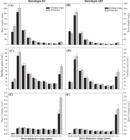
Root length (A and B), surface area (C and D) and root volume (E and F) in conilon coffee seedlings from genotypes 02 and LB1, produced with and without the addition of IBA. Error bars represent the standard error of the mean (n = 5)
Genotype 02 showed higher values for root surface area with the use of IBA, with an increase of 43% in the 0.0 - 0.2 mm diameter class and 54% in the >1.8 mm diameter class (Figure 1C), while LB1, despite showing a 38% gain in root surface area with the use of IBA, showed 15% higher values in the fine root class (0.0 - 0.2 mm) than the control treatment (Figure 1D).
The behaviour of root volume in the diameter classes is completely different from that of the other variables, where in the >1.8 mm group, genotype 02 with added IBA showed a difference of 80% in relation to the control (Figure 1 E), while LB1 showed an increase of only 29% (Figure 1 F).
Table 3 shows the effect of combining auxin with the two conilon coffee genotypes on leaf anatomy. It is clear that the use of IBA when propagating the cuttings resulted in no differences in the anatomical characteristics of the leaves, except for xylem thickness. However, comparing the effect of the hormone within genotype 02 shows modifications in relation to the control, expressed as an increase of 29.4% in xylem length, 25.33% in mesophyll thickness, and around 40% in midrib thickness and stomatal density. It should be noted that leaf density showed the greatest differences between the genotypes produced in the control treatment.
Leaf anatomy parameters in conilon coffee seedlings from genotypes 02 and LB1, produced with and without the addition of IBA
The most obvious effect of IBA on the anatomy variables was seen on stomatal density, especially in genotype 02 with IBA (Table 3), where the mean value for the variable was higher than in the control. In general, this change is considered advantageous, as the increase in stomata helps regulate the balance between the rate of transpiration and the water supply (Martins et al., 2019).
The mean values shown in the comparison between the genotypes corroborate the findings of Dutra-Giles et al. (2019), who compared 34 Coffea spp. materials and classified LB1 in the group of genotypes with the highest values for stomatal density.
Although LB1 seedlings showed no changes in stomatal density with IBA, the almost twofold increase in genotype 02 when IBA was used proved to be a desirable modification in inducing morphological changes that lead to a robust seedling that is prepared to cope with conditions in the field, since changes in the number of stomata in a given leaf area has a direct effect on gas exchange and, consequently, water use, carbon uptake and plant growth.
In terms of stem and root anatomy, there was a significant difference in xylem length in genotype 02 from the use of IBA (Table 4). This variable showed an increase of 64% in the stem, while in the roots there was a reduction of approximately 44%, inferior not only to the control but also to the contrasting genotype, LB1. Similar behaviour can be seen for the length of the stem phloem and root cortex in genotype 02 with IBA, with gains of almost 33% and 80%, respectively; while for LB1, there was no statistical difference, despite the combination of LB1 and IBA having shown lower values.
Stem and root anatomy parameters in conilon coffee seedlings from genotypes (GEN) 02 and LB1, produced with and without the addition of IBA
With regard to the anatomical parameters of the stem and root vessels, the predominance of the genotype can be seen in determining the diameter of the xylem and phloem with the use of IBA, which in genotype 02 increased the diameter of the stem xylem, but reduced that of the root xylem. For LB1, there were no significant differences. One approach to this type of variable is to study the relationship between the anatomical characteristics and hydraulic conductance in different plant species, noting that under water availability, there is an increase in the amount of water conducted by the plant, together with an increase in the diameter of the xylem (Bertolino; Caine; Gray, 2019).
However, under dry conditions, the diameter of the vessels tends to reduce as an adaptive response to avoid the detrimental effects of cavitation that can occur due to the limited water supply (Ramachandran et al, 2020). In C. arabica, the interaction between hydraulic and morpho-anatomical characteristics when acclimatising to water stress was shown to be intraspecific (Menezes-Silva et al., 2015). However, when comparing C. canephora genotypes under water restriction, hydraulic conductivity was neither related to xylem diameter nor differed between genotypes (Machado-Filho et al., 2021).
Nevertheless, a study comparing the factors involved in the hydraulic vulnerability of leaves of four species of Coffea spp. (C. Arabica, C. canephora, C. racemosa and C. liberica) concluded that during episodes of limited water potential, morphoanatomical adaptations are separate from changes in the hydraulic conductivity of the leaves (Mauri et al., 2020). It is clear that understanding the contribution of auxins to the structure-function relationship, focusing on the hydraulic relationships of C. canephora under field conditions, is an area that should be explored in order to improve the crop in the face of environmental adversity.
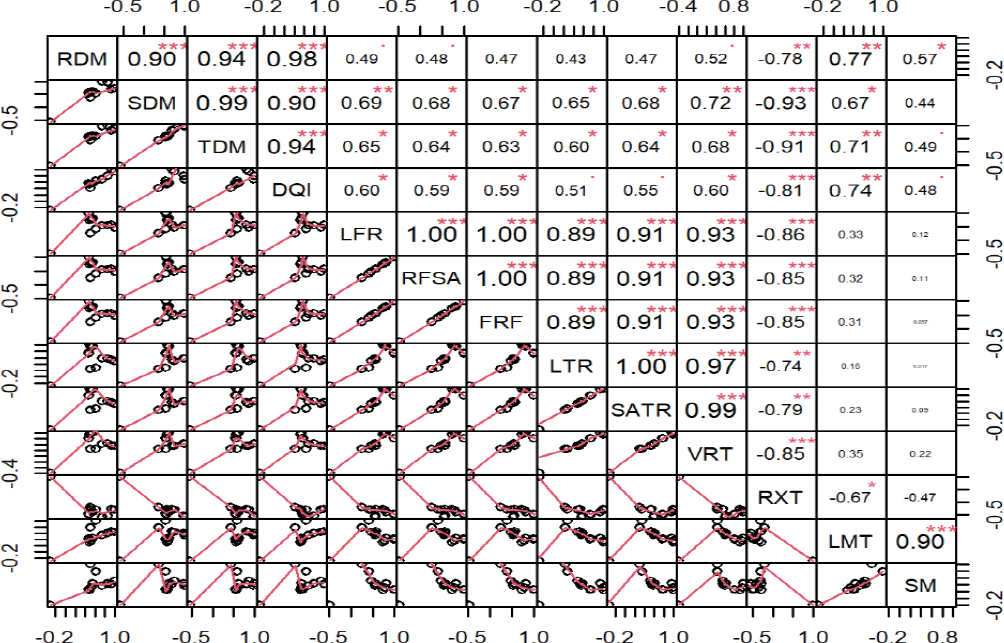
There were 64 positive correlations between the dry matter, DQI and root morphology parameters (Figure 2), with different levels of significance. Among the characteristics of the C. canephora seedlings, the highest correlation was found between root length and surface area in the <0.2 mm diameter class, followed by total and shoot dry matter and by root volume and root surface area in the <0.2 mm diameter class. In addition, the DQI showed a greater correlation with root dry matter than with total matter (numerator of the index equation). Root xylem length was negatively correlated with all the other variables except stomatal density.

Correlation between root (RDM), shoot (SDM) and total (TDM) dry matter accumulation, Dickson quality index (DQI), length of fine roots in the class < 0.2 mm (LFR), fine rooted surface area in class < 0.2 mm (FRSA) and fine roots volume in class < 0.2 mm (FRV), length of thick roots in class 1.8 > mm (LTR), surface area of thick roots in class 1, 8 > (SATR) and volume of thick roots in class 1,8 > (VRT), xylem thickness (RXT) of roots, midrib thickness (LMT) and mesophyll (SM) of leaves of conilon coffee seedlings for genotypes 02 and LB1 produced with and without the addition of IBA. (*, ** and *** correspond to the significance of p < 0.05, p < 0.01 and p < 0.001, respectively)
It is known that total dry matter is more suitable than shoot variables for determining seedling quality in conilon coffee, since the latter are subject to genotypic variation (Dardengo et al., 2014). However, in this study, the Dickson quality index showed a higher correlation with root dry matter (Figure 2), confirming that evaluating the distribution of dry matter in different parts of the seedling is as important as the total dry matter in assessing plant development (Covre et al., 2016).
It is also important to consider the correlation of total and root dry matter with the development of fine roots (< 0.2 mm) in terms of length and surface area. The results in Figure 2 confirm the hypothesis that the advantages of using auxin in plant propagation includes optimisation of the root system, in addition to deep growth in genotypes that have limited root structure, such as 02. This increase is especially important in fine roots, given that root hairs are unicellular extensions of the epidermal cells of the root and are capable of increasing the surface area of the roots, thereby favouring mass flow as well as anchoring the plant in the soil (Liu; Von-Wirén, 2022).
Despite discussions about the advantages that conilon seedlings with a well-developed root system can bring in terms of anchoring and survival, studies with C. arabica have shown that water uptake by the roots and the water status of the plant can be regulated by agricultural measures, such as deep preparation, intercropping with Brachiaria (Urochloa decumbens) and plastering, which increase water availability in the deeper layers of the soil (Silva et al., 2019).
It should also be noted that although the root characteristics are potentially important for plants under water limitation, their contribution to water uptake and adaptation to drought varies depending on such factors as genotype, the water available during critical stages of the crop, and the soil water content (Menezes-Silva et al., 2015). It is therefore important to extend the study to include limiting conditions, focusing on the plasticity of the root system of IBA-treated plants and the performance of resulting phenotypes in terms of water and nutrient uptake.
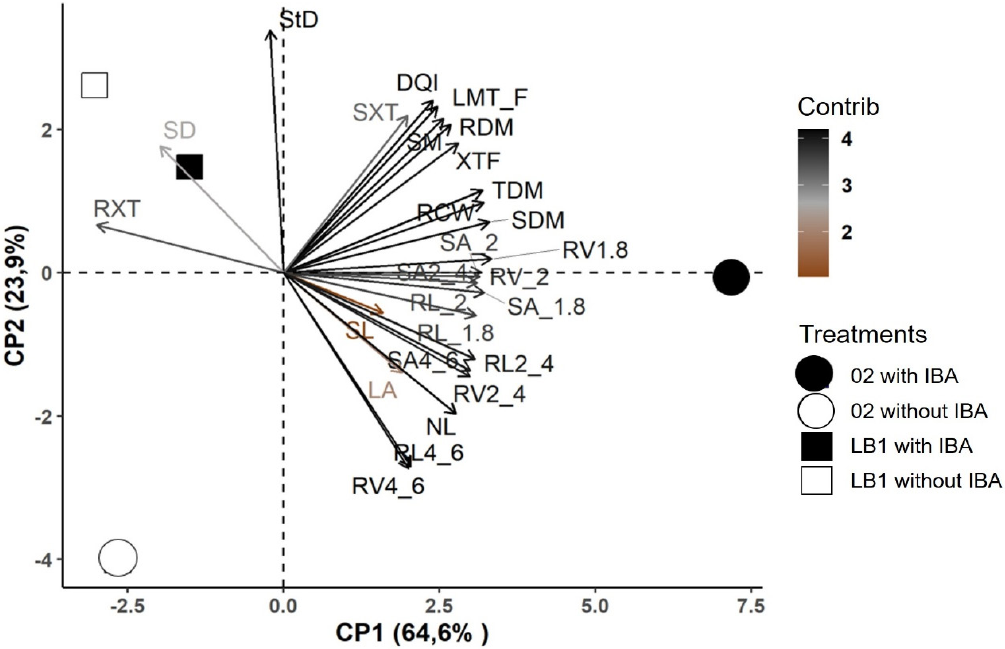
Principal component analysis (PCA) including all the variables discussed above, allowed their relative positions to be visualised in a two-dimensional space determined by their correlations, with PC1 and PC2 accounting for 66.9% and 22.1% respectively, together accounting for 89% of the total variance (Figure 3). It can be seen that the use of IBA in genotype 02 affects the variance of the morphoanatomical and root parameters under evaluation given the distance and position of the treatments in the vector space, since the treatments with LB1 are all in the same quadrant.
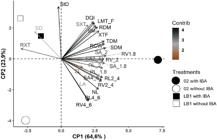
Principal component analysis considering morphological parameters (Stem length-SL; Stem diameter-SD; Number of leaves -NL and leaf area-LA), dry matter accumulation (Root dry matter-RDM; Shoot dry matter-SDM; Total dry matter-TDM), leaf anatomy parameters (Xylem thickness - XT; Midrib thickness - LMT; Spongy mesophyll - SM. and Stomatal density - StD), stem anatomy parameters (Stem xylem thickness - SXT; stem phloem thickness - SFT), root anatomy parameters (Root xylem thickness - RXT; Root cortex width - RCW), root length in diameter classes (≤ 0.2 mm: LR2; 0.2-0.4 mm: LR2_4; 0.4-0.6 mm: LR4_6; ≥ 1.8 mm: LR1.8), root surface area in diameter classes (≤ 0.2 mm : SA2; 0.2-0.4 mm: SA 2_4; 0.4-0.6 mm: SA 4_6; ≥ 1.8 mm: SA 1.8) and root volume in diameter classes (≤ 0.2 mm: RV 2; 0.2-0.4 mm: RV 2_4; 0.4-0.6 mm: RV 4_6; ≥ 1.8 mm: RV 1.8)
The PCA plot shows that there is a positive interaction between stomatal density, the seedling quality index, root dry matter and various leaf anatomy parameters (midrib, mesophyll and xylem thickness). This behaviour corroborates discussions concerning the species under study, which found a positive correlation between stomatal density, stomatal conductance and the net rate of photosynthesis, and its effects on plant survival and water use efficiency (Vieira et al., 2013; Venturin et al., 2020; Machado Filho et al., 2021).
This suggests that changes in the root system due to IBA stimulation are associated with stomatal control, and that both contribute to the formation of a desirable phenotype in terms of tolerance to water stress, since initial studies have shown that, in the field, resistance to water restriction in C. canephora is a result of the interaction between root depth and stomatal control (Moraes et al., 2020).
In addition to stomatal density, the analyses also show that seedling quality is positively correlated with total dry matter, dry matter allocated to the roots (variables used in the calculation of the Dickson index) and root volume. This behaviour was previously reported in four contrasting genotypes of Robusta coffee grown under water stress in a controlled environment (Erdiansyah; Sulistyono; Supijatno, 2019).
In this respect, agricultural use of the hormone can be seen as a way of expressing desirable characteristics that are present in the gene pool of the plant. In studies with coffee plants, it has been suggested that genotypes with greater root and total dry matter, as well as greater root volume and stomatal density, tend to benefit from selection, since these variables are initially more dependent on genetic than on environmental contributions (Araújo et al., 2021).
Despite their poor contribution to PCA variation (observed by vector length), the leaf area and number of leaves showed a positive correlation with the dry matter parameters and root characteristics (length, surface area and volume). This set of variables is also mentioned in current discussions on other species used for testing IBA in plant propagation, describing how leaf characteristics and matter allocation act synergistically with auxin on rooting and seedling quality (Higuchi et al., 2021). A bibliometric review of the most important morphological, physiological and mathematical parameters used in research on plant production showed that the relationship between root length and leaf area is important and well established, especially in the propagation and formation of seedlings, as both variables reflect the investment in structures for absorbing water and nutrients while maintaining the specific capacity for gas exchange (Gallegos-Cedillo et al., 2021).
With regard to the role played by dry matter in root formation, studies on the production of ‘Robusta’ and ‘Arabica’ coffee seedlings have shown that, when propagated by cuttings, the carbohydrate and nutrient reserves of the propagules have more effect on root formation and growth more than does the endogenous auxin content (Vallejos-Torres et al., 2020). Furthermore, considering the total dry matter and root dry matter content of LB1 described in this and another study of the same genotype (Bernardo et al., 2022), it is easy to see that the reasons for the robustness of the root architecture and the low gains from the exogenous use of IBA express the correlation under discussion.
The correlation between the length of the root xylem, together with dry matter and seedling quality seen in the PCA, leads to the possibility of a targeted manipulation of the components using IBA, with a view to adapting the root architecture and plant morphology, and integrating the study of variables that could be exploited in genetic improvement or to optimise the management of coffee plants exposed to a water-restricted environment. It is known that the phytohormone auxin plays a crucial role in integrating environmental stimuli into growth adaptations (Casanova-Sáez and Voss, 2019). Based on the correlation and PCA of this study, it is clear that the results in terms of seedling quality are regulated by a combination of a set of variables related to water flow, gas exchange and carbon uptake, which can generate benefits for adaptation in the field and even under conditions of water stress.
Furthermore, the response to the use of IBA in the propagation of cuttings shown in this study is related to the nursery environment, which is highly favourable to the expression of desirable characteristics, it being debatable whether in the field or in a water-restricted environment tolerance to stress will actually occur. It is therefore essential to carry out studies to evaluate the exploratory modulated root system in water uptake, and the extent to which modified agronomic characteristics predict performance in the field.
CONCLUSIONS
-
Treating cuttings with IBA optimised the formation of fine roots in terms of length and surface area, and increased the volume of coarse roots, regardless of the genotype;
-
Between the LB1 and 02 genotypes under control conditions, the measurements of stomatal density and dry matter accumulation in the roots and shoots differ the most, directly affecting the quality of the seedlings;
-
This study showed that the use of IBA with genotype 02 improved the response in terms of dry matter and anatomical characteristics, with the change in these parameters contributing to an increase the quality of the seedlings;
-
The results show that IBA is a strategic tool for providing desirable characteristics in genotypes such as genotype 02; future research should explore the efficiency of this technology by evaluating the performance of seedlings under field conditions.
ACKNOWLEDGMENTS
The authors would like to thank the support and assistance offered by the Fundação de Amparo à Pesquisa e Inovação do Espírito Santo (FAPES), the Instituto Capixaba de Pesquisa, Assistência Técnica e Extensão Rural (Incaper), the Universidade Federal do Espírito Santo (UFES), and the Consórcio Pesquisa Café.
DATA AVAILABILITY STATEMENT
Data-available-upon-request to the corresponding author.
REFERENCES
-
ARAÚJO, L. F. B. et al Genetic divergence based on leaf vegetative and anatomical traits of Coffea canephora clones. Semina: Ciências Agrárias, v. 42, n. 2, p. 2717-2734, 2021. Disponível em: https://doi.org/10.5433/1679-0359.2021v42n5p2717 Acesso em: 21 set. 2021.
» https://doi.org/10.5433/1679-0359.2021v42n5p2717 -
BERNADO, W. P. et al Ultraviolet radiation underlies metabolic energy reprograming in Coffea arabica and Coffea canephora genotypes. Scientia Horticulturae, n. 295, p. 110881, 2022. Disponível em: https://doi.org/10.1016/j.scienta.2022.110881 Acesso em: 20 mar. 2022.
» https://doi.org/10.1016/j.scienta.2022.110881 -
BERTOLINO, L. T.; CAINE, R. S.; GRAY, J. E. Impact of stomatal density and morphology on water-use efficiency in a changing world. Frontiers in Plant Science, v. 10, n. 1, p. 11, 2019. Disponível em : https://doi.org/10.3389/fpls.2019.00225 Acesso em: 5 out. 2021.
» https://doi.org/10.3389/fpls.2019.00225 -
BETTONI, J. C. et al Woody cuttings from promising vine rootstocks for regions with a history of plant dieback. Revista Brasileira de Fruticultura, v. 37, n. 2, p. 534-539, 2015. Disponível em: https://doi.org/10.1590/0100-2945-124/14 Acesso em: 7 out. 2021.
» https://doi.org/10.1590/0100-2945-124/14 -
CASANOVA-SÁEZ, R.; VOSS, U. Auxin metabolism controls developmental decisions in land plants. Trends in Plant Science, v. 24, p. 741-754, 2019. Disponível em: https://doi.org/10.1016/j.tplants.2019.05.006 Acesso em: 7 out. 2021.
» https://doi.org/10.1016/j.tplants.2019.05.006 -
COVRE, A. M. et al Vegetative growth of conilon coffee plants under two water conditions in the Atlantic region of Bahia State, Brazil. Acta Scientiarum Agronomy, v. 39, n. 4, p. 535-545, 2016. Disponível em: https://doi.org/10.4025/actasciagron.v38i4.30627 Acesso em: 8 out. 2021.
» https://doi.org/10.4025/actasciagron. v38i4.30627 -
DAMATTA, F. M. et al Physiological and agronomic performance of the coffee crop in the context of climate change and global warming: a review. Journal of Agricultural and Food Chemistry, v. 66, n. 21, p. 5264-5274, 2018. Disponível em: https://doi.org/10.1021/acs.jafc.7b04537 Acesso em: 9 out. 2021.
» https://doi.org/10.1021/acs.jafc.7b04537 -
DARDENGO, M. C. J. et al Growth and quality of conilon coffee seedlings produced at different containers and shading levels. Coffee Science, v. 8, n. 4, p. 500-509, 2014. Disponível em: https://coffeescience.ufla.br/index.php/Coffeescience/ article/view/512 Acesso em: 9 out. 2021.
» https://coffeescience.ufla.br/index.php/Coffeescience/ article/view/512 - DICKSON, A.; LEAF, A. L.; HOSNER, J. F. Quality appraisal of white spruce and white pine seedling stock in nurseries. Forest Chronicle, v. 36, n. 1, p. 10-13, 1960.
-
DUTRA-GILES, J. A. et al Divergence and genetic parameters between coffea sp. genotypes based in foliar morpho-anatomical traits. Scientia Horticulturae, v. 245, p. 231-236, 2019. Disponível em: https://doi.org/10.1016/j.scienta.2018.09.038 Acesso em: 9 out. 2021.
» https://doi.org/10.1016/j.scienta.2018.09.038 -
ERDIANSYAH, N. P. A.; SULISTYONO, E.; SUPIJATNO, S. Growth response of seedlings of four Robusta coffee (Coffea canephora Pierre. Ex. A. Froehner) clones to drought stress. Coffee and Cocoa Research Journal, v. 35, p. 1-11, 2019. Diponível em: https://doi.org/10.22302/iccri.jur.pelitaperkebunan.v35i1.344 Acesso em: 8 out. 2021.
» https://doi.org/10.22302/iccri.jur. pelitaperkebunan.v35i1.344 - FRANKLIN, G. L. Preparation of thin sections of synthetic resins and wood – resin composites, and a new macerating method for wood. Nature, v. 51, p. 155, 1945.
-
GALLEGOS-CEDILLO, V. M. et al Plant agronomic features can predict quality and field performance: a bibliometric analysis. Agronomy, v. 11, n. 112305, 2021. Disponível em: https://doi.org/10.3390/agronomy11112305 Acesso em: 10 fev. 2022.
» https://doi.org/10.3390/agronomy11112305 -
HIGUCHI, M. T. et al Methods of application of indolebutyric acid and basal lesion on ‘Woodard’ blueberry cuttings in different seasons. Revista Brasileira de Fruticultura, v. 43, n. 5, 2021. Disponível em: https://doi.org/10.1590/0100-29452021022 Acesso em: 10 fev. 2022.
» https://doi.org/10.1590/0100-29452021022 -
KHANDAKER, M. M. et al Effects of Indole-3-Butyric Acid (IBA) and rooting media on rooting and survival of air layered wax apple (Syzygium samarangense) CV Jambu Madu. Brazilian Journal of Biology, v. 82, e256277, 2022. Disponível em: https:// doi.org/10.1590/1519-6984.256277 Acesso em: 10 fev. 2022.
» https://doi.org/10.1590/1519-6984.256277 -
LIU, Y.; VON-WIRÉN, N. Integration of nutrient and water availabilities via auxin into the root developmental program. Current Opinion in Plant Biology, v. 65, e102117, 2022. Disponível em: https://doi.org/10.1016/j.pbi.2021.102117 Acesso em: 10 fev. 2022.
» https://doi.org/10.1016/j.pbi.2021.102117 -
MARTINS, L. D. et al Adaptation to long-term rainfall variability for Robusta coffee cultivation in brazilian Southeast. American Journal of Climate Change, v. 7, n. 4, p. 487-504, 2018. Disponível em: https://doi.org/10.4236/ajcc.2018.74030 Acesso em: 10 fev. 2022.
» https://doi.org/10.4236/ajcc.2018.74030 -
MARTINS, M. Q. et al Adaptability and stability of Coffea canephora genotypes cultivated at high altitude and subjected to low temperature during the winter. Scientia Horticulturae, v. 252, p. 238-242, 2019. Disponível em: https://doi.org/10.1016/j.scienta.2019.03.044 Acesso em: 10 fev. 2022.
» https://doi.org/10.1016/j.scienta.2019.03.044 -
MACHADO-FILHO, J. A. et al Linking root and stem hydraulic traits to leaf physiological parameters in Coffea canephora clones with contrasting drought tolerance. Journal of Plant Physiology, v. 258/259, p. 153355, 2021. Disponível em: https://doi. org/10.1016/j.jplph.2020.153355 Acesso em: 15 fev. 2022.
» https://doi.org/10.1016/j.jplph.2020.153355 -
MAURI, R. et al Leaf hydraulic properties are decoupled from leaf area across coffee species. Trees-structure and Function, v. 34, n. 6, p. 1507-1514, 2020. Disponível em: https://www. researchgate.net/publication/341293322_Leaf_hydraulic_ properties_are_decoupled_from_leaf_area_across_coffee_species Acesso em: 15 fev. 2022.
» https://www.researchgate.net/publication/341293322_Leaf_hydraulic_ properties_are_decoupled_from_leaf_area_across_coffee_ species -
MENEZES-SILVA, P. E. et al Wood density, but not leaf hydraulic architecture, is associated with drought tolerance in clones of Coffea canephora Trees, v. 29, n. 6, p. 1687-1697, 2015. Disponível em: https://doi.org/10.1007/s00468-015-1249-5 Acesso em: 15 fev. 2022.
» https://doi.org/10.1007/s00468-015-1249-5 -
MORAES, M. S. et al Characterization of gametophytic self-incompatibility of superior clones of Coffea canephora Genetics and Molecular Research, v. 17, n. 1, p. 11-21, 2020. Disponível em: http://dx.doi.org/10.4238/gmr16039876 Acesso em: 15 fev. 2022.
» http://dx.doi.org/10.4238/gmr16039876 -
OLIOSI, G. et al. Seasonal variation in leaf nutrient concentration of conilon coffee genotypes. Journal of Plant Nutrition, v. 44, n. 1, p. 74-85, 2020. Disponível em: https://doi.org/10.1080/01904167.2020.1792492 Acesso em: 15 fev. 2022.
» https://doi.org/10.1080/01904167.2020.1792492 -
QUINTANA-ESCOBAR, A. O. et al Transcriptome analysis of the induction of somatic embryogenesis in Coffea canephora and the participation of ARF and Aux/IAA genes. Plant Biology, v. 7, p. 7752, 2019. Disponível em: https://doi.org/10.7717/peerj.7752 Acesso em: 20 fev. 2022.
» https://doi.org/10.7717/peerj.7752 -
R CORE TEAM. R: a language and environment for statistical computing. Vienna, Austria: R Foundation for Statistical Computing, 2021. Disponível em: https://www.R-project.org/ Acesso em: 7 out. 2021.
» https://www.R-project.org/ -
RAMACHANDRAN, P. et al Coping with water limitation: hormones that modify plant root xylem development. Frontiers in Plant Science, v. 11, 2020. Disponível em: https:// doi.org/10.3389/fpls.2020.00570 Acesso em: 15 fev. 2022.
» https:// doi.org/10.3389/fpls.2020.00570 -
SEGATTO, F. B. et al Technique for studying the anatomy of the potato leaf epidermis. Ciência Rural, v. 34, n. 5, p. 1597-1601, 2004. Disponível em: https://doi.org/10.1590/S0103-84782004000500042 Acesso em: 6 set. 2021.
» https://doi.org/10.1590/S0103-84782004000500042 -
SILVA, B. M. et al Soil moisture associated with least limiting water range, leaf water potential, initial growth and yield of coffee as affected by soil management system. Soil and Tillage Research, v. 189, p. 36-43, 2019. Disponível em: https://doi.org/10.1016/j.still.2018.12.016 Acesso em: 23 fev. 2022.
» https://doi.org/10.1016/j.still.2018.12.016 -
SILVA, L. O. E. et al Root trait variability in Coffea canephora genotypes and its relation to plant height and crop yield. Agronomy, v. 10, n. 9, p. 1394, 2020. Disponível em: https://doi.org/10.3390/agronomy10091394 Acesso em: 23 fev. 2022.
» https://doi.org/10.3390/agronomy10091394 -
SOSA-MORA, C.; MESÉN-SEQUEIRA, F.; JIMÉNEZ-ALVARADO, L. D. Effect of indolbutyric acid (AIB), pyraclostrobin (F 500) and inoculante biológicoon the rooting and initial growth of mini-cuttings of coffee (Coffea arabica) F1 hybrids. Agronomía Costarricense, v. 43, n. 2, p. 177-190, 2019. Disponível em: https://doi.org/10.15517/rac.v43i2.38207 Acesso em: 23 fev. 2022.
» https://doi.org/10.15517/rac.v43i2.38207 -
TAMURA, M. M. N. et al Indolebutyric acid on the rooting of Fuchsia spp. cuttings. Ciência Rural, v. 52, n. 11, e20200863, 2022. Disponível em: https://doi.org/10.1590/0103-8478cr20200863 Acesso: 1 nov. 2022.
» https://doi.org/10.1590/0103-8478cr20200863 -
VALLEJOS-TORRES, G. et al Propagation of rust-tolerant Coffea arabica L. plants by sprout rooting in microtunnels. Journal of Soil Science and Plant Nutrition, v. 20, p. 933-940, 2020. Disponível em: https://doi.org/10.1007/s42729-020-00180-7 Acesso em: 20 mar. 2022.
» https://doi.org/10.1007/s42729-020-00180-7 -
VIEIRA, N. G. et al Different Molecular Mechanisms Account for Drought Tolerance in Coffea canephora var. conilon. Tropical Plant Biology, v. 6, n. 4, p. 181–190, 1 dez. 2013. https://doi.org/10.1007/s12042-013-9126-0 Acesso em: 15 fev. 2022.
» https://doi.org/10.1007/s12042-013-9126-0 -
VENTURIN, A. Z.; et al. Using a crop water stress index based on a sap flow method to estimate water status in conilon coffee plants. Agricultural Water Management, v. 241, p. 106343, 1 nov. 2020. https://doi.org/10.1016/j.agwat.2020.106343 Acesso em: 15 fev. 2022.
» https://doi.org/10.1016/j.agwat.2020.106343 -
VERDIN-FILHO, A. C. et al Implications of the cut type and apex length of stem cuttings used for the production of plantlets of conilon coffee. Coffee Science, v. 15, e151770, 2020. Disponível em: https://coffeescience.ufla.br/index.php/ Coffeescience/article/view/1770 Acesso em: 20 mar. 2022.
» https://coffeescience.ufla.br/index.php/ Coffeescience/article/view/1770
Editado por
-
Section Editor:
Prof. Bruno França da Trindade Lessa - bruno.ftlessa@univasf.edu.br