Influence of sowing date on cowpea yield in the humid caribbean subregion of Colombia
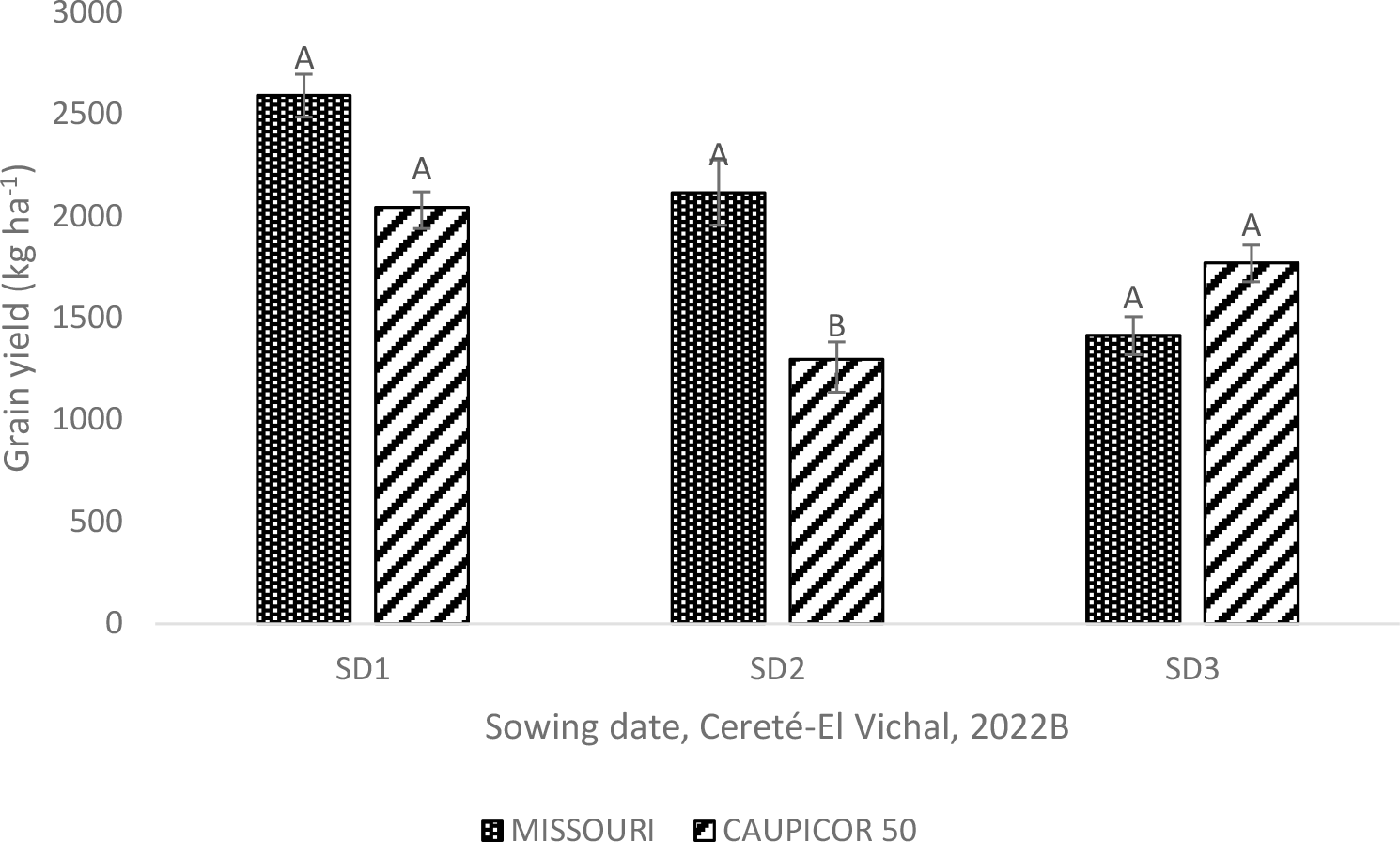
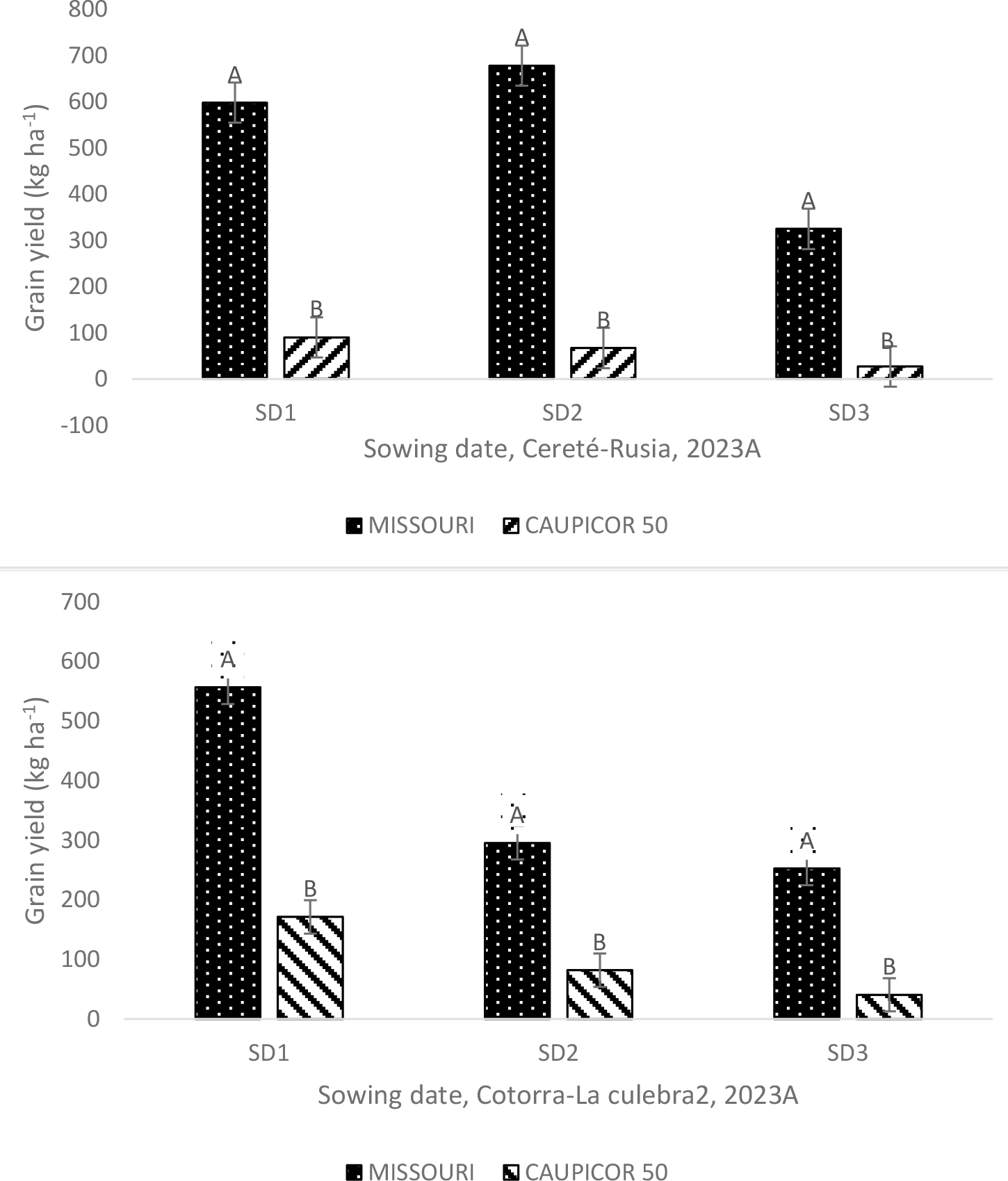
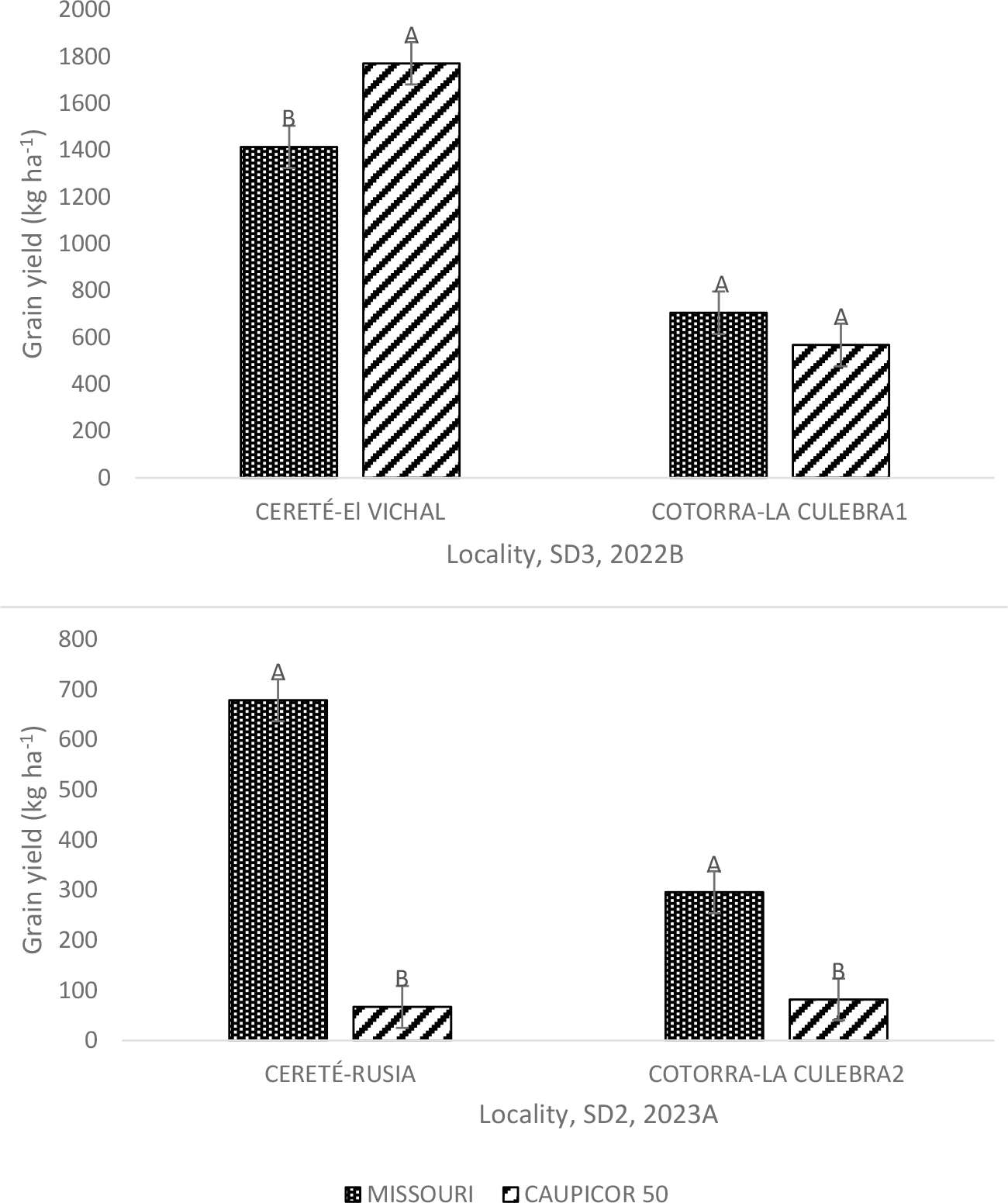
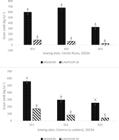
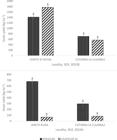
Cowpea is an important legume, a short-cycle crop in the humid Caribbean of Colombia and is sowed at different times of the year which affects grain yield and quality. Knowledge of the right times for sowing is necessary, so that farmers can have productive strategies to face periods of drought and high rainfall that directly influence productivity and food security in the region. The objective of this study was to determine the grain yield of two cowpea varieties, one with a semi-prostrate habit (Caupicor 50) and the other with an erect habit (Missouri), on three sowing dates in both the high rainfall (rainy) and low rainfall (dry) seasons, in two localities of the Department of Córdoba, Colombia: Cereté and Cotorra. The randomized complete block design was used, with four repetitions, in three serial experiments every 15 days, starting on October 21 in 2022B, and three more, starting on April 15, 2023A, for a total of six experiments. The grain yield of the genotypes was influenced by the sowing date, with the best result obtained in the second half of 2022 (October 21 and 24), in the Cereté and Cotorra localities, respectively, with the Missouri genotype recording superiority and better response in Cereté.
Keywords:
Agronomic behavior; Sowing season; Rainfall; Vigna unguiculata
 Thumbnail
 Thumbnail
 Thumbnail