Parameterization of the APSIM model in a tropical environment under intercropping and rainfed conditions
ABSTRACT
Mechanistic models, such as the Agricultural Production Systems Simulator (APSIM), are used to predict the growth of pasture species and grain crops in monoculture and intercropping systems. The objective of this study was to evaluate the performance of the APSIM model in simulating the growth and productivity of maize and Marandu palisadegrass in monoculture and intercropping systems in eastern Maranhão, Brazil. Data on biomass partitioning, climate, and soil properties were collected. Model calibration involved parameterizing the light extinction coefficient and radiation use efficiency, as well as adjustments to the phenological and structural parameters of maize. Additionally, dry biomass, leaf area index, and reproductive structures of maize plants were evaluated. The model satisfactorily simulated Marandu palisadegrass grown in monoculture, with R2 values ranging from 0.95 to 0.97 and Nash-Sutcliffe efficiency (NSE) values ranging from 0.08 to 0.97. However, simulations of intercropped Marandu palisadegrass were inaccurate, with R2 values between 0.09 and 0.87 and NSE values ranging from -1035.25 to -3.33. The model performance ranged from inaccurate to accurate for maize grown in monoculture, with R2 values between 0.11 and 0.90 and NSE values ranging from -0.37 to 0.90, and for intercropped maize, with R2 values between 0.44 and 0.87 and NSE values ranging from -4.39 to 0.68. The APSIM model performed well in simulating Marandu palisadegrass grown in monoculture; however, inaccuracies were evident in simulations of intercropped Marandu palisadegrass. Simulations of maize, both in monoculture and intercropping systems, resulted in performance ranging from satisfactory to reasonable.
Keywords:
Agricultural simulation; Crop model; Forage species.
RESUMO
Modelos mecanicistas, como o Agricultural Production Systems Simulator (APSIM), são utilizados para simular o crescimento de espécies forrageiras e culturas graníferas em sistemas de cultivo solteiro e consorciado. Objetivou-se avaliar o desempenho do modelo APSIM na simulação do crescimento e produtividade de milho e capim-marandu (Urochloa brizantha cv. Marandu) sob sistemas solteiro e consorciado na região leste do Maranhão, Brasil. Dados de partição de biomassa, clima e propriedades do solo foram coletados. A calibração do modelo envolveu a parametrização do coeficiente de extinção luminosa e da eficiência de uso da radiação, além de ajustes nos parâmetros fenológicos e estruturais do milho. Avaliou-se ainda a biomassa seca, índice de área foliar e estruturas reprodutivas do milho. O modelo simulou de forma satisfatória o capim-marandu em cultivo solteiro, com valores de R2 entre 0,95 e 0,97 e eficiência de Nash-Sutcliffe (NSE) variando de 0,08 a 0,97. As simulações do capim-marandu em consórcio foram imprecisas, com valores de R2 entre 0,09 e 0,87 e NSE variando de -1.035,25 a - 3,33. Para o milho em cultivo solteiro, o desempenho variou de impreciso a preciso, com R2 entre 0,11 e 0,90 e NSE entre -0,37 e 0,90. No consórcio, os valores de R2 variaram de 0,44 a 0,87 e NSE de -4,39 a 0,68. O modelo APSIM apresentou bom desempenho na simulação do capim-marandu em cultivo solteiro; entretanto, imprecisões foram observadas nas simulações do capim-marandu consorciado. As simulações do milho, tanto em cultivo solteiro quanto em consórcio, apresentaram resultados de satisfatórios a razoáveis.
Palavras-chave:
Simulação agrícola; Modelo de culturas; Espécies forrageiras.
INTRODUCTION
Maize (Zea mays L.), a species of the family Poaceae with wide geographic distribution, is native to North and Central America, with its center of genetic origin in Mexico. Maize is one of the most widely cultivated crops worldwide and has substantial socioeconomic and nutritional importance because of its diverse uses in human and animal nutrition, particularly as a primary raw material for the food industry (CESCONETTO et al., 2021).
Considering the socioeconomic importance of maize and climate uncertainties, particularly in the Northeast region of Brazil, agricultural system modeling represents an important tool for estimating production and to reduce economic risks. The mathematical representations in these models enable studies of climatic interactions and their effects on crops, productivity monitoring, understanding of crop responses to the environment, and evaluation of factors such as planting date, cultivar selection, irrigation, and seasonal climatic patterns (ASSENG et al., 2015; SOUZA et al., 2022). The Agricultural Production Systems Simulator (APSIM) is used to assess the impacts of climate change on agriculture by simulating different crops under varying conditions. In Brazil, maize is grown in monoculture or intercropped with forage grasses such as Urochloa spp. In this context, recent research has focused on optimizing grain and forage yields and analyzing the growth dynamics of these crops (SOUZA et al., 2022; BOSI et al., 2020; BRUNETTI et al., 2025). However, the dynamics of forage growth in intercropping systems with maize require further investigation to achieve maximum grain and forage yields in this system (MARTUSCELLO et al., 2009).
APSIM is a simulation model used to analyze the impacts of technologies on biophysical and socioeconomic agricultural systems, thereby supporting decision-making related to food security and risk management (SANTOS et al., 2019; MUPANGWA et al., 2020). Despite advances in modeling individual components of maize and Urochloa pasture species, few studies have focused on modeling intercropping systems involving these crops (GOMES et al., 2020; BOSI et al., 2020). Understanding the interactions and changes in growth and yield resulting from competition for climatic and soil nutrients is essential. Thus, the objective of this study was to evaluate the performance of APSIM in simulating the growth and productivity of maize and Marandu palisadegrass (Urochloa brizantha cv. Marandu) in monoculture and intercropping systems (maize-Marandu palisadegrass) in the eastern region of Maranhão, Brazil.
MATERIAL AND METHODS
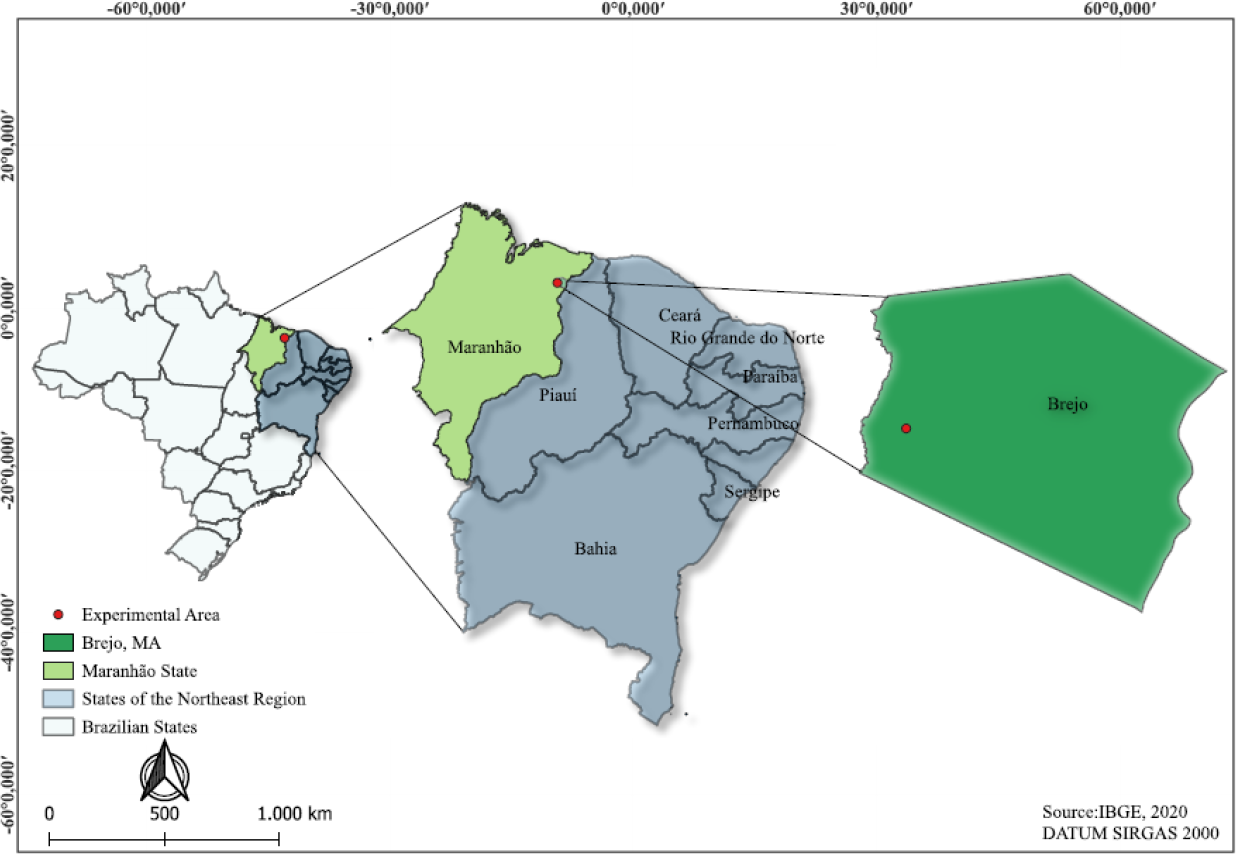
The data used to parameterize the model were obtained from an agricultural production area under rainfed conditions adopting the integrated crop-livestock system (ICLS), located at Barbosa Farm, in the municipality of Brejo, Maranhão (MA), Brazil (03°41′S, 42°58′W; altitude 99 m) (Figure 1).

The climate in Brejo, located in the Matopiba region, is classified as Aw’, tropical savanna, with two well-defined seasons (a rainy season from December to June and a dry season from July to November), average air temperature of approximately 27 °C, and mean annual precipitation of 1502.75 mm (APARECIDO et al., 2023). Soil samples were collected at depths of 0.0-0.2 m and 0.2-0.4 m for chemical analysis and subsequent fertility correction. Soil acidity correction was performed by applying 1.0 Mg ha⁻1 of dolomitic limestone (88% PRNT) and 0.5 Mg ha⁻1 of gypsum. The soil in the area was classified as a Typic Hapludult (Argissolo Amarelo Distrófico típico) (SOIL SURVEY STAFF, 2022; SANTOS et al., 2025), with a sandy loam texture (DANTAS et al., 2014).
On February 4, 2022, sowing was carried out with maize, Marandu palisadegrass (Urochloa brizantha cv. Marandu), and maize intercropped with Marandu palisadegrass, following the protocol adopted at Barbosa Farm. Basal fertilization was performed with 340 kg ha⁻1 of the 12-32-00 NPK formulation. Topdressing fertilization for maize consisted of 200 kg ha⁻1 of the 10-00-30 NPK formulation applied at 7 and 30 days after emergence. Climatic data were obtained, including precipitation (mm), air temperature (°C), relative air humidity (%), wind speed (m s⁻1), and global solar radiation (MJ m⁻2 day⁻1). The average air temperature was 27°C, with an average maximum of 34°C and minimum of 23°C, and total precipitation during the period was 794 mm. Photosynthetically active radiation was measured using reference bars positioned above the canopy and at soil level to monitor the growth of Marandu palisadegrass in association with maize. The radiation not intercepted by maize and Marandu palisadegrass was measured every seven days to determine the amount of radiation intercepted by the grass canopy.
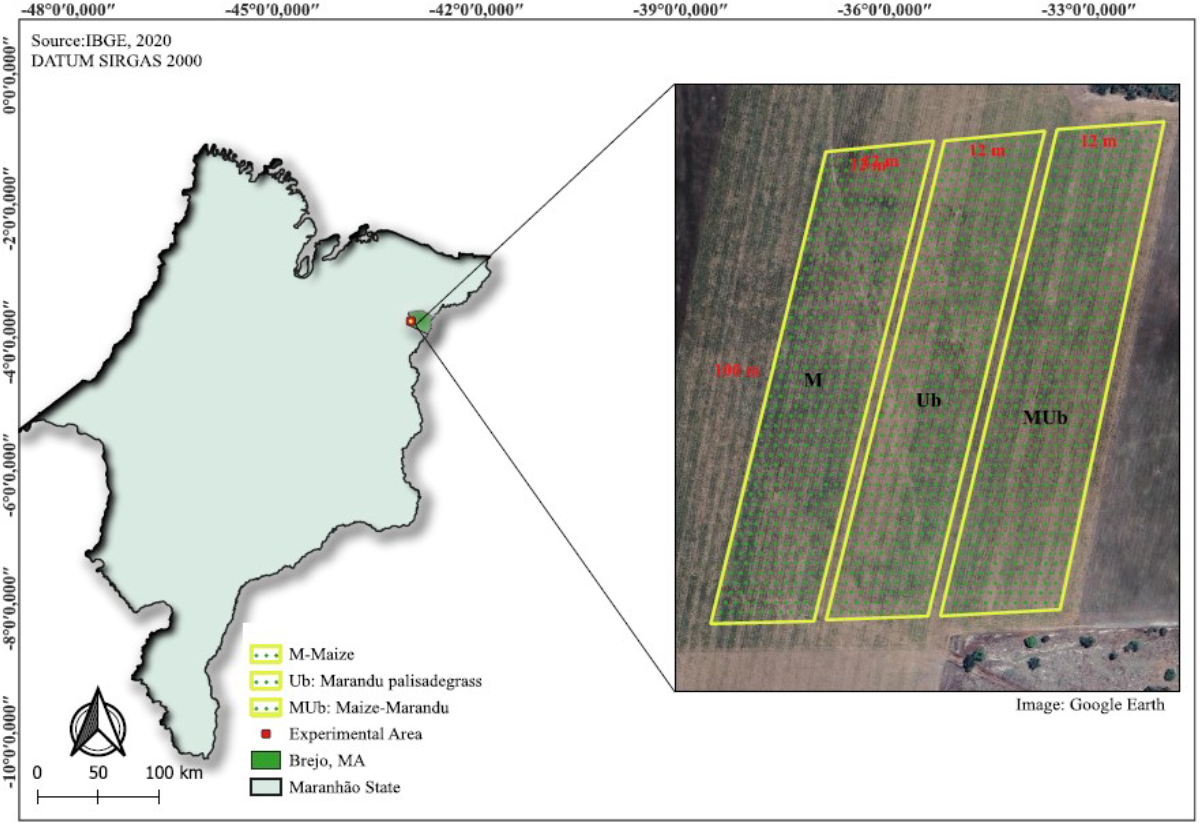
The trial was conducted under rainfed conditions, considering the planting systems adopted for both cultivars. Experimental plots measuring 12 m × 100 m were established with different cultivation systems involving maize and Marandu palisadegrass (Figure 2).
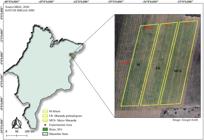
Experimental area and arrangement of maize and Marandu palisadegrass cultivation systems at Barbosa Farm, Brejo, Maranhão, Brazil.
Soil water content was monitored in all areas using CS616 moisture sensors (Campbell Scientific, Logan, UT, USA) installed at depths of 0.0-0.3 m, 0.3-0.6 m, and 0.6-0.9 m, and connected to CR1000 automatic data acquisition systems (Campbell Scientific, Logan, UT, USA). Soil physical and hydraulic properties and the soil water retention curve were determined in samples collected at depths of 0.0-0.2 m, 0.2-0.4 m, and 0.4-0.6 m, following (BOSI et al., 2020).
Maize was mechanically sown with 0.5 m row spacing and a density of 4 plants per linear meter for a population of approximately 80,000 plants per hectare. Marandu palisadegrass was sown using a mechanized seed distributor and 6 kg of seeds per hectare. The maize hybrid used was MS 3845 Status-P3845VYHR (Pioneer®), and the Urochloa species used was Urochloa brizantha cv. Marandu. Phytosanitary management and cultural practices in the monoculture and intercropped maize plots were conducted according to the standard protocol adopted by the producer at Barbosa Farm. The herbicide nicosulfuron (Nortox®; 200 mL ha⁻1) was applied to suppress forage growth and reduce interspecific competition to minimize yield reduction in maize.
Determination of Biometric Parameters
Samples for dry biomass determination were collected through destructive sampling starting 27 days after sowing, at 14-day intervals until physiological maturity (94 days after sowing), totaling seven collections throughout the crop cycle. The following parameters were determined: total dry biomass of live material, dry biomass of live leaves, dry biomass of live stems, dry biomass of grains, dry biomass of rachis, and dry biomass of straw, expressed in grams, and leaf area index. Maize and Marandu palisadegrass plants were collected at 1 m within the row and 0.5 m between rows, corresponding to a sampling area of 0.5 m2. Four replicates were evaluated on seven sampling dates, with harvested fresh biomass weighed and subsequently separated into components. After drying in a forced air-circulation oven at 65 °C, leaf area was determined using a LI-3100 leaf area integrator. Specific leaf area for Marandu palisadegrass and maize was calculated from the relationship between leaf area and dry mass and subsequently used as an input parameter in the APSIM model.
APSIM Model Inputs
The main input files used to run the simulation included meteorological data annual mean temperature (°C), annual temperature amplitude (°C), daily maximum and minimum air temperatures (°C), precipitation (mm), and solar radiation (MJ m⁻2 day⁻1) soil data, and geographic coordinates (latitude and longitude, degrees). The soil file was prepared using APSoil, which composes several submodules. The SoilOrganicMatter submodule contains data on soil organic matter using the model default values. The Chemical submodule includes data on soil chemical properties, specifically soil organic carbon and pH. The Fertilizer submodule contains data on initial soil nitrogen conditions according to (BOSI et al., 2020).
APSIM Tropical Pasture Module
The APSIM Tropical Pasture module is a component of APSIM Next Generation (HOLZWORTH et al., 2018) that simulates tropical grass growth and soil organic matter dynamics. Adjustments and calibrations were performed for each species using plant structure-specific submodels that calculate biomass and nitrogen demand. The model considers specific leaf area, leaf area index, and leaf biomass, and estimates dry matter partitioning among different plant structures (BROWN et al., 2014). Model modifications account for plant age, day length, and phenological stage. The model includes eight developmental phases regulated by thermal time and photoperiod and simulates water, nitrogen, and organic matter dynamics. Crop management and irrigation practices followed the methodology described by (BOSI et al., 2020).
APSIM Maize Module
The APSIM Maize module simulates maize growth as a function of climate variables an soil water, and nitrogen availability. Its submodules allocate dry matter and nitrogen among different plant structures, including roots, leaves, and grains. In addition, it simulates plant development, grain yield (based on grain number and size), and root growth throughout the soil profile (BROWN et al., 2014). Calculations of water, nitrogen, and organic matter processes were performed according to (BOSI et al., 2020).
APSIM Maize/Tropical Pasture Intercropping Structure
The APSIM Tropical Pasture and APSIM Maize modules were parameterized and configured within a single file. The Maize and Tropical Pasture submodels were incorporated into the Replacements module, creating the Maize Tropical Pasture intercropping model, termed APSIM Maize/Tropical Pasture. Within the Validation module, the Consórcio MB submodule was added and linked with the Soil and Water submodules. Maize and pasture management operations were defined in the Operations and IrrigationSchedule submodules. Phenological, climate, and soil parameters for maize and Marandu palisadegrass in the intercropping system were specified in the Report submodule. By linking the submodels, climate and soil variables were shared between the crops, enabling simulation of competition for radiation, soil nutrients, and water.
Parameterization of the APSIM Tropical Pasture Module
Initially, data from Marandu palisadegrass grown in monoculture were used to parameterize the model based on parameters reported by (BOSI et al., 2020). The extinction coefficient (k) and radiation use efficiency were replaced with the values determined in this study. The extinction coefficient (k) was determined according to the Beer-Lambert law, following the methodology described by (BOSI et al., 2020). Mean temperature was calculated from experimental data, whereas base temperature and optimum temperature were obtained from (SOUZA et al., 2022). Radiation use efficiency was estimated based on dry biomass, solar radiation intercepted by the canopy, and air temperature correction factor, according to (BOSI et al., 2020). The model was adjusted for monoculture cultivation of Marandu
palisadegrass, considering parameters such as total dry biomass, leaf dry mass, stem dry mass, and leaf area index.
Parameterization of the APSIM Maize Module
Meteorological data and maize cultivation data were used to parameterize the APSIM Maize model under rainfed conditions at Barbosa Farm, Brejo, Maranhão, Brazil. Parameters reported by Bosi et al. (2020) served as the initial reference, followed by the inclusion of management operations such as sowing, fertilization, irrigation, and dry matter partitioning. Data on photosynthetically active radiation, soil moisture, and planting conditions were incorporated into the model. Subsequently, the model was calibrated for maize grown in monoculture by adjusting parameters through an iterative trial-and-error procedure. Variables measured during the crop cycle included total dry biomass, dry biomass of live material, dry biomass of live leaves, dry biomass of live stems, leaf area index, dry biomass of straw, dry biomass of rachis, and dry biomass of grains (BOSI et al., 2020).
Parameterization of the APSIM Maize/Tropical Pasture Module
The APSIM Maize/Tropical Pasture model was developed by integrating the structures of the APSIM Maize and APSIM Tropical Pasture modules. Climatic data from the weather station installed at Barbosa Farm, in Brejo, Maranhão, Brazil, were incorporated into the model. Management operations were subsequently defined, including sowing, fertilization, irrigation, and dry matter partitioning. The Soil module and its submodules (Operations and IrrigationSchedule) were used to input information on sowing, fertilization, and irrigation. Soil physical and chemical data were incorporated into the module to simulate competition between maize and Marandu palisadegrass. The respective submodules were used to input management data, such as sowing, fertilization, and irrigation, enabling simulation of competition between the crops.
Model Evaluation
Model performance was evaluated in terms of accuracy and precision using the following statistical indices:
a) Coefficient of determination (R2), classified as unsatisfactory (R2 ≤ 0.6), satisfactory (0.6 < R2 ≤ 0.7), good (0.7 < R2 ≤ 0.8), and very good (R2 > 0.8) (BOSI et al., 2020);
b) Nash-Sutcliffe efficiency (NSE), which describes the model accuracy (Equation 1), classified as unsatisfactory (NSE ≤ 0.5), satisfactory (0.5 < NSE ≤ 0.65), good (0.65 < NSE ≤ 0.75), and very good (NSE > 0.75) (BOSI et al., 2020).
c) Mean error (ME) (Equation 2), used as an indicator of bias.
d) Mean absolute error (MAE) (Equation 3), used to quantify the discrepancy between the model-predicted values and observed values.
e) Root mean square error (RMSE) (Equation 4), used to evaluate overall model performance and summarize the average difference between observed and predicted values.
RESULTS AND DISCUSSION
Marandu palisadegrass grown in monoculture
The radiation use efficiency obtained for Marandu palisadegrass was 3.11 g MJ⁻1 and 1.94 g MJ⁻1 for total biomass, assuming that 20% of photoassimilates were allocated to root development and that 50% of the intercepted radiation was photosynthetically active radiation, with a base temperature of 10.3 °C according to Souza et al. (2022) and optimum temperatures according to (BOSI et al., 2020).
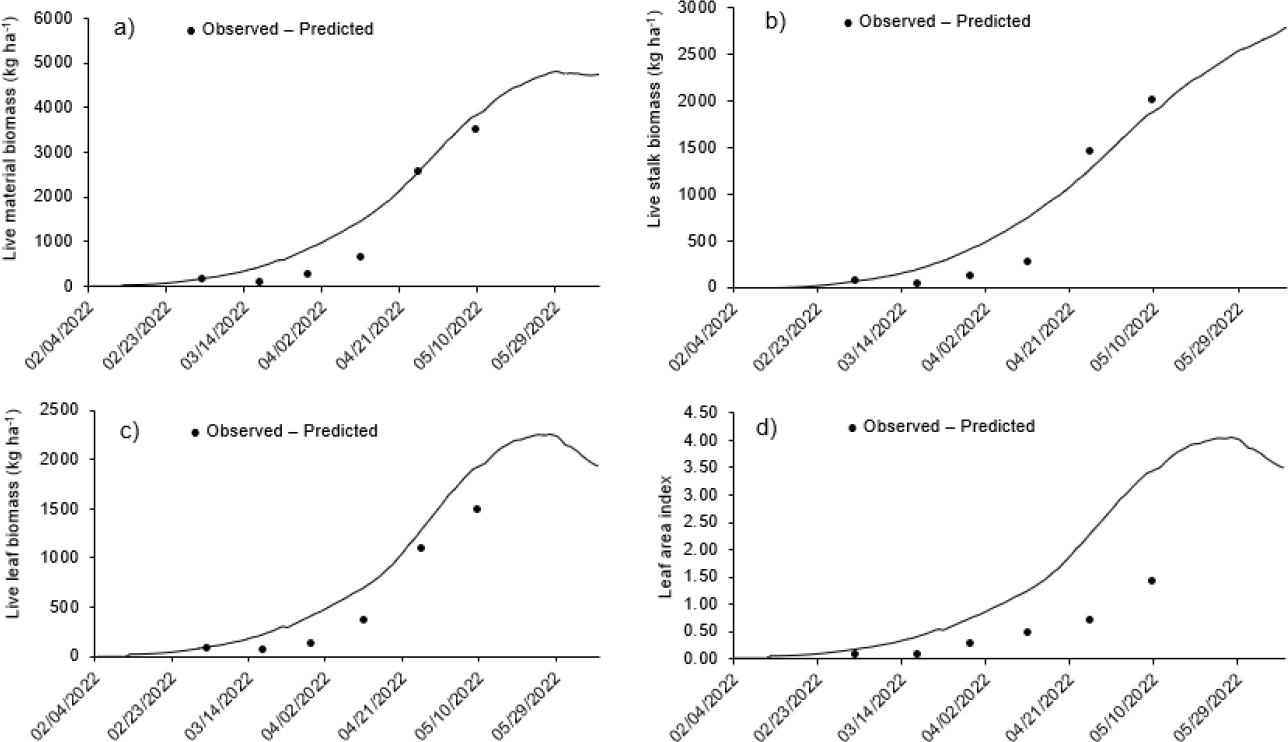
Predicted and observed values of total dry biomass (TDB), stem dry biomass (SDB), leaf dry biomass (LDB), and leaf area index (LAI) for Marandu palisadegrass grown in monoculture are presented in Figure 3.
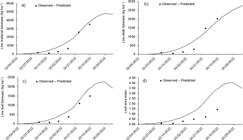
Predicted and observed values of total dry biomass (TDB, a), live stem dry biomass (SDB, b), live leaf dry biomass (LDB, c), and leaf area index (LAI, d) for Marandu palisadegrass grown in monoculture under rainfed conditions from.
The model satisfactorily predicted the observed data, reproducing similar temporal patterns for TDB, SDB, and LDB (Figures 3a, 3b, and 3c), with R2 values of 0.95, 0.97, and 0.93, respectively. However, the model overestimated LAI values and did not adequately capture the effects of environmental and management conditions, as indicated by the Nash-Sutcliffe efficiency (NSE) value of 0.08 (Figure 3d). Bosi et al. (2020) considered the simulation of live forage biomass satisfactory, with R2 values ranging from 0.89 to 0.94 and NSE values ranging from 0.88 to 0.92.
The model satisfactorily captured the growth trend of TDB, showing a good response to the environmental and management conditions of the system (Figure 3a). Gomes et al. (2020) reported that APSIM predicted live biomass of Marandu palisadegrass grown in monoculture with very good precision and good accuracy (R2 = 0.83 and NSE = 0.75), reinforcing the model’s capability to simulate live biomass of tropical pastures under different environmental and management conditions. Consistent with the present results, Souza et al. (2022) reported precise simulation of live biomass (R2 = 0.75), leaf biomass (R2 = 0.86), and LAI (R2 = 0.80) under rainfed and irrigated conditions. However, APSIM showed better efficiency (NSE = 0.65) only for leaf variable, indicating that the model still requires adjustments to improve LAI prediction.
The analytical and statistical results comparing observed and predicted values of TDB, LDB, SDB, and LAI for Marandu palisadegrass grown in monoculture are presented in Table 1.
Statistical indices and error metrics comparing observed and predicted values generated by the APSIM Tropical Pasture module for total dry biomass (TDB, kg ha⁻1), leaf dry biomass (LDB, kg ha⁻1), stem dry biomass (SDB, kg ha⁻1), and leaf area index (LAI) of Marandu palisadegrass grown in monoculture under rainfed conditions from.
The simulation of TDB showed good precision and good accuracy, consistent with the results reported by Souza et al. (2022) for the same variable in Marandu palisadegrass. APSIM provided satisfactory error metrics for all evaluated parameters in the simulation of TDB (Table 1), supported by the strong correlation between predicted and observed data, with an RMSE of 439.60 kg ha⁻1. The model satisfactorily predicted dry matter partitioning to stems and leaves, with good precision and accuracy (Table 1), and RMSE values of 266.10 kg ha⁻1 and 256.30 kg ha⁻1, respectively. Bosi et al. (2020), during the parameterization of APSIM for Piatã palisadegrass, confirmed the model’s capability to simulate tropical pasture development, with RMSE values ranging from 620.30 to 820 kg ha⁻1 across three experiments. The results reported by Pequeno et al. (2018) for tropical pastures are also consistent with the simulation metrics obtained for TDB of Marandu palisadegrass in the present study.
Marandu palisadegrass intercropped with maize
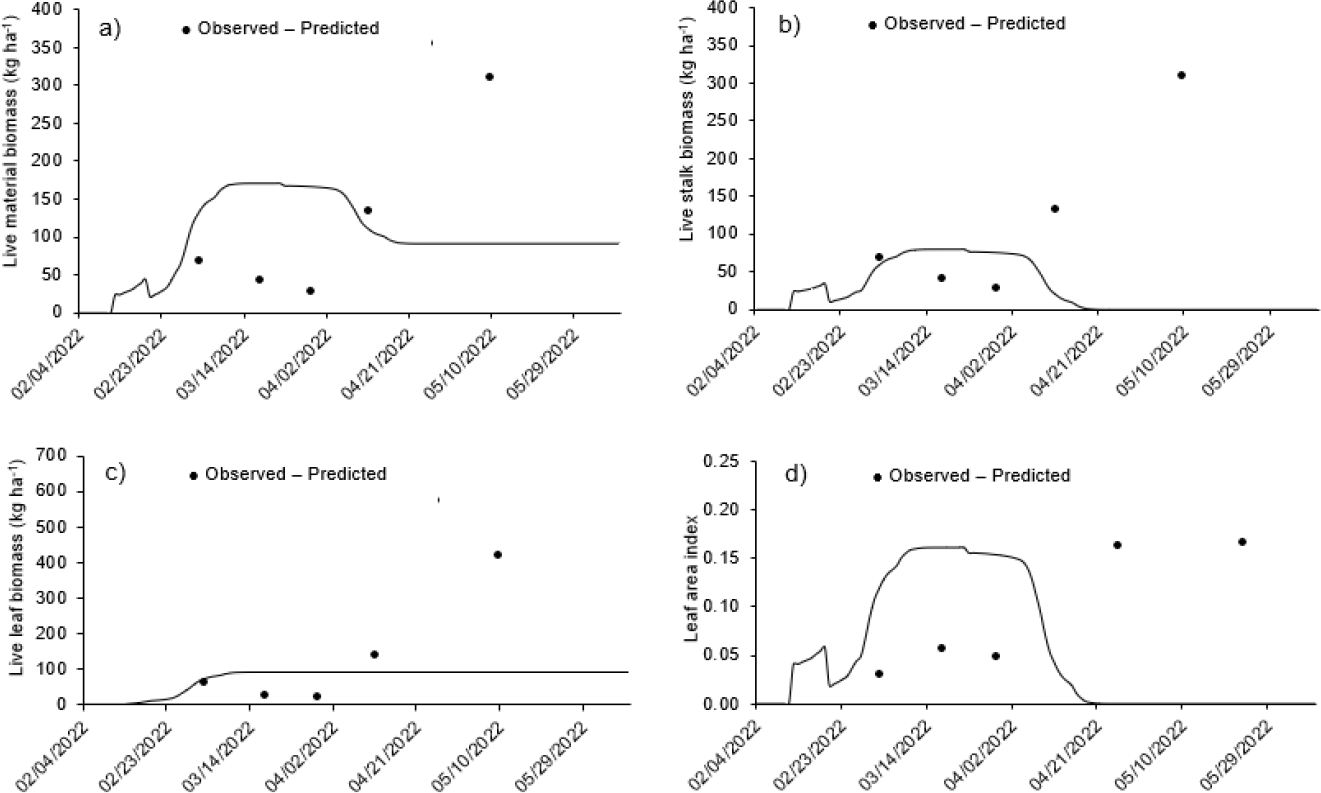
Predicted and observed values of TDB, SDB, LDB, and LAI for Marandu palisadegrass intercropped with maize are presented in Figure 4.
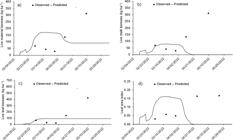
Predicted and observed values of total dry biomass (TDB, a), live stem dry biomass (SDB, b), live leaf dry biomass (LDB, c), and leaf area index (LAI, d) for Marandu palisadegrass intercropped with maize under rainfed conditions from.
The model did not satisfactorily simulate the development of TDB, SDB, and LDB, nor did adequately capture the growth trends of any of the analyzed variables, suggesting that it was unable to represent the environmental and management effects imposed on the system. R2 values were 0.76, 0.87, 0.09, and 0.65 for TDB, SDB, LDB, and LAI, respectively (Figures 4a, 4b, 4c and 4d). Herbicide application at the beginning of the Marandu palisadegrass development cycle when intercropped with maize negatively affected pasture growth. Therefore, the observed data do not actually represent the potential biomass production of Marandu palisadegrass, which may have influenced model performance.
The highest observed live biomass in the present study was approximately 970 kg ha⁻1, contrasting markedly with the approximately 8,900 kg ha⁻1 reported by Souza et al. (2022) for the same cultivar over a similar period. This discrepancy is attributed to herbicide application at the beginning of the reproductive period of Marandu palisadegrass intercropped with maize.
The analytical and statistical results comparing observed and predicted values of TDB, LDB, SDB, and LAI for Marandu palisadegrass intercropped with maize are presented in Table 2.
Statistical indices and error metrics comparing observed and predicted values generated by the APSIM Tropical Pasture module for total dry biomass (TDB, kg ha⁻1), leaf dry biomass (LDB, kg ha⁻1), stem dry biomass (SDB, kg ha⁻1), and leaf area index (LAI) of Marandu palisadegrass intercropped with maize under rainfed conditions from.
Simulations of plant growth and biomass partitioning by APSIM ranged from satisfactory to unsatisfactory. The simulation of TDB showed good precision, supported by the strong correlation between observed and predicted values (R2 = 0.76); however, it presented unsatisfactory accuracy (NSE = -184.41). Good precision was observed for LDB, although model efficiency was unsatisfactory, For SDB, RMSE value was 243.20, whereas for LAI, RMSE value was 0.14 (Table 2), consistent with findings of (BOSI et al., 2020).
The negative NSE values for all variables indicate that the mean of the observed data provides a better predictor than the model (GAYDON et al., 2017).
Maize grown in monoculture
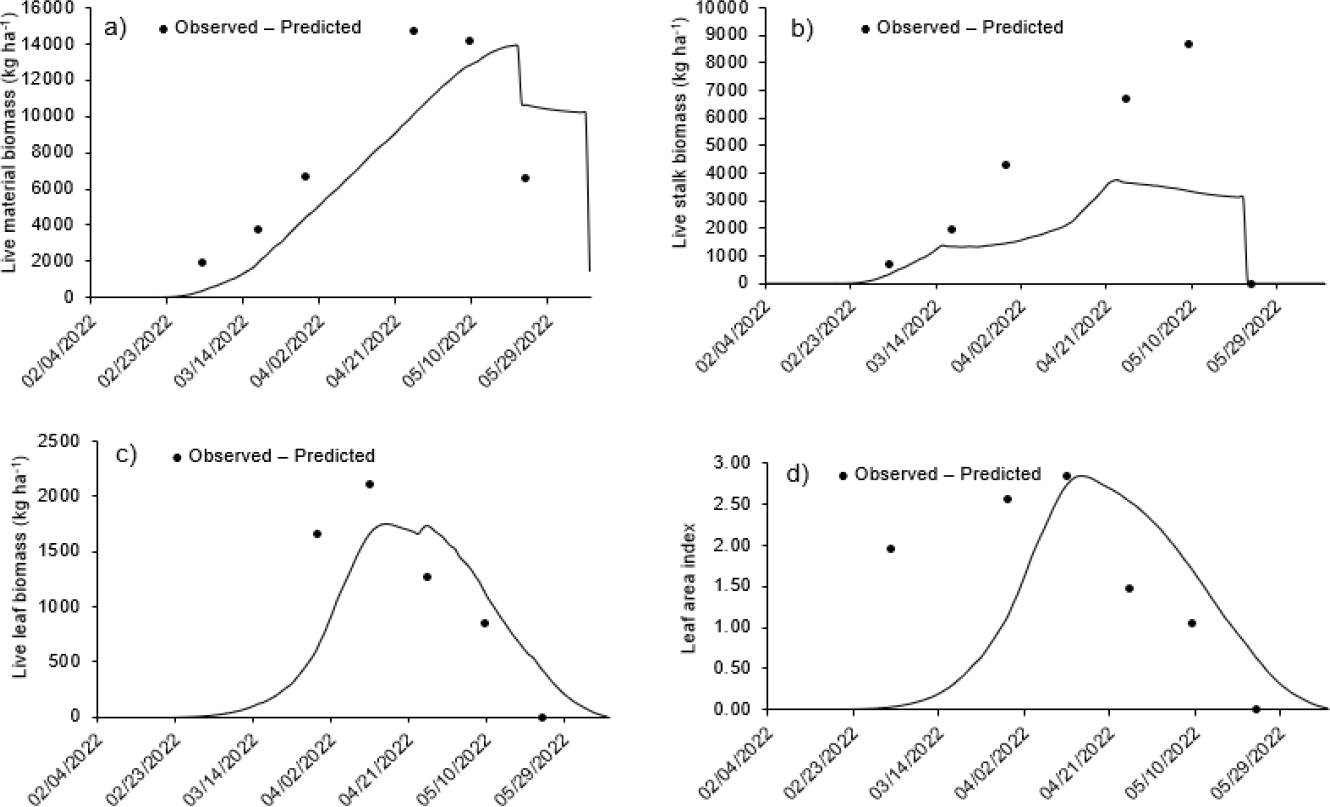
Predicted and observed values of TDB, SDB, LDB, and LAI for maize grown in monoculture are presented in Figure 5.
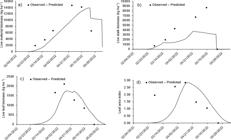
Predicted and observed values of total dry biomass (TDB, a), live stem dry biomass (SDB, b), live leaf dry biomass (LDB, c), and leaf area index (LAI, d) for maize grown in monoculture under rainfed conditions during the experimental trial.
The APSIM model satisfactorily predicted the growth trend of TDB, capturing the effects of environmental and management factors imposed on the system; however, it underestimated SDB toward the end of the crop cycle (Figures 5a and 5b). For LDB and LAI, the model reproduced the effects of environmental and management factors, underestimating leaf biomass and overestimating LAI, respectively (Figures 5c and 5d).
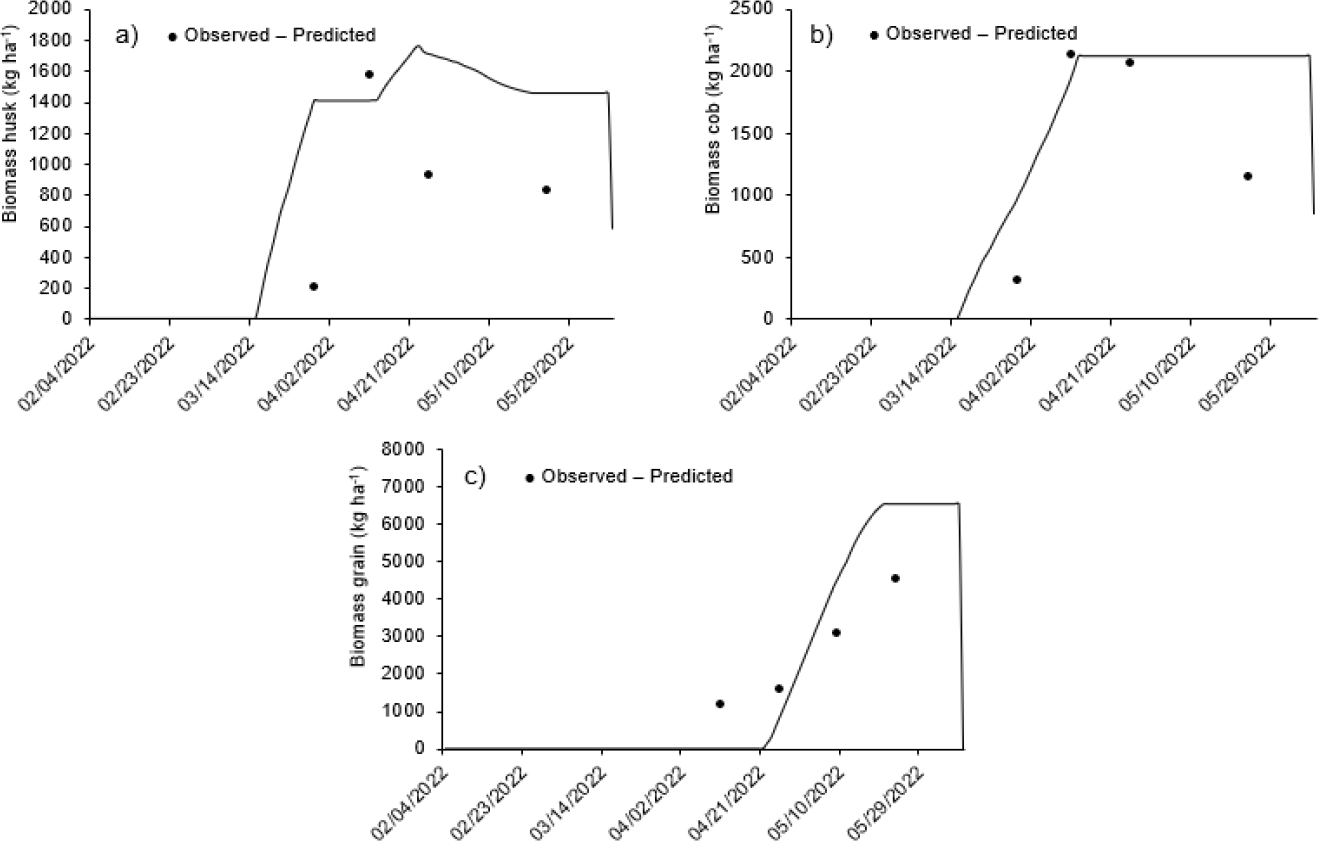
Predicted and observed values of dry biomass of straw (DBS), dry biomass of rachis (DBR), and dry biomass of grains (DBG) for maize grown in monoculture are presented in Figure 6.
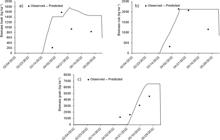
Predicted and observed values of dry biomass of straw (DBS, a), dry biomass of rachis (DBR, b), and dry biomass of grains (DBG, c) for maize grown in monoculture under rainfed conditions during the experimental trial.
The model satisfactorily captured grain development, with good agreement between predicted and observed values; however, it overestimated grain yield at the end of the crop cycle (Figure 6c). Predicted grain yield values are consistent with those reported in global studies conducted under different climatic and management conditions. The R2 value of 0.98 for grain yield is comparable to values reported in other APSIM Maize studies. Chisanga, Phiri and Chinene (2021) considered APSIM simulations acceptable under rainfed conditions in Zambia. Dong et al. (2023) reported that APSIM accurately captured phenological development and maize yield with strong correlation between predicted and observed values (R2 ranging from 0.92 to 0.96) in Northeast China, demonstrating to the model’s effectiveness.
The analytical and statistical results comparing observed and predicted values of TDB, SDB, LDB, LAI, DBG, DBS, and DBR for maize grown in monoculture are presented in Table 3.
Statistical indices and error metrics comparing observed and predicted values generated by the APSIM Maize module for total dry biomass (TDB, kg ha⁻1), leaf dry biomass (LDB, kg ha⁻1), stem dry biomass (SDB, kg ha⁻1), leaf area index (LAI), dry biomass of rachis (DBR), dry biomass of straw (DBS), and dry biomass of grains (DBG) of maize grown in monoculture under rainfed.
The model predicted TDB with good precision and good accuracy, whereas LDB showed low precision and low model efficiency (Table 3). The NSE values associated with most variables were negative, suggesting that the mean of the observed values in the present study was a better predictor than the model (GAYDON et al., 2017). The performance metrics for TDB are supported by the strong correlation (R2 = 0.72) between predicted and observed data, with RMSE = 292.07 kg ha⁻1, although normalized errors remain high (MORIASI et al., 2007) (Table 3). The metrics for LDB (RMSE = 602.20 kg ha⁻1) contrast with some indicators reported in other maize modeling studies (DILLA et al., 2018; MOREL et al., 2020). Although Morel et al. (2020) considered the prediction of aboveground live biomass acceptable (R2 = 0.87), model precision was limited, showing a RMSE = 5,200 kg ha⁻1, which is substantially higher than the values observed in the present study (Table 3).
The model predicted dry biomass of grains (DBG) with good precision and accuracy, showing a strong correlation (R2 = 0.98) between predicted and observed values, which supports the metrics for DBG (Table 3). The performance metrics for dry biomass of straw (DBS) were not supported due to the weak correlation between predicted and observed values and low model efficiency. Dry biomass of rachis (DBR) showed moderate correlation, partially supporting the associated metrics; however, the negative NSE value indicates low predictive accuracy, suggesting that the mean of the observed values is a better predictor than the model (GAYDON et al., 2017).
Maize intercropped with Marandu palisadegrass
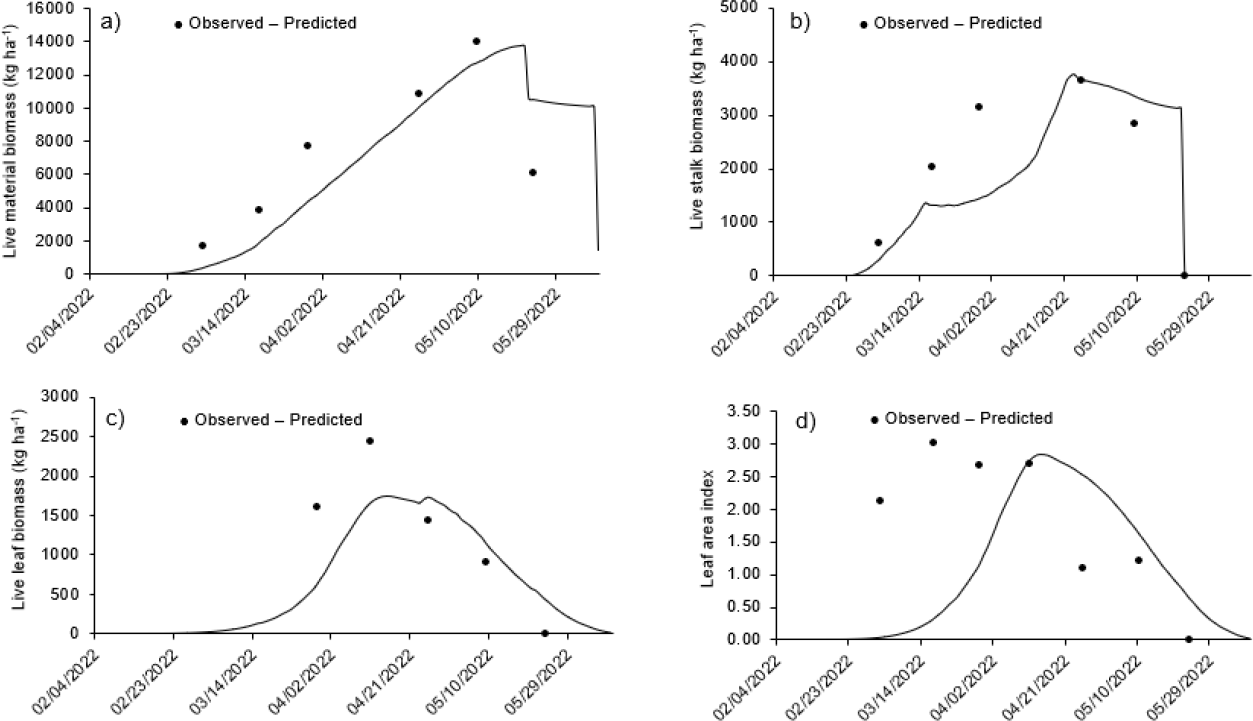
Predicted and observed values of TDB, LDB, SDB, and LAI for maize intercropped with Marandu palisadegrass are presented in Figure 7.
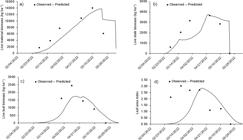
Predicted and observed values of total dry biomass (TDB, a), live stem dry biomass (SDB, b), live leaf dry biomass (LDB, c), and leaf area index (LAI, d) for maize intercropped with Marandu palisadegrass under rainfed conditions during the experimental trial.
The model satisfactorily predicted TDB on a daily scale, capturing the effects of environmental and management factors imposed on the system; although it overestimated values at the end of the crop cycle (Figure 7a). The model satisfactorily predicted SDB; however, it predicted earlier stem senescence than observed at the end of the cycle (Figure 7b). In contrast, LDB and LAI were unsatisfactorily predicted, indicating that the model was unable to adequately capture the environmental and management effects, with underestimation occurring until the midpoint of the maize crop cycle under intercropping conditions (Figures 7c and 7d).
Predicted and observed values of DBG, DBS, and DBR for maize intercropped with Marandu palisadegrass are presented in Figure 8.
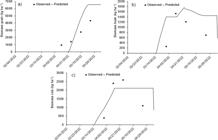
Predicted and observed values of dry biomass of grains (DBG, a), dry biomass of straw (DBS, b), and dry biomass of rachis (DBR, c) for maize intercropped with Marandu palisadegrass under rainfed conditions during the experimental trial.
The model satisfactorily captured grain development under the imposed environmental and management conditions, showing good agreement on a daily scale; however, it overestimated grain yield at the end of the cycle (Figure 8a). The model demonstrated its capability to predict grain yield under intercropping conditions, with a strong correlation (R2 = 0.97) and good efficiency (NSE = 0.67), successfully reproducing the observed pattern of grain development (Figure 8a).
The analytical and statistical results comparing observed and predicted values of TDB, SDB, LDB, LAI, DBG, DBS, and DBR for maize intercropped with Marandu palisadegrass are presented in Table 4.
Statistical indices and error metrics comparing observed and predicted values generated by the APSIM Maize/Tropical Pasture module for total dry biomass (TDB, kg ha⁻1), stem dry biomass (SDB, kg ha⁻1), leaf dry biomass (LDB, kg ha⁻1), leaf area index (LAI), grain dry biomass (DBG, kg ha⁻1), dry biomass of straw (DBS, kg ha⁻1), dry biomass of rachis (DBR, kg ha⁻1) of maize intercropped with Marandu palisadegrass under rainfed conditions.
The model simulations showed good precision (R2 = 0.70) and good accuracy (NSE = 0.68) for TDB, good precision but low efficiency for SDB, and low precision and low efficiency for LDB (Table 4). The performance metrics for TDB and SDB are supported by the moderate to strong correlation between predicted and observed values (Table 4). LAI simulations were unsatisfactory, showing results similar to those obtained for maize monoculture and consistent with reports of low precision for this variable (MOREL et al., 2020; CHISANGA; PHIRI and CHINENE, 2021). The model predicted DBG with good precision and accuracy (R2 = 0.97 and NSE = 0.67), whereas the performance metrics for DBG, DBR, and DBS indicated low predictive efficiency due to negative NSE values (Table 4).
CONCLUSIONS
The Agricultural Production Systems Simulator Model (APSIM) performed satisfactorily in simulating the growth and yield of Marandu palisadegrass in monoculture. However, the model performed unsatisfactorily in simulating the growth and development of Marandu palisadegrass intercropped with maize.
The model performed satisfactorily in simulating the growth of maize in monoculture. The model also performed satisfactorily in simulating the growth and development of maize intercropped with Marandu palisadegrass.
The APSIM Maize module can simulate the accumulation of total aboveground live biomass and grain yield throughout the crop cycle when maize is grown in monoculture or intercropped with Marandu palisadegrass under rainfed conditions.
Data Availability:
The data that support the findings of this study can be made available, upon reasonable request, from the corresponding author.
REFERENCES
- APARECIDO, L. E. O. et al. Climate change in Matopiba region of Brazil: a study on climate extremes in agriculture. Theoretical and Applied Climatology, 153: 87-100, 2023.
- ASSENG, S. et al. Crop modeling for climate change impact and adaptation. In: Crop physiology. Academic Press, s/v.: 505-546, 2015.
- BOSI, C. et al. APSIM - Tropical Pasture: a model for simulating perennial tropical grass growth and its parameterisation for palisade grass (Brachiaria brizantha). Agricultural Systems, 184c: 102917, 2020.
- BROWN, H. E. et al. Plant modelling framework: software for building and running crop models on the APSIM platform. Environmental Modelling & Software, 62: 385-398, 2014.
- BRUNETTI, H. B. et al. Late Stages of Tropical Silvopastoral System: An Opportunity to Maximise Forage and Animal Production. Grass and Forage Science, 80: e70010, 2025.
- CESCONETTO, L. F. et al. Aspectos técnicos de manejo utilizados no Sul Catarinense na cultura do milho. Agropecuária Catarinense, 34: 73-77, 2021.
- CHISANGA, C. B.; PHIRI, E.; CHINENE, V. R. Evaluating APSIM-and-DSSAT-CERES-Maize models under rainfed conditions using zambian rainfed maize cultivars. Nitrogen, 2: 392-414, 2021.
- DANTAS, J. S. et al. Gênese de solos coesos do leste maranhense: relação solo-paisagem. Revista Brasileira de Ciência do Solo, 38: 1039-1050, 2014.
- DILLA, A. et al. Potential of the APSIM model to simulate impacts of shading on maize productivity. Agroforestry Systems, 92: 1699-1709, 2018.
- DONG, M. et al. Effects of Changing Climate Extremes on Maize Grain Yield in Northeast China. Agronomy, 13: 1050, 2023.
- GAYDON, D. S. et al. Evaluation of the APSIM model in cropping systems of Asia. Field Crops Research, 204: 52-75, 2017.
- GOMES, F. J. et al. Parameterization of the APSIM model for simulating palisadegrass growth under continuous stocking in monoculture and in a silvopastoral system. Agricultural Systems, 184: 102876, 2020.
- HOLZWORTH, D. et al. APSIM Next Generation: Overcoming challenges in modernising a farming systems model. Environmental Modelling & Software, 103: 43-51, 2018.
- MARTUSCELLO, J. A. et al. Produção de gramíneas do gênero Brachiaria sob níveis de sombreamento. Revista Brasileira de Zootecnia, 38: 1183-1190, 2009.
- MORIASI, D. N. et. al. model evaluation guidelines for systematic quantification of accuracy in watershed simulations. American Society of Agricultural and Biological Engineers, 50: 885-900, 2007.
- MOREL, J. et al. Challenges for simulating growth and phenology of silage maize in a nordic climate with APSIM. Agronomy, 10: 645, 2020.
- MUPANGWA, W. et al. Evaluating machine learning algorithms for predicting maize yield under conservation agriculture in Eastern and Southern Africa. SN Applied Sciences, 2: 952, 2020.
- PEQUENO, D. N. L. et al. Species-genotypic parameters of the CROPGRO Perennial Forage Model: Implications for comparison of three tropical pasture grasses. Grass and Forage Science, 73: 440-455, 2018.
- SANTOS, M. G. et al. Simulation of productivity and soil moisture under Marandu palisade grass using the CSMCROPGRO-Perennial Forage model. Crop and Pasture Science, 70: 159-168, 2019.
- SANTOS, H. G. et al. Sistema Brasileiro de Classificação de Solos 6. ed. rev. e ampl. Brasília, DF: Embrapa, 2025. 393 p.
- SOUZA, D. P. et al. APSIM-Tropical Pasture model parameterization for simulating Marandu palisade grass growth and soil water in irrigated and rainfed cut-and-carry systems. Grass and Forage Science, 77: 216-231, 2022.
- SOIL SURVEY STAFF. Keys to Soil Taxonomy, 13. ed. Washington, D.C. U.S. Department of Agriculture, Natural Resources Conservation Service 2022. 430 p.
Edited by
-
Editor in Chief:
Aurélio Paes Barros Júnior
-
Section Editor:
Antonio Policarpo Souza Carneiro