Irrigation frequency and use of superabsorbent polymer in guava rootstock production
ABSTRACT
Water scarcity in the Brazilian semiarid region impairs the production of fruit crop rootstocks. Thus, the use of new technologies, such as superabsorbent polymers, becomes essential to improve water management and crop performance. In this context, this study aimed to evaluate different applications of a superabsorbent polymer and irrigation frequencies on the production of guava rootstocks. The experiment was conducted in a rootstock nursery, following a randomized block design in a 4 × 3 factorial scheme, corresponding to four doses of the superabsorbent polymer (0.0, 1.0, 2.5, and 5.0 g L-1) and three irrigation frequencies (F1 - daily irrigation, F2 - irrigation on alternate days, and F3 - irrigation every two days), with four replications. Plant height (PH), stem diameter (SD), number of leaves, root length (RL), rootstock dry mass, PH/SD ratio, PH/SDM ratio, SDM/RDM ratio, and total chlorophyll index (CI) were evaluated. The application of the superabsorbent polymer had a negative effect on rootstock growth under F1, regardless of the dose. However, RL decreased with increasing hydrogel doses under all irrigation frequencies. The application of superabsorbent polymer, combined with reduced irrigation frequencies, resulted in higher total dry mass accumulation in the rootstocks. A superabsorbent polymer dose of 1.9 g L-1 increased CI when rootstocks were irrigated on alternate days and every two days. The dose of 1 g L-1 of the superabsorbent polymer combined with irrigation on alternate days provided the best performance in guava rootstock production.
Keywords:
Psidium guajava L; Irrigation interval; Hydrogel; Seedling production; Water use efficiency.
RESUMO
A escassez de água no semiárido brasileiro prejudica a produção de porta-enxertos de frutíferas. Assim, o uso de novas tecnologias, como polímeros hidrorretentores, torna-se essencial para melhorar o manejo da água e o desempenho das culturas. Nesse contexto, objetivou-se avaliar diferentes usos de polímero hidrorretentor e frequências de irrigação na produção de portaenxertos de goiabeira. O experimento foi realizado em viveiro, em delineamento de blocos casualizados, em esquema fatorial 4 × 3, correspondendo a quatro doses do polímero hidrorretentor (0,0; 1,0; 2,5 e 5,0 g L-1) e três frequências de irrigação (F1 - irrigação diária, F2 - irrigação em dias alternados e F3 - irrigação a cada dois dias), com quatro repetições. Foram avaliados a altura de plantas (ALT), diâmetro do caule (DC), número de folhas, comprimento da raiz (CR), massa seca do porta-enxerto, relação ALT/DC, relação ALT/ MSPA, relação MSPA/MSR e índice de clorofila total (IC). A aplicação do polímero hidrorretentor independente da dose afetou negativamente o crescimento dos porta-enxertos em F1, porém o CR diminuiu com o aumento das doses de hidrogel em todas as frequências de irrigação. A aplicação do polímero hidrorretentor combinado com as frequências de irrigação reduzidas, destacou-se pelo maior acúmulo de massa seca total nos porta-enxertos. A dose do polímero hidrorretentor de 1,9 g L-1 aumentou o IC quando os porta-enxertos foram irrigados em dias alternados e a cada dois dias. A dose de 1 g L-1 do polímero hidrorretentor associado a frequência de irrigação em dias alternados, proporcionou os melhores desempenhos na produção de porta-enxertos de goiabeira.
Palavras-chave:
Psidium guajava L; Turno de rega; Hidrogel; Produção de mudas; Eficiência hídrica.
INTRODUCTION
Agricultural production is responsible for approximately 60% of the world’s water consumption. Irrigation is the primary form of water use in this sector. The Brazilian Northeast region is one of the largest producers of guava, but it is characterized by high evaporation rates, irregular rainfall, and poor soil drainage (ABDALLAH, 2019; RODRIGUES‑FILHO et al., 2023), making its cultivation dependent on techniques such as irrigation systems.
An alternative to minimize the irregular availability of water for cultivated species, especially during the rootstock phase, is the use of superabsorbent polymers (hydrogels), which can be mixed with the soil or substrate to alter its physical and chemical properties (DIÓGENES et al., 2022). Increasing water retention capacity and efficiency, improving infiltration rate, soil aeration, and microbial activity, and reducing irrigation frequency (TOMADONI et al., 2020) allow for longer intervals between irrigations (ABDALLAH, 2019; ANTAS et al., 2024).
Hydrogels have been tested and shown to have positive effects in various species of agronomic interest. According to Santos et al. (2022), a superabsorbent solution significantly increased the average mass of bell pepper fruits (Capsicum annuum L.) at a dosage of 400 mL of solution. Moreover, the association of hydrogel (1.5 g dm-3) and mulching increased the total chlorophyll index and the photosynthetic rate in yellow passion fruit (Passiflora edulis Sims) (ARAÚJO et al., 2022). The use of hydrogel in papaya (Carica papaya L.) increased all rootstock quality variables (PINHEIRO et al., 2024). These effects may be beneficial for the maintenance of other economically important crops in semiarid regions, such as guava (Psidium guajava L.).
Guava is a fruit species belonging to the family Myrtaceae, native to Tropical America, and can be cultivated in several countries in tropical and subtropical regions, as it is adaptable to a wide range of climates and soils (BEZERRA et al., 2018; RODRIGUES‑FILHO et al., 2023). The fruit exhibits characteristics such as a pleasant flavor and aroma, in addition to being a source of nutrients, as it contains high levels of vitamin C, sugars, mineral salts, and fiber (GOMES; ARANTES, 2022). Irrigation of guava trees in the Brazilian Northeast has promoted growth peaks, enabling almost continuous harvests throughout the year (CASTRO; RIBEIRO, 2020).
In this context, the research hypothesis is that the use of a superabsorbent polymer (hydrogel) would hydrate the substrate, reducing the frequency of daily irrigation required to produce guava (P. guajava L.) rootstocks. Therefore, this study aimed to evaluate the effect of different doses of a superabsorbent polymer and irrigation frequencies on the production of guava (Psidium guajava L.) rootstocks.
MATERIAL AND METHODS
The experiment was conducted from April to July 2014 at the nursery of the Center of Agricultural Sciences of the Federal Rural University of the Semiarid Region (UFERSA), Mossoró, Rio Grande do Norte, Brazil. The geographic coordinates of the site are 5°11′15″ S latitude and 37°20′39″ W longitude, with an altitude of 18 m and flat relief. According to the Köppen climate classification, the regional climate is BSh, characterized as hot tropical semiarid, with two well‑defined periods: a dry (prolonged) season and a humid (short and irregular) season (ÁLVARES et al., 2013). During the experiment, the average air temperature recorded inside the nursery was 30.5 °C, while the relative humidity was 50.5%. These data were recorded using a digital thermo‑hygrometer (Thermo Recorder TR‑72U).
The experimental design was a randomized block design, arranged in a 4 × 3 factorial scheme with four replications. The treatments consisted of four doses of the superabsorbent polymer Biogel Hidro Plus - Biosementes® (0.0, 1.0, 2.5, and 5.0 g L-1), as recommended by the manufacturer, and three irrigation frequencies (F1 - daily irrigation, F2 - irrigation on alternate days, and F3 - irrigation every two days), according to the crop’s water requirements during the initial seedling phase (NÓBREGA; SARMENTO; RODRIGUES, 2017). Each experimental unit consisted of eight rootstocks.
Guava seeds of the Paluma variety were obtained from healthy, ripe fruits purchased from a local supermarket chain. The seeds were manually separated from the pulp and then washed in running water to remove any remaining pulp and peel residues. Small and damaged seeds were discarded. Three seeds were sown at a depth of 2 cm in 1.2-L polyethylene bags (15 × 20 cm) with perforations at the bottom to allow excess water to drain. The bags were filled with a substrate composed of sand, cattle manure, and coconut fiber in a 3:1:1 ratio, respectively.
Additionally, the substrate was mixed with hydrogel at varying concentrations. The superabsorbent polymer was weighed on an analytical balance, and the volume of cattle manure was added to a 10-L bucket. Before adding the hydrogel, substrate samples were collected for physical and chemical analyses, as described by SILVA (2009) (Table 1).
Emergence began within the first 15 days after sowing (DAS). Thinning was performed at 30 DAS, leaving only the most vigorous seedlings. Irrigation was performed manually, maintaining the substrate at approximately 60% of field capacity (FC) using a weighing lysimeter. Subsequently, irrigation was applied at three different frequencies: F1 - daily irrigation, F2 - irrigation on alternate days, and F3 - irrigation every other day. Water was applied with a 10-L watering can until the substrate was thoroughly saturated.
The following variables were evaluated at 110 DAS: plant height (PH, cm), measured with a graduated ruler; stem diameter (SD, mm), measured with a digital caliper (ZAAS- 10014); root length (RL, cm), measured with a graduated ruler; and number of leaves (NL).
Dry mass measurements were obtained after drying samples in a forced-air oven (Solidsteel, SSDc) at 65 °C to constant weight and then weighing them on a precision scale (Bel S2202H). The following parameters were determined: root dry mass (RDM, g), shoot dry mass (SDM, g), total dry mass (TDM, g), obtained by adding SDM and RDM, plant height-to-shoot dry mass ratio (PH/SDM), shoot dry mass-toroot dry mass ratio (SDM/RDM), and plant height-to-stem diameter ratio (PH/SD).
Total chlorophyll index (CI) was determined in young, fully expanded leaves from the middle third of the seedling, free of pests and diseases. Readings were taken at three equidistant points on the adaxial surface of each leaf using an electronic chlorophyll meter (ClorofiLOG®, CFL 1030), and the results were expressed as the Falker Chlorophyll Index (FCI).
The results were subjected to the Shapiro-Wilk normality test and Bartlett’s test of homogeneity (1937). After confirming normality and homogeneity, the data were analyzed using analysis of variance (ANOVA) with the F-test (p ≤ 0.05) and the SISVAR statistical software (v. 5.6) (FERREIRA, 2019). Treatment means were subjected to polynomial regression analysis when significant effects were detected. Model selection considered both biological interpretation and the significance of the regression mean square, using Table Curve 2D software. The means of irrigation frequencies were grouped by the Scott-Knott test (p ≤ 0.05) (FERREIRA, 2019).
RESULTS AND DISCUSSION
Guava rootstocks of the Paluma variety were significantly influenced by the interaction between the factors hydrogel doses and irrigation frequencies for PH, SD, RL, SDM, TDM, PH/SDM ratio, SDM/RDM ratio, PH/SD ratio, and CI. Irrigation frequencies significantly and independently influenced NL and RDM (p ≤ 0.05) (Table 2).
Summary of the F-test for plant height (PH), stem diameter (SD), root length (RL), root dry mass (RDM), shoot dry mass (SDM), total dry mass (TDM)), plant height-to-shoot dry mass ratio (PH/SDM), shoot dry mass-to-root dry mass ratio (SDM/RDM), plant height-to-stem diameter ratio (PH/SD), and total chlorophyll index (CI) in guava (Psidium guajava L.) rootstocks subjected to different doses of a superabsorbent polymer and irrigation frequencies.
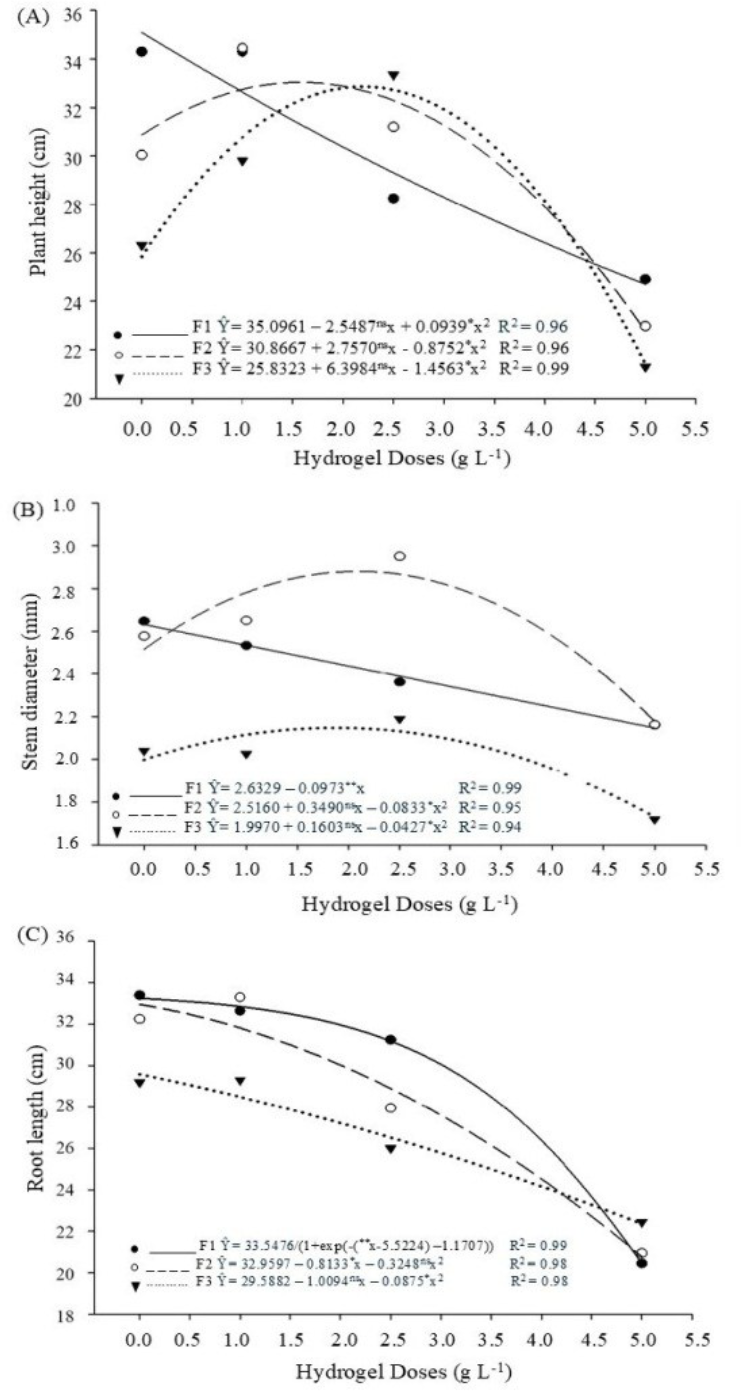
Daily irrigated rootstocks were not favored by hydrogel application, resulting in a significant growth reduction. However, the superabsorbent polymer benefited the growth of rootstocks when irrigation was applied on alternate days, as shown in F2 (Figure 1A). The use of 1.6 and 2.1 g L-1 of hydrogel in rootstocks irrigated in F2 increased PH by up to 7.0% and SD by up to 14.5%, respectively (Figure 1B). Rootstocks irrigated in F3 showed an increase of 27.2% in height and 7.5% in diameter when using 2.2 and 1.9 g L-1 of hydrogel, respectively. In contrast, RL decreased with the use of hydrogel at all irrigation frequencies (Figure 1C).
Plant height (A), stem diameter (B), and root length (C) in guava (Psidium guajava L.) rootstocks subjected to different superabsorbent polymer doses and irrigation frequencies. F1 = daily irrigation; F2 = irrigation on alternate days; F3 = irrigation every other day. ns, **, * = not significant and significant at p ≤ 0.01 and p ≤ 0.05, respectively.
The application of superabsorbent polymers provides an alternative for periods of water scarcity by increasing water retention in the substrate and making nutrients available, keeping the substrate moist for a more extended period (ABDALLAH, 2019; TOMADONI et al., 2020; DIÓGENES et al., 2022; RODRIGUES-FILHO et al., 2023; ANTAS et al., 2024). However, the results obtained in this study confirm that the superabsorbent polymer used was only beneficial for rootstocks under low water availability conditions. In this case, the hydrogel contributes to maintaining the soil water status during water restriction, providing aeration (SILVÉRIO et al., 2024). The addition of hydrogel harms rootstock growth when the water supply in the substrate is adequate due to substrate saturation and the consequent reduction in aeration.
This effect compromises root development and, consequently, impairs shoot growth. It is further accentuated by the increased applied hydrogel concentrations, as the contact between the roots and the hydrogel increases, resulting in a decrease in root growth due to the large amount of hydrogel in the root environment. The presence of hydrogel in larger proportions can reduce the space available in the soil and, consequently, limit root development (MENDES et al., 2020; ANTAS et al., 2024).
Our study shows that guava rootstocks irrigated with F2 or F3 increased SD in response to the application of up to 2.0 g L-1 of hydrogel, with a reduction in diameter above this concentration. This behavior is due to substrate saturation, as hydrogels increase soil water retention capacity, thereby preventing water loss through evaporation and percolation (GARCÍA-GÓMEZ et al., 2024).
Similarly, Santos et al. (2022) reported that the use of high hydrogel concentrations led to a decrease in nutrient absorption in deeper soil regions/layers due to the hydrogel’s ability to retain water in the soil. Conversely, Nascimento et al. (2021) reported that the stem diameter of tomato (Solanum lycopersicum L.) increased with an increase in the concentration of the applied hydrogel. It suggests that different plant species respond differently to the hydrogel, and the type of substrate also influences the hydrogel concentration to be added. Thus, a substrate with low water retention capacity may be favored by a higher concentration of added hydrogel.
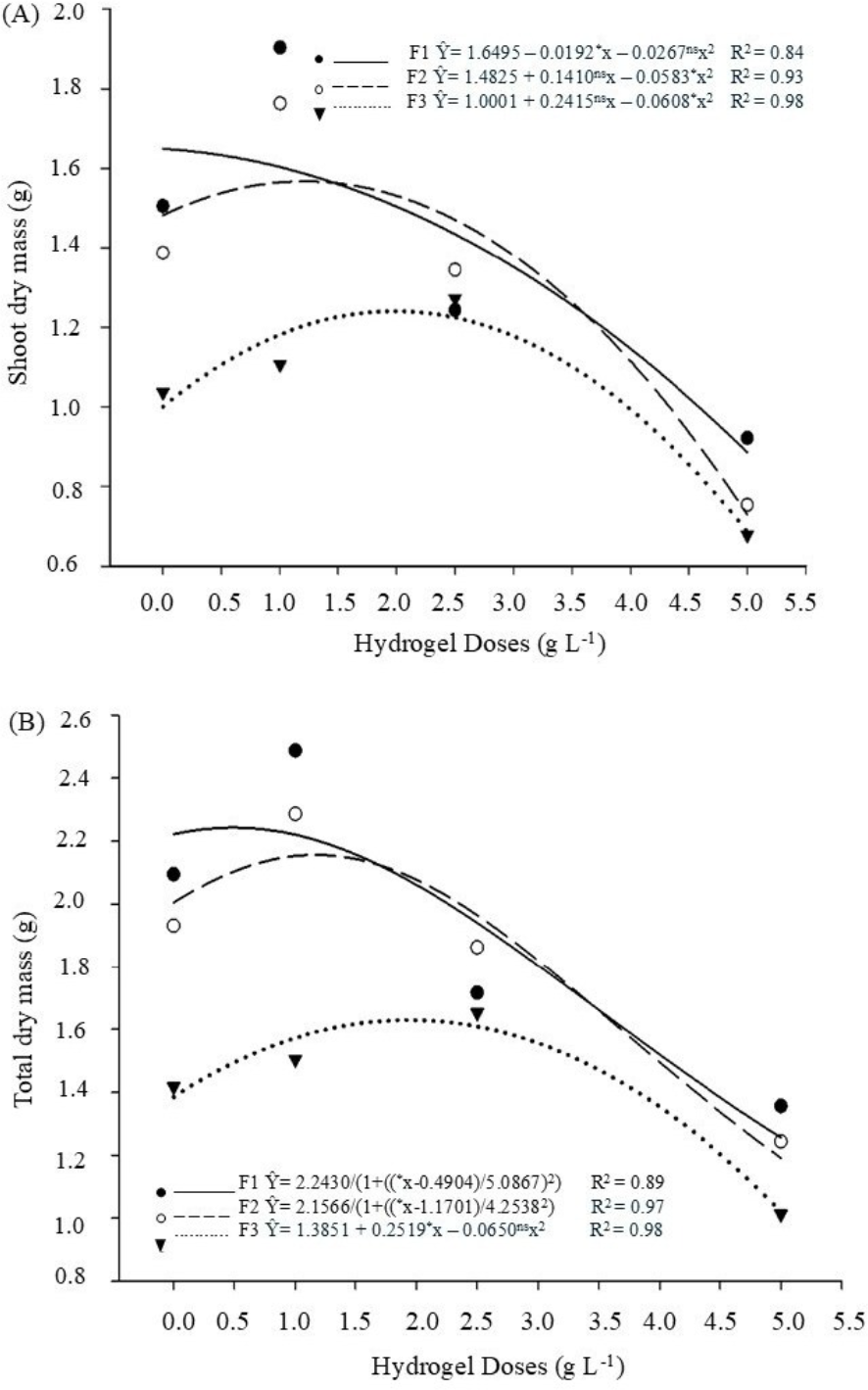
SDM and TDM decreased significantly with a decrease in PH, SD, and RL of the rootstocks due to reduced irrigation frequency. However, the application of hydrogel increased dry matter accumulation in the rootstocks when the irrigation frequency was reduced. The use of 1.2 g L-1 of hydrogel increased SDM by 5.8% in the rootstocks irrigated in F2. In contrast, the use of 2.0 g L-1 of hydrogel in the rootstocks irrigated in F3 resulted in a 24% increase in SDM. A reduction in SDM was observed above these hydrogel doses (Figure 2A). This response may be associated with the polymer’s ability to retain hundreds of times its mass in water and gradually release it to the plants under water deficit conditions (DIÓGENES et al., 2022).
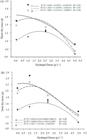
Shoot dry mass (A) and total dry mass (B) in guava (Psidium guajava L.) rootstocks subjected to different superabsorbent polymer doses and irrigation frequencies. F1 = daily irrigation; F2 = irrigation on alternate days; F3 = irrigation every other day. ns, **, * = not significant and significant at p ≤ 0.01 and p ≤ 0.05, respectively.
TDM also increased by 8.0% (1.17 g L-1) in F2- irrigated rootstocks and 18% (1.93 g L-1) in F3-irrigated rootstocks with hydrogel (Figure 2B). Therefore, the results indicate that the concentration of hydrogel to be applied increases when the irrigation frequency is reduced. Hydrogel was beneficial when used at low doses, with the dose increasing as water availability in the substrate decreased. Hydrogel application resulted in a positive effect on the substrate, improving water availability, enhancing nutrient retention, and, consequently, increasing absorption, which contributed to the growth and accumulation of plant biomass (TOMADONI et al., 2020; DIÓGENES et al., 2022).
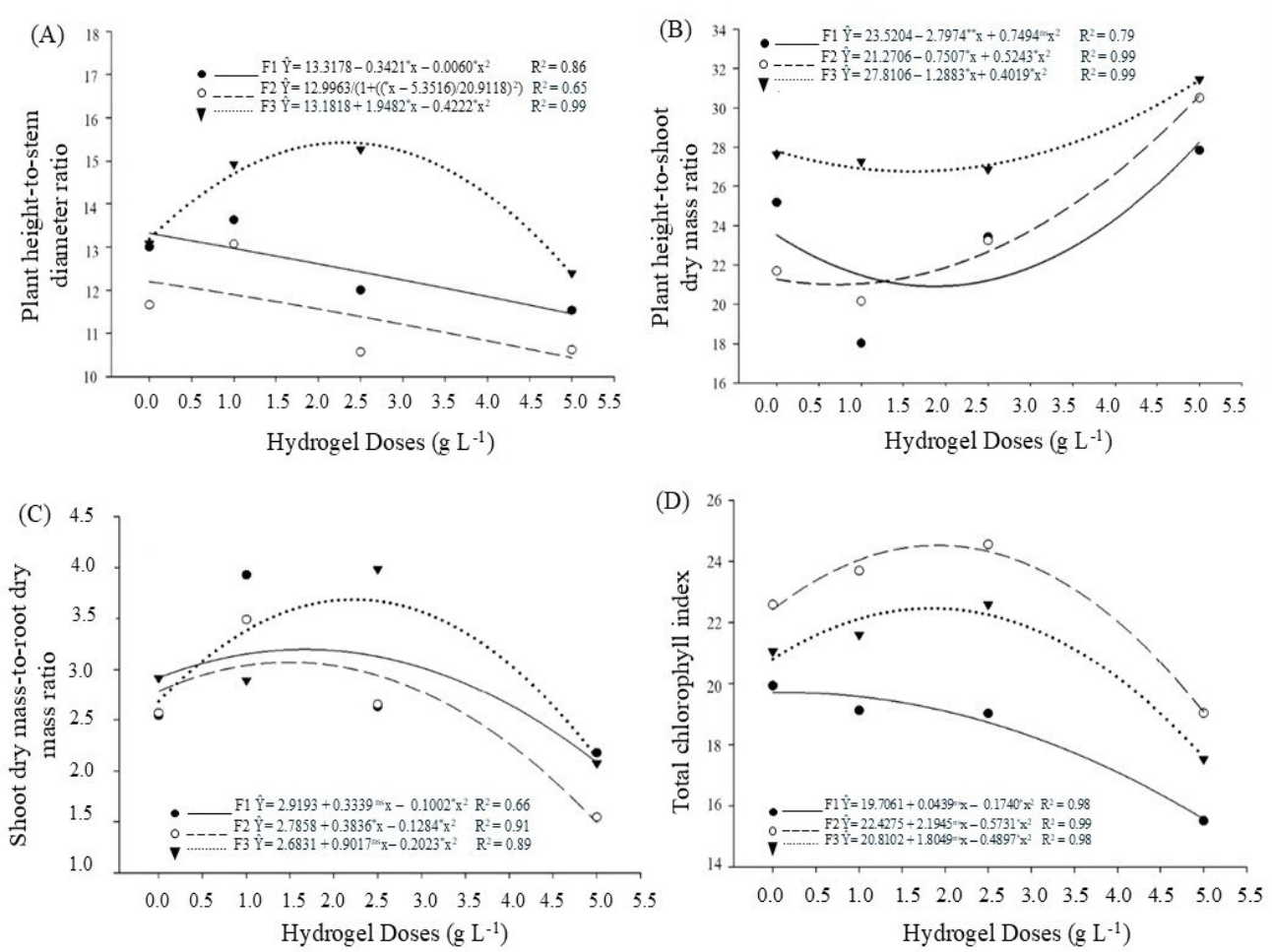
The use of 2.3 g L-1 of hydrogel increased the PH/SD ratio by 17% in F3 irrigated rootstocks. In contrast, PH/SD decreased with increasing hydrogel concentrations in F1 irrigated rootstocks and F2 irrigated rootstocks (Figure 3A). The PH/SD ratio reflects the balance during rootstock development, in addition to serving as a criterion for classifying high-quality rootstocks. Batista et al. (2022) reported that the range of 5.4 to 8.1 can be considered a standard for categorizing seedlings of desirable quality to be taken to the field. Therefore, the results obtained in this study indicate that the use of up to 2.3 g L-1 of hydrogel in F3 irrigated rootstocks improved their quality, making them suitable for field use.
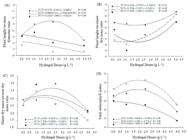
Plant height-to-stem diameter ratio (A), Plant height-to-shoot dry mass ratio (B), shoot dry mass-to-root dry mass ratio (C), and total chlorophyll index (D) in guava (Psidium guajava L.) rootstocks subjected to different superabsorbent polymer doses and irrigation frequencies. F1 = daily irrigation; F2 = irrigation on alternate days; F3 = irrigation every other day. ns, **, * = not significant and significant at p ≤ 0.01 and p ≤ 0.05, respectively.
In the absence of hydrogel, guava rootstocks exhibited a higher PH/SDM ratio when irrigated under F3 (27.8) compared with F1 (23.5) and F2 (21.3). In contrast, the addition of hydrogel impaired SDM accumulation, which consequently increased the PH/SDM ratio, most notably in rootstocks irrigated under F2 (44%), followed by those under F1 (20%) and F3 (13%) (Figure 3B).
Furthermore, the application of 1.6 g L-1 of hydrogel increased the SDM/RDM ratio by up to 15% in rootstocks irrigated under F1 and F2. In guava rootstocks subjected to F3 irrigation, the hydrogel increased this ratio by up to 37% when a higher polymer concentration (2.2 g L-1) was used (Figure 3C). These results indicate that guava rootstocks, under reduced irrigation frequency combined with hydrogel application, tend to prioritize root growth over shoot development. This response may be mediated by abscisic acid (ABA), a stress-signaling hormone that regulates plant growth and development under stress conditions (TAIZ et al., 2017). The increase in the SDM/RDM ratio with hydrogel under reduced irrigation frequency may be attributed to the polymer acting as a soil conditioner, thereby increasing the water‑holding capacity in the soil or substrate, mitigating the deleterious effects of stress on plants, favoring root growth, and consequently enhancing water and nutrient uptake (PINHEIRO et al., 2024).
Hydrogel application significantly reduced CI in rootstocks irrigated under F1. However, the polymer at a concentration of 1.9 g L-1 increased CI by 9.4% in rootstocks irrigated under F2 and by 8.0% in rootstocks irrigated under F3. Above this concentration, CI decreased significantly (Figure 3D). Thus, reduced irrigation frequency moderately stresses plants, reducing leaf expansion and consequently increasing pigment concentration per unit leaf area.
Severe water stress can reduce chlorophyll biosynthesis and accelerate chlorophyll degradation due to the production of reactive oxygen species and the accumulation of carbohydrates (SILVÉRIO et al., 2024). On the other hand, hydrogel at an optimal concentration (1.9 g L-1) mitigates these stress effects. However, CI decreases above this concentration, likely because the polymer saturates the substrate, lowering oxygen availability in the soil and making plants more susceptible to damage (ZHOU et al., 2021).
Hydrogel application reduced RL, but it did not affect RDM. Likewise, it did not influence NL. However, both growth variables decreased significantly in rootstocks irrigated under F3 (Table 3).
Root dry mass (RDM) and number of leaves (NL) in guava (Psidium guajava L.) rootstocks subjected to different irrigation frequencies.
RDM and NL showed no differences in rootstocks irrigated under F2 compared with those irrigated under F1. This result is relevant because reducing irrigation frequency lowers the costs associated with this practice. In addition, NL is an important indicator for determining the appropriate moment to transplant rootstocks to the field, as a greater number of leaves is associated with higher photosynthetic capacity, serving as an indicator of rootstock quality (MONTEIRO et al., 2019).
CONCLUSIONS
The dose of 1.0 g L-1 of superabsorbent polymer was the most efficient to produce guava (Psidium guajava L.) rootstocks. The incorporation of the superabsorbent polymer allowed irrigation of guava rootstocks at one‑day intervals. The application of the superabsorbent polymer resulted in reduced plant height, stem diameter, total chlorophyll index, and root length in guava rootstocks irrigated daily. Conversely, irrigation at alternate‑day and every‑other‑day intervals, combined with the superabsorbent polymer (1.2 g L-1), improved dry mass accumulation and enhanced the quality of field-grown rootstocks.
Data Availability:
The data that support the findings of this study can be made available, upon reasonable request, from the corresponding author.
REFERENCES
- ABDALLAH, A. M. The effect of hydrogel particle size on water retention properties and availability under water stress. International Soil and Water Conservation Research, 7: 275-285, 2019.
- ÁLVARES, C. A. et al. Köppen's climate classification map for Brazil. Meteorologische Zeitschrift, 22: 711-728, 2013.
- ANTAS, R. N. et al. Production of Mimosa caesalpiniifolia benth seedlings using a water-absorbing polymer and different water regimes. Revista Caatinga, 37: e12314, 2024.
- ARAÚJO, D. L. et al. Physiological aspects of yellow passion fruit with the use of hydrogel and mulching. Revista Caatinga, 35: 382-392, 2022.
- BARTLETT, M. S. Properties of sufficiency and statistical tests. Proceedings of the Royal Society of London. Series amathematical and physical sciences, 160: 268-282, 1937.
- BATISTA, A. R. et al. Parâmetros morfológicos e qualidade nutricional de mudas de Jacaranda cuspidifolia Mart. Em resposta a luminosidade e diferentes combinações de substratos. Revista Ibero-Americana de Ciências Ambientais, 13: 26-35, 2022.
- BEZERRA, D. L. et al. Physiological indices and growth of 'Paluma' guava under saline water irrigation and nitrogen fertigation. Revista Caatinga, 31: 808-816, 2018.
- CASTRO, J. M. C.; RIBEIRO, J. M. Pesquisa e desenvolvimento para a cultura da goiabeira: a contribuição da Embrapa Semiárido Petrolina, PE: Embrapa Semiárido, 2020. 82 p. (Documentos, 297).
- DIÓGENES, M. F. S. et al. Use of hydrogel in the irrigation management of white pitaya (Hylocereus undatus) seedlings: Biometrics and accumulation of organic and inorganic solutes. Semina: Ciências Agrárias, 43: 491-508, 2022.
- FERREIRA, D. F. Sisvar: a computer analysis system to fixed effects split plot type designs. Revista Brasileira de Biometria, 37: 529-535, 2019.
- GARCÍA-GÓMEZ, C. et al. Influence of Biochar-Reinforced Hydrogel Composites on Growth and Biochemical Parameters of Bean Plants and Soil Microbial Activities under Different Moisture Conditions. Agriculture, 14: 1405, 2024.
- GOMES, F. S.; ARANTES, A. M. Viabilidade técnica e econômica da produção de goiaba (Psidium guajava) no sudoeste do semiárido baiano. Revista Agrotecnologia, 13: 1-12, 2022.
- MENDES, J. P. P. et al. Crescimento e qualidade de mudas de baru em reposta a hidroretentor e água magnetizada. Scientia Plena, 16: 110201, 2020.
- MONTEIRO, J. L. L. et al. Use of substrates and hydrogel to produce desert rose seedlings. Ornamental Horticulture, 25: 336-344, 2019.
- NASCIMENTO, I. R. S. et al. Lâminas de irrigação e hidrogel nas taxas de crescimento e produção de tomateiro. Arquivos de Ciências Veterinárias e Zoologia da UNIPAR, 24: e2404n, 2021.
- NÓBREGA, E. P.; SARMENTO, M. I. A; RODRIGUES, M. L. M. Desenvolvimento inicial de mudas de goiabeira irrigadas com diferentes tipos de água. Revista de Agroecologia no Semiárido, 1: 1-9, 2017.
- PINHEIRO, J. A. A. et al. Utilização de doses de hidrogel e níveis de água no substrato na produção de mudas de mamoeiro. Contribuciones a Las Ciencias Sociales, 17: e7616-e7616, 2024.
- RODRIGUES-FILHO, R. A. et al. Morphology of 'Crioula' guava seedlings under irrigation with increasing salinity water and nitrogen/potassium fertilization. Brazilian Journal of Biology, 83: e275322, 2023.
- SANTOS, J. C. C. et al. Utilização de polímero hidroretentor e lâminas de irrigação para racionalização de recursos hídricos no cultivo do pimentão. Irriga, Botucatu, 27: 408-418, 2022.
- SILVA, F. C. Manual de análises químicas de solos, plantas e fertilizantes 2. ed. Brasília, DF: Embrapa Solos, 2009. 627 p.
- SILVÉRIO, J. M. et al. Does hydrogel help in the mitigation and recovery of Eugenia myrcianthes Nied. Under water stress?. Revista Caatinga, 37: e12000, 2024.
- TAIZ, L. et al. Fisiologia e desenvolvimento vegetal 6. ed. Porto Alegre, RS: ARTMED, 2017. 696 p.
- TOMADONI, B. et al. Macroporous alginate-based hydrogels to control soil substrate moisture: Effect on lettuce plants under drought stress. European Polymer Journal, 137: 109953, 2020.
- ZHOU, P. et al. Effects of interval flooding stress on physiological characteristics of apple leaves. Horticulturae, 7, 331, 2021.
Edited by
-
Editor in Chief:
Aurélio Paes Barros Júnior
-
Section Editor:
João Everthon da Silva Ribeiro