Hydrogen peroxide as an attenuator of salt stress on the morphophysiology of ornamental peppers
ABSTRACT
This study aimed to evaluate the effects of foliar application of hydrogen peroxide (H2O2) on physiological indices and growth of ornamental Etna pepper plants cultivated hydroponically under saline nutrient solutions. The experiment was conducted in a greenhouse in Pombal, Paraíba, Brazil, using a nutrient film technique (NFT) hydroponic system. Treatments were arranged in a split-plot design, with electrical conductivity levels of the nutrient solution (ECns: 2.1, 2.8, 3.5, 4.2, and 4.9 dS m-1) assigned to the main plots and five H2O2 concentrations (0, 8, 16, 24, and 32 µM) to the subplots. Each treatment was replicated six times, with two plants per experimental unit. Gas exchange, photosynthetic pigments, relative water content, electrolyte leakage, water saturation deficit, and growth variables were evaluated. Nutrient solution salinity from 2.1 dS m-1 negatively affected stomatal conductance, transpiration, chlorophyll b content, and plant height of ornamental pepper plants. In the absence of H2O2, nutrient solution salinity from 2.1 dS m-1 inhibited stomatal conductance, photosynthetic pigment contents, and plant growth. Hydrogen peroxide, when foliar applied alone at concentrations of up to 32 µM, enhances plant height and leaf number and, conversely, inhibits stem diameter in ornamental Etna pepper plants.
Keywords:
Capsicum frutescens L. Abiotic stress; Soilless cultivation.
RESUMO
O objetivo desta pesquisa foi avaliar efeitos da aplicação foliar de peróxido de hidrogênio (H2O2) nos índices fisiológicos e crescimento de plantas de pimenta Etna ornamental em cultivo hidropônico com soluções nutritivas salinizadas. O experimento foi desenvolvido em casa de vegetação em Pombal - PB, utilizando o sistema hidropônico do tipo fluxo laminar de nutrientes. Os tratamentos foram distribuídos em parcelas subdivididas, considerando-se os níveis de condutividade elétrica da solução nutritiva (CEsn: 2,1; 2,8; 3,5; 4.2 e 4.9 dS m-1) como parcelas e cinco concentrações de H2O2 (0, 8, 16, 24, e 32 μM) como subparcelas. Cada tratamento foi replicado seis vezes, com duas plantas por parcela. Foram avaliadas as variáveis de trocas gasosas, pigmentos fotossintéticos, conteúdo relativo de água, extravasamento de eletrólitos, déficit de saturação hídrica e crescimento. A salinidade da solução nutritiva a partir de 2,1 dS m-1 afetou negativamente a condutância estomática, a transpiração, os teores de clorofila b e o crescimento em altura de plantas da pimenta. Na ausência de H2O2, a salinidade da solução nutritiva a partir de 2,1 dS m-1 inibiu a condutância estomática, os teores de pigmentos fotossintéticos e o crescimento das plantas de pimenta Etna ornamental. A aplicação foliar de peróxido de hidrogênio, quando aplicado isoladamente em concentrações de até 32 µM, aumentou a altura e o número de folhas em plantas de pimenta Etna ornamental e, inibiu o diâmetro do caule.
Palavras-chave:
Capsicum frutescens L; Estresse abiótico; Cultivo sem solo.
INTRODUCTION
Belonging to the family Solanaceae, pepper (Capsicum frutescens L.) stands out for its economic importance in Brazilian agribusiness due to the wide diversity of products and by-products, multiple uses and forms of consumption (FILGUEIRA, 2013). Its fruits can be consumed fresh or processed and used in the food industry for the manufacture of seasonings and sauces, in addition to medicinal applications, and the plants are also employed as ornamental due to their striking aesthetic characteristics, expressed by the beauty of their flowers (GOMES et al., 2019).
The spatiotemporal variability of rainfall and the high evaporative demand in the semiarid region of northeastern Brazil contribute to the qualitative and quantitative scarcity of water resources, a reality in which crop growth is severely compromised (LIMA et al., 2020; MENDONÇA et al., 2022). The implications of salt stress are directly related to reduced water and nutrient availability, in addition to toxicity caused by Na+ and Cl-, which may induce nutritional imbalances and impair nutrient transport in plants, resulting in growth inhibition and reduced crop yield (RAMOS et al., 2022). Excess salts in irrigation water not only induce osmotic stress and ionic toxicity but also trigger secondary stress, such as oxidative stress, directly affecting the reduction in plant growth and development (LIMA et al., 2020).
However, a viable alternative for farmers who need to use water with high salt concentrations is hydroponic cultivation, as this system provides greater tolerance to the effects of salt stress. This occurs because the matric potential, responsible for water retention in the soil, is absent, thereby reducing the negative impacts of salinity (MENDONÇA et al., 2022; SÁ et al., 2024). In addition, hydroponic cultivation offers several advantages, such as lower water consumption compared to conventional cultivation systems, precise control of electrical conductivity, pH and nutrient concentrations in the nutrient solution, as well as improved greater water use efficiency. Another significant advantage is the possibility of continuous production throughout the year under greenhouse conditions, making it a highly advantageous strategy for the semiarid conditions of northeastern Brazil (BATISTA et al., 2021).
In light of this challenge, studies have sought strategies capable of alleviating the effects of salt stress on plants. One such alternative is the foliar application of hydrogen peroxide (H2O2), which plays a hormonal signaling role, regulated by its controlled production and scavenging. H2O2 acts in the regulation of fundamental biological processes, such as plant growth, increased Ca2+ concentration in cells and osmotic adjustment promoted by the synthesis of osmolytes, such as proline, which contributes to tolerance to salt stress (ANDRADE et al., 2022; ARAGÃO et al., 2023).
Hydrogen peroxide acts as an essential signaling molecule in plants under biotic and abiotic stresses, promoting the accumulation of soluble proteins and carbohydrates that may function as organic solutes, enabling osmotic adjustment in plants under salt stress, thereby allowing greater water uptake and maintenance of active metabolism (DANTAS et al., 2021). In recent years, studies have shown that the foliar application of H2O2 can mitigate the deleterious effects caused by salt stress in several crops, including sweet pepper (ARAGÃO et al., 2023), cherry tomato (GUEDES et al., 2024) and okra (MENDONÇA et al., 2022).
Therefore, this study aimed to evaluate the effect of foliar application of hydrogen peroxide on physiological indices and growth of ornamental pepper cultivated in a hydroponic system with saline nutrient solutions.
MATERIALS AND METHODS
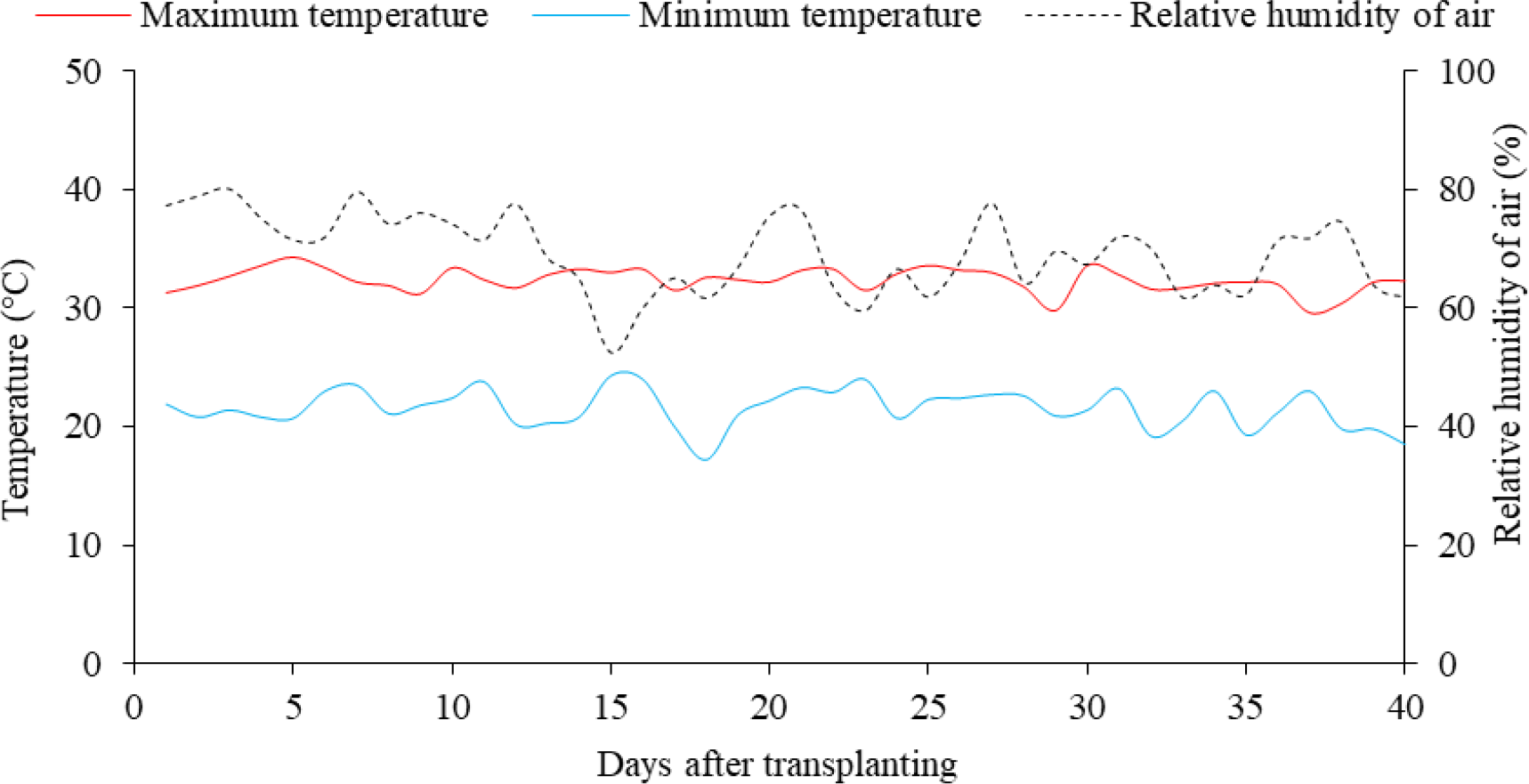
The experiment was conducted from May 10 to June 20, 2024 in a greenhouse at the Center for Science and Agrifood Technology (CCTA) of the Federal University of Campina Grande (UFCG), located in Pombal, Paraíba, Brazil. The experimental area is situated at the geographic coordinates 6°46′13″ S and 37°48′06″ W, at an altitude of 193 m. The regional climate is classified as hot and dry semiarid (BSh), according to the Köppen classification adapted for Brazil (ALVARES et al., 2013) and is characterized by a high annual evaporation rate of approximately 2000 mm and an average annual rainfall of about 750 mm. The meteorological data collected during the experiment are shown in Figure 1.
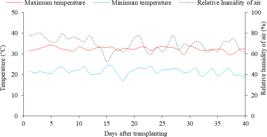
Climatic data of the greenhouse internal environment collected during the period from May 10 to June 20, 2024.
The experiment was conducted in a completely randomized design, arranged in a split-plot scheme, in which five levels of electrical conductivity of the nutrient solution (ECns: 2.1, 2.8, 3.5, 4.2, and 4.9 dS m-1) were assigned to the main plots, while hydrogen peroxide concentrations (0, 8, 16, 24, and 32 μM) constituted the subplots, with six replications and two plants per experimental unit. The definition of H2O2 concentrations was based on the study conducted by Dantas et al. (2022), whereas the salinity levels of the nutrient solution were established according to Guedes et al. (2024).
Seeds of ornamental pepper Etna from ISLA® were used. This variety is recommended for ornamental cultivation and produces striking clusters with green fruits at the immature stage and red fruits at maturity. Despite its ornamental purpose, the fruits are edible, with pungency levels ranging from 5,000 to 30,000 SHU. It is a compact plant with resistance to PVY* and TMV* viruses. In addition, the crop has a cycle of approximately 100 days, exhibits determinate growth, shows an excellent leaf structure and is highly productive (ISLA, 2024).
Seedlings were obtained from seeds, which were sown in 80 mL polyethylene cups containing sand and arranged in trays. The sand was autoclaved prior to sowing. From the germination stage until the emergence of the first true leaf (on average, eight days after sowing), a half-strength nutrient solution (50% of the Hoagland and Arnon (1950) recommendation) was used. After this stage, the sand was removed and the seedlings were transferred to hydroponic profiles, where they began to receive the nutrient solution at full strength, ensuring an adequate nutrient supply for plant development.
The hydroponic system used was the Nutrient Film Technique (NFT), constructed with polyvinyl chloride (PVC) pipes of 100 mm in diameter and six meters in length, spaced 0.40 m apart. Within the hydroponic profiles, plant spacing was 0.50 m, while the distance between treatments (subsystems) was 1.0 m. The planting cells had a diameter of 54.17 mm. To ensure adequate nutrient solution flow, the hydroponic profiles were supported on 0.60 m-high stands, with a slope of 4%.
At the end of each subsystem, a 150 L polyethylene tank was installed to collect the excess nutrient solution and recirculate it within the system, promoting nutrient reuse. The nutrient solution was injected into the hydroponic profiles at the upper end of each channel using a 35 W pump at a flow rate of 3 L min-1. A timer was used to schedule the circulation of the nutrient solution in the system, operating under an intermittent flow of 15 min during the daytime period (06:00 to 18:00 hours) and 30 min during the nighttime period (18:00 to 06:00 hours), ensuring adequate water and nutrient availability throughout the cultivation cycle.
In this study, the nutrient solution recommended by Hoagland and Arnon (1950) was used, containing N, P, K, Ca, Mg, S, B, Mn, Zn, Cu, Mo, and Fe at concentrations of 210, 31, 234, 200, 48, 64, 0.5, 0.5, 0.05, 0.02, 0.01, and 5 mg L-1, respectively. The fertilizers used as macronutrient sources for the preparation of the solution were monobasic potassium phosphate (KH2PO4), potassium nitrate (KNO3), calcium nitrate (Ca(NO3)2·4H2O), and magnesium sulfate (MgSO4·7H2O). As micronutrient sources, boric acid (H3BO3), manganese sulfate (MnSO4·4H2O), zinc sulfate (ZnSO4·7H2O), copper sulfate (CuSO4·5H2O), ammonium molybdate ((NH4)6Mo7O24.4H2O), ferrous sulfate (FeSO4), and Na-EDTA were used.
The saline solutions used in the cultivation were prepared by adding sodium chloride (NaCl), calcium chloride (CaCl2·2H2O), and magnesium chloride (MgCl2·6H2O) to the nutrient solution, previously prepared in water of the municipal supply system of Pombal, Paraíba, Brazil. The incorporation of salts followed an equivalent proportion of 7:2:1 (Na, Ca, and Mg), reflecting the typical composition of irrigation waters in the semiarid region of northeastern Brazil (SILVA JÚNIOR; GHEYI; MEDEIROS, 1999). The saline nutrient solutions were prepared considering the relationship between water electrical conductivity (ECw) and salt concentration (RICHARDS, 1954), as described in Equation (1).
Where: C - Sum of cations (mmolc L-1); and ECw - Desired electrical conductivity after subtracting the ECns of the solution prepared with water from the municipal supply system (dS m-1).
After preparation, the nutrient solutions were calibrated for ECns. Complete replacement of the nutrient solution was performed every 10 days; however, electrical conductivity and pH were monitored daily and, whenever necessary, adjustments were made by adding supply water (ECw = 0.3 dS m-1) or 100% nutrient solution, always maintaining ECns according to the established treatments. The pH of the solution was maintained between 5.5 and 6.5 by the addition of 0.1 M potassium hydroxide (KOH) or hydrochloric acid (HCl), ensuring adequate conditions for nutrient uptake. In addition, the plants were cultivated under a vertical staking system, providing adequate support for plant growth and development.
Hydrogen peroxide (H2O2) concentrations were obtained by diluting H2O2 in deionized water at each application event. Foliar applications of H2O2 were performed by spraying between 17:00 and 18:00 hours, prior to the imposition of the different ECns levels (10 DAT) and subsequently at 12-day intervals. At each application event, the adjuvant Wil Fix® was used at a concentration of 0.5 mL L-1 to reduce surface tension on the leaf surface. The average spray volume applied per plant was 40 mL. Applications were carried out manually using a sprayer to achieve complete wetting of the leaves (abaxial and adaxial surfaces). During spraying, a cardboard structure was used to prevent H2O2 drift onto neighboring plants.
At 40 DAT, gas exchange variables, photosynthetic pigments, relative water content, water saturation deficit, electrolyte leakage and growth were evaluated. Leaf gas exchange was determined by stomatal conductance - gs (mol H2O m-2 s-1), transpiration - E (mmol H2O m-2 s-1), CO2 assimilation rate - A (µmol CO2 m-2 s-1), internal CO2 concentration - Ci (µmol mol-1), instantaneous water use efficiency - WUEi (A/E) [(µmol CO2 m-2 s-1) (mmol H2O m-2 s-1)-1] and instantaneous carboxylation efficiency - CEi (A/Ci) [(µmol CO2 m-2 s-1)(µmol mol-1)-1]. Measurements were performed using a portable infrared gas analyzer (IRGA; LCPro+, ADC BioScientific Ltd., UK) on the third fully expanded leaf counted from the apical bud. Determinations were carried out between 07:00 and 10:00 hours under natural temperature and CO2 concentration conditions, using an artificial radiation source of 1200 µmol m-2 s-1.
The contents of photosynthetic pigments (chlorophyll a, chlorophyll b, chlorophyll total, and carotenoids) were determined according to the methodology of Porra, Thompson and Kriedemann (1989), using extracts obtained from disc samples of the third fully mature leaf counted from the apex. For each sample, 5.0 mL of dimethyl sulfoxide was added and the samples were kept in the dark for 48 hours. Subsequently, the extracts were analyzed using a spectrophotometer at absorbance wavelengths of 480, 649, and 665 nm. Based on these extracts, the contents of chlorophyll a, chlorophyll b, chlorophyll total, and carotenoids were calculated according to Equations (2), (3), (4), and (5), respectively, with results expressed as mg g-1 FM.
Relative water content (RWC) was determined using eight leaf discs collected from leaves located in the upper third of the plant, with samples taken from each plant. Immediately after collection, the leaf discs were weighed to avoid water loss, obtaining the fresh mass (FM). Subsequently, the samples were placed in plastic bags, immersed in distilled water and maintained for 24 hours. After this period, excess water was removed using paper towels and the turgid mass (TM) of the samples was obtained. The samples were then oven-dried (temperature ≈ 65 °C ± 3 °C) until reaching constant weight to determine the dry mass (DM). Relative water content was calculated according to the methodology proposed by Weatherley (1950), using Equation (6):
where: RWC - relative water content (%); FM - leaf fresh mass (g); TM - turgid mass (g); and DM - dry mass (g).
The water saturation deficit (WSD) was determined according to the methodology described by Taiz and Zeiger (2013), using Equation (7):
where: WSD - water saturation deficit (%); FM - leaf fresh mass (g); TM - turgid mass (g); and DM - dry mass (g).
Electrolyte leakage from the leaf blade was determined according to Scotti-Campos et al. (2013) by collecting four leaf discs with an area of 113 mm2, which were placed in beakers containing 50 mL of bidistilled water, sealed hermetically with aluminum foil and maintained at 25 °C for 24 hours. After this time, the initial electrical conductivity (EC1) was measured. Subsequently, the beakers were transferred to a forced-air oven and subjected to a temperature of 80 °C for 120 min. After this period, the final electrical conductivity (EC2) was measured, allowing the calculation of the percentage of electrolyte leakage according to Equation (8):
where: EL - electrolyte leakage (%); EC1 - initial electrical conductivity (dS m-1); and EC2 - final electrical conductivity (dS m-1).
Growth was evaluated by plant height (PH), measured as the distance from the collar to the insertion of the apical meristem; stem diameter (SD), measured at 5 cm above the plant collar using a digital caliper; and number of leaves (NL), obtained by counting leaves with a minimum length of 5 cm.
The obtained data were subjected to a normality test (Shapiro - Wilk) and subsequently analyzed by analysis of variance (ANOVA) using the F test at a probability level of p ≤ 0.05. When significant effects were detected, polynomial regression analysis was performed for the salinity levels of nutrient solution and H2O2 concentrations using the statistical software SISVAR - ESAL (FERREIRA, 2019). SigmaPlot® software was used to generate response surface curves in cases where a significant interaction between factors (ECns × H2O2) was observed.
RESULTS AND DISCUSSION
A significant interaction effect between saline nutrient solution and hydrogen peroxide (ECns × H2O2) was observed on the CO2 assimilation rate (A) of ornamental Etna pepper plants (Table 1). ECns significantly affected stomatal conductance (gs) and transpiration (E). Except for the CO2 assimilation rate, hydrogen peroxide (H2O2) concentrations did not significantly influence any of the measured variables in ornamental Etna pepper plants.
Summary of the analysis of variance for stomatal conductance (gs), transpiration (E), CO2 assimilation rate (A), internal CO2 concentration (Ci), instantaneous carboxylation efficiency (CEi), and intrinsic water use efficiency (WUEi) of ornamental Etna pepper plants cultivated with saline nutrient solutions (ECns) and hydrogen peroxide (H2O2) application at 40 days after transplanting.
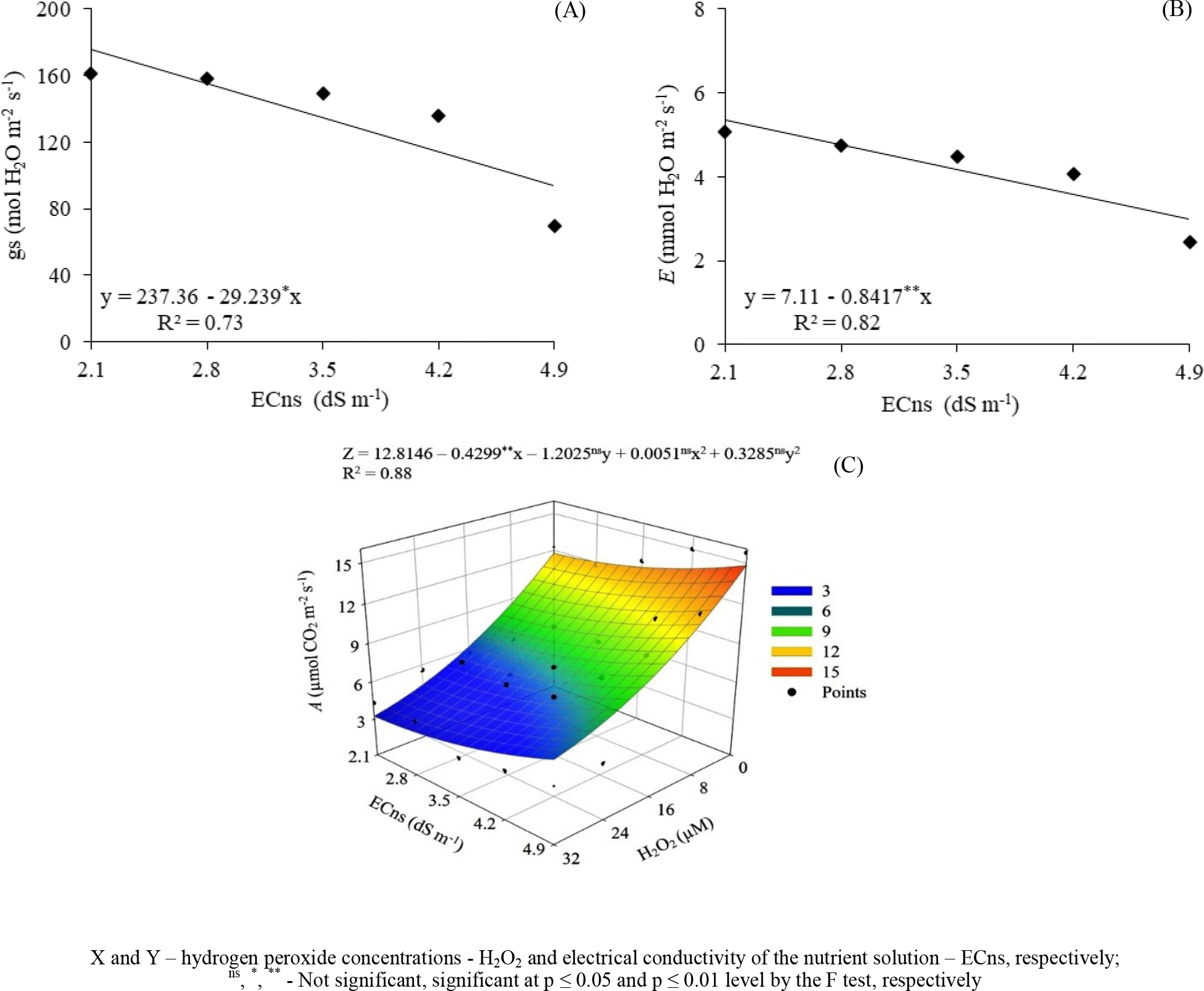
Stomatal conductance (gs) decreased linearly, with reductions of 12.31% per unit increase in ECns. When comparing plants cultivated under a nutrient solution with ECns of 4.9 dS m-1 to those receiving an ECns of 2.1 dS m-1, a decline of 46.52% was observed (Figure 2A). Transpiration of ornamental Etna pepper plants also decreased linearly with increasing ECns, with reductions of 11.84% per unit increase in ECns (Figure 2B). When comparing transpiration in plants subjected to an ECns of 4.9 dS m-1 with those receiving the lowest ECns (2.1 dS m-1), a reduction of 44.11% was observed. Plants exposed to a nutrient solution salinity of 4.9 dS m-1 exhibited a marked reduction in gas exchange, reinforcing the deleterious effect of salt stress on ornamental Etna pepper. Stomatal limitation induced by salt stress affected gs, leading to reduced transpiration. This response occurs because, as a defense strategy against excessive water loss, plants close their stomata, thereby decreasing transpiration (CAPITULINO et al., 2023).
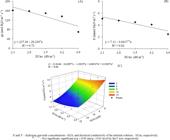
Stomatal conductance - gs (A) and transpiration - E (B) of ornamental Etna pepper plants as a function of electrical conductivity of the nutrient solution (ECns) and CO2 assimilation rate - A (C) as a function of the interaction between ECns levels and hydrogen peroxide (H2O2) concentrations in a hydroponic system at 40 days after transplanting.
In addition, this stomatal regulatory mechanism reduces transpiration flow in order to maintain plant water potential and prevent dehydration of guard cells, which limits CO2 influx into mesophyll cells, consequently reducing transpiration. Stomatal closure is a strategy to minimize water loss to the environment and maintain cellular water status. Reductions in gs and E in plants grown under saline conditions have also been reported in other crops, such as cherry tomato (GUEDES et al., 2024) cultivated with nutrient solutions with electrical conductivity ranging from 2.1 to 4.2 dS m-1 and okra (MENDONÇA et al., 2022) subjected to different ECns levels (2.1 to 9.0 dS m-1) in a hydroponic system.
Regarding the CO2 assimilation rate (Figure 2C), plants cultivated under an ECns of 4.9 dS m-1 exhibited the highest estimated value (14.81 µmol CO2 m-2 s-1) when treated with H2O2 at a concentration of 0 µM. In contrast, the lowest A value (4.26 µmol CO₂ m-2 s-1) was observed in plants that received H2O2 application at the highest concentration (32 µM) and were cultivated under a nutrient solution with an ECns of 4.9 dS m-1. The reduction in internal CO2 concentration can be attributed to partial stomatal closure, which limits CO2 diffusion into the substomatal chamber, as well as to decreased activity of ribulose-1,5-bisphosphate carboxylase/oxygenase (RuBisCO), making the photosynthetic apparatus more sensitive to energy loss and negative regulation of photosynthesis (OLIVEIRA et al., 2022).
Foliar spraying of H2O2 at a concentration of 32 µM mitigated the deleterious effects of salinity on the CO2 assimilation rate (Figure 2C). The beneficial effects of hydrogen peroxide may be related to its role as a signaling molecule that regulates several metabolic pathways, including those involved in responses to salt stress (SILVA et al., 2021). It is important to emphasize that H2O2 is a reactive oxygen species (ROS) and its generation is part of the natural metabolism of plants (ARAGÃO et al., 2023).
A significant interaction effect between saline nutrient solution and hydrogen peroxide concentrations (ECns × H2O2) was observed for chlorophyll a (Chl a) and total chlorophyll (Chl total) contents in ornamental Etna pepper plants (Table 2). Salinity levels of the nutrient solution (ECns) had a significant effect on chlorophyll b (Chl b). Hydrogen peroxide (H2O2) concentrations significantly affected carotenoid (Car) contents in ornamental Etna pepper plants at 40 days after transplanting.
Summary of the analysis of variance for chlorophyll a (Chl a), chlorophyll b (Chl b), total chlorophyll (Chl total), carotenoids (Car), relative water content (RWC), electrolyte leakage (EL), and water saturation deficit (WSD) of ornamental Etna pepper plants grown under saline nutrient solutions (ECns) and hydrogen peroxide (H2O2) concentrations in a hydroponic system at 40 days after transplanting.
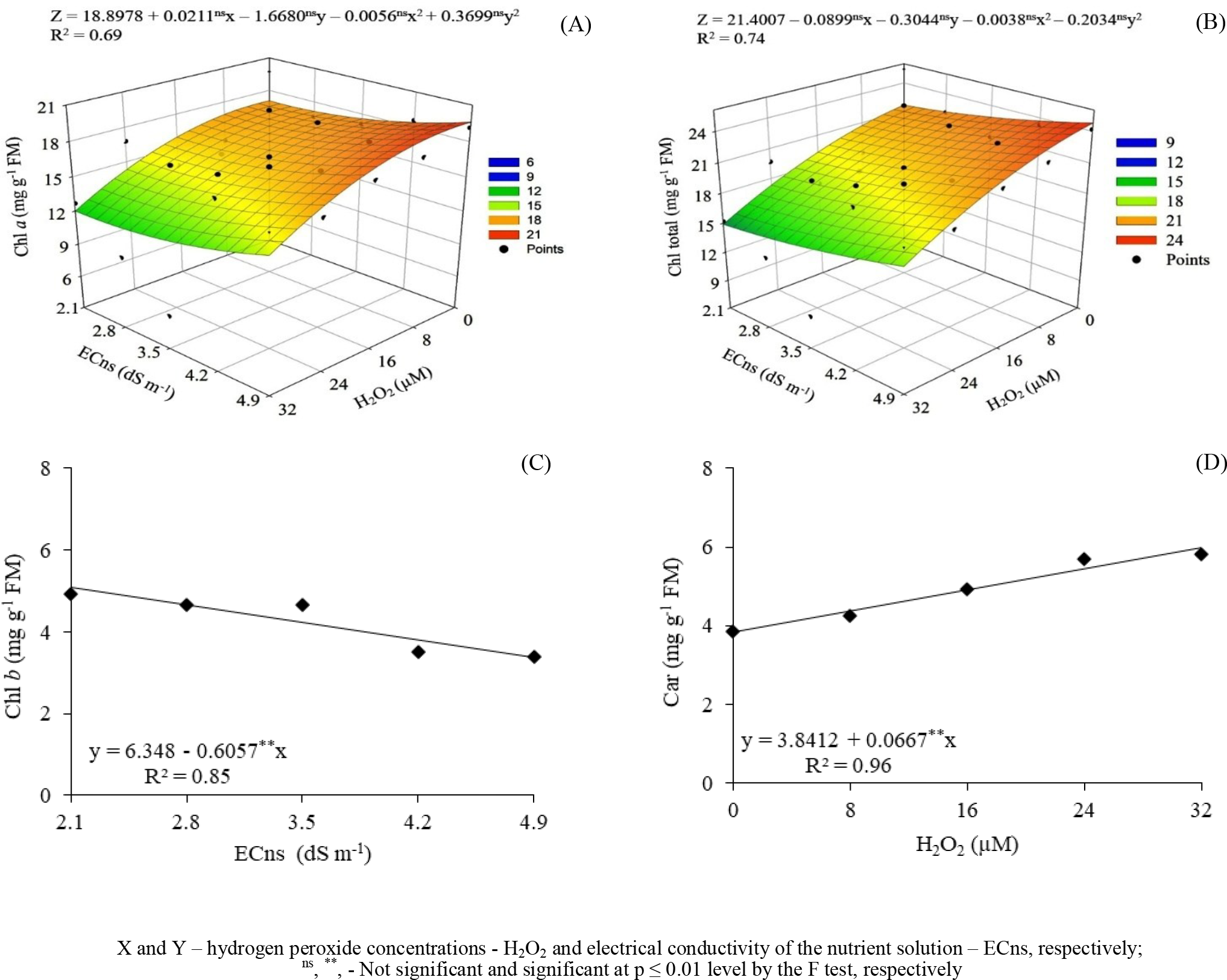
For chlorophyll a content (Figure 3A), plants cultivated under a saline nutrient solution with an ECns of 2.1 dS m-1 exhibited the highest estimated value (17.02 mg g-1 FM) when no H2O2 application was performed. In contrast, the lowest Chl a content (12.08 mg g-1 FM) was observed under an H2O2 concentration of 32 µM combined with an ECns of 2.8 dS m-1. According to Nóbrega et al. (2020), excessive salt accumulation in plant tissues can impair chlorophyll a synthesis, as its degradation is stimulated by the activation of the enzyme chlorophyllase, which reduces photosynthesis and the production of pigment-protein complexes.
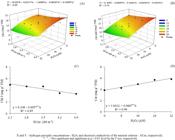
Chlorophyll a - Chl a (A) and total chlorophyll - Chl total (B) contents of ornamental Etna pepper plants grown in a hydroponic system as a function of the interaction between saline nutrient solution (ECns) and hydrogen peroxide (H2O2) concentrations and chlorophyll b - Chl b (C) as a function of ECns levels, and carotenoid - Car (D) contents as a function of H2O2 concentrations, at 40 days after transplanting.
For total chlorophyll content (Figure 3B), plants cultivated under an ECns of 2.1 dS m-1 exhibited the highest estimated Chl total value (21.5 mg g-1 FM) when ornamental Etna pepper plants were not subjected to an H2O2 concentration. In contrast, the lowest Chl total contents (8.3 mg g-1 FM) were observed in plants exposed to an H2O2 concentration of 32 µM combined with an ECns of 4.9 dS m-1. The reduction in total chlorophyll synthesis may be associated with decreased uptake of ions such as Mg2+ and Fe2+, which play a fundamental role in chlorophyll formation and whose absorption is limited due to competition with Na+ and Cl- (SOARES et al., 2021). In addition, excessive salt presence may alter organelle structure, pigment synthesis, and the activity of enzymes involved in the photosynthetic process (TAÏBI et al., 2016).
Increasing levels of nutrient solution electrical conductivity reduced chlorophyll b contents (Figure 3C) in ornamental Etna pepper plants, with a decrease of 9.54% per unit increase in ECns. When comparing the chlorophyll b contents of plants subjected to an ECns of 4.9 dS m-1 with those of plants exposed to the lowest salinity level of the nutrient solution (2.1 dS m-1), a reduction of 33.41% was observed. The decrease in chlorophyll b content has been considered a typical symptom of oxidative stress and may result from inhibition of its synthesis or its degradation by the enzyme chlorophyllase (SOARES et al., 2021).
In addition, this reduction may occur slowly or rapidly, indicating the activation of a photoprotective mechanism that reduces light absorbance, thereby decreasing chlorophyll contents (TAÏBI et al., 2016). In a study with okra, Mendonça et al. (2022) observed that increasing salinity levels of the nutrient solution led to reductions in chlorophyll b contents, with the lowest value (20.57 mg g-1 FM) recorded in plants cultivated under an ECns of 9.0 dS m-1.
Hydrogen peroxide promoted a linear increase in carotenoid contents (Figure 3D), with increments of 13.89% per 8 µM increase, representing a 55.56% increase in plants cultivated under 32 µM compared with those that did not receive hydrogen peroxide application. This result suggests that H2O2 acted as an inducer of carotenoid synthesis in ornamental Etna pepper plants, demonstrating a mechanism of photoinhibition prevention under salt stress by improving plant acclimation and reducing oxidative stress (ANDRADE et al., 2022).
Salinity levels of the nutrient solution significantly affected plant height (PH) of ornamental Etna pepper. The interaction between factors (ECns × H2O2) had a significant influence on stem diameter (SD) of ornamental Etna pepper plants. On the other hand, hydrogen peroxide concentrations significantly affected plant height (PH) and number of leaves (NL) at 40 days after transplanting (Table 3).
Summary of the analysis of variance for plant height (PH), stem diameter (SD), and number of leaves (NL) of ornamental Etna pepper plants grown under saline nutrient solutions (ECns) and hydrogen peroxide (H2O2) concentrations in a hydroponic system at 40 days after transplanting.
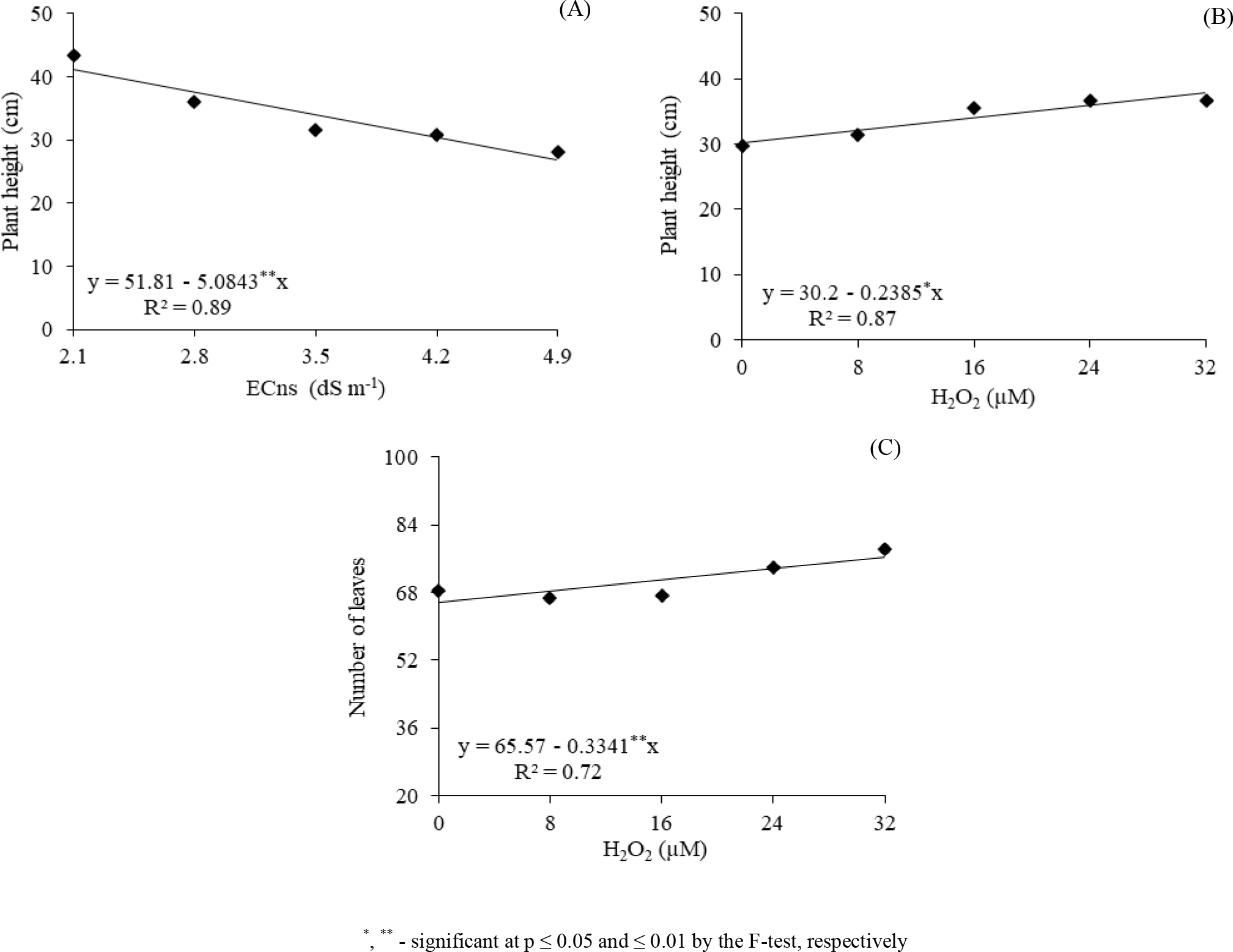
Plant height of ornamental Etna pepper decreased linearly with increasing electrical conductivity of the nutrient solution (Figure 4A), with reductions of 9.81% per unit increase in ECns. In relative terms, when comparing plants grown under an ECns of 4.9 dS m-1 with those subjected to the lowest salinity level (2.1 dS m-1), a reduction of 34.96% in plant height was observed. Plants subjected to salt stress may experience reduced water uptake, which impairs their development due to osmotic and ionic effects that affect photosynthetic rate and plant metabolism, ultimately resulting in reduced growth (LIMA et al., 2020). Modesto et al. (2019), when evaluating the effects of nutrient solution salinity (ranging from 2.08 to 18.61 dS m-1) on okra cultivated in a hydroponic system, found that increasing ECns levels above 2.08 dS m-1 significantly affected the growth of okra plants cv. Speedy at 101 days after germination.
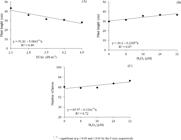
Plant height (PH) of ornamental Etna pepper plants as a function of saline levels of the nutrient solution (ECns) (A) and plant height (B) and number of leaves (NL) (C) as a function of H2O2 concentrations, at 40 days after transplanting.
Regarding hydrogen peroxide application, a linear increase in plant height was observed (Figure 4B), with a 23.08% increase when plants treated with 32 µM H2O2 were compared with those that did not receive H2O2. Thus, it is evident that the H2O2 concentration of 32 µM promoted more pronounced growth of ornamental Etna pepper plants under saline water conditions, likely because H2O2 is involved in enzymatic defense mechanisms, reducing osmotic and ionic effects, allowing greater water and nutrient uptake by plants and decreasing the accumulation of reactive oxygen species, thereby preventing oxidative stress (CAPITULINO et al., 2023).
The number of leaves increased with increasing H2O2 concentrations (Figure 4C), with plants treated with 32 µM showing a 14.37% increase compared with plants that did not receive hydrogen peroxide application. This increase in leaf number indicates that H2O2 application alleviated the effects of salt stress, possibly due to its signaling role in activating enzymes that regulate the plant defense system, thereby increasing tolerance to salt stress (ARAGÃO et al., 2023). Several studies have demonstrated the benefits of exogenous H2O2 application on plant growth under salt stress, such as in cherry tomato (GUEDES et al., 2024), soursop (CAPITULINO et al., 2023), and sweet pepper (ARAGÃO et al., 2023).
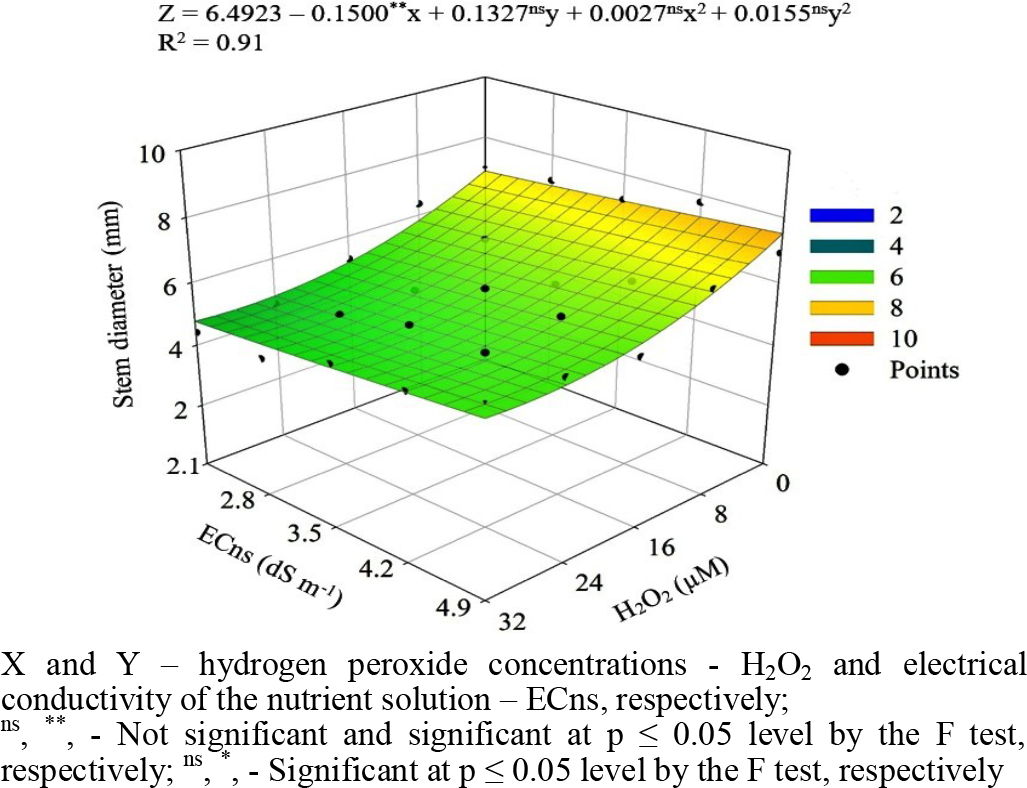
Stem diameter of ornamental Etna pepper plants decreased linearly with increasing salinity levels of the nutrient solution (Figure 5). Plants cultivated under an ECns of 4.9 dS m-1 exhibited the highest estimated value (7.51 mm) when no H2O2 application was performed. In contrast, the lowest stem diameter value (4.80 mm) was observed in plants subjected to an H2O2 concentration of 32 µM combined with an ECns of 2.1 dS m-1. The reduction in stem diameter may be attributed to increased synthesis of reactive oxygen species, which cause several biochemical disturbances and physiological alterations, such as reduced stomatal opening, thereby imposing limitations on plant growth (DANTAS et al., 2021).

Stem diameter of ornamental Etna pepper plants as a function of the interaction between electrical conductivity of nutrient solution (ECns) and hydrogen peroxide (H2O2) concentrations at 40 days after transplanting.
CONCLUSIONS
Nutrient solution salinity from 2.1 dS m-1 negatively affects stomatal conductance, transpiration, chlorophyll b content, and plant height of ornamental Etna pepper plants. Nutrient solution salinity from 2.1 dS m-1, in the absence of H2O2 application, inhibits stomatal conductance, photosynthetic pigment contents, and overall growth of ornamental Etna pepper plants. Hydrogen peroxide, when foliar applied at concentrations of up to 32 µM, enhances plant height and leaf number and, conversely, inhibits stem diameter in ornamental Etna pepper plants.
ACKNOWLEDGMENTS
To the INCT in Sustainable Agriculture in the Tropical Semi-Arid Region -INCTAgriS (CNPq/Funcap/Capes), processes 406570/2022-1 (CNPq) and INCT Process -35960-62747.65.95/51 (Funcap).
Data Availability:
The data that support the findings of this study can be made available, upon reasonable request, from the corresponding author.
REFERENCES
- ALVARES, C. A. et al. Köppen climate classification map for Brazil. Meteorologische Zeitschrift, 22: 711-728, 2013.
- ANDRADE, E. M. G. et al. Hydrogen peroxide as attenuator of salt stress effects on the physiology and biomass of yellow passion fruit. Revista Brasileira de Engenharia Agrícola e Ambiental, 26: 571-578, 2022.
- ARAGÃO, J. et al. Hydrogen peroxide in the mitigation of salt stress in bell pepper. Semina: Ciências Agrárias, 44: 217-238, 2023.
- BATISTA, M. C. et al. Fisiologia e produção de cultivares de tomate cereja em sistema hidropônico com água salobra. Revista Brasileira de Engenharia Agrícola e Ambiental, 25: 219-227, 2021.
- CAPITULINO, J. D. et al. Influence of foliar application of hydrogen peroxide on gas exchange, photochemical efficiency and growth of soursop under salt stress. Plants, 12: e599, 2023.
- DANTAS, M. V. et al. Gas exchange and hydroponic production of zucchini under salt stress and H2O2 application. Revista Caatinga, 35: 436-449, 2022.
- DANTAS, M. V. et al. Summer squash morphophysiology under salt stress and exogenous application of H2O2 in hydroponic cultivation. Comunicata Scientiae, 12: 3464-3479, 2021.
- FERREIRA, D. F. SISVAR: A computer analysis system to fixed effects split plot type designs. Revista Brasileira de Biometria, 37: 529-535, 2019.
- FILGUEIRA, F. A. R. Novo manual de olericultura: agrotecnologia moderna na produção e comercialização de hortaliças 3. ed. rev. e ampl. Viçosa, MG: Editora UFV, 2013. 421 p.
- GOMES, G. P. et al. Combinations of distance measures and clustering algorithms in pepper germplasm characterization. Horticultura Brasileira, 37: 172-179, 2019.
- GUEDES, M. A. et al. H2O2 as attenuator of salt stress on the physiology and growth of hydroponic cherry tomato. Revista Caatinga, 37: e12002, 2024.
- HOAGLAND, D. R.; ARNON, D. I. The water-culture method for growing plants without soil. 2. ed. Circular. Berkeley: California Agricultural Experiment Station, 1950. n. 347, 32 p.
-
ISLA. Pimenta (Etna Ornamental) IS 964 Available at: https://www.isla.com.br/pimenta-Etna-ornamental-is-964-env-linha-super-und-964-61 Access on: Sep. 26, 2024.
» https://www.isla.com.br/pimenta-Etna-ornamental-is-964-env-linha-super-und-964-61 - LIMA, G. S. et al. Saline water irrigation strategies and potassium fertilization on physiology and fruit production of yellow passion fruit. Revista Brasileira de Engenharia Agrícola e Ambiental, 26: 180-189, 2020.
- MENDONÇA, A. J. T. et al. Salicylic acid modulates okra tolerance to salt stress in hydroponic system. Agriculture, 12: e1687, 2022.
- MODESTO, F. J. N. et al. Crescimento, produção e consumo hídrico do quiabeiro submetido a salinidade em condições hidropônicas. Irriga, 24: 86-97, 2019.
- NÓBREGA, J. S. et al. Emergência e crescimento inicial de melancia submetida a salinidade e doses de ácido salicílico. Desafios-Revista Interdisciplinar da Universidade Federal do Tocantins, 7: 162-171, 2020.
- OLIVEIRA, F. T. et al. Respostas de porta-enxertos de goiabeira sob diferentes fontes e proporções de materiais orgânicos. Comunicata Scientiae, 6: 17-25, 2022.
- PORRA, R. J.; THOMPSON, W. A.; KRIEDEMANN, P. E. Determination of accurate extinction coefficients and simultaneous-equations for assaying chlorophyll-a and chlorophyll-b extracted with 4 different solvents - verification of the concentration of chlorophyll standards by atomic-absorption spectroscopy. Biochimica et Biophysica Acta (BBA): Bioenergetics, 975: 384-394, 1989.
- RAMOS, J. G. et al. Hydrogen peroxide as salt stress attenuator in sour passion fruit. Revista Caatinga, 35: 412-422, 2022.
- RICHARDS, L. A. Diagnosis and improvement of saline and alkali soils 1. ed. Washington: U.S. Department of Agriculture, 1954. 160 p. (Agriculture Handbook, 60).
- SÁ, V. K. N. O. et al. Physiological indices and growth of hydroponic cucumber under saline nutrient solutions and salicylic acid. Revista Caatinga, 37: e12148, 2024.
- SCOTTI-CAMPOS, P. et al. Physiological responses and membrane integrity in three Vigna genotypes with contrasting drought tolerance. Emirates Journal of Food and Agriculture, 25: 1002-1013, 2013.
- SILVA, A. A. R. et al. Hydrogen peroxide reduces the effect of salt stress on growth and postharvest quality of hydroponic mini watermelon. Water, Air, & Soil Pollution, 233: e198, 2021.
- SILVA JÚNIOR, L. G. A.; GHEYI, H. R.; MEDEIROS, J. F. Composição química de água do cristalino do Nordeste Brasileiro. Revista Brasileira de Engenharia Agrícola e Ambiental, 3: 11-17,1999.
- SOARES, M. D. M. et al. Physiology and yield of ‘Gaúcho’ melon under brackish water and salicylic acid in hydroponic cultivation. Arid Land Research and Management, 38: 1-20, 2021.
- TAÏBI, K. et al. Effect of salt stress on growth, chlorophyll content, lipid peroxidation and antioxidant defense systems in Phaseolus vulgaris L. South African Journal of Botany, 105: 306-312, 2016.
- TAIZ, L.; ZEIGER, E. Fisiologia vegetal 5. ed. Porto Alegre, RS: ArtMed, 2013. 954 p.
- WEATHERLEY, P. E. Studies in the water relations of the cotton plant. I. The field measurement of water deficits in leaves. New Phytologist, 49: 81-97, 1950.
Edited by
-
Editor in Chief:
Aurélio Paes Barros Júnior
-
Section Editor:
João Everthon da Silva Ribeiro