Morphophysiology of early dwarf cashew under salt stress and nitrogen and potassium fertilization
ABSTRACT
In the Brazilian semi-arid region, the occurrence of water sources with high levels of salts is a limiting factor for irrigated agriculture, requiring the use of salt stress-tolerant genotypes and fertilization strategies that enable their production. In this context, the objective was to evaluate the morphophysiology and quality of early dwarf cashew seedlings cultivated under irrigation water salinity levels and combinations of nitrogen and potassium fertilization. The experiment was conducted in a randomized block design, in a 2 × 4 × 3 factorial scheme, referring to two cashew genotypes (Faga 11 and CCP 76), four levels of electrical conductivity of irrigation water - ECw (0.3; 1.8; 3.3 and 4.8 dS m-1), and three combinations of nitrogen and potassium fertilizers (100:50; 50:100 and 100:100% of the recommended dose), with three replicates and two plants per plot. Relative water content, electrolyte leakage, number of leaves, leaf area, plant height, stem diameter, biomass accumulation and Dickson quality index were evaluated. Irrigation water salinity above 0.3 dS m-1 increased foliar electrolyte leakage and reduced seedling growth and quality index. CCP 76 stood out for presenting higher seedling quality under saline stress. The 50:100% combination of nitrogen and potassium fertilization in the Faga 11 genotype resulted in the lowest phytomass accumulation. Combined fertilization with 100:100% nitrogen-potassium provides the lowest foliar electrolyte leakage.
Keywords:
Anacardium occidentale L.; Mineral nutrition; Salt stress
RESUMO
No semiárido brasileiro a ocorrência de fontes de águas com níveis elevados de sais é um fator limitante para agricultura irrigada, sendo necessário o uso de genotipos tolerantes ao estresse salino e estratégias de adubação que viabilizem sua produção. Nesse contexto, objetivou-se avaliar a morfofisiologia e a qualidade de mudas do cajueiro anão-precoce cultivadas sob salinidades da água de irrigação e combinações de adubação nitrogenada e potássica. O experimento foi realizado em delineamento em blocos casualizados, em esquema fatorial 2 × 4 × 3, referentes a dois genótipos de cajueiro (Faga 11 e CCP 76), quatro níveis de condutividade elétrica da água de irrigação - CEa (0,3; 1,8; 3,3 e 4,8 dS m-1), e três combinações de adubação nitrogenada e potássica (100:50; 50:100 e 100:100% da dose recomendada) com três repetições e duas plantas por parcela. Foram avaliados o conteúdo relativo de água, o extravasamento de eletrólitos, o número de folhas, a área foliar, a altura de plantas, o diâmetro de caule, o acúmulo de fitomassas e o índice de qualidade de Dickson. A salinidade da água de irrigação a partir de 0,3 dS m-1 aumentou o extravasamento de eletrólitos foliar e reduziu o crescimento e o índice de qualidade das mudas. O CCP 76 se destacou por apresentar maior qualidade de mudas sob estresse salino. A combinação 50:100% da adubação nitrogenada e potássica no genótipo Faga 11 resultou no menor acúmulo de fitomassas. A adubação combinada com 100:100% de nitrogênio-potássio proporciona o menor extravasamento de eletrólitos foliar.
Palavras-chave:
Anacardium occidentale L.; Nutrição mineral; Estresse salino
INTRODUCTION
Cashew (Anacardium occidentale L.), a fruit tree native to South America, is cultivated in tropical regions of Asia, Africa, South and Central America (COSTA et al., 2024). It is extensively cultivated in Brazil, especially for the production of nuts and pseudo-fruit, which are consumed fresh or industrially processed (LEMOS et al., 2021). The cashew pseudo-fruit is an excellent source of nutrients, standing out for its high contents of vitamin C, B vitamins, as well as tannins and anthocyanins, compounds with potent antioxidant properties that protect cells against oxidative damage (LEMOS et al., 2021; GHAG; GOKHALE; LELE, 2023).
In 2022, the production of cashew nuts in Brazil totaled 147,137 tons, with an average yield of 346 kg per hectare, with the Northeast region of the country being the largest producer and the states of Ceará, Piauí and Rio Grande do Norte standing out with productions of 95,714, 21,674 and 18,268 tons and average yields of 352, 297 and 378 kg per hectare, respectively, (IBGE, 2022). The state of Paraíba also contributed approximately 644 tons, from a planted area of 2,666 hectares, with an average yield of 242 kg per hectare (IBGE, 2022).
However, cashew cultivation in the semi-arid region of Brazil is usually carried out in areas with waters with a high concentration of salts, compromising
the development and yield of the crop in this region (SOUSA et al., 2023). In general, salinity affects plant growth due to the reduction of osmotic potential in the soil solution and can also cause oxidative stress, nutritional imbalances, ionic toxicity, membrane disorganization, in addition to reducing cell division and expansion, interrupting the main metabolic processes of plants (MINHAS et al., 2020).
Nitrogen and potassium fertilization can be an effective practice to mitigate the nutritional imbalance and osmotic effect caused by salinity, since nitrogen can increase the activity of the antioxidant system and the accumulation of proline, reducing the production of reactive oxygen species that cause oxidative stress, in addition to improving photosynthetic activity and plant growth (FIGUEIREDO et al., 2023). Potassium, in turn, contributes to osmoregulation, reducing reactive oxygen species induced by osmotic stress, strengthening the activity of antioxidant enzymes, improving the efficiency of nitrogen use in plants (KUMARI et al., 2021).
Studies have shown promising results with the application of combinations of nitrogen and potassium fertilizers as a salt stress-mitigating agent in plants, as observed in guava (Psidium guajava) (NOBRE et al., 2023), passion fruit (Passiflora edulis) (SOUZA et al., 2023) and pineapple (Annona squamosa) (SILVA et al., 2022). However, there are few studies on the effects of salinity and the use of combinations of nitrogen and potassium doses on the initial growth of cashew.
In addition, identifying salinity-tolerant genotypes becomes an important attractive factor for the expansion of cashew cultivation in the region (LIMA et al., 2020a). It is known that salinity tolerance varies between cashew genotypes (LIMA et al., 2020a; SOUZA et al., 2023). In this context, the objective of this study was to evaluate the morphophysiology and quality of seedlings of Faga 11 and CCP 76 early dwarf cashew genotypes cultivated under salinity levels of irrigation water and combinations of nitrogen and potassium fertilization.
MATERIAL AND METHODS
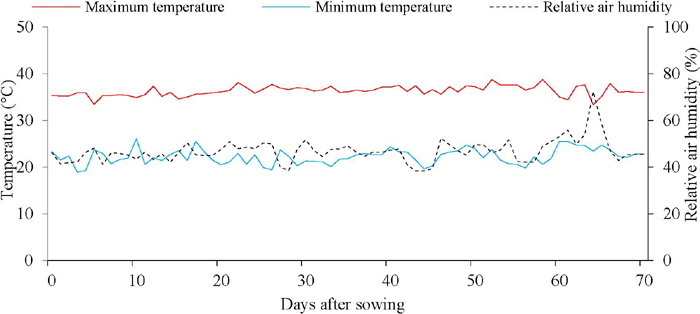
The experiment was carried out in a greenhouse, from September to November 2023, at the Center for Sciences and Agri-Food Technology - CCTA of the Federal University of Campina Grande - UFCG, located in the municipality of Pombal, Paraíba, Brazil, at geographic coordinates 6°47'20" S latitude and 37°48'01" W longitude, at an altitude of 184 m. According to the Köppen-Geiger classification, the local climate is BSh Semi-arid hot and dry, with an average rainfall of 750 mm per year (ALVARES et al., 2013). The data of maximum and minimum temperature and relative humidity (Figure 1) during the experiment were collected using a digital thermohygrometer.
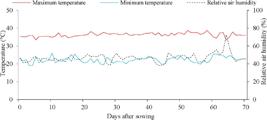
Data on maximum, average and minimum temperature and relative humidity during the experimental period.
The experiment was carried out in a randomized block design, with a 2 × 4 × 3 factorial scheme, referring to two cashew genotypes (Faga 11 and CCP76), four levels of electrical conductivity of the irrigation water - ECw (0.3, 1.8, 3.3 and 4.8 dS m-1) and three combinations of nitrogen and potassium fertilization - N:K (100:50, 50:100 and 100:100% of the recommended dose), with three replicates and two plants per plot, totaling 72 experimental units. ECw levels were determined based on a study conducted by Lima et al. (2020b).
At the time of sowing, the dwarf cashew seeds were soaked in water for 30 minutes and selected according to density (LIMA et al., 2020b), using one nut per container, sown in the peduncle position, at 3.0 cm depth. Sowing was carried out in polyethylene containers (bags) with dimensions of 30 cm in height and 12 cm in diameter, filled with Neossolo Regolítico (Psamment) with sandy texture collected in the 0-30 cm layer, at the Experimental Farm of CCTA in the municipality of São Domingos, PB (6 ° 50' 4'' South and 37 ° 53' 9'' West), whose chemical and physical characteristics (Table 1) were obtained according to Teixeira et al. (2017).
Physical and chemical attributes of the soil used in the experiment, before application of the treatments.
Fertilization with nitrogen, potassium and phosphorus was based on the recommendation of Novais, Neves and Barros (1991). Thus, the doses corresponding to the treatments with combination of N and K were: C1 (100N:50K) = 95.95 and 215.36, C2 (50N:100K) = 47.98 and 430.73, C3 (100N:100K) = 95.95 and 430.73 mg dm-3 of soil, respectively. For phosphorus, 861.45 mg dm-3 of soil was applied. The nutrient sources used were urea (45% N), potassium chloride (60% K2O) and monoammonium phosphate (60% P2O5), discounting the nitrogen applied with monoammonium phosphate. Fertilization was carried out via fertigation split into two applications with an interval of seven days, with the first at 30 days after sowing (DAS). For micronutrients, the commercial product Dripsol Micro Rexene® was applied at a concentration of 0.5 g L-1, containing 1.2% (Mg), 0.85% (B), 3.4% (Fe), 4.2% (Zn), 3.2% (Mn), 0.5% (Cu) and 0.06% (Mo), foliar applied fortnightly, starting at 15 days after emergence.
The plants were irrigated with local-supply water (0.3 dS m-1) up to 32 DAS. After this period, irrigation was carried out according to the treatments. For treatments with ECw of 1.8, 3.3 and 4.8 dS m-1, irrigation water was prepared by dissolving NaCl in local-supply water, considering the relationship between ECw and salt concentration (RICHARDS, 1954), according to Equation 1:
where:
Q = quantity of salts to be dissolved (mmolc L-1); and, ECw = electrical conductivity of water (dS m-1).
After sowing, soil moisture was maintained at the level equivalent to field capacity in all experimental units. Irrigation was carried out by applying the volume of water corresponding to each container, determined based on the average evapotranspiration of the plants, by means of weighing lysimetry. The containers with soil were weighed prior to sowing to determine the dry soil mass (g) and the field capacity (g) individually. After sowing, the current soil mass (g) was determined at each irrigation event. With these values, soil moisture was calculated, determining the irrigation depth (BERNADO; SOARES; MANTOVANI, 2008).
Relative water content (RWC) was determined at 70 DAS using 4 leaf discs of completely formed leaves, located in the upper middle third. First, the fresh mass (FM) was determined. Then, the samples were placed in plastic bags and immersed in distilled water for 24 h. Subsequently, excess water was removed with paper towels to obtain the turgid mass (TM). Afterwards, the samples were taken to the oven with air circulation at 65 °C to determine the dry mass (DM). Relative water content was determined according to Equation 2.
where:
RWC = relative water content (%);
FM = leaf fresh mass (g);
TM= leaf turgid mass (g); and
DM = leaf dry mass (g).
In the same period, electrolyte leakage (EL) was determined using 4 leaf discs with an area of 1.54 cm each, which were washed and placed in beakers containing 50 mL of distilled water. After being closed with aluminum foil, the beakers were stored at 25 C for 24 hours, and then the initial electrical conductivity (Ci) was measured using a benchtop conductivity meter. Subsequently, the beakers were heated to 80 C, in a drying oven, and after 90 min, they were removed for cooling at room temperature, and the final electrical conductivity (Cf) was determined. Electrolyte leakage was obtained according to a methodology adapted from Scotti-Campos et al. (2013), according to Equation 3:
where:
EL = electrolyte leakage in the leaf blade (%); Ci= initial electrical conductivity (dS m-1); and, Cf= final electrical conductivity (dS m-1).
At 70 DAS, the total chlorophyll content (ChlT) was also determined with a CCM-200 plus (Opti-Science, Inc. USA), using a completely expanded leaf from the middle third of the plants. The growth of early dwarf cashew seedlings was determined at 70 DAS, by measuring the leaf area (cm ) with a graduated ruler, measuring the length and width of each leaf (CARNEIRO et al., 2002), according to Equation 4:
where:
LA= leaf area (cm2);
L= length (cm);
W= width (cm); and
f= correction factor (0.6544).
The following variables were determined: number of leaves, by manually counting the leaves considering those with a length greater than 3 cm; plant height (cm), by measuring from the plant collar to the insertion of the apical bud, using a graduated ruler; and stem diameter (mm), by using a digital caliper, measured at 2 cm from ground level.
At 70 DAS, the plants were collected, separated into leaves, stems and roots, and then dried at 65 °C for 48 hours. After drying, the material was weighed on a precision scale to obtain stem, leaf and root dry masses (g), which were used to calculate shoot dry mass (SHDM, stem + leaves) and total dry mass (TDM, stem + leaves + roots). Seedling quality was evaluated using the methodology of Dickson, Leaf and Hosner (1960), which considers the relationship between morphological variables, according to Equation 5.
where:
DQI = Dickson quality index;
TDM = total dry mass (g per plant);
PH = plant height (cm);
SD = diameter of the stem 5 cm from the neck (mm); and
SDM and RDM = shoot and root dry mass (g per plant), respectively.
The data obtained were evaluated through analysis of variance by the 'F' test; in cases of significance, polynomial regression analysis was used for salinity levels and Tukey test (p ≤ 0.05) was used for the combinations of fertilization and genotypes, using the statistical software SISVAR-ESAL. Additionally, Pearson's correlation analysis was performed with R software (R DEVELOPMENT CORE TEAM, 2022).
RESULTS AND DISCUSSION
According to the summary of the analysis of variance (Table 2), there was a significant interaction (p ≤ 0.01) between cashew genotypes and salinity levels of irrigation water for stem diameter of early dwarf cashew. For the individual factors, the salinity levels of irrigation water had a significant effect on electrolyte leakage, leaf area, number of leaves and plant height, while the genotypes affected only the number of leaves (Table 2).
Analysis of variance for relative water content (RWC), electrolyte leakage (EL), total chlorophyll (ChlT), leaf area (LA), number of leaves (NL), plant height (PH) and stem diameter (SD) of early dwarf cashew genotypes under salinity levels of irrigation water (SL) and nitrogen and potassium fertilization combinations (C) at 70 days after sowing.
For electrolyte leakage (EL) as a function of the salinity of irrigation water (Figure 2A), an increase was observed as the salinity levels increased, and plants that received the highest salinity (4.8 dS m-1) had an EL of 29.36% when compared to those irrigated with ECw of 0.3 dS m-1. Thus, the increase in salinity levels led to increased electrolyte leakage, resulting from the damage to the cell membrane, caused by excess Na+ and Cl- in the leaf tissue, as the accumulation of these ions alters the composition of the membrane, causing rupture (MINHAS et al., 2020). The increase in irrigation water salinity also increased electrolyte leakage in early dwarf cashew rootstocks in a study conducted by Sousa et al. (2023), resulting in high sodium levels in the leaves.
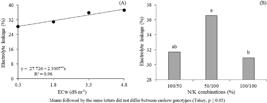
Electrolyte leakage in early dwarf cashew plants under salinity levels in irrigation water (A) and combinations of fertilization with nitrogen and potassium (B) at 70 days after sowing.
Using the N:K combination according to the fertilization recommendation (100:100%) promoted the lowest value of electrolyte leakage, not differing statistically from the 100:50% combination, but the 50:100% combination of N:K resulted in the highest electrolyte leakage in cashew leaves (Figure 2B). This must have occurred due to the increase in the concentration of potassium to the detriment of nitrogen, causing an excess of chlorine ions in the soil, since the potassium source used was potassium chloride, which stands out for its high salt index. Thus, the lower dose of nitrogen did not mitigate the excessive chloride uptake, which causes toxicity in membranes (FIGUEIREDO et al., 2023).
For the N:K combinations of 100:100 and 100:50%, possibly the higher nitrogen concentration promotes greater nitrate uptake in the plants, resulting in a lower chloride/ nitrate ratio in the leaves, thus restoring ionic homeostasis and reducing the rupture of cell membranes (IBRAHIM et al., 2018). Ferreira et al. (2021), when studying NPK fertilization in sugar apple, also obtained lower electrolyte leakage with the N:K combination of 100:100%.
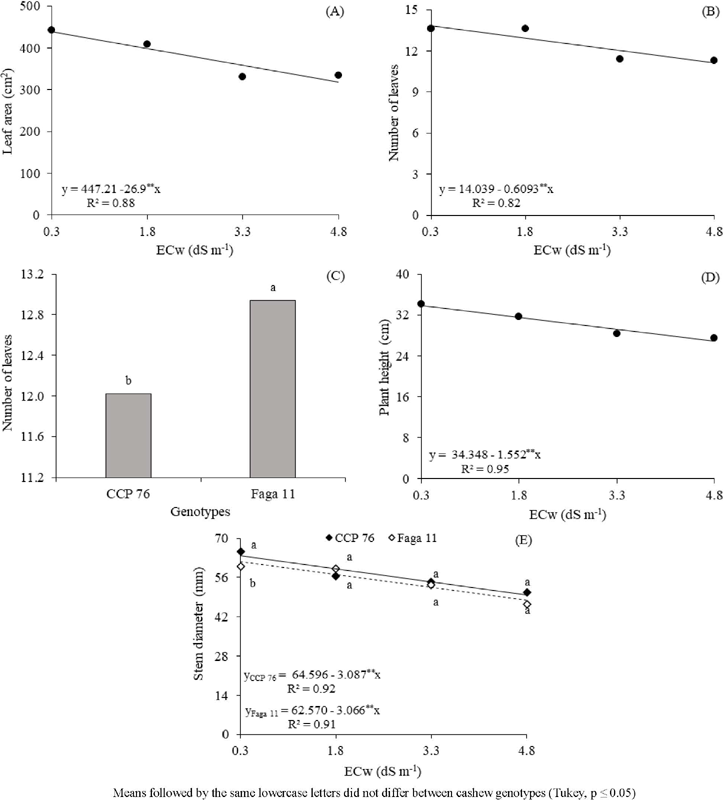
Early dwarf cashew growth decreased with the increase in the salinity of irrigation water, with reductions of 154.12 cm2, 2.92 mm and 7.45 cm in leaf area, number of leaves and plant height, respectively, when comparing the lowest (0.3 dS m-1) and highest (4.8 dS m-1) level of electrical conductivity of irrigation water (Figures 3A, 3B and 3D). This decline in growth occurs due to the limitation in water absorption imposed by the reduction of osmotic potential in the soil, which decreases leaf water potential and turgor pressure, compromising water absorption by the plant (MIRANSARI; MAHDAVI; SMITH, 2021). This negative condition affects the growth of plants, which become smaller, with reduced leaf area and limited growth; these plants transpire less water and, consequently, absorb less CO2 and produce fewer photoassimilates for their growth (MINHAS et al., 2020). Similar results were reported by Alencar et al. (2021), who studied genotypes (CCP 06 and BRS 189) of early dwarf cashew irrigated with water of 0 (distilled water), 8 and 16 dS m-1 and observed reductions in seedling growth above 0 dS m-1.

Leaf area (A), number of leaves (B) and plant height (D) as a function of irrigation water salinity - ECw, number of leaves (C) as a function of early dwarf cashew genotypes and stem diameter (E) of early dwarf cashew genotypes under ECw levels, at 70 days after sowing.
The number of leaves was higher in plants of the Faga 11 genotype compared to CCP 76, with an increase of 7.65% (Figure 3C). This superiority is due to the genetic variability between these genotypes (SERRANO et al., 2013). Regarding stem diameter, a linear reduction was observed in both genotypes studied, with decreases of 22.94% for CCP 76 and 23.53% for Faga 11, when comparing the levels of 0.3 and 4.8 dS m-1 (Figure 3E). This result is explained by the excessive accumulation of salts in the soil solution, which unbalances the water content and causes ionic toxicity, hence inhibiting cell expansion (SHAHID et al., 2020). It was also possible to verify that only at the salt concentration of 0.3 dS m-1 was there a significant difference between the genotypes studied, with superiority for CCP 76 over Faga 11, possibly due to the genetic divergence between them (SERRANO et al., 2013). However, under the other salinity levels there were no significant differences between the genotypes (Figure 3E).
The summary of the analysis of variance (Table 3) showed that leaf, stem, root, shoot and total dry masses were significantly affected by the interaction between genotypes and fertilization combinations. In addition, the salinity of irrigation water impacted these variables significantly when considered individually. Dickson quality index was significantly (p ≤ 0.01) affected by the interaction between genotypes and salinity.
Summary of the analysis of variance for leaf dry mass (LDM), stem dry mass (STDM), root dry mass (RDM), shoot dry mass (SHDM), total dry mass (TDM) and Dickson quality index (DQI) of genotypes of early dwarf cashew under irrigation water salinity levels (SL) and combinations of nitrogen and potassium fertilization (C), at 70 days after sowing.
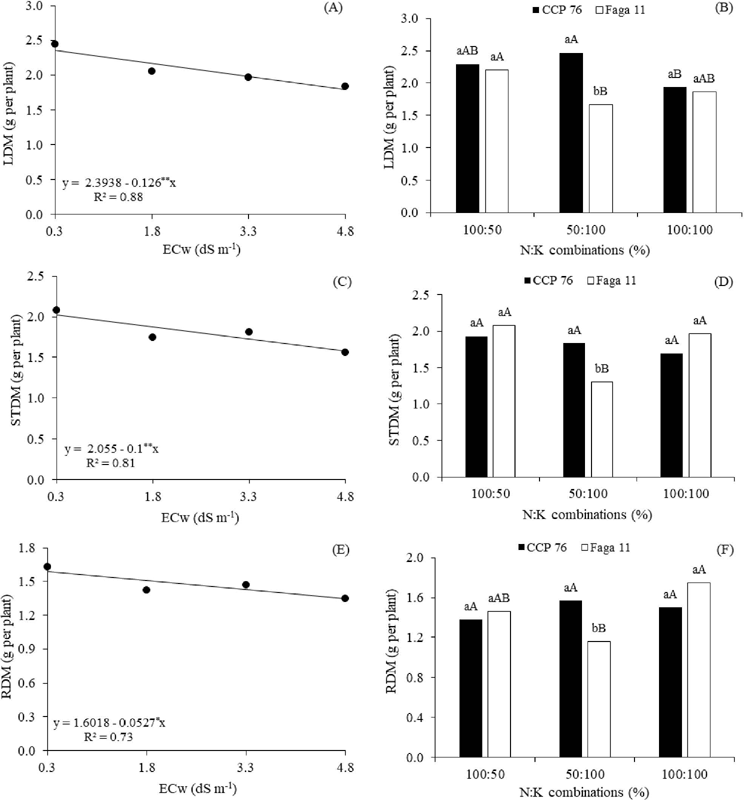
As occurred for growth, the increase in electrical conductivity negatively affected biomass accumulation in early dwarf cashew, with reductions of 24.25% in leaf dry mass, 22.03% in stem dry mass and 15.72% root dry mass with the increase in irrigation water salinity from 0.3 to 4.8 dS m-1, respectively (Figures 4A, 4C, and 4E). This reduction may be related to a decrease in photosynthetic processes and the reallocation of energy to maintain membrane integrity, synthesis of organic solutes for osmoregulation and/or protection of macromolecules, and regulation of ion transport and distribution in various organs within cells (MIRANSARI; MAHDAVI; SMITH, 2021). Similar results were found by Lima et al. (2020b) when studying biomass partitioning in cashew genotypes irrigated with saline water (0.4 to 3.6 dS m-1) during the seedling formation phase.
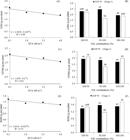
Leaf dry mass - LDM (A), stem dry mass - STDM (C) and root dry mass - RDM (E) of early dwarf cashew genotypes under irrigation water salinity levels - ECw and leaf dry mass (B), stem dry mass (D) and root dry mass (F) of early dwarf cashew genotypes under combinations of fertilization with nitrogen and potassium, at 70 days after sowing.
The genotype Faga 11 obtained lower accumulation of leaf dry mass (1.67 g per plant), stem dry mass (1.3 g per plant) and root dry mass (1.16 g per plant) (Figures 4B, 4D and 4F) under the 50:100 combination of N and K fertilization compared to CCP 76, while under the other fertilization combinations, there were no significant differences between the genotypes. Similarly, when analyzing the behavior of each genotype between fertilizations, Faga 11 showed a significant decline in biomass under the N:K combination of 50:100.
The observed inferiority in LDM, STDM, and RDM accumulation (Figure 4A, 4C, and 4F) can be attributed to excess potassium, which possibly competed with nitrogen uptake by plant roots. As nitrogen is essential for plant growth and a key component of amino acids, proteins, and chlorophyll, its deficiency may result in retarded growth and decreased biomass production (XU et al., 2024). In turn, the CCP 76 genotype maintained its biomass production under these conditions, as in the cashew crop some genotypes are more efficient in the assimilation, transport, and accumulation of macronutrients than others (SOUSA et al., 2023).
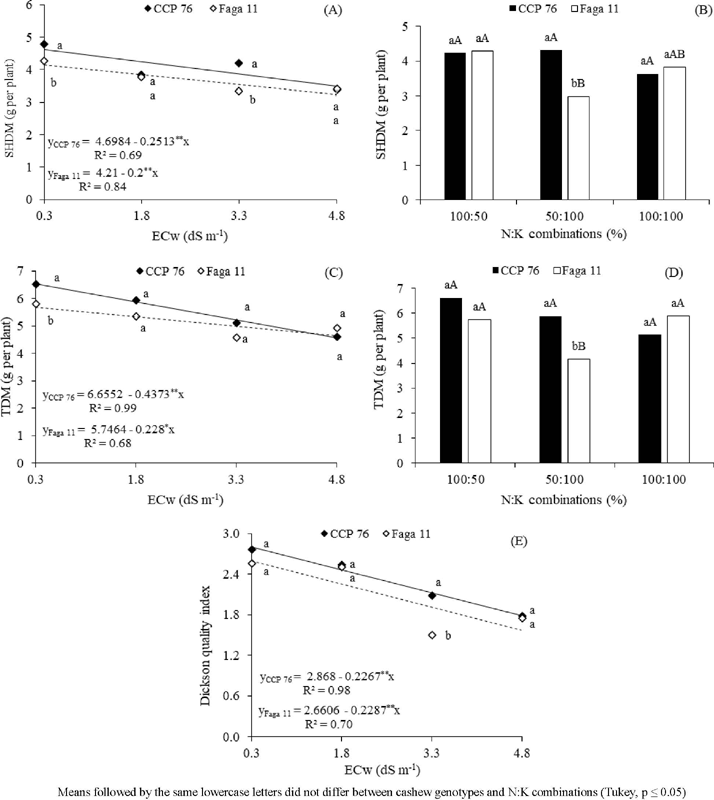
Shoot dry mass and total dry mass were reduced with the increase of salinity in the irrigation water in both genotypes studied (Figures 5A and 5C). In CCP 76, there were reductions in SHDM and TDM of 5.34 and 6.57% per unit increase in ECw, respectively. In Faga 11, SHDM and TDM were reduced by 4.75 and 3.96% per unit increase in ECw. Despite the reductions observed in both genotypes, CCP 76 showed higher values of dry mass than Faga 11, standing out particularly in terms of SHDM, with an increase of 27. 58% at the water electrical conductivity of 3.3 dS m-1.
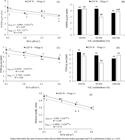
Shoot dry mass (A), total dry mass (C) and Dickson quality index (E) of early dwarf cashew genotypes under irrigation water salinity levels - ECw and shoot dry mass (B) and total dry mass (D) of early dwarf cashew genotypes under combinations of nitrogen and potassium fertilization, at 70 days after sowing.
This is justified because salinity reduces the growth and consequently the biomass production of plants (SHAHID et al., 2020). As salts accumulate in plant tissues, vacuoles are unable to store them properly, leading to an increase in the concentration of salts in the cytoplasm, which inhibits the activity of several enzymes essential for plant metabolism, resulting in adverse morphophysiological changes (MINHAS et al., 2020).
Although both genotypes were negatively affected by the increase in salinity, CCP 76 showed greater tolerance compared to Faga 11. This differential behavior can be attributed to a higher tolerance of the CCP 76 genotype to salt stress, which may be advantageous for cultivation in regions with problems of salinity in irrigation water (LIMA et al., 2020b). The ability of CCP 76 to maintain a higher dry mass production under high salinity conditions suggests that this genotype has more efficient physiological and biochemical mechanisms to cope with salt stress (SOUSA et al., 2023), making it more suitable for saline environments compared to Faga 11.
As in the other dry mass partitions, the application of the different N:K combinations influenced the accumulation of shoot dry mass and total dry mass, with reductions in both variables for the Faga 11 genotype under application of 50:100 of N:K (Figures 5B and 5D). Possibly the lower concentration of nitrogen may have reduced its action in favoring CO2 assimilation, consequently causing a decrease in plant growth, resulting in less biomass accumulation (FIGUEIREDO et al., 2023); likewise, the high concentration of potassium may have inhibited nitrogen absorption (XU et al., 2024). On the other hand, CCP 76 maintained its shoot and total dry mass stable under all N:K combinations. This is due to the genetic divergence in nutrient uptake and assimilation between the two genotypes (ALENCAR et al., 2021; SOUSA et al., 2023).
The quality of cashew seedlings decreased with the increase in salts in irrigation water for both genotypes, with higher values in CCP76 than in Faga 11 when irrigated with ECw of 3.3 dS m-1 (Figure 5E). The seedling quality index decreased from 2.86 to 1.78 in CCP 76 and from 2.66 to 1.56 in Faga 11 when comparing the lowest and highest salt concentration. The higher DQI of the CCP 76 genotype expresses the growth capacity and balance in biomass distribution under stress conditions and allows obtaining quality seedlings for transplanting to the field. Lima et al. (2020a), when studying the tolerance of cashew rootstocks to salt stress, found that the genotypes Faga 11 and CCP 76, at the highest salinity level studied (3.6 dS m-1), were classified as moderately sensitive and moderately tolerant, respectively.
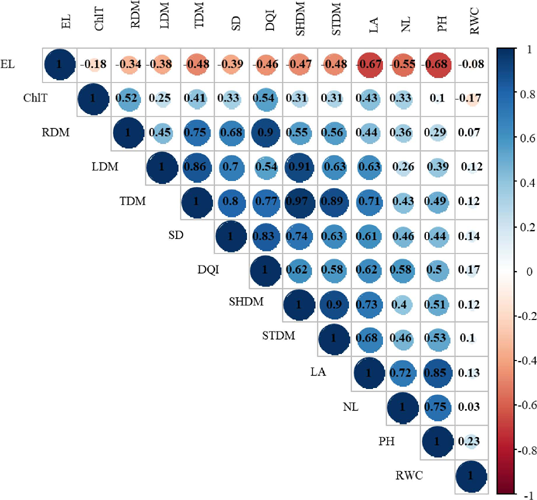
The correlation matrix revealed that cashew plants with higher accumulation of total dry mass, stem diameter and leaf area have a higher correlation with Dickson quality index (Figure 6); simultaneously, these same variables are negatively correlated with electrolyte leakage.
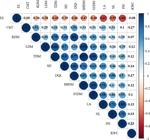
Pearson's correlation analysis for early dwarf cashew plants of different genotypes under salinity levels of irrigation water and combinations of nitrogen and potassium fertilization, at 70 days after sowing.
The positive correlation between growth parameters (stem diameter, leaf area and total dry mass) and seedling quality (Dickson quality index) is related to seedling vigor. Thus, seedlings with higher DQI increase efficiency in the selection and mass screening of plants with high-quality attributes and improve their survival and growth capacity after transplanting (GALLEGOS-CEDILHO et al., 2021), especially under saline conditions. On the other hand, smaller plants with lower DQI had greater membrane damage imposed by salt stress, so they were not recommended for cultivation in environments under these conditions.
CONCLUSIONS
Irrigation water salinity from 0.3 dS m-1 increases electrolyte leakage in the leaf blade and reduces the growth variables, biomass accumulation and Dickson quality index of CCP 76 and FAGA 11 cashew seedlings. Among the cashew genotypes, CCP 76 stands out for showing higher quality of seedlings under irrigation with saline water when compared to Faga 11. The 50:100 combination of nitrogen and potassium fertilization in the Faga 11 genotype results in the lowest biomass accumulation. Combined fertilization with 100:100 nitrogen-potassium promoted the lowest electrolyte leakage in the leaf blade.
REFERENCES
- ALENCAR, N. L. et al. Differential responses of dwarf cashew clones to salinity are associated to osmotic adjustment mechanisms and enzymatic antioxidative defense. Anais da Academia Brasileira de Ciências, 93: e20180534, 2021.
- ALVARES, C. A. et al. Koppen's climate classification map for Brazil. Meteorologische Zeitschrift, 22: 711-728, 2013.
- BERNADO, S.; SOARES, A. A.; MANTOVANI, E. C. Manual de irrigação. 8. ed. Viçosa, MG: Editora UFV, 2008. 622 p.
- CARNEIRO, P. T. et al. Germinação e crescimento inicial de genótipos de cajueiro anão-precoce em condições de salinidade. Revista Brasileira de Engenharia Agrícola e Ambiental, 6: 199-206, 2002.
- COSTA, J. E. et al. Effects of bone meal and hydrogel on the leaf contents of dwarf cashew. Pesquisa Agropecuária Tropical, 54: e77071, 2024.
- DICKSON, A.; LEAF, A. L.; HOSNER, J. F. Quality appraisal of white spruce and white pine seedling stock in nurseries. The Forest Chronicle, 36: 10-13, 1960.
- FERREIRA, F. N. et al. Photosynthetic efficiency and production of Annona squamosa L. under salt stress and fertilization with NPK. Revista Brasileira de Engenharia Agrícola e Ambiental, 25: 446-452, 2021.
- FIGUEIREDO, F. R. A. et al. Morphophysiology and gas exchange of pomegranate under salt stress and foliar application of nitrogen. Revista Brasileira de Engenharia Agrícola e Ambiental, 27: 958-965, 2023.
- GALLEGOS-CEDILHO, V. M. et al. Plant agronomic features can predict quality and field performance: A bibliometric analysis. Agronomy, 11: e2305, 2021.
- GHAG, S. S.; GOKHALE, J. S.; LELE, S. S. Effect of chemical pretreatment on quality attributes of the cashew apple. Journal of Food Science, 88: 2353-2367, 2023.
-
IBGE - Instituto Brasileiro de Geografia e Estatística. Produção de castanha de caju, 2022. Available at: <https://www.ibge.gov.br/explica/producao-agropecuaria/castanha-de-caju-cultivo/br>. Access on: Apr. 16, 2024.
» https://www.ibge.gov.br/explica/producao-agropecuaria/castanha-de-caju-cultivo/br - IBRAHIM, M. E. H. et al. Nitrogen fertilizer alleviated negative impacts of NaCl on some physiological parameters of wheat. 1561 Pakistan Journal of Botany, 50: 2097-2104, 2018.
- KUMARI, S. et al. Potassium: A track to develop salinity tolerant plants. Plant Physiology and Biochemistry, 167: 1011-1023, 2021.
- LEMOS, M. S. et al. Genetical and physicochemical diversity among twelve Brazilian cultivars of cashew (Anacardium occidentale). Acta Botanica Mexicana, 128: e1775, 2021.
- LIMA, G. S. et al. Tolerance of precocious dwarf cashew clones to salt stress during rootstock formation stage. Revista Brasileira de Engenharia Agrícola e Ambiental, 24: 474-481, 2020a.
- LIMA, G. S. et al. Physiological indices and phytomass partition in precocious dwarf cashew clones irrigated with saline waters. Comunicata Scientiae, 11: e3196, 2020b.
- MINHAS, P. S. et al. Coping with salinity in irrigated agriculture: Crop evapotranspiration and water management issues. Agricultural Water Management, 227: e105832, 2020.
- MIRANSARI, M.; MAHDAVI, S.; SMITH, D. The biological approaches of altering the growth and biochemical properties of medicinal plants under salinity stress. Applied Microbiology and Biotechnology, 105: 7201-7213, 2021.
- NOBRE, R. G. et al. Gas exchange and photochemical efficiency of guava under saline water irrigation and nitrogen-potassium fertilization. Revista Brasileira de Engenharia Agrícola e Ambiental, 27: 429-437, 2023.
- NOVAIS, R. F., NEVES, J. C. L., BARROS, N. F. Ensaio em ambiente controlado. In: OLIVEIRA, A. J. et al. (Eds.). Métodos de pesquisa em fertilidade do solo. Brasília, DF: Embrapa-SEA, 1991. v. 3, cap. 12, p. 189-253.
-
R DEVELOPMENT CORE TEAM. R: A language and environment for statistical computing Vienna: R Foundation for Statistical Computing, 2022. Available at: <https://www.r-project.org/>. Access on: 12 Apr. 2024.
» https://www.r-project.org/ - RICHARDS, L. A. Diagnosis and improvement of saline and alkali soils. 1. ed. Washington: U.S. Department of Agriculture, 1954. 160 p. (Agriculture Handbook, 60).
- SCOTTI-CAMPOS, P. et al. Physiological responses and membrane integrity in three Vigna genotypes with contrasting drought tolerance. Emirates Journal of Food and Agriculture, 25: 1002-1013, 2013.
- SERRANO, L. A. L. et al. Porta-enxertos para a produção de mudas de cajueiro. Pesquisa Agropecuária Brasileira, 48: 1237-1245, 2013.
- SHAHID, M. A. et al. Insights into the physiological and biochemical impacts of salt stress on plant growth and development. Agronomy, 10: e938, 2020.
- SILVA, A. A. R. et al. Cultivation of custard-apple irrigated with saline water under combinations of nitrogen, phosphorus and potassium. Revista Caatinga, 35: 181-190, 2022.
- SOUSA, V. F. O. et al. Salinity-tolerant dwarf cashew rootstock has better ionic homeostasis and morphophysiological performance of seedlings. Revista Brasileira de Engenharia Agrícola e Ambiental, 27: 92100, 2023.
- SOUZA, W. B. B. et al. Potassium fertilization as salt stress attenuator in sour passion fruit. Ciência Rural, 53: 1-12, 2023.
- TEIXEIRA, P. C. et al. Manual de métodos de análise de solo. 3. ed. Brasília, DF: Embrapa, 2017. 573 p.
- XU, X. et al. Potassium alleviated high nitrogen-induced apple growth inhibition by regulating photosynthetic nitrogen allocation and enhancing nitrogen utilization capacity. Horticultural Plant Journal, 10: 1-14, 2024.