Morphophysiological performance of Handroanthus impetiginosus seedlings produced in organic substrates
ABSTRACT
The growing interest in native tree species for commercial reforestation or conservation purposes makes studies on substrate formulations and characteristics for producing quality seedlings extremely important. The study aimed to evaluate the effects of different substrate combinations on the quality and development of seedlings of the native tree species Handroanthus impetiginosus, whose seeds were collected from 15 mother trees, ensuring adequate genetic variability of the plant material. The substrates used in the treatments were: commercial substrate, carbonized rice husk, refrigeration waste, poultry litter, and boiler ash. The parameters evaluated were: plant height - H, stem diameter - SD, total chlorophyll, seedling emergence - SE, germination - G, germination speed index - GSI, mean germination time - MGT, shoot dry mass - SDM, root dry mass - RDM, total dry mass - TDM, lignification index - IL, robustness index - RI and Dickson quality index - DQI. The parameters SE, G, GSI, and MGT did not show significant differences among treatments. Treatment S5 (25% oxisol + 25% refrigeration waste + 25% poultry litter + boiler ash) provided the highest average values for H, SD, SDM, RDM, TDM, RI, and DQI. The substrate composition in treatment S5 resulted in a fertile, stable, and efficient substrate for seedling development, demonstrating its potential as a viable and superior alternative to currently used commercial substrates.
Keywords:
Cerrado; Organic waste; Purple ipe; Seedling production.
RESUMO
O crescente interesse nas espécies arbóreas nativas para reflorestamentos comerciais ou conservação, torna-se de extrema importância para estudos relacionados às formulações e características dos substratos para produção de mudas de qualidade. O estudo objetivou avaliar as diferentes combinações de substratos na qualidade e no desenvolvimento de mudas de uma espécie arbórea nativa, Handroanthus impetiginosus, cujas sementes foram coletadas de 15 árvores matrizes, garantindo adequada variabilidade genética do material utilizado. Os substratos utilizados nos tratamentos foram: substrato comercial, casca de arroz carbonizada, resíduo frigorífico, cama de aves e cinza de caldeira. Os parâmetros avaliados foram: altura da planta - H, diâmetro do coleto - SD, clorofila total, emergência das plântulas - SE, germinação - G, velocidade de germinação - GS, tempo médio de germinação - MGT, massa seca da parte aérea - SDM, massa seca de raiz - RDM, massa seca total - TDM, índice de lignificação - LI, índice de robustez - RI e índice de qualidade de Dickson - DQI. Os parâmetros SE, G, GSI, MGT não apresentaram diferenças significativas nos resultados entre os tratamentos. O tratamento S5 (25% latossolo + 25% resíduo frigorifico + 25% cama de aves + cinza de caldeira) proporcionou os maiores valores médios para H, D, SDM, RDM, TDM, RI e DQI. A composição do substrato no tratamento S5 resultou em um substrato fértil, estável e eficiente para o desenvolvimento das mudas, demonstrando seu potencial como alternativa viável e superior aos substratos comerciais atualmente utilizados.
Palavras-chave:
Cerrado; Resíduos orgânicos; Ipê-roxo; Produção de mudas.
INTRODUCTION
The Cerrado biome is currently threatened by rapid agricultural expansion, especially in the MATOPIBA region, a strategic agricultural frontier located at the interface of the states of Maranhão, Tocantins, Piauí, and Bahia. This region has undergone intense land-use conversion in recent decades, driven by large-scale mechanized agriculture, which has accelerated habitat loss and increased pressure on native vegetation. Unsustainable agricultural practices have accelerated the destruction of these areas, compromising biodiversity and the essential ecosystem services they provide (POLIZEL et al., 2021).
Among the forest species of the Cerrado is Handroanthus impetiginosus, popularly known as purple ipê, black ipê, dwarf purple ipê, and pau-d’arco, among others. It belongs to the Bignoniaceae family and is native to Brazil, Argentina, Bolivia, and Paraguay. In addition to its essential role in the recovery of degraded areas, the purple ipê contributes to local biodiversity, providing food for wildlife species through the nectar of its flowers, which attract pollinators such as bees and birds (NASCIMENTO et al., 2021).
Given the growing interest in native tree species for both commercial and conservation reforestation purposes, studies on the formulations and characteristics of substrates for producing quality seedlings are extremely important. Choosing the appropriate substrate and the organic residues it contains is essential for seedling development in the restoration of degraded ecosystems, as these materials improve physical and chemical soil properties (REZENDE et al., 2023).
The substrate must have good aeration, drainage, water retention, and balanced nutrients, all of which are essential for healthy growth. The incorporation of organic residues into the substrate reduces the need for fertilization, lowering production costs and improving seedling quality. To produce high-quality seedlings, it is essential to select substrates with good physical, chemical, and biological properties that meet the plants’ needs (NASCIMENTO et al., 2021).
In this context, this study aimed to evaluate the effects of different substrate combinations on the quality and development of seedlings of the native tree species Handroanthus impetiginosus, whose seeds were collected from 15 mother trees, ensuring adequate genetic variability of the plant material.
MATERIAL AND METHODS
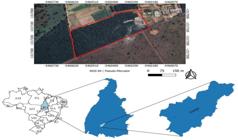
The experiment was conducted at the forest nursery of the Federal University of Tocantins - UFT, Gurupi Campus, at coordinates 11°44’55” S, 49°03’07” W (Figure 1).
The average annual rainfall in the region is approximately 1,500 mm, concentrated between December and March. The mean annual temperature in the state of Tocantins ranges from 25°C to 27°C, while in the municipality of Gurupi, the mean annual temperature is around 27°C, according to regional climatic assessments. The study area is located at an average altitude of 283 m (ALVARES et al., 2013). The soil collected for the experiment was classified as Latossolo Vermelho (SANTOS et al., 2025), and its physical and chemical attributes (Table 1) were determined according to the methodology of Teixeira et al. (2017).
The experimental design adopted was a randomized block design (RBD), with 12 treatments (Table 2) and four replicates.
The seeds were collected from 15 purple ipê parent trees (Handroanthus impetiginosus), spaced at least 100 m apart to ensure genetic variability in the plant material, and then homogenized to form a single batch (MEDEIROS et al., 2006). In the laboratory, the fruits were manually opened to extract the seeds, which were then sieved through a 2 mm mesh to remove impurities. The seeds were then visually selected, discarding any damaged, empty, or predated seeds. Seed disinfection was performed by immersing the seeds in 70% ethanol for 1 min, followed by immersion in a 3% sodium hypochlorite (NaClO) solution for 10 min. After disinfection, the seeds were stored at 16°C for 20 days before being sown. No pre-germination treatments were performed in any of the treatments. Treatments S1 to S12 were combined in different proportions (Table 2), slightly moistened, homogenized, and then placed in 310-g containers. Irrigation was performed automatically, with four daily cycles during the evaluation period.
The physicochemical properties of the organic compounds are shown in Table 3, following the methodology described by Teixeira et al. (2017).
Seedling evaluations began 35 days after sowing, with measurements taken every 15 days, resulting in a total of six analyses throughout the experiment. Then, 125 days after sowing, the percentage of seedling mortality was assessed, observing the survival rate and the impact of the substrates. Additionally, 30% of the surviving seedlings were randomly selected for dry biomass analysis. The seedlings were separated into their shoots and roots, oven-dried at 70°C until they reached constant weight, and then weighed to determine the total biomass, as well as the individual contributions of each plant part (roots and shoots).
The measured variables were plant height, measured from the soil surface to the apical bud using a graduated ruler; stem diameter, measured with a digital caliper; total chlorophyll, measured non-destructively in the leaves using a Cloro-fiLOG 1030®; seedling emergence (SE); germination (G); germination speed index (GSI); mean germination time (MGT); shoot dry mass (SDM); root dry mass (RDM); total dry mass (TDM); SDM/RDM ratio; lignification index (LI); robustness index (RI); and Dickson quality index (DQI) (ALVES; FREIRE, 2017).
The assumptions of analysis of variance (ANOVA) were tested using the Shapiro-Wilk test for normality (p > 0.05) and the Bartlett test for homoscedasticity of variance (p > 0.05). Once these assumptions were met, the data were subjected to analysis of variance and the means compared using the Scott-Knott test (p ≤ 0.05). Statistical analyses were performed using the “agricolae” package, and graphs were generated in R (R DEVELOPMENT CORE TEAM, 2025).
RESULTS AND DISCUSSION
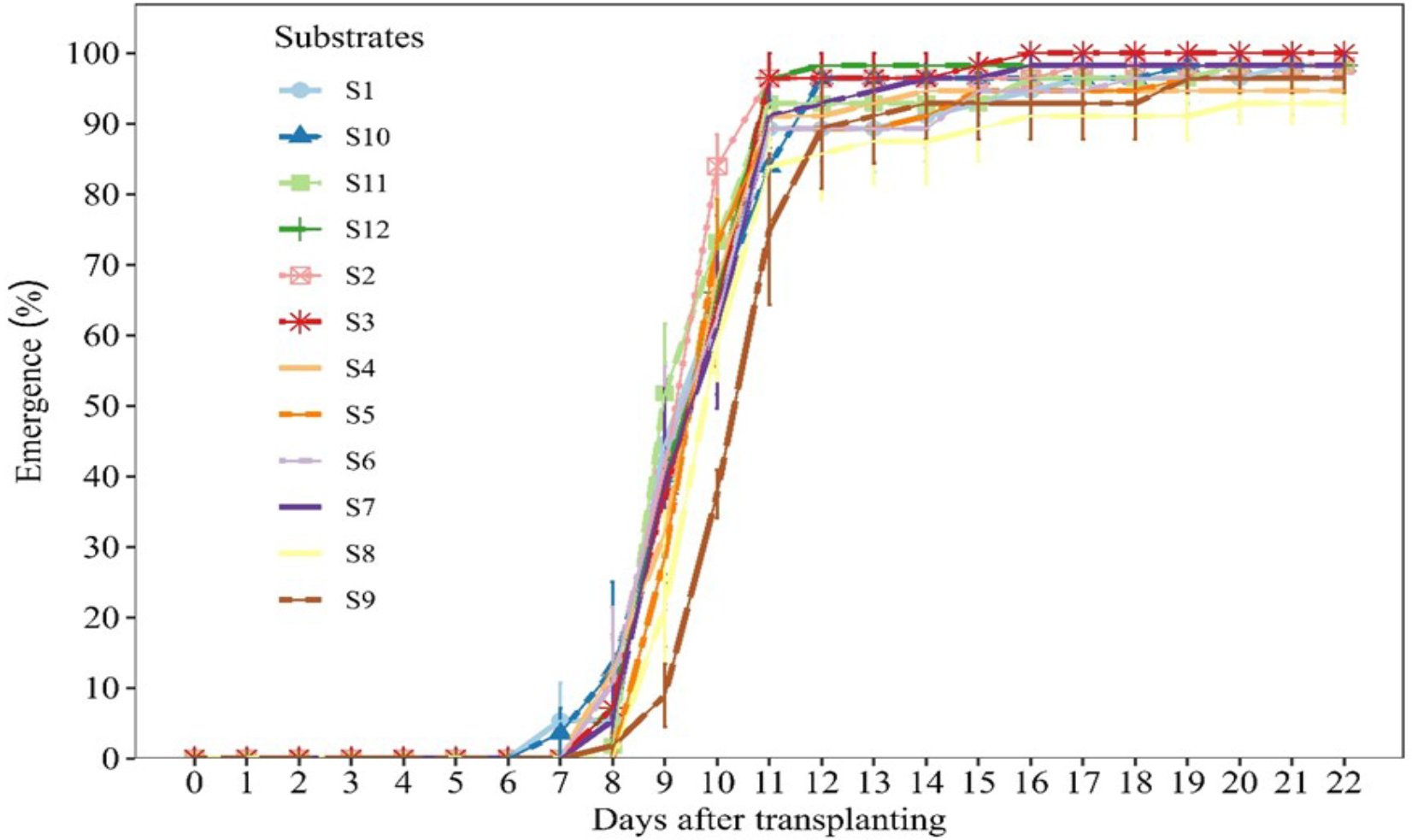
The emergence dynamics of Handroanthus impetiginosus seedlings showed clear temporal patterns among the treatments (Figure 2). Treatments S1 and S2 exhibited the earliest emergence, with the first seedlings appearing around the sixth day after sowing, indicating a slightly faster initial response compared with the other treatments. In contrast, the remaining treatments presented the beginning of emergence predominantly from the seventh day onward, demonstrating a small but notable variation in early physiological activation among substrate compositions. Despite these differences in initial timing, a similar trend was observed across all treatments: maximum emergence occurred around the 10th day, after which the emergence curves stabilized and showed minimal variation in percentage values. This pattern suggests that, although substrate composition may influence the onset of emergence, the overall emergence potential of the seeds remains consistently high among treatments once they reach the peak physiological response period. According to Santos et al. (2023), the emergence of purple ipê seedlings begins between 6 and 12 days after sowing and is generally greater than 80%.
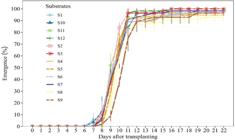
The emergence of seedlings in the different treatments did not show any significant difference over the 22 days. It can be seen that the treatment lines overlap, demonstrating the homogeneity of the data. Fernandes, Sousa and Praxedes (2024) observed that purple ipê seeds stored for four years in a cold chamber at 10 °C maintained high emergence, resistance to deterioration, and physiological vigor, thereby reducing the influence of the substrate during the initial stage.
Thus, it can be stated that the main factors affecting seed quality are relative humidity and temperature. Proper seed storage slows down the rate of deterioration, allowing for better seed preservation for a longer period and higher emergence rates (CAVALCANTE et al., 2024).
The germination results presented in Table 4 show that Handroanthus impetiginosus seeds exhibited uniformly high physiological performance across all treatments, with G values ranging from 93% to 100%. Among the treatments, S3 reached the highest germination rate (100%), followed closely by S1, S2, S7, S10, S11, and S12, all of which achieved germination above 98%, indicating excellent seed viability under different substrate compositions. In contrast, S8 exhibited the lowest germination percentage (93%), followed by S4, S5, S6, and S9, which showed slightly lower averages compared with the top-performing treatments, although still within a high germination range (>95%). Even with these small variations, the narrow amplitude of the G values suggests that substrate composition had a minimal influence on germination potential, most likely due to the inherent vigor of the seeds and their high physiological quality after storage under controlled conditions.
Germination (G), germination speed index (GSI), and mean germination speed index (MGT) of Handroanthus impetiginosus over 22 days after sowing in different treatments.
In terms of average G values, they ranged from 93 to 100% (Table 4). According to Fernandes, Sousa and Praxedes (2024), germination percentages under freezer storage for 0 to 30 days averaged 96%, values similar to those observed in this experiment, in which seeds were stored at a low temperature (16 °C) for 22 days. Seeds have endosperm, a reserve tissue that provides essential nutrients for the embryo during germination, thereby reducing the influence of nutrient availability provided by the type of substrate. However, they are highly influenced by temperature, humidity, type, and storage time (CAVALCANTE et al., 2024).
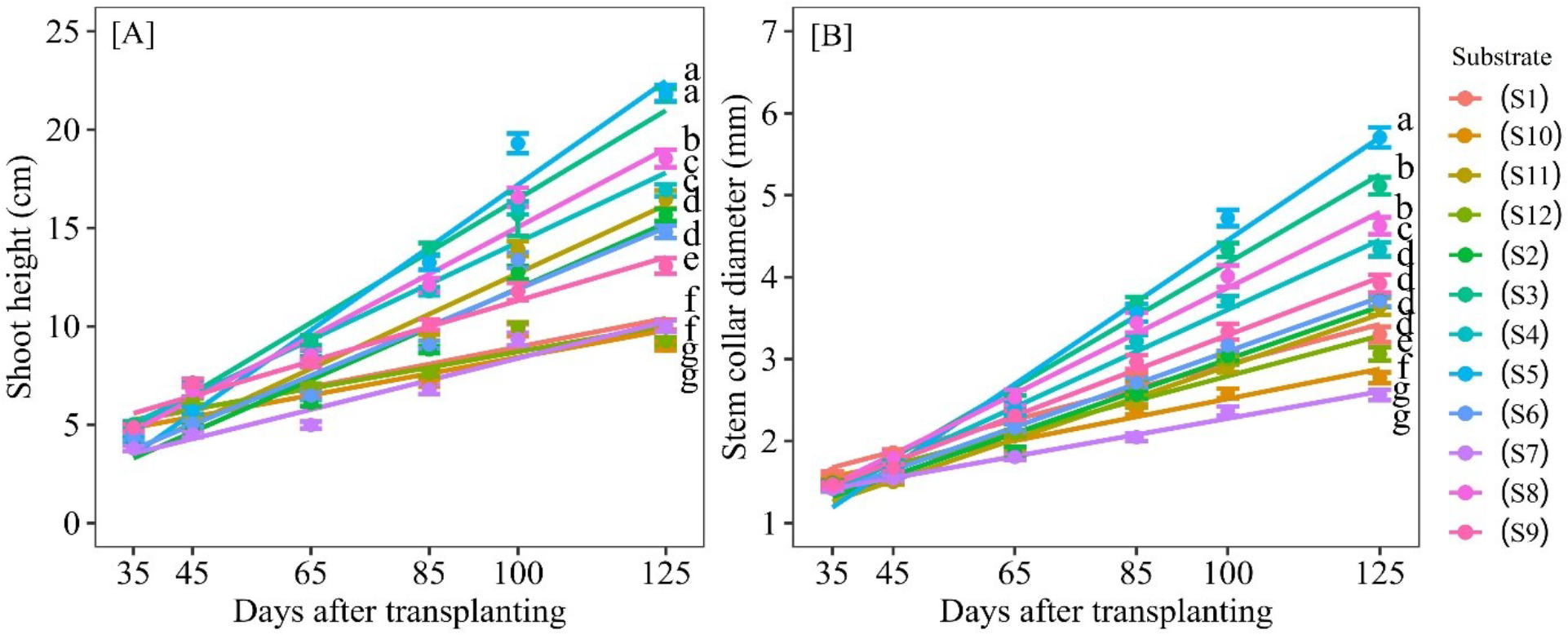
There were no significant differences in GSI and MGT between treatments (Table 4). Silva et al. (2024), who evaluated the germination of Handroanthus heptaphyllus in different substrates at temperatures around 30 °C, reported GSI and MGT values similar to those observed in the present study. In a study by Freitas et al. (2024), it was reported that high temperatures alter membrane permeability and promote the denaturation of proteins essential for germination. In contrast, low temperatures delay metabolic activities, resulting in a reduction in germination percentage and a prolonged germination process. After 125 days of experimentation, treatments S3 and S5 showed the highest mean height values compared with the other treatments (Figure 3A), demonstrating the positive effect of balanced combinations of organic residues on seedling growth. In contrast, the lowest mean height values were observed in treatments S7, S10, and S12, indicating that these substrate formulations were less effective in providing adequate conditions for shoot development, likely due to their less favorable physicochemical characteristics.
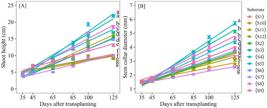
Growth in height [A] and stem diameter [B] of Handroanthus impetiginosus seedlings over 125 days after sowing in the different treatments. Different letters indicate statistical difference by the Scott-Knott test (p ≤ 0.05).
Treatments S3 and S5 (Figure 3A) presented a diverse and synergistic composition among the residues used. Similar results were observed by Alves and Freire (2017), who, when using substrates with compositions of 70% soil plus 30% carbonized rice husk, and 70% soil plus 15% carbonized rice husk plus 15% cattle manure, obtained expressive height values of 19 and 20 cm, respectively. The interaction between the organic compounds present promoted an adequate balance between porosity, water retention, structural stability, and fertility, which was directly reflected in the growth of the seedlings’ shoots (ALMEIDA et al., 2024).
The lowest significant mean height values were observed in treatments S7, S10, and S12 (Figure 3A). Sousa Filho et al. (2024) found similar results to this study, where they evaluated the growth of Handroanthus impetiginosus seedlings and found that CEC lower than 5.5 cmolc kg⁻1 and high pH resulted in lower plant height. These lower values may be related to the physicochemical characteristics of the organic compounds used and to the fact that Handroanthus heptaphyllus plants develop better in substrates with good drainage and nutrient availability (SILVA et al., 2024).
The stem diameter was highest in treatment S5, which showed significantly greater mean values compared to the other treatments (Figure 3B). This result highlights the importance of a composition with balanced combinations, which combine organic and mineral materials to optimize the development of Handroanthus impetiginosus seedlings (CRUZ et al., 2021).
On the other hand, the lowest significant mean values of stem diameter were found in the S7 and S10 treatments (Figure 3B). In a study by Alves and Freire (2017), which differs from this study in that it involved Handroanthus impetiginosus growing, they found similar mean values of stem diameter, ranging from 3.56 to 1.88 mm, when using minerals and organic waste as substrates. These lower values can be attributed to the lower CEC values resulting from the different compositions in the substrates, including refrigerated waste and boiler ash, which decrease the capacity to release nutrients into the soil and influence the development of stem diameter (SOUSA FILHO et al., 2024).
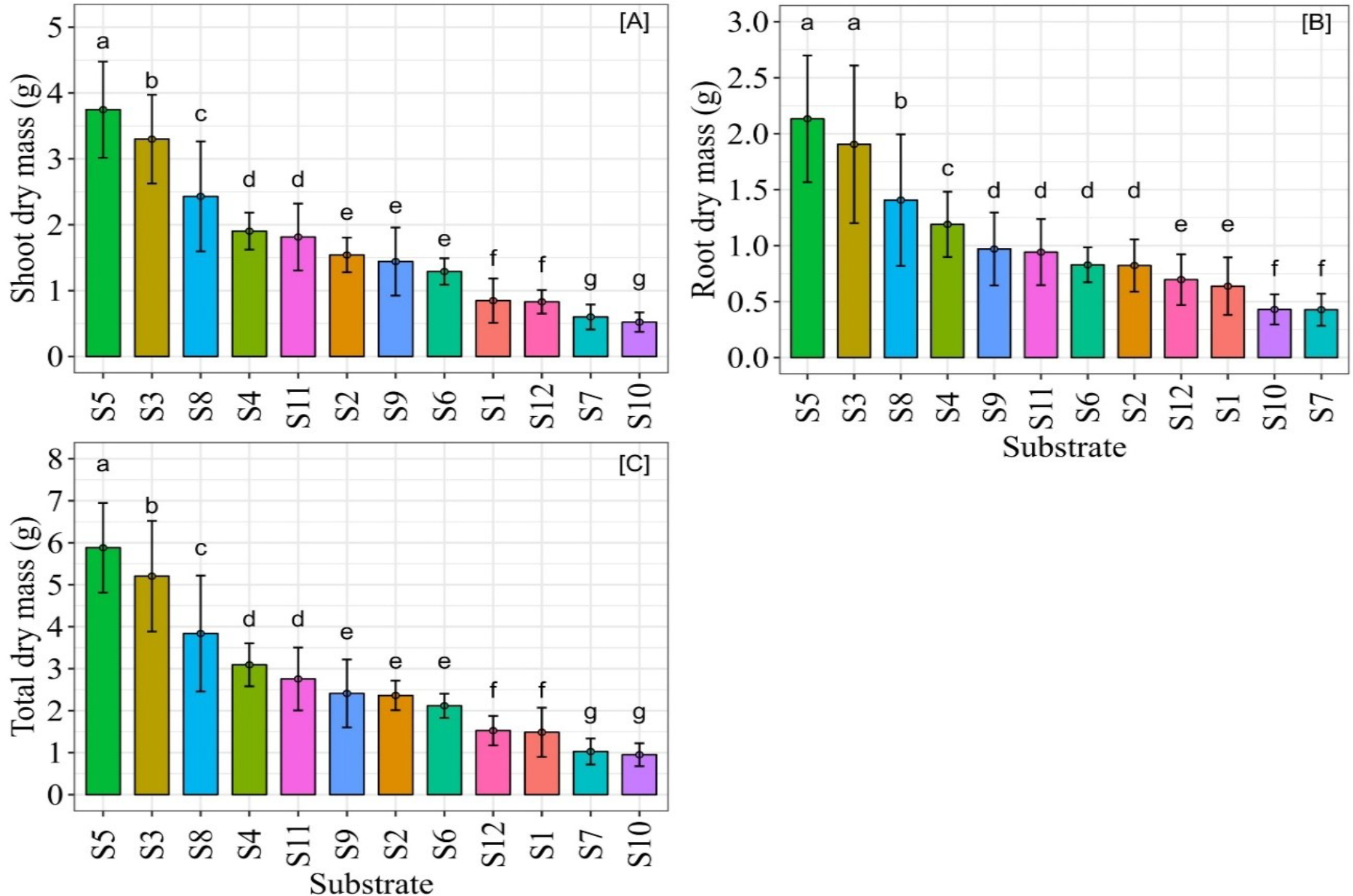
Treatment S5 showed the highest mean TDM, RDM, and SDM values, differing significantly from the other treatments (Figures 4A, 4B and 4C).

Shoot dry mass (SDM) [A], root dry mass (RDM) [B], and total dry mass (TDM) [C] of Handroanthus impetiginosus seedlings over 125 days after sowing in the different treatments. Different letters indicate statistical difference by the Scott-Knott test (p ≤ 0.05).
In a study by Höfig et al. (2022), similar results were obtained, presenting higher values of SDM, RDM, and TDM in Handroanthus impetiginosus seedlings treated with a balanced incorporation of organic compounds. The presence of poultry litter, refrigerated residue, and boiler ash in the substrate provided a relevant supply of essential nutrients, such as calcium, magnesium, nitrogen, phosphorus, potassium, and quality organic matter, thus contributing to the gradual release of nutrients, increasing dry matter (ALMEIDA et al., 2024).
The analysis of biomass partitioning revealed clear and consistent trends among the treatments (Figures 4A, 4B, and 4C). In Figure 4A, shoot dry mass (SDM) varied significantly across treatments, with S5 presenting the highest SDM values, indicating more vigorous shoot development under this substrate composition. Treatments S7 and S10, on the other hand, showed the lowest SDM values, suggesting limited aerial biomass accumulation, likely due to suboptimal nutrient availability or reduced substrate porosity.
Figure 4B shows that root dry mass (RDM) followed a similar pattern. Treatment S5 again achieved the greatest RDM, highlighting its capacity to promote well-structured root systems with greater biomass accumulation. In contrast, S7 and S10 exhibited the lowest RDM, reinforcing the evidence that these substrates restrict root growth, possibly because of inadequate physical structure, low cation exchange capacity, or imbalanced organic-mineral proportions.
Figure 4C integrates these trends by showing the total dry mass (TDM). As expected, S5 yielded the highest TDM, reflecting synergistic increases in both shoot and root biomass. Meanwhile, treatments S7 and S10 produced the lowest TDM values, confirming their inferior overall performance and their limitations for supporting vigorous seedling growth.
When interpreted together, these three variables demonstrate a coherent physiological response: substrates with balanced organic residues and higher nutrient availability (such as S5) promote coordinated biomass allocation to both shoots and roots, resulting in superior total biomass accumulation. Conversely, substrates with high proportions of less reactive or poorly structured components (as in S7 and S10) constrain both compartments, impairing shoot development, root expansion, and consequently, total plant growth. This integrated pattern highlights the significance of substrate composition in influencing the early growth physiology and overall performance of Handroanthus impetiginosus seedlings.
In a study conducted by Almeida et al. (2024) on the initial growth of Handroanthus impetiginosus seedlings in different organic compounds, it was demonstrated that the substrate with a greater proportion of boiler ash yielded lower SDM and TDM values, specifically 0.150 g and 0.541 g, respectively. These lower values may be related to the use of boiler ash in the composition of the substrates, because although it presents benefits to the physical properties of the soil and plant nutrition, excess ash can harm the microbiota and cause phytotoxicity, in addition to limiting the availability of mineral nutrients, such as cationic micronutrients (CRUZ et al., 2021).
In Figure 5A, the mean values of the SDM/RDM ratio were higher in treatments S2 and S11.

SDM/RDM ratio [A], robustness index [B], lignification index [C], and Dickson quality index [D] of Handroanthus impetiginosus seedlings over 125 days after sowing in different treatments. Different letters indicate statistical difference by the Scott-Knott test (p ≤ 0.05).
Considering reference values reported in the literature, which indicate that high-quality seedlings should present SDM/RDM values close to 2, it can be stated that purple ipê seedlings produced in treatments S2 and S11 exhibited good quality and balanced biomass allocation between shoots and roots (BORBA et al., 2024).
In Figure 5A, the lowest SDM/RDM ratios were observed in treatments S1, S10, and S12, indicating a disproportionately lower allocation of biomass to the shoot compared to the root system. This pattern suggests that seedlings grown in these substrates experienced constraints that favored a more conservative or stress-responsive biomass allocation strategy. In the case of S10 and S12, the reduced ratios can be attributed to substrate compositions characterized by lower cation exchange capacity (CEC), reduced nutrient retention, and a suboptimal balance of organic and mineral components, all of which limit the availability of essential nutrients required for vigorous shoot development. Under such conditions, seedlings commonly redirect assimilates toward root expansion to improve soil exploration and nutrient uptake, resulting in a lower SDM/ RDM ratio.
For S1, composed exclusively of commercial substrate, the reduced ratio likely reflects a simpler physical-chemical profile, with less structural heterogeneity and potentially lower levels of slow-release organic matter, resulting in more modest shoot growth compared to substrates enriched with diverse organic residues. This response is consistent with findings in tropical forest species, where substrates with limited nutrient buffering and low organic content often promote preferential root biomass investment as an adaptive mechanism.
Overall, the lower SDM/RDM ratios in these treatments reflect limitations in nutrient availability, substrate structure, and water-air balance, which collectively restrict shoot biomass accumulation. These results highlight the importance of balanced and nutrient-rich substrates for promoting harmonious biomass partitioning and producing high-quality Handroanthus impetiginosus seedlings.
In the work carried out by Rezende et al. (2023), on the potential of substrates in the production of purple ipê seedlings, it was found that treatments with higher proportions of boiler ash obtained lower values of the SDM/RDM ratio with 0.82 g, while the highest values were found in the balanced compositions varying around 1.37 g, results that are similar to those found in this work. According to Sousa Filho et al. (2024), substrates with low organic matter content generally have a low CEC, meaning they have a lower capacity to retain nutrients and make them unavailable to plants, which directly interferes with the increase in SDM and RDM, thus contributing to a lower SDM/RDM ratio.
In Figure 5B, the lowest Robustness Index (RI) values were observed in treatments S1, S9, S10, and S12, indicating that seedlings produced in these substrates exhibited a less favorable balance between height and stem diameter compared with the other treatments. Several substrate-related factors help explain this reduced performance. Treatments S9, S10, and S12 contain higher proportions of materials with low cation exchange capacity (CEC), restricted nutrient retention, and, in some cases, elevated pH, conditions that tend to limit the supply of essential nutrients required for lignification and stem thickening. As a consequence, seedlings may elongate disproportionately while maintaining thinner stems, resulting in a lower RI.
For S1, composed exclusively of commercial substrate, the reduced RI suggests that although the substrate provides physical uniformity, it may lack the nutrient richness and organic heterogeneity present in mixed formulations, limiting both carbon allocation and mechanical strengthening of the stem. This results in seedlings that are taller but less structurally robust. The combination of lower nutrient buffering capacity, suboptimal organic matter content, and insufficient micronutrient availability, particularly elements such as Ca and Mg, which are crucial for cell wall stability, likely contributed to the lower robustness of seedlings in these treatments.
These results align with those reported by Silva et al. (2024), who also observed the significant influence of alternative substrates in balanced proportions on the quality of Cerrado seedlings, highlighting the role of organic substrates as viable alternatives for producing seedlings with satisfactory performance under nursery conditions. This fact may be related to the different compositions of the substrates and combinations with organic compounds (HÖFIG et al., 2022).
In Figure 5C, the lowest lignification index (LI) values were observed in treatments S1, S2, S6, S7, and S10, indicating that seedlings grown in these substrates developed lower levels of stem lignification compared with the best-performing treatments. Several factors likely contributed to this reduced performance. Treatments S6, S7, and S10 include substrate combinations with lower organic matter content, reduced cation exchange capacity (CEC), and, in some cases, high pH, conditions that can restrict the availability of key nutrients such as calcium, magnesium, and micronutrients essential for lignin biosynthesis and cell wall strengthening. Limited water retention capacity in these substrates may also reduce the enzymatic activity of peroxidases and laccases, which depend on adequate hydration for lignin polymerization.
For S1 and S2, the simpler substrate structures either fully commercial (S1) or with limited diversity of organic residues (S2) likely offer lower biochemical complexity and reduced gradual nutrient release, limiting the metabolic pathways associated with secondary cell wall formation. As lignification is directly influenced by both nutrient supply and adequate moisture balance, substrates with poor physical structure or limited nutrient buffering capacity tend to produce seedlings with thinner, less lignified stems. The overall pattern suggests that substrates lacking a balanced combination of organic and mineral fractions fail to support optimal lignin deposition, resulting in the lower LI values observed in these treatments.
In the work carried out by Heberle et al. (2018) on morphometric changes and lignification of purple ipê seedlings in different substrates, it was demonstrated that substrates with better water retention capacities resulted in a 23.65% increase in lignin content. In this sense, the lowest and highest lignification values may be related to the capacity of these compounds to store water. Thus, the initiation of polymerization for lignin formation requires H2O2 peroxidase and other enzymes, as lignin content decreases with lower water availability (DEUS et al., 2022).
When evaluating the DQI, treatment S5 presented the highest mean value, significantly differing from the others (Figure 5D). In a study carried out by Almeida et al. (2024) on the effect of different substrates on the initial development of Handroanthus impetiginosus seedlings, the highest DQI value of 0.68 was obtained in substrates with balanced compositions, a value that was lower than the one found in this study. Therefore, the higher the value, the higher the seedling quality. The results demonstrate the importance of balanced compositions that combine organic materials in ideal proportions with minerals to optimize seedling development.
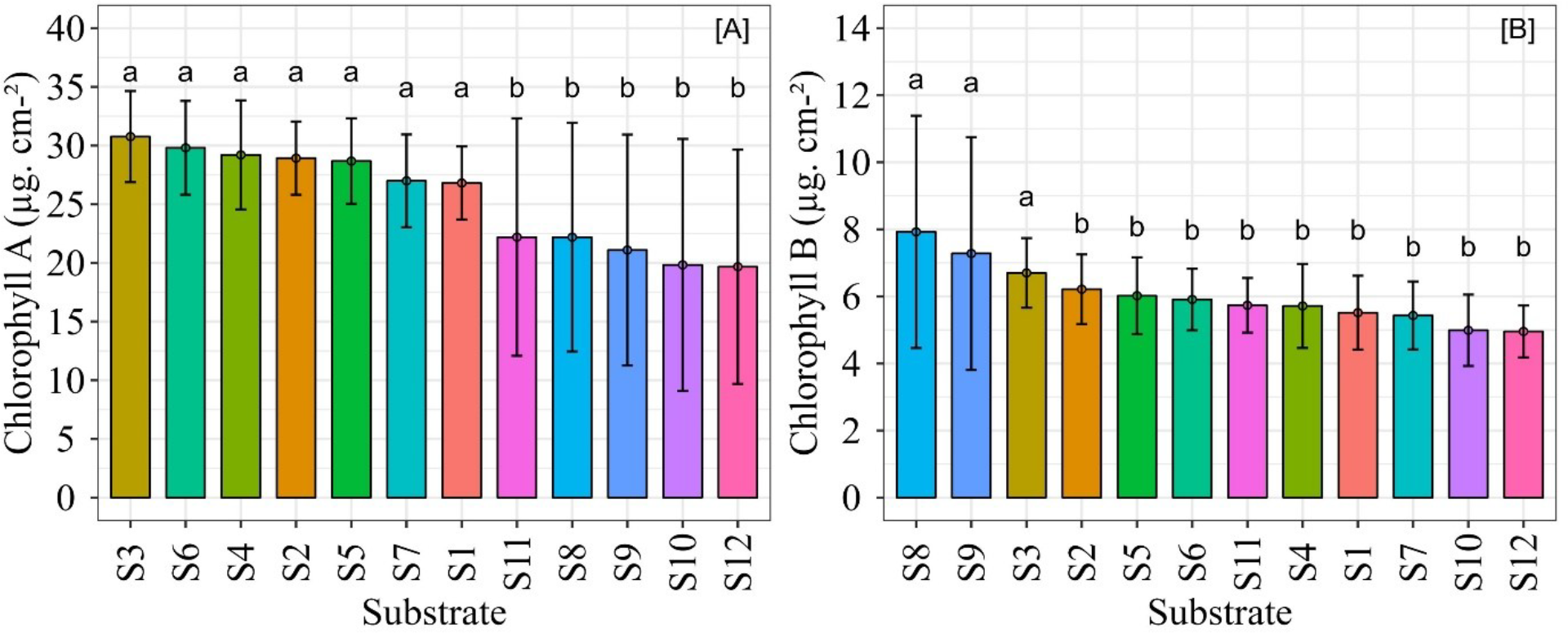
As shown in Figure 6A, treatments S3, S6, S4, S2, S5, and S7 exhibited the highest significant mean values of chlorophyll A concentrations compared to the others.
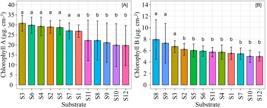
Chlorophyll A [A] and chlorophyll B [B] concentrations in Handroanthus impetiginosus seedlings over 125 days after sowing in the different treatments. Different letters indicate statistical difference by the Scott-Knott test (p ≤ 0.05).
In Figure 6A, the lowest chlorophyll A concentrations were observed in treatments S8, S9, S10, S11, and S12, indicating that seedlings grown in these substrate formulations exhibited reduced photosynthetic pigment synthesis. Several substrate-related factors may explain these results. Treatments such as S8, S9, and S12 contain high proportions of latosol or boiler ash, materials typically characterized by low nitrogen availability, limited magnesium content, and, in some cases, higher pH levels, all of which are critical factors influencing chlorophyll biosynthesis. Nitrogen is a fundamental component of the chlorophyll molecule, while magnesium sits at the center of the porphyrin ring; therefore, deficiencies in either element directly restrict the formation of pigment. Additionally, substrates with reduced organic matter content such as those present in S10 and S11 tend to have lower cation exchange capacity (CEC), diminishing the substrate’s ability to retain and gradually supply essential nutrients to the seedlings. Poor physical structure and suboptimal moisture retention in these substrates may further compromise enzymatic activities involved in chlorophyll synthesis. Collectively, these limitations restrict the metabolic pathways necessary for producing adequate chlorophyll A levels, resulting in the lower values recorded for these treatments.
These lower values may be related to the compositions and proportions of each organic compound, since the treatments with lower chlorophyll values were found in compounds with simple compositions. These results corroborate the work of Moura et al. (2016). They attribute these lower values to low soil fertility and low nutrient availability.
In Figure 6B, the lowest chlorophyll B concentrations were recorded in treatments S1, S2, S4, S5, S6, S7, S10, S11, and S12, demonstrating that these substrates provided less favorable conditions for the synthesis of accessory photosynthetic pigments. Several edaphic and physiological factors may explain this reduced performance. Many of these treatments contain substrates with lower nitrogen and magnesium availability, both of which are essential components for chlorophyll formation. Additionally, treatments with high proportions of latosol or boiler ash (such as S10 and S12) tend to exhibit higher pH values and low cation exchange capacity (CEC), which limit nutrient retention and reduce the bioavailability of key micronutrients required for pigment synthesis, such as iron and manganese. Substrates like S1 and S2, which rely on commercial substrates or simplified compositions, may lack the organic matter diversity and gradual nutrient-release capacity found in richer formulations, restricting the metabolic pathways associated with chlorophyll B production.
Furthermore, suboptimal water retention in some of these substrates may compromise the enzymatic activity involved in the biosynthesis of photosynthetic pigments. Collectively, these limitations result in decreased chlorophyll B levels, indicating a reduced overall development of the photosynthetic machinery in seedlings grown under these treatments. These treatments, although distinct in composition, share the presence of organic sources with nitrogen, an essential nutrient for chlorophyll synthesis. These results are consistent with the findings of Mauri et al. (2019), who also observed an increase in chlorophyll levels with the use of alternative sources with high nitrogen content.
On the other hand, the other treatments presented significantly lower mean chlorophyll B values (Figure 6B), with averages below 7 µg cm⁻2. In the study by Azevedo et al. (2024), on the physiological and morpho-anatomical parameters of Cerrado species, they found values of 43 µg cm-2 of chlorophyll A and 26 µg cm-2 of chlorophyll B, results higher than those found in this study. The low concentration of this pigment in treatments with a higher proportion of latosol or boiler ash may be associated with low nitrogen availability, low magnesium content, and high pH, which together hinder the absorption and incorporation of nutrients essential for the photosynthetic metabolism of seedlings. They attribute these higher values to good soil fertility and high nutrient availability, particularly nitrogen (N).
CONCLUSION
The substrate that exhibits the best overall performance for producing Handroanthus impetiginosus seedlings is treatment S5.
Treatment S5 presents the highest average values for the parameters H, SD, SDM, RDM, TDM, RI, and DQI.
The composition of treatment S5 results in a fertile, stable, and efficient substrate for seedling development, demonstrating its potential as a viable and superior alternative to currently used commercial substrates.
Data Availability:
The data that support the findings of this study can be made available, upon reasonable request, from the corresponding author.
REFERENCES
- ALMEIDA, R. S. et al. Handroanthus impetiginosus biometry of seed and seedling production after different periods of immersion in water. Pesquisa Agropecuária Brasileira, 59: 1-9, 2024.
- ALVARES, C. A. et al. Koppen’s climate classification map for Brazil. Meteorologische Zeitschrift. Gebrüder Borntraeger, 22: 711-728, 2013.
- ALVES, F. J. B.; FREIRE, A. L. Crescimento inicial e qualidade de mudas de ipê-roxo (Handroanthus impetiginosus (Mart. ex DC) Mattos) produzidas em diferentes substratos. Agropecuária Científica no Semiárido, 13: 195-202, 2017.
- AZEVEDO, L. P. N. et al. Efeito do inseticida fipronil sobre os parâmetros fisiológicos e morfoanatômicos em espécie do Cerrado. Iheringia, 23: 1-8, 2024.
- BORBA, L. G. L. et al. Tecnologia para produção de mudas de Mimosa caesalpiniifolia em função de doses de fertilizantes de liberação controlada. Agropecuária Científica no Semiárido, 20: 105-108, 2024.
- CAVALCANTE, A. G. et al. Efeito do armazenamento sobre a qualidade fisiológica de sementes de feijoeiro especial tipo exportação. Acta Biológica Catarinense, 11: 31-41, 2024.
- CRUZ, M. S. F. V. et al. Maturidade de sementes de Anadenanthera colubrina (Vell.) Brenan. Ciência Florestal, 31: 515-532. 2021.
- DEUS, D. A. et al. Lignina: uma importante tecnologia química da madeira. e-Acadêmica, 3: 1-16, 2022.
- FERNANDES, A. B. M.; SOUSA, V. R. B.; PRAXEDES, S. C. Avaliação da viabilidade de sementes de Handroanthus impetiginosus (Mattos) por parâmetros fisiológicos após armazenamento. Agropecuária Científica no Semiárido, 20: 27-30, 2024.
- FREITAS, T. A. S. et al. Sementes de Espécies Florestais Nativas: Aspectos do Armazenamento. Revista Científica Intelletto Venda Nova do Imigrante, 9: 1-22, 2024.
- HEBERLE, K. et al. Morfometria e lignificação em função da aplicação de ácido jasmônico em mudas de ipê roxo e guajuvira. Scientia Agraria Paranaensis, 17: 317-325, 2018.
- HÖFIG, P. et al. Avaliação da qualidade de um fertilizante produzido por compostagem conjunta de materiais orgânicos e rochas moídas. Revista em Agronegócio e Meio Ambiente, 15: 1-18, 2022.
- MAURI, J. et al. Forage potential of Urochloa genotypes by using leaf anatomy. Ciência Rural, 49: 1-8, 2019.
- MEDEIROS, A. C. S. et al. Coleta de sementes florestais nativas. Colombo: Embrapa Florestas, Circular Técnica, 120: 2-5, 2006.
- MOURA, A. R. et al. Relações hídricas e solutos orgânicos em plantas jovens de Jatropha curcas L. sob diferentes regimes hídricos. Ciência Florestal, 26: 345-354, 2016.
- NASCIMENTO, B. L. M. et al. Produção de mudas de espécies usadas na recuperação de áreas degradadas utilizando substratos à base de lodo séptico, cama de frango e esterco bovino. Cadernos de Pesquisa em Engenharia de Vegetação, 21: 1-12, 2021.
- POLIZEL, S. P. et al. Analysing the dynamics of land use in the context of current conservation policies and land tenure in the Cerrado - MATOPIBA region (Brazil). Land Use Policy, 104: 1-21, 2021.
-
R DEVELOPMENT CORE TEAM. R: A Language and environment for statistical computing Available at: <https://www.r-project.org/>. Access on: 30 April 2025.
» https://www.r-project.org/ - REZENDE, G. P. et al. Substratos formulados com biossólido e casca de ovo na produção de mudas de Handroanthus chrysotrichus Nativa, 11: 338-347, 2023.
- SANTOS, R. S. et al. Tripes (Thysanoptera: Thripidae) associados ao Ipê-roxo, em Rio Branco, Acre. Entomology Beginners, 4: 1-3, 2023.
- SANTOS, H. G. et al. Sistema Brasileiro de Classificação de Solos Brasília, DF: Embrapa, 2025. 393 p.
- SILVA, S. A. B. et al. Avaliação germinativa de Handroanthus heptaphyllus (Ipê -roxo) em diferentes tipos de substrato. Revista Observatorio de la Economia Latinoamericana, 22: 1-14, 2024.
- SOUSA FILHO, L. et al. Developing an international consensus reporting guideline for intervention Fidelity in Non-Drug, non-surgical trials: The ReFiND protocol. Contemporary Clinical Trials, 142: 10-25, 2024.
- TEIXEIRA, P. C. et al. Manual de métodos de análise de solo Brasília, DF: Embrapa, 2017. 574 p.
-
Editor in Chief:
Aurélio Paes Barros Júnior