Blue carbon stocks along flooding gradients in mangrove forests of ilha de Itamaracá, Pernambuco, Brazil
ABSTRACT
Climate change, driven by the increase in greenhouse gases, affects global ecosystems, and mangroves stand out for their ability to sequester and store carbon, known as "blue carbon," contributing to climate change mitigation. This study aimed to quantify and compare blue carbon stocks in different flooding zones, defined as the Flooded Area, the Periodically Flooded Area, and the Dry Area, in Itamaracá, Pernambuco, and propose conservation strategies. Soil samples were collected in three flooding zones, in the 0-100 cm layer, and analyzed to determine carbon concentrations and stocks using physical and chemical analysis techniques. The data were subjected to statistical analyses to compare differences between the zones. The results showed that the Flooded Area had the highest carbon stocks (259.42 Mg ha-1), due to anaerobic conditions that preserve organic matter. Periodically Flooded Area recorded intermediate values (217.20 Mg ha-1), while Dry Area had the lowest stocks (63.17 Mg ha-1), resulting from accelerated oxidation and lower deposition of organic matter. The differences highlight the influence of hydrological dynamics and environmental conditions on carbon storage. It is concluded that mangroves are important carbon sinks, with variations in carbon sequestration between different flooding zones. Conservation strategies, such as restoration, Payment for Ecosystem Services, and remote monitoring, are effective in protecting these ecosystems and their ecosystem services, thereby contributing to climate change mitigation.
Keywords:
Carbon sequestration; Climate change; Organic matter; Ecosystem services
RESUMO
As mudanças climáticas, impulsionadas pelo aumento dos gases de efeito estufa, afetam ecossistemas globais, e os manguezais destacam-se por sua capacidade de sequestrar e armazenar carbono, conhecido como "carbono azul", contribuindo para a mitigação das mudanças climáticas. Este estudo teve como objetivo quantificar e comparar os estoques de carbono azul em diferentes zonas de inundação, definidas como: Área Alagada, Área Periodicamente Alagada e Área Seca , na floresta de mangue da Ilha de Itamaracá, Pernambuco, e propor estratégias de conservação. Foram coletadas amostras de solo em três zonas de inundação, em profundidades de 0 a 100 cm, e analisadas para determinar concentrações e estoques de carbono, utilizando técnicas de análise física e química. Os dados foram submetidos a análises estatísticas para comparar as diferenças entre as zonas. Os resultados mostraram que a Área Permanentemente Alagada apresentou os maiores estoques de carbono 259,42 Mg ha-1, devido às condições anaeróbicas que preservam a matéria orgânica. A Área Periodicamente Alagada registrou valores intermediários 217,20 Mg ha-1, enquanto a Área Seca apresentou os menores estoques 63,17 Mg ha-1, resultado da oxidação acelerada e menor deposição de matéria orgânica. As diferenças destacam a influência da dinâmica hidrológica e das condições ambientais no armazenamento de carbono. Conclui-se que os manguezais são sumidouros importantes de carbono, com variações entre as zonas de inundação. Estratégias de conservação, como restauração, Pagamento por Serviços Ambientais e monitoramento remoto, são úteis para proteger esses ecossistemas e seus serviços ecossistêmicos, contribuindo para a mitigação das mudanças climáticas.
Palavras-chave:
Sequestro de carbono; Mudanças climáticas; Matéria orgânica; Serviços ecossistêmicos
INTRODUCTION
Climate change has become a critical global concern, reshaping natural processes and threatening the stability of ecosystems worldwide. Understanding how different ecosystems contribute to climate regulation is crucial for guiding conservation and mitigation efforts.
As one of the greatest environmental challenges of our time, the increase in greenhouse gas (GHG) concentrations, such as carbon dioxide, is intensifying global warming and affecting various terrestrial and marine ecosystems. Among these ecosystems, mangroves stand out due to their ability to capture and store large amounts of carbon, primarily in the soil (WANG; GU, 2021).
The concept of "blue carbon" refers to carbon sequestered by coastal and marine ecosystems, with mangroves being a key ecosystem in this process due to their ability to store carbon for extended periods, thereby protecting it from release into the atmosphere (ROY et al., 2024). Studies show that mangroves accumulate carbon at rates higher than many terrestrial ecosystems, partly due to the anoxia in their soils, which slows down the decomposition of organic matter. In Brazil, mangroves cover approximately 1.2 million hectares, with a strong presence along the Atlantic coast, highlighting the potential of these ecosystems to contribute to greenhouse gas emission reduction goals, such as those outlined in the Paris Agreement (PADMAKUMAR; SHANTHAKUMAR, 2024).
In addition to their role in carbon sequestration, mangroves are known for their high productivity and ability to export organic matter to the adjacent marine environment, contributing to the fertility of coastal waters. This carbon input supports various species, especially detritivores; additionally, mangroves perform other ecological functions, such as protecting against erosion and maintaining local biodiversity (ROY et al., 2024).
The interaction between mangroves and other coastal ecosystems is crucial for maintaining the rich biodiversity that characterizes these areas. Deforestation of these ecosystems results in the release of stored carbon, exacerbating the effects of the climate crisis. The conservation and restoration of mangroves are, therefore, recommended practices to mitigate CO2 emissions and preserve essential ecosystem services (ROY et al., 2024).
However, mangroves face pressures due to urbanization and agricultural expansion in coastal areas, threatening their integrity and carbon sink function (CHOUDHARY; DHAR; PAWASE, 2024). The growing recognition of blue carbon ecosystems, such as mangroves, aligns with international commitments to reduce GHG emissions. Preservation and restoration initiatives for these ecosystems are crucial for mitigating climate change, especially in vulnerable coastal regions like Brazil. Mangrove conservation contributes to long-term carbon retention, preventing the degradation of organic-rich soils and the subsequent release of CO2 (ROY et al., 2024).
Although the importance of mangroves for carbon sequestration is widely recognized, a significant knowledge gap remains regarding carbon stocks under various flooding conditions and soil types, particularly in the northeastern region of Brazil (BELOTO et al., 2023). The lack of regional data hinders the formulation of effective public policies for the conservation and sustainable management of these ecosystems (HATJE et al., 2021). According to Mursyid et al. (2021), mangroves are carbon sinks that store approximately three times more carbon than other ecosystems, making them essential for mitigating climate change.
In this context, the lack of detailed information about carbon stocks in northeastern mangroves hinders the development of appropriate public policies for their preservation. Therefore, this study aimed to evaluate the dynamics of blue carbon stocks in three mangrove areas along the flood gradient of the Santa Cruz Channel, in the Ilha de Itamaracá (Pernambuco, Brazil).
MATERIALS AND METHODS
Study area
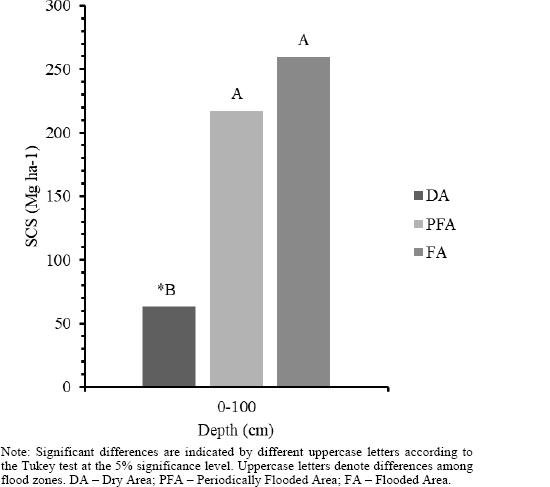
The study was conducted in the GL1 watershed, which is part of one of the Small Coastal Basin Groups defined by the Pernambuco State Water Resources Plan (PERNAMBUCO, 1998). This hydrological unit comprises several small basins, including the Botafogo, Timbó, and Paratibe rivers, which discharge into the Santa Cruz Channel estuary, where Ilha de Itamaracá is located. The area is situated along the northern coast of Pernambuco, between 07º35'12″ and 08º03'48″ S and 34º48'46″ and 35º11'33″ W (Figure 1).
The watershed, covering an area of 1,188.11 km2, spans thirteen municipalities, including Itamaracá, where the research was conducted. Itamaracá is situated approximately 40 km from Recife, covering an area of 66.14 km2 and having an estimated population of 24,540 inhabitants (IBGE, 2022). The region is located in the Borborema Province and is part of the Santa Cruz Environmental Protection Area (APA), covering an area of 38,692 hectares (SOUZA-SANTOS et al., 2024). The climate of the region is classified as Aw, tropical rainy, according to the Köppen-Geiger classification (PEEL; FINLAYSON; McMAHON, 2007), with an average annual temperature of 25.9 ºC and an average annual precipitation of 1,113 mm.
The study site includes the Santa Cruz Channel estuarine complex, which extends for 22 km and features typical mangrove vegetation, predominantly composed of Rhizophora mangle (red mangrove), a mangrove species widely distributed in tropical and subtropical regions, known for its aerial roots and ecological importance in coastal ecosystems (IWAULA et al., 2023). The soil in the areas was classified as Tiomorphic Gleisols (SANTOS et al., 2018).
Characterization of the areas
To understand the carbon distribution in mangroves, the study selected three distinct flooding zones along the Santa Cruz Channel, where sampling areas were established: the Flooded Area (FA), the Periodically Flooded Area (PFA), and the Dry Area (DA). Each zone was defined according to the flooding gradient proposed by Lugo and Snedaker (1974): FA - a permanently submerged area of 7.19 ha, located at 7º48'39.22″ S and 34º51'23.74″ W; PFA - a periodically flooded area of 21.16 ha, located at 7º48'19.78″ S and 34º52'02.88″ W; and DA - an area that remains dry most of the time, covering 12 ha and located at 7º48'50.83″ S and 34º52'02.95″ W.
Soil sampling
Soil samples were collected in each area at low tide using a Napoleon auger at the following depth intervals: 0-10 cm, 10-20 cm, 20-30 cm, 30-40 cm, 40-50 cm, 50-60 cm, 60-70 cm, 70-80 cm, 80-90 cm, and 90-100 cm, with seven replicates for each layer. The samples were then taken to the laboratory for physical and carbon analyses. Samples intended for carbon determination were wrapped in plastic film, placed in cool boxes with ice packs, and transported to the laboratory on the same day they were collected.
Physical analyses
The distribution of soil particle sizes was determined by the pipette method (TEIXEIRA et al., 2017), with the following mean values for each area: FA (sand 469.82 g kg-1, silt 204.79 g kg-1, clay 325.39 g kg-1); PFA (sand 481.42 g kg-1, silt 122.15 g kg-1, clay 396.43 g kg-1); DA (sand 431.53 g kg-1, silt 201.35 g kg-1, clay 367.12 g kg-1). For soil density analysis, the samples followed the methodology of Almeida et al. (2018), with the average values for the 0-100 cm layer being: FA (0.96 g cm-3), PFA (1.05 g cm-3), and DA (1.45 g cm-3).
Soil carbon analyses
The samples were placed in a forced-air oven set to 60º C for 48 hours, or until they reached a constant weight. They were then ground using a porcelain mortar and pestle until a fine powder was formed, which was passed through a 150 μm mesh sieve. After the grinding process, the samples were placed in plastic bags, weighed using an analytical balance, and 1 g from each sample was transferred to 50 ml Falcon tubes.
To eliminate carbonates, each sample was treated with 1M HCl, with 10 mL of HCl added per sample. The acidification was considered complete when no bubbling occurred, indicating the total removal of carbonates. The tubes were then centrifuged for 5 minutes at 4000 RPM. After acidification, the samples were washed with 50 mL of distilled water to neutralize the HCl. The samples were then dried again in the oven for 24 hours or until they reached constant weight.
After drying, the weight was recorded again, and the material was ground once more before being stored in 2 ml Eppendorf microtubes, properly labeled. All the samples were then stored and organized in cryogenic tube boxes.
Carbon analyses were performed using a EuroVector EA3000 elemental analyzer, which utilizes high-temperature combustion to convert the elements present in the samples, such as carbon, hydrogen, and nitrogen, into gaseous compounds that are analyzed by a thermal conductivity detector. For each sample, 20 mg of soil was weighed, packed into tin capsules, and sealed to prevent material loss. The analyzer was calibrated using sediment B2151 as a reference material to ensure accuracy in the results obtained.
The carbon concentrations were converted into soil carbon stocks (SCS) in Mg ha-1 for each sampled depth as follows (VELDKAMP, 1994):
SCS - soil carbon stock in Mg ha-1; C - carbon concentration in the soil sample in g kg-1; Ds - soil density at the layer in kg dm-3; P - sampled depth in cm. The total carbon stock from 0 to 100 cm depth was obtained by summing the carbon stock values for each sampled layer.Statistical analyses
The concentrations and soil carbon stocks were subjected to Shapiro-Wilk normality tests and analysis of variance. Mean comparisons were made using Tukey's test at a 5% significance level, and the statistical software SISVAR was used (FERREIRA, 2011).
RESULTS AND DISCUSSION
Carbon concentrations in different flood zones and depths
The frequently flooded zone, the Flooded Area (FA), showed the highest carbon concentrations compared to the other zones. At the same time, the Dry Area (DA) had the lowest values, highlighting differences in environmental conditions and organic matter dynamics (Figure 2).
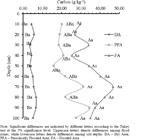
Carbon concentrations across flood zones and soil depths in mangrove forests in the Itamaracá, PE. Brazil.
In FA, carbon concentrations were the highest across all depths (Figure 2). In the surface layers (0-10 cm), the carbon concentration was 29.53 g kg-1, which is considerably higher than the concentrations found in PFA and DA. As depth increased, the carbon concentration decreased, but remained high, reaching 46.72 g kg-1 at 70 cm, the highest value in all flood zones. Beyond 70 cm, the carbon concentration decreased to 34.95 g kg-1 at 100 cm, representing a reduction of approximately 25% compared to the 70 cm depth, which is still elevated compared to the other zones. This behavior indicates the high productivity of mangrove vegetation, constant organic matter deposition, and permanent anaerobic conditions that favor carbon preservation in deeper layers (COORAY; CHALMERS; CHITTLEBOROUGH, 2024).
The PFA, in turn, showed intermediate carbon concentrations (Figure 2). Although PFA showed lower carbon values in the surface layers, with 20.09 g kg-1 at 10 cm and 19.04 g kg-1 at 20 cm, a distinct accumulation pattern was observed in deeper layers. The carbon concentration in the 90-100 cm layer was 27.54 g kg-1, significantly higher than the 5.06 g kg-1 observed in DA. Between 70 and 100 cm, the carbon concentration in PFA increased from 21.97 g kg-1 at 70 cm to 34.39 g kg-1 at 90 cm, representing an approximately 56% increase with depth. This indicates that the flooding dynamics, alternating between anaerobic and aerobic conditions, favor carbon accumulation at greater depths. According to Cooray, Chalmers, and Chittleborough (2024), mangroves store over 49% of their carbon stock in deeper horizons (greater than 1 m).
In DA, the lowest carbon concentrations were observed at all depths (Figure 2). The highest concentration was 6.70 g kg-1 at 80 cm, but the values remained low and constant throughout the profile. At the 10 cm layer, the carbon concentration was only 4.35 g kg-1. At 100 cm, it reached 5.06 g kg-1, indicating that carbon oxidation and the limited deposition of organic matter constrain carbon accumulation in this area (WANG et al., 2024). The higher soil density and lack of flooding in DA also contribute to the low carbon retention, as the dry soil favors aerobic decomposition and organic matter loss, preventing long-term carbon storage (XIA et al., 2022).
The results obtained in FA, with carbon concentrations ranging from 25.39 g kg-1 at 40 cm to 46.72 g kg-1 at 70 cm (an increase of approximately 84%), are consistent with the studies of Wang et al. (2023), who observed significant increases in the mineralization of carbon in mangrove soils under warming conditions. The carbon concentrations in PFA, which ranged from 15.89 g kg-1 at 50 cm to 34.39 g kg-1 at 90 cm, representing an increase of approximately 116%, align with the findings of Xia et al. (2022), who reported variations in carbon in mangroves depending on vegetation and depth. In DA, with lower carbon values ranging from 3.54 g kg-1 at 30 cm to 6.70 g kg-1 at 80 cm, corresponding to an increase of approximately 89%, our data corroborate those of the authors, who highlighted the lower carbon storage capacity in drier or altered mangrove areas.
Carbon stocks in different flood zones
Carbon stocks in the different flood zones exhibited variations due to the influence of factors such as vegetation cover, soil depth, hydrological dynamics, and local biogeochemical conditions. As illustrated in Figure 3, carbon stocks were measured at depths of 0-100 cm, showing noticeable differences between the analyzed flood zones. The PFA zone had a carbon stock of 217.20 Mg ha-1, while the FA zone recorded the highest value, with 259.42 Mg ha-1. In contrast, the DA zone had the lowest stock, with 63.17 Mg ha-1.
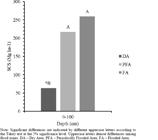
These differences are attributed to variations in vegetation composition, hydrological dynamics, and sediment retention capacity in each zone. The FA zone tends to accumulate a larger amount of organic matter due to the lesser tidal influence and greater soil stability. Studies such as those by Alongi (2022) highlight that mangroves with lower tidal influence and greater sediment stability tend to store more carbon in the soil, particularly in deeper horizons (XIA et al., 2022; WU et al., 2025).
On the other hand, the DA zone, characterized by greater tidal influence and lower vegetation cover, shows a lower capacity for carbon storage, as observed in similar studies (OUYANG; GUO; LEE, 2024). This zone is more susceptible to the export of dissolved and particulate organic carbon to adjacent systems, reducing the local stock (ALONGI, 2022).
The predominance of carbon stocks in the soil, accounting for 83-90% of the total in mangroves, as highlighted by Cooray et al. (2021) and Rovai et al. (2021), reinforces the importance of these ecosystems for mitigating climate change. These authors emphasize that soil organic carbon is the main component of total carbon stocks in mangroves, with contributions of inorganic carbon in some regions.
The results obtained align with international studies demonstrating the heterogeneity of carbon stocks in mangroves, influenced by factors such as climate, tidal regime, and anthropogenic pressures (BELOTO et al., 2023). The PFA zone, for instance, showed intermediate values, possibly due to its location in transitional areas between zones with higher and lower tidal influences, which may result in a dynamic of carbon storage. Additionally, studies like those of Wang et al. (2023) highlight that global warming and sea level rise may affect the stability of stored carbon in mangroves, particularly in lower flood zones, such as DA.
Therefore, carbon stocks in different flood zones within mangrove forests underscore the importance of these ecosystems as carbon sinks. Protecting and restoring mangroves helps mitigate climate change and maintain essential ecosystem services. Furthermore, integrating local data with global models, as proposed by Rovai et al. (2021), can enhance carbon estimates and inform more effective mitigation strategies.
Carbon conservation strategies in different flood zones
According to Ouyang, Guo, and Lee (2024), in mangroves, sediment carbon stocks are the primary reservoirs, accounting for more than half of the ecosystem's carbon stocks, while the other half comes from living and dead biomass. This study showed that FA have the highest carbon stocks, while DA have the lowest concentrations. This variation in carbon concentrations between zones results from the dynamics of environmental conditions and the intensity of anaerobic activity, which facilitates carbon storage in deeper soil layers (ALONGI, 2022; COORAY; CHALMERS; CHITTLEBOROUGH, 2024).
In PFA, carbon is stored effectively due to constant flooding and reduced aerobic decomposition, creating a favorable environment for maintaining organic matter. To conserve carbon in these zones, it is necessary to protect areas from the impacts of urbanization, which can alter flooding regimes and compromise carbon storage. Restoration of flooded areas or maintaining the integrity of mangrove ecosystems at risk are strategies that can be adopted to ensure ecosystem services (WU et al., 2024).
In DA, carbon preservation is less efficient due to the accelerated oxidation of organic matter caused by aerobic decomposition (ALONGI, 2022). Pollution, deforestation, and urban encroachment in adjacent areas can further exacerbate this situation, leading to significant carbon losses (WANG; GU, 2021). Restoring mangrove vegetation in these areas, coupled with protection against practices that cause degradation, can help increase carbon sequestration efficiency (CHOUDHARY; DHAR; PAWASE, 2024). Additionally, it is important to invest in government policies for restoring degraded areas and to raise public awareness about the importance of preserving these zones as part of the mangrove ecosystem and its cultural identity (MOORE et al., 2022).
In general, carbon conservation strategies in mangrove soils should be tailored to the specific characteristics of each flood zone (CHOUDHARY; DHAR; PAWASE, 2024). In all zones, reducing anthropogenic pressures, such as urbanization, pollution, and alteration of natural water flows, is crucial for maintaining the functionality of these ecosystems (CHOUDHARY; DHAR; PAWASE, 2024).
Moreover, implementing mangrove restoration and conservation programs, with an emphasis on sustainable management strategies, can be an effective solution to mitigate the impacts of climate change and ensure the long-term preservation of ecosystem services (MOORE et al., 2022).
Payment for Environmental Services (PES) focused on blue carbon serves as a reward mechanism for individuals who conserve or restore coastal ecosystems, highlighting their crucial role in carbon sequestration and climate change mitigation (ZHANG et al., 2024). The use of remote sensing technologies can optimize the monitoring of mangroves and carbon stocks, leading to more effective management. Establishing marine reserves and carbon protection zones is also a strategy for preserving these areas of high ecological relevance (WANG et al., 2024; ROY et al., 2024).
Ultimately, education and community involvement in local management are crucial for raising awareness about the importance of mangroves and strengthening the cultural identity of communities that depend on these ecosystems. By engaging local residents, it is possible to integrate traditional knowledge with sustainable practices, creating a deep connection between people and mangroves (MOORE et al., 2022).
CONCLUSION
The mangrove soils of the Ilha de Itamaracá store significant amounts of blue carbon, and clear differences were observed along the flooding gradient;
The FA has the highest carbon accumulation potential, mainly due to anaerobic conditions that slow organic matter decomposition;
PFA exhibit intermediate carbon stocks, influenced by alternating aerobic and anaerobic conditions;
The DA has the lowest carbon storage capacity, reflecting accelerated oxidation and reduced organic matter input;
These patterns demonstrate the influence of hydrological dynamics on carbon retention and confirm that mangroves are effective blue carbon sinks that contribute to climate change mitigation;
The results provide scientific support for the implementation of restoration policies and Payment for Ecosystem Services, in which the use of remote monitoring technologies and community involvement are key actions for conserving these ecosystems.
Data Availability:
The data that support the findings of this study can be made available, upon reasonable request, from the corresponding author.
REFERENCES
- ALMEIDA, K. S. S. A. et al. Variabilidade espacial da condutividade hidráulica do solo saturado em Latossolo Amarelo Distrocoeso, no município de Cruz das Almas. Irriga, 22: 259-274, 2018.
- ALONGI, D. M. Impacts of climate change on blue carbon stocks and fluxes in mangrove forests. Forests, 13: 149, 2022.
- BELOTO, N. et al. Blue carbon stock heterogeneity in Brazilian mangrove forests: A systematic review. Marine Pollution Bulletin, 197: 115694, 2023.
- CHOUDHARY, B.; DHAR, V.; PAWASE, A. S. Blue carbon and the role of mangroves in carbon sequestration: Its mechanisms, estimation, human impacts and conservation strategies for economic incentives. Journal of Sea Research, 199: 102504, 2024.
- COORAY, I. G.; CHALMERS, G.; CHITTLEBOROUGH, D. The impact of sampling depths on quantification of soil organic carbon stock in mangrove environments. Catena, 246: 108398, 2024.
- COORAY, P. L. I. G. M. et al. Climate and intertidal zonation drive variability in the carbon stocks of Sri Lankan mangrove forests. Geoderma, 389: 114929, 2021.
- FERREIRA, D. F. Sisvar: A computer statistical analysis system. Ciência e Agrotecnologia, 35: 1039-1042, 2011.
- HATJE, V. et al. Blue carbon stocks, accumulation rates, and associated spatial variability in Brazilian mangroves. Limnology and Oceanography, 66: 321-334, 2021.
-
IBGE - Instituto Brasileiro de Geografia e Estatística. Censo demográfico 2022: Resultados preliminares Instituto Brasileiro de Geografia e Estatística, 2022. Available at: https://www.ibge.gov.br Access on: Nov. 15, 2024.
» https://www.ibge.gov.br - IWAULA, E. et al. Drought and salinity synergistically modulate the physiology and growth pattern of the facultative halophyte red mangrove (Rhizophora mangle). Acta Physiologiae Plantarum, 45: 131, 2023.
- LUGO, A. E.; SNEDAKER, S. C. The ecology of mangroves. Annual Review of Ecology and Systematics, 5: 39-64, 1974.
- MOORE, A. C. et al. Mangrove cultural services and values: Current status and knowledge gaps. People and Nature, 4: 1083-1097, 2022.
- MURSYID, H. et al. Governance issues related to the management and conservation of mangrove ecosystems to support climate change mitigation actions in Indonesia. Forest Policy and Economics, 133: 102622, 2021.
- OUYANG, X.; GUO, F.; LEE, S. Y. Multiple drivers for carbon stocks and fluxes in different types of mangroves. Science of The Total Environment, 906: 167511, 2024.
- PADMAKUMAR, V.; SHANTHAKUMAR, M. Mangroves: An Organic Carbon Stabilizer. In: PADMAKUMAR, V.; SHANTHAKUMAR, M. (Eds.). Mangroves in a Changing World: Adaptation and Resilience Cham, Switzerland: Springer, 2024. v. 1, cap. 2, p. 11-25.
- PEEL, M. C.; FINLAYSON, B. L.; McMAHON, T. A. Updated world map of the Köppen-Geiger climate classification. Hydrology and Earth System Sciences, 11: 1633-1644, 2007.
- PERNAMBUCO. Agência Pernambucana de Águas e Clima. Plano Estadual de Recursos Hídricos - PERH/PE Volume 1. Recife, PE: APAC, 1998. 240 p.
- ROVAI, A. S. et al. Ecosystem-level carbon stocks and sequestration rates in mangroves in the Cananéia-Iguape lagoon estuarine system, southeastern Brazil. Forest Ecology and Management, 479: 118553, 2021.
- ROY, A. D. et al. Remote sensing-based mangrove blue carbon assessment in the Asia-Pacific: A systematic review. Science of The Total Environment, 938: 173270, 2024.
- SANTOS, H. G. et al. Sistema Brasileiro de Classificação de Solos 5. ed. Brasília, DF: Embrapa, 2018. 355 p.
- SOUZA-SANTOS, L. P. et al. Assessing sediment quality at tropical mangrove areas for using as reference sites in ecotoxicological bioassays. Marine Pollution Bulletin, 205: 116607, 2024.
- TEIXEIRA, P. C. et al. Manual e métodos de análise de solo 3. ed. Brasília, DF: Embrapa, 2017. 574 p.
- VELDKAMP, E. Organic carbon turnover in three tropical soils under pasture after deforestation. Soil Science Society of America Journal, 58: 175-180, 1994.
- WANG, F. et al. Warming and flooding have different effects on organic carbon stability in mangrove soils. Journal of Soils and Sediments, 24: 60-69, 2023.
- WANG, Y.-S.; GU, J.-D. Ecological responses, adaptation and mechanisms of mangrove wetland ecosystem to global climate change and anthropogenic activities. International Biodeterioration & Biodegradation, 162: 105248, 2021.
- WANG, Z. et al. Regional mangrove vegetation carbon stocks predicted integrating UAV-LiDAR and satellite data. Journal of Environmental Management, 368: 122101, 2024.
- WU, S. et al. Urbanization-driven anthropogenic and environmental factors shape soil dissolved organic matter in mangrove ecosystems. Ecosystem Health and Sustainability, 10: 0154, 2024.
- WU, T. et al. Soil organic carbon contents and their major influencing factors in mangrove tidal flats: A comparison between estuarine and non-estuarine areas. Ecological Processes, 14: 15, 2025.
- XIA, S. et al. Storage, patterns and influencing factors for soil organic carbon in coastal wetlands of China. Global Change Biology, 28: 1759-1773, 2022.
- ZHANG, Y. et al. Determining the payment for ecosystem services of mangrove forests: The approach combining ecosystem services and social-economic level and application in Shankou National Nature Reserve, Guangxi, China. Global Ecology and Conservation, 54: e03146, 2024.
Edited by
-
Editor in Chief:
Aurélio Paes Barros Júnior