 Beverage of mate tea (Ilex paraguariensis) with pitanga (Eugenia uniflora) for enhanced sensory and nutritional benefits
ABSTRACT
A novel beverage combining mate tea (Ilex paraguariensis) and pitanga pulp (Eugenia uniflora), a native Brazilian fruit, was developed to highlight local ingredients and create a healthy food product. Four formulations with varying proportions of mate tea and pitanga pulp were evaluated (F1: 100% mate tea, F2: 90% mate + 10% pitanga, F3: 80% mate + 20% pitanga, F4: 70% mate + 30% pitanga). Physicochemical, sensory, and color analyses were conducted, including parameters such as L*, a*, b*, Hue, chroma (C*), total phenolic content (TPC), and antioxidant capacity (TEAC). The addition of pitanga significantly altered the beverage’s color, making it darker and redder, and enhanced sensory attributes by reducing bitterness and astringency. Formulation F2 achieved the highest sensory acceptance, offering a balanced flavor profile. While F1 had the highest TPC and TEAC values, pitanga addition slightly decreased these metrics without compromising the beverage's antioxidant properties. Principal Component Analysis (PCA) revealed that sensory acceptance strongly correlated with flavor and sweetness, while physicochemical attributes such as antioxidant capacity had limited influence. The combination of mate tea and pitanga pulp provides an innovative, functional beverage with a sustainable profile, balancing health benefits and consumer preferences, particularly in the F2 formulation.
Keywords
Yerba mate; Bioactive compounds; Antioxidant capacity; Native fruits; Sustainable innovation
INTRODUCTION
Yerba mate (Ilex paraguariensis), a species of the Aquifoliaceae family, is a crop of fundamental historical and economic importance in southern Brazil and South America, where it is regarded as a cultural and economic icon.(1) An infusion prepared from its leaves, young branches, and occasionally stems provides a unique flavor and a diverse range of bioactive compounds associated with numerous health benefits.(2-5) Recent studies have emphasized the potential of different mate genotypes to enhance the quality of derived products.(6) The primary bioactive compounds in mate tea include polyphenols – such as chlorogenic acids, phenolic acids, and flavonoids –methylxanthines (caffeine, theobromine, and theophylline), and saponins.(4,7,8) These compounds are responsible for the beverage's antioxidant, anti-inflammatory, and stimulant properties.
Phenolic compounds and antioxidants are widely recognized for mitigating oxidative stress and conferring protection to organs such as the heart and liver.(9,11) Mate tea demonstrates cardioprotective properties, including the improvement of lipid profiles and vascular function, as well as the prevention of ischemia/reperfusion injury in ex vivo heart models, thereby reducing the risk of cardiovascular diseases.(12,13) Additional benefits involve body weight management and blood glucose regulation, with studies indicating a positive modulation of gut microbiota that supports digestive health.(14) The caffeine and other methylxanthines present in mate tea act as central nervous system stimulants and exhibit diuretic effects, promoting fluid elimination.(15-17)
The growing consumer demand for healthy alternatives has driven the development of ready-to-drink beverages based on mate tea, including blends with fruits.(18,19) The food industry continues to innovate in this expanding market segment by exploring novel formulations and processing technologies designed to preserve the sensory qualities and bioactive properties of mate tea.(20,21)
Native fruits from the Atlantic Forest represent promising ingredients for mate tea-based beverage formulations, owing to their distinctive nutritional and sensory profiles, which have attracted growing research and commercial interest. While many of these fruits are still harvested from wild populations, rising consumer awareness regarding the health benefits of diets rich in fruits and their derivatives, such as juices and herbal infusions, is stimulating market demand.(22,23)
As the world's third-largest fruit producer, with an annual output of 39.9 million tons, Brazil possesses remarkable biodiversity that includes numerous underutilized native species.(24,25) A notable example is Pitanga (Eugenia uniflora L.), a fruit characterized by its sweet-sour flavor and aromatic pulp, consumed fresh or processed into products such as jellies and liqueurs. Pitanga is a rich source of vitamins A and C, minerals, and bioactive compounds including phenolic acids and flavonoids. These components confer significant antioxidant and anti-inflammatory properties, which may contribute to the prevention of chronic diseases.(26-28)
The incorporation of Pitanga pulp into food processes, such as drying or blending with cold mate tea-based beverages, represents a promising strategy for developing sensorially appealing and functional products.(21,29) This approach responds to the growing consumer demand for natural, minimally processed foods, including both fermented and non-fermented beverages, organic products, and other sustainable alternatives. Utilizing native fruits in beverage formulations enhances the valorization of Brazilian biodiversity while meeting these evolving market trends. These efforts are consistent with agroecological cultivation systems that prioritize environmental preservation.(30)
Therefore, this study aimed to develop and characterize a cold-infused mate tea beverage blended with Pitanga pulp. The objective was to promote the use of local agricultural products and encourage the consumption of healthy ingredients, thereby contributing to more balanced and sustainable dietary patterns.
MATERIALS AND METHODS
To prepare the mate tea beverages, yerba mate (Ilex paraguariensis) aged for six months and toasted was used to create the infusions, utilizing Guayakí Yerba Mate® brand leaves. The aging and toasting process followed quality standards established by the company (details proprietary). The samples were provided by the company itself (study partner). Pitanga pulp (Eugenia uniflora) was extracted from ripe fruits collected at the teaching orchard of UTFPR – Campus Dois Vizinhos. The fruits were washed under running water, sanitized with a sodium hypochlorite solution (200 mg L-1) for 15 minutes, and rinsed with potable water to remove residual sanitizer. The pulp was separated using an automatic depulper, resulting in a homogeneous pulp ready for beverage formulation. Was used a Industrial Fruit Pulper, model DES-60/1 Bivolt, from the Braesi brand.
Infusion and Formulation
Mate tea was prepared by infusing 6 grams of leaves in 100 mL of filtered potable water at 100°C for 15 minutes. After filtration through filter paper, fruit pulp was added according to the experimental design (Table 1). Was homogenized with a mixer before bottling. The beverages were hot-filled into glass bottles and refrigerated at 4°C for subsequent physicochemical and sensory analyses, conducted one week after processing.
Experimental Design
The experimental design included four formulations based on pre-tests that limited the proportion of fruit pulp to a maximum of 30%. A simple mixture design was employed (Table 1). The experiment was conducted with three independent replications per treatment (formulation). Measurements for all parameters – including physicochemical properties, color, phenolic content, and antioxidant capacity – were performed in triplicate.
Physicochemical Analyses
The beverages were evaluated for physicochemical characteristics, including pH, total acidity (% acidity), and soluble solids (°Brix), following methods described by AOAC.(31) Instrumental color analysis was conducted using a colorimeter (Minolta CR-300). Parameters L*, a*, and b* were used to calculate Hue angle, chroma (C*), and total color difference (ΔE) using Equations, Eq. (1), (2) and (3). A color estimation (prospection) of the infusions was performed using color analysis software (Research Lab tools), utilizing L*, a*, and b* indices.
Total Phenolic Compounds
Total phenolic content was determined using a spectrophotometric method at 765 nm, measuring the reduction of Folin-Ciocalteu reagent.(32) A standard curve was prepared with gallic acid concentrations ranging from 50 to 500 mg L-1. Results were expressed using the standard curve equation in mg gallic acid equivalent (GAE) per 100 mL of beverage.
Antioxidant Activity
Antioxidant capacity was determined by reducing the stable DPPH radical, according to Brand-Williams et al.(33) Absorbance was measured at 517 nm before (A₀) and after 30 minutes of reaction (Aₓ). Results were expressed as TEAC µmol Trolox equivalent per mL of sample.
Sensory Analysis
Sensory evaluation was conducted after project approval by the UTFPR Ethics Committee for Research Involving Humans (CAAE 70057723.1.0000.0177). Samples underwent microbiological analysis to ensure safety, including mold and yeast counts and the absence of pathogens like Salmonella spp. and Escherichia coli. All samples were within safety limits and suitable for consumption.
To evaluate the acceptance of the mate tea beverage (Ilex paraguariensis) with Pitanga by the consumers, affective methods of preference were applied for the attributes Global Appearance, color, flavor, acidity, bitterness, astringency and order of preference. The hedonic scale of 9 points was used, starting with: I liked it very much (9) and disliked it very much (1). In the "ordering of preference" test, the panelists placed the formulations in a ranking from 1 to 4. The panel consisted of 71 untrained volunteers (approximately 50% male and 50% female), aged 20 to 50 years. All participants signed a free and informed consent form (FICF) according to Resolution 466/2012 of the Brazilian Ministry of Health.(34)
Data Analysis
Statistical analysis of the data was performed using Analysis of Variance (ANOVA), and the results were subjected to Tukey's test with a reliability of ≥ 95%. Principal Component Analysis (PCA) was conducted to evaluate the set of correlated and uncorrelated variables among the formulations, sensory analysis attributes, and physicochemical properties.(35)
RESULTS AND DISCUSSION
The incorporation of Pitanga pulp into the mate tea beverage significantly decreased the pH and increased the soluble solids content (°Brix) in a concentration-dependent manner (Table 2). These alterations are directly attributable to the intrinsic physicochemical properties of the pulp, which is characterized by high titratable acidity (mean of 1.2% in this study) and a moderate soluble solids content (10.2 °Brix). These values are consistent with both the authors' previous data and literature reports,(36-38) confirming that the observed changes result from the fruit component incorporation.
Physicochemical variables and instrumental color of mate tea added with Pitanga (Eugenia uniflora)
The modified physicochemical parameters positively influence the beverage's microbiological stability and potential consumer acceptance, as the balance between sweetness and acidity can enhance its appeal to consumers who prefer complex, refreshing flavor profiles.(36,39,40) Optimization of the final beverage formulation requires aligning instrumental analyses (acidity, °Brix, pH) with sensory evaluation to establish an optimal balance between chemical properties and consumer preference.
Addition of Pitanga pulp also significantly altered the beverage's color profile (Table 2), enhancing its visual appeal. Changes in color parameters, particularly decreased lightness (L) and increased redness (a), indicated a shift toward darker, redder tones characteristic of Pitanga's vibrant pigmentation.(36,41,42) The reduction in b* values (yellowness) further confirmed this shift toward red dominance. modifications in hue and chroma (C*) values reflected changes in tonality and color saturation.
These color alterations were expected, as Pitanga is known for its pronounced pigmentation, which correlates with its chemical composition and flavor profile, including higher antioxidant activity and perceived sweetness.(43) The use of natural colorants like Pitanga improves visual characteristics while simultaneously influencing flavor perception and consumer preference.
The incorporation of Pitanga pulp enhanced the sensory profile of the mate tea beverage by modulating acidity and sweetness, while also imparting a visually appealing color, which may collectively improve overall sensory acceptance. The addition of fruits rich in bioactive compounds, such as Pitanga, represents a viable strategy to improve the nutritional and antioxidant quality of tea-based beverages.(44,45)
Formulation F1 (100% mate tea) exhibited the highest total phenolic content (TPC), with a progressive reduction observed as Pitanga pulp was added (p < 0.05) (Table 3). Antioxidant capacity (TEAC) values followed a similar trend, with F1 showing the highest activity. Formulation F3 presented significantly lower TEAC (3.54 µM TEAC/mL), while F2 (3.75 µM TEAC/mL) and F4 (3.81 µmol TEAC/mL) did not differ significantly from F1. These results indicate that although Pitanga addition modestly reduces phenolic content and antioxidant capacity, the resulting beverages retain considerable antioxidant properties.
Phenolic compound (TPC) and content and antioxidant capacity (TEAC) of mate tea added with Pitanga
Mate tea is notably rich in phenolic compounds, particularly chlorogenic acid and flavonoids, which contribute to its strong antioxidant activity.(5,46) Similarly, Pitanga contains bioactive compounds including phenolics and carotenoids, which exhibit health-promoting properties such as antioxidant and anti-inflammatory effects, though their concentrations vary depending on fruit maturity and origin.(47,48) Typical TPC values for mate tea range from 295 to 550 mg GAE/100 mL, with TEAC values between 300-400 µmol TE/100 mL, depending on preparation conditions.(9,49,50) Data from the authors' previous studies confirm that the raw material used herein falls within the upper end of this range, underscoring its high antioxidant potential. The concentration of these bioactive compounds correlates with mate tea's demonstrated ability to scavenge free radicals.(51-53)
Comparison with the literature confirms that formulation F1 yielded TPC and TEAC values in the upper reported range. Although Pitanga-containing formulations showed moderate reductions, their antioxidant profiles remained significant and comparable to other functional beverages. This preservation of bioactivity may be attributed to synergistic interactions between mate tea and Pitanga compounds.(47,54) Pitanga itself demonstrates moderate to high TPC (200–500 mg GAE/100 g) and TEAC (1.4–3.2 µmol TE/g) values, varying with maturity and growing region(36,55,56) The pulp used in this study exhibited values consistent with these literature ranges. It is noteworthy that certain health benefits associated with Pitanga, including anti-inflammatory effects, may compensate for slight reductions in antioxidant metrics, reflecting the complex interplay of its bioactive constituents.(56)
Sensory evaluation (Table 4) indicated significant differences among formulations in bitterness, flavor, and overall acceptance. Formulation F2 (90% mate tea + 10% Pitanga) received the highest scores for overall acceptance and flavor, establishing it as the most preferred product. In contrast, F1 received the lowest scores in these attributes, suggesting that the inclusion of Pitanga improves beverage palatability. Formulations F3 and F4, with higher pulp concentrations, also showed favorable acceptance, though they were less preferred than F2. Bitterness was perceived as lower in F2 and F3 compared to F1, which likely contributed to their enhanced acceptability.
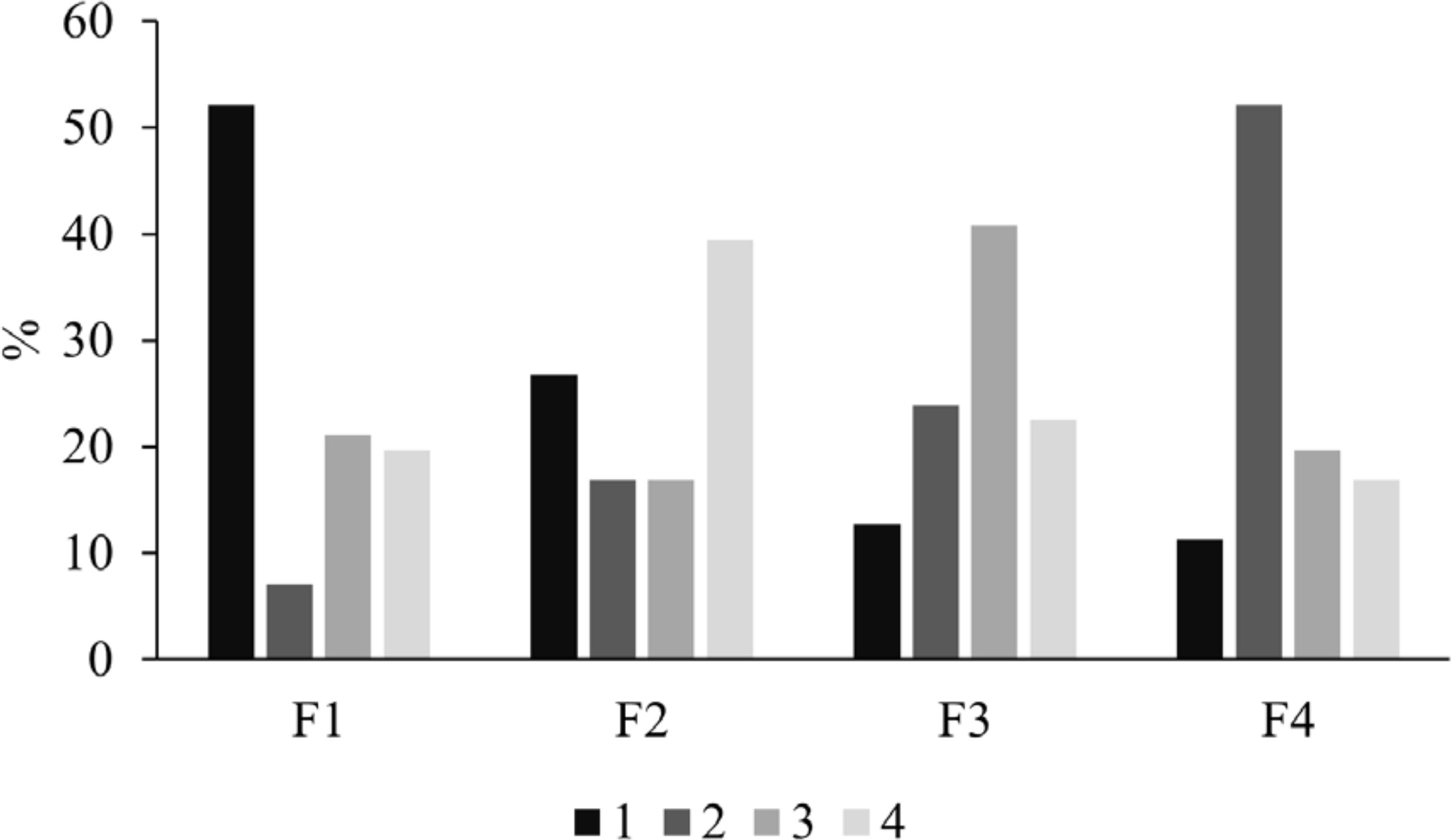
Preference ranking of the mate tea formulations with Pitanga pulp corroborated the sensory acceptance results (Figure 1). Formulation F2 (90% mate tea + 10% Pitanga) was the most preferred among panelists. In contrast, F1 (100% mate tea) was the least preferred, with 52.11% of evaluations assigned the lowest preference score, confirming its reduced acceptability in terms of flavor and other sensory attributes. Formulation F4 (70% mate tea + 30% Pitanga) exhibited a broader distribution of scores, suggesting that while higher Pitanga content may mitigate the inherent bitterness of mate tea, it may not achieve an optimal flavor balance for most consumers. Formulation F3 (80% mate tea + 20% Pitanga) demonstrated moderate acceptance, receiving favorable ratings from 40.84% of participants at the third preference level.

Order of preference in sensory evaluation results of mate tea added with Pitanga (Eugenia uniflora). F1= 100% YM; F2= 90% YM +10% PIT; F3= 80% YM +20% PIT; F4= 70% YM +30% PIT. Mean values expressed as a percentage in the order of preference. Ordering based on scores from least liked (1) to most liked (4).
Despite the significant increase in titratable acidity detected instrumentally, the panelists did not report perceptible differences in the sensory evaluation. This discrepancy can be attributed to three main factors: (i) the magnitude of the change may not have been sufficient to exceed the sensory detection threshold for acidity; (ii) other beverage attributes, such as the presence of bitter and astringent phenolic compounds from mate tea, may have masked the perception of acidity; and (iii) the natural sweetness from the soluble solids of the Pitanga pulp likely acted as a modulator, balancing the overall taste perception.
The improved sensory acceptance of mate tea beverages with Pitanga pulp may be attributed to reduced bitterness and enhanced flavor complexity, as supported by previous studies.(43) The incorporation of fruits into mate tea-based beverages can attenuate characteristic bitterness, thereby increasing palatability. The favorable flavor ratings of F2 and F3 align with research on fruit-added herbal infusions, where moderate fruit pulp concentrations generally yield higher sensory acceptance.(39)
The broader acceptance distribution of F4 may result from excessive acidity or excessive softening of the flavor profile, which may not appeal to all consumers. High fruit pulp concentrations can disrupt the sensory balance for certain consumer segments.(39,57) Thus, F2 appears to offer the optimal formulation for general acceptability, whereas F1, with its pronounced bitterness and unmodified flavor, was least preferred.
Principal Component Analysis (PCA) was performed to evaluate correlations between sensory and physicochemical variables across the different mate tea formulations with Pitanga (Figure 2). The first two principal components (PC1 and PC2) collectively explained 96.91% of the total variance, with PC1 accounting for 60.00% and PC2 for 30.91% of the variability.

Principal component analysis (PCA) of compounds, physicochemical parameters, sensorial atributes and formulations in beverage Mate tea infused with Pitanga (Eugenia uniflora).
The parameters of flavor and overall acceptance showed strong correlation and were positively grouped along PC1, indicating that formulations receiving high scores for these attributes were similarly rated for overall acceptability. Bitterness, astringency, and perceived acidity were also grouped in this region, though – as noted previously – they did not show significant differences among formulations (p > 0.05).
Color parameters (L* and hue) and bioactive compounds (antioxidant capacity and total phenolic content) were more closely associated with PC2, revealing a positive correlation among these variables. This suggests that formulations with higher phenolic content also possessed greater antioxidant activity, which is consistent with the known role of phenolic compounds as primary antioxidants. Soluble solids, titratable acidity, and the color parameters chroma (C*) and redness (a*) were associated with Pitanga pulp addition, indicating that although visual characteristics influenced product perception, their contribution to overall acceptance was less determinant than flavor-related attributes.(36,41) As anticipated, TEAC and TPC values were not directly correlated with the most appreciated sensory parameters (flavor and overall acceptance), as indicated by their distant positioning relative to these attributes in the PCA plot.
These findings align with prior results, where formulation F2 (90% mate tea + 10% Pitanga) was the most preferred, largely due to its smoother and more balanced flavor profile, accompanied by reduced bitterness and astringency.(58)
The PCA further underscores that overall acceptance was more strongly influenced by favorable flavor perception than by visual or physicochemical properties such as color or acidity.(59) In conclusion, the moderate incorporation of Pitanga pulp into mate tea significantly enhanced sensory acceptability by attenuating less desirable attributes like bitterness and astringency, while preserving visually appealing characteristics.(2)
CONCLUSION
The addition of Pitanga pulp to mate tea resulted in sensory improvements, particularly in overall acceptance and flavor, as demonstrated in formulations F2 (90% mate tea + 10% Pitanga) and F3 (80% mate tea + 20% Pitanga). Sensory analysis revealed that moderate Pitanga addition softens the flavor profile of mate tea without compromising desirable characteristics, such as acidity and pleasant taste, maintaining a balance between physicochemical and sensory attributes that favor consumer acceptance.
Principal Component Analysis (PCA) showed that variables such as flavor and overall acceptance positively correlated, while total phenolic content (TPC) and antioxidant capacity (TEAC) did not directly correlate with sensory acceptance, despite their high values. Thus, combining mate tea with Pitanga provided a beverage with a good balance between health benefits and sensory acceptance.
ACKNOWLEDGEMENTS, FINANCIAL SUPPORT AND FULL DISCLOSURE
To the Brazilian National Council for Scientific and Technological Development (CNPq), Araucária Foundation, Federal Technological University of Paraná, Guayaki Sustainable Rainforest Products, Inc.
DATA AVAILABILITY STATEMENT
All datasets supporting the results of this study were used in this article.
REFERENCES
- 1 Tassano C, Olano RA, Gaiero P, Vaio M, Speranza PR. Development of nuclear microsatellite markers in Yerba mate (Ilex paraguariensis A. St. Hil.) from whole-genome sequence data. Plant Genet Resour. 2023 Aug 27;21(4):384–7.
-
2 Heck CI, De Mejia EG. Yerba Mate Tea (Ilex paraguariensis): A Comprehensive Review on Chemistry, Health Implications, and Technological Considerations. J Food Sci [Internet]. 2007 Nov 26;72(9). Available from: https://ift.onlinelibrary.wiley.com/doi/10.1111/j.1750-3841.2007.00535.x
» https://ift.onlinelibrary.wiley.com/doi/10.1111/j.1750-3841.2007.00535.x -
3 Rząsa-Duran E, Kryczyk-Poprawa A, Drabicki D, Podkowa A, Sułkowska-Ziaja K, Szewczyk A, et al. Yerba Mate as a Source of Elements and Bioactive Compounds with Antioxidant Activity. Antioxidants [Internet]. 2022 Feb 12;11(2):371. Available from: https://www.mdpi.com/2076-3921/11/2/371
» https://www.mdpi.com/2076-3921/11/2/371 - 4 Rząsa-Duran E, Muszyńska B, Szewczyk A, Kała K, Sułkowska-Ziaja K, Piotrowska J, et al. Ilex paraguariensis Extracts: A Source of Bioelements and Biologically Active Compounds for Food Supplements. Applied Sciences. 2024 Aug 17;14(16):7238.
-
5 de Vasconcellos AC, Frazzon J, Zapata Noreña CP. Phenolic Compounds Present in Yerba Mate Potentially Increase Human Health: A Critical Review. Plant Foods for Human Nutrition [Internet]. 2022 Dec 28 [cited 2023 Mar 26];77(4):495–503. Available from: https://link.springer.com/10.1007/s11130-022-01008-8
» https://link.springer.com/10.1007/s11130-022-01008-8 - 6 Benedito DCD, Stuepp CA, Helm CV, Liz MV de, Miranda AC de, Imoski R, et al. Bioactive Compounds Concentrations and Stability in Leaves of Ilex paraguariensis Genotypes. Forests. 2023 Dec 11;14(12):2411.
-
7 Mesquita M, Santos E, Kassuya CA, Salvador MJ. Chimarrão, terere and mate-tea in legitimate technology modes of preparation and consume: A comparative study of chemical composition, antioxidant, anti-inflammatory and anti-anxiety properties of the mostly consumed beverages of Ilex paraguariensis St. H. J Ethnopharmacol [Internet]. 2021 Oct;279:114401. Available from: https://linkinghub.elsevier.com/retrieve/pii/S0378874121006309
» https://linkinghub.elsevier.com/retrieve/pii/S0378874121006309 - 8 Najman K, Rajewski R, Sadowska A, Hallmann E, Buczak K. Changes in the Physicochemical and Bioactive Properties of Yerba Mate Depending on the Brewing Conditions. Molecules. 2024 Jun 1;29(11).
-
9 Bravo L, Goya L, Lecumberri E. LC/MS characterization of phenolic constituents of mate (Ilex paraguariensis, St. Hil.) and its antioxidant activity compared to commonly consumed beverages. Food Research International [Internet]. 2007 Apr;40(3):393–405. Available from: https://linkinghub.elsevier.com/retrieve/pii/S0963996906001864
» https://linkinghub.elsevier.com/retrieve/pii/S0963996906001864 -
10 Gawron-Gzella A, Chanaj-Kaczmarek J, Cielecka-Piontek J. Yerba Mate—A Long but Current History. Nutrients [Internet]. 2021 Oct 21;13(11):3706. Available from: https://www.mdpi.com/2072-6643/13/11/3706
» https://www.mdpi.com/2072-6643/13/11/3706 - 11 Zapata FJ, Rebollo-Hernanz M, Novakofski JE, Nakamura MT, Gonzalez de Mejia E. Caffeine, but not other phytochemicals, in mate tea (Ilex paraguariensis St. Hilaire) attenuates high-fat-high-sucrose-diet-driven lipogenesis and body fat accumulation. J Funct Foods. 2020 Jan 1;64.
-
12 Bastos DHM, Oliveira DM, Matsumoto RLT, Carvalho PO, Ribeiro ML. Yerba maté: Pharmacological Properties, Research and Biotechnology. Med Aromat Plant Sci Biotechnol [Internet]. 2007;1(1):37–46. Available from: http://globalsciencebooks.info/JournalsSup/images/0706/MAPSB_1(1)37-46o.pdf
» http://globalsciencebooks.info/JournalsSup/images/0706/MAPSB_1(1)37-46o.pdf - 13 Schinella G, Fantinelli JC, Mosca SM. Cardioprotective effects of Ilex paraguariensis extract: Evidence for a nitric oxide-dependent mechanism. Clinical Nutrition. 2005 Jun;24(3):360–6.
-
14 Etgeton SAP, Ávila S, Silva ACR, de Lima JJ, Rodrigues ADDPS, Beux MR, et al. Nutritional Composition, Simulated Digestion and Biological Activities of Campomanesia xanthocarpa Fruit. Plant Foods for Human Nutrition [Internet]. 2023 Nov 16 [cited 2023 Nov 26];1–7. Available from: https://link.springer.com/article/10.1007/s11130-023-01126-x
» https://link.springer.com/article/10.1007/s11130-023-01126-x -
15 Bojić M, Simon Haas V, Šarić D, Maleš Ž. Determination of Flavonoids, Phenolic Acids, and Xanthines in Mate Tea (Ilex paraguariensis St.-Hil.). J Anal Methods Chem [Internet]. 2013 [cited 2023 Nov 1];2013(ID 658596):1–6. Available from: http://www.hindawi.com/journals/jamc/2013/658596/
» http://www.hindawi.com/journals/jamc/2013/658596/ - 16 Frizon CNT, Oliveira GA, Perussello CA, Peralta-Zamora PG, Camlofski AMO, Rossa ÜB, et al. Determination of total phenolic compounds in yerba mate (Ilex paraguariensis) combining near infrared spectroscopy (NIR) and multivariate analysis. LWT. 2015 Mar 1;60(2):795–801.
- 17 Pachura N, Włodarczyk M, Bażanów B, Pogorzelska A, Gębarowski T, Kupczyński R, et al. Antiviral and Cytotoxic Activities of Ilex aquifolium Silver Queen in the Context of Chemical Profiling of Two Ilex Species. Molecules. 2024 Jul 8;29(13):3231.
-
18 Godoy RCB de, Chambers E, Yang G. Development of a preliminary sensory lexicon for mate tea. J Sens Stud [Internet]. 2020 Jun 1 [cited 2021 Sep 21];35(3):e12570. Available from: https://onlinelibrary-wiley.ez48.periodicos.capes.gov.br/doi/full/10.1111/joss.12570
» https://onlinelibrary-wiley.ez48.periodicos.capes.gov.br/doi/full/10.1111/joss.12570 -
19 Valduga AT, Gonçalves IL, Borges ACP, Mielniczki-Pereira AA, Picolo AP. Cytotoxic / antioxidant activity and sensorial acceptance of yerba-mate development by oxidation process. Acta Scientiarum Technology [Internet]. 2016 Jan 1;38(1):115. Available from: http://periodicos.uem.br/ojs/index.php/ActaSciTechnol/article/view/26033
» http://periodicos.uem.br/ojs/index.php/ActaSciTechnol/article/view/26033 - 20 Chaicouski A, Lazzarotto M. Aplicabilidade de extratos de erva-mate (Ilex paraguariensis) em diferentes alimentos. Evidência. 2021 Jul 28;21(1):49–62.
-
21 da Silveira TFF, Meinhart AD, de Souza TCL, Cunha ECE, de Moraes MR, Filho JT, et al. Optimization of the Preparation Conditions of Yerba Mate tea Beverage to Maximize Chlorogenic Acids Extraction. Plant Foods for Human Nutrition [Internet]. 2017 Jun 3;72(2):219–23. Available from: http://link.springer.com/10.1007/s11130-017-0613-6
» http://link.springer.com/10.1007/s11130-017-0613-6 -
22 Boger BR, Cavalli KF, Marquetti C, Pinto EP, Tonial IB, Lucchetta L. Jabuticaba: Características e Aplicações Tecnológicas. In: Jabuticabeiras [Internet]. EDUTFPR. Curitiba; 2022. p. 266–93. Available from: https://editora.utfpr.edu.br/produto/jabuticabeiras/
» https://editora.utfpr.edu.br/produto/jabuticabeiras/ -
23 Marquetti C, Dos Santos TB, Kaipers KFC, Böger BR, Tonial IB, Wagner Junior A, et al. Jaboticaba skin flour: Analysis and sustainable alternative source to incorporatbioactive compounds and increase the nutritional value of cookies. Food Science and Technology (Brazil) [Internet]. 2018 Oct 11 [cited 2021 Sep 19];38(4):629–38. Available from: http://www.scielo.br/j/cta/a/sPZqYSfmLvDs6643q8C3PBk/?format=html⟨=en
» http://www.scielo.br/j/cta/a/sPZqYSfmLvDs6643q8C3PBk/?format=html⟨=en -
24 Martins ABN, Canto M, Perrone D, Monteiro M. Chemical, Microbiological and Sensory Stability of Steam Extracted Jaboticaba (Myrciaria jaboticaba) Juice. Foods [Internet]. 2021 Mar 30;10(4):732. Available from: https://www.mdpi.com/2304-8158/10/4/732
» https://www.mdpi.com/2304-8158/10/4/732 -
25 Modesto Junior EN, Chaves RPF, Martins MG, Pereira GA, Chisté RC, Pena R da S. Phenolic Compounds Stability of Grumixama (Eugenia brasiliensis) Juice during Processing and Storage. Beverages [Internet]. 2023 Nov 7;9(4):91. Available from: https://www.mdpi.com/2306-5710/9/4/91
» https://www.mdpi.com/2306-5710/9/4/91 -
26 Borsoi FT, Bonadiman B da SR, Marafon F, Fischer DL de O, Bagatini MD, Kempka AP. Eugenia uniflora L. seed and pulp extracts: phytochemical profile, cytotoxic potential, antitumoral activity, and α-amylase and α-glucosidase inhibition capacity. Nat Prod Res [Internet]. 2023 Nov 17;37(22):3862–7. Available from: https://www.tandfonline.com/doi/full/10.1080/14786419.2022.2153128
» https://www.tandfonline.com/doi/full/10.1080/14786419.2022.2153128 - 27 Celli GB, Pereira-Netto AB, Beta T. Comparative analysis of total phenolic content, antioxidant activity, and flavonoids profile of fruits from two varieties of Brazilian cherry (Eugenia uniflora L.) throughout the fruit developmental stages. Food Research International. 2011 Oct;44(8):2442–51.
-
28 Pereira E dos S, Vinholes J, Franzon RC, Dalmazo G, Vizzotto M, Nora L. Psidium cattleianum fruits: A review on its composition and bioactivity. Food Chem [Internet]. 2018;258(November 2017):95–103. Available from: https://doi.org/10.1016/j.foodchem.2018.03.024
» https://doi.org/10.1016/j.foodchem.2018.03.024 - 29 A’yuni Q, Wijaya CH, Mastuti TS, Sukarno. Sensory and Bioactive Properties Response to Reformulation and Processing of Java-Tea-Based Functional Drink: a Review. Journal of Functional Food and Nutraceutical. 2022 Sep 29;
-
30 Vanin CDR, Santos RF dos, Tonial IB, Santos TB dos, Wagner Junior A, Prado NV do, et al. “Yellow Araçá” flour (Psidium cattleyanum cv. Ya-cy) in cereal bars - nutritional and functional potential. Food Science and Technology [Internet]. 2020 Nov 30 [cited 2021 Sep 19]; Available from: http://www.scielo.br/j/cta/a/g4sXk3WZ4R33bn3zTnmqJSd/?lang=en&format=html
» http://www.scielo.br/j/cta/a/g4sXk3WZ4R33bn3zTnmqJSd/?lang=en&format=html - 31 Music PV, Methods O, International A. Official methods of analysis of AOAC International. 20th ed. Rockville MD: AOAC International; 2016. 2016–2017 p.
- 32 Singleton VL, Orthofer R, Lamuela-Raventós RM. [14] Analysis of total phenols and other oxidation substrates and antioxidants by means of folin-ciocalteu reagent. Methods Enzymol. 1999 Jan 1;299:152–78.
- 33 Brand-Williams W, Cuvelier ME, Berset C. Use of a free radical method to evaluate antioxidant activity. Vol. 28, LWT - Food Science and Technology. Academic Press; 1995. p. 25–30.
- 34 Brasil. Diretrizes e normas regulamentadoras de pesquisas envolvendo seres humanos. Ministério da Saúde Conselho Nacional de Saúde Resolução n° 466, de 12 de dezembro de 2012. 2012;
- 35 STATSOFT INC. Statistica (data analysis system version 10.0). Tulsa; 2011.
-
36 Bagetti M, Facco EMP, Piccolo J, Hirsch GE, Rodriguez-Amaya D, Kobori CN, et al. Physicochemical characterization and antioxidant capacity of pitanga fruits (Eugenia uniflora L.). Ciência e Tecnologia de Alimentos [Internet]. 2011 Mar;31(1):147–54. Available from: http://www.scielo.br/scielo.php?script=sci_arttext&pid=S010120612011000100021&lng=en&nrm=iso&tlng=en
» http://www.scielo.br/scielo.php?script=sci_arttext&pid=S010120612011000100021&lng=en&nrm=iso&tlng=en -
37 Munhoz PC, Pereira E, Schiavon MV, Santos DC dos, Vizzotto M. Caracterização química de frutas nativas vermelhas: araçá vermelho, cereja-do rio-grande, pitanga e jabuticaba. In: Encontro Sobre Pequenas Frutas e Frutas Nativas do Mercosul [Internet]. 2014. p. 134–134. Available from: https://www.alice.cnptia.embrapa.br/alice/handle/doc/987248
» https://www.alice.cnptia.embrapa.br/alice/handle/doc/987248 -
38 Sola IMMS, Marcondes A, Fischer TE, Nunes G, Nogueira A, Alberti A. Enhanced kombucha fermentation with yerba mate and purple pitanga (Eugenia uniflora L.). Journal of Food Measurement and Characterization [Internet]. 2024 Dec 24 [cited 2024 Dec 26];1–13. Available from: https://link.springer.com/article/10.1007/s11694-024-03051-2
» https://link.springer.com/article/10.1007/s11694-024-03051-2 -
39 Paiva YF, Figueirêdo RMF de, Queiroz AJ de M, Amadeu LTS, Santos FS dos, Reis CG dos, et al. Physicochemical Aspects, Bioactive Compounds, Phenolic Profile and In Vitro Antioxidant Activity of Tropical Red Fruits and Their Blend. Molecules 2023, Vol 28, Page 4866 [Internet]. 2023 Jun 20 [cited 2024 Sep 25];28(12):4866. Available from: https://www.mdpi.com/1420-3049/28/12/4866/htm
» https://www.mdpi.com/1420-3049/28/12/4866/htm -
40 Oliveira TMBF de, Guimarães L da CR, Oliveira RLB de, Nunes TP, Pagani AAC, Santos J dos, et al. Desenvolvimento e caracterização de uma bebida láctea com adição de preparado da casca de Umbu (Spondias Tuberosa Arruda Câmara) e microcápsula pela técnica de gelificação iônica. OBSERVATÓRIO DE LA ECONOMÍA LATINOAMERICANA [Internet]. 2023 Oct 4 [cited 2023 Nov 26];21(10):15192–216. Available from: https://ojs.observatoriolatinoamericano.com/ojs/index.php/olel/article/view/1130
» https://ojs.observatoriolatinoamericano.com/ojs/index.php/olel/article/view/1130 - 41 Castro DC, Piagentini A, Pirovani MÉ. Quality attributes of Pitanga (Eugenia uniflora L.) during postharvest storage as affected by ripening stage and storage temperature. J Berry Res. 2023 Sep 14;13(3):245–59.
- 42 Bezerra JEF, Silva Junior JF da, Lederman IE. Pitanga (Eugenia uniflora L.). In: Frutas Nativas. Jaboticabal: Jaboticabal: FUNEP.; 2000. p. 30.
- 43 Silva Júnior JC da, Magnani M, Almeida da Costa WK, Madruga MS, Souza Olegário L, da Silva Campelo Borges G, et al. Traditional and flavored kombuchas with pitanga and umbu-cajá pulps: Chemical properties, antioxidants, and bioactive compounds. Food Biosci. 2021 Dec 1;44:101380.
- 44 Zhou M, Sun Y, Luo L, Pan H, Zhang Q, Yu C. Comparative metabolomic analysis reveals nutritional properties and pigmentation mechanism of tea-scented rosehips. J Sci Food Agric. 2024 Apr 1;104(6):3392–404.
- 45 Makanjuola SA, Enujiugha VN. Enhancing Sensory Perception of Plant Based Nutraceutical Drinks by Combining Plants from Different Sources :A Preliminary Study of Tea and Ginger Blend. Prev Nutr Food Sci. 2017 Dec 31;22(4):372–5.
- 46 Kautzmann C, Castanha E, Aloísio Johann Dammann C, Andersen Pereira de Jesus B, Felippe da Silva G, de Lourdes Borba Magalhães M, et al. Roasted yerba mate (Ilex paraguariensis) infusions in bovine milk model before and after in vitro digestion: Bioaccessibility of phenolic compounds, antioxidant activity, protein–polyphenol interactions and bioactive peptides. Food Research International. 2024 May 1;183:114206.
-
47 Melo JOF, Conchinhas B, Leitão AEB, Ramos ALCC, Sousa IMN de, Ferreira RM de SB, et al. Phenolic Compounds Characterization of Caryocar brasiliense Peel with Potential Antioxidant Activity. Plants [Internet]. 2024 Aug 1 [cited 2024 Sep 25];13(15):2016. Available from: https://www.mdpi.com/2223-7747/13/15/2016/htm
» https://www.mdpi.com/2223-7747/13/15/2016/htm -
48 Migues I, Baenas N, Gironés-Vilaplana A, Cesio M, Heinzen H, Moreno D. Phenolic Profiling and Antioxidant Capacity of Eugenia uniflora L. (Pitanga) Samples Collected in Different Uruguayan Locations. Foods [Internet]. 2018 Apr 24;7(5):67. Available from: http://www.mdpi.com/2304-8158/7/5/67
» http://www.mdpi.com/2304-8158/7/5/67 -
49 Brousse MM, Monaca AB, López GG, Cruz NE, Vergara ML. Concentración sucesivas de compuestos fenólicos de la Yerba Mate (Ilex paraguariensis) y su contribución a la capacidad antioxidante. Revista de Ciencia y Tecnología [Internet]. 2024 Dec 10 [cited 2025 Sep 23];42(1):18–27. Available from: https://www.fceqyn.unam.edu.ar/recyt/index.php/recyt/article/view/839/872
» https://www.fceqyn.unam.edu.ar/recyt/index.php/recyt/article/view/839/872 - 50 Hartwig VG, Brumovsky LA, Fretes MR. A Total Polyphenol Content of Mate (Ilex paraguariensis) and Other Plants-derived Beverages. J Food Res. 2012 May 28;1(3):58.
- 51 Contreras-Esquivel JC, Cano-González CN, Ascacio-Valdes J, Aguirre-Joya JA, Aguillón-Gutierrez D, Breccia J, et al. Polyphenolic-rich extracts from the leaves of Ilex paraguariensis and Larrea divaricata and their antioxidant and antiCOVID-19 potential. Biotecnia. 2022 Nov 15;25(1):61–6.
- 52 Caruso F, Sakib R, Belli S, Caruso A, Rossi M. Antioxidant Scavenging of the Superoxide Radical by Yerba Mate (Ilex paraguariensis) and Black Tea (Camellia sinensis) Plus Caffeic and Chlorogenic Acids, as Shown via DFT and Hydrodynamic Voltammetry. Int J Mol Sci. 2024 Aug 28;25(17):9342.
- 53 Hu Y, Liu L, Wang Z, Jiang CP, Zhu Z, Li H, et al. Network pharmacology, molecular docking and in vivo and in vitro experiments to explore the molecular mechanism of licorice green tea beverage to scavenge oxygen free radicals. J Food Biochem. 2022 Oct 19;46(10).
-
54 Thompson PT, Boamah VE, Badu M. In-vitro antioxidant, antimicrobial and phytochemical properties of extracts from the pulp and seeds of the African baobab fruit (Adansonia digitata L.). Heliyon [Internet]. 2024 Apr 30 [cited 2024 Sep 25];10(8):e29660. Available from: http://www.cell.com/article/S2405844024056913/fulltext
» http://www.cell.com/article/S2405844024056913/fulltext - 55 Nethmini WDD, Wijesekara S, Abeysinghe DC. Phytochemicals, Functional and Physiochemical Properties of Selected Unexploited Fruits in Sri Lanka. In 2024. p. 37–46.
- 56 Mohan H, Muthukumar Sathya P, Lee SW, Jeong HJ, Ryu S, Lee AH, et al. Enhanced health benefits of Psidium guajava peel fermented with Lactiplantibacillus from Myeolchi-jeot: Antioxidant, anti-inflammatory, and anti-cancer properties. Food Biosci. 2024 Jun;59:104211.
-
57 Pintanela Vergara L, Niemeyer Reissig G, Zambiazi RC, DA SILVA RODRIGUES R, Freitas Chim J. Red pitanga chewable candies: physicochemical, microbiological, and sensory characterization. Food Science and Technology [Internet]. 2021 Oct 29 [cited 2024 Sep 25];42:e08121. Available from: https://www.scielo.br/j/cta/a/G4HVdk3x5LQWJ3LZ5Vs46Jq/?lang=en
» https://www.scielo.br/j/cta/a/G4HVdk3x5LQWJ3LZ5Vs46Jq/?lang=en -
58 Barboza HDC, Cazal MDM. Avaliação da influência de características sensoriais e do conhecimento nutricional na aceitação do chá-mate. Brazilian Journal of Food Technology [Internet]. 2018 Jan 18 [cited 2023 Mar 27];21:e2017075. Available from: http://www.scielo.br/j/bjft/a/R9BsKmrB8vj89gNqPNXW3WL/?lang=pt
» http://www.scielo.br/j/bjft/a/R9BsKmrB8vj89gNqPNXW3WL/?lang=pt - 59 Zhang L, Cao QQ, Granato D, Xu YQ, Ho CT. Association between chemistry and taste of tea: A review. Trends Food Sci Technol. 2020 Jul 1;101:139–49.
Edited by
-
Editors:
Danielle Fabíola Pereira da SilvaMateus Gonzatto