
 Accessibility and digital inclusion in academic libraries: the role of artificial intelligence
ABSTRACT
Introduction: Artificial Intelligence (AI) has emerged as a strategic tool in the transformation of library services, especially about promoting digital accessibility in academic libraries. Despite its inclusive potential, structural, ethical and training challenges remain that compromise its full effectiveness.
Objective: This article critically analyzes the role of artificial intelligence (AI) in promoting accessibility and digital inclusion in academic libraries, based on a systematic review of recent scientific literature.
Methodology: The research followed a systematic literature review, conducted in accordance with PRISMA guidelines. Thirty-one international studies published between 2006 and 2025 were selected, focusing on the intersection of AI, accessibility, ethics, and institutional practices in academic libraries. The studies were qualitatively analyzed and classified into four categories: (i) service transformation, (ii) inclusive access and user experience, (iii) literacy and institutional training, and (iv) ethical, institutional, and regulatory challenges.
Findings: The results highlight significant technological advances, including automatic reading solutions, intelligent assistants, and inclusive interfaces. However, gaps remain, such as low digital literacy among professionals, lack of clear regulations, and the exclusion of users with disabilities from technological design processes.
Conclusion: The study concludes that the use of AI in academic libraries must go beyond technological innovation, requiring a critical and participatory approach supported by institutional inclusion policies, specialized training, and ethical regulation. Only through such alignment will it be possible to transform libraries into truly accessible, equitable, and human-centered spaces.
KEYWORDS:
Artificial intelligence; Academic libraries; Accessibility; Digital inclusion; Systematic review
RESUMO
Introdução: A Inteligência Artificial (IA) tem emergido como um instrumento estratégico na transformação dos serviços bibliotecários, especialmente no que se refere à promoção da acessibilidade digital em bibliotecas acadêmicas. Apesar do seu potencial inclusivo, persistem desafios estruturais, éticos e formativos que comprometem a sua eficácia plena.
Objetivo: Este artigo analisa criticamente o papel da Inteligência Artificial (IA) na promoção da acessibilidade e da inclusão digital em bibliotecas acadêmicas, a partir de uma revisão sistemática da literatura científica recente.
Metodologia: A investigação baseou-se em uma revisão sistemática, conduzida segundo as diretrizes PRISMA. Foram selecionados 31 estudos internacionais publicados entre 2006 e 2025, que abordam a interseção entre IA, acessibilidade, ética e práticas institucionais em bibliotecas acadêmicas. Os artigos foram analisados qualitativamente e classificados em quarto categorias: (i) transformação dos serviços, (ii) acesso inclusivo e experiência do usuário, (iii) alfabetização digital e formação institucional e (iv) desafios éticos, institucionais e regulatórios.
Resultados: Os resultados evidenciam avanços tecnológicos significativos, incluindo soluções de leitura automática, assistentes inteligentes e interfaces inclusivas. Contudo, identificam-se lacunas como a baixa alfabetização digital dos profissionais, ausência de normativos claros e exclusão de usuários com deficiência nos processos de concepção tecnológica.
Conclusão: Conclui-se que o uso da IA em bibliotecas acadêmicas deve ir além da inovação tecnológica, exigindo uma abordagem crítica e participativa, apoiada em políticas institucionais de inclusão, formação especializada e regulação ética. Apenas com este alinhamento sera possível transformer verdadeiramente as bibliotecas em espaços acessíveis, equitativos e centrados no ser humano.
PALAVRAS-CHAVE:
Inteligência artificial; Bibliotecas acadêmicas; Acessibilidade; Inclusão digital; Revisão sistemática
1 INTRODUCTION
In recent decades, the emergence of digital technologies has profoundly redefined the structures of access to knowledge, posing new challenges and possibilities for academic libraries. In this transitional scenario, Artificial Intelligence (AI) stands out not only as a technical tool but also as an agent of epistemological and institutional reconfiguration. Its ability to automate processes, personalize information experiences, and expand accessibility positions it as a key element in building inclusive learning and research environments.
However, the inclusive potential of AI in libraries is not realized automatically nor is it free from tensions. Accessibility, understood as a universal right and a principle of social justice, is hampered by structural obstacles, from the lack of adaptive solutions to the absence of institutional policies consistent with the principles of informational equity. These challenges become even more complex when analyzed in light of digital inequalities and the ethical limits associated with the use of algorithms in knowledge mediation contexts.
In this context, this research proposes a critical analysis of the role of AI in promoting digital accessibility in academic libraries, based on a systematic literature review. By integrating contributions from diverse geographies and courses, the study seeks to map the potential and contradictions of this technology in the context of informational inclusion, formulating informed recommendations for its responsible and equitable implementation.
Thus, more than discussing technological trends, this article positions itself as a contribution to the academic and institutional debate on possible paths toward an ethically committed and socially rooted digital transformation. By approaching AI as a critical and emancipatory tool, this study argues that academic libraries can and should play a strategic role in consolidating a truly accessible, inclusive, and democratic information ecosystem.
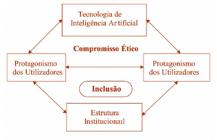
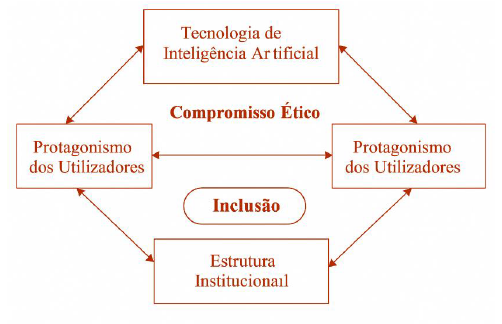
Figure 1 illustrates the model guiding this study, in which AI is understood as a structuring element of digital accessibility in academic libraries. The diagram highlights that the use of AI cannot be dissociated from an ethical commitment, which acts as a cross-cutting axis in the information mediation process. This commitment ensures that the protagonism of users, especially those in vulnerable situations, is preserved and strengthened. Furthermore, the figure highlights the central role of institutional structures, which must ensure resources, policies, and regulations capable of sustaining inclusive practices. In short, informational inclusion results from the balanced articulation of technology, ethics, user protagonism, and institutional support, shaping a more just and accessible digital ecosystem.
2 LITERATURE REVIEW
Technological developments in the 21st century have placed academic libraries before a new paradigm of accessibility and inclusion. At the heart of this transformation lies AI, whose application in informational contexts promises not only to optimize processes but, above all, to democratize access to information. This systematic literature review critically analyzes recent scientific literature on AI and accessibility within academic libraries, focusing on its practical relevance, ethical limits, and educational implications.
Chart 1 systematizes the functional dimensions of accessibility in academic libraries, associating them with the main AI-based assistive technologies identified in the literature. The classification encompasses four core domains: visual, auditory, motor, and cognitive, and illustrates how different technological solutions can be applied to meet the specific needs of each user group. Examples include automatic reading systems and accessible curation for those with visual and auditory impairments, virtual assistants for motor support, as well as adaptive interfaces and intelligent content classification for users with cognitive disabilities. Thus, the chart highlights how AI can increase information equity, provided it is accompanied by appropriate institutional policies and professional practices.
Accessibility, as a fundamental right and a criterion of social justice, has been facing significant obstacles in academic libraries, particularly for users with visual, auditory, cognitive, and motor disabilities (Getts; Stewart, 2018; Ineson; Morris, 2006; Phukubje; Ngoepe, 2016 ) . The literature points to structural flaws, from architectural barriers to digital inaccessibility (ara et al., 2024; gartland et al., 2022; kerkmann; lewandowski, 2012) . The impact of these barriers is aggravated by the lack of adapted services and the scarcity of human resources with specialized training (May, 2025; Seale, 2013) .
The introduction of AI in this context emerges as a vector of structural transformation. Systematic reviews such as those by Das; Islam (2021) and Tunjungsari (2024) identify a set of technological applications with high inclusive potential: from automatic text reading systems and speech recognition to intelligent document classification and personalized resource recommendations. These solutions align with the needs of users with disabilities, while also raising significant practical and ethical challenges (Chemnad; Othman, 2024; Macharia et al., 2020) .
At the institutional level, there is a growing incorporation of AI in academic libraries, as demonstrated by the study carried out by Balnaves et al. (2024) under the auspices of IFLA. These experiences document the implementation of chatbots, AI-based educational games, and adaptive interfaces. However, they also highlight the risks related to insufficient training of professionals and the lack of internal regulations (Lo, 2024) .
In this context, AI literacy emerges as a sine qua non for sustained transformation. Studies such as those by Borges et al. (2021) and Matei; Jackson; Bertino (2024) point to the need for specific technical and ethical skills information professionals need in order to promote an informed and conscious integration of AI into services.
The ethical issue is widely discussed. UNESCO (2024) warns of the risks of algorithmic bias, automated discrimination, and the erosion of privacy. These concerns are echoed by authors such as Jury et al. (2021) and Zondi et al. (2024), who analyze the social impact of automated solutions without transparency and auditability safeguards. The need for clear and inclusive regulation is advocated by Devi and Kumar (2023), who highlight the conflicts between copyright protection and freedom of access by users with disabilities.
On the other hand, the application of assisted robots in the educational and library context, as proposed by Encarnação et al. (2017) , points to a new generation of inclusive solutions, in which AI, robotics, and universal design converge. Recent studies reinforce this direction, with proposals for systems based on synthetic trajectories (Liu et al., 2023), optimized web accessibility (Kurt, 2019), and digital services designed based on user experience (Goldstein, 2021).
The critical analysis of the literature also highlights significant gaps, particularly regarding the absence of co-constructed approaches with users with disabilities and the weak integration of Universal Design principles (Maurya et al. , 2025; Xie et al. , 2021). This finding converges with the studies by Brunskill and Gilbert (2023) on the fragile representation of disability in institutional library communications.
Thus, the systematic literature review not only confirms the transformative potential of AI for accessibility in academic libraries but also warns of the risks of its uncritical adoption. The presence of AI in these contexts requires an ethical, epistemological, and political commitment to inclusion, with implications for training, institutional policy, and international regulation. As argued by Tripathi and Shukla (2014), only an integrated approach guided by principles of equity and accessibility can ensure that digital transformation is truly inclusive.
3 METHODOLOGY
This research used a systematic literature review, a methodology widely recognized for its robustness and applicability when aiming to map, synthesize, and critically evaluate existing scientific literature on an emerging topic. The selection is justified by the fragmented and rapidly evolving nature of the debate on the application of AI to promote accessibility in academic libraries. Thus, this study sought to construct a comprehensive and simultaneously critical overview capable of identifying advances, gaps, challenges, and best practices in the field.
The adopted procedure follows the recommendations of the PRISMA declaration, adapted to the context of Library and Information Science. This alignment ensures transparency of the steps taken, replicability of the research, and compliance with internationally recognized methodological standards.
Data collection was conducted in April 2025 and included three leading scientific databases: Web of Science (WoS), Scopus, and Dimensions.AI. These platforms were chosen to ensure historical depth, interdisciplinary breadth, and international coverage. WoS was selected for its recognized credibility and rigorous indexing of Information Science publications. Scopus stood out for the typological diversity of its documents and the high impact factor of its indexed journals, enabling the identification of quality review articles. Dimensions.AI, despite more recent, was included for its ability to index emerging literature and resources still underrepresented in traditional databases.
To structure the research, a term that integrated terms related to AI was developed ("Artificial Intelligence," "Intelligent Systems," "Machine Learning"), accessibility ("Accessibility," "Assistive Technology," "Inclusive Education"), institutional context ("Academic Libraries," "Higher Education Libraries"), and types of disabilities ("Visual Impairment," "Motor Impairment," "Cognitive Impairment," "Disabilities"). The logic behind this combination sought to maximize the sensitivity of the research, avoiding the undue exclusion of relevant studies, while maintaining sufficient specificity to avoid generating an excess of irrelevant results.
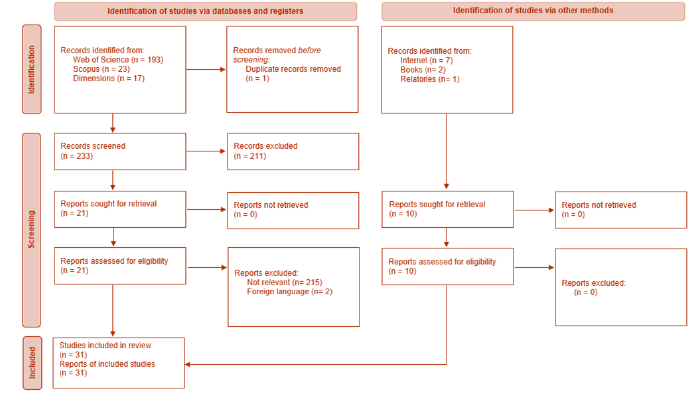
Different filters were applied to each database, tailored to the available features. In WoS, the search was limited to the period 2020-2024 and the field "Information Science/Library Science," yielding 193 publications. In Scopus, the "review article" filter was used as a refinement criterion, resulting in 23 references. In Dimensions.AI, a broader search was adopted, without additional filters, which identified 17 studies.
The results were integrated and managed using the Rayyan platform, a tool specialized in systematic reviews, which offers features for duplicate detection, collaborative screening, and study categorization. Using this tool helped mitigate biases during the selection process by enabling structured comparisons between different reviewers and detailed records of decisions made.
The screening process consisted of several stages. In the first phase, duplicates (n = 1) were eliminated. Next, titles and abstracts were read, excluding articles that: (i) did not address libraries or higher education, (ii) mentioned accessibility only tangentially, or (iii) addressed AI in contexts unrelated to information practices. In cases of uncertainty, the full text was read. For instance, articles that analyzed only the application of AI in medicine, without any connection to accessibility in libraries, were discarded; on the other hand, studies exploring technologies applied in educational contexts were included, even if they did not address libraries exclusively, as they provided relevant contributions.
In addition to the scientific articles, the study included complementary documentary sources, such as an institutional report, seven online resources (technical guidelines and best practice documents), and two specialized books. This decision was methodologically sound, as the topic under analysis involves both technical and normative aspects, which are often not fully reflected in academic articles. Thus, the inclusion of these sources increased the review's consistency and enriched the critical analysis.
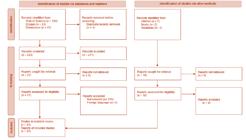
After applying the inclusion and exclusion criteria, a final sample of 31 documents was obtained, representative of the scientific and institutional literature on the topic. The selection process is summarized in Figure 2, which presents a flowchart adapted from the PRISMA model, highlighting the identification, screening, eligibility, and inclusion stages.
The methodological strategy described therefore ensures not only the quality of the review but also its scientific validity and practical utility. By combining rigor, transparency, and diversity of sources, this study provides a solid foundation for critical discussion on the application of AI to promote accessibility in academic libraries and for formulating future recommendations.
In addition to ensuring scientific rigor and transparency, this methodological strategy was designed to directly answer the research question guiding the study: How can Artificial Intelligence contribute to promoting accessibility and digital inclusion in academic libraries?
To answer this question, the systematic review identified, selected, and critically analyzed scientific and documentary evidence that addresses both the potential and limitations of AI in library contexts. The article's central objective, to critically analyze the role of AI in promoting digital accessibility in academic libraries, is, thus, operationalized by integrating results from 31 representative studies covering different geographies, user typologies, and institutional perspectives.
The methodology goes beyond mapping existing scientific literature and provides a solid foundation for formulating critical interpretations and informed recommendations. The connection between the research question, objectives, and methodological procedures ensures theoretical and methodological consistency, as required by good practices for systematic reviews, reinforcing its scientific legitimacy and practical relevance.
Additionally, and in the name of methodological integrity and expository clarity, illustrative figures generated using the ChatGPT linguistic model were used exclusively for the purpose of providing visual support for the concepts and theoretical structures addressed, without any interference in the selection or processing of the data.
4 RESULTS
The systematic review resulted in the selection of 31 international articles, published between 2006 and 2025, addressing the intersection of AI, digital accessibility, and academic libraries. These studies were systematized in Chart 2, which presents the title, authorship, journal, main findings, and the category/dimension to which each work relates.
From the systematic review carried out, four main categories of results were identified that highlight the current state, emerging practices and challenges of implementing AI in the context of academic libraries: (i) service transformation, (ii) inclusive access and user experience, (iii) literacy and institutional training, and (iv) ethical, institutional and regulatory challenges.
Service transformation is evidenced by the implementation of technologies such as virtual assistants, smart recommendation systems, and automated metadata self-description (Das; Islam, 2021; Zondi et al., 2024) . These tools have contributed to optimizing user service, personalizing services, and improving collection accessibility. However, integrating such technologies requires a profound redesign of organizational processes, demanding greater institutional investment, ongoing training, and regulatory adaptation.
Regarding inclusive access, the findings show that AI-based technologies have been successfully applied in solutions such as automatic screen readers, sign language recognition, and interfaces adapted for users with visual or cognitive limitations (Getts; Stewart, 2018; Tunjungsari, 2024). However, a gap remains between the technological potential and its practical implementation (Ara et al., 2024; Kerkmann; Lewandowski, 2012), often compromised by the lack of active participation of users with disabilities in developing and evaluating these solutions.
In the area of digital literacy, there is a significant deficit in the training of information professionals, which compromises the conscious and effective adoption of these technologies (Lo, 2024; Lo; Vitale, 2024). This situation is evidenced by the lack of institutional guidance and structured training programs. Furthermore, there is a lack of strategic plans that articulate technological innovation with institutional inclusion policies, which perpetuates internal asymmetries and limits the reach of accessible digital resources.
Finally, ethical and regulatory challenges related to algorithmic bias, the protection of sensitive data, and transparency in automated systems stand out. Studies show that such issues are often ignored or addressed superficially (Devi; Kumar, 2023; Matei et al., 2025; UNESCO, 2024). The lack of clear guidelines on the use of AI in library environments, combined with the fragmentation of institutional responsibilities, prevents the consolidation of ethical and participatory governance.
5 DISCUSSION
The findings reveal an ambivalent panorama: on the one hand, a technological advance that offers new possibilities for informational inclusion, but on the other, institutional, cultural and technical barriers that persist, compromising the effectiveness of these innovations.
The literature demonstrates that AI can be a powerful ally in promoting accessibility (Goldstein, 2021; Kurt, 2019; Liu et al., 2023) . However, its impact is uneven and conditioned by the existence of structures prepared to absorb these technologies. In many cases, the lack of active involvement of people with disabilities in the design of solutions leads to technologically sophisticated but socially limited products (Maurya et al., 2025; Xie et al., 2021) .
The insufficient AI literacy among professionals represents a critical obstacle, as it affects both the selection and appropriate use of technologies (Borges et al., 2021; May, 2025). Institutional training initiatives remain isolated and lack systematization. It is urgent to develop specific curricula, with practical and ethical components, that promote a critical understanding of emerging technologies.
From an ethical perspective, adopting technologies without a critical assessment of their social and informational impact may reinforce existing inequalities rather than mitigate them (Chemnad; Othman, 2024; Jury et al., 2021) . In this context, the principles of reasonable adjustments (Ineson; Morris, 2006) and universal design (Tripathi; Shukla, 2014) should be considered not only as technical guidance but also as institutional commitments. This also implies a critical review of the standards for acquiring and producing accessible digital resources, as well as the technological infrastructure of libraries themselves.
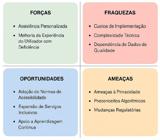
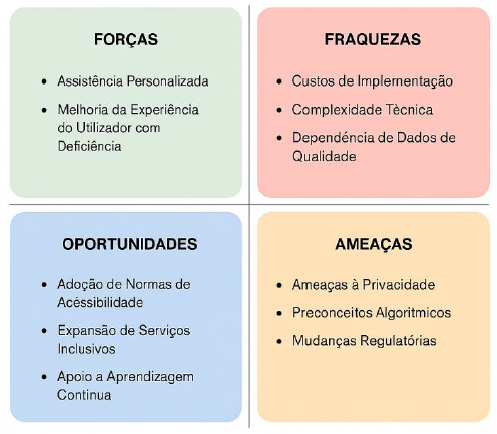
Figure 3 presents a SWOT (Strengths, Weaknesses, Opportunities, and Threats) analysis of AI application in academic libraries, summarized from the systematic review. The strengths axis highlights process automation, improved user experience, and support for digital inclusion through assistive technologies. Weaknesses include insufficient digital skills among professionals, dependence on robust technological infrastructure, and a lack of specific regulations. Regarding opportunities, the literature points to the potential for personalizing services, strengthening information literacy, and integrating AI into institutional inclusion policies. Finally, threats include ethical risks, algorithmic biases, unequal access, and legal challenges. Taken together, the analysis highlights that AI adoption in libraries is promising but requires risk mitigation strategies and solid institutional policies to become truly inclusive and sustainable.
The comparative analysis of the practices reported in the studies indicates that successful solutions are those that articulate technology, institutional policy and direct community involvement (Balnaves et al., 2024; Encarnação et al., 2017; Phukubje; Ngoepe, 2016). The success of these practices depends, therefore, on the capacity of libraries to operate as agents of social transformation and not just as technology distribution centers.
Beyond technical and ethical analysis, it is necessary to reinforce the role of academic libraries as institutional agents of social and political transformation. By integrating AI-based practices, these institutions must position themselves not only as reactive to accessibility demands, but as proactive entities in the definition of public information policies. Their commitment to inclusion must extend to the normative and pedagogical spheres, positively influencing regulation, the universal design of digital services, and the development of an information culture centered on cognitive justice.
Finally, the future of digital accessibility in academic libraries depends on these institutions' ability to critically integrate emerging technologies with a humanized and participatory view of inclusion (Beyene et al., 2020; Brunskill; Gilbert, 2023; Zondi et al., 2024) . This integration cannot occur in an automated or technocratic manner, but rather based on processes of active listening, collaborative evaluation, and robust ethical regulation.
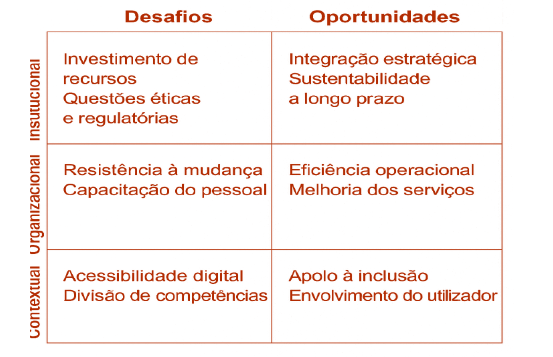
Figure 4 summarizes the different levels of AI application in academic libraries, organizing them on a scale ranging from the most operational solutions to strategic and institutional impacts. At the operational level, tools that support routine activities, such as customer service chatbots and recommendation systems, are observed. At the tactical level, applications that optimize digital management and curation processes, including automatic content classification and assisted indexing, stand out. Finally, at the strategic level, AI is understood as an agent of institutional transformation, capable of influencing digital inclusion policies, accessibility projects, and user and professional training processes. This structure highlights that AI adoption is not limited to the technical dimension, but implies an organizational redesign that articulates technology, institutional policies, and pedagogical practices.

6 CONCLUSION
In the context of academic libraries, AI is emerging as a catalytic force in the transformation of information services, with a direct impact on accessibility and digital inclusion. The systematic literature review and the results analyzed in this study reveal a landscape marked by significant advances, but also by persistent technical, ethical, and institutional challenges.
The adoption of AI-based technologies has demonstrated the potential to personalize experiences, expand access to information, and reduce barriers faced by users with disabilities. However, reaching this potential depends on critical factors such as AI literacy among information professionals, the existence of institutional policies geared toward inclusion, and a technical infrastructure and ethics that support informed decisions.
In this sense, this investigation concludes that academic libraries must take a proactive role in building inclusive information ecosystems, adopting a cross-disciplinary approach that involves critical education, participatory technology development, and robust ethical regulation. Promoting accessibility through AI should not be understood as a merely technological issue, but as an epistemological, social, and political commitment to equitable access to knowledge.
In short, the future of digital inclusion in academic libraries requires a conscious articulation of technological innovation, institutional responsibility, and informational justice. This study thus contributes to a deeper and more committed understanding of how AI can and should be mobilized to transform libraries into truly accessible, participatory, and democratic spaces.
Acknowledgments:
Not applicable.
References
-
ARA, J.; SIK-LANYI, C.; KELEMEN, A. Accessibility engineering in web evaluation process: a systematic literature review. Universal Access in the Information Society, Heidelberg, v. 23, n. 2, p. 653-686, 2024. DOI: https://doi.org/10.1007/s10209-023-00967-2
» https://doi.org/10.1007/s10209-023-00967-2 -
BALNAVES, E. et al. (ed.). New horizons in artificial intelligence in libraries. Boston: De Gruyter Saur, 2025. DOI: https://doi.org/10.1515/9783111336435
» https://doi.org/10.1515/9783111336435 -
BEYENE, W. M.; MEKONNEN, A. T.; GIANNOUMIS, G. A. Inclusion, access, and accessibility of educational resources in higher education institutions: exploring the Ethiopian context. International Journal of Inclusive Education, Abingdon, v. 27, p. 18-34, 2020. DOI: https://doi.org/10.1080/13603116.2020.1817580
» https://doi.org/10.1080/13603116.2020.1817580 -
BORGES, A. et al. The strategic use of artificial intelligence in the digital era: systematic literature review and future research directions. International Journal of Information Management, Oxford, v. 57, n. art. 102225, 2021. DOI: https://doi.org/10.1016/j.ijinfomgt.2020.102225
» https://doi.org/10.1016/j.ijinfomgt.2020.102225 -
BRUNSKILL, A.; GILBERT, E. Academic libraries’ social media posts related to disabilities: a review of libraries’ tweets in terms of their content and accessibility. Journal of Academic Librarianship, Oxford, v. 49, n. 3, n. art. 102684, 2023. DOI: https://doi.org/10.1016/j.acalib.2023.102684
» https://doi.org/10.1016/j.acalib.2023.102684 -
CHEMNAD, K.; OTHMAN, A. Digital accessibility in the era of artificial intelligence -Bibliometric analysis and systematic review. Frontiers in Artificial Intelligence, Lausanne, v. 7, 2024.DOI: https://doi.org/10.3389/frai.2024.1349668
» https://doi.org/10.3389/frai.2024.1349668 - DAS, R. K.; ISLAM, M. S. U. Application of artificial intelligence and machine learning in libraries: a systematic review. Library Philosophy and Practice (e-journal), n. 6762, 2021.
-
DEVI, R.; KUMAR, S. Digital Right Management and Accessibility of Libraries Electronic Resources for Blind and Visually Impaired Users: a review. Desidoc Journal of Library & Information Technology, Delhi, v. 43, n. 3, p. 193-201, 2023. DOI : 10.14429/djlit.43.3.18544
» https://doi.org/10.14429/djlit.43.3.18544 -
ENCARNAÇÃO, P. et al. Using assistive robots to promote inclusive education. Disability and Rehabilitation: Assistive Technology, Philadelphia, PA, v. 12, n. 4, p. 352-372, 2017. DOI: https://doi.org/10.3109/17483107.2016.1167970
» https://doi.org/10.3109/17483107.2016.1167970 -
GARTLAND, S. et al. The state of web accessibility for people with cognitive disabilities: a rapid evidence assessment. Behavioral Sciences, Basel, v. 12, n. 2, n. art. 26, 2022. DOI: 10.3390/bs12020026
» https://doi.org/10.3390/bs12020026 -
GETTS, E.; STEWART, K. Accessibility of distance library services for deaf and hard of hearing users, Reference Services Review, Bingley, v. 46, n. 3, p. 439-448, 2018. DOI: https://doi.org/10.1108/RSR-03-2018-0032
» https://doi.org/10.1108/RSR-03-2018-0032 -
GOLDSTEIN, S. Users with disabilities, especially invisible disabilities, provide insight into how libraries can frame accessibility webpages. Evidence Based Library and Information Practice, Edmonton, AB, v. 16, n. 1, p. 98-100, 2021. DOI: https://doi.org/10.18438/eblip29888
» https://doi.org/10.18438/eblip29888 -
INESON, L.; MORRIS, A. Special educational needs and disability act: what is meant by ‘reasonable adjustments’? New Review of Academic Librarianship, Abingdon, v. 12, n. 1, p. 17-29, 2006. DOI: https://doi.org/10.1080/13614530600913484
» https://doi.org/10.1080/13614530600913484 -
JURY, M. et al. Attitudes toward inclusive education: an exploration of the interaction between teachers’ status and students’ type of disability within the French context. Frontiers in Education, Lausanne, v. 6, art. 639848, 2021. DOI: https://doi.org/10.3389/feduc.2021.655356
» https://doi.org/10.3389/feduc.2021.655356 -
KERKMANN, F.; LEWANDOWSKI, D. Accessibility of web search engines: towards a deeper understanding of barriers for people with disabilities. Library Review, Bingley, v. 61, n. 8-9, p. 608-621, 2012. DOI: https://doi.org/10.1108/00242531211292105
» https://doi.org/10.1108/00242531211292105 -
KURT, S. Moving toward a universally accessible web: web accessibility and education. Assistive Technology, New York, NY, v. 31, n. 4, p. 199-208, 2019. DOI: 10.1080/10400435.2017.1414086
» https://doi.org/10.1080/10400435.2017.1414086 -
LIU, F.; HINDMARCH, J.; HESS, M. A review of the cultural heritage linked open data ontologies and models. International Archives of the Photogrammetry, Remote Sensing and Spatial Information Sciences - ISPRS Archives, Goettingen, v. 48, p. 943-950, 2023. DOI: https://doi.org/10.5194/isprs-archives-XLVIII-M-2-2023-943-2023
» https://doi.org/10.5194/isprs-archives-XLVIII-M-2-2023-943-2023 -
LO, L. S. Evaluating AI literacy in academic libraries: a survey study with a focus on U.S. employees. College & Research Libraries, Chicago, v. 85, n. 5, 2024. Disponível em: https://crl.acrl.org/index.php/crl/article/view/26409 Acesso em: 23 abr. 2025.
» https://crl.acrl.org/index.php/crl/article/view/26409 -
LO, L. S.; VITALE, C. H. Evolving AI strategies in libraries: insights from two polls of ARL member representatives over nine months. Washington, DC: Association of Research Libraries, 2024. Disponível em: https://l1nq.com/HID0g Acesso em: 23 abr. 2025.
» https://l1nq.com/HID0g -
MACHARIA, S.; OTIKE, J.; BOSIRE, E. K. Exploiting the Marrakesh treaty to obviate copyright-related challenges on access to information by visually impaired people in academic libraries. Library Management, Bingley, v. 41, n. 4-5, p. 235-246, 2020. https://doi.org/10.1108/LM-10-2019-0071
» https://doi.org/10.1108/LM-10-2019-0071 -
MATEI, S.; JACKSON, D.; BERTINO, E. Ethical reasoning in artificial intelligence: a cybersecurity perspective. The Information Society, New York, NY, v. 41, n. 2, p. 110-122, 2025. DOI: https://doi.org/10.1080/01972243.2024.2429060
» https://doi.org/10.1080/01972243.2024.2429060 -
MAURYA, J. et al. Higher education and disability: a systematic literature review and agenda for research. Higher Education Quarterly, Oxford, v. 79, n. 1, p. 3-25, 2025. DOI: https://doi.org/10.1111/hequ.70001
» https://doi.org/10.1111/hequ.70001 - MAY, E. Interrogating access: a critical disability studies approach to information practices research. Journal of Documentation, Bingley, v. 81, n. 2, p. 438-455, 2025.
-
PHUKUBJE, J.; NGOEPE, M. Convenience and accessibility of library services to students with disabilities at the University of Limpopo in South Africa. Journal of Librarianship and Information Science, London, v. 49, n. 2, p. 180-190, 2016. DOI: https://doi.org/10.1177/0961000616654959
» https://doi.org/10.1177/0961000616654959 -
SEALE, J. K. E-Learning and disability in higher education, accessibility research and practice: accessibility research and practice. 2. ed. London: Routledge, 2013. DOI: https://doi.org/10.4324/9780203095942
» https://doi.org/10.4324/9780203095942 -
TRIPATHI, M.; SHUKLA, A. Use of assistive technologies in academic libraries: a survey. Assistive Technology, New York, NY, v. 26, n. 2, p. 105-118, 2014. DOI: 10.1080/10400435.2013.853329
» https://doi.org/10.1080/10400435.2013.853329 -
TUNJUNGSARI, P. A systematic review of library service accessibility using artificial intelligence: features, challenges, and library roles. Knowledge Garden: International Journal of Library Studies, Malang, v. 2, n. 2, p. 1-22, 2024. DOI: https://doi.org/10.21776/ub.knowledgegarden.2024.2.2.21
» https://doi.org/10.21776/ub.knowledgegarden.2024.2.2.21 - UNESCO. Guia para a IA generativa na educação e na pesquisa. Paris, 2024.
-
XIE, I.; WANG, S.; SABA, M. Studies on blind and visually impaired users in LIS literature: a review of research methods. Library and Information Science Research, Oxford, v. 43, n. 3, n. art. 101109, 2021. DOI: https://doi.org/10.1016/j.lisr.2021.101109
» https://doi.org/10.1016/j.lisr.2021.101109 - ZONDI, N. et al. A review of artificial intelligence implementation in academic library services. South African Journal of Libraries and Information Science, Pretoria, v. 90, n. 2, p. 99-110, 2024.


Edited by
-
Editor:
Gildenir Carolino Santos https://orcid.org/0000-0002-4375-6815
Not applicable.

 Source: Adapted from
  Source: Adapted from Prisma Flux Diagram
 Source: Adapted from (
 Source: Adapted from (Balnaves et al., 2024;