
 Does ESG Disclosure impact the cost of debt? A regional analysis of Brazil and its regions
ABSTRACT
Purpose This study investigated the relationship between Environmental, Social, and Governance (ESG) disclosure and the cost of debt for Brazilian companies, in addition to whether regional factors influence the ability to secure third-party financing.
Design/methodology/approach The analysis includes 576 firm-year observations from publicly traded, non-financial Brazilian companies listed on Bloomberg for the period 2016–2021. The data were structured using a dynamic System GMM approach (one- or two-step estimators). To assess the role of regionality, a static panel with random effects was employed to examine how Brazil’s macro-regions influence the cost of debt.
Findings ESG disclosure did not reveal a significant negative relationship with the cost of debt. Therefore, it cannot be inferred that creditors value ESG transparency or reward firms adopting such practices with lower borrowing costs. However, variations in the cost of debt were observed across Brazil’s macro-regions.
Practical implications Understanding the effects of ESG disclosure on corporate borrowing in Brazil supports the development of standards for non-financial reporting aimed at greater compliance and transparency in ESG initiatives. Enhanced disclosure can improve communication with investors and society, fostering trust and mitigating risks associated with investment decisions.
Originality/value This study advances ESG disclosure research by focusing on an emerging economy where ESG practices are not yet widely embraced. Moreover, it explores corporate financial behavior through the lens of debt costs, a relatively underexamined perspective in the existing literature.
Keywords:
Cost of debt; ESG Disclosure; Regionality
RESUMO
Finalidade Este estudo investigou a relação entre o disclosure Environmental, Social, and Governance (ESG) e o custo de endividamento de empresas brasileiras. Além disso, examinou se a regionalidade exerce influência na obtenção de recursos de terceiros.
Design/metodologia/abordagem Analisou-se 576 observações-firmas-ano de empresas brasileiras, não financeiras, de capital aberto pertencentes à Bloomberg no período de 2016 a 2021, estruturadas em um painel dinâmico de System GMM (one ou two-step). Quanto à regionalidade, adotou-se painel estático com efeitos aleatórios para investigar a influência das macrorregiões do Brasil no custo da dívida.
Constatações O disclosure ESG não mostrou evidências de que exista uma relação negativa significativa com o custo da dívida. Assim, não se pode inferir que os credores apreciam a transparência das informações ESG e recompensam as firmas que adotam tal prática com custos menores. Entretanto, notou-se diferenças entre as macrorregiões brasileiras no tocante ao custo da dívida.
Implicações práticas Compreender os efeitos do disclosure ESG no endividamento das empresas brasileiras permite o desenvolvimento de padrões para divulgações não financeiras, visando maior conformidade e transparência das iniciativas ESG. Isso melhora a comunicação com os investidores e a sociedade, refletindo em maior confiança e menores riscos associados às decisões de investimento.
Originalidade/valor Este estudo contribui para o avanço das pesquisas sobre disclosure ESG ao concentrar-se em um país emergente, onde as práticas ESG ainda são pouco aceitas. Ademais, explora o comportamento financeiro das empresas sob a ótica do custo da dívida, uma abordagem pouco explorada na literatura sobre o tema.
Palavras-chave:
Custo da dívida; Disclosure ESG; Regionalidade
1 INTRODUCTION
In the early 2000s, researchers investigating socially responsible investment practices related to corporate governance developed the environmental, social, and governance (ESG) concept (Zopounidis et al., 2020). Over time, it became apparent that investing in ESG stocks could optimize risk-adjusted returns, thereby benefiting investors. These practices were primarily driven by the 2008 financial crisis and the subsequent recession, which prompted investors to prioritize investments offering more effective risk management (Zopounidis et al., 2020). The COVID-19 pandemic further accelerated the adoption of ESG practices, establishing new standards for corporate resilience and sustainability, and requiring adjustments to business models and cash flow management regarding investments (Mohamed Buallay et al., 2021).
ESG disclosure is characterized by a company communicating its sustainability-related activities to stakeholders, demonstrating its commitment, and positively influencing stakeholder perceptions (Eliwa et al., 2021). In Brazil, CVM Resolution No. 193, issued on October 20, 2023, represents a significant advancement toward increased transparency in ESG disclosure, as it establishes guidelines for sustainability preparation and disclosure reports, aligning with the International Sustainability Standards Board standards, which are mandatory as of January 1, 2026 (Brasil, 2023). Notably, it is the first regulation worldwide to incorporate IFRS S1 and IFRS S2 standards (Peixoto, 2024), aiming to enhance transparency associated with risks, reliability, consistency, and comparability of information (Brasil, 2023).
Non-financial disclosure expands the scope of information provided to investors and mitigates information asymmetry (Raimo et al., 2020). Enhanced disclosure improves a company’s reputation and facilitates financing at a lower cost (Graham et al., 2005; Eliwa et al., 2021). More specifically, ESG disclosure has been shown to be associated with reduced capital constraints and lower cost of capital (Amel-Zadeh & Serafeim, 2018). The cost of capital is a crucial factor in determining corporate financial decisions, as it shapes the capital structure and profitability (Easley & O’Hara, 2004).
Regionality influences demographics, economic conditions, financial aspects, cultural elements, corporate practices, organizational environments, and financial development and economic sensitivity (Shkura, 2019; Zopounidis et al., 2020; Cong et al., 2021; Lv et al., 2021). Thus, cost of capital analysis must encompass regional variation (Bachner et al., 2019; Marín & Villada, 2020; Schyska & Kies, 2020).
Stakeholder theory posits that companies rely on relationships with various stakeholders, including consumers, suppliers, employees, communities, and financial institutions, whose interests can influence managerial decisions (Freeman & Phillips, 2002). Legitimacy theory posits that the survival of organizations hinges on societal legitimacy, underscoring the importance of corporate disclosure practices that prioritize stakeholder interests (Deegan, 2002). According to the voluntary disclosure theory, alignment between managerial incentives to disclose information and investor expectations regarding transparency and information quality is crucial (Verrecchia, 1983).
Given this context, this study aimed to examine the relationship between ESG disclosure and the cost of debt among Brazilian companies, investigating whether regionality affects the ability to raise third-party capital. The ESG practices are essential to determine the credit quality extended by financial institutions, as they assess associated risks (Eliwa et al., 2021). Consequently, higher ESG disclosure reduces information asymmetry and lowers the cost of capital (Dhaliwal et al., 2011; Raimo et al., 2021; Ould Daoud Ellili, 2020).
Although numerous studies analyzed the effect of non-financial disclosure on the cost of capital, a limited number of studies address the impact of ESG disclosure related to regionality (Raimo et al., 2020). Most studies on regionality have employed a cross-country approach (Mohamed Buallay et al., 2021; Shkura, 2019; Zopounidis et al., 2020), while investigations of regional influences on capital structure have mostly focused on small and medium-sized enterprises (Di Pietro et al., 2018; La Rocca et al., 2010; Matias & Serrasqueiro, 2017; Palacín-Sánchez & Di Pietro, 2016; Palacín-Sánchez et al., 2013), a scope that differs from our study.
To examine the relationship between ESG disclosure and the cost of debt for Brazilian companies, and to investigate whether regionality influence influences the ability of companies to raise external funds, the cost of third-party capital, as estimated by Bloomberg, was used as the dependent variable. The analysis encompassed 576 firm-year observations of Brazilian non-financial publicly traded companies from the Bloomberg database between 2016–2021, organized as a dynamic panel. The findings demonstrated no significant relationship between ESG disclosure and the cost of debt. Nonetheless, estimation using a static panel with random effects revealed significant differences in the cost of debt among Brazil’s macro-regions.
This study makes several significant contributions to the literature. First, it provides empirical evidence regarding the impact of ESG disclosure on the cost of debt, addressing ongoing debates (Atan et al., 2018; Eliwa et al., 2021; Hamrouni et al., 2019; Nazir et al., 2022; Ould Daoud Ellili, 2020). Second, by adopting a cost of debt perspective, it demonstrated the impact of regionality on corporate indebtedness, encompassing Brazil’s five macro-regions: North, Northeast, Central-West, Southeast, and South.
From a practical and societal standpoint, identifying the effects of ESG disclosure on the cost of debt facilitates the development of non-financial disclosure standards, promoting greater compliance and transparency of ESG practices. Higher ESG disclosure may facilitate more effective communication with investors and stakeholders, enhance trust, and reduce risks associated with investment decisions.
2 THEORETICAL BACKGROUNDS
2.1 ESG Disclosure and Companies’ Cost of Capital
Corporate financial decisions are related to a company’s cost of capital, as the required return on investment projects can affect capital structure and profitability (Easley & O’Hara, 2004). Managers determine information disclosure strategies based on their influence on the pricing of risky assets (Verrecchia, 1983).
Disclosure practices reduce information asymmetry (Diamond & Verrecchia, 1991; Verrecchia, 2001), enhance future security liquidity, and increase demand from large investors, especially for larger companies, by lowering risk and cost of capital (Diamond & Verrecchia, 1991). Thus, to minimize information asymmetry, companies must maintain high levels of public disclosure.
Nonetheless, there is no consensus on the relationship between ESG disclosure and the cost of capital. Although some stakeholders still lack confidence in ESG practices (Atan et al., 2018), or consider them as actions that generate an additional financial burden rather than added value (Nazir et al., 2022), higher levels of ESG information increase transparency (Hamrouni et al., 2019; Ould Daoud Ellili, 2020; Tarulli et al., 2023), improve prediction accuracy (Dhaliwal et al. 2011; Raimo et al., 2020), reduce information asymmetry (Hamrouni et al., 2019; Lavin & Montecinos-Pearce, 2022; Ould Daoud Ellili, 2020), lead to better risk assessments (Lavin & Montecinos-Pearce, 2022; Raimo et al., 2020, 2021), 2021), and reduce the cost of capital (Hamrouni et al., 2020; Maaloul et al., 2023; Ould Daoud Ellili, 2020; Tarulli et al., 2023).
According to legitimacy theory, stakeholder pressure leads companies to adopt proactive measures to preserve organizational legitimacy (Lee, 2011). It also highlights the critical role of stakeholders in shaping strategic decisions related to ESG (Wai-Khuen et al., 2023). Higher ESG disclosure strengthens corporate legitimacy and reputation, meeting the expectations of credit providers whose increased trust facilitates access to financing (Maaloul et al., 2023; Hamrouni et al., 2019).
Companies disclose non-financial information as a strategy for legitimacy, to optimize capital costs management, and secure new resources (Maama & Mkhize, 2020). Therefore, the first hypothesis is presented:
H1: ESG disclosure is negatively related to the cost of debt for Brazilian companies.
Ould Daoud Ellili (2020) scrutinized companies listed in the United Arab Emirates and found that ESG disclosure decreases both the overall cost of capital and its components, including the cost of debt, equity, and third-party capital, when considered individually. This suggests that ESG practices signal greater transparency and reduced information asymmetry, decreasing capital costs. Similarly, Eliwa et al. (2021) reported that companies in 15 European Union countries with stronger ESG commitments have lower debt costs. Tarulli et al. (2023) also found a negative relationship between both general and environmental ESG scores and the cost of debt among 73 companies in the global agricultural sector between 2015–2019. These findings underscore the importance of understanding market responses to sustainable products and ESG disclosure in reducing financial burden, reflecting stronger credit quality, greater transparency, and lower investors’ risk perception.
2.2 Does Regionality Impact the Cost of Capital and ESG Disclosure?
Socially responsible investments are assets that prioritize value creation (Shkura, 2019), and regions with more established voluntary or mandatory regulations tend to have higher ESG disclosure rates (Mohamed Buallay et al., 2021). Consequently, regional differences exist in corporate practices and the operational environment, such as financial performance, ESG parameters, demographics, economic conditions, institutional types, and cultural factors (Zopounidis et al., 2020; Mohamed Buallay et al., 2021; Lv et al., 2021; Shkura, 2019).
Regionality affects companies’ cost of capital, requiring approaches that consider region-specific risks (Bachner et al., 2019; Schyska & Kies, 2020; Marín & Villada, 2020). Capital structure varies across regions, influenced by the company’s specific attributes and the broader economic environment (Palacín-Sanches et al., 2013; Palacín-Sánches & Di Pietro, 2016; Matias & Serrasqueiro, 2017). Institutional environments contribute to disparities in companies’ financial structures (Di Pietro et al., 2018; La Rocca et al., 2020). Less developed regions are generally more reliant on external financing, whereas regional development in more developed areas often enhances the use of debt (Di Pietro et al., 2018). In Brazil, persistent inequalities and diversity have led to substantial heterogeneity among the five macro-regions (Brandão, 2020). Hence, the second hypothesis is as follows:
H2: The cost of companies’ debt differs between Brazilian macro-regions.
Empirical research by Palacín-Sánchez et al. (2013) on Spanish companies (2004–2007) demonstrated that geographical location directly influences capital structure, as certain regions offer more favorable financing conditions. Similarly, Di Pietro et al. (2018) asserted that institutional differences affect variations in companies’ financial compositions across regions. Oliveira Silva et al. (2020) further highlighted that companies in developing countries, particularly those in Brazil, face a shortage of long-term financial resources, notably in areas with limited economic dynamism. Griffo (2024) corroborates these findings by emphasizing restricted access to banking services in specific Brazilian regions, resulting from regional disparities, and negatively impacting credit availability.
Geographical factors closely affect corporate indebtedness processes and stakeholder value creation (Sonza et al., 2020). In Brazil, examining the regional impact on the cost of debt is relevant due to pronounced socioeconomic and institutional heterogeneity among macro-regions. Companies located in certain regions benefit from access to public banks, which reduces credit restrictions, lowers the cost of external capital, and raises corporate indebtedness levels (Cançado et al., 2022). Given this complexity, analyzing the cost of debt from a regional perspective requires considering additional variables that affect capital costs, such as company size, leverage, profitability, financial sustainability, sector-specific factors, and ESG disclosure levels. Adequately controlling for these variables is essential in the empirical modeling of H2 to isolate the impact of regionality.
3 METHODOLOGY
3.1 Sample Definition and Data Collection
The sample comprised all Brazilian publicly traded companies listed on the Bloomberg database from 2016 to 2021. As outlined by Eliwa et al. (2021) and Raimo et al. (2021), finance companies were excluded due to sector-specific regulations and the incompatibility of the proxy for the cost of external capital (Raimo et al., 2021). Furthermore, companies with missing data for cost of debt and the explanatory variables for general and ESG scores were omitted (Atan et al., 2018; Nazir et al., 2022; Raimo et al., 2021).
Bloomberg provided ESG scores and control variables, while regionality data were collected from the Informe Cadastral website and the companies’ websites. To address outliers and improve the univariate distribution of variables, the data were winsorized at 7% net profit margin (NPM), 6% return on assets (ROA), 3% governance disclosure (ESGG) and financial sustainability (FS), 2% size (SIZE), and 1% leverage (LEV) as an exploratory step. The hypotheses were tested using an unbalanced panel for the period 2016–2021. Sample distribution by sector (Panel A), state (Panel B), year (Panel C), and Brazilian macro-region (Panel D) is presented in Table 1.
Approximately 60% of the sample consists of companies in public utility services (25.85%), discretionary consumption (17.98%), and industries (15.60%). The annual distribution (Panel C) remains consistent, while São Paulo (56.32%), Rio de Janeiro (14.26%), and Minas Gerais (6.09%) are the most represented (Panel B). Over 85% of the companies are located in the Southeast (76.67%) and South (10.7%) macro-regions (Panel D).
3.2 Variable Definition and Operationalization
The cost of debt for Brazilian companies was examined as the dependent variable. The independent variables are ESG disclosure, assessed both as an aggregate score and as separate scores for the environmental, social, and governance practices. This method employs non-financial data, with scores ranging from 0.1 to 100, representing complete ESG disclosure information evaluated by Bloomberg. Higher disclosure scores correspond to greater levels of disclosure (Maaloul et al., 2023). The ESG scores are differentiated by sector and country. Notably, these variables measure only the extent of disclosure and not company performance; investors use this information to assess management quality, transparency, and credibility (Tarulli et al., 2023).
The influence of regionality on the cost of debt for Brazilian companies was also evaluated. The regionality proxy (REGION) represents regional affiliation based on Brazil’s five macro-regions, as classified by the Brazilian Institute of Geography and Statistics in the 1970s (IBGE, 2018). Company headquarters locations were identified by collecting the Brazilian corporate tax number (CNPJ) from the Informe Cadastral website. This information corresponds to each company, municipality, and state, enabling the appropriate categorization by macro-region. Details regarding the remaining variables, including proxy, metrics, expected symbols, theoretical bases, and database, are listed in Table 2.
3.3 Models
The analysis utilized data from 124 companies between 2016–2021, employing a panel data approach. The existing literature emphasizes the importance of considering the lagged dependent variable in models that evaluate the determinants of the cost of debt. Therefore, a dynamic panel framework was adopted. Hence, the problem is configured as a dynamic panel problem, and historically, in economics and finance, models estimated by difference or system GMM (generalized method-of-moments), one- or two-step, have been used to control the problem of correlation (by construction) between the lagged variable and the idiosyncratic error (Roodman, 2009). Additionally, research on capital structure suggests potential endogeneity among explanatory variables (Table 2). The analysis is formally represented in Equation 1.
where Yit is CD, Xit is the matrix of exogenous variables ESG, ESGE, ESGS or ESGG and SIZE, which do not depend on eit current or past; Zit is the matrix of endogenous variables LEV and FS, potentially correlated with νi as they also determine CD, and whose candidate instruments start from t-2, Pit is the matrix of predetermined variables ROA and NPM, potentially contemporaneously correlated withνi , whose candidate instruments start from t-1, eit is the contemporary error, λt is the time effect (controlled by time dummies), νi is the unobserved individual-level effect, assuming that and for each i, j, t, s, i ≠ j, φ, β, θ and σ are estimated parameter vectors, which involve the first Difference of Equation 1 and using the variable lagsPit-1 , Zit, and Pit in this transformed (differentiated) equation, as proposed by Arellano and Bond (1991). Moreover, Arellano and Bover (1995) and Blundell and Bond (1998) proposed examining lags of the differences of Yit-1, Zit and Pit as additional instruments in the level equation.
The system GMM model distinguishes itself by removing νi (fixed effect), and employing instruments comprising lags and differences of variables in both the original and transformed equations. This approach controls the potential correlation among Yit-1, and eit . Selection between the difference and system GMM estimators was performed as outlined elsewhere (Arellano & Bover, 1995; Blundell & Bond, 1998; Bond, 2002; Roodman, 2009), which indicates that it generally delivers greater efficiency for unbalanced panels, small samples, heteroscedasticity, and autocorrelation. Preliminary tests, including the Breusch-Pagan and Wooldridge tests, provided strong evidence for these conditions. Furthermore, Bond (2002) recommended estimating pooled and fixed-effects models and comparing their persistence parameters to those obtained via difference GMM. In our study, the panel is unbalanced, the sample is small, and both heteroscedasticity and autocorrelation are evident. The persistence parameter derived from the difference GMM model aligned closely with the fixed-effects model than with the pooled model. Hence, these factors justify the use of the system GMM.
A two-step procedure was employed to address heteroscedasticity and serial correlation, utilizing small sample corrections (Windmeijer, 2005). First differences were used to construct the instruments in the differenced equation, rather than forward orthogonal deviations, as recommended by Roodman (2009), due to the unbalanced nature of the panel and the absence of efficiency gains from it over first differences in initial simulations. To prevent instrument proliferation (i.e., the number of instruments exceeds the number of groups), the collapse procedure was utilized (Roodman, 2009).
Model evaluation was conducted using the following tests: (i) Hansen’s J test to assess the validity of the instruments (requiring 0.05 < p < 0.60); (ii) the Arellano-Bond AR (p) test to examine serial correlation, where first-order autocorrelation is anticipated but higher-order autocorrelation should be insignificant at the 20% significance level (Kiviet, 2020); (iii) a significance test for the persistence parameter (φ), with p < 0.05 expressing the dynamic panel modeling robustness; (iv) an assessment ensuring the number of instruments < n. of groups, representing the number of companies); and (v) the F-Test for overall model significance (p < 0.05; Roodman, 2009).
Before model estimation for hypothesis testing, a descriptive and bivariate analysis of the database variables was conducted. The mean, median, standard deviation, maximum, and minimum values were computed from the stacked data. Variability within and between entities was examined following Fávero (2013). The bivariate analysis was calculated using the correlation matrix among the database variables.
Missing values were not imputed to avoid survivor bias. However, outliers were addressed. In the univariate context, outliers were identified via box plots and treated using winsorization, as recommended elsewhere (Ruppert, 2014; Lien & Balakrishnan, 2007, 2021). Based on financial and accounting data, certain observations appeared as unexplained outliers, and winsorization served as the primary method to replace such data points. Multivariate outlier treatment was avoided to prioritize external validity over internal validity, given the limited sample size.
3.4 Regionality
Although GMM estimators are robust tools for dynamic panel data, their effectiveness depends on the appropriate specification of the matrix of exogenous variables and the number of instruments, as these elements can affect the results (Roodman, 2009). In this study, the research design was implemented as outlined initially, based on the literature review and data availability. The method, alongside successful diagnostic tests, supports the robustness of the findings. Notably, the results demonstrated that examining the lagged dependent variable is unnecessary for fitting the linear panel data model.
Statistically, all variables in Table 2 can be considered exogenous to the system. The C test for endogeneity and exogeneity revealed a low correlation between the explanatory variables and the error term. Specifically, the C-tests for and produced a p > 0.20 across all models, suggesting that and function as exogenous () variables. Therefore, considering the available data and the research problem, static linear models without a lagged term are appropriate for panel data analysis, such as the fixed effects model, the random effects model (REM), or the pooled ordinary least squares model (POLS). Consequently, the impact of regionality was calculated using Equation 2.
where Yit is CD, Xit is the matrix of independent variables, which includes the ESG practices and the sector dummies (Table 2), REGi is the only constant regionality variable (time-invariant) and encompasses Brazil’s macro-regions, eit is the individual-specific error, λtis the time effect (controlled by time dummies), and νi are random effects at the individual level, assuming that , and for each i, j, t, s, i ≠ j, β and φ are parameter vectors to be estimated by generalized least squares.
The expression, whether resulting from the hypothesis about and , the estimator used, or the variable REGi, which remains constant over time, translates into a REM (Fávero, 2013). The primary advantage of this model is its ability to estimate all coefficients, such as those that remain constant over time (Baltagi, 2021; Gujarati & Porter, 2011; Hsiao, 2014; Wooldridge, 2010b). Only the REM and the POLS models account for time-invariant variables. Considering the research objectives, the REM should be selected over fixed effects models, despite their potential benefits. Although the model remains consistent when the true model is POLS (Gujarati & Porter, 2011), the Breusch-Pagan test (comparing POLS and fixed effects mods) was conducted to determine the most appropriate model, assessing the interclass correlation coefficient.
Standard diagnostic procedures implemented to test the assumptions of the REM were: (i) Wooldridge’s first-order serial autocorrelation test (Wooldridge, 2010a); (ii) Cameron and Trivedi’s heteroscedasticity test (Cameron & Trivedi, 2009); and (iii) calculation of the variance inflation factor (VIF) to assess problems related to multicollinearity (VIF > 10) (Gujarati & Porter, 2011). If either assumption was not satisfied, the models were estimated using standard errors robust to heteroscedasticity and/or autocorrelation (Wooldridge, 2010a).
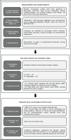
The research design, outlining the steps taken to address the research problem, is presented in Figure 1.
4 RESULTS
4.1 Estatística Descritiva
The statistics of the variables after winsorization are presented in Table 3. The mean cost of debt for Brazilian companies is 10.13%, exceeding the value reported by Balassiano et al. (2023) of 6.28%, but aligns with the value of 9.3% of Maaloul et al. (2023). The mean aggregate ESG score (ESG) was 41.54. Among the ESG dimensions, the ESGG score had the highest mean value (59.09) compared to ESGE (32.30) and ESGS (33.11).
The correlation of variables following winsorization is shown in Table 4. One can observe a significant negative correlation between the cost of debt and the ROA (-0.12) as well as the NPM (-0.08). This suggests that companies with higher operational profitability and net income incur lower debt costs. However, no significant correlation was found between the cost of debt and the ESG scores or other control variables. Regarding the aggregate ESG disclosure (ESG), a positive correlation was noted with the ESG disclosure scores in each pillar, with the environmental pillar (ESGA) being the most correlated (0.93) and the governance pillar (ESGG) the least correlated (0.61). The ESGA is more closely correlated with the social pillar (ESGS) (0.71) and, to a lesser extent, with governance (ESGG) (0.42). There is also a positive correlation with LEV (r = 0.10) and FS (r = 0.10), indicating that companies with more environmental disclosures tend to be more leveraged and possess greater financial sustainability. The ESGS, in turn, has a positive correlation with ESGG (0.48) and ROA (0.10). As for company size positively correlated with aggregate ESG disclosure and with each dimension, implying that larger companies release more environmental, social, and governance information.
4.2 Estimated models
The four estimated models to assess H1 are presented in Table 5. Overall, the models satisfied the diagnostic tests. First, the F-test demonstrated statistical significance of the coefficients at the 1% level. Second, in all models, the number of instruments is greater than the number of groups, avoiding covariance matrix singularity. Third, the Hansen J-test indicated instrument validity (p > 0.20). Although elevated p hints at potential instrument proliferation, the Hansen’s J-test can be weak in such cases. Sargan’s test results, which are more robust to instrument proliferation, also confirmed the instruments’ validity at the 5% level. Fourth, the Arellano-Bond AR (1) tests were significant, as expected, while AR (2) was not significant at the 20% level, presenting no second-order serial correlation. Nevertheless, the coefficients for Yt-1, the lagged dependent variable (persistence term), were not statistically significant, suggesting that examining the lagged cost of debt was inappropriate for the analysis.
The four models were statistically significant only for the angular coefficients of the control variable “Year” in 2017, 2018, and 2021. Consequently, the null hypothesis of no relationship between ESG disclosure and the cost of debt for Brazilian companies cannot be rejected. Thus, H1 was not supported. This finding indicates that credit providers do not recognize increased ESG disclosure and do not lower the cost of debt for companies engaging in greater transparency, despite previous propositions that higher disclosure reduces information asymmetry (Raimo et al., 2021).
These results contrast with those of Eliwa et al. (2020), Lavin and Montecinos-Pearce (2022), Maaloul et al. (2023), Ould Daoud Ellili (2020), Raimo et al. (2021), and Tarulli et al. (2023), but partially corroborate those of Balassiano et al. (2023), who found a significant positive relationship (at the 5% level) between the environmental score and the cost of debt and noted no significance for other ESG dimensions, inferring that sustainability practices remain nascent in the Brazilian market. As a result, companies and investors have not yet fully recognized the benefits of ESG practices for mitigating risk and reducing the cost of capital.
No significant relationships with the cost of debt were found in the two-step system GMM approach (Table 5). However, robustness tests, which omitted the lagged debt term to test for exogeneity, revealed that leverage is positively related to the cost of debt at the 5% level across all models. This outcome corroborates the findings of Eliwa et al. (2021) and Raimo et al. (2021), expressing that highly leveraged companies incur higher debt costs. Furthermore, financial sustainability was negatively related at the 10% level, as also posited by Nazir et al. (2022).
4.3 Regionality
The impact of ESG disclosure on the cost of debt, considering the region dummy variable, is listed in Table 6. The mean coefficient values for the year, sector, and region dummies, with 2020, the utilities sector, and the Southeast region serving as base categories, respectively.
Regionality hypotheses were evaluated using static panel regressions with REM and POLS given the limited variability in variables. The Breusch-Pagan test (71.26, p < 0.000) indicated that the random effects estimator outperformed the pooled estimator. The Wooldridge test identified autocorrelation (57.23, p < 0.000), and the Cameron and Trivedi test detected heteroscedasticity (416.36, p < 0.000). Robust clustered standard errors were used in both models. Multicollinearity diagnostics for the aggregate ESG score and its dimensions, based on variance inflation factors < 5, confirmed acceptable levels of multicollinearity among explanatory variables in all analyses.
The models were estimated with both REM and POLS. However, the results discussed focus on REM. Results indicate no significant relationship between the aggregate ESG score and the cost of debt. Consequently, there is insufficient evidence to reject the null hypothesis of no association between the cost of debt and ESG disclosures. In contrast, a negative and significant relationship emerged between the cost of debt and ROA (β = -13.56, z = -3.48***), consistent with the findings of Eliwa et al. (2021), Houqe et al. (2021), and Raimo et al. (2021). These results suggest that more profitable companies are less risky and more capable of generating resources, which enables them to obtain loans at lower interest rates.
Regarding regionality, the significant relation between the REGION dummy variables (β = 2.20; X2 = 23.84***) and the cost of debt supports the second hypothesis, which states that there is a difference in the cost of debt among Brazilian macro-regions. The cost of capital should be associated with regionality and the inherent risks to each region. Geographic location directly influences the companies’ capital structure, as certain regions offer more favorable financing conditions. As a result, organizations exhibit differences in their financial composition across regions.
5 CONCLUSION
This study examined the impact of ESG disclosure on the cost of debt among Brazilian non-financial companies from 2016 to 2021, accounting for regionality. Based on legitimacy theory, voluntary disclosure theory, and stakeholder theory, system GMM models were estimated, followed by a static panel with REM. By analyzing 124 companies, we found that greater ESG transparency does not reduce the cost of capital for Brazilian companies. These findings suggest that ESG practices are still maturing, and managers and stakeholders remain hesitant to acknowledge their benefits for risk mitigation and cost reduction. Regionality significantly impact companies’ cost of debt, with company location influencing capital structure, as some regions facilitate easier access to financing. Banking institutions tend to concentrate in wealthier areas, and limited access to banking services is associated with regional inequalities, which may affect credit availability, ease financial restrictions, and ultimately reduce the cost of capital.
Study limitations include the research period, a reduced number of observations due to System GMM estimation, and the use of geographic delimitation as the regional proxy without incorporating other regional economic and financial factors. Future research should examine the effect of ESG disclosure on other capital costs and financial metrics, such as Tobin’s Q, market-to-book ratio, and return on equity. Additionally, future studies should consider proxies that fully capture regional characteristics relevant to the financial behavior of Brazilian companies.
This study advances the understanding of ESG disclosure in an emerging economy where the adoption of environmental, social, and governance practices remains limited. It emphasizes the ethical dimension of compliance with voluntary recommendations, which are often adopted without a clear understanding of their value for society, the environment, and shareholders. By fostering transparent communication, these practices enhance trust and reduce investment-related risks. Moreover, this study’s focus on the cost of debt as a perspective on financial behavior distinguishes it from much of the existing literature.
From a practical and social perspective, understanding the effects of ESG disclosures on the cost of debt in Brazilian companies facilitates improvements in non-financial statement transparency guidelines. Enhancing the transparency of sustainable practices may increase organizational compliance and strengthen the relationship among companies, investors, and broader society.
REFERENCES
-
Amel-Zadeh, A., & Serafeim, G. (2018). Why and how investors use ESG information: Evidence from a global survey. Financial Analysts Journal, 74 (3), 87-103. https://doi.org/10.2469/faj.v74.n3.2
» https://doi.org/10.2469/faj.v74.n3.2 -
Arellano, M., & Bond, S. (1991). Some tests of specification for panel data:monte carlo evidence and an application to employment equations. Review of Economic Studies, 58 (2), 277-297. https://doi.org/10.2307/2297968
» https://doi.org/10.2307/2297968 -
Arellano, M., & Bover, O. (1995). Another look at the instrumental variable estimation of error-components models. Journal of Econometrics, 68 (1), 29-51. https://doi.org/10.1016/0304-4076 (94)01642-D
» https://doi.org/10.1016/0304-4076 (94)01642-D -
Atan, R., Alam, M. M., Said, J., & Zamri, M. (2018). The impacts of environmental, social, and governance factors on firm performance: Panel study of Malaysian companies. Management of Environmental Quality: An International Journal 29 (2), 182-194. https://doi.org/10.1108/MEQ-03-2017-0033
» https://doi.org/10.1108/MEQ-03-2017-0033 -
Bachner, G., Mayer, J., & Steininger, K. W. (2019). Costs or benefits? Assessing the economy-wide effects of the electricity sector's low carbon transition-The role of capital costs, divergent risk perceptions and premiums. Energy Strategy Reviews, 26, 100373. https://doi.org/10.1016/j.esr.2019.100373
» https://doi.org/10.1016/j.esr.2019.100373 -
Balassiano, R. S., Ikeda, W. E., & Jucá, M. N. (2023). Efeitos das práticas de ESG no custo de capital das empresas brasileiras. REUNIR Revista de Administração Contabilidade e Sustentabilidade, 13 (2), 197-217. https://doi.org/10.18696/reunir.v13i2.1538
» https://doi.org/10.18696/reunir.v13i2.1538 -
Baltagi, B. H. (2021). Econometric Analysis of Panel Data (6th ed.). Springer International Publishing. https://doi.org/10.1007/978-3-030-53953-5
» https://doi.org/10.1007/978-3-030-53953-5 -
Blundell, R., & Bond, S. (1998). Initial conditions and moment restrictions in dynamic panel data models. Journal of Econometrics, 87 (1), 115-143. https://doi.org/10.1016/S0304-4076 (98)00009-8
» https://doi.org/10.1016/S0304-4076 (98)00009-8 -
Bond, S. R. (2002). Dynamic panel data models: a guide to micro data methods and practice. Portuguese Economic Journal, 1 (2), 141-162. https://doi.org/10.1007/s10258-002-0009-9
» https://doi.org/10.1007/s10258-002-0009-9 - Brandão, C. A. (2020). Dinâmicas e Transformações Territoriais Recentes: O Papel da PNDR e das Políticas Públicas não Regionais com impacto territorial. In Monteiro Neto, A. (Org.), Desenvolvimento Regional no Brasil: políticas, estratégias e perspectivas, 2 (pp.151-186). Ipea.
-
Brasil. Comissão de Valores Mobiliários. Resolução CVM 193. (2023). Resolução CVM nº193, de 20 de outubro de 2023. Dispõe sobre a elaboração e divulgação do relatório de informações financeiras relacionadas à sustentabilidade, com base no padrão internacional emitido pelo International Sustainability Standards Board - ISSB. Comissão de Valores Mobiliários. https://conteudo.cvm.gov.br/legislacao/resolucoes/resol193.html
» https://conteudo.cvm.gov.br/legislacao/resolucoes/resol193.html -
Cançado, M. P., Santos, M., Pereira, V. S., & Penedo, A. S. T. (2022). Influência de Aspectos Regionais na Estrutura de Capital de Empresas Brasileiras atendidas por Bancos Públicos. Advances in Scientific and Applied Accounting, 149-164 https://doi.org/10.14392/asaa.2022150207
» https://doi.org/10.14392/asaa.2022150207 -
Cong, R., Lo, A. Y., & Yu, W. (2021). The distribution and regional determinants of nationally financed emissions-reduction projects in China. Energy Policy, 152, 112215. https://doi.org/10.1016/j.enpol.2021.112215
» https://doi.org/10.1016/j.enpol.2021.112215 -
Deegan, C. (2002). Introduction: The legitimising effect of social and environmental disclosures-a theoretical foundation. Accounting, auditing & accountability journal 15(3), 282-311. https://doi.org/10.1108/09513570210435852
» https://doi.org/10.1108/09513570210435852 -
Dhaliwal, D. S., Li, O. Z., Tsang, A., & Yang, Y. G. (2011). Voluntary non-financial disclosure and the cost of equity capital: The initiation of corporate social responsibility reporting. The accounting review, 86 (1), 59-100. https://doi.org/10.2308/accr.00000005
» https://doi.org/10.2308/accr.00000005 - Di Pietro, F., Palacín Sánchez, M. J., & Roldán Salgueiro, J. L. (2018). Regional development and capital structure of SMEs
-
Diamond, D. W., & Verrecchia, R. E. (1991). Disclosure, liquidity, and the cost of capital. The journal of Finance, 46 (4), 1325-1359. https://doi.org/10.1111/j.1540-6261.1991.tb04620.x
» https://doi.org/10.1111/j.1540-6261.1991.tb04620.x -
Oliveira Silva, R., Marques, M. D., & da Costa Mata, H. T. (2020). Atuação do BNDES e disparidades regionais: evidências da indústria de transformação entre 2000-2018. Geosul, 35 (74), 132-162. https://doi.org/10.5007/1982-5153.2020v35n74p132
» https://doi.org/10.5007/1982-5153.2020v35n74p132 -
Easley, D., & O'hara, M. (2004). Information and the cost of capital. The Journal of Finance, 59 (4), 1553-1583. https://doi.org/10.1111/j.1540-6261.2004.00672.x
» https://doi.org/10.1111/j.1540-6261.2004.00672.x -
Eliwa, Y., Aboud, A., & Saleh, A. (2021). ESG practices and the cost of debt: Evidence from EU countries. Critical Perspectives on Accounting, 79, 102097 https://doi.org/10.1016/j.cpa.2019.102097
» https://doi.org/10.1016/j.cpa.2019.102097 - Fávero, L. P. L. (2013). Dados em painel em contabilidade e finanças: teoria e aplicação. BBR Brazilian Business Review, 10 (1), 131-156.
-
Freeman, R. E., & Phillips, R. A. (2002). Stakeholder theory: A libertarian defense. Business ethics quarterly, 12(3), 331-349. https://doi.org/10.2307/3858020
» https://doi.org/10.2307/3858020 -
Graham, J. R., Harvey, C. R., & Rajgopal, S. (2005). The economic implications of corporate financial reporting. Journal of Accounting and Economics, 40 (1-3), 3-73. https://doi.org/10.1016/j.jacceco.2005.01.002
» https://doi.org/10.1016/j.jacceco.2005.01.002 - Griffo, L. C. (2024). Dificuldades para a captação de crédito bancário por pessoas físicas no Brasil e estado de São Paulo nos anos de 2015 a 2020.
- Gujarati, D. N., & Porter, D. C. (2011). Econometria Básica (5th ed.). AMGH.
-
Hamrouni, A., Boussaada, R., & Toumi, N. B. F. (2019). Corporate social responsibility disclosure and debt financing. Journal of Applied Accounting Research, 20 (4), 394-415. https://doi.org/10.1108/JAAR-01-2018-0020
» https://doi.org/10.1108/JAAR-01-2018-0020 -
Hamrouni, A., Uyar, A., & Boussaada, R. (2020). Are corporate social responsibility disclosures relevant for lenders? Empirical evidence from France. Management Decision, 58 (2), 267-279. https://doi.org/10.1108/MD-06-2019-0757
» https://doi.org/10.1108/MD-06-2019-0757 -
Houqe, M. N., Ahmed, K., & Richardson, G. (2020). The effect of environmental, social, and governance performance factors on firms' cost of debt: International evidence. The International Journal of Accounting, 55 (03), 2050014. https://doi.org/10.1142/S1094406020500146
» https://doi.org/10.1142/S1094406020500146 - Hsiao, C. (2014). Analysis of Panel Data (3rd ed.). Cambridge University Press.
-
IBGE (2018, January 9). Dividir para conhecer: as diversas divisões regionais do Brasil. Revista Retratos Recuperado em 26 de dezembro, 2023, de https://agenciadenoticias.ibge.gov.br/agencia-noticias/2012-agencia-de-noticias/noticias/19383-dividir-para-conhecer-as-diversas-divisoes-regionais-do-brasil
» https://agenciadenoticias.ibge.gov.br/agencia-noticias/2012-agencia-de-noticias/noticias/19383-dividir-para-conhecer-as-diversas-divisoes-regionais-do-brasil -
Kiviet, J. F. (2020). Microeconometric dynamic panel data methods: Model specification and selection issues. Econometrics and Statistics, 13, 16-45. https://doi.org/10.1016/j.ecosta.2019.08.003
» https://doi.org/10.1016/j.ecosta.2019.08.003 -
La Rocca, M., La Rocca, T., & Cariola, A. (2010). The influence of local institutional differences on the capital structure of SMEs: Evidence from Italy. International Small Business Journal, 28 (3), 234-257. https://doi.org/10.1177/0266242609360614
» https://doi.org/10.1177/0266242609360614 -
Lavin, J. F., & Montecinos-Pearce, A. A. (2022). Heterogeneous Firms and Benefits of ESG Disclosure: Cost of Debt Financing in an Emerging Market. Sustainability, 14 (23), 15760. https://doi.org/10.3390/su142315760
» https://doi.org/10.3390/su142315760 -
Lee M.D.P. (2011) Configuration of external influences: The combined effects of institutions and stakeholders on corporate social responsibility strategies. Journal of Business Ethics, 102(2), 281-298. https://doi.org/10.1007/s10551-011-0814-0
» https://doi.org/10.1007/s10551-011-0814-0 -
Lien, D., & Balakrishnan, N. (2007). On Regression Analysis with Data Cleaning via Trimming, Winsorization, and Dichotomization. Http://Dx.Doi.Org/10.1080/03610910500307695, 34 (4), 839-849. https://doi.org/10.1080/03610910500307695
» Http://Dx.Doi.Org/10.1080/03610910500307695» https://doi.org/10.1080/03610910500307695 -
Lien, D., & Balakrishnan, N. (2021). Some results on multiple regression analysis with data cleaned by trimming and winsorization. Https://Doi.Org/10.1080/03610918.2021.1982974. https://doi.org/10.1080/03610918.2021.1982974
» https://doi.org/10.1080/03610918.2021.1982974 -
Lv, C., Bian, B., Lee, C. C., & He, Z. (2021). Regional gap and the trend of green finance development in China. Energy Economics, 102, 105476. https://doi.org/10.1016/j.eneco.2021.105476
» https://doi.org/10.1016/j.eneco.2021.105476 -
Maaloul, A., Zéghal, D., Ben Amar, W., & Mansour, S. (2023). The effect of environmental, social, and governance (ESG) performance and disclosure on cost of debt: The mediating effect of corporate reputation. Corporate Reputation Review, 26 (1), 1-18. https://doi.org/10.1057/s41299-021-00130-8
» https://doi.org/10.1057/s41299-021-00130-8 - Maama, H., & Mkhize, M. (2020). Integration of non-financial information into corporate reporting: A theoretical perspective. Academy of Accounting and Financial Studies Journal, 24 (2), 1-15.
-
Marín, J. B., & Villada, F. (2020). Regionalized Discount Rate to Evaluate Renewable Energy Projects in Colombia. International Journal of Energy Economics and Policy, 10 (2), 332-336. https://doi.org/10.32479/ijeep.8924
» https://doi.org/10.32479/ijeep.8924 -
Matias, F., & Serrasqueiro, Z. (2017). Are there reliable determinant factors of capital structure decisions? Empirical study of SMEs in different regions of Portugal. Research in International Business and Finance, 40, 19-33. https://doi.org/10.1016/j.ribaf.2016.09.014
» https://doi.org/10.1016/j.ribaf.2016.09.014 -
Mohamed Buallay, A., Al Marri, M., Nasrallah, N., Hamdan, A., Barone, E., & Zureigat, Q. (2021). Sustainability reporting in banking and financial services sector: a regional analysis. Journal of Sustainable Finance & Investment, 1-26. https://doi.org/10.1080/20430795.2021.1978919
» https://doi.org/10.1080/20430795.2021.1978919 -
Mohammad, W. M. W., & Wasiuzzaman, S. (2021). Environmental, Social and Governance (ESG) disclosure, competitive advantage and performance of firms in Malaysia. Cleaner Environmental Systems, 2, 100015. https://doi.org/10.1016/j.cesys.2021.100015
» https://doi.org/10.1016/j.cesys.2021.100015 -
Nazir, M., Akbar, M., Akbar, A., Poulovo, P., Hussain, A., & Qureshi, M. A. (2022). The nexus between corporate environment, social, and governance performance and cost of capital: evidence from top global tech leaders. Environmental Science and Pollution Research, 29, 22623-22636. https://doi.org/10.1007/s11356-021-17362-0
» https://doi.org/10.1007/s11356-021-17362-0 -
Ould Daoud Ellili, N. (2020). Environmental, social, and governance disclosure, ownership structure and cost of capital: Evidence from the UAE. Sustainability, 12 (18), 7706. https://doi.org/10.3390/su12187706
» https://doi.org/10.3390/su12187706 -
Palacín-Sánchez, M. J., & Di Pietro, F. (2016). The role of the regional financial sector in the capital structure of small and medium-sized enterprises (SMEs). Regional Studies, 50 (7), 1232-1247. https://doi.org/10.1080/00343404.2014.1000290
» https://doi.org/10.1080/00343404.2014.1000290 -
Palacín-Sánchez, M. J., Ramírez-Herrera, L. M., & Di Pietro, F. (2013). Capital structure of SMEs in Spanish regions. Small Business Economics, 41, 503-519. https://doi.org/10.1007/s11187-012-9439-7
» https://doi.org/10.1007/s11187-012-9439-7 -
Peixoto, B. T. (2024, 1 Abril). Relatório ESG agora é regra no Brasil [LinkedIn page] LinkedIn. Recuperado em 14 de abril de 2024, de https://www.linkedin.com/pulse/relat%2525C3%2525B3rio-esg-agora-%2525C3%2525A9-regra-brasil-bruno-teixeira-peixoto-9rrif/?trackingId=AasAZz7ZTqGQm4WPUwsjdA%3D%3D
» https://www.linkedin.com/pulse/relat%2525C3%2525B3rio-esg-agora-%2525C3%2525A9-regra-brasil-bruno-teixeira-peixoto-9rrif/?trackingId=AasAZz7ZTqGQm4WPUwsjdA%3D%3D -
Pereira Júnior, A. (2022). Perspectiva contingente e valor estratégico do caixa na relação entre diversificação geográfica dos negócios e desempenho organizacional (Tese de doutorado, Universidade Federal de Uberlândia, Brasil). Recuperado de https://repositorio.ufu.br/handle/123456789/36861
» https://repositorio.ufu.br/handle/123456789/36861 -
Raimo, N., Caragnano, A., Zito, M., Vitolla, F., & Mariani, M. (2021). Extending the benefits of ESG disclosure: The effect on the cost of debt financing. Corporate Social Responsibility and Environmental Management, 28 (4), 1412-1421. https://doi.org/10.1002/csr.2134
» https://doi.org/10.1002/csr.2134 -
Raimo, N., de Nuccio, E., Giakoumelou, A., Petruzzella, F., & Vitolla, F. (2020). Non-financial information and cost of equity capital: An empirical analysis in the food and beverage industry. British Food Journal, 123 (1), 49-65. https://doi.org/10.1108/BFJ-03-2020-0278
» https://doi.org/10.1108/BFJ-03-2020-0278 -
Roodman, D. (2009). How to do xtabond2: An introduction to Difference and system GMM in Stata. Stata Journal, 9 (1), 86-136. https://doi.org/10.1177/1536867x0900900106
» https://doi.org/10.1177/1536867x0900900106 -
Ruppert, D. (2014). Trimming and Winsorization. In Wiley StatsRef: Statistics Reference Online Wiley. https://doi.org/10.1002/9781118445112.stat01887
» https://doi.org/10.1002/9781118445112.stat01887 -
Schyska, B. U., & Kies, A. (2020). How regional differences in cost of capital influence the optimal design of power systems. Applied Energy, 262, 114523. https://doi.org/10.1016/j.apenergy.2020.114523
» https://doi.org/10.1016/j.apenergy.2020.114523 -
Shkura, I. (2019). The regional peculiarities of SRI development. Journal of Economics and Management, 37 (3), 107-138. https://doi.org/10.22367/jem.2019.37.06
» https://doi.org/10.22367/jem.2019.37.06 -
Sonza, I. B., Machado, V. N., Lacruz, M. S. P., & Rosa, A. da S. (2020). Mapeamento Financeiro das Regiões Brasileiras: Determinantes do Endividamento das Empresas de Capital Aberto. Revista Brasileira de Gestão e Desenvolvimento Regional, 16 (3), 443-457. Recuperado de https://www.rbgdr.net/revista/index.php/rbgdr/article/view/5890
» https://www.rbgdr.net/revista/index.php/rbgdr/article/view/5890 -
Tarulli, A., Morrone, D., Conte, D., Bussoli, C., & Russo, A. (2023). The relevance of non-financial disclosure in influencing the cost of capital: Empirical evidence from the agri-food sector. Business Strategy and the Environment https://doi.org/10.1002/bse.3215
» https://doi.org/10.1002/bse.3215 -
Verrecchia, R. E. (1983). Discretionary disclosure. Journal of Accounting and Economics, 5, 179-194. https://doi.org/10.1016/0165-4101 (83)90011-3
» https://doi.org/10.1016/0165-4101 (83)90011-3 - Verrecchia, R. E. (2001). Essays on disclosure. Journal of Accounting and Economics, 32, 97-180.
-
Wai-Khuen, W., Boon-Heng, T., & Siow-Hooi, T. (2023). The influence of external stakeholders on environmental, social, and governance (ESG) reporting: Toward a conceptual framework for ESG disclosure. Foresight and STI Governance, 17 (2), 9-20. DOI: 10.17323/2500-2597.2023.2.9.20
» https://doi.org/10.17323/2500-2597.2023.2.9.20 -
Windmeijer, F. (2005). A finite sample correction for the variance of linear efficient two-step GMM estimators. Journal of Econometrics, 126(1), 25–51. https://doi.org/10.1016/j.jeconom.2004.02.005
» https://doi.org/10.1016/j.jeconom.2004.02.005 - Wooldridge, J. M. (2010a). Econometric Analysis of Cross Section and Panel Data (2nd ed.). MIT Press.
- Wooldridge, J. M. (2010b). Introdução à Econometria: Uma Abordagem Moderna (4th ed.). Cengage Learning.
-
Zopounidis, C., Garefalakis, A., Lemonakis, C., & Passas, I. (2020). Environmental, social and corporate governance framework for corporate disclosure: a multicriteria dimension analysis approach. Management Decision, 58 (11), 2473-2496. https://doi.org/10.1108/MD-10-2019-1341
» https://doi.org/10.1108/MD-10-2019-1341
-
Plagiarism Check:
The ReA/UFSM maintains the practice of submitting all documents approved for publication to the plagiarism check, using specific tools, e.g.: Turnitin.
Edited by
-
Edited by:
Jordana Marques Kneipp

 Source: the authors