 Public Management and Agenda Setting: a systematic review on three platforms
ABSTRACT
Purpose Public administration is profoundly influenced by the sociopolitical context, which shapes its institutional identity, strategies, and agenda. Agenda-setting theory plays a central role in the theoretical debate on Public Policy and Management. This study investigates the contemporary debate on agenda-setting in administrative and organizational studies in Brazil.
Design/Methodology/Approach To conduct the study, a Systematic Literature Review (SLR) was conducted on national and international platforms, including Scielo Brasil, Spell, and Web of Science.
Findings The results show a growth in scientific production in recent years, with greater use of the punctuated equilibrium model in national research and an increase in international collaborations. Emerging themes include climate change, sustainability, and the role of multilateral development banks, especially in Asia.
Originality/Value This research emulates and updates previous works, expanding the search to identify new articles on the topic, thus advancing knowledge about agenda-setting in scientific research on public policy.
Keywords
Public Administration; Agenda-Setting; Systematic Literature Review
RESUMO
Objetivo A administração pública é profundamente influenciada pelo contexto sociopolítico, que molda sua identidade institucional, estratégias e agenda. A Teoria da Agenda desempenha um papel central no debate teórico da Política e Gestão Pública. Este estudo investiga o debate contemporâneo sobre a formação da agenda em estudos administrativos e organizacionais no Brasil.
Desenho/Metodologia/Abordagem Para a realização do estudo, foi feita uma Revisão Sistemática da Literatura (RSL) em plataformas nacionais e internacionais, sendo elas Scielo Brasil, Spell e Web of Science.
Descobertas Os resultados mostram um crescimento na produção científica nos últimos anos, com maior uso do modelo de equilíbrio pontuado em pesquisas nacionais e o aumento das colaborações internacionais. Entre os temas emergentes, destacam-se mudanças climáticas, sustentabilidade e o papel dos bancos multilaterais de desenvolvimento, especialmente na Ásia.
Originalidade/Valor A presente pesquisa emula e atualiza trabalhos anteriores, expandindo a busca para identificar novos artigos sobre o tema, de forma a proporcionar o avanço do conhecimento sobre a formação de agenda da pesquisa científica sobre as políticas públicas.
Palavras-chave
Administração Pública; Agenda-Setting; Revisão Sistemática da Literatura
1 INTRODUCTION
Shafritz et al. (2022) define public administration through a direct synthesis: “it is government in action – the management of public affairs or the implementation of public policies” (p. 1). The reflection on public administration, from its origins to the contemporary debate, remains ontologically linked to the State, its governments, and their governance models. Since the emergence of Nation States and, throughout the 20th century, of the Democratic Rule of Law (or Liberal State) and its Welfare State bureaucracies, public administration has evolved and consolidated as a field.
Thus, two complementary and structurally articulated axioms remain alive. The first concerns the context, that is: public administration does not exist outside a political context. The second addresses the society that produces it, that is: public administration reflects the reality, cultural norms, and beliefs of the society where it occurs (Shafritz et al., 2022). According to Benz and Papadopoulos (2006), the 21st century emerged with significant changes in the organization of political power, which can be defined as the transition from government to governance - this new term is used to define the new set of public administration practices (Bevir, 2006).
The evidence compiled in the World Bank Report (1997) already pointed, by the late 20th century, to phenomena that reshaped the understanding of the liberal state and public administration: the collapse of socialist regimes in Europe, and the fiscal crisis of welfare states in advanced economies, among others. According to Benz and Papadopoulos (2006), emerging governance practices were marked by a plurality of actors beyond the state - NGOs, third-sector organizations, and multilateral institutions - alongside negotiation-based decision-making, polycentric networks with fluid hierarchies, and functionally defined structures responding to specific problems.
However, as Hill and Varone (2021) note, these governance features did not eliminate traditional government practices. Rather, governance has increasingly depended on articulations between formal and informal institutions. In this context, Shafritz et al. (2022) highlight that processes once centralized in bureaucratic structures have expanded into interorganizational collaborations aimed at addressing complex challenges through networked actors. Thus, contemporary public issues now demand attention not only from governments but also from multilateral and other non-state organizations. Additionally, as Incrorera (2015) notes, public policies must play a central role and their instruments must evolve. Public administration, therefore, is shaped by these policies and their cycles - making their examination essential for understanding and improving public management.
In this specific case, while there are multiple theoretical approaches to analyzing public policy, the conceptual model most suited to the subject at hand is the Agenda-Setting Theory - which explains how issues gain visibility, enter the governmental agenda, and shape decision-making and implementation (Shafritz et al., 2022; Capella, 2018). Thus, by asserting that public administration lies at the core of this process and acts across all its stages, the authors underscore a key relationship for this study: the interdependence between public administration, public policies, and the evolving configurations of contemporary governance.
The interconnection between public administration and public policy becomes evident when viewed through the lens of agenda formation - defined as the study of change and political stability and their interpretive theories (Capella, 2018). It concerns how certain issues become governmental priorities across sectors such as education, economy, among others (Capella, 2020). Understanding policy formulation thus requires examining agenda-setting dynamics, which determine which societal demands enter the governmental agenda (Green-Pedersen; Mortensen, 2012).
As Farah (2011) highlights, research in this field has become increasingly interdisciplinary, combining insights from economics, political science, and management. Initially centered on mapping policy agendas and formulation processes, the field has evolved toward greater theoretical pluralism. As Green-Pedersen and Mortensen (2012) note, contemporary scholarship now engages with diverse analytical frameworks, enriching public policy research through methodological diversity and interdisciplinary synthesis.
Although understanding the agenda formation process is a vital element for analyzing public policies (Bali & Halpin, 2021) and the exercise of power in democratic contexts, research on this topic remains relatively limited—both internationally and, even more so, in Brazil (Capella, 2020). To address this gap and contribute new perspectives to the challenges that shape public administration, this study analyzes how the field has evolved in recent years, particularly in Brazil, through a systematic literature review conducted across three academic platforms.
In this research, agenda-setting is conceived as a conceptual bridge between Public Policy and Public Management. While the former focuses on how issues gain visibility and enter governmental agendas, the latter concerns the administrative, institutional, and interorganizational capacities that translate these priorities into concrete actions (Farah, 2011; Hill & Varone, 2021; Souza, 2006). Understanding policymaking, therefore, requires considering how managerial capacities and governance arrangements condition the formulation, implementation, and sustainability of public agendas.
2 PUBLIC POLICIES AND AGENDA-SETTING
Souza (2006) establishes that public policy as an academic field - including the rules, models, and institutions involved in its decision-making, formulation, implementation, and evaluation - has experienced substantial growth in scholarly output in recent decades. This discipline first emerged within political science as a distinct subfield in the United States. Its foundational premises maintain that “in stable democracies, government actions and policy omissions can be both (a) systematically studied through scientific methods and (b) independently analyzed by researchers” (Souza, 2006).
Souza (2006) identifies H. Lasswell, H. Simon, C. Lindblom, and D. Easton as the field’s foundational scholars. Lasswell first introduced the term “policy analysis” in 1936. Simon (1957) subsequently developed the concept of bounded rationality among policymakers, demonstrating how rational knowledge could mitigate cognitive limitations. Lindblom (1959; 1979) offered a distinct perspective by incorporating additional variables - particularly power relations - into policy analysis. Finally, Easton (1965) conceptualized public policies as a system, framing them as dynamic interactions between environmental factors, policy formulation, and outcomes.
This historical development underscores a key epistemological principle: There exists no single or superior definition of public policy (Souza, 2006). While definitions vary across scholarly traditions, Souza (2006) argues that they collectively embrace a holistic perspective, wherein the integrated whole holds greater analytical value than the sum of its discrete parts.
In this context, Dye (1987) defines public policies as the set of actions and inactions that governments deliberately choose to undertake - ranging from mediating societal conflicts and distributing various symbolic and material benefits, to providing multiple state services to citizens. Fundamentally, public policies operate through multiple, often simultaneous functions: regulating social behavior, structuring bureaucratic systems, allocating resources, and implementing taxation mechanisms. (Dye, 1987).
Therefore, it can be concluded that definitions of public policies, even the most synthetic ones, guide our gaze to the locus where disputes over interests, preferences, and ideas develop, that is, governments (Souza, 2006). As an object of study, the focus lies, according to Souza (2006), on examining government actions and/or “putting them into practice” (independent variable) and, when necessary, identifying shifts in the course or trajectory of these actions (dependent variable). To analyze these policy processes, scholars have developed various theoretical models that examine the rationale behind government actions and inactions (Souza, 2006). While not exhaustive, this discussion focuses on several foundational frameworks. Theodor Lowi (1964, 1972) established a seminal typology proposing that each policy type generates distinct patterns of support and opposition, with decision-making processes occurring in specialized political arenas (Souza, 2006). His classification identifies four fundamental policy categories: distributive, regulatory, redistributive, and constitutive policies.
The second, called “incrementalism,” was developed by Lindblom (1979), Caiden and Wildavsky (1980), and Wildavsky (1992). Based on empirical research and the understanding that public policies are an incremental process, the authors argue that government resources for a program, agency, or a given public policy do not start from scratch, but from marginal and incremental decisions that disregard political changes or substantive changes in public programs (Souza, 2006).
Furthermore, in line with what is presented by Raeder (2015), there are several public policy models, and the research objectives are the main guides for the model to be used. Given that this study aims to expand and deepen the understanding of the Agenda Formation field, it will focus extensively on the public policy cycle model - particularly agenda formulation, as developed through Agenda-Setting Theory. This methodological choice is justified by Capella’s (2018) argument that understanding this process allows a broader understanding of the public policymaking process, including how determined changes impact specific policies, as well as how the relationship between technical expertise and political dynamics is established and operationalized - which involves the participation of many actors and institutions that are essential to the democratic order.
This model conceptualizes public administration as a dynamic, iterative learning process structured in distinct phases: agenda-setting, alternative identification, option evaluation, policy selection, implementation, and assessment (Souza, 2016). Essentially, these stages should be interpreted as analytical tools - designed to illuminate the processes and actors involved in policymaking - rather than rigid, mechanical steps (Raeder, 2015).
The agenda-setting process emerges as the pivotal mechanism for understanding why certain issues attain political priority while others are excluded (Souza, 2006). The political agenda fundamentally comprises those problems or themes considered both salient and actionable at a given historical juncture, shaped through the strategic interventions of political parties, bureaucrats, social movements, and other key actors (Capella, 2018). Analyzing how issues acquire sufficient relevance to enter this agenda remains essential, as - although it might occur in different ways - this process critically determines both the development of policy solutions and the political salience of issues (Rochefort & Cobb, 1994). This recognition of agenda-setting’s systemic importance reinforces the seminal argument advanced by Dye (1987) and foundational scholars: the most consequential stage in the policy formulation process is precisely agenda formation itself.
According to Cobb and Elder (1971), “agenda” can be understood as a set of political controversies that are legitimate and deserve attention from the political system. In essence, this theoretical field seeks to understand how an agenda is established- specifically, how certain issues enter the political agenda - and which actors participate in the formulation process (Cobb; Elder, 1971). However, in line with what was presented by Birkland (2019, p. 205), the agenda formulation process is generally not linear and rational - in the sense that “all the different policy options will be explored, their potential outcomes compared with each other, all while the assumptions underlying every option are explicit and widely agreed upon”. On the contrary, this process involves intense competition among the actors involved, so that, frequently, there is a dispute not only to establish which is the most important agenda at the moment, but also to understand how the problem in question will be interpreted and, consequently, its possible solutions (Birkland, 2019). In this context, building on Dearing and Rogers’ (1996, p. 18) foundational definition: “the agenda-setting process is an ongoing competition among issue proponents to gain the attention of media professionals, the public, and policy elites.” This perspective makes clear that the process inherently involves a strategic struggle for visibility, with systemic implications across all levels of public administration. As Capella (2018) observes, the agenda, as a framework of shared priorities, operates at every governmental tier - each institution, whether federal, state, or municipal, maintains its own set of issues and establishes corresponding action priorities.
Consequently, this process inevitably prioritizes certain issues - elevating them to the top of the policy hierarchy - while relegating others to secondary status (Capella, 2018). This selectivity occurs because, as Dearing and Rogers (1996) demonstrate, issues require media amplification through mass communication channels to achieve recognition as “public” concerns. Thus, the agenda formation process inherently generates rivalry among issues seeking political recognition and policy consideration. — A selective process that privileges certain issues over others, demonstrating the dynamism and competitiveness inherent in the agenda formation process. This understanding ultimately results in both an analysis of specific policy moments and insights into shifting governmental priorities and policymakers’ attention (Capella, 2018).
During the 1980s and 1990s, Baumgartner and Jones (1993) and Kingdon (1995) contributed to the development of the field, with a change in the focus of agenda formation studies, now prioritizing investigation of issues that cross the institutional agenda (Capella, 2020). In this context, models were developed that not only enhance the understanding of how agendas are defined but also broaden the comprehension of the overall public policymaking process (Capella, 2018).
The main contribution of these authors lies in the proposition of two theoretical models: Kingdon’s (1995) Multiple Streams Frameworkl (MSF) and Baumgartner and Jones’s (1993) Punctuated Equilibrium Theory (PET). The first model, based on the “garbage can model” by Cohen et al. (1972), views government as an organization involving three relatively independent decision streams: problems (problem stream), solutions or alternatives (policy stream), and politics (political stream) (Capella, 2018). These streams help explain public policy formulation through the analysis of the pre-decision stages of this process (Capella, 2020).
Moreover, as explained by Herweg et al. (2023), it is worth noting that the basic principles of this model address issues such as ambiguity, stream independence, fluid participation, problematic preferences, unclear technologies, and time constraints. In this regard, Cairney and Jones (2016) point out that, although Kingdon developed this model based on data from only two areas (health and transportation), in a single country (the United States), and within a limited time frame (the 1980s), the MSFl can be quite comprehensive. This is mainly due to three characteristics: being based on the “garbage can model” – which is highly abstract – allows its conclusions to extend beyond the original study; the stream metaphor is highly flexible and easily applicable; and it develops concepts that can be applied to different case studies, including the role of bounded rationality and the decision-making process in the face of uncertainty and ambiguity (Cairney & Jones, 2016).
Regarding the PET, Capella (2007) highlights that the authors sought to create a mechanism that would allow for the analysis of both periods of stability and those in which rapid changes occur in the public policy formulation process. This model, which was primarily based on written documents for its development, presents a research design that allows for the combination of two forms of study: longitudinal studies (which investigate a single issue through its different stages of development over a period) and cross-sectional studies, which analyze multiple issues within a single period (Capella, 2020). Longitudinal studies are suitable for analyzing issues that enter and exit agendas, but they are hardly generalizable or comparable. Cross-sectional studies, on the other hand, explain why some issues reach a high level of attention on the agenda while others remain neglected (Capella, 2020).
Thus, from Zahariadis’s (2016) perspective, this model contributed to the literature in two complementary ways: it enables the use of sophisticated quantitative techniques (unlike other models that relied more on qualitative evidence) and theorization at an abstract level, which allows for comparative investigations. Furthermore, Capella (2018) adds that Baumgartner and Jones (1993) contribute by offering a solid theoretical perspective capable of supporting both specific case studies and broader research focused on the study of changes in public policies.
3 METHOD OF THE STUDY
The Systematic Literature Review constitutes a fundamental methodological approach and a rigorous process for synthesizing evidence in academic research, especially in rapidly advancing, fragmented, and interdisciplinary fields such as Management (Bezerra et al., 2025; Snyder, 2019). Unlike traditional literature reviews, a SLR employs rigorous, transparent, and replicable methods to ensure that its conclusions are not derived from flawed assumptions or selective evidence (Snyder, 2019). When properly executed, an SLR establishes a robust foundation for the advancement of knowledge and the development of theory, identifying gaps within the existing body of literature and proposing well-grounded research agendas (Bezerra et al., 2025; Snyder, 2019). By systematically integrating and synthesizing findings from multiple studies, an SLR is capable of addressing research questions with a degree of depth and comprehensiveness unattainable by any single investigation (Snyder, 2019).
The significance of the SLR extends well beyond the academic sphere, offering substantial contributions to the formulation of effective policies and practices (Snyder, 2019). It constitutes an indispensable instrument for evidence-based decision-making, thereby reinforcing the interconnection between theory and practice (Bezerra et al., 2025). By systematically consolidating and evaluating empirical evidence, the SLR functions as a cornerstone for the development of reliable guidelines capable of informing both social policy and managerial practice (Snyder, 2019). From this perspective, SLR proves to be the most appropriate method for analyzing the contemporary theoretical debate on the topic, allowing for a broader understanding of how Agenda Theory has been mobilized in Public Administration research.
Prior to carrying out the SLR itself, exploratory and diagnostic studies were undertaken to indicate the feasibility of the work. Research that had conducted similar analyses was also sought, both to understand how other scholars in the field have approached the topic and to avoid redundancies. Among the articles found, a paper presented at XLVI EnANPAD (Encontro da Associação Nacional de Pós-Graduação e Pesquisa em Administração), in 2022, by Freitas et al. (2022) proved to be strategic. The authors proposed an SLR to understand how John Kingdon’s (1984) MSF and Bryan Jones and Frank Baumgartner’s (1993) PET are addressed. Thus, within the scope of the present study, the aim is to expand and update its temporal scope, using criteria and processes as close as possible to those already employed, always focusing on works dedicated to analyzing Agenda Setting.
Freitas et al. (2022), as presented in Table 1, systematized a preliminary protocol - following the parameters of Okoli (2015) - which established the basic search guidelines. Here, as will be detailed later, efforts were made both to emulate this protocol and, subsequently, to expand and complement it, considering what is currently available. A study was thus undertaken that values both originality and its ability to update, broaden, and deepen the understanding of Agenda-Setting Theory in the field of Public Administration. To this end, adjustments were made to the protocols, aiming to incorporate what is already known while also enhancing analytical capacity and providing a broader contribution to the field, going beyond the debate on the aforementioned analytical models and focusing on how “Agenda Setting” has been mobilized in general.
Among the main differences are: (a) the distinction of search platforms, instead of unifying the SLR results from national and international databases, which are indicated separately here, as will be presented later; (b) the expansion of the search protocol to incorporate more studies beyond the two models mentioned; and (c) the extension of the search timeframe, as this allows for the updating of the SLR by incorporating more recent studies.
Before conducting this SLR, it was decided to emulate the previously described protocol, ensuring intersubjectivity, rigour, and systematicity in the process. By following the indicated steps, it was possible to find the same studies after applying successive filters. In the final selection stage, referring to the analysis of adherence to the object, abstracts, keywords, and the full articles were read whenever necessary. The applied filters included: the field of knowledge (Human Sciences and Applied Social Sciences), the thematic areas of the Web of Science (Administration, Political, Public, Management, Interdisciplinary), and only articles published up to December 2020. On the SPELL platform, the process was simpler due to the smaller number of available descriptors, and very similar results were obtained. In SciELO, the original study identified and selected 16 texts. We located 55, which, after the final stage, were also reduced to 16. On SPELL, where 9 had been selected, we identified 8 after applying all filters. Subsequently, when comparing the results, duplicate texts were eliminated, resulting in 11 articles in SciELO.
Originally, three (3) dimensions were used for categorization: Theoretical Concept; Policy Level or Theory Development; and Country, Institution, or Theoretical Approach. The first focuses on understanding which theory or part of the theory was used as the framework in the text. The second involved distinguishing the geographic scope/space: studies that analyzed a specific public policy of a government or institution (or organization) were classified into categories such as Transnational, National, State, or Municipal. Studies that presented a theoretical debate, with critical propositions or incremental contributions to the theory, were classified as Theory Development. Studies classified geographically (Transnational, National, State, or Municipal) were identified according to the countries or institutions analyzed.
Before comparing the studies identified up to 2020 with those published from 2021 onward, it is worth summarizing the findings of the original SLR. Of the total publications analyzed, six addressed agenda-setting theory in general, without using a specific model as a framework (Freitas et al., 2022). Among these, one was categorized as transnational, one as national, and four as theory development. Of the remaining five, three applied Kingdon’s (1984) Multiple Streams Model and two used the Comparative Agendas Project (CAP) by Jones and Baumgartner (1993). Regarding publication years, five of the eleven articles were from 2020, reflecting a collaborative effort between a relevant journal and Baumgartner and Jones to strengthen agenda-setting studies in Latin America and promote the application of their model (Freitas et al., 2022).
After replicating the original SLR, a new protocol was designed, as presented in Table 2, to encompass studies published between 2021 and 2024. Following the comparative analysis of the results, duplicate records were removed. This process yielded five articles identified in the SPELL database and eight in SciELO.
In the Web of Science (WoS) platform, two searches were conducted: one covering the period from 1992 to 2020 and another from 2021 to 202411. Initially, the following descriptors were used: agenda-setting or agenda formation. Subsequently, the following filters were applied: document type (Article), Open Access, and WoS categories (Management, Public Administration, Political Science, and Social Sciences Interdisciplinary). As a result, 268 articles were retrieved for the 1992–2020 period and 216 for the 2021–2024 period.
The analysis of WoS’s data used the Bibliometrix package in R, with findings presented in two stages: an overview of early trends followed by a comparative analysis of the later period, enabling a structured and contextual understanding of the data’s evolution.
4 ANALYSIS OF THE RESULTS
Regarding the new protocol, Table 3 summarizes the results - discussed in detail later in this section - to facilitate a clearer understanding of the findings. As in the previous protocol, the distribution of articles by year proved to be uneven: 5 were published in 2021, 3 in 2022, 1 in 2023, and the remainder in 2024. It is noteworthy that, taken together, 10 of the 22 articles were published between 2020 and 2021, which relates to the previously mentioned collective effort.
The articles are classified into three groups based on different theoretical models: the MSF, Agenda-Setting, and the Comparative Agendas Project (CAP) (as part of the PET). The present study distributed the texts across essentially the same concepts, replacing the CAP with the PET itself2. In this regard, a more balanced distribution can be observed. While the MSF was addressed in three articles, the remaining eight studies are evenly divided: half applied PET3, and the other half discussed Agenda-Setting in a broader sense. Thus, it is relevant to highlight that, as in the aforementioned study, a considerable portion of the literature addressed the theory in a general and conceptual manner, rather than focusing exclusively on a single analytical model.
Regarding the dimensions and categories, this SLR applied the same classification as the basis for article analysis: (i) Theoretical / Applied; (ii) Policy Level; and (iii) Theoretical Approach. Among the 11 articles identified, 2 were predominantly theoretical - one based on the MSF and the other on PET. Of the remaining studies, six focused on federal policies, addressing topics such as abortion, social security and welfare, governmental agendas, budgeting, and emergency basic income in the context of the COVID-19 pandemic. The other three articles analyzed municipal policies: one on tourism policies in Ouro Preto–MG, another on participatory budgeting in Volta Redonda–RJ, and the last on sustainable management and public policies in four municipalities, two in Brazil and two in Colombia.
Table 3 shows a balanced use of theoretical approaches in Brazilian studies: three applied the MSF, while others used the PET or general agenda-setting perspectives. Most analyses addressed national issues—such as abortion, social security, and COVID-19 programs—while fewer examined local cases like tourism and participatory budgeting. This diversity reflects theoretical and empirical refinement, with interest in both agenda openings (MSF) and stability-disruption dynamics (PET). Yet, the focus remains largely on macro-level dynamics, leaving local agenda-setting processes less explored.
With respect to the WoS analysis, the first period revealed an average of 30.32 citations per article, with contributions from a total of 574 authors. The leading institutions in terms of publication volume were the University of Amsterdam (25 articles), followed by the University of Antwerp and the University of Oxford (14 articles each). The first Brazilian institution to appear in the ranking is the Federal University of São Carlos, in eighth place, alongside Erasmus University and the University of Edinburgh (8 articles each). As for the journals with the highest number of publications, the most prominent are Journal of European Public Policy (19 articles), Revista de Administração Pública (9), and Political Communication (8).
It is important to note that, although the defined period is 1992–2020, some articles from 2021 and 2022 also appeared in the analysis. This is relevant because, when examining the publication-by-year graph (Figure 1), there is an apparent downward trend; however, the articles outside the defined period do not represent the full volume of research from those years (2021–2022), as will be detailed in the subsequent analysis. Despite this distortion, the overall number of articles shows an upward trajectory. Furthermore, to optimize the analysis, the number of articles was presented alongside citation data. Accordingly, Figure 1 displays the following information: in blue, the mean total citations per article (MTCA); in orange, the mean total citations per year (MTCY); in red, the number of articles per year; and in green, the number of citable years. These criteria were selected based on the features available in the Bibliometrix package.
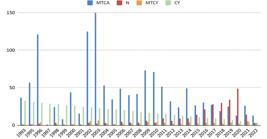
When analyzing the number of articles published per year, a growth trend can be observed, indicating increased interest in the topic. Furthermore, when incorporating the analysis of citations per year (orange) and per article (blue), it becomes evident that, although irregular, the publications continue to be cited, demonstrating their relevance over time. It is also worth noting that the citation count for more recent articles tends to rise, as newer works are progressively referenced by subsequent research.
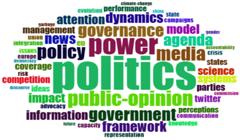
In examining the most recurrent terms, five stand out: politics (32 occurrences), power (31 occurrences), policy (30 occurrences), government (23 occurrences), and agenda (18 occurrences). Although the first three terms were slightly more frequent, all five are closely related. The remaining 174 terms, though less frequent, align with core themes like state and governance, reinforcing the articles’ thematic coherence. Figure 2 visually highlights these terms through a word cloud.

Finally, when examining the distribution of collaborations (Table 4), there is a clear predominance of developed countries, particularly in Europe - especially the United Kingdom and the Netherlands - and in the United States. This highlights a concentration of research networks and academic exchange within these regions and a few specific countries.
In the most recent period (2021–2024), the 216 published articles show an average of 5.9 citations — a naturally low figure given the short time frame — with a total of 587 contributing authors. Among the most productive institutions, the University of Oxford leads with 17 publications, followed by King’s College London and the University of Antwerp, each with 12 articles. No Brazilian institution appears among the top ten during this period. It is noteworthy that the most productive institutions in both analyses are located in the United Kingdom and the Netherlands, which is consistent with these countries’ prominence in collaborative networks. Among the most prolific journals are Humanities & Social Sciences Communications, Polis–Politicheskiye Issledovaniya, and Social Sciences–Basel stand out, each with six publications. In addition, there is a significant dispersion in publications, as the 216 articles are distributed across 144 different journals.
Subsequently, following the same approach used for the previous period, the number of publications and the average citations are presented together. Figure 3 shows that the annual volume of publications has risen significantly, with a 69% increase between 2021 and 2024, maintaining the upward trend already identified in the earlier period. The number of citations per article (MTCA) and per year (MTCY) fluctuated downward, which was expected given the recency of this period. Moreover, considering that the number of publications appears to be growing, there is a tendency for the citation count to follow this upward trajectory over time.

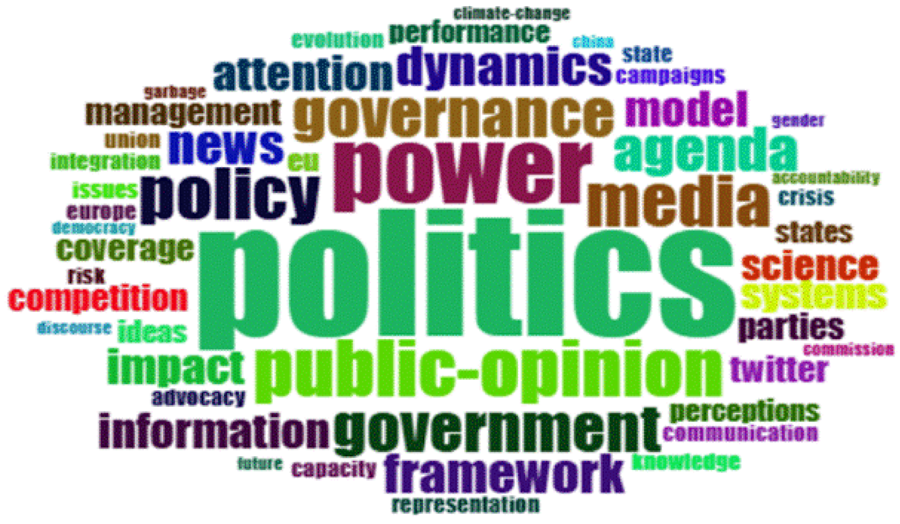
In addition to the growth in publications and citation patterns, it is also worth examining the thematic focus of the articles published during this period. Regarding the most recurrent terms, the top five are once again highlighted: politics (29 occurrences), power (17 occurrences), public-opinion (13 occurrences), and media and policy (12 occurrences each). When analyzing the word cloud (Figure 4), only minor variations are observed compared to the previous period. The most notable shift is the increased prominence of terms such as media and public-opinion, suggesting a stronger presence of studies addressing agenda-setting in the field of communication.
The collaboration map for 2021–2024 continues to highlight the leading role of European countries, as shown in Table 5. However, there is also a growing presence of emerging countries from other continents, such as China and Singapore in Asia and New Zealand and Australia in Oceania — the latter being the continent that generated the highest number of new collaborations. Moreover, even within Europe — previously the continent with the highest number of collaborations — a shift can be observed, with the inclusion of countries such as the Czech Republic and Slovakia. The collaboration between Brazil and Sweden is also noteworthy, representing the only Brazilian presence and indicating both an emerging interest in the topic in Brazil and its still limited integration into the global collaboration network in the field of agenda-setting.
From 1992 to 2020, agenda-setting research established its foundations around leading European and North American institutions - particularly the Universities of Amsterdam, Antwerp, and Oxford. This early phase focused on the core elements of the political process, with dominant themes such as politics, power, policy, and government, reflecting strong interest in how issues gain governmental attention and priority. The steady rise in annual publications and lasting relevance of earlier works demonstrate the progressive maturation and consolidation of the field during this period.
Between 2021 and 2024, the field expanded and diversified rapidly, with a 69% rise in publications, reflecting greater recognition of agenda-setting’s relevance to current global challenges. European institutions - especially in the UK and the Netherlands - remain influential, but collaborations have become more globally distributed, with new links across Asia, Oceania, and between Brazil and Sweden. Thematically, while core concepts like politics and power persist, terms such as media and public opinion have gained prominence, indicating a shift toward governance models that emphasize the role of non-state actors, public discourse, and communication. This evolution reflects the transition from government-centered to more polycentric governance frameworks.
The bibliometric results reveal both the growth and theoretical diversification of agenda-setting studies. Emerging themes - such as climate change, sustainability, and crises - show how global priorities increasingly shape domestic policy debates. In Brazil, the continued use of the MSF and the rise of the PET reflect efforts to explain gradual and abrupt policy changes (Capella, 2018; Baumgartner; Jones, 1993). Internationally, the prominence of terms like media, power, and public opinion underscores new actors and arenas in agenda formation, consistent with Benz and Papadopoulos’s (2006) notion of governance as a negotiated, polycentric process.
5 CONCLUSION
Research output on agenda-setting, both in Brazil and abroad, remains modest when compared to other fields within Public Administration as a whole. On a positive note, there has been growth - albeit irregular - in the number of publications on the topic over the years. This trend reinforces Capella’s (2020) assertion that the field is expanding and consolidating itself as a relevant and evolving area of research.
The analysis of international databases revealed that collaborations - particularly in empirical studies - have been expanding, involving researchers from various countries and continents beyond Europe and North America. This finding aligns with Perloff’s (2022) observation that agenda-setting research tends to form new configurations and adaptations to continue contributing meaningfully to public management scholarship.
Evidence also indicates, corroborating the trend previously identified by Capella (2020), that there is greater coordination among researchers dedicated to the topic in international literature. It would be beneficial to observe a similar development in Brazilian research output, with an emphasis on strengthening multidisciplinary and interinstitutional collaborations, consolidating research groups and networks, and fostering the advancement of studies and academic exchange within the country.
Regarding the mobilization of theoretical models related to agenda-setting (such as the multiple streams and punctuated equilibrium models), a significant shift was observed. While in the review conducted by Freitas et al. (2022) the MSF was the most frequent, in the articles identified through the second protocol the PET appeared more often. This finding suggests a growing interest in this model, indicating that Capella’s (2020) conclusion that there is still little use of studies based on the punctuated equilibrium model may be undergoing change.
When analyzing the themes explored by studies on agenda-setting, the findings indicate a consistent pattern across the periods reviewed, particularly in the context of international platforms. This outcome was expected, since this literature currently relies on solid concepts and fosters research in different parts of the world (Capella, 2020). However, the identified stability highlights the need to explore new perspectives and broaden the scope of research in this field.
Among the emerging directions, environmental and sustainability issues - especially those related to climate change - have gained increasing prominence in the international literature, reflecting a gradual shift in policy agendas toward global and cross-sectoral challenges. In the WoS corpus, for instance, Jakobsson (2024) analyzes how climate-induced migration gained traction on the UN policy agenda between 2007 and 2010; Sacramento (2023) examines power relations and narratives in deliberations on climate-change loss and damage in Southeast Asia. Collectively, these studies illustrate how climate-related themes have become central to agenda-setting research across different policy levels and governance contexts.
The climate change debate, thus, exemplifies how new global agendas are reshaping public policy and governance. Defined as long-term shifts in temperature and weather patterns (United Nations, 2025) and recognized for its global impact (Damtoft et al., 2008), it extends beyond environmental concerns to encompass political, economic, and social dimensions (Grundman, 2016). Addressing it demands coordinated action through mitigation, adaptation, and innovation (IPCC, 2007). As Giddens (2013) notes, the State remains central but now operates within a multilayered governance system, requiring collaboration among multiple actors to effectively confront the climate crisis.
6 STUDY RECOMMENDATIONS
Given the increasing complexity of global challenges, further research and systematic reviews that use broader databases and diverse search strategies are needed. Such efforts can better map academic production, revealing concentrations and gaps - particularly on emerging themes like climate change and sustainable development, which increasingly shape multilateral and policy agendas. For public policy and agenda-setting studies, expanding analyses to examine how these issues influence government priorities and resource allocation is essential. Theoretical models such as MSF and PET remain valuable tools for understanding how global challenges enter policy agendas, offering both theoretical advancement and practical insights for building agendas aligned with contemporary global demands.
ACKNOWLEDGEMENTS
The authors acknowledge the support of CNPq and FAPEMIG for this research.
REFERENCES
- Bali, A., & Halpin, D. (2021). Agenda-setting instruments: Means and strategies for the management of policy demands. Policy and Society, 40 (3), 333-344.
- Bartle, J. R., & Leuenberger, D. Z. (2010). Sustainable development for public administration Routledge.
- Benz, A., & Papadopoulos, Y. (2006). Introduction. Governance and democracy: Concepts and key issues. In A. Benz & Y. Papadopoulos (Eds.), Governance and democracy. Comparing national, European and international experiences (pp. 1-26). Routledge.
- Bevir, M. (2006). Democratic governance: Systems and radical perspectives. Public Administration Review, 66 (3), 426-436.
- Bezerra, C. M. da S., Ramos, H. R., & Ribeiro, I. (2025). Systematic literature review: Fundamentals, challenges, and contributions to research in Management. Revista Ibero-Americana de Estratégia, 24(1), e28731.
- Birkland, T. A. (2019). An introduction to the policy process: Theories, concepts, and models of public policy making (5th ed.). Routledge.
- Cairney, P., & Jones, M. D. (2016). Kingdon's multiple streams approach: What is the empirical impact of this universal theory? Policy Studies Journal, 44 (1), 37-58.
- Capella, A. C. N. (2007). Perspectivas teóricas sobre o processo de formulação de políticas públicas. In G. Hochman, M. Arretche, & E. Marques (Eds.), Políticas públicas no Brasil Fiocruz.
- Capella, A. C. N. (2018). Formulação de políticas Enap.
- Capella, A. C. N. (2020). Estudos sobre formação da agenda de políticas públicas: Um panorama das pesquisas no Brasil. Revista de Administração Pública, 54 (6), 1498-1512.
- Cobb, R. W., & Elder, C. D. (1971). The politics of agenda-building: An alternative perspective for modern democratic theory. The Journal of Politics, 33 (4), 892-915.
- Damtoft, J. S., Lukasik, J., Herfort, D., Sorrentino, D., & Gartner, E. M. (2008). Sustainable development and climate change initiatives. Cement and Concrete Research, 38 (2), 115-127.
- Dearing, J. W., & Rogers, E. M. (1996). Agenda-setting SAGE.
- Dye, T. R. (1987). Understanding public policy (6th ed.). Prentice-Hall.
- Farah, M. F. S. (2011). Administração pública e políticas públicas. Revista de Administração Pública, 45 (3), 813-836.
- Freitas, R. U. C., Zucatto, L. C., & Becker, K. L. (2022). Formação da agenda de políticas públicas: Uma síntese metodológica das publicações em bases nacionais e internacionais. In Anais do Encontro da ANPAD ANPAD.
- Giddens, A. (2013). The politics of climate change. Polity Press.
- Green-Pedersen, C., Mortensen, P. B. (2012). Policy agenda-setting studies: Attention, politics and the public. In E. Araral et al. (Eds.), Routledge handbook of public policy (1st ed.). Routledge.
- Grundmann, R. (2016). Climate change as a wicked social problem. Nature Geoscience, 9, 562-563.
- Herweg, N., Zahariadis, N., & Zohlnhöfer, R. (2023). The multiple streams framework: Foundations, refinements, and empirical applications. In C. M. Weible & P. A. Sabatier (Eds.), Theories of the policy process (5th ed., pp. 36-72). Routledge.
- Hill, M., & Varone, F. (2021). The public policy process (7th ed.). Routledge.
- Increrora, F. P. (2015). Climate change: A wicked problem: Complexity and uncertainty at the intersection of science, economics, politics, and human behavior. Cambridge University Press.
- Intergovernmental Panel on Climate Change (IPCC). (2007). Climate change 2007: Impacts, adaptation and vulnerability. Cambridge University Press.
- Kingdon, J. W. (1995). Agendas, alternatives, and public policies (2nd ed.). Harper Collins College Publishers.
- Perloff, R. M. (2022). The fifty-year legacy of agenda-setting: Storied past, complex conundrums, future possibilities. Mass Communication and Society, 25 (4), 469-499.
- Prodanov, C. C., & Freitas, E. C. (2013). Metodologia do trabalho científico: Métodos e técnicas da pesquisa e do trabalho acadêmico (2nd ed.). Editora Feevale.
- Raeder, S. (2015). Ciclo de políticas públicas: Uma abordagem integradora dos modelos para análise de políticas públicas. Revista Perspectivas em Políticas Públicas, 7 (13), 121-146.
- Rittel, H. W. J., & Webber, M. M. (1973). Dilemmas in a general theory of planning. Policy Sciences, 4 (2), 155-169.
- Rochefort, D. A., & Cobb, R. W. (Eds.). (1994). Politics of problem definition: Shaping the policy agenda University Press of Kansas.
- Shafritz, J. M., Russell, E. W., Borick, C. P., & Hyde, A. C. (2022). Introducing public administration (10th ed.). Routledge.
- Snyder, H. (2019). Literature review as a research methodology: An overview and guidelines. Journal of Business Research, 104, 333-339.
- Souza, C. (2006). Políticas públicas: Uma revisão da literatura. Sociologias, 16, 20-45.
- Tranfield, D., Denyer, D., & Smart, P. (2003). Towards a methodology for developing evidence-informed management knowledge by means of systematic review. British Journal of Management, 14 (3), 207-222.
- United Nations. (n.d.). What is climate change?.
- United Nations Conference on Trade and Development (UNCTAD). (2017). The role of development banks in promoting growth and sustainable development in the South (UNCTAD/GDS/ECIDC/2016/1).
- World Bank. (1997). The state in a changing world. World Bank Publications.
- World Commission on Environment and Development (WCED). (1987). Our common future. Oxford University Press.
- Zahariadis, N. (2016). Setting the agenda on agenda setting: Definitions, concepts, and controversies. In Handbook of public policy agenda setting. Edward Elgar Pub
-
Plagiarism Check:
The ReA/UFSM maintains the practice of submitting all documents approved for publication to the plagiarism check, using specific tools, e.g.: Turnitin.
-
Data availability statement:
Data will be available upon request
-
1
The choice of these periods is based on the previous SLR, which was conducted using national databases. They were analyzed separately, as the approach to data analysis differed between them.
-
2
This change was made because the texts identified through the new systematic review addressed the theory in a general way, rather than focusing solely on the CAP.
-
3
This finding contrasts with Capella’s (2020, p. 1510, our translation) conclusion, which states that “there seems to be a preference among Brazilian researchers for the multiple streams model, whether understood as a framework for investigating changes in the agenda or as a set of useful concepts for understanding broader processes of change in public policies. On the other hand, there is still little use of studies based on the punctuated equilibrium model, perhaps due to its greater methodological complexity, which requires a broader dataset.”
Edited by
-
Edited by:
Jordana Marques Kneipp
Data will be available upon request

 Source: The Authors (2025)
 Source: The Authors (2025)
 Source: the authors (2025)
 Source: the authors (2025)