
 Environmental, social and governance [ESG] consulting model
ABSTRACT
Purpose This study proposes to develop a consultancy model to evaluate the level of maturity of ESG practices.
Design/Methodology/approach Business Model Canvas [BMC] as a framework for creating a business model focusing on Environmental, Social, and Governance [ESG] consultancy services. A five-level maturity scale was applied to the dimensions that characterize the diagnostic checklist model for ESG practices. The Delphi research method was used to evaluate the content of the diagnostic checklist for ESG practices.
Findings As a result, a hypothetical consultancy called ENGES Consulting Ltda. was created, constituted through the creation of the social contract, the creation of the mission, vision, and values, in addition to the development of a business model based on the Business Model Canvas [BMC] strategic management tool. A checklist model was also created for diagnosing ESG practices and their respective maturity level.
Originality/relevance The relevance and contribution of this study in the scientific aspect lie in the proposal of a consultancy model to assess the maturity level of ESG practices in disparate organizations.
Practical implications The practical contribution lies in understanding Environmental, Social, and Governance [ESG] management practices based on the ESG practices diagnosis checklist model and the respective level of maturity, identifying strengths and points that demonstrate implementation or execution weaknesses, in addition to providing a way to compare results (benchmarking) obtained between organizations.
Consultancy; ESG; Maturity models
RESUMO
Finalidade Este estudo propõe desenvolver um modelo de consultoria para avaliar o nível de maturidade das práticas ESG.
Desenho / metodologia / abordagem Business Model Canvas [BMC] como uma estrutura para criação de um modelo de negócio com foco em serviços de consultoria Ambiental, Social e Governança [ESG]. Uma escala de maturidade de cinco níveis foi aplicada às dimensões que caracterizam o modelo de checklist de diagnóstico para práticas ESG. O método de pesquisa Delphi foi usado para avaliar o conteúdo do checklist de diagnóstico para práticas ESG.
Constatações Como resultado, foi criada uma consultoria hipotética denominada ENGES Consultoria Ltda., constituída por meio da criação do contrato social, criação da missão, visão e valores, além do desenvolvimento de um modelo de negócio baseado na ferramenta de gestão estratégica Business Model Canvas [BMC]. Foi criado também um modelo de checklist para diagnóstico das práticas ESG e seu respectivo nível de maturidade.
Originalidade/relevância A relevância e contribuição deste estudo no aspecto científico está na proposta de um modelo de consultoria para avaliar o nível de maturidade das práticas ESG em organizações distintas.
Implicações práticas A contribuição prática está na compreensão das práticas de gestão Ambiental, Social e de Governança [ESG] com base no modelo de checklist de diagnóstico de práticas ESG e o respectivo nível de maturidade, identificando pontos fortes e pontos que demonstram fragilidades de implementação ou execução, além de proporcionar uma forma de comparação dos resultados (benchmarking) obtidos entre as organizações.
Consultoria; ESG; Modelos de maturidade
1 INTRODUCTION
The development of an inclusive, ethical and environmentally sustainable society, which ensures a better quality of life for all people, derives essentially from the ability of organizations to create and implement business practices that align dividends, purposes and transparency. This is a journey that cuts across both business and society (Cars & West, 2015; Popova, 2020; Sklarew, 2022).
With the purpose of supporting the transformation of business and society to simplify this journey, according to Archer (2022) there is a need to use more practical and innovative approaches, integrating Environmental, Social and Governance [ESG] themes at all stages business.
ESG is a way of analyzing non-financial dimensions of organizations, in an environmental, social and governance context (Van Duuren et al., 2016). Furthermore, ESG allows different opportunities for improvement to be created, which effectively contributes to cost reduction and a way of positioning ourselves in the market with a difference over the competition (Koroleva et al., 2020).
In view of this, Pena (2016) mentions that many organizations do not have the necessary knowledge to implement and implement certain corporate practices, mainly due to the considerable growth of the organization and the failure to attract qualified professionals, or the generation of necessary skills to be able to have mastery over certain concepts, thus requiring advice from specialized consultants, in order to simplify the process of understanding, implementation and implementation. For Oliveira (2019, p. 4) “consulting is an activity considered as an interactive process of a change agent external to the company, who assumes the responsibility of assisting the executives and professionals of that company in making decisions”. According to Kingma (2019), the process of changing organizational culture essentially requires the contribution of specialized consultancy, which can offer specific know-how to be used in the transition process, in addition to having information on best marketing practices.
To facilitate ESG deployment and implementation processes, according to Burmester et al. (2007), it is necessary to establish a contemporary management model, to better meet the demands of organizations, optimizing policies, processes and practices, defining appropriate models to evaluate organizational maturity and determine areas for improvement. Thus, Essmann (2009) proposes the use of maturity models, which allow measuring the status quo, as well as enabling the improvement process that best adapts to the organization, remaining within the established criteria of good practices required in the specific scope. For Kirrane (2009), maturity models are usually used as a form of benchmarking, self-evaluation, change management and organizational learning. Maturity models, according to Kolukısa Tarhan et al. (2020), highlight an ideal balance between theory and practice, conducive to better managing the results identified in the diagnosis process, transition between stages of maturity and implementation of necessary changes, with the purpose of understanding and expanding organizational performance (Carvalho, 2016).
According to Daugaard and Ding (2022), the higher the level of maturity of ESG practices, the higher the organizational performance. Similarly, Chen and Xie (2022), Fatemi et al. (2018) and Yoo and Managi (2021) establish the importance of effectively implementing and implementing ESG practices, as they contribute to strengthening the value of an organization. For Kaplan and Norton (2006) and Smits et al. (2008), when an organization quantifies its information, using indicators that reproduce its objectives and goals, it provides subsidies for managers to identify opportunities for improvement, thus ensuring favorable performance.
In this research, we intend to develop a consultancy model to evaluate the level of maturity of ESG practices. According to Weiss (2017), hiring a consultancy allows the organization to expand its strategic capacity to the point of making it capable of success, through changes in traditional business models; ensuring continuous improvement of processes and activities, providing self-evaluation and providing guidelines for activities related to best practices (Elmaallam & Kriouile, 2013); through corporate ESG practices, which are considered a strategy that values current issues and that will impact the organization’s future (Giese et al., 2021).
2 THEORETICAL FOUNDATION
This chapter comprises a literature review of the concepts of business model, BMC, business consultancy, ESG and lastly maturity models.
2.1 Business Model
A business model demonstrates how an organization creates economic value, for itself or others, elucidating the factors associated with supply, market, strategy, internal capacity, competition and investors (Rigo et al., 2022).
The term business model, although in an implied and informal way, was already approached by Peter Drucker in the 1950s, as a way of providing certain and infallible financial returns for organizations through the creation of value for the customer. The expression gained notoriety in the mid-1990s, with the dissemination of the internet, becoming a constant word in corporate management (Coombes & Nicholson, 2013). Composed of the word model, which refers to a synthetic description of a more complex process, and the word business, which refers to the activity of buying and selling goods and services aiming at monetary advantages (Osterwalder, 2004).
In corporate environments, considered complex and uncertain, well-designed and contemporary business models are capable of performing an essential function, integrating strategies, processes and information systems, strengthening and simplifying communication between these components and contributing to the dissemination of knowledge, generating thus competitive advantage for the organization (Osterwalder & Pigneur, 2010).
According to Foss and Saebi (2017), there is still no consensus on the concept of a business model. However, Wirtz et al. (2016) mention that the concept has been evolving over the decades. In this research, the concept of business model created by Brandão (2021, p. 34) will be used, which considers a business model as a “company’s organizational architecture, structured in an interdependent, dynamic, flexible and cyclical manner by simple, relevant elements capable of generating value that goes beyond its borders and guarantees a competitive advantage.”
According to Drucker (2008), a good business model should answer the following questions: What is our mission? Who is our customer? What does the customer value? What are our results? and What is our plan?
In this sense, Shafer et al. (2005) developed an affinity diagram to group the components belonging to a business model into four distinct categories, namely: strategic choices (customer; value proposition; skills; strategies: brand; mission), value creation (resources; processes), value network (suppliers; information and customer feedback; flow of information, products and services) and value capture (revenues; costs; financial aspects). For the authors, the term business model can be understood as a conception of the logic underlying strategic guidelines for creating and capturing value, within a value network.
The conception of a business model cannot be restricted to a specific segment, and can be made up of both organizations established in the market and newly created organizations (Dornelas, 2023). Reasons for designing a business model for new and established organizations can be seen in Table 1.
Each organization has its own characteristics and purposes, distinct adversities and a process in constant development, which means that a business model is peculiar to each organization, with no similarity regarding the steps to be followed. It is up to each organization to provide the necessary direction and adaptations during the creation and longevity (Orofino, 2011). According to Orofino (2011) and Osterwalder and Pigneur (2010), the stages are: mobilization; comprehension; understanding; design; implementation; management; and feedback.
Business models, according to Guldmann et al. (2019) and Henike et al. (2020), are manifested through predefined structures, which precisely indicate their components and their interrelationships. In this way, these structures provide information for those undertaking restructuring or creating new businesses, thus adding greater value to the enterprise.
Different structure models can be observed in the literature that deal with different aspects of value creation, such as: Hedman and Kalling model; Resources, Competencies, Organization and Proposed Value [RCOV] model; Customer-Integrated Business Model [CIBM]; Johnson, Chistensen and Kagermann model; and Business Model Canvas [BMC].
Lopes et al. (2023) describes that a business model must be based on management practices, as well as theoretical constructs, thus reflecting the way in which leaders manage their organizations, thus constituting value proposals that are well-designed and articulated with other essential components of the business model. According to the authors, the best framework to meet these specifications is the Business Model Canvas [BMC].
2.2 Business Model Canvas [BMC]
The Business Model Canvas [BMC] essentially differentiates itself from other frameworks due to the involvement of administrators and entrepreneurs in the process of developing functionalities, structures, in order to create an effective instrument of management practice to map the main components of a business model (Taipale-Erävala et al., 2021).
Developed by the Swiss Alexander Osterwalder, based on his doctoral thesis in 2004, the Business Model Canvas [BMC] is considered a business modeling tool that studies an organization’s business model in an illustrative and easy-to-understand way. (Dornelas, 2023).
Based on the concepts of the Balance Scorecard [BSC], developed by David P. Norton and Robert Kaplan in 1992, the Business Model Canvas [BMC] has four pillars of support that constitute the essence of a business model.
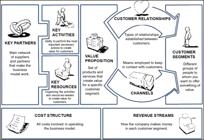
The four supporting pillars of the Business Model Canvas [BMC] make it possible to explain what type of product or services the business model (enterprise) can offer to the market, what is the target audience to be reached, how the organization can put this model into practice business (activities carried out) and the volume of dividends that the organization intends to obtain from the sale of this product or service (Osterwalder, 2004). The four pillars of BMC support are decomposed into a set of nine interrelated dimensions (Table 2) that comprise a business model, namely: value proposition; target audience; relationship channels; distribution channels; value configuration; competencies; partnerships; cost structure; and revenue generation model. Dornelas (2023) expresses the need to answer certain questions (Table 2) for each of the nine dimensions, during the process of constituting and implementing the business model using the Business Model Canvas [BMC].
With the decomposition of the Business Model Canvas [BMC] into nine dimensions, Osterwalder and Pigneur (2010) mention that by approaching in detail the interrelationship between the processes that make up the business model, they help to outline the strategies to be implemented. through the organizational structure of processes and systems, therefore making the creation and capture of value for the organization more effective.
2.3 Business Consultancy
Business consultancy has attracted several professionals over time, largely due to the high demand for goods and services by organizations that progressively need to update themselves regarding business management methodologies and techniques (Mota et al., 2019).
Consulting firms that currently surround the service provision market, according to Donadone et al. (2012), emerged between the 1850s and 1920s. Considered by many to be the oldest business consultancy in the world, Arthur D. Little, Inc. was founded in 1886 by a professor at the Massachusetts Institute of Technology [MIT] named Arthur Dehon Little and his business partner Roger B. Griffin, which remains in full operation to this day, known for being at the forefront of innovation, revealing new growth opportunities to transform organizations (MIT Libraries, 2023).
In the process of organizational transformation, business consultancy is considered a contribution to help improve the management of an organization, offering solutions for all sizes of companies in different areas, whether in good times or bad times for a business. Considered as a type of service provided, business consultancy aims to analyze, diagnose and suggest the resolution of possible adversities regarding a specific subject or segment (FIA/USP, 2018).
Ramos and Santos (2021) show that business consultancy should be considered as a process of interaction and mutuality, dissociated from the adversities in question, leading the organization along a more assertive path, in order to achieve the initial planned objectives. With the help of business consultancy, it is plausible to reduce costs, make processes more efficient, plan business expansions and improve the activities of the different organizational sectors, among others (Alves et al., 2015; FIA/USP, 2018).
Weiss (2017) explains the existence of two main areas of activity in the area of business consultancy, that is, internal consultancy and external consultancy, prioritized according to organizational objectives. The main difference between the two main spheres, according to the author, is the existence or not of the consultants’ connection with the organization. For Ramos and Santos (2021), it is mentioned that both spheres of business consultancy, internal consultancy or external consultancy, bring advantages and disadvantages for the development of the organization.
Table 3 presents some attributes of internal and external consultancy, as well as their advantages and disadvantages.
Regardless of the type, area of mediation and scope of business consultancy, for a consultancy to be successful in providing answers and strategic results desired by client organizations, whether in a certain area of their business or flawed processes (Costa, 2020), it is necessary to measure which practices, processes and methods are used in contrast to a set of elements that determine the reference parameters in accordance with the organization’s objectives (Maier et al., 2012). According to Carvalho (2016) and Trentin (2021), these elements portray the best practices and can bring together regulations or a set of conduct that are significant in a given area of mediation and scope of activity.
In view of this, in addition to an effective and ethical relationship between business consultancy and client organization, to create a successful result (Wandabwa & Yusuf, 2018), it is necessary for business consultancy to establish what the levels of skill and organizational maturity are. , encompassing the sum of all characteristics, attributes, indicators, or patterns that depict evolution and achievement of the maturity stage in which the client organization’s processes are located (Cronemyr & Danielsson, 2013).
2.3.1 Business Consulting On ESG
Business consultancy represents a considerable fraction of the world economy, whether through the provision of services, certifications, among others, developing and implementing business practices that align profit, purpose and transparency. For effective performance, business consultancies need to respect and establish methods that design minimum performance parameters, establishing conduct and management rules that direct and guide organizations (Silva & Oliveira, 2022).
In light of this, to measure the growth of ESG practices, the International Business Council of the World Economic Forum, developed and implemented, in partnership with the largest consulting companies (KPMG; Deloitte; Boston Consulting Group [BCG], among others), developed a sequence of common criteria that can be reproduced through organizations’ annual reports, combining 21 key metrics and 34 expanded metrics (Miranda & Frechiani, 2021).
The ESG proposal is still on the rise internationally and nationally, demonstrating great potential to generate changes in the axes that encompass the management model based on the environment, society and corporate governance, guiding certain behaviors and even presenting good financial results (Silva & Oliveira, 2022).
However, according to Voltolini (2021), all the mechanisms, principles and standards proposed by ESG to assist decision-making may still not be satisfactory for obtaining good long-term results, mainly due to the non-obligation of adherence to the template. In this sense, as described by Silva (2023), hiring specialized consultancy on the ESG theme can exert a certain influence on the private sector, contributing to the adoption of attitudinal actions (values, attitudes and norms), generating routine and effective conduct for environmental and social protection, without losing sight of the financial and economic side of these organizations (Crespi & Migliavacca, 2020).
According to Harraca (2022), to create and/or redirect the purpose of a business consultancy specialized in ESG, one must essentially use already consolidated methods and instruments, review them, improve them and adapt them to the specificities of each client organization, with a view to improving the process of implementing ESG practices, also using the technological innovations available for this purpose, measuring impacts, carrying out diagnosis, proposing viable solutions and managing in partnership with the client organization, in the best way, the entire transition process.
For Caliari and Scherer (2017), the option to hire a business consultancy specialized in ESG is mainly due to the search for better performance for the business, with the objective of expanding and improving the organization’s management, and not just as a way to resolve potential adversities. Costa (2020) mentions that in contemporary times, there is an unequivocal need for organizations to hire specialized consultancies, responding to rapidly changing environments, making use of certain benefits and specific models created for each situation.
2.3.2 Organizational Diagnostic Method Applied To Business Consultancy
When the organization understands that rapid and fundamental changes in the business environment can threaten the sustainable growth of the organization, according to Deloitte (2023), hiring a business consultancy specialized in ESG can play a fundamental role in the process of change in organizations. For Tedlow (2018), in this process of transition, between the status quo and the organizational objectives to be achieved, it is necessary to review the current context, using the organizational diagnosis method.
Organizational diagnosis is considered a method used to recognize possible operational limitations and results of organizations so that they can be neutralized by elaborate and organized changes (Senge, 2018; Tedlow, 2018). The objective of the diagnosis is to interpret the current situation of the organization, with the purpose of modifying and improving it; it is a unique way of detailed analysis focused on the act of implementing change in order to improve organizational performance (Paul & Cadle, 2020); organizational diagnosis can be considered an instrument that helps in the process of breaking with organizational defensiveness, expanding the capacity to measure and modify an organization’s culture (Mendonça et al., 2020).
One of the purposes of organizational diagnosis is to identify possible gaps in the functioning of activities, in the behavior of people and in the performance of processes with a view to certain purposes that are intended to be achieved (Cecin et al., 2022). The gaps between the current and desired scenario are the essence of the diagnostic process, which is regularly demonstrated through non-existent activity and/or inefficient performance (Schumpeter, 2017).
Using the diagnostic method through business consultancy can provide good information about Environmental, Social and Governance [ESG] practices, in order to resolve and correct possible existing and potential adversities, ensuring the necessary changes. The diagnostic method basically consists of three questions, as described in Table 4.
Mendonça et al. (2020) state that the diagnosis is equivalent to the first phase of a business consultancy project, providing essential information to better understand the current stage of maturity of internal processes that are critical to the execution of the organization’s strategic objectives. Maturity models are known as essential instruments for measuring which stage the organization is in in relation to each Environmental, Social and Governance [ESG] practice, providing a guideline for activities related to best market practices (Essmann, 2009; Elmaallam & Krioile, 2013).
As the diagnostic process is completed and the gaps identified in the diagnostic intervention are known and registered, this information must be made available to all members of the organization (Stone et al., 2018), as the ESG objectives and practices at to be implemented, they must be materialized together with the organization’s strategic objectives (ABNT, 2022).
Subsequently, to the initial process of business diagnosis and identification of maturity levels, Tedlow (2018) stands out, who declares the need to consolidate the data and information obtained in a corporate report, highlighting the main qualities observed, the elementary adversities, and finally, suggest possible solutions and direct probable actions, including the establishment of objectives and goals, through a distinct and planned project, always based on organizational strategies (Kaplan & Norton, 2006).
In light of this, ESG business consultancy may suggest that senior management create a multidisciplinary team, made up of the main leaders involved in the change process and other key employees involved in current practices (Parikh, 2015). Cecin et al. (2022) highlight that business consultancy must emphasize during the process of implementing Environmental, Social and Governance [ESG] practices, that top management must: “a) start first with the strategy and then move towards a complex understanding of the problems; and b) continue to act as facilitators of an open and active dialogue for deliberating actions to be taken, minimizing unfavorable impacts during implementation” (p. 10).
Lisiński (2013) state that despite all the expertise accumulated by business consultancy, during the implementation and implementation of policies, processes and practices it is not possible to follow all stages of this process due to its multidimensionality, which is why preference should be expressed for a certain perspective, or part of reality, and observe the organization through this. Berti (2023) states that the success or failure of a business consultancy in the process of implementation and implementation of any type of service provided, will determine the closure and/or continuity of the established partnership, an essential part of the provision of services in the continuity of business relationships.
2.4 Environmental, Social and Governance [ESG]
The reductionist idea that capital is generated only to support an organization, according to Costa and Ferezin (2021), in contemporary times no longer applies, as there are other aspects that subsidize the decisions that are most relevant to the growth of organizations. At this juncture, organizations have widely debated the concept of Environmental, Social and Governance [ESG] due to the exercise of awareness about all attitudes taken in favor of society, which science defines as conscious consumption.
Still not widespread outside specialized groups, the concept of Environmental, Social and Governance [ESG], which encompasses environmental policies and practices, social responsibility and governance, will gradually be required as an integral part of organizational culture. ESG is not restricted to the business environment alone, as it involves people (society) and the environment (Tsang et al., 2022).
The framework of ideas that understand ESG is old. Recognized thinkers and economists, throughout several centuries, have warned about the environmental risks and social disturbances caused by certain products and certain business practices (Sherwood & Pollard, 2023). Historically, the founding of the Club of Rome’s interdisciplinary network in 1968 and its inaugural report, The Limits to Growth of 1972, was considered pivotal in breaking away from the old paradigm and establishing that economic activities essentially interact with the natural world (Meadows & Randers, 2004).
In the middle of the 20th century, the concept that organizations should take environmental and social costs into account became more widely legitimized, with the advent of the first index of attitudes and actions that companies adopt voluntarily to promote well-being. social (socially responsible) index, such as the Domini 400 Social index, and the triple bottom (also known as TBL and 3BL) or as people, planet and profits, which, considered an organizational framework, in which organizations started to use the social and environmental performance, in addition to its financial results, as a way to manage business (Gericke et al., 2018).
The term Environmental, Social and Governance [ESG] was coined in 2004 in a Global Compact publication in partnership with the World Bank, called Who Cares Wins. The ESG criteria are fully related to the 17 Sustainable Development Goals [SDGs], established by the Global Compact, a global initiative that involves the United Nations [UN] and several international entities, with the main purpose of creating guidelines and including environmental issues, social and governance aspects in the management of organizations’ assets (Gillan et al., 2021).
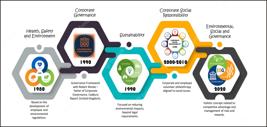
According to Escrig-Olmedo et al. (2019) and Nascimento (2021) ESG is a journey of business transformation, formed over different decades, through a combination of different propositions, involving the construction of an inclusive, ethical and environmentally sustainable world, which guarantees the quality of life for all.
Figure 1 presents some relevant milestones, referring to the conceptual evolution of the topic that encompasses ESG over different decades.
Hill (2020) considers that Environmental, Social and Governance [ESG] is an integrated management model, focused on the demands of the segment where the organization operates, balancing its actions based on each of the respective axes, correlating people, sustainability and good administration practices.
ESG, according to Billio et al. (2021), should be understood as a grouping of three axes: environmental, social and governance (Table 5). According to Hill (2020), when the organization harmoniously coordinates the three axes, it is better able to guarantee the longevity of its business, as well as a monetary return as a result of effective strategic governance.
ESG, through its axes, must be a constituent part of the organizational strategy, comprising a long-term vision, with objectives related to the environment and society well defined, assisted by performance indicators to minimize impacts and expand results, with the purpose of knowing and meeting the needs of all stakeholders (Bresciani et al., 2016; Shaikh, 2021).
Cruz and Ávila (2021) state that indicators should be part of the organization’s decision-making process at all levels. Both financial and non-financial indicators must be related to the organization’s strategies, of which financial indicators are more affected by corporate governance, on the other hand, non-financial indicators cover the environmental and social axes.
The ABNT PR 2030:22 Regulation, released in December 2022, has 145 pages with several Recommended Practices [PR] for the ESG sector in Brazil, establishes that ESG objectives must be incorporated into those of the organization, as well as guides that the principles which comprise each of the axes, serve as assumptions to identify possible ESG practices for the business (ABNT, 2022).
Even though themes and practices are defined to effectively demonstrate good ESG practices carried out by organizations, Pinheiro (2023) shows that in the desire of certain companies to position themselves at the forefront of ESG management before interested parties, many claims to practice more than factually practice on the premises and requirements of ESG.
In this sense, the market has coined a term called Greenwashing. The term can be translated as “green washing or even green makeup. Due to its meaning, the expression can be considered as the practice of camouflaging, lying or omitting information about the real impacts of a company’s activities on the environment” (FIA/USP, 2021, n/p). In other words, Greenwashing is a marketing praxis used by organizations that seek to establish an ecologically correct, sustainable or environmentally responsible image in front of interested parties, when in fact they are effectively inconsistent with these statements (Ruiz-Blanco et al., 2021).
In view of this, we can see a growing concern in understanding what the organization actually has in terms of good environmental, social and governance practices, as interested parties demand an interest in reliable information, making it necessary to establish models of analysis and recognition carried out by external sources, in other words, specialized business consultancies, in order to guarantee fairness in confirming the ESG practices implemented, quantified and reported (Lavin & Montecinos-Pearce, 2021).
2.5 Maturity Models
Maturity models in stages, according to Chandler Jr. (1962) and Haire (1959), are not so contemporary in the literature of organizations. From a historical perspective, since the 1950s, it has been observed that maturity models based on stages are defined based on specific characteristics (Smith et al., 1985). Haire (1959) can be recognized as one of the precursors to propose the concept that organizations mature in stages, following a specific uniform pattern. Chandler Jr. (1962), similarly, instituted the idea of stages in the life cycle of organizations in a structured model, in which stages evolved and adapted to organizational structures and strategies.
The first publications of the term maturity model, still in the 1950s, essentially addressed human needs, economic growth and the progression of information technology in organizations (Röglinger et al., 2012).
The maturity model proposed by Philip B. Crosby in 1979 was a precursor to current maturity models (Barra & Ladeira, 2017). The Quality Management Maturity Grid [QMMG] is an organizational maturity matrix designed by Crosby, published for the first time in his book Quality is Free, also in 1979. This model was one of the first maturity models for assessing quality maturity, containing five stages (uncertainty; awakening; clarification; wisdom; and certainty) of maturity and six measurement categories (management understanding and attitude; company quality status ; problem solving; cost of quality with percentage of sales; quality improvement measures; and summary of the company’s possibilities in the quality sector) that help the user to identify their own situation in relation to maturity. This model recognizes the importance of human factors such as leadership, attitude, and collaborative work (Crosby, 1979).
The principles developed in the maturity matrix proposed by Crosby were adapted in 1986 by the Software Engineering Institute [SEI] at Carnegie Mellon University with the objective of creating the Capability Maturity Model [CMM] as a methodology used to develop and refine the process. software development of an organization. The model describes an evolutionary path through five levels of increasingly organized and systematically more mature processes (Humphrey, 1999).
Since the concept has spread, maturity models have been widely used and can be found in several areas of knowledge (Caralli et al., 2012), such as: process area (Business Process Maturity Model [BPMM]); project area (Organizational Project Maturity Management Model [OPM3]); product development (Product Development Process [PDP]); among others.
Regardless of the number of models created, according to Fraser et al. (2002), maturity models can contain the following elements: (a) number of levels; (b) level descriptor; (c) generic description of the characteristics of each level; (d) number of dimensions or process areas; (e) number of elements or activity in each process area; and (f) a description of each activity that could be performed at each maturity level.
The joint term “maturity model” usually refers to a theoretical model that reports the evolution of individual and organizational competencies (Paulk et al., 1993). By integrating standards or requirements into likely improvement activities, the model helps to elucidate an evolution trajectory conducive to “maturity”. In this way, “maturity” refers to evolutionary evidence in demonstrating specific competencies (Fraser et al., 2002). Maturity model allows measuring the maturity of a given skill based on a group of relatively comprehensive criteria (De Bruin et al., 2005).
Maturity models allow measuring the status quo, as well as enabling the improvement process that best suits the organization, remaining within the established criteria of good practices required in the specific scope (Essmann, 2009). Elmaallam and Kriouile (2013) define maturity models as essential instruments to ensure the continuous improvement of systems and activities, providing self-evaluation and providing guidelines for activities related to best practices.
Table 6 depicts the five components of maturity models.
Maturity models have the function of instrumentalizing organizations in order to mix elements to homogenize benefits related to practices and knowledge experienced by the organization and interest groups (Trentin, 2021). Using a maturity model, according to Caralli et al. (2012), as support for improving processes, practices and performance, should provide organizations and the interested parties where they are established with the capacity for internal benchmark performance, as a catalyst for improvements in the performance of interest groups and, finally, how to create and develop a common language.
3 METHODOLOGY
In this research, we propose the use of the Business Model Canvas [BMC] as a more assertive framework for creating a business model focusing on Environmental, Social and Governance [ESG] consultancy services. According to Osterwalder and Pigneur (2010), the Business Model Canvas [BMC] (Figure 2) represents parts of the planned strategy to be implemented within structures, processes and interdependent systems.
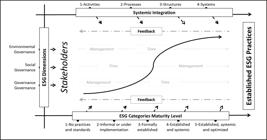
The construct, developed for this study, includes the macro dimension Environmental, Social and Governance Practices [ESGP], which was divided into three dimensions, to measure the maturity of organizations in the management of Environmental, Social and Governance [ESG] practices through fifteen statements.
The dimensions that make up the Environmental, Social and Governance [ESG] practices construct were constituted based on the following theoretical framework: ABNT (2022); Ahlklo and Lind (2018); Billio et al. (2021); Dalcero et al. (2023); Freeman (2017); Gericke et al. (2018); Gillan et al. (2021); Hill (2020); Manrique and Marti-Ballester (2017); PRI (2019); Sherwood and Pollard (2023); Tsang et al. (2022); and Velte (2017).
Table 7 shows the macro dimension, the dimensions and the number of statements established.
With the purpose of identifying the level of maturity assessed by the respondent, a five-level maturity scale will be applied to the dimensions that characterize the diagnostic checklist model for ESG practices, according to the proposed assessment model. Maturity levels were adapted to the needs of this study and follow the criteria established in the work of Ehms and Langen (2002), Kerzner (2001), Paulk et al. (1993), Paulzen et al. (2002), Rosemann et al. (2007), Trentin (2021) and Türetken and Demirörs (2004).
The variation in the maturity scale range, as shown in Table 8, has the following interpretation:
Figure 3 presents a systemic view of the research construct, allowing us to visualize the interrelationships between maturity levels, dimensions and the organization’s objective in relation to ESG Practices.
The Delphi research method will be used to evaluate the content of the diagnostic checklist for ESG practices. Considered a prestigious research technique, the Delphi method, according to Facione (1990), makes it possible to bring together a set of geographically separated specialist points of view, to produce consistent results on complex and comprehensive propositions.
The Delphi method is defined as “a method for structuring a collective communication process so that it is effective in allowing a group of individuals, as a whole, to deal with a complex problem” (Turoff & Linstone, 1975, p. 3). It is a method that “seeks to facilitate and improve decision-making made by a group of specialists, without face-to-face interaction” (Osborne et al., 2003, p. 697).
As a rule, it translates into a set of questionnaires that are answered, in a sequenced manner, particularly by experts (Table 9), synthesizing information about the group’s responses to the previous questionnaires (Osborne et al., 2003), in order to a type of dialogue between experts and, progressively, establishing a group response is determined (Marques & Freitas, 2018).
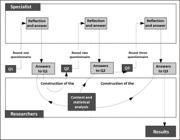
The results must be analyzed by specialists at each round of questionnaires. Dissonant inclinations must be considered, as well as their justifications, methodizing and compiling them, and then sending them back to the group. In this way, with the discretion of all members and the group’s responses, experts have the possibility of improving, modifying or safeguarding their positions and sending them again to the other experts, so that the new version of the questionnaire can be reworked. from this newly acquired information. This process consists of several steps (Table 10) and can be repeated as many times as necessary until agreement is reached (Antunes, 2023; Grisham, 2009; Kayo & Securato, 1997; Marques & Freitas, 2018; Munaretto et al., 2013; Turoff & Linstone, 1975).
Each of these steps should be carefully prepared and implemented, and the entire process should be recorded and described.
A schematic of the Delphi method implementation can be seen in Figure 4.
Although we have consequently defined specific theory and techniques for this study, a preliminary version of the ESG practices diagnostic checklist gives us the chance to better understand our model based on the “real world”, that is, feedback from professionals, or that is, leaders and technicians responsible for Environmental, Social and Governance [ESG] practices in organizations. Based on the research by Cleven et al. (2014), an analysis of the diagnostic checklist for ESG practices was carried out by 30 professionals (leaders and technicians responsible for ESG practices) randomly selected for accessibility and convenience, using questions about three aspects: completeness, usefulness and advancement. They were represented by the following questions:
-
Completeness: in terms of content, is the model complete?
-
Utility: does it allow a valid self-assessment to be carried out?
-
Does the model also reveal means for improvement?
4 ANALYSIS AND INTERPRETATION OF RESULTS
This chapter presents the analysis and interpretation of the results obtained, in order to respond to the research objectives.
4.1 Consulting Model Developed
As for the consultancy model developed, we opted for the legal form Sociedade Comercial Ltda. Sociedade Comercial Ltda. is the most practical alternative and is often used by small and medium-sized companies in their initial stages. According to Provisional Measure 881/2019, confirmed by Law No. 13.874/19, on Economic Freedom, the Limited Company may be composed of one or more people, and when it is constituted by a single partner, it will be considered the Unipersonal Limited Company. It is created with the registration of the Social Contract with the State Commercial Board. In the Articles of Association, important matters such as the corporate purpose, representation of the company and the transfer of shares, among others, will be dealt with (Mamede & Mamede, 2013). Commercial companies are regulated in the Brazilian Civil Code (Articles 1.039 to 1.092), as well as in several laws in force in our system, for example, Decree No. 3.708, of January 1919, which regulates the formation of limited liability companies (Brazil, 1919).
The following data was collected to prepare the Constituent Act of an Individual Limited Liability Company (Table 11), that is, the Social Contract:
According to Article 981 of the Civil Code (Law No. 10,406, of January 10, 2002), when concluding a company contract, people undertake to contribute, with goods or services, to the exercise of economic activity and with this the sharing the results among themselves (Brazil, 2002).
Through the social constitution of consultancy, according to Anjos (2017), it is necessary for the company to seek to understand what moves it and where it proposes to reach in the market environment in which it finds itself, a fundamental condition for taking more assertive steps. According to the author, a bridge must be established between the purpose and the purpose of the business, through the creation of a mission, vision and values of the company.
The purpose of the institutional mission is treated by Drucker (1975) as an answer to the question “What is my business and what should it be? This is the fundamental starting point for establishing objectives, priorities and strategies, where with a clear definition of the company’s mission and purpose it becomes possible to develop them (Teles & Lunkes, 2011). In relation to vision, Laruccia (2014) mentions that vision is what the company seeks in the future, its desires, aspirations, goals and objectives. In general, it is essential to explain the company’s position with reference to the market in which it operates, its main dream or general objective and what it delivers value to the different stakeholders. For Nakagawa (2012, p, p. 1) values “are the ideals of attitude, behavior and results that must be present in employees and in the company’s relationships with its customers, suppliers and partners”. Values give meaning to the lives of people and organizations. “When there is an alignment between individual and corporate values, people maximize their potential and express all their best creativity” (Chér, 2016, p, p. 110).
Table 12 defines the mission, vision and values of the company ENGES Consulting Ltda.
Regarding the creation of a business model, in this research, the Business Model Canvas (BMC) was used as a framework for creating a business model focusing on consultancy services in Environmental, Social and Governance [ESG]. The Business Model Canvas is considered an effective management practice instrument to map the main components of a business model (Taipale-Erävala et al., 2021).
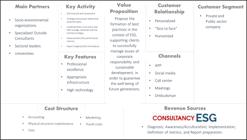
In Figure 5, it is possible to observe, in a practical and structured way, through the Business Model Canvas [BMC] tool, the business model of ENGES Consultancy Ltda.
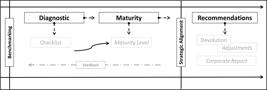
The ENGES Consultancy Ltda. consultancy model for diagnosing ESG practices is made up of five steps:
-
Benchmarking: is a strategy that seeks to optimize a company’s performance based on the analysis of best practices in the market in which it operates. In this first stage, the five pillars of benchmarking are used (diagnosis; research; analysis; interpretation; and optimization) to focus on the right points when analyzing your competitors’ strategies and results (FIA/USP, 2022);
-
Diagnosis: is, by definition, verifying a situation. It is a way of finding out what a company, institution or entity does and what it is or is not achieving with its activities. In this second stage, the seven steps are used (definition of questions; collection of answers; data analysis; identification of problems and opportunities; delivery of feedback; implementation of solutions; and monitoring and evaluation) to carry out an organizational diagnosis (FIA/USP, 2023);
-
Maturity Level: this is an essential instrument to ensure the continuous improvement of systems and activities, enabling self-assessment and providing guidelines for activities related to best practices (Elmaallam & Kriouile, 2013). At this stage, the five levels (Level 1 - Absence of practices and standards; Level 2 - Informal or in the implementation phase; Level 3 - Formally established; Level 4 - Established and systemic; and Level 5 - Established, systemic and optimized) will be used to assess the maturity of organizational practices.
-
Strategic Alignment: integration of ESG into business strategy (ensuring that all aspects related to ESG are synchronized with strategic objectives, where all activities, processes, goals and resources must be aligned with the organization’s mission and vision) (Kaplan & Norton, 2006);
-
Recommendations: summarizes the progress, results, and challenges over a given period of time. It is used to communicate to stakeholders, such as clients, sponsors, managers, and staff, what has been done, what is being done, and what needs to be done. It indicates risks, changes, lessons learned, and recommendations for project success (EUAX, 2024).
Figure 6 shows the five-step ENGES model for implementing ESG.
4.2 Evaluation of the Checklist Model Content – Delphi Method
The first version of the ESG practices diagnostic checklist model was sent via email to the five specialists. The first round of reflection and responses from the checklist model were analyzed by the researchers. Dissonant trends and opinions were observed, as well as their justifications, systematizing and compiling them to later send them back to the group. Thus, after learning the opinions of other experts and the group’s response, participants had the opportunity to refine, change or defend their answers and send the second round of reflection and responses to the aforementioned model to the researchers again. In this research, the implementation of the Delphi Method involved two rounds, thus reaching a consensus among experts (Table 13).
According to Osborne et al. (2003), the process of reflection and answers to the checklist model analyzed by the researchers ends when the desired levels of stability and consensus in the answers are reached. In general, there is consensus when there is low divergence in the distribution of responses to a given item around an average response. Regarding stability, it can be defined as the absence of new contributions and little change in the panel’s responses between rounds (Miranda et al., 2012).
4.3 Diagnostic Checklist Model for ESG Practices
In this study, the ESG practices diagnostic checklist model was composed of a set of 15 assertions, with closed questions, divided into three dimensions: the first aimed to evaluate Environmental practices (Environmental Governance); the second, Social practices (Social Governance); and the last characterizes Governance practices (Corporate Governance).
In order to identify the level of maturity assessed by respondents, a five-level maturity scale will be applied: Level 1 - Absence of practices and standards; Level 2 - Informal or in the implementation phase; Level 3 - Formally established; Level 4 - Established and systemic; and Level 5 - Established, systemic and optimized, for the dimensions that characterize the management model of Environmental, Social and Governance Practices [ESGP].
Figure 7 defines the five maturity levels for assessing established Environmental, Social and Governance Practices [ESGP].
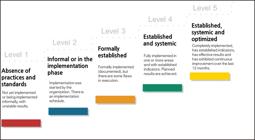
The maturity levels that make up the diagnostic checklist model for ESG practices, proposed by ENGES Consultancy Ltda., are directly related to organizational development, the ability to generate sustainable value and the company’s positioning vis-à-vis its stakeholders. These levels represent an evolutionary path that reflects the degree of formalization, execution and impact of ESG practices, influencing both internal management and the organization’s external perception.
It should be noted that companies diagnosed at initial levels (Level 1 and 2), characterized by the absence or initial implementation of ESG practices, face challenges such as lack of credibility, reputational risks and difficulties in meeting regulatory or market requirements. However, these phases offer opportunities for learning and innovation, allowing organizations to structure processes and identify strategic priorities. Small businesses in particular can use these levels as a springboard to adopt more robust practices over time and grow their businesses.
On the other hand, companies diagnosed at the most advanced levels (Level 4 and 5) demonstrate greater maturity when integrating ESG practices in a systemic way, with well-defined indicators and consistent results. This generates benefits such as competitive advantage, access to more demanding markets and greater engagement with stakeholders. Companies at Level 5, for example, are recognized as leaders in sustainability, influencing supply chains and entire industries. These levels promote organizational resilience and innovation, aligning ESG with strategic objectives and contributing to long-term value creation, in addition to the possibility of inclusion in sustainability indices, such as the Dow Jones Sustainability Index (DJSI) or the Corporate Sustainability Index (ISE) from B3 in Brazil. Being on these indices increases visibility before institutional investors and reinforces the company’s credibility.
In Figure 8, the statements/practices are broken down by dimension, in addition to the five levels defined for measuring maturity, used to establish the maturity level of Environmental, Social and Governance Practices (ESGP) in organizations.

4.4 Pre-Test of the Diagnostic Checklist for ESG Practicesesg
In summary, all 30 professional respondents positively evaluated the comprehensive functionality of the ESG practices diagnostic checklist. In relation to self-assessment, all professional respondents were able to naturally highlight the current situation of their company based on the model. All professional respondents noted the ability to identify necessary improvement steps based on the difference between their current position and the desired final stage of maturity. Although the model was considered complete, some of the professional respondents noted the need to make some linguistic adjustments (polysemy; elaborate words, etc.), rationalization of words and addition of practical examples, such as: ISO-31001; National Solid Waste Policy – Law 12.305/2010; Organic certification. All responding professionals attributed an appropriate character to the ESG practices diagnosis checklist model.
5 FINAL CONSIDERATIONS
The main objective of this research was to develop a consultancy model to evaluate the level of maturity of ESG practices. As a result, a hypothetical consultancy called ENGES Consultancy Ltda. was created, established through the creation of the social contract, creation of the mission, vision and values, in addition to developing a business model based on the strategic management tool Business Model Canvas [BMC].
In two rounds of evaluation, a consensus among experts on the content of the diagnostic checklist for ESG practices was evident, in addition to a positive evaluation in the pre-test. This study contributed theoretically to the proposition of a consultancy model to assess the level of maturity of ESG practices in disparate organizations.
The practical contribution lies in understanding Environmental, Social and Governance [ESG] management practices from the ESG practices diagnosis checklist model and the respective level of maturity, identifying strengths and points that demonstrate implementation or execution weaknesses, in addition to providing a way of comparing results (benchmarking) obtained between organizations.
This study was treated with the necessary methodological rigor, although it is necessary to recognize some limitations. The first is related to the sample obtained, as it is a non-probability sample and thus the data cannot be generalized. The application of a longitudinal study to verify the phenomenon, using a timeline as a way to obtain information that can attest to the gradual increase or not in the maturity of Environmental, Social and Governance [ESG] practices. In future studies, the validity of the results obtained in this research could be improved, extending the sample to a larger number of respondents. Finally, the use of a mixed research approach (quantitative and qualitative) is suggested, allowing the researcher to explore different variables in different contexts, identify possible challenges in implementing the model and, therefore, be able to find different results.
The present study contributes to a significant literature review on Environmental, Social and Governance [ESG] and maturity models. Therefore, this research brings contributions to researchers, professionals, universities and consultancies. This study provides an understanding for consultancies specializing in ESG that wish to use a checklist model for diagnosing ESG practices.
REFERENCES
- Ackoff, R. (1971). Towards a Systems of Systems Concepts. Management Science, 17, 11, 661-671.
-
Ahlklo, Y., Lind, C. (2018). E, S or G? A study of ESG score and financial performance [Master of Science Thesis. KTH Skolan for Industriell Teknik Och Management]. http://www.diva-portal.org/smash/record.jsf?pid=diva2:1295223
» http://www.diva-portal.org/smash/record.jsf?pid=diva2:1295223 - Alves, J. D. C., Dias, N. T., Monsores, G. L. (2015). Consultoria empresarial como ferramenta estratégica de desenvolvimento em pequenas empresas. Anais do XII Simpósio de excelência em gestão e tecnologia–SEGeT, Rezende, RJ, Brasil, 12.
-
Anjos, M. (2017). A importância da comunicação da missão, visão e valores para os empregados. In: Comunicação com Líderes e Empregados. Faculdade Cásper Líbero, 3, 22-25. https://static.casperlibero.edu.br/uploads/2017/09/4-A-importa%CC%82ncia-da-comunicac%CC%A7a%CC%83o-da-missa%CC%83o-visa%CC%83o-e-valores-para-os-empregados.pdf
» https://static.casperlibero.edu.br/uploads/2017/09/4-A-importa%CC%82ncia-da-comunicac%CC%A7a%CC%83o-da-missa%CC%83o-visa%CC%83o-e-valores-para-os-empregados.pdf -
Antunes, M. M. (2023). MÉTODO DELPHI: um guia teórico e prático para pesquisa aplicada. Editora CRV.Archer, M. (2022). The ethics of ESG: Sustainable finance and the emergence of the market as an ethical subject. Focaal, 2022(93), 18-31. http://dx.doi.org/10.3167/fcl.2022.930102
» http://dx.doi.org/10.3167/fcl.2022.930102 - Associação Brasileira de Normas Técnicas. (2022). Prática Recomendada: ABNT PR 2030:22. Ambiental, Social e Governança (EGS) - Conceitos, diretrizes e modelo de avaliação e direcionamento para organizações. Rio de Janeiro: ABNT.
-
Ávila, L. V., Cruz, P. L., Ávila, L. V. (2021). Uso de Indicadores Financeiros e Não Financeiros para Gerenciamento nas Organizações: quando devem ser considerados KPI ou KRI. Revista GESTO: Revista de Gestão Estratégica de Organizações, 9(2), 88-100. https://doi.org/10.31512/gesto.v9i2.324
» https://doi.org/10.31512/gesto.v9i2.324 -
Barra, G. M. J., Ladeira, M. B. (2017). Modelo de maturidade para processos de certificação no sistema agroindustrial do café. REGE-Revista de Gestão, 24(2), 134-148. https://www.revistas.usp.br/rege/article/view/132989
» https://www.revistas.usp.br/rege/article/view/132989 -
Baggieri, M., Koroleva, E., , & Nalwanga, S. (2020). Company performance: Are environmental, social, and governance factors important. International Journal of Technology, 11(8), 1468-1477. https://doi.org/10.14716/ijtech.v11i8.4527
» https://doi.org/10.14716/ijtech.v11i8.4527 -
Becker, J., Pöppelbuß, J., Röglinger, M.. (2012). Maturity models in business process management. Business process management journal, 18(2), 328-346. https://doi.org/10.1108/1463715121122522
» https://doi.org/10.1108/1463715121122522 - Berti, A. (2023). Consultoria e Diagnóstico empresarial. 3ª edição. Editora Juruá.
-
Billio, M., Costola, M., Hristova, I., Latino, C., & Pelizzon, L. (2021). Inside the ESG ratings: (Dis) agreement and performance. Corporate Social Responsibility and Environmental Management, 28 (5), 1426-1445. https://doi.org/10.1002/csr.2177
» https://doi.org/10.1002/csr.2177 -
Bocken, N. M., Brezet, H., Guldmann, E., (2019). A design thinking framework for circular business model innovation. Journal of Business Models, 7(1), 39-70. http://dx.doi.org/10.5278/ojs.jbm.v7i1.2122
» http://dx.doi.org/10.5278/ojs.jbm.v7i1.2122 -
Brandão, N. S. B. (2021). Proposta Metodológica para Concepção de Modelo de Negócios para Setores de Serviços. [Tese de Doutorado em Engenharia Mecânica. Universidade Estadual de Campinas - UNICAMP, Campinas/SP]. Biblioteca Digital Brasileira de Teses e Dissertações. https://bdtd.ibict.br/vufind/Record/UNICAMP-30_fb825df97fbd28442ab578973d5b934d
» https://bdtd.ibict.br/vufind/Record/UNICAMP-30_fb825df97fbd28442ab578973d5b934d -
Brown, L., Smith, S. L., Jacobs, J., & Stone, K. B., Brown, L. (2018). Organizational Assessment: An integrated approach to diagnosis and interventions. Organization Development Journal, 36(1). https://www.researchgate.net/publication/326131392_Organizational_Assessment_An_integrated_approach_to_diagnosis_and_interventions
» https://www.researchgate.net/publication/326131392_Organizational_Assessment_An_integrated_approach_to_diagnosis_and_interventions - Bruin, T. de, Power, B., & Rosemann. (2007). BPM maturity. In Business process management (pp. 322-338). Routledge.
-
Burmester, H., Pereira, J. C. R., Scarpi, J. M. (2007). Modelo de Gestão para organizações de Saúde. Revista de Administração em Saúde, 125-132. https://repositorio.usp.br/item/001710832
» https://repositorio.usp.br/item/001710832 - Cadle, J., Paul, D. (2020). Business analysis. 4th. edition. Publisher Swindon: BCS.
-
Caliari, L., Scherer, L. A. (2017). Por que contratar um serviço de consultoria empresarial? Uma visão de consultores e empreendedores. Revistas Espacios, 38(9), 25-41. https://www.revistaespacios.com/a17v38n09/a17v38n09p25.pdf
» https://www.revistaespacios.com/a17v38n09/a17v38n09p25.pdf -
Cao, H., Frost, T., Tsang, A.,(2023). Environmental, social, and governance (ESG) disclosure: A literature review. The British Accounting Review, 55(1), 101149. https://doi.org/10.1016/j.bar.2022.101149
» https://doi.org/10.1016/j.bar.2022.101149 -
Cars, M., West, E. E. (2015). Education for sustainable society: attainments and good practices in Sweden during the United Nations Decade for Education for Sustainable Development (UNDESD). Environment, Development and Sustainability, 17, 1-21. https://doi.org/10.1007/s10668-014-9537-6
» https://doi.org/10.1007/s10668-014-9537-6 -
Caralli, R., Knight, M., & Montgomery, A. (2012). Maturity models 101: A primer for applying maturity models to smart grid security, resilience, and interoperability. Software engineering institute: Carnegie Mellon University, 2-12. https://insights.sei.cmu.edu/library/maturity-models-101-a-primer-for-applying-maturity-models-to-smart-grid-security-resilience-and-interoperability/
» https://insights.sei.cmu.edu/library/maturity-models-101-a-primer-for-applying-maturity-models-to-smart-grid-security-resilience-and-interoperability/ -
Carvalho, A. J. V. (2016). Modelo de Maturidade para a Gestão dos Sistemas de Informação Hospitalares. [Doutoramento en Investigación en Tecnoloxías da Información, Universidade de Santiago de Compostela]. https://investigacion.usc.gal/documentos/5d1df67d29995204f766d7e6
» https://investigacion.usc.gal/documentos/5d1df67d29995204f766d7e6 -
Cecin, S., Lima, J. de M.., Meira, R. C., Redaelli, E. J. (2022). Framework de diagnóstico organizacional para projetos de consultoria de gestão da mudança. Desenvolve Revista de Gestão do Unilasalle, 11(2), 01-21Cereijo-R.oibas, A., Doumi, M., Perc, P., Paulzen, O., Doumi, M., Perc, P., Cereijo-R.oibas, A. (2002). A maturity model for quality improvement in knowledge management. ACIS 2002 Proceedings, 5. https://aisel.aisnet.org/acis2002/5
» https://aisel.aisnet.org/acis2002/5 -
Champagne, F., Contandriopoulos, D., Préval, J., Sicotte, C., Smits, P. A. (2008). Conceptualizing performance in accreditation. International Journal for Quality in Health Care, 20(1), 47-52. https://doi.org/10.1093/intqhc/mzm056
» https://doi.org/10.1093/intqhc/mzm056 - Chandler Jr., A. D. (1962). Strategy and structure: Chapters in the history of the American industrial enterprise (Vol. 120). MIT press.
-
Chen, Z., Xie, G. (2022). ESG disclosure and financial performance: Moderating role of ESG investors. International Review of Financial Analysis, 83, 102291. https://doi.org/10.1016/j.irfa.2022.102291
» https://doi.org/10.1016/j.irfa.2022.102291 - Chér, R. (2016). Engajamento: Melhores práticas de liderança. 2ª edição. Editora Atlas Books.Chrissis, M. B., Curtis, B., Paulk, M. C., & Weber, C. V. (1993). Capability maturity model, version 1.1. IEEE software, 10(4), 18-27. https://doi.org/10.1109/52.219617
-
Cleven, A. K., Winter, R., Wortmann, F., Mettler, T. (2014). Process management in hospitals: an empirically grounded maturity model. Business Research, 7(2), 191–216. https://link.springer.com/article/10.1007/s40685-014-0012-x
» https://link.springer.com/article/10.1007/s40685-014-0012-x -
Collins, S., Duschl, R., Millar, R., Osborne, J., & Ratcliffe, M. (2003). What "ideas-about-science" should be taught in school science? A Delphi study of the expert community. Journal of research in science teaching, 40(7), 692-720. https://doi.org/10.1002/tea.10105
» https://doi.org/10.1002/tea.10105 -
Consultoria Empresarial: o que é, tipos e como aplicar. (2018). FIA Bussiness School/USP. https://fia.com.br/blog/consultoria-empresarial/
» https://fia.com.br/blog/consultoria-empresarial/ -
Coombes, P. H., Nicholson, J. D. (2013). Business models and their relationship with marketing: A systematic literature review. Industrial Marketing Management, 42(5), 656-664. https://doi.org/10.1016/j.indmarman.2013.05.005
» https://doi.org/10.1016/j.indmarman.2013.05.005 -
Cornacchione, E. B., Jr., Miranda, G. J., &Nova, S. P. D. C. C. (2012). Dimensões da qualificação docente em contabilidade: um estudo por meio da técnica delphi. In: Incentivando a conversão dos trabalhos em publicações definitivas. São Paulo: EAC/FEA/USP. http://www.congressousp.fipecafi.org/artigos122012/120.pdf
» http://www.congressousp.fipecafi.org/artigos122012/120.pdf -
Corrêa, H. L., Cunha, J. A. C. da, & Munaretto, L. F. (2013). Um estudo sobre as características do método Delphi e de grupo focal, como técnicas na obtenção de dados em pesquisas exploratórias. Revista de Administração da Universidade Federal de Santa Maria, 6(1), 9-24. https://doi.org/10.5902/198346596243
» https://doi.org/10.5902/198346596243 -
Costa, E., Ferezin, N. B. (2021). ESG (Environmental, Social and Corporate Governance) e a comunicação: o tripé da sustentabilidade aplicado às organizações globalizadas. Revista Alterjor, 24(2), 79-95. https://doi.org/10.11606/issn.2176-1507.v24i2p79-95
» https://doi.org/10.11606/issn.2176-1507.v24i2p79-95 -
Costa, N. P. (2020). A consultoria empresarial, suas subdivisões e os benefícios de sua contratação. Revista de Engenharia de Produção, 2 (4), 90-102. https://periodicos.ufms.br/index.php/REP/article/view/13866
» https://periodicos.ufms.br/index.php/REP/article/view/13866 -
Crespi, F., Migliavacca, M. (2020). The determinants of ESG rating in the financial industry: The same old story or a different tale?. Sustainability, 12(16), 6398. https://doi.org/10.3390/su12166398
» https://doi.org/10.3390/su12166398 -
Cronemyr, P., & Danielsson, M. (2013). Process Management 1-2-3-a maturity model and diagnostics tool. Total Quality Management & Business Excellence, 24 (7-8), 933-944. https://www.tandfonline.com/doi/abs/10.1080/14783363.2013.791114
» https://www.tandfonline.com/doi/abs/10.1080/14783363.2013.791114 - Crosby, P. B. (1979). Quality is free: The art of making quality certain (Vol. 94). New York: McGraw-hill.
-
Dalcero, K., Hoffmann, V. E., Viana, L. F. C., & de Oliveira, M. A. (2023). Práticas Environmental, Social And Governance (Esg) e Resiliência Organizacional em Cooperativas de Crédito. Revista Alcance, 30 (2 (Maio/Ago)), 13-27. https://periodicos.univali.br/index.php/ra/article/view/19924
» https://periodicos.univali.br/index.php/ra/article/view/19924 -
Daugaard, D., Ding, A. (2022). Global drivers for ESG performance: The body of knowledge. Sustainability, 14(4), 2322. https://doi.org/10.3390/su14042322
» https://doi.org/10.3390/su14042322 -
De Bruin, T., Rosemann, M., Freeze, R., & Kaulkarni, U. (2005). Understanding the main phases of developing a maturity assessment model. In Australasian conference on information systems (ACIS) (pp. 8-19). Australasian Chapter of the Association for Information Systems. http://aisel.aisnet.org/acis2005/109
» http://aisel.aisnet.org/acis2005/109 -
Demirörs, O., Türetken, O. (2004). People capability maturity model and human resource management systems: do they benefit each other?. Human Systems Management, 23(3), 179-190. http://dx.doi.org/10.3233/HSM-2004-23304
» http://dx.doi.org/10.3233/HSM-2004-23304 -
Diagnóstico organizacional: saiba o que é, objetivos e como elaborar. (2023). FIA/USP. https://fia.com.br/blog/diagnostico-organizacional/
» https://fia.com.br/blog/diagnostico-organizacional/ -
Donadone, J. C., Ralio, V. R. Z , & Silveira, F. Z. D.. (2012). Consultoria para pequenas e médias empresas: as formas de atuação e configuração no espaço de consultoria brasileiro. Gestão & Produção, 19, 151-171. https://doi.org/10.1590/S0104-530X2012000100011
» https://doi.org/10.1590/S0104-530X2012000100011 - Dornelas, J. (2023). Plano de Negócios com o Modelo Canvas. 3ª edição. Editora Atlas.
- Drucker, P. F. (2008). As 5 perguntas essenciais que você sempre deverá fazer. Editora Elsevier.Drucker, P. F. (1975). Administração: responsabilidades, tarefas, práticas .Editora Pioneira.
- Ehms, K., Langen, M. (2002). Holistic development of knowledge management with KMMM. Siemens AG, 1, 1-8.
-
Elmaallam, M., Kriouile, A. (2013). Toward a maturity model development process for information systems (MMDePSI). International Journal of Computer Science Issues (IJCSI), 10(3). 118. https://www.proquest.com/docview/1470969564?sourcetype=Scholarly%20Journals
» https://www.proquest.com/docview/1470969564?sourcetype=Scholarly%20Journals -
Escrig-O., E., Fernández-I., M. Á., Ferrero-F., I., Rivera-L., J. M., & Muñoz-T., M. J. (2019). Rating the raters: Evaluating how ESG rating agencies integrate sustainability principles. Sustainability, 11(3), 915. https://doi.org/10.3390/su11030915
» https://doi.org/10.3390/su11030915 -
Essmann, H. E. (2009). Toward innovation capability maturity. Doctoral dissertation, PhD Thesis. [Stellenbosch University - SU, Stellenbosch, South Africa]. http://hdl.handle.net/10019.1/1308
» http://hdl.handle.net/10019.1/1308 -
Estratégia e Organizações. Benchmarking: o que é, objetivo, tipos, como fazer e exemplos. (2022). FIA/USP. https://fia.com.br/blog/benchmarking-o-que-e-objetivo-tipos-como-fazer-e-exemplos/
» https://fia.com.br/blog/benchmarking-o-que-e-objetivo-tipos-como-fazer-e-exemplos/ -
Facione, P. (1990). Critical thinking: A statement of expert consensus for purposes of educational assessment and instruction (The Delphi Report). Millbrae, CA: California Academic Press. https://eric.ed.gov/?id=ED315423
» https://eric.ed.gov/?id=ED315423 -
Fatemi, A., Glaum, M., Kaiser, S. (2018). ESG performance and firm value: The moderating role of disclosure. Global finance journal, 38, 45-64. https://doi.org/10.1016/j.gfj.2017.03.001
» https://doi.org/10.1016/j.gfj.2017.03.001 -
Fernandez-F., B., Romero, S., Ruiz-B.lanco, S., Romero, S., & Fernandez-F.eijoo, B. (2021). Green, blue or black, but washing-What company characteristics determine greenwashing?. Environment, Development and Sustainability, 24 (3), 4024-4045. https://ideas.repec.org/a/spr/endesu/v24y2022i3d10.1007_s10668-021-01602-x.html#:~:text=10.1007/s10668%2D021%2D01602%2Dx
» https://ideas.repec.org/a/spr/endesu/v24y2022i3d10.1007_s10668-021-01602-x.html#:~:text=10.1007/s10668%2D021%2D01602%2Dx - Ferreira, M. C., Mendonça, H., & Neiva, E. R. (2020). Análise e diagnóstico organizacional: teoria e prática.1ª edição. Editora Vetor, 519p.
-
Foss, N. J., Saebi, T. (2017). Fifteen years of research on business model innovation: How far have we come, and where should we go?. Journal of management, 43(1), 200-227. https://doi.org/10.1177/0149206316675927
» https://doi.org/10.1177/0149206316675927 -
Fraser, P., Gregory, M., Moultrie, J., (2002). The use of maturity models/grids as a tool in assessing product development capability. In IEEE international engineering management conference (Vol. 1, pp. 244-249). IEEE. https://doi.org/10.1109/IEMC.2002.1038431
» https://doi.org/10.1109/IEMC.2002.1038431 - Frechiani, R., & Miranda, A. C. V., & Frechiani, R. (2021). Sustentabilidade-Uma análise do impacto do modelo ESG no ambiente empresarial, caso Harsco. Revista Espaço Transdisciplinar, 5.
- Freeman, R. E. (2017). Five challenges to stakeholder theory: A report on research in progress. In Stakeholder management (pp. 1-20). Emerald Publishing Limited.
-
Freitas, D. de, & Marques, J. B. V. (2018). The DELPHI method: characterization and potentialities for educational research. Pro-Posições, 29(2), 389. https://doi.org/10.1590/1980-6248-2015-0140
» https://doi.org/10.1590/1980-6248-2015-0140 -
Garossi, S., Garousi, V, Kolukisa, A. T.,., Söylemez, M., & Turetken, O.,, (2020). Maturity assessment and maturity models in health care: A multivocal literature review. Digital health, 6, 2055207620914772. https://doi.org/10.1177/2055207620914772
» https://doi.org/10.1177/2055207620914772 - Gericke, R. C.. (2018). Corporate governance and risk management in financial institutions. Springer International Publishing Ag, Part Of Springer Nature.
- Giese, G., Lee, L. E., Nagy, Z.(2021). Deconstructing ESG ratings performance: Risk and return for E, S, and G by time horizon, sector, and weighting. Journal of Portfolio Management, 47(3), 94-111.
-
Gillan, S. L., Koch, A., Starks, L. T. (2021). Firms and social responsibility: A review of ESG and CSR research in corporate finance. Journal of Corporate Finance, 66, 101889. https://doi.org/10.1016/j.jcorpfin.2021.101889
» https://doi.org/10.1016/j.jcorpfin.2021.101889 -
Gosling, M., Leite, R. S., Lopes, H. E. G.,, &Rodrigues, V. C., (2023). Canvas de Modelo de Negócio e Empreendedores: Dilemas na Prática Gerencial. BBR. Brazilian Business Review, 20, 260-280. https://www.scielo.br/j/bbr/a/RCKbJdjhfbNdBBv3G84XSHb/?format=pdf⟨=pt
» https://www.scielo.br/j/bbr/a/RCKbJdjhfbNdBBv3G84XSHb/?format=pdf⟨=pt -
Göttel, V., Pistoia, A., Ullrich, S., Wirtz, B. W. (2016). Business models: Origin, development and future research perspectives. Long range planning, 49(1), 36-54. https://doi.org/10.1016/j.lrp.2015.04.001
» https://doi.org/10.1016/j.lrp.2015.04.001 -
Greenwashing: o que é, como identificar, exemplos e mais!. (2021). FIA Business School. https://fia.com.br/blog/greenwashing/
» https://fia.com.br/blog/greenwashing/ -
Grisham, T. (2009). The Delphi technique: a method for testing complex and multifaceted topics. International Journal of Managing Projects in Business, 2 (1), 112-130. https://doi.org/10.1108/17538370910930545
» https://doi.org/10.1108/17538370910930545 -
Haire, M. (1959). Biological models and empirical histories of the growth of organizations. Modern organization theory, 272-306. https://www.jstor.org/stable/2350609
» https://www.jstor.org/stable/2350609 -
Harraca, P. (2022). O poder transformador do ESG: Como alinhar lucro e propósito. Editora Planeta Estratégia.Henike, T., Hölzle, K, & Kamprath, M.. (2020). Effecting, but effective? How business model visualisations unfold cognitive impacts. Long Range Planning, 53 (4), 101925. https://doi.org/10.1016/j.lrp.2019.101925
» https://doi.org/10.1016/j.lrp.2019.101925 - Hill, J. (2020). Environmental, Social, and Governance (ESG) investing: A balanced analysis of the theory and practice of a sustainable portfolio. Academic Press.
- Humphrey, W. S. (1999). Pathways to process maturity: The personal software process and team software process. SEI Interactive, 2 (2), 1-17.
- Kaplan, R. S., & Norton, D. P. (2006). Alignment: Using the balanced scorecard to create corporate synergies Harvard Business Press.
-
Kayo, E. K., Securato, J. R. (1997). Método Delphi: fundamentos, críticas e vieses. Caderno de Pesquisas em Administração, 1(4), 51-61. https://repositorio.usp.br/item/000981336
» https://repositorio.usp.br/item/000981336 - Kerzner, H. (2001). Strategic planning for project management using a project management maturity model Editora John Wiley & Sons.
-
Kingma, S. (2019). New ways of working (NWW): work space and cultural change in virtualizing organizations. Culture and Organization, 25 (5), 383-406. https://doi.org/10.1080/14759551.2018.1427747
» https://doi.org/10.1080/14759551.2018.1427747 -
Kirrane, J. F. (2009). Dimensions of growth: A Maturity Model for continuous quality improvement of a clinical. [Doctoral dissertation. College of Business, Public Policy and Law, National University of Ireland, Galway, Ireland]. https://researchrepository.universityofgalway.ie/server/api/core/bitstreams/54a71202-3305-4a6b-909b-3fcbf3047324/content
» https://researchrepository.universityofgalway.ie/server/api/core/bitstreams/54a71202-3305-4a6b-909b-3fcbf3047324/content -
Lacerda, D. P., Rigo, P. D., Siluk, J. C. M., Spellmeier, J. P. (2022). Competitive business model of photovoltaic solar energy installers in Brazil. Renewable Energy, 181, 39-50. https://doi.org/10.1016/j.renene.2021.09.031
» https://doi.org/10.1016/j.renene.2021.09.031 -
Lampela, H., Salmela, E., Salmela, E., & Taipale-E., K., (2021). Towards a new Business Model Canvas for platform businesses in two-sided markets. Journal of Business Models, 8(3), 107-125. https://journalofbusinessmodels.com/media/brmd4mjm/v8n3-pp-107-125.pdf
» https://journalofbusinessmodels.com/media/brmd4mjm/v8n3-pp-107-125.pdf -
Laruccia, M. M. (2014). A Missão Empresarial no Contexto de Planejamento. Diálogos Interdisciplinares, 3 (2), 14-27. https://api.semanticscholar.org/Corpus
» https://api.semanticscholar.org/Corpus -
Lavin, J. F., & Montecinos-P., A. A. (2021). ESG disclosure in an emerging market: an empirical analysis of the influence of board characteristics and ownership structure. Sustainability, 13(19), 10498. https://doi.org/10.3390/su131910498
» https://doi.org/10.3390/su131910498 -
Lei Nº 10.406, de 10 de janeiro de 2002 (2002, 10 de janeiro). Institui o Código Civil. https://www.planalto.gov.br/ccivil_03/leis/2002/l10406compilada.htm Decreto nº 3.708, de 10 de janeiro de 1919 (1919, 10 de janeiro). Regula a constituição de sociedades por quotas, de responsabilidade limitada. https://www.planalto.gov.br/ccivil_03/decreto/antigos/d3708.htmlBresciani, S., Ferraris, A., Santoro, G., & Nilsen, H. R. (2016). Wine sector: companies' performance and green economy as a means of societal marketing. Journal of Promotion Management, 22 (2), 251-267. https://doi.org/10.1080/10496491.2016.1121753
» https://www.planalto.gov.br/ccivil_03/leis/2002/l10406compilada.htm» https://www.planalto.gov.br/ccivil_03/decreto/antigos/d3708.html -
Linder, J. C., Shafer, S. M., Smith, H. J. (2005). The power of business models. Business horizons, 48(3), 199-207. https://doi.org/10.1016/j.bushor.2004.10.014
» https://doi.org/10.1016/j.bushor.2004.10.014 - Linstone, H. A., & Turoff, M. (1975). The Delphi method-techniques and applications First Edition. Publisher Addison Wesley.
-
Lisinski, M. (2013). Structural analysis of the management science methodology. Business, Management and Education, 11 (1), 109-136. http://dx.doi.org/10.3846/bme.2013.07
» http://dx.doi.org/10.3846/bme.2013.07 -
Maelah, R., Tarmuji, I., Tarmuji, N. H. (2016). The impact of environmental, social and governance practices (ESG) on economic performance: Evidence from ESG score. International Journal of Trade, Economics and Finance, 7(3), 67. https://www.ijtef.org/vol7/501-FR00013.pdf
» https://www.ijtef.org/vol7/501-FR00013.pdf - Mamede, E. C., Mamede, G. (2013). Entenda a Sociedade Limitada e enriqueça com seu(s) sócio(s): um manual para sócios, administradores e, até, para advogados auxiliarem o sucesso de seus clientes. Editora Atlas.
-
Managi, S., Yoo, S. (2022). Disclosure or action: Evaluating ESG behavior towards financial performance. Finance research letters, 44, 102108. https://doi.org/10.1016/j.frl.2021.102108
» https://doi.org/10.1016/j.frl.2021.102108 -
Manrique, S., & Martí-B., C. P. (2017). Analyzing the effect of corporate environmental performance on corporate financial performance in developed and developing countries. Sustainability, 9(11), 1957. https://doi.org/10.3390/su9111957
» https://doi.org/10.3390/su9111957 - Meadows, D., & Randers, J. (2004). The limits to growth: the 30-year update Routledge.
-
Mitchell, T. R., Smith, K. G., Summer, C. E. (1985). Top level management priorities in different stages of the organizational life cycle. Academy of management Journal, 28(4), 799-820. https://doi.org/10.2307/256238
» https://doi.org/10.2307/256238 -
Mota, E. R., Monteiro, L. F. S., Nascimento, V. S. (2019). A importância da consultoria empresarial na elaboração do planejamento estratégico em empresas de pequeno porte. Revista Brasileira de Administração Científica, 10(2), 51-63. https://doi.org/10.6008/CBPC2179-684X.2019.002.0004
» https://doi.org/10.6008/CBPC2179-684X.2019.002.0004 -
Nakagawa, M. (2012). Ferramenta: missão, visão, valores (clássico). Movimento empreenda – Estratégia e Gestão, 12 https://sebrae.com.br/Sebrae/Portal%20Sebrae/Anexos/ME_Missao-Visao-Valores.PDF> Nascimento, J. O. (Ed.). (2021). ESG o cisne verde e o capitalismo de stakeholder: a tríade regenerative do futuro global. Thomson Reuters.
» https://sebrae.com.br/Sebrae/Portal%20Sebrae/Anexos/ME_Missao-Visao-Valores.PDF> - Oliveira, D. P. R. (2019). Manual de consultoria empresarial: conceitos, metodologia, práticas. 14ª edição. Editora Atlas.
-
Oliveira, L. P. O., & Silva, C. B.(2022). Empresas transnacionais e ESG: análise sobre a governança empresarial para a proteção ambiental por meio de standards. Diálogos e Interfaces do Direito-FAG, 5(1), 95-101. https://dir.fag.edu.br/index.php/direito/article/view/108
» https://dir.fag.edu.br/index.php/direito/article/view/108 -
Orofino, M. A. R. (2011). Técnicas de criação do conhecimento no desenvolvimento de modelos de negócio. [Dissertação de Mestrado em Engenharia e Gestão do Conhecimento. Universidade Federal de Santa Catarina - UFSC, Florianópolis/SC]. Repositório Institucional da UFSC. http://repositorio.ufsc.br/xmlui/handle/123456789/95255
» http://repositorio.ufsc.br/xmlui/handle/123456789/95255 -
Osterwalder, A. (2004). The business model ontology a proposition in a design science approach. [Tese de Doutorado em Gestão da Informação. Université de Lausanne, Faculté des hautes études commerciales]. https://www.researchgate.net/publication/33681401_The_Business_Model_Ontology_-_A_Proposition_in_a_Design_Science_Approach
» https://www.researchgate.net/publication/33681401_The_Business_Model_Ontology_-_A_Proposition_in_a_Design_Science_Approach - Osterwalder, A., & Pigneur, Y. (2010). Business model generation: a handbook for visionaries, game changers, and challengers Publisher John Wiley & Sons.
- Parikh, S. (2015). The Consultant's Handbook: A Practical Guide to Delivering High-value and Differentiated Services in a Competitive Marketplace. 1st Edition. Publisher John Wiley & Sons.
-
Pena, R. F. A. (2016). Vantagens e desvantagens da Globalização. Brasil Escola. https://brasilescola. uol. com. br/geografia/pos-contras. htm. Pinheiro, R. G. (2023). Impacto no desempenho de índices ESG: um estudo comparativo no Brasil e em mercados internacionais. [Mestrado em Administração e Controladoria. Universidade Federal do Ceará - UFC. Fortaleza/CE]. Repositório Institucional da UFC. https://repositorio.ufc.br/handle/riufc/72581
» https://brasilescola. uol. com. br/geografia/pos-contras. htm» https://repositorio.ufc.br/handle/riufc/72581 -
Plantinga, A., Scholtens, B., & Van Duuren, E. (2016). ESG integration and the investment management process: Fundamental investing reinvented. Journal of business ethics, 138, 525-533. https://doi.org/10.1007/s10551-015-2610-8
» https://doi.org/10.1007/s10551-015-2610-8 - Pollard, J., Sherwood, M. W. (2023). Responsible investing: An introduction to environmental, social, and governance investments. 2nd Edition. Routledge.
-
Popova, O. H. (2020). Inclusive development: a new concept or an update of the sustainable development concept?. Economy and forecasting, (1), 112-123. https://www.zbw.eu/econis-archiv/bitstream/11159/6943/1/1796164232_0.pdf
» https://www.zbw.eu/econis-archiv/bitstream/11159/6943/1/1796164232_0.pdf -
Principles for Responsible Investment. (2019). PRI Reporting Framework 2019: Strategy and Governancehttps://www.unpri.org/Uploads/x/a/b/strategyandgovernance2019_501247.pdf> Ramos, J. F., Santos, T. R. G. dos (2021). A Importância da Consultoria nas Empresas. Revista Científica. Fortaleza-CE. Edição, 207(9). https://semanaacademica.org.br/artigo/importancia-da-consultoria-nas-empresas#:~:text=10.35265/2236%2D6717%2D207%2D09167
» https://www.unpri.org/Uploads/x/a/b/strategyandgovernance2019_501247.pdf>» https://semanaacademica.org.br/artigo/importancia-da-consultoria-nas-empresas#:~:text=10.35265/2236%2D6717%2D207%2D09167 -
Registros de Arthur D. Little, Inc. MIT ArchivesSpace. (2023). MIT Libraries. https://archivesspace.mit.edu/repositories/2/resources/1070>Sardo, B. C., Marques, M., & Pereira, O. F. Jr. (2018). Apresentação de um macroprocesso padrão para aplicação em consultorias empresariais. Revista Produção Industrial & Serviços, 5(2), 100-111. https://periodicos.uem.br/ojs/index.php/rev_prod/article/download/52417/pdf/
» https://archivesspace.mit.edu/repositories/2/resources/1070>» https://periodicos.uem.br/ojs/index.php/rev_prod/article/download/52417/pdf/ - Schumpeter, J. (2017). Capitalismo, socialismo e democracia Editora Unespp.
- Senge, P. M. (2018). A quinta disciplina: a arte e prática da organização que aprende Editora Best Seller.
-
Shaikh, I. (2022). Environmental, social, and governance (ESG) practice and firm performance: an international evidence. Journal of Business Economics and Management, 23 (1), 218-237. https://doi.org/10.3846/jbem.2022.16202
» https://doi.org/10.3846/jbem.2022.16202 -
Silva, S. H. M. (2023). O social do ESG na ótica dos investidores institucionais que operam no Brasil. [Mestrado em Gestão para Competitividade. Fundação Getúlio Vargas - FGV. São Paulo/SP]. Repositório FGV. https://hdl.handle.net/10438/34121
» https://hdl.handle.net/10438/34121 -
Sklarew, D. (2022). Transparency: Key to Transforming Environmental, Social, and Governance (ESG) to Benefit All. Environmental Science and Policy George Mason University. https://www.researchgate.net/publication/368874555_Transparency_Key_to_Transforming_Environmental_Social_and_Governance_ESG_to_Benefit_All
» https://www.researchgate.net/publication/368874555_Transparency_Key_to_Transforming_Environmental_Social_and_Governance_ESG_to_Benefit_All -
Soluções para um mundo ESG (2023). Deloitte. https://www2.deloitte.com/br/pt/pages/risk/solutions/servicos-sustentabilidade.html> Status report: guia com o que é, como fazer e usá-lo. (2024). EUEX. https://www.euax.com.br/2024/02/status-report/
» https://www2.deloitte.com/br/pt/pages/risk/solutions/servicos-sustentabilidade.html>» https://www.euax.com.br/2024/02/status-report/ - Tedlow, R. S. (2018). Miopia Corporativa. Como a Negação de Fatos Evidentes Impede a Tomada das Melhores Decisões. Editora Alta Books.
- Teles, J., Lunkes, R. J. (2011). Efetividade da missão institucional: um estudo nas 100 maiores empresas de capital aberto no Brasil. In Congresso da Associação Nacional dos Programas de Pós-Graduação em Contabilidade (Vol. 5, p. 2011).
- Trentin, L. (2021). Modelo de maturidade de gestão de relacionamento com stakeholders e a relação com o desempenho hospitalar. [Tese de Doutorado em Ciências Contábeis e Administração. Universidade Regional de Blumenau - FURB, Blumenau/SC].
-
Velte, P. (2017). Does ESG performance have an impact on financial performance? Evidence from Germany. Journal of global responsibility, 8 (2), 169-178. https://doi.org/10.1108/JGR-11-2016-0029
» https://doi.org/10.1108/JGR-11-2016-0029 - Voltolini, R. (2021). Vamos Falar de ESG? - Provocações de um pioneiro em sustentabilidade empresarial. Editora Voo.
- Wandabwa, K. J., & Yusuf, M. (2018). Effect of stakeholders' management on health project performance for national hospital insurance fund Kenya. International Journal of Business Management and Finance, 2 (1).
- Weiss, A. (2017). A Bíblia da Consultoria: métodos e técnicas para montar e expandir um negócio de consultoria. Editora Autêntica Business.
-
Copyrights
Authors of articles published by ReA/UFSM retain the copyright of their works.
-
Plagiarism Check:
The ReA/UFSM maintains the practice of submitting all documents approved for publication to the plagiarism check, using specific tools, e.g.: Turnitin.
Edited by
-
Edited by:
Jordana Marques Kneipp

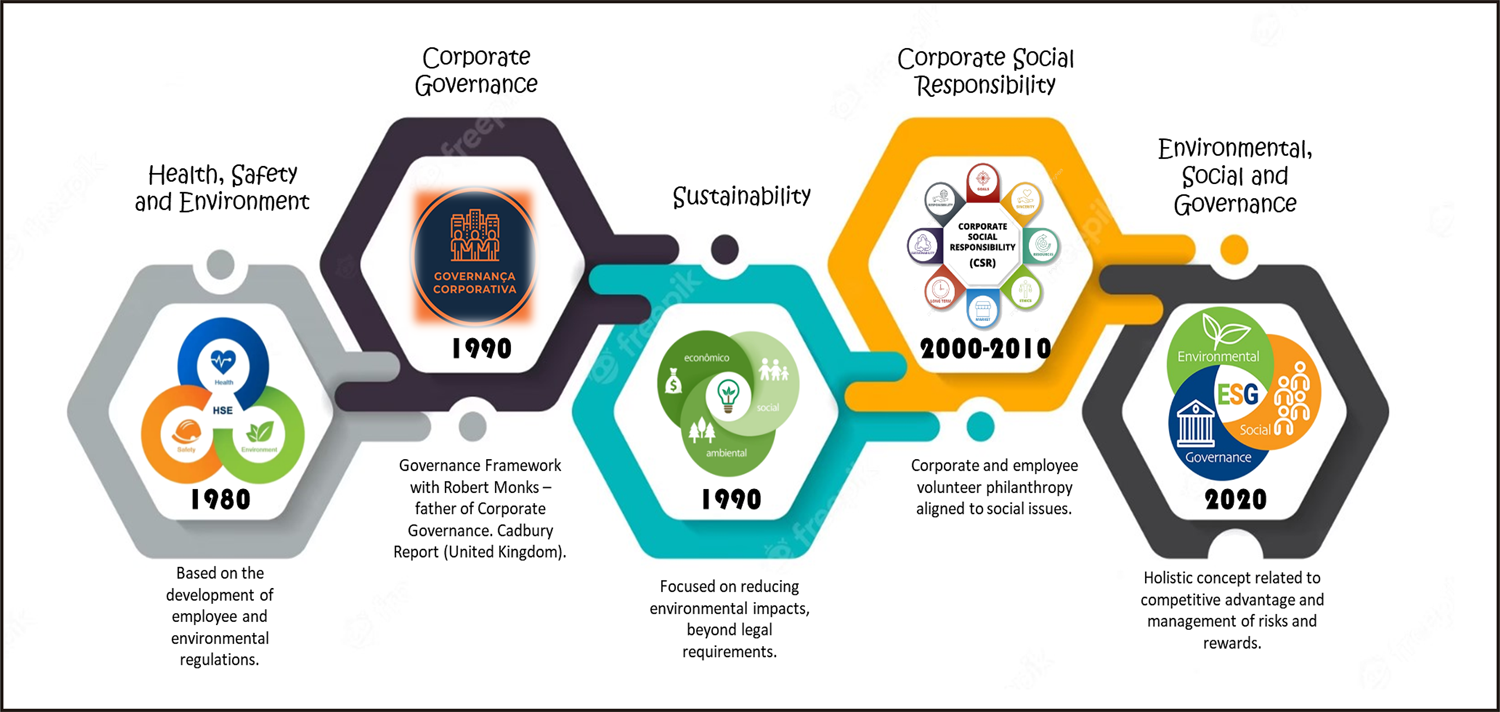 Source: adapted from Nascimento (2021)
 Source: adapted from
 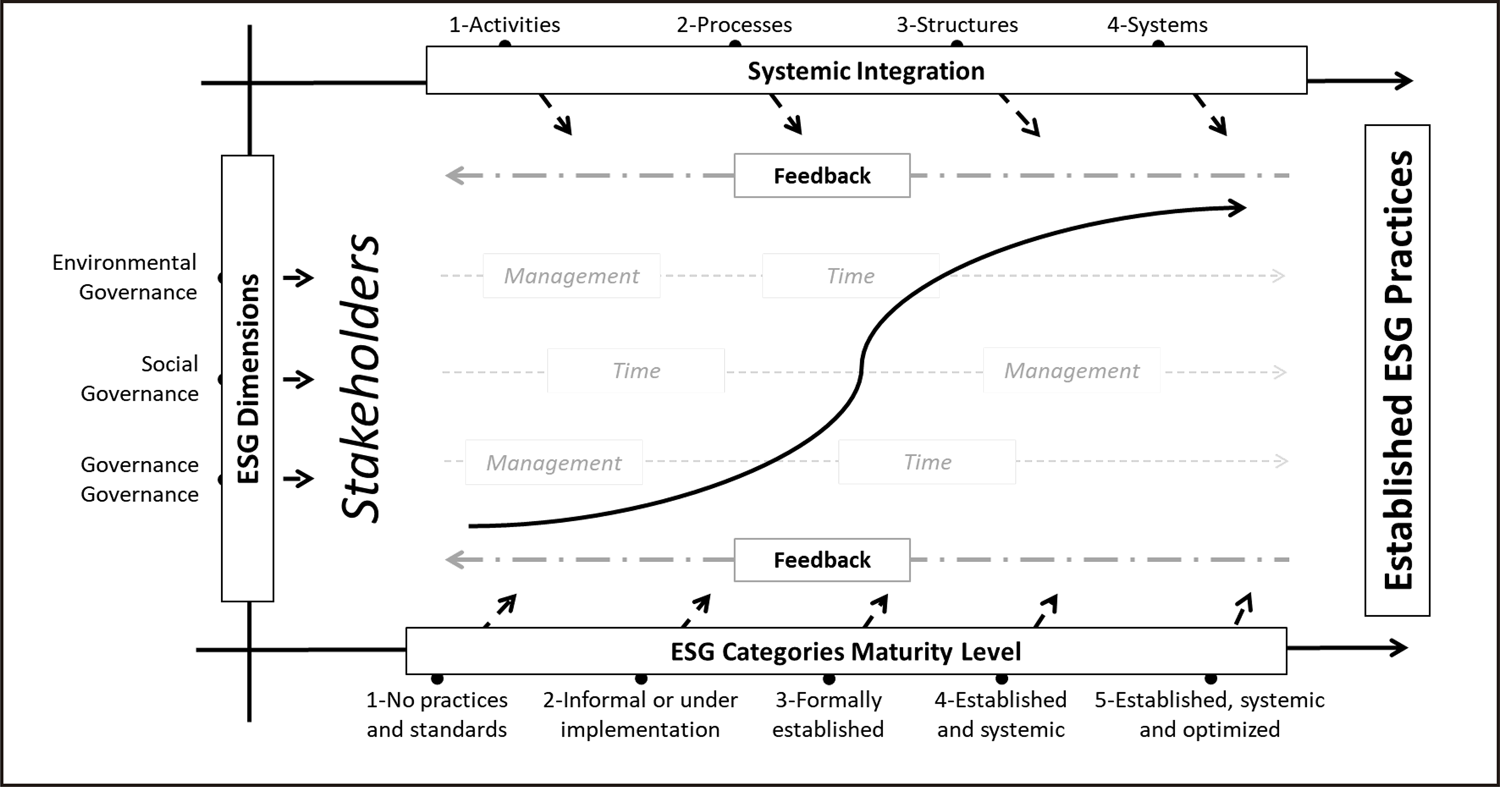 Source: Elaborated by authors (2024)
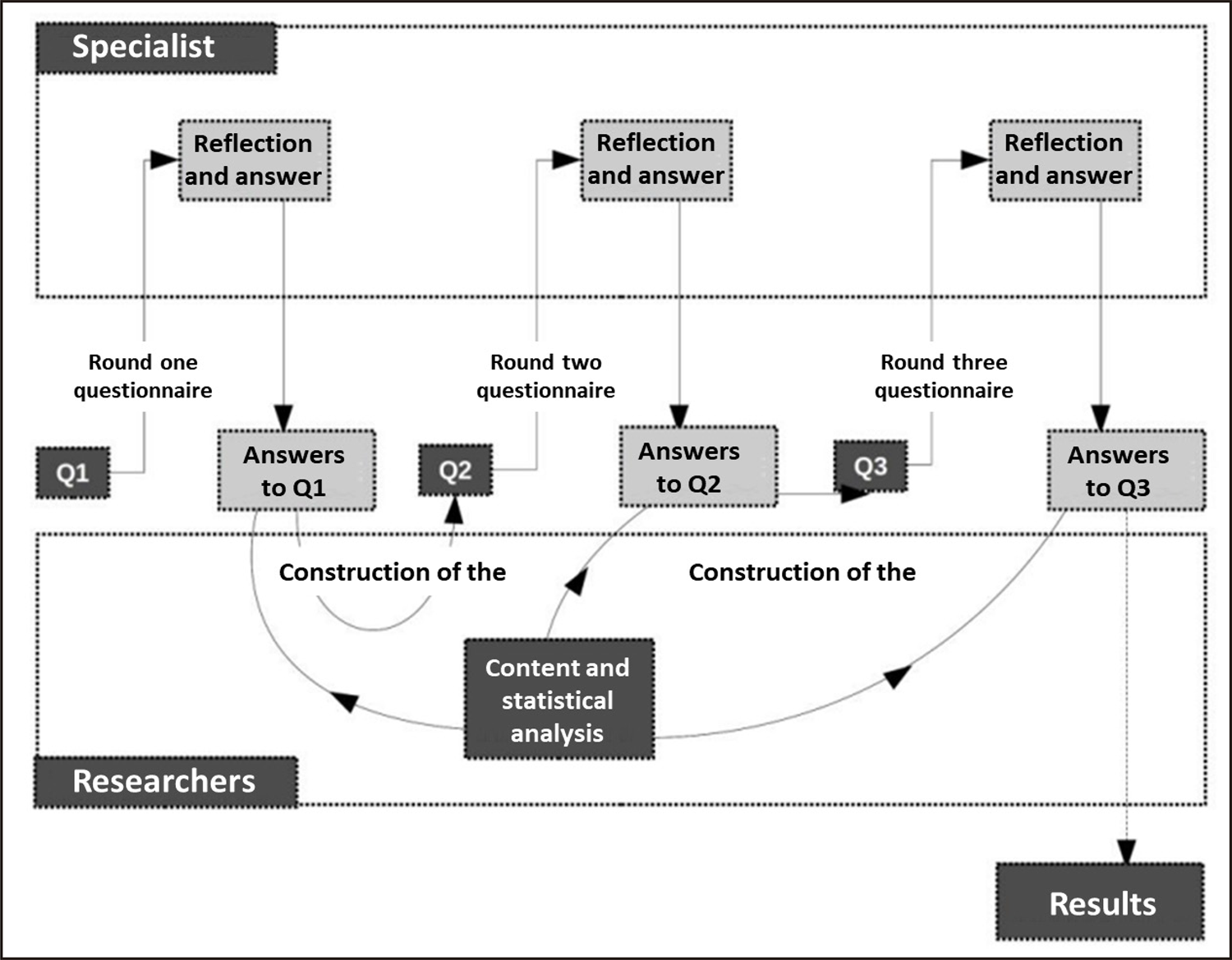 Source: adapted from Marques and Freitas (2018, p. 395)
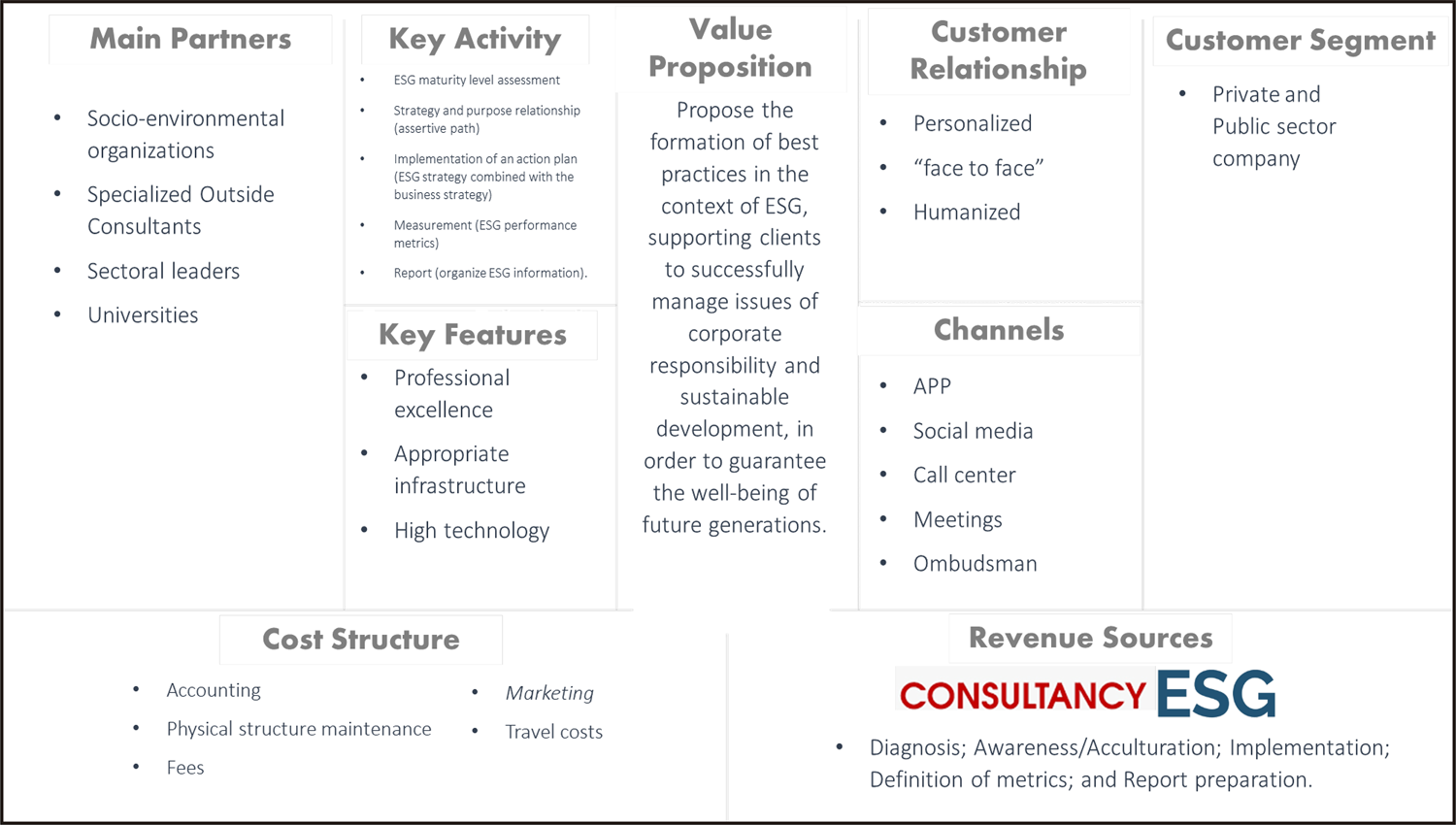 Source: Elaborated by authors (2024)
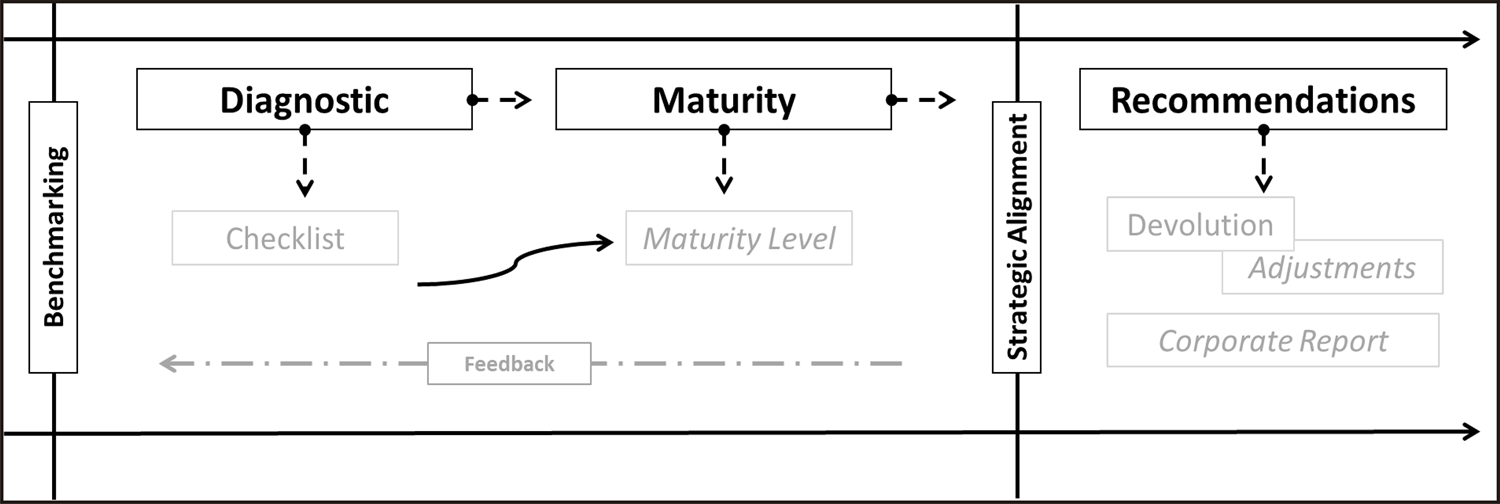 Source: Elaborated by authors (2024)
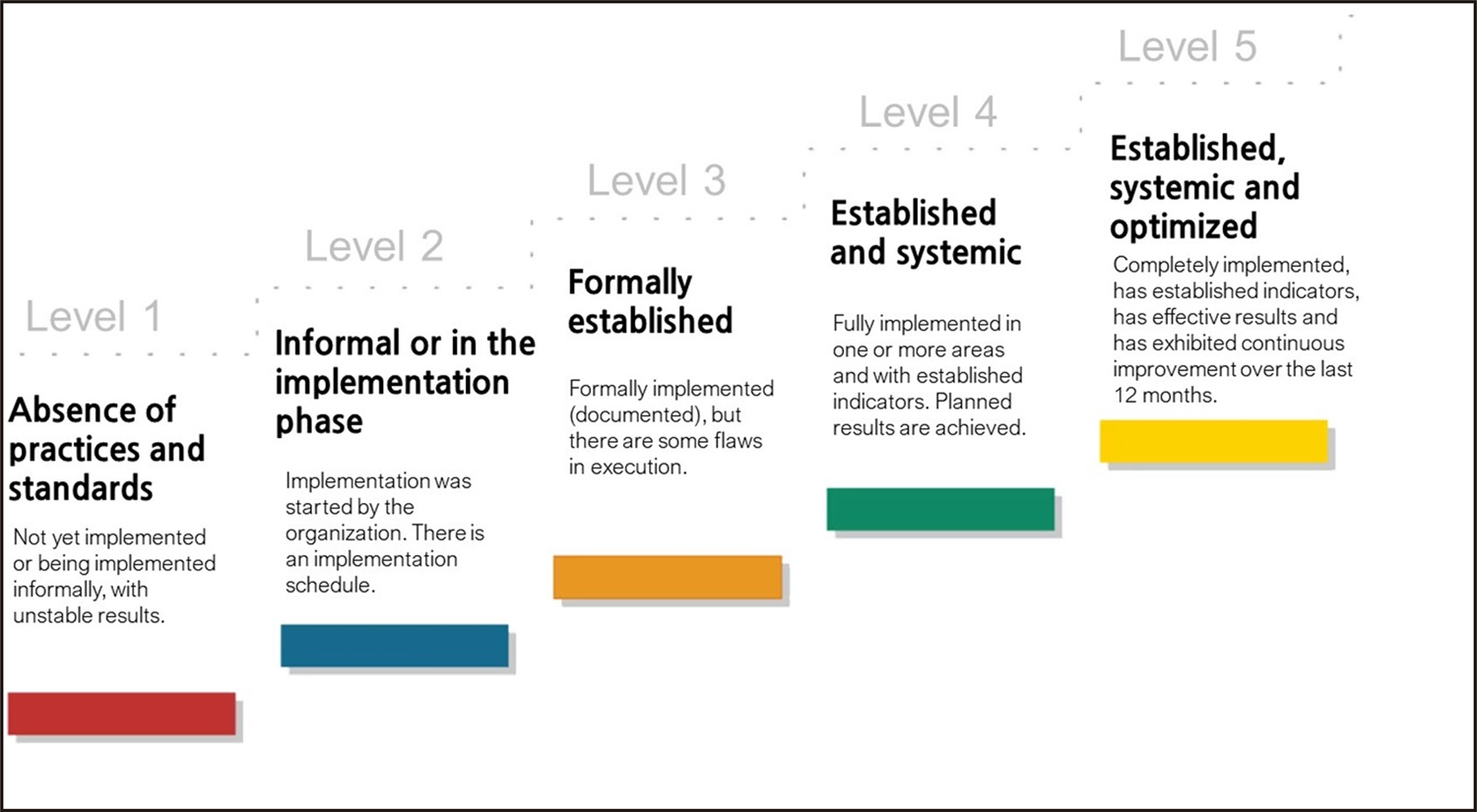 Source: adapted from
  Source: Elaborated by authors (2024)