 The community capital approach provides key perspectives on socioecological systems in the Andean-Amazon region of Colombia
Abstract
Abstract Social-ecological systems (SESs) in the Andean-Amazon transition zone are complex and adaptive and can withstand disturbances through strong interconnections between social and ecological factors. This study employed a comprehensive analysis of these SESs using the community capital approach. Data were collected via community capital-based surveys to identify distinct producer types and calculate a socioecological status index (SESI) for each. The analysis revealed three rural family types namely, multifaceted producers (MP, 42.3%), biodiverse producers (BP, 34.6%), and versatile producers (VP, 23.1%), each characterized by differing capital endowments and productive logics. Furthermore, social, financial, and natural capital significantly influenced the equilibrium and functionality of these SESs. MP families, characterized by multiple productive activities, organic waste use for fertilizers, and forest conservation areas, exhibited the highest SESI values. BP families showed the greatest productive autonomy, supported by strong cultural capital, traditional knowledge, and high medicinal plant diversity. VP families had the lowest SESI values, with greater dependence on government subsidies and nonagricultural income. The SESI proved to be a valuable tool for differentiating socioecological conditions across producer types, underscoring the importance of integrated capital endowments for system stability and resilience in the Andean-Amazon transition zone.
Keywords:
participatory rural appraisal; rural families; socioecological status index
Resumo
Resumo Os sistemas socioecológicos (SES) na zona de transição Andino-Amazônica são complexos e adaptativos, exibindo capacidade de resistir a perturbações por meio de fortes interconexões entre fatores sociais e ecológicos. Este estudo empregou uma análise abrangente desses SES utilizando a abordagem do capital comunitário. Os dados foram coletados por meio de pesquisas baseadas no capital comunitário para identificar tipos distintos de produtores e calcular um índice de estado socioecológico (SESI) para cada um. A análise revelou três tipos de famílias rurais: Produtores Multifacetados (MP, 42,3%), Produtores Biodiversos (BP, 34,6%) e Produtores Versáteis (VP, 23.1%), cada um caracterizado por diferentes dotações de capital e lógicas produtivas. Os capitais social, financeiro e natural influenciaram significativamente o equilíbrio e a funcionalidade desses SES. As famílias MP, caracterizadas por múltiplas atividades produtivas, uso de resíduos orgânicos como fertilizantes e áreas de conservação florestal, apresentaram os maiores valores de SESI. As famílias BP demonstraram maior autonomia produtiva, sustentada por forte capital cultural, conhecimento tradicional e alta diversidade de plantas medicinais. As famílias VP apresentaram os menores valores de SESI, com maior dependência de subsídios governamentais e renda não agrícola. O SESI mostrou-se uma ferramenta valiosa para diferenciar as condições socioecológicas entre os tipos de produtores, ressaltando a importância das dotações integradas de capital para a estabilidade e resiliência do sistema na zona de transição Andino-Amazônica.
Palavras-chave:
avaliação rural participativa; famílias rurais; índice de estado socioecológico
1. Introduction
Social-ecological systems (SESs) are typically characterized as resilient, dynamic, nonlinear, and adaptive. These systems demonstrate the ability not only to endure change but also to sustain their functionality amidst disturbances, particularly concerning the interconnection between social and ecological factors (Partelow, 2018). Within this framework, the interactions among system components are acknowledged to engender emergent behaviors at the systemic level (Sterk et al., 2017).
Therefore, the holistic approach to SESs emphasizes the interdependence between natural and human components. This requires a systemic understanding that recognizes the complex relationships among elements within the system (Burkhard & Maes, 2017; Virapongse et al., 2016). Schaich et al. (2010) argued that the landscape plays a central role in this understanding, as it integrates the ecological and functional dimensions with the spatial context, influencing both resource diversity and the services provided by the system.
In this context, the provision of services and the diversity of resources in ecosystems are constantly changing due to human activities and institutional decisions (Rincón-Ruiz et al., 2014; Béné, 2020). Expanding agricultural frontiers, for example, increases production pressure and resource overexploitation, altering interactions within social-ecological systems (Bardsley & Wiseman, 2016). This dynamic and complex nature has spurred efforts to understand these interactions among social, economic, and environmental factors, with the goal of developing comprehensive approaches (Berrouet et al., 2018).
Understanding the interactions that drive structural change in resource management requires a comprehensive analysis of SESs. This analysis goes beyond assessing the abundance and diversity of natural elements. It also explores local connectivity in terms of food accessibility and the organizational structures that empower processes of social interest (Baggio et al., 2016; Burkhard & Maes, 2017). Therefore, the community capital approach is adopted since it provides a holistic view of community development through the different types of capital (social, cultural, political, economic and ecological), which reveals the complex interconnections between natural and social components that are indispensable for the understanding/analysis of social-ecological systems (Taylor et al., 2023).
The Colombian Andean-Amazon region has undergone noteworthy environmental transformations. This vital ecosystem serves as the primary water source for human consumption and productive activities in the area (Torres et al., 2021). However, it faces challenges due to ongoing occupation and deforestation, leading to alterations in its ecological state and a decline in its self-regulating ability (Lapola et al., 2023). These changes pose risks and have detrimental effects on both the local population and the ecosystem itself (FSIN, 2014).
The observed changes are closely linked to conventional agricultural practices such as cattle ranching and monoculture farming, suggesting unsustainable resource extraction and unplanned service use in this region (Armenteras et al., 2005). The direct impacts of progressive climate change on ecological systems further compound this. In response, this study adopts a community capital framework to examine the socioecological dynamics in the Colombian Andean-Amazon region, contributing to a more integrated understanding of local systems. Accordingly, this study addresses the following research question: How do the distinct community capital endowments of each rural household type shape their socioecological state? We hypothesize that rural household typologies characterized by more balanced and diversified capital endowments exhibit higher socioecological state levels.
2. Theoretical foundation
Social-ecological systems are complex systems characterized by interactions between social and ecological components (Berkes & Folke, 2000). These components constitute an indivisible whole whose reciprocal interactions between elements drive the evolution of social-ecological systems (Challenger et al., 2014). The inherent bidirectional relationship between human actions and environmental responses emphasizes the dynamics of these integrated systems, where human actions alter the environment, and environmental changes influence human societies and their practices (González et al., 2021; Salas-Zapata et al., 2012).
The dynamic nature of social-ecological systems allows them to be recognized as adaptive systems characterized by nonlinearity and feedback mechanisms that enable continuous adjustment, self-organization, and adaptation over time (Castillo-Villanueva & Velázquez-Torres, 2015). Consequently, a holistic and transdisciplinary approach is required to study these systems across scales (Ostrom, 2009). Such an approach enables a thorough understanding of the complex interdependencies between human populations and their environment (Delgado et al., 2019), contributing to elucidating the structure of interactions between social and ecological systems, with the goal of enhancing their adaptive capacity (Castillo-Villanueva & Velázquez-Torres, 2015).
Therefore, the community capital framework offers an alternative approach to understanding social-ecological systems. This framework considers the diverse resources and assets held by individuals and communities, categorized as i) usable, ii) storable and preservable, and iii) investable. These community capitals are thus deployed to generate further resources in the short, medium, and long term (Gutierrez-Montes et al., 2009a). By encompassing social, cultural, political, economic, and ecological capital, this framework provides a holistic perspective on community development, emphasizing the interconnections between social and ecological systems (Taylor et al., 2023).
3. Methodology
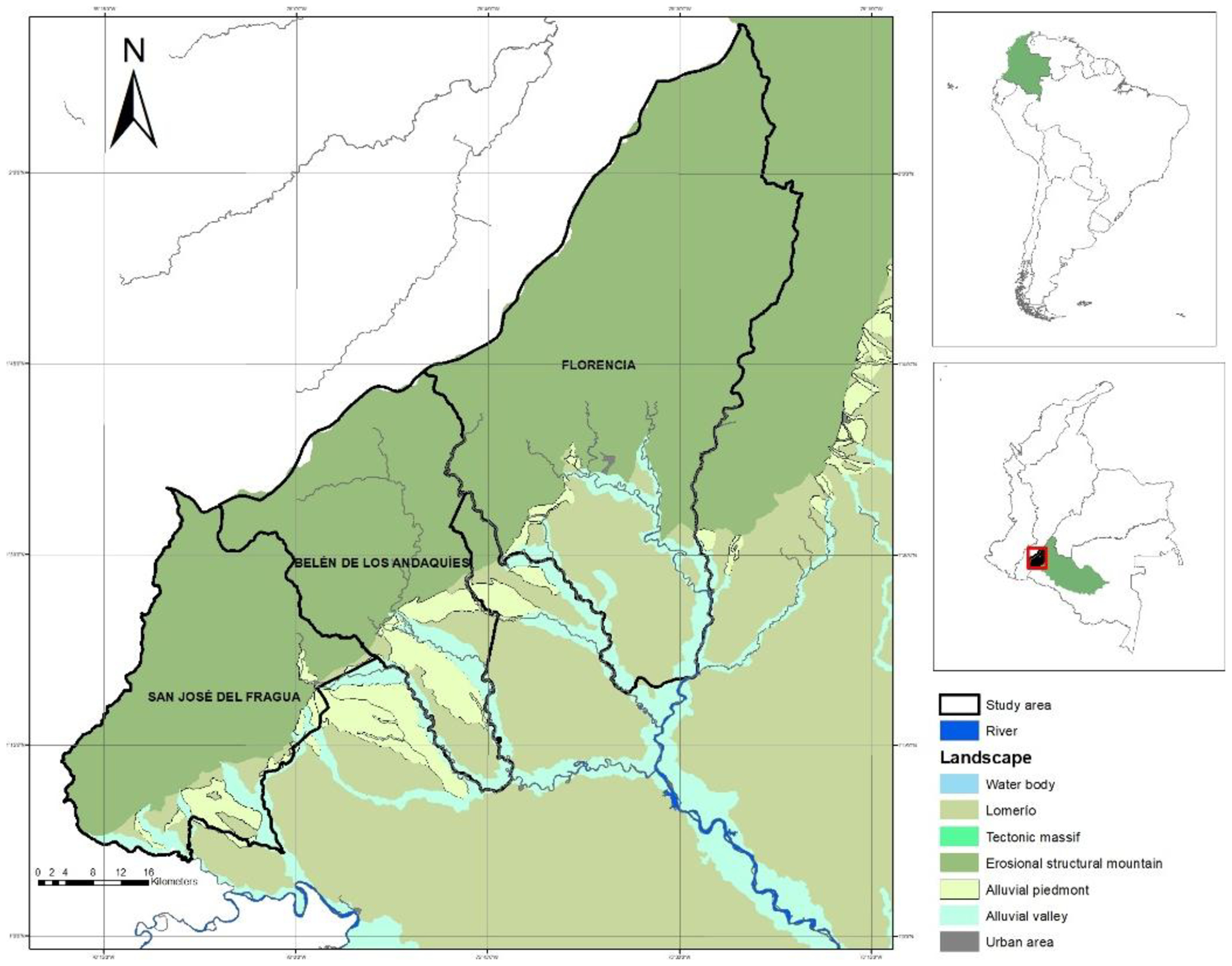
This study was conducted in the Department of Caquetá, Colombia, situated between 1°30′ N and 1°10′ N latitude and 75°35′ W and 76°00′ W longitude. This region has a mean annual temperature of 25 °C, an average annual rainfall of 3,600 mm concentrated primarily between April and November, and a light dry season from December to March. The Andean-Amazon landscape within this department extends across altitudes 300 to 900 meters above sea level, covering an area of approximately 6,772 km2, which is equivalent to 7.3% of the departmental extension (Mosquera-Guerra et al., 2025). This study focused specifically on the municipalities of Belén de los Andaquíes, Florencia, and San José del Fragua (Figure 1), within a physiographic unit classified as an erosional structural mountain landscape, characterized by slopes ranging from 12% to 50% (Instituto Geográfico Agustín Codazzi, 2010).

Location of the study area in the Andean-Amazon region of Caquetá, Colombia. The upper right corner shows the location of the study area in southern Colombia, particularly in the Caquetá department.
To provide an integrated overview of the analytical workflow, Figure 2 summarizes the methodological framework designed to address the research question regarding how distinct capital configurations shape the socioecological state. The diagram illustrates the sequential pathway from data collection and household typification through multivariate analyses to the construction of the socioecological state index (SESI).
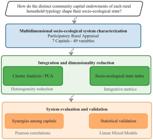
Analytical workflow of the study, illustrating the integration of community capital, household type, and the socioecological state index (SESI).
3.1 Capital endowments and data collection
The study was conducted from December 2022 to July 2023. During this period, a purposive sampling approach was employed to select 52 rural households affiliated with local producer associations and expressing interest in participation. These households were distributed across three municipalities in the study area: Florencia (n=26), Belén de los Andaquíes (n=16), and San José del Fragua (n=10). This selection focused on households actively engaged in local organizational processes, which are key drivers of regional territorial dynamics.
Detailed data were collected from each household utilizing the Participatory Rural Appraisal Tool (PRA) developed by Chambers (1996). This tool encompasses various aspects, including i. general and sociodemographic information; ii. housing characteristics; iii. subjective well-being; iv. food security; v. productive activities and natural resources; and inquiries into vi. associations, vii. nonagricultural income, viii. farm characteristics, and ix. perception of climate change (more details in Duran-Bautista, 2025).
The questions were structured considering the seven community capitals (Table 1), following the classification proposed by Flora (2007). These types of capital include social capital (SC), natural capital (NC), financial capital (FC), built capital (BC), cultural capital (CC), political capital (PC), and human capital (HC). Similarly, several studies guided this research, including those by Gutierrez-Montes et al. (2009b), Suárez et al. (2021), Suárez et al. (2022), Bernal et al. (2023), and Fierros & Ávila-Foucat (2017).
3.2. Typification of rural households and their association with capital variables
Rural family types were identified using hierarchical cluster analysis with Ward's method and Gower distance based on data from household surveys. For quantitative variables, linear mixed models—LMM (Di Rienzo et al., 2012) were subsequently constructed using the “lme” function from the “nlme” package (Pinheiro et al., 2013). Types previously identified were included as fixed effects, whereas families were considered random effects.
The assumptions of normality and homogeneity of variance were verified through an exploratory analysis of the residuals, using Fisher's LSD test with a significance level of 5% for mean comparisons. For qualitative variables, contingency tables were constructed to assess significant differences between types.
The relationships between the 49 variables representing the seven capitals and the identified rural household types were explored using principal component analysis (PCA) to explore patterns and trends. Additionally, a Monte Carlo test was employed to statistically assess the effect of types on the variables. To visualize the results, graphical outputs were generated using the Ade4 (Thioulouse et al., 2018) and ggplot2 (Wickham, 2016) packages. All analyses were conducted in R version 3.6.1 (R Development Core Team, 2019).
3.3 Socioecological state index
Following the approach proposed by Sseguya et al. (2018), an additive index of the socioecological state (SESI) was developed to highlight the characteristics of producers with higher or lower SESI. This index is derived from three subindicators: social, economic, and ecological. Within the social subindicator (SubS), cultural capital (CC), human capital (HC), political capital (PC), and social capital (SC) were added. The economic subindicator (SubE) combined financial capital (FC) and built capital (BC), while the third ecological subindicator (SubECL) incorporated variables of natural capital (NC).
To analyze and compare individual producer data across different subindicators, standardization was performed by the researchers. The dataset for each subindicator was grouped, and the original values were summed. These sums were then standardized to a scale of [0-1] by dividing the value obtained for each producer (Subi) by the maximum value of the subindicator across all producers. This process can be expressed as:
where:
Subi = any of the evaluated indicators belonging to the same dataset
Uj = mean value for each individual producer
Ü = maximum value of the subindicator for all producers during the evaluation
[0-1] = standardized values ranging from 0 to 1
After standardization, the subindicators were summed and transformed to a scale of 0 to 1, resulting in the socioecological state index (SESI) = SubS + SubE + SubECL. Higher SESI values indicate rural family types with a higher socioecological level.
3.4 Synergies between capital and the index of the socioecological state
A Pearson correlation analysis (α = 0.05) was used to assess the relationships between specific capital types (e.g., natural, social, and human) and the socioecological state index (SESI) within each rural family type. Additionally, linear mixed models (LMMs) with the type as a fixed effect and family as a random effect were used to compare capital and SESI across types. Fisher's LSD test was performed for post hoc comparisons of means. Boxplots were generated using ggplot2 (R version 3.6.1) to visualize the data distribution across types.
4. Results and Discussion
4.1 Types of rural families
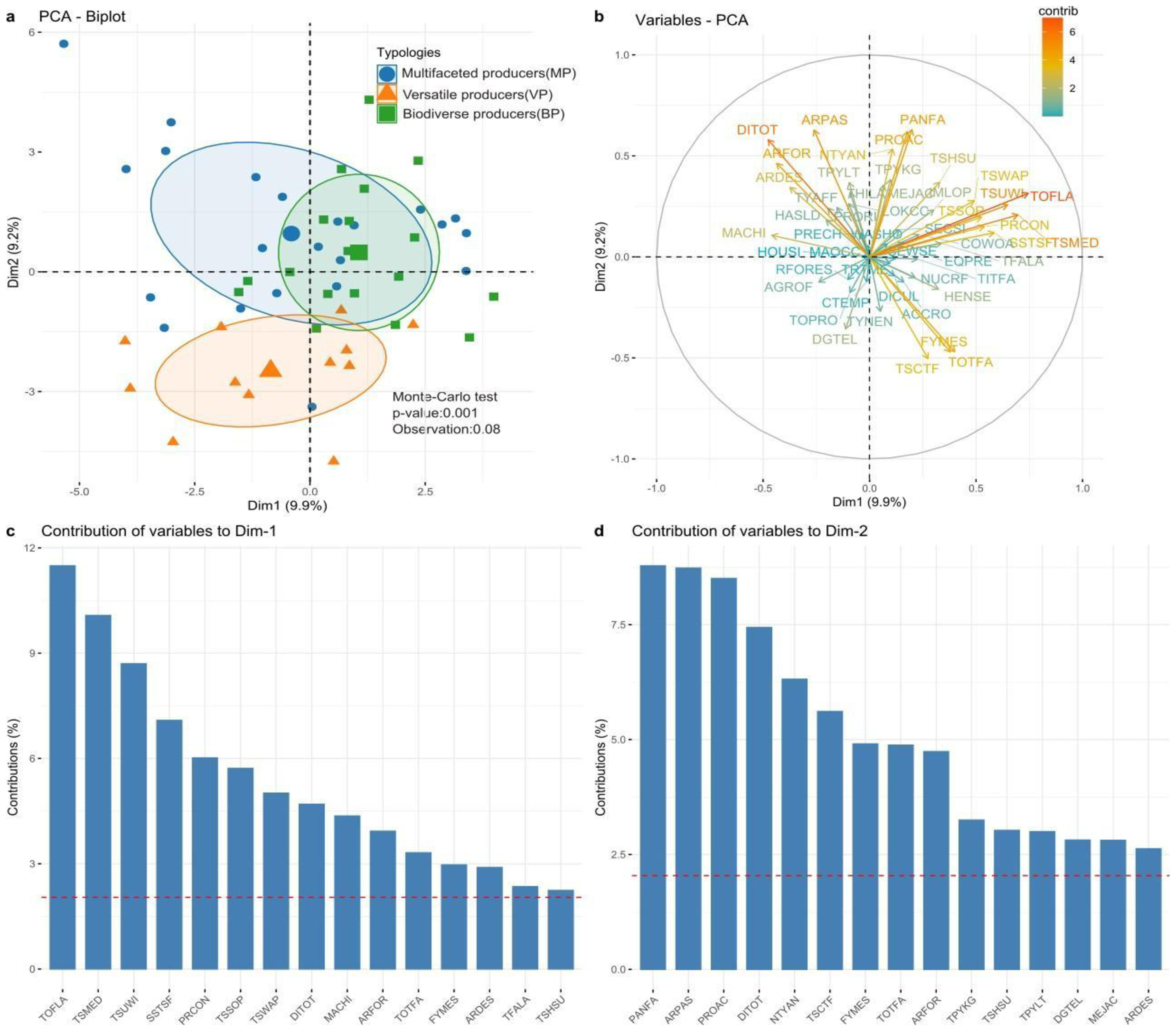
Based on the cluster analysis of 49 variables characterizing each family, three distinct types of rural families were identified (Figure 3a): multifaceted producers (MP), versatile producers (VP), and biodiverse producers (BP). These households are largely determined by their access to natural and financial resources. These resource endowments, as highlighted by Narain et al. (2008), subsequently shape the development of other components within each family. Understanding these producer types, as posited by Guan et al. (2011) and Halmy et al. (2015), is therefore critical for analyzing the complex dynamics of social-ecological systems in different contexts.
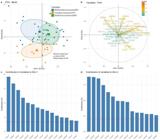
Types of socioecological rural producers in the Andean-Amazon region of Caquetá, Colombia. a. Multifaceted producers (MP), Versatile producers (VP), and Biodiverse producers (BP). b. The contribution of each variable was obtained through principal component analysis.
Statistical analysis revealed seven key quantitative variables that significantly differentiated the farm types (Table 2): total flora (TOFLA), productive activities (PROAC), land use distribution (area under temporary crops) (DICUL), land use distribution (total area) (DITOT), number of crops grown (NUCRF), and total economic income from agricultural sales (IPROO). Additionally, chi-square tests (p < 0.05) revealed significant associations between farm type and the qualitative variables of animal presence and main occupation.
For example, compared with the versatile producer (VP) type, a greater proportion of farms within the multifaceted producer (MP) type possessed animals. Furthermore, compared with agricultural producers, the biodiverse producer (BP) type had a greater concentration of individuals identified as Agro-livestock producers within the VP type (Table 3). These diverse land use practices, associated with the distinct producer types in the Andean-Amazon transition, contribute to the ongoing transformation and potential degradation of ecosystem services, a trend consistent with the findings of Nagendra et al. (2013) on accelerated ecosystem transformation driven by anthropogenic activities.
Representative categorical variables in rural families. The percentage of each category per variable is shown. The p value was obtained using contingency tables (chi-square statistics) for the association of the variables.
The relationships among the 49 variables of the seven capitals explored by principal component analysis (PCA) explained 19.1% of the data variability across the two axes. The variables total flora (TOFLA), total species with medicinal use (TSMED), and total species with use of windbreakers (TSUWI) contributed to the first axis and opposed to the machinery (MACHI) variable. The second axis was influenced primarily via the presence of animals on the farm (PANFA), area under pasture (ARPAS), and productive activities (PROAC), in contrast to total family occupations (TOTFA) and total family schooling (TSCFT). Significantly different rural family types were identified (8.67% variance explained, p = 0.001) based on the results of the Monte Carlo test (Figure 3a). In particular, Axis2 separated the MP and VP types.
4.1.1. Versatile producers (VP)
The versatile producer (VP) type, which comprises 23.1% of the families studied, is characterized by a larger family size (FYMES) and a higher educational level (TSCTF). With respect to financial capital, VP farms present a lower number of crops (NUCRF). Consequently, their annual agricultural production in kilograms (TOPRO) is lower than that of other family types, which translates to lower annual agricultural income. A key characteristic of this family type is the presence of agroforestry areas (AGROF), which is associated with less dependence on animal production (PANFA) and less pasture area (ARPAS), with income diversification being an important strategy through varied occupations (TOTFA).
These results coincide with those of Hoang et al. (2014), who reported that households employing nonagricultural livelihood strategies may enhance food security and mitigate environmental pressure, as noted by Bezu et al. (2012) and Bernal et al. (2023). Financial support for VP families comes from various sources, including government subsidies and loans (HASLD). These are primarily used for farm investments, maintenance, or personal expenses. With respect to cultural capital, VP families stand out for their strong perception of local knowledge on climate change (LOKCC). They exhibit a keen awareness of changing local temperatures (CTEMP). Their agricultural production is based on subsistence-oriented crops such as sugarcane, plantain, cassava, and cocoa, reflecting their lower market integration and the predominance of household food security over commercial specialization.
4.1.2. Multifaceted producers (MP)
This type constitutes 42.3% of the families studied and is characterized by several primary activities (MAOCC), especially agricultural work. They stand out for their extensive use of pasture areas (ARPAS) and employ more hired labor (THILA). Additionally, compared with other family types (DITOT), MP families manage larger farms. The use of tools and machinery (MACHI) remains consistent for maintaining a high presence of animals (PANFA) and cultivating a wide variety of crops (NUCRF). Organic waste is utilized for producing fertilizers (GAFER) and animal feed (GAFEE). There are areas dedicated to stubble (ARDES) and forestland (ARFOR; Figure 3a, b).
Financial capital (FC) for MP producers relies primarily on income generated from selling agricultural products (INPRO). In terms of human capital (HC), they enjoy good food at home (HOFOO) and public water services (WASHO). However, their political capital (PC) appears limited, with minimal participation in organizations (FAASO), community action boards (JAC), or community work activities (COWOA). Despite this, they acknowledge the presence of national and local entities in the territory (PRENA; Figure 3a, b). Their productive systems are dominated by coffee and plantain, crops that align with their market-oriented logic, higher income generation from agricultural sales, and the diversified land management practices characteristic of this typology.
This typology, which has a larger land area and generates significant income from agricultural products compared to the VP, is characterized by higher educational attainment among its participants. This elevated education level is associated with the diverse range of activities undertaken on their farms, a finding supported by studies by Magdaleno-Hernández et al. (2014) and Perevochtchikova et al. (2018).
4.1.3. Biodiverse producers (BP)
Biodiverse producers (BP) represent 34.6% of the total number of producers, and BP families engage in diverse productive activities (PROAC) with a wider range of animal types (NTYAN) and higher overall production in kilograms (TPYKG). However, their farms exhibit lower crop diversity (NUCRF). BP farms exhibit medium-sized properties with smaller dedicated forest conservation areas (ARFOR) than other family types do. Their strength lies in diversified production systems, providing families with a variety of food sources and ensuring household food security (Baffoe & Matsuda, 2018).
Additionally, they exhibit high political capital through active participation in community associations (FAASO) and action boards (JAC). However, they express concerns about the unequal distribution of aid or project benefits by JAC presidents (EQPRE). Biodiverse producers (BP) display strong cultural capital rooted in traditional customs (CUSTM) and the frequent use of home remedies (USRHR). Their farms harbor a high diversity of medicinal plant species (TSMED), highlighting their deep connection to traditional knowledge. Cocoa and sugarcane dominate their productive systems, which, combined with their high animal diversity and traditional management practices, reinforce the household food security and cultural continuity that characterize this typology.
While their perception of local knowledge on climate change (LOKCC) is lower, they acknowledge changes in precipitation patterns (DICUL). Additionally, their farms showcase diverse shrub species that serve specific functions, such as providing shade (TSHSU), acting as windbreaks (TSUWI), and protecting water sources (TSWAP). These diverse flora on BP farms contribute to mitigating climatic impacts on ecosystems. This aligns with the findings of Villafuerte (2015), who suggested that such farming families often implement conservation strategies, contributing to their well-being and long-term sustainability.
4.2. Synergies between capital and the index of the socioecological state
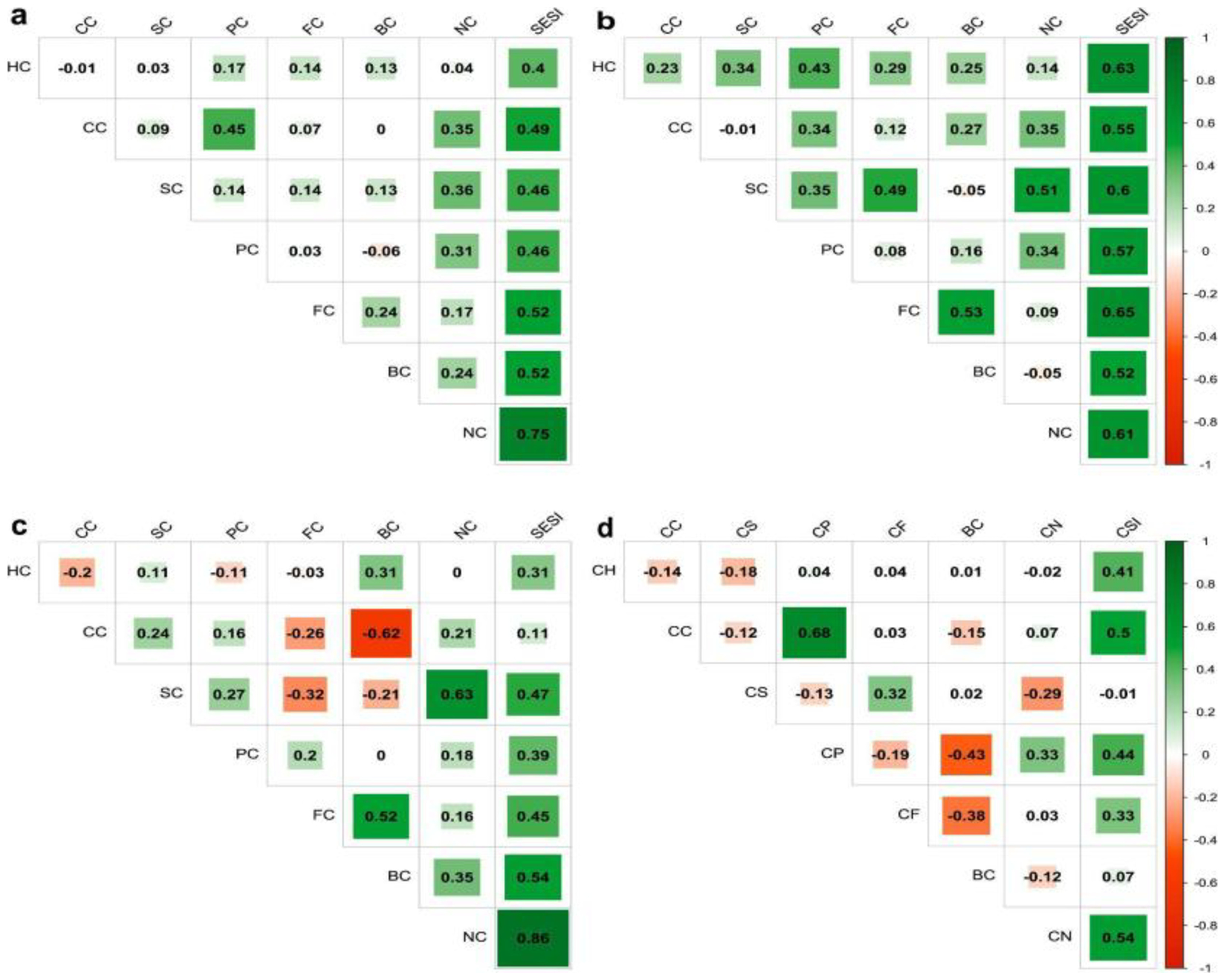
Analysis of the relationships between different capital types and the SESI revealed statistically significant differences (p<0.05). Remarkably, 92.85% of the correlations were positive (Figure 4a). The strongest positive correlations (r>0.4) were observed between cultural capital and political capital. Furthermore, human capital and cultural, social, political, financial, built, and natural capital all exhibited strong positive correlations (r>0.75) with the SESI.
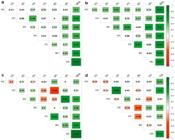
Pearson’s correlation coefficients between the social-ecological state index (SESI) and each capital. A. General, b. Multifaceted producers (MP), c. Versatile producers (VP) and d. Biodiverse producers (BP). The green color represents positive correlations, and the red color represents negative correlations; the intensity of the color represents the magnitude of the correlations. CC: cultural capital, FC: financial capital, BC: built capital, HC: human capital, NC: natural capital, PC: political capital, SC: social capital, and the social-ecological state index (SESI).
The relationships between various capital types and the SESI varied across producer types (multifaceted, versatile, and biodiverse). Multifaceted Producers (MP), strong positive correlations were evident between human and political capital (r = 0.43), financial and built capital (r > 0.50), and social capital with both natural (r > 0.50) and financial capital (r = 0.49). Furthermore, the SESI displayed strong positive correlations (r > 0.50) with political, human, cultural, social, financial, natural, and built capital (Figure 4b). These results align with the findings of Gutierrez-Montes et al. (2009b), who suggest that human or social capital endowments can enhance financial, political, and natural capital. Similarly, Suárez et al. (2021) emphasize the essential role of social capital in improving family well-being and its positive impact on financial capital.
Among the VP, the majority (75%) of capital-SESI relationships were positive, with 25% being negative (Figure 4c). The most significant negative correlation was between cultural capital and built capital (r = -0.62). Conversely, strong positive correlations were found between social capital and natural capital (r = 0.63), financial capital and built capital (r = 0.52), and SESI with natural capital (r = 0.86), built capital (r = 0.54), social capital (r = 0.47), and financial capital (r = 0.49). These observed correlations underscore the interactions and synergies between capitals, where the endowment of one capital can positively or negatively influence others, thereby affecting the sustainability of the system (Gutierrez-Montes et al., 2009a).
For biodiversity producers (BP), 57.15% of the relationships between capital and the SESI were positive (Figure 4d). These positive correlations included those between cultural capital and political capital (r = 0.68) and between SESI and natural capital (r = 0.54), cultural capital (r = 0.50), political capital (r = 0.44), and human capital (r = 0.41). However, the remaining 42.85% of the relationships exhibited negative correlations, most notably between political capital and built capital (r = -0.43).
The observed correlation patterns for BP are likely associated with their high participation in associations, working groups, and policy development, suggesting that local policies can indeed drive positive change and learning. This engagement can translate into tangible benefits for rural families, including improved quality of life, enhanced food security, diversified production, and optimized resource management, ultimately leading to better economic outcomes and reduced risks (Maldonado-Méndez et al., 2022; Román-Montes de Oca et al., 2020)
Across the different rural household types, most capital types were positively correlated with the SESI. The MP showed the strongest and most positive correlations between different capital types and SESI (Figure 4b). This implies that MP families demonstrate a strong alignment between their social, financial, and ecological practices, contributing to a more integrated and potentially more sustainable social-ecological system. Similar patterns were noted by Bernal et al. (2023), who reported that producers managing larger pasture areas typically possess higher levels of community capital, enhancing their adaptive capacity. These findings suggest that households with broader and more diverse capital endowments are better positioned to achieve positive socioecological outcomes.
An analysis of how the three producer types respond holistically to social, financial, and ecological dimensions provides valuable insights. This analysis highlights the importance of knowledge and the establishment of communal platforms, such as action boards, to empower producers, assimilate acquired knowledge (Gutiérrez, 2015), and increase the well-being of families (Suárez et al., 2022). As Potts et al. (2017) noted, these learning and community-based decision-making practices foster economic transformations within the environment, driven by conscientious production processes such as crop management.
Learning processes, as described by González (2016), extend beyond the sustainable transformation of products; they also play a key role in shaping rural territorial dynamics by promoting interactions between social and ecological agents. This perspective aligns with the approach of biodiverse producers, as highlighted by Henderson (2019), who emphasizes the importance of diversification within coffee-growing households and its connection to the broader socioecological system.
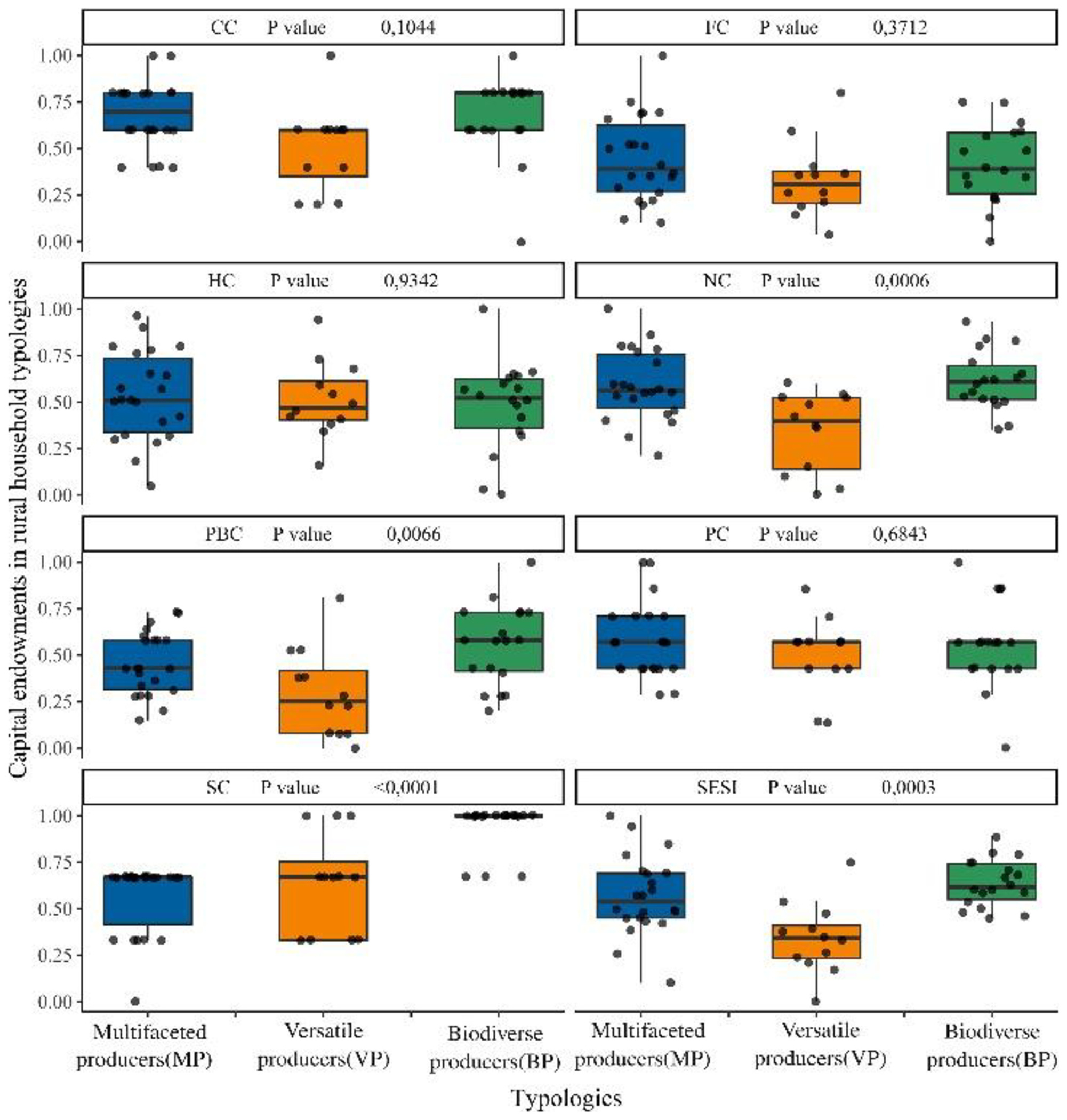
Multifaceted producers (MP) and biodiverse producers (BP) presented the highest levels of built capital, natural capital, and the SESI compared to versatile producers (VP). These differences were statistically significant (p < 0.05; Figure 5). Specifically, MP and BP households possessed higher average values for built capital (34.88 and 42.63, respectively), natural capital (38.31 and 39.61, respectively), and SESI (35.94 and 41.83, respectively) compared to VP households (22.48, 22.07, and 22.22, respectively). Social capital also differed significantly across household types (p < 0.001; Figure 5). MP households had the lowest level of social capital (0.55), followed by VP (0.65) and BP (0.94).
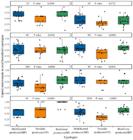
Value of the indicator for each capital. CC: cultural capital, FC: financial capital, BC: built capital, HC: human capital, NC: natural capital, PC: political capital, SC: social capital, and the social-ecological state index (SESI). Multifaceted producers (MP), Versatile producers (VP), and Biodiverse producers (BP).
Multifaceted producers (MP) and biodiverse producers (BP) exemplify a strong socioecological relationship through their diversification practices. They integrate transformative processes into their production, leading to sustainable agroecosystems and food security. This, in turn, increases resilience and strengthens the social, natural, cultural, built, financial, and SESI of various communities (Rojas et al., 2014). In alignment with the insights of Ward et al. (2017), our findings suggest that ecological recovery strategies strengthen agroecosystems and positively impact families. This interconnectedness between social, financial, and natural components stems from the management practices adopted and adapted by different producer types in our study.
4.3 Implications for rural development and public policy
Among the identified typologies, BP most closely reflect a peasant-type productive logic, as described by Van der Ploeg (2008, 2013), which is based on traditional knowledge-driven ecological coproduction, plant diversity, and community-based governance, with relatively greater productive autonomy from external markets and inputs. However, in terms of agroecological sustainability within the Andean-Amazon transition, multifaceted producers (MP) present stronger indicators, such as the integration of multiple productive activities, the use of organic waste for fertilizer, and the maintenance of forestland and stubble areas, reflecting a more circular resource management logic. These findings suggest that peasant characteristics and agroecological sustainability, while potentially complementary, are related but not equivalent conditions among rural producers in the Andean-Amazon transition.
This typological differentiation provides an empirical basis for designing differentiated development policies that move beyond the limitations of uniform, top-down approaches (Valencia-Perafán et al., 2020). MP and BP, characterized by stronger interactions among community capitals, may particularly benefit from policies that support diversification strategies and agroecological transitions. As argued by Wezel et al. (2020), agroecological transitions require policy instruments that foster the systemic transformation of agri-food systems, where the integration of multiple elements drives sustainability gains rather than the promotion of isolated ecological practices.
For these typologies, such instruments should focus on strengthening food security and market access to sustain the existing synergies among their community capitals. In contrast, Versatile Producers (VP) require targeted interventions to strengthen human and social capital through improved organization and institutional support (Ramirez et al., 2018). These findings suggest that rural policies should transcend uniform approaches in favor of context-sensitive strategies that address household heterogeneity (Massardier & Sabourin, 2013), enabling more effective targeting of institutional resources (Del Río Duque et al., 2025)
In this context, the SESI serves as a robust decision-support tool to identify priority areas for reinforcing specific capital interactions, mirroring recent advances in adaptable sustainability metrics (Mühlematter et al., 2025). Scaling this approach to incorporate spatial dimensions represents a promising avenue, given that no clear geographic pattern associated any particular typology with either the Andean or Amazonian portion of the study area was identified, leaving open the question of whether geographic gradients shape the configuration of community capitals and productive logics across this transition zone.
Although purposive sampling of associated households yielded high-quality, reliable data on community capital, we acknowledge that the voluntary nature of participation may introduce selection bias. Therefore, the findings primarily reflect the socioecological state of organized smallholders, and while these patterns align with regional trends, caution should be exercised when these results are generalized to nonassociated rural populations. However, the participants' socioeconomic characteristics (e.g., farm size, primary crops, and access to services) align with the general profile of smallholders in the Caquetá department, as reported in regional census data, suggesting that the identified patterns are relevant to the regional context.
5. Conclusions
An analysis of socioecological systems in the Colombian Andean–Amazon region demonstrated that distinct configurations and interactions among community capitals play a central role in shaping the socioecological state of rural households. Households characterized by more balanced and complementary capital endowments exhibited higher socioecological state levels, highlighting the importance of synergistic relationships among social, ecological, and economic dimensions.
The socio-ecological state index (SESI) proved effective in identifying differences among rural household typologies and revealing how varying capital configurations influence system performance. Despite these advances, challenges related to unequal access to resources and limited social synergies persist, emphasizing the need for context-specific rural development strategies that strengthen complementary community capital. Overall, this study contributes an integrated analytical approach for understanding socioecological dynamics and supporting differentiated pathways toward rural sustainability in the Andean–Amazon transition.
Acknowledgments
The authors are deeply grateful to all the farmers who participated in the survey process. Their willingness to share their experiences and insights was instrumental in generating valuable data and enriching this research.
Data Availability
Research data is available through the DOI https://doi.org/10.5281/zenodo.15300045
-
How to cite:
Angel-Sanchez, Y. K., Duran-Bautista, E. H., Suarez, A. E., Quintero-Angel, M., & Suarez, J. C. (2026). The community capital approach provides key perspectives on socioecological systems in the Andean-Amazon region of Colombia. Revista de Economia e Sociologia Rural, 64, e296901. https://doi.org/10.1590/1806-9479.2026.296901
-
Financial support
This work is part of the project “Study of the impact and degree of vulnerability of rural productive systems and natural ecosystems to climate change, as an alternative for the conservation and preservation of the upper and middle basin of the Hacha river Florencia-Caquetá (Estudio del impacto y el grado de vulnerabilidad de los sistemas productivos rurales y ecosistemas naturales al cambio climático, como alternativa de conservación y preservación de la cuenca alta y media del río Hacha Florencia-Caquetá)” which was financed by Ministerio de Ciencia, Tecnología e Innovación MINCIENCIAS and the General Royalty System (Sistema General de Regalías) – SGR [code BPIN 2021000100532] approved by agreement No. 20 of 4/05/2022.
-
Ethics approval:
The development of this work received approval from the Institutional Committee of Ethics and Bioethics at the Universidad de la Amazonia, under Concept Number 026, dated June 10, 2021.
-
Clasificación JEL:
R2
References
-
Armenteras, D., Rudas, G., Rodríguez, N., Sua, S., & Romero, M. (2005). Patterns and causes of deforestation in the Colombian Amazon. Ecological Indicators, 6(2), 353-368. https://doi.org/10.1016/j.ecolind.2005.03.014
» https://doi.org/10.1016/j.ecolind.2005.03.014 -
Baffoe, G., & Matsuda, H. (2018). An empirical assessment of rural livelihood assets from gender perspective: evidence from Ghana. Sustainability Science, 13(3), 815-828. https://doi.org/10.1007/s11625-017-0483-8
» https://doi.org/10.1007/s11625-017-0483-8 -
Baggio, J. A., BurnSilver, S. B., Arenas, A., Magdanz, J. S., Kofinas, G. P., & De Domenico, M. (2016). Multiplex social ecological network analysis reveals how social changes affect community robustness more than resource depletion. Proceedings of the National Academy of Sciences of the United States of America, 113(48), 13708–13713. https://doi.org/10.1073/pnas.1604401113
» https://doi.org/10.1073/pnas.1604401113 -
Bardsley, D. K., & Wiseman, N. D. (2016). Socio-ecological lessons for the Anthropocene: learning from the remote Indigenous communities of Central Australia. Anthropocene, 14, 58-70. https://doi.org/10.1016/j.ancene.2016.04.001
» https://doi.org/10.1016/j.ancene.2016.04.001 -
Béné, C. (2020). Resilience of local food systems and links to food security – A review of some important concepts in the context of COVID-19 and other shocks. Food Security, 12(4), 805-822. PMid:32837646. https://doi.org/10.1007/s12571-020-01076-1
» https://doi.org/10.1007/s12571-020-01076-1 - Berkes, F., & Folke, C. (2000). Linking social and ecological systems: management practices and social mechanisms for building resilience. Cambridge University Press.
-
Bernal, A. P. N., Gutiérrez-Montes, I., Hernández-Núñez, H. E., Suárez, D. R. G., García, G. A. G., Suárez, J. C., Casanoves, F., Flora, C., & Sibelet, N. (2023). Diverse farmer livelihoods increase resilience to climate variability in southern Colombia. Land Use Policy, 131, 106731. https://doi.org/10.1016/j.landusepol.2023.106731
» https://doi.org/10.1016/j.landusepol.2023.106731 -
Berrouet, L. M., Machado, J., & Villegas-Palacio, C. (2018). Vulnerability of socio-ecological systems: a conceptual framework. Ecological Indicators, 84, 632-647. https://doi.org/10.1016/j.ecolind.2017.07.051
» https://doi.org/10.1016/j.ecolind.2017.07.051 -
Bezu, S., Barrett, C. B., & Holden, S. T. (2012). Does the nonfarm economy offer pathways for upward mobility? Evidence from a panel data study in Ethiopia. World Development, 40(8), 1634-1646. https://doi.org/10.1016/j.worlddev.2012.04.019
» https://doi.org/10.1016/j.worlddev.2012.04.019 -
Burkhard, B., & Maes, J. (2017). Mapping ecosystem services. Sofia: Pensoft Publishers. https://doi.org/10.3897/ab.e12837
» https://doi.org/10.3897/ab.e12837 - Castillo-Villanueva, L., & Velázquez-Torres, D. (2015). Sistemas complejos adaptativos, sistemas socioecológicos y resiliencia. Quivera Revista de Estudios Territoriales, 17(2), 11-32.
- Challenger, A., Bocco, G., Equihua, M., Chavero, E. L., & Maass, M. (2014). La aplicación del concepto del sistema socio-ecológico: alcances, posibilidades y limitaciones en la gestión ambiental de México. Investigación Ambiental: Ciencia y Política Pública, 6(2), 1-21.
-
Chambers, R. (1996). Evaluación rural participativa Retrieved in 2025, May 17, from www.neareast.org/main/lrc/biblio/researchandevaluation.pdf
» www.neareast.org/main/lrc/biblio/researchandevaluation.pdf -
Del Río Duque, M. L., Löhr, K., Pérez-Lora, Á. P., Lana, M., Castro-Nunez, A., Sieber, S., & Bonatti, M. (2025). Toward understanding the scaling out of sustainable land use systems in Colombia: integrating case study insights and national pathways design for cacao farming. Discover Agriculture, 3(1), 188. https://doi.org/10.1007/s44279-025-00367-5
» https://doi.org/10.1007/s44279-025-00367-5 - Delgado, L. E., Tironi-Silva, A., & Marín, V. H. (2019). Sistemas socioecológicos y servicios ecosistémicos: modelos conceptuales para el humedal del Río Cruces (Valdivia, Chile). In C. Cerda, E. Silva-Rodríguez & B. Urzúa Briceño (Eds.), Naturaleza en sociedad: una mirada a la dimensión humana de la conservación de la biodiversidad (pp. 177-205). Ocho Libros.
-
Department for International Development – DFID. (1999). Hojas de orientación sobre medios de vida sostenibles: El Departamento para el desarrollo internacional Retrieved in 2025, May 17, from https://www.livelihoodscentre.org/documents/114097690/114438878/Sus_livelihoods_guidance_sheets_es.pdf/aabbf495-795b-239b-7201-b0ca663101e5?t=1569512038420
» https://www.livelihoodscentre.org/documents/114097690/114438878/Sus_livelihoods_guidance_sheets_es.pdf/aabbf495-795b-239b-7201-b0ca663101e5?t=1569512038420 - Di Rienzo, J. A., Macchiavelli, R. E., & Casanoves, F. (2012). Modelos lineales mixtos. Aplicaciones en InfoStat. Argentina: Universidad Nacional de Córdoba.
- Duran-Bautista, E. H. (2025). Analysis of socioecological systems from the community capital approach in the Colombian Andean-Amazon region (Versión v1) [Data set]. Zenodo.
-
Emery, M., & Flora, M. (2006). Spiraling-up: mapping community transformation with community capitals framework. Community Development (Columbus, Ohio), 37(1), 19-35. https://doi.org/10.1080/15575330609490152
» https://doi.org/10.1080/15575330609490152 -
Fierros, I., & Ávila-Foucat, V. S. (2017). Medios de vida sustentables y contexto de vulnerabilidad de los hogares rurales de México. Problemas del Desarrollo, 48(191), 107-131. https://doi.org/10.22201/iiec.20078951e.2017.191.58747
» https://doi.org/10.22201/iiec.20078951e.2017.191.58747 -
Flora, C. B. (2007). Social Capital and Community Problem Solving: Combining Local and Scientific Knowledge to Fight Invasive Species. USA: Iowa State University. Retrieved in 2025, May 17, from https://www.academia.edu/51213661/Social_capital_and_community_problem_solving_combining_local_and_scientific_knowledge_to_fight_invasive_species
» https://www.academia.edu/51213661/Social_capital_and_community_problem_solving_combining_local_and_scientific_knowledge_to_fight_invasive_species -
Food Security Information Network – FSIN. (2014). Resilience Measurement. Principles toward an agenda for measurement design. Food and Agriculture Organization (FAO) and the World Food Programme (WFP). Retrieved in 2025, May 17, from https://www.fsinplatform.org/sites/default/files/paragraphs/documents/FSIN_TechnicalSeries_1.pdf
» https://www.fsinplatform.org/sites/default/files/paragraphs/documents/FSIN_TechnicalSeries_1.pdf -
González, F. (2016). Los mecanismos sociales y su relación con la distinción micro-macro. Cinta de Moebio, (55), 16-28. https://doi.org/10.4067/S0717-554X2016000100002
» https://doi.org/10.4067/S0717-554X2016000100002 - González, J., Maldonado, J. H. y Pérez, E. (2021). La teoría de los sistemas socio-ecológicos y su importancia en la gestión ambiental. Revista de Gestión Ambiental y Sostenibilidad, 23-29.
-
Guan, D., Li, H., Inohae, T., Su, W., Nagaie, T., & Hokao, K. (2011). Modeling urban land use change by the integration of cellular automaton and Markov model. Ecological Modelling, 222(20-22), 3761-3772. https://doi.org/10.1016/j.ecolmodel.2011.09.009
» https://doi.org/10.1016/j.ecolmodel.2011.09.009 - Gutiérrez, A. (2015). Pobre como siempre: estrategias de reproducción social en la pobreza Universidad Villa María-Eduvim.
-
Gutierrez-Montes, I., Emery, M., & Fernandez-Baca, E. (2009a). The sustainable livelihoods approach and the community capitals framework: the importance of system-level approaches to community change efforts. Community Development (Columbus, Ohio), 40(2), 106-113. https://doi.org/10.1080/15575330903011785
» https://doi.org/10.1080/15575330903011785 -
Gutierrez-Montes, I., Siles, J., Bartol, P., & Imbach, A. C. (2009b). Merging a landscape management planning approach with the community capitals framework: empowering local groups in land management processes in Bocas del Toro, Panama. Community Development (Columbus, Ohio), 40(2), 220-230. https://doi.org/10.1080/15575330903004418
» https://doi.org/10.1080/15575330903004418 -
Halmy, M. W. A., Gessler, P. E., Hicke, J. A., & Salem, B. B. (2015). Land use/land cover change detection and prediction in the north-western coastal desert of Egypt using Markov-CA. Applied Geography (Sevenoaks, England), 63, 101-112. https://doi.org/10.1016/j.apgeog.2015.06.015
» https://doi.org/10.1016/j.apgeog.2015.06.015 -
Henderson, T. P. (2019). La roya y el futuro del café en Chiapas. Revista Mexicana de Sociología, 81(2), 389-416. https://doi.org/10.22201/iis.01882503p.2019.2.57874
» https://doi.org/10.22201/iis.01882503p.2019.2.57874 -
Hoang, T. X., Pham, C. S., & Ulubaşoğlu, M. A. (2014). Non-farm activity, household expenditure, and poverty reduction in rural Vietnam: 2002-2008. World Development, 64, 554-568. https://doi.org/10.1016/j.worlddev.2014.06.027
» https://doi.org/10.1016/j.worlddev.2014.06.027 - Instituto Geográfico Agustín Codazzi – IGAC. (2010). Caquetá, características geográficas (376 p.). Caquetá, Colombia.
-
Lapola, D. M., Pinho, P., Barlow, J., Aragão, L. E., Berenguer, E., Carmenta, R., Liddy, H. M., Seixas, H., Silva, C. V. J., Silva-Junior, C. H. L., Alencar, A. A. C., Anderson, L. O., Armenteras, D., Brovkin, V., Calders, K., Chambers, J., Chini, L., Costa, M. H., Faria, B. L., Fearnside, P. M., Ferreira, J., Gatti, L., Gutierrez-Velez, V. H., Han, Z., Hibbard, K., Koven, C., Lawrence, P., Pongratz, J., Portela, B. T. T., Rounsevell, M., Ruane, A. C., Schaldach, R., da Silva, S. S., von Randow, C., & Walker, W. S. (2023). The drivers and impacts of Amazon forest degradation. Science, 379(6630), eabp8622. PMid:36701452. https://doi.org/10.1126/science.abp8622
» https://doi.org/10.1126/science.abp8622 -
Magdaleno-Hernández, E., Jiménez-Velázquez, M. A., Martínez-Saldaña, T., & Cruz-Galindo, B. (2014). Estrategias de las familias campesinas en Pueblo Nuevo, Municipio de Acambay, Estado de México. Agricultura, Sociedad y Desarrollo, 11(2), 167-179. https://doi.org/10.22231/asyd.v11i2.66
» https://doi.org/10.22231/asyd.v11i2.66 -
Maldonado-Méndez, M. L., Romo-Lozano, J. L., Baca del Moral, J., & Monterroso-Rivas, A. I. (2022). Multidimensional typology of mexican farmers in the context of climate change. Agriculture, 12(8), 1079. https://doi.org/10.3390/agriculture12081079
» https://doi.org/10.3390/agriculture12081079 -
Massardier, G., & Sabourin, E. (2013). Internationalization and dissemination of rural territorial development public policies: model hypotheses for Latin America. Sustentabilidade em Debate, 4(2), 83-100. https://doi.org/10.18472/SustDeb.v4n2.2013.9489
» https://doi.org/10.18472/SustDeb.v4n2.2013.9489 -
Mosquera-Guerra, F., Barreto, S., Palencia-Rivera, J. D., Velásquez-Valencia, A., Mantilla-Meluk, H., Bruges-Morales, G. A., Jiménez-Ortega, A. M., Trujillo, F., & Armenteras-Pascual, D. (2025). A multi-species corridor between the Andean Amazonian and Amazon floodplain landscapes: prioritizing ecological connectivity areas for jaguar and threatened ungulates in the north-eastern of South America. Discover Conservation, 2(1), 1-19. https://doi.org/10.1007/s44353-025-00032-4
» https://doi.org/10.1007/s44353-025-00032-4 - Mühlematter, D. J., Maund, S. J., & Nina, M. (2025). Agroecosystem sustainability index ASI for measuring environmental and socioeconomic sustainability. npj Sustainable Agriculture, 3(1), 51.
-
Nagendra, H., Reyers, B., & Lavorel, S. (2013). Impacts of land change on biodiversity: making the link to ecosystem services. Current Opinion in Environmental Sustainability, 5(5), 503-508. https://doi.org/10.1016/j.cosust.2013.05.010
» https://doi.org/10.1016/j.cosust.2013.05.010 -
Narain, U., Gupta, S., & Van’t Veld, K. (2008). Poverty and the environment: exploring the relationship between household incomes, private assets, and natural assets. Land Economics, 84(1), 148-167. https://doi.org/10.3368/le.84.1.148
» https://doi.org/10.3368/le.84.1.148 -
Ostrom, E. (2009). A general framework for analyzing sustainability of social-ecological systems. Science, 325(5939), 419-422. PMid:19628857. https://doi.org/10.1126/science.1172133
» https://doi.org/10.1126/science.1172133 -
Partelow, S. (2018). A review of the social-ecological systems framework: applications, methods, modifications, and challenges. Ecology and Society, 23(4), art36. https://doi.org/10.5751/ES-10594-230436
» https://doi.org/10.5751/ES-10594-230436 -
Perevochtchikova, M., Hernández Flores, J. A., & Avila-Foucat, V. S. (2018). Recursos naturales y diversificación productiva en cuatro localidades rurales del Estado de Oaxaca, México. Cuadernos de Desarrollo Rural, 15(81), 1-23. https://doi.org/10.11144/Javeriana.cdr15-81.rndp
» https://doi.org/10.11144/Javeriana.cdr15-81.rndp -
Pinheiro, J., Bates, D., Saikat, D., Deepayan, S. R., & R Development Core Team. (2013). Nlme: linear and nonlinear mixed effects models. R Package Version 3.1-109 Retrieved in 2025, May 17, from https://CRAN.R-project.org/package=nlme
» https://CRAN.R-project.org/package=nlme - Potts, J., Voora, V., Lynch, M., & Mammadova, A. (2017). Standards and biodiversity. State of Sustainability Initiatives.
- R Development Core Team. (2019). R: The R Project for Statistical Computing Foundation for Statistical Computing.
-
Ramirez, M., Bernal, P., Clarke, I., & Hernandez, I. (2018). The role of social networks in the inclusion of small-scale producers in agri-food developing clusters. Food Policy, 77, 59-70. https://doi.org/10.1016/j.foodpol.2018.04.005
» https://doi.org/10.1016/j.foodpol.2018.04.005 - Rincón-Ruiz, A., Echeverry-Duque, M., Piñeros, A. M., Tapia, C. H., David, A., Arias-Arévalo, P., & Zuluaga, P. A. (2014). Valoración integral de la biodiversidad y los servicios ecosistémicos: aspectos conceptuales y metodológicos. Instituto de Investigación de Recursos Biológicos Alexander Von Humboldt.
-
Rojas, C., Martínez, B., Vásquez, V., Castañeda, P., Zapata, E., & Samano, M. Á. (2014). Estrategias de reproducción campesina, género y valoración del bosque en Lachatao, Oaxaca, México. Agricultura, Sociedad y Desarrollo, 11(1), 71-92. https://doi.org/10.22231/asyd.v11i1.54
» https://doi.org/10.22231/asyd.v11i1.54 -
Román-Montes de Oca, E., Licea-Resendiz, J. E., & Romero-Torres, F. (2020). Diversificación de ingresos de los productores como estrategias de desarrollo rural. Revista Entramado, 16(2), 126-141. https://doi.org/10.18041/1900-3803/entramado.2.6752
» https://doi.org/10.18041/1900-3803/entramado.2.6752 - Salas-Zapata, W. A., Ríos-Osorio, L. A., & Álvarez-Del Castillo, J. (2012). Marco conceptual para entender la sustentabilidad de los sistemas socioecológicos. Ecología Austral, 22(1), 74-79.
-
Schaich, H., Bieling, C., & Plieninger, T. (2010). Linking ecosystem services and the cultural landscape. Gaia (Heidelberg), 19(4), 269-277. https://doi.org/10.14512/gaia.19.4.9
» https://doi.org/10.14512/gaia.19.4.9 -
Sseguya, H., Mazur, R. E., & Flora, C. B. (2018). Social capital dimensions in household food security interventions: implications for rural Uganda. Agriculture and Human Values, 35(1), 117-129. https://doi.org/10.1007/s10460-017-9805-9
» https://doi.org/10.1007/s10460-017-9805-9 -
Sterk, M., van de Leemput, I. A., & Peerers, E. T. (2017). How to conceptualize and operationalize resilience insocio-ecological systems? Current Opinion in Environmental Sustainability, 28, 108-113. https://doi.org/10.1016/j.cosust.2017.09.003
» https://doi.org/10.1016/j.cosust.2017.09.003 -
Suárez, A. E., Gutiérrez-Montes, I., Ortiz-Morea, F. A., Ordoñez, C., Suárez, J. C., & Casanoves, F. (2021). Dimensions of social and political capital in interventions to improve household well-being: Implications for coffee-growing areas in southern Colombia. PLoS One, 16(1), e0245971. PMid:33493228. https://doi.org/10.1371/journal.pone.0245971
» https://doi.org/10.1371/journal.pone.0245971 -
Suárez, A. E., Gutiérrez-Montes, I., Ortiz-Morea, F. A., Suárez, J. C., Di Rienzo, J., & Casanoves, F. (2022). Contribution of livelihoods to the well-being of coffee-growing households in southern Colombia: a structural equation modeling approach. Sustainability (Basel), 14(2), 743. https://doi.org/10.3390/su14020743
» https://doi.org/10.3390/su14020743 -
Taylor, R., Van Leuven, A. J., & Robinson, S. (2023). The role of community capital in rural renewal. Local Development & Society, 6(1), 60-69. https://doi.org/10.1080/26883597.2023.2258453
» https://doi.org/10.1080/26883597.2023.2258453 -
Thioulouse, J., Dray, S., Dufour, A. B., Siberchicot, A., Jombart, T., & Pavoine, S. (2018). Multivariate analysis of ecological data with ade4. New York: Springer. https://doi.org/10.1007/978-1-4939-8850-1
» https://doi.org/10.1007/978-1-4939-8850-1 -
Torres, C., Bonilla, M. A. R., Cuartas, J., & Córdoba, E. A. (2021). Dilemmas in water use: how is the water resource distributed in the Colombian Amazon basin? Natural Resources Conservation and Research, 4(2), https://doi.org/10.24294/nrcr.v4i2.1558
» https://doi.org/10.24294/nrcr.v4i2.1558 -
Valencia-Perafán, M., Le Coq, J. F., Favareto, A., Samper, M., Sáenz-Segura, F., & Sabourin, E. (2020). Políticas públicas para el desarrollo territorial rural en América Latina: balance y perspectivas. Eutopía. Revista de Desarrollo Económico Territorial, 17(17), 25-40. https://doi.org/10.17141/eutopia.17.2020.4388
» https://doi.org/10.17141/eutopia.17.2020.4388 - Van der Ploeg, J. D. (2008). The new peasantries: struggles for autonomy and sustainability in an era of empire and globalization (Earthscan Food and Agriculture Series). Earthscan
-
Van der Ploeg, J. D. (2013). Peasants and the art of farming: a Chayanovian manifesto (Agrarian Change and Peasant Studies Series). Fernwood Publishing.. https://doi.org/10.3362/9781780448763
» https://doi.org/10.3362/9781780448763 - Villafuerte, D. S. (2015). Transformaciones socioeconómicas y neo-extractivismo en Chiapas. Argumentos (México), 28(79), 191-213.
-
Virapongse, A., Brooks, S., Metcalf, E. C., Zedalis, M., Gosz, J., Kliskey, A., & Alessa, L. (2016). A social-ecological systems approach for environmental management. Journal of Environmental Management, 178, 83-91. PMid:27131638. https://doi.org/10.1016/j.jenvman.2016.02.028
» https://doi.org/10.1016/j.jenvman.2016.02.028 -
Ward, R., Gonthiera, D., & Nicholls, C. (2017). Ecological resilience to coffee rust: varietal adaptations of coffee farmers in Copán, Honduras. Agroecology and Sustainable Food Systems, 41(9-10), 1081-1098. https://doi.org/10.1080/21683565.2017.1345033
» https://doi.org/10.1080/21683565.2017.1345033 -
Wezel, A., Herren, B. G., Kerr, R. B., Barrios, E., Gonçalves, A. L. R., & Sinclair, F. (2020). Agroecological principles and elements and their implications for transitioning to sustainable food systems. a review. Agronomy for Sustainable Development, 40(6), 40. https://doi.org/10.1007/s13593-020-00646-z
» https://doi.org/10.1007/s13593-020-00646-z - Wickham, H. (2016). ggplot2: Elegant graphics for data analysis New York: Springer-Verlag.
Edited by
-
Associate Editor:
Norma Kiyota