 Risk factors for neonatal sepsis in the intensive care unit: a scoping review
ABSTRACT
Objective: To map the scientific studies investigating risk factors associated with the occurrence of neonatal sepsis in intensive care units.
Method: This scoping review followed the JBI Collaboration methodology, with searches conducted in nine databases, two sources of grey literature, and backward searching. Data were collected in September 2024 and updated in January 2025. Data analysis included descriptive statistics and the use of the IraMuTeQ® software.
Results: A total of 24 studies were included, with a predominance of publications from Brazil (75%) and Ethiopia (20.8%). The most frequent risk factors were prematurity (f = 20), low birth weight (f = 16), use of invasive devices (f = 15), urinary infection (f = 12), Apgar score (f = 11), and colonization by Streptococcus agalactiae group B (f = 11).
Conclusion: The scientific literature on risk factors for neonatal sepsis in neonatal intensive care units was mapped, showing that the available evidence addresses multiple maternal, neonatal, and care-related determinants, but is concentrated in few contexts and is predominantly based on observational study designs.
Descriptors:
Neonatal Sepsis; Intensive Care Neonatal; Nursing; Scoping Review
RESUMO
Objetivo: Mapear os estudos científicos que investigam os fatores de risco associados à ocorrência de sepse neonatal em unidades de terapia intensiva.
Método: Esta revisão de escopo seguiu a metodologia da JBI Collaboration, com busca em nove bases de dados, duas fontes da literatura cinzenta e busca reversa. Os dados foram coletados em setembro de 2024 e atualizados em janeiro de 2025. A análise dos dados incluiu estatística descritiva e o uso do software IraMuTeQ®.
Resultados: Foram incluídos 24 estudos, com predominância de publicações do Brasil (75%) e Etiópia (20,8%). Os fatores de risco mais frequentes foram: prematuridade (f = 20), baixo peso ao nascer (f = 16), uso de dispositivos invasivos (f = 15), infecção urinária (f = 12), baixo escore de Apgar (f = 11), colonização por Streptococcus agalactiae do grupo B (f = 11).
Conclusão: Foram mapeados os estudos científicos sobre fatores de risco para sepse neonatal em unidades de terapia intensiva neonatal, demonstrando que a produção disponível aborda múltiplos determinantes maternos, neonatais e assistenciais, porém é concentrada em poucos contextos e baseada majoritariamente em delineamentos observacionais.
Descritores:
Sepse Neonatal; Terapia Intensiva Neonatal; Enfermagem; Revisão de Escopo
RESUMEN
Objetivo: Mapear los estudios científicos que investigan los factores de riesgo asociados con la ocurrencia de sepsis neonatal en unidades de cuidados intensivos.
Método: Esta revisión de alcance siguió la metodología de la JBI Collaboration, con búsquedas realizadas en nueve bases de datos, dos fuentes de literatura gris y búsqueda inversa. Los datos se recopilaron en septiembre de 2024 y se actualizaron en enero de 2025. El análisis de los datos incluyó estadística descriptiva y el uso del software IraMuTeQ®.
Resultados: Se incluyeron un total de 24 estudios, con predominio de publicaciones de Brasil (75%) y Etiopía (20,8%). Los factores de riesgo más frecuentes fueron: prematuridad (f = 20), bajo peso al nacer (f = 16), uso de dispositivos invasivos (f = 15), infección del tracto urinario (f = 12), puntuación de Apgar (f = 11) y colonización por Streptococcus agalactiae del grupo B (f = 11).
Conclusión: Se mapearon los estudios científicos sobre los factores de riesgo de sepsis neonatal en unidades de cuidados intensivos neonatales, demostrando que la producción disponible aborda múltiples determinantes maternos, neonatales y asistenciales, pero está concentrada en pocos contextos y se basa predominantemente en diseños observacionales.
Descriptores:
Sepsis Neonatal; Cuidado Intensivo Neonatal; Enfermería; Revisión de Alcance
INTRODUCTION
The Neonatal Intensive Care Unit (NICU) is a highly specialized environment designed to care for newborns with severe clinical conditions or physiological instability that require intensive care and advanced life support. In this context, neonates receive continuous monitoring of critical bodily functions and complex therapeutic interventions tailored to their individual needs. The efficient functioning of the NICU depends on the integrated performance of a multidisciplinary team, whose collaboration is essential to ensure safety, effectiveness of care, and appropriate resolution of these patients’ clinical demands1.
The work of the multidisciplinary team in the NICU, composed of nurses, physicians, nursing technicians, physical therapists and other professionals, is fundamental to guarantee specialized and comprehensive care for neonates. Among the clinical conditions that most compromise the health of this population, neonatal sepsis stands out, responsible for long-term complications. The team’s work includes performing specific invasive procedures, continuous monitoring and rapid interventions in the face of signs of clinical deterioration, such as sepsis, contributing to the prevention of complications, promotion of development and reduction of neonatal mortality2.
To achieve a favorable clinical outcome, healthcare professionals must perceive and recognize the changes presented, especially in vital signs at the onset of sepsis, in addition to identifying possible organ changes, such as dyspnea, oliguria, altered level of consciousness and, in severe cases, multiple organ failure. For this reason, the multidisciplinary team must be trained and guided on what care to provide in these cases and how to properly manage the neonate. However, in many hospitals, especially in more vulnerable regions, there is a lack of specific training and resources focused on neonatal sepsis, which can compromise early detection and appropriate treatment3-6.
Neonatal sepsis is classified based on the timing of symptom onset, being categorized as early or late. In general, early neonatal sepsis is considered when the clinical condition manifests within the first 72 hours of life. The only exception to this definition is neonatal sepsis caused by group B Streptococcus agalactiae, which, despite having a perinatal etiology, can appear in the first seven days of life. Late neonatal sepsis is characterized by the onset of symptoms after 72 hours of life3.
Risk factors for neonatal sepsis can be classified as maternal, neonatal, and related to delivery, encompassing maternal conditions, newborn characteristics, type of delivery, and previous colonization by microorganisms4. However, the studies that support this evidence are mostly conducted in international and single-center healthcare settings, reflecting specific local realities4-5. It should be noted that these findings may not adequately represent the context of many maternal and child hospitals in Brazil, where the implementation of preventive measures is still limited by resource inequalities, infrastructure weaknesses, and difficulties in adhering to care protocols6.
In this context, there is a lack of published scoping reviews that compile the available evidence on risk factors related to neonatal sepsis, as identified through a preliminary search in the Medical Literature Analysis and Retrieval System Online (MEDLINE), Scopus, and the journal JBI Evidence Synthesis. Given this scenario, it is essential to comprehensively and up-to-date map the existing scientific production, identifying patterns and convergences that support clinical practice and guide future research agendas. Thus, a scoping review is particularly suitable to synthesize this heterogeneous landscape, provide a broader view of the state of knowledge, and strengthen the development of more effective strategies for the prevention and management of neonatal sepsis6-8.
Given this scenario, the objective of the study is to map the scientific studies that investigate the risk factors associated with the occurrence of neonatal sepsis in intensive care units.
METHOD
This is a scoping review that followed the JBI Collaboration methodology for scoping reviews and the PRISMA Extension for Scoping Reviews: Checklist and Explanation (PRISMA-ScR) guidelines, which guided the development and writing of the study9-10. This review protocol was registered on the Open Science Framework (OSF) platform, under number 10.17605/OSF.IO/JC2YQ.
The nine steps adopted in this scoping review were: defining and aligning the objectives and questions; developing and aligning the inclusion criteria with these objectives and questions; describing the planned approach for searching, selecting, extracting, analyzing, and presenting the evidence; conducting the search for evidence; selecting the evidence; extracting the evidence; analyzing the results; presenting the results; and finally summarizing the evidence in relation to the purpose of the review, drawing conclusions, and outlining the possible implications of the findings10-11.
The eligibility criteria for this scoping review were defined using the Population, Concept, and Context (PCC) mnemonic, an approach recommended for this type of review10. The population refers to neonates with sepsis. The concept concerns risk factors for neonatal sepsis, a condition that occurs within the first 28 days of life, in which the circulatory system fails to meet metabolic demands, resulting in an exacerbated systemic inflammatory response12. The context includes studies published with a focus on neonatal intensive care. Accordingly, the research question was: What risk factors are described in the literature for the occurrence of sepsis in neonates admitted to or hospitalized in the NICU?
The inclusion criteria included published and indexed scientific documents, grey literature and preprints, encompassing analytical and descriptive observational epidemiological studies, randomized clinical trials, quasi-experimental studies, as well as integrative reviews and systematic reviews of the literature. Manuals and guidelines relevant to the topic were also included, without language restrictions and focusing on studies published from 2019 to January 2025. This time frame was adopted to ensure the inclusion of the most recent evidence on neonatal sepsis, considering diagnostic and therapeutic advances and changes in clinical care protocols in NICUs. Editorials, review protocols, and letters to the editor were excluded.
Data were collected on September 3, 2024, and updated on January 25, 2025, through a systematic and comprehensive search strategy, using keywords, Health Sciences Descriptors (DeCS), Medical Subject Headings (MeSH), and Emtree terms, combined with Boolean operators to optimize the sensitivity and specificity of the search. The search strategy was developed by the researchers with the support of a specialized librarian, ensuring comprehensiveness, replicability, and methodological rigor in identifying relevant evidence.
In this regard, the search strategy was adapted to the specific characteristics of each database and online library, following the PCC mnemonic, as detailed in Chart 1. The databases consulted were PubMed, Scopus (Elsevier), Embase (Elsevier), Latin American and Caribbean Health Sciences Literature (LILACS), Nursing Database (BDENF), Spanish Bibliographic Index in Health Sciences (IBECS), Western Pacific Region Index Medicus (WPRO), Cochrane Library, and Scientific Electronic Library Online (SciELO), aiming to broaden the identification of relevant studies beyond those indexed in traditional databases. Gray literature sources were also consulted, namely Open Access Theses and Dissertations and Google Scholar.
To ensure comprehensive coverage of the literature, the reference lists and citations of the selected studies were also examined using backward searching, with the aim of identifying additional relevant evidence. The entire process of selection and analysis of these supplementary sources was also carried out independently by two reviewers, ensuring rigor and consistency in the inclusion of evidence.
After executing the search strategy, the information collected from different sources was imported into the Mendeley® software (Elsevier, London, United Kingdom), and duplicates were removed. The records were then transferred to the Rayyan - Intelligent Systematic Review application, used for study selection and analysis13. The initial selection consisted of evaluating titles and abstracts according to the inclusion criteria and the PCC strategy established in this scoping review. Reasons for exclusion were recorded and detailed in the PRISMA-ScR flowchart. Subsequently, the selected texts were thoroughly read, with two independent reviewers conducting the selection process in a blinded manner, and any disagreements between them were resolved through discussion until consensus was reached10.
Data extraction followed the JBI guidelines11, with information from the selected studies recorded in a form developed by the researchers. This form was structured to collect essential data such as authorship, publication date, country of publication, language, study design, study context and environment, participants, sample size, and neonatal sepsis risk factors. To ensure accuracy, the form was tested on three studies, selected by the reviewers, and adjustments were made as needed, with the inclusion of additional information when relevant.
The results were presented through tables and figures to answer the research question11. Data analysis was performed using descriptive statistics and the Interface de R pour les Analyses Multidimensionnelles de Textes et de Questionnaires (IRaMuTeQ®) software, aiming to structure and systematize the data extracted from the included publications regarding risk factors, enabling the identification of relationships among the most frequently observed lexical structures14. The results of the analyzed publications were inserted into the corpus and organized in Portuguese, with the support of a translator for texts originally written in English. Subsequently, a Word Cloud was created to group the identified risk factors, representing them graphically according to their relevance. In this visual model, words with higher frequency (f) appear proportionally larger, considering only those with a frequency greater than five occurrences.
RESULTS
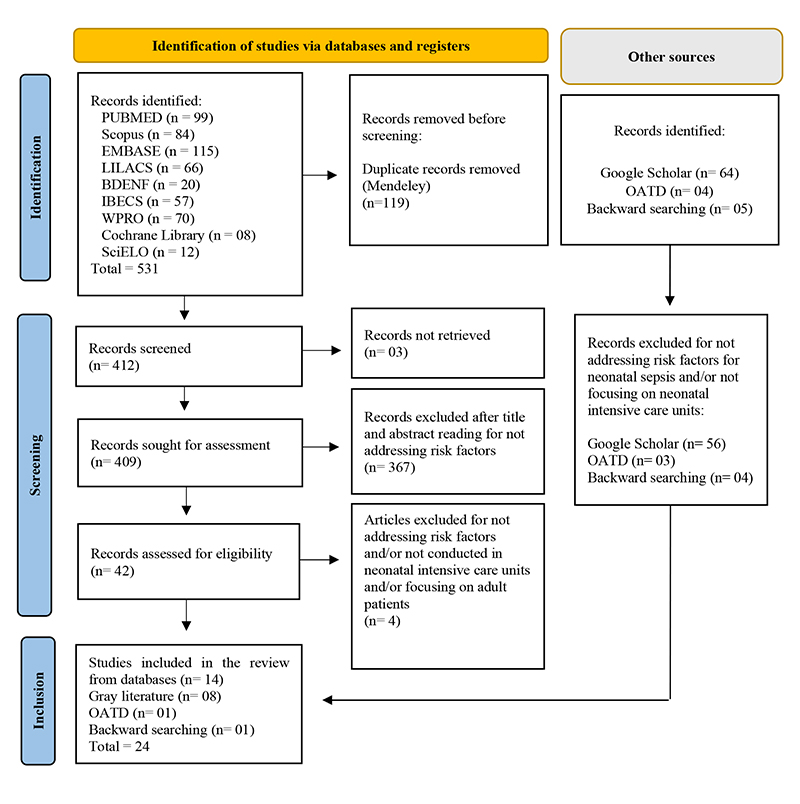
A total of 24 studies were included. Figure 1 presents the PRISMA-ScR flowchart, detailing the process of identification, screening, and inclusion of studies in the review. Initially, 531 records were identified in electronic databases and 73 additional records from grey literature and backward searching. After eliminating duplicates and applying eligibility criteria, 14 studies from databases, nine from grey literature, and one from backward searching were included in the review.
Flowchart constructed according to PRISMA-ScR recommendations and adapted to include publications identified in grey literature and backward searching (n=24). Juiz de Fora, MG, Brazil, 2025.
Chart 2 presents an analysis of 24 (100%) studies on risk factors for neonatal sepsis15-38, with 18 (75%) publications from Brazil15,17-21,23-26,29-33,37-38 and in second place, Ethiopia16,22,27-28,35, with 5 studies (20.8%). Regarding study design, cross-sectional studies (29.2%) and integrative reviews (25%) stand out, encompassing scientific articles with small samples (such as five publications) to large samples of neonates, including one study with 1,501 neonates. The main approach of the studies is to identify risk factors for neonatal sepsis, especially in NICUs, with 13 studies (54.2%) addressing early and late-onset sepsis.
Despite the comprehensive mapping of risk factors for neonatal sepsis in NICUs, the review revealed important gaps in the literature. A significant concentration of studies was observed in Brazil, with few studies from other regions, such as Africa and Asia, which limits the generalization of the findings to different epidemiological contexts. Samples ranged from small case series to large cohorts with up to 1,501 neonates. In addition, there is a predominance of cross-sectional studies and integrative reviews, with few longitudinal studies or clinical trials that can establish causal relationships between risk factors and neonatal outcomes.
Chart 3 presents the risk factors for neonatal sepsis in neonatal intensive care units, which were grouped into maternal and obstetric, neonatal, care-related, and feeding and early care categories.
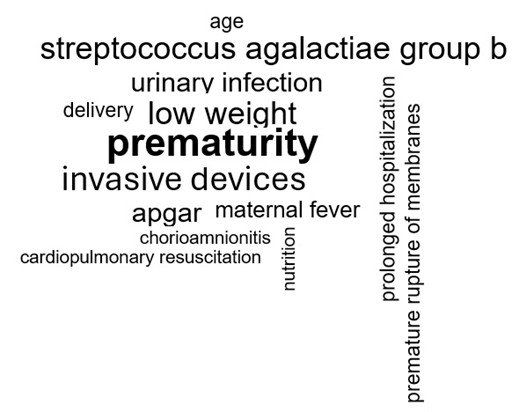
The word cloud obtained from the publications included in this scoping review was analyzed, revealing that the most frequent words (f) were: “prematurity” (f = 20), “low weight” (f = 16), “invasive devices” (f = 15), “urinary infection” (f = 12), “Apgar” (f = 11), “Group B Streptococcus agalactiae” (f = 11), “chorioamnionitis” (f = 9), “maternal fever” (f = 9), “prolonged hospitalization” (f = 8), “rupture of membranes” (f = 8), “age” (f = 7), “delivery” (f = 7), “cardiopulmonary resuscitation” (f = 6) and “nutrition” (f = 6) (Figure 2).
Word cloud of publications included in the scoping review. Juiz de Fora, MG, Brazil, 2025.
It is noteworthy that risk factors for neonatal sepsis in the NICU are multifactorial and interrelated, involving maternal and obstetric conditions, intrinsic characteristics of the newborn, care practices, and aspects related to feeding and early care. Prematurity and low birth weight, as well as exposure to maternal infections and the use of invasive devices during hospitalization, are frequently identified, highlighting the vulnerability of critically ill neonates. The word cloud reinforces these results by showing a higher frequency of terms associated with neonatal immaturity, maternal infections, and intensive interventions, which confirms the consistency of the data extracted from the literature.
DISCUSSION
The findings of this scoping review show that neonatal sepsis remains a multifactorial condition, influenced by maternal, neonatal, and healthcare-related conditions39. When compared with international literature and consolidated guidelines, there is a strong convergence between the factors identified in the included studies and those widely recognized as critical determinants for the development of sepsis in the neonatal period39-41.
In this context, the guideline developed by the Swiss Society of Neonatology in conjunction with the Pediatric Infectious Disease Group Switzerland, published in 2024, stands out, presenting updated recommendations for the management of newborns at risk of early neonatal sepsis. This document synthesizes the best available evidence and guides clinical practice by prioritizing probability-based assessments, serial clinical observation, and the rational use of antibiotics. By proposing strategies aligned with clinical protocols and the current context of antimicrobial resistance, this publication converges with the findings of this research39.
Regarding risk factors, prematurity, a strongly present element in the analyzed studies, is highlighted in the literature as one of the main determinants for the occurrence of sepsis. Researchers describe that immunological immaturity, reduced placental transfer of antibodies, and the inability to mount an effective inflammatory response make preterm neonates highly vulnerable to invasive infections40. This consistency between the findings and international literature reinforces the importance of strategies to prevent preterm birth, including adequate prenatal care, early identification of maternal risk factors, and timely obstetric interventions39.
Thus, maternal factors also play a relevant role in the risk of neonatal sepsis, which is widely corroborated by clinical guidelines. Urinary tract infections, intrapartum fever, chorioamnionitis, and prolonged rupture of membranes are globally recognized as conditions that substantially increase the risk of early sepsis. Countries that implement systematic screening protocols, immediate therapeutic management, and prophylactic antibiotic therapy show significant reductions in the incidence of this condition associated with these factors. Thus, the results of this review point to the need to strengthen institutional policies aimed at screening and adequately treating maternal infections during prenatal care and at the time of delivery39.
Regarding neonatal factors, one study confirms that low birth weight, lower Apgar scores, and the need for cardiopulmonary resuscitation are important markers of clinical vulnerability41. These elements reflect a fragile physiological condition and the need for immediate interventions, which in turn may increase exposure to invasive devices and repeated handling. Studies and expert consensus highlight that very low birth weight neonates should be managed with specific protocols, including intensified clinical surveillance, strict aseptic practices, and individualized management39-41.
Regarding cardiopulmonary resuscitation, the 2024 international guideline on emergency cardiovascular care emphasizes that recommendations for neonatal resuscitation should be continuously updated in light of the most current evidence, highlighting the importance of well-structured algorithms, consistent team training, careful evaluation of interventions applied in the delivery room, and systematic monitoring of outcomes to ensure safe and effective care for the most vulnerable newborns42.
Care-related risk factors also stood out in the results of the review, especially the use of invasive devices, prolonged parenteral nutrition, and length of stay in intensive care units. The literature describes these elements as important determinants of late-onset sepsis, especially in high-complexity settings40. Widely recognized strategies to reduce such risks include the implementation of infection prevention bundles, adherence audits, continuous training of the multidisciplinary team, and standardized protocols for the insertion, maintenance, and removal of devices. The agreement between these recommendations and the findings of this study reinforces the need for robust institutional policies that promote neonatal patient safety43-44.
It is worth highlighting a study conducted in a tertiary hospital in Madrid that identified the presence of vascular devices as the main risk factor for both preterm and term newborns, while recent surgery stood out exclusively among term infants. Furthermore, it assessed the epidemiology of neonatal sepsis and found that most episodes occurred in premature infants, especially those with very low birth weight, with a strong predominance of late-onset sepsis. Despite the high frequency of late-onset sepsis, mortality was low, and there were no significant differences between groups regarding etiological profile, transmission mechanism, or risk of death41.
Another aspect highlighted by international literature is the role of Group B Streptococcus agalactiae infections, especially in early-onset sepsis40-41. Healthcare systems that adopt universal screening and intrapartum antibiotic therapy for colonized pregnant women show significant reductions in the incidence of the disease, confirming the relevance of evidence-based preventive strategies39. These data converge with the results of this scoping review, indicating that the adoption of standardized screening and prophylactic management policies in prenatal care can be fundamental to reducing the risk45.
In addition, early breastfeeding and the judicious use of parenteral nutrition are widely discussed factors in external literature as strategies capable of reducing the occurrence of late-onset sepsis. International evidence points to the fact that breast milk plays a significant protective role due to its immunomodulatory properties and its ability to promote healthy intestinal colonization, while prolonged parenteral nutrition is associated with an increased risk of catheter-related infections39,46.
Finally, another underexplored aspect refers to specific groups of neonates, such as those with very low birth weight or extreme prematurity, as well as maternal and environmental factors that may influence the occurrence of sepsis. These gaps point to the need for future research that expands geographic diversity, explores prospective designs, and investigates less-studied risk factors in more detail, contributing to the improvement of preventive strategies and evidence-based clinical protocols.
The limitations of this study are related to the characteristics inherent in a scoping review, which focuses on the breadth of the topic at the expense of the depth of critical analysis. One of the main limitations relates to the heterogeneity of the included studies, which present different designs, populations, and evaluation criteria, which may hinder the precise synthesis of the available evidence.
CONCLUSION
This scoping review mapped the main risk factors for neonatal sepsis in intensive care units, highlighting prematurity, low birth weight, and the use of invasive devices as the most frequent. In addition to neonatal conditions, maternal factors, such as urinary infection and colonization by group B Streptococcus agalactiae, were also identified as determinants for the occurrence of sepsis. Low Apgar scores and complications during delivery, such as prolonged labor and premature rupture of membranes, increase neonatal vulnerability, emphasizing the need for continuous monitoring and preventive measures from prenatal care through the neonatal period.
Given the complexity of neonatal sepsis and its relationship with multiple factors, this scoping review highlights the diversity of approaches adopted in studies on the topic, as well as the variety of risk factors identified, including neonatal, maternal, and invasive device-related aspects. The mapping performed allows us to outline the current state of available knowledge and identify important gaps in the literature, especially regarding specific populations, underrepresented geographic contexts, and underexplored study designs. Thus, this study contributes to establishing the boundaries of knowledge about neonatal sepsis in intensive care and guiding future research that may deepen the understanding of the mechanisms involved.
REFERENCES
-
1. Ministério da Saúde (BR). Atendimento em unidade terapia intensiva adulto - UTI no Hospital Metropolitano de Alagoas [Internet]. Brasília: MS; 2025[cited 2025 mar 25]. Available from: https://alagoasdigital.al.gov.br/servico/2287
» https://alagoasdigital.al.gov.br/servico/2287 -
2. Prazeres LEN, Ferreira MNGP, Ribeiro MA, Barros BTD, Barros RLM, Ramos CS, et al. Nurse’s performance in care in Neonatal Intensive Care Units: integrative literature review. Res Soc Dev. 2021;10(6):e1910614588. https://doi.org/10.33448/rsd-v10i6.14588
» https://doi.org/10.33448/rsd-v10i6.14588 -
3. Procianoy RS, Silveira RC. The challenges of neonatal sepsis management. J Pediatr (Rio J). 2020;96(Suppl 1):80-86. https://doi.org/10.1016/j.jped.2019.10.004
» https://doi.org/10.1016/j.jped.2019.10.004 -
4. Moftian N, Soltani TS, Mirnia K, Esfandiari A, Tabib MS, Hachesu PR. Clinical risk factors for early-onset sepsis in neonates: an International Delphi Study. Iran J Med Sci. 2023;48(1):57-69. https://doi.org/10.30476/IJMS.2022.92284.2352
» https://doi.org/10.30476/IJMS.2022.92284.2352 -
5. Guo L, Han W, Su Y, Wang N, Chen X, Ma J, et al. Perinatal risk factors for neonatal early-onset sepsis: a meta-analysis of observational studies. J Matern Fetal Neonatal Med. 2023;36(2):2259049. https://doi.org/10.1080/14767058.2023.2259049
» https://doi.org/10.1080/14767058.2023.2259049 -
6. Pimentel TGB. Assistência de enfermagem ao paciente com sepse em unidades de terapia intensiva. Rev Cient Multidiscip Núcleo Conhecimento[Internet]. 2019 [cited 2024 Sep 25];4(5):5-16. Available from: https://www.nucleodoconhecimento.com.br/saude/paciente-com-sepse
» https://www.nucleodoconhecimento.com.br/saude/paciente-com-sepse -
7. Denicol MM, Leotti VB, Soares CRS, Hilgert JB. Early-onset neonatal sepsis as a risk factor for peri-intraventricular hemorrhage in premature infants. Rev Bras Epidemiol. 2024;27:e240013. https://doi.org/10.1590/1980-549720240013
» https://doi.org/10.1590/1980-549720240013 -
8. Mandal L, Rijal G, Singh R, Tiwari B, Jahan F, Lama D, et al. Sepsis among Patients Admitted to the Intensive Care Unit of a Tertiary Care Centre. JNMA J Nepal Med Assoc. 2023;61(265):691-4. https://doi.org/10.31729/jnma.8275
» https://doi.org/10.31729/jnma.8275 -
9. Tricco AC, Lillie E, Zarin W, O’Brien KK, Colquhoun H, Levac D, et al. PRISMA extension for scoping reviews (PRISMA-ScR): checklist and explanation. Ann Intern Med. 2018;169(7):467-73. https://doi.org/10.7326/M18-0850
» https://doi.org/10.7326/M18-0850 -
10. Peters MDJ, Godfrey C, McInerney P, Munn Z, Tricco AC, Khalil H. Scoping Reviews. In: Aromataris E, Lockwood C, Porritt K, Pilla B, Jordan Z, editors. JBI Manual for Evidence Synthesis. JBI; 2024. https://doi.org/10.46658/JBIMES-24-09
» https://doi.org/10.46658/JBIMES-24-09 -
11. Pollock D, Peters MDJ, Khalil H, McInerney P, Alexander L, Tricco AC, et al. Recommendations for the extraction, analysis, and presentation of results in scoping reviews. JBI Evid. Synth. 2022;21(3):520-32. https://doi.org/10.11124/JBIES-22-00123
» https://doi.org/10.11124/JBIES-22-00123 -
12. Singh M, Alsaleem M, Gray CP. Neonatal Sepsis: 2022. In: StatPearls [Internet]. Treasure Island (FL): StatPearls Publishing; 2025 [cited 2024 Sep 18]. Available from: https://pubmed.ncbi.nlm.nih.gov/30285373/
» https://pubmed.ncbi.nlm.nih.gov/30285373/ -
13. Ouzzani M, Hammady H, Fedorowicz Z, Elmagarmid A. Rayyan-a web and mobile app for systematic reviews. Syst Rev. 2016;5(1):210. https://doi.org/10.1186/s13643-016-0384-4
» https://doi.org/10.1186/s13643-016-0384-4 -
14. Camargo BV, Justo AM. IRAMUTEQ: um software gratuito para análise de dados textuais. Temas Psicol. 2013;21(2):513-8. https://doi.org/10.9788/TP2013.2-16
» https://doi.org/10.9788/TP2013.2-16 -
15. Varão TG, Bonomo MA, Sousa HGA, Balan JP, Tannus LO, Argentino S, et al. Fatores de risco associados à sepse neonatal no sistema único de saúde: uma revisão sistemática da literatura. Obs Econ Latinoam. 2025;23(1):e8562. https://doi.org/10.55905/oelv23n1-053
» https://doi.org/10.55905/oelv23n1-053 -
16. Baheru FS, Shiferaw BZ, Toru T, Gebre-Eyesus FA. Magnitude of neonatal sepsis and its associated factors among neonates admitted to the neonatal intensive care unit in Hawassa Comprehensive Specialized Hospital, Sidama Regional State, Ethiopia, 2020. BMC Pregnancy Childbirth. 2024;24(1):383. https://doi.org/10.1186/s12884-024-06583-z
» https://doi.org/10.1186/s12884-024-06583-z -
17. Lamy- Filho F, Goudard MJF, Marba STM, Santos AM, Lima GMS, Costa R, et al. Skin-to-skin contact and late-onset sepsis in newborns weighing up to 1,800g: a cohort study. Rev Bras Saude Mater Infant. 2024;24:e20230168. https://doi.org/10.1590/1806-9304202400000168-en
» https://doi.org/10.1590/1806-9304202400000168-en -
18. Lima RCG, Medeiros DS, Vieira VC, Silva CSO. Early sepsis in premature infants in Neonatal Intensive Care Units. Rev Epidemiol Control Infect. 2024;14(3). https://doi.org/10.17058/reci.v14i3.18920
» https://doi.org/10.17058/reci.v14i3.18920 -
19. Brito LKT, Freitas LL, Ciarlini NSC, Araújo AR, Maia EMC, Nobre KSS. Factors associated with deaths from early and late-onset sepsis in a neonatal intensive care unit. Rev Enferm UFPE. 2024;18(1). https://doi.org/10.5205/1981-8963.2024.257956
» https://doi.org/10.5205/1981-8963.2024.257956 -
20. Boff LF. Fatores de risco para sepse neonatal na unidade de terapia intensiva. Rev FT. 2024;28(136). https://doi.org/10.5281/ZENODO.12732709
» https://doi.org/10.5281/ZENODO.12732709 -
21. Cavichion K, Muller SS, Agostini DL, Gomes E, Oliveira H, Zonta FNS, et al. Neonatal sepsis: clinical features and risk factors in a neonatal intensive care unit. Res Soc Dev . 2024;13(12):e15131247576. https://doi.org/10.33448/rsd-v13i12.47576
» https://doi.org/10.33448/rsd-v13i12.47576 -
22. Ganfure G, Lencha B. Sepsis Risk Factors in Neonatal Intensive Care Units of Public Hospitals in Southeast Ethiopia, 2020: a retrospective unmatched case-control study. Int J Pediatr. 2023;2023:3088642. https://doi.org/10.1155/2023/3088642
» https://doi.org/10.1155/2023/3088642 -
23. Catapani EB, Menezes JDS, Guarnieri GM, Pereira AA, Sacardo Y, Parro MC. Overview of neonatal sepsis in an Intensive Care Unit: a literature review. Res Soc Dev . 2023;12(5):e11212540796. https://doi.org/10.33448/rsd-v12i5.40796
» https://doi.org/10.33448/rsd-v12i5.40796 -
24. Lima GC, Sousa JO, Silva JM, Mouzinho LSN, Barbosa MKF, Oliveira XMFL, et al. Fatores de risco associados ao desenvolvimento de sepse neonatal na unidade de terapia intensiva. CLCS. 2023;16(11):27303-17. https://doi.org/10.55905/revconv.16n.11-153
» https://doi.org/10.55905/revconv.16n.11-153 -
25. Souza MS, Souza CS, Soares MGS, Prado TM, Macedo CB, Lima BS, et al. Fatores de risco relacionados ao desenvolvimento de sepse neonatal: revisão integrativa. EJHR. 2023;4(1):2-19. https://doi.org/10.54747/ejhrv4n1-001
» https://doi.org/10.54747/ejhrv4n1-001 -
26. Lima NBB, Pacheco CA, Sales LB, Silva RRN, Vale EMN, Silva LS, et al. Sepse neonatal: fatores de risco e condutas da enfermagem. Rev Contemp. 2023;3(12):29545-64. https://doi.org/10.56083/rcv3n12-241
» https://doi.org/10.56083/rcv3n12-241 -
27. Bekele T, Merga H, Tesfaye T, Asefa H. Predictors of mortality among neonates hospitalized with neonatal sepsis: a case control study from southern Ethiopia. BMC Pediatr. 2022;22(1):1. https://doi.org/10.1186/s12887-021-03049-5
» https://doi.org/10.1186/s12887-021-03049-5 -
28. Gebreheat G, Tadesse B, Teame H. Predictors of respiratory distress syndrome, sepsis and mortality among preterm neonates admitted to neonatal intensive care unit in northern Ethiopia. J Pediatr Nurs. 2022;63:e113-e120. https://doi.org/10.1016/j.pedn.2021.09.029
» https://doi.org/10.1016/j.pedn.2021.09.029 -
29. Malaquias CFV, Araujo MA, Donato CS, Silva GFR, Belo FFR, Diniz MLP, et al. Risk factors for late-onset neonatal sepsis: a narrative review. Rev Eletron Acervo Saúde. 2022;15(2):e9739. https://doi.org/10.25248/reas.e9739.2022
» https://doi.org/10.25248/reas.e9739.2022 -
30. Oliveira CRV, Boa Sorte NCA. Characterization of risk factors and occurrence of death in newborns diagnosed with neonatal sepsis in a Neonatal Intensive Care Unit. Res Soc Dev . 2022;11(3):e7811325941. https://doi.org/10.33448/rsd-v11i3.25941
» https://doi.org/10.33448/rsd-v11i3.25941 -
31. Travassos W, Gomes WA, Oliveira W, Santos S, Veloso L, Rocha J, et al. Fatores de risco associados à ocorrência de sepse em pacientes nas unidades de terapia intensiva. Enferm Prom Prev Saúde. 2022;1:91-9. https://doi.org/10.37885/220709491
» https://doi.org/10.37885/220709491 -
32. Denicol MM. Sepse precoce como fator de risco para hemorragia peri-intraventricular em prematuros de UTI neonatal de hospital terciário: uma coorte retrospectiva [Dissertação] [Internet]. Porto Alegre: Universidade Federal do Rio Grande do Sul; 2022 [cited 2025 Jan 11]. Available from: https://lume.ufrgs.br/handle/10183/256655
» https://lume.ufrgs.br/handle/10183/256655 -
33. Cardoso LR, Castro NAV, Kairala ALR. Sepse neonatal precoce: perfil clínico e epidemiológico dos pacientes incluídos em um protocolo de sepse neonatal. Programa de Iniciação Científica - PIC/UniCEUB - Relatórios de Pesquisa. 2022. https://doi.org/10.5102/pic.n0.2020.8331
» https://doi.org/10.5102/pic.n0.2020.8331 -
34. Hewamalage P, Siriwardhane HVDN, Aththanayake APRD, Amarasekara S, Weerasekera M. Nurses’ knowledge on neonatal sepsis in a tertiary care hospital in Sri Lanka. Sri Lanka J Child Health. 2019;48(4):316. https://doi.org/10.4038/sljch.v48i4.8825
» https://doi.org/10.4038/sljch.v48i4.8825 -
35. Alemu M, Ayana M, Abiy H, Minuye B, Alebachew W, Endalamaw A. Determinants of neonatal sepsis among neonates in the northwest part of Ethiopia: case-control study. Ital J Pediatr. 2019;45(1). https://doi.org/10.1186/s13052-019-0739-2
» https://doi.org/10.1186/s13052-019-0739-2 -
36. Lona-Reyes JC, Pérez-Ramírez RO, Rodríguez-Patiño V, Cordero-Zamora A, Gómez-Ruiz LM, Llamas-Ramos L. Prevalencia de β-lactamasas de espectro extendido en enterobacterias causantes de sepsis neonatal y factores asociados. Rev Chilena Infectol. 2019;36(4):433-41. https://doi.org/10.4067/s0716-10182019000400433
» https://doi.org/10.4067/s0716-10182019000400433 -
37. Schwab JB. Fatores de risco para o desenvolvimento de sepse neonatal em unidades de terapia intensiva neonatais de hospitais terciários dos Campos Gerais [Dissertação] [Internet]. Ponta Grossa: Universidade Estadual de Ponta Grossa; 2018 [cited 2024 Dec 14]. Available from: https://bdtd.ibict.br/vufind/Record/UEPG_1deaa9e4648bc4878a032612bd508b12
» https://bdtd.ibict.br/vufind/Record/UEPG_1deaa9e4648bc4878a032612bd508b12 -
38. Dortas ARF, Mello DMS, Bezerra LA, Lima RG, Neves VHD, Aragão JA. Risk factors related with neonatal sepsis: Review article. Rev Eletr Acervo Saúde. 2019;7:e1861. https://doi.org/10.25248/reac.e1861.2019
» https://doi.org/10.25248/reac.e1861.2019 -
39. Stocker M, Rosa-Mangeret F, Agyeman PKA, McDougall J, Berger C, Giannoni E. Management of neonates at risk of early onset sepsis: a probability-based approach and recent literature appraisal : update of the Swiss national guideline of the Swiss Society of Neonatology and the Pediatric Infectious Disease Group Switzerland. Eur J Pediatr. 2024;183(12):5517-29. https://doi.org/10.1007/s00431-024-05811-0
» https://doi.org/10.1007/s00431-024-05811-0 -
40. Raturi A, Chandran S. Neonatal Sepsis: Aetiology, Pathophysiology, Diagnostic Advances and Management Strategies. Clin Med Insights Pediatr. 2024;18:11795565241281337. https://doi.org/10.1177/11795565241281337
» https://doi.org/10.1177/11795565241281337 -
41. Rubio-Mora E, Bloise-Sánchez I, Quiles-Melero I, Cacho-Calvo J, Cendejas-Bueno E. Neonatal sepsis: Epidemiology and comparison between preterm and term newborns. Enferm Infecc Microbiol Clin (Engl Ed). 2025;43(4):197-204. https://doi.org/10.1016/j.eimce.2025.03.008
» https://doi.org/10.1016/j.eimce.2025.03.008 -
42. Greif R, Bray JE, Djärv T, Drennan IR, Liley HG, Ng KC, et al. 2024 International Consensus on Cardiopulmonary Resuscitation and Emergency Cardiovascular Care Science With Treatment Recommendations: Summary From the Basic Life Support; Advanced Life Support; Pediatric Life Support; Neonatal Life Support; Education, Implementation, and Teams; and First Aid Task Forces. Circulation. 2024;150(24):e580-e687. https://doi.org/10.1161/CIR.0000000000001288
» https://doi.org/10.1161/CIR.0000000000001288 -
43. Sala A, Pivetti V, Castoldi F, Viaroli F, Chiera M, Lista G, et al. Impact of an evidence-based bundle on catheter-associated sepsis incidence in neonatal intensive care: a quality improvement project. Diseases. 2025;13(12):386. https://doi.org/10.3390/diseases13120386
» https://doi.org/10.3390/diseases13120386 -
44. Strunk T, Molloy EJ, Mishra A, Bhutta ZA. Neonatal bacterial sepsis. Lancet. 2024;404(10449):277-93. https://doi.org/10.1016/S0140-6736(24)00495-1 Erratum in: Lancet. 2025;405(10488):1467. https://doi.org/10.1016/S0140-6736(25)00767-6
» https://doi.org/10.1016/S0140-6736(24)00495-1 -
45. Boureka E, Tsakiridis I, Kostakis N, Giouleka S, Mamopoulos A, Kalogiannidis I, et al. Antenatal Care: a comparative review of guidelines. Obstet Gynecol Surv. 2024;79(5):290-303. https://doi.org/10.1097/OGX.0000000000001261
» https://doi.org/10.1097/OGX.0000000000001261 -
46. Guan H, Liang X, Liang Y, Yang F. Global trends in neonatal sepsis mortality and attributable risk factors from 1990 to 2021. J Paediatr Child Health. 2025;62(1):106-17. https://doi.org/10.1111/jpc.70241
» https://doi.org/10.1111/jpc.70241
Access to the dataset is available upon request from the corresponding author.