|
BODY
|
- Low body acceptance;
- Insufficient self-care;
- Few family leisure activities. |
Engage in self-care to enhance self-esteem, such as hair care, nail care, healthy eating, leisure activities, and planning a trip with the husband. |
Body image satisfaction is directly proportional to self-esteem levels12. |
| - Sporadic episodes of “heartburn.” |
Seek dietary changes, such as avoiding fatty foods, reducing coffee, flour, spices, and processed foods, and avoiding liquids during and immediately after meals. |
Natural foods may have a temporary inhibitory effect on H. pylori and may help reduce H. pylori colonization13. |
| - Sedentary lifestyle. |
Walk for at least 30 minutes, 3 times a week. |
Engaging in physical exercise for at least 150 minutes weekly reduces the risk of cardiovascular diseases14).
|
| - Signs and symptoms of stress and caregiver overload. |
Practice breathing exercises daily. |
Relaxation meditation practice reduces perceived maternal stress15. |
|
MIND
|
- Financial instability. |
Create a study schedule for approval in public exams. |
Time management positively impacts anxiety, depression, and sleep quality16. |
| - Lack of self-knowledge and potential. |
List ten personal strengths. |
There is a direct association between self-knowledge and body acceptance with self-esteem12. |
| - Unresolved past conflicts. |
Allow the woman from the past to express herself (suggestions: write a letter, draw, send audio to oneself). |
Positive association exists between forgiveness and mental health17. |
| - Signs and symptoms of caregiver overload. |
Identify the five most important things in your life. |
Case management is an effective non-pharmacological intervention against caregiver overload18. |
| - Frustration and self-blame for life problems. |
Maintain positive thoughts by reflecting on mantras such as “I need to rise,” “I am a woman of values,” “I am a woman of principles,” “I am an excellent mother,” “The blame is not mine.” |
Mantra Meditation (MM) can provide beneficial effects on stress, anxiety, hypertension, and immunity19. |
| - Fragility in the relationship with the eldest daughter. |
Be more attentive and closer to the eldest daughter. |
Frequent family conflicts generate negative emotions and feelings of discomfort for both parties20. |
| - Frequent conflicts with the partner. |
Plan the ideal moment for dialogue, avoiding stressful moments and intense emotions, and not accumulating issues that hurt. |
Negotiation strategies and commitments are mechanisms for resolving marital conflicts21. |
| - Coping with the eldest daughter’s departure from home. |
Bless the eldest daughter. |
The empty nest phenomenon, associated with little social support, results in depressive symptoms22. |
| - Frequent conflicts with family members. |
List the importance of each family member in your life. |
Frequent family conflicts generate negative emotions and feelings of discomfort for both parties20. |
| SOUL |
- Fragility in the relationship with God. |
The professional caregiver and mother should share a biblical reading at the next care meeting. |
The strength of spirituality provides support and post-traumatic growth in mothers23. |
| - Fragility in the relationship with God. |
In difficult moments, remember and repeat “God is with you,” “After the storm comes the calm,” “God uses you,” “I am a servant of the Lord,” and pray Psalm 23. |
The strength of spirituality provides support and post-traumatic growth in mothers23. |
| - Decreased intimacy with the Holy Spirit. |
Strengthen the bond with the Holy Spirit through biblical reading, individual prayer, and discussing/preaching with the husband and child at home, each (mother and professional caregiver) bringing a biblical passage to the next meeting. |
The strength of spirituality provides support and post-traumatic growth in mothers23. |

 Implementación del programa CACTO de atención a madres de niños con trastorno del espectro autista
 Thumbnail
 Thumbnail
 Thumbnail
 Thumbnail
 Source: Research data, 2024.
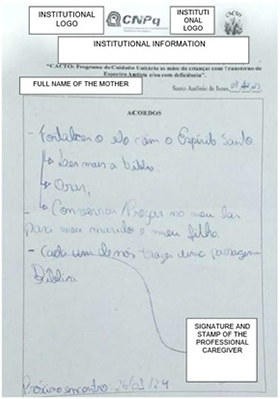 Source: Research data, 2024.
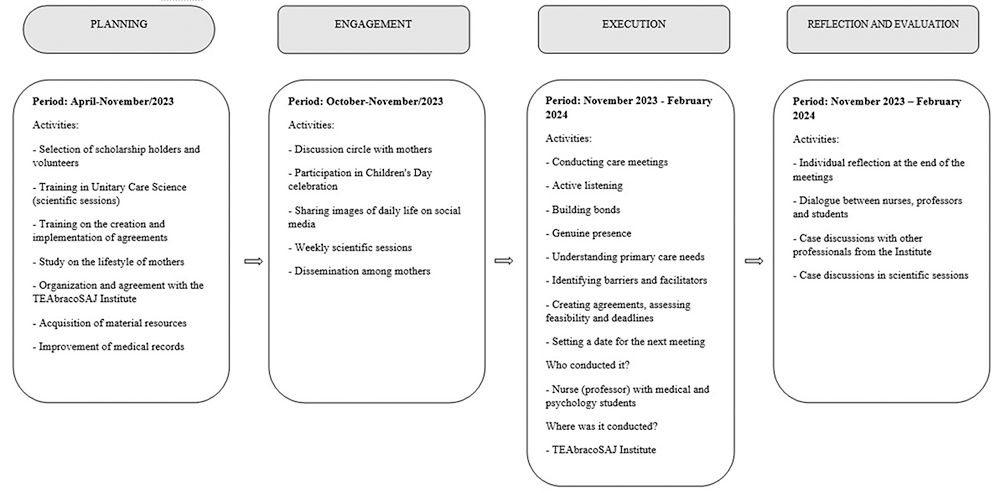 Source: Research data, 2024.
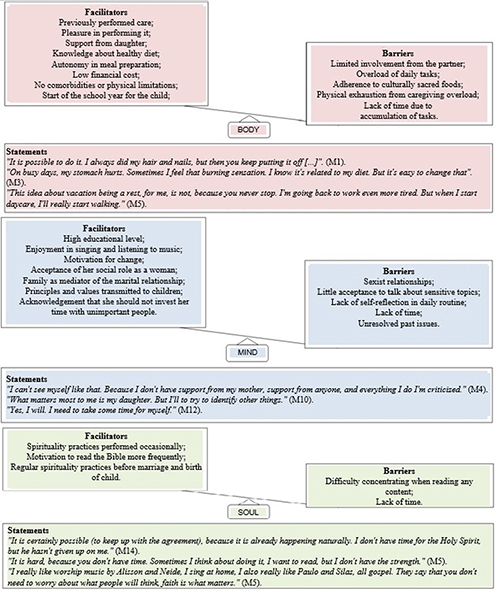 Source: Research data, 2024.