 Combined approach as key to facial rejuvenation in athlete patients
ABSTRACT
Considering the significant increase in athletes, as well as their desire for facial aesthetic treatment, this article aimed to describe the management of facial aging in athlete patients through a combined approach as a key to facial rejuvenation. A 48-year-old patient presented with cutaneous ptosis and loss of facial contours. After a detailed clinical evaluation to determine her specific needs, it was decided to use 6 syringes of hyaluronic acid to restore volume at support points. Additionally, HarmonyCa® was applied subcutaneously with a 22G cannula, using the retroinjection technique, in the areas of the temples, zygomatic arch, angle and mandibular ramus, bilaterally, totaling 4 syringes of the product. After application, a massage was performed to better accommodate the products. The results showed the combination of products resulted in a significant improvement in facial contours, stimulating collagen and providing a gradual lifting. The treatment rejuvenated the facial appearance, improving skin texture for a more youthful and harmonious appearance. Thus was possible conclude the therapeutic approach with combination of hyaluronic acid filler and collagen biostimulator rejuvenates the facial appearance, because it restores natural contours and improves skin texture, as well as effectively preserving facial health and harmony.
Indexing terms
Combined approach; Facial filler; HarmonyCa; Hyaluronic acid
RESUMO
Tendo em vista o aumento significativo de atletas, bem como desejo dos mesmos em tratamento estético facial, esse artigo objetivou descrever o gerenciamento do envelhecimento facial em pacientes atletas através de uma abordagem combinada como chave para o rejuvenescimento facial. Paciente de 48 anos, atleta de resistência, apresentava ptose cutânea e perda de contornos faciais. Após uma avaliação clínica detalhada para determinar suas necessidades específicas, optou-se pelo uso de toxina botulínica para relaxamento muscular, ácido hialurônico para restaurar o volume em pontos de suporte. Adicionalmente, o HarmonyCa® foi aplicado no subcutâneo, nas áreas das têmporas, arco zigomático, ângulo e ramo mandibular, bilateralmente. Os resultados obtidos mostraram que a combinação dos produtos resultou toxina botulínica, ácido hialurônico e HarmonyCa® alcançaram com êxito as necessidades de rejuvenescimento facial com uma melhora significativa dos contornos faciais, estimulando colágeno e proporcionando um lifting gradual, melhorando a textura da pele para um aspecto mais jovem e harmonioso. Assim foi possível concluir que a abordagem terapêutica com toxina botulínica, ácido hialurônico associada a bioestimulador de colágeno rejuvenesce a aparência facial, pois gera um relaxamento muscular, restaura contornos naturais e melhora a textura da pele, bem como preserva a saúde e harmonia facial de forma eficaz.
Termos de indexação
Abordagem combinada; Preenchimento facial; HarmonyCa; Ácido hialurônico
INTRODUCTION
Facial aging is a process that alters the skin, muscles, bones, and fat, resulting in skin sagging, volume loss, and changes in facial contours.
Especially for endurance athletes (triathletes, runners, and cyclists), who are more susceptible to premature aging, caused by long-term environmental exposures (sun and pollution), as well as physical and metabolic demands of training, which can lead to oxidative stress and dehydration, thereby aggravating even more the cumulative damage to the skin [1].
To combat these aging signs and reduce the impact of premature aging, a careful planning and an appropriate facial treatment are important to promote muscle relaxation, skeletal restructuring, facial contour redefinition, and treatment for skin sagging [2-4].
The choice of an appropriate treatment is multifactorial and depends on the patient’s individual needs, specialized evaluation, extent of aging signs, and patient’s expectation of results [5]. In the literature, different products are described to achieve the aforementioned objective. The American Society of Plastic Surgeons, in 2022, mentions that the most common minimally invasive procedures are botulinum toxin, hyaluronic acid, and collagen biostimulators [6].
Considering the significant increase in athletes, as well as the wish for facial aesthetic treatment, the present study aimed to describe the management of facial aging in an endurance athlete.
CASE REPORT
A 48-year-old female endurance athlete presented with structural loss in the midface and loss of facial contour definition associated with skin sagging and ptosis of fat compartments. An individual and careful planning was done with the aim of multilayer treatment to improve facial contours and skin sagging with a natural result.
The treatment plan included application of botulinum toxin in the superior and inferior thirds and neck to manage the aging muscle component, prevent static wrinkles, and weaken the depressor muscles of the inferior third and the platysma muscle, which were in hypertonicity, contributing to facial ptosis. The selected muscles to apply botulinum toxin an the injected dose in each muscle are shown in the table below (table 1).
Fifteen days after the application of botulinum toxin, Juvedérm Voluma hyaluronic acid (Allergan Aesthetics, AbbVie, North Chicago, Illinois, USA) was applied in the midface at strategic points in the region of zygomatic arch for skeletal restructuring, and Juvedérm Volux (Allergan Aesthetics, AbbVie, North Chicago, Illinois, USA) for contour definition of regions of mandible and mentum in the juxta-osseous plane. In the same stage, HArmonyCa® hybrid injectable (Allergan Aesthetics, AbbVie, North Chicago, Illinois, USA) was applied subcutaneously with a 22G cannula to promote a lifting effect associated with collagen biostimulator. The application areas of the product included the following regions: Zygomatic arch, mandibular ramus and angle, submalar, and pre-jowl, as shown in figure 1.

Next, the patient was photographed from different angles to establish a visual baseline record, essential to compare the results over time (figure 2).

Initial facial evaluation of the patient in the frontal, three-quarter, and left and right profile views.
The patient preparation included antisepsis with 2% chlorhexidine. To assure the patient comfort during the procedure, anesthetic buttons were applied at the puncture sites using 2% mepivacaine with adrenaline (DFL, Nova DFL, Rio de Janeiro, RJ). The treatment was started by applying Voluma hyaluronic acid in the midface bilaterally with a 27G needle in the following regions: 1) temporal (0.5 mL), 2) zygomatic (1 mL in each side), and 3) paranasal (0.5 mL), using the bolus technique.
After restructuring the patient’s midface, Volux hyaluronic acid was applied bilaterally in the regions of mentum (1 mL), pre-jowl (0.5 mL), and post-jowl (1 mL) for the facial contour treatment, associated with the bolus technique in the juxta-osseous plane and the retroinjection technique using a 22G cannula in the subcutaneous plane. After application, a massage was performed to promote better accommodation and distribution of the product in the tissues.
Then, HArmonyCa® hybrid injectable was applied subcutaneously with a 22G cannula using the retroinjection technique performed bilaterally in the areas of the zygomatic arch (0.5 mL), mandibular angle (0.5 mL), and mandibular ramus (0.75 mL), totaling 4 (four) syringes of the product. After application, a massage was performed to promote better accommodation and to distribution of the product in the tissues. Figure 3 shows the immediate post-procedure result, with some edema and erythema consistent with the procedure.

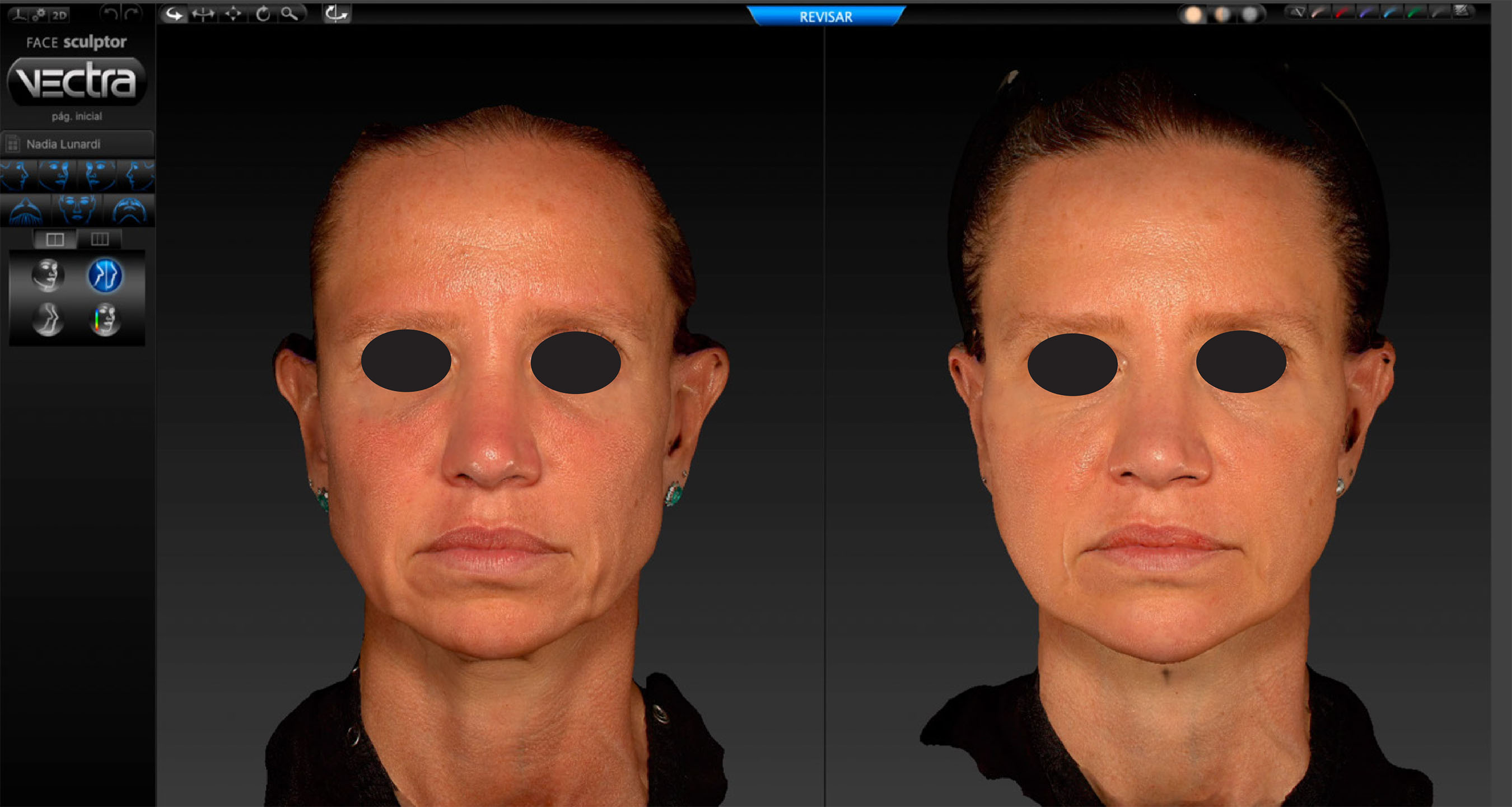
In the post-procedure follow-up, pre-treatment and 90-day post-procedure standardized photographs and facial scans were obtained using VECTRA® H2 equipment (Canfield Imaging, Parsippany, NJ, USA) (figure 4).
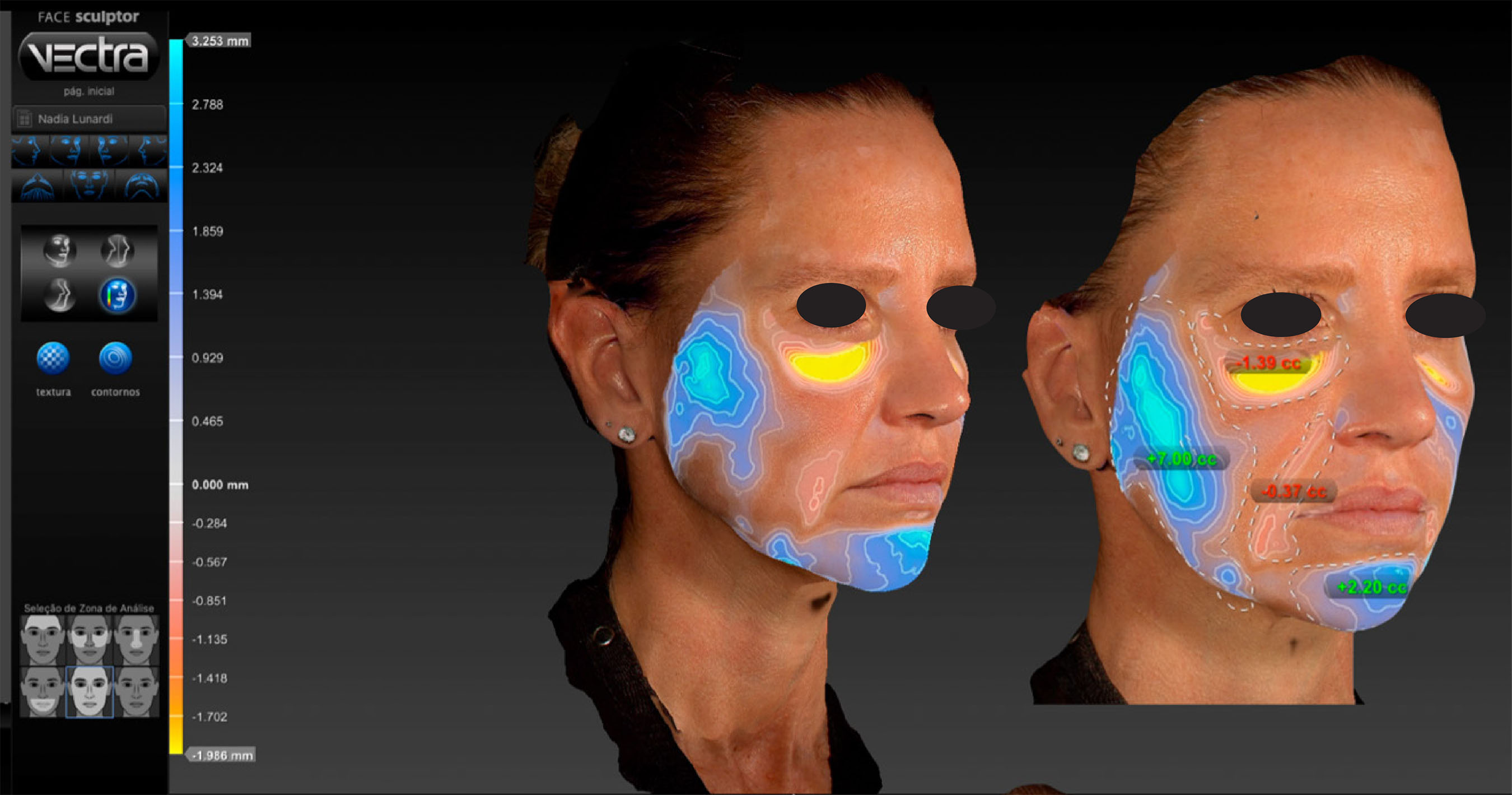
Pre-procedure and 90-day post-procedure scan overlays showed a volume gain in blue areas caused by hyaluronic acid and hybrid injectable; consequently, a volume loss in the medial region of the face (movable face) resulted from tissue displacement (figure 5).

Pre-procedure and 90-day post-procedure scan overlays obtained using VECTRA H2 show a volume gain where hyaluronic acid was injected (blue areas); consequently, a volume loss in yellow and orange-shaded areas, with volumetric calculation of tissue gain and loss.
Pre-procedure and 90-day post-procedure scan overlays obtained using VECTRA H2 show a volume gain where hyaluronic acid was injected (blue areas); consequently, a volume loss in yellow and orange-shaded areas, with volumetric calculation of tissue gain and loss.
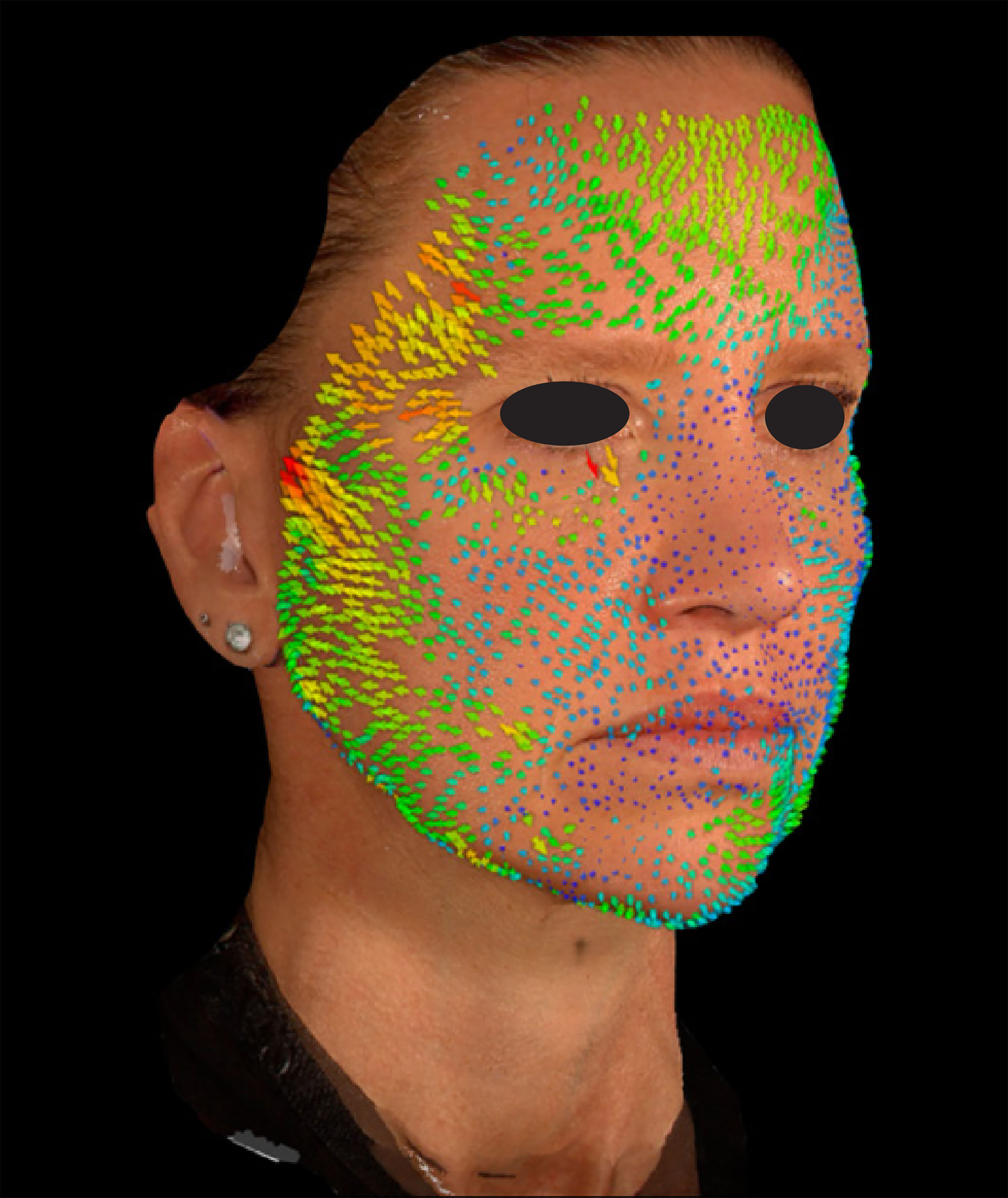
Furthermore, 90 days after the procedure, the patient’s soft tissues displaced upward and backward (arrows) against ptosis (figure 6), and skin quality improved in wrinkle and texture parameters evaluated using VECTRA H2 software (figure 7).

Overlay of the patient’s pre-procedure and 90-day post-procedure scans shows tissue displacement vectors generated by VECTRA H2.

Analysis of pre-procedure and 90-day post-procedure skin quality shows improvement in wrinkles and skin texture scores.
The combination of the products resulted in a significant improvement in facial contours 90 days after the procedure, stimulating collagen and providing a gradual lifting. The treatment showed a facial rejuvenation, improving skin texture for a younger and harmonious aesthetic (figure 8).

DISCUSSION
Premature facial aging in endurance athletes is an event frequently observed in practitioner of sport modality, including running, long-distance swimming, cycling, triathlon, and ski [7]. Its characteristic is caused by functional and structural changes in facial tissues, resulting from a combination of intrinsic and extrinsic factors related to intense exercise and environmental conditions of training [8].
When physical and metabolic demands of endurance training exceed the body’s antioxidant capacity, an increase in the production of reactive oxygen species (ROS) occurs. That instability causes oxidative stress, which can damage cell structures, including lipids, proteins, and DNA, contributing to the process of cellular aging [9].
The most common signs of facial aging in endurance athletes include: cutaneous support loss, which results from the decreased dermal thickness and the degradation of collagen and elastic fibers; reduction of facial fat compartment, which is a consequence of low percentage of body fat, typical of these athletes; skin sagging and tissue ptosis, related to the loss of structure support and the continuous action of gravity; thinning and dehydration of the skin, caused by less collagen synthesis and the increase of oxidative stress; and photoaging [10], characterized by fine wrinkles, hyperchromias, and irregular skin texture, caused by chronic sun exposure with no appropriated protection [1].
The management of preventive aging is essential to preserve the facial health and aesthetic of these athletes. Photoprotection strategies [11], hydration, antioxidant supplementation [12], and regular dermatological follow-up are fundamental to minimizing the aging effects induced by exercise and extreme environmental conditions [13].
Considering the increasing number of endurance sport enthusiasts and their interest in aesthetic treatments, it becomes necessary an evaluation of associated facial signs and appropriate management of cutaneous aging in athletes. Through an appropriate facial treatment and a careful planning, the aim is to promote muscle relaxation, skeletal restructuring, facial contours redefinition, and cutaneous sagging treatment [2-4].
To achieve the aforementioned aim, the most common minimally invasive procedures include application of botulinum toxin, hyaluronic acid, and collagen biostimulators [6].
Botulinum toxin is applied strategically to balance proportions, redefine contours, and optimize the results of other procedures, such as hyaluronic acid fillers [14] and collagen biostimulators. Its acting mechanism is based on the blockage of acetylcholine release in neuromuscular junctions, which promotes selective muscle relaxation responsible for dynamic wrinkles. Thus, the reduction of excessive muscular contraction occurs, resulting in softening of dynamic wrinkles and prevention of the appearance of new lines caused by repetitive facial movements [15].
Aesthetic use of botulinum toxin in endurance athletes requires special attention because higher muscular activity, intense trainings, and high frequency of facial expressions can reduce the durability of the therapeutic effect, which demands adjustment of dose, formulation, and treatment planning. Morhy et al. [16] evaluated the efficacy of botulinum toxin in individuals who practiced physical activity of low, moderate, and high intensity through electromyography and satisfaction survey questions. They concluded that the durability of the aesthetic effect is influenced by the intensity of the physical activity.
The skeletal restructuring and the facial contour redefinition are related to the use of hyaluronic acid and collagen biostimulators. The application planning of these products is based on an imaginary line corresponding to facial ligaments. These lines include: 1) Zygomatic and mandibular ligaments (true ligaments): fibrous connections originated from periosteum or deep fascia, which pass perpendicularly through the tissue to the dermis, dividing the superficial fat layers in different compartments; 2) Fasciocutaneous ligaments (false ligaments): coalesce skin with deep muscular plane and delimit medial and lateral regions of the face. In the medial face, the muscles of facial expression present an oblique placement from bone to skin. In the lateral face, layers are parallel and continuous with each other, extending from the neck to the scalp [17].
Clinically, that anatomic organization is of great relevance, because filler application in the medial region on that imaginary line results in increased volume of overlying soft tissues; meanwhile, applications in the lateral regions on that line promote a lifting effect. This results from the placement of oblique and parallel lines of structures on the medial and lateral faces, respectively [3-4,17].
In endurance athletes, it is common to observe facial lipoatrophy, static wrinkle deepening, and greater tissue sagging. In these cases, the use of hyaluronic acid is necessary at strategic points, positioned medial to the ligament lines. That approach allows to achieve effective results in increased volume and skeletal restructuring, essential for facial rejuvenation and preserving the naturalness and functionality of facial expressions [18].
According to the wide literature, hyaluronic acid presents the capacity to help facial skeletal restructuring, given that the great success of its application is a result of professional expertise, especially regarding the anatomy knowledge and experience as an injector [19]. However, although hyaluronic acid average duration is between 12 and 24 months, that period depends directly on variables, such as the quantity of the product used and the bone resorption level in the treated region. It is worth noting that hyaluronic acid does not promote significant and long-lasting stimuli to collagen production in a considerable way, essentially resulting in a temporary mechanical effect [20].
HArmonyCa distinguishes itself from other collagen biostimulators available currently because it is an innovative product that combines microspheres of hydroxyapatite with hyaluronic acid. That formulation was developed aiming to restore facial volume and, simultaneously, treat skin sagging and wrinkles by stimulating the endogenous collagen production. Its application is indicated in posterior areas to the imaginary line of facial ligaments, aiming to promote a lifting effect [3-4,21].
Different recent studies have investigated the clinical performance and safety of HArmonyCa, presenting positive results regarding the increased quantity of collagen fibers [3-4,22], improvement of skin sagging, volume augmentation, facial contour redefinition, and the increased dermal thickness, as well as the patient satisfaction and duration of effect [2-4,22,23]. These investigations indicate that HArmonyCa presents proven clinical efficacy, a favorable safety profile, long-lasting results, synergy between components, and a low index of adverse effects, consolidating as an innovative option for facial harmonization and cutaneous rejuvenation [2-4,22,23].
In the present clinical case, the results obtained after the execution of the treatment plan that associated botulinum toxin, hyaluronic acid, and HArmonyCa® achieved success with facial rejuvenation needs as a consequence of a previous and meticulous study of the patient profile, which showed the efficacy of the protocol in consonance with the literature about facial restructuring, fillers, and rejuvenation.
CONCLUSION
The clinical case showed that the therapeutic approach used on the patient, the professional expertise, technique, and the combination of products applied presented facial rejuvenation, natural facial contour recovering, skin texture improvement, and preserved effectively the patient’s facial harmony.
-
Article aligned with the Good Health and well-being goal of the Sustainable Development Goals (SDGs).
-
How to cite this article
Queiroz TP, Fernandes AOF, Presses S, Jellmayer J, Santos PL. Combined approach as key to facial rejuvenation in athlete patients. RGO, Rev Gaúch Odontol. 2026;74:e20260012. http://dx.doi.org/10.1590/1981-86372026001220250125
Data Availability
The research data are available in the body of the document.
REFERENCES
-
1 Orestes G, Hash MG, Trias T, Hussaini A, Rodrigues AS, Acosta S, et al. Endurance athletes and skin aging: mechanisms, risks and protective strategies. Dermis. 2025;5(2):32. doi: https://doi.org/10.35702/Derm.10032
» https://doi.org/10.35702/Derm.10032 -
2 Diaz L, Santos VBP, Cavalcante A, Huffenbaecher PSR, Queiroz TP, Santos PL, et al. HarmonyCa: a new generation of hybrid injectables. Aesth Orofacial Sci. 2022;3(3):55-62. doi: https://doi.org/10.51670/aos.v3i3.126
» https://doi.org/10.51670/aos.v3i3.126 -
3 Santos PL, Magdalena AG, Ficho AC, da Silveira Pessanha S, Rosa JL, de Lima Romeiro R, et al. Analysis of the morphology, rheology, and clinical applicability of a hybrid injectable with hyaluronic acid and hydroxyapatite. Aesth Plast Surg. 2024;48(17):3423-9. doi: https://doi.org/10.1007/s00266-024-04173-0
» https://doi.org/10.1007/s00266-024-04173-0 -
4 Queiroz TP, Lucatelli SR, Jellmayer JA, Dos Santos PL. Analysis in 3D of hybrid injectable combining hyaluronic acid and calcium hydroxyapatite: prospective study. Aesth Plast Surg. 2025. doi: https://doi.org/10.1007/s00266-025-05467-7
» https://doi.org/10.1007/s00266-025-05467-7 -
5 Swift A, Liew S, Weinkle S, Garcia JK, Silberberg MB. The facial aging process from the “incidentes out”. Aesth Plast Surg. 2021;41(10):1107-19. doi: https://doi.org/10.1093/asj/sjaa339
» https://doi.org/10.1093/asj/sjaa339 -
6 Cosmetic Surgery National Data Bank Statistics. Aesth Surg J. 2018;38(suppl_3):1-24. doi: https://doi.org/10.1093/asj/sjy132
» https://doi.org/10.1093/asj/sjy132 -
7 Golubjatnikov M, Walker A. Endurance sporting events. Emerg Med Clin North Am. 2024;42(3):581-96. doi: https://doi.org/10.1016/j.emc.2024.02.017
» https://doi.org/10.1016/j.emc.2024.02.017 -
8 Li F, Li S, Xie H. The effects of physical activity on skin health: a narrative review. Clin Cosmet Investig Dermatol. 2025;18:2189-200. doi: https://doi.org/10.2147/CCID.S554263
» https://doi.org/10.2147/CCID.S554263 -
9 Hussein RS, Bin Dayel S, Abahussein O, El-Sherbiny AA. Influences on skin and intrinsic aging: biological, environmental, and therapeutic insights. J Cosmet Dermatol. 2025;24(2):e16688. doi: https://doi.org/10.1111/jocd.16688
» https://doi.org/10.1111/jocd.16688 -
10 Salminen A, Kaarniranta K, Kauppinen A. Photoaging: UV radiation-induced inflammation and immunosuppression accelerate the aging process in the skin. Inflamm Res. 2022;71(7-8):817-31. doi: https://doi.org/10.1007/s00011-022-01598-8
» https://doi.org/10.1007/s00011-022-01598-8 -
11 Naylor EC, Watson RE, Sherratt MJ. Molecular aspects of skin ageing. Maturitas. 2011;69(3):249-56. doi: https://doi.org/10.1016/j.maturitas.2011.04.011
» https://doi.org/10.1016/j.maturitas.2011.04.011 -
12 Toledo ICA. Clinical, cellular and molecular approaches to oxidative stress in athletes bodies: a systematic and integrative review. Int J Nutrol. 2023;16(1):1-10. doi: https://doi.org/10.54448/ijn23106
» https://doi.org/10.54448/ijn23106 -
13 Schulze A, Busse M. Sports diet and oral health in athletes: a comprehensive review. Medicina (Kaunas). 2024;60(2):319. doi: https://doi.org/10.3390/medicina60020319
» https://doi.org/10.3390/medicina60020319 -
14 Sundaram H, Signorini M, Liew S, Trindade de Almeida AR, Wu Y, Vieira Braz A, et al. Global aesthetics consensus: botulinum toxin type A-Evidence-based review, emerging concepts, and consensus recommendations for aesthetic use, including updates on complications. Plast Reconstr Surg. 2016;137(3):518e-29e. doi: https://doi.org/10.1097/01.prs.0000475758.63709.23
» https://doi.org/10.1097/01.prs.0000475758.63709.23 -
15 Hexsel C, Hexcel D, Porto MD, Schilling J, Siega C. Botulinum toxin type A for aging face and aesthetic uses. Dermatol Ther. 2011;24(1):54-61. doi: https://doi.org/0.1111/j.1529-8019.2010.01378.x
» https://doi.org/0.1111/j.1529-8019.2010.01378.x -
16 Morhy ON, Sisnando AL, Câmara-Souza MB, Carbone AC, De la Torre Canales G. High levels of physical activity reduce the esthetic durability of botulinum toxin type A: a controlled single-blind clinical trial. Toxins (Basel). 2023;15(7):463. doi: https://doi.org/10.3390/toxins15070463
» https://doi.org/10.3390/toxins15070463 -
17 Cotofana S, Casabona G, Frank K, Koban KC, Freytag DL, Schenck TL, et al. Lifting vs volumizing-The difference in facial minimally invasive procedures when respecting the line of ligaments. J Cosmet Dermatol. 2019;18(5):1237-43. doi: https://doi.org/10.1111/jocd.13089
» https://doi.org/10.1111/jocd.13089 -
18 Trevidic P, Kaufman-Janette J, Weinkle S, Wu R, Dhillon B, Antunes S, et al. Injection guidelines for treating midface volume deficiency with hyaluronic acid fillers: the ATP approach (anatomy, techniques, products). Aesth Surg J. 2022;1;42(8):920-34. doi: https://doi.org/10.1093/asj/sjac007
» https://doi.org/10.1093/asj/sjac007 -
19 de la Guardia C, Virno A, Musumeci M, Bernardin A, Silberberg MB. Rheologic and physicochemical characteristics of hyaluronic acid fillers: overview and relationship to product performance. Facial Plast Surg. 2022;38(2):116-23. doi: https://doi.org/10.1055/s-0041-1741560
» https://doi.org/10.1055/s-0041-1741560 -
20 Guo J, Fang W, Wang F. Injectable fillers: current status, physicochemical properties, function mechanism, and perspectives. Royal Soc Chem Adv. 2023;13:23841-58. doi: https://doi.org/10.1039/d3ra04321e
» https://doi.org/10.1039/d3ra04321e -
21 Mills A, Hag S. HarmonyCa: a first in class, hybrid, dual functioning hyaluronic acid calcium hydroxiapatite dermal filler. J Aesth Nurs. 2023;12(8):s6-s12. doi: https://doi.org/10.12968/joan.2023.12.Sup8.S6
» https://doi.org/10.12968/joan.2023.12.Sup8.S6 -
22 Urdiales-Gálvez F, Braz A, Cavallini M. Facial rejuvenation with the new hybrid filler HArmonyCa™: Clinical and aesthetic outcomes assessed by 2D and 3D photographs, ultrasound, and elastography. J Cosmet Dermatol. 2023;22(8):2186-97. doi: https://doi.org/10.1111/jocd.15706
» https://doi.org/10.1111/jocd.15706 -
23 Barone M, Salzillo R, Persichetti P. Minimally invasive facial rejuvenation with the hybrid filler HArmonyCa™. Aesth Plast Surg. 2024;48(23):5251-3. doi: https://doi.org/10.1007/s00266-023-03649-9
» https://doi.org/10.1007/s00266-023-03649-9
Edited by
-
Assistant editor
Luciana Butini Oliveira