 ReprodutHIVa: development and validation of an app for self-care for women living with HIV/AIDS
Objective: to develop and validate a mobile application for self-care in sexual and reproductive health for women living with HIV/AIDS.
Method: a six-stage methodological study: literature review; content organization; application development; validation by experts; adaptation after validation; validation by the target audience; and adaptation after validation. Health professionals and women living with HIV/AIDS participated. Descriptive statistics, Content Validity Index, were used, considering a minimum agreement value of 0.80 and Gwet’s AC1 test.
Results: the application was validated by a multidisciplinary team composed of professionals in gynecology/obstetrics and infectious diseases, yielding a Content Validity Index of 0.93. Additionally, it was validated by the target audience, achieving a score of 0.94. It was well accepted and found to be reliable in validation by experts (AC1 = 0.446; p < 0.001) and by the target audience (AC1 = 0.483; p < 0.001). All professionals pointed out the personal contribution and educational potential of the application.
Conclusion: The application represents an essential evidence-based technological tool for strengthening self-care in the sexual and reproductive health of women living with HIV/AIDS. Intervention studies are therefore suggested.
Descriptors:
HIV; Sexual Health; Reproductive Health; Women; Women’s Health; Educational Technology
Highlights:
(1) Application developed and validated by health professionals and the target audience. (2) Digital technology that plays an essential role in female empowerment. (3) Promotes autonomy for women living with HIV in their reproductive decisions. (4) Clear, accessible, and educational information on contraception, conception, and pregnancy.(5) Strengthens the role of nursing in more humanized and inclusive care.
Objetivo: desenvolver e validar um aplicativo móvel para o autocuidado na saúde sexual e reprodutiva de mulheres vivendo com HIV/aids.
Método: estudo metodológico em seis etapas: revisão de literatura; organização do conteúdo; desenvolvimento do aplicativo; validação por especialistas; adequação após validação; validação pelo público-alvo; e adequação após a validação. Participaram profissionais da saúde e mulheres vivendo com HIV/aids. Foi empregada a estatística descritiva, Índice de Validade de Conteúdo, sendo considerado o valor de concordância mínimo de 0,80 e o teste AC1 de Gwet.
Resultados: o aplicativo foi validado por uma equipe multidisciplinar, composta por profissionais de Ginecologia/Obstetrícia e Infectologia, obtendo o Índice de Validade de Conteúdo de 0,93, e validado pelo público-alvo com 0,94. Obteve boa aceitação geral e confiabilidade na validação pelos especialistas (AC1 = 0,446; p < 0,001) e pelo público-alvo (AC1 = 0,483; p < 0,001). Todos os profissionais apontaram a contribuição pessoal e potencial educativo do aplicativo.
Conclusão: o aplicativo representa uma importante ferramenta tecnológica no fortalecimento do autocuidado na saúde sexual e reprodutiva de mulheres vivendo com HIV/aids, baseado em evidências. Sugere-se, portanto, estudos de intervenção.
Descritores:
HIV; Saúde Sexual; Saúde Reprodutiva; Mulheres; Saúde da Mulher; Tecnologia Educacional
Destaques:
(1) Aplicativo desenvolvido e validado por profissionais da saúde e público-alvo. (2) Tecnologia digital que desempenha um papel essencial no empoderamento feminino. (3) Promove a autonomia das mulheres que vivem com HIV em suas decisões reprodutivas. (4) Informações claras, acessíveis e didáticas sobre contracepção, concepção e gestação. (5) Fortalece o papel da enfermagem no cuidado mais humanizado e inclusivo.
Objetivo: desarrollar y validar una aplicación móvil para el autocuidado de la salud sexual y reproductiva en mujeres que viven con VIH/sida.
Método: estudio metodológico en seis fases: revisión bibliográfica; organización del contenido; desarrollo de la aplicación; validación por expertos; adecuación tras la validación; validación por parte del público objetivo; y adecuación tras la validación. Participaron profesionales sanitarios y mujeres que viven con VIH/sida. Se utilizaron estadísticas descriptivas, el Índice de Validez de Contenido, considerando un valor mínimo de concordancia de 0,80 y la prueba AC1 de Gwet.
Resultados: la aplicación fue validada por un equipo multidisciplinar, compuesto por profesionales de Ginecología/Obstetricia y Infectología, obteniendo un índice de validez de contenido de 0,93, y validada por el público objetivo con 0,94. Obtuvo una buena aceptación general y fiabilidad en la validación por parte de los expertos (AC1 = 0,446; p < 0,001) y del público objetivo (AC1 = 0,483; p < 0,001). Todos los profesionales señalaron la contribución personal y el potencial educativo de la aplicación.
Conclusión: la aplicación representa una herramienta tecnológica importante para fortalecer el autocuidado basado en la evidencia en la salud sexual y reproductiva de las mujeres que viven con VIH/sida. Por ello, se sugieren estudios de intervención.
Descriptores:
VIH; Salud Sexual; Salud Reproductiva; Mujeres; Salud de la Mujer; Tecnología Educacional
Destacados:
(1) Aplicación desarrollada y validada por profesionales de la salud y el público objetivo. (2) Tecnología digital que desempeña un papel esencial en el empoderamiento femenino. (3) Promueve la autonomía de las mujeres que viven con VIH en sus decisiones reproductivas. (4) Informaciones claras, accesibles y didácticas sobre anticoncepción, concepción y embarazo. (5) Refuerza el papel de la enfermería en una atención más humanizada e inclusiva.
Introduction
The clinical management of people living with Human Immunodeficiency Virus (HIV) still poses a challenge for healthcare professionals, including nurses, especially when clinical assessment is ineffective, does not identify health needs early, fails to investigate signs and symptoms systematically, to collect relevant data, or to listen carefully, disregarding social, reproductive, and emotional factors that influence care(1).
The lack of qualified listening and information on contraceptive methods compatible with Antiretroviral Therapy (ART) compromises adherence to treatment, continuous monitoring, and therapeutic planning, especially in sexual and reproductive health, which can result in unplanned pregnancies and an increased risk of vertical transmission of HIV(2-3).
Although scientific advances in combination prevention have helped to reduce fear and prejudice in serodifferent relationships, promoting safe reproductive planning among couples with different serological statuses, social and structural barriers marked by moral judgment, misinformation, and discrimination persist, particularly among women living with HIV/AIDS in vulnerable contexts. In this sense, qualified care requires not only clinical and laboratory monitoring but also empathetic communication and appropriate care guidelines(2).
Technological tools, especially eHealth solutions and their mHealth component, can support healthcare professionals, particularly nurses, in improving the quality of care, including gynecological care and expanded support for sexual and reproductive health, through the inclusion of multidisciplinary services and psychosocial support(3). These technologies increase access to information, promote interaction between users and professionals regardless of geographic location, and contribute to treatment adherence, disease management, and the promotion of autonomy(4-5). Thus, health applications have established themselves as effective resources in changing behavior and promoting care and self-care(5).
Dorothea Orem’s Self-Care Nursing Theory(6) provides a relevant and robust theoretical framework for the construction and analysis of educational technologies aimed at strengthening autonomous care. According to Orem, self-care is a deliberate practice that is learned and directed by the individual themselves, with the intention of maintaining life, health, and well-being.
To define the type of technology to be developed, an integrative review was conducted that mapped scientific evidence on educational technologies aimed at the sexual and reproductive health of women living with HIV/AIDS, highlighting the use of text messages, applications, and software(7). The choice of a mobile application considered factors such as offline access, specific mobile device functionalities, and data security.
Based on the Clinical Protocols and Therapeutic Guidelines (PCDT) for integrated care(8), the application aims to address identified gaps, promoting acceptability, adequacy, and encouragement of self-care, while also supporting health education and the critical training of nursing professionals. Thus, the objective of the study is to develop and validate a mobile application for self-care in the sexual and reproductive health of women living with HIV/AIDS.
Method
Study design
This is a methodological study(9) with a quantitative approach, which developed and validated educational technology in the form of a mobile application, structured in six stages: (1) literature review; (2) content organization; (3) application development; (4) validation by experts; (5) adaptation after validation; and (6) validation by the target audience. The stages were divided into two phases: the first encompassing the first three stages, and the second, the last three.
Methodological studies are generally non-experimental and focused on the creation of innovative educational materials. The process was guided by the principles of instructional design(10), a focus on the target audience, as recommended by Design Thinking(11), and Dorothea Orem’s Self-Care Theory(6), which provides conceptual support for the development of educational technologies aimed at promoting autonomy in healthcare.
Study location
Data collection was carried out in two contexts: in person with women living with HIV/AIDS at the “Nurse Maria da Conceição da Silva” Specialty Reference Center (CREC), in Ribeirão Preto (SP), chosen because it is a reference in the care of this population; and remotely with health professionals, through the Research Electronic Data Capture (REDCap) platform(12).
Period
The development of the application began in June 2023, and the collection for validation took place between March and November 2024.
Population
The study population included specialists (health professionals) and the target audience (women of reproductive age, living with HIV/AIDS).
Selection criteria
The selection of specialists considered the following as inclusion criteria: a degree in health, specialization in infectious diseases and/or gynecology and obstetrics, and a minimum score of five points according to the Fehring model(13). This model assesses qualifications, experience, publications, and participation in scientific conferences and events. The score was verified through the curricula on the Lattes Platform, excluding professionals who did not meet the minimum score, worked only in technical or administrative functions, or had no direct connection to women’s healthcare.
Although technicians and nursing assistants play a fundamental role in the care of women living with HIV/AIDS, they were excluded from the content validation of this study due to the requirement for specific theoretical, pedagogical, and clinical knowledge, which is generally present in the training of higher education professionals. This methodological decision aimed to ensure the consistency and robustness of the proposed evaluation(9).
The target audience consisted of cisgender women, adults of reproductive age (18 to 49 years old), living with HIV/AIDS, with a smartphone and under specialized care for at least six months, ensuring minimum experience with health care and a bond with the team. Women who were homeless, incarcerated, had cognitive or psychiatric disorders, did not have a caregiver, were unable to use a smartphone, or were illiterate, according to the Electronic Health Record (EHR), were excluded.
Sample definition
Participants were selected by consecutive non-probabilistic sampling, a standard method in educational technology validation studies. The selection of experts began with a search on the Lattes Platform, followed by invitations sent via email and social media that contained a link to REDCap(12), where the research presentation, application prototype, and self-administered questionnaire were available.
The collection instrument, adapted from the Health Education Content Validation Instrument (IVCES)(14), addressed professional profile, interface, usability, usefulness, and content, with a response deadline of 10 working days, allowing for progressive inclusion until the minimum number required was reached, following recommendations from another study(15). The final sample consisted of 25 specialists and seven women from the target audience, as recommended in the literature(16-19).
After validation and adjustments to the application, the appearance validation stage was carried out with the users, who were approached in person at CREC, in Ribeirão Preto (SP), in a private setting, and after signing the Free and Informed Consent Form (FICF). Access to the application and questionnaire was facilitated by utilizing a pamphlet with a visual identity and QR code. The questionnaire for this stage, based on a previous study(18), covered sociodemographic and reproductive characteristics, as well as an assessment of the organization, clarity, appearance, and motivation to use the application.
Study variables
The study variables included, in the first section of the instrument for specialists, closed questions about age, gender, education, highest degree, professional field, and length of experience. In the instrument intended for the target audience, data were collected on age, level of education, profession, marital status, parity, sexual orientation, and access to contraceptive information. The second section of both instruments addressed specific issues related to the validation of the mobile application.
Instruments used for data collection
The data collection process for validating the application was conducted using a self-administered virtual questionnaire, adapted from the Nursing Diagnosis Content Validation model proposed by Fehring(13), and included in REDCAp(12). Fehring’s model(13) was chosen for its representativeness in nursing to validate educational content.
However, this model has limitations in evaluating digital technologies because it does not consider aspects such as acceptance, usability, and intention to use. Therefore, future studies aim to integrate approaches based on these models, such as the Technology Acceptance Model (TAM) or the Unified Theory of Acceptance and Use of Technology (UTAUT), to capture these behavioral and interactive aspects, enriching the methodological analysis of the mobile application and broadening the understanding of its acceptance and use by the target audience(20-23).
The collection instrument consisted of three pages: the first page contained information about the research and the informed consent form, which was available for download; the second page included a form for collecting sociodemographic data; and the third page featured an electronic form for collecting specific data. The application was validated by experts using a 31-item Likert scale that covered interface, ease of use, usefulness, content, and space for suggestions. The target audience evaluation utilized a previously validated and adapted instrument that included questions about organization, writing, and motivation.
Data collection
Step 1 – Integrative literature review: An integrative literature review was conducted to identify, gather, and synthesize evidence on educational technologies focused on self-care in sexual and reproductive health for women living with HIV/AIDS(7).
Step 2 – Organization of content: Based on the evidence from the integrative review(7), the central problems to be addressed by the application were defined. The information was coordinated with national protocols(8) and based on Dorothea Orem’s Self-Care Theory(6). The research team—composed of the lead author, advisor, and two undergraduate nursing students, members of the AIDS and Sexually Transmitted Diseases Center at the Ribeirão Preto School of Nursing (NAIDST - EERP/USP)—developed the app’s content according to the principles of the theory mentioned above(6), structuring the script into three groups: 1) desire to become pregnant; 2) no desire to become pregnant; and 3) already pregnant.
Step 3 – Application development: a meeting was held between the research team and a developer with experience in biotechnology. They discussed instructional design(10), Design Thinking(11), and the navigation structure of the application, which was planned to be free, interactive, accessible, and promote user autonomy. After 60 days, a preliminary version in APK format was presented.
The prototype was developed using FIGMA software, inspired by the Ministry of Health’s “Viva Bem” app(24). The Dart language was used in conjunction with the Flutter framework and Model-View-Controller (MVC) architecture(25). The database was built using Google Firebase, a non-relational database management system (NoSQL DBMS), which allows for flexibility in changes. A design professional collaborated on the visual definition of the application (logo, colors, fonts, and icons). The first version included interfaces such as profile, menstrual calendar, exams, medications, and vaccines.
Step 4 – Data collection for validation with experts: Validation began with invitations sent via social media (WhatsApp, email, and Instagram), which contained information about the survey, a link to access the form, and the application in APK (Android Application Package) format. A 10-day deadline was set for responses. The sampling was consecutive and non-probabilistic. Most experts and participants responded promptly, with no refusals. Approximately 30 invitations were sent to experts.
Step 5 – Adjustments based on expert validation: Following the suggestions received during the expert validation stage, the application was adjusted in terms of content and structure, considering the evaluated attributes.
Step 6 – Data collection for validation with the target audience: To assess the acceptability of the final version(9), users were invited to participate in person at CREC, in an individual room, ensuring a private and safe environment. Data collection was conducted before or after the consultation, respecting participant anonymity and obtaining informed consent. After this step, the development process was completed with the finalization of the definitive application version.
Data processing and analysis
The collected data were coded and entered into Excel spreadsheets, and the Content Validity Index (CVI) was calculated to evaluate the results of the experts and the target audience, considering the responses classified as four and five (agree and strongly agree), divided by the total number of responses. This index enabled us to evaluate the congruence of the experts’ opinions, considering the proportion of agreement on the aspects of the application(9,17,26).
The Item-Consistency Index (I-CVI) and the Domain-Consistency Index (S-CVI) were calculated separately in the content validation, given that each stage of validation has its individual objective(9-27). Consensus was considered satisfactory when the CVI was equal to or greater than 80%. The CVI allowed us to verify the experts’ agreement regarding the representativeness of the content.
Gwet’s AC1 test was also used, which allows measuring the degree of agreement or the reliability of the agreement obtained between evaluators. This test is robust, communicable, interpretable, and insensitive to marginal homogeneity, in addition to being applicable to nominal and ordinal variables and accommodating missing data(28). To classify the reliability obtained, the following parameters were adopted: poor reliability (less than or equal to 0.20); fair (0.21 to 0.40); moderate (0.41 to 0.60); good (0.61 to 0.80), and very good (greater than 0.81).
Ethical aspects
To comply with the ethical guidelines established by Resolution No. 466/2012 of the National Health Council(29), this study was approved by the Research Ethics Committee (CEP, in Portuguese) of the University of São Paulo at Ribeirão Preto College of Nursing, University of São Paulo (EERP/USP, in Portuguese), with opinion number 6,131,724 and CAAE: 67811423.8.0000.5393. In addition, participants were provided with an informed consent form.
Results
Phase 1 – Application development
The ReprodutHIVa application was developed to promote qualified access to information among cisgender women living with HIV/AIDS, through an objective, playful(28-30), and interactive approach. Its primary purpose is to promote self-care and strengthen autonomy in decisions related to sexual and reproductive health, addressing content on contraceptive methods, planning, and reproductive rights, as well as guidance on care during pregnancy, covering both people living with HIV/AIDS and their sexual partners.
From the initial stages of the study (stages 1, 2, and 3), several factors were identified that influence the sexual and reproductive health behavior of women living with HIV/AIDS, which informed the development of the app’s content. These factors were interpreted, considering Orem’s Self-Care Theory(6), as self-care deficits, that is, needs that exceed an individual’s response capacity and require appropriate educational and technological interventions.
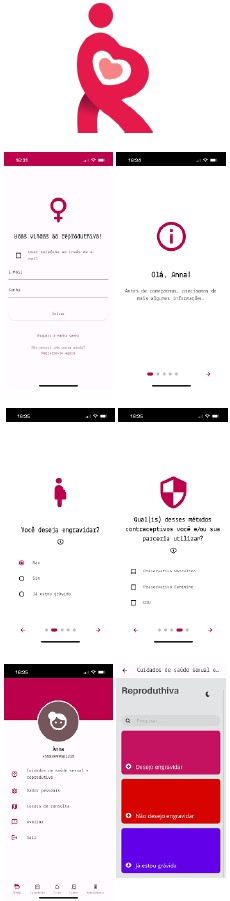
In this regard, the app offers five main features designed to address these gaps: (1) information on safe contraception; (2) prevention of vertical transmission of HIV; (3) sexual and reproductive rights; (4) personalized reminders for antiretroviral therapy (ART), vaccinations, and tests; and (5) personalized educational tracks according to the reproductive desires of the target audience. The app structure begins with a login screen, where the target audience is invited to create an account using a name of their choice and a password. After this step, the target audience is directed to the platform’s presentation screen, which introduces the available features (Figure 1).

Screenshots of the home screen, fertility calculator, and reproductive options of the ReprodutHIVa app. Ribeirão Preto, SP, Brazil, 2025
After creating a login and viewing the introductory screen, the target audience selects their reproductive desire and indicates who is living with HIV. With these choices made, navigation through the app begins, initially presenting general information about rights and locations for reproductive planning. When the option “I do not wish to become pregnant” is selected, the content is presented in an objective and playful manner, using accessible and clear language.
The structure of the information was guided by instructional design strategies for women living with HIV/AIDS. Objectivity was ensured through the use of short texts, direct language, thematic blocks, representative icons, and intuitive menus(31-32). To make the experience more engaging, visual resources such as colorful illustrations, infographics, emojis, and interactive elements (quizzes and reflective questions) were incorporated, promoting active learning and enhancing content retention(31-34).
These elements were based on the principle of target audience centrality, guided by Design Thinking and corroborated by studies that highlight the importance of user experience in the development of educational technologies(11,13,33,35). In addition, the sequential organization of the modules and the possibility of free navigation reinforce autonomy and protagonism in the educational process(36).
The content addresses the various contraceptive methods available in the Unified Health System (SUS, its acronym in Portuguese), including hormonal, barrier, and natural, as well as guidance on selecting the most suitable option, assessing effectiveness, understanding indications and contraindications, utilizing dual protection, and combining prevention methods. The “fertile period calculator” feature provides information on the menstrual cycle, complementing the contraceptive approach.
When the user selects “I want to get pregnant,” the app provides guidance on pregnancy planning, the importance of adhering to ART to maintain an undetectable viral load, screening for sexually transmitted infections (STIs), and strategies for serodifferent couples (such as sperm washing and artificial insemination), as well as information on preventing vertical transmission. When choosing “I am pregnant!”, guidelines are offered on prenatal care, partner involvement, sexual care, delivery methods according to viral load, and breastfeeding, as well as guidance in cases of unplanned pregnancies. The app validation steps are presented in the study sequence.
Phase 2: Validation of the application
Steps 4 and 5 of the study refer to the validation of the ReprodutHIVa application by experts, based on the agreement index regarding the criteria of interface, ease of use, usefulness, and content (Table 1). Twenty-five experts participated, of whom 23 (92.0%) were female. Most had a background in nursing (64.0%), followed by medicine (32.0%) and physical therapy (4.0%), all with up to 10 years of professional training.
The specialists were mainly from the Southeast (64.0%) and Northeast (28.0%) regions. Regarding professional practice, 22 (88.0%) worked in direct care and 2 (8.0%) in teaching. The predominant areas of practice were Gynecology/Obstetrics (84.0%) and Infectious Diseases (16.0%). Regarding postgraduate education, 16 (64.0%) held a lato sensu specialization, and 8 (32.0%) had a stricto sensu degree.
In terms of experience with the app’s target audience, 18 specialists (72.0%) have already assisted women living with HIV/AIDS, and 24 (96.0%) have already provided sexual and reproductive health guidance to this group. All participants (100%) agreed that the use of apps can strengthen health care and follow-up for this population, although only 10 (40.0%) reported already using some app during consultations.
The Interface domain encompasses seven attributes, achieving an S-CVI/Ave of 0.96, with a range of 0.92 to 1.00, thereby meeting the minimum value required for approval in all attributes. The ease-of-use domain obtained an S-CVI/Ave of 0.95, ranging from 0.88 to 1.00. However, experts suggested some improvements, such as centralizing the icon for entering exams and vaccines, currently located in the upper right corner of the screen, as shown in Table 1.
Although the “usefulness” domain achieved an S-CVI/Ave of 0.88 (ranging from 0.64 to 0.96), experts noted difficulties in locating information within the application. Comments highlighted that the content was concentrated in the “help” tab, which was not considered intuitive, suggesting that health information should be on the home page, along with features such as calendar, vaccines, and medications. They also recommended changing the name of the “help” icon to “sexual and reproductive health care” and repositioning the information icons to facilitate use.
In addition, experts indicated the need to include Implanon as a contraceptive method, as well as to provide information on where to access sexual and reproductive health services. It was suggested that a list be created that could be filtered by city and state, with specialized referral services, and that the option “none” be included among the contraceptive methods, covering users who do not use any method.
In the “content” domain, which obtained a CVI of 0.92, experts recognized the quality of the language and clarity of the information. Still, they recommended improvements, such as the inclusion of a field for recording the antiretroviral drugs used and the expansion of guidelines on newborn care, delivery methods, and breastfeeding, according to viral load.
The overall CVI (S-CVI/UA) was 0.93, validating the content of the application, since all domains achieved scores equal to or greater than 0.80. The suggestions were incorporated, and a new version of the application was developed (step 5). The overall reliability of agreement among experts was considered moderate (Table 2).
In step 6, the application was validated with the target audience, evaluating the domains of organization, writing, appearance, and motivation, as well as the adequacy of the content. Seven women participated, mostly aged between 41 and 50 years (71.4%), all of whom were in paid employment and, for the most part, without children (85.7%). In terms of education, one participant had a postgraduate degree (14.3%), while the others had incomplete (57.2%) or complete (28.6%) basic education. Self-declared white was the most frequent race (42.9%).
Concerning marital status, three participants were single (42.9%) and three were married (42.9%), all with a history of sexual relations with men. In five cases (71.4%), their partners also lived with HIV/AIDS. Only two women (28.2%) had received prior guidance on methods to prevent pregnancy, and none expressed a desire to become pregnant at the time of the survey.
The evaluation of the application included statements related to organization, clarity of writing, and visual appearance. All items analyzed achieved Content Validity Indices (CVI) greater than 0.80, as shown in Table 3, which allowed for the satisfactory validation of these general aspects of the application with the target audience.
Questions related to motivation for using the app were included in the validation, considering its central objective of strengthening users’ autonomy in sexual and reproductive health through the sharing of information and guidance. Of the seven items evaluated, five achieved a Content Validity Index (CVI) greater than 0.80, while two items fell below this threshold. The S-CVI/Ave reached 0.88, allowing for the validation of this domain without suggestions for correction or improvement.
The overall CVI (S-CVI/UA) obtained from the target audience was 0.94, validating the application in all domains, with results equal to or greater than 0.80. Regarding the reliability of agreement, the overall assessment was considered good, with fair reliability in the items of appearance and motivation, and poor reliability in the items of writing and organization (Table 4).
Although they did not suggest any changes, all participants (100%) recognized the relevance of the app as educational technology, highlighting its contribution to knowledge about sexual and reproductive health and the acceptance of reproductive choices. They also unanimously stated that the app has the potential to expand access to essential information, reinforcing the role of digital tools in promoting education, empowerment, and autonomy for women living with HIV/AIDS.
Discussion
The study successfully achieved its objective of developing and validating a mobile application for self-care in the sexual and reproductive health of women living with HIV/AIDS. Although aimed at women living with HIV/AIDS, the application can also be utilized and enhanced by health professionals, given the level of agreement achieved on interface, ease of use, usefulness, content, appearance, and motivation, both per item and overall, exceeding the desirable values.
The app was validated by professionals in the fields of medicine, nursing, and physical therapy, specialists with experience in this area. Thus, the app was considered viable in terms of content and functionality, capable of strengthening self-care, sexual health, and reproductive decision-making power. Furthermore, one of its strengths is the fact that it was developed in the form of mobile technology, given that cell phones are increasingly present in the daily lives of the general population. Thus, the content offered by the app would be available at any time, encouraging the target audience to take ownership of the information presented.
The relevance of the development, validation by experts, and target audience of educational technologies in health is noteworthy, especially those focused on sensitive topics of direct interest to vulnerable populations and aligned with their learning needs(31). The use of these technological tools facilitates access to high-quality information, thereby strengthening the autonomy and empowerment of both women and healthcare professionals in adopting best practices in sexual and reproductive healthcare.
Regarding the use of applications, it has been previously observed that mobile applications provide quick and easy access to necessary information and are used by healthcare professionals during clinical practice to evaluate protocols. On the other hand, apps are also beneficial for people living with HIV/AIDS, as they are positively evaluated in terms of involvement in healthcare, assisting in the monitoring and understanding of treatment itself, and promoting adherence to ART(5).
A systematic review study(32) indicated that mobile technologies are an effective tool for self-care in pregnant women living with HIV/AIDS, as they had greater adherence to nutritional supplements and prenatal consultations, as well as a higher rate of ART retention. In this case, the interventions applied included phone calls and text messages, which are methods that women did not take action to access; therefore, they are passive methods. On the other hand, a mobile application containing a wide range of health information and educational content requires the target audience to employ an active learning methodology, resulting in greater knowledge retention(33).
Health systems, due to structural, institutional, and social barriers, sometimes hinder universal and equitable access to sexual and reproductive health services, benefiting more privileged classes at the expense of disadvantaged communities and minorities. Therefore, interventions with the potential to expand self-care often do not reach the individuals who need them most(34-35). This fact reinforces the potential of an app focused on self-care for women living with HIV/AIDS, as it represents another option for accessing knowledge about self-care and, consequently, empowering women regarding their choices in sexual and reproductive health.
A Brazilian study(35) aimed to develop and validate, together with professionals and the target audience, an educational technology focused on HIV prevention in incarcerated women. The results showed good internal consistency in both groups, with Cronbach’s alpha coefficients of 0.809 for the experts and 0.881 for the participants. However, like this study, recent studies(36-37) targeting the female population focus on HIV prevention. At the same time, there is a significant gap in research focused on care and the implications of the virus when it is already present in the body.
International research(38-39) indicates that mobile applications focused on pregnancy, labor, and birth help expand the knowledge of the target audience, health professionals, and family members, providing information and empowerment. Additionally, these apps can facilitate access to healthcare during reproductive and prenatal planning, thereby contributing to informed decision-making and highlighting the relevance of this study.
In terms of sexual and reproductive rights, there is a lack of adequate professional counseling regarding the possibilities of conception and contraception when living with HIV. Thus, on the conception side, this can lead to the decision to have fewer children, and on the contraception side, there is fear regarding the side effects of hormonal contraceptives(40). Thus, it is clear how much the app in question would benefit women living with HIV/AIDS, since it is a democratic way of providing current knowledge in an educational and accessible manner.
The limitations of this study include the use of convenience sampling, which restricts access to selected participants, as well as the need for internet access and mobile devices. Another challenge identified was the scarcity of research addressing this topic, which limits the ability to compare results. In this context, the dissemination of this study may contribute to filling this gap, encouraging health professionals, particularly nurses, to develop, validate, and implement new educational technologies aimed at promoting the sexual and reproductive health of women living with HIV/AIDS.
In practice, incorporating it into health education strategies in Primary Health Care (PHC), especially in nursing consultations and actions to eliminate vertical transmission of HIV, can strengthen users’ autonomy and combat the stigma associated with infection. The accessible interface, validated content, and free availability broaden its applicability in contexts of greater social vulnerability, in line with the principles of the SUS.
To deepen understanding of the users’ experience, it is recommended that future researches adopt qualitative methods, such as interviews, focus groups, and participant observations, in addition to longitudinal studies. Such approaches will identify barriers and facilitators to the use of technology, promoting continuous improvements in its design and content. In addition, ReprodutHIVa contributes to expanding knowledge about the factors that influence the acceptance of digital technologies in health, strengthening the role of nursing as a protagonist in the development of innovative solutions aligned with social demands.
Conclusion
The study aimed to develop and validate the ReprodutHIVa app, a digital educational technology focused on self-care in sexual and reproductive health for women living with HIV/AIDS. The results demonstrated agreement between experts and the target audience, highlighting the effectiveness of the app as a complementary resource to care in the Brazilian Unified Health System (SUS).
By offering accessible, interactive, and evidence-based information, ReprodutHIVa enhances reproductive autonomy, supports informed decision-making, and helps overcome barriers to healthcare access. Its intuitive interface and participatory validation process reinforce its applicability in clinical and community settings. It is, therefore, a promising technology with potential for healthcare practice, professional training, and public policies focused on women’s health and combating the HIV/AIDS epidemic.
Acknowledgment
We thank Marcela Antonini for her collaboration during the data collection phase.
References
-
1. Silva VGF, Nogueira ILA, Elias TMN, Reis RK, Souza NL, Menezes RMP. HIV serodiscordant sexual partners: social representations of health care professionals. Rev Bras Enferm. 2022;75(6):e20210867. https://doi.org/10.1590/0034-7167-2021-0867
» https://doi.org/10.1590/0034-7167-2021-0867 -
2. Langendorf TF, Quadros JS, Paula CC, Padoin SMM, Souza IEO. Reproductive planning and pregnancy of HIV serodiscordant couples: a phenomenological study. Rev Gaucha Enferm. 2023;43:e20220148. https://doi.org/10.1590/1983-1447.2022.20220148.en
» https://doi.org/10.1590/1983-1447.2022.20220148.en -
3. Lee JJ, Verdugo JL, Xiao AY, Vo K. Digital interventions to enhance PrEP uptake and adherence through stigma reduction. Curr HIV/AIDS Rep. 2023;20(6):458-69. https://doi.org/10.1007/s11904-023-00685-7
» https://doi.org/10.1007/s11904-023-00685-7 -
4. Lioi FM, Sousa LRM, Antonini M, Rocha DM, Elias HC, Reis RK. Construction and validation of an information portal on combined HIV prevention. Rev. Latino-Am. Enfermagem. 2025;33:e4509. https://doi.org/10.1590/1518-8345.7221.4509
» https://doi.org/10.1590/1518-8345.7221.4509 -
5. Fermo VC, Tourinho FSV, Macedo DDJ, Alves TF. Technology for the treatment promotion of adults living with HIV: Positive o Cuidado (Positive the Care). Rev Bras Enferm. 2023;76(4):e20220454. https://doi.org/10.1590/0034-7167-2022-0454
» https://doi.org/10.1590/0034-7167-2022-0454 - 6. Orem DE. Enfermagem: conceitos de prática. 6. ed. Rio de Janeiro: Guanabara Koogan; 2001.
-
7. Rocha KAA, Rocha DM, Antonini M, Elias HC, Gir E, Reis RK. Educational technologies to promote the sexual and reproductive health of women with HIV: an integrative review. Rev Bras Enferm. 2025;78(2):e20240079. https://doi.org/10.1590/0034-7167-2024-0079pt
» https://doi.org/10.1590/0034-7167-2024-0079pt -
8. Ministério da Saúde (BR). Protocolo clínico e diretrizes terapêuticas: manejo da infecção pelo HIV em adultos – módulo I: tratamento [Internet]. Brasília-DF: Ministério da Saúde; 2024 [cited 2025 Feb 25]. 115 p. Available from: https://www.gov.br/aids/pt-br/central-de-conteudo/pcdts/pcdt_hiv_modulo_1_2024.pdf
» https://www.gov.br/aids/pt-br/central-de-conteudo/pcdts/pcdt_hiv_modulo_1_2024.pdf -
9. Polit DF, Beck CT. The content validity index: are you sure you know what’s being reported? Critique and recommendations. Res Nurs Health. 2006;29(5):489-97. https://doi.org/10.1002/nur.20147
» https://doi.org/10.1002/nur.20147 - 10. Filatro A. Design instrucional contextualizado: educação e tecnologia. São Paulo: Senac; 2008. 216 p.
- 11. Brown T. Design thinking: uma metodologia poderosa para decretar o fim das velhas ideias. Rio de Janeiro: Alta Books; 2009. 304 p.
-
12. Harris PA, Taylor R, Minor BL, Elliot V, Fernandez M, O’Neal L, et al. The REDCap consortium: building an international community of software platform partners. J Biomed Inform. 2019;95:103208. https://doi.org/10.1016/j.jbi.2019.103208
» https://doi.org/10.1016/j.jbi.2019.103208 - 13. Fehring RJ. The Fehring model. In: Carroll-Johnson RM, editor. Classification of nursing diagnoses: proceedings of the Tenth Conference of the North American Nursing Diagnosis Association. Philadelphia, PA: Lippincott; 1994. p. 55-62.
-
14. Romero V, Donaldson H. Human-centred design thinking and public health education: a scoping review. Health Promot J Austr. 2024;35(3):688-700. https://doi.org/10.1002/hpja.802
» https://doi.org/10.1002/hpja.802 -
15. Ramírez AS, Ayala GX, Murillo M, Glik DC, Guerrero AD. Integrating Theory With a User-Centered Design Approach to Maximize mHealth Acceptability and Usability. Health Educ Behav. 2025;52(3):329-39. https://doi.org/10.1177/10901981241311232
» https://doi.org/10.1177/10901981241311232 -
16. Leite BO, Magno L, Greco D, Grangeiro A, Dourado I. HIV prevention among adolescent travestis and transgender women in three Brazilian capitals, 2019-2023. Epidemiol Serv Saude. 2024;33:e2024321. https://doi.org/10.1590/S2237-96222024v33e2024321.especial.en
» https://doi.org/10.1590/S2237-96222024v33e2024321.especial.en - 17. Pasquali L. Instrumentação psicológica: fundamentos e práticas. Porto Alegre: Artmed; 2009. 568 p.
-
18. Ruiz MT, Azevedo NF, Resende CVD, Silva MPC, Contim D, Santos LMD, et al. Bundle for quantifying vaginal blood loss after childbirth. Acta Paul Enferm. 2024;37:eAPE02172. https://doi.org/10.37689/acta-ape/2024AO00021722
» https://doi.org/10.37689/acta-ape/2024AO00021722 -
19. Andrade MCPH, Canasiro AR, Toledo LM, Van Moorsel, Avelino-Silva, Ferreira ES Filho, et al. Função sexual, sexualidade e qualidade de vida sexual em mulheres vivendo com HIV. Braz J Infect Dis. 2022;26:102129. https://www.bjid.org.br/en-funcao-sexual-sexualidade-e-qualidade-articulo-S1413867021005985
» https://www.bjid.org.br/en-funcao-sexual-sexualidade-e-qualidade-articulo-S1413867021005985 -
20. McCool J, Dobson R, Whittaker R, Paton C. Mobile health (mHealth) in low- and middle-income countries. Annu Rev Public Health. 2022;43(1):525-39. https://doi.org/10.1146/annurev-publhealth-052620-093850
» https://doi.org/10.1146/annurev-publhealth-052620-093850 -
21. Davis FD. Perceived usefulness, perceived ease of use, and user acceptance of information technology. MIS Q. 1989;13(3):319-40. https://doi.org/10.2307/249008
» https://doi.org/10.2307/249008 -
22. Venkatesh V, Morris MG, Davis GB, Davis FD. User acceptance of information technology: toward a unified view. MIS Q. 2003;27(3):425-78. https://doi.org/10.2307/30036540
» https://doi.org/10.2307/30036540 -
23. Alqahtani F, Orji R. Insights from user reviews to improve mental health apps. Health Informatics J. 2020;26(3):2042-66. https://doi.org/10.1177/1460458219896492
» https://doi.org/10.1177/1460458219896492 -
24. Ministério da Saúde (BR). Viva Bem: aplicativo para promoção da saúde. Brasília: Ministério da Saúde; 2020. Available from: https://www.gov.br/saude/pt-br/assuntos/noticias/2020/viva-bem-aplicativo-para-promocao-da-saude
» https://www.gov.br/saude/pt-br/assuntos/noticias/2020/viva-bem-aplicativo-para-promocao-da-saude - 25. Sommerville I. Engenharia de software. 10. ed. São Paulo: Pearson Education do Brasil; 2019. 768 p.
-
26. Wu C, Zhang H, Zhang Y, Hu M, Lin Y, He J, et al. The biosafety incident response competence scale for clinical nursing staff: a development and validation study. BMC Nurs. 2024;23(1):180. https://doi.org/10.1186/s12912-024-01848-6
» https://doi.org/10.1186/s12912-024-01848-6 -
27. Zhou X, Jing X, Gao T, Liu H, Jing X. Development and validation of the Nursing Information Security Questionnaire. Appl Clin Inform. 2025;16(1):44-55. https://doi.org/10.1055/a-2424-2103
» https://doi.org/10.1055/a-2424-2103 - 28. McGray G. Assessing inter-rater agreement for nominal judgment variables. In: Language Testing Forum; 2013; Nottingham, UK. Nottingham (UK): University of Nottingham; 2013. p. 15-17.
-
29. Brasil. Conselho Nacional de Saúde. Resolução nº 466, de 12 de dezembro de 2012. Dispõe sobre diretrizes e normas regulamentadoras de pesquisas envolvendo seres humanos. Diário Oficial da União [Internet]. 2013 Jun 13 [cited 2025 Nov 20]; Seção 1:59. Available from: https://conselho.saude.gov.br/resolucoes/2012/Reso466.pdf
» https://conselho.saude.gov.br/resolucoes/2012/Reso466.pdf -
30. Pedroso AB, Silva RM, Britz DL, Tonel JB, Barbosa CP, Brondani JE. Estratégias lúdicas para prevenção de quedas em idosos: uma experiência multiprofissional no contexto hospitalar. Experiência (Santa Maria). 2024;10(1):e84935. https://doi.org/10.5902/2447115184935
» https://doi.org/10.5902/2447115184935 -
31. Lucchese I, Góes FGB, Goulart MCL, Silva MA, Silva ACSS, Silva LF. The “Nasci Bem” app for health professionals and families of newborns: construction, validation and evaluation. Rev. Latino-Am. Enfermagem. 2024;32:e4260. https://doi.org/10.1590/1518-8345.7264.4260
» https://doi.org/10.1590/1518-8345.7264.4260 -
32. Mzembe T, Chikwapulo V, Kamninga TM, Vellemu R, Mohamed S, Nthakomwa L, et al. Interventions to enhance healthcare utilisation among pregnant women to reduce maternal mortality in low- and middle-income countries: a review of systematic reviews. BMC Public Health. 2023;23(1):1734. https://doi.org/10.1186/s12889-023-16558-y
» https://doi.org/10.1186/s12889-023-16558-y -
33. Marques HR, Campos AC, Andrade DM, Zambalde AL. Innovation in teaching: a systematic review of active teaching-learning methodologies. Avaliação (Campinas). 2021;26(3):718-41. https://doi.org/10.1590/S1414-40772021000300005
» https://doi.org/10.1590/S1414-40772021000300005 -
34. Narasimhan M, Hargreaves JR, Logie CH, Abdool-Karim Q, Aujla M, Hopkins J, et al. Self-care interventions for women’s health and well-being. Nat Med. 2024;30(3):660-9. https://doi.org/10.1038/s41591-024-02844-8
» https://doi.org/10.1038/s41591-024-02844-8 -
35. Borges AVSS, Matos MA, Souza JHB, Freire KRFS, Sousa FR, Florentino VJ. Construction and validation of educational technology for HIV/AIDS prevention in women deprived of freedom. Cogitare Enferm. 2023;28:e84636. https://doi.org/10.1590/ce.v28i0.84636
» https://doi.org/10.1590/ce.v28i0.84636 -
36. Lee AT, Ramasamy RK, Subbarao A. Understanding psychosocial barriers to healthcare technology adoption: a review of TAM technology acceptance model and unified theory of acceptance and use of technology (UTAUT) frameworks. Healthcare (Basel). 2025;13:250. https://doi.org/10.3390/healthcare13030250
» https://doi.org/10.3390/healthcare13030250 -
37. Moreira LVS, Santos RV, Pantoja VJC, Mata NDS, Menezes RAO, Nemer CRB. Challenges of HIV/Aids Prevention in Lesbian Women. Amazonia Sci Health. 2024;12(2):340-53. https://doi.org/10.18606/2318-1419/amazonia.sci.health.v12n2p340-353
» https://doi.org/10.18606/2318-1419/amazonia.sci.health.v12n2p340-353 -
38. Shimpuku Y, Mwilike B, Mwakawanga D, Ito K, Hirose N, Kubota K. Development and pilot test of a smartphone app for midwifery care in Tanzania: a comparative cross-sectional study. PLoS One. 2023;18(3):e0283808. https://doi.org/10.1371/journal.pone.0283808
» https://doi.org/10.1371/journal.pone.0283808 -
39. Bailey E, Nightingale S, Thomas N, Coleby D, Deave T, Goodenough T, et al. First-time mothers’ understanding and use of a pregnancy and parenting mobile app (The Baby Buddy App): qualitative study using appreciative inquiry. JMIR Mhealth Uhealth. 2022;10(11):e32757. https://doi.org/10.2196/32757
» https://doi.org/10.2196/32757 -
40. Sukeri S, Sulaiman Z, Hamid NA, Ibrahim SA. Decision-making on contraceptive use among women living with human immunodeficiency virus in Malaysia: a qualitative inquiry. Korean J Fam Med. 2023;45(1):27-36. https://doi.org/10.4082/kjfm.23.0088
» https://doi.org/10.4082/kjfm.23.0088
-
Data Availability Statement
All data generated or analysed during this study are included in this published article.
-
*
Supported by Conselho Nacional de Desenvolvimento Científico e Tecnológico (CNPq), Grant # 4044302023-6, Brazil.
-
How to cite this article
Rocha KAA, Almeida ALCA, Moura VP, Alves D, Gir E, Reis RK. ReprodutHIVa: development and validation of an app for self-care for women living with HIV/AIDS. Rev. Latino-Am. Enfermagem. [cited]. Available from: .https://doi.org/10.1590/1518-8345.7959.4825
Edited by
-
Associate Editor:
Rosana Aparecida Spadoti Dantas
All data generated or analysed during this study are included in this published article.