 Ductility improvement in sustainable RC beams using cupola and copper slag: experimental analysis and FEA validation
ABSTRACT
This study investigates the mechanical and flexural performance of reinforced concrete beams incorporating copper slag (CS), cupola slag (CPS), and metakaolin (MK) as partial replacements for fine aggregate and cement, respectively. Six concrete mixtures were prepared and tested, including a conventional control mix (T1) and five modified mixtures with varying replacement levels. The optimized mixture (T6) incorporated 10% CS, 10% CPS, and 10% MK. Experimental results revealed that increased slag content progressively reduced workability, with slump values declining from 133 mm in T1 to 111 mm in T6. Despite reduced workability, mechanical performance testing demonstrated that T6 exhibited superior properties, achieving a 28-day compressive strength of 56.85 MPa—approximately 22.9% higher than conventional concrete. This enhancement is attributed to the synergistic effects of metakaolin’s pozzolanic reactivity, improved particle packing density, and the angular morphology of slag particles, which collectively refined the microstructure. These microstructural improvements were manifested in enhanced flexural behavior, with T6 demonstrating higher first-crack load, ultimate load capacity, ductility index, and energy absorption capacity compared to the control specimen. Finite element analysis (FEA) validated the experimental observations, showing good agreement with the measured load-deflection response. The findings demonstrate that industrial by-products can simultaneously enhance structural performance.
Keywords:
Copper slag; Cuppa slag; Metakaolin; Durability properties and micro analysis
1. INTRODUCTION
Application of industrial by-product materials like copper slag and cupola (steel) slag in reinforced concrete (RC) beams has received interest due to sustainability as well as performance improvement. Copper slag is produced during the extraction of copper, whereas cupola slag is an industry by-product from iron and steel foundries. The application of these by-products in concrete partially substitutes natural fine aggregate, lowering the environmental footprint and possibly enhancing the mechanical characteristics [1]. Copper slag has been widely researched for its influence on flexural behavior, whereas direct research on cupola slag is less abundant. This review consolidates the literature to determine how these slags affect RC beam performance and to determine numerical trends and areas of research that are needed.
Copper slag is a granular material that is defined by low water absorption, normally between 0.3–0.5%, and high silica content at about 30–35% [2]. Several studies have proven the significant improvement in the flexural performance of RC beams by partial replacement of fine aggregates with copper slag [3]. At 30–45% replacement of natural sand, beam flexural strength improves considerably. With 30% replacement, gains in flexural strength of 20–27% have been achieved, whereas a 40% replacement level caused improvements between 27% and 39% [1, 4]. Efficient mix designs in controlled trials even registered flexural strength gains of as high as 61% over normal concrete [5]. Likewise, the ultimate load-carrying capacity of beams with replacement of 40% copper slag improved by 21.4%, while the stiffness of the beams also improved by 20.23% [4, 6].
The improvements in flexural performance are mainly due to the combined action of increased microstructure density and pozzolanic activity. The copper slag finer particles occupy pores in the cement paste, lowering porosity, and its pozzolanic reaction provides supplementary calcium silicate hydrate (C-S-H) gel, which enhances the interfacial transition zone strength [2, 7]. Copper slag also increases ductility, along with higher strength, with reported increases in ductility index of 10–15%, enabling beams to resist larger deflections before failure [8]. Compressive strength is also improved under moderate levels of replacement, with improvement ranging from 15–25%. Replacement levels above 45% tend to decrease strength through excess free water and bleeding due to the low water absorption ability of copper slag [9].
Studies on cupola slag for RC beams are not very extensive, but existing literature indicates that it presents modest improvement in flexural strength and stiffness. Cupola slag is more angular and coarser than copper slag with reduced pozzolanic activity, restricting its maximum replacement ratio to about 10–15% of fine aggregates [10]. For a 10% replacement, 12–18% improvements in flexural strength have been reported, whereas 15% replacement can provide up to 31% improvement [9, 11]. The flexural stiffness of beams with cupola slag usually increases by 12–18%, and ultimate load-carrying capacity by 10–17%, based on the mix and curing conditions [12]. Cupola slag benefits accrue mainly because of matrix densification and enhanced aggregate-cement paste bond. Also, its angular particle size helps in mechanical interlocking, which controls microcrack and optimizes the structural performance of concrete [13]. However, replacement levels greater than 20% might compromise workability and reduce flexural performance [14].
The addition of cupola slag and copper slag has an impact on the workability of fresh concrete, which is related to the mechanical properties of hardened concrete [10, 15]. While low water absorption of copper slag increases slump, which allows for easier placing and compacting, the fineness and angularity of cupola slag decrease workability [16]. In the case of concrete mixes containing 40% copper slag, it is necessary to maintain a w/c ratio of 0.40–0.45 in order to ensure sufficient workability and uniformity in the mechanical behavior [17]. Cupola slag, minor adjustments to water content or superplasticizer addition are usually necessary for replacement levels over 10% in order to have an adequate slump [18]. Neglecting to modify the mix design could lead to segregation, bleeding, or inadequate bonding between aggregate and cement paste, finally decreasing flexural strength [12, 19].
Adding industrial by-products in concrete manufacture offers both economic and environmental advantages. Copper slag and cupola slag usage decreases the need for natural sand, which in turn reduces ecological harm from sand excavation [20]. It serves as a means of disposing large amounts of industrial waste that would otherwise need to go into landfilling [21]. Economically, the replacement of 40% of sand by copper slag reduces aggregate cost by 15–20%, whereas cupola slag at replacement levels of 10–15% saves costs by about 8–12% [19, 22]. But economic viability is based on local availability and processing requirement, since further crushing, sieving, or grinding may be necessary to obtain acceptable particle size and fineness [6, 23].
Comparing cupola slag and copper slag emphasizes distinctions in their efficiency for improving RC beam performance. Copper slag, with greater pozzolanic reactivity and finer particle size, gains more significant flexural strength, ultimate load, and stiffness gains at higher replacement levels (30–45%) [10, 16, 24]. Cupola slag, in contrast, gains moderate improvements at low replacement levels (10–15%), gaining benefits mainly through mechanical interlocking and matrix densification and not through chemical reactivity [25].
FEA permits precise simulation of stress distribution, crack development, deflection, and ultimate load capability under different loading conditions. In copper slag studies, FEA models correctly predicted the enhancement in flexural strength, stiffness, and ductility noted experimentally. Beams with copper slag replacement ranging from 30–45% demonstrated increased load-carrying capacity and lower deflection in simulations, in agreement with experimentally noted increases of up to 61% in flexural strength [14, 26]. Cupola slag was also simulated at 10–15% replacement level and showed moderate gains in stiffness and resistance to cracking [27]. Physical properties of the material like specific gravity, modulus of elasticity, Poisson’s ratio, and stress-strain characteristics were also included in the FEA models, including the metakaolin and slag densifying effects on the concrete matrix [28]. Parametric studies are also possible using FEA, and slag replacement levels, reinforcement ratios, and beam geometry can be optimized [29].
Metakaolin is a highly reactive aluminosilicate from calcined kaolinite clay widely recognized for its superior pozzolanic activity and micro-filler properties. Its fine particle size and amorphous structure enable it to react rapidly with calcium hydroxide released during cement hydration and form additional C–S–H gel, with positive effects on the densification of the microstructure and strength development [30]. The filler effect of metakaolin improves particle packing and reduces connectivity in pores, hence making ITZs stronger. In slag-based concrete, metakaolin acts as a complementary supplementary cementitious material that offsets the potential reduction in early-age strength, enhancing bonding between paste and aggregate [31]. Thus, its addition in this study is incorporated to improve overall mechanical performance by enhancing microstructural integrity and ductility in concrete mixes that have been formulated with copper and cupola slags. This physical enhancement is complementary to the strong pozzolonic action of Metakaolin and interacts well in the hybrid mix for improved mechanical and flexural performance [32].
Though promising, the research gaps still exist. Very few direct experimental investigations on cupola slag in RC beams have been conducted. The interaction of copper slag and cupola slag in hybrid mixtures, especially those reinforced with slag, remains untapped. Further study of environmental degradation due to heavy metal leaching from copper slag is called for. While the investigation presents the effects of copper slag, cupola slag, and metakaolin on the general structural performance of concrete members at different states of loading, including compressive strength, flexural capacity, and stiffness, it focuses most on characterizing improvements in ductility and energy absorption of the concrete beams when subjected to flexural loading, since these parameters relate to the deformation capacity and toughness of beams.
2. MATERIALS
The main constituents used in these reinforced concrete mixes are OPC 53, metakaolin, copper slag, and cupola slag, each having their own physical and chemical properties that will affect the performance of the concrete. OPC 53 cement is a grey fine powder with a specific gravity of 3.14 and high surface area of 2270 cm2/g, owing to its very high rate of hydration and development of strength. Its volume expansion has been recorded as 3 mm and it has a bulk density of 1.47 g/cc [33].
Metakaolin is a grainy white powder with a specific gravity of 3.08 and an extremely high fineness of 12,700 cm2/g, which increases the pozzolanic activity, porosity reduction, and durability [34]. It contains 0.89% moisture and shows 0.50% water absorption. Copper slag is a glassy black solid with a specific gravity of 3.91 and a particle size of 1.15 mm. Its 0.16% lower water absorption and 2.08 g/cc bulk density render it ideal to use as a substitute for fine aggregates, enhance strength and durability. Grey, grainy Cupola slag has the same specific gravity as metakaolin which is 3.08 and particle size of 1.15 mm, and fineness and water absorption of 1,341 cm2/g and 0.50%, respectively. All these characteristics promote matrix densification and assist overall mechanical properties of concrete.
Physical properties of aggregates are very significant in influencing the strength, workability, and durability of concrete. Fine aggregates and coarse aggregates, in this study, were analyzed for size, shape, density, water absorption, and mechanical properties [35]. Fine aggregates have a mean particle size of 1.15 mm and a fineness modulus of 1.50, which is a comparatively fine texture and can be employed to fill voids within the concrete matrix. Their specific gravity is 2.36 and possesses low water absorption of 0.35%, helping to maintain workability and minimize additional water requirement. Bulk density of fine aggregates is 2,750 kg/m3 and moisture content is 1.29%, which helps to maintain consistent volumetric relations in the mix.
Coarse aggregates employed in this research are angular in shape, have a nominal size of 20 mm, and a fineness modulus of 6.90. Their higher specific gravity of 2.74 and bulk density of 1,625 kg/m3 are responsible for the structural stability and load-carrying capacity of concrete. Water absorption is 0.75%, slightly greater than fine aggregates, and influences mix water requirements. Mechanical performance parameters such as crushing value 17.56% and impact strength 14.71% prove that the coarse aggregates have sufficient toughness and strength for reinforced concrete uses.
Copper slag and cupola slag have angular and irregular particle shapes. This gives them increased paste–aggregate adhesion when used as partial replacements for natural sand. Due to the rougher surface texture, mechanical interlocking increases, leading to improved bonding between the cementitious paste and aggregate. Their generally finer particle size distribution compared with natural sand ensures more adequate filling of the voids, hence contributing to microstructure densification and reduced porosity. Lower water absorption by copper slag, combined with the high angularity of cupola slag particles, modifies workability but concurrently contributes to improved packing density. In addition, the slag materials have reactive silica and alumina, which encourage supplementary pozzolanic activity that refines the ITZ. A denser ITZ reduces microcracking and therefore provides higher compressive and flexural strength. All these combined aspects explain the improved mechanical performance observed in mixes incorporating slag-based fine aggregate replacements.
3. METHODOLOGY
3.1. Experimental works
Concrete mixtures were planned for the target 40 MPa compressive strength by adopting the modified ACI mix design procedure. Copper slag and cupola slag were replaced partially as fine aggregates while keeping the water-to-cement ratio approximately 0.40 to provide sufficient workability. For the assessment of the workability of fresh concrete, the slump cone test in accordance with IS 1199:1959 was conducted immediately after mixing. The slump was recorded to evaluate the uniformity and flow properties of every mix, providing for evenness and adequate placement of concrete during beam casting. The slump values obtained also assisted in regulating the dosage of superplasticizer to provide the required workability without influencing the strength characteristics. Metakaolin was employed as an additional cementitious constituent for cement. Superplasticizers were utilized wherever necessary to regulate slump. To determine the mechanical performance of the concrete, compressive strength tests on cube specimens of 150 mm × 150 mm × 150 mm size were carried out in accordance with IS 516 (Part 1/Sec 1): 2021. Three specimens were tested per mixture at each curing ages of 7, 14, and 28 days using a compression test machine (CTM) to observe the strength development and to verify that the mix had attained the target strength. The outcome of these tests formed the basis of the validation of the mix design and identification of the best replacement levels of copper slag and cupola slag for beam casting.
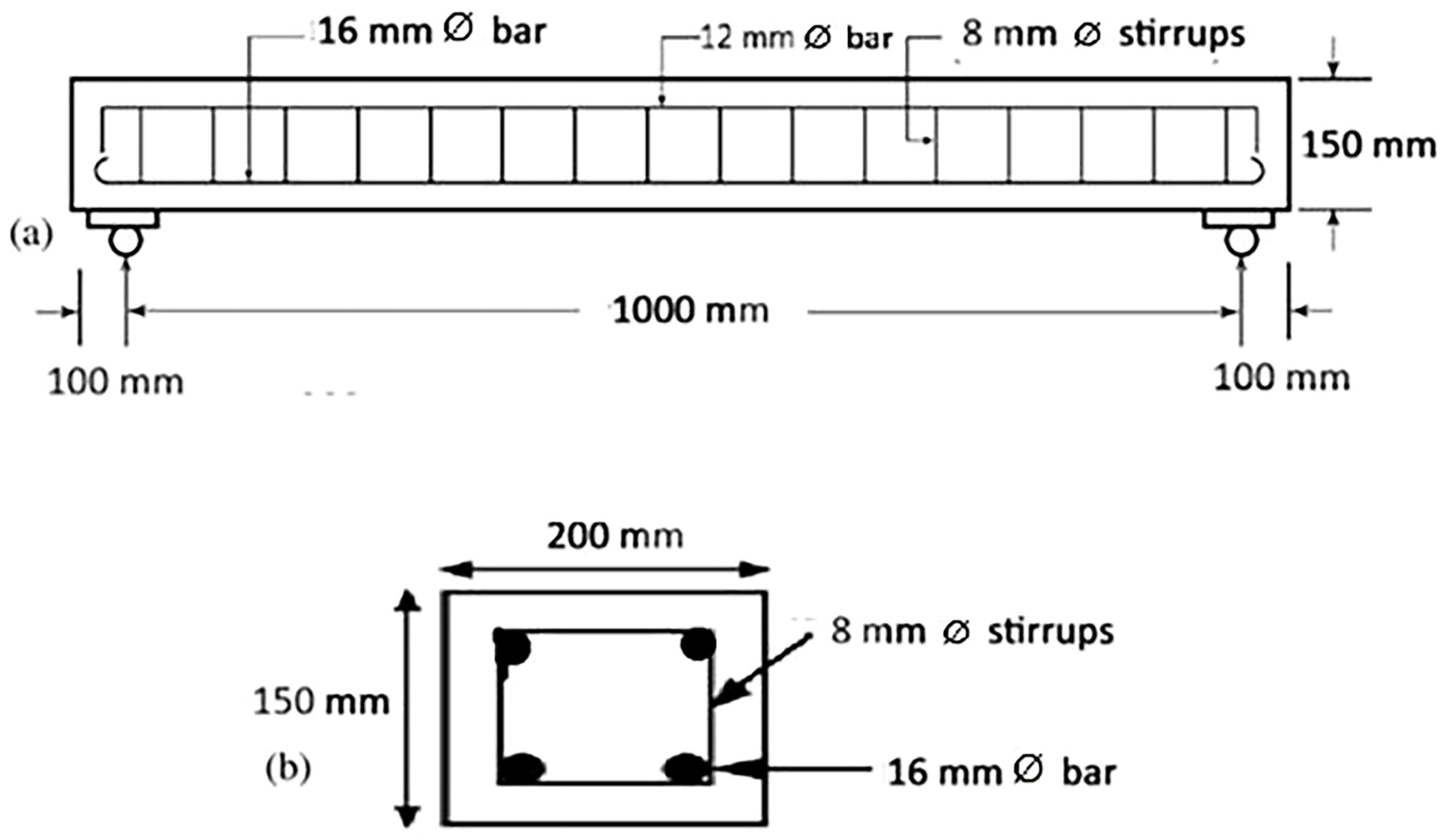
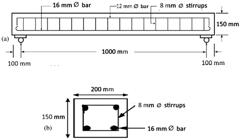
Reinforced concrete beams with dimensions of 150 mm × 200 mm × 1200 mm were cast. Longitudinal reinforcement was Fe 415 steel bars (TMT) with a diameter of 16 mm and 12 mm, whereas 8 mm bars were employed as stirrups at 100 mm centres. The concrete was prepared in a pan mixer, cast in steel moulds, and compacted on a vibrating table to expel entrapped air. The specimens were sealed with plastic sheets and water-cured at 25 ± 2°C for 28 days after casting. The flexural properties of the beams were tested by four-point bending. Beams were supported simply over a span of 1000 mm with two-point loads, 300 mm apart, to produce a region of pure bending. Load-deflection data were measured through a digital load cell and LVDTs at midspan. Ultimate load, stiffness, and ductility were estimated from measured data. Physical properties of all materials prior to casting such as specific gravity, fineness, water absorption, bulk density, and moisture content were determined as per ASTM and IS standards. Finite Element Analysis with ANSYS was performed to analyze the flexural behavior of the RC beams with different slag replacements.
Concrete was simulated using a nonlinear material model with the stress-strain behavior, whereas steel reinforcement was simulated as elastic-perfectly plastic. Modulus of elasticity, Poisson’s ratio, and density were obtained from experimental characterization as material properties. Load-deflection curves, stress distribution, and predicted cracks were delivered by simulations and compared with experimental data for validation. Experimental and FEA outputs were compared to identify the effect of copper slag and cupola slag on ultimate load, flexural strength, stiffness, ductility, and crack propagation. Comparisons have been made on different replacement levels for the identification of optimum slag ratios to achieve maximum structural performance. Figure 1 represents the reinforcement details of beam. Table 1 indicates the mix designation.
3.2. Finite element analysis
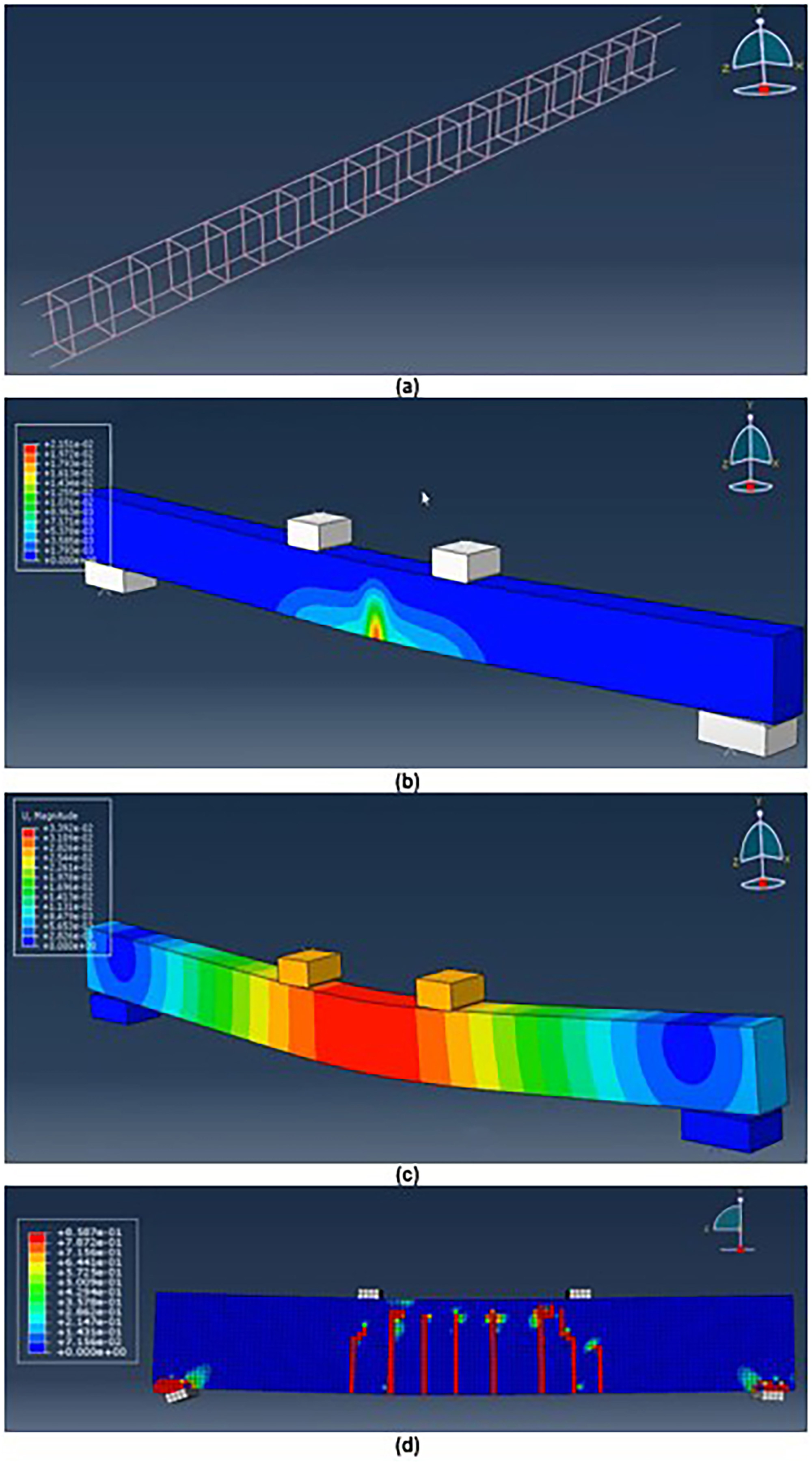
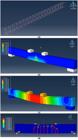
Finite Element Analysis (FEA) was carried out to predict the flexural performance of reinforced concrete beams with copper slag, cupola slag, and metakaolin. The finite element model was created by ANSYS Workbench that offered a useful platform to investigate stress distribution, deflection, and load–displacement responses subjected to static loading conditions. The beam was simulated with SOLID65 elements to simulate the concrete, able to accommodate cracking and crushing behavior, and LINK180 elements were used for the steel rebar to model tensile yielding. Material constants like modulus of elasticity, Poisson’s ratio, and compressive strength were obtained from the experimental data for each mix. The evaluation was focused on the prediction of the crack initiation, ultimate load-carrying capacity, and ductility in deflection, enabling comparison with test results. The load–deflection curves provided by the FEA showed a good agreement with the test results from the laboratory, substantiating the numerical method and the precision of the taken model parameters.
3.2.1. Modeling and boundary conditions
A three-dimensional model of the beam was made with the same size as the experimental specimen—1000 mm span, 100 mm wide, and 100 mm deep. The beams were modeled as simply supported, mimicking laboratory environment. Both the end hinged (restraining both vertical and horizontal displacements). Two-point loads were distributed at the top surface, 300 mm apart, to create a pure bending zone at midspan. A mesh sensitivity analysis provided precision without consuming too much computational work. The mesh was made finer near the loading and support areas in order to effectively capture stress concentrations. The load was incrementally applied up to criteria of ultimate failure, thus allowing for the determination of load-carrying capacity, crack propagation, and energy absorbing behavior under flexure. Figure 2 depicts the numerical modelling by FEA. The yield deflection (Δy) was determined using the geometric method, where a line is drawn along the initial linear portion of the load–deflection curve and a second line, parallel to the first, passes through the ultimate load. The intersection of these lines represents Δy. The ductility index (μ) is then calculated as μ = Δu/Δy, where Δu is the ultimate deflection at failure.
4. RESULTS AND DISCUSSION
4.1. Slump cone
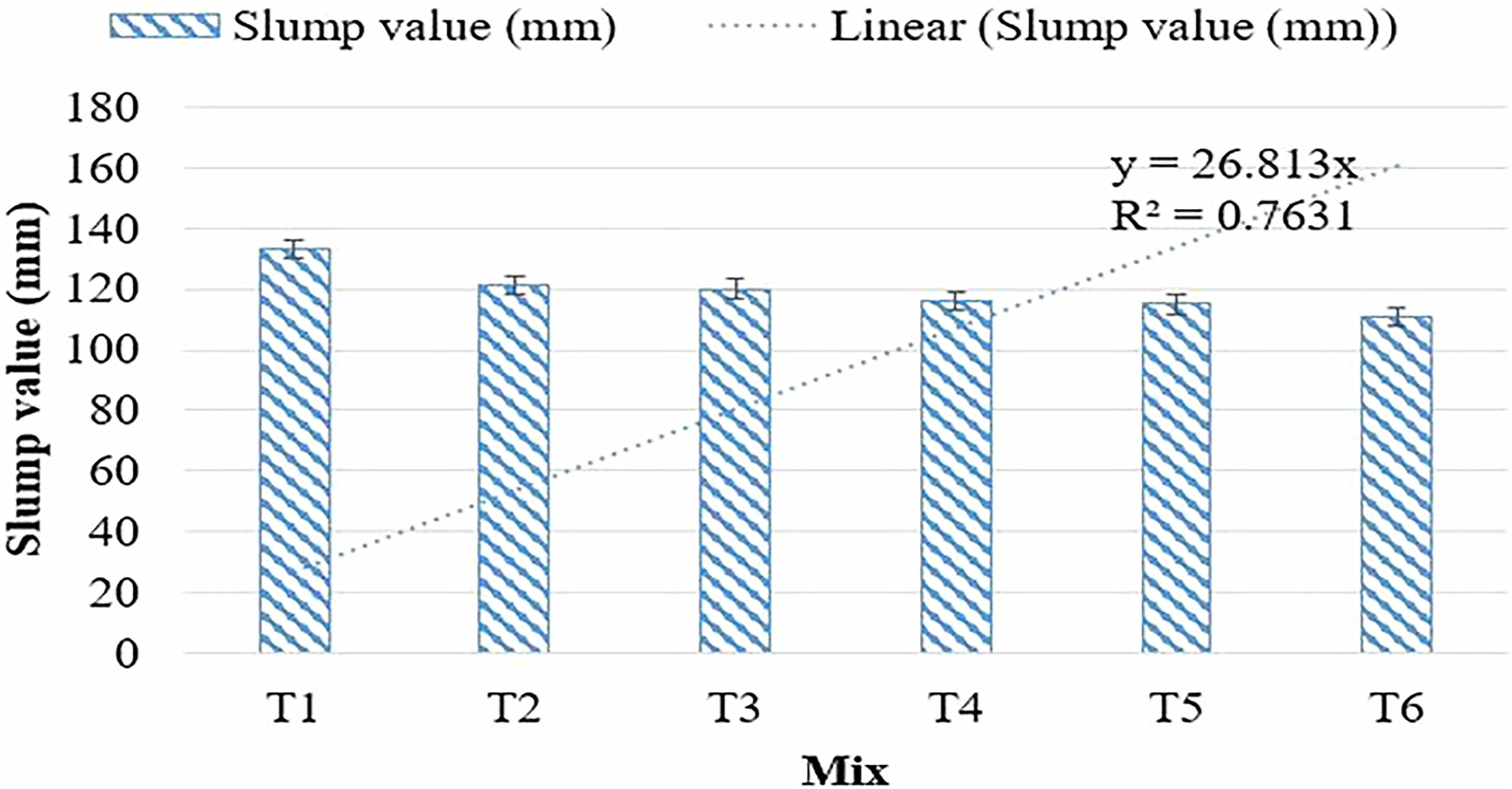
Workability of the fresh concrete mix was evaluated with slump cone test, and the slump varied from 111 mm to 133 mm. The normal mix (T1) produced the highest slump of 133 mm, which confirms the high flowability since natural fine aggregate and cement were utilized to their full potential. Mixes using copper slag, cupola slag, and metakaolin had a progressive decrease in slump, with T6 showing the least value of 111 mm.
This decline in workability is due to the angular nature and coarse surface texture of slag materials, which generate internal friction, and metakaolin’s high fineness, which increases water demand. When the levels of replacement of copper slag, cupola slag, and metakaolin rose, the mix grew stiffer with less mobility. All the mixes, though, had slump values within the range of 100–150 mm, which was within the desired range for casting reinforced concrete beams. Average slump values obtained in mixes up to 15% slag replacement and 5% metakaolin showed sufficient workability, ensuring good compaction without bleeding or segregation. Consistency by superplasticizer was ensured, attesting that the designed mixes are workable and structurally appropriate for the making of experimental beams. Figure 3 indicates the graphical display of slump value.

4.2. Compressive strength
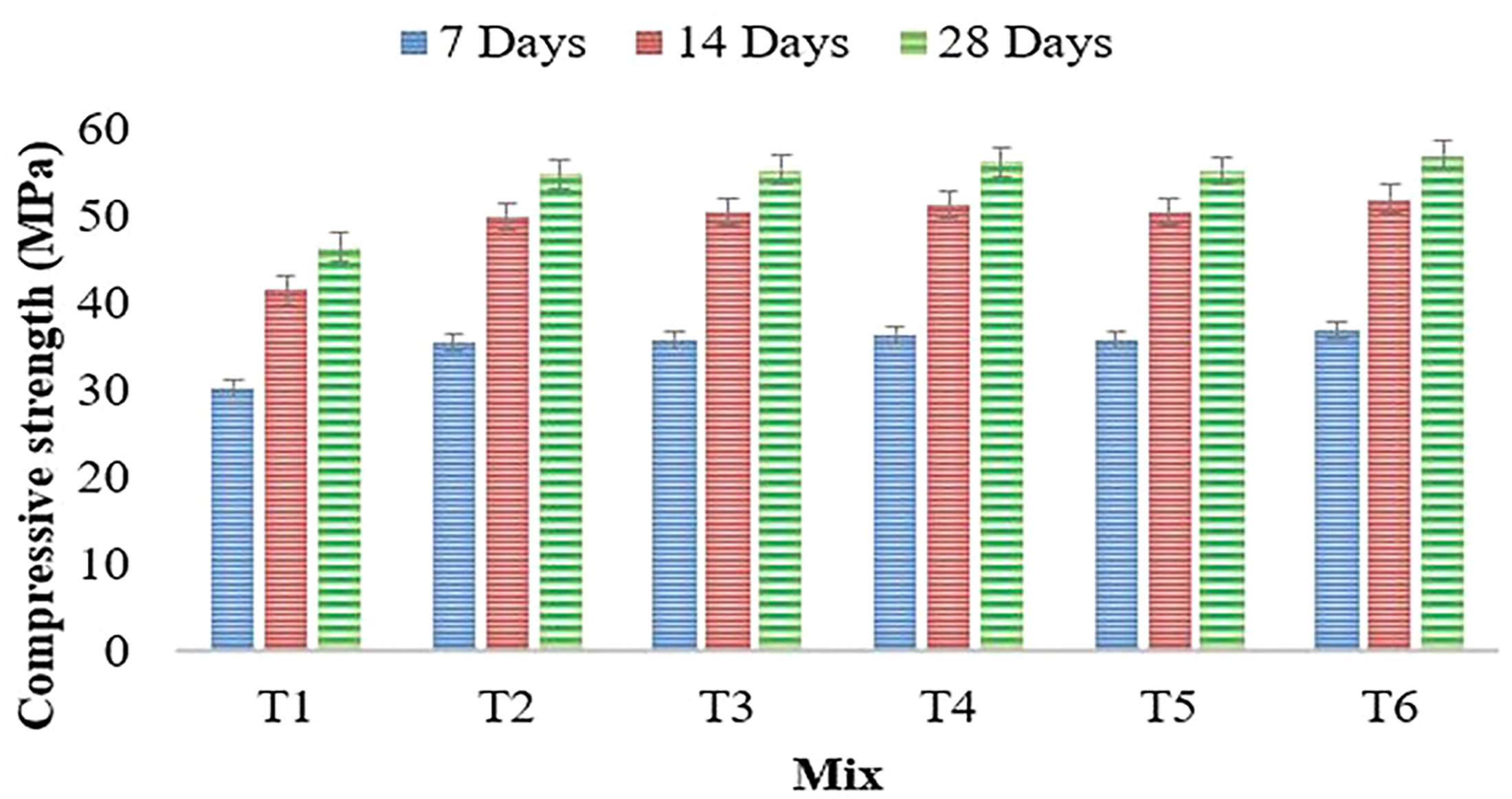
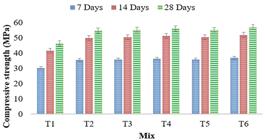
Compressive strength of concrete mixtures was tested at 7, 14, and 28 days to analyze the influence of copper slag, cupola slag, and metakaolin on strength gain. All the mixes exhibited an increase in strength with curing age, which reflects constant hydration and pozzolanic reaction. The control concrete (T1) achieved strengths of 30.14 MPa, 41.38 MPa, and 46.28 MPa at 7, 14, and 28 days, respectively. Though all the modified mixes containing industrial by-products had greater compressive strength than the control mix, their maximum strength of 56.85 MPa was achieved by T6 with 10% copper slag, 10% cupola slag, and 10% metakaolin, which is an increase of almost 23% than that of the control mix at 28 days.
This improvement can be explained by the filler effect and pozzolanic activity of metakaolin, which improved the microstructure by minimizing the pore space and improving the interfacial transition zones between cement paste and aggregates. The high particle packing density of copper and cupola slags helped provide lower permeability and better interfacial transition zones. In general, the outcome illustrates that combined usage of these materials at up to 30% replacement improves strength performance, and the best result is seen for T6, which validates its suitability for high-strength and green concrete applications. Figure 4 illustrates the graphical presentation of compressive strength.
4.3. Load-deflection behavior of RC beams
Table 2 illustrates the deflection loads. The flexural behavior of copper slag and cupola slag and metakaolin-based reinforced concrete beams was compared under four-point bending, taking into consideration the first crack load (Pcr), ultimate load (Pu), and corresponding deflections (Δy and Δmax). The test results indicated notable enhancement in both load-carrying capacity and ductility in mixes that include copper slag, cupola slag, and metakaolin in comparison with the ordinary mix. The control beam (T1) had a first crack load of 47.95 kN and an ultimate load of 67.38 kN, with corresponding deflections of 4.28 mm and 7.45 mm. However, altered mixes depicted an increase in both the first crack and ultimate loads gradually, confirming enhanced flexural strength and stiffness. Maximum improvement was observed in the case of T6, with a first crack load of 59.12 kN and an ultimate load of 103.67 kN, i.e., an improvement of about 54% over the control beam.
A decline in the first crack deflection with greater stiffness and improved crack resistance can be contributed by the densified matrix developed due to the metakaolin and slag particles. A marginally higher deflection at an ultimate stage in modified beams explains the greater ductility and increased capacity of energy absorption, which is advantageous for superior structural behavior under service loads. In toto, the test results stated that the combined composition of 10% copper slag, 10% cupola slag, and 10% metakaolin (T6) is the optimal in conferring a balanced maximum strength, stiffness, and ductility to produce improved flexural behavior than conventional concrete.
4.4. Deflection ductility index
Table 3 demonstrates the deflection ductility index. The yield deflection for the control beam, T1, representing conventional concrete without slag or metakaolin, was recorded as Δy mm, and its ultimate deflection was Δu. Its ductility index was determined from μ = Δu /Δy. In this study, metakaolin reinforced concrete beams, copper slag, and cupola slag deformation capacity and energy absorption characteristics were analyzed based on the determination of the ductility ratio. This value represents the reference base upon which improvements in ductility, for those beams whose mixture was modified with slag and metakaolin, are compared. The result shows a clear improvement in ductility with increasing substitution percentages of these additives. The control T1 control beam had 1.74 ductility index and normalized ratio of ductility of 1.00, which is typical for normal concrete. Those beams modified had progressively higher ductility, where T2 and T3 had values of 2.05 and 2.33, respectively. Such increase results from the increased strength of bond between the reinforcement and matrix, caused by the optimized microstructure triggered by metakaolin and the copper and cupola slag dense particle packing.
T4 to T6 beams showed further improvement, with T6 having the best ductility index of 3.57 and ductility ratio of 2.05, as an evidence of a more flexible and energy-absorbing structure. The reduction in initial crack deflection (Δy) and higher ultimate deflection (Δmax) signify greater stiffness during the elastic stage and improved post-yield deformation ability. The first crack in all tested beams was observed at the tension face of the midspan region, corresponding to the location of maximum bending moment under four-point bending. This is consistent with classical flexural behaviour, where cracks initiate in the zone of highest tensile stress. The load at which the first crack occurred was recorded during testing and used to calculate the first-crack load, which is reported in the results section. Overall, the results confirm that the concurrent addition of 10% copper slag, 10% cupola slag, and 10% metakaolin (T6) considerably increases ductility, toughness, and energy absorption capacity and makes the composite beam mix suitable for application in structural components requiring high structural resistance to flexural loading.
4.5. Energy ductility
Table 4 gives the energy ductility index. Energy ductility index and energy ductility ratio were examined to evaluate the post-yield performance and energy absorption capacity of copper slag, cupola slag, and metakaolin-reinforced concrete beams. Test results confirmed a well-established gain in energy ductility when added, depicting superior toughness and resistance towards deformation. The ductility response is controlled by the stress and strain behaviour of concrete and steel, the reinforcement ratio, the cracking pattern, and the post-yield deformation capacity at the critical section where bending governs. The control beam (T1) had an energy ductility index of 3.09 and a baseline energy ductility ratio of 1.00. The modified mixes were higher, showing that they have greater ability to absorb and dissipate energy before failure. T2 and T3 possessed moderate values of 3.34 and 3.52, respectively, which were 8–14% superior to that of normal concrete.
Further enhancement was also observed in mixes T4, T5, and T6, where the energy ductility index greatly enhanced from 4.22 to 4.90, with mix T6 recording the highest value. Its corresponding energy ductility ratio of 1.59 indicates a general 59% energy absorption enhancement relative to the control beam. This is because of the hard and compact matrix developed due to metakaolin’s pozzolanic reaction and particle filler effect of slag particles, which counteract crack propagation and enhance post-cracking strength. In general, the results set up that the simultaneous use of 10% copper slag, 10% cupola slag, and 10% metakaolin (T6) has maximum dissipation energy capacity, demonstrating superior toughness and improved structural durability to flexural loading conditions.
4.6. Energy absorption
Table 5 presents the energy absorption. Energy absorption capacity of the beams reflects directly on their resistance to deformation and load carrying capability beyond the elastic limit. Incorporation of copper slag, cupola slag, and metakaolin played a significant role in energy absorption compared to the control concrete (T1). The control concrete beam T1 possessed an energy absorption capacity of 1425.38 kN-m and was the control having a ratio of 1.00. All the modified mixes, however, witnessed tremendous improvement. The addition of 5–10% copper slag and 5–10% cupola slag with 5–10% metakaolin enhanced the toughness and ductility of the beams due to improved particle packing and pozzolanic activity.
Correspondingly, Beams T2 and T3 reported a moderate increase in the capacity for energy absorption with a magnitude of 1.91 and 1.63 times that of the control. A better enhancement level was found in T4, T5, and T6, with their respective energy absorption capacities of 3061.63 kN-m, 3513.77 kN-m, and 3965.90 kN-m. Correspondingly, the T6 mix, which absorbed energy 2.78 times higher than that of normal mix, recorded the highest performance. This increasing percentage proves that 10% copper slag, 10% cupola slag, and 10% metakaolin synergistically enhance the energy dissipation capacity. The beams were reported to have superior post-cracking behavior, improved toughness, and enhanced structural resilience under flexural loading.
4.7. Numerical investigations - load and deflection
Finite element analysis (FEA) of the reinforced concrete beams was carried out in ANSYS to analyze the structural behavior under two-point loading conditions. The load–deflection curves, cracking modes, and ultimate load capacities were predicted for all six mixes (T1–T6). Simulation correctly mimicked the experimental arrangement, using suitable material properties, reinforcement details, and boundary conditions. The ultimate load and related mid-span deflection from FEA are presented in the results table. The conventional mix (T1) showed an ultimate load of 70.52 kN with a deflection of 7.10 mm and was used as the benchmark for performance comparison. With an increase in the proportion of copper slag (CS), cupola slag (CPS), and metakaolin (MK), a consistent increase in both load-carrying capacity and flexural ductility was noticed.
Mix T6 (10% CS + 10% CPS + 80% M-sand + 10% MK + 90% Cement) recorded the highest FEA load of 106.9 kN and deflection of 9.22 mm, showing a notable improvement from the control mix. The synergistic effect of the industrial by-products is responsible for the improvement, as it finer the microstructure, increased bond strength between reinforcement and matrix, and increased the energy absorption capability. The FEA outcomes illustrate a progressive and linear load–deflection relationship for all mixes with an initial linear-elastic behavior followed by a nonlinear behavior resulting from steel reinforcement cracking and yielding. The numerical results are in close agreement with experimental observations, attesting to the validity of the modeling method and establishing that blended materials are responsible for enhanced flexural strength and ductility of the beams.
4.8. Comparison of experimental results and FEA results
A comparative analysis between the experimental and the finite element analysis (FEA) findings confirmed a high correlation in the flexural behavior of reinforced concrete beams containing copper slag, cupola slag, and metakaolin. Both techniques demonstrated an identical trend, in which the ultimate load and deflection at mid-span increased steadily with increased replacement levels of industrial by-products. Table 6 presents the comparison between Experimental results and FEA results.
The FEA results were very close to the experimental results, with only slight discrepancies. The calculated ultimate load values tended to be higher by approximately 4–6%, which may be due to the idealized boundary conditions, ideal bond between concrete and reinforcement, and no presence of microstructural defects in the numerical model. Similarly, FEA deflection values were marginally less than experimental values as a result of the stiffer nature of the simulated elements. The analyses nevertheless universally showed that incorporation of copper slag, cupola slag, and metakaolin significantly improved the beams’ flexural strength, stiffness, and ductility in comparison to normal concrete. The good correlation between FEA and experimental results confirms the validity of the finite element model and assures it of its ability to predict the load–deflection behavior, crack progression, and energy absorption properties of sustainable reinforced concrete beams subjected to two-point loads.
5. CONCLUSION
Six different mixtures of concrete from test results indicate considerable improvements in fresh and hardened properties in the addition of copper slag, cupola slag, and metakaolin compared to conventional concrete (T1). Slump content shows a decreasing trend from 133 mm in T1 to 111 mm in T6, reflecting a uniform reduction in workability due to higher levels of industrial by-product and supplementary cementitious material replacements. Regardless, all the mixes exhibited correct consistency for casting.
With regards to compressive strength, all modified mixtures exhibited outstanding improvements at 7, 14, and 28 days. T6 exhibited the highest 28-day strength of 56.85 MPa, 22.9% higher than T1 (46.28 MPa). The metakaolin pozzolanic activity and filler effect of copper and cupola slag compact the matrix and cause interfacial bonding to improve, due to which the improvement is feasible.
Flexural performance also enhanced in an orderly fashion. Initial crack load increased from 47.95 kN (T1) to 59.12 kN (T4 and T6), whereas ultimate load increased from 67.38 kN (T1) to 103.67 kN (T6). The respective deflection values at ultimate load increased moderately, affirming enhanced ductility. Deflection ductility index (µ) increased from 1.74 for T1 to 3.57 for T6, affirming improved energy dissipation capability. Similarly, the energy absorbed by the beams grew nearly threefold, from 1425.38 kN m (T1) to 3965.90 kN m (T6), highlighting improved toughness.
The FEA results also agree very well with the experiments, with ultimate deflections and loads within the deviation range of 5–8%, which thereby validates the prediction of structural performance. Globally, blends containing 10% copper slag, 10% cupola slag, and 10% metakaolin (T6) presented the best strength, ductility, and energy absorption ratio and thus are suitable for high-performance structural applications where sustainability and toughness are significant factors.
This work provides evidence that incorporation of industrial by-products has considerable positive effects on mechanical and flexural concrete properties, which is essential for sustainable advanced building materials. Future research directions may lie in long-term durability, hybrid combination of industrial wastes, life cycle assessment, and large-scale structure application of high-performance sustainable concrete.
6. BIBLIOGRAPHY
-
[1] MOHD AREEF, S., RAO, P.S., REDDY, V.S., ZUBAIR, D.M.A., “Flexural behaviour of steel fibre reinforced concrete beams made with copper slag as partial fine aggregate replacement”, E3S Web of Conferences, v. 184, pp. 01077, 2020. doi: http://doi.org/10.1051/e3sconf/202018401077.
» https://doi.org/10.1051/e3sconf/202018401077 -
[2] MANIBALAN, P., SELVARADJOU, M., BASKAR, R., et al, “Flexural behavior of RC beam using industrial copper slag as a sustainable substitute for fine aggregate”, Innovative Infrastructure Solutions, v. 9, n. 3, pp. 64, 2024. doi: http://doi.org/10.1007/s41062-024-01373-0.
» https://doi.org/10.1007/s41062-024-01373-0 -
[3] AFSHOON, M.I., MIRI, M., MOUSAVI, S.R., “Evaluating the flexural behavior of green copper slag-contained steel fiber reinforced SCC beams with/without initial notches”, Construction & Building Materials, v. 395, pp. 132316, 2023. doi: http://doi.org/10.1016/j.conbuildmat.2023.132316.
» https://doi.org/10.1016/j.conbuildmat.2023.132316 -
[4] RAJU, S., RATHINAM, J., DHARMAR, B., et al, “Cyclically loaded copper slag admixed reinforced concrete beams with cement partially replaced with fly ash”, Materials, v. 15, n. 9, pp. 3101, 2022. doi: http://doi.org/10.3390/ma15093101. PubMed PMID: 35591435.
» https://doi.org/10.3390/ma15093101 -
[5] RAJU, S., DHARMAR, B., “Studies on flexural behavior of reinforced concrete beams with copper slag and fly ash”, Structural Concrete, v. 21, n. 1, pp. 107–116, 2019. doi: http://doi.org/10.1002/suco.201800351.
» https://doi.org/10.1002/suco.201800351 -
[6] ANNAMALAI, K., SAMPATHKUMAR, S., KACHANCHEERI, M.S., et al, “Exploring the role of recycled aggregates in modern concrete technology”, Matéria, v. 30, pp. e20250033, 2025. doi: http://doi.org/10.1590/1517-7076-rmat-2025-0033.
» https://doi.org/10.1590/1517-7076-rmat-2025-0033 -
[7] AMERI, F., BRITO, J., MADHKHAN, M., “Steel fibre-reinforced high-strength concrete incorporating copper slag: Mechanical, gamma-ray shielding, impact resistance, and microstructural characteristics”, Journal of Building Engineering, v. 29, pp. 101118, 2020. doi: http://doi.org/10.1016/j.jobe.2019.101118.
» https://doi.org/10.1016/j.jobe.2019.101118 -
[8] MAMDOUH, H., ALI, A.M., OSMAN, M.A., et al, “Effects of size and flexural reinforcement ratio on ambient-cured geopolymer slag concrete beams under four-point bending”, Buildings, v. 12, n. 10, pp. 1554, 2022. doi: http://doi.org/10.3390/buildings12101554.
» https://doi.org/10.3390/buildings12101554 -
[9] ARASU, A., MUTHUSAMY, N., NATARAJAN, B., et al, “Optimization of high performance concrete composites by using nano materials”, Research on Engineering Structures and Materials, v. 9, n. 3, pp. 843–859, 2023. doi: http://doi.org/10.17515/resm2022.602ma1213.
» https://doi.org/10.17515/resm2022.602ma1213 -
[10] LIU, Y., DU, P., TAN, K.H., et al, “Experimental and analytical studies on residual flexural behaviour of reinforced alkali-activated slag-based concrete beams after exposure to fire”, Engineering Structures, v. 298, pp. 117035, 2024. doi: http://doi.org/10.1016/j.engstruct.2023.117035.
» https://doi.org/10.1016/j.engstruct.2023.117035 -
[11] ANBARASU, N.A., KESHAV, L., RAJA, K.C.P., et al, “Unraveling the flexural behavior of concrete and compare with innovative fea investigations”, Matéria, v. 29, n. 4, pp. e20240656, 2024. doi: http://doi.org/10.1590/1517-7076-rmat-2024-0656.
» https://doi.org/10.1590/1517-7076-rmat-2024-0656 -
[12] YUAN, X., HUO, R., ZHANG, X., “Experimental study on flexural mechanical properties of steel fiber reinforced alkali-activated slag concrete beams”, Frontiers in Physics, v. 12, pp. 1361605, 2024. doi: http://doi.org/10.3389/fphy.2024.1361605.
» https://doi.org/10.3389/fphy.2024.1361605 -
[13] SUN, G., SHI, J., QU, Y., “Cracking and yield behavior of reinforced UHPC beams containing steel slag under flexural test”, Engineering Structures, v. 280, pp. 115693, 2023. doi: http://doi.org/10.1016/j.engstruct.2023.115693.
» https://doi.org/10.1016/j.engstruct.2023.115693 -
[14] LIU, X., CHEN, S., QI, A., et al, “Flexural performance of reinforced beams made with composite ferronickel slag concrete”, Construction & Building Materials, v. 310, pp. 125251, 2021. doi: http://doi.org/10.1016/j.conbuildmat.2021.125251.
» https://doi.org/10.1016/j.conbuildmat.2021.125251 -
[15] Sofianto, M. F., Meity Wulandari, Muhammad Imaduddin and Dedy Yusuf. “Flexural strength of beam concrete with PET plastic addition and 30% copper slag”, E3S Web of Conferences, v. 513, pp. 02012, 2024. doi: http://doi.org/10.1051/e3sconf/202451302012.
» https://doi.org/10.1051/e3sconf/202451302012 -
[16] QIU, M., SHAO, X., WILLE, K., et al, “Experimental Investigation on Flexural Behavior of Reinforced Ultra High Performance Concrete Low-Profile T-Beams”, International Journal of Concrete Structures and Materials, v. 14, n. 1, pp. 5, 2020. doi: http://doi.org/10.1186/s40069-019-0380-x.
» https://doi.org/10.1186/s40069-019-0380-x -
[17] ANNAMALAI, K., ANBARASU, N.A., GOVINDARAJAN, B.P., et al, “Sustainable concrete: integrating environmentally friendly materials for environmentally friendly construction”, Matéria (Rio de Janeiro), v. 30, pp. e20250239, 2025. doi: http://doi.org/10.1590/1517-7076-rmat-2025-0239.
» https://doi.org/10.1590/1517-7076-rmat-2025-0239 -
[18] HAMA, S., MAHMOUD, A., YASSEN, M.M., “Flexural behavior of reinforced concrete beam incorporating waste glass powder”, Structures, v. 20, pp. 510–518, 2019. doi: http://doi.org/10.1016/j.istruc.2019.05.012.
» https://doi.org/10.1016/j.istruc.2019.05.012 -
[19] SAJEEV, P.S., RAJAGOPAL, V.S.G., ARASU, A., “Investigation of concrete durability enhancement using supplementary cementitious materials”, MethodsX, v. 15, pp. 103527, 2025. doi: http://doi.org/ 10.1016/j.mex.2025.103527.
» https://doi.org/10.1016/j.mex.2025.103527 -
[20] KACHANCHEERI, M.S., GIRI RAJAGOPAL, V.S., ARASU ANBARASU, N., “V. S. G. Rajagopal, and N. A. Anbarasu. “E-waste as a sustainable coarse, aggregate replacement in concrete: innovations and applications”, Warasan Technology Suranaree, v. 31, n. 4, pp. 1–9, 2024. doi: http://doi.org/10.55766/sujst-2024-04-e03792.
» https://doi.org/10.55766/sujst-2024-04-e03792 -
[21] DHARMAR, B., JOHN, V., “Load-Deflection Response of Steel-Basalt Hybrid Fiber–Reinforced Copper Slag Concrete Beams”, Journal of Testing and Evaluation, v. 51, n. 5, pp. 3584–3595, 2023. doi: http://doi.org/10.1520/JTE20220513.
» https://doi.org/10.1520/JTE20220513 -
[22] WADHAH, M., ALI, T.K.M., AL-KUMZARI, Y., et al, “Flexural performance of reinforced concrete beams made by using recycled block aggregates and fibers”, Innovative Infrastructure Solutions, v. 6, n. 1, pp. 38, 2020. doi: http://doi.org/10.1007/s41062-020-00402-y.
» https://doi.org/10.1007/s41062-020-00402-y -
[23] LI, X., ZOU, S., ZHAO, R., et al, “Preparation and mechanical properties of steel fiber reinforced high performance concrete with copper slag as fine aggregate”, IOP Conference Series. Materials Science and Engineering, v. 531, n. 1, pp. 012037, 2019. doi: http://doi.org/10.1088/1757-899X/531/1/012037.
» https://doi.org/10.1088/1757-899X/531/1/012037 -
[24] WANG, R., SHI, Q., LI, Y., et al, “A critical review on the use of copper slag (CS) as a substitute constituent in concrete”, Construction & Building Materials, v. 292, pp. 123371, 2021. doi: http://doi.org/10.1016/j.conbuildmat.2021.123371.
» https://doi.org/10.1016/j.conbuildmat.2021.123371 -
[25] HAO, N., YANG, Y., XUE, Y., et al, “Experimental study on flexural behavior of partially precast high-strength steel reinforced ultra-high performance concrete beam”, Engineering Structures, v. 284, pp. 115999, 2023. doi: http://doi.org/10.1016/j.engstruct.2023.115999.
» https://doi.org/10.1016/j.engstruct.2023.115999 -
[26] DU, Y., WANG, J., SHI, C., et al, “Flexural behavior of alkali-activated slag-based concrete beams”, Engineering Structures, v. 229, pp. 111644, 2021. doi: http://doi.org/10.1016/j.engstruct.2020.111644.
» https://doi.org/10.1016/j.engstruct.2020.111644 -
[27] SILVA, Y.F., BURBANO-GARCIA, C., ARAYA-LETELIER, G., et al, “Short- and long-term experimental performance of concrete with copper slag: Mechanical and physical properties assessment”, Case Studies in Construction Materials, v. 20, n. e03302, pp. e03302, 2024. doi: http://doi.org/10.1016/j.cscm.2024.e03302.
» https://doi.org/10.1016/j.cscm.2024.e03302 -
[28] MADHESWARAN, K., MITHUN, M., NAVEEN ARASU, A., et al “Exploring the impact of quarry rock dust and marble sludge as partial replacements for fine aggregate in concrete mixes”, In AIP Conference Proceedings, v. 3298, n. 1, pp. 040053, 2025. doi: http://doi.org/10.1063/5.0279537
» https://doi.org/10.1063/5.0279537 -
[29] ARASU, N., MANICKARAJ, K., “A review of sustainable construction and waste management: brick manufacturing using agro-industrial wastes”, Zastita Materijala, v. 66, n. 4, pp. 913–927, 2025. doi: http://doi.org/10.62638/ZasMat1354.
» https://doi.org/10.62638/ZasMat1354 -
[30] MEKONEN, T.B., ALENE, T.E., ALEM, Y.A., et al, “Influence of steel slag as a partial replacement of aggregate on performance of reinforced concrete beam”, International Journal of Concrete Structures and Materials, v. 18, n. 1, pp. 56, 2024. doi: http://doi.org/10.1186/s40069-024-00698-5.
» https://doi.org/10.1186/s40069-024-00698-5 -
[31] SOLAHUDDIN, B.A., YAHAYA, F.M., “A state-of-the-art review on experimental investigation and finite element analysis on structural behaviour of fibre reinforced polymer reinforced concrete beams”, Heliyon, v. 9, n. 3, pp. e14225, 2023. doi: http://doi.org/10.1016/j.heliyon.2023.e14225. PubMed PMID: 36967972.
» https://doi.org/10.1016/j.heliyon.2023.e14225 -
[32] TAHENNI, T., BOUZIADI, F., BOULEKBACHE, B., et al, “Experimental and nonlinear finite element analysis of shear behaviour of reinforced concrete beams”, Structures, v. 29, pp. 1582–1596, 2021. doi: http://doi.org/10.1016/j.istruc.2020.12.043.
» https://doi.org/10.1016/j.istruc.2020.12.043 - [33] BUREAU OF INDIAN STANDARDS, IS: 383 Coarse and fine aggregate for concrete specification, New Delhi, BIS, 2016.
- [34] BUREAU OF INDIAN STANDARDS, IS: 2386 (Part V) 1963: methods of test for aggregates for concrete, Part V – Soundness, New Delhi, BIS, 2002.
- [35] AMERICAN SOCIETY FOR TESTING AND MATERIALS, ASTM C 128 01: Standard test method for density, relative density (specific gravity), and absorption, West Conshohocken, ASTM, 2001.