 A preliminary experimental investigation on multi-recycled asphalt pavement in Finland
Abstract
This preliminary study investigated the effects of the multiple recycling process (up to three recycling cycles) on the performance characteristics of recycled asphalt mixture containing reclaimed asphalt pavement (RAP), both at the binder and mixture levels. This research built on prior studies from Finland and utilized lab experiments to thoroughly examine these effects. Firstly, loose asphalt mixtures were artificially aged to produce RAP aged once, twice, and three times. Subsequently, a series of Stone Matrix Asphalt (SMA) 16 mixtures were prepared using 50% artificially aged RAP, 70/100 binder, and cellulose fiber, experiencing various levels of recycling cycle. The asphalt mixtures were evaluated for moisture susceptibility, cracking resistance in the low temperatures, and resistance to abrasion due to studded tires. Additionally, dynamic rheological behavior and chemical property changes were tested on asphalt binders, both fresh and aged, through three cycles, which were extracted from their respective mixtures. Results indicated that as recycling iterations progressed, the asphalt mixtures showed improved moisture susceptibility and enhanced resistance to abrasion from studded tires. Although one cycle of recycling had a minimal impact on the low-temperature fracture performance of asphalt mixtures, the fracture energy decreased after three cycles. Regarding asphalt binders, the escalation in recycling iterations improved the high-temperature performance but detrimentally affected fatigue properties. These results support multiple recycling of RAP for Nordic cold-climate surface layers, especially where studded-tire abrasion is critical. Recycling beyond two cycles may increase the risk of low-temperature cracking and require mitigation.
Reclaimed Asphalt Pavement (RAP); Multiple Recycling; Performance Evaluation; Rheological Properties; Multiphase
1. INTRODUCTION
Transportation via roadways is vital for both societal functions and economic activities within a country, as it supports the movement of people and commodities [1]. In response to the challenges posed by limited natural resources, climate change, and an increase in severe weather incidents, there has been a push towards creating road pavements that are sustainable and capable of withstanding these changes. This requirement presents multiple challenges for all parties involved in the lifecycle of this crucial infrastructure type [2,3,4].
To address these challenges, pavement recycling has been widely adopted in practice and extensively discussed in the literature [4,5,6,7,8,9]. Recycling road components such as binders, aggregates, and additives extends the service life of materials and is often evaluated from a life-cycle perspective. Previous studies have reported a range of recycling techniques, including the use of soft binders and rejuvenators. These approaches can partially restore material properties and mechanical performance, particularly at high recycling contents [10, 11]. In Finland, hot in-place recycling technologies, collectively known as “Rem”, are widely used in road surface layers. They include full-lane recycling (“remix”) and single-lane recycling (“rut remix”). These methods are mainly used to address rutting caused by studded tires [12, 13]. However, most current research and practical applications still focus on mixtures that are recycled only once. In reality, recycled pavements continue to age and will require further maintenance and reconstruction, which raises the question of whether multiple recycling cycles are feasible and under what conditions.
The concept of re-recycled reclaimed asphalt pavement (RAP) was first proposed in 1995, and a subsequent field study reported good performance of a test road section after 15 years in service [14]. Since then, laboratories in Europe and Asia have investigated the performance of mixtures containing re-recycled RAP [4, 10, 15,16, 17, 18,19,20]. These studies showed that stiffness and fatigue resistance may deteriorate after the first recycling cycle, but additional cycles do not necessarily lead to proportional performance loss [15]. Other work has indicated that incorporating up to 40% re-recycled RAP can achieve properties comparable to conventional hot mix asphalt with respect to moisture sensitivity, fatigue behavior, and resistance to permanent deformation [16]. At the same time, higher thermal stress development and poorer low-temperature cracking resistance were observed for re-recycled mixtures compared with new asphalt mixtures [17]. Binder-level studies have attributed these trends to increased micro-roughness and a higher carbonyl index after secondary recycling, thereby improving high-temperature performance but reducing fatigue resistance and low-temperature performance [18, 19]. Warm Mix Asphalt (WMA) technologies have also been applied to mixtures with repeatedly recycled RAP. A laboratory study showed that up to two recycling cycles were feasible [4], and a French national project extended this concept to three cycles and examined mixture performance and environmental aspects in more detail [20].
Although previous studies have examined re-recycled RAP, several limitations remain. Most laboratory studies have considered only a limited number of recycling cycles and have commonly restricted the RAP content to 40% or lower. In addition, evidence remains scarce for mixtures with higher RAP contents subjected to cold-climate damage mechanisms, particularly relevant in Nordic countries, such as low-temperature cracking and studded-tire abrasion. Furthermore, only a few studies have simultaneously characterized both mixture performance and binder rheology and chemistry across multiple recycling cycles, making it challenging to link mechanistic binder changes to mixture-level performance. In Finland, the increased demand for higher recycling levels in national practice and standards further underscores the need to verify whether high-RAP mixtures can be recycled more than once without unacceptable performance loss [21]. Therefore, this study evaluates the feasibility of three recycling cycles at 50% RAP under Nordic conditions and links mixture performance to the rheological and chemical evolution of the extracted binders.
2. OBJECTIVES AND SCOPE
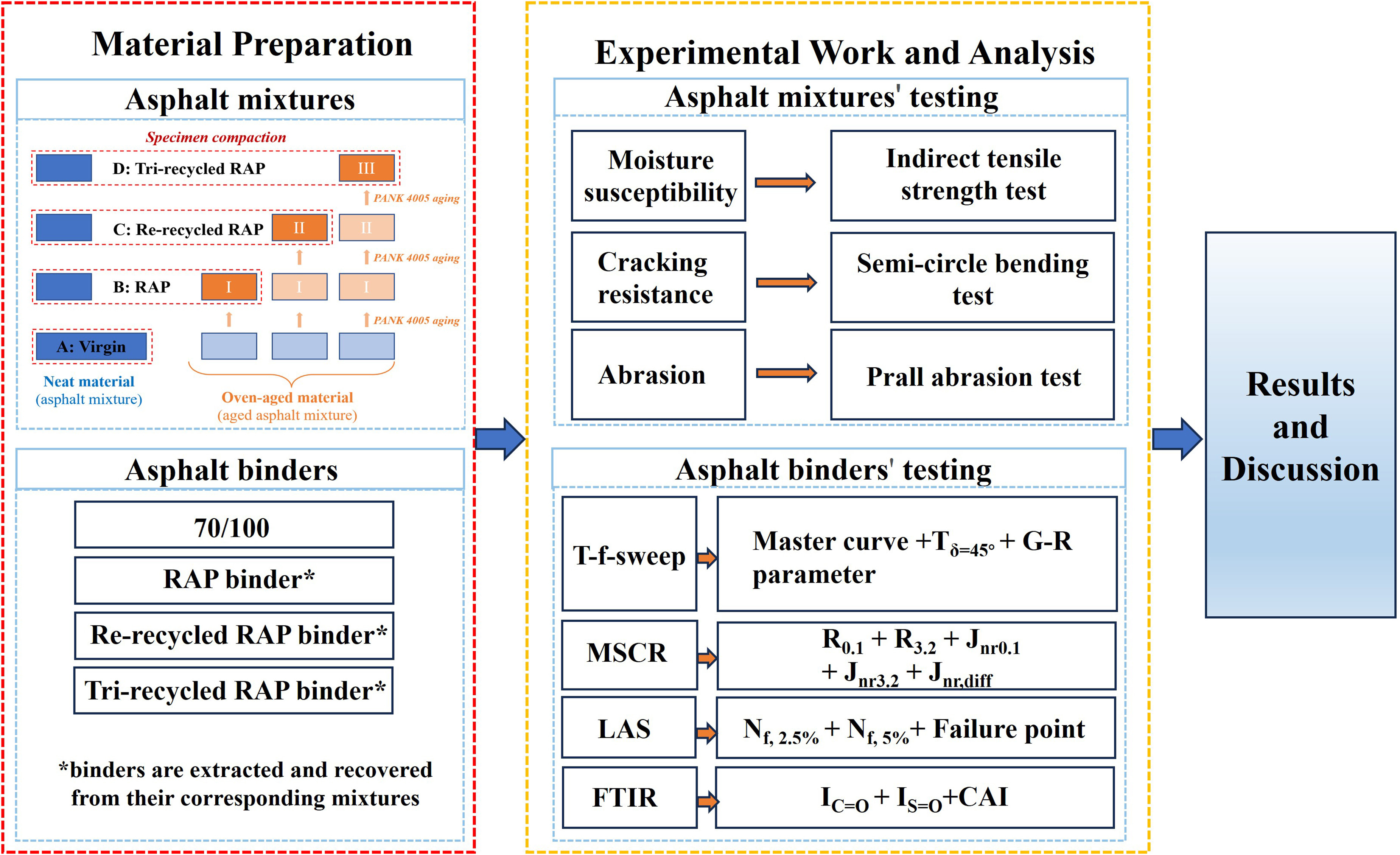
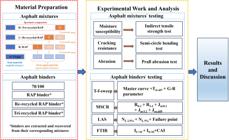
This study examined up to three recycling cycles with 50% RAP under Finnish conditions to evaluate the feasibility of using such mixtures for Nordic surface layers and to assess how an increasing number of recycling cycles affects durability-related performance and low-temperature cracking resistance. To achieve these objectives, performance was assessed at the mixture level to capture overall structural behavior and at the binder level to link rheological and chemical changes to the observed mixture response. Successive artificial aging of loose mixtures was used to simulate repeated recycling, after which test specimens were prepared for mixture and binder characterization. Mixture performance was evaluated for moisture susceptibility, low temperature cracking resistance, and studded tire abrasion using the indirect tensile strength (ITS) [22, 23] test, the semi- circular bending (SCB) test [24], and the Prall abrasion test [25], while binders extracted after each recycling cycle were evaluated using the temperature frequency sweep (T-f-sweep) [26] test, the multiple stress creep recovery (MSCR) [27] test, the linear amplitude sweep (LAS) [28] test, together with Fourier transform infrared spectroscopy (FTIR) analysis to track chemical changes. The overall research roadmap is shown in Figure 1.
3. MATERIALS
3.1. Asphalt mixtures
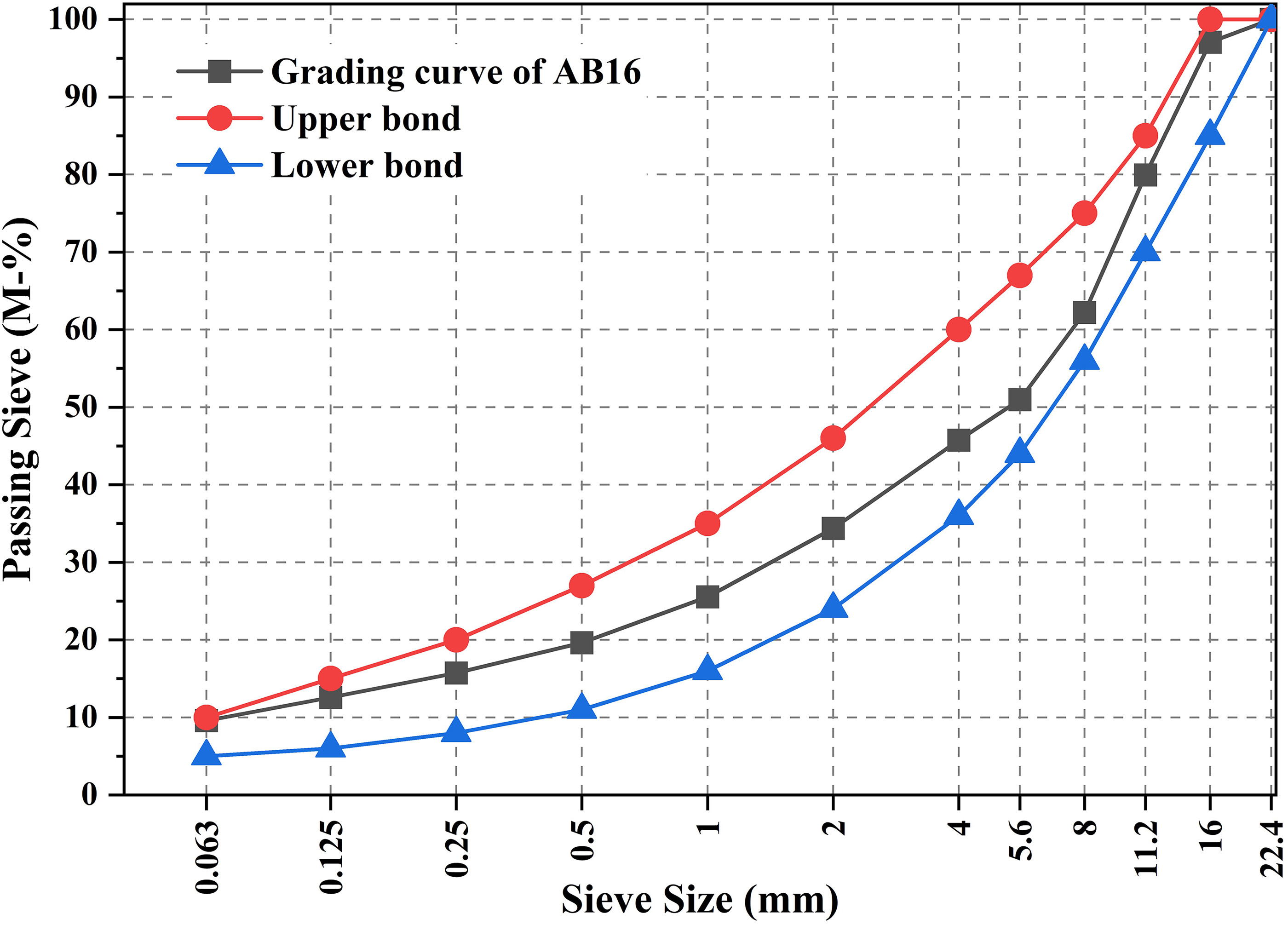
This study conducted performance testing using Stone Matrix Asphalt (SMA) 16 asphalt mixtures. The reference asphalt mixture, as outlined in prior Finnish recycling research [12, 13], consisted of a 70/100 pen-grade binder, limestone aggregates, and cellulose fibers. The grading of the SMA is illustrated in Figure 2.

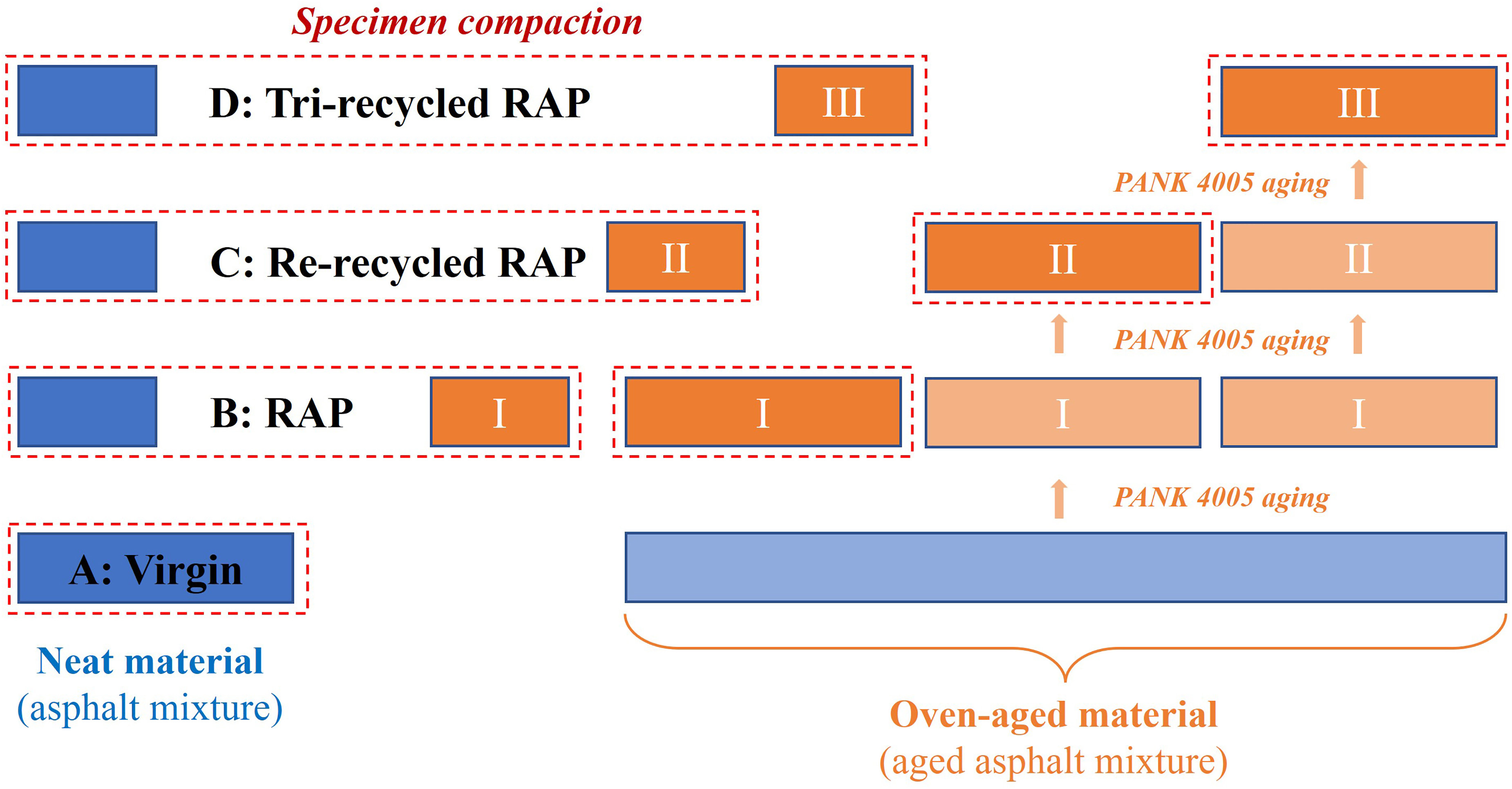
To generate RAP for multiple recycling cycles, a loose reference SMA 16 mixture was oven-aged at 135 °C for 4 h in accordance with the PANK 4005 procedure, simulating both short-term aging during production and several years of in-service field aging [29, 30]. This aging level is consistent with Finnish resurfacing intervals of roughly 3–5 years under harsh winter conditions with low temperatures, moisture damage, and abrasion from studded tires [12, 13]. Three RAP materials were produced by applying this aging cycle once, twice, and three times, referred to as RAP I, RAP II, and RAP III, respectively, as illustrated in Figure 3.
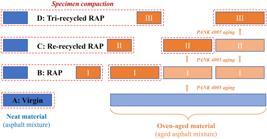
New SMA 16 mixtures were then produced by combining each RAP material with virgin materials while keeping the same gradation. Mixture B contained 50% RAP I and 50% fresh mixture. Mixture C contained 50% RAP II and 50% fresh mixture, and mixture D contained 50% RAP III and 50% fresh mixture. In this study, RAP content was expressed as a percentage of total mixture mass. In addition, based on earlier work [12], a single target binder content of 6.1% and a cellulose fiber content of 0.35% by mass of mixture were adopted for all mixtures. The identification and composition of all asphalt mixtures are summarized in Table 1.
3.2. Binders
This section examines four asphalt binders: one virgin 70/100 and three extracted from corresponding RAP mixtures, with a focus on their detailed characterization. These RAP binders were obtained using the methods of centrifugal extraction by dichloromethane and rotary evaporation [31]. Table 2 shows the results of their conventional properties.
4. TESTS AND EVALUATION METHODS
4.1. Asphalt mixtures
4.1.1. Indirect tensile strength test
The indirect tensile strength (ITS) test was used to evaluate tensile strength and moisture susceptibility of the mixtures [22, 23]. For each mixture, six 100 mm diameter specimens were split into dry and wet groups (three in each) and tested at 10°C with a 50 mm/min loading rate. The indirect tensile strength (ITS) was calculated using Equation (1) for both wet (ITSwet) and dry (ITSdry) conditions. Finally, the indirect tensile strength ratio (ITSR) could be calculated by Equation (2).
Where Fmax is the maximum load (N); d is the specimen’s diameter (mm); h is the specimen’s height (mm).
4.1.2. Semi-circular bending (SCB) test
To evaluate low-temperature fracture resistance after multiple recycling, semi-circular bending (SCB) tests were carried out according to SFS-EN 12697-44 [24]. Cylindrical specimens were cut into semi-circular specimens with a diameter of 150 mm and a thickness of 50 mm. A central notch with a width of 1.5 mm and a depth of 15 mm was then introduced into each specimen. For each asphalt mixture and test temperature, four notched specimens were prepared and tested at -10°C and 0°C with a loading rate of 5 mm/min. The resistance to fracture was evaluated by calculating the critical stress intensity factor (KIC) and the fracture energy (Gf) in Equations (3) and (4), respectively.
Where Pmax is the peak load during the loading process (N); R is the radius of the specimen, here it is 75 mm; t is the thickness of the specimen, here it is 50 mm; a is the length of the notch, here it is 15 mm; YI is the geometric factor, which in this study is 4.587 according to the literature [32]; WF is the work of fracture (J); Alig is the ligament area (mm2).
4.1.3. Prall abrasion test
Since studded tire abrasion is a key distress mechanism in Nordic surface layers, the Prall test was used to quantify abrasion resistance in accordance with SFS-EN 12697-16 [25]. For each specimen, the surface was impacted by 40 steel balls for 15 minutes under water-soaked conditions at 5°C, and the mass loss was measured. The abrasion value was then calculated using Equation (5).
Where M1 is the specimen’s weight after it absorbs water and is air-dried, measured before abrasion (g); M2 is its weight after abrasion under the same conditions (g); ρbssd is the specimen’s bulk density (g/cm3).
4.2. Asphalt binders
4.2.1. Temperature-frequency sweep (T-f-sweep) test
The temperature–frequency sweep (T-f-sweep) test was used to characterize the linear viscoelastic response of the binders over a wide range of temperatures and loading frequencies [26]. Tests were performed from -6°C to 40°C using an 8 mm geometry and from 28°C to 76°C using a 25 mm geometry, with temperature steps of 6°C. The linear viscoelastic range (LVE) was determined in advance by amplitude sweep tests, which resulted in shear strains of 0.01% for the 8 mm geometry and 1% for the 25 mm geometry. For each binder, two specimens were tested. The average values of complex shear modulus (G*), phase angle (δ), storage modulus (G’), and loss modulus (G’’) were used to construct Cole–Cole diagrams and master curves at a reference temperature of 22°C using Equations (6) and (7) [33, 34].
Where f is the frequency (Hz); G∞ is the glassy shear modulus at an infinitely high frequency; fc is the value when G’ = G’’; k and me are non-dimensional shape parameters; T is the experiment temperature (°C); T0 is 22°C; c1 and c2 are constant.
The rheological aging index (RAI) was used to quantify the overall hardening of asphalt binders after multiple recycling. As defined in Equation 8, RAI was obtained from the G* master curves by integrating the difference between the aged and unaged curves over a fixed range of reduced frequencies, using the same bounds for all binders.
Where ξ is the log reduced frequency between the integral limits.
Moreover, two additional rheological indices were derived from the master curves to characterize aged asphalt binders. The crossover temperature (Tδ=45°) is defined as the temperature at which δ = 45° at f = 1.59 Hz and indicates the transition from predominantly viscous to more elastic behavior at intermediate temperatures [35]. The Glover–Rowe (G-R) parameter as shown in Equation (9), was used as an indicator of the durability and intermediate-temperature cracking susceptibility of the binders [36].
Where G* and δ are measured at 15°C and 0.005 rad/s.
4.2.2. Multiple stress creep recovery (MSCR) test
The MSCR test was used to evaluate the rutting resistance of the binders [27, 37]. Tests were carried out at stress levels of 0.1 kPa and 3.2 kPa at 50°C and 60°C using a 25 mm DSR geometry. Two specimens of each binder type were tested, and the average result was used in the analysis. Percent recovery (%R), non-recoverable creep compliance (Jnr), and percentage differences between Jnr values at the two stress levels (Jnr,diff) were calculated using the Equations (10),(11),(12) provided below.
where rr is the recovered strain in a cycle; ru is the un-recovered strain; rp is the peak strain in a loading cycle, and rp = rr + ru; Jnr,3.2 and Jnr,0.1 are the non-recoverable creep compliances under the stress levels of 3.2 and 0.1 kPa, respectively.
4.2.3. Linear amplitude sweep (LAS) test
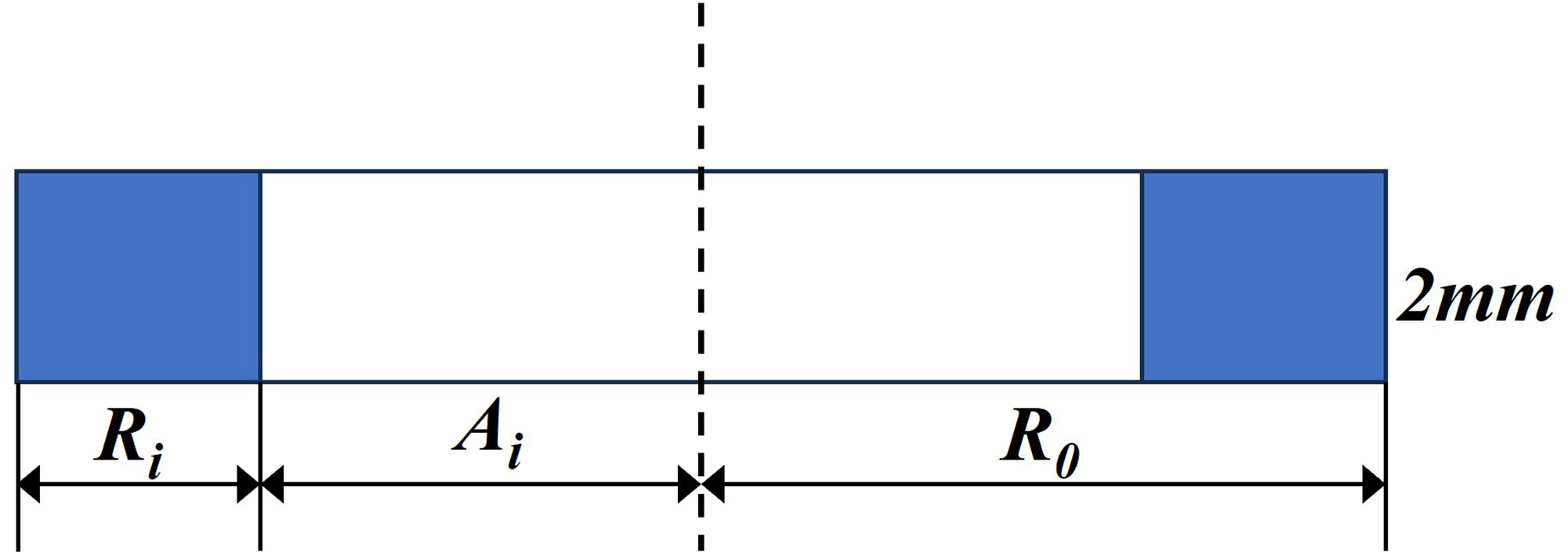
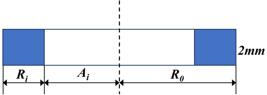
The LAS test was used to assess the fatigue resistance of the binders in accordance with AASHTO T 391-20 [28]. A frequency sweep from 0.2 Hz to 30 Hz was first performed at a fixed strain of 0.1%, followed by an amplitude sweep at 10 Hz in which the strain was increased from 0.1% to 30% with 10 s at each level. Tests were conducted at 25°C using an 8 mm parallel-plate geometry with a 2 mm gap. Two specimens of each binder were tested, and the averaged response was used to calculate the fatigue life Nf from Equation (13). Under repeated shear loading in the LAS test, cracks initiate at the specimen edge and propagate towards the center, effectively reducing the load-carrying radius from its original value (R0) to a smaller effective radius (Ri), as illustrated in Figure 4. Fatigue damage was characterized in terms of an effective crack length (Ai) and a crack growth rate (Vc), which were obtained from Equations (14) and (15).
Where A and B are simplified viscoelastic continuum damage theory model (S-VECD model) coefficients; γmax is the expected maximum strain to calculate fatigue life (%).
Where R0 represents the initial radius of the specimen, set at 4 mm; Ti denotes the torque measured at the ith cycle (mN·m); θi refers to the deflection angle at the ith cycle (°); h indicates the sample’s thickness, which is 2 mm; and G*0 is the initial dynamic shear modulus of the specimen (Pa).
4.2.4. Fourier-transform infrared spectroscopy (FTIR)
FTIR was used to characterize chemical changes in the binders during aging, with a focus on carbonyl (C=O) and sulfoxide (S=O) functional groups that are sensitive to oxidation [38, 39]. Spectra were obtained in reflectance mode at a resolution of 4 cm-1 using 32 scans, and each sample was scanned nine times, with the average spectrum used for analysis. The indices IC=O and IS=O were calculated using Equations (16) and (17), respectively, and a chemical aging index (CAI) defined in Equation (18) was used to quantify the overall oxidation level of the binders.
Where AC=O and AS=O are the integrated areas of the peaks corresponding to the C=O (1700 cm−1) and S=O (1030 cm-1) functional groups; ∑A is the sum of the integrated areas of the peaks corresponding to characteristic functional groups in asphalt (2953–2862 cm−1, 1700 cm−1, 1600 cm−1, 1460 cm−1, 1376 cm−1, 1030 cm−1, 864 cm−1, 814 cm−1, 743 cm−1 and 724 cm−1).
5. RESULTS AND ANALYSIS
5.1. Asphalt mixtures
5.1.1. Indirect tensile strength test
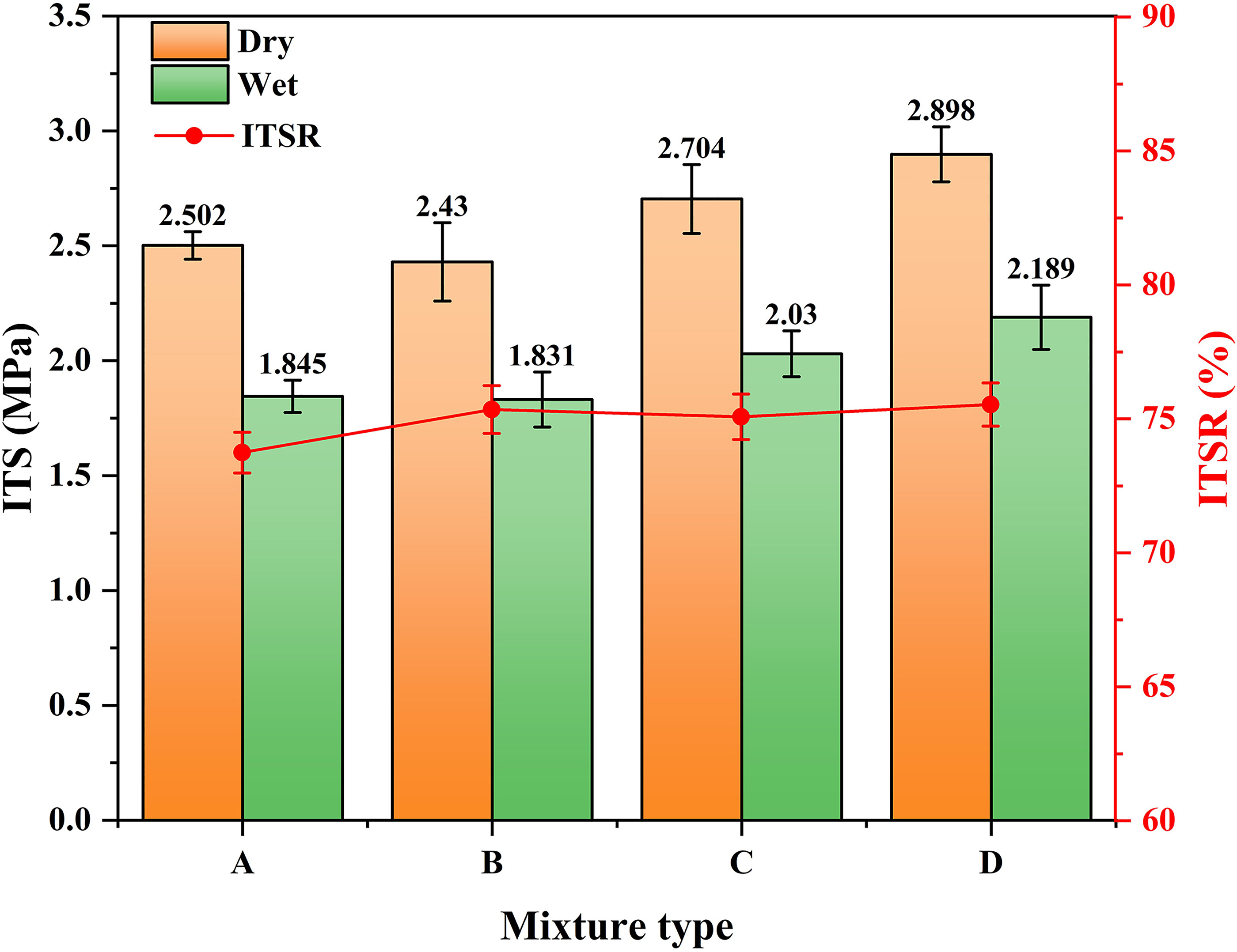
The ITS values for each mixture type are presented in Figure 5. Overall, ITS values increased with each recycling cycle, both under dry and wet conditions. Compared to Mixture A, Mixture D showed an increase of 10.02% in dry conditions and 18.64% in wet conditions, indicating that multiple recycling cycles had a more pronounced effect on enhancing the tensile strength of asphalt mixtures under wet conditions. The increase in ITS values may be attributed to the presence of hard asphalt binder in RAP, which increases the overall stiffness of the mixtures. Consequently, mixtures that have undergone more aging cycles and contain more viscous materials tend to exhibit superior tensile performance. However, Mixture B showed a reduction in ITS, potentially due to a higher air void content compared to mixtures with higher recycling levels.
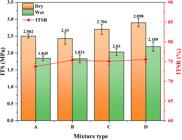
Figure 5 also shows the ITSR values. It was observed that adding RAP to the reference asphalt mixtures resulted in an increase. According to Table 1, multiple recycling cycles led to a denser asphalt mixture with reduced air void content, which could decrease the opportunity for moisture to penetrate the mixture, thereby enhancing its resistance to water damage. Furthermore, the increased polarity of aged binder could also enhance its adhesion to aggregates. Despite this, the extent of recycling appears to have minimal influence on the ITSR values, which, compared to Mixture A, increased by 1.60%, 1.33%, and 1.79% respectively with each successive recycling cycle. This highlights that after three cycles of recycling, the water stability of the recycled asphalt mixtures can still maintain good condition.
5.1.2. Semi-circular bending (SCB) test
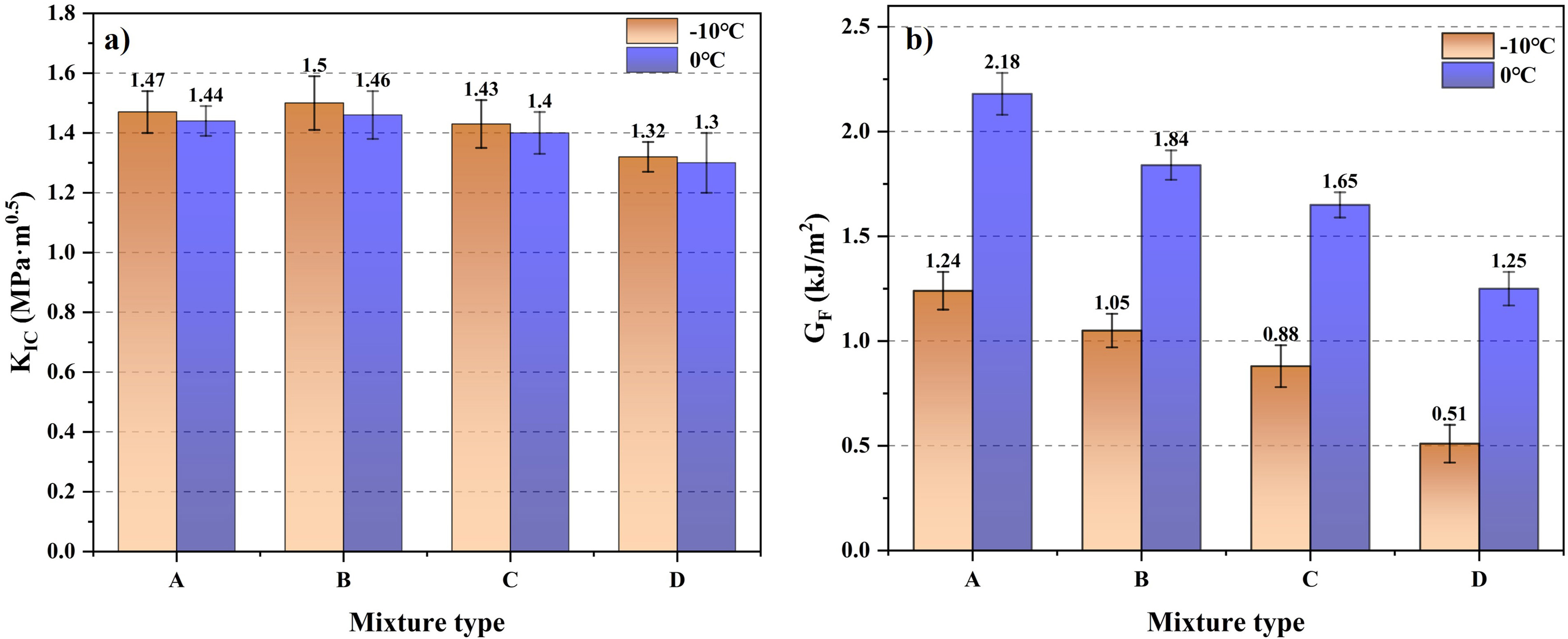
In low temperatures, failures in asphalt mixtures are typically brittle. Figure 6(a) illustrates the KIC values at different test temperatures. Across all mixture types, the KIC values were generally higher at -10°C compared to 0°C, suggesting that lower temperatures required a higher load to induce failure in asphalt mixtures. It was noteworthy that Mixture B, after one recycling cycle, exhibited a slightly higher KIC at -10°C, suggesting that adding RAP during the first cycle might not have reduced the fracture resistance at low temperatures. However, as recycling increased, there was a noticeable decline in KIC values, though the decrease was not drastic between the first and second cycles. After three cycles of recycling, Mixture D exhibited the lowest KIC values. Compared to Mixture A, its KIC values decreased by 10.20% at -10°C and 9.59% at 0°C. Notably, although the aged mixtures have higher ITS values, its toughness decreases, and its crack resistance weakens.

Figure 6(b) displays the results for GF values. Similar to the KIC values, GF values tended to decrease as the number of recycling cycles increased at both temperatures. After three cycles, the GF values decreased by 58.87% at -10°C and 42.66% at 0°C. The more substantial reduction in GF values at lower temperatures suggests that the fracture performance of asphalt mixtures under extremely low temperatures warrants increased attention during the recycling process. Within the same cycle, GF values at 0°C were consistently higher than those at -10°C. This occurred because, despite lower peak loads at 0°C, the material demonstrated enhanced viscoelastic properties and improved toughness, thereby absorbing more energy. Consequently, there was greater displacement at the end of the test, leading to higher GF values. Therefore, one recycling cycle did not significantly reduce low-temperature fracture resistance, whereas the third cycle caused a pronounced loss of fracture energy, especially at -10°C, suggesting an increased risk of low-temperature cracking when recycling is extended beyond two cycles.
5.1.3. Prall abrasion test
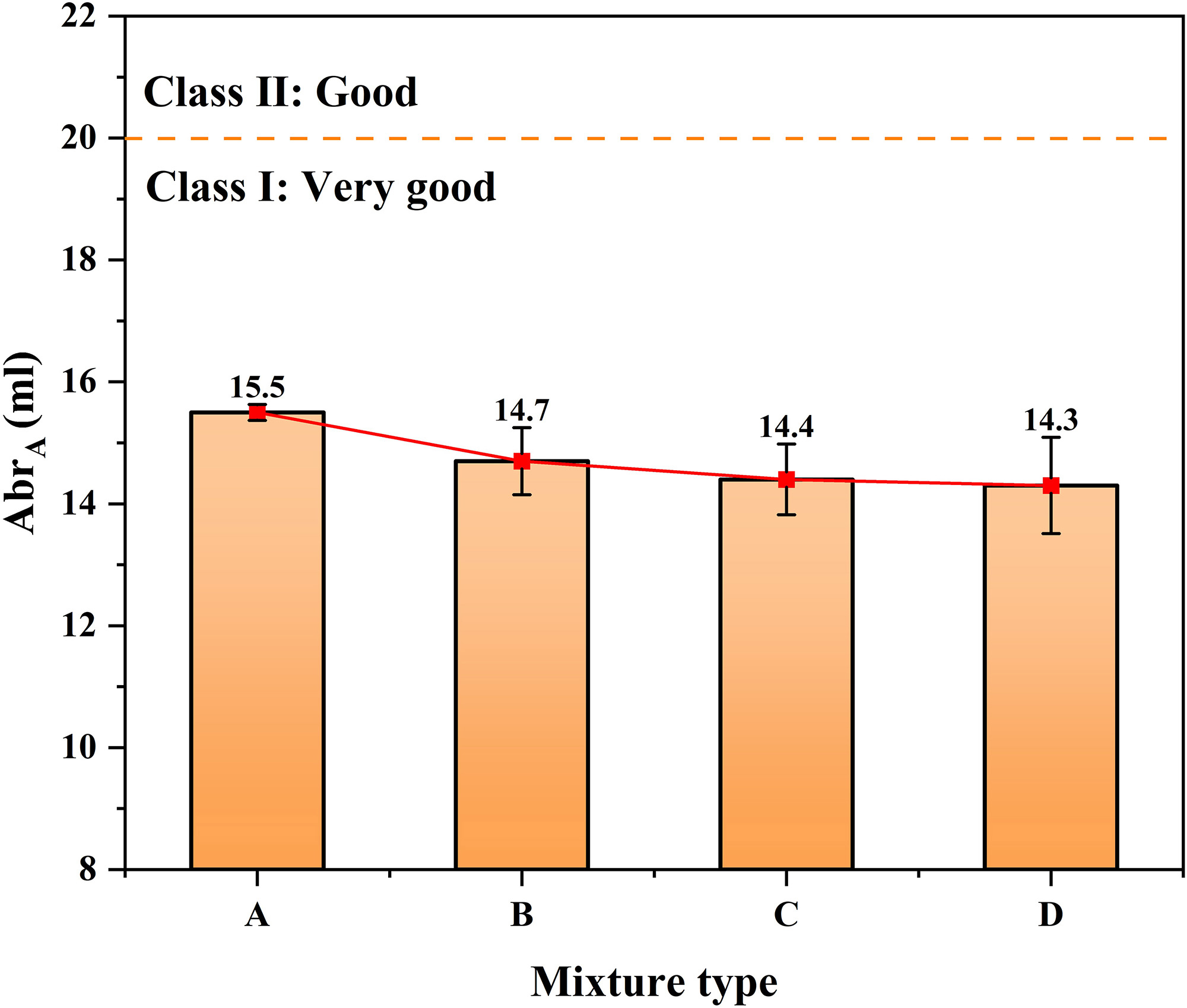
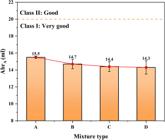
In cold regions such as Finland, where pavements are frequently subjected to wear from studded tires, a low Prall abrasion value was particularly desirable. Figure 7 illustrates the AbrA values for various asphalt mixtures, underscoring the impact of incorporating RAP across multiple recycling cycles on abrasion resistance. The reference asphalt mixture recorded the highest AbrA value at 15.5 ml. With the increase in recycling cycles, this value progressively declined, reaching 14.3 ml after three cycles. Notably, all mixtures fell within Class I, indicating excellent resistance to abrasion from studded tires [21]. This enhancement in abrasion resistance, attributable to the harder asphalt coating in the aged mixture, improves the impact resistance of the aggregates and thereby increases the overall durability of the asphalt mixtures against abrasion. Despite these findings, the overall reduction in AbrA value across recycling levels was modest, about 4 ml from RAP to tri-recycled RAP. The error bars in the graph show a general downward trend in abrasion loss from mixture A to D, yet the considerable length of the error bars for mixtures B and C indicates significant variability in these results. This variability suggests potential uncertainties in abrasion loss measurements for these mixtures, possibly due to inconsistencies in material properties and measurement errors. Overall, these results indicated that multiple recycling up to three cycles did not reduce studded-tire abrasion resistance for the studied mixtures, although the changes were small and somewhat variable.
5.2. Asphalt binders
5.2.1. Cole-Cole diagram
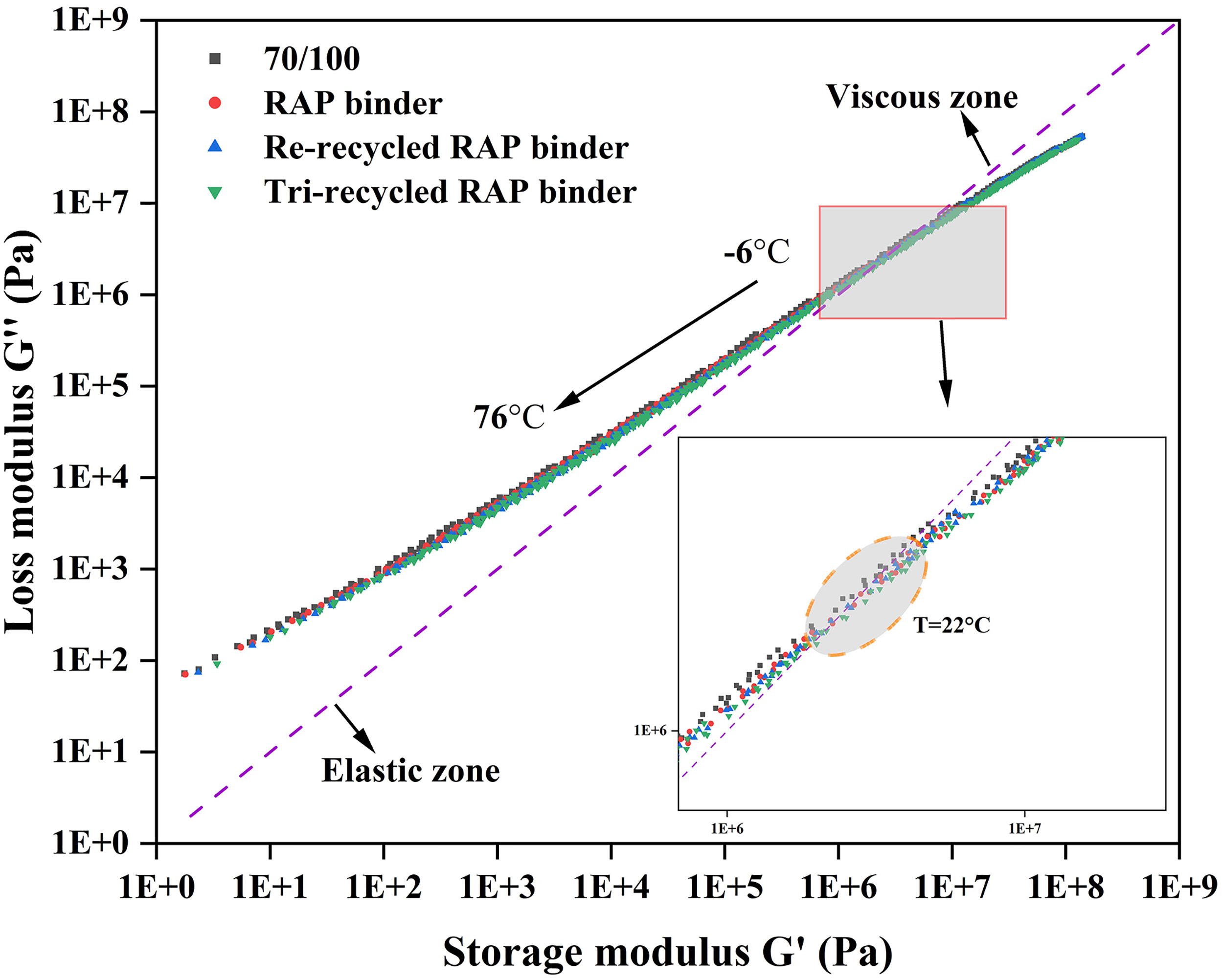
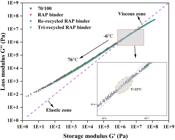
Asphalt binder is a temperature-sensitive material, specifically characterized by its solid state at low temperatures with a relatively high modulus, while a fluid state with a decreased modulus at higher temperatures [40]. The Cole-Cole diagram depicts the correlation between the G’ and G’’ of different asphalt binders at different temperatures. A predominance of the G’’ over the G’ signifies a greater viscous characteristic in the binders. Conversely, when the G’ exceeds the G’’, it indicates the binders become elastic-dominant [41].
As depicted in Figure 8, both the G’ and G’’ of asphalt binders decreased with an increase in temperature. Notably, the rate of decrease in the G’ was faster than that of the G’’, indicating a gradual shift from elastic to viscous properties in the asphalt. The transition of the dominant viscoelastic component occurs around the medium-temperature range, specifically at 22°C. It is also important to note that compared to the 70/100 asphalt binder, the diagram for the aged asphalt binders shifted to the right. This implied that with the same G’’, aged asphalt binders exhibited a higher G’, which increased with the number of aging cycles. This observation aligns with the penetration index results; as the asphalt ages, its penetration value decreases, indicating increased hardness and elasticity and a higher shifting temperature.
5.2.2. Master curve
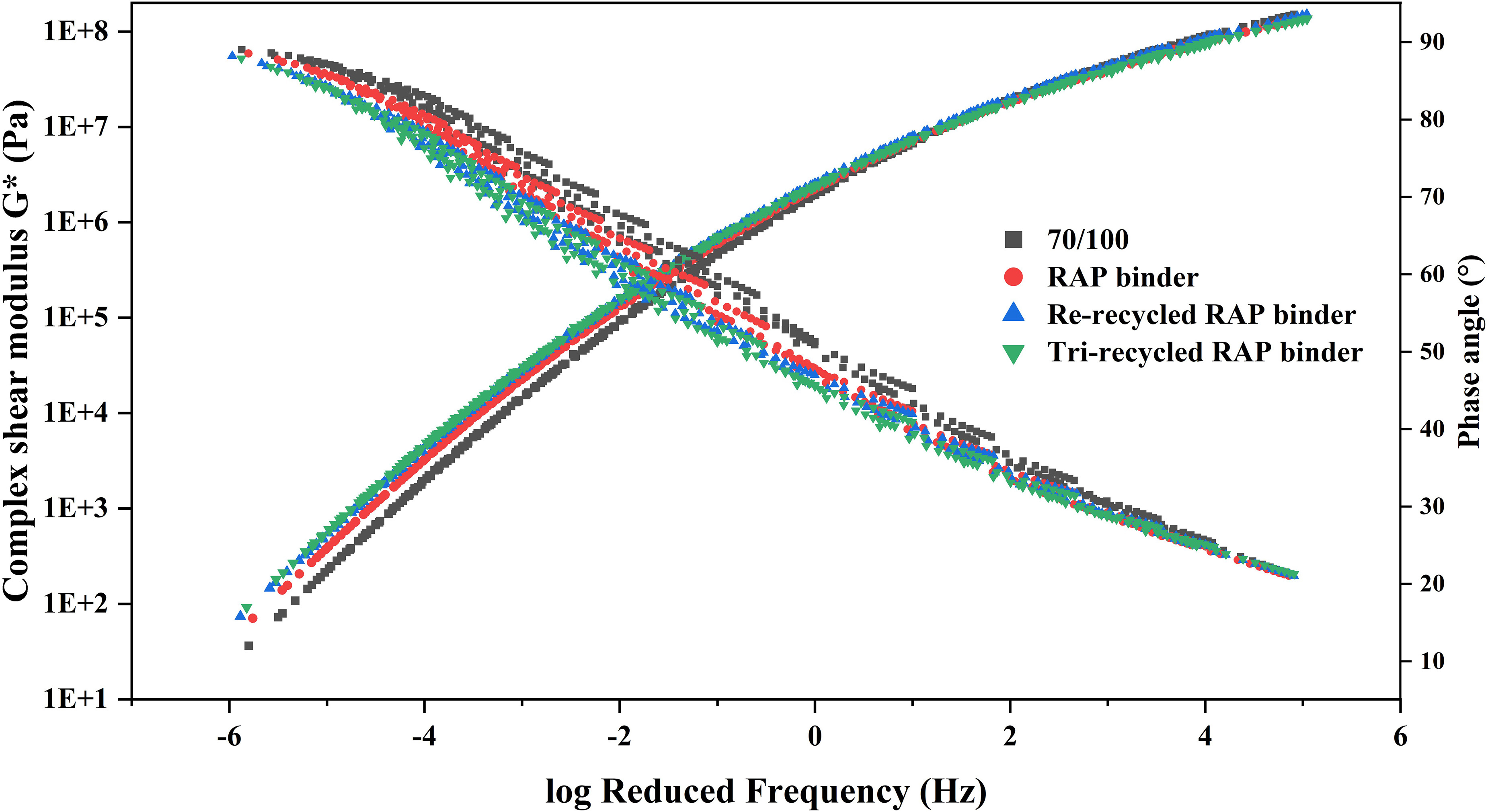
In Figure 9, the master curves of G* for all asphalt binders are displayed. By applying the time–temperature superposition principle (TTSP), it is possible to ascertain the asphalt’s rheological behavior across a broader frequency range. It is evident from the figure that the modulus increased as frequency increased, implying that as the temperature decreased, the asphalt binder became harder, consistent with the rising modulus. The parameters for the master curve constructed using Equations (6) and (7) are shown in Table 3. The R2 value indicates a good fit of the master curves.
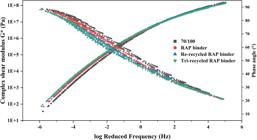
A frequency of 10 rad/s is utilized to emulate the conditions experienced by vehicles traversing asphalt pavements at an approximate velocity of 80 km/h [42]. Analyzing this representative velocity, it was observed that the G* of the aged binders, compared to 70/100 binder, showed an increase of 10.57%, 17.15%, and 23.82% after one, two, and three aging cycles, respectively. In the low-frequency range, which corresponded to higher temperatures, there was a clear distinction in the G* value. Here, the G* of aged binders exceeded that of 70/100 binder, and this difference grew with aging cycles, suggesting improved high-temperature performance with increased aging. However, this difference diminished as the frequency increased (and temperature decreased). Eventually, at high frequencies (low temperatures), the G* of 70/100 binder exceeded that of the aged binders. Moreover, with more aging cycles, the low-temperature performance of the aged binders deteriorated, aligning with previous research findings [43]. This progressive increase in high-temperature stiffness with additional aging cycles was consistent with the improved Prall abrasion resistance and the higher ITS values observed for the recycled mixtures, whereas the deterioration in low-temperature rheological behavior was in line with the reduced SCB KIC and GF values after multiple recycling cycles.
Figure 9 also depicts the master curves of δ. As the frequency increased (implying lower temperatures), there was a notable reduction in the δ. The δ for the 70/100 binder remained higher than that of aged binders across the curve, indicating a greater content of viscous components in the 70/100 binder, which led to a less robust high-temperature performance compared to the aged binders. However, at higher frequencies, which aligned with lower temperatures, the δ of all asphalt binders converged closely, signifying that the binders’ elastic characteristics were more pronounced under these conditions.
Due to minimal differences between the master curves, the RAI was introduced for quantitative analysis of aging behaviors after multiple recycling of asphalt binders. The RAI value was calculated over a log-reduced frequency range of -5.5 to 1.8 [44], as shown in Table 4. It was observed that with an increase in the number of aging cycles, the RAI value notably increased, from 5.03 × 10⁵ for a single aging cycle to 2.01 × 10⁶ after three cycles. Notably, this change was most significant between the second and third aging cycles.
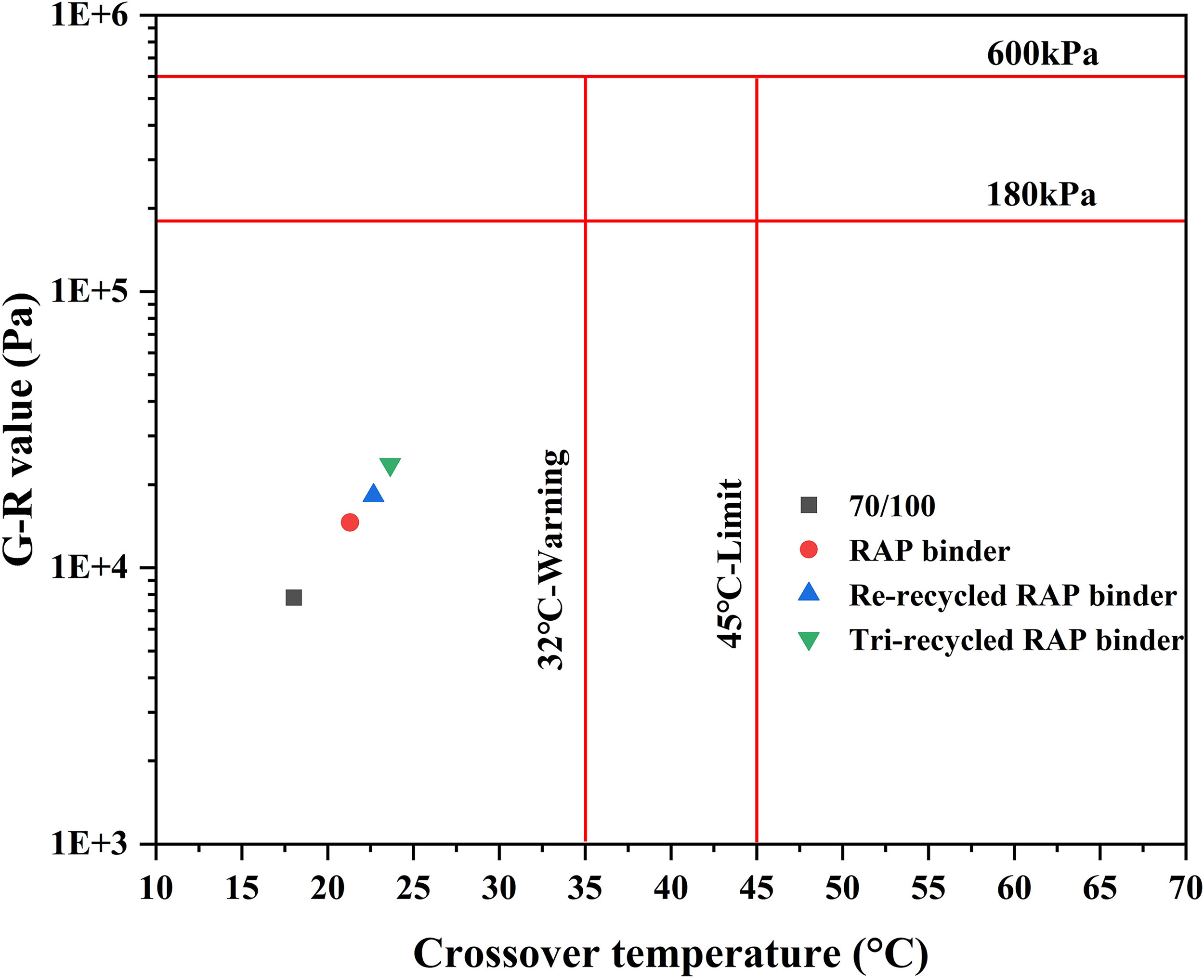
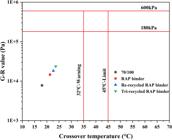
The results of Tδ=45° and G-R parameters are listed in Table 5. A relationship between Tδ=45° and the G-R parameter is shown in Figure 9 to determine whether the binders were in a good or poor performance domain. Study has shown that the damage onset and considerable cracking may occur when the G-R parameter exceeds 180 kPa and 600 kPa, respectively [45]. Additionally, in order to keep the binders performing well after aging, Tδ=45° needs to be within 32°C (warning temperature) and 45°C (limit temperature) [46].
From Table 5 and Figure 10, it is evident that both Tδ=45° and the G-R parameter increased with the number of aging cycles, with the data points shifting upwards and to the right. This trend suggested an increase in the binders’ viscosity upon aging, subsequently increasing their susceptibility to cracking. Nonetheless, asphalt binders that underwent multiple aging cycles were found to retain adequate performance levels, as they stayed within the established limits of 180 kPa for the G-R parameter and 35°C for Tδ=45°.
5.2.3. Creep deformation and recovery analysis
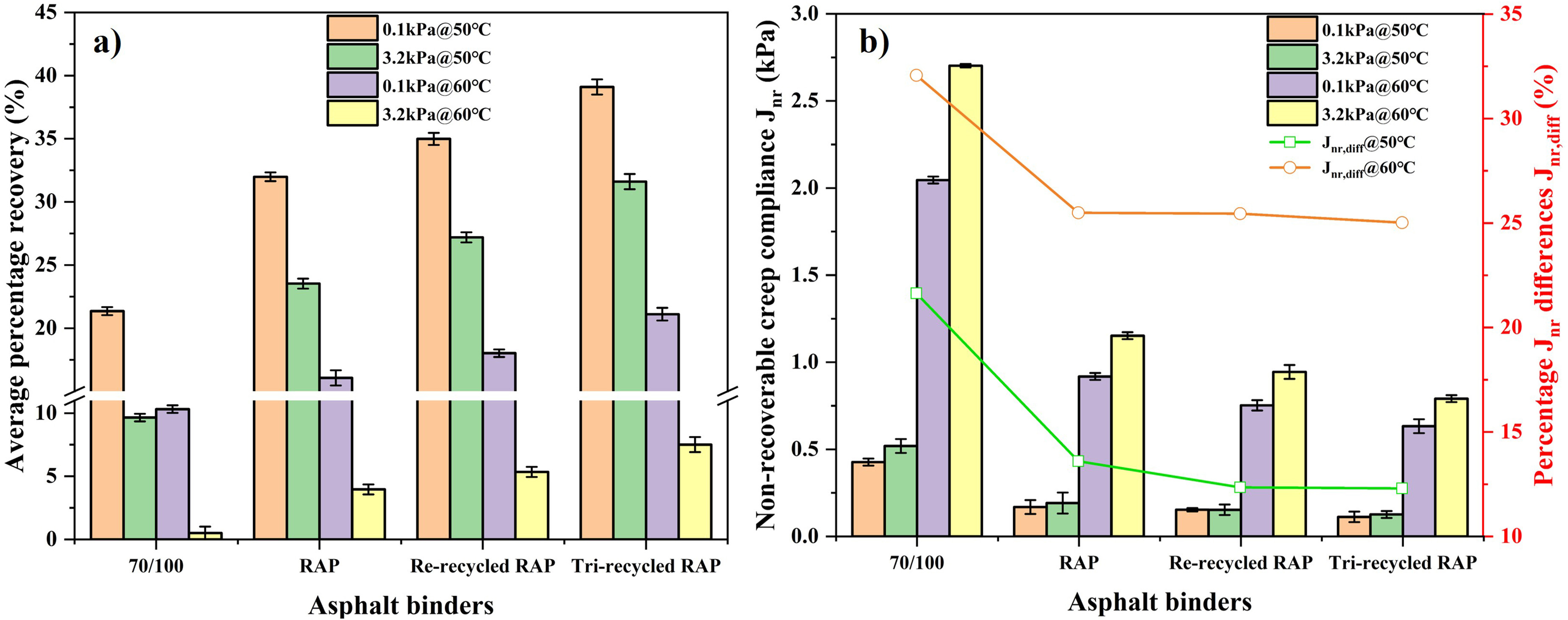
As depicted in Figure 11, there is a noticeable trend at 50°C and 60°C where the %R of asphalt increased, and the Jnr decreased with each additional aging cycle, suggesting an inverse correlation between %R and Jnr. Precisely at 60°C and under a stress of 3.2 kPa, the %R for 70/100 binder was 0.51%, whereas for RAP binder, re-recycled RAP binder, and tri-recycled RAP binder, the %R values were 3.96%, 5.35%, and 7.51%, representing increases of 6.76, 9.49, and 13.73 times, respectively. Jnr also decreased from 2.05 kPa to 0.63 kPa. Therefore, compared to 70/100 binder, aged binder demonstrated enhanced deformation resistance, which strengthened with each aging cycle. Simultaneously, as temperature increased, %R decreased, and Jnr increased, suggesting a reduction in deformation resistance at higher temperatures. The Jnr,diff value, indicative of the binder’s sensitivity, also fell as the binder aged, pointing to decreased temperature sensitivity and enhanced deformation resistance. Notably, all asphalt binders met the AASHTO M332-14 [47] requirement, with Jnr,diff not exceeding the 75% threshold. The decrease in Jnr was also in line with the lower Prall abrasion losses measured for the recycled mixtures, linking improved binder creep response to enhanced resistance to studded-tire abrasion at the mixture level.
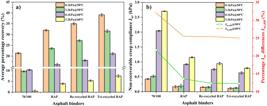
%R, Jnr and Jnr,diff of asphalt binders under 50°C and 60°C. (a) %R; (b) Jnr and Jnr,diff.
5.2.4. Fatigue performance analysis
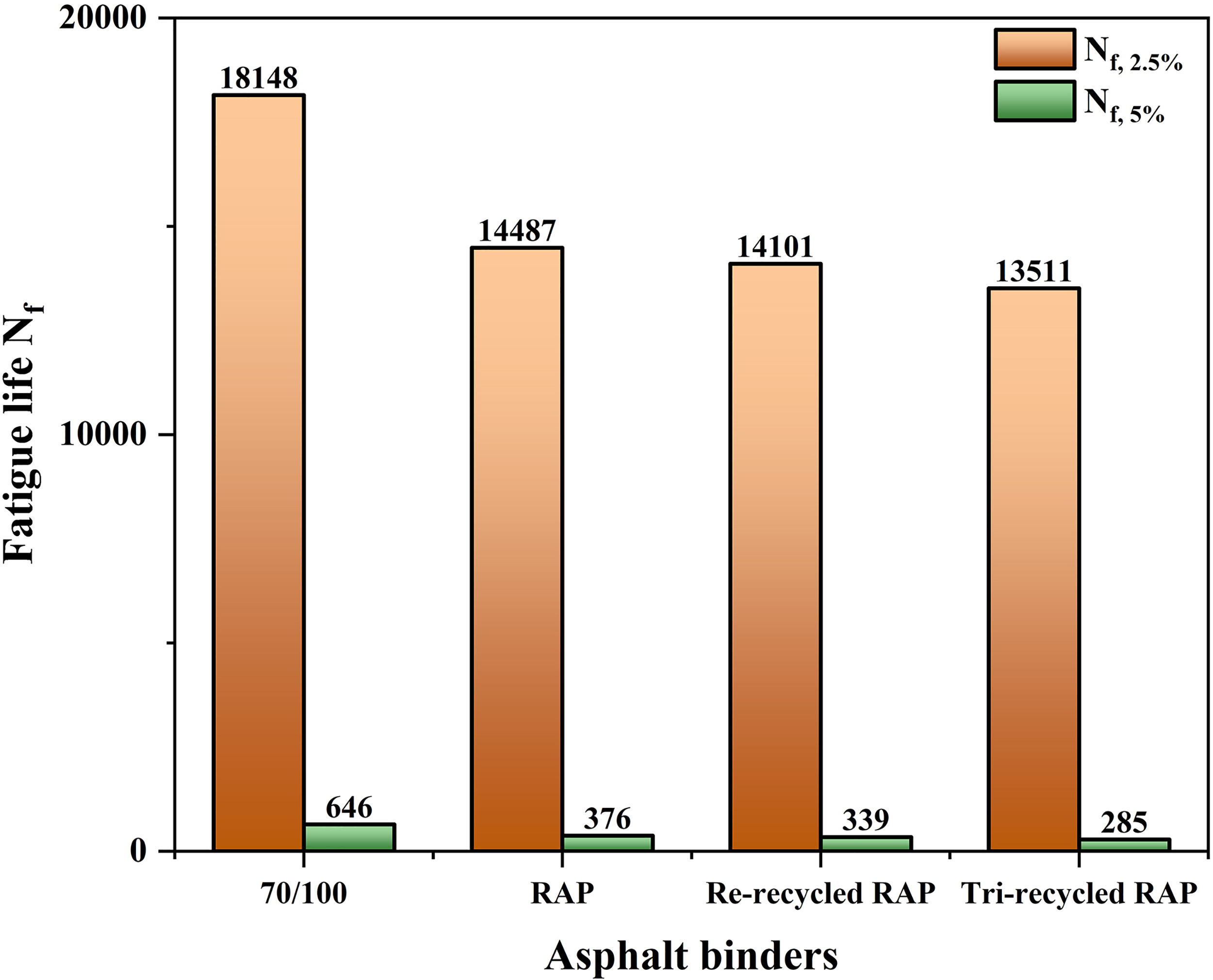
The S-VECD model was used for the selection of different strain levels to evaluate the Nf of binders. For high-strength pavements, a strain level of 2.5% is recommended, whereas for lower-strength pavements, a strain level of 5% is suggested [48]. As shown in Figure 12, there was a significant reduction in Nf during the first cycle. At 2.5% strain, the Nf decreased by 20.18%, and at 5% strain, it decreased by 41.80%. This reduction is due to the initial aging of the binder, where the evaporation of light oil components makes the material harder and more brittle. This hardening increases the material’s susceptibility to cracking under high strain, thereby reducing its Nf. It is noteworthy that the reduction in Nf during the second cycle was less pronounced, with a mere 2.66% decrease at a 2.5% strain level compared to the first cycle. However, at a 5% strain level, the rate of decline in Nf was higher, dropping by 9.84%. After three cycles, the Nf of the asphalt binder at 5% strain decreased by 55.89% compared to the virgin binder, significantly more than the 25.61% decrease at 2.5% strain. These results indicate that after three recycling cycles, the hardening and brittleness caused by aging can strongly limit the deformation capacity of the binders, and measures such as rejuvenation may be needed to restore flexibility at higher strain levels. Taken together with the lower fracture energy Gf obtained from the SCB tests at low temperatures, the reduction in Nf with increasing recycling cycles suggested a general decrease in the crack tolerance of the recycled materials under both intermediate temperature fatigue and low temperature fracture loading, implying that extending recycling beyond two cycles should be used with caution for cold-climate surface layers under heavy traffic.
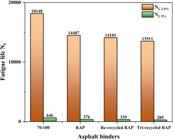
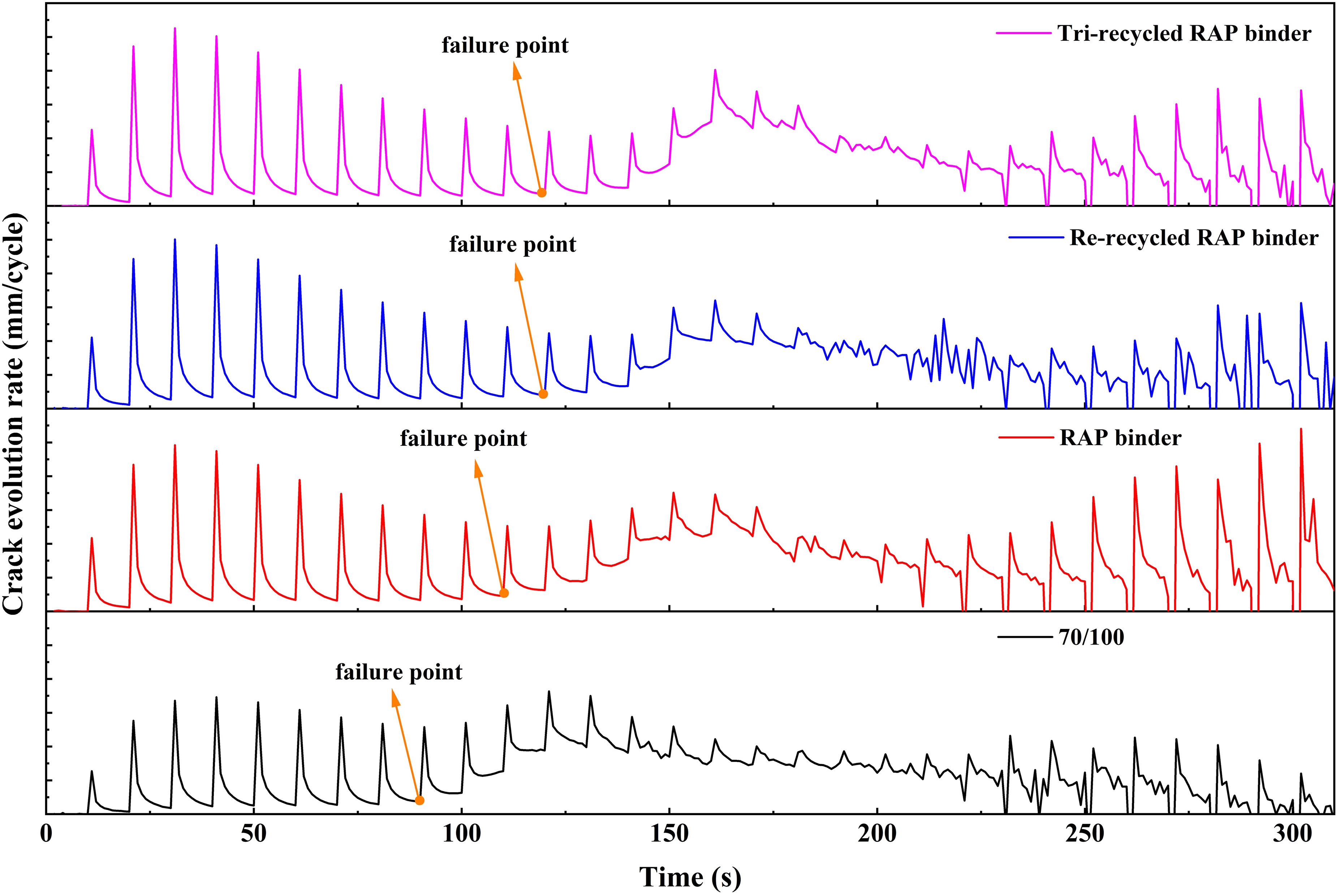
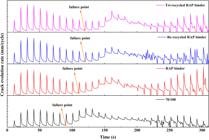
Figure 13 presents the rates of crack evolution in asphalt binders under different aging cycles, with the y-axis scaled from 0 to 0.006 mm/cycle. Initially, the rate of crack development increased with strain, but it later declined over time at consistent strain levels. This decline could be attributed to the initial damage caused by shear forces, which quickly widened the cracks. Once these forces remained constant, they were no longer sufficient to induce further significant damage, thus reducing the crack growth rate. The evolution of cracks in the asphalt binder initially saw a minor peak, then a gradual decrease, followed by a more substantial increase. Therefore, the failure point was defined as the local minimum that occurred just before this sharp increase [49]. As the number of aging cycles increased, the failure point shifted to later in the process compared to that of the virgin binder. Specifically, the failure point increased from the initial 90 seconds to 110 seconds after the first cycle, and to 120 seconds after both the second and third cycles. Despite the overall reduction in Nf due to aging, the increased macromolecular structure within the aged binder enhanced its viscous properties. Consequently, aged binder required more deformation and longer time under the same external loads to reach failure. As the binder progressed from the second to the third cycle, the failure point remained unchanged, indicating an overabundance of macromolecular structures. Specifically, the cumulative aging effects associated with multiple recycling cycles resulted in excessive hardening and brittleness of the material, impairing its ability to effectively absorb and dissipate applied loads and ultimately leading to a reduction in Nf. This behavior is particularly critical for pavement sections where high tensile strains occur.
5.2.5. FTIR test results
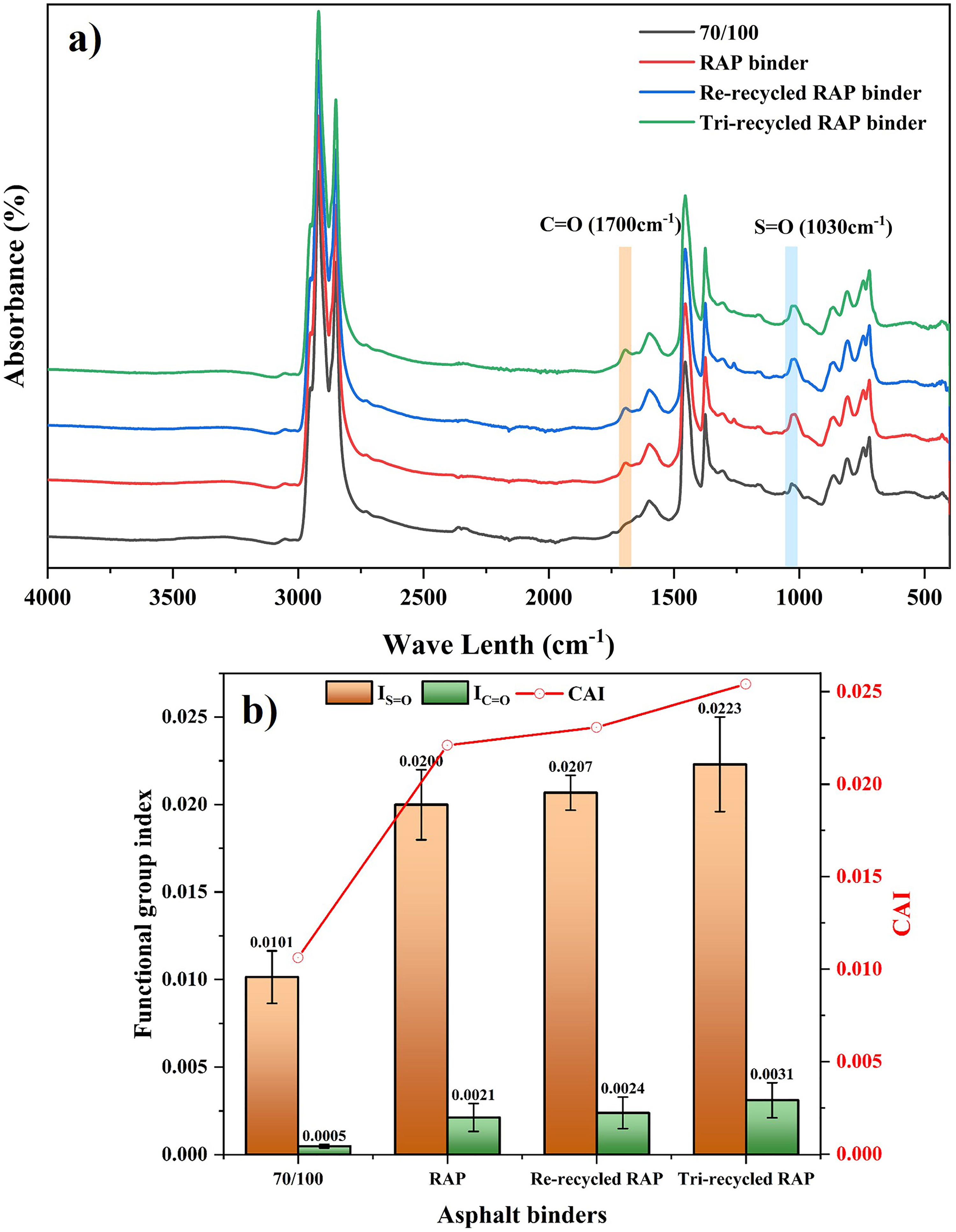
Figure 14(a) displays the FTIR spectra of various binders, while 14(b) analyzes the proportions of C=O and S=O groups and CAI values in asphalt after aging. The graphs revealed an increase in the absorption peak areas of C=O and S=O after multiple aging, and the C=O content increased by 320.12%, 380.44%, and 520.52%, while the S=O content increased by 98.02%, 104.95%, and 120.79% compared to the 70/100 virgin binder. As the number of cycles increased, the growth rate of C=O outpaced that of S=O. This observation was primarily attributed to the predominant formation of oxidation products such as ketones, carboxylic acids, and anhydrides during the aging process [50]. The accumulation of these polar compounds progressively increased binder stiffness and viscosity, in agreement with the rheological trends observed in the master curves and MSCR results. Although the increase in S=O also influenced the fatigue life of the asphalt binder, studies demonstrated that this impact was comparatively limited [51].
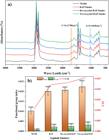
FTIR test results. (a) The FTIR spectra of binders; (b) C=O and S=O function groups index and CAI values.
The CAI results in Figure 14(b) showed a marked increase in the first cycle relative to the virgin binder, reflecting the presence of oxidizable components such as aromatics and saturated hydrocarbons in the added RAP, which readily reacted with oxygen to form C=O and S=O groups. During the second cycle, the rise in CAI was less pronounced, indicating that the most reactive components in the re-recycled RAP had been consumed and that the oxidation rate had slowed. In the third cycle, however, the CAI slope increased again, suggesting that the binder in the tri-recycled RAP became more brittle and that more complex oxidation reactions occurred, generating additional polar functional groups. This evolution of CAI was consistent with the further increase in stiffness and the loss of fatigue life and crack tolerance observed after the third recycling cycle.
5.3. Relationship between binder properties and mixture performance
Overall, the binder and mixture results were consistent. With increasing recycling cycles, the binders became stiffer at higher temperatures, as shown by higher G*, larger RAI values, higher Tδ=45° and G–R parameter, and lower Jnr together with higher %R. At the same time, FTIR indicated stronger oxidation through higher C=O and S=O contents and CAI values. These changes were reflected at the mixture level by higher ITS in dry and wet conditions, slightly increased ITSR, and lower Prall abrasion losses, indicating improved tensile strength, moisture resistance, and resistance to studded tire abrasion. At the same time, fatigue life from the LAS tests decreased with recycling cycles, especially at higher strain, and the crack growth analysis showed more critical damage accumulation, which agreed with the lower KIC and GF from the SCB tests at low temperatures after several recycling cycles. Together, these observations showed that the aging of the binder during multiple recycling improved durability-related properties of the mixtures but also made them more prone to cracking at low-temperatures or under severe loading.
6. CONCLUSIONS
This paper conducted a preliminary experimental study on implementing three cycles of recycling in Finland. Reference, recycled, re-recycled, and tri-recycled asphalt mixtures were developed and evaluated using the indirect tensile strength test, semi-circle bending test, and Prall abrasion test. Rheological and chemical property analyses were also performed on the respective four different asphalt binders. The test results lead to the following conclusions:
-
The incorporation of recycled materials in asphalt mixtures had demonstrated improved outcomes in terms of the indirect tensile strength (ITS) and indirect tensile strength ratio (ITSR), indicating a positive correlation between recycled circles and water sensitivity. The level of recycling was found to increase the mixture’s strength moderately.
-
At -10°C and 0°C, an increase in the number of recycling cycles reduced both critical stress intensity factor (KIC) and the fracture energy (Gf) values, particularly after three cycles where the decline in Gf was significant. Multiple recycling cycles had a negative impact on the low-temperature fracture resistance of asphalt mixtures.
-
The asphalt mixtures after multiple recycling cycles were found to be more resistant to abrasion loss than the reference asphalt mixture. However, the presence of large error bars in these results pointed to the need for further, more controlled experiments to assess this characteristic reliably.
-
The rheological properties, particularly those related to high-temperature performance, showed improvement in the extracted binders after undergoing multiple recycling processes compared to the virgin binder. As the number of aging cycles increased, the high-temperature performance of the asphalt binder strengthened. While multiple recycling cycles could delay the failure point of the binder, there was a decrease in fatigue life (Nf), particularly in the case of the tri-recycled RAP binder.
For engineers and road authorities in Finland and other Nordic countries, this study highlights the potential of RAP as a sustainable material for surface layers. The results indicate that multiple recycling of mixtures with 50% RAP can be technically feasible under the investigated conditions, but also highlight challenges related to the number of recycling cycles and the associated changes in binder properties, which need to be considered when evaluating pavement performance. In this study, the same fresh asphalt binder was used in all mixtures; the use of rejuvenators was not considered, in line with the road authority’s requested scope. Therefore, future research should examine the use of softer binder grades and rejuvenators as possible means to reduce cracking risk and improve the performance of mixtures subjected to several recycling cycles.
7. ACKNOWLEDGMENTS
The authors would like to gratefully acknowledge the financial support of Project MultiRAPS – Multiple Recycling of Asphalt Pavement Suomi, through the Finnish Transport Infrastructure Agency. The first author would also like to acknowledge the China Scholarship Council for the financial support for pursuing a PhD degree [Grant number 202407960006].
8. BIBLIOGRAPHY
-
[1] OFFICE, J.E., CAVALLI, M.C., CHEN, D., et al., “Review of advanced road materials, structures, equipment, and detection technologies”, Journal of Road Engineering, v. 3, n. 4, pp. 370–468, 2023. doi: https://doi.org/10.1016/j.jreng.2023.12.001.
» https://doi.org/10.1016/j.jreng.2023.12.001 -
[2] DAS, J.T., BANERJEE, A., PUPPALA, A.J., et al., “Sustainability and resilience in pavement infrastructure: A unified assessment framework”, Environmental Geotechnics, v. 9, n. 6, pp. 360–372, 2019. doi: https://doi.org/10.1680/jenge.19.00035.
» https://doi.org/10.1680/jenge.19.00035 -
[3] YE, W., CHEN, M., GAO, C., et al., “Sustainable asphalt concrete containing RAP and RCA: volumetrics, mechanical properties, and economic analysis”, Matéria, v. 30, pp. e20250161, 2025. doi: https://doi.org/10.1590/1517-7076-rmat-2025-0161.
» https://doi.org/10.1590/1517-7076-rmat-2025-0161 -
[4] WANG, D., RICCARDI, C., JAFARI, B., et al., “Investigation on the effect of high amount of re- recycled RAP with warm mix asphalt (WMA) technology”, Construction & Building Materials, v. 312, pp. 125395, 2021. doi: https://doi.org/10.1016/j.conbuildmat.2021.125395.
» https://doi.org/10.1016/j.conbuildmat.2021.125395 -
[5] ABDELAZIZ, A., EPPS MARTIN, A., MASAD, E., et al., “Effects of ageing and recycling agents on the multiscale properties of binders with high RAP contents”, The International Journal of Pavement Engineering, v. 23, n. 4, pp. 1248–1270, 2022. doi: https://doi.org/10.1080/10298436.2020.1797736.
» https://doi.org/10.1080/10298436.2020.1797736 -
[6] SUN, Y., ZHANG, F., CANNONE FALCHETTO, A., et al., “Effect of laboratory aging on the performance of asphalt mixture containing high RAP content with the rejuvenator-loaded fiber”, Case Studies in Construction Materials, v. 22, pp. e04289, 2025. doi: https://doi.org/10.1016/j.cscm.2025.e04289.
» https://doi.org/10.1016/j.cscm.2025.e04289 -
[7] OLIVEIRA, M.S., FARIAS, M.M.D., “Hot recycled asphalt mixtures with the incorporation of milled material: analysis of the mechanical performance and economic presumption in the applicability of the technique”, Matéria, v. 27, n. 4, pp. e20220217, 2022. doi: https://doi.org/10.1590/1517-7076-rmat-2022-0217.
» https://doi.org/10.1590/1517-7076-rmat-2022-0217 -
[8] ATHIAPPAN, K., MURUGASAN, R., MAKENDRAN, C., et al., “Mechanical properties of asphalt mixtures containing reclaimed asphalt incorporating Acrylonitrile Butadiene Styrene (ABS)”, Matéria, v. 28, n. 4, pp. e20230201, 2023. doi: https://doi.org/10.1590/1517-7076-rmat-2023-0201.
» https://doi.org/10.1590/1517-7076-rmat-2023-0201 -
[9] TEBALDI, G., DAVE, E.V., CANNONE FALCHETTO, A., et al., “Recommendation of RILEM TC237-SIB: protocol for characterization of recycled asphalt (RA) materials for pavement applications”, Materials and Structures, v. 51, n. 6, pp. 1–8, 2018. doi: https://doi.org/10.1617/s11527-018-1253-5.
» https://doi.org/10.1617/s11527-018-1253-5 -
[10] ANTUNES, V., FREIRE, A.C., NEVES, J., “A review on the effect of RAP recycling on bituminous mixtures properties and the viability of multi-recycling”, Construction & Building Materials, v. 211, pp. 453–469, 2019. doi: https://doi.org/10.1016/j.conbuildmat.2019.03.258.
» https://doi.org/10.1016/j.conbuildmat.2019.03.258 -
[11] JACOBS, G., MARGARITIS, A., HERNANDO, D., et al., “Influence of soft binder and rejuvenator on the mechanical and chemical properties of bituminous binders”, Journal of Cleaner Production, v. 287, pp. 125596, 2021. doi: https://doi.org/10.1016/j.jclepro.2020.125596.
» https://doi.org/10.1016/j.jclepro.2020.125596 -
[12] CASTILLO, D., CANNONE FALCHETTO, A., KORKIALA-TANTTU, L., “Results of surface hot-in place recycling (Remix) of modified and alternative asphalt mixtures in Finland. Part I: Mixture scale”, The International Journal of Pavement Engineering, v. 24, n. 1, pp. 2134568, 2023. doi: https://doi.org/10.1080/10298436.2022.2134568.
» https://doi.org/10.1080/10298436.2022.2134568 - [13] CASTILLO, D., KORKIALA-TANTTU, L., CANNONE FALCHETTO, A., MAKOWSKA, M., NIKIFOROW, H., PELTONEN, P., Remix and Rut-remix of Modified and Alternative Asphalt Mixtures, Väylä-Remix Project Report, Project number: 410879, Aalto Project number: 2044, Helsinki, Finnish Transport Infrastructure Agency, 2022.
- [14] YOSHIKANE, T., “Investigation of deterioration of recycled hot-mixed asphalt concrete pavement and a trial re-recycling of asphalt concrete”, In: Ohama, Y. (ed), Disposal and Recycling of Organic and Polymeric Construction Materials: Proceedings of the International RILEM Workshop, Boca Raton, FL, USA, CRC Press, pp. 218–229, 1995.
- [15] HENEASH, U., “Effect of the repeated recycling on hot mix asphalt properties”, D.Sc. Thesis, University of Nottingham, Nottingham, 2013.
-
[16] HUGENER, M., KAWAKAMI, A., “Simulating repeated recycling of hot mix asphalt”, Road Materials and Pavement Design, v. 18, n. 2, pp. 76–90, 2017. doi: https://doi.org/10.1080/14680629.2017.1304263.
» https://doi.org/10.1080/14680629.2017.1304263 -
[17] MOON, K.H., CANNONE FALCHETTO, A., “Double-recycled reclaimed asphalt pavement: A laboratory investigation at low temperatures based on different mathematical approaches”, Materials, v. 13, n. 13, pp. 3032, 2020. doi: https://doi.org/10.3390/ma13133032. PubMed PMID: 32645928.
» https://doi.org/10.3390/ma13133032 -
[18] CHEN, R., ZHU, H., OU, L., et al., “Effect of re-recycling on rheology and microstructure of asphalt binder”, Materials, v. 15, n. 19, pp. 6641, 2022. doi: https://doi.org/10.3390/ma15196641. PubMed PMID: 36233983.
» https://doi.org/10.3390/ma15196641 - [19] ZENG, W., WANG, J., QIN, Y., et al., “Analysis on relationship between properties and components of asphalt after multiply recycling”, Journal of Jangsu University, v. 43, n. 1, pp. 119–124, 2022.
-
[20] POUGET, S., MARSAC, P., PEDRAZA, A., et al., “Advanced characterisation of multi-recycled warm asphalt pavement (MRWAP) with high content of recycled asphalt pavement”, Road Materials and Pavement Design, v. 24, n. 2, pp. 388–409, 2023. doi: https://doi.org/10.1080/14680629.2021.2018352.
» https://doi.org/10.1080/14680629.2021.2018352 - [21] PÄÄLLYSTEALAN NEUVOTTELUKUNTA RY, Asfalttinormit 2023, Helsinki, Pank Ry, 2023. (in Finnish).
- [22] FINNISH STANDARDS ASSOCIATION, SFS-EN-12697-12: Bituminous mixtures – Test methods – Part 12: Determination of the water sensitivity of bituminous specimens, Helsinki, Finnish Standards Association, 2018.
- [23] FINNISH STANDARDS ASSOCIATION, SFS-EN-12697-23: Bituminous mixtures – Test methods – Part 23: Determination of the indirect tensile strength of bituminous specimens, Helsinki, Finnish Standards Association, 2017.
- [24] FINNISH STANDARDS ASSOCIATION, SFS-EN-12697-44: Bituminous mixtures – Test methods – Part 44: Crack propagation by semi-circular bending test, Helsinki, Finnish Standards Association, 2019.
- [25] FINNISH STANDARDS ASSOCIATION, SFS-EN-12697-16: Bituminous mixtures – Test methods – Part 16: Abrasion by studded tyres, Helsinki, Finnish Standards Association, 2016.
- [26] FINNISH STANDARDS ASSOCIATION, SFS-EN-14770: Bitumen and bituminous binders – Determination of complex shear modulus and phase angle – Dynamic Shear Rheometer (DSR), Helsinki, Finnish Standards Association, 2012.
- [27] FINNISH STANDARDS ASSOCIATION, SFS-EN-16659: Bitumen and bituminous binders – Multiple stress creep and recovery test (MSCRT), Helsinki, Finnish Standards Association, 2015.
- [28] AMERICAN ASSOCIATION OF STATE HIGHWAY AND TRANSPORTATION OFFICIALS, AASHTO T391-20: Standard Method of Test for Estimating Fatigue Resistance of Asphalt Binders Using the Linear Amplitude Sweep, Washington, AASHTO, 2020.
- [29] PÄÄLLYSTEALAN NEUVOTTELUKUNTA RY, PANK-4005: Vanhentaminen, Helsinki, Pank Ry, 1995. (in Finnish).
- [30] AMERICAN ASSOCIATION OF STATE HIGHWAY AND TRANSPORTATION OFFICIALS, AASHTO R30: Standard Practice for Mixture Conditioning of Hot Mix Asphalt, Washington, AASHTO, 2022.
-
[31] ZHONG, H., HUANG, W., LIN, P., et al., “Critical considerations and effective assessment of extraction and recovery processes of RAP”, Construction & Building Materials, v. 403, pp. 133039, 2023. doi: https://doi.org/10.1016/j.conbuildmat.2023.133039.
» https://doi.org/10.1016/j.conbuildmat.2023.133039 -
[32] CAVALLI, M.C., ZAUMANIS, M., MAZZA, E., et al., “Effect of ageing on the mechanical and chemical properties of binder from RAP treated with bio-based rejuvenators”, Composites. Part B, Engineering, v. 141, pp. 174–181, 2018. doi: https://doi.org/10.1016/j.compositesb.2017.12.060.
» https://doi.org/10.1016/j.compositesb.2017.12.060 - [33] ZENG, M., BAHIA, H.U., ZHAI, H., et al., “Rheological modeling of modified asphalt binders and mixtures (with discussion).”, Electronic Journal of the Association of Asphalt Paving Technologists, v. 70, pp. 403–441, 2001.
-
[34] WILLIAMS, M.L., LANDEL, R.F., FERRY, J.D., “The temperature dependence of relaxation mechanisms in amorphous polymers and other glass-forming liquids”, Journal of the American Chemical Society, v. 77, n. 14, pp. 3701–3707, 1955. doi: https://doi.org/10.1021/ja01619a008.
» https://doi.org/10.1021/ja01619a008 -
[35] GARCIA CUCALON, L., KASEER, F., ARÁMBULA-MERCADO, E., et al., “The crossover temperature: significance and application towards engineering balanced recycled binder blends”, Road Materials and Pavement Design, v. 20, n. 6, pp. 1391–1412, 2019. doi: https://doi.org/10.1080/14680629.2018.1447504.
» https://doi.org/10.1080/14680629.2018.1447504 -
[36] ROWE, G., “Asphalt binder properties and airfield pavement cracking”, In: Al-Qadi, I.L., Ozer, H., Vélez-Vega, E.M., Murrell, S. (eds), Airfield and Highway Pavements 2017: Pavement Innovation and Sustainability, Philadelphia, American Society of Civil Engineers, pp. 176–188, 2017. doi: https://doi.org/10.1061/9780784480939.016.
» https://doi.org/10.1061/9780784480939.016 -
[37] DOMINGOS, M.D.I., FAXINA, A.L., “Susceptibility of asphalt binders to rutting: literature review”, Journal of Materials in Civil Engineering, v. 28, n. 2, pp. 04015134, 2016. doi: https://doi.org/10.1061/(ASCE)MT.1943-5533.0001364.
» https://doi.org/10.1061/(ASCE)MT.1943-5533.0001364 -
[38] ZHANG, D., ZHANG, H., SHI, C., “Investigation of aging performance of SBS modified asphalt with various aging methods”, Construction & Building Materials, v. 145, pp. 445–451, 2017. doi: https://doi.org/10.1016/j.conbuildmat.2017.04.055.
» https://doi.org/10.1016/j.conbuildmat.2017.04.055 -
[39] HOU, X., XIAO, F., WANG, J., et al., “Identification of asphalt aging characterization by spectrophotometry technique”, Fuel, v. 226, pp. 230–239, 2018. doi: https://doi.org/10.1016/j.fuel.2018.04.030.
» https://doi.org/10.1016/j.fuel.2018.04.030 -
[40] GUO, M., LIANG, M., JIAO, Y., et al., “A review of phase change materials in asphalt binder and asphalt mixture”, Construction & Building Materials, v. 258, pp. 119565, 2020. doi: https://doi.org/10.1016/j.conbuildmat.2020.119565.
» https://doi.org/10.1016/j.conbuildmat.2020.119565 -
[41] JAMAL, M., GIUSTOZZI, F., “Low-content crumb rubber modified bitumen for improving Australian local roads condition”, Journal of Cleaner Production, v. 271, pp. 122484, 2020. doi: https://doi.org/10.1016/j.jclepro.2020.122484.
» https://doi.org/10.1016/j.jclepro.2020.122484 - [42] WU, H., SUN, Y., SONG, W., et al., “Effect of super absorbent polymer (SAP) on viscosity and mechanical properties of asphalt”, Journal of Central South University, v. 53, n. 10, pp. 3948–3958, 2022.
-
[43] XU, S., WU, H., SONG, W., et al., “Investigation of the aging behaviors of reclaimed asphalt”, Journal of Cleaner Production, v. 356, n. 131837, pp. 131837, 2022. doi: https://doi.org/10.1016/j.jclepro. 2022.131837.
» https://doi.org/10.1016/j.jclepro.2022.131837 -
[44] POULIKAKOS, L.D., WANG, D., POROT, L., et al., “Impact of asphalt aging temperature on chemo- mechanics”, RSC Advances, v. 9, n. 21, pp. 11602–11613, 2019. doi: https://doi.org/10.1039/C9RA00645A. PubMed PMID: 35516979.
» https://doi.org/10.1039/C9RA00645A -
[45] RAHBAR-RASTEGAR, R., DANIEL, J.S., REINKE, G., “Comparison of asphalt binder and mixture cracking parameters”, Road Materials and Pavement Design, v. 18, n. 4, pp. 211–233, 2017. doi: https://doi.org/10.1080/14680629.2017.1389071.
» https://doi.org/10.1080/14680629.2017.1389071 -
[46] KASEER, F., MARTIN, A.E., ARÁMBULA-MERCADO, E., “Relationship between rheological indices and cracking performance of virgin, recycled, and rejuvenated asphalt binders and mixtures”, Transportation Research Record: Journal of the Transportation Research Board, v. 2675, n. 9, pp. 93–109, 2021. doi: https://doi.org/10.1177/03611981211007479.
» https://doi.org/10.1177/03611981211007479 - [47] AMERICAN ASSOCIATION OF STATE HIGHWAY AND TRANSPORTATION OFFICIALS, AASHTO M332: Specification for Performance-Graded Asphalt Binder Using Multiple Stress Creep Recovery Test, Washington, AASHTO, 2014.
-
[48] SUN, Y., SONG, W., WU, H., et al., “Investigation on performances and functions of asphalt mixtures modified with super absorbent polymer (SAP)”, Materials, v. 16, n. 3, pp. 1082, 2023. doi: https://doi.org/10.3390/ma16031082. PubMed PMID: 36770089.
» https://doi.org/10.3390/ma16031082 -
[49] HINTZ, C., BAHIA, H., “Understanding mechanisms leading to asphalt binder fatigue in the dynamic shear rheometer”, Road Materials and Pavement Design, v. 14, suppl. 2, pp. 231–251, 2013. doi: https://doi.org/10.1080/14680629.2013.818818.
» https://doi.org/10.1080/14680629.2013.818818 -
[50] LIANG, Y., WU, R., HARVEY, J.T., et al., “Investigation into the oxidative aging of asphalt binders”, Transportation Research Record: Journal of the Transportation Research Board, v. 2673, n. 6, pp. 368–378, 2019. doi: https://doi.org/10.1177/0361198119843096.
» https://doi.org/10.1177/0361198119843096 -
[51] WU, S., ZHAO, Z., XIAO, Y., et al., “Evaluation of mechanical properties and aging index of 10-year field aged asphalt materials”, Construction & Building Materials, v. 155, pp. 1158–1167, 2017. doi: https://doi.org/10.1016/j.conbuildmat.2017.08.102.
» https://doi.org/10.1016/j.conbuildmat.2017.08.102