 Influence of lubricants on extrusion force and tribological response in cold forward microextrusion of Al6063
ABSTRACT
Cold forward microextrusion is highly sensitive to frictional effects due to the large surface-to-volume ratio involved at the microscale, making lubrication a critical factor in process performance. This study investigates the influence of different lubricants on extrusion force, tribological response, material flow, and strain-hardening behaviour during cold forward microextrusion of Al6063 aluminium alloy. A segmented die microextrusion setup was employed to evaluate three lubricants—Servo 68 mineral oil, castor oil, and groundnut oil—along with dry conditions. Tribological performance was assessed indirectly through extrusion force–displacement behaviour, micro-pin length, and microhardness measurements. The results show that Servo 68 oil provides the most effective lubrication, achieving a 23.1% reduction in extrusion force compared with dry conditions and producing the longest micro-pins (average length ≈ 6.5 mm). Groundnut oil exhibited moderate performance, while castor oil showed comparatively lower lubrication efficiency. Microhardness increased significantly under lubricated conditions, reaching a maximum value of 59.86 HV with Servo 68 oil due to uniform strain hardening. The study establishes a direct correlation between lubrication efficiency, friction reduction, and mechanical strengthening in microscale extrusion. The findings are relevant to precision manufacturing of micro-pins, electrical connectors, electronic components, and other miniature mechanical assemblies.
Keywords:
Microforming; Friction; Lubrication; Aluminium; Micropin.
1. INTRODUCTION
Lubrication plays a crucial role in metal forming processes, particularly in microforming, where the high surface-to-volume ratio magnifies frictional effects and strongly influences material flow behaviour. In microforming operations, friction at the die–workpiece interface directly affects forming load, surface finish, dimensional accuracy, and tool life, making tribology an essential consideration in micro-scale manufacturing [1]. Effective lubrication reduces interfacial shear stresses, minimizes adhesive wear, and promotes uniform deformation, thereby improving process stability and product quality. In microforming, the reduced contact area, heterogeneous grain structure, and pronounced size effects often result in unstable frictional conditions that differ significantly from conventional forming processes. Advanced lubricants, solid coatings such as diamond-like carbon (DLC), and nano-additive-enhanced oils have been explored to address these challenges and improve tribological performance at the microscale [2, 3].Studies on micro-extrusion and micro-deep drawing have shown that lubricants must withstand high contact pressures, localized heating, and rapid strain rates while maintaining a stable lubricating film [4,5,6]. As micro-forming technologies advance, optimizing lubrication systems becomes essential to address size effects, enhance material flow, and extend tool life. This focus on tribology contributes to the development of high-precision and durable components, particularly in fields such as aerospace, medical devices, and electronics [7, 8]. These findings highlight the evolving landscape of tribological research; yet, they do not directly address cold forward microextrusion friction behaviour under realistic industrial conditions.
In a study by GAU et al. [9], lubrication plays a significant role in the micro deep drawing process. The application of appropriate lubricants is essential to minimize friction between the die and the workpiece during the micro deep drawing process. The study emphasizes the importance of selecting suitable lubricants that can withstand the high pressures and temperatures encountered during micro deep drawing. In the article by KANG and FANG [10], lubrication is discussed in the context of bioimplant performance. Effective lubrication is crucial for the proper functioning of bioimplants, particularly in joint replacements, where it reduces friction and wear between articulating surfaces.
SINGH et al. [11] investigated lubrication for micro-forming of ultra-thin metal foil, emphasizing its significance in reducing friction and improving material flow. This suggests that while lubrication is not the central theme of study, it is acknowledged as a critical factor in micro-forming processes. Previous studies on Al6063 microforming have demonstrated that grain size significantly influences cold deformation behaviour and flow stress evolution during microscale forming processes [12]. To mitigate friction and tool wear, various lubrication strategies have been explored. For instance, recent work investigating effects of lubricants and billet geometry on microextrusion reported that the choice of lubricant significantly affects material flow and extrudate quality in AA6063/SiCp composites, emphasizing the need for tailored lubrication in microscale forming [13, 14]. Numerical simulations have shown that factors such as die entry angles and friction at the die-billet interface significantly impact the mechanical behavior and material deformation characteristics [15]. In particular, cold microforming of Al6063 benefits from the use of lubricants tailored to high-pressure and low-temperature conditions. These lubricants facilitate consistent material flow, reduce tool wear, and ensure precise dimensional accuracy. Experimental investigations have demonstrated that friction reduction through lubrication can substantially lower the required forming force, making the process more energy-efficient and extending the lifespan of forming tools [12, 16].
AZIMI et al. [17] investigated the backward extrusion of magnesium alloys and highlighted the importance of lubrication in reducing frictional forces, which directly affects microstructural evolution and mechanical properties. JIANG et al. [18] and ARUCHAMY et al. [19] emphasized that lubrication combined with elevated temperatures reduces interfacial friction, leading to improved deformability in microforming processes. Furthermore, FU and CHAN [8] reviewed the state-of-the-art microforming technologies and noted that the selection of appropriate lubricants is critical for addressing the size effects observed in microscale manufacturing. In extrusions of aluminium alloys, research has explored temperature distribution and lubrication effects in backward cup extrusion of AA6063, indicating that lubrication alters temperature rise and deformation behaviour, but without systematically correlating lubrication characteristics to microscale mechanical outcomes [14]. RAZALI and QIN [20] reviewed key issues in micro-manufacturing and underscored lubrication’s role in minimizing wear and enhancing tool life, which is especially important due to the high stresses and small tolerances inherent in microforming. ZHAO et al. [21] studied nickel-based superalloys and demonstrated that the interaction between forming temperature and lubrication impacts grain refinement and surface finish, ensuring higher product integrity.
CHANG and LIN [22] analyzed the combined influence of grain size, temperature, and lubrication on the micro-upsetting of copper, showing that effective lubrication reduces material adhesion and die wear, leading to more consistent results. EICHENHUELLER et al. [23] and EGERER and ENGEL [24] explored microforming at elevated temperatures and found that lubrication not only facilitates smoother material flow but also prevents galling and scoring on the dies. Their work established lubrication as an essential factor in achieving reliable and efficient microforming operations. PARASIZ et al. [25] emphasized that deformation size effects in microextrusion processes can lead to significant variations in material flow, which lubrication can mitigate by reducing frictional resistance. Comprehensive experimental work has shown that friction is affected considerably when scaling down the forming process yielding distinctly increased friction in the microforming process [26]. Similarly, the influence of lubrication strategies—such as nano-enhanced lubricants—on tribological behaviour has been reported in micro rolling contexts, showing that optimized additive concentration can significantly improve surface quality and reduce contact forces [14]. LAZZAROTTO et al. [27] introduced selection criteria for lubricating oils in cold metal forming, focusing on the role of extreme pressure agents in enhancing lubrication performance under high loads. These criteria are equally relevant in microforming, where surface interactions are critical. WANG et al. [28] analyzed size effects in microforming and demonstrated how lubrication reduces flow-induced defects, ensuring uniform deformation and improved product quality.
SHIMIZU et al. [29] explored the application of micro-textured diamond-like carbon (DLC) thin film coatings in dry sliding conditions, demonstrating that such coatings can enhance tribological performance and act as substitutes for traditional lubricants in specific microforming scenarios. Similarly, CHAN and FU [30] studied plastic deformation behaviors in microheading processes, finding that effective lubrication reduces friction and material adhesion, leading to better dimensional accuracy and surface finish. ZHENG et al. [31] modeled dry friction in microforming and highlighted the challenges of achieving optimal material flow without traditional lubricants. Nano-additive lubricants containing MoS2, graphene, or cerium borate have demonstrated improved boundary film strength and reduced wear, highlighting the importance of tailored lubrication strategies for microforming applications.
Several researchers have investigated the effects of lubrication, die geometry, grain size, and temperature on microforming behaviour. Mineral-based lubricants, solid coatings, and nano-additive-enhanced lubricants have been explored to improve tribological performance. While nano-lubricants and surface coatings have shown promising results, their cost, complexity, and environmental impact limit widespread industrial adoption. In contrast, conventional lubricants—particularly bio-based oils—offer an environmentally friendly and economically viable alternative; however, their tribological performance in microextrusion remains insufficiently explored.
Al6063 aluminium alloy is widely used in extrusion applications due to its excellent extrudability, good ductility, corrosion resistance, and favourable mechanical properties. Although Al6063 has been extensively studied in conventional extrusion, limited systematic investigations exist on the influence of different conventional lubricants on its microextrusion behaviour, particularly under identical processing conditions.
1.1. Research gap
Although lubrication effects in microforming have been widely investigated, most existing studies primarily focus on advanced lubricants such as nano-additive-based oils, solid coatings, or elevated temperature forming conditions. Limited systematic research has been reported on the comparative performance of conventional mineral-based and bio-based lubricants under identical cold forward microextrusion conditions, particularly for Al6063 alloy.
Furthermore, prior studies predominantly evaluate lubrication performance using forming load or surface quality alone, without establishing a comprehensive relationship between lubrication efficiency, extrusion force, material flow characteristics (micro-pin length), and strain-hardening-induced microhardness. A unified experimental assessment linking tribological behaviour to both deformation response and resulting mechanical properties in microscale extrusion remains insufficiently explored. Therefore, a systematic experimental comparison of mineral and bio-based lubricants in cold forward microextrusion of Al6063, incorporating force–displacement behaviour, micro-pin geometry, and hardness evaluation, is required to better understand frictional mechanisms and their influence on mechanical strengthening at the microscale.
1.2. Problem statement
Despite significant efforts to optimize lubrication in forming processes, there exists a lack of systematic comparison of different lubricant types (mineral versus bio-based) under cold forward microextrusion conditions for Al6063 alloys, particularly in terms of their integrated effects on frictional characteristics, force responses, material flow, and mechanical property evolution at the microscale. Existing literature addresses selected aspects such as temperature distribution in backward extrusion, or tribological improvements in micro rolling with nano additives, but does not holistically link lubrication mechanisms to microextrusion performance outcomes under consistent experimental conditions. This study addresses that gap by experimentally evaluating lubricant efficacy through force measurements, geometric analysis of extruded microfeatures, and microhardness profiling—providing a comprehensive insight into friction-lubrication interactions specific to cold forward microextrusion of aluminium alloys.
1.3. Objectives
The primary objective of this work is to systematically investigate the influence of different lubrication conditions on the tribological behaviour and deformation response during cold forward microextrusion of Al6063 aluminium alloy. Specifically, the study aims to evaluate how mineral-based and bio-based lubricants affect extrusion force, material flow characteristics, micro-pin geometry, and strain-hardening-induced microhardness under identical processing conditions. By establishing a direct relationship between lubrication efficiency, frictional resistance, and resulting mechanical strengthening, this research seeks to provide a comprehensive understanding of lubricant performance in microscale forming.
1.4. Novelty of the present work
The present study:
-
Provides a systematic comparison of Servo 68 mineral oil, castor oil, and groundnut oil in cold forward microextrusion of Al6063.
-
Establishes the relationship between lubrication efficiency, extrusion force, and tribological behaviour.
-
Uses micro-pin length and microhardness as functional indicators of frictional behaviour and strain hardening.
2. MATERIALS AND METHODS
The study investigates the lubrication effects of Castor Oil, Groundnut Oil, and Servo 68 Oil in the micro- extrusion process. The material used in this study is aluminium billets, which undergo micro-extrusion under different lubrication conditions. The experimental setup consists of a universal testing machine (UTM) with a segmented die assembly to facilitate easy removal of the extruded pins.
2.1. Material processing
This study examines the influence of three lubricants—Castor Oil, Groundnut Oil, and Servo 68 Oil—on the tribological and deformation characteristics of Al6063 billets during cold forward micro-extrusion. Aluminium alloy Al6063 was selected due to its excellent extrudability, high ductility, corrosion resistance, and superior thermal/electrical conductivity, making it suitable for micro-forming applications such as connector pins, automotive and electronic components, and miniature assemblies.
The chemical composition of Al6063 was verified using a Spark Emission Spectrometer (ASTM E415 [32]), ensuring conformity with standard alloy limits. The measured composition is presented in Table 1. Billets were received as rods of 6 mm diameter, which were subsequently machined to a constant diameter and cut to 10 mm length.
The extrusion ratio is defined as the ratio of the initial cross-sectional area (A0 = 28.27 mm2) to the final cross-sectional area (Af = 0.636 mm2), resulting in an extrusion ratio (rx) of 44.44.
2.2. Design of experimental setup
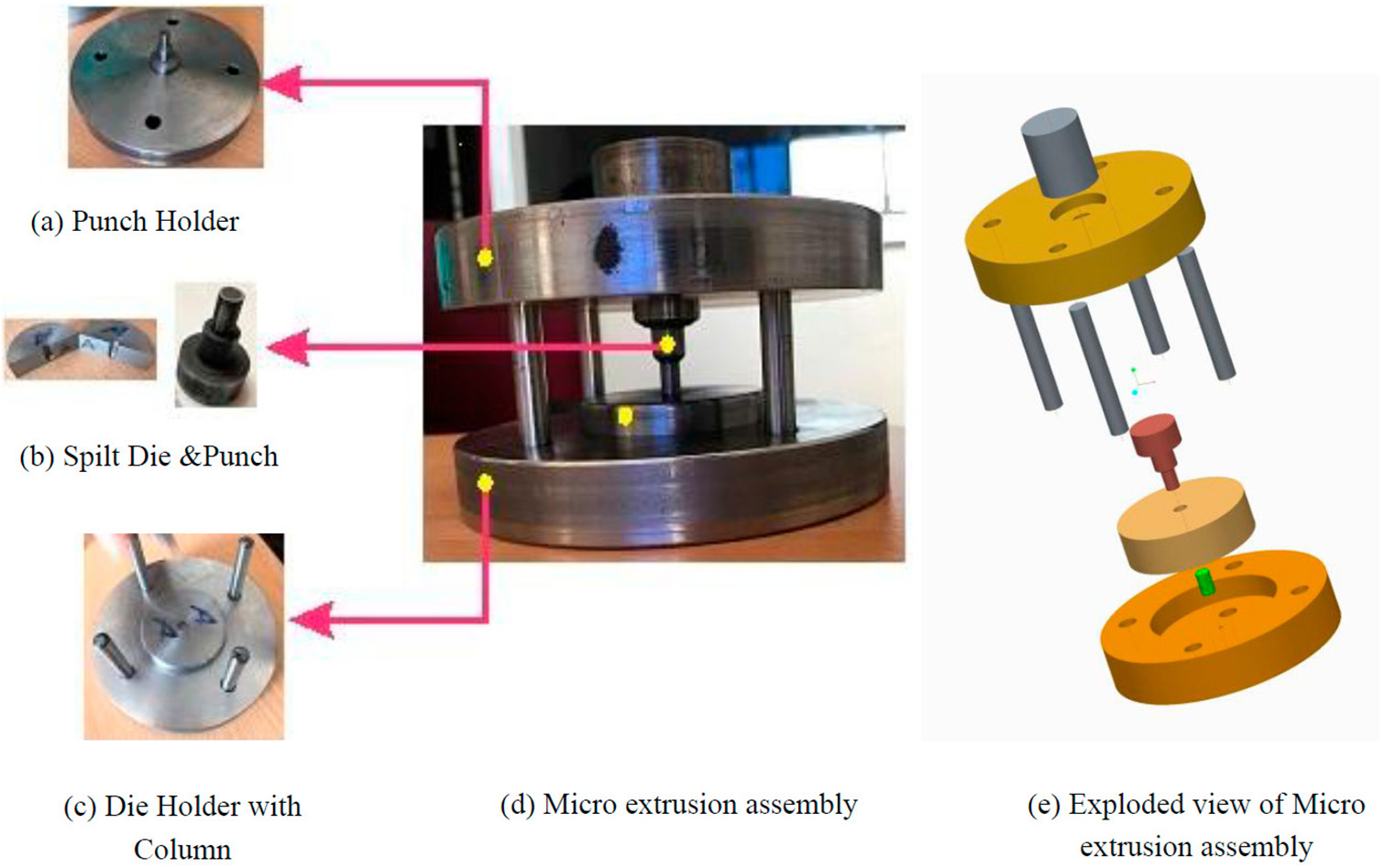
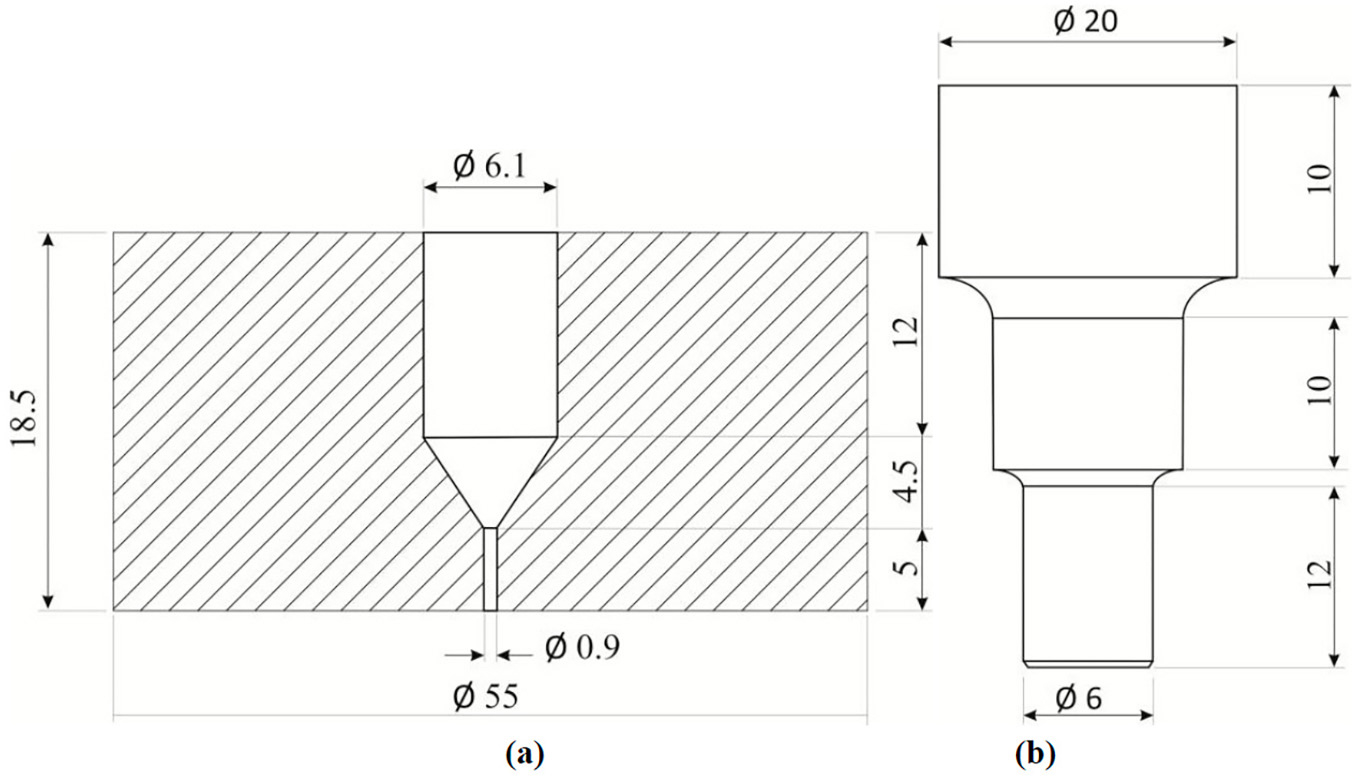
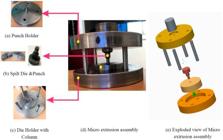
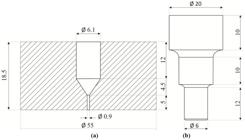
A dedicated die–punch assembly was designed to investigate the deformation and tribological response during micro-extrusion of Al6063. The billet possessed a circular cross-section, while the micro-pin feature size equalled the diameter of the reduced cross-section. A segmented (split) die was employed to facilitate the removal of the extruded micro-pins without causing damage. The die cavity was machined using a wire-cut Electrical Discharge Machine (EDM) for high dimensional precision. The die was split into two halves prior to cavity machining to minimize mismatch error. The die holder incorporated ejector holes to assist in segment removal after extrusion. The micro-extrusion assembly shown in Figure 1 includes die holder, split die, punch, punch holder. Geometrical details of the die and punch are shown in Figure 2. Experiments were conducted on a 10 kN servo-hydraulic UTM at a punch speed of 0.5 mm/s, under room-temperature conditions (27 °C). Each experiment was performed three times to ensure repeatability, and mean values and variance were computed at a 95% confidence level, in accordance with ASTM E122 [33] (repeatability analysis).
2.3. Lubrication conditions
Four lubrication conditions were investigated to assess their influence on friction, extrusion load, pin length, and tribological behaviour at the die–billet interface. All lubricants were applied by immersing the billets for a fixed duration to ensure uniform coating. Excess lubricant was removed using lint-free wipes to prevent over-lubrication.
2.3.1. Dry condition (no lubrication applied)
The billet was extruded without lubrication, representing a high-friction boundary-contact condition. This setting serves as a reference to evaluate improvements achieved through lubricants.
2.3.2. Castor oil (high viscosity bio-based lubricant)
A plant-derived lubricant extracted from Ricinus communis seeds. Owing to its high viscosity and strong film-forming ability, Castor Oil promotes boundary lubrication and reduces adhesive wear—an important tribological variable.
2.3.3. Groundnut oil (moderate viscosity vegetable-based lubricant)
A moderately viscous vegetable oil offering balanced lubricity. It provides moderate friction reduction but may not match the load-bearing capacity of Castor Oil or mineral-based oils.
2.3.4. Servo 68 oil (commercial mineral-based lubricant)
A low-viscosity industrial lubricant formulated with anti-wear additives, providing improved hydrodynamic lubrication and reduced stick–slip behaviour. This results in smoother material flow and lower extrusion force. Physical properties of the lubricants used are presented in Table 2.
2.4. Test methods used
Measurement uncertainty: ±0.002 g/cm3 (density), ±2% (viscosity), ±2 °C (flash point).
2.5. Tribological performance consideration
This work assesses tribological behaviour through:
-
Reduction in extrusion force (indirect indicator of friction).
-
Change in micro-pin length due to improved metal flow under different lubricants.
-
Surface-interaction effects during deformation.
Thus, although direct friction coefficients were not measured, tribological performance is evaluated through process-response indicators.
2.6. Micro-pin length measurement
The extruded pin length (mm) was measured using a digital optical microscope with ±0.01 mm resolution, following ISO 3611 [37]. Three readings were obtained for each lubrication condition.
2.7. Hardness testing
Microhardness was measured using a Vickers indenter (HV0.1) with a load of 100 g and a dwell time of 10 s as per ASTM E384 Standard [38]. The measurements were taken along the longitudinal axis of each pin, results were reported as Vickers hardness (HV) values.
3. RESULT AND DISCUSSION
The microextrusion trials on Al6063 were successfully performed under four lubrication conditions—Dry, Castor Oil, Groundnut Oil, and Servo 68 Oil using the segmented die system. The results were evaluated based on (i) extrusion force–displacement behaviour, (ii) micro-pin length, and (iii) microhardness to understand both deformation behaviour and tribological performance. All values reported correspond to the mean of three trials with error bars (± variance) accounted for in the graphical representation.
3.1. Extrusion force vs. punch displacement
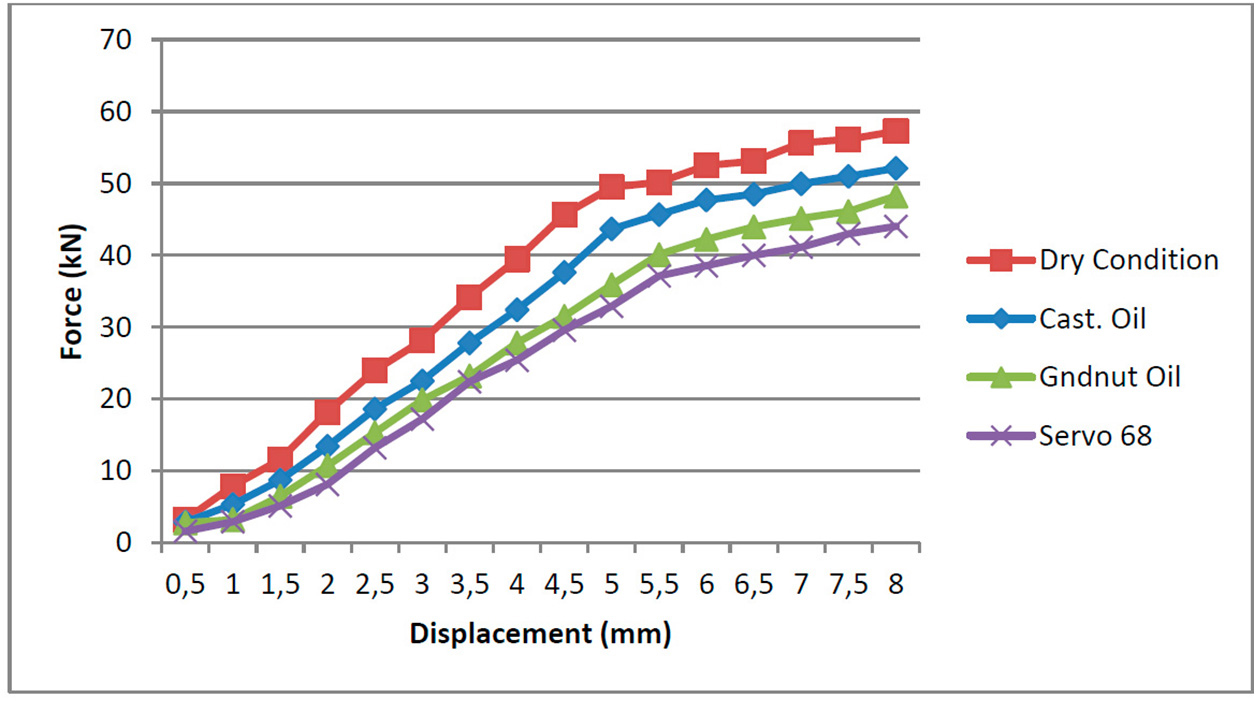
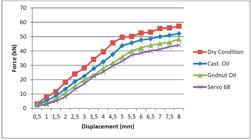
Figure 3 illustrates the influence of lubricants on the extrusion load during forward microextrusion. The force increases progressively with punch displacement due to work hardening and growing interfacial contact. Lubrication significantly alters the frictional resistance at the die–billet interface, thereby modifying the required forming load.
3.1.1. Dry condition
The highest peak force (≈57.25 kN) occurs in the absence of lubrication. This is expected because the dry interface undergoes severe adhesive friction, leading to die sticking and pronounced material resistance. The steeper slope of the force curve indicates unstable material flow and elevated strain concentration, which is consistent with earlier findings by KRISHNAN et al. [1] and ENGEL [26].
3.1.2. Servo 68 Oil
Servo 68 results in the lowest extrusion force (≈44.03 kN) due to:
-
Its low viscosity enabling hydrodynamic lubrication,
-
Presence of anti-wear additives that maintain a stable boundary film,
-
Lower interfacial shear stress.
The smoother force–displacement response confirms enhanced lubricity and improved tribological performance, enabling more uniform deformation.
3.1.3. Groundnut oil
Groundnut oil produces a peak force of 48.24 kN, lower than dry and castor oil but higher than Servo 68. Its moderate viscosity offers partial boundary lubrication, reducing friction but lacking the load-bearing stability of mineral oils.
3.1.4. Castor oil
Castor oil shows a peak load of 52.11 kN. Its very high viscosity forms a thick boundary layer, but this may induce intermittent stick–slip behaviour. The force curve shows minor fluctuations, indicating unstable lubrication at microscale—aligned with size-effects explained in PARASIZ et al. [25].
Across all lubricants, lower extrusion forces correlate with better tribological performance. Servo 68, which ensures the lowest interfacial shear stress, offers the most desirable friction-reducing behaviour. Bio- lubricants (castor and groundnut oil) improve conditions compared to dry extrusion but exhibit limitations in load-carrying capacity.
3.2. Micro-pin length variation
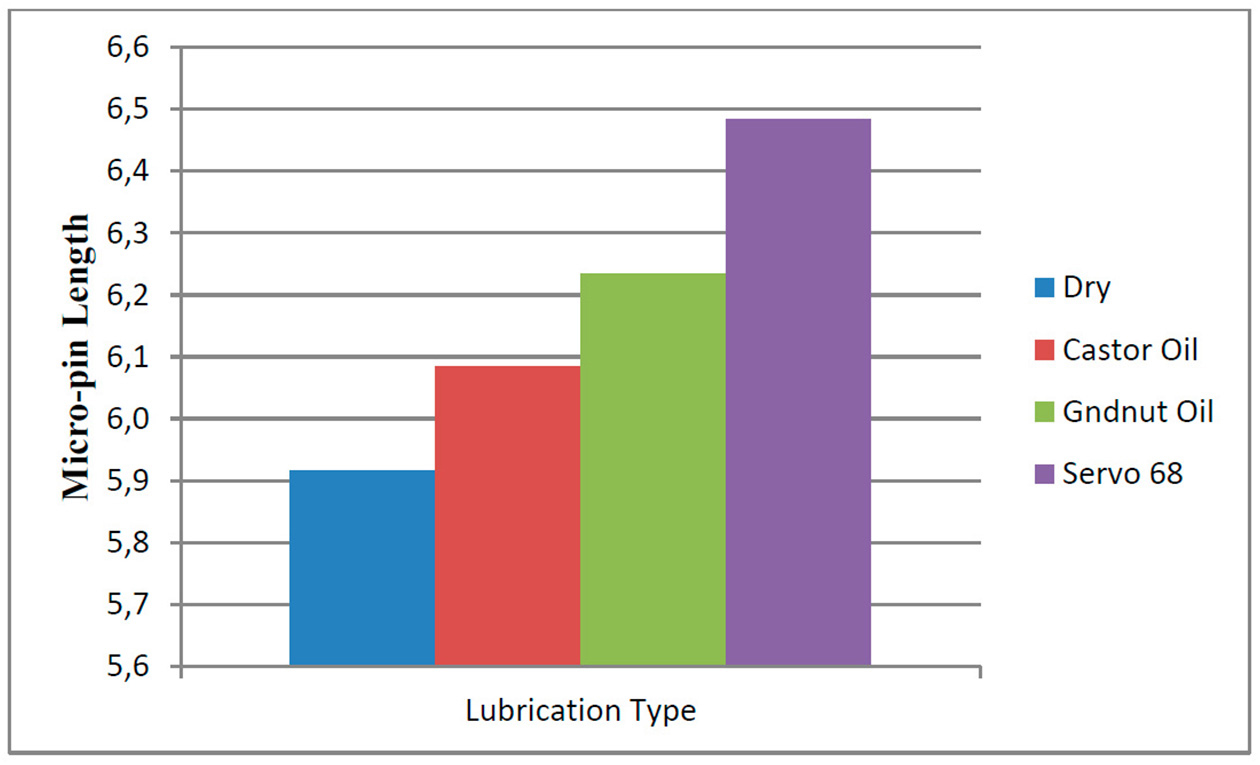
Figure 4 illustrates the influence of lubrication on the extruded micro-pin length (mm). The micro-pin length increases as friction decreases, since lower interfacial shear stress promotes smoother material flow through the die land. The plotted scale begins at 5.6 mm because all experimental values fall within the range of 5.5–6.8 mm; narrowing the scale improves resolution and highlights subtle but significant differences among lubrication conditions.
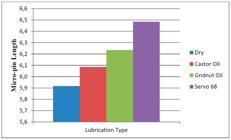
3.2.1. Dry condition (5.5–6.2 mm, avg ≈ 5.9 mm)
The shortest pin lengths were obtained under dry conditions due to high interfacial friction. Increased resistance to material flow reduces extrusion efficiency and results in greater variability, with occasional surface irregularities caused by adhesion.
3.2.2. Servo 68 oil (6.2–6.8 mm, avg ≈ 6.5 mm)
Servo 68 oil produced the longest micro-pins, indicating the lowest interface friction and improved material flow. Enhanced lubrication reduces shear resistance at the die–billet interface, leading to higher extrusion efficiency and more consistent pin geometry. This condition corresponds to the lowest measured extrusion force.
3.2.3. Groundnut oil (6.0–6.4 mm, avg ≈ 6.2 mm)
Groundnut oil provides moderate lubrication, resulting in improved pin length compared to dry and castor oil conditions. However, its viscosity characteristics limit complete hydrodynamic film formation, leading to slightly reduced extrusion efficiency compared to Servo 68.
3.2.4. Castor oil (5.7–6.5 mm, avg ≈ 6.1 mm)
Castor oil performs better than dry conditions but is less effective than Servo 68 and groundnut oil. Its relatively high viscosity may restrict lubricant penetration into microscopic asperities at the die interface, resulting in moderate pin length and flow stability.
Overall, the results clearly indicate that reduced friction leads to longer and more uniform extrudates, with Servo 68 demonstrating the most stable and efficient tribological performance.
3.3. Microhardness of extruded pin
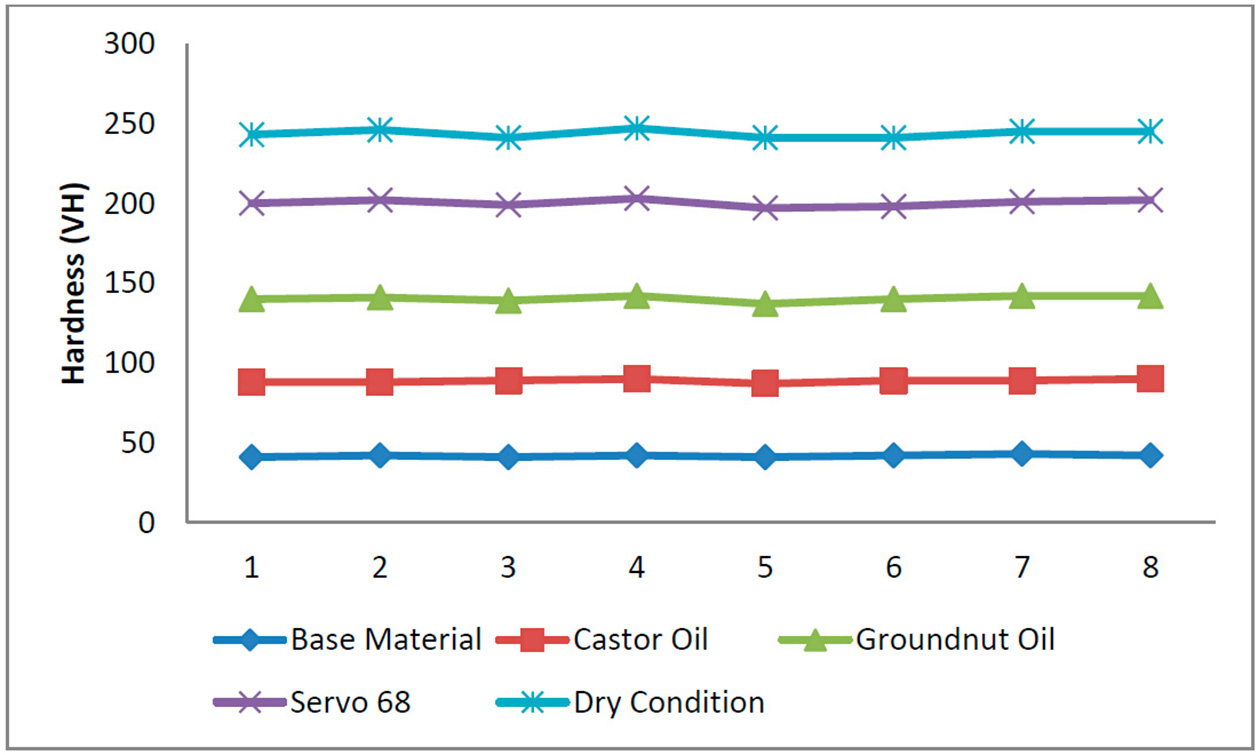
The variation in microhardness observed in Figure 5 under different lubrication conditions is primarily attributed to differences in frictional behaviour, strain distribution, and strain-hardening mechanisms during cold forward microextrusion at the microscale. At the microscale, deformation behaviour is highly sensitive to interfacial friction due to the increased surface-to-volume ratio. Lubrication directly influences the magnitude and uniformity of plastic strain imposed on the material as it flows through the die. Consequently, variations in lubrication efficiency lead to differences in strain accumulation, which are reflected in the measured microhardness values. Under Servo 68 mineral oil lubrication, the highest microhardness (59.86 HV) with low variance was recorded. This is attributed to the formation of a stable hydrodynamic and boundary lubrication film, which significantly reduces interfacial shear stress and prevents intermittent sticking at the die–billet interface. Reduced friction enables smooth and uniform material flow, allowing the billet to undergo consistent plastic deformation throughout the deformation zone. The uniform strain distribution promotes effective strain hardening, resulting in higher and more consistent hardness values along the micro-pin length.

In contrast, groundnut oil exhibits moderate viscosity and limited load-carrying capacity at microscale contact pressures. Although it reduces friction compared with dry conditions, the lubrication film formed is less stable and prone to breakdown under high contact stresses. This leads to localized variations in friction during extrusion, causing non-uniform plastic strain and uneven strain hardening along the extrudate. As a result, groundnut oil-lubricated samples show moderate hardness values (51.57 HV) accompanied by the highest variance, reflecting spatial inconsistency in deformation. For castor oil, the very high viscosity promotes strong boundary lubrication; however, its limited ability to penetrate microscopic asperities and confined die clearances at the microscale restricts effective lubricant entrainment. This can induce intermittent stick–slip behaviour, resulting in moderately improved but non-uniform strain accumulation. Consequently, castor oil-lubricated samples exhibit intermediate hardness values (46.86 HV) with relatively lower variance than groundnut oil but lower overall hardness compared to Servo 68 oil.
Under dry conditions, severe adhesive friction dominates the die–billet interface, restricting material flow and promoting localized deformation near the die entry region. Although higher forming forces are required, the restricted flow limits effective strain distribution along the micro-pin length. Additionally, friction-induced surface damage and localized stress concentration reduce the efficiency of strain hardening. As a result, only a marginal increase in hardness (43.37 HV) is observed compared to the base material, with relatively low overall strengthening. Overall, the hardness variation observed in Figure 5 reflects the combined effects of lubrication stability, frictional resistance, and strain uniformity during microextrusion. Lubricants that ensure stable friction reduction and uniform material flow promote effective strain hardening, leading to higher and more consistent microhardness values. Conversely, unstable or insufficient lubrication results in heterogeneous deformation and greater hardness variability.
3.4. Discussion on tribological mechanisms and deformation behaviour
The observed variation in extrusion force, micro-pin length, and microhardness under different lubrication conditions can be directly attributed to differences in interfacial friction mechanisms operating at the microscale. In microextrusion, the surface-to-volume ratio is significantly higher than in conventional extrusion, which amplifies the influence of surface asperities, adhesion, and boundary film stability. As a result, even small differences in lubricant viscosity, chemical composition, and load-carrying capacity can produce measurable variations in deformation behaviour [13]. Under dry conditions, the absence of a lubricating film leads to severe metal-to-metal contact between the die and billet surface. This promotes adhesive friction and localized sticking, resulting in higher interfacial shear stress [12]. Consequently, the extrusion force increases and material flow becomes less uniform. The restricted flow contributes to shorter micro-pin length and lower effective strain distribution along the extrusion axis. Additionally, friction-induced surface damage may limit homogeneous strain hardening, explaining the relatively lower hardness increase observed under dry conditions.
In contrast, Servo 68 oil demonstrates superior lubrication performance due to its optimized viscosity and the presence of anti-wear additives. The lubricant forms a relatively stable boundary and partial hydrodynamic film under the applied extrusion speed (0.5 mm/s) [16], which reduces direct asperity contact and interfacial shear stress. Reduced friction facilitates smoother and more uniform material flow through the die land region. The more homogeneous plastic deformation results in improved strain accumulation across the extrudate length, thereby promoting enhanced strain hardening and higher microhardness values. The lower variance in hardness further confirms stable deformation conditions under this lubrication regime. Groundnut oil exhibits intermediate behaviour. Its moderate viscosity enables partial boundary lubrication; however, under high localized contact pressure in the deformation zone, the lubricant film may partially break down. This results in fluctuating frictional conditions during extrusion, leading to moderate force reduction and slightly increased variability in hardness distribution. The data suggest that while vegetable-based oils can provide environmentally friendly alternatives, their load-bearing stability under microscale contact pressures remains limited compared to formulated mineral oils.
Castor oil, despite its high viscosity and strong film-forming characteristics, does not outperform Servo 68 oil. At the microscale, excessive viscosity may restrict lubricant entrainment into the die–billet interface, particularly within narrow clearances. This can induce intermittent stick–slip behaviour, resulting in force fluctuations and less consistent strain distribution. Thus, an optimal balance between viscosity and film stability appears more critical than simply maximizing lubricant thickness. The correlation between extrusion force and micro-pin length observed in this study confirms that friction reduction enhances extrusion efficiency. Lower friction allows greater material flow for a given punch displacement, thereby increasing extrudate length. Furthermore, the direct relationship between lubrication efficiency and microhardness indicates that stable deformation conditions contribute to effective strain hardening. This integrated relationship between friction behaviour, deformation mechanics, and mechanical strengthening represents an important contribution to understanding microscale extrusion processes.
Overall, the results demonstrate that lubrication performance in cold forward microextrusion is governed not only by lubricant type but also by its rheological behaviour under confined high-pressure conditions. The findings emphasize that selecting an appropriate lubricant for microscale forming requires consideration of viscosity, film stability, and interfacial shear characteristics to achieve balanced improvements in force reduction, dimensional consistency, and mechanical property enhancement.
4. CONCLUSIONS
Cold forward microextrusion of Al6063 was successfully performed under both dry and lubricated conditions using a segmented die system. Based on the experimental investigation, the following key conclusions are drawn:
-
Lubrication has a significant influence on extrusion force in microextrusion. Servo 68 mineral oil achieved the maximum reduction in extrusion force (23.1%) compared with dry conditions, followed by groundnut oil (15.7%) and castor oil (9.0%).
-
Micro-pin length increased with improved lubrication efficiency, indicating enhanced material flow. Servo 68 oil produced the longest micro-pins (average ≈ 6.5 mm), while groundnut oil and castor oil showed moderate improvements over dry conditions.
-
Microhardness of the extruded pins increased under lubricated conditions due to strain hardening. The highest hardness (59.86 HV) with low variance was obtained using Servo 68 oil, followed by groundnut oil (51.57 HV) and castor oil (46.86 HV). Dry conditions resulted in the lowest hardness (43.37 HV).
-
Mineral-based lubrication provided more stable tribological performance than bio-based lubricants under microscale extrusion conditions, resulting in uniform deformation and consistent mechanical properties.
Overall, effective lubrication is essential for reducing friction, improving material flow, and enhancing strain hardening during cold forward microextrusion of Al6063. Among the lubricants investigated, Servo 68 mineral oil demonstrated the most effective and consistent performance.
5. SCOPE FOR FUTURE WORK
Future research can investigate the performance of nano-additive-based lubricants, such as those containing graphene, MoS2, or boron nitride nanoparticles, to further reduce friction and improve surface finish during microextrusion. While the current study focuses on cold forming, studying the effects of temperature on lubricant performance and deformation behavior could provide deeper insights, especially under warm or hot microextrusion conditions. Customizing lubricant selection and extrusion parameters based on the end-use of micro- components, especially in biomedical or electronic devices, can ensure reliability and performance under real-world conditions. Developing environmentally friendly lubricants with biodegradable properties and evaluating their performance and lifecycle impact can support sustainable manufacturing practices.
6. BIBLIOGRAPHY
-
[1] KRISHNAN, N., CAO, J., DOHDA, K., “Study of the size effects on friction conditions in microextrusion – Part I: Microextrusion experiments and analysis”, Journal of Manufacturing Science and Engineering, v. 129, n. 4, pp. 669–676, 2007. doi: https://doi.org/10.1115/1.2386207.
» https://doi.org/10.1115/1.2386207 -
[2] WANG, C., GUO, B., SHAN, D., et al., “Experimental research on micro-deep drawing processes of pure gold thin sheet using DLC-coated female die”, International Journal of Advanced Manufacturing Technology, v. 67, n. 9–12, pp. 2477-2487, 2013. doi: https://doi.org/10.1007/s00170-012-4665-3.
» https://doi.org/10.1007/s00170-012-4665-3 -
[3] EICHENHÜLLER, B., ENGEL, U., “Microforming of titanium – forming behaviour at elevated temperature”, In: Menz, W., Dimov, S., Fillon, B. (eds), 4M 2006 – Second International Conference on Multi-Material Micro Manufacture, Amsterdam, Elsevier Science, pp. 339–342, 2006. doi: https://doi.org/10.1016/B978-008045263-0/50077-5.
» https://doi.org/10.1016/B978-008045263-0/50077-5 -
[4] HU, K.H., WANG, J., SCHRAUBE, S., et al., “Tribological properties of MoS2 nano-balls as filler in polyoxymethylene-based composite layer of three-layer self-lubrication bearing materials”, Wear, v. 266, n. 11–12, pp. 1198-1207, 2009. doi: https://doi.org/10.1016/j.wear.2009.03.036.
» https://doi.org/10.1016/j.wear.2009.03.036 -
[5] HAO, L., CAO, F., JIANG, Z., et al., “Preparation and tribological properties of a kind of lubricant containing cerium borate nanoparticles as additives”, Proceedings of the Institution of Mechanical Engineers. Part J, Journal of Engineering Tribology, v. 234, n. 11, pp. 1789–1797, 2020. doi: https://doi.org/10.1177/1350650119887041.
» https://doi.org/10.1177/1350650119887041 -
[6] SAOTOME, Y., IWAZAKI, H., “Superplastic backward microextrusion of microparts for micro- electro-mechanical systems”, Journal of Materials Processing Technology, v. 119, n. 1–3, pp. 307–311, 2001. doi: https://doi.org/10.1016/S0924-0136(01)00957-8.
» https://doi.org/10.1016/S0924-0136(01)00957-8 -
[7] MORI, L.F., KRISHNAN, N., CAO, J., et al., “Study of the size effects and friction conditions in microextrusion – Part II: Size effect in dynamic friction for brass-steel pairs”, Journal of Manufacturing Science and Engineering, v. 129, n. 4, pp. 677–689, 2007. doi: https://doi.org/10.1115/1.2738131.
» https://doi.org/10.1115/1.2738131 -
[8] FU, M.W., CHAN, W.L., “A review on the state-of-the-art microforming technologies”, International Journal of Advanced Manufacturing Technology, v. 67, n. 9–12, pp. 2411–2437, 2013. doi: https://doi.org/10.1007/s00170-012-4661-7.
» https://doi.org/10.1007/s00170-012-4661-7 -
[9] GAU, J.T., TEEGALA, S., HUANG, K.M., et al., “Using micro deep drawing with ironing stages to form stainless steel 304 micro cups”, Journal of Manufacturing Processes, v. 15, n. 2, pp. 298–305, 2013. doi: https://doi.org/10.1016/j.jmapro.2013.01.009.
» https://doi.org/10.1016/j.jmapro.2013.01.009 -
[10] KANG, C.W., FANG, F.Z., “State of the art of bioimplants manufacturing: part I”, Advances in Manufacturing, v. 6, n. 1, pp. 20–40, 2018. doi: https://doi.org/10.1007/s40436-017-0207-4.
» https://doi.org/10.1007/s40436-017-0207-4 -
[11] SINGH, M., HOSSAIN, A., WEI, D.B., “A hybrid model for studying the size effects on flow stress in Micro-forming with the consideration of grain hardening”, Key Engineering Materials, v. 794, pp. 97–104, 2019. doi: https://doi.org/10.4028/www.scientific.net/KEM.794.97.
» https://doi.org/10.4028/www.scientific.net/KEM.794.97 -
[12] KARTHIKEYAN, A., RAJENTHIRAKUMAR, D., “Experimental investigations of influence on grain size and cold deformational behavior of AL6063 during the microforming process”, Materials Research Express, v. 10, n. 2, pp. 026501, 2023. doi: https://doi.org/10.1088/2053-1591/acb5e4.
» https://doi.org/10.1088/2053-1591/acb5e4 -
[13] VEERASUNDARAM, J., KANI, K., NALLUMUTHU, R., et al., “Effects of lubricants and billet geometry on the extrusion of AA6063/5% SiCp composites”, Proceedings of the Institution of Mechanical Engineers. Part E, Journal of Process Mechanical Engineering, v. 238, n. 5, pp. 2475–2485, 2023. doi: https://doi.org/10.1177/09544089231163114.
» https://doi.org/10.1177/09544089231163114 -
[14] VEERASUNDARAM, J., KANI, K., NALLUMUTHU, R., et al., “Experimental and theoretical investigation of extrusion load for AA6063/SiC extruded composite billet”, Proceedings of the Institution of Mechanical Engineers. Part E, Journal of Process Mechanical Engineering, v. 237, n. 3, pp. 848–855, 2022. doi: https://doi.org/10.1177/09544089221111283.
» https://doi.org/10.1177/09544089221111283 -
[15] ARUCHAMY, K., MUNIMATHAN, A., PALANIVEL, V., et al., “Numerical simulation of microextrusion: influence of die entry angles and friction on deformation behavior of AA6063 aluminum alloy”, Matéria, v. 30, pp. e20240842, 2025. doi: https://doi.org/10.1590/1517-7076-rmat-2024-0842.
» https://doi.org/10.1590/1517-7076-rmat-2024-0842 -
[16] ARUCHAMY, K., SANTOSH, P., GUJAR, R., et al., “Microforming for the production of microscale components: a study on the effect of forming dies in microextrusion of metals”, Journal of Micromanufacturing, pp. 25165984251323324, 2025. doi: https://doi.org/10.1177/25165984251323324.
» https://doi.org/10.1177/25165984251323324 -
[17] AZIMI, M., MIRJAVADI, S.S., SALANDARI-RABORI, A., “Effect of temperature on microstructural evolution and subsequent enhancement of mechanical properties in a backward extruded magnesium alloy”, International Journal of Advanced Manufacturing Technology, v. 95, n. 9-12, pp. 3155–3166, 2018. doi: https://doi.org/10.1007/s00170-017-1343-5.
» https://doi.org/10.1007/s00170-017-1343-5 -
[18] JIANG, Z., ZHAO, J., LU, H., et al., “Influences of temperature and grain size on the material deformability in microforming process”, International Journal of Material Forming, v. 10, n. 5, pp. 753–764, 2017. doi: https://doi.org/10.1007/s12289-016-1317-4.
» https://doi.org/10.1007/s12289-016-1317-4 -
[19] ARUCHAMY, K., RAJENTHIRAKUMAR, D., ARUNKUMAR, M., “Microforming: Exploring the role of temperature and forming die in deformation behavior of aluminium 6063 in forward microextrusion”, Journal of Alloys and Compounds Communications, v. 7, pp. 100092, 2025. doi: https://doi.org/10.1016/j.jacomc.2025.100092.
» https://doi.org/10.1016/j.jacomc.2025.100092 -
[20] RAZALI, A.R., QIN, Y., “A review on micro-manufacturing, micro-forming and their key issues”, Procedia Engineering, v. 53, pp. 665–672, 2013. doi: https://doi.org/10.1016/j.proeng.2013.02.086.
» https://doi.org/10.1016/j.proeng.2013.02.086 -
[21] ZHAO, R., HAN, J.Q., LIU, B.B., et al., “Interaction of forming temperature and grain size effect in micro/meso-scale plastic deformation of nickel-base superalloy”, Materials & Design, v. 94, pp. 195–206, 2016. doi: https://doi.org/10.1016/j.matdes.2016.01.022.
» https://doi.org/10.1016/j.matdes.2016.01.022 -
[22] CHANG, C.C., LIN, J.C., “Influence of grain size and temperature on micro upsetting of copper”, Proceedings of the Institution of Mechanical Engineers. Part B, Journal of Engineering Manufacture, v. 226, n. 1, pp. 183–190, 2012. doi: https://doi.org/10.1177/0954405410396801.
» https://doi.org/10.1177/0954405410396801 -
[23] EICHENHUELLER, B., EGERER, E., ENGEL, U., “Microforming at elevated temperature – Forming and material behaviour”, International Journal of Advanced Manufacturing Technology, v. 33, n. 1-2, pp. 119–124, 2007. doi: https://doi.org/10.1007/s00170-006-0731-z.
» https://doi.org/10.1007/s00170-006-0731-z -
[24] EGERER, E., ENGEL, U., “Process characterization and material flow in microforming at elevated temperatures”, Journal of Manufacturing Processes, v. 6, n. 1, pp. 1–6, 2004. doi: https://doi.org/10.1016/S1526-6125(04)70054-7.
» https://doi.org/10.1016/S1526-6125(04)70054-7 -
[25] PARASIZ, S.A., KINSEY, B., KRISHNAN, N., et al., “Investigation of deformation size effects during microextrusion”, Journal of Manufacturing Science and Engineering, v. 129, n. 4, pp. 690–697, 2007. doi: https://doi.org/10.1115/1.2738107.
» https://doi.org/10.1115/1.2738107 -
[26] ENGEL, U., “Tribology in microforming”, Wear, v. 260, n. 3, pp. 265–273, 2006. doi: https://doi.org/10.1016/j.wear.2005.04.021.
» https://doi.org/10.1016/j.wear.2005.04.021 -
[27] LAZZAROTTO, L., DUBAR, L., DUBOIS, A., et al., “Three selection criteria for the cold metal forming lubricating oils containing extreme pressure agents”, Journal of Materials Processing Technology, v. 80-81, pp. 245–250, 1998. doi: https://doi.org/10.1016/S0924-0136(98)00109-5.
» https://doi.org/10.1016/S0924-0136(98)00109-5 -
[28] WANG, J.L., FU, M.W., RAN, J.Q., “Analysis of size effect on flow-induced defect in micro-scaled forming process”, International Journal of Advanced Manufacturing Technology, v. 73, n. 9–12, pp. 1475–1484, 2014. doi: https://doi.org/10.1007/s00170-014-5947-8.
» https://doi.org/10.1007/s00170-014-5947-8 -
[29] SHIMIZU, T., KAKEGAWA, T., YANG, M., “Micro-texturing of DLC thin film coatings and its tribological performance under dry sliding friction for microforming operation”, Procedia Engineering, v. 81, pp. 1884–1889, 2014. doi: https://doi.org/10.1016/j.proeng.2014.10.251.
» https://doi.org/10.1016/j.proeng.2014.10.251 -
[30] CHAN, W.L., FU, M.W., “Experimental studies of plastic deformation behaviors in microheading process”, Journal of Materials Processing Technology, v. 212, n. 7, pp. 1501–1512, 2012. doi: https://doi.org/10.1016/j.jmatprotec.2012.02.013.
» https://doi.org/10.1016/j.jmatprotec.2012.02.013 -
[31] ZHENG, W., WANG, G., ZHAO, G., et al., “Modeling and analysis of dry friction in micro-forming of metals”, Tribology International, v. 57, pp. 202–209, 2013. doi: https://doi.org/10.1016/j.triboint.2012.06.031.
» https://doi.org/10.1016/j.triboint.2012.06.031 - [32] AMERICAN SOCIETY FOR TESTING AND MATERIALS, ASTM E415 – Standard Test Method for Analysis of Carbon and Low-Alloy Steel by Spark Atomic Emission Spectrometry, West Conshohocken, PA, ASTM, 2021.
- [33] AMERICAN SOCIETY FOR TESTING AND MATERIALS, ASTM E122 – Standard Practice for Calculating Sample Size to Estimate, With Specified Precision, the Average for a Characteristic of a Lot or Process, West Conshohocken, PA, ASTM, 2017.
- [34] AMERICAN SOCIETY FOR TESTING AND MATERIALS, ASTM D4052 – Standard Test Method for Density, Relative Density, and API Gravity of Liquids by Digital Density Meter, West Conshohocken, PA, ASTM, 2018.
- [35] AMERICAN SOCIETY FOR TESTING AND MATERIALS, ASTM D445 – Standard Test Method for Kinematic Viscosity of Transparent and Opaque Liquids (and Calculation of Dynamic Viscosity), West Conshohocken, PA, ASTM, 2019.
- [36] AMERICAN SOCIETY FOR TESTING AND MATERIALS, ASTM D92 – Standard Test Method for Flash and Fire Points by Cleveland Open Cup Tester, West Conshohocken, PA, ASTM, 2018.
- [37] INTERNATIONAL ORGANIZATION OF STANDARDIZATION, ISO 3611 – Geometrical Product Specifications (GPS) — Dimensional measuring equipment: Micrometers for external measurements — Design and metrological characteristics, Geneva, ISO, 2010.
- [38] AMERICAN SOCIETY FOR TESTING AND MATERIALS, ASTM E384 – Standard Test Method for Microindentation Hardness of Materials, West Conshohocken, PA, ASTM, 2017.