 Effect of heat input on solidification, microhardness, and tensile properties of dissimilar AISI 316/AISI 304 MIG welded joints
ABSTRACT
Dissimilar AISI 316/AISI 304 stainless steel joints were produced by MIG welding using 308L filler metal to investigate the influence of three controlled heat input levels (0.36, 0.43, and 0.54 kJ/mm) on microstructural evolution and mechanical performances. Heat input was controlled by varying welding current (70–90 A), arc voltage (16–20 V), and argon shielding gas flow rate (8–12 L/min) using high-purity argon (99% Ar). Solidification mode analysis using the Schaeffler-Espy diagram confirmed ferritic-austenitic (FA) solidification with approximately 10 wt.% δ-ferrite in the weld metal. Optical microscopy revealed that increasing heat input from 0.36 to 0.54 kJ/mm promoted dendrite coarsening in the fusion zone (FZ) and significant grain growth in the heat-affected zone (HAZ) of AISI 316, reducing local hardness from approximately 170 HV to 165 HV in the HAZ. Vickers microhardness measurements showed higher values in AISI 304 regions (190–195 HV) compared to AISI 316 (165–170 HV base metal), with peak fusion zone hardness of 180–190 HV at intermediate heat input. Tensile tests demonstrated the highest performance at the lowest heat input (Level 1: 672.5 MPa UTS, 380.9 MPa YS, 62.28% elongation), while the highest heat input (Level 3) resulted in reduced properties (628.4 MPa UTS, 334.9 MPa YS, 56.92% elongation). SEM fractographic analysis of tensile-tested specimens revealed ductile fracture characteristics at low and medium heat inputs, with deep, uniformly distributed dimples. As the heat input increased, the dimple depth decreased, indicating a transition from ductile to mixed-mode fracture. At 0.36 and 0.43 kJ/mm, fracture occurred within the AISI 316 base metal, while at the highest heat input (0.84 kJ/mm) it shifted to the grain-coarsened HAZ of the 316 side, exhibiting shallower dimples and partially brittle features.
Keywords:
Dissimilar stainless-steel welding; MIG welding; Heat input; mechanical performances; SEM fractography
1. INTRODUCTION
Austenitic stainless steels are widely used in various industrial applications including food processing, chemical production, power generation, and biomedical engineering due to their excellent corrosion resistance, mechanical strength, and formability [1, 2]. These steels owe their austenitic structure to nickel (Ni), which stabilizes the γ-phase (face-centered cubic), and chromium (Cr), which promotes passive film formation for corrosion resistance [3]. In advanced manufacturing and structural design, dissimilar welding between different grades of stainless steels is frequently employed to balance performance with cost-efficiency. A typical example is the joining of AISI 304 and AISI 316, where components exposed to more severe conditions use the more corrosion-resistant 316 (enriched with 2–3 wt.% molybdenum for superior pitting resistance), while the rest of the structure employs the more economical 304 [4,5,6]. Such dissimilar joints find critical applications in oil and gas operations (offshore platforms, subsea pipelines, pressure vessels), chemical processing plants (reactor vessels, distillation equipment), and power generation facilities (steam generators, condenser systems), where selective corrosion resistance must be balanced against material cost [5,6,7]. Understanding microstructural transformation during welding is essential for ensuring joint integrity in these demanding service environments. Recent advances in materials science demonstrate that welding parameter optimization including heat input control and process variable selection significantly influences microstructure evolution and mechanical performance acrossdiverse materials and joining techniques [8,9,10], principles equally applicable to dissimilar stainless-steel welding [5,6,7]. However, dissimilar welds introduce complexities such as differences in thermal conductivity, solidification behavior, and metallurgical incompatibility, often leading to the formation of brittle intermetallic phases, residual stress accumulation, or micro-segregation in the fusion and heat-affected zones (HAZ) [11, 12]. These challenges are particularly acute in AISI 316, whose lower thermal conductivity and higher molybdenum content render its HAZ more susceptible to grain coarsening under elevated heat input conditions [7, 13], creating asymmetric mechanical weakening in dissimilar 304/316 joints that must be carefully managed through welding parameter optimization [6, 7, 14]. Metal Inert Gas (MIG) welding, a subtype of Gas Metal Arc Welding (GMAW), offers a practical solution for producing dissimilar stainless-steel joints. It is appreciated for its automation potential, high productivity, minimal slag formation, and adaptability to thin and thick sections alike [15, 16]. In dissimilar stainless-steel welding, heat input defined as thermal energy deposited per unit weld length and controlled via welding current, arc voltage, and travel speed exerts decisive influence on cooling rates, solidification pathways, microstructural morphology, and ultimate mechanical performance [6, 7, 13]. Elevated heat input extends the cooling time, promoting dendrite coarsening in the weld metal and pronounced grain growth in the HAZ; conversely, lower heat input accelerates cooling and refines microstructures but may introduce residual stress or incomplete fusion [6, 13, 14]. The optimal balance of heat input is therefore essential: excessive input degrades HAZ properties through grain coarsening, while insufficient input risks weld defects and high residual stresses [6, 7, 13]. Studies on diverse materials from advanced alloys to conventional stainless steels consistently demonstrate that systematic control of heat input is fundamental to achieving high-integrity joints in service-critical applications [7, 17, 18]. Recent advances in understanding material behavior during dissimilar welding underscore the importance of processing parameters in controlling microstructure transformation and mechanical performance [3, 19]. Studies on advanced materials and welding conditions, including investigations of parameter optimization and microstructural control analogous to techniques employed in additive manufacturing and alternative joining processes [1, 11], demonstrate that systematic parameter development is essential for joint integrity [5, 20]. In such welding, the heat input which depends on welding current, arc voltage, and shielding gas flow plays a crucial role in defining the cooling rate, solidification mode, and mechanical integrity of the weld [21, 22]. Solidification in austenitic stainless-steel welds can follow different modes depending on the Cr_eq/Ni_eq ratio. At higher Cr_eq/Ni_eq, the weld pool may undergo a ferritic–austenitic (F+A) mode, leading to δ-ferrite formation, which can degrade mechanical properties if present in excess [23]. Conversely, at lower Cr_eq/Ni_eq, the solidification remains austenitic, avoiding the formation of undesirable phases such as σ or δ [23]. Rapid non-equilibrium cooling during welding promotes dendritic segregation and phase redistribution, affecting mechanical properties [23, 24]. The HAZ additionally experiences complex interactions between recrystallization, grain growth, and thermal stress relief [7, 13], particularly in AISI 316 where grain coarsening becomes the primary degradation mechanism under elevated heat input [6, 7]. To mitigate solidification cracking and control phase distribution, 308L filler wire is typically used in MIG welding of austenitic stainless steels. It introduces controlled amounts of ferrite formers and improves hot-crack resistance [4, 25]. A number of recent studies have expanded the understanding of dissimilar welding applications for advanced stainless steels in energy sectors. For example, ANTUNES et al. [6] demonstrated that careful control of heat input and ageing treatment in AISI 317L dissimilar welds leads to improved tensile and impact properties, with higher heat input causing significant grain coarsening and a drop in both hardness and yield strength; optimal ageing treatments suppress detrimental sigma phase and promote stability of austenite-ferrite microstructures essential for service in piping, pressure vessels, and heat exchangers for oil and gas [6]. Superduplex stainless steels, such as UNS S39274, were shown by Zhou et al. to be susceptible to precipitation of nitrides (notably Cr2N) within the ferrite, especially after thermal cycles, which strongly increases pitting corrosion risk this highlights the importance of post-weld heat and chemical environment control in critical marine and petrochemical infrastructure [26]. Studies on pulsed GMAW welding of AISI 317L found that both heat input and subsequent ageing have a direct impact on phase balance and mechanical performance, with higher heat input promoting larger HAZ zones and lower toughness, while ageing increased microstructural stability by refining ferrite content [27]. In corrosion testing, AISI 316 and AISI 310 exhibited strongly temperature-dependent stress corrosion cracking susceptibility in chloride solutions, with fracture path and embrittlement mechanisms shifting at higher solution temperatures a key concern for oil, gas, and chemical process industries operating at variable service conditions [28]. Despite the industrial prevalence of dissimilar AISI 316/AISI 304 welds in oil and gas, chemical processing, and power generation, the specific effects of heat input on the integrated interplay of solidification mode, microstructural evolution across both weld metal and HAZ, hardness distribution, tensile-property variations, and fracture behavior remain incompletely characterized in the literature [6, 7, 29]. Most prior work addresses either similar-metal welds or isolated microstructural/mechanical aspects in isolation, without systematic correlation of multiple interdependent phenomena [6, 7]. The particular vulnerability of AISI 316 HAZ to grain coarsening and its role as the failure-controlling microstructural feature in dissimilar 304/316 joints has not been comprehensively documented through fractographic and mechanical testing [6, 7]. This research addresses this gap through systematic, multi-scale characterization correlating three controlled heat input levels (0.36, 0.43, 0.54 kJ/mm) in MIG welding of 3 mm-thick dissimilar stainless-steel plates (AISI 316 and AISI 304) using 308L filler metal. Heat input was varied by adjusting welding current, arc voltage, and argon gas flow rate. The study examined correlations between heat input and solidification mode, phase evolution, and microstructural changes in the fusion zone (FZ) and heat-affected zone (HAZ), as well as Vickers microhardness distribution, tensile properties, and fracture characteristics. Fractography using SEM was employed to identify failure modes and relate them to microstructural features. The results provide practical guidance for optimizing welding parameters to improve mechanical performance and structural integrity of dissimilar stainless-steel joints. This systematic investigation addresses the research priorities identified by industry and the technical literature for optimizing dissimilar austenitic stainless steel welding.
2. MATERIALS AND EXPERIMENTAL METHODS
In this study, dissimilar welding was carried out between AISI 316 and AISI 304 austenitic stainless steels in the form of flat plates with a uniform thickness of 3 mm. The plates were machined to dimensions of 150 mm × 75 mm using Electrical Discharge Machining (EDM) to ensure dimensional precision and to minimize thermal distortion. Prior to welding, the surfaces were cleaned with acetone to remove oxides and contaminants. No preheating was applied, as austenitic stainless steels generally do not require it owing to their high thermal expansion coefficient and low carbon equivalent [11]. The welding process was carried out using the Metal Inert Gas (MIG) technique in semi-automatic mode, employing an AISI 308L filler wire of 1.2 mm diameter. A mechanically controlled travel speed of 3.5 mm/s was maintained constant for all trials to isolate the influence of welding current, arc voltage, and shielding gas flow rate on the total heat input. High-purity argon gas (99.0% Ar, Grade 4.8, ISO 14175) was used as the shielding atmosphere for all welding operations. Three distinct heat input levels were achieved by systematically varying welding current (70 A, 80 A, and 90 A), arc voltage (16 V, 18 V, and 20 V), and argon gas flow rate (8 L/min, 10 L/min, and 12 L/min), resulting in calculated heat inputs of 0.36 kJ/mm, 0.43 kJ/mm, and 0.54 kJ/mm for Levels 1, 2, and 3, respectively. The chemical compositions of the base metals and the filler metal were confirmed through spectroscopic analysis and are listed in Table 1. While the detailed welding parameters are summarized in Table 2. All joints were prepared in a single-side butt configuration.
After welding, transverse cross-sections were extracted from the welded joints for microstructural and mechanical analysis. Sample surfaces were prepared using a standard metallographic procedure: sequential grinding with silicon carbide papers of increasing grit sizes (220 to 1500), followed by final polishing using 0.75 µm alumina slurry to obtain a mirror-like finish. The microstructure was revealed through electrochemical etching in a 10 wt.% oxalic acid solution at 40 V for 90 seconds. The microstructure of the weldments including the weld metal (WM) and heat-affected zones (HAZ) on both sides was examined using optical microscopy.
To evaluate mechanical performance, Vickers microhardness testing was conducted across the weld cross-section using a load of 200 g and a dwell time of 15 seconds, following the ASTM E384-11 standard. Indentations were made at regular intervals from the base metal through the HAZ and into the weld metal. In addition, transverse tensile tests were carried out at room temperature on machined specimens using a 100-ton universal testing machine, in accordance with ASTM E8(100 mm). The tests were used to determine the ultimate tensile strength, yield strength, and elongation of the dissimilar welded joints.
3. RESULTS AND DISCUSSIONS
This section focuses on analyzing the effects of Weld current (A), Voltage (V) and gas flow rate (L/min), identified as significant parameters, on the welded joints properties (e.g., microstructure, tensile strength, and micro-hardness) of the thermal spray coatings developed in this study. The findings are discussed in the context of the experimental results, providing validation for the research outcomes.
3.1. Microstructural examination
3.1.1. Predicted weld metal microstructure
To evaluate the expected microstructure in the weld zone (WZ) of austenitic stainless-steel weldments, the Schaeffler diagram specifically the version modified by R. Harry Espy is widely utilized. This diagram serves as a reliable tool to estimate the ferrite content in the weld metal and to predict the resulting solidification mode during welding. The prediction is based on the calculation of the chromium equivalent (Cr_eq) and nickel equivalent (Ni_eq), using the following empirical expressions [11]:
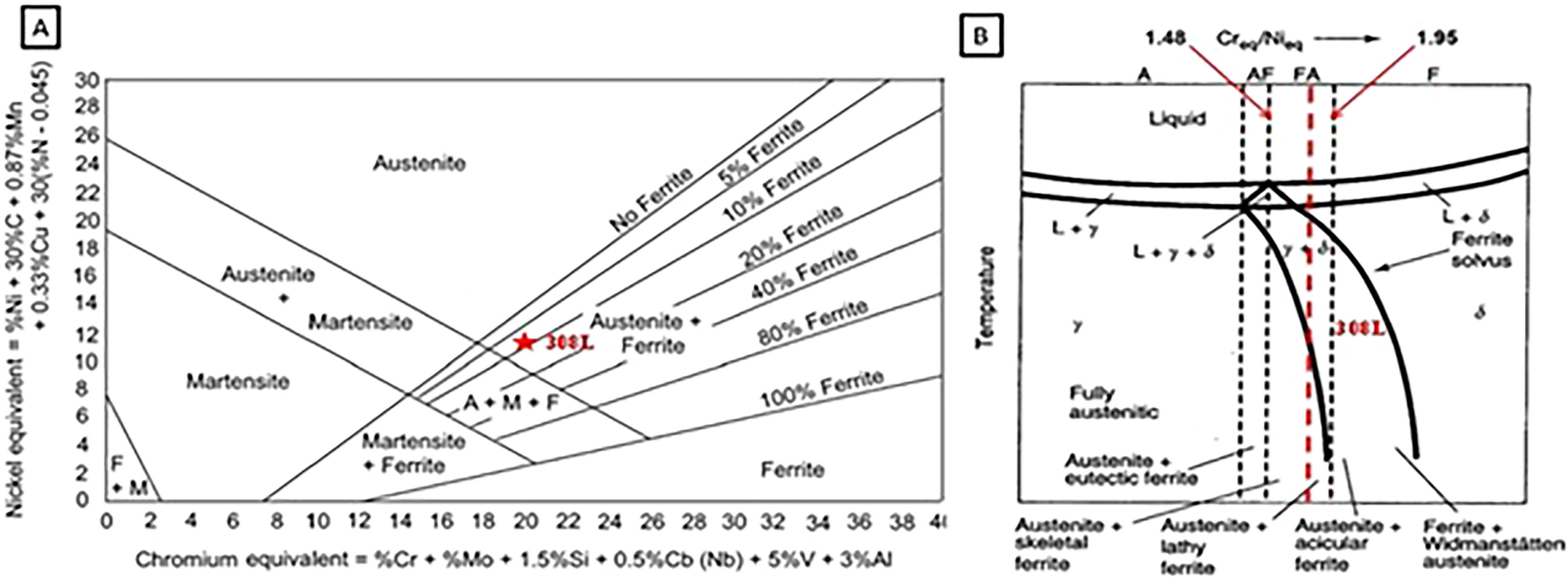
According to the chemical composition of the AISI 308L filler metal used in this study (see Table 1), the calculated values were Cr_eq = 20.26% and Ni_eq = 10.78%. The corresponding Cr_eq/Ni_eq ratio = 1.87, which falls within the solidification mode range of 1.48–1.95 on the Espy-modified Schaeffler diagram. This ratio indicates that the solidification of the weld metal follows the Ferrite–Austenite (FA) mode (Figure 1B), where primary δ-ferrite forms initially, followed by austenite (γ) during cooling. Although the Schaeffler-Espy diagram is based on equilibrium thermodynamic calculations, it provides a practical first-order approximation for predicting solidification mode and δ -ferrite content in weld metals despite the rapid, non-equilibrium solidification inherent to arc welding processes [6, 7, 30]. The consistency between diagram predictions and experimental observations in numerous welding studies validates the diagram’s utility for process design, even though kinetic effects govern the specific morphology and distribution of phases [6, 30]. As shown in (Figure 1A), the predicted ferrite content in the weld metal is approximately 10 wt.%, which aligns with typical FA solidification behavior. The presence of δ-ferrite in this range is considered beneficial, as it minimizes the risk of hot cracking during weld metal solidification and also aids in trapping detrimental impurities such as sulfur and phosphorus at grain boundaries, thus enhancing the overall weld integrity and microstructural stability [30].
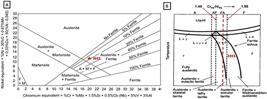
Schaeffler diagram for stainless steel weld metal, modified by R. Harry Espy (A), Relation between the pseudo-binary phase diagram and the solidification mode for austenitic stainless steels (B) [31].
3.1.2. Weld zone (WZ) microstructure
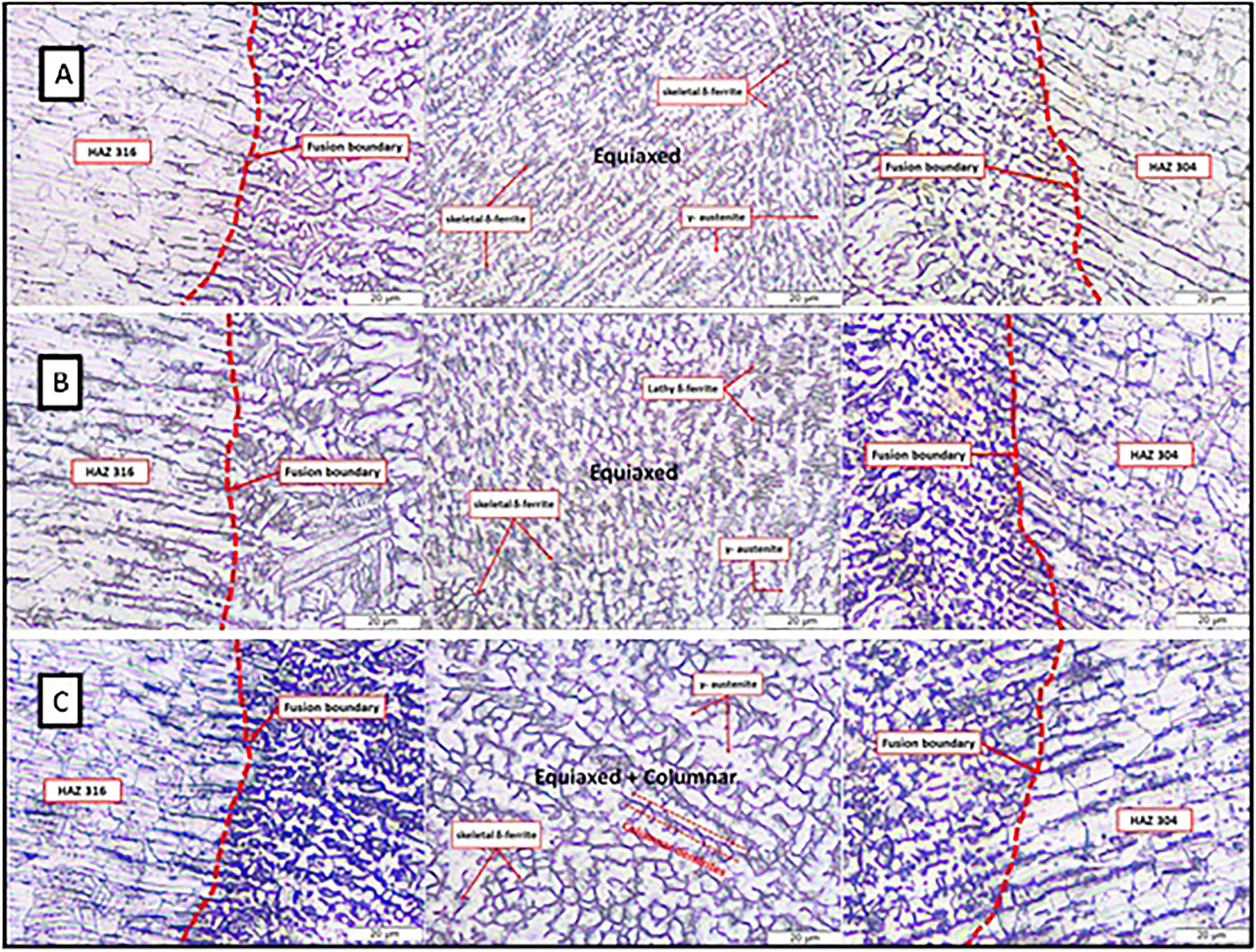
The microstructure of the weld zone was primarily dendritic across all levels of heat input. However, distinct variations in grain morphology were observed as the energy input increased: At low heat input (Level 1), The WZ predominantly exhibited a fine equiaxed dendritic structure with a γ-austenite matrix and dispersed skeletal δ-ferrite between dendrite arms. A limited cellular substructure was also observed near the fusion boundary, indicating a localized transition in the solidification mode from cellular to equiaxed dendritic growth. This morphology reflects rapid solidification, which promotes heterogeneous nucleation and refines the grain structure (Figure 2A) [32–34]. At intermediate heat input (Level 2): The grains became noticeably coarser. Lathy δ-ferrite appeared within the austenitic matrix, indicating a slower cooling rate that allowed ferrite to elongate and form along austenite grain boundaries. The equiaxed morphology was still present, but with reduced homogeneity (Figure 2B) [16, 21]. At high heat input (Level 3): The WZ exhibited a mixed morphology composed of elongated columnar dendrites in the center region and equiaxed grains near the fusion boundary. This suggests the existence of both strong directional and non-directional solidification, driven by slower cooling and greater heat input (Figure 2C) [32, 34]. The retention of δ-ferrite within the dendritic structure plays a critical role in resisting hot cracking; however, its excessive presence may reduce ductility and toughness during service, emphasizing the need for optimized thermal conditions [33–35].
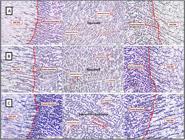
Microstructural characteristics of the weld zone (WZ) and (HAZ) in AISI 304 and AISI 316, heat input level 1 (A), heat input level 2 (B), heat input level 3 (C).
3.1.3. Heat affected zone (HAZ)
The HAZ exhibited varying degrees of grain coarsening across the three heat input levels. In both AISI 316 and AISI 304 base metals, increasing the heat input resulted in enlarged grain structures near the fusion boundary, with AISI 316 showing more pronounced grain growth due to its lower thermal conductivity and higher molybdenum content [35]. At low heat input, the HAZ experienced moderate thermal exposure, leading to partial grain refinement. As the input increased, higher peak temperatures and slower cooling extended the grain coarsening region significantly, especially in AISI 316. Optical microscopy revealed a clearer thermal gradient in the HAZ at lower energy levels, while at higher inputs, the gradient became less defined, indicating more uniform heat penetration across the zone [32, 35]. The variation in grain morphology across different heat inputs confirms that heat input can significantly influence the extent of microstructural transformation in the HAZ.
3.2. Mechanical properties
3.2.1. Micro-hardness testing
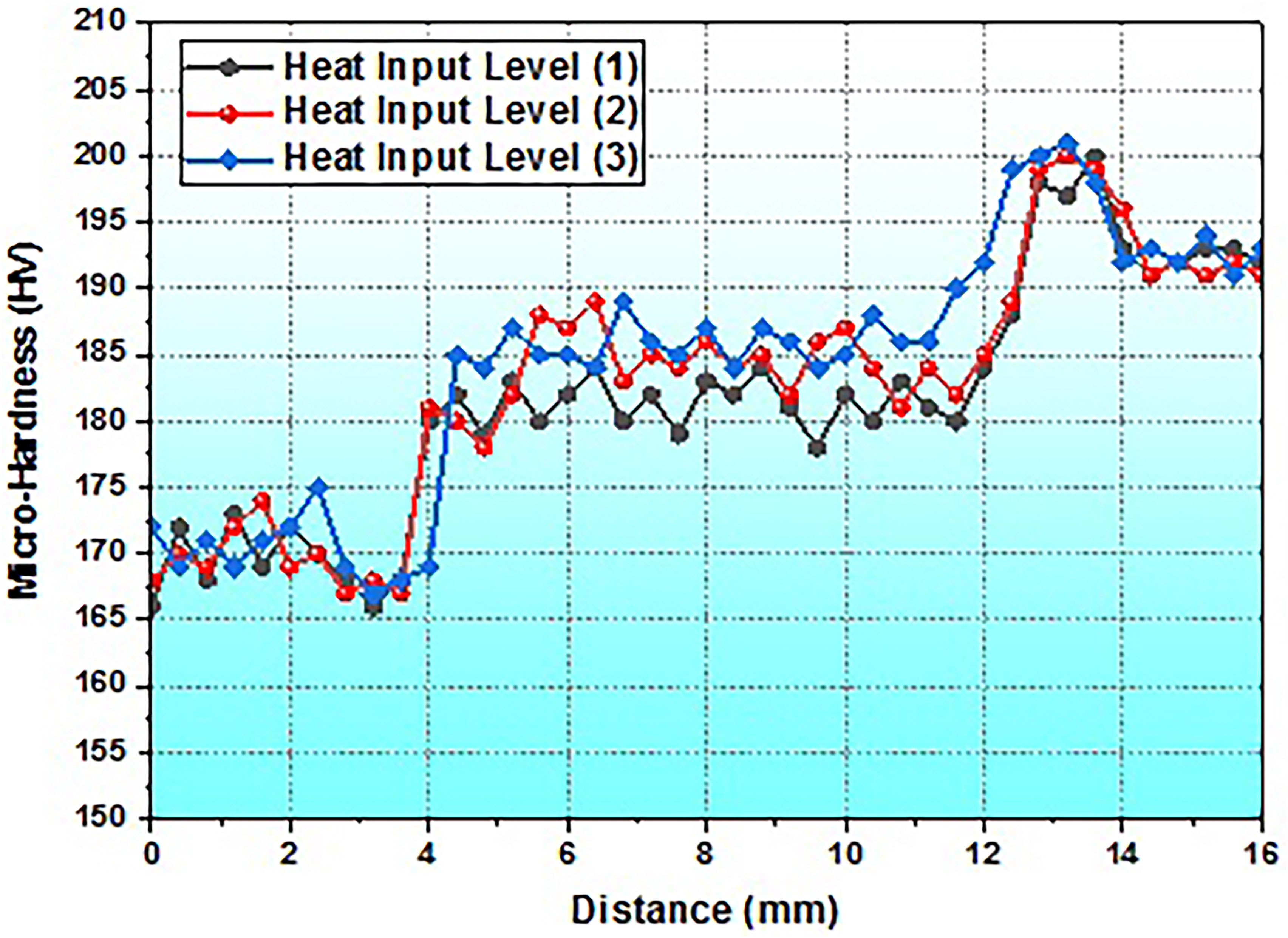
Vickers micro-hardness measurements conducted across the dissimilar AISI 316/AISI 304 weldments (Figure 3) revealed a strong correlation between hardness variation and the microstructural features generated under different heat input levels. The AISI 316 base metal consistently exhibited lower hardness values (≈165–170 HV) compared to AISI 304 (≈190–195 HV), a difference primarily attributed to their distinct chemical compositions, and work-hardening characteristics.
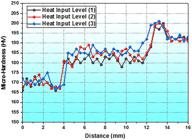
Within the fusion zone (FZ), the highest hardness was recorded at the intermediate heat input (Level 2), where the weld metal consisted of coarser equiaxed austenite grains interspersed with lathy δ-ferrite. This combination enhanced hardness to approximately 180–190 HV, as δ-ferrite is known to impede dislocation motion more effectively than fully austenitic structures [29]. In contrast, the highest heat input (Level 3) produced a mixed columnar + equiaxed dendritic morphology, which resulted in slightly lower hardness values, likely due to easier slip along the columnar grain boundaries. The lowest fusion-zone hardness occurred at the lowest heat input (Level 1), despite the presence of fine equiaxed grains, as the minimal δ-ferrite content limited precipitation strengthening.
In the heat-affected zone (HAZ), deviations from base-metal hardness were also heat-input dependent. For AISI 316, hardness decreased slightly (~4 HV below base) due to moderate grain coarsening. In contrast, the HAZ of AISI 304 exhibited a modest increase in hardness, reaching up to ≈202 HV, consistent with literature findings that associate HAZ strengthening with grain refinement and δ-ferrite formation. The micro-hardness trends closely correspond to tensile fracture locations: failures predominantly occurred in the softer AISI 316 regions (base metal or HAZ), whereas the fusion zones, particularly at intermediate heat input, demonstrated superior hardness and resistance to crack initiation. These findings highlight the critical role of heat input control in tailoring weld microstructures to achieve an optimal balance between strength and ductility in dissimilar stainless-steel joints.
3.2.2. Tensile testing
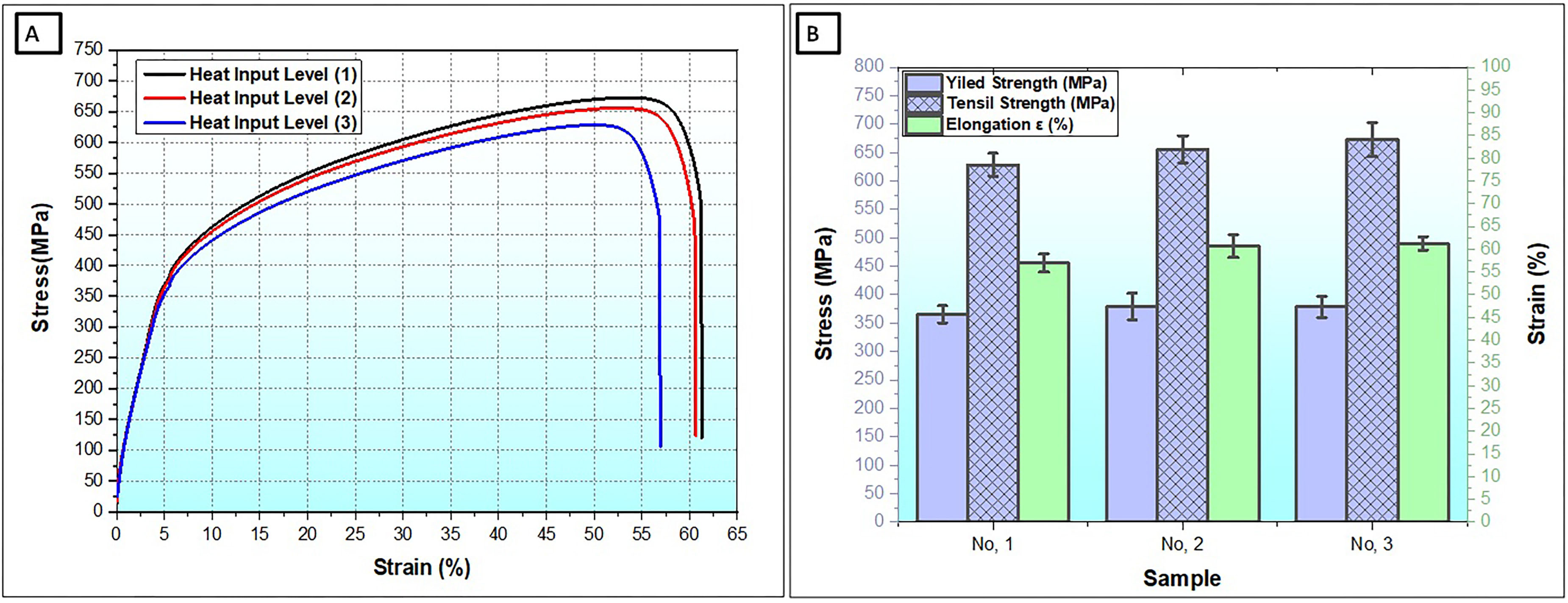
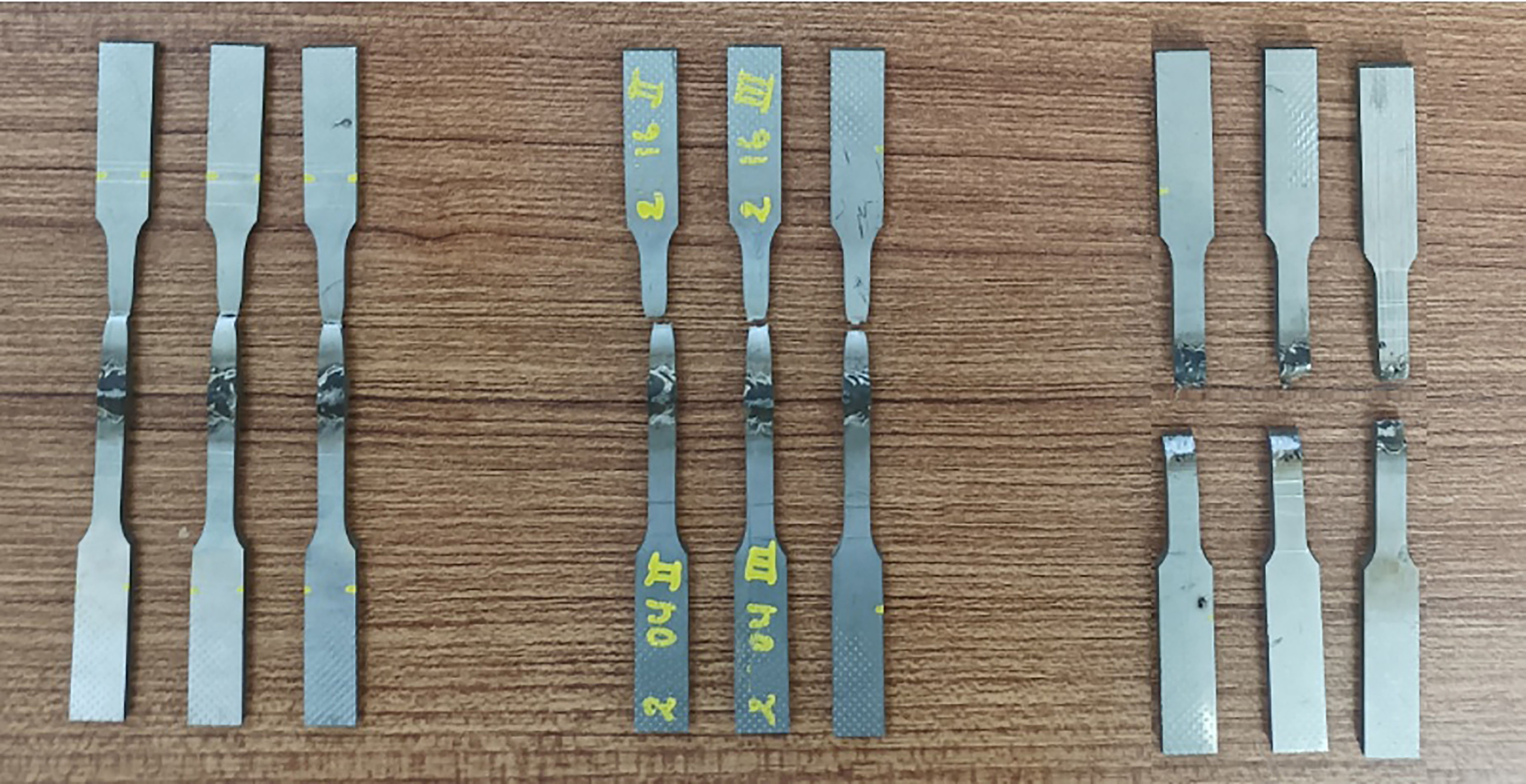
The tensile behavior of the dissimilar AISI 316/AISI 304 stainless steel MIG weldments exhibited a clear dependence on the applied heat input (Figure 4A & 4B) and (Figure 5) showing the tensile fractures of the specimens. At the lowest heat input (Level 1), the joints achieved the highest performance, with a yield strength of 380.9 MPa, an ultimate tensile strength (UTS) of 672.5 MPa, and an elongation of 62.28%. A slight reduction was recorded at the intermediate heat input (Level 2), where yield strength and UTS decreased marginally to 379 MPa and 655.7 MPa, respectively, accompanied by an elongation of 60.64%. The highest heat input (Level 3) resulted in a significant deterioration of mechanical properties, with yield strength falling to 334.9 MPa, UTS to 628.4 MPa, and elongation to 56.92%. The significant deterioration in yield strength at Level 3 (335 MPa compared to 381 MPa at Level 1, representing a 12% reduction) is directly attributable to pronounced grain coarsening in the AISI 316 HAZ, which became the weakest region controlling deformation behavior. Additionally, the extended thermal exposure at high heat input promoted recovery and recrystallization processes that reduced dislocation density in the HAZ, further contributing to softening. The microhardness measurements confirmed this correlation, showing a 5 HV decrease in AISI 316 HAZ at Level 3 compared to Level 1. The fracture location shift from base metal (Levels 1-2) to HAZ (Level 3) provides definitive evidence that grain coarsening created a critically weakened zone that controlled tensile failure, overriding the strength of both the fusion zone and the base metal. This observation is consistent with recent findings in dissimilar austenitic stainless-steel welding, where HAZ degradation has been identified as the primary failure mechanism at elevated heat input levels [7, 13, 18].
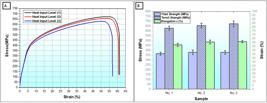
Results of tensile tests on welded joints (A), Comparison of YS, TS and percentage elongation (B).
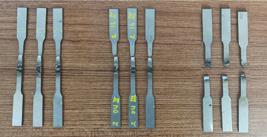
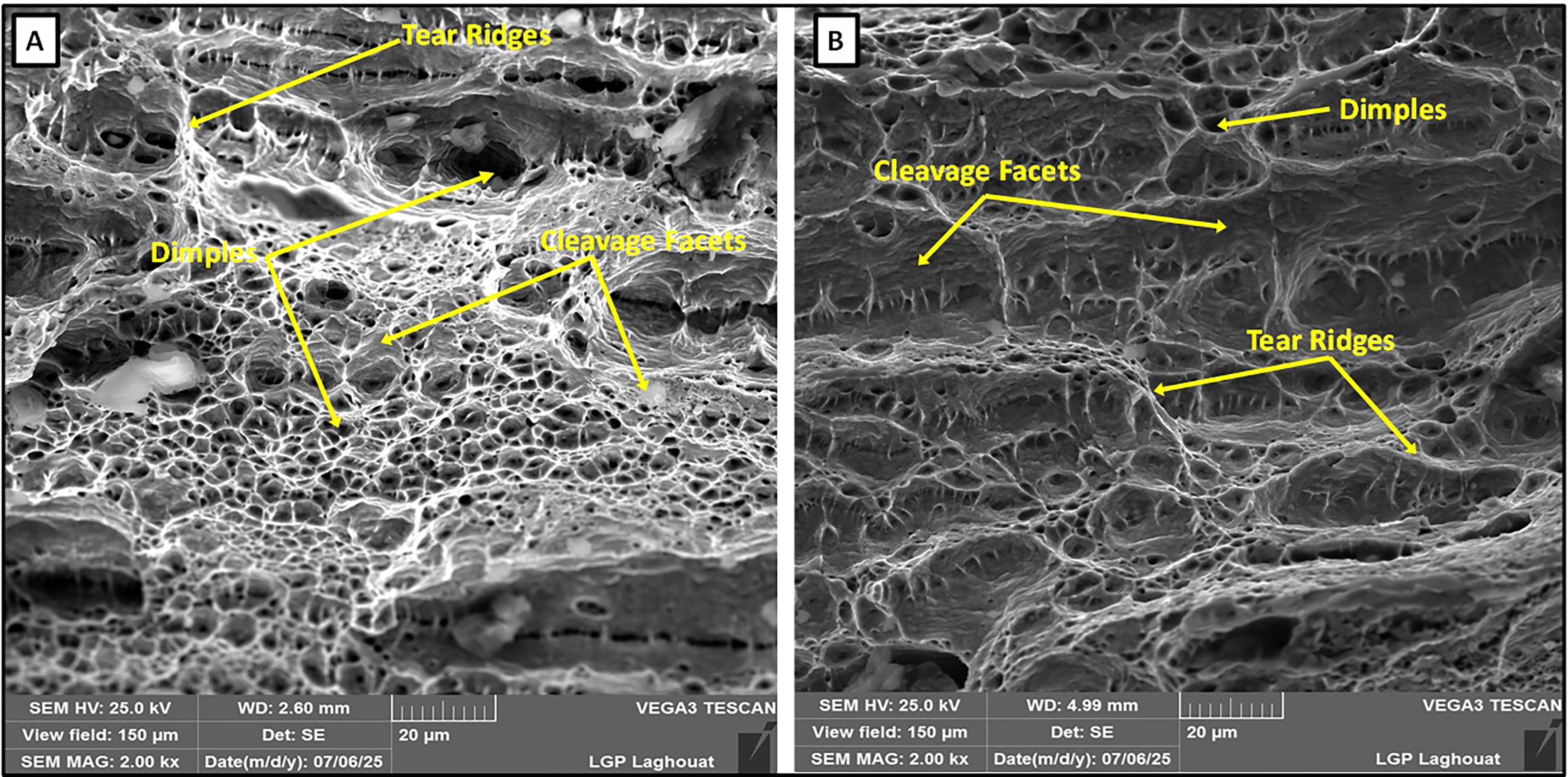
Fractographic examination using scanning electron microscopy (Figure 6A & 6B). Revealed that fracture location and morphology were strongly influenced by the heat input. At Level 1 and Level 2, failure consistently occurred in the AISI 316 base metal, away from the weld zone, reflecting the fact that both the fusion zone (WZ) and the heat-affected zone (HAZ) maintained higher hardness and strength than the weaker base material. The fracture surfaces in these cases displayed a predominance of deep, equiaxed dimples, indicative of a fully ductile micro-void coalescence mechanism. In contrast, at Level 3, fracture initiated within the HAZ of AISI 316, corresponding to the region of minimum microhardness in the joint. This area experienced pronounced grain coarsening due to prolonged thermal exposure and slower cooling rates, which lowered its resistance to plastic deformation [36].
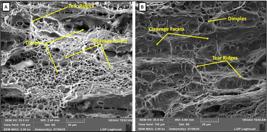
SEM observations of this fracture surface revealed a shallower dimple morphology interspersed with localized tearing ridges, and cleavage facets, consistent with reduced ductility and higher strain localization. The mechanical trends are in close agreement with the microhardness profiles: despite the weld metal at Level 2 exhibiting the highest hardness due to the presence of coarser equiaxed austenite reinforced with lathy δ-ferrite, the global tensile performance was dictated by the weakest microstructural region along the gauge length. At Level 3, the drop-in hardness and stability within HAZ 316 directly correlated with the observed shift in fracture location, confirming that HAZ degradation is a key factor in tensile failure for dissimilar stainless-steel weldments.
3.3. Influence of delta ferrite on mechanical behavior
The influence of δ-ferrite on mechanical behavior manifests differently in the weld metal versus the heat-affected zones. In the weld metal, the approximately 10 wt.% δ-ferrite present as skeletal (Level 1 and 3) skeletal and lathy (Levels 2) morphology within the austenitic matrix serves multiple strengthening and protective functions: it acts as an effective barrier to dislocation motion due to the coherent ferrite-austenite interface, contributing to the elevated fusion zone hardness (180–190 HV) compared to the base metals (165–195 HV) [6, 37, 38]; the ferrite-austenite interfaces provide crack deflection sites that enhance fracture toughness by increasing the energy required for crack propagation; during solidification, δ-ferrite formation suppresses hot cracking by accommodating thermal contraction strains and providing alternative diffusion paths for impurity elements such as sulfur and phosphorus, thereby enhancing overall weld integrity and chemical homogeneity [37, 38]. In contrast, the heat-affected zones experience partial transformation of their microstructures depending on peak temperature and cooling rate. The AISI 316 HAZ, subjected to peak temperatures between 900–1200 °C, does not form significant new δ-ferrite (as these temperatures fall outside the austenite-to-ferrite transformation range for these compositions estimated from the Fe-Cr-Ni phase diagram). Instead, the HAZ retains its fully austenitic structure but experiences substantial grain coarsening [7, 13]. The AISI 304 HAZ behaves similarly, though with slightly different grain growth kinetics due to compositional differences in chromium and nickel contents [6]. The fusion zone δ-ferrite content remains relatively stable across all heat input levels (~9–11 wt.%), as determined by the chemical composition and solidification mode rather than cooling rate. Therefore, the mechanical property variations observed primarily reflect grain size effects in the HAZ rather than ferrite content changes [6, 38]. The persistence of ductile fracture mode even at Level 3 confirms that the δ-ferrite in the fusion zone maintains fracture resistance despite HAZ degradation controlling overall joint strength. This segregation of strengthening and failure mechanisms between the weld metal and HAZ highlights the critical importance of HAZ thermal management in dissimilar stainless steel welding.
4. CONCLUSIONS
The following conclusions are drawn from this systematic study of dissimilar AISI 316/AISI 304 MIG welded joints:
-
–
MIG welding with 308L filler metal at all heat input levels (0.36–0.54 kJ/mm) produced FA (ferritic-austenitic) solidification mode with approximately 10 wt.% δ-ferrite, effectively preventing solidification cracking and providing fusion zone hardness of 180–190 HV at optimal heat input levels.
-
–
Increasing heat input from 0.36 to 0.54 kJ/mm caused progressive dendrite coarsening, grain growth in HAZ AISI 316 resulting in hardness reduction from 170 HV to 165 HV in this critical region.
-
–
Optimal mechanical performance occurred at the lowest heat input (Level 1: 0.36 kJ/mm): UTS 673 MPa, YS 381 MPa, elongation 62.3%, with fracture in the AISI 316 base metal and fully ductile dimpled morphology.
-
–
At the highest heat input (Level 3: 0.54 kJ/mm), excessive HAZ softening shifted fracture to the grain-coarsened HAZ, reducing UTS to 628 MPa (~7%), YS to 335 MPa (~12%), and elongation to 56.9% (~9%), with mixed ductile-brittle fracture. These findings demonstrate that controlling heat input below 0.4 kJ/mm is critical for preserving HAZ integrity in dissimilar 316/304 MIG welds.
5. BIBLIOGRAPHY
-
[1] ETTEFAGH, A.H., GUO, S., RAUSH, J., “Corrosion performance of additively manufactured stainless steel parts: A review”, Additive Manufacturing, v. 37, pp. 101689, 2021. doi: https://doi.org/10.1016/j.addma.2020.101689.
» https://doi.org/10.1016/j.addma.2020.101689 -
[2] ZAFFORA, A., DI FRANCO, F., SANTAMARIA, M., “Corrosion of stainless steel in food and pharmaceutical industry”, Current Opinion in Electrochemistry, v. 29, pp. 100760, 2021. doi: https://doi.org/10.1016/j.coelec.2021.100760.
» https://doi.org/10.1016/j.coelec.2021.100760 -
[3] DALIPI, R., BORGESE, L., CASAROLI, A., et al., “Study of metal release from stainless steels in simulated food contact by means of total reflection X-ray fluorescence”, Journal of Food Engineering, v. 173, pp. 85–91, 2016. doi: https://doi.org/10.1016/j.jfoodeng.2015.10.045.
» https://doi.org/10.1016/j.jfoodeng.2015.10.045 -
[4] SOLTANI, H.M., TAYEBI, M., “Comparative study of AISI 304L to AISI 316L stainless steels joints by TIG and Nd:YAG laser welding”, Journal of Alloys and Compounds, v. 767, pp. 112–121, 2018. doi: https://doi.org/10.1016/j.jallcom.2018.06.302.
» https://doi.org/10.1016/j.jallcom.2018.06.302 -
[5] KUMAR, N., MUKHERJEE, M., BANDYOPADHYAY, A., “Comparative study of pulsed Nd:YAG laser Welding of AISI 304 and AISI 316 stainless steels”, Optics & Laser Technology, v. 88, pp. 24–39, 2017. doi: https://doi.org/10.1016/j.optlastec.2016.08.018.
» https://doi.org/10.1016/j.optlastec.2016.08.018 -
[6] ANTUNES, P.D., SILVA, C.C., CORRÊA, E.O., “Effect of the heat input and ageing treatment on microstructure and mechanical properties of AISI 317L stainless steel dissimilar welded joints”, Materials Research, v. 25, pp. e20220118, 2022. doi: https://doi.org/10.1590/1980-5373-mr-2022-0118.
» https://doi.org/10.1590/1980-5373-mr-2022-0118 - [7] SILVA, R.S., KUMAR, A., PANT, D., et al., “Analysis of dissimilar welding joint between Inconel 718 and AISI 316L using Multipass GTAW”, Matéria, v. 27, n. 3, pp. e13517, 2022.
-
[8] QU, X., LI, X., ZHANG, L., et al., “Effect of construction angles on the microstructure and mechanical properties of LPBF-fabricated 15-5 PH stainless steel”, Materials Science and Engineering A, v. 900, pp. 146423, 2024. doi: https://doi.org/10.1016/j.msea.2024.146423.
» https://doi.org/10.1016/j.msea.2024.146423 -
[9] ZHANG, Z., WAN, L., WEN, Q., et al., “Wire-based friction stir additive manufacturing of TiC reinforced Al-Cu-Mg composite: Particle refinement and dispersion”, Composites. Part A, Applied Science and Manufacturing, v. 196, pp. 109009, 2025. doi: https://doi.org/10.1016/j.compositesa.2025.109009.
» https://doi.org/10.1016/j.compositesa.2025.109009 -
[10] SUN, S., MENG, X., XIE, Y., et al., “Wire-based friction stir additive manufacturing enables enhanced interlayer bonding in aluminum-matrix composites”, Journal of Manufacturing Processes, v. 153, pp. 1–15, 2025. doi: https://doi.org/10.1016/j.jmapro.2025.08.078.
» https://doi.org/10.1016/j.jmapro.2025.08.078 - [11] LIPPOLD, J.C., KOTECKI, D.J., Welding metallurgy and weldability of stainless steels Hoboken, John Wiley & Sons, 2005.
-
[12] SINGH, D.K., SHARMA, V., BASU, R., et al., “Understanding the effect of weld parameters on the microstructures and mechanical properties in dissimilar steel welds”, Procedia Manufacturing, v. 35, pp. 986–991, 2019. doi: https://doi.org/10.1016/j.promfg.2019.06.046.
» https://doi.org/10.1016/j.promfg.2019.06.046 - [13] MUTHUSAMY, C., SANKARANARAYANAN, V., JAYAKUMAR, T., “Effect of Heat Input on Mechanical and Metallurgical Properties of AISI 410S Stainless Steel Weldments”, Matéria, v. 21, n. 2, pp. 365–379, 2016.
- [14] GOVINDARAJ, S., SRIVATSAN, K., RAJKUMAR, N., et al., “Mechanical, microstructure and corrosion properties of dissimilar AISI 304 and AISI 316 austenitic stainless-steel friction stir welded joints”, Matéria, v. 30, n. 3, pp. e14567, 2025.
-
[15] SRIPRIYAN, K., RAMU, M., THYLA, P.R., et al., “Weld bead characterization of flat wire electrode in GMAW process part II: a numerical study”, Journal of Mechanical Science and Technology, v. 35, n. 5, pp. 1–8, 2021. doi: http://doi.org/10.1007/s12206-021-0411-2.
» https://doi.org/10.1007/s12206-021-0411-2 - [16] HAMEED, A.S., “Experimental investigation for multi characteristics optimization of MIG welding on 304 stainless steel using desirability function analysis”, Journal of Mines, Metals & Fuels, v. 68, n. 4, pp. 144–149, 2020.
-
[17] TANG, H., PENG, J., PENG, H., et al., “Test and theoretical investigations on flexural behavior of high‐performance H‐shaped steel beam with local corrosion in pure bending zone”, Steel Research International, v. 96, n. 7, pp. 2400640, 2025. doi: https://doi.org/10.1002/srin.202400640.
» https://doi.org/10.1002/srin.202400640 -
[18] XIE, J., GENG, C., SONG, J., et al., “Effect of preweld conditions on the strain ageing cracking susceptibility of IN939 superalloys heat affected zone”, Journal of Materials Research and Technology, v. 36, pp. 5684–5695, 2025. doi: https://doi.org/10.1016/j.jmrt.2025.04.226.
» https://doi.org/10.1016/j.jmrt.2025.04.226 -
[19] ZHANG, X., XUE, K., LIU, L., et al., “Effect of electrical pulse treatment on the microstructural and mechanical responses of heterogeneous linear friction welded TC17/TC4 dissimilar joint”, Journal of Materials Research and Technology, v. 35, pp. 1–12, 2025. doi: https://doi.org/10.1016/j.jmrt.2025.01.011.
» https://doi.org/10.1016/j.jmrt.2025.01.011 -
[20] DONG, W., MENG, X., XIE, Y., et al., “Wire-based friction stir welding enables equal-strength joining of aluminum alloys even with assembling gaps”, Journal of Manufacturing Processes, v. 151, pp. 426–433, 2025. doi: https://doi.org/10.1016/j.jmapro.2025.07.050.
» https://doi.org/10.1016/j.jmapro.2025.07.050 - [21] CHAUHAN, V., JADOUN, R.S., “Parametric optimization of MIG welding for stainless steel (SS-304) and low carbon steel using Taguchi design method”, International Journal of Recent Scientific Research, v. 6, pp. 2662–2666, 2015.
-
[22] MOSLEMI, N., REDZUAN, N., AHMAD, N., et al., “Effect of current on characteristic for 316 stainless steel welded joint including microstructure and mechanical properties”, Procedia CIRP, v. 26, pp. 560–564, 2015. doi: https://doi.org/10.1016/j.procir.2015.01.010.
» https://doi.org/10.1016/j.procir.2015.01.010 -
[23] POPOVA, N.A., SMIRNOV, A.N., NIKONENKO, E.L., et al., “Structure and phase composition of heat-affected zone of austenite steel after deformation”, Russian Physics Journal, v. 62, n. 9, pp. 1587–1594, 2020. doi: https://doi.org/10.1007/s11182-020-01880-4.
» https://doi.org/10.1007/s11182-020-01880-4 -
[24] REUNOVA, K.A., ASTAFUROVA, E.G., MOSKVINA, V.A., et al., “Microstructure and phase composition of a gradient material “Stainless Steel/Cr-Ni Alloy” produced by electron-beam additive manufacturing”, Russian Physics Journal, v. 65, n. 5, pp. 771–777, 2022. doi: https://doi.org/10.1007/s11182-022-02696-0.
» https://doi.org/10.1007/s11182-022-02696-0 -
[25] KADIR, H., RISWANDA, SARAGIH, A.D., et al., “Effect of welding parameter conditions of 304L SS and AISI 1015 dissimilar steel weld joints to macrostructure and mechanical properties”, Materials Science Forum, v. 1045, pp. 123–130, 2022. doi: https://doi.org/10.4028/p-by83w7.
» https://doi.org/10.4028/p-by83w7 -
[26] TAVARES, S.S.M., GONZAGA, A.C., PARDAL, J.M., et al., “Nitrides precipitation and preferential pitting corrosion of ferrite phase in UNS S39274 superduplex stainless steel”, Metallography, Microstructure, and Analysis, v. 9, n. 5, pp. 685–694, 2020. doi: https://doi.org/10.1007/s13632-020-00685-8.
» https://doi.org/10.1007/s13632-020-00685-8 -
[27] ANTUNES, P.D., SILVA, C.C., CORREA, E.O., et al., “Influence of the heat input and aging treatment on microstructure and mechanical properties of AISI 317 L steel weldments using 0020 robotic-pulsed GMAW”, International Journal of Advanced Manufacturing Technology, v. 105, n. 12, pp. 5151–5163, 2019. doi: https://doi.org/10.1007/s00170-019-04621-1.
» https://doi.org/10.1007/s00170-019-04621-1 -
[28] FERNANDES, J.C., CORREA, E.O., MELO, M.L.N.M., et al., “Influence of corrosive solution temperature on the SCC behavior of the AISI 310 and AISI 316 stainless steels rolled plates”, Kovové Materiály, v. 50, n. 2, pp. 69–73, 2012. doi: https://doi.org/10.4149/km_2012_2_69.
» https://doi.org/10.4149/km_2012_2_69 -
[29] NOGA, P., SKRZEKUT, T., WĘDRYCHOWICZ, M., et al., “The influence of various welding methods on the microstructure and mechanical properties of 316Ti Steel”, Materials, v. 17, n. 7, pp. 1681, 2024. doi: https://doi.org/10.3390/ma17071681. PubMed PMID: 38612194.
» https://doi.org/10.3390/ma17071681 -
[30] BANSOD, A.V., PATIL, A.P., “Effect of welding processes on microstructure, mechanical properties, and corrosion behavior of low-nickel austenitic stainless steels”, Metallography, Microstructure, and Analysis, v. 6, n. 4, pp. 304–314, 2017. doi: https://doi.org/10.1007/s13632-017-0368-3.
» https://doi.org/10.1007/s13632-017-0368-3 -
[31] LEE, S.H., “CMT-based wire arc additive manufacturing using 316l stainless steel: effect of heat accumulation on the multi-layer deposits”, Metals, v. 10, n. 2, pp. 278, 2020. doi: https://doi.org/10.3390/met10020278.
» https://doi.org/10.3390/met10020278 -
[32] SRIDHAR, P.V.S., BISWAS, P., MAHANTA, P., “Effect of process parameters on bead geometry, tensile and microstructural properties of double-sided butt submerged arc welding of SS 304 austenitic stainless steel”, Journal of the Brazilian Society of Mechanical Sciences and Engineering, v. 42, n. 10, pp. 551, 2020. doi: https://doi.org/10.1007/s40430-020-02636-4.
» https://doi.org/10.1007/s40430-020-02636-4 -
[33] HSIEH, C.-C., GUO, X., CHANG, C.-M., et al., “Dendrite evolution of delta (δ) ferrite and precipitation behavior of sigma (σ) phase during multi-pass dissimilar stainless steels welding”, Metals and Materials International, v. 16, n. 3, pp. 349–356, 2010. doi: https://doi.org/10.1007/s12540-010-0602-x.
» https://doi.org/10.1007/s12540-010-0602-x -
[34] NEDJAD, S.H., YILDIZ, M., SABOORI, A., “Solidification behaviour of austenitic stainless steels during welding and directed energy deposition”, Science and Technology of Welding and Joining, v. 28, n. 1, pp. 1–17, 2022. doi: https://doi.org/10.1080/13621718.2022.2115664.
» https://doi.org/10.1080/13621718.2022.2115664 -
[35] KARTHICK, B., SHRIHARI, L., SAKTHIVEL, M., “Effect of heat input on the microstructure and mechanical properties of gas tungsten arc welded AISI 316 stainless steel joints”, International Research Journal on Advanced Science Hub, v. 2, n. 8, pp. 23–27, 2020. doi: https://doi.org/10.47392/irjash.2020.86.
» https://doi.org/10.47392/irjash.2020.86 -
[36] SATHIYA, P., ARAVINDAN, S., HAQ, A.N., “Effect of friction welding parameters on mechanical and metallurgical properties of ferritic stainless steel”, International Journal of Advanced Manufacturing Technology, v. 31, n. 11–12, pp. 1076–1082, 2007. doi: https://doi.org/10.1007/s00170-005-0285-5.
» https://doi.org/10.1007/s00170-005-0285-5 -
[37] KAMIYA, O., KUMAGAI, K., KIKUCHI, Y., “Effects of delta ferrite morphology on low‐temperature fracture toughness of austenitic stainless-steel weld metal”, Welding Int, v. 6, n. 8, pp. 606–611, 1992. doi: https://doi.org/10.1080/09507119209548250.
» https://doi.org/10.1080/09507119209548250 -
[38] GHASEMI, R., BEIDOKHTI, B., FAZEL-NAJAFABADI, M., “Effect of delta ferrite on the mechanical properties of dissimilar ferritic-austenitic stainless-steel welds”, Archives of Metallurgy and Materials, v. 63, n. 1, pp. 373–379, 2018. doi: https://doi.org/10.24425/118958.
» https://doi.org/10.24425/118958