 Effect of fiber hybridization on bi-directionally oriented natural and glass fiber reinforced polymer composites
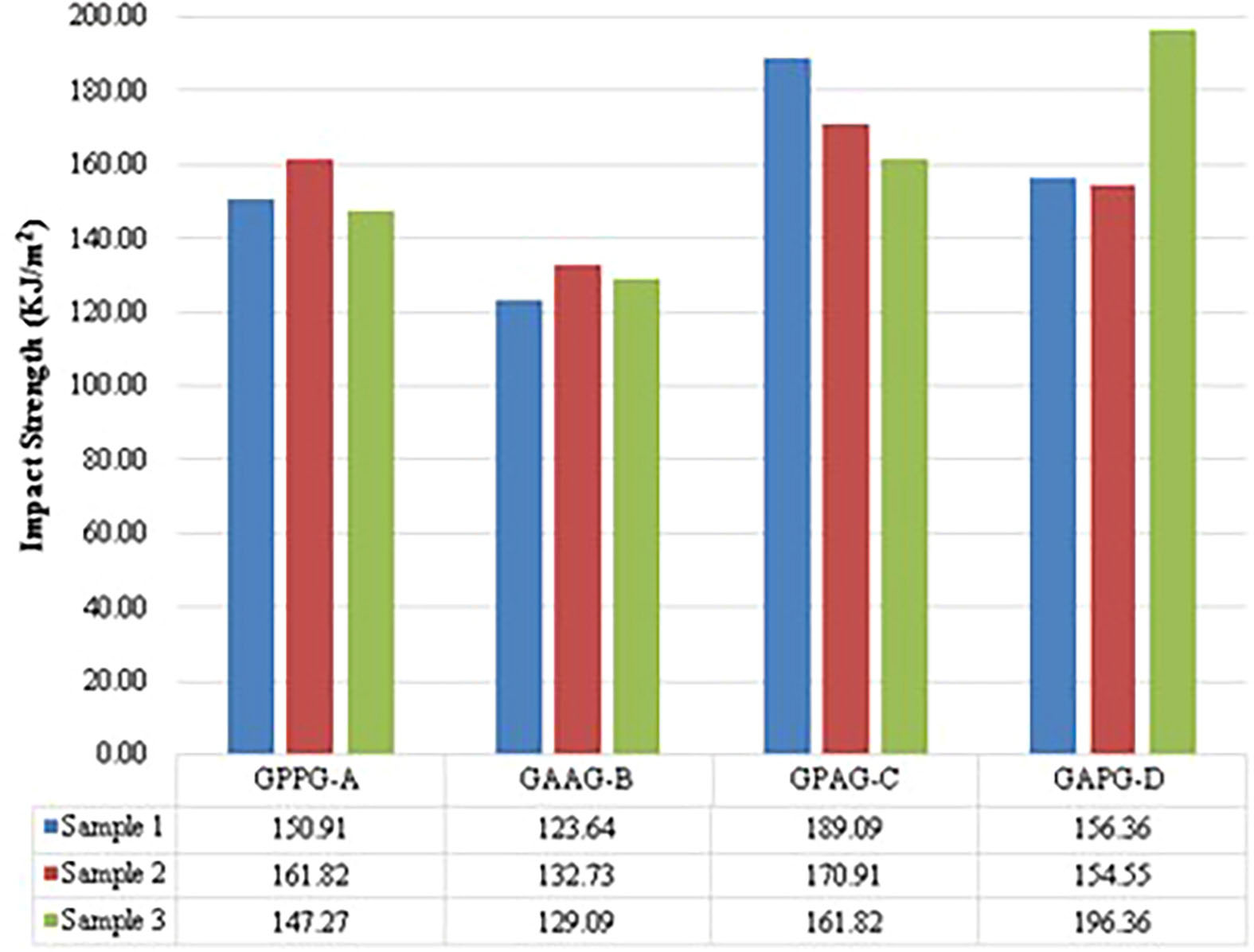
In recent days the natural fiber reinforced polymer composites getting more attention due to their eco-friendly and reliability in many parts of the industries. The lignocellulosic content in natural fibers influenced to use in corrosion and thermal free applications. The hybrid fiber reinforced composites additionally provides the combination of material properties together, the orientation of fiber reflects in strength of the composites as it acting as load bearing factor of the fiber reinforced composites. So, the present work investigates the effect of hybridization and stacking sequence on various material properties such as density, moisture intake by the material, tensile, impact, hardness and thermal stability. The structural characteristics of the fabricated composites is analyzed through Scanning Electron Microscope. The results concludes that the hybridization of glass fiber mat with cellulose fibers mat such as Pineapple Leaf fiber (PALF) and areca fiber depicts the more acceptable bonding relationship with the matrix thus results in improved properties. The fabricated new set of natural and glass reinforced polymer composites have found the tensile strength between 40–65 MPa, Young’s modulus in the range 950–1400 MPa, Impact strength of about 130–190 KJ/mm2 and thermal stability up to 340–390 °C which is higher than the earlier studies reported.
Keywords:
Lignocellulosic fibers; Glass fiber; Physical; Mechanical characterization; Thermal degradation; Microstructural Analysis
 Thumbnail
 Thumbnail
 Thumbnail
 Thumbnail
 Thumbnail
 Thumbnail
 Thumbnail
 Thumbnail
 Thumbnail
 Thumbnail
 Thumbnail
 Thumbnail
 Thumbnail