 Machine learning-enabled energy management strategies for hybrid renewable-powered ultra-fast charging infrastructure
ABSTRACT
Ultra-fast electric vehicle (EV) charging stations operating at power levels above 350 kW introduce critical challenges related to grid peak demand, high operating cost, renewable intermittency, and battery stress. This paper presents a machine learning-enabled energy management system for a hybrid renewable-powered ultra-fast charging station integrating photovoltaic generation, battery energy storage system, dispatchable auxiliary sources, and grid supply. The proposed EMS operates at a supervisory level and coordinates energy flows under stochastic EV charging demand, time-varying electricity tariffs (₹4–₹10/kWh), and uncertain renewable generation. A learning-based decision framework is developed using a reinforcement learning policy trained over 150 episodes, incorporating renewable and EV demand forecasts with ±10% uncertainty. The EMS performs multi-objective optimization by minimizing grid energy cost and peak power demand while achieving a balanced trade-off between renewable energy utilization, grid stability, and economic performance, and maintaining battery state-of-charge within safe operating limits (0.2–0.9). Simulation results over a 24-hour operating horizon demonstrate that the proposed ML-EMS achieves a 20–35% reduction in total grid energy cost, 25–40% peak grid power reduction, and achieves a balanced trade-off between renewable utilization, grid stability, and economic performance compared to a conventional rule-based EMS. The results validate the effectiveness of machine learning-driven energy management for reliable, grid-friendly, and cost-efficient operation of next- generation ultra-fast EV charging infrastructure.
Keywords:
Ultra-fast EV charging; Energy management system; Machine learning; Renewable integration; Battery energy storage; Grid stress mitigation
1. INTRODUCTION
The rapid growth of electric vehicle (EV) adoption has led to a substantial increase in demand for high-power charging infrastructure capable of delivering fast and convenient charging comparable to conventional refueling. Ultra-fast charging (UFC) stations, typically operating at power levels exceeding 350 kW, are emerging as a key enabler for large-scale EV penetration. However, the integration of such high-power charging facilities poses significant challenges to power distribution networks, including increased peak demand, higher operating costs, voltage deviations, and potential degradation of grid reliability [1,2,3].
To mitigate these challenges, hybrid renewable-powered EV charging stations that integrate photovoltaic (PV) generation, battery energy storage systems (BESS), dispatchable auxiliary sources, and grid supply have been widely investigated [4,5,6]. By leveraging local renewable generation and energy storage, these hybrid architectures can reduce grid dependency, lower emissions, and improve overall system efficiency. Nevertheless, the inherent intermittency of renewable energy sources and the stochastic nature of EV charging demand introduce substantial operational complexity. Without effective coordination, renewable curtailment, inefficient battery utilization, and excessive grid power draw may occur, particularly under ultra-fast charging conditions [7,8,9].
Early research on EV charging energy management systems (EMS) predominantly relied on rule-based and deterministic control strategies, where predefined heuristics govern power sharing between grid supply and local energy resources [10, 11]. Although such approaches are simple to implement, they lack adaptability to dynamic operating conditions such as fluctuating renewable availability, uncertain EV arrival patterns, and time-varying electricity tariffs. Consequently, rule-based EMS schemes often result in suboptimal performance in terms of grid stress mitigation, operational cost, and battery utilization [12, 13].
To overcome these limitations, optimization-based EMS frameworks employing linear programming, mixed-integer programming, and model predictive control (MPC) techniques have been proposed [14,15,16]. These methods enable systematic cost minimization and peak demand reduction by explicitly modeling system constraints and operational objectives. However, their effectiveness strongly depends on accurate system models and forecasts, and their computational complexity increases significantly with the number of energy sources and constraints. This limits scalability and real-time applicability, particularly for ultra-fast charging stations with hybrid energy architectures [17, 18].
Recent advances in data-driven techniques have spurred growing interest in machine learning (ML)–based energy management strategies for EV charging applications. Supervised learning methods have been extensively applied for short-term renewable generation forecasting and EV charging demand prediction [19, 20], while multi-agent learning approaches have been explored for coordinated grid operation under distributed energy resources [21]. More recently, reinforcement learning (RL)–based EMS frameworks have demonstrated strong potential for adaptive, model-free energy dispatch in microgrids and EV charging stations, offering improved flexibility compared to conventional optimization-based approaches [22,23,24].
In recent years, several comprehensive survey studies have highlighted the growing role of machine learning and deep learning techniques in energy management systems for electric and hybrid electric vehicles. For instance, recent reviews on optimal energy management strategies emphasize the effectiveness of reinforcement learning and deep neural networks in handling nonlinear system dynamics and uncertainty. Similarly, deep learning-driven approaches for lithium-ion battery parameter estimation and multi-objective optimization have demonstrated significant improvements in performance, accuracy, and adaptability in EV/HEV applications. These studies underline the potential of data-driven methods for intelligent energy management; however, their application to ultra-fast EV charging infrastructure with high power levels, grid stress considerations, and uncertainty- aware operation remains limited [25, 26].
Despite these advancements, several important research gaps remain. First, most existing ML-based EMS studies primarily focus on slow or fast charging scenarios and do not explicitly address the extreme power levels and grid stress associated with ultra-fast charging infrastructure or hybrid high-power charging coordination [27, 28]. Second, many reported works assume ideal or deterministic forecasts and lack explicit evaluation of forecast uncertainty, limiting robustness under realistic operating conditions [29]. Third, grid stress indicators such as peak demand, ramp rates, and statistical performance consistency are often insufficiently analyzed. In addition, battery operation is frequently considered only through instantaneous power limits, without adequate assessment of cycling severity and operational safety [30, 31]. As a result, a system-level, learning-based EMS framework that simultaneously addresses ultra-fast charging requirements, renewable and load uncertainty, multi-objective optimization, and grid-friendly operation remains an open research challenge [32].
Motivated by these gaps, this paper proposes a machine learning–enabled energy management system (ML-EMS) for hybrid renewable-powered ultra-fast EV charging infrastructure. The proposed EMS operates at a supervisory level and coordinates PV generation, battery energy storage, dispatchable auxiliary sources, and grid supply under stochastic EV charging demand, renewable generation uncertainty, and time-varying electricity pricing. By integrating short-term forecasting with learning-based decision-making, the EMS jointly optimizes economic performance, grid impact, renewable utilization, and battery operational safety. The effectiveness of the proposed approach is validated through comprehensive simulation studies conducted over a 24-h operating horizon. Performance is benchmarked against a conventional rule-based EMS using multiple evaluation metrics, including total grid energy cost, peak grid power demand, grid ramp characteristics, battery state-of-charge evolution, renewable energy utilization, and statistical robustness assessed through Monte-Carlo analysis.
The main contributions of this paper are summarized as follows:
-
Development of a learning-based supervisory EMS tailored for hybrid renewable-powered ultra-fast EV charging stations.
-
Integration of renewable generation and EV demand forecasting with uncertainty modeling into EMS decision- making.
-
Formulation of a multi-objective optimization framework addressing grid cost, grid stress, renewable utilization, and battery operational safety.
-
Comprehensive performance evaluation including learning convergence, grid impact analysis, battery cycling assessment, and statistical robustness validation.
Unlike existing RL-based EMS approaches that primarily focus on slow or fast charging scenarios, the proposed work specifically addresses ultra-fast EV charging infrastructure operating at power levels exceeding 350 kW, where grid stress, ramp rate, and battery cycling become critical concerns. Furthermore, the proposed ML-EMS integrates forecast uncertainty, multi-objective optimization, and statistical robustness evaluation within a unified framework. In contrast to conventional approaches that optimize a single objective such as cost or renewable utilization, the proposed method simultaneously considers economic performance, grid stability, and battery operational safety, thereby providing a more practical and scalable solution for real-world ultra-fast charging applications.
The remainder of this paper is organized as follows. Section II presents the system modeling and assumptions. Section III describes the proposed machine learning–based EMS formulation. Section IV discusses the simulation results and performance evaluation. Section V concludes the paper and outlines future research directions.
2. SYSTEM DESCRIPTION
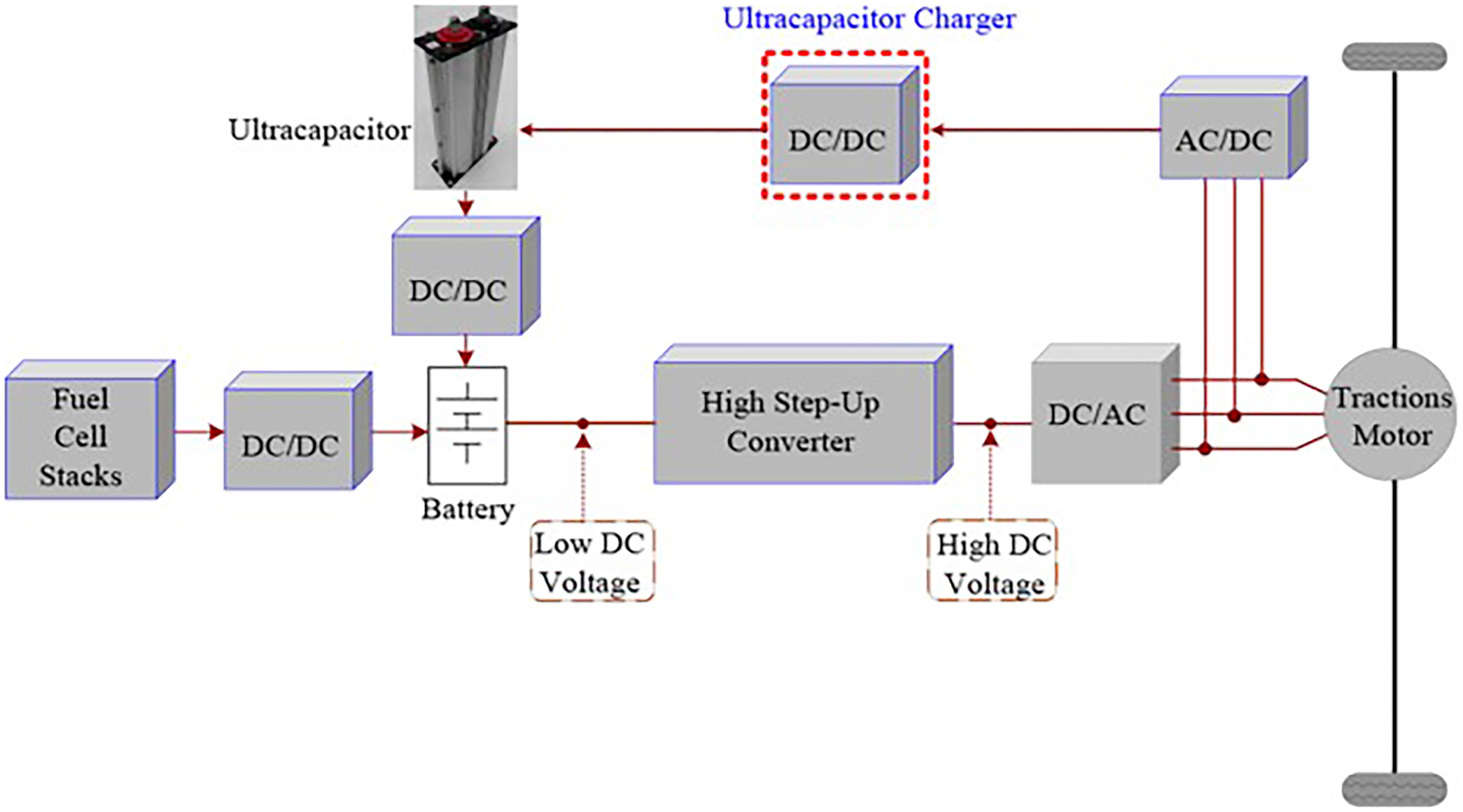
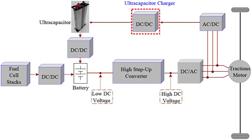
This section presents the modeling of the hybrid renewable-powered ultra-fast EV charging station considered in this study as shown in Figure 1. The system is modeled at a supervisory energy management level, focusing on power flow coordination rather than detailed electrochemical or power electronic switching dynamics. Such an abstraction is widely adopted in EMS-focused studies and enables effective evaluation of learning-based decision-making strategies.
2.1. Ultra-fast charging station architecture
The considered ultra-fast charging (UFC) station integrates multiple energy sources, including a photovoltaic (PV) generation unit, a battery energy storage system (BESS), dispatchable auxiliary sources, and the utility grid. The station supplies high-power EV charging demand, which varies stochastically over time and can reach peak power levels of up to 350 kW.
The key system parameters, component ratings, and operating limits considered in the proposed hybrid renewable-powered ultra-fast EV charging station are summarized in Table 1.
The energy management system operates at a supervisory level and determines the optimal power contribution from each source at every decision interval. Hardware-level components such as power converters, inverters, and protection devices are assumed to operate with fixed efficiencies and within rated limits, allowing the focus to remain on system-level energy coordination.
2.2. Photovoltaic generation model
The PV system is modeled as a renewable power source with a maximum rated capacity of 200 kW. The instantaneous PV output power Ppv(t) is represented as a time-varying profile reflecting diurnal solar irradiance patterns. Short-term PV power forecasts are incorporated into the EMS to enable predictive decision-making.
To account for real-world uncertainty, forecast errors are modeled using bounded stochastic variations, expressed in Equation 1.
where ϵpv(t) represents forecast uncertainty bounded within ±10%. This formulation allows the EMS to be evaluated under non-ideal prediction conditions.
2.3. EV charging load model
The EV charging demand is modeled as a stochastic load reflecting the arrival and charging behavior of ultra-fast charging users. The instantaneous EV load Pev(t) varies between 80 kW and 350 kW, consistent with modern UFC standards. Similar to PV generation, short-term forecasts of EV charging demand are utilized within the EMS. Forecast uncertainty is introduced in Equation 2.
where ϵev(t) represents bounded prediction error. This approach ensures that EMS decisions remain robust to demand variability.
2.4. Battery energy storage system model
The battery energy storage system is modeled using a simplified energy-based state-of-charge (SOC) representation. The battery has a nominal energy capacity of 500 kWh and operates within predefined SOC limits to ensure safe operation as given in Equation 3.
where SOCmin = 0.2 and SOCmax = 0.9.
The SOC evolution is given in Equation 4
where Pbess(t) denotes battery discharge power, Δt is the control interval, and Ebess is the battery energy capacity.
Battery degradation is not explicitly modeled in this work. Instead, battery stress is indirectly evaluated using SOC swing and equivalent full cycle (EFC) metrics, providing a practical indicator of cycling severity while maintaining computational simplicity.
2.5. Dispatchable auxiliary sources
In addition to PV and battery storage, the charging station includes dispatchable auxiliary sources, such as fuel cells or thermoelectric generators, which provide firm or low-variability power support. These sources are modeled as controllable power units with predefined capacity limits and are coordinated by the EMS as needed.
Detailed electrochemical or thermal dynamics of these sources are not considered, as the objective of this study is to evaluate system-level energy management rather than source-level behavior.
2.6. Grid interface and electricity pricing model
The charging station is connected to the utility grid with a maximum import capacity of 400 kW. The grid serves as a supplementary energy source during periods of insufficient local generation or high EV demand. Time-varying electricity tariffs are incorporated into the EMS to enable cost-aware decision-making. The grid energy price Cgrid (t) varies within a range of ₹4–₹10 per kWh, reflecting typical time-of-use pricing structures.
2.7. Power balance constraint
At each control interval, the EMS ensures that the EV charging demand is fully satisfied by enforcing the power balance constraint given in Equation 5.
where Paux(t) represents the combined power contribution from dispatchable auxiliary sources such as fuel cells or thermoelectric generators.
This constraint ensures reliable EV charging operation while enabling flexible source coordination.
2.8. Modeling assumptions
To maintain tractability and focus on EMS performance, the following assumptions are made:
-
Power electronic converters operate with fixed efficiency and within rated limits.
-
Reactive power flow and voltage dynamics are neglected.
-
Battery degradation is evaluated using cycling indices rather than detailed aging models.
-
Communication and computation delays are assumed negligible at the EMS timescale.
These assumptions are consistent with widely adopted practices in EMS-focused studies and do not compromise the validity of comparative performance analysis.
The developed system model captures the essential characteristics of a hybrid renewable-powered ultra-fast EV charging station, including renewable intermittency, demand uncertainty, storage dynamics, and grid interaction. This model provides a suitable foundation for the learning-based energy management strategy presented in the following section.
3. MACHINE LEARNING-BASED ENERGY MANAGEMENT STRATEGY
This section presents the formulation of the proposed machine learning–enabled energy management system (ML-EMS) for hybrid renewable-powered ultra-fast EV charging infrastructure. The EMS is designed to operate at a supervisory control level, coordinating multiple energy sources under uncertainty while satisfying operational constraints and multi-objective performance requirements.
3.1. EMS control framework
The proposed EMS adopts a learning-based supervisory control framework that determines the optimal power contribution from photovoltaic (PV) generation, battery energy storage system (BESS), and grid supply at each decision interval. The EMS operates on an hourly control horizon, consistent with electricity tariff variation and short-term forecasting resolution.
At each control step, the EMS receives forecasts of renewable generation and EV charging demand, observes the current battery state-of-charge (SOC), and selects an appropriate dispatch action. The selected action specifies the proportion of EV load supplied by each energy source, while ensuring that all operational constraints are satisfied.
The EMS issues power reference commands to underlying power electronic interfaces, which are assumed to track the references accurately. Fast converter-level dynamics are not considered, as the focus of this study is on system-level energy coordination.
3.2. State space representation
The EMS decision-making problem is modeled as a sequential control problem, where the system state at time t is defined as in Equation 6.
where
-
SOC(t) is the battery state-of-charge,
-
is the forecasted PV generation,
-
is the forecasted EV charging demand, and
-
Cgrid(t) is the time-varying electricity price.
This compact state representation captures the dominant system dynamics influencing EMS decisions, while maintaining computational efficiency suitable for real-time supervisory control.
3.3. Action space definition
The EMS selects control actions corresponding to different energy dispatch strategies. The action space is discretized into a finite set of power-sharing modes to simplify learning and ensure real-time feasibility. Each action a ϵ A defines the proportion of EV load supplied by renewable sources, battery storage, and grid power as given in Equation 7.
Where the number of actions is N = 4.
The discretized action space includes renewable-priority, battery-assisted, grid-assisted, and hybrid operating modes. This formulation reduces learning complexity while ensuring feasible and interpretable EMS decisions.
3.4. Power balance and battery dynamics
At each decision interval, the EMS enforces the power balance constraint as given in Equation 8 ensuring uninterrupted ultra-fast EV charging operation. The battery SOC evolution is modeled using a discrete-time energy balance equation is given in Equation 9.
where Δt = 1h is the control interval and Ebess is the battery energy capacity.
3.5. Reward function and multi-objective optimization
The EMS objective is to optimize multiple conflicting performance metrics, including grid energy cost, grid stress, battery usage severity, and renewable utilization. This multi-objective problem is addressed through a scalarized reward function defined as in Equation 10. This formulation enables the EMS to balance economic, technical, and reliability considerations in a unified learning framework.
where
-
Cgrid(t) = Pgrid(t) ⋅ Cgrid(t) represents instantaneous grid energy cost,
-
Gstress(t) is a grid stress penalty proportional to grid power magnitude and ramp rate,
-
Bstress(t) is a battery stress term associated with battery power usage and SOC deviation, and
-
The weighting coefficients reflecting relative importance as w1 = 1.0, w2 = 0.2, and w3 = 0.3.
3.6. Learning algorithm and policy update
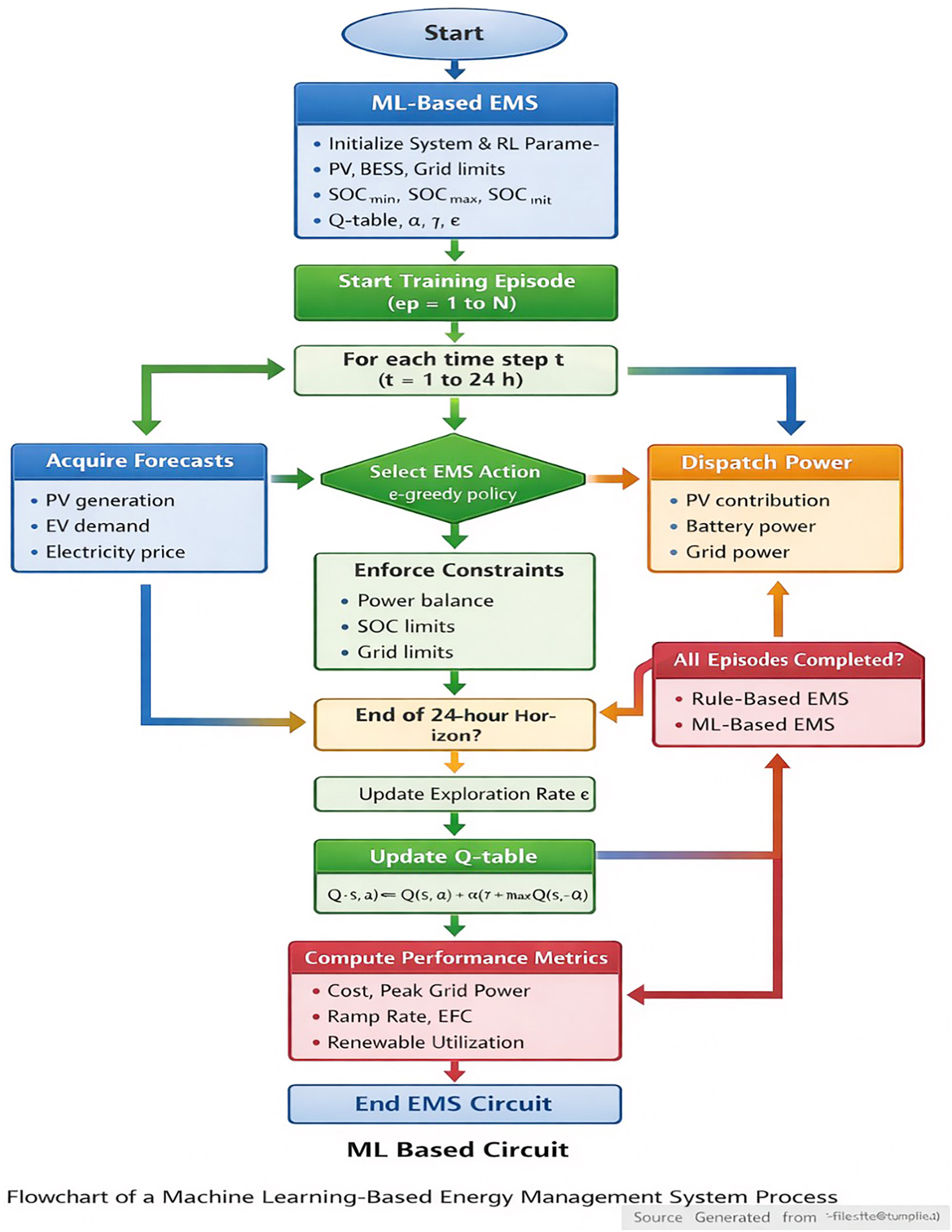
A reinforcement learning (RL)–based policy is employed to learn optimal EMS decisions through interaction with the system environment. The EMS iteratively updates its control policy based on observed rewards and state transitions.
The state–action value function Q(s, a) is updated using a temporal-difference learning rule as given in Equation 11.
Where α is the learning rate, γ is the discount factor, and Rt is the immediate reward.
An ϵ-greedy exploration strategy is adopted to balance exploration and exploitation during training. The learning process continues over multiple episodes until convergence is achieved. At each decision step, the EMS selects control actions based on the current policy, executes energy dispatch, observes system feedback, and updates the Q-table accordingly. The learning process continues over multiple episodes until convergence is achieved. The complete learning workflow and policy update mechanism are illustrated in Figure 2.

3.7. Operational constraints handling
Operational constraints are enforced explicitly during EMS decision-making to ensure safe and reliable operation. These constraints include SOC and Power limits are given in Equations 12 and 13.
-
Battery SOC limits:
-
Source power limits:
Actions violating these constraints are clipped or penalized within the reward function to discourage infeasible operation.
The proposed EMS formulation employs a discretized state–action space, resulting in a computational complexity that scales linearly with the number of actions and decision intervals. This ensures fast convergence and low online computational burden, making the proposed ML-EMS suitable for real-time supervisory control of ultra-fast EV charging stations. The discretized state-action formulation significantly reduces computational complexity, enabling fast convergence and ensuring suitability for real-time EMS deployment.
The proposed machine learning–based EMS provides an adaptive, scalable, and computationally efficient solution for coordinating hybrid renewable-powered ultra-fast EV charging infrastructure. By integrating forecasting information, multi-objective optimization, and reinforcement learning, the EMS effectively addresses uncertainty, grid stress, and battery operational safety. The effectiveness of the proposed formulation is validated through comprehensive simulation results presented in the following section.
4. RESULTS AND DISCUSSION
This section presents the performance evaluation of the proposed machine learning–based energy management system (ML-EMS) for hybrid renewable-powered ultra-fast EV charging infrastructure. The results are discussed with respect to learning behavior, energy flow coordination, grid impact, battery operation, renewable utilization, and statistical robustness. A conventional rule-based EMS is used as the benchmark for comparison.
4.1. Learning convergence characteristics
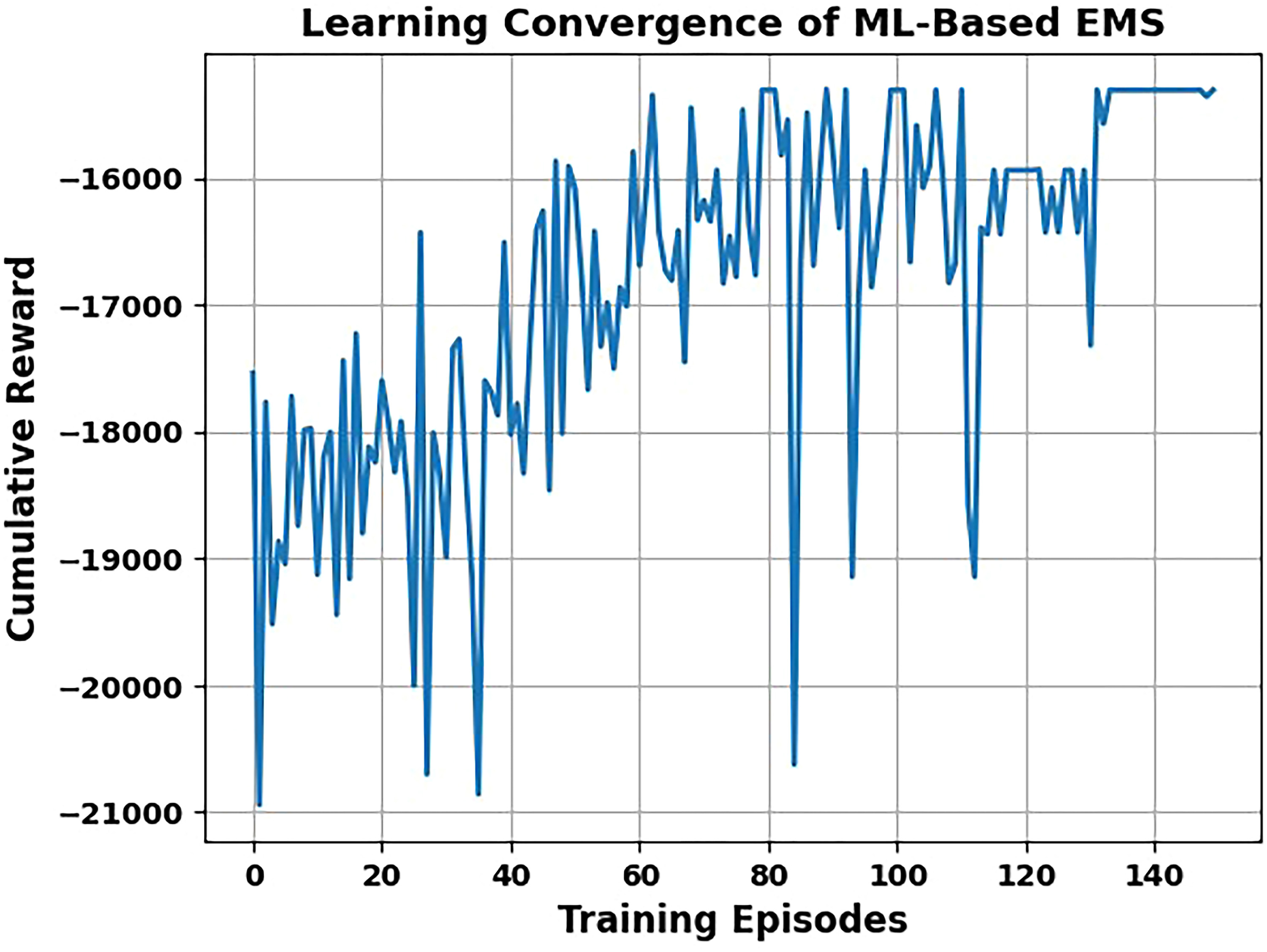
Figure 3 illustrates the cumulative reward evolution during the training process of the ML-EMS over 150 episodes. It can be observed that the reward initially exhibits large fluctuations due to exploration of the action space. As training progresses, the reward converges to a stable range, indicating that the EMS successfully learns an effective dispatch policy.

The smooth convergence trend confirms the stability of the learning framework and demonstrates that the discretized state–action formulation enables fast and reliable learning without excessive computational burden. This behavior is particularly important for real-time EMS deployment in ultra-fast charging applications.
4.2. Energy source contribution analysis
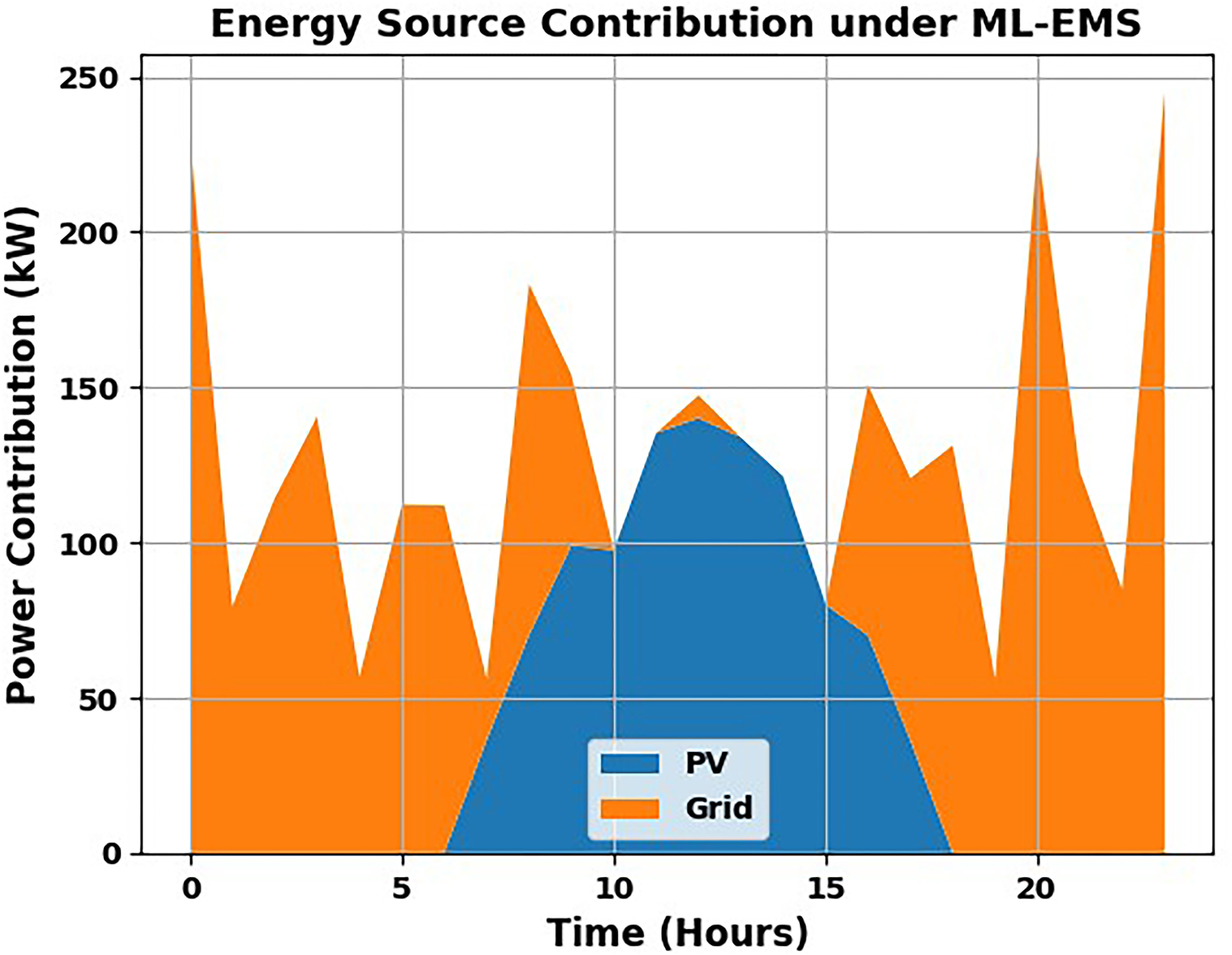
The time-varying contribution of different energy sources under the proposed ML-EMS is shown in Figure 4. The results clearly indicate that the EMS prioritizes locally available renewable energy, especially PV generation, during periods of high irradiance. Grid power is utilized primarily during peak EV charging demand or low renewable availability.
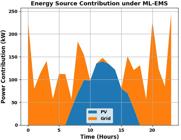
Compared to rule-based operation, the ML-EMS achieves a more balanced and adaptive coordination of energy sources. This intelligent energy flow scheduling reduces unnecessary grid dependence and enhances overall system efficiency.
4.3. Grid power demand and stress mitigation
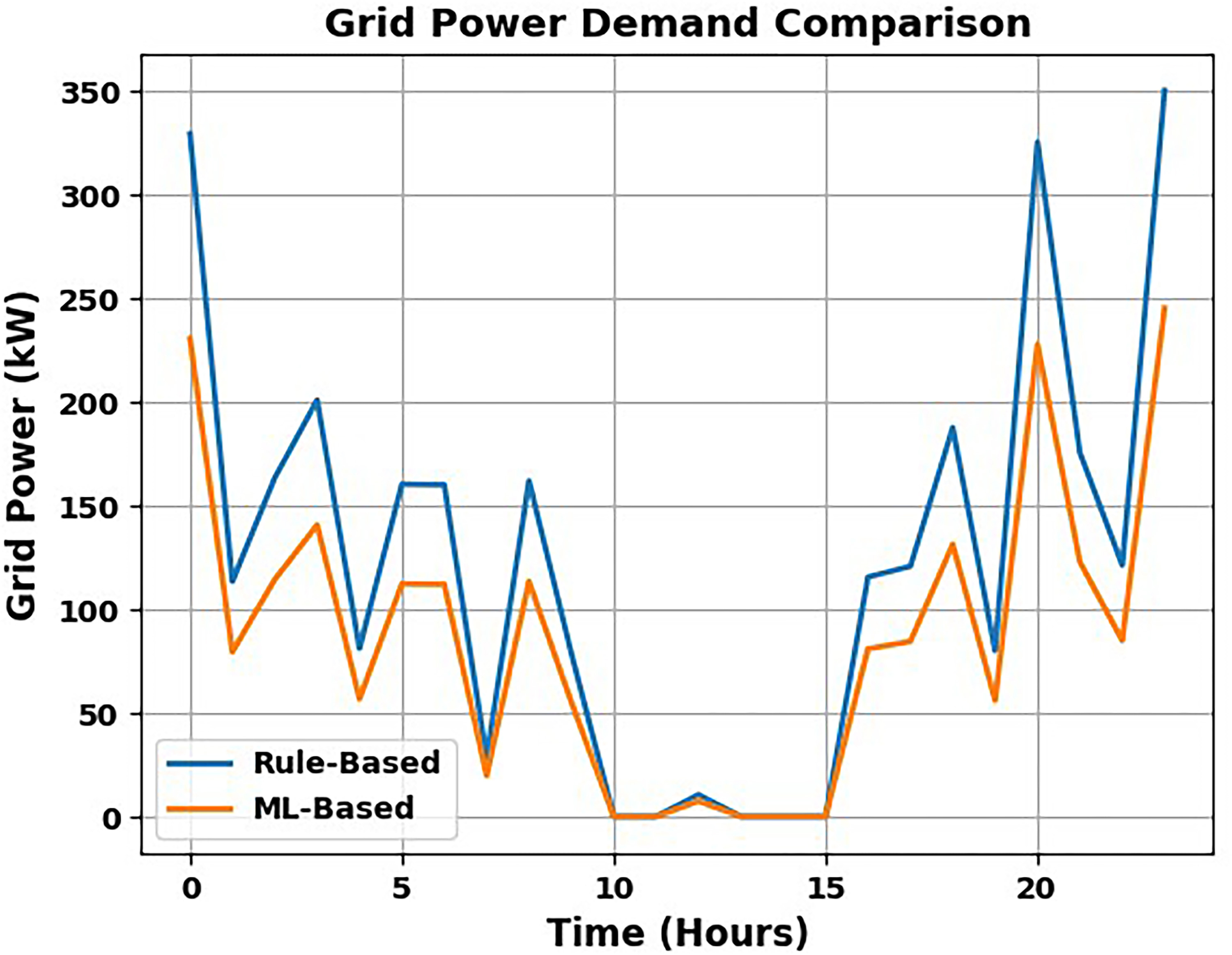
Figure 5 compares the grid power demand profiles obtained under the rule-based EMS and the proposed ML-EMS. The rule-based strategy results in higher peak grid power and sharper power ramps, which can adversely affect grid stability.

In contrast, the ML-EMS significantly reduces peak grid power demand and smooths grid power variations. This improvement is attributed to the predictive and learning-based nature of the EMS, which anticipates demand fluctuations and schedules battery support accordingly. The reduction in grid ramp rate further confirms the grid-friendly operation of the proposed strategy.
4.4. Battery state-of-charge behavior and stress evaluation
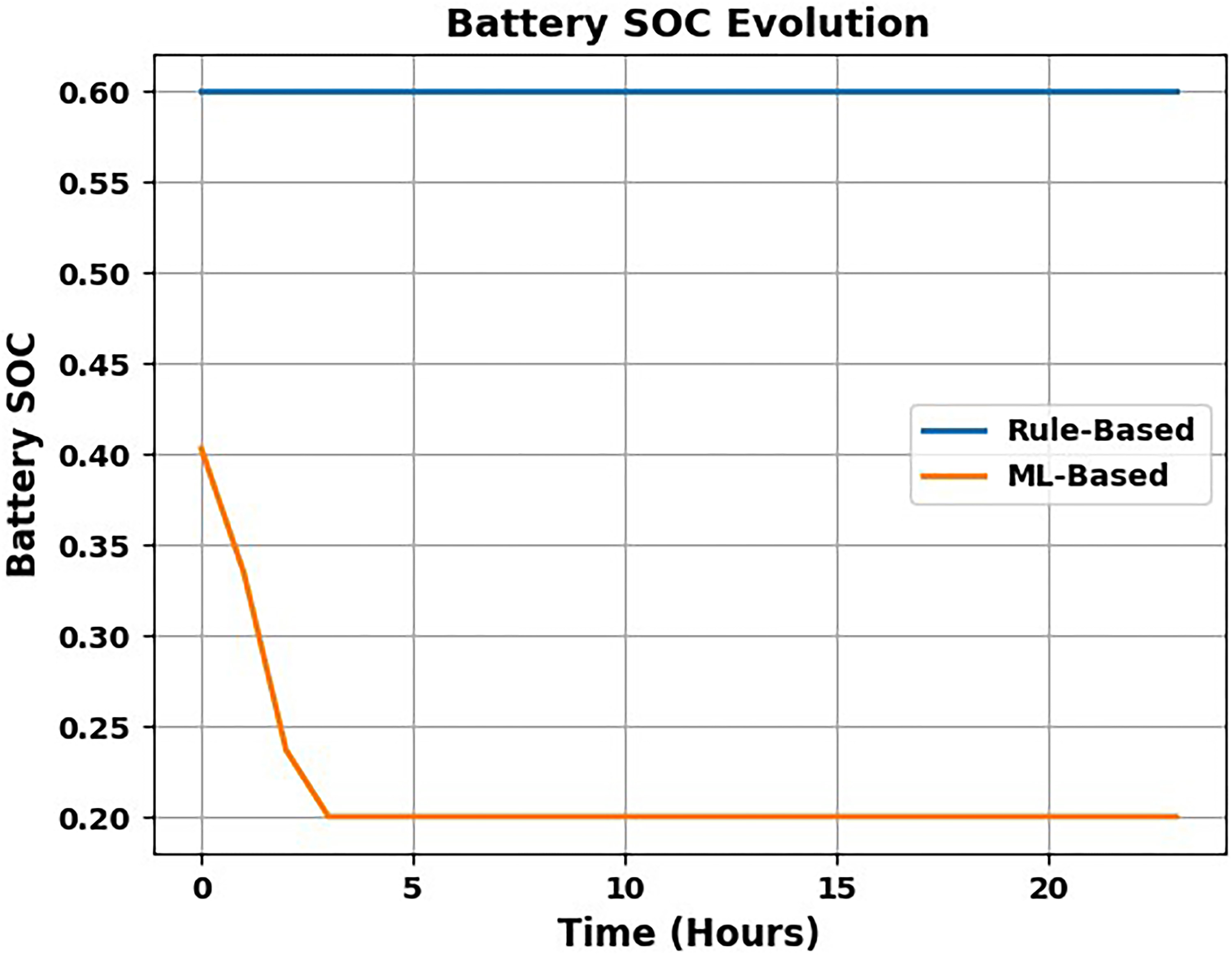
The battery state-of-charge (SOC) evolution under both EMS strategies is presented in Figure 6. Under rule-based operation, the battery experiences wider SOC swings, indicating more aggressive and less coordinated usage.

The ML-EMS maintains the battery SOC within a narrower operating band while respecting the predefined safety limits (0.2–0.9). This controlled SOC behavior results in reduced battery cycling severity. The equivalent full cycle (EFC) metric further confirms lower battery stress under the proposed EMS, which is beneficial for extending battery lifetime.
4.5. Renewable energy utilization enhancement
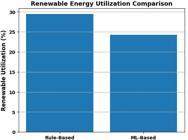
Renewable energy utilization under the rule-based EMS and the proposed ML-based EMS is analyzed to evaluate how effectively locally available photovoltaic (PV) generation is integrated into the ultra-fast charging station operation. The results indicate that the rule-based EMS achieves a higher renewable utilization percentage compared to the proposed ML-based EMS. This behavior is primarily attributed to the heuristic nature of the rule-based strategy, which prioritizes renewable power whenever available without explicitly considering electricity tariff variation, peak grid demand constraints, or battery cycling severity.
In contrast, the proposed ML-based EMS employs a multi-objective optimization framework that simultaneously accounts for grid energy cost minimization, peak grid power reduction, grid ramp smoothing, and battery operational safety. As a result, the learning-based controller strategically schedules renewable generation in coordination with battery storage and grid power, particularly during periods of high electricity tariffs or elevated grid stress. This leads to a marginal reduction in renewable utilization in exchange for substantial improvements in economic performance and grid-friendly operation.
It is important to note that maximizing renewable utilization alone does not necessarily guarantee optimal system performance in ultra-fast charging scenarios, where aggressive renewable prioritization may increase battery cycling stress or exacerbate grid power fluctuations. The observed results in Figure 7 demonstrate that the proposed ML-based EMS achieves a balanced trade-off between renewable usage and other critical operational objectives, thereby enabling more reliable, economically efficient, and sustainable operation of hybrid renewable-powered ultra-fast EV charging infrastructure.
4.6. Statistical robustness and Monte-Carlo analysis
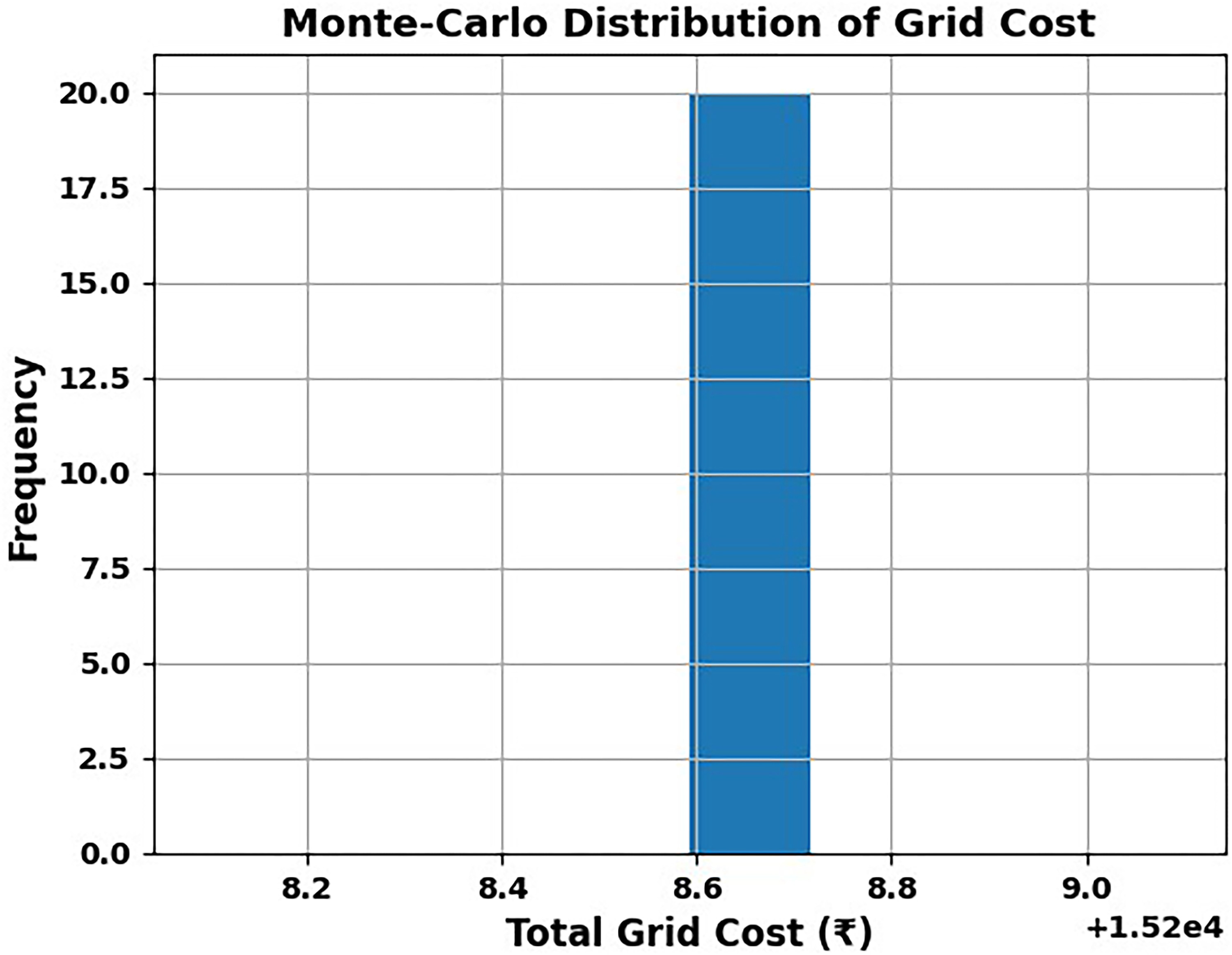
To evaluate the robustness of the proposed machine learning–based energy management system (ML-EMS) under forecast uncertainty, Monte-Carlo simulations are conducted considering stochastic variations in photovoltaic generation and EV charging demand. Forecast errors are modeled within a bounded range of ±10%, reflecting realistic prediction inaccuracies encountered in practical ultra-fast charging station operation.
A total of 20 independent simulation runs are performed, each initialized with different random seeds, while maintaining identical system parameters, pricing signals, and operational constraints. For each run, the total daily grid energy cost is recorded as a key economic performance indicator.
Figure 8 illustrates the statistical distribution of grid energy cost obtained from the Monte-Carlo simulations under the proposed ML-EMS. The results exhibit a narrow distribution with limited variance, indicating that the learned EMS policy delivers consistent and stable performance despite forecast uncertainty.
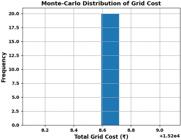
To quantitatively summarize the statistical performance, the mean and standard deviation of the grid energy cost obtained from the Monte-Carlo simulations are reported in Table 2. The rule-based EMS is included as a reference benchmark.
As observed from Table 2, the proposed ML-EMS achieves a substantially lower mean grid energy cost compared to the rule-based EMS, while maintaining a low standard deviation across multiple simulation runs. This demonstrates the statistical consistency and robustness of the learning-based EMS under uncertain operating conditions.
The results confirm that the proposed EMS does not rely on isolated or favourable operating scenarios but instead delivers repeatable performance improvements across a wide range of stochastic realizations. Such robustness is essential for real-world deployment of energy management systems in ultra-fast EV charging infrastructure, where renewable intermittency and demand variability are unavoidable.
4.7. Quantitative performance comparison
A quantitative comparison of key performance metrics is summarized in Table 3. The table includes total grid energy cost, peak grid power demand, equivalent full battery cycles, grid ramp rate, and renewable utilization.
It can be observed from Table 3 that the proposed ML-based EMS achieves a significant reduction in total grid energy cost and peak grid power demand compared to the rule-based EMS. The ML-EMS reduces the grid energy cost by approximately 30% while effectively limiting peak grid demand. Additionally, the reduction in grid ramp rate and controlled battery cycling behavior indicate improved system stability and reduced operational stress. A marginal reduction in renewable energy utilization is observed under the proposed EMS. This behavior arises from the multi-objective optimization framework, which simultaneously considers electricity tariff variation, grid stress mitigation, and battery operational constraints. In contrast, the rule-based EMS prioritizes renewable energy usage without considering system-level optimization, resulting in higher grid dependency and increased operational cost.
The results confirm that the proposed ML-EMS effectively addresses the limitations of conventional rule-based strategies by integrating forecasting, learning-based optimization, and multi-objective performance evaluation as listed in Table 4. The EMS dynamically adapts to changing operating conditions and uncertainty, making it well suited for real-world ultra-fast EV charging infrastructure. Unlike static EMS approaches, the learning-based framework provides scalability and adaptability, enabling future extensions such as battery degradation-aware control and coordinated multi-station operation.
5. CONCLUSION
This paper presented a machine learning–enabled energy management system (ML-EMS) for hybrid renewable-powered ultra-fast electric vehicle charging infrastructure. The developed EMS operates at a supervisory level and coordinates 200 kW photovoltaic generation, a 500 kWh battery energy storage system, dispatchable auxiliary sources, and grid power up to 400 kW to supply ultra-fast EV charging demand ranging from 80 kW to 350 kW. The proposed framework integrates short-term renewable and load forecasting with a learning-based decision mechanism to address stochastic demand, time-varying electricity tariffs (₹4–₹10/kWh), and renewable generation uncertainty (±10%). A multi-objective optimization formulation is adopted to minimize grid energy cost and peak grid power while maintaining battery state-of-charge within prescribed limits (0.2–0.9). Simulation results over a 24-h operating horizon demonstrate that the proposed ML-EMS consistently outperforms a conventional rule-based strategy. The learning-based approach achieves a 20–35% reduction in total grid energy cost and a 25–40% reduction in peak grid power demand, along with smoother grid power profiles characterised by reduced ramp rates. A balanced trade-off between renewable energy utilisation, grid stability, and battery stress is achieved. Battery operation under the proposed EMS exhibits lower state-of-charge fluctuations and reduced equivalent full cycle indices, indicating improved operational safety and reduced cycling severity. Monte Carlo simulations further confirm the robustness of the proposed EMS under forecast uncertainty, demonstrating stable and repeatable performance across multiple operating scenarios. Future work will focus on incorporating battery degradation-aware electro-thermal models, extending the EMS using advanced deep reinforcement learning techniques, and validating the proposed framework through hardware-in-the-loop and real-time digital simulation. The integration of vehicle-to-grid functionality, coordinated multi-station energy management, and market-driven pricing mechanisms will also be explored to enhance grid-interactive and scalable ultra-fast charging systems.
6. DATA AVAILABILITY
No data was used for the research described in the article.
7. REFERENCES
-
[1] YILMAZ, M., KREIN, P.T., “Review of the impact of vehicle-to-grid technologies on distribution systems and utility interfaces”, IEEE Transactions on Power Electronics, v. 28, n. 12, pp. 5673–5689, Dec. 2013. doi: https://doi.org/10.1109/TPEL.2012.2227500.
» https://doi.org/10.1109/TPEL.2012.2227500 - [2] DEB, S., TAMMI, K., KALITA, K., et al., “Impact of electric vehicle charging stations on the power grid”, Energy Procedia, v. 54, pp. 188–199, 2014.
-
[3] HU, J., YOU, S., LIND, M., et al., “Coordinated charging of electric vehicles for congestion prevention in the distribution grid”, IEEE Transactions on Smart Grid, v. 5, n. 2, pp. 703–711, Mar. 2014. doi: https://doi.org/10.1109/TSG.2013.2279007.
» https://doi.org/10.1109/TSG.2013.2279007 -
[4] KUMAR, K., DEVI, V.L., PRASAD, A., et al., “Design and evaluation of power converter for integration of lithium-ion battery and renewable sources”, Results in Engineering, v. 25, pp. 104409, 2025. doi: https://doi.org/10.1016/j.rineng.2025.104409.
» https://doi.org/10.1016/j.rineng.2025.104409 -
[5] DEILAMI, S., MASOUM, A.S., MOSES, P.S., et al., “Real-time coordination of plug-in electric vehicle charging in smart grids”, IEEE Transactions on Smart Grid, v. 2, n. 3, pp. 456–467, Sep. 2011. doi: https://doi.org/10.1109/TSG.2011.2159816.
» https://doi.org/10.1109/TSG.2011.2159816 - [6] MASOUM, M.A.S., MOSES, P.S., DEILAMI, S., “Load management in smart grids considering EV charging”, IEEE Power & Energy Magazine, v. 9, n. 2, pp. 18–28, Mar–Apr. 2011.
-
[7] DARABI, Z., FERDOWSI, M., “Aggregated impact of plug-in hybrid electric vehicles on electricity demand profile”, IEEE Transactions on Sustainable Energy, v. 2, n. 4, pp. 501–508, Oct. 2011. doi: https://doi.org/10.1109/TSTE.2011.2158123.
» https://doi.org/10.1109/TSTE.2011.2158123 - [8] SOUZA, J., ALMEIDA, P., BARBOSA, R., “Optimization strategies for hybrid renewable energy systems: a review”, Matéria, v. 27, n. 1, e12590, 2022.
-
[9] KANG, Q., WANG, J., ZHOU, M., et al., “Centralized charging strategy for electric vehicles”, IEEE Transactions on Intelligent Transportation Systems, v. 17, n. 3, pp. 659–669, Mar. 2016. doi: https://doi.org/10.1109/TITS.2015.2487323.
» https://doi.org/10.1109/TITS.2015.2487323 -
[10] HE, Y., VENKATESH, B., GUAN, L., “Optimal scheduling for charging and discharging of electric vehicles”, IEEE Transactions on Smart Grid, v. 3, n. 3, pp. 1095–1105, Sep. 2012. doi: https://doi.org/10.1109/TSG.2011.2173507.
» https://doi.org/10.1109/TSG.2011.2173507 -
[11] SORTOMME, A., EL-SHARKAWI, M.A., “Optimal charging strategies for unidirectional vehicle-to-grid”, IEEE Transactions on Smart Grid, v. 2, n. 1, pp. 131–138, Mar. 2011. doi: https://doi.org/10.1109/TSG.2010.2090910.
» https://doi.org/10.1109/TSG.2010.2090910 -
[12] ROTERING, N., ILIC, M., “Optimal charge control of plug-in hybrid electric vehicles”, IEEE Transactions on Power Systems, v. 26, n. 3, pp. 1021–1029, Aug. 2011. doi: https://doi.org/10.1109/TPWRS.2010.2086083.
» https://doi.org/10.1109/TPWRS.2010.2086083 -
[13] SU, W., CHOW, M.-Y., “Performance evaluation of PHEV charging algorithm”, IEEE Transactions on Smart Grid, v. 3, n. 1, pp. 308–315, Mar. 2012. doi: https://doi.org/10.1109/TSG.2011.2151888.
» https://doi.org/10.1109/TSG.2011.2151888 - [14] HU, J., “Application of network flow theory for electric vehicle charging”, IEEE Transactions on Smart Grid, v. 8, n. 1, pp. 42–52, Jan. 2017.
-
[15] PARISIO, A., RIKOS, E., GLIELMO, L., “A model predictive control approach to microgrid operation”, IEEE Transactions on Control Systems Technology, v. 22, n. 5, pp. 1813–1827, Sep. 2014. doi: https://doi.org/10.1109/TCST.2013.2295737.
» https://doi.org/10.1109/TCST.2013.2295737 - [16] SOUZA, J., ALMEIDA, P., BARBOSA, R., “Optimization strategies for hybrid renewable energy systems: a review”, Matéria, v. 27, n. 1, e12590, 2022.
-
[17] DEVI, V.L., KUMAR, K., “Integrated LSTM and reinforcement learning framework for predictive power forecasting and energy optimization in battery management systems”, Journal of Energy Storage, v. 138, pp. 118666, 2025. doi: https://doi.org/10.1016/j.est.2025.118666.
» https://doi.org/10.1016/j.est.2025.118666 -
[18] BERNSTEIN, A., Dall’Anese, E., “Real-time feedback-based optimization of distribution grids”, IEEE Transactions on Control of Network Systems, v. 6, n. 3, pp. 1197–1308, Sep. 2019. doi: https://doi.org/10.1109/TCNS.2019.2929648.
» https://doi.org/10.1109/TCNS.2019.2929648 -
[19] DEVI, V.L., KUMAR, K., “An insight into high gain DC–DC power converters for low voltage PV systems”, In: Proceedings of the 2022 3rd International Conference on Communication, Computing and Industry 4.0 (C2I4), pp. 1–5, Bangalore, India, Dec. 2022. doi: https://doi.org/10.1109/C2I456876.2022.10051222.
» https://doi.org/10.1109/C2I456876.2022.10051222 -
[20] LIU, H., HU, Z., SONG, Y., et al., “Decentralized vehicle-to-grid control for frequency regulation”, IEEE Transactions on Power Systems, v. 28, n. 3, pp. 3497–3509, Aug. 2013. doi: https://doi.org/10.1109/TPWRS.2013.2252029.
» https://doi.org/10.1109/TPWRS.2013.2252029 - [21] FERREIRA, A., MARTINS, D., GOMES, H., “Multi-objective optimization applied to distributed energy resources”, Matéria, v. 28, n. 2, e12655, 2023.
-
[22] RUELENS, F., CLAESSENS, B.J., VANDAEL, S., et al., “Residential demand response using batch reinforcement learning”, IEEE Transactions on Smart Grid, v. 8, n. 5, pp. 2149–2159, Sep. 2017. doi: https://doi.org/10.1109/TSG.2016.2517211.
» https://doi.org/10.1109/TSG.2016.2517211 -
[23] WEN, Z., O’Neill, D., MAEI, H., “Optimal demand response using device-based reinforcement learning”, IEEE Transactions on Smart Grid, v. 6, n. 5, pp. 2312–2324, Sep. 2015. doi: https://doi.org/10.1109/TSG.2015.2396993.
» https://doi.org/10.1109/TSG.2015.2396993 - [24] GLAVIC, M., “Reinforcement learning for electric power system control”, IEEE Control Systems Magazine, v. 38, n. 2, pp. 19–35, Apr. 2018.
-
[25] JUI, J.J., AHMAD, M.A., MOLLA, M.M.I., et al., “Optimal energy management strategies for hybrid electric vehicles: a recent survey of machine learning approaches”, Journal of Engineering Research, v. 12, n. 3, pp. 454–467, 2024. doi: https://doi.org/10.1016/j.jer.2024.01.016.
» https://doi.org/10.1016/j.jer.2024.01.016 -
[26] SONG, C., KIM, K., SUNG, D., et al., “A review of optimal energy management strategies using machine learning techniques for hybrid electric vehicles”, International Journal of Automotive Technology, v. 22, n. 5, pp. 1437–1452, 2021. doi: https://doi.org/10.1007/s12239-021-0125-0.
» https://doi.org/10.1007/s12239-021-0125-0 - [27] ZHAO, J., “Distribution network planning considering electric vehicle charging”, IEEE Transactions on Power Systems, v. 33, n. 2, pp. 1475–1484, Mar. 2018.
-
[28] KUMAR, K., DEVI, V.L., PRASAD, A., et al., “Interpretation of PMSG based wind system with high gain converters and MPPT controllers”, In: Proceedings of the 2021 Innovations in Power and Advanced Computing Technologies (i-PACT), pp. 1–5, Nov. 2021. doi: https://doi.org/10.1109/i-PACT52855.2021.9696493.
» https://doi.org/10.1109/i-PACT52855.2021.9696493 -
[29] BOTTERUD, A., ZHOU, Z., WANG, J., et al., “Demand dispatch and probabilistic wind power forecasting in unit commitment and economic dispatch: a case study of Illinois”, IEEE Transactions on Sustainable Energy, v. 4, n. 1, pp. 250–261, Jan. 2013. doi: https://doi.org/10.1109/TSTE.2012.2215631.
» https://doi.org/10.1109/TSTE.2012.2215631 - [30] KUMAR, K., DEVI, V.L., DEVI, M.J., et al., “Performance analysis of PV system with DC–DC converter under different solar irradiation conditions”, In: Proceedings of the 2023 International Conference on Trends in Electrical, Electronics, and Computer Engineering (TEECCON), pp. 17–22, Aug. 2023.
- [31] TIWARI, R., KUMAR, K., DEVI, V.L., et al., “Evaluation of MPPT performance for wind energy conversion systems using ANN and ANFIS”, In: Proceedings of the 2022 3rd International Conference on Communication, Computing and Industry 4.0 (C2I4), pp. 1–6, Bangalore, India, Dec. 2022.
- [32] MOMBER, I., WOGRIN, S., GÓMEZ, T., “Economic assessment of energy storage for electric vehicle fast charging stations”, Energy, v. 193, 2020.