 Determination of vanadium in graphite samples by high-temperature ashing pretreatment followed by inductively coupled plasma mass spectrometry
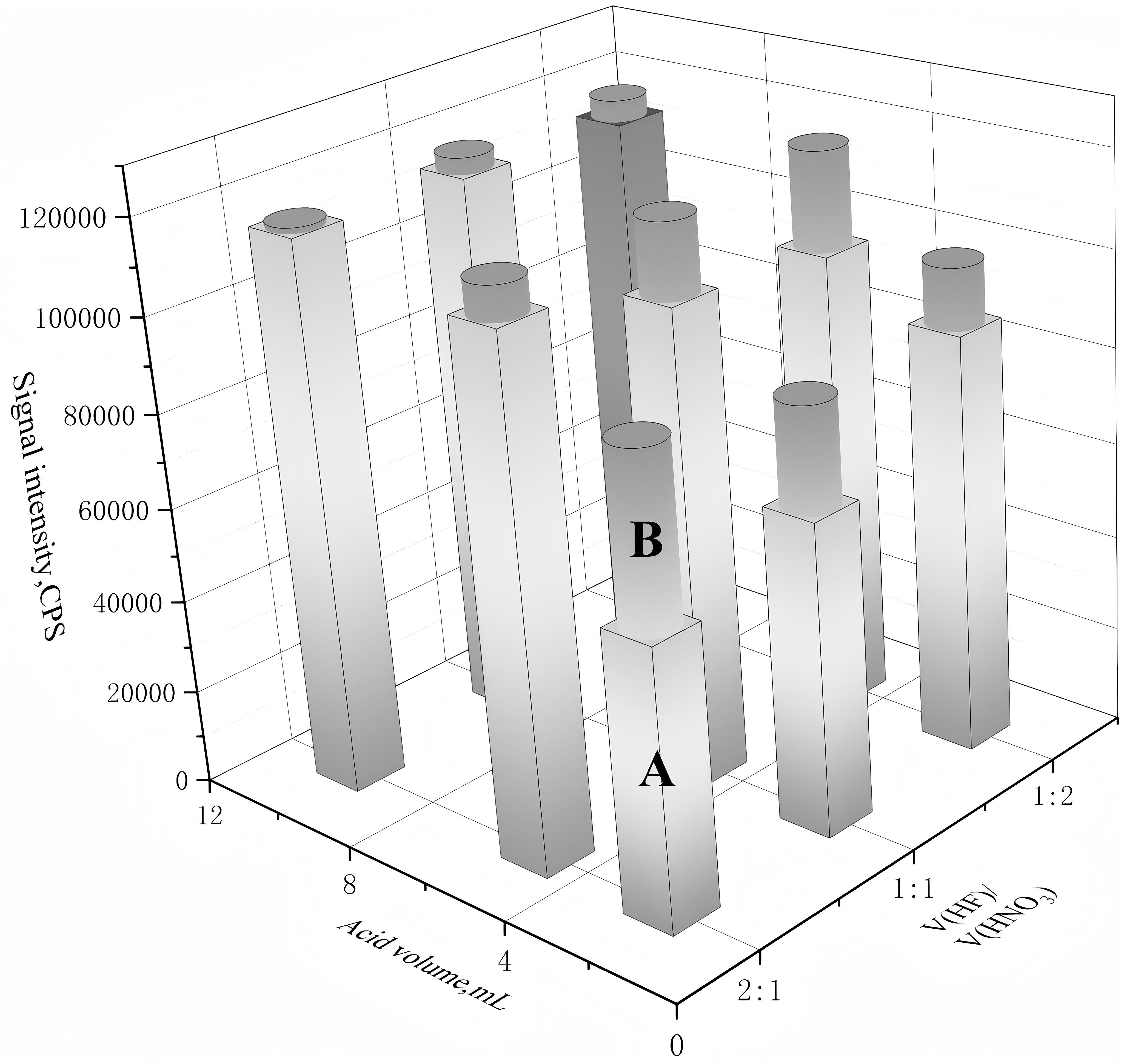
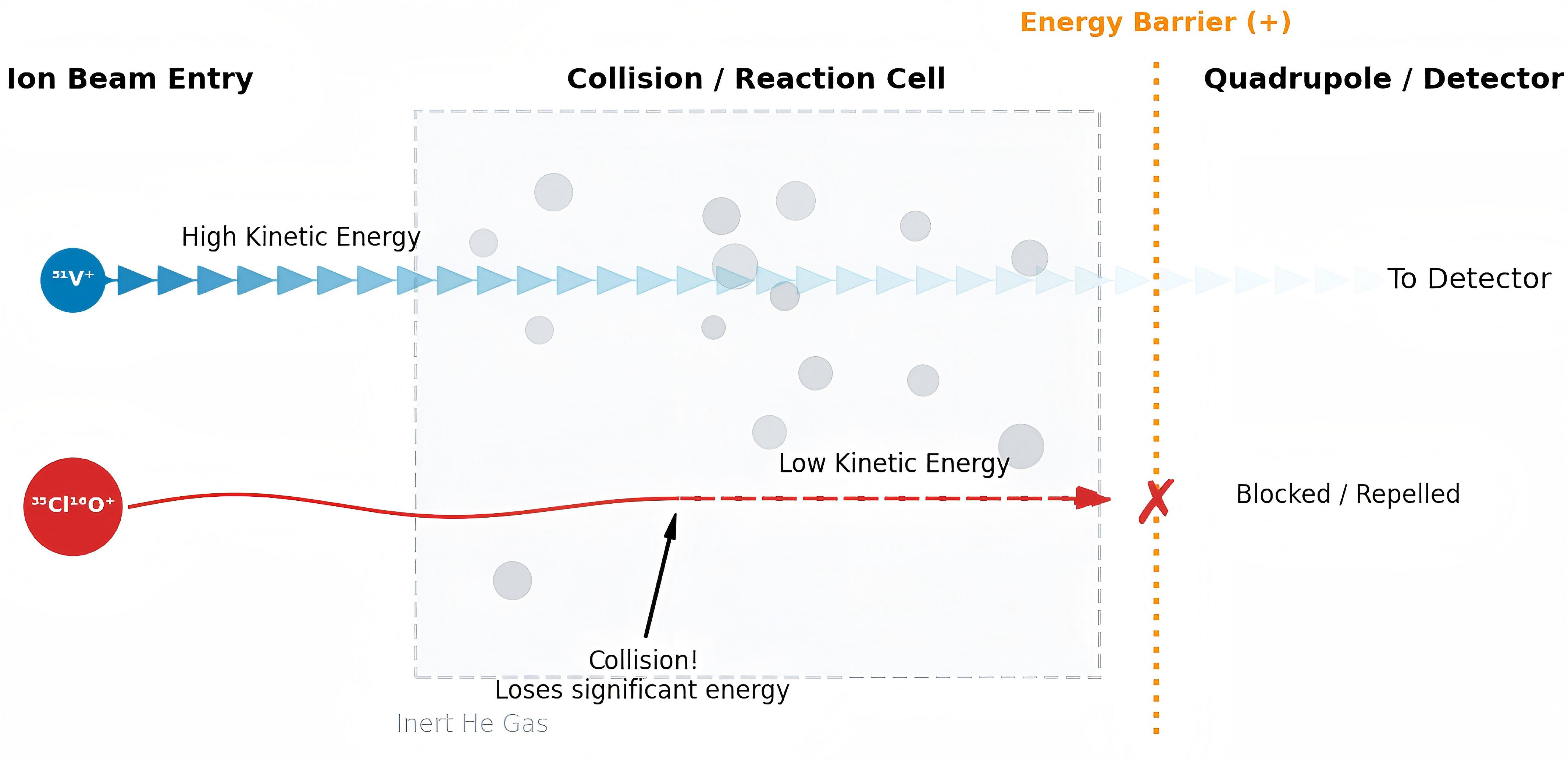
Direct determination of vanadium (V) in graphite by mixed-acid digestion and inductively coupled plasma mass spectrometry (ICP-MS) is hindered by matrix effects and polyatomic interferences, resulting in limited trueness. Conventional methods for geological materials often have high detection limits (LODs) and low throughput. This study presents a high-temperature ashing pretreatment combined with mixed-acid digestion and ICP-MS for the true and precise quantification of V in graphite. Key parameters, including ashing temperature, sample mass, and digestion protocol, were optimized. Ashing at 950 °C efficiently removed the carbon matrix and minimized analyte loss, particularly in high-carbon samples. Polyatomic interference from 35Cl16O+ on the 51V+ signal was effectively eliminated using the kinetic energy discrimination (KED) mode. The method achieved an LOD of 0.62 μg/g, a limit of quantitation (LOQ) of 2.48 μg/g, and excellent linearity (R2 = 0.9994) over 0–1,000 μg/L. Spike recoveries ranged from 94% to 103.5%, with relative standard deviations (RSDs) below 3.8%. Compared with direct acid digestion, the proposed approach significantly improves trueness, precision, and robustness, offering a reliable, high-throughput solution for V analysis in graphite. This protocol provides an effective analytical tool for geological exploration and resource assessment.
Keywords:
High-temperature ashing; Graphite; Mixed-acid digestion; Kinetic energy discrimination; Inductively coupled plasma mass spectrometry
 Thumbnail
 Thumbnail
 Thumbnail
 Thumbnail