 Experimental investigation on chloride penetration and mechanical characteristics in early age cement-based materials under salt freeze-thaw conditions
ABSTRACT
Considering the chloride permeability and mechanical characteristics of cement-based materials in cold marine environment are significantly affected by coupling action of freezing and thawing cycles as well as chloride penetration during early curing phase, a serial of experimental measurements were conducted to study the influence degree of curing age and salt freeze-thaw (SFT) environment on chloride permeability as well as mechanical characteristics of early age cement-based materials in present study. Firstly, salt freeze-thaw tests were conducted after representative curing age, i.e., 3, 7, 14, and 28 days. Then experimental tests for chloride permeability and mechanical characteristics were conducted after certain number of SFT cycles to determine the chloride concentration, compression strength, mass loss, and the relative dynamic elastic modulus (RDEM). Experimental results showed that with the decrease of curing age, both chloride permeability and mechanical characteristics degenerate apparently. Meanwhile a noticeable effect of curing age on cement-based materials suffered from SFT environment was detected: chloride diffusion coefficient, compression strength and RDEM of specimens after early curing age firstly increase slightly and then decrease dramatically. This study confirmed that early curing age play a critical role in chloride permeability and mechanical characteristics of cement-based materials subjected to SFT environment.
Keywords:
Salt freeze-thaw; Early age; Chloride penetration; Mechanical characteristics; Cement-based materials
1. INTRODUCTION
In high altitude and cold coastal regions, salt corrosion is generally concomitant with freezing and thawing cycles. Freeze-thaw (F-T) and chloride ion erosion are the major reasons for the degradation of marine concrete structures [1, 2]. The deterioration of concrete under the SFT environment is severer than that exposed to single F-T action [3] or chloride environment [4]. Chloride ions aggravate the damage process of surface scaling and internal cracking [5], which accelerate the penetration of chloride [6]. Chloride is one of the main points that causing the deterioration and damage of concrete structures. With the continuous penetration of chloride, chloride concentration would increase to the certain threshold value and cause the corrosion of steel [7,8,9,10,11]. Therefore, it is noted that SFT environment cause the concrete structure in a dangerous situation. Investigating the degradation of marine concrete structures under SFT environment has theoretical meaning and application value.
Due to the subzero temperatures and significant temperature fluctuations in high altitude cold coastal areas, winter construction activities are unavoidable during low temperature periods. Consequently, concrete structures such as bridge piers, off-shore platforms and deep-sea project built in in winter or cold marine environment may be suffered from salt freezing phenomenon at short time after pouring due to the sudden temperature changes. Concrete subjected to early salt freeze environment experience multiple SFT cycles during the hydration process, which leads to the slowdown of hydration, the insufficient development of strength and the reduction of durability, and causes irreparable negative effects to mechanical characteristics and service life of concrete. Thus further exploring the influence of curing age especially the early age on chloride permeability and mechanical characteristics of cement-based materials under SFT environment is extremely necessary [12, 13]. Ulteriorly, for the purpose of improving the durability of concrete effectively to prolong service life, it is also considerable to investigate the chloride penetration rule in early age cement-based materials subjected to SFT environment.
Currently, F-T damage to cement-based materials has been investigated intensively and classified by scholars into two categories according to the curing age or frozen time. One is the early frost damage, which is attributed to frozen or F-T cycles caused by low temperatures at early age during the construction. The other is late frost damage, which is resulted from frozen or F-T cycles after curing for a certain time. Both early and late frost damage perniciously affect the durability and mechanical characteristics of cement-based materials. Meanwhile, early frost damage results in more serious intimidation to the long term performance of cement-based materials than late frost damage [14]. However, existing studies mainly investigate the performance of cement-based materials suffered from late frost damage or late salt frost damage. YIN et al. [15] measured the interfacial bonding strength and the flexural strength of fiber reinforced concrete under SFT cycles. AN et al. [16] studied the damage mechanism of ultra-high performance concrete after the action of SFT cycles by accelerated F-T test. ZHANG et al. [17] experimental investigated the deterioration rule of mechanical characteristics for concrete after certain number of F-T cycles. XIA et al. [18] experimentally studied the damaging effect and microscopic structure of hybrid fiber reinforced concrete suffered from SFT environment. MA et al. [19] experimentally tested the compressive and bending strength of mechanical sand concrete under SFT cycles. From the aforementioned literature review, it can be concluded that the SFT cycles has adverse effect on the mechanical properties of cement-based materials. With the increase of SFT cycles, mechanical properties represented by compression strength, bonding strength and the flexural strength shows decreasing trend. Except for the mechanical performance, the durability of cement-based materials suffered from SFT environment is also considered as particularly significance. KUOSA et al. [20] performed the rapid chloride migration (RCM) tests after certain F-T cycles, they found that the chloride migration coefficient significantly increased attributed to the surface cracking and internal damage of concrete caused by F-T cycles., ZHAO et al. [21] also conducted RCM tests after certain F-T cycles. They found that both the chloride diffusion coefficient and chloride ion penetration depth of concrete show remarkably growth after a certain amount of F-T cycles, which illustrate that freezing and thawing process could stimulate the chloride diffusion in concrete. LI [22] conducted the chloride corrosion tests after certain F-T cycles to simulate the marine corrosion and F-T action environment, and studied the variation characteristics of mechanical characteristics, microstructural features, as well as chloride ion transport of admixture concrete. ZHANG et al. [23] discovered that the cyclic freezing and thawing cause the degradation of concrete and significant acceleration of chloride penetration. ZHANG et al. [24] proposed experimental study to research the impact of F-T action on penetration of chloride in high performance concrete. They found that F-T action decrease the resistance to chloride permeability, and increase the surface chloride concentration and chloride diffusion coefficient. WANG et al. [25] studied the chloride penetration in cement-based materials by exerting coupling actions of pressure force and cyclic freeze-thaw. It was found that the water and chloride penetration significantly increased. SUN et al. [26] performed an alternating test on chloride diffusivity and accelerated F-T testing. They found that the coupling action of cyclic freezing and thawing as well as the chloride diffusion increases both the chloride permeability and the boundary chloride concentration of cement-based materials. WANG et al. [27] conducted laboratory experiments to investigate the effect of freezing and thawing action on chloride diffusivity of concrete. It was reported that once the F-T cycles increase, both chloride diffusion coefficient and surface chloride concentration increase significantly. ZHOU et al. [28] experimentally studied chloride diffusion law of concrete under SFT environment with initial load damage. They found that effect of SFT cycles aggravated chloride ion erosion in concrete. ZHOU et al. [29] further studied the chloride penetration characteristics of basalt fiber reinforced cement mortar subjected to SFT cycles. Results showed that both chloride diffusion coefficient and internal porosity increased with SFT cycles. From the above research, studies are mainly concentrated on the effect of F-T or SFT environment on the durability and mechanical characteristics of cement-based materials after standard curing age (28 days). Early age cement-based materials are generally neglected.
Meanwhile, more and more researchers focused on the performance of early age cement-based materials under single freeze or F-T environment. YI et al. [30] performed several tests to detect the principal factors that influence the compression strength of cement-based materials frozen at early age. DUAN et al. [31] measured the compression strength of early age concrete under minus temperature and found that minus temperature reduces the enhancement of compression strength. WANG et al. [32] investigated the developing process of compression strength for calcium sulphoaluminate cement pastes under low temperature curing condition. It was reported that the developing process of compression strength is highly depend on the hydration speed and degree of cement. According to a series of tests for concrete cured under different temperatures, WU et al. [33] discovered that with the decrease of temperature, the mass loss of concrete increases, but the longitudinal wave velocity, compression strength, and split tensile strength decrease. XU et al. [34,35,36] performed experimental research to study the effect of curing age and frost temperature on mechanical characteristics and durability of early frozen concrete. Results showed found that curing age has great impact on the concrete performance. Many researchers have obtained similar conclusions that low temperature slow down the hydration process, which significantly reduces the development of strength [37,38,39]. XIE et al. [40] experimentally investigated the mechanical characteristics of normal weight concrete at low-temperature environment. They found that the variation of low temperature has remarkable influence on the mechanical characteristics of normal weight concrete. Above-mentioned studies are mainly focus on the mechanical characteristics of cement-based materials suffered from F-T action after early curing age. However, investigation on the influence of early curing age on the long term performance of cement-based materials under SFT environment is limited and deficient. CHOI et al. [41] studied the durability of cement-based materials with early curing age subject to freezing environment and found obvious degradation of concrete durability when exposure to freezing at early age. LIU et al. [42] carried out chloride ion electric flux test on concrete with the curing age of 1 day and 3 days after rapid F-T test. It is reported that curing age of concrete significantly affected the chloride resistance of concrete suffered from F-T environment. However, studies on early age cement-based materials under F-T or SFT environment are not comprehensive. Current studies mainly focus on the mechanical characteristics, studies on the durability such as chloride penetration of early age cement-based materials are scarce. Therefore, it is necessary to further investigate the durability of early age cement-based materials under SFT environment.
In this paper, a serial of experimental measurements was carried out to study the chloride permeability and mechanical characteristics of cement-based materials considering the coupling action of freezing and thawing as well as the chloride ion erosion. Firstly, specimens were cured for 3, 7, 14 and 28 days respectively. Then SFT tests were carried out on these specimens while the chloride ion content, compression strength, mass loss and RDEM of cement-based materials specimens were measured after corresponding SFT cycles. Finally, the variation law of chloride penetration and mechanical characteristics of specimens with curing age and SFT cycles was analyzed. The primary target of this paper is to verify the performance especially the durability and mechanical characteristics of early-age cement-based materials subjected to SFT environment. Findings obtained in this study are meaningful to evaluate early-age cement-based materials under complex environments.
2. MATERIALS AND METHODS
2.1. Materials and specimen preparation
Specimens used in this study were prepared with ordinary Portland cement (P·O 42.5) produced by Anhui Conch Cement Co., Ltd., Anhui, China. The chemical composition of ordinary Portland cement is presented in Table 1. Natural river sand (apparent density of 2.63 g/cm3 and fineness modulus of 2.6) was used as the fine aggregate, which belongs to the medium sand gradation.
The mix proportion of specimens is displayed in Table 2. Considering that the coarse aggregate is not involved in the chemical reactions of concrete hydration, specimens of mortar were used in this study. The mortar was firstly mixed according to Chinese standards JGJ 55-2011 [43] and then specimens were cast in the dimension of 100 × 100 × 100 mm3. After 24 h of casting, all specimens were demolded and cured in the curing room. Curing ages were set at 3, 7, 14 and 28 days.
2.2. SFT test
After the curing period with certain curing ages, specimens were moved out of the curing room and split into Group I and Group II. In group I, specimens were firstly moved for SFT action and then used for the measurement of chloride concentration. In Group II, specimens are used for mechanical characteristics tests after SFT action. Then, for specimens in Group I, excepting for one side which was chosen as the exposure surface, other surfaces were all sealed with epoxy. Next, specimens in all groups were put into containers filled with 3.5% NaCl solution and transferred to a freezer to simulate salt freeze and thaw environment. During the cyclic salt freezing and thawing, the containers were placed in the freezer with −15 °C for 12 h, then removed from the freezer and transferred to a 25°C constant temperature room for 12 h. Once the number of SFT cycles reaches 10, 20, 30, 40 and 50 respectively, specimens were taken out of the container, the experimental data of chloride concentration, mass loss, compression strength, and RDEM of specimens were measured.
2.3. Chloride penetration test
After corresponding SFT cycles, specimens in Group I for chloride penetration test were removed from container for measuring the chloride concentration at corresponding penetration depths. Three specimens were measured for chloride penetration test each time. The exposure side of specimens was brushed and dried at first. Subsequently, these specimens were ground into powder layer after layer by a grinding machine. Based on the JGJT 322-2013 [44], powder samples were passed through a sieve with 0.63 mm aperture, then powder samples that meet the requirements were moved to an oven and dried under the temperature of 105 ± 5 °C for 8 h. Subsequently, 2 g tested powder was weighed by an electronic balance and adequately dissolved in 40 ml distilled water. Then, concentration of free chloride at each depth was measured by a chlorine ion titrator.
2.4. Compression strength
Part of specimens in group II were removed from the container for measuring the compression strength based on GB/T 50081-2019 [45] after certain SFT cycles. Three specimens were measured for compression strength test each time. Specimens were put on an electro-hydraulic servo control machine which was used to apply load automatically during the test. Subsequently, the compression strength fcu can be determined as following equation:
where fcu is the compression strength of a standard cubic specimen (150 mm × 150 mm × 150 mm). Considering that the size of the specimens in this study is 100 mm × 100 mm × 100 mm, which is not the standard cubic specimen size. Thus a coefficient α of 0.95 is used to modify the calculated compression strength. F is the applied load by the testing machine while the specimen is destroyed. A is the area of the testing surface.
2.5. Mass loss and RDEM
Part of specimens in Group II were removed from the container after certain SFT cycles. Three specimens were measured for mass loss and RDEM test each time. Before testing, excess moisture on the surfaces of specimens was erased, then the mass and the transport velocity values of specimens were measured respectively. Mass loss and RDEM were calculated by the Equations 2 and 3:
where ΔWn is the mass loss of the specimen after n SFT cycles., M0 refers to the mass of specimens before SFT cycles, Mn represents the residual mass of specimens after n SFT cycles.
where Erd is RDEM. E0 is the dynamic elastic modulus (DEM) of specimens before SFT cycles and En is the DEM of specimens after n SFT cycles. v0 and vn are the transport velocity values of specimens before and after SFT cycles respectively.
3. RESULTS AND DISCUSSIONS
3.1. Mass loss
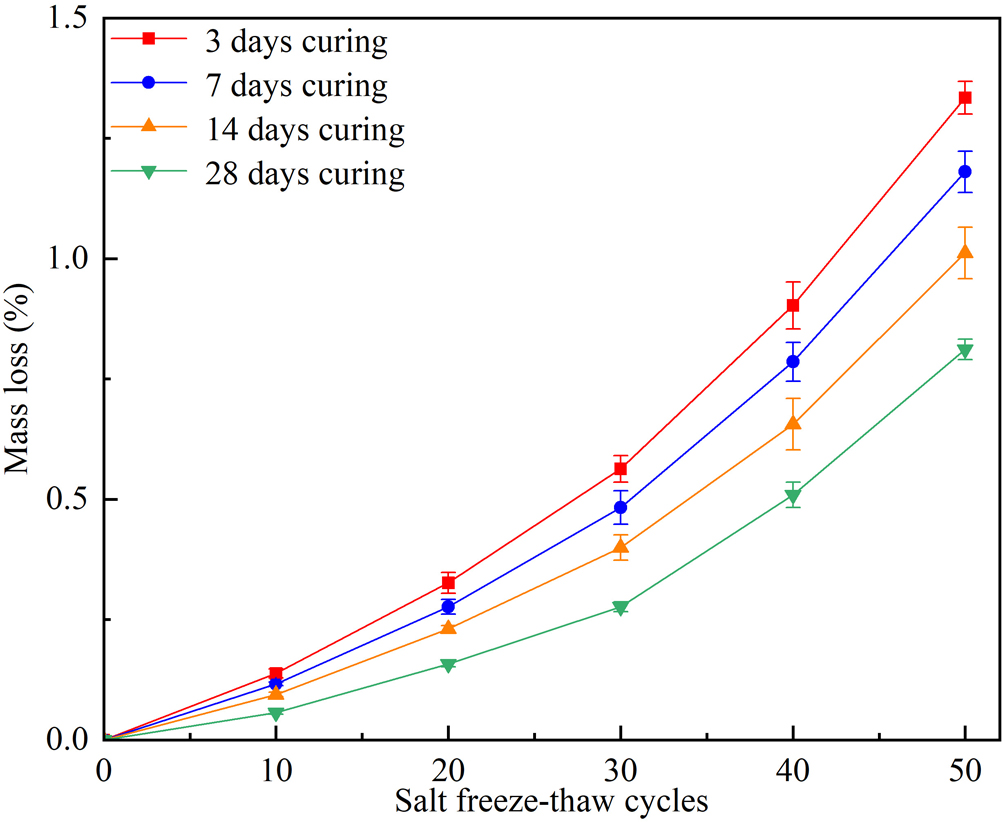
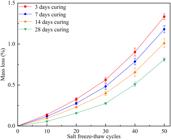
The change trend of mass loss with SFT cycles for 3, 7, 14 and 28 days curing is shown in Figure 1. It is observed that the mass loss of the specimens for all curing ages increases with the increase of SFT cycles. The mass loss increased slowly before 20 SFT cycles. Such phenomenon is mainly ascribed to the slight damage caused by minor SFT cycles and sustained hydrated reaction of cement. Then the mass loss increased significantly after 20 SFT cycles. This variation trend is caused by the extension of internal micro-cracks and pores in specimens while the SFT cycles increase, which make the exposure surface gradually crumbled and scaled. By comparing the variation characteristics of specimens after different curing ages, the shorter curing ages, the higher mass loss. Furthermore, the mass loss of specimens for 3 days curing is 1.64 times that of specimens for 28 days curing after 50 SFT cycles. This can be explained by the low hydration degree for specimens with short curing age, and the freezing period further inhibit the hydration process, which make the surface of specimen more easily crumbled and scaled.
3.2. Compression strength
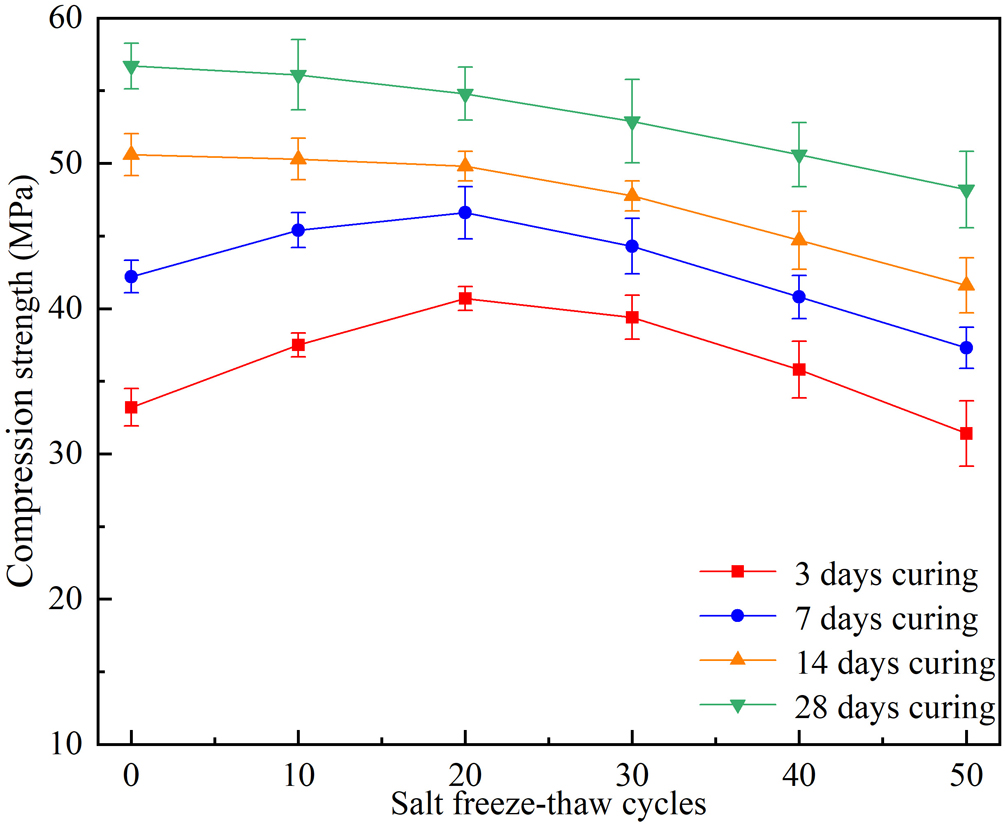
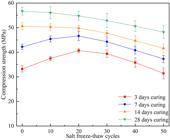
Compression strength was laboratory tested for evaluating the mechanical characteristics and damage rate of specimens after different SFT cycles. Figure 2 shows compression strength of specimens after SFT cycles with different curing ages. It is observed that the specimens with early age shows different variation trend. For specimens after 3 and 7 days curing, compression strength increases slightly before 20 SFT cycles. This ascribed to the further cement hydration during the thawing period and continuously enhance the compression strength. Then with the increase of SFT cycles, compression strength continuously reduces. For specimens after 14 days and 28 days curing, compression strength decreases continuously and significantly with the increasing SFT cycles. Furthermore, by comparing the compression strength after corresponding curing ages, it is noted that the compression strength increases with the increase of curing age. The shorter curing age, the lower compression strength. At the end of 50 SFT cycles, compression strength for 3, 7, 14 days curing is 87.1%, 92.6%, 94% of specimens for 28 days curing respectively. The freezing period inhibit the strength developing of cement-based materials, which bring serious hazard to specimens subjected to SFT cycles at early age.
3.3. Relative dynamic elastic modulus (RDEM)
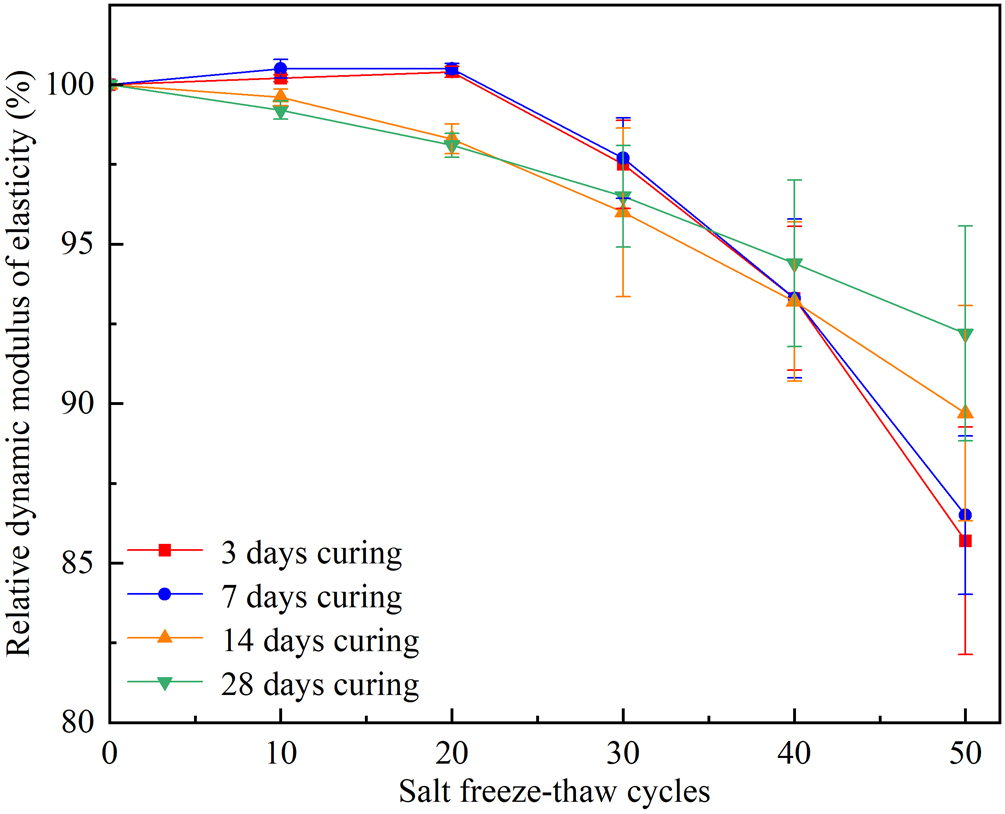
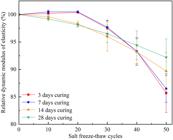
The degree of damage inside the cement-based materials can be reflected by RDEM. The lower RDEM represents the more serious interior damage. Figure 3 presents the relationship curves of RDEM of specimens with SFT cycles for corresponding curing ages. It is noticed that obvious difference is shown especially for early age specimens. For specimens after 3 days and 7 days curing, RDEM increases slightly before 20 SFT cycles. The primary factor of such situation is the recovery of internal pores or cracks by further cement hydration during the thawing period. Subsequently, with the increase of SFT cycles, RDEM decreases significantly. This can be explained by the aggravation of internal damage in specimens while SFT cycles increase. RDEM for specimens after 14 days and 28 days curing decreased continuously with the number of SFT cycles and decreased slightly before 20 SFT cycles then becomes significant. As shown from the comparison of experimental results between specimens after different curing ages, it is obvious that after 20 SFT cycles, the shorter curing age, the more drastic decrease of RDEM. After 50 SFT cycles, the RDEM of specimens for 3, 7, 14 days curing is 87.1%, 92.6%, 94% of specimens for 28 days curing respectively. The freezing period inhibit the hydration process of cement paste, which generate more serious impact on specimens after short time curing subjected to SFT cycles.
3.4. Chloride penetration
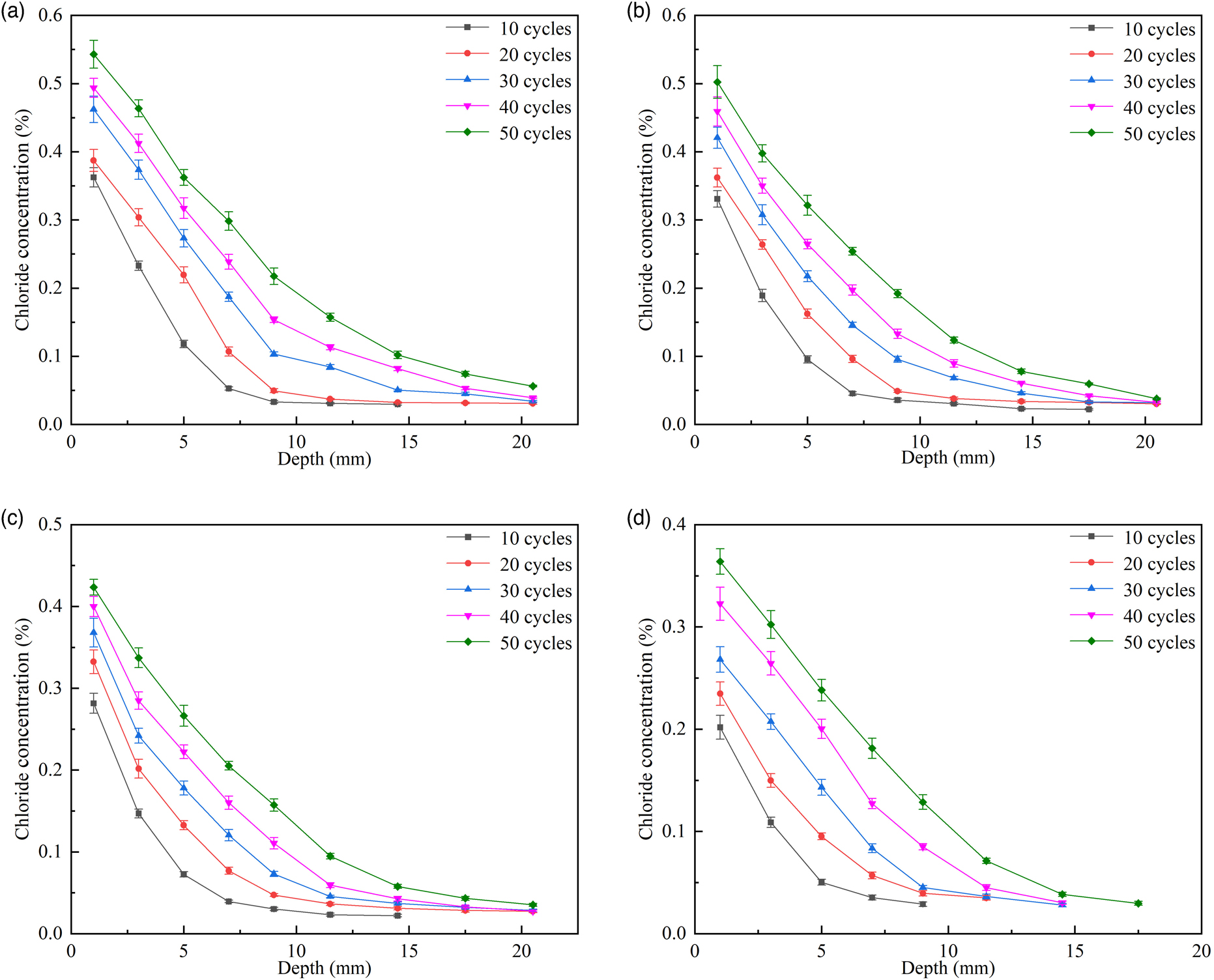
In this study chloride penetration was characterized by the chloride concentration at various penetration depths of specimens subject to the SFT cycles after 3, 7, 14 and 28 days curing and the tests were conducted for the following reasons: (1) to explore the penetration rule of chloride in cement-based materials subjected to SFT environment and (2) to obtain the influence of the curing age on the chloride diffusivity of cement-based materials. As mentioned above after 3, 7, 14 and 28 days curing, one surface of specimen was exposure to 10, 20, 30, 40 and 50 SFT cycles. The variation rule of chloride concentration profiles obtained from the tests are shown in Figure 4. It is found that the variation trend of chloride concentration with the penetration depth shows exponential function curve. The chloride concentration decreases rapidly between the depth of 0 mm and 8 mm from the exposure surface of specimens subjected to SFT cycles, and subsequently decreases slowly between the depth of 0 mm and 8 mm away from the surface. Furthermore, at the same depth, the chloride concentration significantly increased with the increase of SFT cycles.
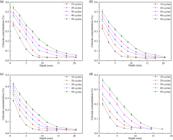
Chloride concentration profiles under SFT cycles after (a) 3 days curing; (b) 7 days curing; (c) 14 days curing; and (d) 28 days curing.
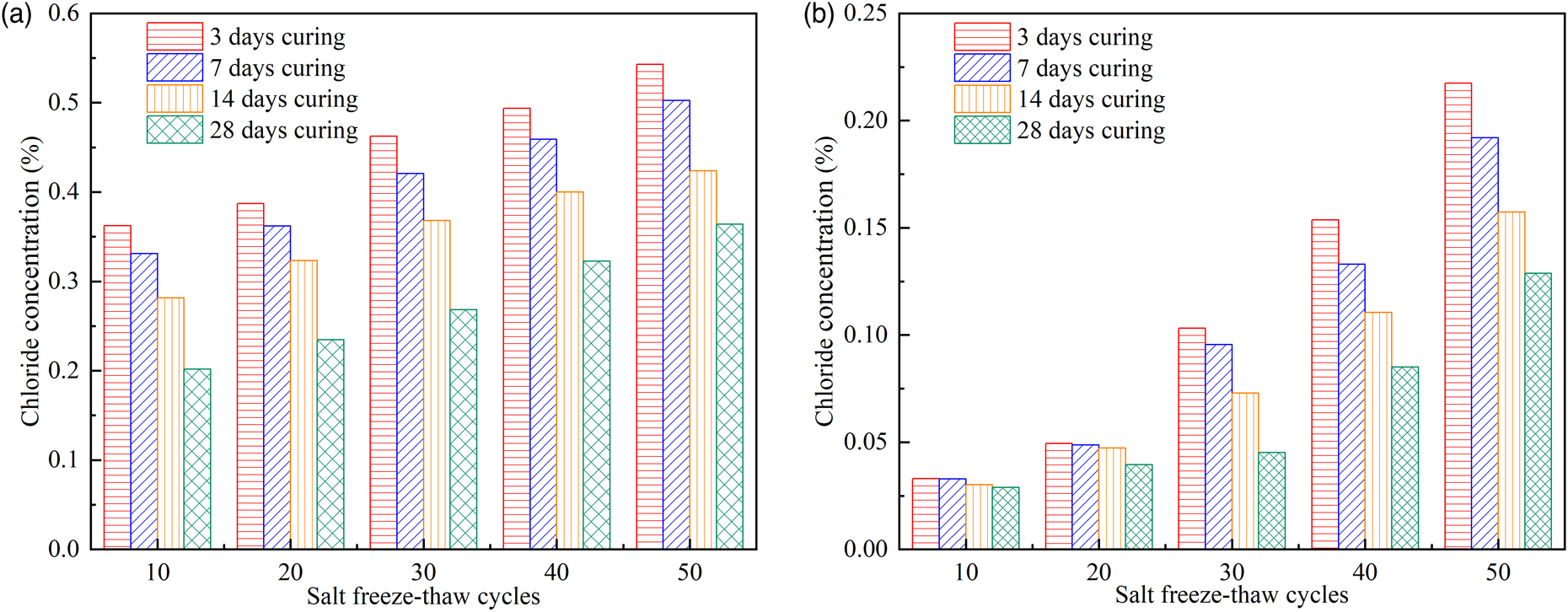
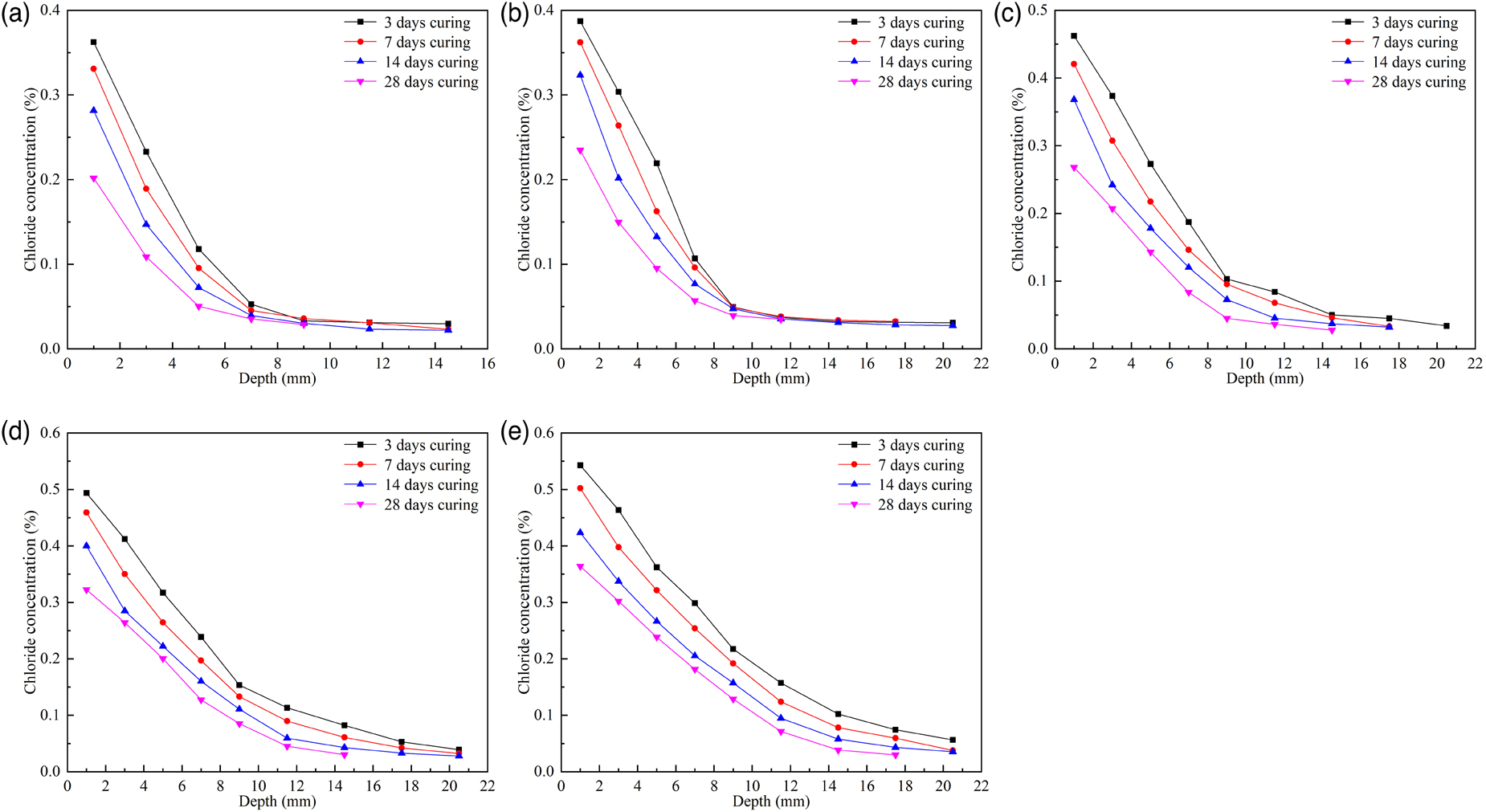
The variation rule of chloride concentration at depths of 1 mm and 9 mm subjected to SFT cycles after all curing ages are shown in Figure 5. By comparing the variation trend and experimental data of chloride concentration at such two penetration location of specimens subjected to SFT cycles after all curing ages, it is found that the highest chloride concentration with 3 days curing and lowest chloride concentration with the curing age of 28 days at different penetration location of specimens after certain number of SFT cycles. Figure 6 ulteriorly presents the influence of curing age on chloride concentration profiles. It is obviously that after certain number of SFT cycles, chloride concentration increases with the decrease of curing age; in other words, the shorter curing age, the higher chloride permeability.
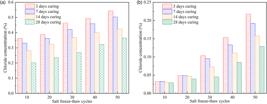
Chloride concentration at (a) 1 mm from the exposure surface and (b) 9 mm from the exposure surface.
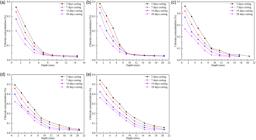
Chloride concentration profiles with different curing ages after (a) 10 SFT cycles; (b) 20 SFT cycles; (c) 30 SFT cycles; (d) 40 SFT cycles and (e) 50 SFT cycles.
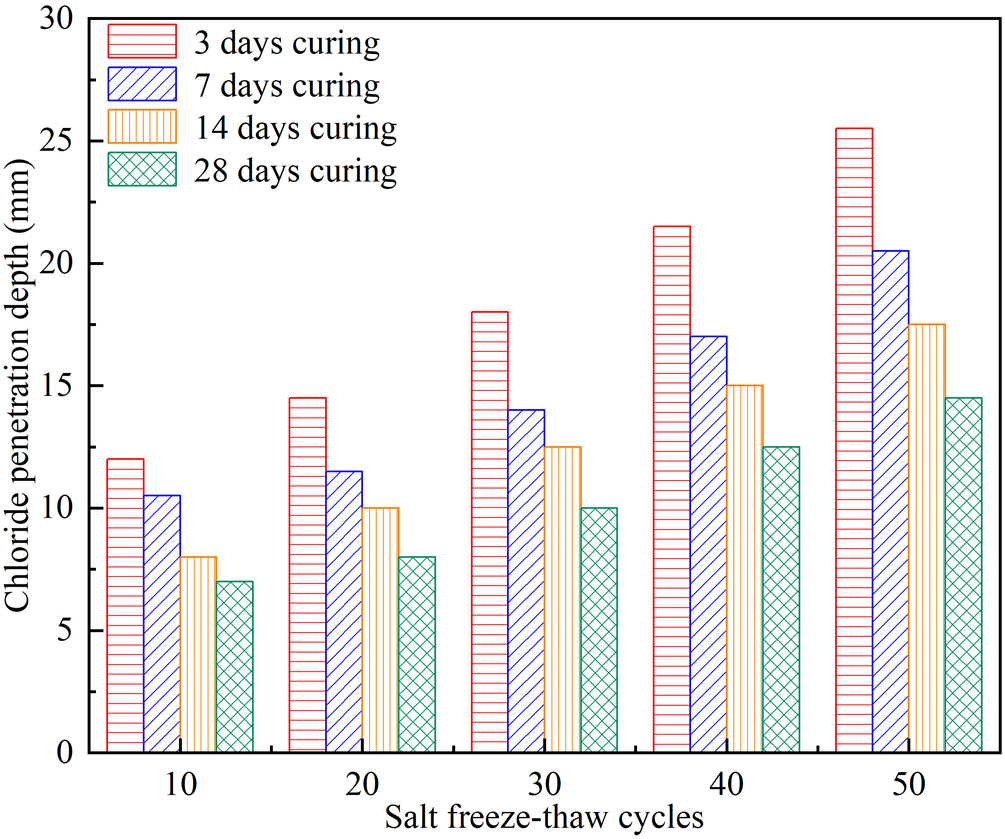
Figure 7 illustrates the chloride penetration depth in specimens after the various curing ages under corresponding numbers of SFT cycles. Results show that the chloride penetration depth continuously increases as the number of SFT cycles increases from 0 to 50. At certain numbers of SFT cycles, the chloride penetration depth decreased dramatically with the increase of curing ages.
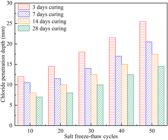
In summary, the SFT environment has a considerable effect on the chloride penetration into cement-based materials, which contains the chloride concentration and penetration depth, and such negative influence will be intensified with short curing age. SFT action accelerates the chloride penetration process into cement-based materials, which is consistent with published literatures [21, 22, 46]. Chloride is mainly penetrated through the path formed by cracks and pores in cement-based materials; thus, the new formed cracks and pores by the SFT damage provide more paths for chloride penetrating into cement-based materials when exposed to the SFT environment.
3.5. Apparent chloride diffusion coefficient (Dapp)
Apparent chloride diffusion coefficient (Dapp) was calculated according to the chloride concentration at each depth of specimen with different curing age under 0–50 SFT cycles. Regression analysis was conducted for the relationship between the chloride concentration and the penetration depth by Fick’s second law. The equation is shown as follows:
where C(x, t) (%) is the chloride concentration at a depth of x from the exposure surface at exposure time t, C0 (%) denotes the initial chloride content, Cs (%) represents the surface chloride concentration, Dapp (mm2/s) represents the apparent chloride diffusion coefficient, and erf(z) is the error function.
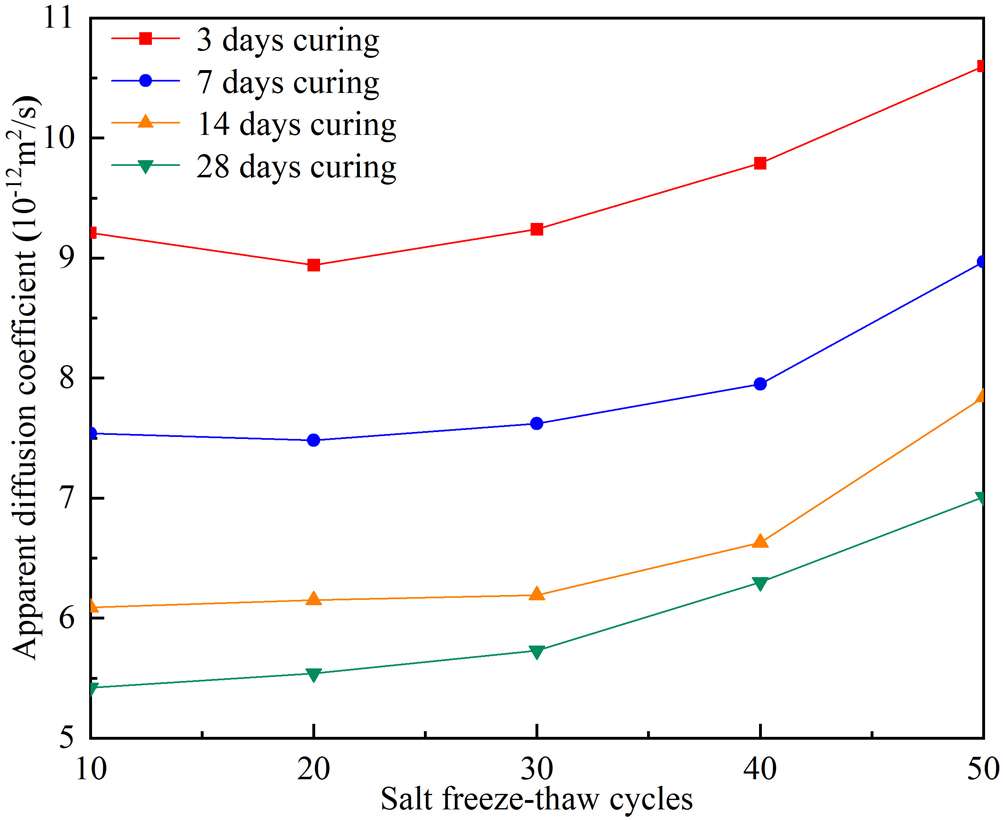
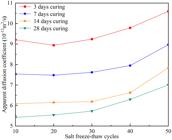
The results of Dapp are shown in Table 3, and the relationship curves of Dapp of specimens with corresponding curing ages subjected to 0–50 SFT cycles is shown in Figure 8. Although the chloride diffusion coefficient continuously changes due to the temperature variation and internal damage induced by SFT action, and the Dapp generally represents the average diffusion coefficient in the process of SFT test, the Dapp can reflect the rule of chloride diffusivity under SFT environment to a certain extent. It is noticed from Table 3 and Figure 8 that for specimens after 3 days and 7 days curing, Dapp decreases slightly before 20 cycles. This peculiar phenomenon is due to the further hydration of cement paste during the thawing period and continuously enhance the chloride resistance. Then with the increase of SFT cycles, Dapp continuously increases. For specimens after 14 days and 28 days curing, Dapp increases continuously with SFT cycles and increases significantly after 20 SFT cycles. Furthermore, by comparing the Dapp after different curing ages, it is noted that the Dapp decreases with the increase of curing age. The shorter curing age, the higher Dapp. It can be obviously seen that Dapp of specimens after 3 days curing is much higher than that after other curing ages, which reflect poor durability performance of early age cement-based materials.
4. CONCLUSION
In this study, the variation rule of mechanical characteristics and durability of cement-based materials under SFT cycles after curing ages of 3, 7, 14 and 28 days were systematically investigated. According to the experimental results and data analysis, the following conclusions were obtained:
-
(1)
Curing age significantly affected the properties of cement-based materials suffered from SFT cycles. Cement-based materials with early curing age such as 3 and 7 days generally have specific impact on the variation of both mechanical characteristics and durability, which is represented by a slight increase of compression strength, RDEM and chloride diffusion coefficient before 20 SFT cycles. However, mechanical characteristics and durability of cement-based materials with 3 and 7 days reduces dramatically after 20 SFT cycles, and the shorter curing age, the poorer mechanical characteristics and durability.
-
(2)
During the SFT actions, the mechanical characteristics of cement-based materials with curing age of 3 and 7 days, represented by the compression strength and RDEM, increases slightly before the SFT cycles increase to 20 cycles and decrease rapidly from 20 to 50 cycles. However, with the increase of SFT cycles, the mechanical characteristics of cement-based materials with curing age of 14 and 28 days, represented by the degeneration of compression strength and RDEM, decrease substantially. Moreover, the decrease rate of mechanical characteristics for cement-based materials with all curing ages gradually accelerate.
-
(3)
SFT actions also have obvious influence on the durability of cement-based materials, which is represented by the chloride ion concentration, chloride penetration depth and apparent chloride diffusion coefficient (Dapp) in present study. With the increase of SFT cycles, chloride ion concentration and chloride penetration depth increase substantially. However, with the increase in the number of SFT cycles, Dapp of cement-based materials with 3 and 7 days curing, decrease sightly before 20 SFT cycles and increase rapidly from 20 to 50 SFT cycles. Meanwhile, Dapp of cement-based materials with 14 and 28 days curing increase substantially with the increase of SFT cycles. Moreover, the increase rate of Dapp for cement-based materials with all curing ages gradually accelerate.
5. ACKNOWLEDGMENTS
This study was funded by Natural Science Foundation of Jiangsu Province (BK20161507), National Natural Science Foundation of China (51608173). The authors gratefully acknowledge the financial support.
6. DATA AVAILABILITY
Data will be made available on request.
7. BIBLIOGRAPHY
-
[1] BESHELI, A.E., SAMIMI, K., NEJAD, F.M., et al, “Improving concrete pavement performance in relation to combined effects of freeze-thaw cycles and de-icing salt”, Construction & Building Materials, v. 277, pp. 122273, 2021. doi: https://doi.org/10.1016/j.conbuildmat.2021.122273.
» https://doi.org/10.1016/j.conbuildmat.2021.122273 -
[2] FERREIRA, R.M., “Optimization of RC structure performance in marine environment”, Engineering Structures, v. 32, n. 5, pp. 1489–1494, 2010. doi: https://doi.org/10.1016/j.engstruct.2010.02.011.
» https://doi.org/10.1016/j.engstruct.2010.02.011 -
[3] SU, T., WU, J., YANG, G., et al, “Bond behavior between recycled coarse aggregate concrete and steel bar after salt-frost cycles”, Construction & Building Materials, v. 226, pp. 673–685, 2019. doi: https://doi.org/10.1016/j.conbuildmat.2019.07.301.
» https://doi.org/10.1016/j.conbuildmat.2019.07.301 -
[4] TU, Y., LIU, D., WANG, T., et al, “Evaluation on later-age performance of concrete subjected to early- age freeze-thaw damage”, Construction & Building Materials, v. 270, pp. 121491, 2021. doi: https://doi.org/10.1016/j.conbuildmat.2020.121491.
» https://doi.org/10.1016/j.conbuildmat.2020.121491 -
[5] VALENZA II, J.J., SCHERER, G.W., “Mechanism for salt scaling of a cementitious surface”, Materials and Structures, v. 40, n. 3, pp. 259–268, 2006. doi: https://doi.org/10.1617/s11527-006-9104-1.
» https://doi.org/10.1617/s11527-006-9104-1 -
[6] DUAN, M., QIN, Y., LI, Y., et al, “Durability and damage model of polyacrylonitrile fiber reinforced concrete under freeze–thaw and erosion”, Construction & Building Materials, v. 394, pp. 132238, 2023. doi: https://doi.org/10.1016/j.conbuildmat.2023.132238.
» https://doi.org/10.1016/j.conbuildmat.2023.132238 -
[7] BAZANT, Z.P., “Physical model for steel corrosion in concrete sea structures theory”, Journal of the Structural Division, v. 105, n. 6, pp. 1137–1153, 1979. doi: https://doi.org/10.1061/JSDEAG.0005168.
» https://doi.org/10.1061/JSDEAG.0005168 -
[8] CAO, C., “3D simulation of localized steel corrosion in chloride contaminated reinforced concrete”, Construction & Building Materials, v. 72, pp. 434–443, 2014. doi: https://doi.org/10.1016/j.conbuildmat.2014.09.030.
» https://doi.org/10.1016/j.conbuildmat.2014.09.030 -
[9] HO, D.W.S., LEWIS, R.K., “Carbonation of concrete and its prediction”, Cement and Concrete Research, v. 17, n. 3, pp. 489–504, 1987. doi: https://doi.org/10.1016/0008-8846(87)90012-3.
» https://doi.org/10.1016/0008-8846(87)90012-3 -
[10] OZBOLT, J., ORSANIC, F., BALABANIC, G., “Modeling pull-out resistance of corroded reinforcement in concrete: coupled three-dimensional finite element model”, Cement and Concrete Composites, v. 46, pp. 41–55, 2014. doi: https://doi.org/10.1016/j.cemconcomp.2013.10.014.
» https://doi.org/10.1016/j.cemconcomp.2013.10.014 -
[11] ZHU, X., ZI, G., “A 2D mechano-chemical model for the simulation of reinforcement corrosion and concrete damage”, Construction & Building Materials, v. 137, pp. 330–344, 2017. doi: https://doi.org/10.1016/j.conbuildmat.2017.01.103.
» https://doi.org/10.1016/j.conbuildmat.2017.01.103 - [12] HAIDONG, L., QINGQING, T., CUNDONG, X., et al, “Experimental study on stress-strain of concrete damaged by early freezing”, Bulletin of the Chinese Ceramic Society, v. 40, n. 6, pp. 2026–2033, 2021.
-
[13] HU, X., PENG, G., NIU, D., et al, “Damage study on service performance of early-age frozen concrete”, Construction & Building Materials, v. 210, pp. 22–31, 2019. doi: https://doi.org/10.1016/j.conbuildmat.2019.03.199.
» https://doi.org/10.1016/j.conbuildmat.2019.03.199 - [14] LIU, R.Q. “Research on the anti-freeze critical strength of low-temperature concrete influenced by multi-factors”, Ph.D, Dalian University of Technology, Dalian, China, 2019.
-
[15] YIN, S., JING, L., YIN, M., et al, “Mechanical properties of textile reinforced concrete under chloride wet-dry and freeze-thaw cycle environments”, Cement and Concrete Composites, v. 96, pp. 118–127, 2019. doi: https://doi.org/10.1016/j.cemconcomp.2018.11.020.
» https://doi.org/10.1016/j.cemconcomp.2018.11.020 -
[16] AN, M., WANG, Y., YU, Z., “Damage mechanisms of ultra-high-performance concrete under freeze– thaw cycling in salt solution considering the effect of rehydration”, Construction & Building Materials, v. 198, pp. 546–552, 2019. doi: https://doi.org/10.1016/j.conbuildmat.2018.11.175.
» https://doi.org/10.1016/j.conbuildmat.2018.11.175 -
[17] ZHANG, K., ZHOU, J., YIN, Z., “Experimental study on mechanical properties and pore structure deterioration of concrete under freeze-thaw cycles”, Materials, v. 14, n. 21, pp. 6568, 2021. doi: https://doi.org/10.3390/ma14216568. PubMed PMID: 34772090.
» https://doi.org/10.3390/ma14216568. -
[18] XIA, D., YU, S., YU, J., et al, “Damage characteristics of hybrid fiber reinforced concrete under the freeze-thaw cycles and compound-salt attack”, Case Studies in Construction Materials, v. 18, e01814, 2023. doi: https://doi.org/10.1016/j.cscm.2022.e01814.
» https://doi.org/10.1016/j.cscm.2022.e01814 -
[19] MA, F., ZHANG, Y., QIAO, H., et al, “Analysis of damage models and mechanisms of mechanical sand concrete under composite salt freeze–thaw cycles”, Construction & Building Materials, v. 429, pp. 136311, 2024. doi: https://doi.org/10.1016/j.conbuildmat.2024.136311.
» https://doi.org/10.1016/j.conbuildmat.2024.136311 -
[20] KUOSA, H., FERREIRA, R.M., HOLT, E., et al, “Effect of coupled deterioration by freeze-thaw, carbonation and chlorides on concrete service life”, Cement and Concrete Composites, v. 47, pp. 32–40, 2014. doi: https://doi.org/10.1016/j.cemconcomp.2013.10.008.
» https://doi.org/10.1016/j.cemconcomp.2013.10.008 -
[21] ZHAO, J., CAI, G., GAO, D., et al, “Influences of freeze–thaw cycle and curing time on chloride ion penetration resistance of Sulphoaluminate cement concrete”, Construction & Building Materials, v. 53, pp. 305–311, 2014. doi: https://doi.org/10.1016/j.conbuildmat.2013.11.110.
» https://doi.org/10.1016/j.conbuildmat.2013.11.110 - [22] LI, Y., “Study on the physical and mechanical properties and damage mechanism of concrete mixed with mineral admixture in marine corrosion and freezing-thawing,” D.Sc. Thesis, China University of Mining and Technology, Beijing, 2015.
-
[23] ZHANG, P., CONG, Y., VOGEL, M., et al, “Steel reinforcement corrosion in concrete under combined actions: the role of freeze-thaw cycles, chloride ingress, and surface impregnation”, Construction & Building Materials, v. 148, pp. 113–121, 2017. doi: https://doi.org/10.1016/j.conbuildmat.2017.05.078.
» https://doi.org/10.1016/j.conbuildmat.2017.05.078 -
[24] ZHANG, X., WANG, L., ZHANG, J., “Mechanical behavior and chloride penetration of high strength concrete under freeze-thaw attack”, Cold Regions Science and Technology, v. 142, pp. 17–24, 2017. doi: https://doi.org/10.1016/j.coldregions.2017.07.004.
» https://doi.org/10.1016/j.coldregions.2017.07.004 -
[25] WANG, Y., CAO, Y., ZHANG, P., et al, “Water absorption and chloride diffusivity of concrete under the coupling effect of uniaxial compressive load and freeze-thaw cycles”, Construction & Building Materials, v. 209, pp. 566–576, 2019. doi: https://doi.org/10.1016/j.conbuildmat.2019.03.091.
» https://doi.org/10.1016/j.conbuildmat.2019.03.091 -
[26] SUN, L.F., JIANG, K., ZHU, X., et al, “An alternating experimental study on the combined effect of freeze-thaw and chloride penetration in concrete”, Construction & Building Materials, v. 252, pp. 119025, 2020. doi: https://doi.org/10.1016/j.conbuildmat.2020.119025.
» https://doi.org/10.1016/j.conbuildmat.2020.119025 -
[27] WANG, Y., LIU, Z., FU, K., et al, “Experimental studies on the chloride ion permeability of concrete considering the effect of freeze–thaw damage”, Construction & Building Materials, v. 236, pp. 117556, 2019. doi: https://doi.org/10.1016/j.conbuildmat.2019.117556.
» https://doi.org/10.1016/j.conbuildmat.2019.117556 -
[28] ZHOU, J., WANG, G., LIU, P., et al, “Concrete durability after load damage and salt freeze-thaw cycles”, Materials, v. 15, n. 13, pp. 4380, 2022. doi: https://doi.org/10.3390/ma15134380. PubMed PMID: 35806504.
» https://doi.org/10.3390/ma15134380 -
[29] ZHOU, J., WANG, G., ZHU, G., “The durability of basalt-fiber-reinforced cement mortar under exposure to unilateral salt freezing cycles”, Frontiers in Materials, v. 10, pp. 1202889, 2023. doi: https://doi.org/10.3389/fmats.2023.1202889.
» https://doi.org/10.3389/fmats.2023.1202889 -
[30] YI, S.-T., PAE, S.-W., KIM, J.-K., “Minimum curing time prediction of early-age concrete to prevent frost damage”, Construction & Building Materials, v. 25, n. 3, pp. 1439–1449, 2011. doi: https://doi.org/10.1016/j.conbuildmat.2010.09.021.
» https://doi.org/10.1016/j.conbuildmat.2010.09.021 - [31] DUAN, Y., WANG, Q., ZHANG, R., et al, “Compressive strength growth of minus temperature (-3 °C) curing concrete”, Bulletin of the Chinese Ceramic Society, v. 35, n. 1, pp. 244–249, 2016.
- [32] WANG, P., LI, N., XU, L., et al, “Hydration characteristics and strength development of sulphoaluminate cement cured at low temperature”, Journal of the Chinese Ceramic Society, v. 45, n. 2, pp. 242–248, 2017.
-
[33] WU, Q., MA, Q., ZHANG, J., “Mechanical properties and damage constitutive model of concrete under low-temperature action”, Construction & Building Materials, v. 348, pp. 128668, 2022. doi: https://doi.org/10.1016/j.conbuildmat.2022.128668.
» https://doi.org/10.1016/j.conbuildmat.2022.128668 - [34] XU, C.D., GAO, D.K., ZHANG, P., et al, “Analysis of early freezing effects on the deterioration of concrete durability”, Journal of Water Resources and Architectural Engineering, v. 19, n. 1, pp. 16–21, 2021.
- [35] XU, C.D., GAO, Y.W., TIAN, J.J., et al, “Exprimental study on influence of early freeze injury to the durability of concrete”, Yellow River, v. 43, n. 2, pp. 131–136, 2021.
- [36] XU, C.D., LI, X.D., GAO, Y.W., et al, “Study on the effect of early freezing on the mechanical properties of concrete”, Water Resources and Hydropower Engineering, v. 53, n. 7, pp. 154–161, 2022.
- [37] HU, X. P., PENG, G., NIU, D. T., et al, “Effect of early frost environment on service performance of concrete”, Journal of Building Materials, v. 23, n. 5, pp. 1061–1070, 2020.
- [38] ZHANG, P. “Experimental study on the effect of early freezing and thawing on the durability of concrete materials,” D.Sc. Thesis, North China University of Water Resources and Electric Power, Zhengzhou, 2021.
- [39] GAO, Y.K., “Research on the characteristics of pore structure and acoustic emission of frozen concrete at early age,” D.Sc. Thesis, Hebei University of Engineering, Hebei, 2022.
-
[40] XIE, J., KANG, E.-C., QIAN, X., et al, “Static compressive stress–strain behaviours of normal weight concrete at Arctic low temperatures”, Construction & Building Materials, v. 384, pp. 131474, 2023. doi: https://doi.org/10.1016/j.conbuildmat.2023.131474.
» https://doi.org/10.1016/j.conbuildmat.2023.131474 -
[41] CHOI, H., ZHANG, W., HAMA, Y., “Method for determining early-age frost damage of concrete by using air-permeability index and influence of early-age frost damage on concrete durability”, Construction & Building Materials, v. 153, pp. 630–639, 2017. doi: https://doi.org/10.1016/j.conbuildmat.2017.07.140.
» https://doi.org/10.1016/j.conbuildmat.2017.07.140 -
[42] LIU, D., TU, Y., SHI, P., et al, “Mechanical and durability properties of concrete subjected to early-age freeze–thaw cycles”, Materials and Structures, v. 54, n. 6, pp. 211, 2021. doi: https://doi.org/10.1617/s11527-021-01802-x.
» https://doi.org/10.1617/s11527-021-01802-x - [43] CHINA, JGJ55-2011 Specification for Mix Proportion Design of Ordinary Concrete, Beijing, 2011.
- [44] CHINA, JGJT322-2013 Technical Specification for Detection of Chloride Ion Content in Concrete, Beijing, 2013.
- [45] CHINA, GB/T50081-2019 Standard for Test Methods of Concrete Physical and Mechanical Properties, Beijing, 2019.
-
[46] MA, Z., WITTMANN, F.H., XIAO, J., et al, “Influence of freeze-thaw cycles on properties of integral water repellent concrete”, Journal of Wuhan University of Technology. Materials Science Edition, v. 31, n. 4, pp. 851–856, 2016. doi: https://doi.org/10.1007/s11595-016-1458-9.
» https://doi.org/10.1007/s11595-016-1458-9