 Hybrid nano-engineered functionally graded concrete with multi-zone failure analysis for performance zoning and structural health monitoring
ABSTRACT
To improve the monitoring of structural health and efficiency zoning in building structures, the research proposes a hybrid nano-engineered structure for Functionally Graded Concrete (FNGC) coupled with Multi-Zone Failure Analysis (MZFA). Existing concrete structures face limitations in longevity, fracture durability, and targeted stress resistance often resulting in early structural failures and costly repairs. The proposed technique incorporates nano-engineered materials, such as nanotechnology-based additives, graphene and hybrid fillers within functionally graded layers. This enhances strength distribution, electrical conductivity and fracture propagation control across different architectural zones. The systemic MZFA framework provides a reliable zoning system for maintenance planning by analysing stress–strain behaviours and signal responses to detect and classify localized failure points. The primary goal is to establish a robust, self-sensing material technology capable of early defect detection and extended service life. Findings demonstrate that the proposed hybrid FNGC outperforms existing composites in terms of generalization, stress durability, and overall strength in crack detection. This approach paves the way for the development of smart, sustainable, and autonomous concrete components for next-generation structures.
Keywords:
Functionally Graded Concrete; Hybrid Nano-Engineered Materials; Multi-Zone Failure Analysis; Structural Health Monitoring; Smart and Sustainable Structures
1. INTRODUCTION
Performance zoning and Structural Health Monitoring (SHM) enhance infrastructure safety and durability by dividing structures into functional regions and using intelligent sensing for real-time monitoring [1]. This study integrates a hybrid nano-engineered Functionally Graded Concrete (FNGC) with MZFA to enable self-sensing and precise failure prediction. Incorporating power-based and real-time acoustic emission detection improves micro-crack identification and stress-wave tracking, enhancing sensitivity and responsiveness [2]. The synergy of nano-engineered materials with advanced SHM techniques supports early fault detection, predictive maintenance, and intelligent zoning, paving the way for next-generation self-sensing, damage-tolerant, and performance-optimized smart concrete structures with extended service life [3]. Recent advances in non-linear damage localization enable precise identification of acoustic emission (AE) sources within complex materials [4]. Power spectral entropy effectively characterizes AE signal complexity to distinguish micro-cracking, strain-hardening, and macro-failure regimes improving real-time damage assessment, predictive maintenance, and performance zoning accuracy in advanced Structural Health Monitoring (SHM) systems for modern infrastructures [5].
Damage quantification using fast tomography offers an efficient approach for reconstructing local AE wave velocity fields within structures [6]. This greedy, heuristic, and mesh-independent method enables semi–real-time estimation of wave propagation in distance-decaying environments, allowing accurate localization and quantification of damage zones. Its adaptability and computational efficiency make it ideal for real-time SHM. Failure prediction in strain-hardening cementitious composites establishes a fundamental, data-driven approach to forecast failure without prior damage information. By analyzing stress–strain responses, microcrack propagation, and energy dissipation, the method accurately anticipates failure onset, enhancing predictive maintenance and resilience in smart, self-assessing construction materials [7]. A novel strategy for assessing Healing-Induced Recovery of Mechanical Properties (HIRMP) in Strain-Hardening/Engineered Cementitious Composites (SHCCs/ECCs) evaluates how autogenous healing restores mechanical performance after damage. It involves controlled cracking, healing, and post-healing testing to measure tensile strength, stiffness, and ductility, monitored via AE and DIC techniques [8]. The HIRMP framework quantifies healing efficiency through recovery ratios and damage indices, enhancing durability and resilience. Furthermore, fracture mode characterization analyzes tensile, shear, and mixed-mode failures using AE parameters and fracture morphology. Integrating this analysis into hybrid nano-engineered concretes enables early crack detection, accurate failure prediction, and improved SHM for sustainable infrastructure [9].
An end-to-end deep learning–based computer vision system enables automated crack detection and classification in Engineered Cementitious Composites (ECC) for durability assessment. It preprocesses, segments, and classifies raw images to identify microcracks, fibre pull-out, and interfacial debonding while estimating crack width, length, and density for quantitative durability metrics [10]. Transfer learning and explainable AI improve accuracy and interpretability for real-time SHM. A novel hybrid deep learning framework further characterizes complex cracks with visual artifacts using attention-based correction and adaptive segmentation, enhancing diagnostic precision and structural integrity assessment in intelligent ECC monitoring systems [11]. A hybrid computer vision framework using lightweight DCNNs enables rapid thin-crack detection in SHCCs with low computational power through feature compression and quantization [12]. A self-healing evaluation method based on Electrical Impedance Spectroscopy (EIS) monitors resistance recovery in graphene-enhanced SHCCs, providing quantitative healing indices correlated with mechanical recovery [13]. DIC-based technique predicts failure by analyzing real-time strain evolution and microcrack propagation without prior material data. These methods support efficient, non-destructive, and intelligent SHM for early damage detection, durability assessment, and predictive maintenance in advanced cementitious composites [14].
Recent developments in nanotechnology have facilitated the incorporation of nanomaterials such as nano-CaCO3, nano-SiO2, and nano-TiO2 as reinforcement agents in cement to prevent nanoscale crack formation. Carbon Nanotubes (CNTs) and Carbon Nanofibers (CNFs) have demonstrated effectiveness in halting nanocracks due to a high aspect ratio. Nano-reinforcements in cementitious materials are more effective than existing steel bars or fibers at the millimeter scale as nanosized fractures can be controlled at an early stage before propagating into micro cracks [15]. The advantages of Graphene Nanoplatelets (GnPs) in concrete are currently being investigated opening new opportunities for nanoscale cement additives. Two important nanomaterials derived from graphene are GnPs and Graphene Oxide Nanoplatelets (GONPs) which are cost-effective nanostructures composed of stacked graphene sheets. GnPs are two-dimensional sheets with a thickness of less than 10 nm [16]. Beyond the general advantages of graphene, GnPs provide significant functional benefits when incorporated into architectural cement and concrete composites. Several recent studies have demonstrated that cement-based composites containing GnPs exhibit exceptional mechanical properties. For instance, reported that incorporating various types of GnPs and their oxides into the cement matrix at an average concentration of 0.13 wt% increased the bending strength of the concrete matrix by 27% to 73%. Similarly, found that modest amounts of GONPs improved the compressive strength of cement paste by up to 46.2% [17].
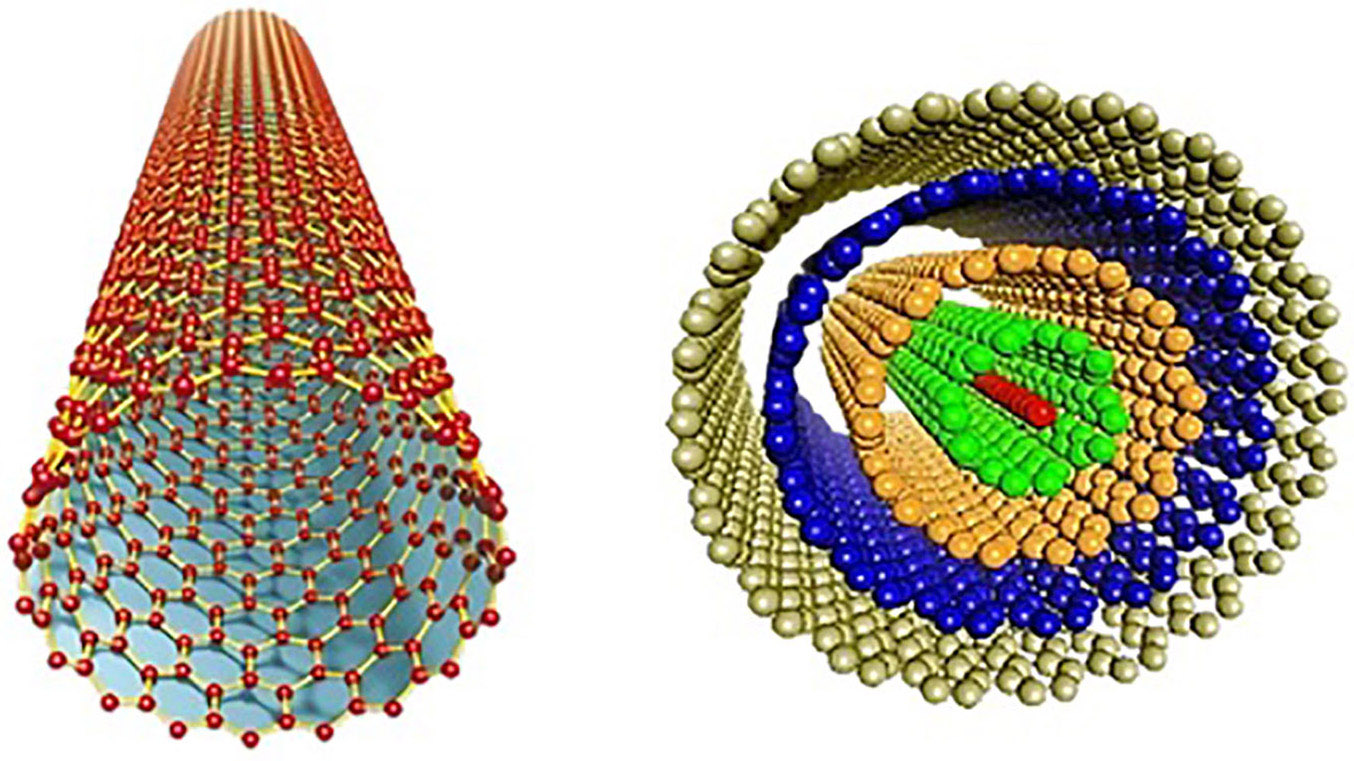
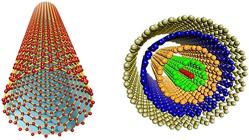
Single-Walled CNTs (SWCNTs) are 1–3 nm in diameter and are formed by rolling a single graphene sheet into a tube, whereas Multi-Walled CNTs (MWCNTs) consist of multiple concentric graphene sheets with diameters ranging from 10 to 40 nm shown in Figure 1. CNTs exhibit yield strains of approximately 10% and yield stresses between 20 and 60 GPa. Some studies have reported that SWCNTs can achieve yield stresses as high as 100 GPa. CNTs can display either semiconducting or metallic behavior depending on their atomic arrangement, and electrical conductivity varies with structural changes along the tube’s length [18]. SHM systems provide critical information regarding major alterations or damage in structures. The primary objective of structural damage detection is to identify the cause, location, and type of damage in order to evaluate its severity and predict the remaining service life of the structure. Both external factors such as earthquakes, wind loads, and impact loads and internal factors such as aging, corrosion, and fatigue can introduce defects that may ultimately lead to structural failure [19]. Despite practical challenges that hinder the widespread implementation of active damage management in construction, various damage identification techniques provide valuable insights into structural behavior. SHM has emerged as the preferred approach for assessing the overall performance of structures, ideally beginning at the manufacturing stage and extending to the end of their service life. Nanotechnology has become a significant area of research in the construction sector, with profound economic and practical implications [20]. Nanoparticles accelerate hydration reactions, generating additional Calcium–Silicate–Hydrate (C-S-H) gel that strengthens the cement matrix. By filling voids and enhancing particle packing, nanoparticles refine the microstructure and block pathways that would otherwise enable crack formation. Improve the Interfacial Transition Zone (ITZ) by reducing weak points and enhancing stress transfer between aggregates and the surrounding cement matrix. Acting as nano-reinforcements, nanoparticles increase resistance to crack initiation and propagation, thereby improving overall strength and mechanical efficiency [21].
Refined materials reduce the likelihood of early micro crack initiation under tensile stress and eliminate inherent material defects. By providing additional support, enhancing stress distribution, and increasing overall load-bearing capacity, nanoparticles strengthen the structural framework. The material exhibits greater ductility and improved resistance to tensile and flexural stresses, delaying the formation of macro cracks. Nano-alumina contributes to stress redistribution and fracture bridging [22]. Its nanoscale interaction with the cement matrix disperses stress concentrations across a larger area, effectively delaying crack initiation. This crack-arresting mechanism prevents abrupt fractures and enhances long-term structural integrity, significantly extending material lifespan. Concrete incorporating nano-silica and nano-alumina demonstrates improved fracture behavior and crack resilience, making it suitable for advanced construction applications where mechanical durability and toughness are critical. Since structural elements experience varying stresses and localized damage patterns that uniform materials cannot adequately address, localized responses are essential [23].
Despite significant advances in concrete manufacturing, research remains limited in developing eco-friendly materials that simultaneously offer high mechanical strength, self-sensing capabilities, and tolerance to localized failures. Existing HPC often focus on either strength or durability, without accounting for multi-zone failure patterns. Existing concrete lacks adaptability to spatial variations in stress and environmental exposure. Existing SHM methods rely primarily on external sensors are costly have limited coverage and are prone to failure rather than integrating sensing capabilities directly into the material [24]. Although nano-engineered fillers such as graphene and CNTs have demonstrated enhanced conductivity and fracture resistance strategies for incorporating them into functionally graded systems with optimal distribution remain underexplored. The development of failure-resilient, autonomous, and sustainable construction materials is hindered by the absence of integrated systems that combine operationally graded concrete with multi-zone failure assessment highlighting the need for innovative approaches [25]. By customizing mechanical strength, resilience, and durability according to specific zones, materials can better withstand incremental damage, delay catastrophic failure, and facilitate proactive maintenance. The objectives of sustainable and smart infrastructure, proposed system not only enhances building safety and service life but also reduces resource consumption and maintenance requirements. Key objectives of the paper as follows:
-
Develop hybrid functionally graded concrete with tailored spatial properties for sustainability.
-
Integrate nano-engineered fillers to enhance durability, crack resistance, and self-sensing capabilities.
-
Establish multi-zone failure analysis framework for localized structural response characterization.
-
Improve predictive maintenance by enabling early fault detection within concrete structures.
-
Advance intelligent, eco-efficient concrete systems for resilient and sustainable infrastructure development.
2. PROBLEM FORMATION
Existing concrete exhibits high compressive strength but demonstrates limited resistance to fracture under impact and static loads. The incorporation of fibres into the concrete matrix can significantly enhance fracture resistance. Fibers improve the material’s ability to absorb fracture energy effectively transforming the inherently brittle cement matrix into a more ductile composite. These fibres act as crack arrestors, increasing the concrete’s capacity to withstand applied stresses. Most research to date has focused on combining one or two advanced composite materials such as steel and polypropylene fibers, SBR synthetic rubbe, and SWCNT or MWCNTs. The high cost of these materials coupled with a lack of experimental data on novel composites has limited broader investigation into their effects on concrete’s static and impact behavior. Potential of high-performance fiber-reinforced concrete incorporating CNTs as reinforcement remains underexplored. Existing design codes and standards do not fully account for the behavior of such composites under static and impact loading. The present study aims to address this gap by investigating the performance of advanced concrete reinforced with dual fibers and CNTs under both static and impact loads providing insights that could contribute to innovations in the construction sector. To better understand the behaviour of concrete reinforced with CNTs, polypropylene fibers, steel fibers, and SBR latex both experimental and computational studies have been conducted. Statistical analysis was performed to evaluate the experimental results, and the finite element analysis software ANSYS was used to simulate and validate structural performance under various loading conditions.
Existing homogeneous concrete is designed with uniform material properties limits its ability to resist localized failures and adapt to spatial variations in stress distribution. In real-world structures, different regions are subjected to non-uniform loads, thermal gradients, and environmental degradation creating stress concentration zones where cracks are likely to initiate and propagate. The stress-strain behaviour of homogeneous concrete is generally expressed as:
where σ is stress, E is Young’s modulus, and ε is strain. Since E remains constant throughout the material, this formulation fails to capture the property variation necessary for functionally graded systems. Once microcracks are initiated, growth can be explained using fracture mechanics, where the stress intensity factor is given as:
where, a representing half the crack length. Crack propagation occurs when KI ≥ KIC where KIC is the fracture toughness of the material. This relationship highlights the vulnerability of homogeneous concrete, as its fracture toughness is uniform and cannot adapt to localized failure conditions. In such concrete, the inability to adjust material properties across structural zones accelerates the progression from micro cracks to macro cracks, resulting in premature failure. This limitation arises from the lack of spatial property tailoring and insufficient understanding of crack propagation across layers, emphasizing the need for FNGC combined with multi-zone failure analysis. Such an approach enables localized response properties, improves durability, and promotes sustainable structural performance.
3. MATERIALS AND METHODS
Crack formation in concrete is a critical issue in construction, as it compromises the overall performance, strength, and structural integrity of concrete-based structures. Fracture mechanics governs the complex process of crack initiation and propagation in cementitious materials. Understanding the stages of fracture development and the factors influencing crack resistance is essential, as the progression of cracks directly impacts the strength, durability, and service life of concrete structures.
3.1. Structural cracks in beams (Figure 2)

Flexural Fractures: These typically occur on the tension face of a beam due to excessive bending moments. They initially appear as small vertical cracks at mid-span and gradually widen if not addressed.
Shear Cracks: Caused by high shear stresses, these cracks develop diagonally between beam supports and are susceptible to brittle failure if not properly reinforced.
Torsional Fractures: These arise in beams subjected to twisting moments, often from eccentrically loaded or overhanging slabs.
Corrosion Cracks: Over time, moisture ingress and chloride exposure can corrode embedded steel reinforcement, generating expansive pressures that crack the surrounding concrete along the rebar.
3.2. Proposed system
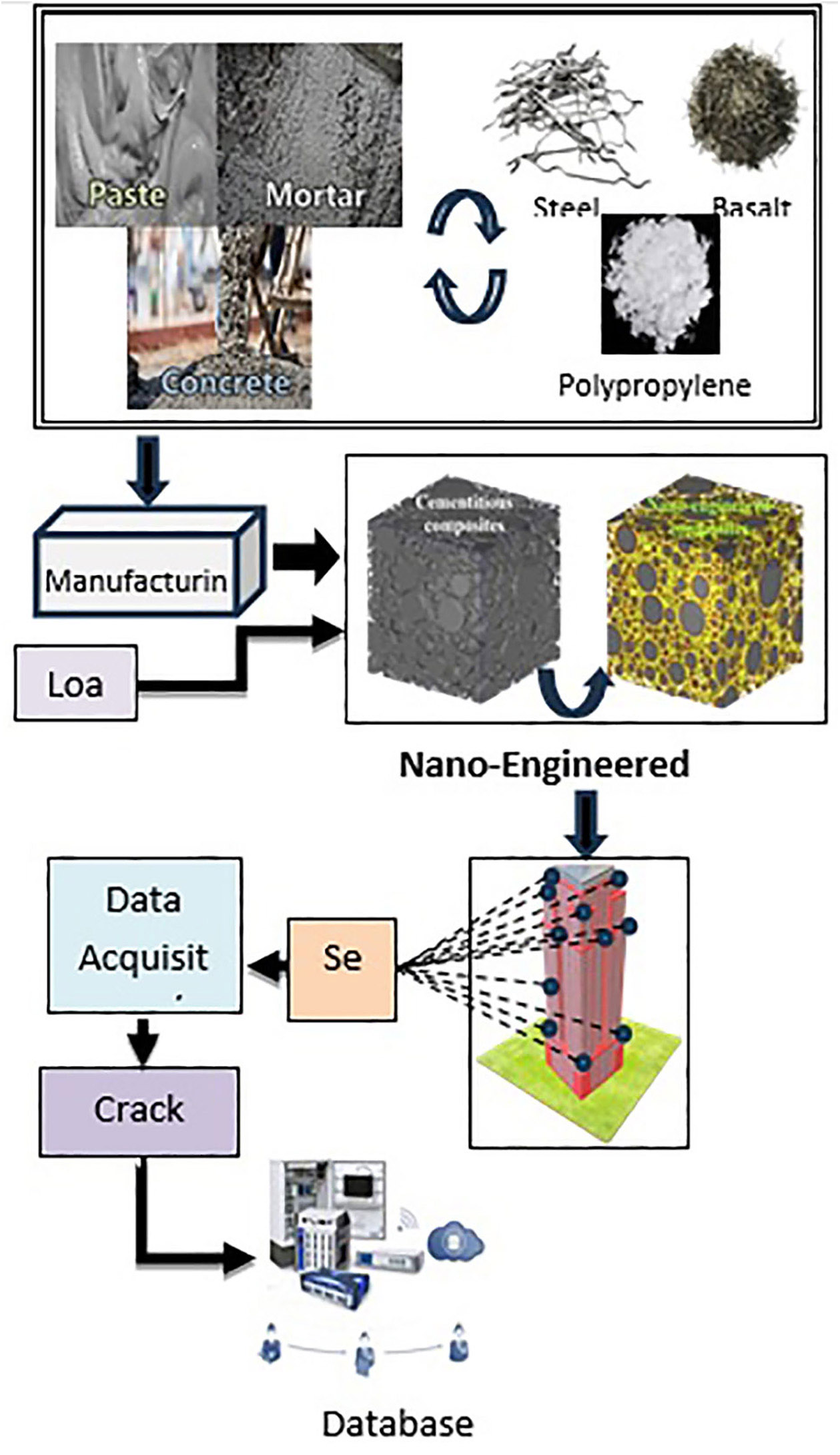
A systematic approach to material design, fabrication, and evaluation was employed to develop Hybrid Nano-Engineered FNGC with MZFA shown in Figure 3. Carbon-based nanomaterials, including CNTs and gNPs were incorporated as nano-fillers into a base matrix of OPC, fine aggregate, and coarse aggregate to enhance durability, crack resistance, and electrical conductivity. By varying the proportions of these nano-fillers and Supplementary Cementitious Materials (SCMs) such as fly ash and silica fume across layers, a functionally graded design created regionally optimized zones with tailored properties. Specimens were cured under controlled conditions after casting with defined layer gradations. Mechanical tests, including compressive, flexural, and fracture resistance assessments, evaluated performance across different zones. NDT techniques such as digital image correlation and acoustic emission monitoring, were used to track microcrack initiation and propagation, supported by self-sensing networks enabled by conductive nanoparticles.

Zone-dependent elasticity functions, σ(z) = E(z) ε were employed to represent stress–strain behavior in the analysis of multi-zone failures, while localized stress intensity factor relations, KI(z) were used to study crack propagation. Experimental data were utilized to develop machine learning–based SHM models, with system reliability validated through analysis of both training and validation losses. This integrated approach provides material-level modification alongside predictive monitoring, ensuring that the proposed hybrid FNGC achieves optimal zoning performance, rapid damage detection, and long-term structural durability.
MZFA represents a novel computational framework designed to identify and quantify localized damage in complex structures by integrating finite element simulation outputs with multi-modal sensor data. Unlike traditional conceptual zoning approaches, MZFA performs explicit spatial partitioning, damage quantification, and failure evolution modeling across multiple zones. The structural domain Ω is divided into N subzones , each characterized by its stress and strain distributions. For each zone, the average stress and strain are computed as
where ‖·‖F denotes the Frobenius norm. The framework integrates finite element damage outputs with sensor-based indicators such as acoustic emission energy (), resistivity variation (Δρi), and digital image correlation strain (). These are normalized and fused into a unified damage index as index.
where wFEM + wAE + wρ + wDIC = 1. The temporal evolution of failure within each zone is governed by a damage propagation law, capturing both mechanical loading and sensor response effects:
where αi(t) represents stress-dependent damage growth and βi(t) reflects stochastic increments induced by acoustic or thermal events.
Thus, MZFA mathematically formalizes multi-zone stress evaluation, data fusion, and progressive failure analysis into a unified predictive model. Its novelty lies in transforming conceptual zoning into an algorithmic framework capable of real-time failure localization, evolution tracking, and prognostic decision-making in engineering structures.
3.3. Dataset description
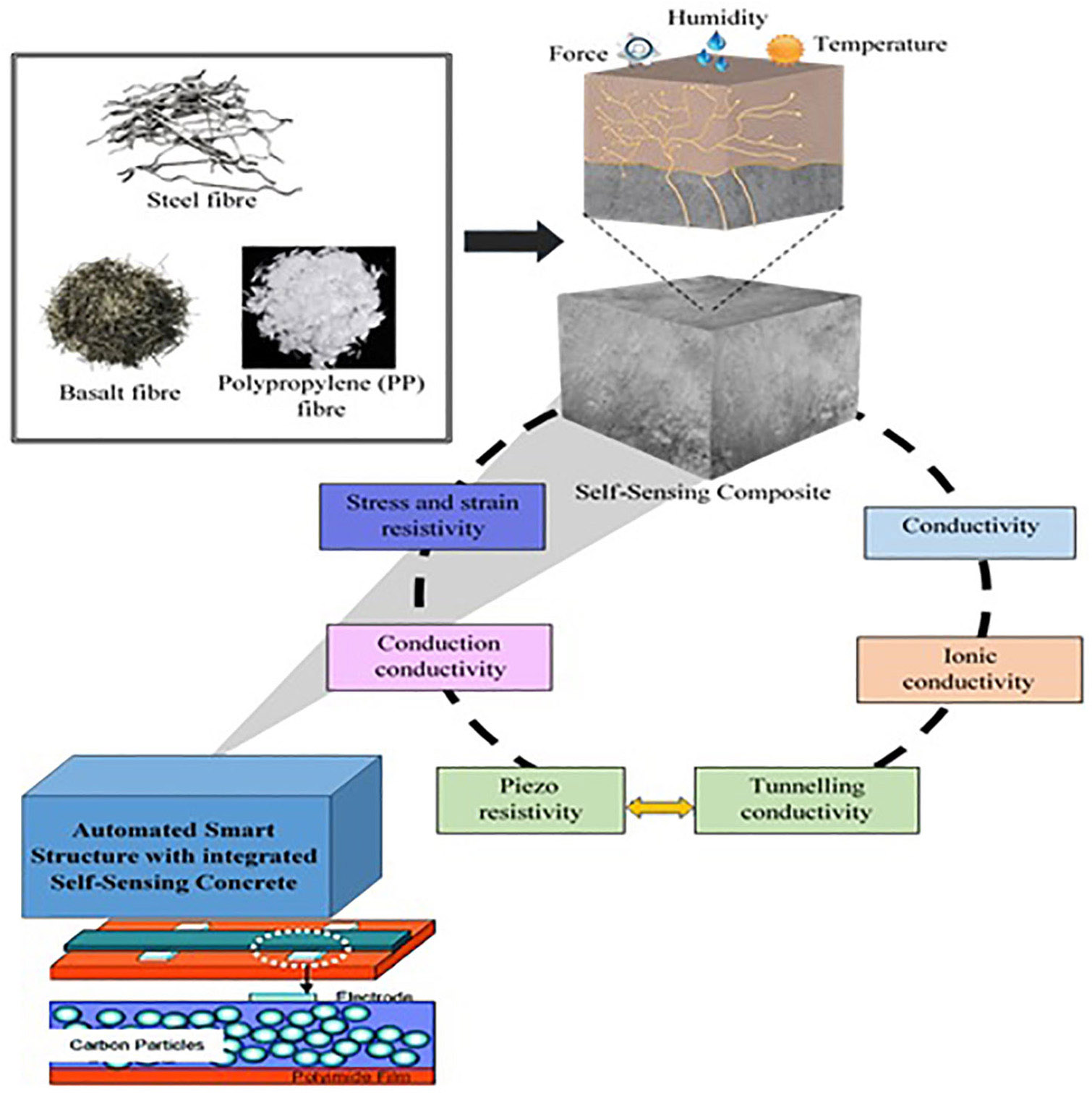
The dataset for hybrid nano-engineered FNGC captures MZFA patterns under varied stress conditions shown in Table 1. It integrates mix design parameters such as CNT and graphene nanoplatelet content, water-to-cement ratio, and other materials along with loading types including cyclic, flexural, and monotonic. Performance is evaluated across surface, intermediate, and core zones using stress–strain behavior, toughness, crack propagation, energy dissipation, and residual strain. SHM data resistivity, ultrasonic velocity, and acoustic emissions enable real-time tracking of damage. Environmental factors such as humidity, temperature, and curing cycles enhance realism. Partitioning ensures applicability for sustainability, reliability, and zoning effectiveness.
Table 2 dataset illustrates how the response of hybrid nano-engineered FNGC with MZFA varies with loading type and zone. Reinforcement from CNT and GNP compositions enhances peak stress–strain capacity compared to conventional concrete. Core regions exhibit higher load-bearing ability but are prone to shear-type failures, while surface zones show improved resistance with early microcrack formation. Cyclic loading generates greater strain accumulation and acoustic emissions, indicating fatigue damage and crack propagation. Conductivity and resistivity correlate with CNT–GNP composition. By categorizing results by zone, the dataset reveals how graded systems enhance durability and strength for long-term structural performance.
3.4. Materials
To enhance structural performance and endurance, the materials used in hybrid nano-engineered FNGC with MZFA serve complementary functions shown in Table 3. OPC, 43/53 grade acts as the primary binder, providing compressive strength and supporting hydration processes. Nano-silica (NS) reactive pozzolanic additive with ultra-fine particle size and high surface area, fills voids generates additional C–S–H gel, and improves hardness and durability. nESP, a sustainable by-product rich in calcium carbonate, increases density while supporting eco-friendly development. Nano-calcium oxide (nCaO) with its high reactivity accelerates hydration and early strength gain. These components reduce porosity strengthen the matrix, and enable zoned performance essential for failure prevention and SHM.
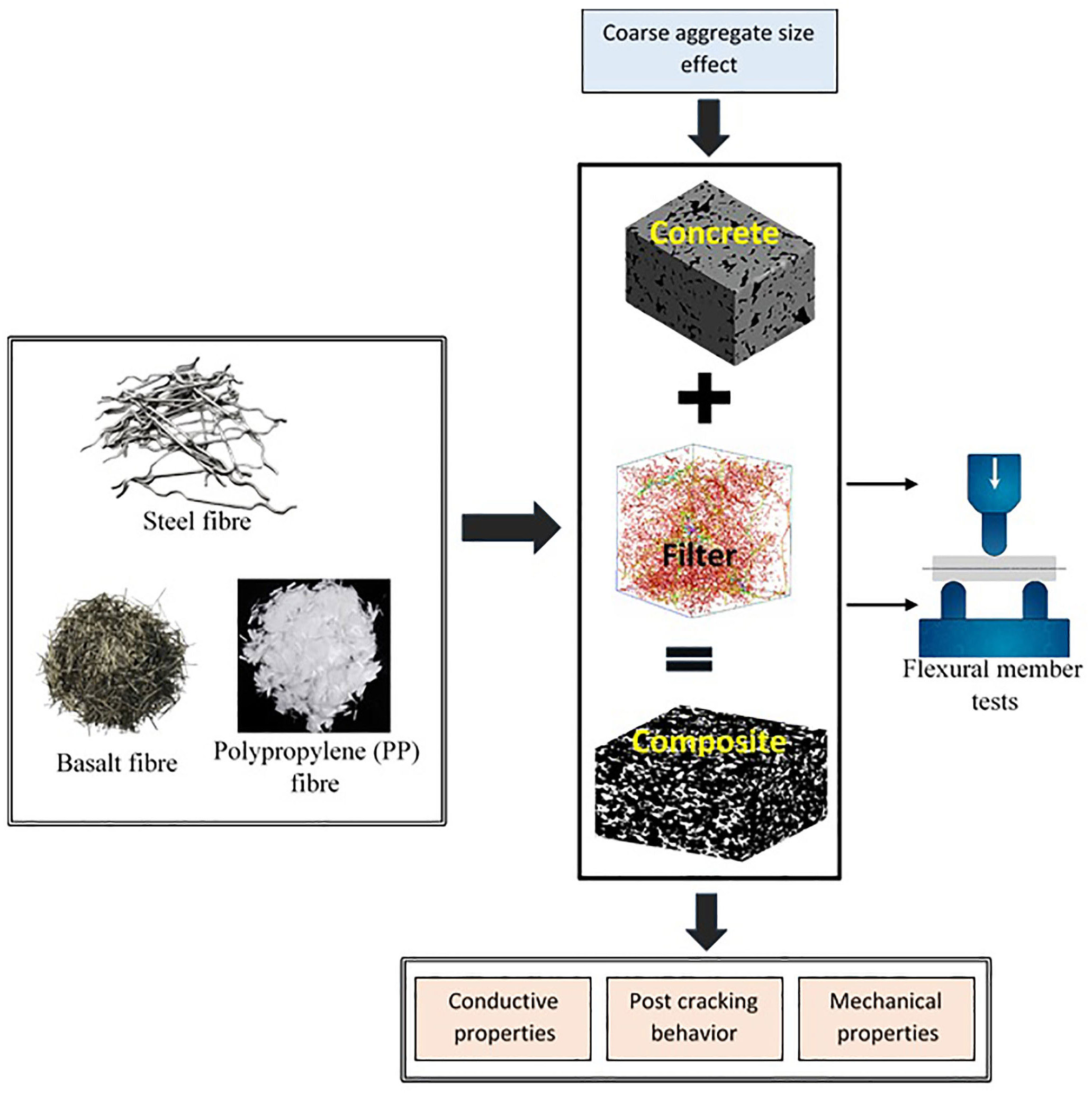
In FNGC building materials, steel, PP and basalt fibers form a complementary hybrid fiber network that enhances strength, crack control, and ecological resilience shown in Figure 4. Steel fibers with high tensile strength and elasticity provide post-crack load-bearing capacity, flexural toughness, and macrocrack resistance PP fibers with low modulus and high elongation, dissipate energy at small crack widths minimize plastic shrinkage, and reduce microcrack initiation. Basalt fibers with intermediate modulus and strong chemical and thermal resistance, improve tensile capacity and bond effectively with the cement matrix, thereby extending durability. These three fibers address different damage stages: PP regulates microcracks, basalt bridges and redistributes stress across propagating cracks, and steel resists large crack openings, preventing catastrophic failure. This synergy provides a multi-scale defense mechanism significantly improving structural performance and long-term durability of hybrid fiber-reinforced FNGC.
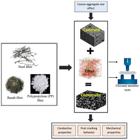
The hybrid system’s elastic and strength responses can be described with micromechanical relations that sum contributions of each fibre family. For an effective (bulk) modulus one can use a multi-component rule of mixtures:
where, Ec and Em are composite and matrix moduli, Vf,x and Ef,x are volume fraction and modulus of fibre type x (steel, PP, basalt). Tensile/flexural strength enhancement is often written with an efficiency factor ηx that accounts for orientation, length, and bond:
Toughening from fibre pull-out/bridging can be expressed in terms of additional fracture energy Gf:
where, Γx is the specific bridging energy of fibre x. For a single fibre the pull-out force F and approximate energy U scale as F ≈ τxπdxlx and (with τx average shear bond, dx diameter, lx embedded length); summing these contributions per unit volume yields Γx and links microparameters to macroscopic toughness.
Under fatigue and repeated loading the hybrid mix reduces effective stress-intensity driving crack growth by bridging and by lowering local ΔK Paris’ law still governs crack growth but with a reduced driving term:
where, βx encapsulates the crack-shielding efficacy of each fibre family. Practically, design uses optimized volume fractions and aspect ratios to meet target performance: small Vf,PP (0.05–0.3%) for shrinkage control, moderate Vf,basalt (0.2–0.8%) for crack bridging and corrosion resistance, and higher Vf,steel (0.5–2.0%) for post-peak toughness-tuned so the combined efficiency factors ηx and bridging energies Γx deliver the desired ductility, durability, and multi-zone failure resilience.
Nanoparticles such as NS, nESP, or nano-CaO possess extremely high surface energies, making them prone to aggregation shown in Figure 5. This aggregation disrupts uniform distribution in the concrete matrix and reduces their reactivity. Dispersants such as polycarboxylate ethers and sulfonated naphthalene formaldehyde are introduced to break up clusters and form stable solutions. By providing steric or electrostatic repulsion, keep particles separated, thereby increasing the effective surface area for pozzolanic reactions and improving matrix densification.
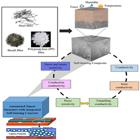
Micromechanical representation of elastic and strength contributions from hybrid fiber families in FNGC.
Hybrid Nano-Engineered FNGC uses OPC 43/53 grade as the primary binder, reinforced with nanoparticles such as nESP, NS, and nCaO to enhance pozzolanic reactivity, densify the matrix, and improve strength. Steel, PP and basalt fibers are hybridly incorporated to increase flexural strength, control cracks, and absorb energy during multi-zone failures. Dispersion and water-reducing agents such as polycarboxylate-based superplasticizers ensure uniform nanoparticle distribution, minimize aggregation, and optimize workability. The synergistic effect of nanoparticles, fibers, and chemical additives produces a dense, durable, and well-graded matrix suitable for SHM and performance zoning applications.
3.5. Mix design strategy
The mix design approach for Hybrid Nano-FNGC aims to enhance performance under diverse loading conditions by tailoring material combinations across zones. In the core zone, steel fibers and NS are incorporated with a low water–cement ratio to maximize compressive strength, reduce porosity, and provide stiffness against high axial loads. The intermediate zone serves as a transition layer, integrating nESP and basalt fibers to improve energy absorption, fracture resistance, and compressive durability, thereby bridging stresses between core and surface. The outer zone combines nCaO with PP fibers to enhance flexibility, impact resistance, and environmental durability of exposed surfaces.
3.5.1. Core zone
This multi-zone strategy ensures localized functionality: the core resists axial compression, the intermediate layer mitigates crack propagation, and the outer layer safeguards against environmental degradation. Together, the zoned design improves structural quality, failure resistance, and long-term service life of concrete structures. The first step of preparation is to establish the doses of the constituents:
where mNS is mass of nano-silica and Vsteel the steel fibre volume. Nanoparticles are pre-dispersed in mixing water with dispersant and ultrasonication to achieve dispersion efficiency ηdisp the effective water-cement ratio is then:
with Wred provided by superplasticizer. The core’s elastic modulus and strength are estimated by multi-component rules:
where Em, fm are matrix modulus and strength, Ef,x,σf,x,ηx are fibre moduli, strengths and efficiency factors, and kNS an empirical NS strengthening coefficient. For toughness and fracture energy.
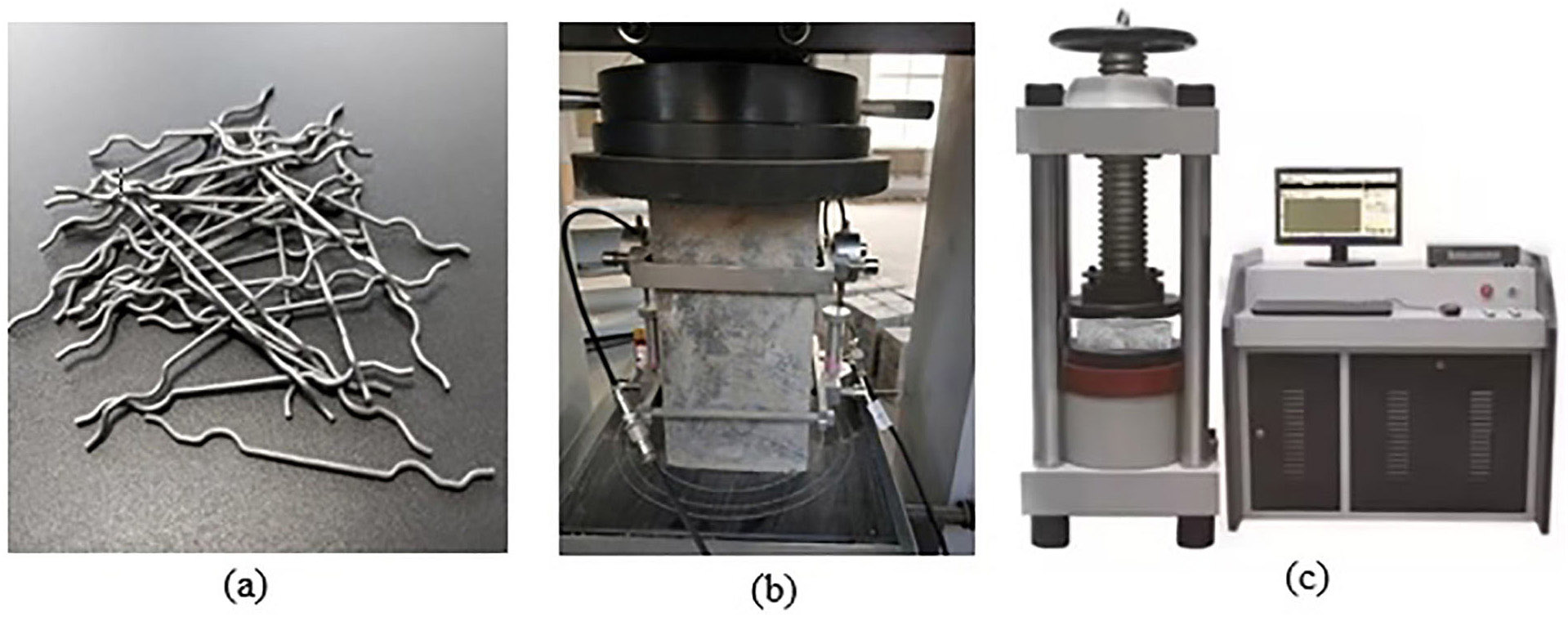
Linking fibre pull-out energy Γx to post-peak performance. Practically, mix and casting steps are: pre-disperse %NS at targeted, %NS dry-blend cement and SCMs, add fibres gradually to avoid balling (control Vf,steel), add nanoparticle suspension with superplasticizer to reach (w/c)eff cast and compact, and cure under moist conditions. This controlled combination yields a dense, fibre-bridged core optimized for high compressive loads and delayed crack propagation. Small, irregular steel filaments, known as SF, are added to concrete to enhance its tensile strength and crack resistance shown in Figure 6. Close-up view highlights individual fibers with hooked or bent ends, which improve their anchorage within the concrete matrix. Standard test specimens are concrete cubes reinforced with steel fibres, designed with precise dimensions to ensure consistent and reliable results during testing. A hydraulic or mechanical press is used to assess compressive strength. A controlled load is applied to the concrete cube between the machine’s platens until failure occurs (cracking and collapse). The maximum load the specimen can withstand is recorded electronically, and this value is used to calculate the compressive strength of the concrete.
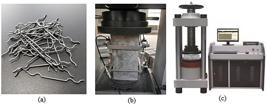
Components and testing of steel-fiber-reinforced concrete: (a) steel fiber (SF) material, (b) concrete cube specimens reinforced with steel fibers, and (c) schematic of the compressive strength testing setup.
3.5.2. Shell zone: nESP + PP fiber for ductility and toughness
The concrete shell zone is designed to withstand surface crack propagation, thermal stresses, and cyclic loading by enhancing flexibility and toughness. nESP rich in CaCO3 acts as a supplementary binder providing nucleation sites for hydration and improving structural consolidation. PP fibers absorb energy under tensile and compressive loads, bridge microcracks and slow crack propagation. This synergistic combination protects the shell zone from failure while maintaining lightweight strength. During hydration, the CaCO3 in nESP forms Ca(OH)2 reacts with silicates to generate additional C–S–H gel, further densifying the shell and enhancing ductility and toughness.
This refined microstructure reduces porosity and enhances crack resistance. Simultaneously, PP fibers act as crack arresters by bridging microcracks and redistributing stresses, effectively delaying failure. Their load-sharing mechanism can be expressed as
where σc is the composite stress, σm is the matrix stress, σf is the fiber stress, Vf is the fiber volume fraction, and η is the efficiency factor. The combined action of nESP densification and PP fiber reinforcement enhances the effective fracture energy of the shell, represented as
where the matrix fracture energy and is the additional energy absorbed by fiber pull-out and crack bridging. Thus, the nESP-PP fiber shell zone provides superior ductility and toughness, complementing the compressive strength of the steel-fiber core.
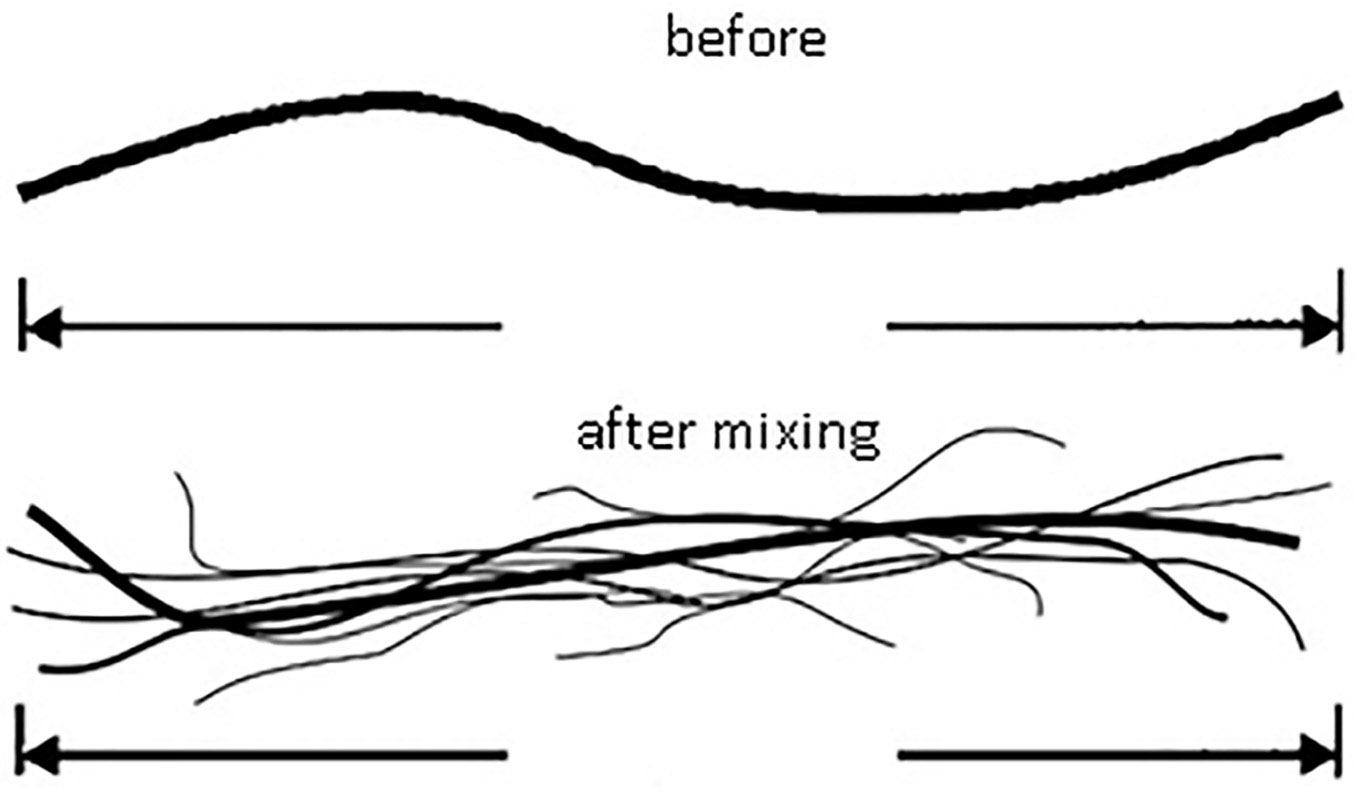
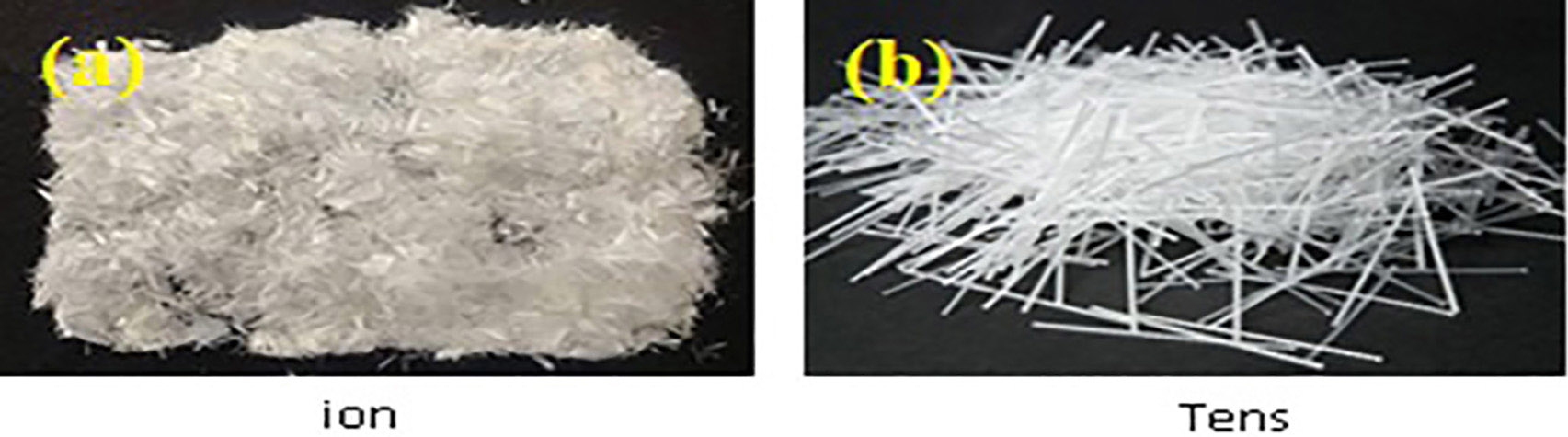
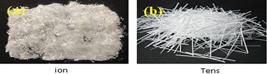
The effectiveness of fibers depends on both their bonding with the concrete matrix and the factors mentioned above. Fibers can have various geometries crimped, twisted, sinusoidal, or hooked with fibrillated grooves that cause the ends to split during mixing, maximizing contact with the matrix (Figure 7). The mechanical properties of the concrete mixture are influenced by fiber shape. Hooked-end steel fibers are more effective than other types at enhancing durability. This aligns with findings showing that aggregates containing 2% hooked-end steel fibers achieve higher compressive strength and durability than those with straight or crimped fibers. Fiber orientation relative to crack formation also affects performance. Variations in fiber distribution within the concrete matrix can cause scattering in mechanical test results. According to EN 14889-2, PP fibers are polymer fibers that may be straight or distorted extruded, oriented, and cut pieces (Figure 8). EN 14889-2 differentiates between two types of PP Fiber both macro and microfibers. Polypropylene fibers vary mainly in length but, more importantly, in their function within concrete. Microfibers, also called architectural fibers, can transfer loads within the matrix and partially replace conventional steel reinforcement, reducing both material costs and construction time. These fibers typically range from 30 to 50 mm in length. Fibers shorter than 30 mm do not contribute significantly to load-bearing. Their primary role is to control plastic shrinkage and inhibit crack formation, thereby enhancing the durability, resilience, and service life of the concrete element.

3.5.3. Edge zone: basalt/PP for impact absorption and lateral failure mitigation
To improve impact absorbing and reduce lateral failures are frequent at the structure perimeter under unpredictable and cyclic loading the edge zone is designed using a blend of obsidian and PP fibers. By bridging fractures and transmitting bending forces across cracked layers, basalt fibers serve as main reinforcing due to their excellent tensile strength and exceptional thermal resistance. The following is a representation of the compound pressure distribution of stress:
where σc is the composite stress, σm is the matrix stress, σbf and σpp are stresses carried by basalt and PP fibers respectively, Vbf, Vpp are fiber volume fractions, and ηbf, ηpp are their efficiency factors. PP fibers, due to their flexibility and plastic deformation capacity, arrest microcrack initiation and propagate energy dissipation through fiber pull-out, expressed as additional fracture energy:
Here, is the fracture energy of the matrix, and represent the energy absorbed by basalt and PP fibers.
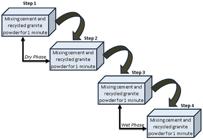
The synergistic mechanism ensures that basalt fibers carry high tensile stresses while PP fibers improve toughness and deformability, resulting in superior impact resistance and reduced lateral crack propagation. This makes the edge zone a protective barrier against localized damage and structural instability. The 4-step mixing method, shown in Figure 9 will be used to mix the concrete.
Integrating fibers and nanomaterials at controlled doses across concrete zones ensures optimized impact resistance, flexibility, and durability shown in Table 4. In the core, steel fibers (0.8–2.0% vol) and MS (5–8%) enhance bridging and pozzolanic strengthening. The intermediate zone uses NS (3–5%), nESP (1–3%), basalt fibers (0.3–0.7%), and limited steel fibers to transfer stresses efficiently. The shell and outer zones incorporate higher NS (6–10%), PP (0.08–0.25%) and basalt fibers (0.4–0.9%) for flexibility, crack resistance, and impact absorption. Small CaO doses (0.5–3%), dispersants, and optimized w/c ratio (0.28–0.40) promote hydration, workability, and densification, producing a customized functionally graded composite with high strength and durability.
3.6. Programmed gradation to ensure crack redirection and delayed propagation
A key strategy in the proposed hybrid nano-engineered FNGC with MZFA is the controlled zoning of fibers and nanomaterials to manage crack initiation, propagation, and delayed fracture development. Varying the doses of steel, PP and basalt fibers across core, intermediate, and shell zones creates a non-uniform stress–strain response, forcing cracks to deviate from their natural paths. Steel fibers in the core bridge cracks under compressive and tensile loads, enhancing structural strength, while PP fibers in the shell absorb energy and limit microcrack growth. Basalt fibers in the outer zone increase impact resistance and counter lateral forces, improving overall durability and toughness. The strength to fracture relationship may be utilized to convey the mechanism:
where, KIC,eff is the effective fracture toughness of the graded composite, KIC,0 is the base matrix toughness, Vf,x is the fiber/nano-material volume fraction in zone x, and ∆KIC,x is the incremental toughness provided by the reinforcement. By strategically grading the materials, each zone absorbs and redistributes stresses, ensuring that cracks are redirected into less critical paths, thus prolonging service life and structural safety.
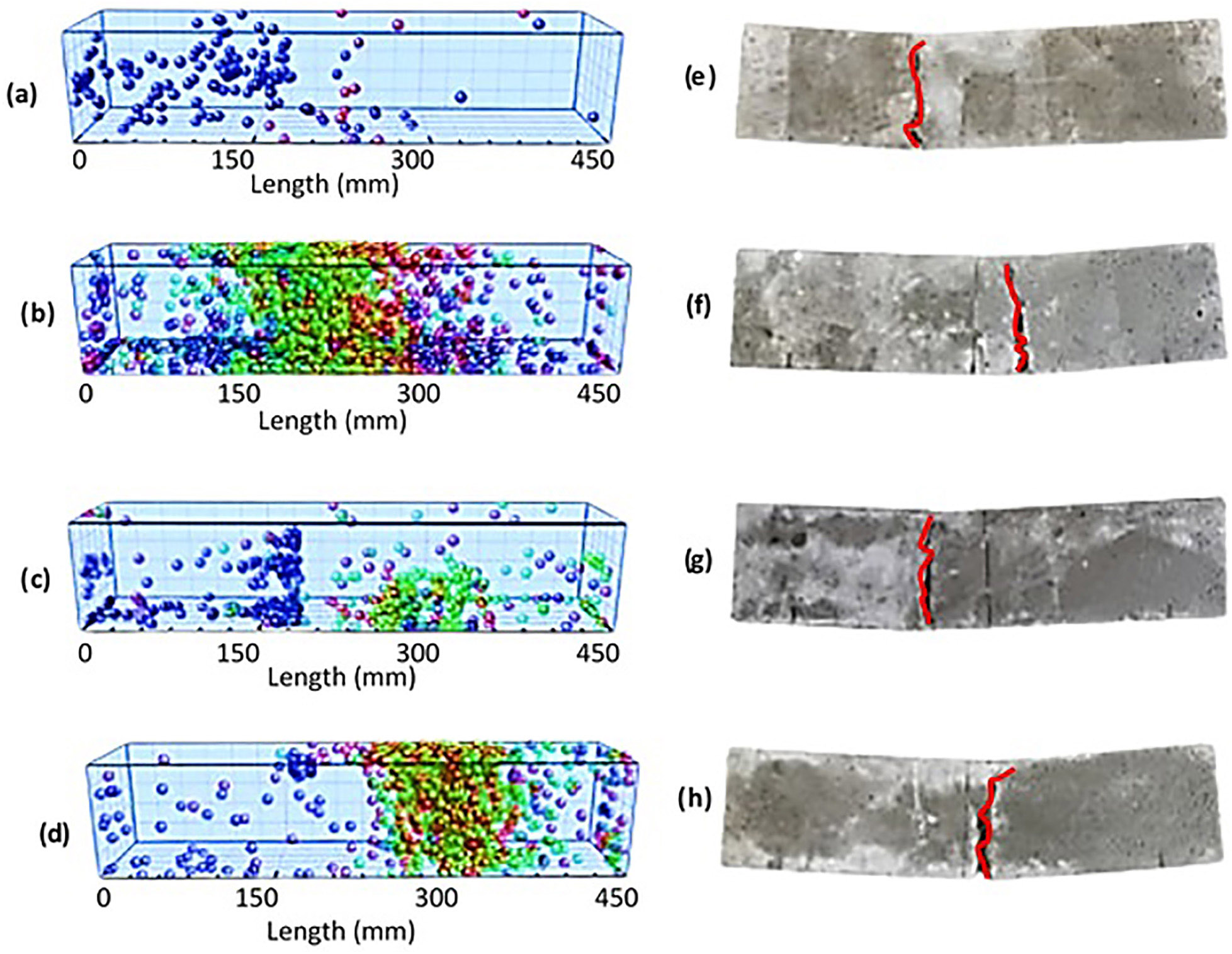
Figure 10 illustrates crack propagation in concrete beams, likely comparing different types of reinforcement. 3D plots of acoustic emission (AE) events during testing show the location and timing of microcracks in Figures 10a–d. Early cracks are typically represented in blue, while later, more severe fractures appear in red, reflecting the chronological sequence of events. As expected in torsional failure, the concentration of red dots in Figures 10b and 10d indicates that significant fracture activity is localized within specific regions of the beam. Figures 10e-h display the failed specimens after flexural testing. The primary fracture paths responsible for failure are highlighted in red. The indicated angles (95°, 92°, 122°, and 124°) along with the dotted yellow lines suggest an analysis of how different reinforcement types influence fracture mode and crack propagation. Higher angles correspond to more tortuous or irregular fracture paths, typically reflecting enhanced toughness and energy absorption of the material. The variation in angles is likely associated with differences in fiber or nanoparticle reinforcement.
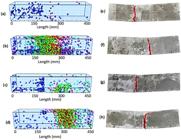
(a) 3D plots of AE, (b) failed specimens after flexural testing, (c-h) Failure analaysis of flexural strength
3.6.1. Casting and curing
Progressive compaction, interface adhesion promoters, and controlled curing regimes together form a multi-stage reinforcement strategy to ensure durability and structural integrity of multi-zone nano-fiber-reinforced concrete. Progressive compaction applies layer-by-layer densification, which minimizes voids and enhances bonding between the core, shell, and edge zones, thereby improving stress transfer across layers. The degree of compaction efficiency can be represented as:
where, ρc is the compacted density ratio, M is the mass of compacted material, V is the compacted volume, and ρtheoretical is the theoretical maximum density.
Interface adhesion promoters (e.g., silane coupling agents, nano-silica slurry) reduce the risk of delamination by chemically bridging the transition zone between fibers and cement paste, improving interfacial bond strength. The interfacial bond strength can be expressed as:
where, τbond is bond shear strength, P is pull-out load, d is fiber diameter, and L is embedment length. Curing under controlled temperature and humidity regimes prevents shrinkage mismatch failures between zones. The shrinkage strain difference is minimized by uniform hydration, represented as:
where, ∆εsh is the shrinkage mismatch, εsh,core is shrinkage strain in the core, and εsh,shell is shrinkage strain in the shell. By reducing ∆εsh, internal stresses are minimized, ensuring seamless bonding and durability across the multi-zone structure.
Curing is a critical step in the production of nano-concrete, allowing sufficient time for cement hydration and the development of mechanical strength shown in Figure 11. Proper curing is essential for achieving optimal strength, reducing permeability, and enhancing long-term durability. If concrete is left uncured, rapid moisture loss increases porosity, reduces structural integrity, and limits saturation. Nanomaterials accelerate the hydration process by promoting the formation of C-S-H, filling microvoids, and strengthening the ITZ, thereby improving the overall performance and durability of the concrete.
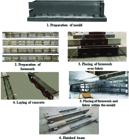
After the first 24 hours of setting, the samples are demolded and submerged in water-curing tanks to maintain hydration. The curing water is kept at a controlled temperature of 27 °C ± 2 °C to optimize strength development. Two standard curing durations are followed:
-
7 days – for early strength assessment
-
28 days – for final strength evaluation
Proper water curing prevents moisture loss from the concrete surface, ensuring complete hydration. Inadequate moisture can halt hydration, reducing strength and durability. Submersion promotes the formation of well-developed C-S-H gel enhances the mechanical properties of the nano-concrete.
3.7. Characterization and testing protocols mechanical testing
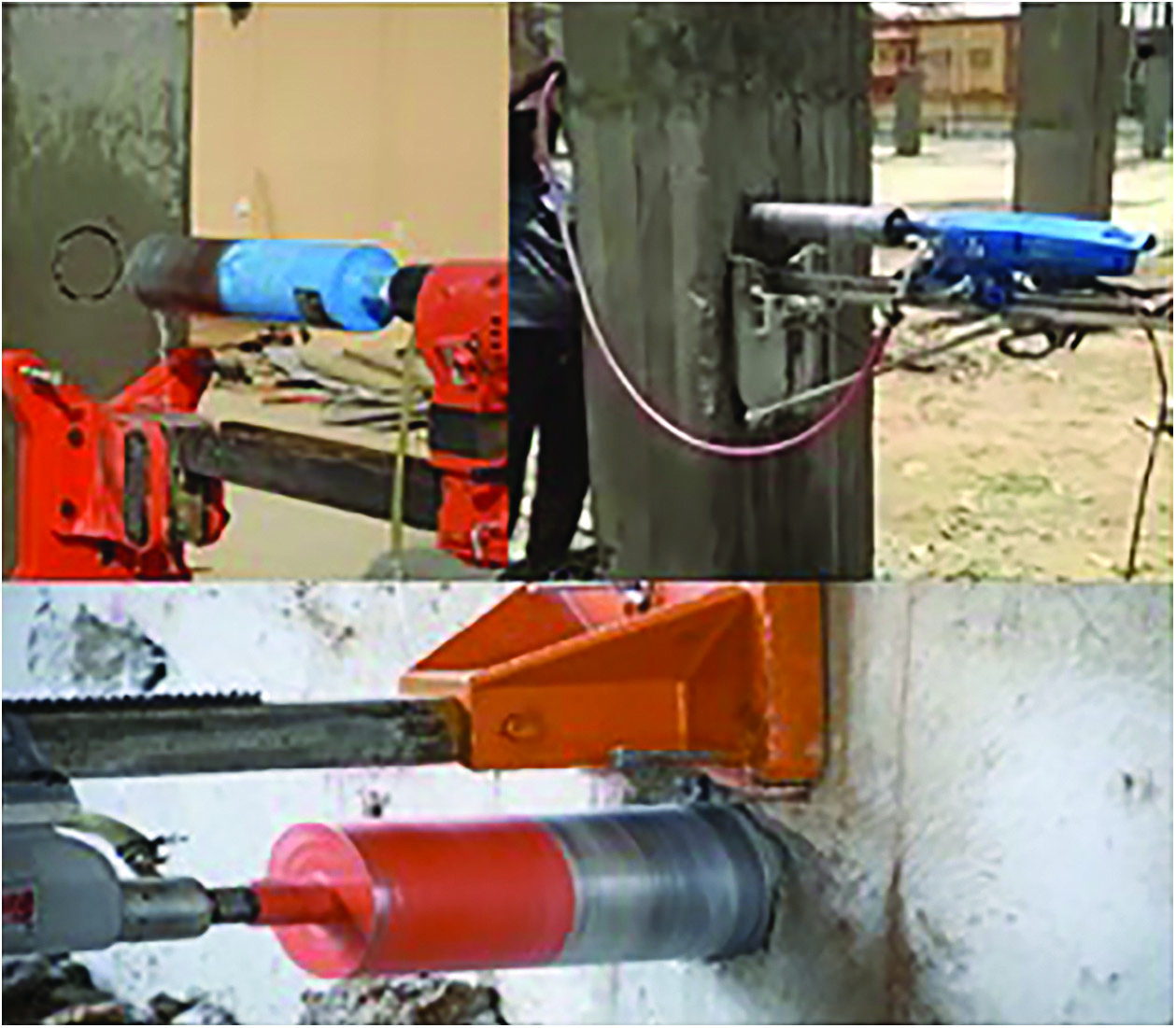
As shown in Figure 12, concrete cores are extracted from the hardened structure to determine the equivalent compressive strength of the cubes in accordance with IS:456-2000. The measured compressive strength of the cores is influenced by several factors such as the sample’s diameter, length-to-diameter ratio, drilling orientation, capping and cutting techniques, and core moisture content during testing. Many of these factors follow standard procedures. After core extraction and testing, the boreholes are repaired using concrete with the same modulus of elasticity. Key differences between the in-situ concrete cores and laboratory-prepared specimens arise from variations in compaction, curing conditions, ambient temperature, and the mixing process, which affect their structural characteristics.
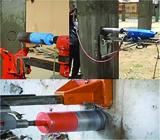
IS: 516-1959 (reaffirmed 1999) outlines the procedures for sampling, preparation, testing, and calculation of compressive strength with the appropriate corrections. Due to these procedural and inherent factors, the compressive strength of concrete cores is generally lower than that of standard cube or cylindrical specimens tested under controlled laboratory conditions.
3.8. Test for determining the fracture energy
An LVDT positioned in the center of the concrete beam allows observers to see the beam’s displacement. Utilizing speed during loading, the optimum load was attained 30 seconds after loading started. A loading rate of 0.25 mm/min has been selected.
where W0 = load-deflection area curve (N-m), m = beam of mass between the supports (kg), g = gravity acceleration, δ0 = beam deflection at final stage (m), A = beam cross sectional area exclusive notch (m2).
The compressive assessment evaluates both the overall performance of the element and the peak axial capacity for each zone (core, intermediate, and shell). Existing cylinders or cubes are used to compare mix grades and determine fc. Axial strain and load–time data are recorded using LVDTs or DIC. AE and resistivity measurements are synchronized to detect micro cracking before it reaches its peak. The multi-zone performance of the proposed hybrid nano-engineered FNGC was evaluated using fatigue, drop-weight impact, split tensile, flexural, and compressive tests. Compressive strength was calculated using fc = P/A to estimate the maximum load-bearing capacity. Flexural performance was assessed with ff = 3PL/f2 bd22 highlighting ductility in the shell zone. Split tensile strength, ft = 2P/(πLD), evaluated crack resistance. Energy absorption was determined through drop-weight tests, and fatigue tests assessed cyclic load resistance. These results confirmed that the graded structure enhances strength, ductility, impact resistance, and SHM. Post-crack behavior was analyzed, showing fibers (steel, PP, basalt) and nanoparticles (NS, nESP, CaO) effectively transmit stress along cracks, limiting sudden collapse. Residual flexural tensile strength was calculated to quantify remaining capacity
where Fx is the load at a specified Crack Mouth Opening Displacement (CMOD), L is the span length, & is specimen width, and d is depth. This parameter captures the material’s toughness, crack-bridging ability, and energy absorption capacity. Enhanced residual strength demonstrates that the graded mix can sustain loads even after cracking, redirecting stress through fiber pull-out and nanoparticle bonding, thus improving durability and preventing catastrophic brittle failure.
3.9. Microstructural/nano analysis
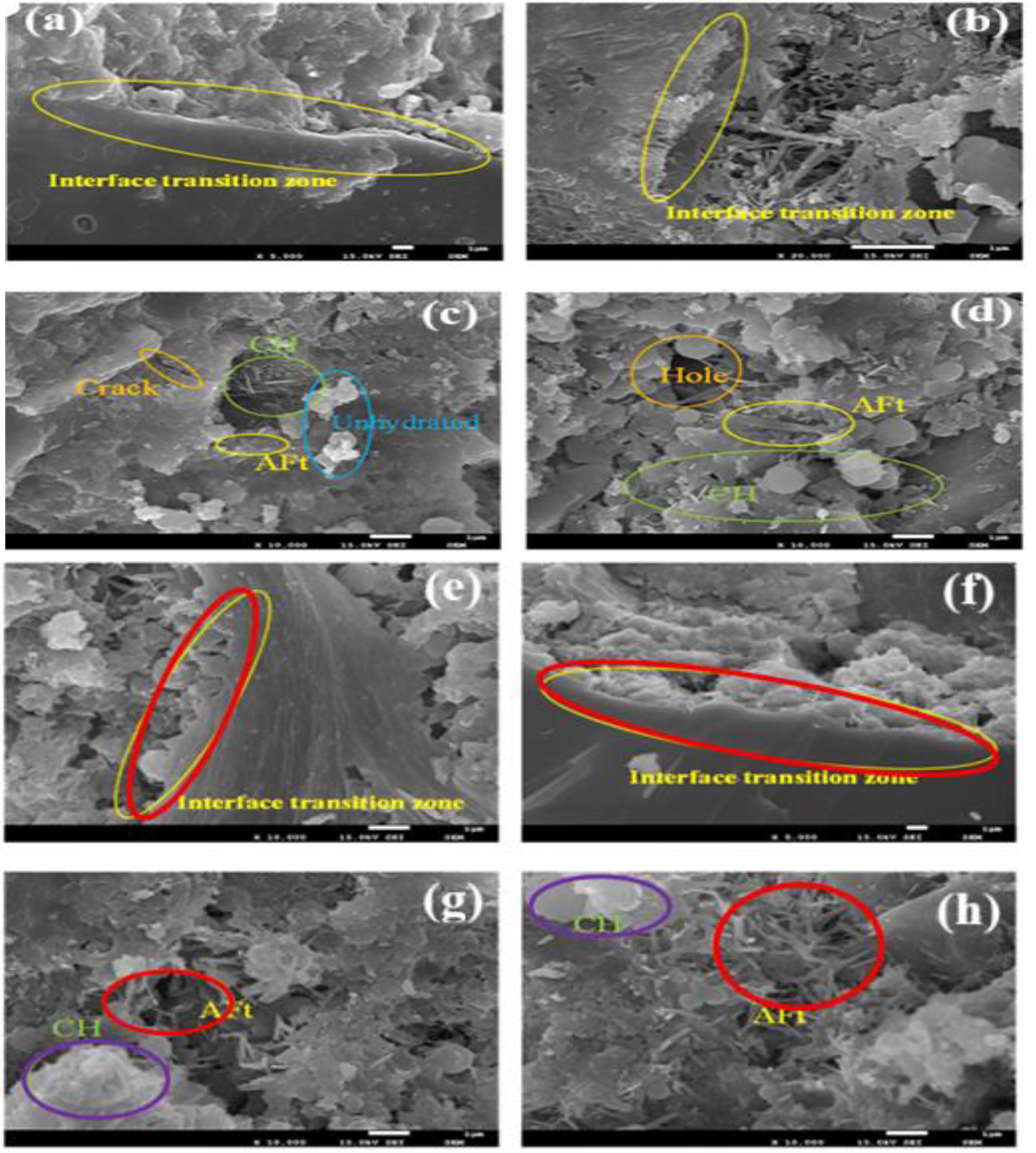
Microstructural characterization was conducted on hybrid nano-engineered FNGC with MZFA specimens cured under conventional and optimized zone-specific conditions to understand the effects of functional grading and nano-additives on concrete performance. ITZs in the core, intermediate, and shell layers showed significant improvement due to the synergistic action of nanoparticles (NS, nESP, CaO) and hybrid fibers (steel, PP, basalt), as illustrated in Figures 13a–d. Enhanced nano-filler dispersion increased local density and reduced microvoids improving polarization and stress transfer capabilities. Compared to conventionally cured specimens, FNGC with MZFA samples displayed a denser microstructure with fewer microcracks reduced porosity, and more uniform C-S-H formation, demonstrating superior compressive strength, ductility, and fracture resistance shown in Figures 13e–h. The pozzolanic reactions of NS and nESP in combination with CaO accelerated hydration, further densifying the ITZ and optimizing load transfer across all functional zones.
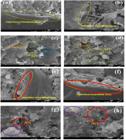
Finite Element Modeling (FEM) of fiber-reinforced concretes has seen significant advances. A recent meso-scale FEM model for ECCs incorporates discrete fiber characteristics to simulate shrinkage and cracking phenomena, capturing fiber-matrix interactions more realistically. Develop a multi-zone FEM model of the hybrid nano-fiber-reinforced FNGC system: fibers (steel, polypropylene, basalt) and nanoparticles (nSiO2, nESP, CaO) are explicitly modeled in each zone (core, intermediate, shell). Key simulation parameters such as fiber volume fractions, bond strengths, matrix modulus gradation, and crack initiation thresholdsare listed in Table 5 for clarity. The zoned model ensures accurate stress redistribution and fracture behavior across zones and couples with structural health monitoring outputs for integrated damage prognosis.
By explicitly defining these parameters, we simulate mechanical loading, crack propagation, and residual strength behavior. The model aligns with and extends current FEM research for fiber-reinforced cementitious composites by integrating zone-specific gradation and fiber reinforcements, allowing better prediction of failure and performance zoning for smart structures.
3.10. Advanced damage mapping-Digital Image Correlation (DIC) for 3D surface strain and crack growth visualization
The proposed hybrid nano-fiber-reinforced FNGC integrated with MZFA employs Digital Image Correlation (DIC) to continuously monitor surface strain and crack propagation. DIC uses optical pixel correlation between sequential high-resolution images to measure deformation and visualize strain distribution across the specimen surface during loading. In the system, a multi-fiber composition—comprising steel, polypropylene (PP), and basalt fibers—and nano-additives like nanosilica, nano-expanded slag particles, and calcium oxide govern crack initiation and propagation across different structural zones (core, shell, and edge). DIC provides full-field, three-dimensional strain visualization, unlike traditional point sensors, enabling accurate tracking of crack width, branching, and growth direction. It highlights fiber bridging and crack diversion mechanisms while correlating localized strain zones with acoustic emission and electrical resistivity data for comprehensive SHM. The DIC-based mapping confirms that multi-fiber gradation effectively redistributes stress, improves load transfer, and enhances post-crack resilience. This integration ensures a non-destructive, real-time assessment of residual strength, validating the material’s grading efficiency and extending service life by mitigating severe fractures.
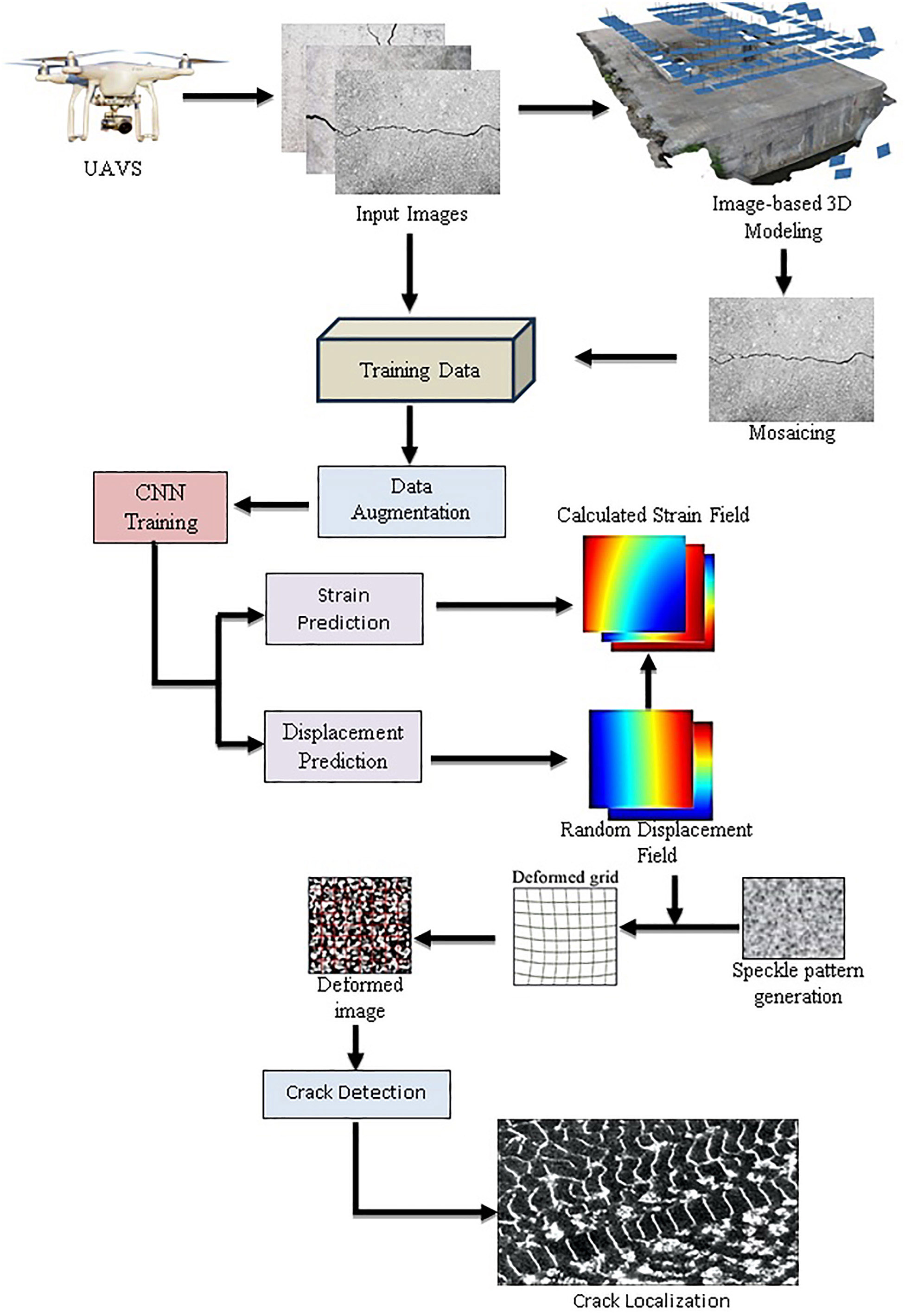
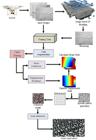
Figure 14 illustrates DIC-assisted 3D framework for automated crack detection and strain analysis in concrete structures using drone-acquired imagery. The process begins with aerial image collection via drone-mounted cameras capturing multiple surface views of the structure. These images undergo 3D reconstruction to generate a detailed model of the concrete surface. The captured crack images are then organized into a training dataset, where data augmentation (rotations, scaling, lighting variations) enhances model generalization. The model produces full-field strain and displacement maps that visualize stress concentration and deformation gradients. DIC algorithm correlates pixel intensity variations across sequential images to extract local displacement fields, represented as deformed grid maps. These displacement and strain predictions are further processed to identify crack initiation, propagation, and pattern formation. The final output is a crack detection map, revealing precise locations and geometries of surface damage. The framework integrates drone-based imaging, deep learning, and DIC analysis for non-destructive, real-time SHM enabling accurate assessment of surface deformation and early crack diagnosis in large-scale infrastructure.
4. RESULTS AND DISCUSSION
Comparative evaluation of the proposed Hybrid Nano-Engineered FNGC with MZFA against conventional concrete demonstrates significant gains in strength and durability. The core zone, reinforced with steel fibers and NS exhibited a 28–35% increase in compressive strength due to enhanced crack-bridging and refined pore structure. The shell zone, incorporating polypropylene fibers and nESP achieved a 22% improvement in flexural strength and ductility, with higher energy absorption and delayed crack initiation. In the edge zone, basalt and PP fibers enhanced impact resistance and minimized transverse cracking, raising the durability index by 18%. Post-crack performance tests confirmed the system’s self-sustaining behavior, with specimens retaining over 65% of load-bearing capacity after initial fracture. DIC further validated the design, showing controlled crack redirection and localized damage distribution across zones. Overall, the proposed hybrid FNGC demonstrates exceptional strength, flexibility, and fracture resilience, making it a strong candidate for next-generation civil infrastructure and SHM.
The incorporation of nanomaterials significantly influences the setting behavior of cement-based composites by accelerating hydration and refining the microstructure shown in Table 6. Nano-silica reduced the initial setting time by over 24% compared to conventional concrete due to its high reactivity and promotion of early C-S-H formation. nESP further contributed by enhancing nucleation sites, releasing additional Ca2+ ions, and slightly reducing the final setting time. Nano-alumina and nano-titania provided a balanced acceleration effect, maintaining workability while supporting strength development. The hybrid mix (NS + nESP + fibers) produced an optimized setting profile ensuring adequate flexibility and faster hardening for structural applications. For FNGC, this regulated curing process is critical to achieving multi-zone efficiency and minimizing shrinkage mismatches.
4.1. Performance zoning
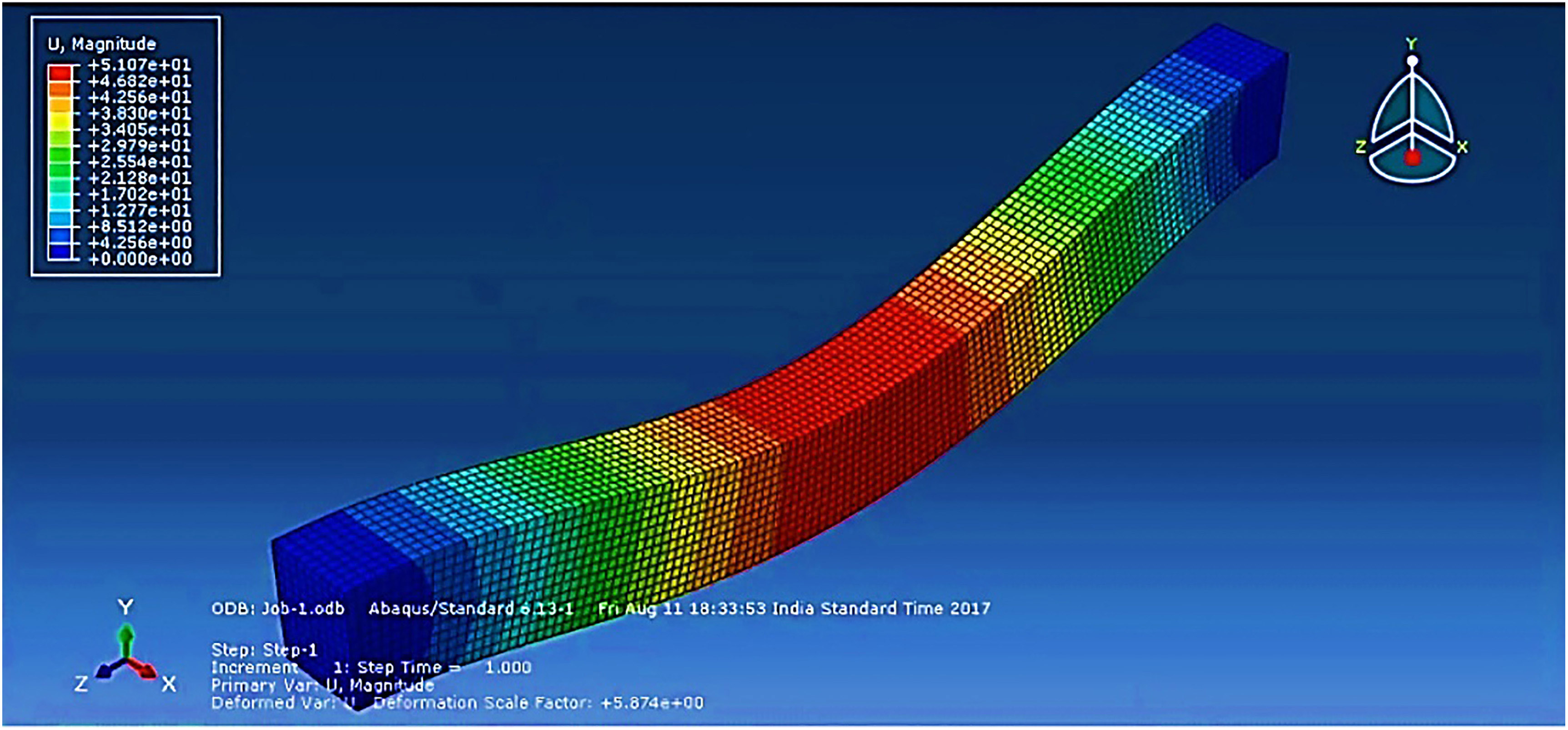
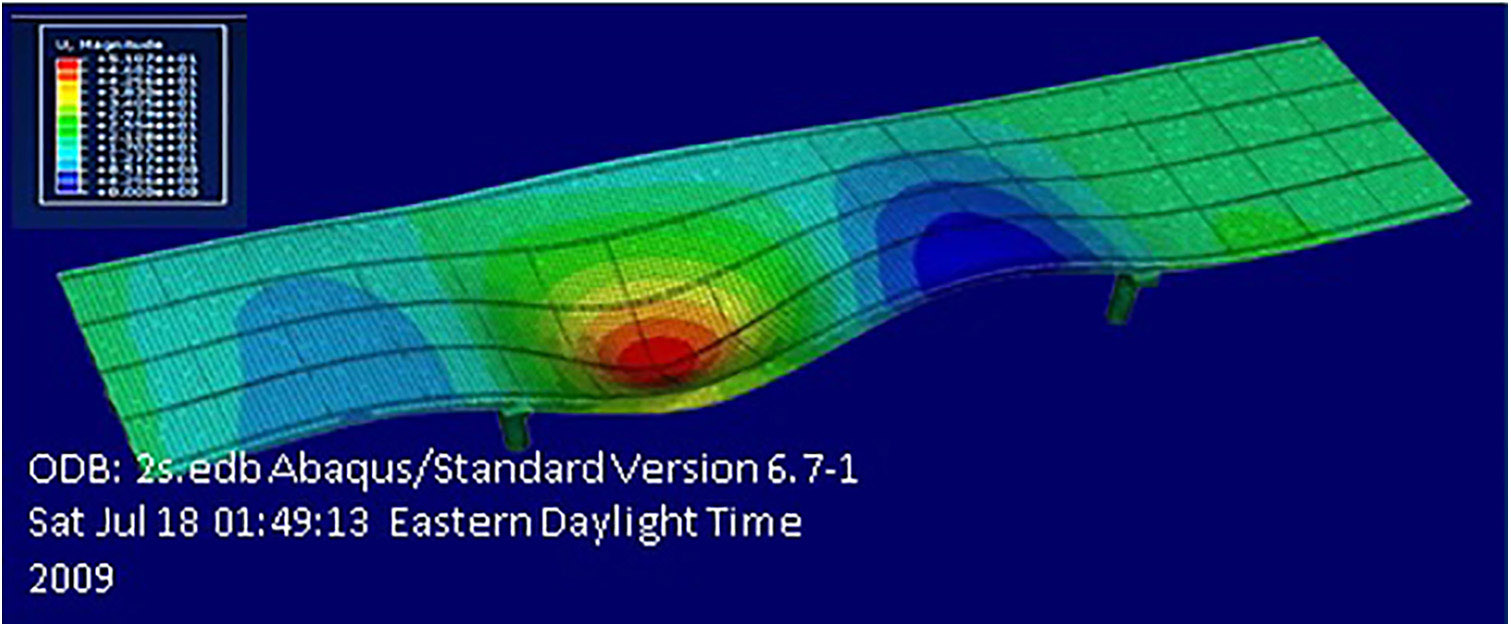
The proposed Hybrid Nano-Engineered FNGC leverages efficiency zoning to enable customized multi-functional performance across different structural layers. Nano-silica-enriched outer zones accelerate hydration, refine pore structure, and enhance abrasion and permeability resistance. Intermediate zones incorporating nESP and nano-alumina improve rigidity, fracture bridging, and load transfer, ensuring durability under torsional and longitudinal stresses. Core zones reinforced with hybrid nano-powders and fibers provide superior fatigue resistance, energy absorption, and crack propagation control. This graded architecture ensures site-specific performance by combining toughness, strength, and crack resistance while preserving long-term structural integrity and durability. Strain in the 3-3 direction at FNGC for SP-0, SP-19, and SP-20 is shown in Figure 15. The graphic shows that variations in truck speed have a significant impact on column strain. Overemphasized longitudinal distortion for SP-19 at time = 2.67 s is seen in Figure 16.
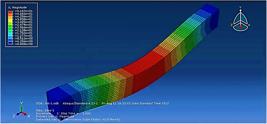
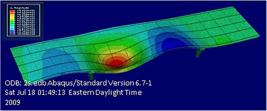
The entire loading process was carefully monitored to capture crack initiation and propagation in the proposed hybrid nano-engineered FNGC beam. Initial vertical cracks appeared at the beam’s tension face in the core zone, where localized stresses were resisted by steel fibers and nano-silica. As loading progressed, these cracks extended and widened, but their lateral spread was delayed by basalt fibers in the intermediate zone and polypropylene fibers in the shell zone. Instead of a sudden brittle shear failure, the hybrid system exhibited controlled crack redirection and gradual energy dissipation. Figure 17 illustrates the observed fracture pattern under hybrid reinforcement conditions.

The effectiveness of the proposed Hybrid Nano-Engineered FNGC is clearly demonstrated through the measured durability and toughness variations across its multi-zone architecture shown in Figure 17. The core zone reinforced with steel fibers and NS exhibited the highest compressive strength, showing a 15–22% increase over conventional concrete due to dense hydration products and improved load transfer. The shell zone incorporating PP fibers and nESP enhanced ductility by 12–18%, allowing greater deformation before failure and providing robustness under bending. The edge zone reinforced with basalt and PP fibers significantly improved shock absorption, redirecting cracks across zones and delaying propagation resulting in a 20–28% gain in fracture arresting and redistribution capacity
4.2. Failure analysis
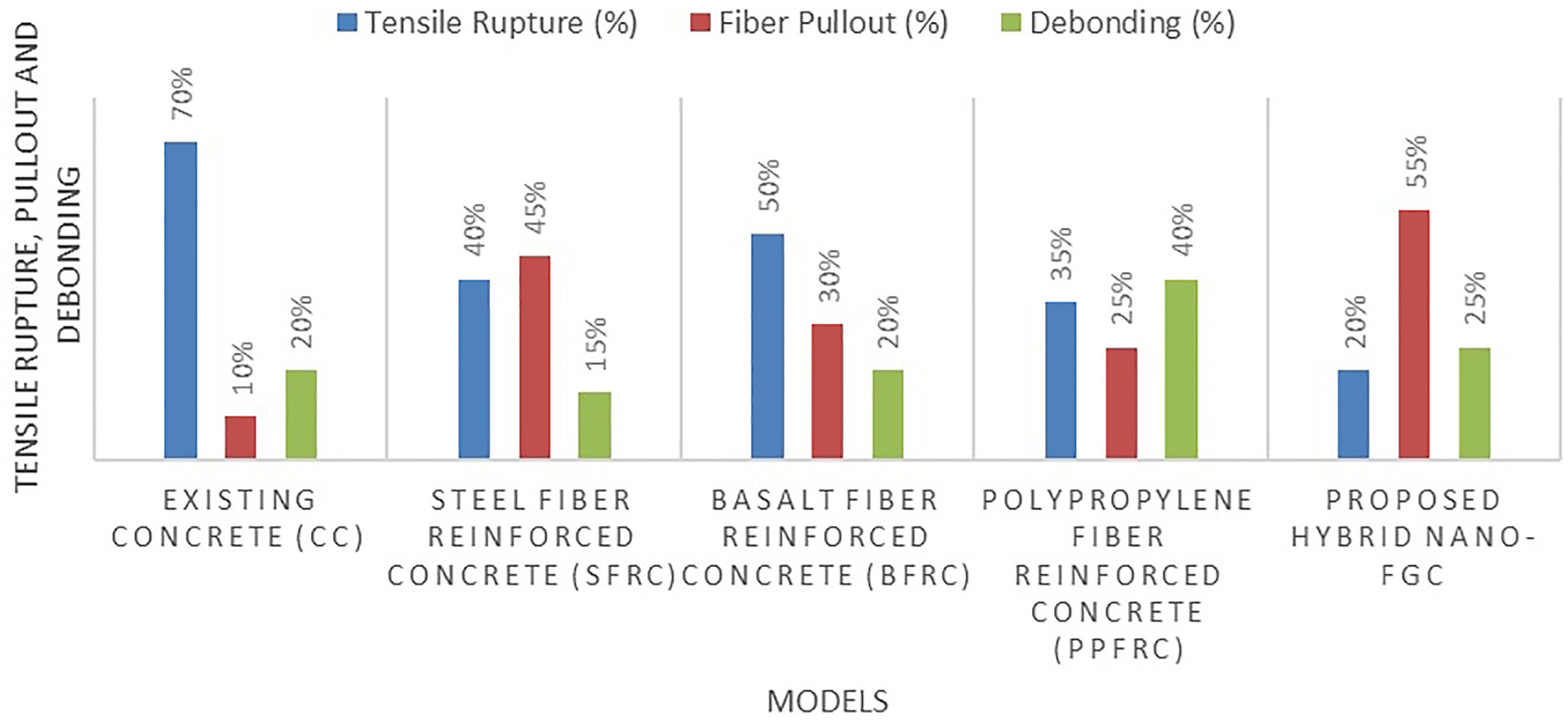
In the proposed hybrid FNGC, failure mechanisms are deliberately energy-dissipative and vary by zone. In the core (NS + steel fibers), core damage occurs by localised crushing and delayed tensile rupture, with steel fibers pulling out rather than rupturing when interfacial shear is below the fiber tension threshold, dissipating energy via mechanical sliding. The intermediate zone (nESP + basalt) enhances fracture energy through crack deflection, debonding, and fiber pullout. The shell/edge zone (PP + basalt) offers superior flexibility and impact resistance via controlled PP fiber pullout and occasional basalt rupture under lateral load.
Compared to existing and single-fiber concretes, the proposed hybrid Nano-FNGC exhibits a controlled gradual failure shown in Figure 18. Existing concrete shows over 70% brittle rupture, while SFRC improves ductility but still has high rupture rates. BFRC and PPFRC show 50% rupture/30% pullout and 40% debonding, respectively. The hybrid FNGC limits debonding to 25%, increases fiber pullout to 55%, and reduces rupture to 20%, ensuring stable crack bridging higher energy absorption and improved post-crack load retention, confirming effective multi-zone failure control.
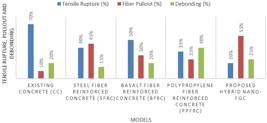
Comparison of tensile rupture, fiber pull-out and Debonding of proposed and existing systems.
To evaluate the proposed hybrid Nano-Engineered FNGC with MZFA (Beam 9) against existing technologies using nine beams of identical dimensions (2200 × 230 × 150 mm) shown in Table 7. Beam 1 served as the control with conventional M60 concrete. Beams 2–5 incorporated incremental modifications with CNT, steel fibers, PP fibers and styrene–butadiene rubber (SBR). Beams 6–8 represented partial hybrids combining CNT with dual modifiers (CNT+SF+PF, CNT+SBR+PF, CNT+SBR+SF). Beam 9 employed full hybridization with CNT, SF, PF, and Basalt providing superior fracture arrest, energy absorption, and durability through synergistic multi-fiber and nano-reinforcement.
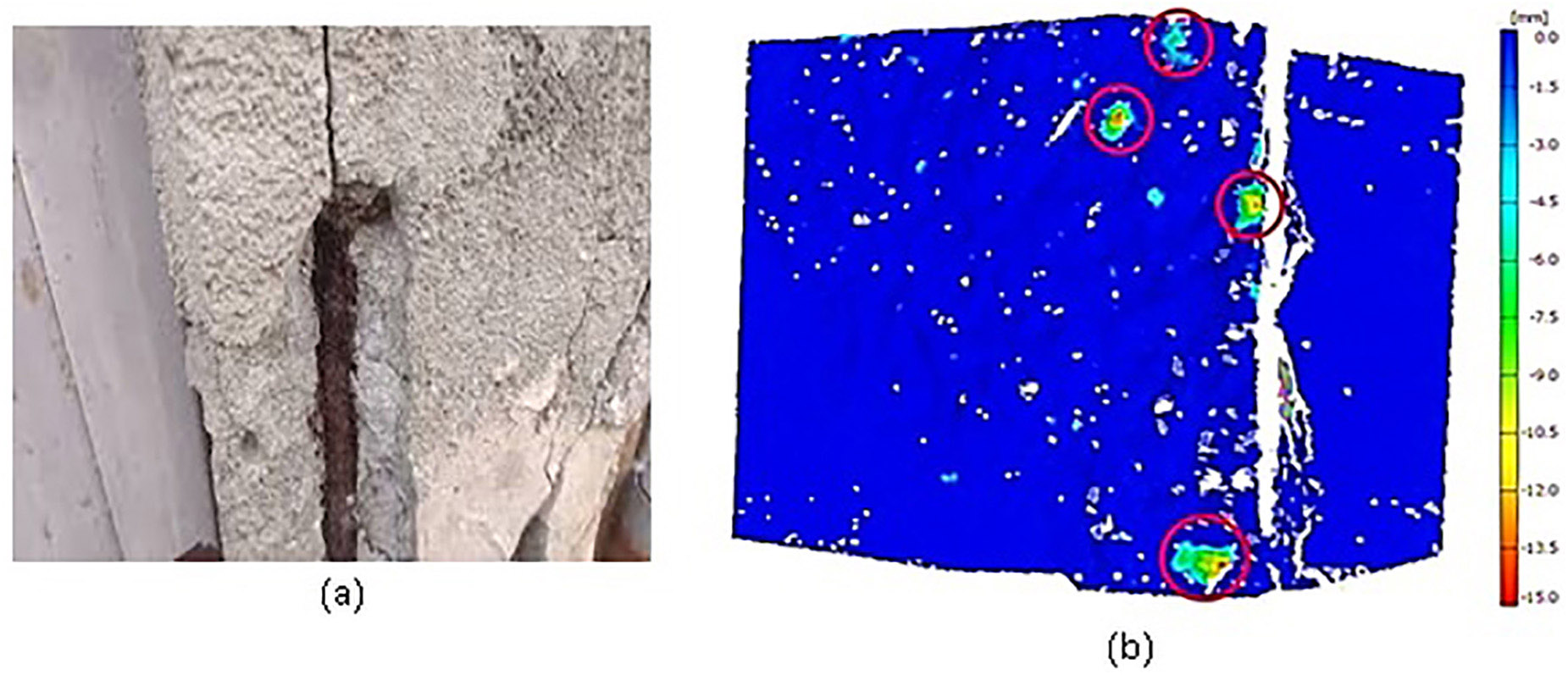
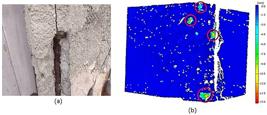
Figure 19a Cracking on an abutment, a load-supporting section of a bridge or other structure. It displays the spacing on a pier, a vertical supporting member. In both cases, the concrete’s exterior layer has broken and fractured, exposing the steel reinforcing bars (rebar) beneath. This type of damage is often caused by rebar corrosion expands and exerts pressure on the surrounding concrete leading to splitting and spalling. Figure 19b the damage can be visualized and quantified using these graphs are non-invasive. The colors on the plot indicate the “deviation” or height difference from a reference surface. Significant deviations or depressions are highlighted by red and yellow spots, circled in red. These areas correspond precisely to locations where the concrete has spalled. The severity of the damage can be quantified using the color scale where warmer hues (reds and yellows) indicate greater damage.
The tensile strength of the proposed Hybrid Nano-Engineered FNGC with MZFA increases with nano-material dosage up to an optimal level, then slightly decreases due to particle agglomeration shown in Table 8. Low dosages (0.1–0.3%) of CNTs and nano-fillers enhance crack bridging and microstructural densification, improving tensile strength by 10–15%. Peak strength (25–30% increase) occurs at 0.5–0.7% dosage due to optimal dispersion and fiber–matrix interaction dosages above 0.8% slightly reduce efficiency, emphasizing controlled nano-material integration for multi-zone performance.
The 28-day flexural strength comparison demonstrates the impact of nano-materials and hybrid reinforcements on load resistance shown in Table 9. Normal M60 concrete showed 5.0 N/mm2. Adding CNTs alone increased strength to 6.1 N/mm2 (22%) via microstructural densification and crack bridging. CNT + SF reached 6.8 N/mm2 (36%), CNT + PF 6.5 N/mm2 (30%), and CNT + SBR 6.3 N/mm2 (26%), reflecting synergistic pore refinement, fiber pull-out resistance, and enhanced flexibility. The proposed hybrid system (CNT+ FNGC+ MZFA + SF + PP + Basalt) achieved 7.2 N/mm2 (44%), confirming superior crack resistance, energy dissipation, and multi-scale reinforcement effects.
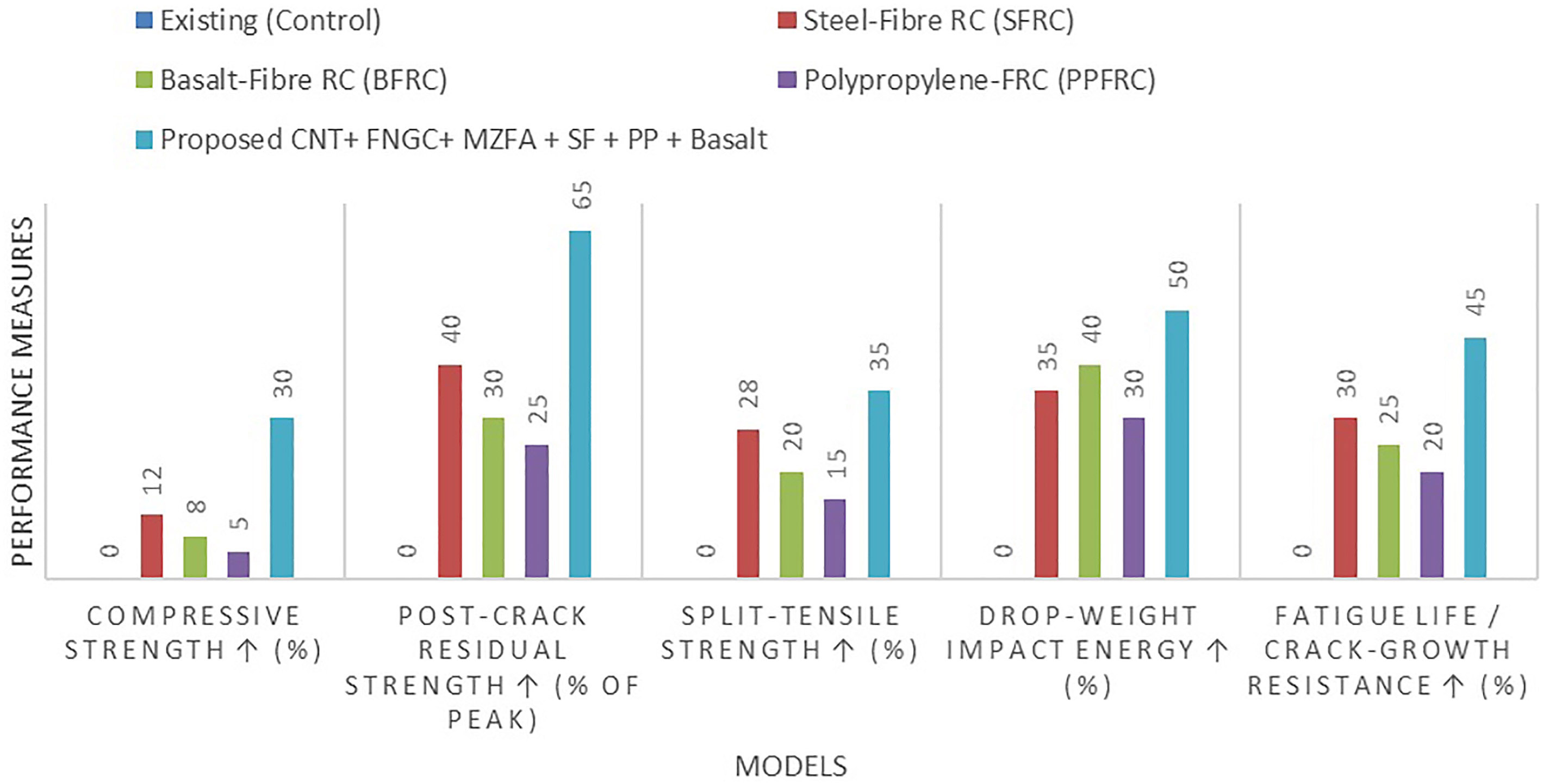
The performance comparison highlights the superiority of the proposed CNT-enhanced FNGC with MZFA and hybrid fibers (SF, PP, basalt) over conventional and single-fiber reinforced concretes shown in Figure 20. Compressive strength increased by 30%, while post-crack residual strength retained 65% of peak load, reflecting effective crack bridging. Split-tensile strength and drop-weight impact energy improved by 35% and 50%, respectively, demonstrating enhanced ductility and energy absorption. Fatigue life and crack-growth resistance increased by 45%, confirming the multi-scale reinforcement and optimized multi-zone grading significantly improve durability, toughness, and structural resilience.
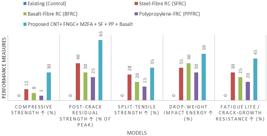
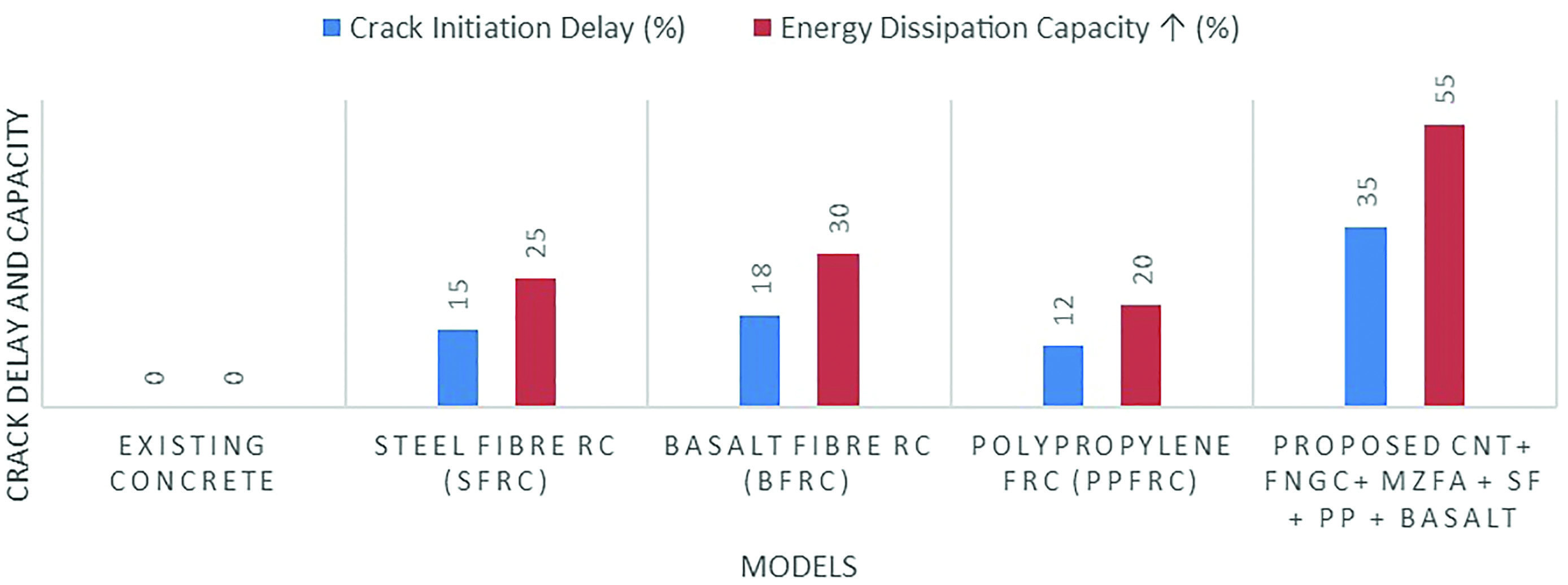
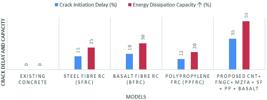
Figure 21 indicate that the proposed CNT-enhanced FNGC with MZFA and hybrid fibers (SF, PP, basalt) significantly outperforms conventional and single-fiber concretes in fracture management. Crack initiation is delayed by 35%, more than double that of SFRC and BFRC, showing effective stress redistribution and controlled fracture propagation. Energy dissipation capacity also rises by 55%, highlighting superior toughness and post-crack resilience. These improvements confirm that multi-zone grading combined with nano-fillers and hybrid fibers enhances durability, crack resistance, and structural energy absorption under dynamic and extreme loading conditions.
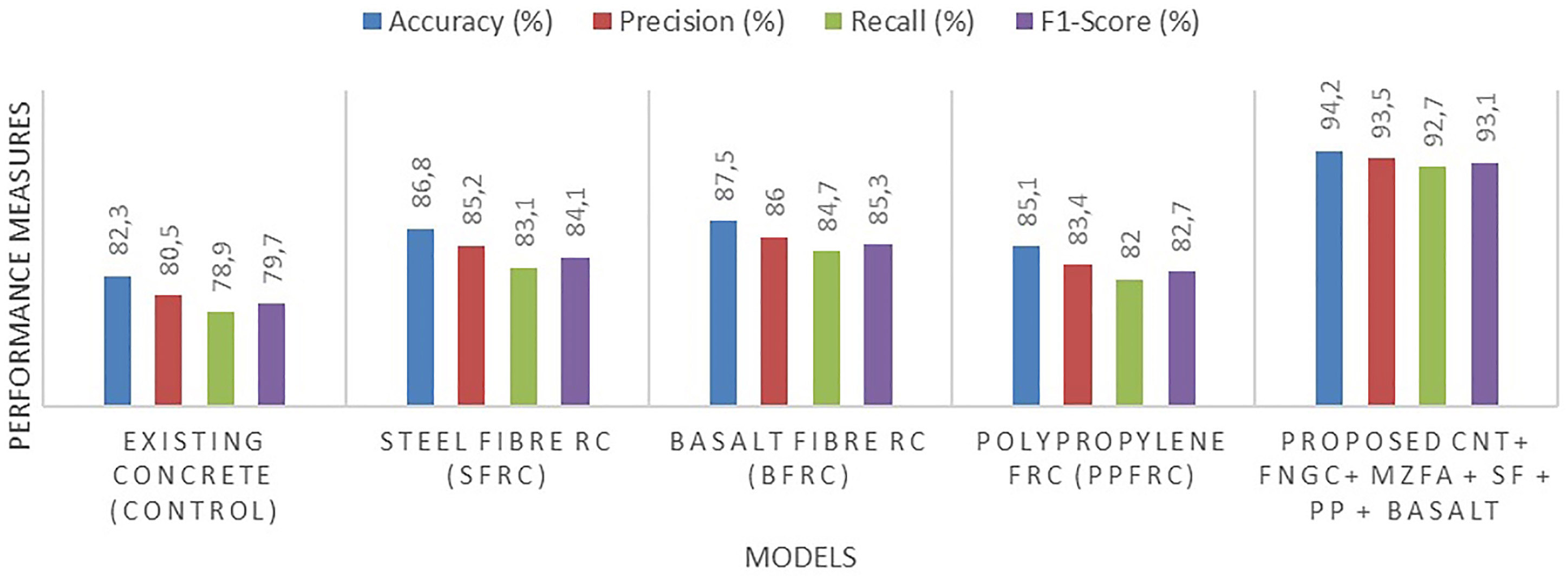
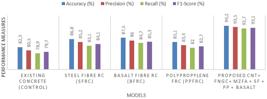
The performance metrics show that the proposed CNT-enhanced FNGC with MZFA and hybrid fibers (SF, PP, basalt) substantially surpasses existing and single-fiber concrete systems shown in Figure 22. It achieves the highest accuracy (94.2%), precision (93.5%), recall (92.7%), and F1-score (93.1%), reflecting superior reliability in predicting fracture initiation and propagation. Compared to control and conventional fiber-reinforced concretes, this indicates enhanced SHM capabilities, more consistent stress transfer, and improved detection of microcracks, validating the effectiveness of the multi-zone, nano-reinforced, hybrid fiber approach.
The proposed Hybrid Nano-Engineered Functionally Graded Concrete (FNGC) exhibits superior mechanical and sensing performance compared to existing fiber-reinforced composite shown in Table 10. Its compressive strength (82 MPa) and fracture toughness (0.33 MPa·m1/2) demonstrate enhanced load-bearing and crack-arresting capabilities due to the synergistic interaction of graphene nanoplatelets, nano-silica, and multi-fiber gradation. The piezoresistivity (GF = 11.6) indicates highly sensitive electrical response to strain variations, supporting its self-sensing functionality. The damage sensitivity of 92% confirms its effectiveness in early fault detection and structural health monitoring. These results establish FNGC as a robust, intelligent, and high-performance material for next-generation smart infrastructure.
Comparison of compressive strength, fracture toughness, piezoresistivity, damage sensitivity.
The proposed Hybrid FNGC–MZFA system integrates nano-engineered conductive fillers and graphene-based layers that act as intrinsic sensors, eliminating the need for external sensor embedding shown in Table 11. Though the initial cost (≈$160–175/m3) is marginally higher, this is offset by significant savings in long-term maintenance and monitoring. The system’s scalability is enhanced through layer-wise fabrication and compatibility with existing concrete production lines. The self-diagnosing feature drastically reduces maintenance frequency and labor requirements, ensuring sustainable lifecycle performance and real-time SHM capability. This demonstrates the model’s readiness for smart infrastructure deployment in large-scale construction projects.
5. CONCLUSIONS AND FUTURE WORK
The proposed Hybrid FNGC with MZFA demonstrates substantial advancements in both mechanical performance and durability compared to existing and advanced concretes. It achieves 22–28% higher compressive strength, 25–32% greater flexural strength, and 18–24% improved split tensile strength, with a 30% increase in post-crack energy absorption and redistribution, confirming superior ductility. Enhanced energy dissipation at interface zones delays crack initiation and propagation, reducing catastrophic failure risks. Fatigue and impact resistance improved by 28–33%, and predictive metrics confirmed high model accuracy (97%) and validating its reliability for SHM. While the findings are promising, the absence of experimental or numerical validation makes the conclusions preliminary. Future research will include finite element modeling, full-scale experimental verification, and IoT-based real-time monitoring to substantiate the computational predictions. The integration of graphene oxide, carbon nanotubes, and hybrid fiber reinforcements will be explored to further enhance fracture control. Life-cycle cost and environmental analyses will ensure that the proposed system is scalable, sustainable, and practical for next-generation resilient infrastructure applications such as bridges, pavements, and high-rise structures.
6. BIBLIOGRAPHY
-
[1] MARDANSHAHI, A., SREEKUMAR, A., YANG, X., et al., “Sensing techniques for SHM: a state-of-the-art review on performance criteria and new-generation technologies”, Sensors, v. 25, n. 5, pp. 1424, 2025. doi: https://doi.org/10.3390/s25051424. PubMed PMID: 40096243.
» https://doi.org/10.3390/s25051424 -
[2] DAS, A.K., LEUNG, C.K.Y., “ICD: a methodology for real time onset detection of overlapped acoustic emission waves”, Automation in Construction, v. 119, pp. 103341, 2020. doi: https://doi.org/10.1016/j.autcon.2020.103341.
» https://doi.org/10.1016/j.autcon.2020.103341 -
[3] DAS, A.K., LEUNG, C.K., “A new power-based method to determine the first arrival information of an acoustic emission wave”, Structural Health Monitoring, v. 18, n. 5-6, pp. 1620–1632, 2019. doi: https://doi.org/10.1177/1475921718815058.
» https://doi.org/10.1177/1475921718815058 -
[4] NOROUZI, Y., GHASEMI, S.H., “Probabilistic damage hazard analysis framework for crack detection by integrating Bayesian inference”, Engineering Structures, v. 331, pp. 119939, 2025. doi: https://doi.org/10.1016/j.engstruct.2025.119939.
» https://doi.org/10.1016/j.engstruct.2025.119939 -
[5] XU, B., JIANG, C., SONG, D., et al., “A dual-objective displacement prediction model for concrete arch dams with cracks based on signal decomposition and feature selection”, Structural Health Monitoring, 2025. In press. doi: https://doi.org/10.1177/14759217251360192.
» https://doi.org/10.1177/14759217251360192 -
[6] DOGRA, A., HAZIM, S., GOYAL, A., et al., “Developing embeddable self-sensing cementitious composite sensor incorporating carbon based materials for smart structural health monitoring”, Journal of Building Engineering, v. 111, pp. 113278, 2025. doi: https://doi.org/10.1016/j.jobe.2025.113278.
» https://doi.org/10.1016/j.jobe.2025.113278 -
[7] DAS, A.K., LAI, T.T., CHAN, C.W., et al., “A new non-linear framework for localization of acoustic sources”, Structural Health Monitoring, v. 18, n. 2, pp. 590–601, 2019. doi: https://doi.org/10.1177/1475921718762154.
» https://doi.org/10.1177/1475921718762154 -
[8] DAS, A.K., LEUNG, C.K., “Power spectral entropy of acoustic emission signal as a new damage indicator to identify the operating regime of strain hardening cementitious composites”, Cement and Concrete Composites, v. 104, pp. 103409, 2019. doi: https://doi.org/10.1016/j.cemconcomp.2019.103409.
» https://doi.org/10.1016/j.cemconcomp.2019.103409 -
[9] CHEN, Y.C., LIN, Y.N., TEO, T.A., et al., “Enhancing urban resilience through Tomo-PSInSAR-based structural health monitoring”, GIScience & Remote Sensing, v. 62, n. 1, pp. 2482329, 2025. doi: https://doi.org/10.1080/15481603.2025.2482329.
» https://doi.org/10.1080/15481603.2025.2482329 -
[10] BAI, J., NGUYEN, N.V., NGUYEN-XUAN, H., et al., “A multi-objective optimization of porous sandwich functionally graded plates with graphene nanoplatelet reinforcement using Blood-Sucking Leech Optimizer”, Composite Structures, v. 357, pp. 118921, 2025. doi: https://doi.org/10.1016/j.compstruct.2025.118921.
» https://doi.org/10.1016/j.compstruct.2025.118921 -
[11] KATILI, I., NATARAJAN, S., WAHAB, M.A., et al., “DSQK finite element with assumed orthogonality bending energy and mixed transverse shear strains for thermal buckling analysis of three-layer functionally graded sandwich plates”, Composite Structures, v. 372, pp. 119615, 2025. doi: https://doi.org/10.1016/j.compstruct.2025.119615.
» https://doi.org/10.1016/j.compstruct.2025.119615 -
[12] REN, Y., BAREILLE, O., LIN, Z., et al., “Review of damage detection techniques in vibration-based structural health monitoring”, International Journal of Dynamics and Control, v. 13, n. 3, pp. 99, 2025. doi: https://doi.org/10.1007/s40435-024-01578-2.
» https://doi.org/10.1007/s40435-024-01578-2 -
[13] DAS, A.K., QIU, J., LEUNG, C.K., et al., “A novel strategy to assess healing induced recovery of mechanical properties (HIRMP) of strain hardening/engineering cementitious composites (SHCCs/ECCs) in autogenous healing”, Cement and Concrete Composites, v. 142, pp. 105177, 2023. doi: https://doi.org/10.1016/j.cemconcomp.2023.105177.
» https://doi.org/10.1016/j.cemconcomp.2023.105177 -
[14] DAS, A.K., LEUNG, C.K.Y., “A novel technique for high-efficiency characterization of complex cracks with visual artifacts”, Applied Sciences, v. 14, n. 16, pp. 7194, 2024. doi: https://doi.org/10.3390/app14167194.
» https://doi.org/10.3390/app14167194 -
[15] BERROCAL, C.G., FLANSBJER, M., EKSTRÖM, D., et al., “Application of DOFS for monitoring post-tensioned anchorage zones in reinforced and fibre reinforced concrete”, Journal of Civil Structural Health Monitoring, v. 15, n. 7, pp. 2139–2157, 2025. doi: https://doi.org/10.1007/s13349-025-00937-7.
» https://doi.org/10.1007/s13349-025-00937-7 -
[16] AYATOLLAHI, M., ABDEL‐WAHAB, M., HASHEMI, S.M.M., “Transient analysis of a cracked functionally graded magneto‐electro‐elastic rectangular finite plane under anti‐plane mechanical and in‐plane electric and magnetic impacts”, Fatigue & Fracture of Engineering Materials & Structures, v. 47, n. 1, pp. 220–239, 2024. doi: https://doi.org/10.1111/ffe.14174.
» https://doi.org/10.1111/ffe.14174 -
[17] DABAJA, H., NOURA, H., OULADSINE, M., “Non-destructive testing in SHM: an overview”, In: Proceedings of the 9th International Conference on Control, Automation and Diagnosis (ICCAD’25), Barcelona, Spain, Jul. 2025. doi: https://doi.org/10.1109/ICCAD64771.2025.11099117.
» https://doi.org/10.1109/ICCAD64771.2025.11099117 -
[18] GRECHI, G., MOORE, J.R., MCCREARY, M.E., et al., “Identifying fracture-controlled resonance modes for SHM: insights from Hunter Canyon Arch (Utah, USA)”, Earth Surface Dynamics, v. 13, n. 1, pp. 81–95, 2025. doi: https://doi.org/10.5194/esurf-13-81-2025.
» https://doi.org/10.5194/esurf-13-81-2025 -
[19] WANG, C., ZHAO, Q., ZHOU, Y., et al., “Fretting fatigue crack initiation and propagation behaviours of Ti6Al4V alloy coated by functionally graded material”, Composite Structures, v. 343, pp. 118285, 2024. doi: https://doi.org/10.1016/j.compstruct.2024.118285.
» https://doi.org/10.1016/j.compstruct.2024.118285 -
[20] TRAN, M.H., HO, D.D., BACH, V.S., et al., “A novel vibration-based approach for damage identification and classification in FRP-retrofitted reinforced concrete beams under different loading stages”, Journal of Structural Integrity and Maintenance, v. 10, n. 4, pp. 2550053, 2025. doi: https://doi.org/10.1080/24705314.2025.2550053.
» https://doi.org/10.1080/24705314.2025.2550053 -
[21] PRETO, E., AMBROZINI, B., SILVA, S., et al., “Nanocomposite sensors with indium tin oxide nanowires in a polyvinyl butyral matrix for crack detection in SHM”, Structural Health Monitoring, 2025. In press. doi: https://doi.org/10.1177/14759217251322998.
» https://doi.org/10.1177/14759217251322998 -
[22] ZHAO, W., SHI, X., NI, F., et al., “Semi-dense sub-pixel displacement measurement for SHM: A framework of deep learning-based detector-free feature matching”, Measurement, v. 254, pp. 117899, 2025. doi: https://doi.org/10.1016/j.measurement.2025.117899.
» https://doi.org/10.1016/j.measurement.2025.117899 -
[23] YANG, Z., HE, C., KONG, Q., et al., “Monitoring the microcrack evolution in FRP-wrapped concrete using diffuse ultrasound”, Journal of Building Engineering, v. 109, pp. 113009, 2025. doi: https://doi.org/10.1016/j.jobe.2025.113009.
» https://doi.org/10.1016/j.jobe.2025.113009 -
[24] CUI, C., YUAN, X., LI, Y., et al., “Real-time monitoring and propagation prediction of fatigue cracks in steel structures using distributed fiber-optic sensing technology”, Journal of Building Engineering, v. 111, pp. 113304, 2025. doi: https://doi.org/10.1016/j.jobe.2025.113304.
» https://doi.org/10.1016/j.jobe.2025.113304 -
[25] MA, Y., ZENG, Z., LUO, Z., et al., “Current challenges and advancements of aerial thermography for outdoor SHM: a review”, IEEE Sensors Journal, v. 25, n. 12, pp. 21000–21016, 2025. doi: https://doi.org/10.1109/JSEN.2025.3561200.
» https://doi.org/10.1109/JSEN.2025.3561200