 Food systems in higher education nutrition programs: evidence from a scoping review and a Brazilian case study
ABSTRACT
This paper aims to assess the evidence of food systems approaches in higher education Nutrition programs, identify knowledge gaps, and to present a case study from Brazil. We conducted a scoping review following systematic protocols and the Preferred Reporting Items for Systematic Reviews and Meta-Analyses extension for Scoping Reviews guidelines. To present practical evidence, we conducted a qualitative, cross-sectional, descriptive study with a national scope in Brazil, using a case study approach and an online crowdsourced mapping. The review identified 23 articles highlighting the need for systematic curriculum changes. Studies are recent and conducted in high-income countries, with a greater focus on curricula than on actual concrete practices. Integrative programs and practical applications in public health, healthcare, and food service with a systemic approach are proposed solutions. Qualitative data suggest incorporating garden-based learning, addressing food systems in internships, and promoting debates on food biodiversity and local producers. The case study identified 15 experiences, primarily extension actions. The results of the case study, based on Brazilian experiences, highlighted key debates on topics such as food security and sovereignty, food systems and sustainability, biodiversity, and planetary health. The methodologies involved integrated practices between disciplines — which are commonly configured in isolation — garden-based learning, and integrated research and extension projects with community participation. We emphasize that transdisciplinary approaches in Nutrition curricula are fundamental, as professionals must be aware of the complexities of the contemporary world, which include the development of sustainable and resilient food systems. This requires a more holistic vision of Nutrition, integrating environmental, social, and economic dimensions to address current and future challenges. Involving faculty and students in these changes is essential for implementing systemic practices.
Keywords
Case study; Food systems; Higher education; Nutritionists; Scoping review
RESUMO
Este artigo tem como objetivo avaliar as evidências de abordagens de sistemas alimentares em cursos de Nutrição do ensino superior e lacunas de conhecimento; e apresentar um estudo de caso do Brasil. Uma revisão de escopo seguindo protocolos sistemáticos e as diretrizes do Preferred Reporting Items for Systematic Reviews and Meta-Analyses extension for Scoping Reviews. Numa perspectiva prática, nós conduzimos um estudo qualitativo, transversal e descritivo, com escopo no Brasil, utilizando abordagem de estudo de caso com mapeamento online colaborativo. A revisão identificou 23 artigos destacando a necessidade de mudanças sistemáticas no currículo. Os estudos são recentes, desenvolvidos por países de alta renda, com foco mais em currículos do que em práticas concretas. Cursos integrativos e aplicações práticas em saúde pública, assistência médica e serviços de alimentação com abordagem sistêmica são soluções propostas. Dados qualitativos sugerem incorporar o aprendizado baseado em hortas, abordar sistemas alimentares em estágios e promover debates sobre biodiversidade alimentar e produtores locais. Um estudo de caso identificou 15 experiências, principalmente ações de extensão. Os resultados do estudo de caso, com base em experiências brasileiras, destacaram debates importantes sobre tópicos como segurança e soberania alimentar, sistemas alimentares e sustentabilidade, biodiversidade e saúde planetária. As metodologias aplicam práticas integradas entre disciplinas, comumente configuradas em isolamento, aprendizagem baseada em jardins e projetos integrados de pesquisa e extensão com participação da comunidade. Enfatizamos que abordagens transdisciplinares em currículos de Nutrição são fundamentais, pois os profissionais devem estar cientes das complexidades do mundo contemporâneo, o que inclui o desenvolvimento de sistemas alimentares sustentáveis e resilientes. Isso requer uma visão mais holística da Nutrição, integrando dimensões ambientais, sociais e econômicas para enfrentar os desafios atuais e futuros. Envolver professores e alunos nessas mudanças é essencial para o desenvolvimento de práticas sistêmicas.
Palavras-chave
Estudo de caso; Sistemas alimentares; Ensino superior; Nutricionista; Revisão de escopo
INTRODUCTION
The science of nutrition has evolved over the years, driven by advances in evidence on nutritional issues, shifts in the prevalence of diet-related diseases, and transformations in perspectives on health and nutrition [1]. In this context, the “New Science of Nutrition” emerges as an alternative to traditional biomedical approaches, proposing guidelines that integrate sustainability and social determinants of health, while simultaneously incorporating a comprehensive view of food systems [2].
Food systems are essential for human and global well-being and are central to achieving the Sustainable Development Goals [3]. The United Nations (UN) Conference on Sustainable Development (Rio+20) in 2012 and the Food and Agriculture Organization (FAO) panel of experts on Food and Nutrition Security (FNS) pointed out the need to transform food systems worldwide, to ensure sustainable food security and nutrition for all [4]. In the context of the global syndemic, food systems involve aspects of malnutrition, food insecurity, and environmental degradation, particularly given vulnerable socio-economic and environmental scenarios. This perspective also points out unhealthy patterns in different populations, inequity, and greenhouse gas emissions, all pressing issues that require transformation of food systems [5]. Developing sustainable and resilient food systems demands actions based on broad knowledge and complex skills [6].
Food systems concepts within nutrition programs are therefore necessary to guide policies and research initiatives that align with current world demands. However, many gaps exist in the implementation of curricular changes to address this challenge. Although experiences regarding where and especially how to develop capacity in nutrition training can provide useful examples, cases reported in scientific studies are scarce and dispersed. Despite this recognition, a central research problem persists: how to effectively integrate food systems perspectives into nutrition to prepare professionals capable of addressing these multifaceted global challenges. The state-of-the-art shows that some international experiences exist in higher education. For instance, Brekken et al. [7] provided examples of pedagogical transformations in educational programs on food systems, identifying successful practices in the curricula at three North American universities. The authors claim that programs that address food systems in their curricula better prepare students to seek solutions to complex problems related to food production and consumption. These programs impact a range of students, equipping them with knowledge and tools on food systems and broadening the training of professionals, while empowering them to be better citizens and advocates for change. These actions certainly break paradigms, norms, and institutional rules within the university education system.
This study dialogues with the history of the nutrition program in Brazil, highlighting the unique trajectory of the profession, which is marked by the strong interplay between health, education, and public policies. Studies emphasize that, since the creation of the first programs in the 1930s, the Brazilian nutritionist has consolidated a reputation as a generalist professional, whose work goes beyond clinical practice and diet therapy, encompassing collective feeding, public health, teaching, research, and the food industry. This feature distinguishes Brazil from other countries, where nutritionists’ roles are usually directed toward a single specific area of practice. In this way, the Brazilian nutritionist emerges as a strategic actor for the promotion of food security and for the strengthening of sustainable food systems, establishing a distinctive feature that enriches the professional identity in the global context [8,9]. Gabriel et al. [10] assert that it is necessary to advance, mainly in regard to a more extended and holistic understanding of the profession.
A clear knowledge gap remains regarding how food systems perspectives are integrated into nutrition curricula worldwide and in Brazil. Despite curricular guidelines promoting holistic and sustainable approaches, little systematic evidence exists on their practical implementation and impact on professional training.
This scoping review offers an overview of the food systems approach in nutrition professional training. We also present a case study with successful experiences in the implementation of food systems initiatives in Brazilian universities. Our study aims to assess the evidence of food systems approaches in higher education nutrition programs. To achieve this goal, we adopted the following strategies: (1) identify the main countries and periods in which food system-related practices have been implemented and documented; (2) organize the predominant concepts and methodologies in these practices, both globally and through a detailed analysis of the Brazilian case; (3) describe the main formative scenarios, such as teaching, research, extension, undergraduate, and graduate studies, where such practices occur; and (4) highlight the existing gaps in the current approach to food systems in food and nutrition education. We expect this review to contribute to promoting evidence, especially practice-based evidence, for the better training of nutritionists and dietitians.
METHODS
Scoping review
Protocol
The protocol comprises five steps: (i) identification of the research questions, (ii) sources and search strategy for identification of relevant studies, (iii) study selection, (iv) charting or mapping of the data, and (v) summarizing and reporting the results. This review adhered to the Preferred Reporting Items for Systematic Reviews and Meta-Analyses Extension for Scoping Reviews (PRISMA-ScR) guidelines [11]. The protocol is registered with the Open Science Framework (OSF) under Doi 10.17605/OSF.IO/SRJFQ.
Sources and search strategy
We framed our research question using the PCC mnemonic (Problem, population; Concepts of interest, and Context). The primary research question driving this study was: How is the food systems field addressed in higher education in nutrition? The literature was searched without time constraints. This strategy allowed for the largest number of possible finds on the subject. The search was performed in May and June 2023, using six databases: PubMed, Scopus, Science Direct, ERIC (Education Research Information Center), Embase, and Google Scholar. The search terms were “food systems” AND “Nutrition” AND “Nutritionist” AND “higher education” AND “teaching” OR “learning” OR “capacity building”. Chart 1 presents the search strategies for each database.
Identified contributions for future studies in the theme food systems in nutrition programs.
Study selection and eligibility criteria
Inclusion and exclusion criteria were established to determine the studies to be included in the synthesis. Only papers focusing on higher nutrition education were eligible for inclusion. Regarding exclusion criteria, we excluded materials that did not specifically focus on the field of nutrition programs, approaches unrelated to food systems, and review articles. The studies were imported to Rayyan® (2016) [12] to manage the selection process. Two reviewers independently screened the titles and abstracts, read the full articles, and extracted the results using a data extraction spreadsheet. Any discrepancies were resolved by a third reviewer.
Data extraction
The studies were analyzed and categorized based on the following variables: year of the action or publication; country of the action or affiliation; objectives of the study; type of study; methodology of the action or practice; data analysis; and main results.
Summarization of results
For the summarization of results, the articles selected in the review were described and grouped into three categories: (1) actions in undergraduate education, (2) actions in graduate education, and (3) extension and community outreach activities. The study also presents the main research gaps, as well as contributions to the advancement of the topic in the field of nutrition.
Case study
To illustrate real-world applications and provide practical insights, we present a case study, which synthesizes formative experiences within the scope of food systems conducted in Brazil.
Study design and data sources
We conducted a descriptive study using a qualitative, cross-sectional approach, with a national scope. The primary data source is an online crowdsourced mapping that we conducted between 2021 and 2022, aiming to identify actions related to training in sustainable food systems in Brazilian nutrition undergraduate programs.
Data collection and extraction: Primary data by crowd map
We collected the primary data using the Ushahidi platform (https://www.ushahidi.com/), a Voluntary Geographic Information (VGI) system. This web application enables collaborative visualization, sharing, and creation of map-based content. We selected this platform for its user-friendly interface and open access. The participatory nature of this crowdsourced method has demonstrated potential to share information, contributing to the creation of a more diverse database [13,14].
Our research on the platform is titled “Network of Experiences in Food Systems in Nutrition Education in Brazil” and can be viewed at the following address: https://mapa.jacob.al/views/map. For the registration of experiences, participants answered the following questions: 1) experience title; 2) brief summary; 3) consent for the publication of the submitted data; 4) type of experience; 5) to which institution is this experience linked? 6) provide the geographic location of the experience; 7) provide three keywords that summarize your experience; 8) indicate channels (e.g., website, social media) where more information about your experience can be obtained; and finally, 9) contact email.
The participants in this research were professors of nutrition programs in public and private institutions. In order to reach these potential participants, we contacted 160 higher education institutions via email; we sent messages to three WhatsApp groups — a research network on food sovereignty and security, professors of food and nutritional education in Brazil, and professors of collective feeding in Brazil — that bring together teachers and researchers from higher education institutions potentially interested in the topic of teaching food systems in nutrition, reaching approximately 430 individuals; and we also disseminated the research through two Instagram profiles (@labnutrir and @sustentarea), totaling 10,768 members of social networks.
Our research was not submitted to the Research Ethics Committee because, according to Article 1, Sole Paragraph, of Resolution No. 510/2016, of the National Health Council of Brazil, research using publicly accessible information (item II) — which is the type of information collected and made available on the crowd map — will not be registered or evaluated by the system. To ensure that the participants were aware of the public nature of the provided data, the first question of the research form was as follows: “I am aware that all information provided in this form will be publicly accessible”. Without an affirmative answer to this question, the participant could not complete the form. Furthermore, except for the contact email, we did not collect or analyze any personally identifiable information, focusing only on those related to the experience reported.
Data analysis
The data obtained from the crowdsourced research were documented in a spreadsheet to characterize the experiences as follows: action title, start year, affiliated institution, location (state), type of higher education, application axis (teaching, research, extension), application level (undergraduate, graduate), mandatory experience/program, and the main concepts and methodologies used. We summarized the extracted data in two main ways: (1) by obtaining absolute and relative frequencies regarding the characterization criteria and (2) by using the content analysis technique through a framework approach [15]. The first step of this technique is data familiarization, to establish a thematic coding of the material (sub-themes). The second step is description, which involves synthesizing information regarding the themes elucidated through an exercise of deductive coding (sub-themes). Finally, the third step is the interpretation phase, where the data were reduced to present results at a reasonable level of abstraction. In the case of our research, this third layer (themes) of categorization was predefined based on two of the questions we want to answer: (1) which concepts are addressed by the experiences, and (2) which methods are used to address the topic of food systems? Through data grouping, the number of categories was reduced by collapsing those related to the broader category (themes).
RESULTS
Scoping review: general summary of the selected studies
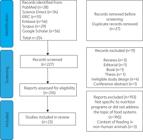
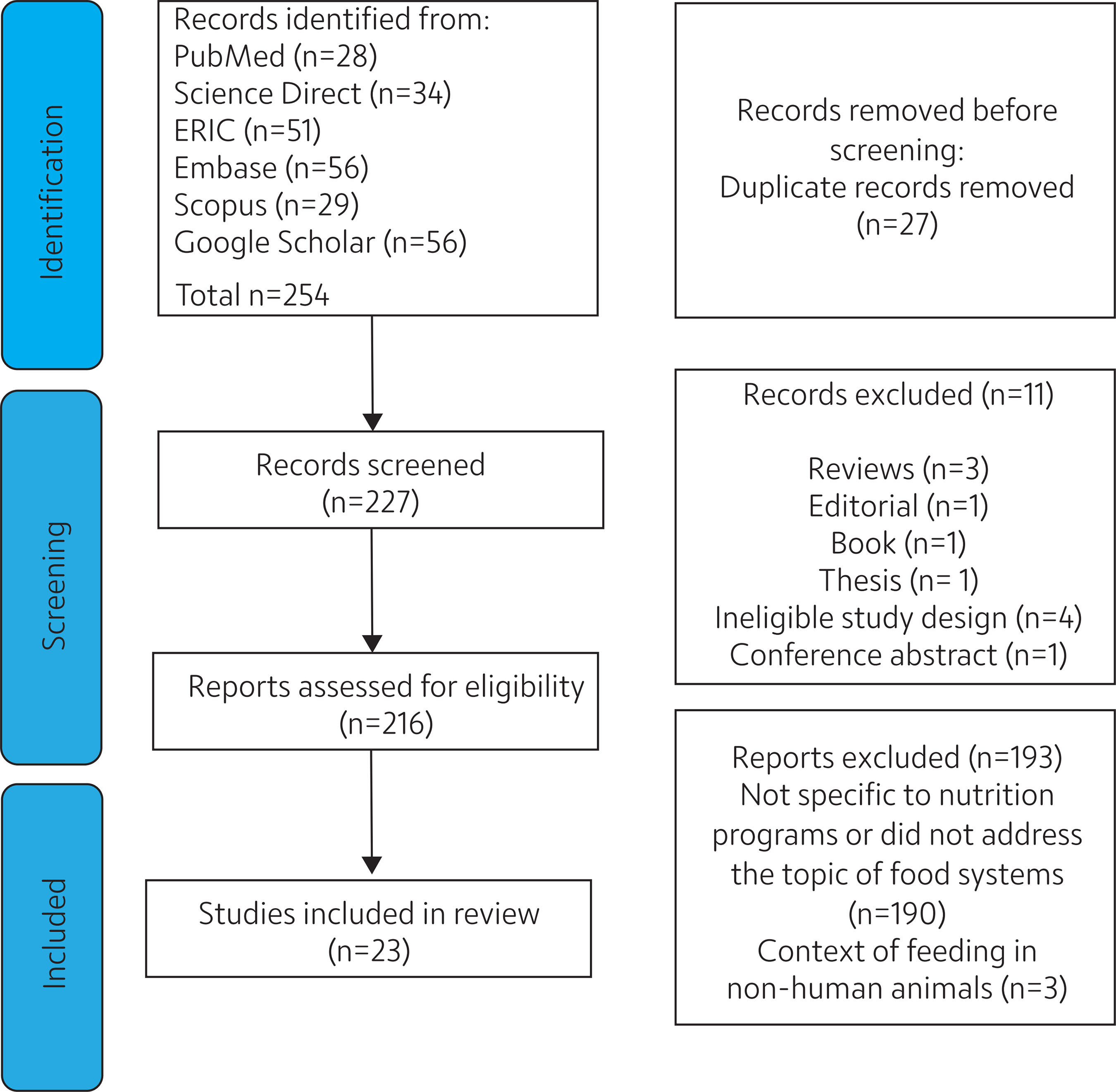
Duplicates were removed from the 254 records initially found, and 227 records were identified from citations databases. Based on the screening of titles and abstracts, 203 articles were excluded. Consequently, 23 full-text articles were retrieved and assessed for eligibility, all of which were included in the qualitative synthesis of this review. A flow diagram of the studies selection procedure is reported in Figure 1.
General data of the scoping review
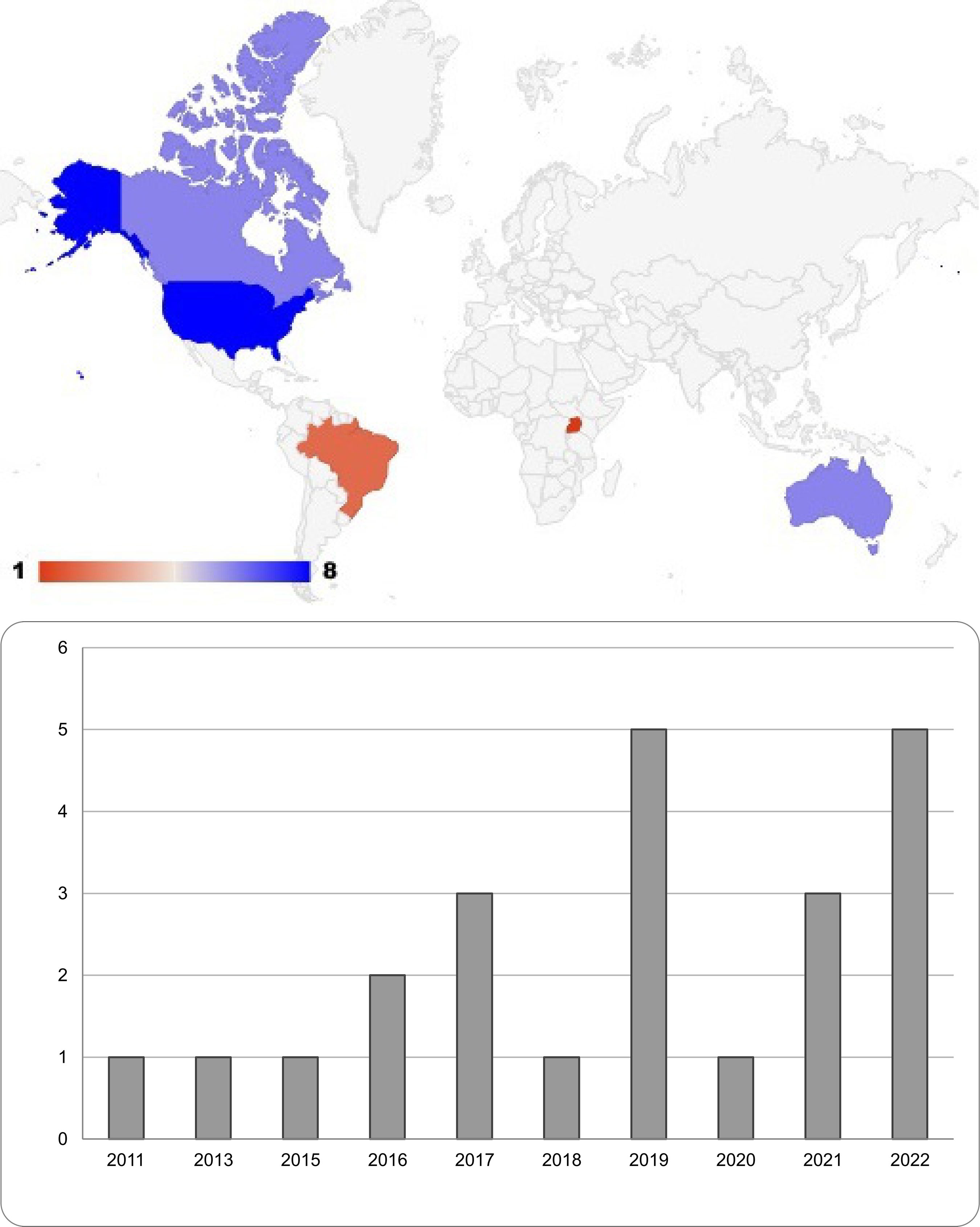
The studies were published between 2011 and 2022, particularly concentrated in the years 2017, 2019, and 2022 (n>2). These findings from the search show that research concerning practices on food systems in the higher nutrition programs has developed over recent years, with all studies published after 2015. The highest number of publications was recorded in 2019 and 2022. There was a decrease in 2020 and 2021, probably due to the impact of the Coronavirus Disease 2019 (COVID-19) pandemic on research activities. The review highlighted that there are overlooked areas for food systems studies in higher education nutrition programs, with limited data from low-income and developing countries. We observed a predominance of studies conducted in North America, particularly in the United States (n=8) and Canada (n=6), followed by Australia (n=6), Brazil (n=2), and South Africa (n=1) (Figure 2).
Mostly, the type of study was qualitative (69.6%), with data collection through interviews and content analysis, in addition to opinion articles (13%), exploratory studies (8.7%) and technical reports (8.7%). Didactic resources also included seminars, panels and virtual tours, and workshops.
Many studies explored ways to engage nutrition undergraduates with environmental sustainability and teaching practices. We highlight the keywords present in the studies as a communication element for identifying the dimensions addressed in the research. These dimensions are related to educational activities, curricula, methodologies, and student engagement. In line with the concepts of food systems and their social, political, and economic determinants, it is noteworthy that the term “food security” appeared in the keywords of only one study.
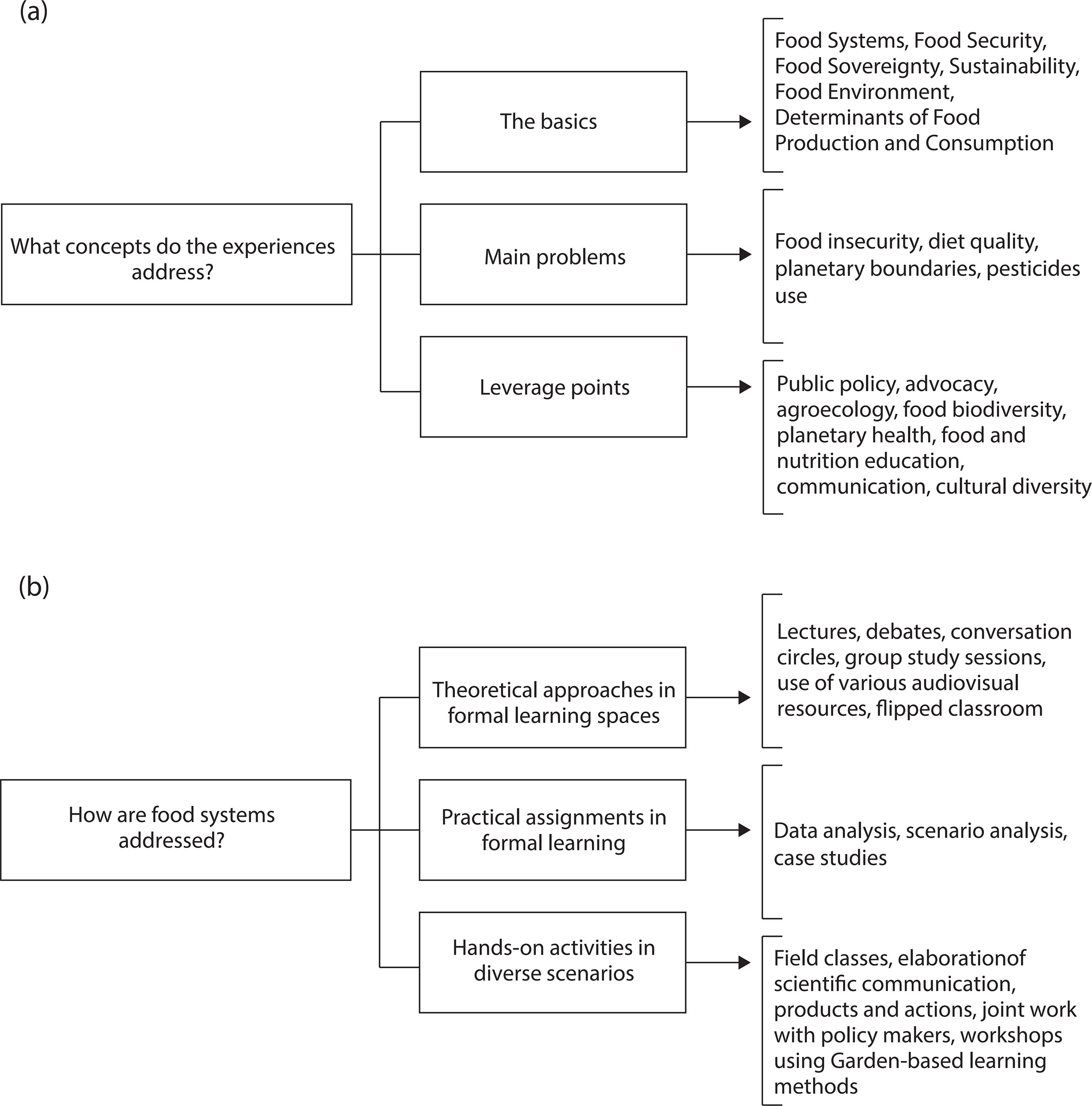
Regarding the pedagogical strategies employed, we emphasize that the present review found various methods used in the selected studies. Particular attention was given to qualitative methods such as participatory approaches, case studies, content analysis, instruments with expert evaluation, competency-based learning, and garden-based studies (Figure 3).
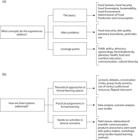
Key concepts (a) and methods (b) addressed in sustainable food systems education experiences in Brazil within undergraduate Nutrition programs, 2022.
Overview of selected articles
A descriptive synthesis of the selected articles is available in Chart 2.
Teaching, research, and extension experiences in sustainable food systems in Brazil within higher education nutrition programs.
Formative scenario of practices
The formative setting for practices refers to the environment or context in which pedagogical and learning activities take place, particularly those aimed at the development of professional and personal competencies. This setting consists of a set of elements that structure and guide the training process, such as available resources, learning objectives, methodologies employed, interactions between participants, and the relationship with the world of work. Of the 23 selected studies, 11 (47.8%) presented approaches to formative scenarios in teaching, research, and extension, highlighting teaching practices. These actions are predominantly concentrated in the teaching domain, with a particular focus on curriculum evaluation and the perceptions of academic stakeholders regarding the subject matter.
In the formative scenario of practices (teaching, research, and university extension), a variety of actions were observed in undergraduate studies. These included developing practical skills in indigenous communities [16]; programs focused on food production, sustainable agriculture, agroecology, and organic farming [17]; and engaging students in discussions about sustainability [18]. Additionally, there is an emphasis on understanding the origins of food; addressing the lack of exposure to seeing vegetables grow, and in some cases where they grew [19]. Activities in foodservice, clinical, or community settings were also integrated; learners completed the school foodservice consumer food waste and food waste audit activities within their management rotation [20]. Garden-based learning was incorporated both in programs and in professional training for nutritionists [21,22]. Finally, curricula faced challenges in integrated dietetic practices that address the social and ecological determinants of health.
In graduate studies, integrated themes of food science, public health and nutrition, government policy, and economics were essential for providing a comprehensive understanding of the complex factors influencing food systems and health outcomes [23]. Graduate students linked these areas to the community, considering food and nutritional security and sustainability as global challenges [24]. According to Hege et al. [20] and Spiker et al. [25], it is recommended the implementation of systems thinking in the curriculum through elective activities, focusing on resource efficiency and conservation across various practice settings.
In the actions at the extension levels, we found some strategies such as understanding the role of practitioners working with indigenous groups in a range of health care settings and communities [16], activities in the sustainability context for the practitioners to promote discussions about sustainability, actions for dietitians particularly in hospital settings [26], and the implementation of community gardens [22].
Research gaps identified by the studies
Through this scoping review, we identified several research gaps and suggestions for future studies related to the articles. We emphasize the importance of the scoping review in revealing these gaps and outlining future perspectives, particularly concerning current and necessary global themes in higher education. These contributions are summarized in Chart 3.
Brazilian case study: practices in sustainable food systems
We identified a total of 15 experiences. The experiences covered in our research focus on three regions of the country: the Northeast (Rio Grande do Norte) with six experiences; the Southeast (São Paulo and Minas Gerais) with eight experiences; and the South, with one experience in the state of Santa Catarina. The oldest experience began in 2009, with almost 90% of the experiences emerging after 2014, and most of them starting after 2017. All 15 experiences are initiatives of public higher education institutions in Brazil, comprising 12 from federal universities and three from a state university. Considering the universe of the 15 experiences, about 57% are in the teaching axis, 27% in extension, and 16% in research. Chart 4 summarizes the experiences of sustainable food systems in nutrition programs in Brazil.
In the teaching axis, the disciplines or modules have a distribution of approximately 56% of mandatory components in the curriculum, with the remaining being electives. Of the eight teaching experiences, two are in postgraduate programs. In undergraduate experiences, two are specifically focused on food systems, while the others address the topic within broader modules of disciplines related to public health and food and nutrition education. In postgraduate programs, two components address the topic of systems in an integrated manner with the general themes of nutrition, sustainability, and society. In the extension axis, the four registered experiences involve the following types: a summer course, a scientific event, a community project of a pedagogical garden, and a scientific communication platform. Finally, the three experiences in the research axis involve groups that have a strong emphasis on collaborative efforts with extension services, actively engaging in action research. One of these groups defines itself as a “think tank”. Figure 3 summarizes the main concepts addressed in the experiences.
We organized the concepts into three groups: (1) the basics, encompassing the main underlying theories addressed in these experiences; (2) main problems, synthesizing the central nodes that explain the idea of crisis in the current hegemonic food system; and (3) leverage points, highlighting pathways for transitioning food systems towards sustainability. Regarding the methodology, Figure 3 also summarizes the main methods used in the context of these experiences.
We organized the methods used to teach food systems into three groups: (1) theoretical approaches in formal learning spaces, (2) practical exercises in formal learning spaces, and (3) practical activities in different settings. In all three dimensions, there are active teaching and learning methods, such as the flipped classroom, debates, scenario analysis, case studies, problem-solving using real data, and garden-based learning.
The results indicate that sustainable food systems are mainly addressed in higher education nutrition programs in the Southeast (São Paulo) and the Northeast (Rio Grande do Norte) regions of Brazil. This geographic concentration likely reflects the prominence of these regions as centers for key textbooks, research groups, and publications on the topic. Public institutions were more involved than private institutions in addressing sustainable food systems. The primary focus was on teaching, with research integrated into extension activities, and active learning methods were the predominant pedagogical approach.
DISCUSSION
Our research question on how the topic of food systems is addressed in higher education for nutritionists can be answered by examining the implementation of actions, as well as the promotion of reflections and perspectives to advance the training of nutritionists. On one hand, there are curricular changes, and on the other, recommendations for nutritional and dietetic practice. We emphasize the strong approach to interaction among educational actors, including professors, students, and administrators, along with institutional support for implementing actions and practices related to food systems and sustainability. We also highlight the need for more practical actions to encourage nutrition programs worldwide to adopt systems thinking.
The studies are recent and focused on high-income countries. This trend likely reflects greater investment in research and resources, heightened concern for sustainability, regulatory policies, education, and environmental awareness, as well as a sense of global responsibility regarding the impacts of food practices [25]. The study by Barlett [27] highlights four key components for effective project implementation: innovations in foodservice (food procurement, menus, and kitchen processes); academic programs focused on environmental, socioeconomic, and health issues; direct marketing for family/community agriculture; and hands-on experiences in campus community gardens. Lee et al. [28] reported that policies addressing sustainable food systems should be implemented more equitably across and within countries. Certainly, an effective strategy would be to improve the quality of formal higher education to align with the global goals of planetary health and sustainable development within academic programs.
The limited number of studies on integrating food systems into nutrition higher education suggests that the topic and related practices remain underexplored in both the literature and curricular structures. Keegan et al. [29] affirm that current curricula do not promote systemic discussions, focusing instead on fragmented solutions and neglecting broader socio-economic contexts. Nutrition programs traditionally emphasize individual dietary components, health outcomes, or specific populations. In Brazil, key issues like food insecurity, diet quality, and pesticide use dominate food systems discussions. An additional dimension comes from the sustainable food practices of family farming fostered by the National School Feeding Program (PNAE), which legally mandates a minimum of 45% of food purchases from family farming [30]. This law not only strengthens short food supply chains and promotes healthier diets in schools but also represents a concrete example of how policy can shape sustainable food systems [31]. Highlighting this case can stimulate global discussions by demonstrating how national legislation can simultaneously address food security, support local economies, and encourage sustainability.
Globally, the broader perspective that encompasses production, distribution, and consumption, is relatively recent or underemphasized. Data on food systems are often scarce or inconsistent, and standardized assessment methods are lacking, hindering comparability and reproducibility. The teaching of food systems in nutrition varies across regions, influenced by educational institutions and food policy evolution. However, a multidisciplinary approach incorporating nutrition, food security, sustainable agriculture, food culture, and sustainability is essential. Beyond technical knowledge, fostering a systemic vision among educators and students is crucial for meaningful transformation.
These conclusions emphasize the need for more empirical studies that analyze integrated academic curricula in both developed and developing countries, and that consider the complex interactions among different actors in food systems, in order to support solid learning and practices in higher education.
Regarding curriculum changes, it becomes evident the need to apply effective and innovative methodologies for teaching food systems. Studies such as Mahn and Lordly [19] carried out in Canada, and Mota et al. [21] conducted in Brazil, demonstrate that garden-based learning is a consistent method to transform curricula, building them more integrated with the sustainability dimensions and planetary health. These studies also report the satisfaction and development of students in practical activities and motivation for studies. We emphasize that quality education must go beyond traditional approaches, limited to closed classrooms. The garden approach seems to be innovative and essential for promoting connections among health, nutrition, environment, and community.
The implementation of gardens in university environments still faces logistical, structural, and financial challenges. A successful case is the LabNutrir garden at the Universidade Federal do Rio Grande do Norte (UFRN, Federal University of Rio Grande do Norte) campus in the Northeast of Brazil. The study entitled “A laboratory without walls: biodiversity education in nutrition training using a garden-based learning method” presented data about the laboratory’s conception in 2017 and showed that it plays a fundamental role in teaching, research, and extension, contributing significantly to the training of nutritionists [22]. We highlight the cultivation of Unconventional Food Plants (UFPs) as a strategy to promote local biodiversity, sustainable diets, critical insights, and to improve mental health [32-34].
Clinical nutrition and its relationship with food systems was reported by Gerstein [26] who examined clinical hospital nutrition and sustainability. Hospitals can and should play a pivotal role in promoting locally diverse foods for their patients, as well as supporting the procurement of locally sourced produce. Additionally, noteworthy is the alteration of the physical infrastructure through the construction of green roofs and the establishment of a local and healthy products store within the hospital premises. Dietitians operating in this environment may have enhanced capabilities and opportunities to contribute to the transformation of food systems, aiming to foster communities, promote health, and provide suitable nutrition for both patients and hospital staff.
Mathews [35] argues that student engagement in higher education is vital. Professional healthcare programs often become overly competitive, which can limit positive engagement and a holistic understanding of the subject. While these programs face such challenges, participatory learning experiences have been found to boost student engagement, suggesting the potential for implementing similar projects in other university settings. Nonetheless, collaborative learning is not always immediately effective, and there may be a period of adjustment for students, especially undergraduates, when transitioning to Problem-Based Learning (PBL).
Numerous nutrition experts are already embracing the cognitive framework necessary to advocate for enhanced leadership in sustainable diets and food systems. Some are acknowledging the growing trend of complexity thinking, which highlights the significance of non-linear contexts [36]. Nevertheless, the intricacies of this field may appear daunting to many nutrition professionals. This novel approach poses challenges to conventional methods of nutrition education, which typically rely on biomedical models rooted in evidence-based practice and primarily adhere to reductionist research paradigms [2]. Expanding the scope of evidence-based practice to encompass more relational models of critical thinking for transformative learning is imperative within the field of nutrition [37].
This review highlights significant deficiencies in the inclusion of food systems within higher education. The need for more qualitative studies should be emphasized, as they can provide a deeper understanding of how food systems are incorporated into nutrition curricula. Most studies have focused on curriculum assessments and the viewpoints of students, interns, faculty, and professionals. Topics such as food policies, sustainable production, and the nexus between food systems and nutritional security are less frequently addressed.
It is also emphasized that, in Brazil, the topic of Food Security is not fully addressed across the curriculum of nutrition programs, as evidenced by Lisboa and Fonseca [38] and Vieira et al. [39]. This highlights the need for curricular adjustments in undergraduate nutrition programs to allow for greater interdisciplinarity and integration among programs. The current training is still considered to be primarily focused on technical competencies to the detriment of humanistic ones. Furthermore, it is often fragmented and poorly articulated between theoretical and practical activities, which undermines the professional preparedness of future graduates.
In line with this need for curricular integration, content related to food systems—encompassing food production, distribution, and access — must also address the influences of contemporary societal dynamics, including industrialization, technological advances, and marketing and communication strategies. These factors strongly shape food consumption patterns, encourage the adoption of new eating practices, and drive significant transformations in lifestyles.
Martinelli et al. [40] emphasize that, in the aftermath of the COVID-19 pandemic, public policy actions should focus on integrating strategies that promote food sovereignty and food and nutrition security, as well as on building healthier and more sustainable food systems. This agenda should be incorporated into nutrition curricula, highlighting the strengthening of family farming; income security for the population; access to quality food; promotion of healthier food environments; widespread dissemination of information on healthy and sustainable eating through official recommendations and food guides that address the entire food system; and the implementation of food and nutrition education practices.
As in Brazil, over more than 70 years of the nutritionist’s history, there has been a significant increase in the number of academic programs and professionals, improvements in methods and working tools, a reshaping of the job market and working conditions, as well as profound and substantial changes in the consumption patterns, eating habits, and nutritional status of the Brazilian population [41]. Guided by the current and most recent National Curriculum Guidelines for Undergraduate Nutrition Programs [42], the nutritionist must be a generalist professional whose training is grounded in the appreciation of healthy and sustainable food systems. Moreover, these professionals should be trained to value the interface between nutrition science and the multiple dimensions of human eating, within the framework of the Human Right to Adequate Food (HRAF), enabling a comprehensive professional approach that considers the individual, society, and the food system. The guidelines also emphasize, as an attitudinal resource, the principle that adequate and healthy eating derives from biodiversity and from socially and environmentally sustainable food systems.
Regarding the research limitations and implications, we consider that the limited number of studies carried out in the context of training and practice, as well as the diversity of study programs and cultural backgrounds of the participating students across different universities, may represent a limiting factor for the interpretation of some results. In addition, for future research, we highlight these integrated themes as fundamental to promote food systems discussion: food security, hunger, agriculture, and sustainability, and for addressing, national and global food and nutrition issues. The results of this scoping review and the data from the case study in Brazil can provide a basis for improving higher education in nutrition programs worldwide. This approach moves toward sustainable food systems based on experiential learning and teaching methods.
CONCLUSION
We conclude from this review that practices related to food systems in nutrition programs are recent and are predominantly concentrated in high-income countries. Regarding the systematization of the concepts and methodologies used in these practices, we found that, excluding specific terms from the field (i.e., nutrition and dietetics), the concepts still tend to focus primarily on the educational approaches adopted, such as curriculum and education, rather than on concepts directly related to food systems and the broader paradigm of food security. Despite this, these topics are addressed within the developed actions and practices.
In Brazil, possibly due to the context of inequalities and complexities within food production and consumption, themes such as food security, hunger, food environments, and biodiversity promotion to ensure food sovereignty, sustainability, and food systems have been discussed in universities within the scope of teaching, research, and extension activities. Methodologies have been directed towards the interdisciplinarity of academic curricula and the implementation of garden-based learning, and the cultivation of unconventional food plants.
Regarding the educational landscape, it is evolving to offer a more collective approach rather than an individual perspective. Higher education must be contextualized within the social, political, economic, and environmental demands of the location where the institution is situated. We conclude that teaching and learning processes should be integrated with actions in both teaching and research, with continuous emphasis on dialogue with society and the community.
ACKNOWLEDGMENTS
I would like to thank the Chancellor of Graduate Studies at the Universidade Federal do Rio Grande do Norte (UFRN, Federal University of Rio Grande do Norte), Brazil for the support.
-
How to cite this article:
Rolim PM, Jacob MCM, Porciuncula L, Carvalho AM, Marchioni DM, Rocha C. Food systems in higher education nutrition programs: evidence from a scoping review and a Brazilian case study. Rev Nutr. 2026;39:e250036. https://doi.org/10.1590/1678-9865202639e250036
Data Availability
The research data are available in the body of the document.
REFERENCES
-
1 Ridgway E, Baker P, Woods J, Lawrence M. Historical developments and paradigm shifts in public health nutrition science, guidance and policy actions: a narrative review. Nutrients. 2019;1(3):531. doi: https://doi.org/https://doi.org/10.3390/nu11030531
» https://doi.org/10.3390/nu11030531 -
2 Beauman C, Cannon G, Elmadfa I, Glasauer P, Hoffmann I, Keller M, et al. The principles, definition and dimensions of the new Nutrition science. Public Health Nutr. 2005;8(6A):695-98. doi: https://doi.org/10.1079/phn2005820
» https://doi.org/10.1079/phn2005820 -
3 United Nations. Transforming Our World: the 2030 Agenda for Sustainable Development. Geneva: United Nations; 2015 [cited 2025 Feb 28]. Available from: https://sdgs.un.org/publications/transforming-our-world-2030-agenda-sustainable-development-17981
» https://sdgs.un.org/publications/transforming-our-world-2030-agenda-sustainable-development-17981 -
4 High Level Panel of Experts. Nutrition and food systems: a report by the High Level Panel of Experts on Food Security and Nutrition of the Committee on World Food Security, 2017. Rome: HLPE; 2017 [cited 2025 Feb 28]. Available from: https://openknowledge.fao.org/server/api/core/bitstreams/4ac1286e-eef3-4f1d-b5bd-d92f5d1ce738/content
» https://openknowledge.fao.org/server/api/core/bitstreams/4ac1286e-eef3-4f1d-b5bd-d92f5d1ce738/content -
5 Food Systems Countdown Initiative. The food systems countdown report 2023: the state of food systems worldwide. New York: Columbia University; Ithaca: Cornell University; Rome: Food and Agriculture Organization of the United Nations; Geneva: Global Alliance for Improved Nutrition; 2023 [cited 2025 Feb 28]. Available from: https://doi.org/10.36072/fsci2023
» https://doi.org/10.36072/fsci2023 -
6 Valley W, Wittman H, Jordan N, Ahmed S, Galt R. An emerging signature pedagogy for sustainable food systems education. Am J Altern Agric. 2018;33(5):467-80. doi: https://doi.org/10.1017/S1742170517000199
» https://doi.org/10.1017/S1742170517000199 -
7 Brekken CA, Peterson HH, King RP, Conner D. writing a recipe for teaching sustainable food systems: lessons from three university courses. Sustainability. 2018;10:1898. doi: https://doi.org/10.3390/su10061898
» https://doi.org/10.3390/su10061898 -
8 Vasconcelos FAG. O nutricionista no Brasil: uma análise histórica. Rev Nutr. 2002;15(2): 127-38. doi: https://doi.org/10.1590/S1415-52732002000200001
» https://doi.org/10.1590/S1415-52732002000200001 -
9 Costa NMSC. Revisitando os estudos e eventos sobre a formação do nutricionista no Brasil. Rev Nutr. 1999:12(1):5-19. doi: https://doi.org/10.1590/S1415-52731999000100001
» https://doi.org/10.1590/S1415-52731999000100001 -
10 Gabriel CG, Oliveira JTC, Silva BL, Fagundes AA, Silva TC, Soar C. Nutritionist’s job market: 80 years of history. Rev Nutr. 2019;32:e180162. doi: http://dx.doi.org/10.1590/1678-9865201932e180162
» https://doi.org/10.1590/1678-9865201932e180162 -
11 Tricco AC, Lillie E, Zarin W, O’Brien KK, Colquhoun H, Levac D, et al. PRISMA Extension for Scoping Reviews (PRISMA-ScR): checklist and explanation. Ann Intern Med. 2018;169(7):467-73. doi: https://doi.org/10.7326/M18-0850
» https://doi.org/10.7326/M18-0850 -
12 Ouzzani M, Hammady H, Fedorowicz Z, Elmagarmid A. Rayyan: a web and mobile app for systematic reviews. Systematic Rev. 2016;5(1):210. doi: https://doi.org/10.1186/s13643-016-0384-4
» https://doi.org/10.1186/s13643-016-0384-4 -
13 Stefanidis A, Crooks A, Radzikowski J. Harvesting ambient geospatial information from social media feeds. Geo J. 2011;78(2):319-38. doi: https://doi.org/10.1007/s10708-011-9438-2
» https://doi.org/10.1007/s10708-011-9438-2 -
14 Fast V, Rinner C. Toward a participatory VGI methodology: crowdsourcing information on regional food assets. Int J Geogr Inf Sci. 2018;32(11):2209-24. doi: https://doi.org/10.1080/13658816.2018.1480784
» https://doi.org/10.1080/13658816.2018.1480784 - 15 Ritchie J, Spencer L. Part III / Empirical studies: qualitative data analysis for applied policy research. In: Huberman MA, Miles MB, editors. The qualitative researcher’s companion. Thousand Oaks: SAGE Publications; 2002.
-
16 Wilson AM, Mehta K, Miller J, Yaxley A, Thomas J, Jackson K, et al. Review of Indigenous Health Curriculum in Nutrition and Dietetics at One Australian University: an action research study. AJIE. 2015;44(1):106-20. doi: https://doi.org/10.1017/jie.2015.4
» https://doi.org/10.1017/jie.2015.4 -
17 Hartle JC, Cole S, Trepman P, Chrisinger BW, Gardner CD. Interdisciplinary Food-Related Academic Programs: a 2015 snapshot of the United States Landscape. J Agric Food Syst Community Dev. 2017;7(4):35-49. doi: https://doi.org/10.5304/jafscd.2017.074.006
» https://doi.org/10.5304/jafscd.2017.074.006 -
18 Burkhart S, Verdonck M, Ashford T, Maher J. Sustainability in Nutrition: Potential Guiding Statements for Education and Practice. J Nutr Educ Behav. 2021;53(8):663-76. doi: https://doi.org/10.1016/j.jneb.2021.03.011
» https://doi.org/10.1016/j.jneb.2021.03.011 -
19 Manh JR, Lordly D DEd. University Students Harvesting the Benefits of a Garden Laboratory. Can J Diet Pract Res. 202;82(3):107-14. doi: https://doi.org/10.3148/cjdpr-2021-004
» https://doi.org/10.3148/cjdpr-2021-004 -
20 Hege A, Giddens J, Bergquist E, Stadler D, Gayer Campbell C, Cummings J, et al. Integration of a Sustainable Food Systems Curriculum in Nutrition and Dietetics Education: assessment from the first year of implementation. J Acad Nutr Diet. 2021;121(12):2536-48. doi: https://doi.org/10.1016/j.jand.2021.02.001
» https://doi.org/10.1016/j.jand.2021.02.001 -
21 Mota ACCC, Gomes AFT, Porciúncula LB, Chaves VM, Almeida AM, Jorge TP, Jacob MCM. A Laboratory without walls: biodiversity education in Nutrition training using a garden-based learning method. Desenvolv Meio Ambiente. 2021;56:e70990. doi: https://doi.org/10.5380/dma.v56i0.70990
» https://doi.org/10.5380/dma.v56i0.70990 - 22 De Araujo JYM, Porciuncula LB, Jorge TP. An Educational experience with a focus on plants: capacity building in nutrition students in a Brazilian Laboratory-Vegetable Garden. In: Jacob MCM, Albuquerque UP, editors. Local food plants of Brazil. Ethnobiology. Cham: Springer; 2021.
- 23 Bezerra I, Paula N. Sistemas alimentares sustentáveis e saudáveis: diálogos e convergências possíveis. Rev Faz Cienc. 2021;23:12-33.
-
24 Knobloch NA, Charoenmuang M, Cooperstone JL, Patil BS. Developing interdisciplinary thinking in a food and Nutritional security, hunger, and sustainability graduate course. J Agric Educ Ext. 2019;26(1):113-27. doi: https://doi.org/10.1080/1389224X.2019.1690014
» https://doi.org/10.1080/1389224X.2019.1690014 -
25 Spiker M, Hege A, Giddens J, Cummings J, Steinmetz J, Tagtow A, et al. Leveraging online learning to promote systems thinking for sustainable food systems training in dietetics education. Front Nutr. 2021;8:e623336. doi: https://doi.org/10.3389/fnut.2021.623336
» https://doi.org/10.3389/fnut.2021.623336 -
26 Gerstein DE, Brown K, Kelley H, McKee K, Lokuta A. Field notes: People, Programs, & Policies:*Registered Dietitian Nutritionists Advancing Sustainable Food Systems. J Hunger Environ Nutr. 2021;17(2):261-4. doi: https://doi.org/10.1080/19320248.2021.2014379
» https://doi.org/10.1080/19320248.2021.2014379 -
27 Barlett PF. Campus sustainable food projects: critique and engagement. Am Anthropol. 2011;113(1):101-15. doi: https://doi.org/10.1111/j.1548-1433.2010.01309.x
» https://doi.org/10.1111/j.1548-1433.2010.01309.x -
28 Lee AJ, Cullerton K, Herron L. Achieving food system transformation: insights from a retrospective review of nutrition policy (in)action in high-income countries. Int J Health Policy Manag. 2021;10:766-83. doi: https://doi.org/10.34172/ijhpm.2020.188
» https://doi.org/10.34172/ijhpm.2020.188 -
29 Keegan S, Reis K, Roiko A, Desha C. Exploring resilience concepts and strategies within regional food systems: a systematic literature review. Food Security. 2024;16(3):801-25. doi: https://doi.org/10.1007/s12571-023-01418-9
» https://doi.org/10.1007/s12571-023-01418-9 -
30 Dias PC, Barbosa IRO, Barbosa RMS, Ferreira DM, Soares KCB, Soares DSB, et al. Purchases from family agriculture for school feeding in Brazilian capitals. Rev Saúde Pública. 2020:54:73. doi: https://doi.org/10.11606/s1518-8787.2020054001963
» https://doi.org/10.11606/s1518-8787.2020054001963 -
31 Presidência da República (Brasil). Lei nº 15.226, de 30 de setembro de 2025. Altera a Lei nº 11.947, de 16 de junho de 2009, para dispor sobre o prazo de validade dos gêneros alimentícios adquiridos no âmbito do Programa Nacional de Alimentação Escolar (PNAE) e para estabelecer em 45% o percentual mínimo para aquisição de gêneros alimentícios diretamente da agricultura familiar e do empreendedor familiar rural no âmbito desse programa. Diário Oficial da União, (30 set. 2025) [citado 20 Mar. 2026]. Disponível em: http://www.planalto.gov.br/ccivil_03/_ato2023-2026/2025/lei/L15226.htm
» http://www.planalto.gov.br/ccivil_03/_ato2023-2026/2025/lei/L15226.htm -
32 Day K, Tsupros MM, Schober DJ. To plant a garden is to believe in tomorrow: a case study of a Chicago community-based organization focused on health education through school gardens. J Prev Interv Community. 2021;50(1):72-88. doi: https://doi.org/10.1080/10852352.2021.1915938
» https://doi.org/10.1080/10852352.2021.1915938 -
33 Cheang CC, Ng WK, Wong YSD, Li WC, Tsoi KH. Planting a seed of experience – long term effects of a Co-curricular Ecogarden-Based Program in Higher Education in Hong Kong. Front Psychol. 2021;11:e583319. doi: https://doi.org/10.3389/fpsyg.2020.583319
» https://doi.org/10.3389/fpsyg.2020.583319 -
34 Elsden E, Kador T, Sercombe H, Piper K, Barkan M, Webster E, et al. Experiential learning spaces and student wellbeing: a mixed-methods study of students at three research intensive UK universities. Int Rev Psychiatry. 2023;35(7-8):591-604. doi: https://doi.org/10.1080/09540261.2023.2268720
» https://doi.org/10.1080/09540261.2023.2268720 -
35 Matthews J. Enhancing food and nutrition curricula in higher education by assigning collaborative food system assessment projects. J Coll Teach Learn. 2013;10(4):245-54. doi: https://doi.org/10.19030/tlc.v10i4.8121
» https://doi.org/10.19030/tlc.v10i4.8121 -
36 Rogers KH, Luton R, Biggs H, Biggs R, Blignaut S, Choles AG, et al. Fostering complexity thinking in action research for change in socia: ecological systems. Ecol Soc. 2013;18(2):31. doi: https://doi.org/10.5751/ES-05330-180231
» https://doi.org/10.5751/ES-05330-180231 -
37 Pettinger C. Sustainable eating: opportunities for nutrition professionals. Nutr Bull. 2018;43:226-37. doi: https://doi.org/10.1111/nbu.12335
» https://doi.org/10.1111/nbu.12335 -
38 Lisbôa CMP, Fonseca AB. Abordagem de segurança alimentar nutricional nos currículos das universidades federais brasileiras: principais enfoques. Saúde Soc. 2020;29(3):e190570. doi: https://doi.org/10.1590/S0104-12902020190570
» https://doi.org/10.1590/S0104-12902020190570 -
39 Vieira VL, Utikava N, Cervato-Mancuso AM. Atuação profissional no âmbito da segurança alimentar e nutricional na perspectiva de coordenadores de cursos de graduação em Nutrição. Interface. 2013;17(44):157-70. doi: https://doi.org/10.1590/S1414-32832013000100013
» https://doi.org/10.1590/S1414-32832013000100013 -
40 Martinelli SS, Cavalli SB, Fabri RK, Veiros MB, Reis ABC, Amparo-Santos L. Strategies for the promotion of healthy, adequate and sustainable food in Brazil in times of Covid-19. Rev Nutr. 2020;33:e200181. doi: https://doi.org/10.1590/1678-9865202032e200181
» https://doi.org/10.1590/1678-9865202032e200181 - 41 Vasconcelos FAG, Calado CLA. Profissão nutricionista: 70 anos de história no Brasil. Rev Nutr. 2011;24(4):605-17.
- 42 Ministério da Educação (Brasil). Resolução CNE/CES Nº 2, de 15 de agosto de 2025. Institui Diretrizes Curriculares Nacionais do Curso de Graduação em Nutrição. Brasília: MEC; 2025.
-
43 Boak R, Palermo C, Beck EJ, Patch C, Pelly F, Wall C, Gallegos D. A qualitative exploration of the future of nutrition and dietetics in Australia and New Zealand: implications for the workforce. Nutr Diet. 2022;79(4):427-37. doi: https://doi.org/10.1111/1747-0080.12734
» https://doi.org/10.1111/1747-0080.12734 -
44 Carino S, McCartan J, Barbour L. The emerging landscape for sustainable food system education: mapping current higher education opportunities for Australia’s future food and nutrition workforce. J Hunger Environ Nutr. 2019; 15(2),273-94. doi: https://doi.org/10.1080/19320248.2019.1583621
» https://doi.org/10.1080/19320248.2019.1583621 -
45 Carlsson L, Callaghan E. The social license to practice sustainability: concepts, barriers and actions to support nutrition and dietetics practitioners in contributing to sustainable food systems. J Hunger Environ Nutr. 2022. doi: https://doi.org/10.1080/19320248.2022.2034559
» https://doi.org/10.1080/19320248.2022.2034559 -
46 Goodridge L, Carlsson L, Callaghan EG. Mapping the roles of nutrition and dietetics professionals in sustainable food systems and exploring opportunities for strategic collaboration. Can J Diet Pract Res. 2022;83(4):175-9. doi: https://doi.org/10.3148/cjdpr-2022-008
» https://doi.org/10.3148/cjdpr-2022-008 -
47 Higgins M, Strother H, Burkhart S, Carlsson L, Meyer NL, Spiker M, et al. Sustainable food systems and diets in dietetic training standards: an international content analysis. J Hum Nutr Diet. 2023;36(3):957-66. doi: https://doi.org/10.1111/jhn.13122
» https://doi.org/10.1111/jhn.13122 -
48 Finn S, Kennedy E, Brown K. Keys to success in forging global leadership in sustainable nutrition. Nutr Today. 2020;55(3):131-5. doi: https://doi.org/10.1097/NT.0000000000000411
» https://doi.org/10.1097/NT.0000000000000411 -
49 Maher J, Burkhart S. Experiential learning for engaging nutrition undergraduates with sustainability. Int J Sustain High Educ. 2017;18(7):1108-22. doi: https://doi.org/10.1108/IJSHE-01-2016-0010
» https://doi.org/10.1108/IJSHE-01-2016-0010 -
50 Nix E. Proposed changes to nutrition curricula in higher education. J Nutr Educ Behav. 2022;54(11):1042-6. doi: https://doi.org/10.1016/j.jneb.2022.08.005
» https://doi.org/10.1016/j.jneb.2022.08.005 -
51 Maher J, Ashford T, Verdonck M, English E, Burkhart S. Equipping nutrition graduates for the complex realities of practice: using practitioner perspectives and experiences to inform authentic sustainability curriculum. J Hum Nutr Diet. 2023;36(4):1406-16. doi: https://doi.org/10.1111/jhn.13159
» https://doi.org/10.1111/jhn.13159 -
52 Wegener J. Equipping future generations of registered dietitian nutritionists and public health nutritionists: a commentary on education and training needs to promote sustainable food systems and practices in the 21st century. J Acad Nutr Diet. 2018;118(3):393-8. doi: https://doi.org/10.1016/j.jand.2017.10.024
» https://doi.org/10.1016/j.jand.2017.10.024
Edited by
-
Editor
Francisco de Assis Guedes de Vasconcelos

 Source: Adapted from PRISMA protocol.