 Hidden diversity of Salvinia (Salviniaceae) revealed by molecular identification in a Neotropical floodplain
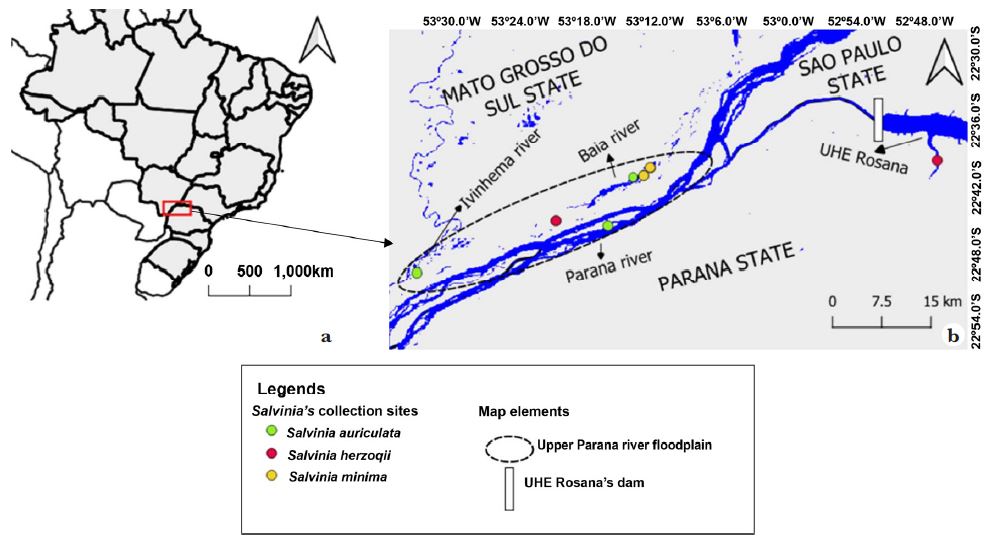
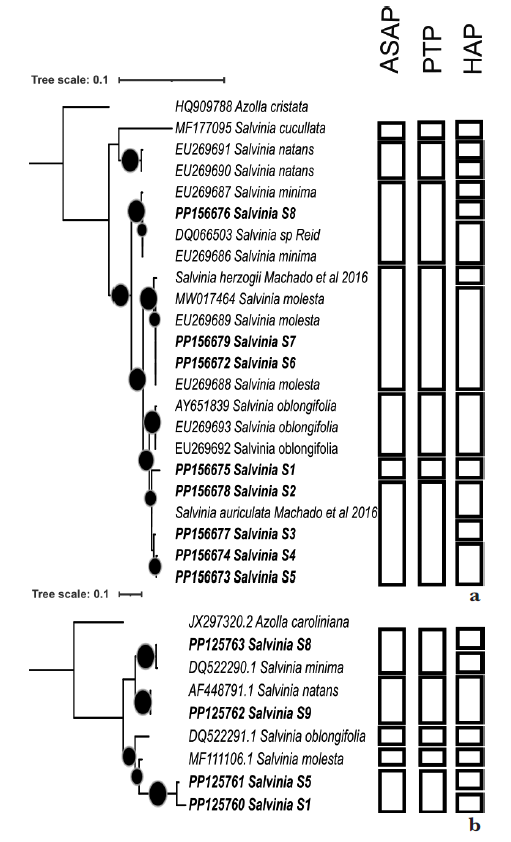
Salvinia species are important to aquatic ecosystems but challenging to identify in the field due to their morphological similarities. In the upper Paraná River basin, Salvinia auriculata, Salvinia herzogii, and Salvinia minima are among the most abundant aquatic plants. For this reason, this study aimed to confirm the identification of these species using molecular markers ITS (nuclear) and trnL-trnF (chloroplast). Genetic distances, phylogenetic analysis, and molecular delimitation were applied to group sequences into Molecular Operational Taxonomic Units (MOTUs). Results showed that S. auriculata formed a single MOTU, while S. herzogii clustered with S. molesta from GenBank, indicating a new occurrence of S. molesta in the region. One S. minima specimen was confirmed, while another was identified as S. natans, marking the first record of this species in Brazil. The identification of S. herzogii as S. molesta accentuate the challenge of distinguishing these species without the sorophore. The presence of S. natans in sympatry with S. minima is concerning due to its invasive potential. The study highlights the importance of molecular techniques in distinguishing morphologically similar species.
Key words:
aquatic macrophyte; fern; molecular markers; species delimitation
 Thumbnail
 Thumbnail