 Bioreactor technology for plant tissue culture: a PRISMA systematic review
Abstract
Plant tissue culture enables the clonal propagation of economically valuable species under controlled and aseptic conditions. Among in vitro methods, micropropagation remains the most widely applied for large-scale plant production, relying on both direct and indirect regeneration pathways for commercial purposes. Nevertheless, the high costs associated with these regeneration systems continue to limit their broader use. Bioreactor technology has emerged as a promising alternative to enhance plant biomass multiplication and reduce expenses related to culture media and manual handling, bridging the gap between traditional micropropagation and industrial-scale production. But is this approach really practical? This question was addressed by reviewing scientific publications from 2000 to 2024 retrieved from ScienceDirect (SD) and The Directory of Open Access Journals (DOAJ), platforms recognized for extensive peer-reviewed coverage and strong indexing standards, as well as by analyzing patent filings from the European Patent Office database, which covers a wide range of countries, to evaluate whether bioreactors are contributing to the broader adoption of plant tissue culture techniques in commercial applications. This review highlights bioreactors as a promising strategy for cost-effective large-scale plant propagation, while underscoring the need for further research to optimize culture conditions and enhance species adaptability to bioreactor systems.
Key words:
biotechnology; micropropagation; plant production; scalable culture
Resumo
As técnicas de cultura de tecidos permitem a exploração comercial de espécies de interesse econômico a partir da produção em larga escala de material botânico com elevada qualidade fitossanitária e livre de variações sazonais. Entre os métodos in vitro, a micropropagação é a técnica in vitro mais amplamente utilizada para finalidades comerciais, podendo ocorrer por vias de regeneração direta e indireta. Entretanto, os elevados custos ainda constituem um desafio para sua adoção em escala industrial. Nesse contexto, estratégias como os biorreatores surgem como uma alternativa promissora, pois facilitam o manejo, favorecem o crescimento vegetal e, por consequência, reduzem custos de produção, contribuindo para ampliar o uso comercial da cultura de tecidos. No entanto, permanece a questão: essa abordagem é realmente eficaz na prática? Para responder a esse questionamento, foram analisadas publicações científicas entre os anos de 2000 e 2024, disponíveis nas plataformas ScienceDirect (SD) e Directory of Open Acess Jornauls (DOAJ), reconhecidas por sua elevada abrangência de periódicos revisados por pares. Também foram avaliados os documentos depositados no banco de dados do Escritório Europeu de Patentes nesse período, que abarca uma ampla gama de países e reflete o interesse global. Os resultados indicam que os biorreatores representam uma estratégia promissora para produção vegetal eficiente economicamente, embora sejam necessárias pesquisas adicionais para otimizar parâmetros de cultivo e aprimorar a adaptabilidade das espécies de interesse a esses sistemas.
Palavras-chave:
biotecnologia; micropropagação; produção de mudas; escalabilidade
Introduction
The increasing demand for plant-derived products, in conjunction with the rapid loss of biodiversity, underscores the urgent need for sustainable strategies to use plant resources. In this context, biotechnological methods play a crucial role in ensuring the conservation and large-scale propagation of valuable species. Tissue culture techniques offer an alternative approach to harnessing the benefits of plants without exerting pressure on natural populations. In vitro cultivation, carried out in aseptic environments under controlled physical and chemical conditions, facilitates the clonal multiplication of valuable plant species while reducing anthropogenic impacts to natural populations (Prasad et al. 2017). However, the selection of an appropriate in vitro tissue culture method must consider several factors, including the desired product (e.g., secondary metabolites or clonal plants) and the specific plant species under investigation (Cruz-Cruz et al. 2013).
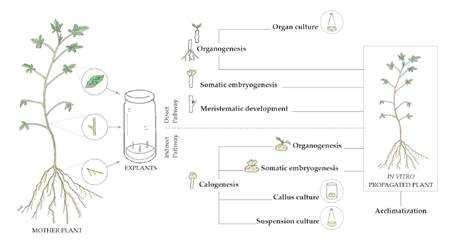
Different morphogenic responses can be achieved under in vitro conditions due to plant cell totipotency, that is, the inherent ability of a single cell to regenerate into a whole plant (Malabadi et al. 2025). Various techniques can be employed to induce small plant segments (explants) to develop specific responses of interest (Fig. 1). Cultures based on the development of pre-existing meristems involves the isolation and growth of meristematic regions, shoot apices, and axillary buds, resulting in complete plants. Organogenesis comprises the formation of new organs (such as roots or shoots) from cells or tissues, while somatic embryogenesis refers to the development of embryo-like structures from somatic cells, which can further develop into whole plants, mimicking the zygotic embryogenesis pathway (Kumar & Reddy 2011).
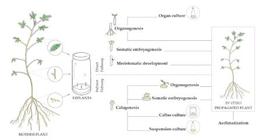
In vitro regeneration can occur through two main pathways: direct and indirect (Bhatia & Bera 2015; Long et al. 2022). In direct pathways, the differentiation process takes place without an intermediate callus phase, as cells or explant tissues directly form organs or shoots through organogenesis or somatic embryogenesis. This route is often preferred due to its shorter culture time and lower risk of somaclonal variation, and it has been reported in several species (Ozudogru et al. 2022; Upadhyay et al. 2021). In contrast, indirect pathways involve an intermediate stage characterized by the formation of a disorganized cell mass known as callus, from which new plant structures subsequently develop via organogenesis or somatic embryogenesis (Kruglova & Zinatullina 2024). Furthermore, callus-derived cultures can be exploited to establish homogeneous systems, such as cell suspension cultures, which are valuable for secondary metabolite production (Yue et al. 2014).
In vitro propagated plants can undergo acclimatization, a transitional process through which they are gradually adapted to field conditions. The complete process, from in vitro propagation to reintroduction into the natural environment, is referred to as micropropagation (Loyola-Vargas & Ochoa-Alejo 2018).
Micropropagation can be carried out in either solid or liquid culture media, depending on the plant species (Gupta et al. 2020). However, liquid culture medium systems do not require solidifying agents, such as agar or Phytagel®, to provide support, which significantly reduces production costs (Bhattacharya et al. 1994; Sahu & Sahu 2013). Despite its phytosanitary advantages, micropropagation involves multiple stages and requires extensive and specialized handling, which may result in contamination and loss of plant material, limiting its commercial application (Valdiani et al. 2019). Moreover, the traditional micropropagation methods are difficult to scale, which limits their capacity to meet the increasing global demand for high-quality plantlets. Therefore, more scalable solutions, such as the use of bioreactors, need to be implemented and optimized to enable large-scale and cost-effective production of elite plant material, thereby supporting the expansion of commercial propagation programs (Murthy et al. 2023).
Although the use of liquid media is economically advantageous, the continuous immersion of plant material can create stressful conditions, leading to the malformation of new shoots, the occurrence of physiological abnormalities (such as hyperhydricity), and oxidative browning (Polivanova & Bedarev 2022; Preil 2005). Consequently, developing efficient protocols that harness the benefits of liquid media, while minimizing its drawbacks, has been the focus of recent research. Among these approaches, the use of bioreactors has played a significant role by combining liquid culture media with enhanced gas exchange and automation of the production process (Valdiani et al. 2019).
A bioreactor is a system of flasks of various shapes that contain circulating liquid media (Watt 2012). According to Valdiani et al. (2019), diverse fields of knowledge have contributed to the development of bioreactors, including wastewater treatment and the production of microorganisms. These authors also suggest that integrating bioreactor technology with molecular biology, metabolomics, and nanobiotechnology will lead to the next generation of plants, biopharmaceuticals, and biofuels, which is a current trend in plant biotechnology research.
Efficient production in bioreactors is facilitated by the use of air pumps, which increase gas exchange rates and allow for the use of large vials. The incorporation of pressure control, lighting, and timer devices reduces the need for human intervention. In this way, bioreactors make in vitro cultivation more appealing for industry (Yancheva et al. 2019).
The development of bioreactors for plant material began in the early 1980s with permanent immersion systems (PIS), in which plant tissue remains continuously submerged in a liquid nutrient medium throughout the entire cultivation period. Subsequent years saw temporary immersion systems (TIS), whereby the culture medium periodically comes into contact with the plant material, become the most studied method (Alvard et al. 1993; Harris & Mason 1983; Levin et al. 1988; Preil 1991; Takayama 1991), leading to the development of the so-called RITA® (Récipient à Immersion Temporaire Automatique) flasks by the company VITROPIC© (Teisson et al. 1995).
Physiologically, temporary immersion ensures the exhaustion of accumulated ethylene and CO2, while mixing nutrients and increasing contact with the surface of plant material (Escalona et al. 2003). More user-friendly systems were developed in succeeding years with the broader application of the technique (Preil 2005). In Brazil, the Brazilian Agricultural Research Corporation (EMBRAPA) achieved promising results with the employment of a TIS system featuring two interconnected flasks (twin-flasks), which has been applied in the commercial production of crops such as banana (Lemos et al. 2001) and pineapple (Silva et al. 2007).
Automated systems are already used in the cultivation of various plant organs, mainly aiming at shoot multiplication. Additionally, the production of secondary metabolites is frequently reported. Hairy roots, cells, and isolated organs represent different types of cultures currently maintained in liquid media that have shown promising results for the production of bioactive substances in bioreactors (Arigundam et al. 2020; Khan et al. 2019; Marbun et al. 2015; Wu et al. 2017).
Bioreactor technology offers the potential to simplify and enhance the multiplication of plant material while reducing costs associated with culture media and plant handling. But is this approach really practical? This question was addressed by reviewing 21st century scientific literature, and analyzing patent filings in the database of the European Patent Office (EPO) to assess whether bioreactors are contributing to a broader adoption of plant tissue culture techniques in commercial applications.
Unlike previous works, this review systematically applies the Preferred Reporting Items for Systematic Reviews and Meta-Analyses (PRISMA) methodology. Additionally, by integrating both scientific literature and patent data, this study provides a comprehensive and up-to-date overview of bioreactor applications in plant tissue culture, highlighting current trends, technological gaps, and opportunities for innovation.
Material and Methods
A PRISMA systematic review (Page et al. 2021) was performed, by accessing the following databases: ScienceDirect (SD) (<https://www.sciencedirect.com/search>) and Directory of Open Access Journals (DOAJ) (<https://doaj.org/>) on January 28th, 2025; and European Patent Office (EPO) (<https://worldwide.espacenet.com/>) on February 14th, 2025. All authors participated in the review process. The screening and selection of studies were conducted independently, with discrepancies resolved by consensus.
The terms “plant,” “bioreactor,” and “tissue culture” were used as descriptors and searched for in all article fields. The Boolean operator “AND” was applied to combine the search terms. These terms were selected to comprehensively capture the intersection between plant systems, bioreactor technologies, and tissue culture techniques, which represent the core focus of this review. The search spanned the period from 2000 to 2024 and the results were refined to include only peer-reviewed scientific articles. Authors read and classified all the scientific article entries by title and abstract using Rayyan Platform®. The same descriptors were applied to the title, abstract, and claims fields for the EPO patent database, and entries were reviewed and classified using tools available on the EPO website and Microsoft© Excel 365®. The EPO database was chosen because of the broad scope of countries where the patents are enforceable, offering a more accurate representation of global interest in the topic.
Results and Discussion
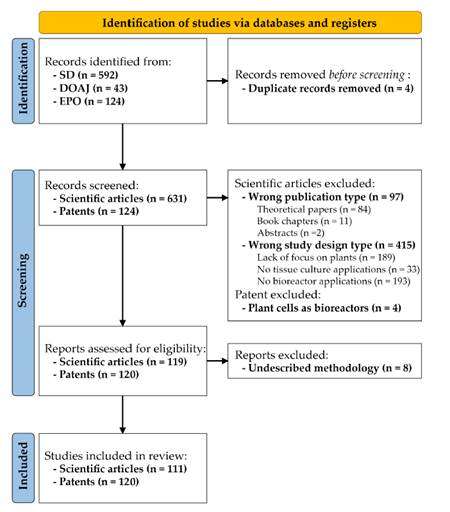
A total of 592 entries from SD and 43 from the DOAJ were identified, with four duplicates, resulting in a final dataset of 631 unique items. Then, 512 items were excluded for not meeting the study’s inclusion criteria, as follows: theoretical articles (84), book chapters (11), abstracts (2), lack of focus on plants (189), absence of tissue culture (33) or bioreactor (193) applications. Articles that did not describe the methodology used (8) were also excluded.
The patent search retrieved a total of 124 entries (Fig. 2). Patent documents that addressed the use of plant cells as bioreactors or synthesis units (4) were discarded as they did not fit the scope of this review. The remaining 111 articles and 120 patents were selected for analysis (Fig. 2).
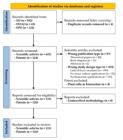
Diagram of PRISMA review selection. SD = Science Direct; DOAJ = Directory of Open Access Journals; EPO = European Patent Office.
Bioreactor performance has been addressed by previous literature reviews, which provided a descriptive focus on vessel types and their applications (Khan et al. 2019; Murthy et al. 2024; Sahu & Sahu 2013; Valdiani et al. 2019). The present study, however, is the first to systematically categorize literature, focusing on preferences for tissue culture techniques with an emphasis on commercial applications. It focused on usage prevalence, to serve as a reference for researchers interested in starting plant tissue cultures in bioreactors. The assessment of patents aimed to outline pathways for those seeking to introduce innovations in this promising field of plant biotechnology, thereby facilitating improved financial efficiency and successful large-scale implementation of biotechnological processes.
Historical development and cost efficiency
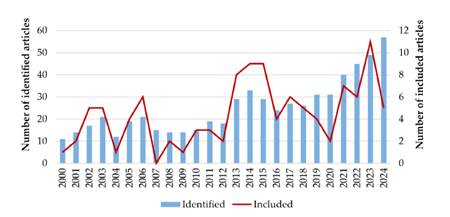
The number of studies referencing the term “bioreactors” showed an increasing trend over time, with a marked increase from 2013 onward. Several authors use the term “bioreactor” but do not necessarily refer to its practical application. Instead, they discuss the potential uses of bioreactors for large-scale production only with their “species of interest”. Additionally, some reports were found to fall short of the inclusion criteria selected for the study and, in fact, involved genetic/molecular techniques or animal cells or algae applications. Moreover, a few studies involving plants needed to be excluded because they did not employ plant tissue culture techniques, and some poorly-detailed methodological articles were excluded to avoid potential duplication (Fig. 3).
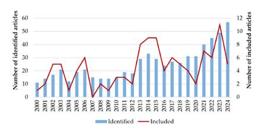
Scientific articles focusing on bioreactors available in the databases of ScienceDirect and DOAJ for the period of 2000-2024.
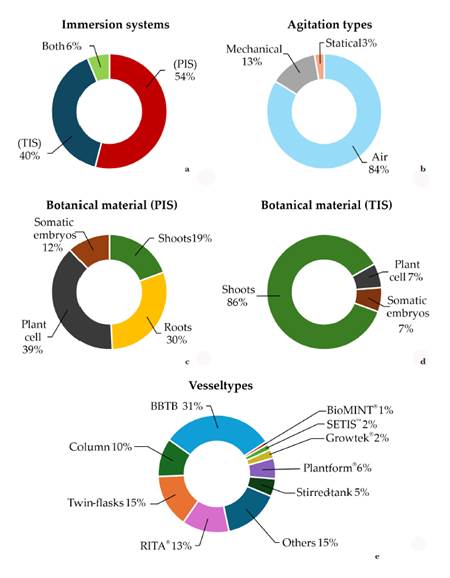
Data for the early years of the review period indicated a predominance of permanent immersion systems (PIS) in the articles, with the first mention of temporary immersion systems (TIS) being in 2004. Despite the lower cost and improved nutrient distribution provided by liquid media, morphophysiological issues due to reduced gas exchange in plant cells may occur (Preil 2005). Thus, a greater adoption of TIS was observed after the 2010s, along with a balanced frequency of the two immersion system types. Notably, seven articles (6% of the total analyzed) reported the use of both PIS and TIS in the same study (Fig. 4a).
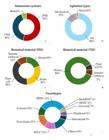
a-e. Key bioreactor conditions applied in plant tissue culture reported in scientific articles - a. immersion systems; b. agitation type modes; c. plant material used in PIS; d. plant material used in TIS; e. vessel types utilized. PIS = permanent immersion system; TIS = temporary immersion system.
According to Valdiani et al. (2019), the concept of bioreactors emerged with the transition from solid to liquid culture media, leading to increased tissue culture productivity. These authors emphasize that the core purpose of a bioreactor should encompass scalability to enable the large-scale production of plants using a minimal number of flasks simultaneously. They also emphasize that a bioreactor should offer simplicity in the processes of inoculation and harvesting.
Valdiani et al. (2019) further emphasize that a bioreactor system must allow botanical material to remain in contact with the culture medium to ensure efficient circulation to enhance nutrient absorption and suppress apical dominance, thereby promoting optimal growth of new shoots. Agar or Phytagel® are among the gelling agents commonly used in plant tissue culture, with costs of $802 and $413 per kilogram, respectively. The use of liquid culture medium results in a 42% reduction in final product cost, based on current Merck® prices and the standard gelling agent concentration typically used (8g/L). However, some strategies need to be implemented to ensure the successful development of material in liquid medium.
Biological aspects and system design
Important parameters for cultivation in bioreactors include medium agitation to ensure proper mixing of nutrients and adequate gas exchange for the plant material. However, an excessive level of shear stress, the mechanical force generated by liquid movement and bubble collision, can cause severe damage to plant cells, tissues, or aggregates, leading to reduced growth and metabolite production (Raposo & Lima-Costa 2006; Zhong 2001). Therefore, minimizing shear stress while maintaining sufficient mixing efficiency is a key design consideration in plant bioreactor systems (Georgiev et al. 2013).
Air-lift bioreactors were significantly frequent in applications (84%), although air sterilization remains an additional challenge in this context (Florez et al. 2016). To mitigate these issues, some studies incorporated mechanical agitation (13%), such as suck rocker and rotating drum systems (Georgiev et al. 2014). Only three articles (3%) did not employ any agitation method, using the Growtek® bioreactor (Dey 2005) in static mode. In this system, the plant material is suspended on a net, with minimal media contact and is never fully submerged (Fig. 4b).
In the context of plant tissue culture, organized cultures are those in which plant cells or tissues retain their structural and developmental organization, such as in shoot, root and embryo cultures. In contrast, disorganized cultures involve cells or tissues that exhibit uncoordinated growth and lack organized structures, as callus and suspension cultures (Long et al. 2022). A greater frequency of TIS was observed with shoot cultures, while root, cell and embryo culture were most frequently cultured under PIS (Fig. 4c-d).
In the case of disorganized cultures, one of the advantages reported for the use of cell suspension cultures in bioreactors is the potential for compounds to be secreted into the culture medium (Xu et al. 2011). Moreover, suspension cultures are commonly used in the biosynthesis of molecules (Yue et al. 2014) and represent a promising platform for the production of complex pharmaceutical metabolites.
However, challenges, such as hydrodynamic shear sensitivity, can arise for cell suspensions at an industrial scale (Xu et al. 2011). Additionally, callus cells often face problems such as somaclonal variation and heterogeneous production, making organized cultures a more promising option for commercial use (Murthy et al. 2024). It is worth noting that no studies were found that employed TIS for root cultivation. The data highlight an opportunity for innovation in developing root culture protocols, especially for species that do not adapt well to hypoxic or hyperhydric conditions during cultivation.
Another important parameter to consider with bioreactors is vessel size and shape, as these factors can significantly influence fluid mixing. Inefficient mixing leads to uneven nutrient distribution, whereas excessive agitation can generate shear stress, potentially damaging plant cells (Georgiev et al. 2014). The need to overcome such challenges has led to the diversity of devices and usage schemes observed in the collected data. Some articles employed more than one flask type or developed their own system into a methodology. Nine categories were created for the best-known bottles, yet it was still necessary to group 38 applications (15%) as “others” (Fig. 4e), including recent patent applications such as the potential energy-driven system (University 2020) and an intermittent spraying vessel (University 2020).
The first studies of the 21st century applied bioreactor techniques by adapting standard laboratory glassware, such as ballons (31%) and columns (10%). For instance, the commercial production of ginseng roots for metabolites extraction commonly utilizes balloon type bubble bioreactors (BTBB) (Ali et al. 2005; Baque et al. 2012). Additionally, stirred-tanks (5%), Growtek® (2%), SETISTM (2%), and BioMINT® (1%) systems were also mentioned among the studies. The ease of handling and the requirement for only a single air-inlet for RITA® vessels may explain their widespread use (13%), despite the high initial acquisition cost (Alister et al. 2005).
In contrast, twin-flasks (15%) represent a viable lower-cost alternative, although they require dual air supply lines and occupy more storage space (Valdiani et al. 2019). Thus, the Plantform® bioreactor began to be considered as an alternative (6%) from 2020 onwards. According to the developers, this product is more efficient for large-scale production due to its increased internal space, optimal handling dimensions, and stacking capability (Welander et al. 2014). In addition, the current cost of the Plantform® system is approximately one-fourth of that of the RITA® system.
A considerable diversity of botanical families was observed among the plant species targeted in bioreactor studies, indicating the broad applicability of this technology across different taxa. Only one gymnosperm family (Pinaceae) was represented, the remaining being angiosperms (47 botanical families).
The family Araliaceae was referenced in 18 studies, with the majority focusing on large-scale production of Panax spp. (12 articles) or Eleutherococcus spp. (six articles). These genera include medicinal plants commonly known as ginseng (Todorova et al. 2021), with a clear preference for the use of the Korean BTBB system in their production (Baque et al. 2012). This modified system combines features of both PIS and TIS, offering scalability suitable or commercial production (Murthy et al. 2024). The family Solanaceae appeared in eight studies involving bioreactor applications, focusing on important crops such as tomato, tobacco, and potato. Asteraceae and Fabaceae, the two largest angiosperms families, had six entries each. Members of these families are typically herbaceous or shrubby, and have various commercial applications, including medicinal, ornamental, and food uses (Verdi et al. 2005; Van Wyk & Albrecht 2008).
Other families mentioned in the studies, such as Musaceae, Orchidaceae, Poaceae (five articles each) and Arecaceae, Ericaceae, Rosaceae (four articles each), also have broad commercial applications. The diversity of botanical families represented in the analyzed bioreactor studies indicates that these systems are being adapted to a wide range of physiological and morphogenic responses, reinforcing their versatility in plant biotechnology applications.
Current patent landscape and innovations about bioreactors
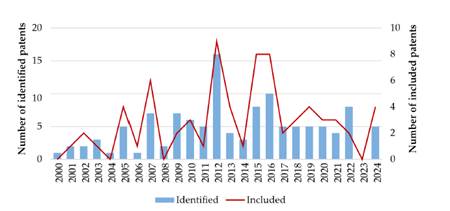
The survey of patent filings in the database of the European Patent Office (EPO) was conducted to assess the commercial perception of bioreactor usage in associations with plant tissue culture. The EPO was chosen due to its broad international coverage and the comprehensive information it provides across multiple countries, offering a global perspective on the topic. As previewed mentioned, the same terms used as descriptors in articles were employed, focusing on titles, abstracts, and claims. A total of 120 entries were found, highlighting the innovation and commercial potential of bioreactors in the field of plant tissue culture (Fig. 5).
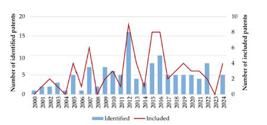
Patent applications related to the use of bioreactors for plant tissue culture in the EPO database for the period of 2000-2024.
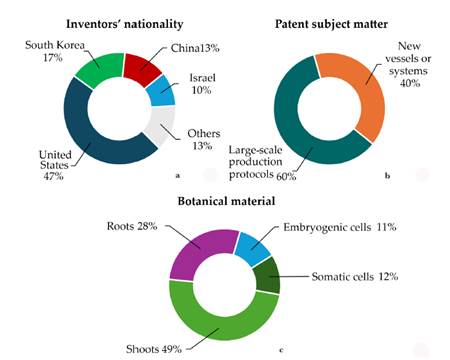
Most of the inventors were concentrated in just four non-European countries: United States (47%), South Korea (17%), China (13%), and Israel (10%) (Fig. 6a). This highlights the strategic role of the European Union in the commercialization of new products, despite the origin of the most innovations outside the region. In contrast to the country of the inventor, the highest number of patent family’s applications were field in China (64%). This can be attributed to the China’s significant low-cost production capabilities and the corresponding need to safeguard these reported innovations.
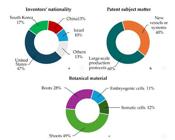
a-c. Categorization of patent filings related to bioreactor applications for plant tissue culture - a. inventors' nationality; b. patent subject matter; c. botanical material utilized.
However, it is important to note that the number of patent filings alone may overestimate the actual commercial viability of a technology. Without evidence of follow-through, such as prototype development, market introduction, or industrial-scale adoption, patent volume reflects more the intent to protect intellectual property than confirmed market success. Therefore, while the high number of patents suggests interest and perceived potential, it does not necessarily translate into effective or widespread commercial implementation.
The patents reviewed topics such as cultivation approaches, novel bioreactor designs, production protocols, and genetic engineering. A total of 48 patent documents were excluded for falling outside the scope of this research, namely those related to establishment of transgenics organisms (27%) or biosystems (27%), to non-plant cell (15%) or non-tissue culture (4%) approaches, to filtration or purification systems (8%), and others (19%). These filings appeared in the search results because their patent claims referenced potential applications of their innovations with bioreactor techniques.
Among the 72 included entries, more than half (43 documents) focused on large-scale production protocols (Fig. 6b) applied to shoots (49%), roots (28%), embryogenic cells (11%) or somatic cells (12%) (Fig. 6c). Commercially relevant species, such as grapevine, ginseng, agave, sugarcane, strawberry, lilies, and orchids, were found among the entries, highlighting the relevance of bioreactor techniques for market applications. Additionally, bioactive compounds, such as Resveratrol, Chlorogenic Acid, Taxol, and Cannabidiol, were also reported as products in these patent claims. New bioreactor vessels or systems (29) were also patented (Fig. 6b).
Several bioreactor models have already been developed, and recent inventions have focused on creating new tools for controlling culture conditions, such as pH, light spectrum, airflow, and shear stress mitigation (Valdiani et al. 2019). Shukla et al. (2017) highlighted additive manufacturing as a valuable tool for researchers seeking to improve techniques and overcome existing challenges.
Additive manufacturing, particularly 3D printing, offers significant potential for constructing customized components that allow more precise control of the microenvironment for plant growth (Shukla et al. 2017; Shukla et al. 2020). Moreover, 3D printing can facilitate the production of bioreactor systems with integrated sensors, enabling real-time monitoring of critical variables such as pH and oxygen levels. Despite the recent popularization of this technique and its promising application prospects (Beaman et al. 2020; Shahrubudin et al. 2019), this review did not identify any studies that associated 3D printing with solving issues related to bioreactors.
This first systematic review of the application of bioreactor technology to plant tissue culture, focusing on 21st-century scientific publications and EPO patent filings, reveals that the use of bioreactors represents a promising strategy for reducing costs. Additionally, factors such as system handling efficiency and flask cost influence the decisions of researchers. Moreover, the diversity of botanical species used in both research articles and patents, particularly crop and medicinal species, further underscores the significance of bioreactors for large-scale applications. However, despite these advantages, the review also reveals several practical limitations and challenges. For instance, the high initial cost of bioreactor equipment can be a significant barrier to adoption, especially for smaller laboratories or commercial operations. Furthermore, variability in species response, such as sensitivity to hypoxic conditions or propensity for hyperhydricity, limits the universal applicability of bioreactors. Some studies have reported suboptimal growth and morphological abnormalities when standard bioreactor conditions were applied without species-specific adjustments (Murthy et al. 2023). Despite these advantages, few studies have explored agitation strategies or vessel design modifications to address morphophysiological issues in cultures maintained in bioreactors. The collected data highlight an opportunity for further research and development, particularly focusing on optimizing culture conditions for species with limited adaptability to bioreactor environments.
Acknowledgements
This study was supported by the Brazilian Federal Agency for Support and Evaluation of Graduate Education (CAPES; Finance Code 001), the Brazilian Council for Scientific and Technological Development (CNPq), and The Carlos Chagas Filho Research Support Foundation (FAPERJ). The authors would like to thank Adriana Maria Lanziotti (TCT/FAPERJ), for her valuable technical assistance.
References
-
Ali MB, Thanh NT, Yu KW, Hahn EJ, Paek KY & Lee HL (2005) Induction in the antioxidative systems and lipid peroxidation in suspension culture roots of Panax ginseng induced by oxygen in bioreactors. Plant Science 169: 833-841. DOI: 10.1016/j.plantsci.2005.05.029
» https://doi.org/10.1016/j.plantsci.2005.05.029 -
Alister BM, Finnie J, Watt MP & Blakeway F (2005) Use of the temporary immersion bioreactor system (RITA®) for production of commercial Eucalyptus clones in Mondi Forests (SA) . Liquid Culture Systems for in vitro Plant Propagation: 425-442. DOI: 10.1007/1-4020-3200-5_33
» https://doi.org/10.1007/1-4020-3200-5_33 -
Alvard D, Cote F & Teisson C (1993) Comparison of methods of liquid medium culture for banana micropropagation - effects of temporary immersion of explants. Plant Cell, Tissue and Organ Culture 32: 55-60. DOI: 10.1007/BF00040116
» https://doi.org/10.1007/BF00040116 -
Arigundam U, Variyath AM, Siow YL, Marshall D & Debnath SC (2020) Liquid culture for efficient in vitro propagation of adventitious shoots in wild Vaccinium vitis-idaea ssp. minus (lingonberry) using temporary immersion and stationary bioreactors. Scientia Horticulturae 264: 109199. DOI: 10.1016/j.scienta.2020.109199
» https://doi.org/10.1016/j.scienta.2020.109199 -
Baque MA, Moh SH, Lee EJ, Zhong JJ & Paek KY (2012) Production of biomass and useful compounds from adventitious roots of high-value added medicinal plants using bioreactor. Biotechnology Advances 30: 1255-1267. DOI: 10.1016/j.biotechadv.2011.11.004
» https://doi.org/10.1016/j.biotechadv.2011.11.004 -
Bhatia S & Bera T (2015) Somatic embryogenesis and organogenesis. In: Bhatia S, Sharma K, Dahiya R & Bera T (eds.) Modern applications of plant biotechnology in pharmaceutical sciences. Academic Press, London. Pp. 209-230. DOI: 10.1016/B978-0-12-802221-4.00006-6
» https://doi.org/10.1016/B978-0-12-802221-4.00006-6 -
Beaman JJ, Bourell DL, Seepersad CC & Kovar D (2020) Additive manufacturing review: early past to current practice. Journal of Manufacturing Science and Engineering, Transactions of the ASME 142: 110812. DOI: 10.1115/1.4048193
» https://doi.org/10.1115/1.4048193 -
Bhattacharya P, Dey S & Bhattacharyya BC (1994) Use of low-cost gelling agents and support matrices for industrial scale plant tissue culture. Plant Cell, Tissue and Organ Culture 37: 15-23. DOI: 10.1007/BF00048112
» https://doi.org/10.1007/BF00048112 -
Cruz-Cruz CA, González-Arnao MT & Engelmann F (2013) Biotechnology and conservation of plant biodiversity. Resources 2: 73-95. DOI: 10.3390/resources2020073
» https://doi.org/10.3390/resources2020073 -
Dey S (2005) Cost-effective mass cloning of plants in liquid media using a novel Growtek bioreactor. Liquid Culture Systems for in vitro Plant Propagation: 127-141. DOI: 10.1007/1-4020-3200-5_8
» https://doi.org/10.1007/1-4020-3200-5_8 -
Escalona M, Samson G, Borroto C & Desjardins Y (2003) Physiology of effects of temporary immersion bioreactors on micropropagated pineapple plantlets. In vitro Cellular & Developmental Biology - Plant 39: 651-656. DOI: 10.1079/IVP2003473
» https://doi.org/10.1079/IVP2003473 -
Florez SL, Curtis MS, Shaw SE, Hamaker NK, Larsen JS & Curtis WR (2016) A temporary immersion plant propagation bioreactor with decoupled gas and liquid flows for enhanced control of gas phase. Biotechnology Progress 32: 337-345. DOI: 10.1002/btpr.2221
» https://doi.org/10.1002/btpr.2221 -
Georgiev MI, Eibl R & Zhong JJ (2013) Hosting the plant cells in vitro: recent trends in bioreactors. Applied Microbiology and Biotechnology 97: 3787-3800. DOI: 10.1007/s00253-013-4817-x
» https://doi.org/10.1007/s00253-013-4817-x -
Georgiev V, Schumann A, Pavlov A & Bley T (2014) Temporary immersion systems in plant biotechnology. Engineering in Life Sciences 14: 607-621. DOI: 10.1002/elsc.201300166
» https://doi.org/10.1002/elsc.201300166 -
Gupta N, Jain V, Joseph MR, Devi S & Joseph RM (2020) A review on micropropagation culture method. Asian Journal of Pharmaceutical Research and Development 8: 86-93. DOI: 10.22270/ajprd.v8i1.653
» https://doi.org/10.22270/ajprd.v8i1.653 -
Harris RE & Mason EBB (1983) Two machines for in vitro propagation of plants in liquid media. Canadian Journal of Plant Science 63: 311-316. DOI: 10.4141/cjps83-032
» https://doi.org/10.4141/cjps83-032 -
Khan SA, Siddiqui MH & Osama K (2019) Bioreactors for hairy roots culture: a review. Current Biotechnology 7: 417-427. DOI: 10.2174/2211550108666190114143824
» https://doi.org/10.2174/2211550108666190114143824 -
Kumar N & Reddy MP (2011) In vitro plant propagation: a review. Journal of Forest and Environmental Science 27: 61-72. DOI: 10.7747/JFS.2011.27.2.1
» https://doi.org/10.7747/JFS.2011.27.2.1 -
Lemos EEP, Ferreira MS, Alencar LMC, Oliveira JGL & Magalhães VS (2001) Micropropagação de clones de banana cv. Terra em biorreator de imersão temporária. Revista Brasileira de Fruticultura 23: 482-487. DOI: 10.1590/S0100-29452001000300006
» https://doi.org/10.1590/S0100-29452001000300006 -
Levin R, Gaba V, Tal B, Hirsch S, Denola D & Vasil IK (1988) Automated plant tissue culture for mass propagation. Bio/Technology 6: 1035-1040. DOI: 10.1038/nbt0988-1035
» https://doi.org/10.1038/nbt0988-1035 -
Long Y, Yang Y, Pan G, & Shen Y (2022) New insights into tissue culture plant-regeneration mechanisms. Frontiers in Plant Science 13: 926752. DOI: 10.3389/fpls.2022.926752
» https://doi.org/10.3389/fpls.2022.926752 -
Malabadi RB, Chalannavar RK, & Kolkar KP (2025) Plant cell totipotency: plant tissue culture applications-an updated review. World Journal of Advanced Engineering Technology and Sciences 16: 112-35. DOI: 10.30574/wjaets.2025.16.2.1262
» https://doi.org/10.30574/wjaets.2025.16.2.1262 -
Marbun CLM, Toruan-Mathius N, Reflini, Utomo C & Liwang T (2015) Micropropagation of embryogenic callus of oil palm (Elaeis guineensis Jacq.) using temporary immersion system. Procedia Chemistry 14: 122-129. DOI: 10.1016/j.proche.2015.03.018
» https://doi.org/10.1016/j.proche.2015.03.018 -
Murthy HN, Joseph KS, Paek KY, & Park SY (2023) Bioreactor systems for micropropagation of plants: present scenario and future prospects. Frontiers in Plant Science 14: 1159588. DOI: 10.3389/fpls.2023.1159588
» https://doi.org/10.3389/fpls.2023.1159588 -
Murthy HN, Joseph KS, Paek KY & Park SY (2024) Bioreactor configurations for adventitious root culture: recent advances toward the commercial production of specialized metabolites. Critical Reviews in Biotechnology 44: 837-859. DOI: 10.1080/07388551.2023.2233690
» https://doi.org/10.1080/07388551.2023.2233690 -
Page MJ, McKenzie JE, Bossuyt PM, Boutron I, Hoffmann TC, Mulrow CD, Shamseer L, Tetzlaff JM, Akl EA, Brennan SE, Chou R, Glanville J, Grimshaw JM, Hróbjartsson A, Lalu MM, Li T, Loder EW, Mayo-Wilson E, McDonald S, McGuinness LA, Stewart LA, Thomas J, Tricco AC, Welch VA, Whiting P & Moher D (2021) The PRISMA 2020 statement: an updated guideline for reporting systematic reviews. British Medical Journal 372: n71. DOI: 10.1136/bmj.n71
» https://doi.org/10.1136/bmj.n71 -
Prasad BD, Sahni S, Kumar P & Siddiqui MW (2017) Plant biotechnology. Vol 1: Principles, techniques, and applications. Apple Academic Press, New York. 586p. DOI: 10.1201/9781315213743
» https://doi.org/10.1201/9781315213743 -
Preil W (1991) Application of bioreactors in plant propagation. Micropropagation: 425-445. DOI: 10.1007/978-94-009-2075-0_25
» https://doi.org/10.1007/978-94-009-2075-0_25 -
Preil W (2005) General introduction: a personal reflection on the use of liquid media for in vitro culture. Liquid Culture Systems for in vitro Plant Propagation: 1-18. DOI: 10.1007/1-4020-3200-5_1
» https://doi.org/10.1007/1-4020-3200-5_1 -
Sahu J & Sahu RK (2013) A review on low cost methods for in vitro micropropagation of plant through tissue culture technique. Pharmaceutical and Biosciences Journal 1: 38-41. DOI: 10.20510/ukjpb/1/i1/91115
» https://doi.org/10.20510/ukjpb/1/i1/91115 -
Shahrubudin N, Lee TC & Ramlan R (2019) An overview on 3D printing technology: technological, materials, and applications. Procedia Manufacturing 35: 1286-1296. DOI: 10.1016/j.promfg.2019.06.089
» https://doi.org/10.1016/j.promfg.2019.06.089 -
Shukla MR, Singh AS, Piunno K, Saxena PK & Jones AMP (2017) Application of 3D printing to prototype and develop novel plant tissue culture systems. Plant Methods 13: 1-10. DOI: 10.1186/s13007-017-0156-8
» https://doi.org/10.1186/s13007-017-0156-8 -
Shukla MR, Piunno K, Saxena PK, & Jones AMP (2020) Improved in vitro rooting in liquid culture using a two piece scaffold system. Engineering in Life Sciences 20: 126-32. DOI: 10.1002/elsc.201900133
» https://doi.org/10.1002/elsc.201900133 -
Silva AB, Pasqual M, Teixeira JB & Araújo AG (2007) Métodos de micropropagação de abacaxizeiro. Pesquisa Agropecuária Brasileira 42: 1257-1260. DOI: 10.1590/S0100-204X2007000900006
» https://doi.org/10.1590/S0100-204X2007000900006 -
Takayama S (1991) Mass propagation of plants through shake- and bioreactor-culture techniques. Biotechnology in Agriculture and Forestry 17: 495-515. DOI: 10.1007/978-3-642-76415-8_27
» https://doi.org/10.1007/978-3-642-76415-8_27 - Teisson C, Alvard D, Berthouly M, Cote F, Escalant JV & Etienne H (1995) In vitro culture by temporary immersion: a new device. Plantations, Recherche, Developpement 2: 5.
-
Todorova V, Ivanov K & Ivanova S (2021) Comparison between the biological active compounds in plants with adaptogenic properties (Rhaponticum carthamoides, Lepidium meyenii, Eleutherococcus senticosus and Panax ginseng). Plants 11: 64. DOI: 10.3390/plants11010064
» https://doi.org/10.3390/plants11010064 -
Valdiani A, Hansen OK, Nielsen UB, Johannsen VK, Shariat M, Georgiev MI, Omidvar V, Ebrahimi M, Tavakoli Dinanai E & Abiri R (2019) Bioreactor-based advances in plant tissue and cell culture: challenges and prospects. Critical Reviews in Biotechnology 39: 20-34. DOI: 10.1080/07388551.2018.1489778
» https://doi.org/10.1080/07388551.2018.1489778 -
Verdi LG, Brighente IMC & Pizzolatti MG (2005) Gênero Baccharis (Asteraceae): aspectos químicos, econômicos e biológicos. Química Nova 28: 85-94. DOI: 10.1590/S0100-40422005000100017
» https://doi.org/10.1590/S0100-40422005000100017 -
Watt MP (2012) The status of temporary immersion system (TIS) technology for plant micropropagation. African Journal of Biotechnology 11: 14025-14035. DOI: 10.5897/AJB12.1693
» https://doi.org/10.5897/AJB12.1693 -
Welander M, Persson J, Asp H & Zhu LH (2014) Evaluation of a new vessel system based on temporary immersion system for micropropagation. Scientia Horticulturae 179: 227-232. DOI: 10.1016/j.scienta.2014.09.035
» https://doi.org/10.1016/j.scienta.2014.09.035 -
Wu CH, An D, Sun LN, Wang M, Chang GN, Zhao CY & Lian ML (2017) A novel co-culture system of adventitious roots of Echinacea species in bioreactors for high production of bioactive compounds. Plant Cell, Tissue and Organ Culture 130: 301-311. DOI: 10.1007/s11240-017-1224-5
» https://doi.org/10.1007/s11240-017-1224-5 -
Van Wyk BE & Albrecht C (2008) A review of the taxonomy, ethnobotany, chemistry and pharmacology of Sutherlandia frutescens (Fabaceae). Journal of Ethnopharmacology 119: 620-629. DOI: 10.1016/j.jep.2008.08.003
» https://doi.org/10.1016/j.jep.2008.08.003 -
Xu J, Ge X & Dolan MC (2011) Towards high-yield production of pharmaceutical proteins with plant cell suspension cultures. Biotechnology Advances 29: 278-299. DOI: 10.1016/j.biotechadv.2011.01.002
» https://doi.org/10.1016/j.biotechadv.2011.01.002 -
Yancheva S, Georgieva L, Badjakov I, Dincheva I, Georgieva M, Georgiev V & Kondakova V (2019) Application of bioreactor technology in plant propagation and secondary metabolite production. Journal of Central European Agriculture 20: 321-340. DOI: 10.5513/JCEA01/20.1.2224
» https://doi.org/10.5513/JCEA01/20.1.2224 -
Yue W, Ming QL, Lin B, Rahman K, Zheng CJ, Han T & Qin LP (2014) Medicinal plant cell suspension cultures: pharmaceutical applications and high-yielding strategies for the desired secondary metabolites. Critical Reviews in Biotechnology 36: 215-232. DOI: 10.3109/07388551.2014.923986
» https://doi.org/10.3109/07388551.2014.923986
Data availability statement
In accordance with Open Science communication practices, the authors inform that there is no data sharing of this manuscript.