 Diversity and nesting characteristics of stingless bees in an urban green area, the Botanical Garden of Rio de Janeiro
Abstract
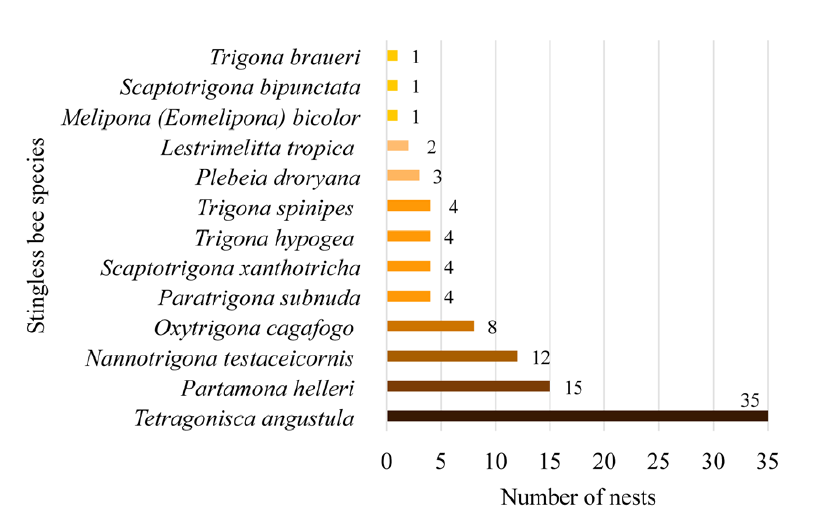
Green urban areas act as refuges for the nests of stingless bees, during reproduction, in response to niche constraints. This study investigated the characteristics of natural colonization by stingless bees in the arboretum of the Botanical Garden of Rio de Janeiro, located within the city’s urban fabric. A total of 94 nests belonging to 13 species were found in the following proportions: Tetragonisca angustula (37.3%), Partamona helleri (16%), Nannotrigona testaceicornis (12.8%), Oxytrigona cagafogo (8.5%), Scaptotrigona xanthotricha, Paratrigona subnuda, Trigona spinipes, and Trigona hypogea (each 4.2%), Plebeia droryana (3.2%), Lestrimelitta tropica (2.1%), Melipona (Eomelipona) bicolor, Scaptotrigona bipunctata, and Trigona braueri (each 1.1%). Most nests were built inside tree trunks or in the treetops, but some were also found in stone walls, in monuments, and in the ground. Nests were identified in 48 tree species across 21 botanical families, predominantly in Moraceae (19.44%) and Cupressaceae (15.28%). The colonized trees had an average diameter of 1.09 m, indicating mature trees, which favor the establishment of stingless bee nests. The height, density, spatial distribution and survival of the nests were evaluated. These results underscore the importance of conserving stingless bee nests in urban green areas.
Key words:
Atlantic Forest; biodiversity; Meliponina; stingless bees nesting habits; urban afforestation
Introduction
In Brazilian Tropical Atlantic Rainforests, stingless bees account for approximately 70% of foraging bees (Ramalho 2004). Brazil is home to 244 described stingless bee species and about 89 undescribed species across 29 genera (Pedro 2014). Surveys have recorded 22 species of stingless bees in the state of Rio de Janeiro (Nogueira 2023); however, research focusing on stingless bees in urban green spaces within the state remains limited (Santos et al. 2020).
Stingless bees display significant diversity in morphology, colony size, nesting biology, associations with other insects, nest architecture, queen production, foraging strategies, and other traits. They nest in living trees, underground cavities, exposed branches or embankments, and in ant or termite nests (Roubik 2023). Their trophic resources include water, pollen, and nectar. Additionally they gather nest-building materials and defensive compounds, such as mud, oils, and resins (Roubik 1989). Depending on the species, colonies may range from 100 to over 10,000 individuals (Roubik 2023). Swarming is typically preceded by the preparation of a nesting site by the parental colony before the departure of the swarm with the new queen. Their colonies are typically long-lived and remain in the same location, as physogastric queens are unable to fly (Roubik 2023). Colonies spread gradually to nearby areas, making them highly reliant on stable habitats with specific characteristics. This dependence renders them particularly vulnerable to habitat alterations and disturbances (Toledo-Hernández et al. 2022).
The reduction of native vegetation has compelled stingless bees to migrate to urban zones, where they find potential nesting sites such as large, often hollow, old trees and artificial substrates, including stone walls. Nesting requirements vary by species (Knoll et al. 1994), and urban green areas often provide an abundance of floral resources and other necessary materials derived from both native and exotic trees and shrubs (Kleinert 2020). The richness of resources collected by stingless bees is closely influenced by the composition and proportion of the surrounding landscape (Machado et al. 2020). While some species of stingless bees in these environments are polylectic - collecting pollen from a variety of unrelated plants - others, which are more sensitive to environmental changes and have specific ecological demands, may also thrive. These sensitive species can act as bioindicators of environmental quality (Silva & Paz 2012).
The loss of natural habitats due to urbanization poses substantial challenges to bees by reducing natural sources of food and nesting sites, promoting habitat fragmentation, and increasing exposure to anthropogenic pressures such as pollutants (Paixão & Silva 2021), pesticides (Siviter et al. 2023), human traffic, construction activities (Zanette et al. 2005), predatory actions (Velez-Ruiz et al. 2013), and other stressors (Hernandez et al. 2009). Establishing, maintaining, and expanding ecological corridors are key strategies for preventing the extinction of native pollinators, including stingless bees (Giannini et al. 2015; Toledo- Hernández et al. 2022). The creation and adaptation of urban parks and gardens that feature a diversity of native flowers and trees, along with reliable water availability (Kaluza et al. 2016; Anderson et al. 2023), as well as the enhancement of ecological connectivity between forest fragments (Antonini et al. 2013), can promote the persistence of native bee populations in urban settings. These efforts are further strengthened by environmental education initiatives (Silveira et al. 2021), public policy measures (Santos et al. 2021), legal frameworks (Brasil 2020), and targeted research aimed at conserving these species (Santos et al. 2020).
The Botanical Garden, located within the urban area of Rio de Janeiro (RJ), has an arboretum with a high diversity of native and exotic botanical species. Founded in 1808, the living collection comprises many old trees with natural hollows and cavities. The area is actively managed and frequented by numerous visitors and employees, factors that can influence colony establishment and maintenance in various ways depending on the habitat and biology of each species.
The objective of this study was to investigate the stingless bees nesting in the arboretum of the Botanical Garden of Rio de Janeiro. Understanding the characteristics that enable the establishment and maintenance of nests of different stingless bee species in an urban visitation area can provide valuable insights for the management and conservation of similar environments.
Materials and Methods
The study was conducted from January 2015 to December 2022 at the Botanical Garden of Rio de Janeiro (JBRJ), both in the Cultural Corridor and in the arboretum itself, adjacent areas covering a total of 39.8 hectares. The arboretum is subdivided into 41 sections and numbered beds used for cultivating plant species. It is located adjacent to the urban area of Rio de Janeiro, within the coordinates -22º57’30’’ to -22º58’40’’S and -43º13’07’’ to -43º13’45’’W.
Each section of the arboretum was surveyed once a week between 9:00 a.m. and 12:00 p.m., resulting in eight complete surveys and 984 hours of monitoring for stingless bee nests over the entire study period. All trees, clumps, and palm trees were inspected within each section, resulting in the annual inspection of 100% of the arboretum’s sections and specimens. With the aid of maps for each section, botanical specimens harboring stingless bee nests were identified with tomb numbers and geographical coordinates (JBRJ 2024). In addition, adjacent soil, buildings, and monuments were surveyed in search of stingless bee nests. Using a Garmin Map 78 GPS device, geographic coordinates of nests located in the soil and in artificial substrates were recorded.
For nests of unknown species, bee samples were collected with an entomological net, sent for identification, and deposited in the collection of the Plant Health Laboratory at the JBRJ. The height of each nest was measured from the tree trunk base to the entrance hole using a measuring tape (Wille & Michener 1973). For heights beyond the reach of the tape measure, a Hypsometer Laser Mileseey PF240 was employed. Tree diameters were measured at breast height (DBH).
To determine whether the distribution of nests among botanical families deviated significantly from a uniform distribution, a Chi-square goodness-of-fit test was applied, considering families with N ≥ 3. Statistical significance was determined at a p-value of less than 0.05.
The spatial distribution of stingless bee nests was assessed to identify aggregation or randomness. For the total study area, observed distances between nests were compared to expected distances under a random distribution. The R index was calculated to classify the distribution as aggregated, random, or regular. A Monte Carlo simulation with 99 iterations generated random scenarios to compare with the actual nest distribution, producing a p-value. All statistical analyses were performed using R software, version 4.4.1, 2024.
Results and Discussion
Ninety-four nests belonging to thirteen species of stingless bees were identified, with the following proportions: Tetragonista angustula (Latreille, 1811) (37.3%), Partamona helleri (Friese, 1900) (16%), Nannotrigona testaceicornis (Lepeletier, 1836) (12.8%),
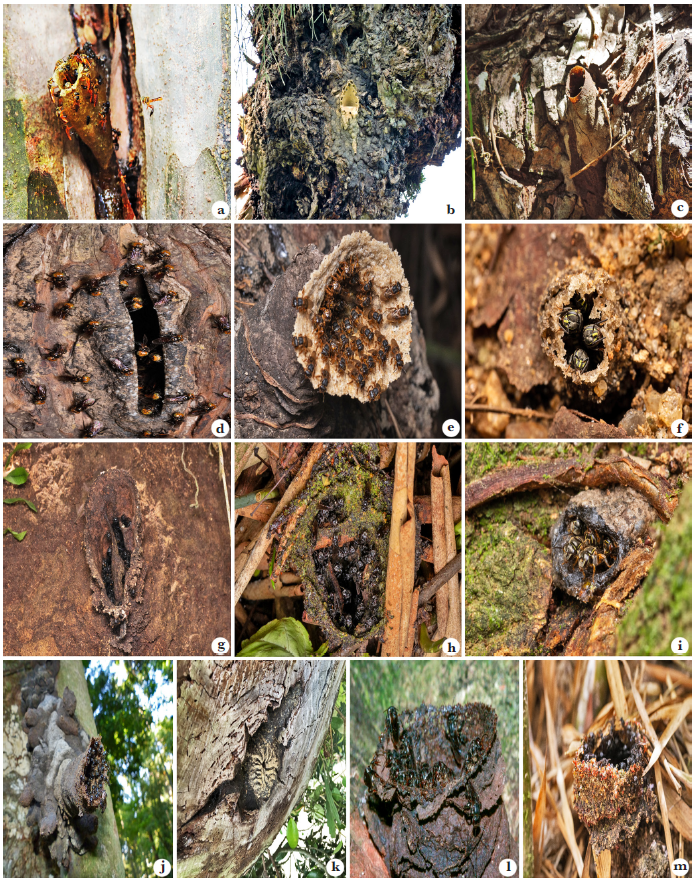
Oxytrigona cagafogo Müller 1874 (8.5%), Scaptotrigona xanthotricha Moure, 1950, Paratrigona subnuda Moure, 1947, Trigona spinipes (Fabricius, 1793), and Trigona hypogea Silvestri, 1902 (4.2%), Plebeia droryana (Friese, 1900) (3.2%), Lestrimelitta tropica Marchi & Melo, 2006 (2.1%), and Melipona (Eomelipona) bicolor Lepeletier, 1836, Scaptotrigona bipunctata (Lepeletier, 1836) and Trigona braueri Friese, 1900 (1.1%) (Figs. 1a-m; 2).
Among these species, Tetragonista angustula exhibits generalist habits and is highly efficient in pollinating tropical flora. Its ecological plasticity, combined with aggressive cavity patrolling within the colony’s territory and high swarm rates, facilitates its rapid distribution in the Atlantic Forest (Batista et al. 2003). According to Santos et al. (2020), T. spinipes and T. angustula are the most frequently observed species in surveys of urban environments.
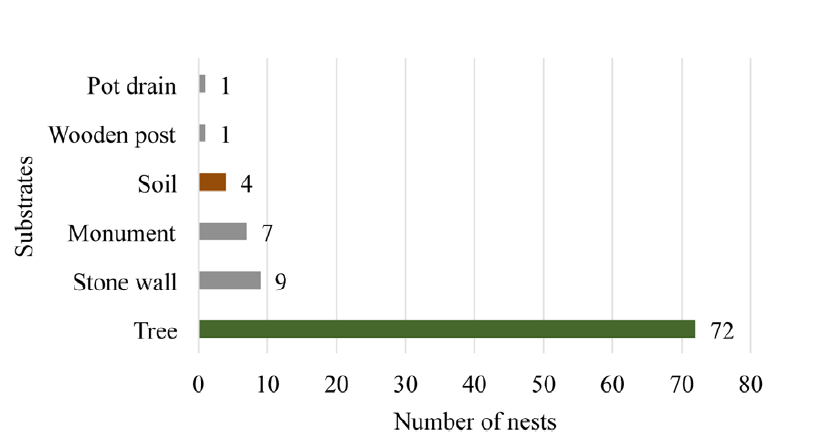
A significant proportion of the nests (76.6%) were located on trees, palm trees, and a bamboo clump, while 19.15% were on artificial substrates and 4.25% were in the soil (Fig. 3). Many stingless bee species prefer trees as nesting substrates in both natural (Werneck & Faria-Mucci 2014; Macedo et al. 2020; Cab-Baqueiro et al. 2022) and anthropized areas (Aidar et al. 2013; Albernaz et al. 2022), emphasizing the role of afforestation in biodiversity conservation and the preservation of social bees.
Tetragonista angustula and N. testaceicornis utilized substrates such as stone walls (Fig. 4a) and Wallace Cast Iron Fountains from the Val d’Osne Foundry (Fig. 4b-c). Nesting in buildings and monuments suggests that these bees can utilize artificial substrates in urban environments and associated green spaces, as seen in studies conducted at university campuses, plazas, and cemeteries (Nates-Parra et al. 2006; Martins et al. 2015; Vieira et al. 2016), a pattern that may be driven by the limited availability of natural substrates, such as trees with suitable cavities (Fig. 4d-g). The small size of their colonies enables these species to occupy limited spaces, providing access to a broader range of niches (Taura & Laroca 1991; Rocha-Filho et al. 2020). N. testaceicornis is known to visit tropical flora species in both natural and urbanized areas and contributes to the pollination of economically significant plants (Imperatriz- Fonseca et al. 2011; Silva et al. 2020).
Nest density was 2.36 ha⁻¹, which is intermediate compared to other studies in Brazilian green urban areas: 15.1 nests ha⁻¹ across five species (Martins et al. 2015), 2.17 nests ha⁻¹ across seven species (Aidar et al. 2013), 1.64 nests ha⁻¹ across five species (Souza et al. 2005), and 0.52 nests ha⁻¹ across seven species (Vieira et al. 2016). It is likely that not all nests in the arboretum were detected due to concealment in the tall, dense canopy or ground vegetation. In some areas, the soil is covered with perennial plants such as Syngonium angustatum Schott, Epipremnum aureum (Linden & André) G.S. Bunting, and Spathiphyllum cannifolium (Dryand. ex Sims) Schott, which can obscure nests located in the ground.
The species abundance observed at JBRJ - thirteen species - likely results from the arboretum’s abundance of trunk cavities and its extensive collection of native and exotic plant species, comprising 6,960 specimens from 1,647 taxa (Almeida et al. 2024). In a monitoring study of 157 botanical species in the JBRJ arboretum, Gobatto et al. (2021) observed year- round flowering, high attractiveness to pollinators, and floral rewards such as pollen, nectar, oil, and resin. For nest construction, depending on the species, bees may also collect materials such as clay, mud, decaying wood, and fecal matter, in addition to resins and oils (Roubik 1989). The soils in the arboretum are generally of medium texture (EMBRAPA & IBAMA 1992), thus providing access to clay, as well as to resins found on branches and trunks.
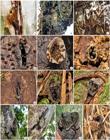
a-m. Nest entrances of stingless bee species at the Botanical Garden of Rio de Janeiro, RJ, Brazil - a. Tetragonisca angustula; b. Partamona helleri; c. Nannotrigona testaceicornis; d. Oxytrigona cagafogo; e. Scaptotrigona xanthotricha; f. Paratrigona subnuda; g. Trigona spinipes; h. Trigona hypogea; i. Plebeia droryana; j. Lestrimelitta tropica; k. Melipona (Eomelipona) bicolor; l. Scaptotrigona bipunctata; m. Trigona braueri.
Pollinator diversity and abundance are positively correlated with the connectivity of green areas across landscapes with varying degrees of urbanization (Graffigna et al. 2024). The arboretum is connected to a secondary Atlantic Forest, a recognized biodiversity hotspot, and adjoins other green spaces such as Parque Nacional da Tijuca. This enables it to function as both an ecological corridor and an urban refuge for pollinators (Gobatto et al. 2021). Together, these areas form one of the largest urban Atlantic Forest complexes globally.
In Meliponini, reduced genetic variability is influenced by several factors, including the queen’s mating with a single male, the establishment of new colonies in close proximity to the mother colony, and the small effective population size (Nogueira-Neto 1997). In fragmented environments, this condition is exacerbated by the loss of genetic stock due to population isolation (Antonini et al. 2013). Bee body size is directly related to flight capacity and, in fragmented landscapes, may limit dispersal depending on distance (Araújo et al. 2004). In the arboretum, the connection to a forest fragment with high floristic diversity (JBRJ & IBAMA 1994) may favor gene flow in medium-sized species such as T. hypogea, capable of flying distances from 1,159 to 1,710 meters; in large-sized species such as M. bicolor, with flight capacity exceeding 2 kilometers; and even in small-sized species such as P. droryana, with a dispersal range of 621 to 951 meters (Araújo et al. 2004).
Over the course of eight years, there was an increase of 41 nests and a loss of 23 nests, resulting in a net gain of 33.96%. In surveys conducted in Juiz de Fora (MG), a 50% increase in the number of nests was recorded over the same period, attributed to urban expansion and the greater availability of artificial nesting niches for species such as T. angustula and N. testaceicornis (Vieira et al. 2016). However, urban sprawl, associated with pollution and deforestation, has led to significant declines in bee species diversity and abundance in urban areas of Curitiba (PR) (Taura & Laroca 2001). Despite the arboretum’s exposure to urban pollution (Paixão & Silva 2021), the area remained stable throughout the study period, with no reduction in the vegetation or a significant increase in the urbanized area.
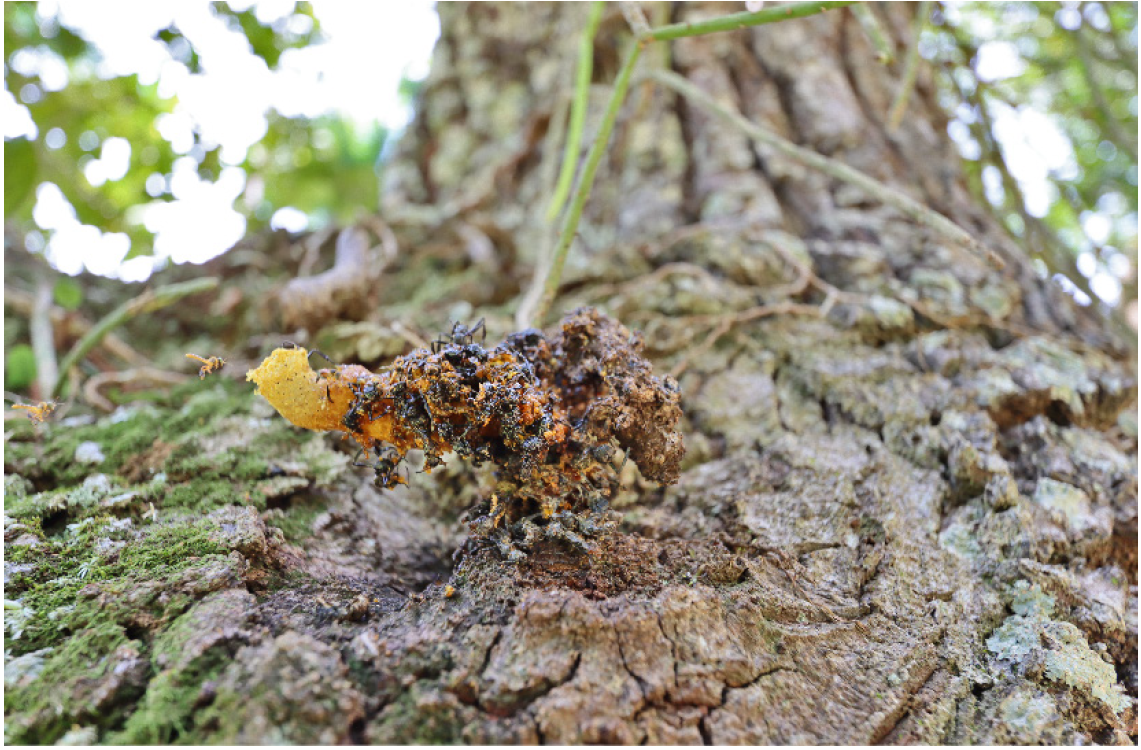
Efforts to relocate 17 nests from dead trees and branches to nearby trees in the case of O. cagafogo, P. helleri, and T. spinipes or to the stingless beekeeping site (meliponary) in the case of T. angustula, N. testaceicornis, S. xanthotricha, and P. helleri ensure their survival. This management prevents the destruction of the nests during and after tree felling, protecting them from exposure to predators and environmental stressors even when the nest itself has not been directly affected, as described by Eltz et al. (2003). However, colonies remain vulnerable to threats such as ants (Fig. 5), subterranean termite infestations (Roubik 1989) and the kleptobiotic species L. tropica, which attacks stingless bee nests to steal food and materials for its own nest construction (Nogueira-Neto 1997) (Fig. 1j).
The average nest heights of T. angustula and N. testaceicornis were 1.24 m and 1.84 m, respectively (Tab. 1). These values align with ranges reported in other studies in urban green areas, such as 2-2.7 m (Martins et al. 2015) and 1-1.57 m (Carvalho & Marchini 1999). The highest nest observed was for P. helleri at 35 m, located among the branches of Araucaria bidwillii Hook (Fig. 6a), while the lowest nest for this species was on Encephalartos altensteinii Lehm. at 1.80 m, attached to the petioles of its leaves (Tab. 1; Fig. 6b). Nests of P. helleri and T. spinipes built on leaves or smooth trunks, such as those of Roystonea oleracea (Jacq.) O.F. Cook, were often susceptible to failure during heavy rain unless relocated (Fig. 6c-d). A single P. helleri nest relocated at a height of one meter was predated in the meliponary. The fauna at JBRJ is rich, and animals such as the Southern tamandua (Tamandua tetradactyla, Linnaeus 1758) and the South American raccoon (Procyon cancrivorus, G. Cuvier 1798) may predate exogenous nests located at accessible heights. Therefore, nests of P. helleri and T. spinipes are relocated to branches positioned at heights above 2.5 m.
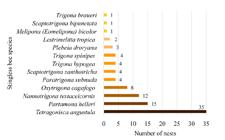
Number of nests of stingless bee species at the Botanical Garden of Rio de Janeiro, RJ, Brazil.
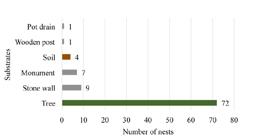
Number of stingless bee nests in different substrates at the Botanical Garden of Rio de Janeiro, RJ, Brazil.
Vieira et al. (2016) observed that P. helleri targeted artificial substrates for nesting and, at JBRJ, a single nest was located on a historical monument, the Portal of Belas Artes (Fig. 4d). Endemic to the Atlantic Forest, P. helleri adapts to open and urban areas when suitable materials for feeding and nest construction are available (Batista et al. 2003). Known for its efficiency as a pollen collector, the species shows both breadth and consistency in trophic resource selection (Carvalho et al. 1999; Ramalho 2004). At JBRJ, P. helleri nests were predominantly found on trees and palm trees, with 78.57% located near epiphytes, cacti, ferns, climbing plants, bromeliads and Rhipsalis species (Fig. 6e). Over time, as nests grow, surrounding plants often colonize their exterior, intensifying the association (Wille 1983). However, plants were present at the entrances of only 21.73% of T. angustula nests and 12.5% of N. testaceicornis and O. cagafogo nests, with no records for other species.
The exogenous nests of T. spinipes were built on trunks at an average height of 16.2 m (Tab. 1). Similar findings were reported by Souza et al. (2005) and Aidar et al. (2013), who also observed T. spinipes nests placed high up, with Wille & Michener (1973) noting that nests of this species are typically found at a minimum height of 4 m above the ground. T. spinipes is a generalist and opportunistic pollinator, characterized by populous nests and wide dispersal capacity, earning it the designation of a “rescue pollinator” (Nogueira-Neto 1997; Jaffé et al. 2016).
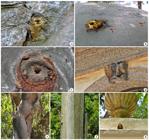
a-g. Stingless bee nesting in artificial substrates at the Botanical Garden of Rio de Janeiro, RJ, Brazil - a. Tetragonisca angustula in a stone wall; b. Tetragonisca angustula in Wallace Fountain; c. Nannotrigona testaceicornis in Wallace Fountain; d. Partamona helleri in the Portal of Belas Artes; e. Scaptotrigona xanthotricha in the Statue of Nymph Eco; f. Nannotrigona testaceicornis in a wooden post; g. Tetragonisca angustula in a pot drain.
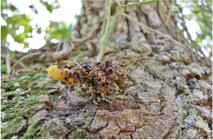
The ant Camponotus sericeiventris (Guérin-Méneville 1838) on the entrance of a Tetragonisca angustula nest.
For Oxytrigona cagafogo, the highest recorded nest was 2.4 m above the ground on a Mangifera indica L. tree, while the lowest was at 40 cm on the trunk of Bridelia tomentosa Blume (Tab. 1). O. cagafogo nests can contain up to 40,000 individuals, and the species produces caustic chemical secretions as a defense mechanism, enabling it to plunder the nests of other bees, including Apis mellifera Linnaeus, 1758. As a pollinator, Oxytrigona tataira (Smith, 1863) contributes to the reconstitution and conservation of tropical forests (Souza et al. 2007).
The exogenous species P. helleri and T. spinipes built the highest nests (Tab. 1). These findings may also reflect the difficulty of locating the nests of endogenous species, such as T. angustula, N. testaceicornis, and P. droryana, at higher elevations due to their small, inconspicuous entrances and short tubes (Fig. 1a,c,i) (Carvalho & Marchini 1999). Among the endogenous species, S. xanthotricha stood out for its larger and more visible entrance tubes (Fig. 1e). According to Batista et al. (2003), this species can use less-protected cavities due to its aggressive defense against intruders.
Although S. bipunctata was the most common species in urban green areas of Poços de Caldas (MG) (Santos et al. 2023), only one endogenous nest was found at JBRJ, located in the trunk of Guarea guidonia (L.) Sleumer (Fig 1l; Tab. 2). This species is known for its numerous colonies, defensive behavior, and preference for large trees with entrance heights ranging from 0.38 to 1.5 m. It has been frequently recorded in urban green areas across southern and southeastern Brazil (Santos et al. 2020).
Melipona (Eomelipona) bicolor typically nests near the ground in cavities of mature hollow trees with large diameters (Nogueira-Neto 1997). However, at JBRJ, a single nest was recorded on the branch of a large Dimocarpus longan Lour. tree at 6.7 m above the ground. (Fig. 1k; Tab. 2). Witter et al. (2010) recorded that 50% of the nest entrances of Melipona (Eomelipona) bicolor schencki Gribodo, 1893 were located at heights below 28 cm, while the others were found at various elevations, including six nests above five meters, indicating that nest height may vary depending on the availability of suitable cavities for nesting. This species is polylectic and adapted to humid environments such as the Atlantic Forest (Hilário et al. 2000). It has been reported twice in forest remnants in the state of Minas Gerais (Antonini et al. 2013; Werneck & Faria-Mucci 2014; Santos et al. 2020) and does not commonly nest in anthropized areas, possibly due to its near-exclusive requirement for nesting in large-diameter trees (Hubbel & Johnson 1977; Eltz et al. 2003).
Maximum, minimum, and average values (with standard error) for the height of stingless bee nest entrances in natural and artificial substrates, as well as the diameter at breast height (DBH) of trees, palm trees, and a bamboo clump used for nesting at the Botanical Garden of Rio de Janeiro, RJ, Brazil.
Stingless bees prefer trunks or branches of living trees with diameters exceeding 30 cm but can also nest in dead trees of various sizes (Kerr et al. 1996). At JBRJ, bees targeted living trees with an average trunk diameter of 1.09 m, as dead trees are removed upon dying (Tab. 1). According to Vieira et al. (2016), species such as P. droryana, O. tataira, and S. bipunctata build nests exclusively in tree hollows. The availability of these substrates, combined with the specific ecological requirements of each species, is a limiting factor for their survival in urban environments. The JBRJ has ancient trees that are preserved until they die, providing essential nesting habitats. In contrast, urban trees outside protected green areas are often pruned, rarely receive phytosanitary treatment, and are more likely to be removed.
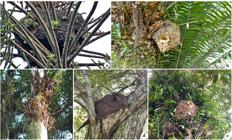
a-e. Nests of stingless bee at the Botanical Garden of Rio de Janeiro (RJ, Brazil) - a. Partamona helleri on Araucaria bidwillii; b. Partamona helleri on Encephalartos altensteinii; c. Partamona helleri on Roystonea oleracea; d. Trigona spinipes rescued from Astrocaryum aculeatum; e. Partamona helleri on epiphyte plants.
Plant species and their botanical families used for nesting by stingless bee species at the Botanical Garden of Rio de Janeiro (RJ, Brazil). Species abbreviations: Ta = Tetragonisca angustula; Ph = Partamona helleri; Nt = Nannotrigona testaceicornis; Oc = Oxytrigona cagafogo; Th = Trigona hypogea; Ts = Trigona spinipes; Pd = Plebeia droryana; Sx = Scaptotrigona xanthotricha; Lt = Lestrimelitta tropica; Mb = Melipona (Eomelipona) bicolor; Sb = Scaptotrigona bipunctata and Tb = Trigona braueri.
The use of large fig trees for nesting resulted in a high average DBH for N. testaceicornis and P. droryana. However, the DBH values for T. angustula were diluted due to its nests being distributed across various tree species and substrates (Tabs. 1-2). Despite their small size, P. droryana nests house populations ranging from 1,070 to 2,500 adults (Roldão-Sbordoni et al. 2018). Older trees with thicker trunks are more likely to be hollow, benefiting fast-growing nest-building species (Serra et al. 2009). For instance, S. xanthotricha often nests in hollows of thicker trunks (Tab. 1) and can form colonies of approximately 10,000 individuals with high honey productivity and multiplication potential (Carvalho-Zilse 2013). Notably, this species also built a nest inside a bronze statue, a replica of Nymph Eco by Mestre Valentim (Fig. 4e).
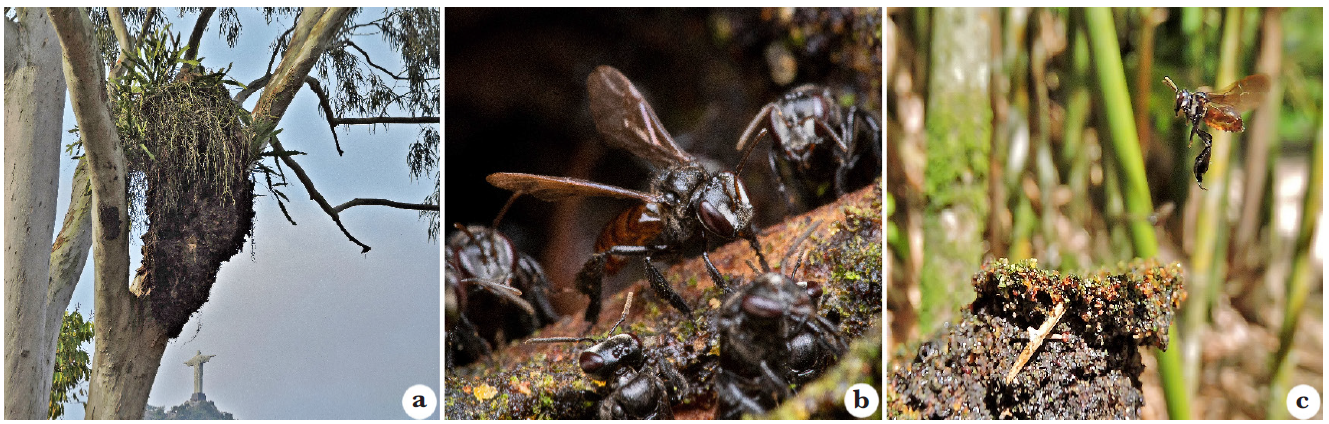
Stingless bees nested predominantly (90.28%) in botanical species with rough trunks. Exceptions included T. angustula, which nested on the smooth trunk of Machaerium scleroxylon Tul. (Fig. 1a), and P. helleri, which built two nests supported by branches of Eucalyptus sp. (Fig. 7a) and another one on bromeliads growing on the trunk of R. oleracea (Fig. 6c).
Trigona hypogea was found nesting near the ground, among the roots of four large trees with an average diameter of 1.72 m (Fig. 7b; Tabs. 1-2). This species, which has reduced corbiculae, collects protein-rich food from carcasses rather than pollen. It also produces honey from fruit juices and extrafloral nectaries (Noll et al. 1996). According to Camargo et al. (2023), this is the first recorded instance of T. hypogea in the state of Rio de Janeiro.
Although Trigona braueri can build aerial nests using tree trunks as support, at JBRJ, it nested in cavities at the base of a bamboo clump (Bambusa tuldoides Munro.), close to the ground (Fig. 7c). Found in preserved forests, this bee species from the Atlantic Forest Biome is a generalist, with recorded occurrences in coastal states (Silva et al. 2013). Similarly, P. subnuda is a generalist bee species from the Atlantic Forest, but it can also occur in poorly preserved forests and urban green areas (Mouga 2014). At JBRJ, P. subnuda nested in the soil, often in abandoned leaf-cutter ant nests on dirt paths and lawns (Fig. 1f). These nests were protected by fences to prevent trampling and lawn management interferences, as colonies typically do not survive such disturbances.
The conservation status of T. angustula, P. helleri, N. testaceicornis, O. cagafogo, S. xanthotricha, P. subnuda, T. hypogea, P. droryana, M. (Eomelipona) bicolor, and S. bipunctata is classified as “of least concern” according to SiBBr (2018). Data for L. tropica are considered “insufficient,” and T. spinipes and T. braueri are not listed. None of the species appear on the Brazilian National List of Endangered Species (Brasil 2022).
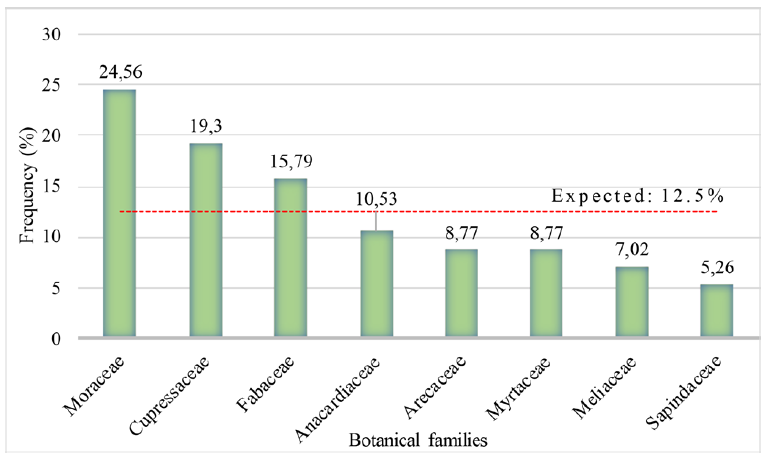
Forty-eight tree species belonging to 21 botanical families hosted stingless bee nests, with Moraceae accounting for 19.44% and Cupressaceae for 15.28% of the nest sites (Tab. 2). The distribution of nests among botanical families was not uniform (Fig. 8), with a significant p-value of 0.043 indicating that nesting choices were not entirely random. Seven species of fig trees (Moraceae) were used for nesting, particularly Ficus virens Aiton, with seven trees bearing nests. Trees of the family Moraceae were colonized by N. testaceicornis (8.33%), T. angustula (5.55%), P. droryana (2.78%), P. helleri and O. cagafogo (1.39%) (Tab. 2). In a secondary forest fragment in Brazil, Moraceae trees housed 20% of stingless bee nests, 8% of which were on Ficus sp. (Correia et al. 2016). Similarly, surveys in Borneo (Eltz et al. 2003) and Jabuticabal, SP (Martins et al. 2015) found that Ficus sp. hosted nests of N. testaceicornis. The cavities and niches formed between the aerial roots of fig trees may facilitate the establishment of multiple small nests, as these trunks do not necessarily need to be hollow.
Stingless bee surveys frequently report multiple nests of different species in the same tree. Eltz et al. (2003) recorded an average of 1.94 nests per tree, with up to eight nests belonging to three species in a single tree. They suggested that odors associated with existing nests may signal other bees that the tree is suitable for nesting. The defensive advantage of nesting near an aggressive colony combines with the use of large trees containing multiple suitable cavities, resulting in a tendency toward aggregation (Roubik 1989). For instance, a Dimocarpus longan tree at JBRJ housed nests of both S. xanthotricha, a very defensive species, and M. bicolor (Tab. 2). According to Roubik (1989), trees with adequate trunk diameter are frequently occupied by multiple colonies of Scaptotrigona, Nannotrigona, Frieseomelitta, Tetragonisca, and Melipona. Hubbell & Johnson (1977) suggested that colony spacing is regulated by pheromone marking of potential nest sites, worker recruitment, and aggression between workers from rival colonies. Slaa (2006) considered N. testaceicornis, T. angustula, and P. droryana to be non-aggressive species, which aligns with the present observation of multiple nests of these species on the same fig tree at JBRJ. The aggregation of colonies of docile species suggests that, in this case, nesting habits are not associated with defensive strategies (Roubik 1989).
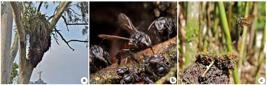
a-c. Nests of stingless bee at the Botanical Garden of Rio de Janeiro (RJ, Brazil) - a. Partamona helleri on Eucalyptus globulus; b. Trigona hypogea on Libidibia ferrea; c. Trigona braueri on Bambusa tuldoides.
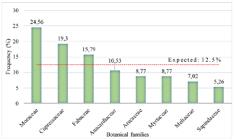
Frequency distribution of stingless bee nests by botanical families (N ≥ 3) at the Botanical Garden of Rio de Janeiro. Chi-square goodness-of-fit test yielded a p-value of 0.043. The red line indicates the expected frequency of nests if distributed uniformly.
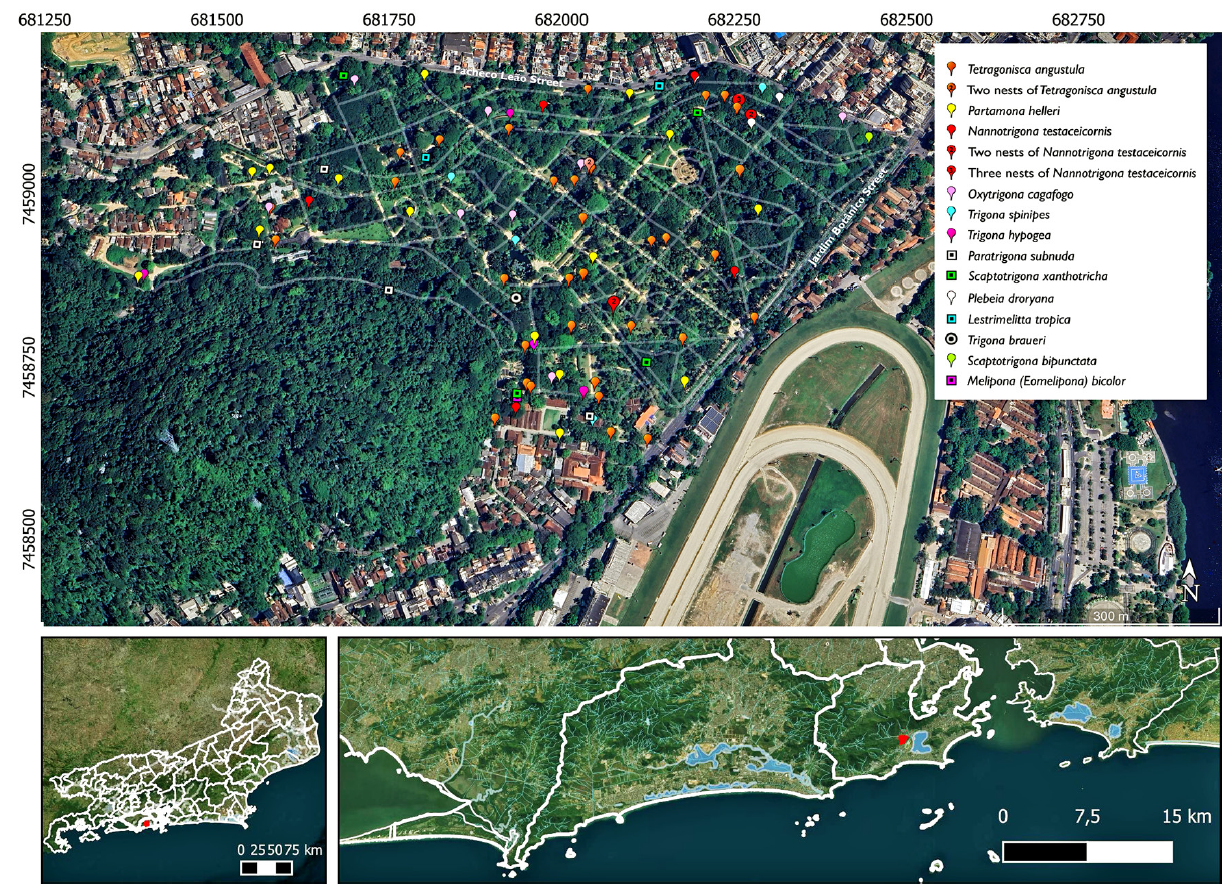
Stingless bees distributed their 94 nests randomly across the study area. This pattern was also observed for the most frequent species - T. angustula, P. helleri, N. testaceicornis, and O. cagafogo - when analyzed separately. Although R indices below 1 suggested aggregated distributions, p-values above 0.05 indicated these patterns were not statistically significant, confirming randomness (Tab. 3; Fig. 9).
Among the 12 botanical families with nests of T. angustula, Cupressaceae accounted for 11.11% (Tab. 2). Many cypress trees at JBRJ have hollow trunks due to previous infestations by the underground termite Coptotermes gestroi (Wasmann), which have since been remedied. These hollows now provide suitable spaces for nesting (Taura & Laroca 1991). The cypress trees are old and resilient, with an average trunk DBH of 0.62 m. Most cypress species are resinous and some are aromatic (Earle 2024). These properties attract solitary bees, such as those of the genus Xylocopa, to build their nests while the aroma may repel bee parasites and offer protection (Blazer & Blazer 2013). Additionally, the resin, rich in diterpenes, is used by bees to produce Mediterranean propolis, a valuable product derived from Cupressus sempervirens L. (Bogdanov & Bancova 2016).
Partamona helleri colonized trees from 10 botanical families (Tab. 2). This host variety is likely due to its exogenous nests, which do not depend on hollows or niches in specific tree species.
Moraceae and Cupressaceae accounted for 3.92% and 1.23% of the tree specimens in the living collection, respectively (Almeida et al. 2024; JBRJ 2024). The preference of stingless bees for nesting in these families is significant and emphasizes the importance of preserving these specimens at JBRJ.
Nine botanical families hosted the 22 longest-lasting nests, with Cupressaceae and Fabaceae each accounting for 18.18% of these nests, Moraceae and Myrtaceae 13.63% each, and Meliaceae and Sapotaceae 9.09% each. The species Cupressus funebris Endl. hosted 11.11% of the nests, while F. virens hosted 9.72%. According to Roubik (1989), nest site selection is generally based on living trees and considers both the size of the cavity and the proximity to potential predators. Hubbell & Johnson (1977) proposed that the use of nesting cavities depends on their availability rather than specific tree species, while Laroca et al. (1982) concluded that the availability of nesting sites is a critical limiting factor for the establishment of bee species. According to Serra et al. (2009), the decision to nest in a particular tree species may be influenced by wood fiber density, as some tree species have highly resistant fibers that are less prone to forming cavities. The same authors suggested that the distribution of social bee nests may depend on a combination of factors, including the distribution and density of suitable nesting substrates, predation, anthropic interference, floral resource availability, and competition for food.
Nearest neighbor analysis of stingless bee nest distribution patterns at the Botanical Garden of Rio de Janeiro (RJ, Brazil).
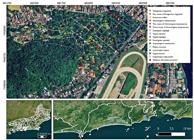
Spatial distribution of 94 nests belonging to thirteen stingless bee species: Tetragonisca angustula, Partamona helleri, Nannotrigona testaceicornis, Oxytrigona cagafogo, Trigona hypogea, Trigona spinipes, Plebeia droryana, Scaptotrigona xanthotricha, Paratrigona subnuda, Lestrimelitta tropica, Melipona (Eomelipona) bicolor, Scaptotrigona bipunctata, and Trigona braueri at the Botanical Garden of Rio de Janeiro, RJ, Brazil.
Apis mellifera builds exogenous nests but can also use cavities within or near the root systems of trees for nesting. For safety reasons, nests are removed and relocated to distant apiaries, thereby freeing nesting sites for stingless bees (Taura & Laroca 1991).
Despite increasing urbanization, pollution, noise, garden management practices, and other anthropogenic disturbances in the surrounding area, the variety of stingless bee species nesting in the arboretum remains notable. This diversity is likely supported by the connection to the secondary forest, availability of trophic resources and natural niches provided by the conservation of ancient trees. The management of exogenous nests that fall and endogenous nests in dead trees may also contribute to the thriving stingless bee population. Raising awareness and engaging field teams and maintenance staff responsible for buildings and monuments is essential to the effort of preserving nests. However, species that nest in the soil or between the roots of trees face challenges such as trampling, lawn management, and tree death. These factors require additional management efforts to ensure their survival.
Acknowledgements
The author would like to thank Diego Marinho (Museu Nacional/UFRJ), for identifying T. hypogea; Eduardo Andrade Botelho de Almeida (Universidade de São Paulo/USP), for identifying S. bipunctata, S. xanthotricha and T. braueri; Favízia Freitas de Oliveira (Universidade Federal da Bahia/UFBA), for identifying L. tropica; Ramon Lima Ramos (Universidade Federal da Bahia/UFBA), for identifying O. cagafogo; Alexandre Machado (JBRJ) (Figs. 1b,j,l; 4a-c,f-g; 6a-b; 7a,c); Ana Carolina Vilhena (JBRJ) (Figs. 1a,c; 6c); and João Felipe Herculano (Museu Nacional/UFRJ) (Figs. 1d-i,m; 4d-e; 7b), for providing photographs.
Data availability statement
In accordance with Open Science communication practices, the authors inform that there is no data sharing of this manuscript.
References
- Aidar IF, Santos AOR, Bartelli BF, Martins GA & Nogueira-Ferreira FH (2013) Nesting ecology of stingless bees (Hymenoptera, Meliponina) in urban areas: the importance of afforestation. Bioscience Journal 29: 1361-1369.
- Albernaz JM, Carvalho CAL, Silva FL, Neisse AC, Silva IP, Costa MAPC, Machado CS & Sodré GS (2022) Inventory of social stingless nests in an anthropized area. Diversitas Journal 7: 1245-1260.
- Almeida TMH, Coelho MAN & Peixoto AL (2024) Rio de Janeiro Botanical Garden: biodiversity conservation in a tropical arboretum. Journal of Zoological and Botanical Gardens 5: 378-394.
-
Anderson M, Crubaugh F, Greenslit C, Hill E, Kroth H, Stanislawski E, Ribbons R & Del Toro I (2023) B.Y.O. Bees: managing wild bee biodiversity in urban greenspaces. PLoS ONE 18: e0281468. DOI: 10.1371/journal.pone.0281468
» https://doi.org/10.1371/journal.pone.0281468 - Antonini Y, Martins RP, Aguiar LM & Loyola RD (2013) Richness, composition and trophic niche of stingless bee assemblages in urban forest remnants. Urban Ecosystems 16: 527-541.
-
Araújo ED, Costa M, Chaud-Netto J & Fowler HG (2004) Body size and flight distance in stingless bees (Hymenoptera: Meliponini): inference of flight range and possible ecological implications. Brazilian Journal of Biology 64: 563-568. DOI: 10.1590/S1519-69842004000400003
» https://doi.org/10.1590/S1519-69842004000400003 - Batista MA, Ramalho M & Soares AEE (2003) Nesting sites and abundance of Meliponini (Hymenoptera: Apidae) in heterogeneous habitats of the Atlantic Rain Forest, Bahia, Brazil. Lundiana 4: 19-23.
-
Blazer BR & Blazer BJ (2013) Carpenter bee traps United States Patent US 8,375,624 B2. Available at <Available at https://patents.google.com/patent/US8375624B2/en >. Access on 20 June 2020.
» https://patents.google.com/patent/US8375624B2/en -
Bogdanov S & Bancova V (2016) Propolis: origin, production, composition. In: The propolis book, Chapter 1-2, 20p. Available at <Available at https://www.bee-hexagon.net/english/bee-products/downloads-propolis-book/ >. Access on 9 June 2018.
» https://www.bee-hexagon.net/english/bee-products/downloads-propolis-book/ -
Brasil (2020) Resolução no 496 de 19 de Agosto de 2020. Disciplina o uso e o manejo sustentáveis das abelhas-nativas-sem-ferrão em meliponicultura. Diário Oficial da União. Available at <Available at https://www.in.gov.br/en/web/dou/-/resolucao-n-496-de-19-de-agosto-de-2020-273217120 >. Access on 20 June 2025.
» https://www.in.gov.br/en/web/dou/-/resolucao-n-496-de-19-de-agosto-de-2020-273217120 -
Brasil (2022) Portaria MMA nº 148, de 7 de junho de 2022. Altera os Anexos da Portaria nº 443, de 17 de dezembro de 2014, da Portaria nº 444, de 17 de dezembro de 2014, e da Portaria nº 445, de 17 de dezembro de 2014, referentes à atualização da Lista Nacional de Espécies Ameaçadas de Extinção. Diário Oficial da União. Available at <Available at https://www.in.gov.br/en/web/dou/-/portaria-mma-n-148-de-7-de-junho-de-2022-406272733 >. Access on 20 June 2025.
» https://www.in.gov.br/en/web/dou/-/portaria-mma-n-148-de-7-de-junho-de-2022-406272733 - Cab-Baqueiro S, Ferrera-Cerrato R, Quezada-Euán JJG, Moo-Valle H & Vargas-Díaz AA (2022) Sustratos de nidificación y densidad de nidos de abejas sin aguijón en la Reserva de la Biósfera de los Petenes, México. Acta Biológica Colombiana 27: 61-69.
-
Camargo JMF, Pedro SRM & Melo GAR (2023) Meliponini Lepeletier, 1836. In: Moure JS, Urban D & Melo GAR (orgs.) Catalogue of Bees (Hymenoptera, Apoidea) in the Neotropical Region. Available at <Available at https://moure.cria.org.br/catalogue?id=118052 >. Access on 24 June 2024.
» https://moure.cria.org.br/catalogue?id=118052 - Carvalho CAL & Marchini LC (1999) Abundância de ninhos de Meliponinae (Hymenoptera: Apidae) em biótopo urbano no município de Piracicaba-SP. Revista de Agricultura 74: 35-44.
- Carvalho CAL, Marchini LC & Ros PB (1999) Fontes de pólen utilizadas por Apis mellifera L. e algumas espécies de Trigonini (Apidae) em Piracicaba (SP). Bragantia 58: 49-56.
- Carvalho-Zilse GA (2013) Produção de polinizadores para a agricultura na Amazônia. In: Noda H, Souza LAG de & Silva-Filho DF (orgs.) Pesquisas agronômicas para a agricultura sustentável na Amazônia Central. Ed. Wega, Manaus. Pp. 19-26.
- Correia FCS, Peruquetti FC, Ferreira MG & Carvalho YK (2016) Abundância, distribuição espacial de ninhos de abelhas sem ferrão (Apidae: Meliponini) e espécies vegetais utilizadas para nidificação em um fragmento de floresta secundária em Rio Branco, Acre. EntomoBrasilis 9: 163-168.
-
Earle CJ (2024) Cupressaceae Rich. ex Bartling 1830. In: The Gymnosperm Database. Available at <Available at https://www.conifers.org/cu/Cupressaceae.php >. Access on 24 November 2024.
» https://www.conifers.org/cu/Cupressaceae.php - Eltz T, Bruhl CA, Imiyabir Z & Linsenmair EK (2003) Nesting and nest trees of stingless bees (Apidae: Meliponini) in lowland dipterocarp forests in Sabah, Malaysia, with implications for forest management. Forest Ecology and Management 172: 301-313.
- EMBRAPA SNLCS & IBAMA (1992) Identificação de limitações pedológicas e ambientais causadoras da degradação de áreas do Jardim Botânico do Rio de Janeiro. Série Estudos e Contribuições, no 10. Jardim Botânico do Rio de Janeiro, Rio de Janeiro. 101p.
-
Giannini TC, Tambosi LR, Acosta AL, Jaffé R, Saraiva AM, Imperatriz-Fonseca VL & Metzger JP (2015) Safeguarding ecosystem services: a methodological framework to buffer the joint effect of habitat configuration and climate change. PLoS ONE 10: e0129225. DOI: 10.1371/journal.pone.0129225
» https://doi.org/10.1371/journal.pone.0129225 - Gobatto AA, Chagas LS & Pereira RS (2021) É o Arboreto do Jardim Botânico do Rio de Janeiro hotspot urbano para os polinizadores? Biodiversidade 20: 1-31.
- Hernandez JL, Frankie GW & Robbin WT (2009) Ecology of urban bees: a review of current knowledge and directions for future study. Cities and the Environment 2: 1, Art.3, 15pp.
- Graffigna S, González-Vaquero RA, Torretta JP & Marrero HJ (2024) Importance of urban green areas connectivity for the conservation of pollinators. Urban Ecosystems 27: 417-426.
- Hilário SD, Imperatriz-Fonseca VL & Kleinert AMP (2000) Flight activity and colony strength in the stingless bee Melipona bicolor bicolor (Apidae, Meliponinae). Revista Brasileira de Biologia 60: 299-306.
- Hubbel SP & Johnson LK (1977) Competition and nest spacing in a tropical stingless bee community. Ecology 58: 949-963.
- Imperatriz-Fonseca VL, Alves-dos-Santos I, Santos-Filho PS, Engels W, Ramalho M, Wilms W, Aguilar JBV, Pinheiro-Machado CA, Alves DA & Kleinert AMP (2011) Checklist das abelhas e plantas melitófilas no Estado de São Paulo. Biota Neotropica 11: 631-655.
- JBRJ & IBAMA (1994) Vegetação das áreas do entorno do Jardim Botânico do Rio de Janeiro, Horto Florestal e Parque Lage -1. Série Estudos e Contribuições, no 12. Jardim Botânico do Rio de Janeiro, Rio de Janeiro. 69p.
-
JBRJ (2024) Jabot - Banco de Dados da Flora Brasileira. Available at <Available at https://jabot.jbrj.gov.br/ >. Access on 25 June 2024.
» https://jabot.jbrj.gov.br/ - Jaffé R, Castilla A, Pope N, Imperatriz-Fonseca VL, Metzger GP, Arias MC & Jha S (2016) Landscape genetics of a tropical rescue pollinator. Conservation Genetics 17: 267-278.
-
Kaluza BF, Wallace H, Heard TA, Klein AM & Leonhardt SD (2016) Urban gardens promote bee foraging over natural habitats and plantations. Ecology and Evolution. DOI: 10.1002/ece3.1941
» https://doi.org/10.1002/ece3.1941 - Kerr WE, Carvalho GA & Nascimento VA (1996) Abelha Uruçu. Biologia, manejo e conservação. Coleção Manejo da Vida Silvestre, v 2. Fundação Acangaú, Belo Horizonte. 143p.
- Kleinert AMP (2020) Abelhas sem ferrão e ambientes urbanos. In: Silva CI & Kleinert AMP (orgs.) Plantas e pólen em áreas urbanas: uso no paisagismo amigável aos polinizadores. CISE, Rio Claro. Pp. 11-13.
- Knoll FRN, Bego LR & Imperatriz-Fonseca VL (1994) As abelhas em áreas urbanas - um estudo no Campus da Universidade de São Paulo. In: Pirani JR & Cortopassi-Laurino M (eds.) Flores e abelhas em São Paulo. 2a ed. EDUSP, São Paulo. Pp. 31-42.
- Laroca S, Cure JS & Bortoli C (1982) A associação das abelhas silvestres (Hymenoptera, Apoidea) de uma área restrita no interior da cidade de Curitiba (Brasil): uma abordagem biocenótica. Dusenia 13: 93-117.
-
Macedo CRC, Aquino IS, Borges PF, Barbosa AS & Medeiros GR (2020) Nesting behavior of stingless bees. Ciência Animal Brasileira 21: e-58736. DOI: 10.1590/1809-6891v21e-58736
» https://doi.org/10.1590/1809-6891v21e-58736 - Machado T, Viana BF, Silva CI & Boscolo D (2020) How landscape composition affects pollen collection by stingless bees?. Landscape Ecology 35: 747-759.
- Martins G, Ferraz RLS, Batista JL & Barbosa MA (2015) Incentivo para o plantio de árvores nativas em áreas urbanas para proliferação de abelhas sem ferrão. Acta Apícola Brasílica 3: 01-09.
- Mouga DMDS (2014) Spatial distribution of nests of Paratrigona subnuda Moure, 1947 (Apidae, Meliponini). Revue d’Ecologie (La Terre et la Vie) 69: 345-350.
- Nates-Parra G, Rodriguez ACE & Vélez D (2006) Abejas sin aguijön (Hymenoptera: Apidae: Meliponini) em cementerios de la cordillera oriental de Colombia. Acta Biológica Colombiana 16: 25-37.
-
Nogueira DS (2023) Overview of stingless bees in Brazil (Hymenoptera: Apidae: Meliponini). EntomoBrasilis 16: e1041. DOI: 10.12741/ebrasilis.v16.e1041
» https://doi.org/10.12741/ebrasilis.v16.e1041 - Nogueira-Neto P (1997) Vida e criação de abelhas indígenas sem ferrão. Ed. Nogueirapis, São Paulo. 445p.
- Noll FB, Zucchi R, Jorge JA & Mateus S (1996) Food collection and maturation in the necrophagous stingless bee, Trigona hypogea (Hymenoptera, Meliponinae). Journal of the Kansas Entomological Society 69: 287-293.
- Paixão GPG & Silva CM (2021) Impactos da poluição atmosférica no processo de polinização das abelhas: cidade do Rio de Janeiro. Revista Ibero-Americana de Ciências Ambientais 12: 90-101.
- Pedro SRM (2014) The stingless bee fauna in Brazil (Hymenoptera: Apidae). Sociobiology 61: 348-354.
- Ramalho M (2004) Stingless bees and mass flowering trees in the canopy of Atlantic Forest: a tight relationship. Acta Botânica Brasilica 18: 37-47.
- Rocha-Filho LC, Montagnana PC, Boscolo D & Garófalo CA (2020) Green patches among a grey patchwork: the importance of preserving natural habitats to harbour cavity-nesting bees and wasps (Hymenoptera) and their natural enemies in urban areas. Biodiversity and Conservation 29: 2487-2514.
- Roldão-Sbordoni YS, Nascimento FS & Mateus S (2018) Estimating colonies of Plebeia droryana (Friese 1900) (Hymenoptera: Apidae: Meliponini): adults, brood and nest structure. Sociobiology 65: 280-284.
- Roubik DW (1989) Nesting and reproductive biology. In: Ecology and natural history of tropical bees. Cambridge University Press, New York. Pp. 161-312.
- Roubik DW (2023) Stingless bee (Apidae: Apinae: Meliponini) ecology. Annual Review of Entomology 68: 231-256.
-
Santos SJL, Barbosa BC & Prezoto F (2020) A fauna de abelhas sem ferrão em áreas urbanas: 50 anos de estudos e prioridades de pesquisa no Brasil. Scientia Plena 16: 128001. DOI: 10.14808/sci.plena.2020.128001
» https://doi.org/10.14808/sci.plena.2020.128001 -
Santos CF, Raguse-Quadros M, Ramos JD, Garcia da Silva NL, Carvalho FG, Barros CA & Blochtein B (2021) Diversidade de abelhas sem ferrão e seu uso como recurso natural no Brasil: permissões e restrições legais consorciadas a políticas públicas. Revista Brasileira de Meio Ambiente 9. Available at <Available at https://revistabrasileirademeioambiente.com/index.php/RVBMA/article/view/70 >. Access on 20 June 2025.
» https://revistabrasileirademeioambiente.com/index.php/RVBMA/article/view/70 -
Santos LH, Barchuk AR & Teixeira IRV (2023) Abelhas urbanas: as espécies sociais que habitam espaços verdes centrais de Poços de Caldas, Minas Gerais, Brasil. Research, Society and Development 12: e47121243842. DOI: 10.33448/rsd-v12i12.43842
» https://doi.org/10.33448/rsd-v12i12.43842 - Serra BDV, Drummond MS, Lacerda LM & Akatsu IP (2009) Abundância, distribuição espacial de ninhos de abelhas Meliponina (Hymenoptera, Apidae, Apini) e espécies vegetais utilizadas para nidificação em áreas de Cerrado do Maranhão. Iheringia 99: 12-17.
- Silva WP & Paz JRL (2012) Abelhas sem ferrão: muito mais do que uma importância econômica. Naturezaonline 10: 146-152.
- Silva M, Ramalho M & Monteiro D (2013) Diversity and habitat use by stingless bees (Apidae) in the Brazilian Atlantic Forest. Apidologie 44: 699-707.
-
Silva GR, Pérez-Maluf R, Ribeiro GS & Gusmão ALJ (2020) Pollination service of Nannotrigona testaceicornis stingless bees in strawberry. Arquivos do Instituto Biológico 87. DOI: 10.1590/1808-1657000292019
» https://doi.org/10.1590/1808-1657000292019 - Silveira MS, Oestreich L, Breunig ET & Goldschmidt AI (2021) A importância das abelhas, da sustentabilidade e dos corredores ecológicos: estratégias de ensino para os anos iniciais do ensino fundamental. Vidya 41: 61-78.
- Siviter H, Pardee GL, Baert N, McArt S, Jha S & Muth F (2023) Wild bees are exposed to low levels of pesticides in urban grasslands and community gardens. Science of The Total Environment 858: 159839.
-
SiBBr - Sistema da Informação sobre a Biodiversidade Brasileira (2018) Available at <Available at https://specieslist.sibbr.gov.br/speciesListItem/list/drt1572557301581?q= >. Access on 20 June 2025.
» https://specieslist.sibbr.gov.br/speciesListItem/list/drt1572557301581?q= - Slaa EJ (2006) Spatial nesting patterns in a Neotropical stingless bee community: do bees compete for food? Proceedings of the Netherlands Entomological Society Meeting 17: 71-78.
- Souza SGX, Teixeira AFR, Neves EL & Melo AMC (2005) As abelhas sem ferrão (Apidae: Meliponina) residentes no campus Federação/Ondina da Universidade Federal da Bahia, Salvador, Bahia, Brasil. Candombá Revista Virtual 1: 57-69.
-
Souza BA, Alves RMO & Carvalho CAL (2007) Diagnóstico da arquitetura de ninho de Oxytrigona tataira (Smith, 1863) (Hymenoptera: Meliponinae). Biota Neotropica 7. DOI: 10.1590/S1676-06032007000200009
» https://doi.org/10.1590/S1676-06032007000200009 - Taura HM & Laroca S (1991) Abelhas altamente sociais (Apidae) de uma área restrita em Curitiba (Brasil): distribuição dos ninhos e abundância relativa. Acta Biológica Paranaense 20: 85-101.
-
Taura HM & Laroca S (2001) A associação de abelhas silvestres de um biótopo urbano de Curitiba (Brasil), com comparações espaço-temporais: abundância relativa, fenologia, diversidade e explotação de recursos (Hymenoptera, Apoidea). Acta Biológica Paranaense 30. DOI: 10.5380/abpr.v30i0.599
» https://doi.org/10.5380/abpr.v30i0.599 -
Toledo-Hernández E, Peña-Chora G, Hernández-Velázquez VM, Lormendez CC, Toribio-Jiménez J, Romero-Ramírez Y & León-Rodríguez R (2022) The stingless bees (Hymenoptera: Apidae: Meliponini): a review of the current threats to their survival. Apidologie 53. DOI: 10.1007/s13592-022-00913-w
» https://doi.org/10.1007/s13592-022-00913-w - Velez-Ruiz R, Gonzalez VH & Engel MS (2013) Observations on the urban ecology of the Neotropical stingless bee Tetragonisca angustula (Hymenoptera: Apidae: Meliponini). Journal of Melittology 15: 1-8.
- Vieira KM, Netto P, Amaral DLAS, Mendes SS, Castro LC & Prezoto F (2016) Nesting stingless bees in urban areas: a reevaluation after eight years. Sociobiology 63: 976-981.
- Werneck HA & Faria-Mucci GM (2014) Abelhas sem ferrão (Hymenoptera: Apidae, Meliponini) da Estação Ecológica de Água Limpa, Cataguases-MG, Brasil. EntomoBrasilis 7: 164-166.
-
Wille A & Michener CD (1973) The nest architecture of stingless bees with special reference to those of Costa Rica (Hymenoptera: Apidae). Revista de Biologia Tropical 21. Available at <Available at https://revistas.ucr.ac.cr/index.php/rbt/article/view/26200 >. Access on 20 September 2024.
» https://revistas.ucr.ac.cr/index.php/rbt/article/view/26200 - Wille A (1983) Biology of the stingless bees. Annual Review of Entomology 28: 41-64.
-
Witter S, Lopes L, Lisboa B, Blochtein B, Mondin C & Imperatriz-Fonseca VL (2010) Ninhos da abelha guaraipo (Melipona bicolor schencki), espécie ameaçada, em remanescente de Mata com Araucária no Rio Grande do Sul. Série Técnica Fepagro, n.5. Fepagro, Porto Alegre. Available at <Available at http://www.fepagro.rs.gov.br/ >. Access on 20 June 2025.
» http://www.fepagro.rs.gov.br/ - Zanette LRS, Martins RD & Ribeiro SP (2005) Effects of urbanization on neotropical wasp and bee assemblages in a Brazilian metropoles. Landscape and Urban Planning 71: 105-121.