 Insights into the intracellular mechanisms of citronellal in Candida albicans: implications for reactive oxygen species-mediated necrosis, mitochondrial dysfunction, and DNA damage
INTRODUCTION Citronellal (Cit) possesses antifungal activity and has possible implications for reactive oxygen species (ROS) generation in Candida albicans. In this study, the effects of Cit on ROS generation and the mechanisms by which Cit exerts anti-Candida effects were examined.
METHODS A 2′,7′-dichlorodihydrofluorescein diacetate assay was used to assess oxidative damage. Cell necrosis was determined by flow cytometry after FITC-Annexin V staining. Mitochondrial function was studied based on mitochondrial potential, metabolic activity (MTT assay), and phenotypic susceptibility on a non-fermentable carbon source. Membrane intactness and DNA damage were estimated by a propidium iodide (PI) uptake assay and 4',6-diamidino-2-phenylindole (DAPI) staining.
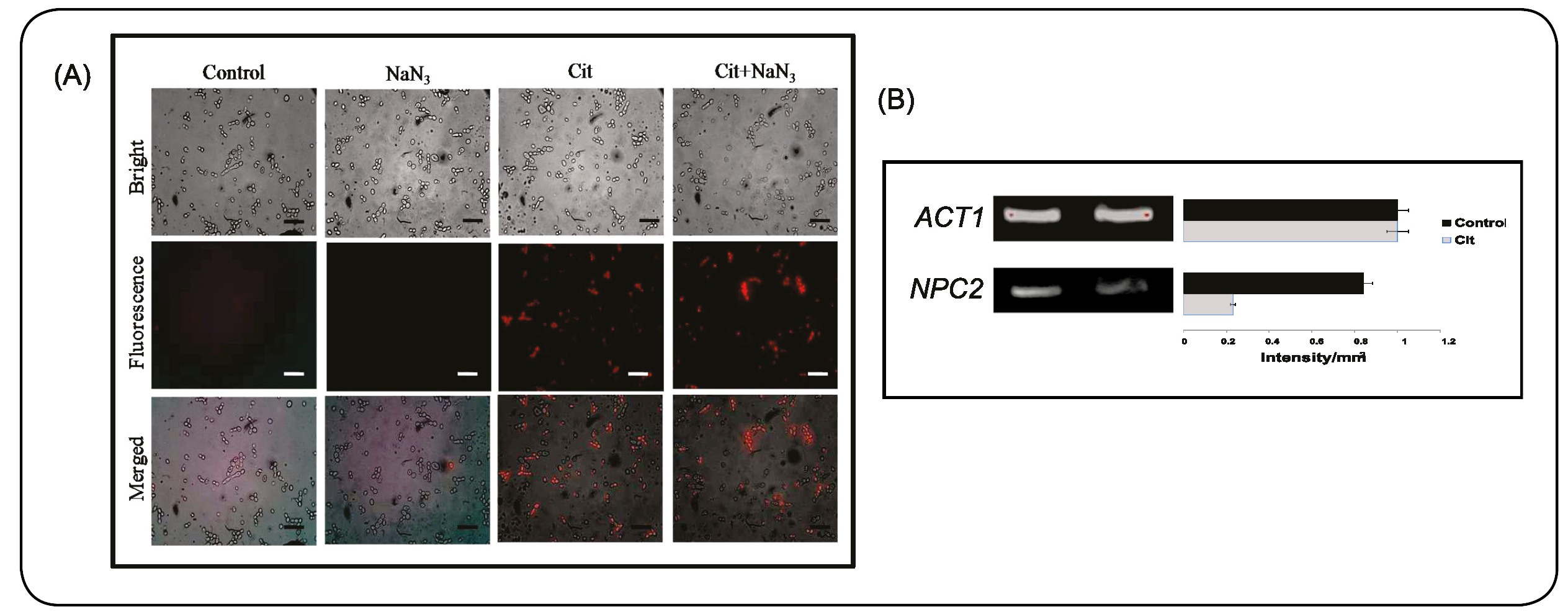
RESULTS ROS generation was enhanced in response to Cit, leading to necrosis (2%). Additional hallmarks of cell death in response to Cit, such as mitochondrial membrane depolarization and DNA damage, were also observed. Cit treatment resulted in dysfunctional mitochondria, as evidenced by poor labeling with the mitochondrial membrane potential-sensitive probe rhodamine B, reduced metabolic activity (61.5%), and inhibited growth on a non-fermentable carbon source. Furthermore, Cit induced DNA damage based on DAPI staining. These phenotypes were reinforced by RT-PCR showing differences in gene expression (30-60%) between control and Cit-treated cells. Finally, PI uptake in the presence of sodium azide confirmed non-intact membranes and suggested that Cit activity is independent of the energy status of the cell.
CONCLUSIONS Cit possesses dual anticandidal mechanisms, including membrane-disruptive and oxidative damage. Taken together, our data demonstrated that cit could be used as a prominent antifungal drug.
Keywords:
Reactive oxygen species; Necrosis; Mitochondria; DNA; Propidium iodide; Candida albicans
 Thumbnail
 Thumbnail
 Thumbnail
 Thumbnail
 Thumbnail