Dental caries and fluorosis after 40 years of community water fluoridation in São Paulo, Brazil
OBJECTIVE To analyze the non-exclusive impact of community water fluoridation on the prevalence of caries and dental fluorosis in schoolchildren in the municipality of São Paulo between 1986 and 2023.
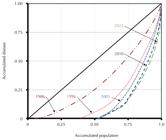
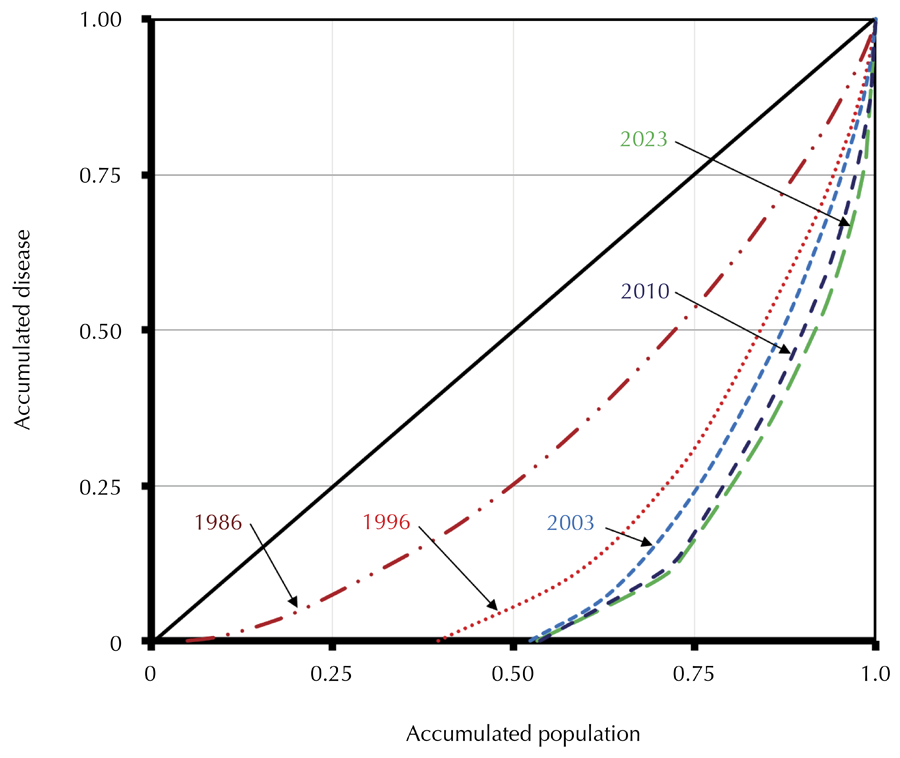
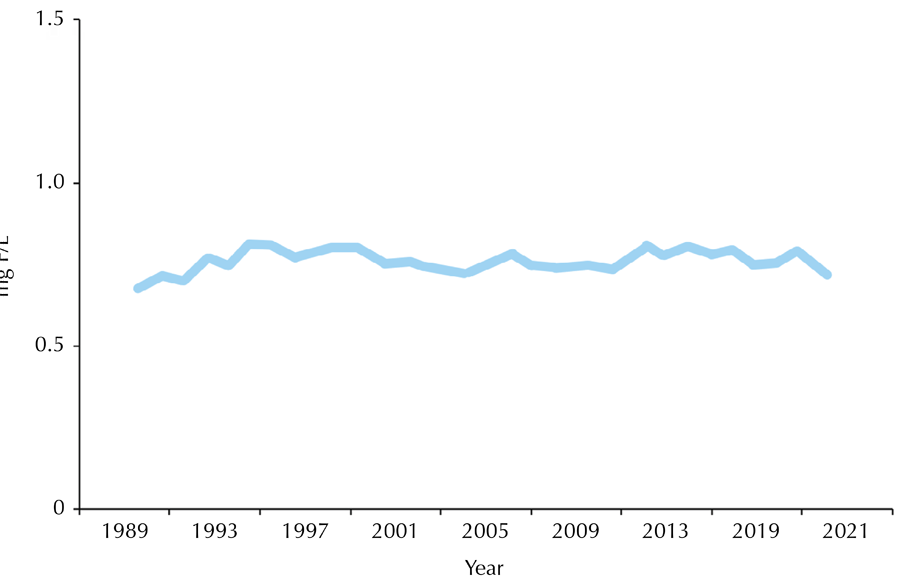
METHODS Secondary data were used for the index age of 12 years, provided by the Ministry of Health, covering caries and dental fluorosis in different years, from 1986 to 2023. The degree of caries polarization was calculated using the Gini index. Two recognized risk factors for caries—low maternal schooling and per capita income—were obtained from the municipal human development index for 1991, 2000, and 2010, the years for which they are available. Exposure to community fluoridated water was verified by analyzing 49,515 water samples obtained between 1990 and 2021.
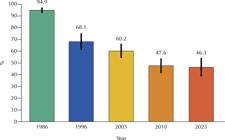
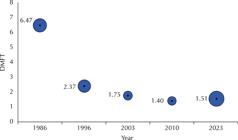
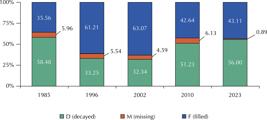
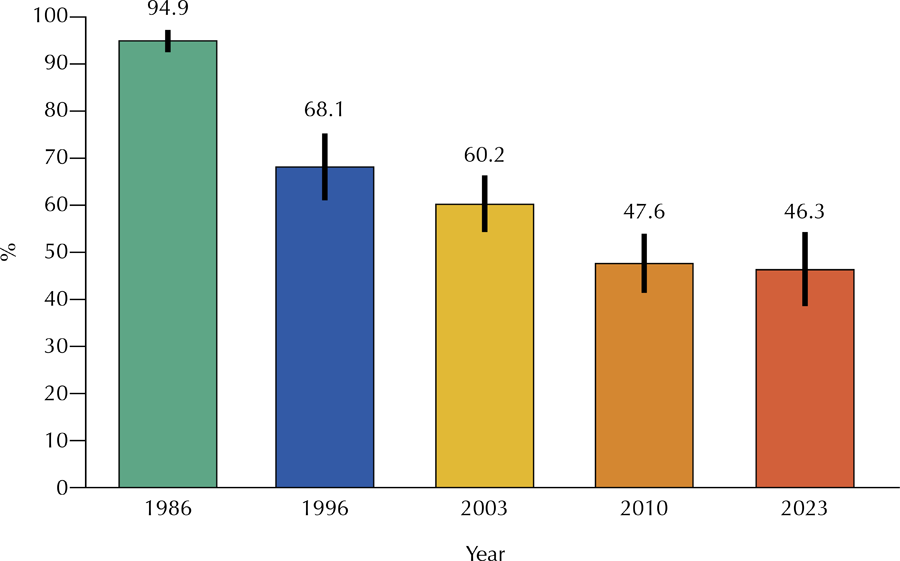
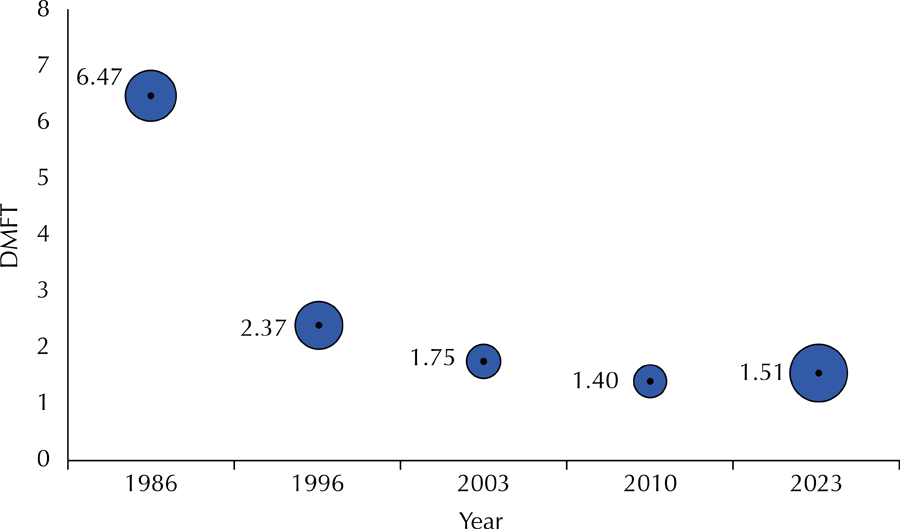
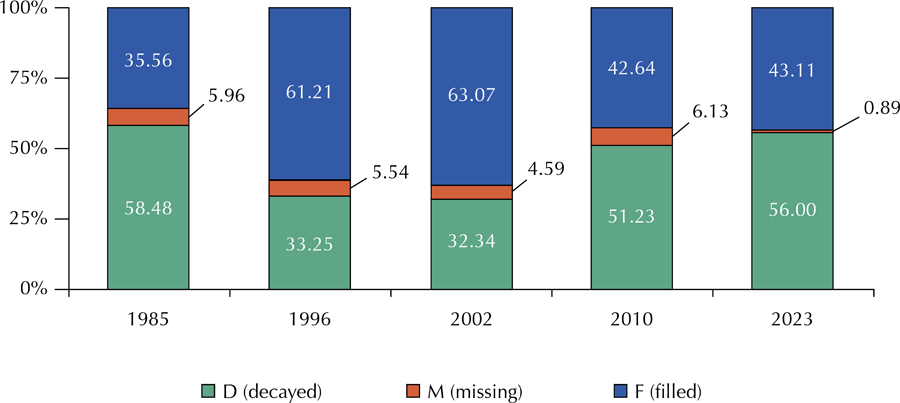
RESULTS Caries prevalence was 94.9% (95%CI: 92.7–97.1) in 1986; 68.1% (95%CI: 60.9–75.3) in 1996; 60.2% (95%CI: 54.2–66.3) in 2003; 47.6% (95%CI: 41.2–54.1) in 2010; and 46.3% (95%CI: 38.3–54.3) in 2023. The mean DMFT decreased from 6.47 (95%CI: 6.05–6.89) in 1986 to 2.37 (95%CI: 1.96–2.78) in 1996; 1.75 (95%CI: 1.48–2.02) in 2003; 1.40 (95%CI: 1.13–1.67) in 2010 and 1.51 (95%CI: 1.03–1.99) in 2023. The proportion of decayed teeth (“D” component of DMFT) was 58.5% in 1986; 33.3% in 1996; 32.3% in 2003; 51.2% in 2010, and 56.0% in 2023. Fluoride concentrations in the public water supply were adequate during the period in question, with values predominantly (98.0%) between 0.545 mgF/L and 0.944 mgF/L of water. The mean concentration was 0.663 mgF/L and the standard deviation was 0.167.
CONCLUSION The significant decline in the mean value of the DMFT index, in the order of 76.7% from 1986 to 2023, indicates the effectiveness of fluoridation, corroborating the scientific evidence related to its effectiveness and the continuity of this measure, especially considering the persistent difficulties in accessing dental care in the city of São Paulo.
DESCRIPTORS:
Dental Caries; DMFT Index; Fluoridation; Dental Fluorosis; Evidence-Based Public Health
 Thumbnail
 Thumbnail
 Thumbnail
 Thumbnail
 Thumbnail
 Thumbnail
 Note: the size of the circle around the point estimate of the mean indicates the 95% confidence interval estimate of the population parameter.
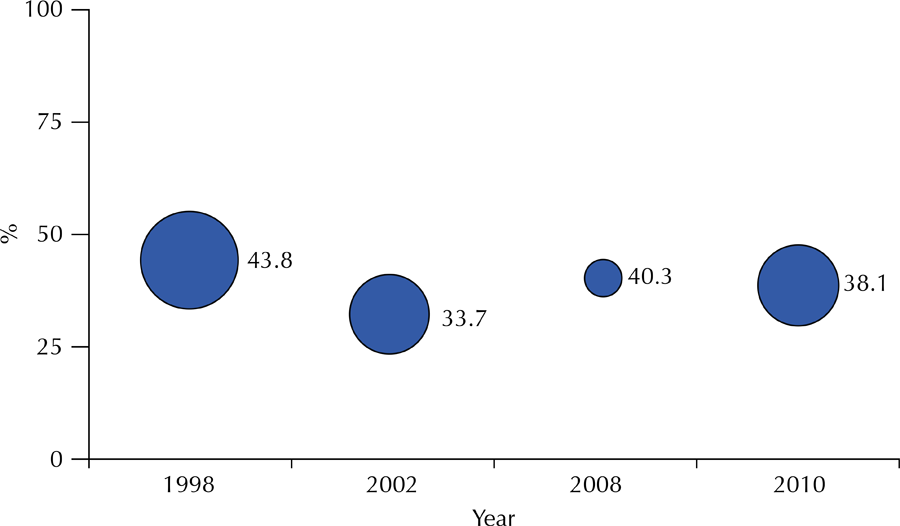
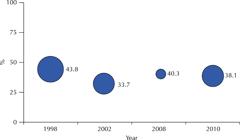
 Note: the size of the circle around the point estimate of the percentage indicates the 95% confidence interval estimate of the population parameter.