Patterns of medication use among individuals with Covid-19 in Brazil: Epicovid 2.0
OBJECTIVE To describe the patterns of medication use among individuals with Covid-19 to treat the disease in Brazil, according to area of residence, demographic and socioeconomic characteristics, religion, and level of trust in scientists.
METHODS Epicovid 2.0 National Survey (2024) in 133 municipalities. The analysis included participants who reported having had an episode of Covid-19. The use of antibiotics, azithromycin, antipyretics, chloroquine, and ivermectin was assessed, in addition to the composite outcomes: use of chloroquine and/or ivermectin; chloroquine, ivermectin, and/or azithromycin (CIA); and use of any medication. The frequency of use and 95% confidence intervals were estimated, considering the complex sampling design and sample weighting
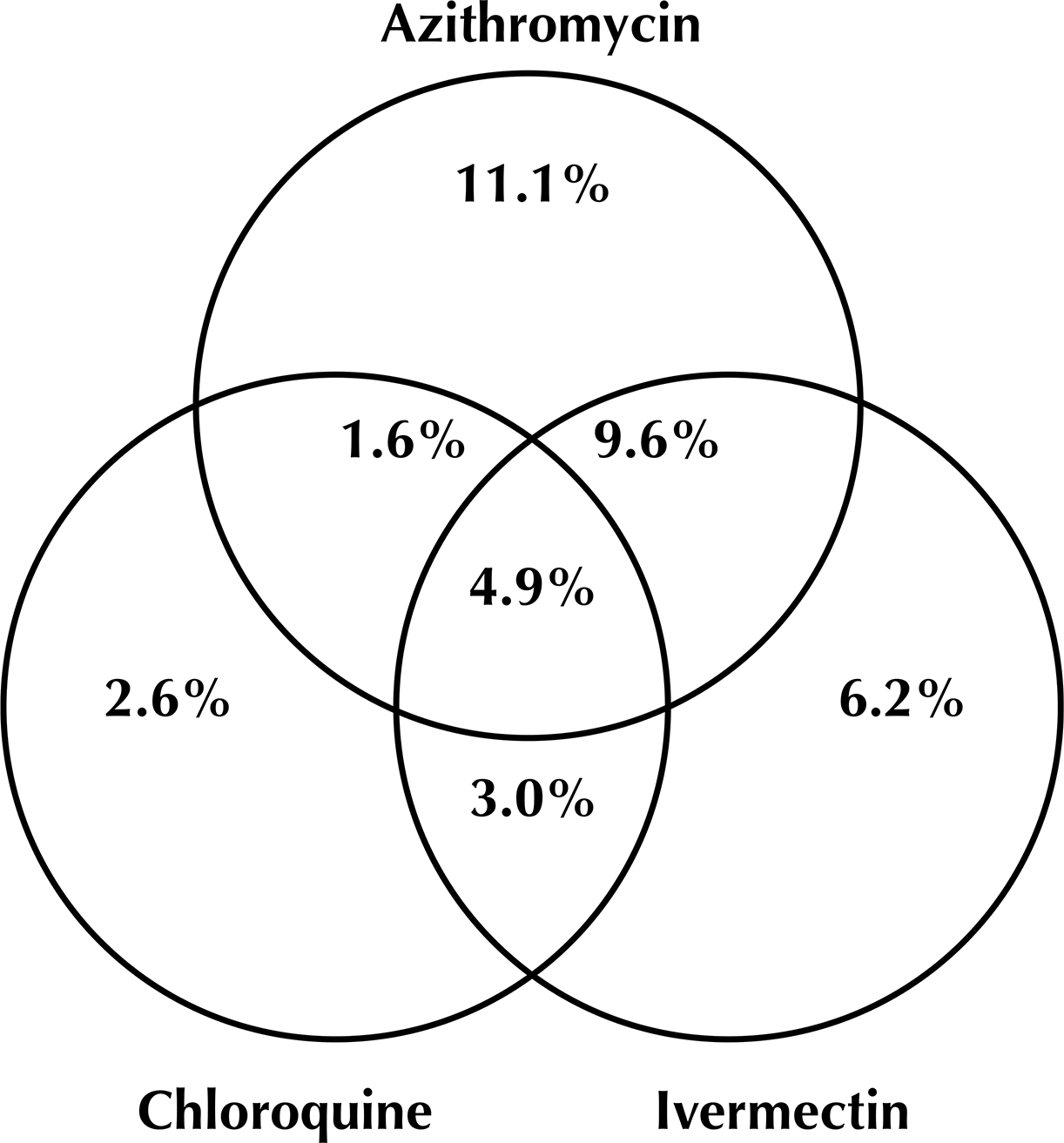
RESULTS The frequency of use of any medication to treat Covid-19 was 63.0% (95%CI 60.0–65.9). Antipyretics were the most commonly used (53.7%), followed by antibiotics (36.2%) and azithromycin (27.2%). The isolated use of ivermectin was reported by 23.6% and that of chloroquine by 12.1%; the use of ivermectin and/or chloroquine reached 27.8% and that of CIA, 39.0%. Overall, medication use was more frequent in the North, Northeast, and Central-West regions and among women. Use was concentrated among adults aged 40–59, people with low educational attainment, and those with lower incomes. Self-identified black and brown individuals reported higher use of chloroquine. Use of chloroquine, ivermectin, and combinations of these medications was more common among evangelicals (0.05 < p < 0.1) and among people who consulted doctors (p < 0.001). Participants who reported distrusting scientists reported higher use of chloroquine and chloroquine/ivermectin compared to those who reported trusting scientists.
CONCLUSION Four out of ten people who reported episodes of Covid-19 consumed medications not recommended by science to treat the disease. Medication use tended to be more frequent among women, in the northern half of Brazil, among evangelicals, and among people with lower income and education levels. These groups should be prioritized in future campaigns on the appropriate use of medications.
DESCRIPTORS:
SARS-CoV-2; Coronavirus; Epidemiology; Drug Use; Cross-Sectional Study
 Thumbnail
 Thumbnail
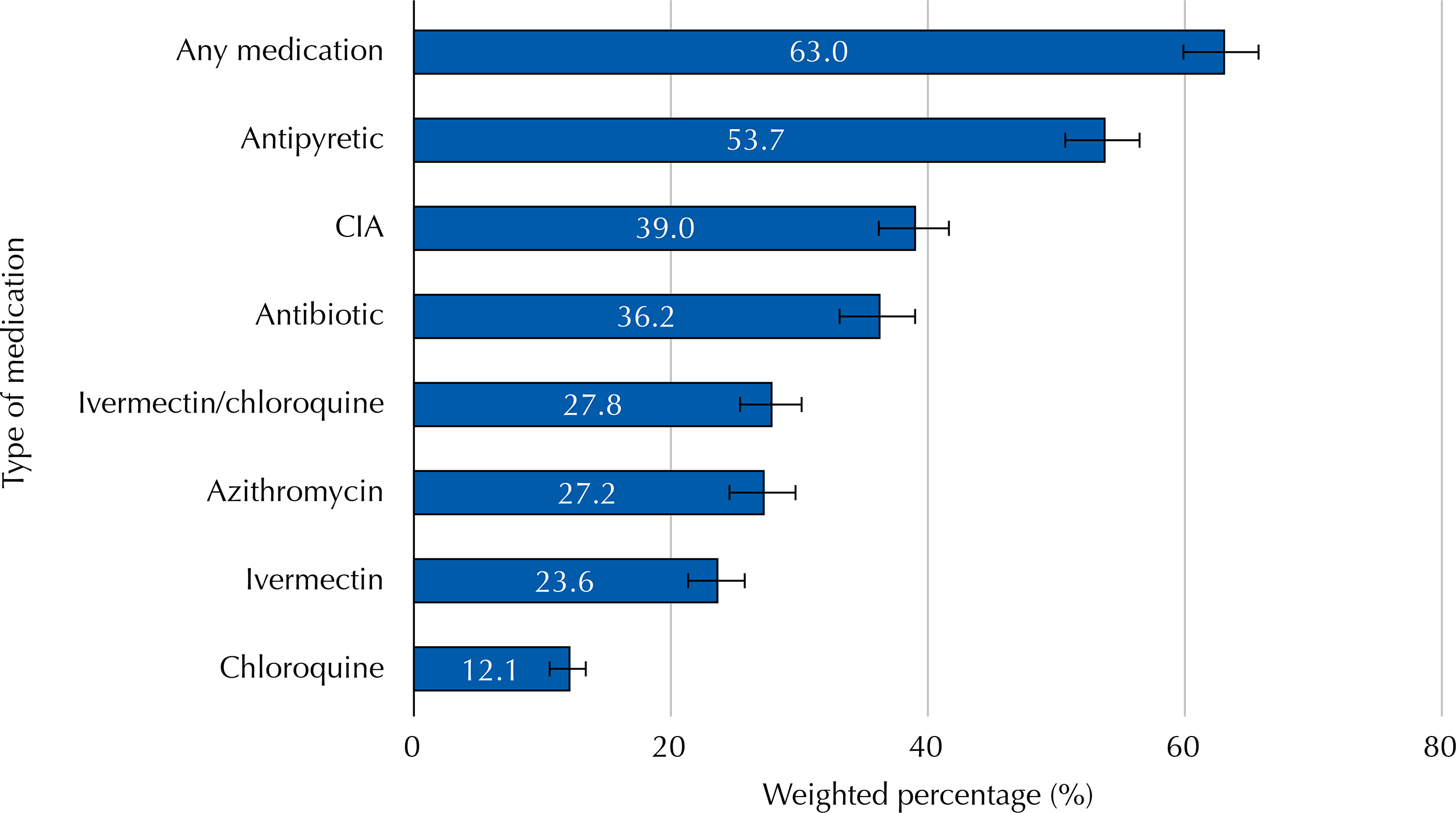 CIA: chloroquine, ivermectin, and/or azithromycin.