 Water-nutrient interactions drive yield and profitability of maize and sorghum under tropical semi-arid conditions
ABSTRACT:
Optimizing supplemental irrigation and mineral fertilization is a key strategy for sustainable agriculture in semi-arid regions. The objective of this study was to assess the yield and profitability of maize and sorghum crops as a function of planting date, supplemental irrigation depth and Nitrogen-Phosphorus-Potassium (NPK) fertilization under the edaphoclimatic scenarios of the tropical semi-arid region. This research was conducted over two rainy seasons (2023 and 2024) in sandy loam soil in Jucás, Ceára State, Brazil, using maize (hybrid AG 1051) and forage sorghum (cultivar BRS Ponta Negra), with water sourced from an alluvial aquifer. The study evaluated two sowing dates (February and March), four supplemental irrigation depths after five days without rain 0 %, 50 %, 75 %, and 100 % of crop evapotranspiration (ETc), and the presence and absence of NPK fertilization. The interaction between NPK fertilization and supplemental irrigation was particularly significant at the late planting date, mainly in 2023, which experienced lower precipitation and longer dry spells. During years characterized by longer dry periods, such as 2023, it is recommended that supplemental irrigation cover 100 % of water requirements in maize crops. Conversely, for forage sorghum in similar dry conditions, a deficit supplemental irrigation providing 60-75 % of ETc is advised. The findings indicate that economic returns and the level of social reproduction (LSR) can be achieved through the combined use of supplemental irrigation and fertilization on areas of 1.0 ha or larger. However, utilizing either supplemental irrigation or fertilization in isolation is not viable, especially for maize cultivation.
Keywords:
water supplementation; mineral fertilization; dry spells; alluvial aquifer; economic analysis
Introduction
Frequent droughts in Brazil's semi-arid region cause significant drops in rainfed crop yields (Zaninelli et al., 2019; Marengo et al., 2022). In general, lower yields are linked to more intense dry spells, especially during drought years or periods of highly irregular rainfall (Fernandes et al., 2015; Cavalcante et al., 2021). However, yields of annual crops like maize and sorghum stay low even in years with sufficient rainfall, indicating that water scarcity is not the only factor limiting agriculture in semi-arid tropical regions. Other critical factors include inadequate mineral fertilization, due to high climate risks, and sandy soils with limited water retention capacity (Rockström and Falkenmark, 2000). The relationship between water availability and mineral nutrients plays a key role in crop yield (Wang et al., 2023).
Water supplementation, when combined with improved soil management practices, acts as a strategy to enhance sustainable crop production during the rainy season, thereby partially offsetting caused by dry spells (Gebremedhin et al., 2023). However, data on production losses during drought years (Rossato et al., 2017; Marengo et al., 2022) show that supplemental irrigation is not widely adopted by farmers in Brazil's semi-arid region. Nevertheless, climate change scenarios highlight the need to explore alternatives to current production methods, with supplemental irrigation identified as a promising option for increasing crop yield, improving water and fertilizer use efficiency, and boosting farmers’ profitability (Nangia et al., 2018; Cavalcante et al., 2021; Martelli et al., 2025).
The joint optimization of supplemental irrigation and fertilization is a crucial strategy for enhancing sustainable agricultural production systems in semi-arid regions (Wang et al., 2015; Sigua et al., 2020; Ahmad et al., 2022; Liu et al., 2022), particularly in sandy soils. In this context, a two-year field study was conducted to assess the impacts of supplemental irrigation and Nitrogen-Phosphorus-Potassium (NPK) fertilization on the yield and profitability of maize – a crop susceptible to water shortages and with substantial nutritional needs – as well as forage sorghum, which is better suited to water scarcity and less fertile soils, within the actual edaphoclimatic scenarios of the tropical semi-arid region.
Material and Methods
Experimental area
The study was conducted during the rainy season, from February to June, in both 2023 and 2024, in Vila Canafístula, located at coordinates (06°25’13" S, 39°26’21" W) at an altitude of 237 m in the municipality of Jucás, Ceará State, Brazil. This region has a hot, tropical, a semi-arid climate, with an average annual temperature of 27 °C. The soil of the area is classified as Fluvic Neossol, according to the Brazilian soil classification system (Santos et al., 2025). The physical and chemical characteristics of the soil in the experimental site were assessed before the first cultivation, as detailed in Table 1. These analyses followed the methodologies outlined by Teixeira et al. (2017). The water used for supplemental irrigation was sourced from a shallow well drilled into the alluvial aquifer of Riacho da Cruz, located near the experimental site, with an electrical conductivity of 0.54 dS m−1 and pH 6.9.
Soil chemical and physical characteristics in the experimental site in the layers from 0 to 0.20 m and from 0.20 to 0.40 m.
Experimental design and treatments
The experiment used a randomized block design in a split-plot layout with four replications. The plots were based on planting dates: the first in February (early planting) and the second in March (late planting), across both years. Supplemental irrigation was applied in the subplots after five consecutive dry days, aligning with crop evapotranspiration (ETc) needs during dry spells: 0 % (rainfed), 50 %, 75 %, and 100 % of ETc. The sub-subplots were divided by the presence or absence of NPK chemical fertilization, following the technical recommendations for each crop.
The experiment was conducted using maize (Hybrid AG 1051) and forage sorghum (cultivar BRS Ponta Negra) with specific spacing and planting densities: maize (0.7 × 0.2 m, with 71,428 plant ha−1) and sorghum (0.7 × 0.1 m, with 142,856 plant ha−1). Each subplot, designated for supplemental irrigation, consisted of five planting rows, each measuring 16 m in length. In contrast, each sub-subplot designated for NPK fertilization contained five planting rows but was 8 m long. The total area allocated for the experiment was 0.35 ha.
Cultural practices and fertilizer management
Soil preparation involved two harrowing steps: the first using a disc harrow and the second using a leveler. Manual weeding was performed in the forage sorghum, while chemical weed control in maize was achieved by applying Mesotrione + Atrazine at 2 L ha−1. For insect control, Chlorpyrifos was applied at 1.5 L ha−1, along with Cypermethrin at 150 mL ha−1.
Fertilization for maize and sorghum was performed using specific nutrient applications: maize received 70 kg ha−1 of N, 40 kg ha−1 of P2O5, and 30 kg ha−1 of K2O, while sorghum received 60 kg ha−1 of N, 50 kg ha−1 of P2O5, and 40 kg ha−1 of K2O, following the methodology outlined by Aquino et al. (1993). The fertilizers included urea, monoammonium phosphate, and potassium chloride for both crops. Phosphorus was applied at sowing, while potassium was applied in two stages: the first at sowing and the second at top dressing 15 days post-sowing. The nitrogen dose was divided into three installments: one at sowing and the remaining two as top dressings 15 and 30 days after sowing.
Rainfall and supplemental irrigation
Supplemental irrigation was provided throughout the crop cycle during dry spells lasting at least five days without rainfall (Fernandes et al., 2015; Cavalcante et al., 2021). The ETc was calculated using data on crop coefficients from the literature and reference evapotranspiration data for the days without rain (Allen et al., 1998), estimated from a meteorological station in Iguatu, Ceará State, approximately 18 km from the experimental site. Irrigation was performed using the localized method, employing a drip system of flexible polyethylene drip tapes equipped with self-compensating emitters, a flow rate of 1.6 L h−1, a working pressure of 100 kPa, and a spacing of 0.2 m between emitters.
Rainfall was measured with a rain gauge set up in the experimental site. The total rainfall, planting date, and supplemental irrigation depths for each treatment are presented in Table 2.
Total rainfall, number of irrigation events, and supplemental irrigation depths for each crop and planting date.
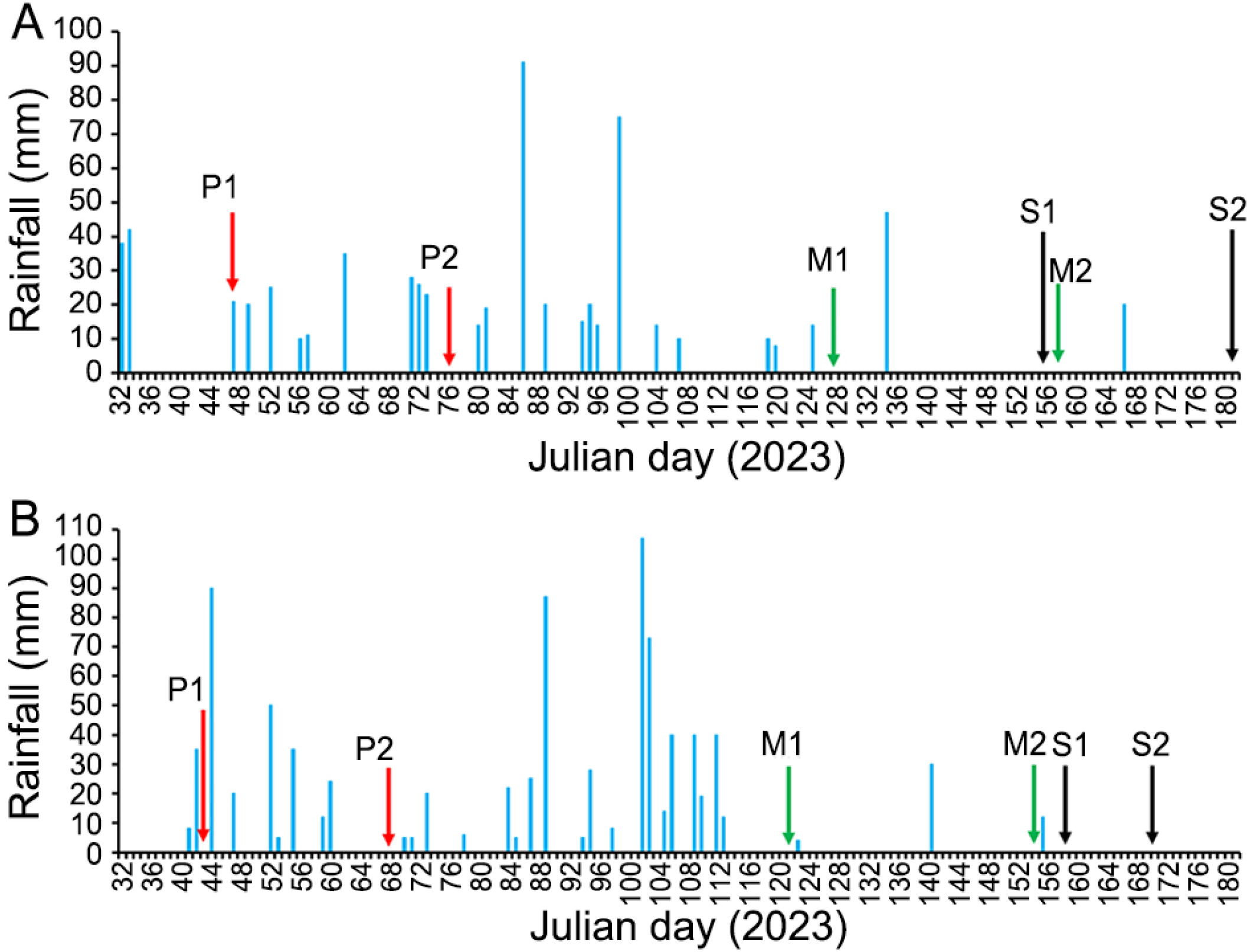
In Ceará State, approximately 66 % of dry spells are classified as Class I (5-10 days without rain), 20 % as Class II (11-15 days without rain), 7 % as Class III (16-20 days without rain), 4 % as Class IV (21-25 days without rain), 2 % as Class V (26-30 days without rain), and 1 % as Class VI (> 30 days without rain) (Fernandes et al., 2015). In the present study, there was a prevalence of dry spells of Classes I and II, but instances of Classes III and IV were also observed (Figure 1). Notably, longer dry spells became more predominant during the planting periods in March 2023 and 2024 (Figure 1).
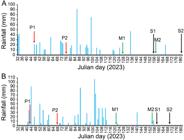
Rainfall distribution from February to June in the years 2023 and 2024. The red arrows indicate the planting dates for maize and forage sorghum in February (P1) and March (P2). M1 = first maize harvest date; M2 = second maize harvest date; S1 = first forage sorghum harvest date; S2 = second forage sorghum harvest date.
Crop yield
Maize was harvested between 81 and 84 days after sowing in both years, providing data on fresh and dry shoot biomass, as well as green ears and commercial green ears (weighing 250 g each), all expressed in kg ha−1. Forage sorghum was harvested between 104 and 114 days in both years, and measurements of fresh and dry shoot biomass were recorded in kg ha−1. For both crops, 15 plants were collected from the central part of the plot to assess fresh shoot biomass, with samples separated into stalks + sheaths, leaf blades, tassels, and ears (maize) or panicles (forage sorghum). Samples of approximately 300 g were weighed and placed in an oven to dry for the estimation of the dry biomass of the various components.
The data were evaluated for normality using Bartlett's test and homogeneity with Shapiro-Wilk test, which are perquisites for variance analysis. Means were compared using Tukey's test at a significance level of 0.05, employing ASSISTAT 7.7 BETA (2016) statistical software. Additionally, regression analysis was performed to assess responses to different levels of supplemental irrigation, both with and without NPK fertilization.
Economic analysis
The yield of commercial green maize ears and total fresh biomass of forage sorghum were used to estimate gross revenue in Brazilian currency (BRL), based on the average prices in Ceará State (BRL 1.20 per kg of green maize ears and BRL 250.00 per ton of fresh sorghum biomass) as of May 2025. The commercial ear index was calculated by dividing the average weight of the sampled ears by a reference weight of 250 g per ear. For the economic assessment, fixed and variable costs, as well as equipment depreciation, were considered as outlined by Cavalcante et al. (2021). Additionally, financing from Banco do Nordeste do Brasil was included in the investment credit line known as "Pronaf mais alimentos", simulating a contract with a ten-year term and an interest rate of 3 % per year, with no grace period, closely reflecting the farmer's real situation.
Using the cost data and estimated gross revenue, the added value (AV) was calculated following the methodology described by Cavalcante et al. (2021). The AV for the production systems was obtained for 1.0 ha of production area, as follows:
where: AV = added value, BRL; GPV = gross production value, BRL; FC = fixed costs associated with the production system, BRL; VC = variable costs associated with the production system, except for labor, BRL; D = depreciation of equipment and facilities, BRL.
The farmers’ income was calculated using the AV, enabling the assessment of economic viability at the production unit level, according to Eq. (2):
where: FI = farmer's income, BRL; AV = added value, BRL; J = interest paid to the bank or other financial agent, BRL; S = wages paid to the workforce, BRL; I = taxes and tariffs paid to the State, BRL.
The equation above allowed for determining the farmer's income for 1.0 ha of production. To calculate the farmer's income for areas ranging from 2.0 to 5.0 ha, linear models were developed (FI = ax + b) that detail the variation in income across different treatments, such as planting dates, supplementary irrigation, and NPK fertilization, in relation to the functional agricultural area per unit of work. In this equation, the farmer's income is denoted as FI, the marginal income contribution per area is represented by "a", and the fixed expenses associated with implementing the production system are indicated by "b". Subsequently, the level of social reproduction (LSR) for each production unit was calculated, expressed as a multiple of the monthly minimum wage over six months.
Results
The planting date significantly affected maize yield (p < 0.01), except for total dry mass and green ear biomass in 2024 (p > 0.05). Conversely, supplemental irrigation and NPK fertilization treatments had significant effects on all variables (p < 0.01) during both years of the study. Additionally, the interactions between these factors were significant in both years (p < 0.01 or p < 0.05) for all variables in 2023 and for commercial green ears in 2024.
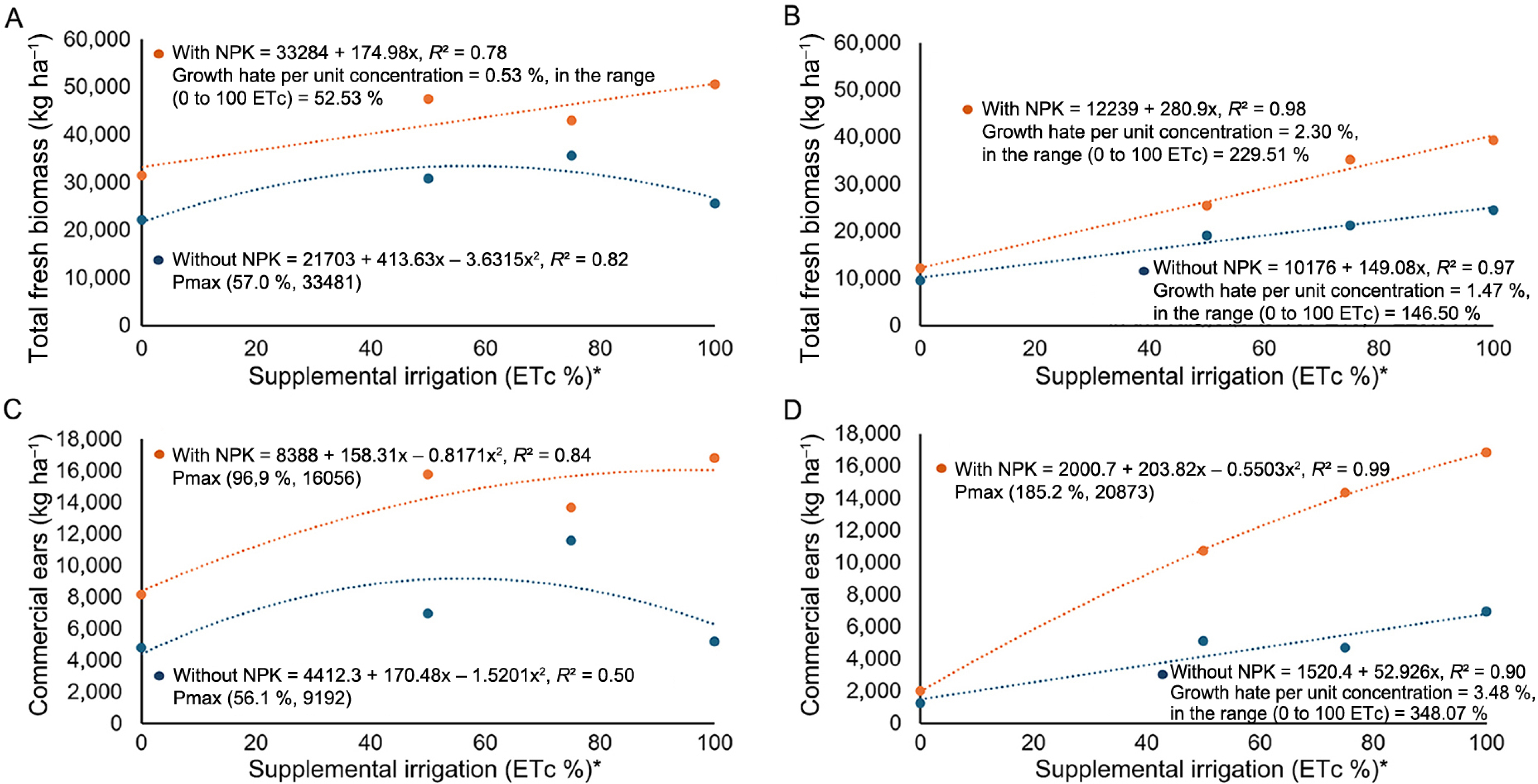
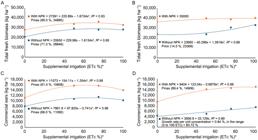
The productivity of total fresh biomass and commercial green maize ears in 2023 were affected by both supplemental irrigation and NPK fertilization (Figure 2). Notably, the yield improved when these two factors were combined, especially in late planting scenarios. It is worth noting that 2023 experienced the lowest total rainfall from February to June (Table 2) and had a more irregular rainfall distribution (Figure 1), which significantly impacted maize growth and development. For late planting, providing 100 % replacement of evapotranspiration resulted in roughly three times the biomass production and approximately eight times the yield of commercial ears in fertilized plants, compared to the rainfed treatment with fertilization.
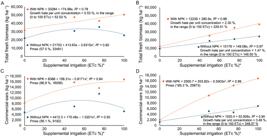
A) Total fresh matter for the first and B) second planting date, and C) commercial green ears for the first, and D) second planting date for maize in 2023, as a function of supplemental irrigation depths and Nitrogen-Phosphorus-Potassium (NPK) fertilization. *Accumulated crop evapotranspiration (ETc) during dry spells lasting five or more days. Pmax = maximum point.
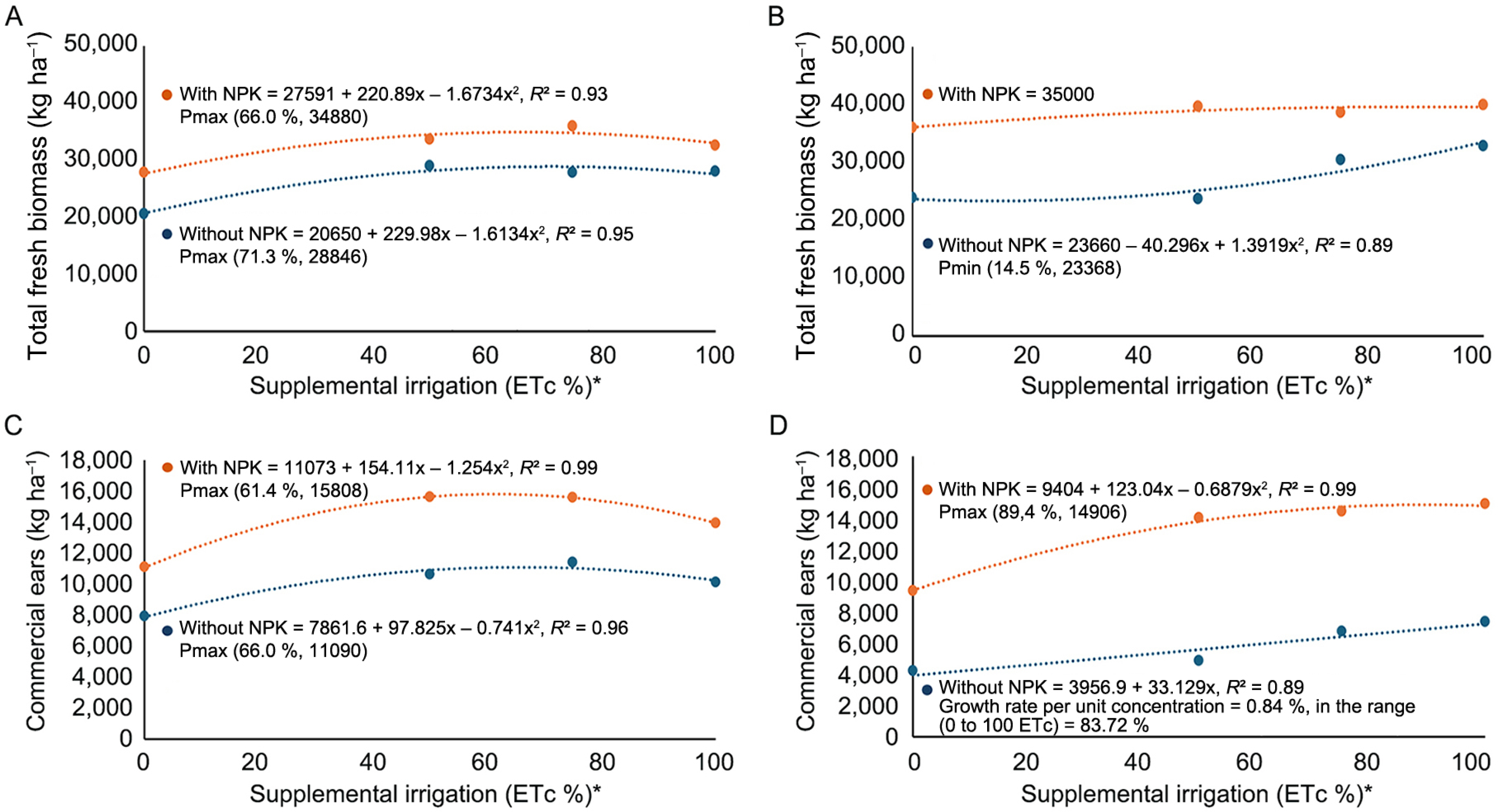
In 2024, the differences between treatments with and without fertilization were even more pronounced, especially concerning the production of commercial ears (Figure 3). Supplemental irrigation in 2024 had a less significant effect on the total biomass and commercial ear production compared to 2023. For early planting, responses were quadratic, with peak commercial ear productivity at supplemental irrigation depths of 61.4 % (15,808 kg ha−1) and 66.0 % (11,090 kg ha−1) of the crop demand, both with and without fertilization, respectively. In the case of late planting, the response to irrigation was also quadratic under fertilization conditions, reaching peak commercial ear productivity at a depth of 89.4 % (14,906 kg ha−1). Notably, in 2024, total rainfall during maize cultivation, in both crop cycles, exceeded that of 2023. However, dry spells at the end of the growing cycle ultimately negatively affected the yield of commercial ears.
A) Total fresh biomass for the first and B) second planting date, and C) commercial green ears for the first and D) second planting date for maize in 2024, as a function of supplemental irrigation depths and Nitrogen-Phosphorus-Potassium (NPK) fertilization. *Accumulated crop evapotranspiration (ETc) during dry spells lasting five or more days. Pmax = maximum point; Pmin = minimum point.
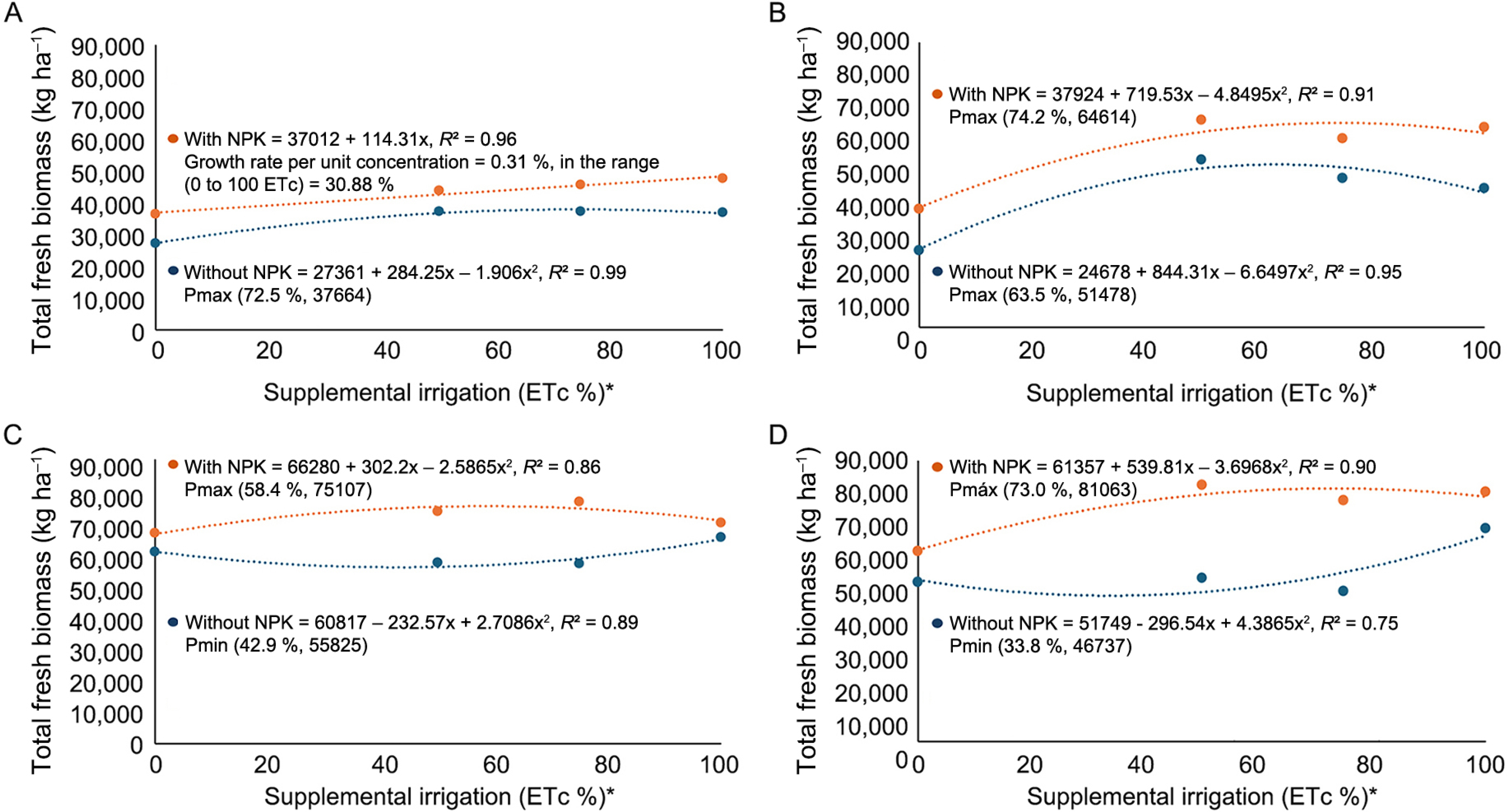
Overall, the effects of planting time, supplemental irrigation, and NPK fertilization had less significant effects in sorghum than in maize. In 2023 and 2024, notable responses to fertilization and supplemental irrigation were observed, especially during late planting when prolonged dry spells occurred (Figure 4). In these cases, a quadratic response pattern emerged, with minimal differences among the 50 %, 75 %, and 100 % irrigation depths. Specifically, for late planting in 2023, a quadratic trend was evident, with maximum biomass yields achieved at irrigation depths of the 63.5 % and 74.2 % for treatments without and with NPK fertilization, respectively. These depths produced biomass yields that were 2.1 and 1.7 times higher for the fertilized and unfertilized treatments, respectively, compared to the rainfed system. In 2024, during late planting, the highest biomass yield under the NPK treatment occurred at an irrigation depth of 73.0 %, with a corresponding modest rate of increase.
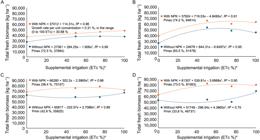
Total fresh biomass of forage sorghum for the planting dates: A) February 2023, B) March 2023, C) February 2024, and D) March 2024, as a function of supplemental irrigation depths and Nitrogen-Phosphorus-Potassium (NPK) fertilization. *Accumulated crop evapotranspiration (ETc) during dry spells lasting five or more days. Pmax = maximum point; Pmin = minimum point.
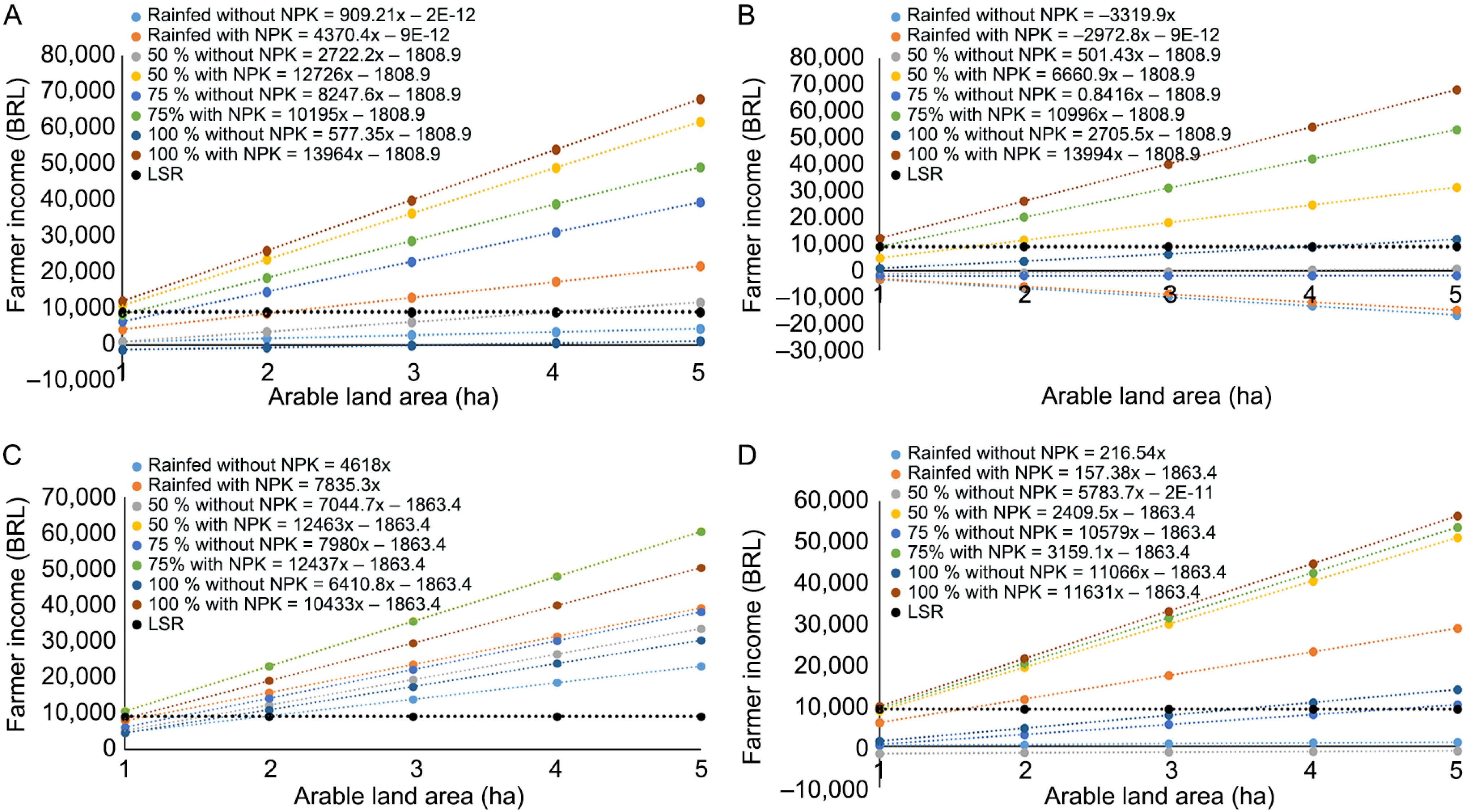
In this study, maize yield was significantly affected by supplemental irrigation and fertilization. However, applying these factors alone did not prove profitable for farmers (Figure 5). Specifically, the 100 % supplemental irrigation treatment without fertilization (Figure 5A) and the rainfed treatment with fertilization (Figure 5B) remained unprofitable, even in expanded cultivated areas. Indeed, almost all treatments without fertilization, including those with supplemental irrigation, failed to reach the LSR, regardless of increased area, or only did so at 4.0 ha or more – except for the early planting conducted in 2024. Conversely, the treatment combining 100 % supplemental irrigation and fertilization showed the best response, reaching the LSR with an area less than or equal to 1.0 ha, and exhibited higher income growth rates as maize cultivation area increased (Figure 5A, B, C, and D). The economic results also suggest that late planting in 2023 created greater restrictions on maize cultivation.
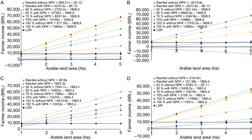
Farmers’ income and level of social reproduction (LSR) for maize on planting dates: A) February 2023, B) March 2023, C) February 2024, and D) March 2024, as a function of cultivated area, supplemental irrigation and Nitrogen-Phosphorus-Potassium (NPK) fertilization. BRL = Brazilian real.
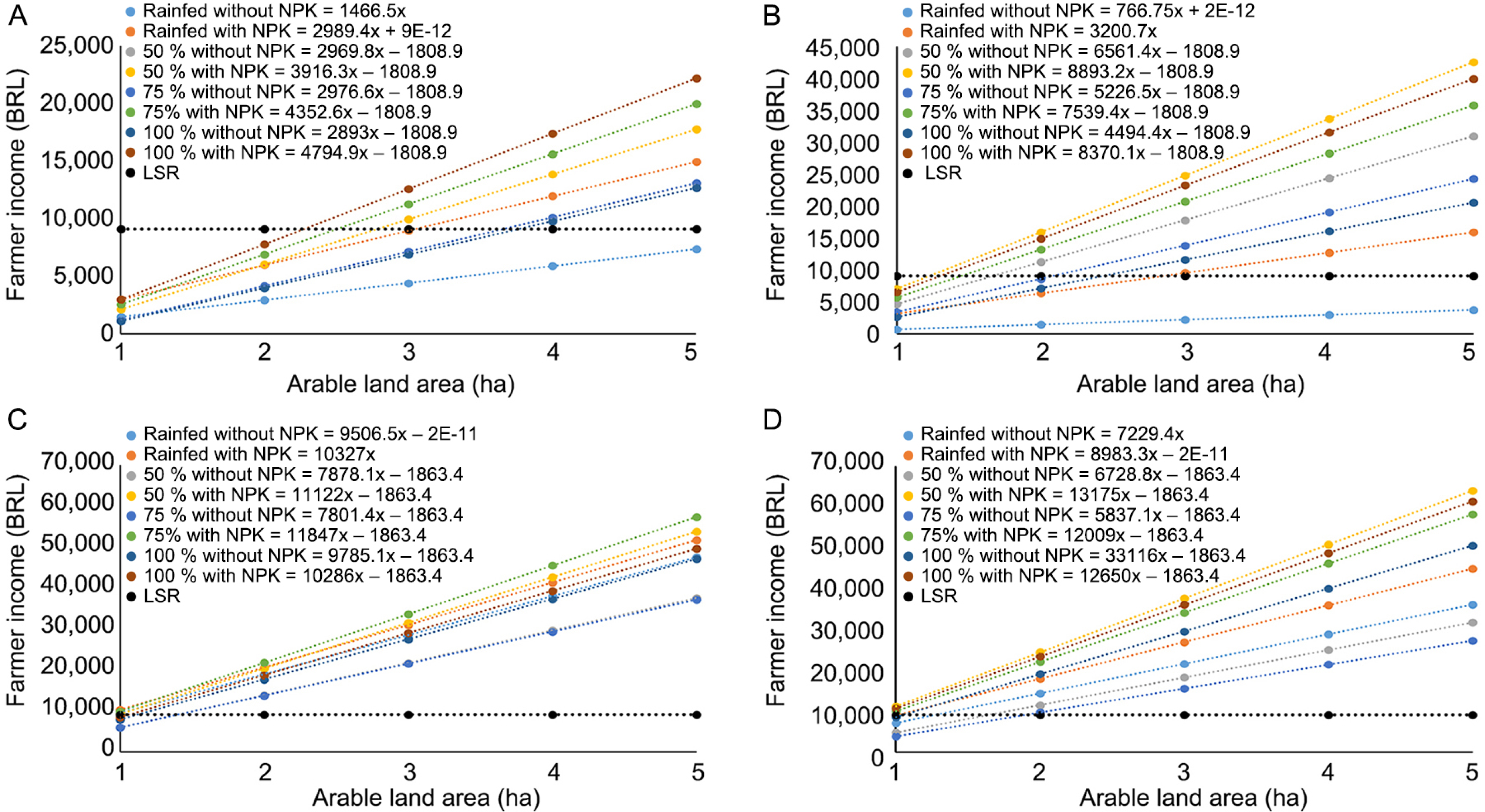
For forage sorghum, treatment with 100 % supplemental irrigation and fertilization did not reach the same effectiveness as with maize. Indeed, it was surpassed by the treatments with 50 % and 75 % irrigation depths in three of the four crops conducted over two years (Figure 6). The economic analysis shows that 2023 posed more challenges for sorghum cultivation, due to a lower fertilization response during early planting (February) and water restrictions affecting late planting (March). Notably, only the rainfed treatment without fertilization failed to reach the LSR levels. The income trend for farmers growing forage sorghum cultivation were similar, especially among the group that received irrigated NPK fertilization, which produced better results.
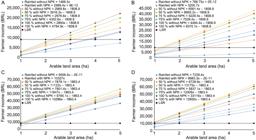
Farmers’ income and level of social reproduction (LSR) for forage sorghum on planting dates: A) February 2023, B) March 2023, C) February 2024, and D) March 2024, as a function of cultivated area, supplemental irrigation and Nitrogen-Phosphorus-Potassium (NPK) fertilization. BRL = Brazilian real.
Discussion
The climate risks resulting from the irregular distribution of rainfall significantly constrain rainfed farming in Brazil's semi-arid region, which is known for its low-input agricultural practices (Rocha et al., 2020). Farmers are reluctant to invest in fertilizers and other farming inputs primarily due to uncertainty about financial returns, given the heightened vulnerability to climate variability (Swindale et al., 1981; Alvalá et al., 2019; Marengo et al., 2022; Santos et al., 2013; Vale et al., 2024).
Our data show that the total precipitation in 2023 (650 mm) and 2024 (874 mm) falls within or surpasses the normal range for the region's rainy season (from February to June). However, during the crop cycle that started in March 2023 (late planting) rainfall levels in were only 371 for maize and 391 mm sorghum. These amounts are insufficient to meet the water demands of both crops. These low precipitation values, along with dry spells categorized as Classes II, III, and IV, worsen the effect on crop yields and limit the plant's ability to use fertilizers (Rocha et al., 2020).
In conditions of limited moisture, the diffusion and mass flow of nutrients are substantially hindered, which compromises the effectiveness of applied fertilizers and, consequently, negatively impacts the physiological and productive performance of plants (Sigua et al., 2020; Ahmad et al., 2022; Cavalcante et al., 2022; Guo et al., 2022). It should be noted that a reduced application of inputs, combined with water scarcity, can lead to soil degradation and diminished productivity over time, creating a cycle of low technology, reduced land productivity, and lower profitability for farmers (Swindale et al., 1981; Rockström and Falkenmark, 2000; Paredes-Trejo et al., 2023; Wang et al., 2023).
These findings highlight the challenges faced by rainfed agriculture in the tropical semi-arid region, which can be greatly impacted by the planting time and dry spells, even during years with average rainfall within the climatological normal (Cavalcante et al., 2021). In addition, the predominance of low-fertility soils with low clay contents, such as those used in this study (Table 1), shows limited water retention capacity and ability to meet crop nutrient needs (Swindale et al., 1981; Wang et al., 2023). As a result, plants experience both water and nutrient shortages simultaneously, especially in maize crops, as shown by the 2023 data.
The low yields of commercial maize ears under rainfed farming, without (1,520.4 kg ha−1) and with NPK fertilization (2,000.7 kg ha−1), during the late planting of 2023 reflect significant water limitations and a reduced capacity of plants to utilize a larger soil volume, even under fertilizer application. Conversely, when supplemental irrigation (100 % of ETc) is used, the yield of commercial green ears reaches an impressive 6,813.0 kg ha−1 without NPK fertilization and soars to 16,879.0 kg ha−1when both irrigation and fertilization are applied. These findings underscore the critical interdependence of irrigation and nutrient supply in the specific edaphoclimatic context of Brazil's semi-arid region. The results suggest that optimizing water and nutrient availability through supplemental irrigation can significantly boost crop yields and farmer profitability in a tropical semi-arid climate, aligning with observations from other global regions (Wang et al., 2015; Satognon et al., 2021; Liu et al., 2022; Martelli et al., 2025). Notably, the maximum yield of commercial observed in our study falls within the range reported for Hybrid AG 1051 (between 14,500 and 21,900 kg ha−1), under optimal water conditions (Campelo et al., 2019; Arruda et al., 2022; Cavalcante Filho et al., 2022).
The productivity of commercial green ears was the variable most significantly affected (Figures 2 and 3). A reduction in rainfall during the reproductive stage of maize plants in the late planting of 2023 and 2024 highlight this issue (Figure 1). This suggests that the production of commercial green ears is highly sensitive and can have significant socioeconomic consequences in water-scarce situations. Under these conditions, root development is severely compromised, impairing the plant's ability to absorb water and nutrients, thereby negatively affecting carbon assimilation and ultimately leading to increased productivity losses (Guo et al., 2022). Notably, maize performs better in Brazil's semi-arid region during droughts lasting up to 15 days; however, yields drop sharply when natural precipitation exceeds this duration (Nogueira et al., 2023), as observed in 2023. It is noteworthy that this 15-day threshold should not be applied universally, as responses may vary depending on soil type and plant growth stage. In the same region, water stress in maize crops is often associated with prolonged dry spells of more than 10 days, particularly during the crucial pollination or silking stages (Sun et al., 2007). In addition, in soils with lower water-holding capacity, the effects of a dry spell are almost immediate and more damaging to crop growth than in soils with higher water holding capacity, especially in hot, semi-arid climates (Barron et al., 2003).
The findings show that maize yields in the Brazilian semi-arid region can be greatly improved with effective fertilizer management, especially when combined with favorable rainfall patterns or supplemental irrigation during dry spells. The highest commercial green ear yield was achieved with 100 % and 89 % of the supplemental irrigation depth for late planting in 2023 and 2024. Therefore, deficit supplemental irrigation is not recommended for scenarios involving prolonged dry spells, such as those classified as Classes II, III, and IV.
Forage sorghum outperformed maize in green biomass production; however, the rates of increase were lower than those observed with NPK fertilization and supplemental irrigation (Figure 4). during the most critical period for water availability, specifically the late planting of 2023, fertilization alone led to an approximate 54 % increase in green biomass production under rainfed conditions. This indicates that sorghum has a superior capacity to extract water and nutrients from the soil in water-restricted situations compared to maize. Conversely, maximum productivity was achieved with 63.5 % (51,478 kg ha−1) and 74.2 % (64,614 kg ha−1) of the supplemental irrigation depth without and with mineral fertilization, respectively, resulting in maximum increases of 209 % and 171 %, respectively. Over the two years, the average maximum yield for the treatment using supplemental irrigation at 100 % ETc along with NPK fertilization reached 67,306 kg ha−1, a value comparable to the 76,000 kg ha−1 reported by Santos et al. (2013) under similar conditions with a planting density of approximately 171,000 plant ha−1.
Notably, sorghum demonstrates greater drought tolerance than maize, as shown by its higher soil water availability factor (f) and lower coefficient of sensitivity to water deficit (Doorenbos and Pruitt, 1977; Queiroz et al., 2023). The lower ‘f’ values for maize, ranging from 0.3 to 0.4, indicate that maize is more vulnerable to water deficit during critical growth stages such as flowering and grain filling. This vulnerability explains the yield losses in commercial ears observed during late planting, especially in 2023, when prolonged dry spells occurred. Conversely, sorghum's superior capacity to extract nutrients from the soil gives it an advantage over maize, especially in soils with low to medium fertility and poor water retention capacity, common in tropical semi-arid regions. The increased potential of sorghum may be due to its deeper root system, which allows the plant to access a larger volume of soil and extract more water (Bhattarai et al., 2020).
The economic analysis indicates that financial returns are attainable through combining supplemental irrigation and NPK fertilization, even in sandy soils (Figures 5 and 6). However, relying solely on either irrigation or fertilization becomes unviable, particularly for maize. For this crop, economic risks can be significantly reduced, enabling farmers to earn above the LSR in areas of 1.0 ha or more when using both NPK fertilization and supplemental irrigation, especially with a water depth equal to 100 % of the crop's ETc. In contrast, the economic risk is lower for forage sorghum because of its better adaptability to the soil and climate conditions of the tropical semi-arid region. For forage sorghum, deficit-supplemental irrigation is the most effective method, lowering variable costs and increasing farmers’ income. Additionally, supplemental irrigation increases farmers’ earnings, compared to rainfed farming; however, profit margins vary from year to year due to rainfall fluctuations (Cavalcante et al., 2021; Martelli et al., 2025).
Our study shows that supplemental irrigation and NPK fertilization significantly affect productivity of maize and forage sorghum in the tropical semi-arid region. Over two years, the results highlighted considerable variability of rainfall during the rainy season, with yield losses being notably lower when planting occurs in February. In contrast, the interaction between NPK fertilization and supplemental irrigation was more pronounced during late planting, particularly for maize, during prolonged dry spells.
In areas with predominantly sandy soil, a combined approach of fertilization and full supplemental irrigation (100 %) is recommended for maize to maximize yields and increase profits for farmers. However, the greater adaptability of forage sorghum helps reduce economic risk; thus, for this crop, it is advisable to use deficit supplemental irrigation at depths ranging from 60 % to 75 %.
The integrated approach of mineral fertilization combined with supplemental irrigation, aimed at replacing ETc, constitutes a promising agricultural management strategy that can ensure high yields and optimize economic returns in maize and forage sorghum production systems within a semi-arid tropical climate. However, our study was conducted under different water scenarios at a single site with uniform soil characteristics, especially sandy loam texture. Therefore, future studies should consider the spatial variability of the semi-arid tropical region and the diverse soil and climate conditions present. Additionally, exploring alternative methods for estimating supplemental irrigation depths and fertigation will be important for future research focused on achieving sustainable agriculture in the region.
Acknowledgments
The author wishes to thank the Programa Cientista-Chefe do Governo do Estado do Ceará (SDE/Funcap), the Instituto Nacional de Ciência e Tecnologia em Agricultura Sustentável no Semiárido Tropical – INCTAgriS (CNPq/Funcap/Capes) and the Coordenação de Aperfeiçoamento de Pessoal de Nível Superior (Capes) for the financial support and for granting scholarships.
Data Availability Statement
The data supporting the findings of this study are available in the paper. Any raw data files in another format are available upon request to the corresponding author.
References
-
Ahmad I, Yan Z, Kamran M, Ikram K, Ghani MU, Hou F. 2022. Nitrogen management and supplemental irrigation affected greenhouse gas emissions, yield and nutritional quality of fodder maize in an arid region. Agricultural Water Management 269: 107650. https://doi.org/10.1016/j.agwat.2022.107650
» https://doi.org/10.1016/j.agwat.2022.107650 - Allen RG, Pereira LS, Raes D, Smith M. 1998. Crop Evapotranspiration: Guidelines for computing crop water requirements. FAO, Rome, Italy.
-
Alvalá RCS, Cunha APMA, Brito SSB, Seluchi ME, Marengo JA, Moraes OLL, et al. 2019. Drought monitoring in the Brazilian Semiarid region. Anais da Academia Brasileira de Ciências 91: e20170209. https://doi.org/10.1590/0001-3765201720170209
» https://doi.org/10.1590/0001-3765201720170209 - Aquino AB, Aquino BF, Hernandez FFF, Holanda FJM, Freire JM, Crisóstomo LA, et al. 1993. Recomendações de adubação e calagem para o Estado do Ceará. Editora UFC, Fortaleza, CE, Brazil (in Portuguese).
-
Arruda FP, Matos MHM, Cruz ALF, Farias ER. 2022. Production indicators of green corn cultivars at different population densities. Revista Caatinga 35: 331-339. https://dx.doi.org/10.1590/1983-21252022v35n209rc
» https://dx.doi.org/10.1590/1983-21252022v35n209rc -
Barron J, Rockström J, Gichuki F, Hatibu N. 2003. Dry spell analysis and maize yields for two semi-arid locations in east Africa. Agricultural and Forest Meteorology 117: 23-37. https://doi.org/10.1016/S0168-1923(03)00037-6
» https://doi.org/10.1016/S0168-1923(03)00037-6 -
Bhattarai B, Singh S, West CP, Ritchie GL, Trostle CL. 2020. Water Depletion Pattern and Water Use Efficiency of Forage Sorghum, Pearl millet, and Corn Under Water Limiting Condition. Agricultural Water Management 238: 106206. https://doi.org/10.1016/j.agwat.2020.106206
» https://doi.org/10.1016/j.agwat.2020.106206 -
Campelo DH, Teixeira AS, Moreira LCJ, Lacerda CF. 2019. Growth, production and water and nitrogen use efficiency of maize under water depths and nitrogen fertilization. Revista Brasileira de Engenharia Agrícola e Ambiental 23: 747-753. https://doi.org/10.1590/1807-1929/agriambi.v23n10p747-753
» https://doi.org/10.1590/1807-1929/agriambi.v23n10p747-753 -
Cavalcante ES, Lacerda CF, Costa RNT, Gheyi HR, Pinho LL, Bezerra FMS, et al. 2021. Supplemental irrigation using brackish water on maize in tropical semi-arid regions of Brazil: yield and economic analysis. Scientia Agricola 78: e20200151. https://doi.org/10.1590/1678-992X-2020-0151
» https://doi.org/10.1590/1678-992X-2020-0151 -
Cavalcante ES, Lacerda CF, Mesquita RO, Melo AS, Ferreira JFS, Teixeira AS, et al. 2022. Supplemental Irrigation with Brackish Water Improves Carbon Assimilation and Water Use Efficiency in Maize under Tropical Dryland Conditions. Agriculture 12: 544. https://doi.org/10.3390/agriculture12040544
» https://doi.org/10.3390/agriculture12040544 -
Cavalcante Filho HA, Helcias RP, Pereira RG, Cavalcante M, Medeiros PVQ, Andrade ARS. 2022. Performance of maize cultivars for the production of sweet corn, baby corn, and fodder. Revista de Ciências Agroveterinárias 21: 449-455. https://doi.org/10.5965/223811712142022449
» https://doi.org/10.5965/223811712142022449 - Doorenbos J, Pruitt WO. 1977. Crop Water Requirements. FAO, Rome, Italy.
- Fernandes FBP, Lacerda CF, Andrade EM, Neves ALR, Sousa CHC. 2015. Effect of soil management on water deficit, gas exchange and cowpea yield in the semi-arid region. Revista Ciência Agronômica 46: 506-515 (in Portuguese, with abstract in English).
-
Gebremedhin T, Haile GG, Gebremicael TG, Libsekal H, Reda KW. 2023. Balancing crop water requirements through supplemental irrigation under rainfed agriculture in a semi-arid environment. Heliyon 9: e18727. https://doi.org/10.1016/j.heliyon.2023.e18727
» https://doi.org/10.1016/j.heliyon.2023.e18727 -
Guo J, Fan J, Xiang Y, Zhang F, Yan S, Zhang X, et al. 2022. Coupling effects of irrigation amount and nitrogen fertilizer type on grain yield, water productivity and nitrogen use efficiency of drip-irrigated maize. Agricultural Water Management 261: 107389. https://doi.org/10.1016/j.agwat.2021.107389
» https://doi.org/10.1016/j.agwat.2021.107389 -
Liu S, Lin X, Wang W, Zhang B, Wang D. 2022. Supplemental irrigation increases grain yield, water productivity, and nitrogen utilization efficiency by improving nitrogen nutrition status in winter wheat. Agricultural Water Management 264: 107505. https://doi.org/10.1016/j.agwat.2022.107505
» https://doi.org/10.1016/j.agwat.2022.107505 -
Marengo JA, Galdos MV, Challinor A, Cunha AP, Marin FR, Vianna MS, et al. 2022. Drought in Northeast Brazil: A review of agricultural and policy adaptation options for food security. Climate and Sustainability 1: e17. https://doi.org/10.1002/cli2.17
» https://doi.org/10.1002/cli2.17 -
Martelli A, Verdi L, Rapinesi D, Donati IIM, Di Fonzo A, Ruberto M, et al. 2025. Impact of supplemental irrigation on yield, water productivity, and economic profitability of broad bean (Vicia faba L., var. minor). Italian Journal of Agronomy 20: 100029. https://doi.org/10.1016/j.ijagro.2025.100029
» https://doi.org/10.1016/j.ijagro.2025.100029 - Nangia V, Oweis T, Kemeze F, Schnetzer J. 2018. Supplemental Irrigation: A promising climate-smart practice for dryland agriculture. ICARDA, Beirut, Lebanon.
-
Nogueira DB, Silva AO, Giroldo AB, Silva APN, Costa BRS. 2023. Dry spells in a semi-arid region of Brazil and their influence on maize productivity. Journal of Arid Environments 209: 104892. https://doi.org/10.1016/j.jaridenv.2022.104892
» https://doi.org/10.1016/j.jaridenv.2022.104892 -
Paredes-Trejo F, Barbosa HA, Daldegan GA, Teich I, García CL, Kumar TVL, et al. 2023. Impact of Drought on Land Productivity and Degradation in the Brazilian Semiarid Region. Land 12: 954. https://doi.org/10.3390/land12050954
» https://doi.org/10.3390/land12050954 -
Queiroz GCM, Medeiros JF, Silva RR, Morais FMS, Sousa LV, Souza MVP, et al. 2023. Growth, Solute Accumulation, and Ion Distribution in Sweet Sorghum under Salt and Drought Stresses in a Brazilian Potiguar Semiarid Area. Agriculture 13: 803. https://doi.org/10.3390/agriculture13040803
» https://doi.org/10.3390/agriculture13040803 - Rocha TBC, Vasconcelos Junior FC, Silveira CS, Martins ESPR, Silva RFV. 2020. Dry Spells in Ceará and Applications for Rainfed Agriculture. Revista Brasileira de Meteorologia 35: 435-447 (in Portuguese, with abstract in English).
-
Rockström J, Falkenmark M. 2000. Semiarid Crop Production from a Hydrological Perspective: Gap between Potential and Actual Yields. Critical Reviews in Plant Sciences 19: 319-346. https://doi.org/10.1080/07352680091139259
» https://doi.org/10.1080/07352680091139259 -
Rossato L, Alvalá RCS, Marengo JA, Zeri M, Cunha APMA, Pires LBM, et al. 2017. Impact of Soil Moisture on Crop Yields over Brazilian Semiarid. Frontiers in Environmental Science 5: 73. https://doi.org/10.3389/fenvs.2017.00073
» https://doi.org/10.3389/fenvs.2017.00073 - Santos HG, Jacomine PKT, Anjos LHC, Oliveira VA, Lumbreras JF, Coelho MR, et al. 2025. Sistema Brasileiro de Classificação de Solo. 6ed. Embrapa, Brasília, DF, Brazil.
-
Santos RD, Pereira LGR, Neves ALA, Rodrigues JAS, Costa CTF, Oliveira GF. 2013. Agronomic characteristics of forage sorghum cultivars for silage production in the lower middle San Francisco Valley. Acta Scientiarum. Animal Sciences 35: 13-19. https://doi.org/10.4025/actascianimsci.v35i1.13072
» https://doi.org/10.4025/actascianimsci.v35i1.13072 -
Satognon F, Owido SFO, Lelei JJ. 2021. Effects of supplemental irrigation on yield, water use efficiency and nitrogen use efficiency of potato grown in mollic Andosols. Environmental Systems Research 10: 38. https://doi.org/10.1186/s40068-021-00242-4
» https://doi.org/10.1186/s40068-021-00242-4 -
Sigua GC, Stone KC, Bauer PJ, Szogi AA. 2020. Efficacy of Supplemental Irrigation and Nitrogen Management on Enhancing Nitrogen Availability and Urease Activity in Soils with Sorghum Production. Sustainability 12: 8358. https://doi.org/10.3390/su12208358
» https://doi.org/10.3390/su12208358 -
Sun L, Li H, Ward MN, Moncunill DF. 2007. Climate Variability and Corn Yields in Semiarid Ceará, Brazil. Journal of Applied Meteorology and Climatology 46: 226-240. https://doi.org/10.1175/JAM2458.1
» https://doi.org/10.1175/JAM2458.1 -
Swindale LD, Virmani SM, Sivakumar MVK. 1981. Climatic Variability and Crop Yields in the Semi-Arid Tropics. p. 139-166. In: Bach W, Pankrath J, Schneider SH. eds. Food-Climate Interactions. Springer, Dordrecht, Netherlands. https://doi.org/10.1007/978-94-009-8563-6_8
» https://doi.org/10.1007/978-94-009-8563-6_8 - Teixeira PC, Donagemma GK, Fontana A, Teixeira WG. 2017. Manual de Métodos de Análise de Solo. Embrapa, Brasília, DF, Brazil (in Portuguese).
-
Vale TMC, Spyrides MHC, Cabral Júnior JB, Andrade LMB, Bezerra BG, Rodrigues DT, et al. 2024. Climate and water balance influence on agricultural productivity over the Northeast Brazil. Theoretical and Applied Climatology 155: 879-900. https://doi.org/10.1007/s00704-023-04664-1
» https://doi.org/10.1007/s00704-023-04664-1 -
Wang N, Zhang T, Cong A, Lian J. 2023. Integrated application of fertilization and reduced irrigation improved maize (Zea mays L.) yield, crop water productivity and nitrogen use efficiency in a semi-arid region. Agricultural Water Management 289: 108566. https://doi.org/10.1016/j.agwat.2023.108566
» https://doi.org/10.1016/j.agwat.2023.108566 -
Wang X, Shi Y, Guo Z, Zhang Y, Yu Z. 2015. Water use and soil nitrate nitrogen changes under supplemental irrigation with nitrogen application rate in wheat field. Field Crops Research 183: 117-125. https://doi.org/10.1016/j.fcr.2015.07.021
» https://doi.org/10.1016/j.fcr.2015.07.021 -
Zaninelli PG, Menéndez CG, Falco M, López-Franca N, Carril AF. 2019. Future hydroclimatological changes in South America based on an ensemble of regional climate models. Climate Dynamics 52: 819-830. https://doi.org/10.1007/s00382-018-4225-0
» https://doi.org/10.1007/s00382-018-4225-0
Edited by
-
Edited by:
Sérgio Tonetto de Freitas https://orcid.org/0000-0001-9579-7304