 Accurate tomato fruit measurement via parallax-based binocular vision and deep learning detection
ABSTRACT:
In robotic harvesting and yield prediction scenarios, real-time visual recognition of tomato fruit size often requires additional distance sensors or reference objects for measuring dimensions. This study introduces a low-cost, single-device, variable-distance vision recognition solution. The measurement system employs a binocular camera, and the algorithm used is You Only Look Once version 5 (YOLOv5). The measurement principle is based on parallax, which calculates the distance between the tomato fruit and the camera baseline by analyzing the offset of the same point on the left and right images. The dataset was trained with YOLOv5, including 100 binocular and 500 monocular images of single, multiple, and shielded fruits. The baseline distance between the tomato fruit and the binocular camera was calculated by measuring the parallax principle of the binocular camera. The detection accuracy of ripe tomatoes reached 86.9 % using the YOLOv5 target detection algorithm and various mixed datasets. The average relative errors for distance, vertical width, and horizontal length were 4.92 %, 5.31 %, and 5.05 %, respectively. The test system costs less than US$30. The results demonstrate that the system exhibits excellent dimensional detection performance at a low cost and across variable distances.
Keyword:
Baseline; Binocular camera; Dimensional measurement; Parallax; YOLOv5
Introduction
Tomato fruits are among the world's most important crops, recognized for their high value in both food processing and meeting daily nutritional health needs (Perveen et al., 2015). According to a report by the Food and Agriculture Organization of the United Nations, the global area dedicated to tomato cultivation is expected to reach 370 million hectares in 2023, with a production volume of 740 million tons (WTO, 2023). This underscores the crucial role of tomato fruits in global food supply.
As the population ages and the rural labor force continues to diminish, there is an urgent need to enhance the efficiency of tomato fruit picking and sorting through automation (Fess et al., 2011; He and Schupp, 2018). For effective automated tomato harvesting, the picking devices need to detect the growth status of the tomato fruits in real-time. Robots and harvesting machinery must be capable of recognizing the ripeness, location, and size of tomato fruits (Miao et al., 2023). Parameters for measuring fruit size include length, width, area, volume, and weight (Miranda et al., 2023).
In agricultural technology, precise fruit detection is essential for yield estimation and robotic harvesting. The You Only Look Once (YOLO) (Zhu et al., 2021) has emerged as a leading method for target detection (Ali and Zhang, 2024), surpassing previous algorithms such as the Fast Region-based Convolutional Network (Fast R-CNN) (Girshick, 2015) and Single Shot MultiBox Detector (SSD) (Liu et al., 2016) in terms of training efficiency and detection accuracy. In the realm of YOLO detection, Bazame et al. (2022) used the YOLOv4 algorithm to identify coffee beans on trees. Additionally, a dimensional measurement method that utilizes a reference object at a fixed distance has been suggested (Lee et al., 2020). In contrast, 2D image-based techniques typically necessitate calibrated targets. Thus, a novel, simple, and efficient method for fruit size recognition has been proposed (Wang et al., 2024). However, the existing studies on fruit size measurement face several limitations: 1) The need for reference objects and multiple devices for distance measurement; 2) The measurement scheme applies only to fruits in fixed positions; 3) The overall costs are high. To overcome these challenges, a concept for tomato fruit size measurement using parallax has been proposed. This involves a variable-distance visual dimension detection system based on a binocular camera, designed to tackle the issues of distance transformation and associated complexities.
Materials and Methods
Tomato size detection theory based on the parallax principle
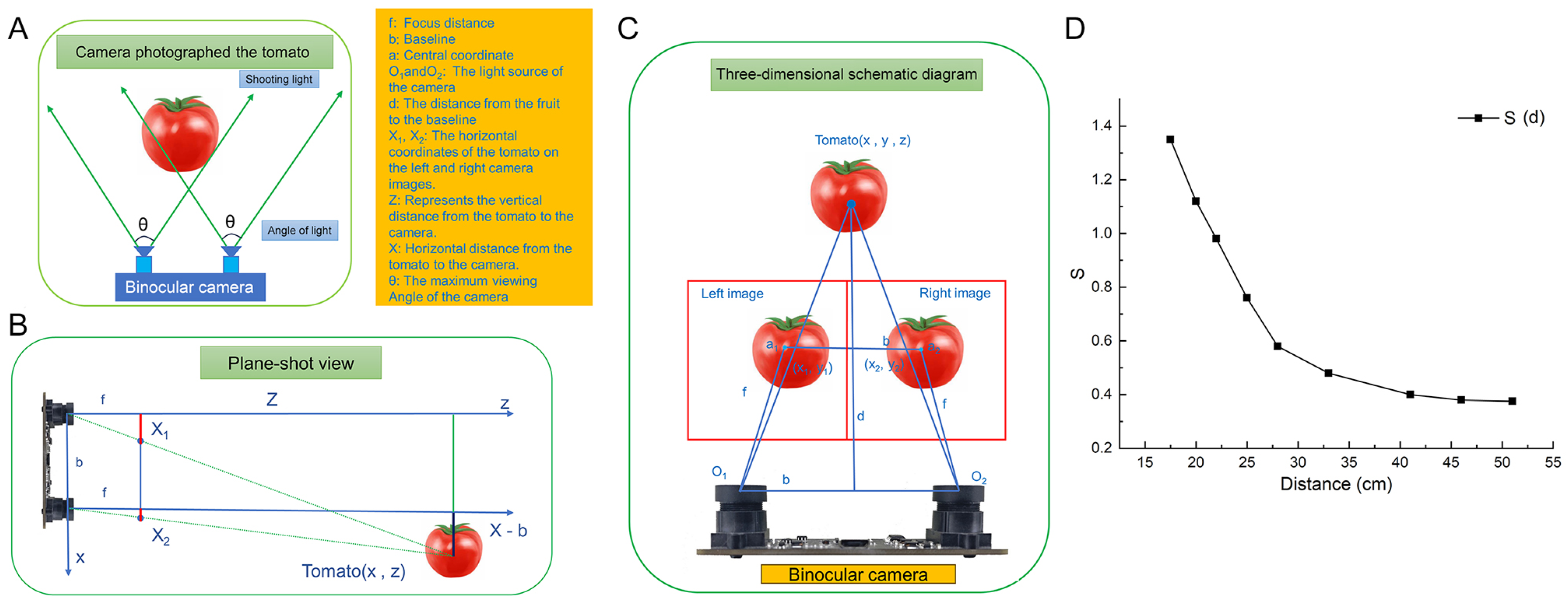
The baseline of a binocular camera refers to the fixed distance separating the two camera modules on the same plane (Li et al., 2017). When the same object is captured in both the left and right images, its position appears offset due to the baseline distance between the cameras, as shown in the planar measurement principle diagram in Figure 1A. This offset is referred to as disparity (d). The disparity (d) can be determined by calculating the pixel differences between the objects in the two images (Morgan et al., 2010). Research has demonstrated that this value of d can be utilized to compute the distance difference between the corresponding pixel points of the same object across the two images. By applying the known baseline distance and the angle of view of the two cameras, the three-dimensional coordinates of the object can be derived using the principle of triangulation (Chow et al., 2012), ultimately yielding the distance from the tomato fruit to the camera, as shown in Figure 1C.
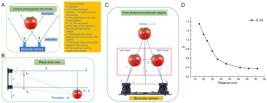
A) Binocular camera illuminating the tomato fruit, B) Vertical plane illuminating the tomato fruit, C) Schematic of binocular camera capturing the tomato fruit for distance measurement, and D) Fitting function of the proportionality coefficient (S) between the distance of the tomato fruit from the camera (distance) and the size of the tomato fruit.
Binocular camera distance measurement is a widely used technique in computer vision. It employs two cameras to simultaneously capture the same scene, resulting in two 2D images. The size measurement system leverages the parallax principle of the binocular camera to determine the distance between the tomato fruit and the camera. Subsequently, it calculates the size of the tomato fruit using a scale. This approach is based on Eq. (1), (2), and (3) as detailed below:
where x1 and x2 are the pixel coordinates of the same point in the left and right images, respectively, z denotes the distance from the object to the camera, f denotes the focal length of the camera, b represents the baseline distance between the two cameras, d denotes the disparity between two images, and X denotes the actual horizontal distance of the object in 3D space.
The distance of the tomato fruit from the baseline (distance) and the quadratic fitting function representing the ratio between the tomato fruit size in the image and its actual size (S) are illustrated in Figure 1D. In the accompanying formula, x and y denote the horizontal and vertical coordinates, respectively. The pixel coordinates (X0, Y0) and (X1, Y1) of the detection box surrounding the tomato fruit were subtracted to determine the pixel values for length and width, respectively. Equation (4) was used to calculate the differences between the horizontal (L) and vertical (W) coordinates. The measured dimensions of the tomato fruit, specifically the length (l) and width (w), were then derived in centimeters using Eq. (5):
Object detection algorithm
In modern object detection algorithms, two primary categories are commonly recognized: the R-CNN series, which functions as a two-stage object detector, and the YOLO and SSD series, which are designed as single-stage object detection algorithms. A comparative analysis presented in the study of Wang et al. (2024) revealed that the YOLO algorithm outperformed the other two in both accuracy and speed for fruit detection, making it particularly suitable for object detection tasks.
The YOLOv5 network architecture consists of four primary components: the input layer, backbone, neck, and head (Zhang et al., 2023). The input layer utilizes techniques such as mosaic data augmentation and adaptive anchor box computation to enhance the model's capacity for generalization. The backbone typically utilizes CSPDarknet53, an efficient convolutional neural network designed for the rapid extraction of image features (Chanda et al., 2024). The neck section incorporates elements such as the feature pyramid network and path aggregation network, enabling the model to effectively capture objects at various scales. Finally, the head section produces the model's detection output, which includes the bounding box coordinates, object confidence scores, and class probabilities.
Training method for tomato fruit image
To achieve high-precision object detection, researchers must develop a dataset comprising a substantial number of high-quality images for training purposes. This dataset can be either an existing publicly available dataset or a custom dataset created by annotating images using tools such as LabelMe 4.5.13 (Aljabri et al., 2022). When constructing a custom dataset, it is essential to annotate the detection objects, which are typically gathered from the field and labeled manually. For instance, images of tomato fruits were collected in a greenhouse, and the dataset included images showcasing fruits with mutual occlusions, fruits obscured by leaves, tomatoes captured in natural lighting, and individual tomato fruits.
The dataset utilized in this project was gathered from a greenhouse located in Tie Ling City (42°17’22.3" N, 123°50’22.2" E, altitude 57 m), Liaoning Province, China, and was further enriched with publicly available datasets. The images were collected using an On-The-Go (OTG) adapter that linked the binocular camera to a mobile device, which facilitated image acquisition. The binocular images were recorded at a resolution of 3040 × 1520 pixels. The custom tomato fruit dataset comprises 100 images taken with a binocular camera and an additional 520 images captured using a monocular camera.
When preparing the dataset for YOLOv5 training, it is essential to ensure that the images are of high resolution and that the annotations are accurate. Incorporating a variety of images that reflect different lighting conditions, occlusions, and stages of fruit development enhances the model's robustness in real-world scenarios (Espinoza et al., 2024). The custom dataset developed for this project will allow the YOLOv5 model to effectively learn and detect tomato fruits within specific greenhouse environmental conditions.
Hardware platform and overall flowchart
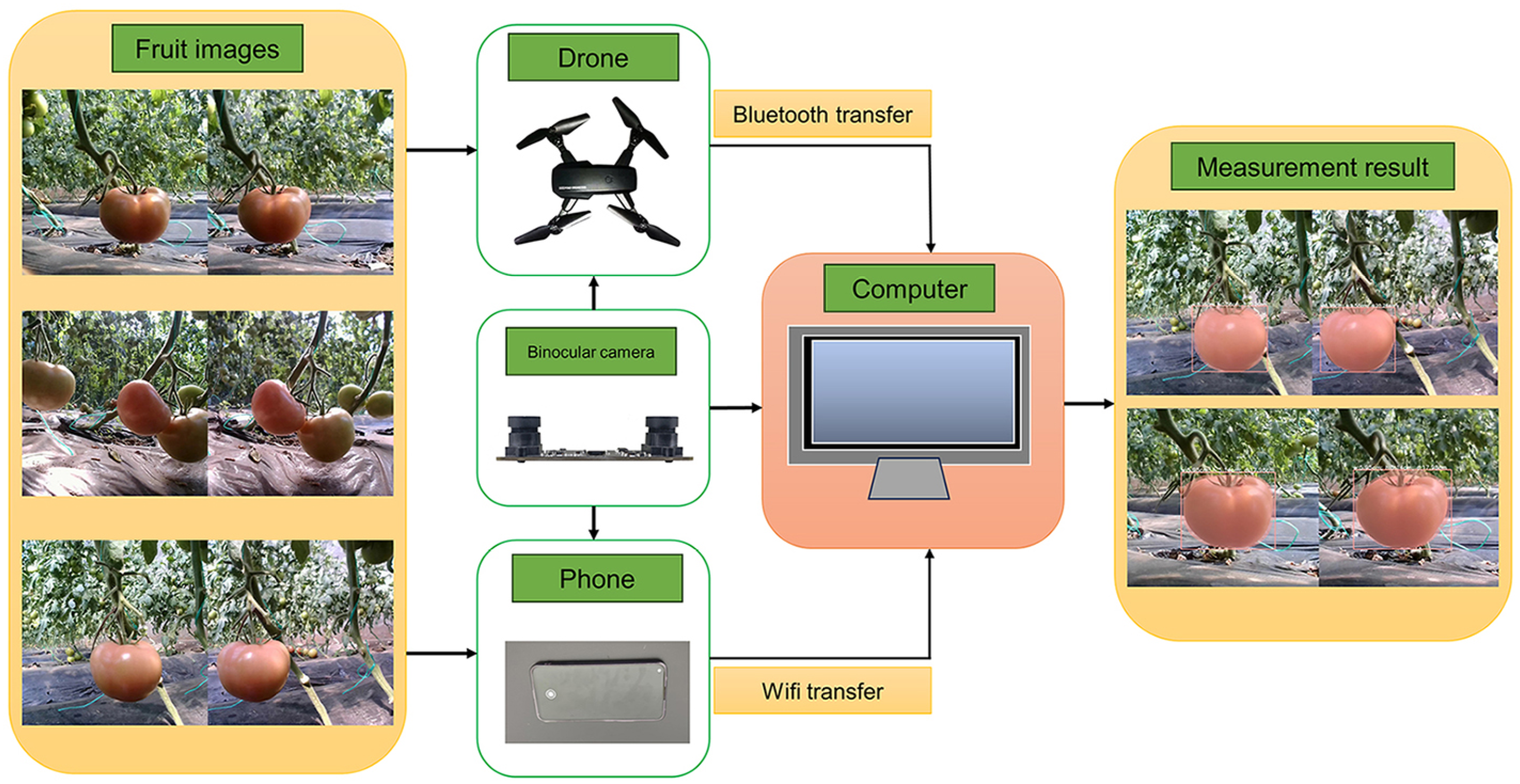
To implement the proposed method, the researchers utilized an OTG cable to connect a binocular camera to a mobile device for image acquisition. This binocular camera was mounted on a drone or mobile device to capture images of tomato fruits from heights ranging between 20 and 60 cm (Figure 2). The images obtained were then transmitted wirelessly to a computer. The overall process encompassed image acquisition using the binocular camera, image transmission, and the subsequent calculation of the dimensions of tomato fruits, as shown in Figure 2.
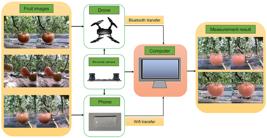
Experimental process of the method, achieving image acquisition and transmission through a binocular camera and wireless network, and size recognition of tomato fruits.
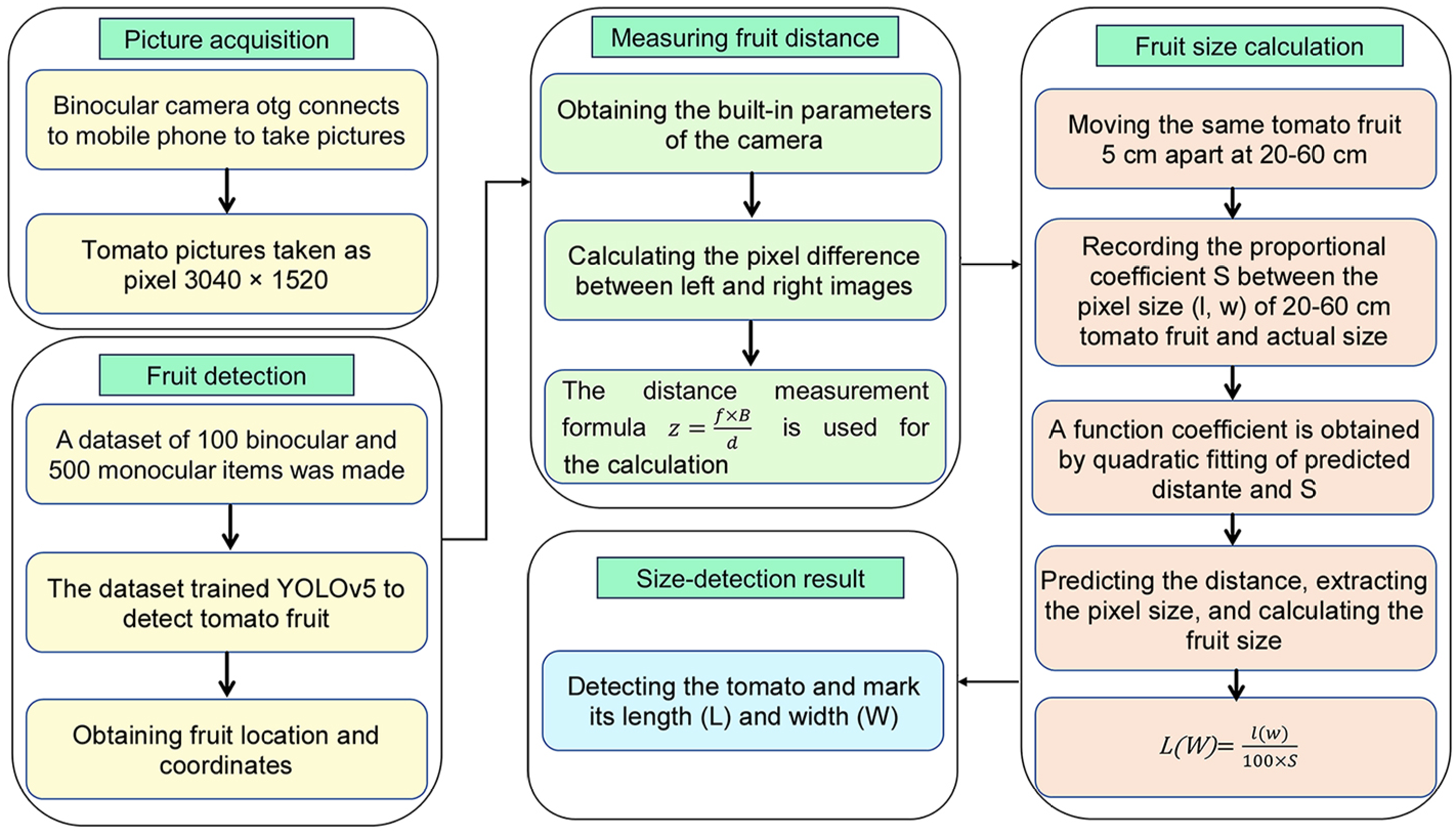
The images captured were transmitted to a computer (HP, Intel 11th i7-11800H, RTX3050ti) via a wireless network, with an average transmission time of no more than 6 s per image for mobile device image acquisition and transfer. The drone utilized Bluetooth to transfer images to the computer, achieving an average transfer time of under 10 s per image. The program employed for this study was developed in Python (Anaconda, Cuda 12.1, Python 3.9, torch 2.12, and torch vision 0.16.2). This research focuses on a cost-effective measurement method that enables variation in the distance used to measure the size of tomato fruits within a greenhouse setting, as shown in Figure 3. The process flow involves leveraging machine vision recognition technology for rapid detection of tomato fruits, followed by the application of the binocular camera's distance measurement principle to determine the distance between the tomato fruits and the camera. By extracting pixel size information from the images of fruits and integrating it with the distance data, we can convert the pixel dimensions of the tomato fruits into their actual physical measurements.
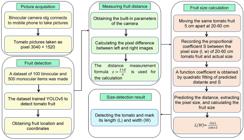
Tomato fruit size flow chart by computer measurement (You Only Look Once version 5 (YOLOv5), focus distance (f), baseline (B), distance from the fruit to the baseline (d)).
Binocular cameras, as their name implies, consist of two integrated camera modules. Their operational principle closely resembles that of the human eye, with the left and right cameras capturing images of the same object. This setup allows the left and right images to interpret the object's position differently, much like how humans perceive objects when closing one eye at a time. This distinctive feature enables binocular cameras to measure distances effectively. The binocular camera utilized in this study had a 3 mm baseline, a 6 mm focal length, and an 80° camera angle, and it was designed to be distortion-free.
Objective evaluation metrics
In this experiment, we conducted metric testing to evaluate both algorithm's performance and its size measurements.
Target detection part evaluation index
The customized tomato fruit dataset consists of 620 images, with the training and testing sets divided in a 9:1 ratio. To evaluate the performance of the object detection model, six key metrics were considered: precision, recall, mean average precision (mAP), mAP50:95, loss, and accuracy. Mean average precision (mAP) refers to the average precision across multiple classes, and mAP50 signifies the mAP value at a 50 % intersection over union (IoU) threshold. The IoU represents the ratio of intersection to union, and mAP50:95 is a stricter evaluation metric that computes the mAP value over a range of IoU thresholds from 50% to 95 % before averaging the results. Precision, mAP, and mAP50:95 are crucial indicators for assessing model quality and the closer these values are, the better the model's performance. The detection results of the model are presented in Table 1.
The results of four types of tomato morphology computed by the tomato fruit detection system.
where True positive (TP): The number of samples that are actually positive and correctly classified as positive. True negative (TN): The number of samples that are actually negative and correctly classified as negative. False positive (FP): The number of samples that are actually negative and incorrectly classified as positive. False negative (FN): The number of samples that are actually positive and incorrectly classified as negative.
Tomato fruit size evaluation index
The assessment of the fruit size measurement involved evaluating the distance from the tomato fruit to the camera in relation to the actual distance, as well as comparing the measured size of the tomato fruit with its actual size. The evaluation metrics used the mean absolute percentage error (MAPE), root mean square error (RMSE), and mean absolute error (MAE). In Eq. (9), (10), and (11), yi represents the predicted value, ŷi represents the actual value, and n represents the number of predictions.
Results
Tomato fruit recognition accuracy rate, accurate rate, and return rate
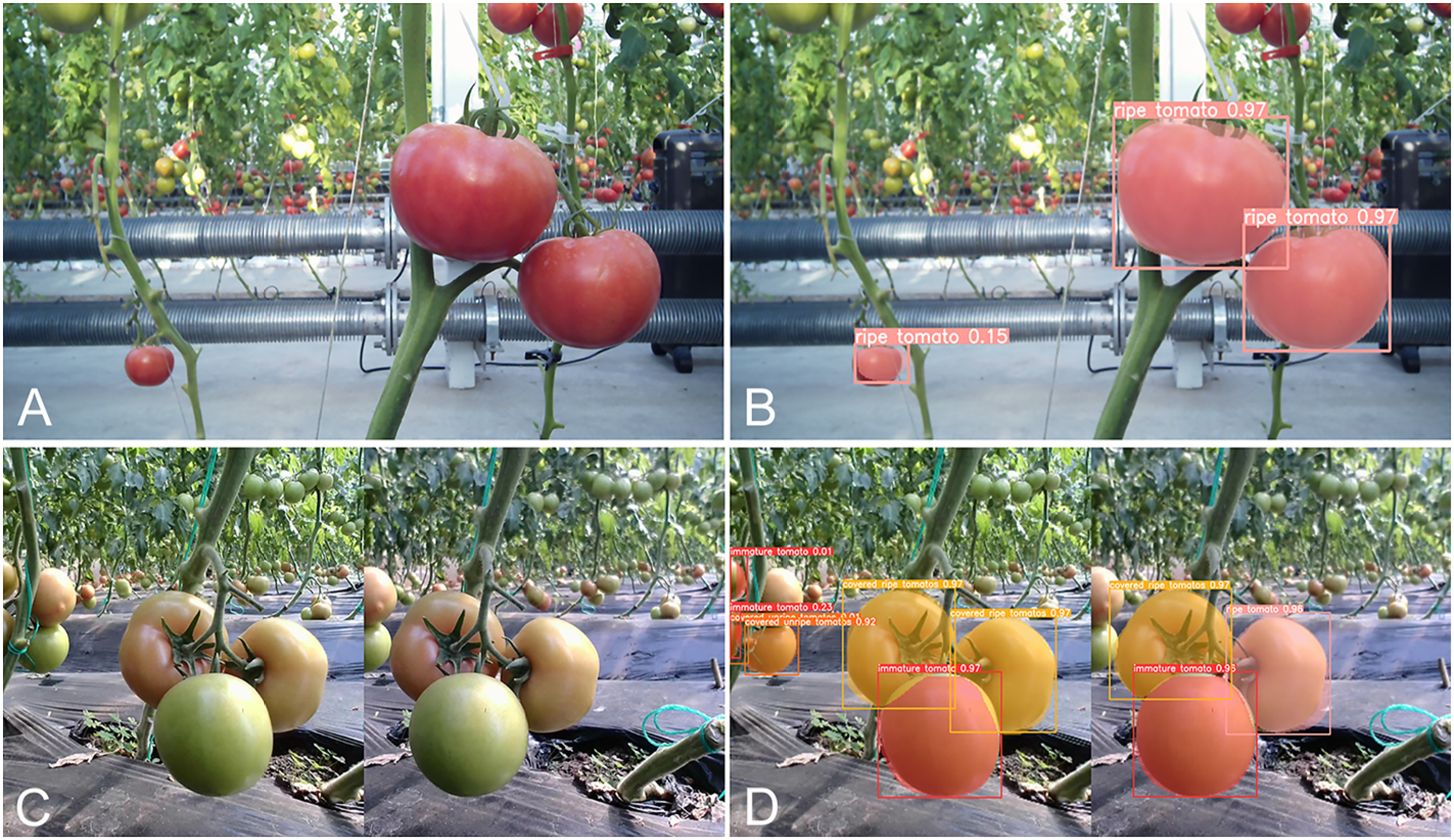
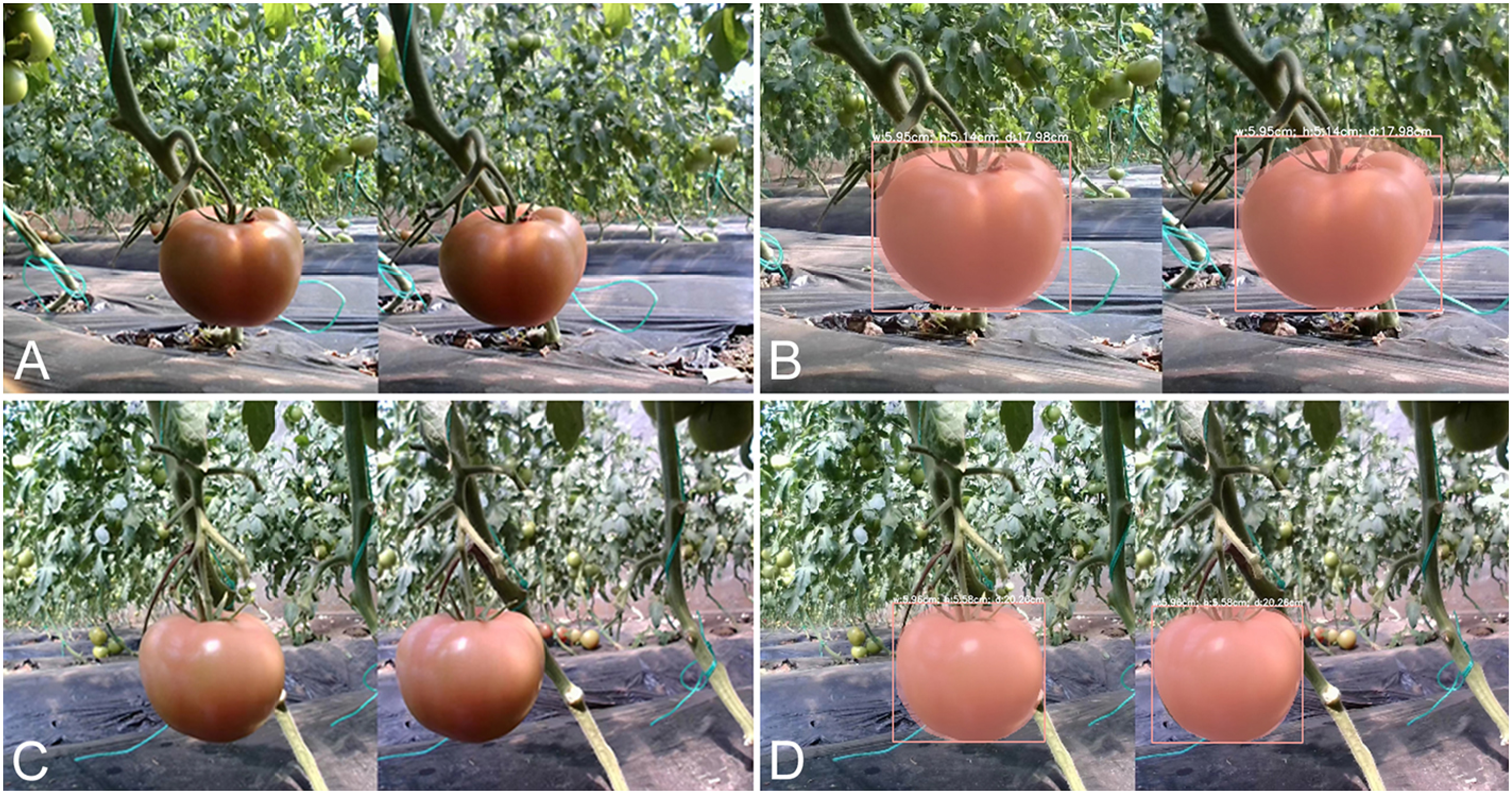
Before recognizing the tomato fruit size, the system must first identify the object, define the tomato target, measure the tomato fruit size parameters, and present a complete image of the tomato fruit at a camera distance of 20-60 cm. The YOLOv5 algorithm was employed, utilizing the You Only Look Once version 5 - Segmentation as the training weight, followed by 200 iterations of training, as shown in Table 1. The model for ripe tomato achieved high performance metrics of 0.921 for precision, 0.765 for recall, and 0.869 for mean average performance (mAP), demonstrating excellent detection capabilities. Furthermore, the trained YOLOv5 model has a size of 14.4 M and an average processing speed of 0.2 s per image, indicating not only high accuracy but also rapid reasoning speed, making it well-suited for real-time applications. Image detection and segmentation of tomatoes in greenhouses were performed, as depicted in Figure 4.
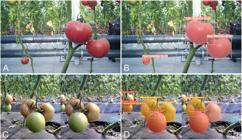
A) Original image of ripe tomato fruit, B) Image segmentation results of ripe tomato, C) Mixed tomato image original, D) Image segmentation results of mixed tomato.
The accuracy in identifying blocked immature tomatoes is significantly lower compared to the other three categories. Researchers suggest that this discrepancy may be because blocked immature tomatoes tend to be green and are often partially hidden by green leaves, which leads to their misclassification as immature tomatoes by the system. However, it is important to highlight that the size measurement system utilized in this study was primarily calibrated for ripe tomatoes, suggesting that the size measurements for unripe tomatoes, including those that are blocked, should not be adversely affected. The results demonstrated that the algorithm and recognition system were effective in accurately recognizing ripe tomato fruits.
Error analysis of tomato fruit size measurement
Once the detection system identifies the tomato fruits in the images, the fruit size is measured following the process illustrated in Figure 2. The distance and size measurements were conducted using the principles shown in Figure 1A and B. The results of these measurements are presented in Figure 5.
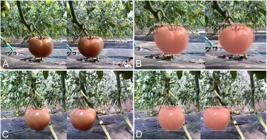
A and B) Original drawings of ripe tomato, C and D) Drawings of size measurement results of ripe tomato.
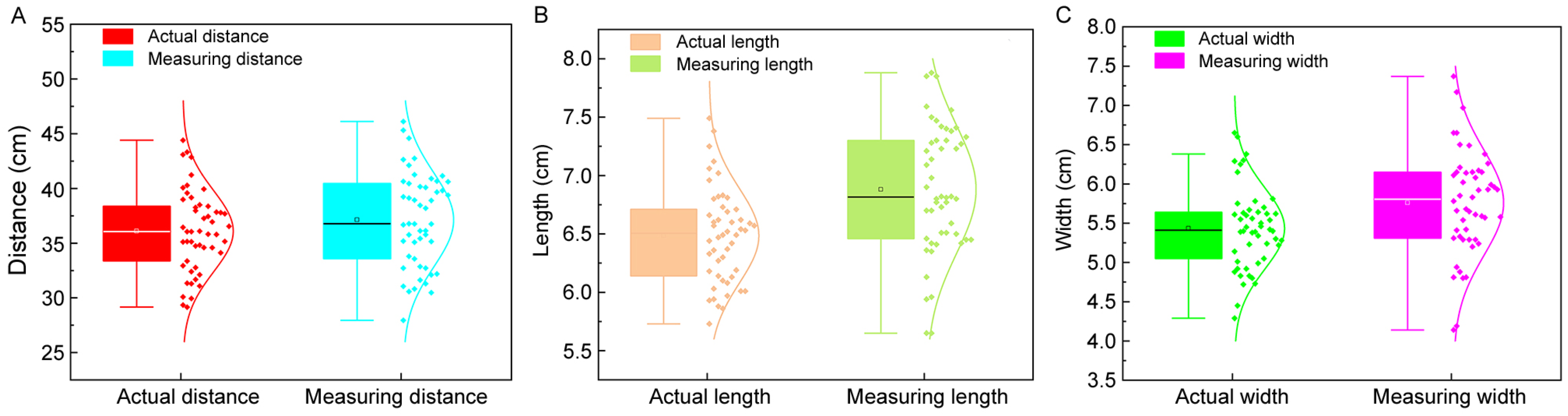
To verify the accuracy of size measurements, evaluation metrics were calculated for 50 images of tomato fruits captured using a binocular camera, and these were compared with the actual sizes measured using calipers. The box plots of the actual and measured values for the distance, length, and width of tomato fruits are shown in Figure 6. The plots indicate that the measured values align closely with the actual values in terms of numerical distribution. To further assess the errors in each dimension, the corresponding MAPE, RMSE, and MAE were calculated, as detailed in Table 2. The MAPE for distance measurement was maintained at a commendable 4.92 %, ensuring accuracy in subsequent size measurements. For the length of tomato fruits, the MAPE, RMSE, and MAE were approximately 5.05 %, 0.35 cm, and 0.33 cm, respectively. The errors in width measurements were approximately 5.31 %, 0.29 cm, and 0.27 cm, respectively. These results meet the criteria for low-cost measurement of tomato fruit sizes in greenhouse conditions.
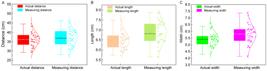
A) Distance of a tomato fruit, B) Length of a tomato fruit, and C) Width of a tomato fruit, comparison of actual and measured results for the three aspects of tomato fruit size.
Discussion
This project centered on low-cost, non-contact detection of tomato fruit size in greenhouses. To address this challenge, the study introduces a method for measuring fruit size utilizing YOLOv5 and mathematical calculations. To ensure the rigor of the experiment, test personnel captured images inside the greenhouse and transferred these photos to a computer for size analysis. The distance measurement error was recorded at 4.92 %, with the MAPE of the results remaining below 5.31 %. In comparison to the costly depth cameras typically used for measuring fruit size, the binocular camera employed in this experiment is priced at less than 10 % of the depth camera cost, while demonstrating an acceptable level of measurement speed and accuracy.
In the current field of research, the authors referenced studies that assessed the size of tomatoes as well as other fruits. A consistent distance between the camera and object being measured is typically required (Wang et al., 2024), or a reference point is established (Lee et al., 2020). However, this study innovatively allows the detection device to be freely moved within a range of 20 to 60 cm, significantly enhancing its practicality and commercial viability applications in sorting and automatic harvesting scenarios. The binocular camera utilized in this study achieved a height accuracy of 94.69 % and a width accuracy of 94.95 %, surpassing the results of 91.14 % for height accuracy and 94.43 % for width accuracy obtained by Kweon et al. (2023). Additionally, the researcher's binocular camera is priced at US$30, making it considerably more affordable than their 3-camera system, which costs US$300. The accuracy of the size recognition method adopted in this study reached 94.69 %, significantly outperforming the accuracy reported by Sari et al. (2022) of only 5 % when measuring size with a webcam. The approach proposed in this study enables free movement within a 20-60 cm distance range, eliminating the need to maintain a fixed distance between the camera and the object being detected. While the detection accuracy and speed are commendable, some challenges remain, such as increased size detection errors when multiple fruits are detected simultaneously, as well as issues with detecting objects that are not entirely within the binocular camera's field of view. In the future, the research team intends to refine the algorithms and experimental methods necessary to meet the requirements of automated processes.
This study presents a method for measuring tomato fruit size using a binocular camera, leveraging YOLOv5 and mathematical calculations. The experiment was conducted in a greenhouse, where images were captured with a binocular camera connected to a mobile device (cell phone) and subsequently transferred to a computer for real-time detection and measurement of tomato size. The researchers highlight that binocular cameras could also be integrated with drones, vehicles, and other mobile devices for image acquisition. The object detection algorithm based on YOLOv5 yielded better recognition results compared to other methods, achieving a recognition accuracy rate of 94.69 % for fruit size measurements in the greenhouse setting. The average error in determining the size of an individual tomato fruit did not exceed 5.31 %. This approach minimizes the reliance on sensors and reduces the weight and financial burden of transferring hardware and software solutions to mobile devices for future research, thereby fulfilling the criteria for low-cost, high-precision detection and measurement.
Data Availability Statement
The data supporting this study's findings are available from the corresponding author upon reasonable request.
References
-
Aljabri M, AlAmir M, AlGhamdi M, Abdel-Mottaleb M, Collado-Mesa F. 2022. Towards a better understanding of annotation tools for medical imaging: a survey. Multimedia Tools and Applications 81: 25877-25911. https://doi.org/10.1007/s11042-022-12100-1
» https://doi.org/10.1007/s11042-022-12100-1 -
Ali ML, Zhang Z. 2024. The YOLO Framework: A Comprehensive Review of Evolution, Applications, and Benchmarks in Object Detection. Computers 13: 336. https://doi.org/10.20944/preprints202410.1785.v1
» https://doi.org/10.20944/preprints202410.1785.v1 -
Bazame HC, Molin JP, Althoff D, Martello M. 2022. Detection of coffee fruits on tree branches using computer vision. Scientia Agricola 80: e20220064. https://doi.org/10.1590/1678-992X-2022-0064
» https://doi.org/10.1590/1678-992X-2022-0064 -
Chanda S, Kumar YN, Srivastava S, Rani R, Shree M, Mohapatra AK. 2024. Optimizing facial feature extraction and localization using YOLOv5: An empirical analysis of backbone architectures with data augmentation for precise facial region detection. Multimedia Tools and Applications 83: 73627-73648. https://doi.org/10.1007/s11042-024-19284-8
» https://doi.org/10.1007/s11042-024-19284-8 -
Chow JCK, Ang KD, Lichti DD, Teskey WF. 2012. Performance analysis of a low-cost triangulation-based 3D camera: Microsoft Kinect system. The International Archives of the Photogrammetry, Remote Sensing and Spatial Information Sciences 39: 175-180. https://doi.org/10.5194/isprsarchives-XXXIX-B5-175-2012
» https://doi.org/10.5194/isprsarchives-XXXIX-B5-175-2012 -
Espinoza S, Aguilera C, Rojas L, Campos PG. 2024. Analysis of Fruit Images With Deep Learning: A Systematic Literature Review and Future Directions. IEEE Access 12: 3837-3859. https://doi.org/10.1109/access.2023.3345789
» https://doi.org/10.1109/access.2023.3345789 -
Fess TL, Kotcon JB, Benedito VA. 2011. Crop Breeding for Low Input Agriculture: A Sustainable Response to Feed a Growing World Population. Sustainability 3: 1742-1772. https://doi.org/10.3390/su3101742
» https://doi.org/10.3390/su3101742 -
Girshick R. 2015. Fast R-CNN. ArXiv: 1504.08083. https://doi.org/10.48550/arXiv.1504.08083
» https://doi.org/10.48550/arXiv.1504.08083 -
He L, Schupp J. 2018. Sensing and Automation in Pruning of Apple Trees: A Review. Agronomy 8: 211. https://doi.org/10.3390/agronomy8100211
» https://doi.org/10.3390/agronomy8100211 -
Kweon A, Hu V, Lim JY, Gee T, Liu E, Williams H, et al. 2023. Visual based Tomato Size Measurement System for an Indoor Farming Environment. arXiv:2304.06177. https://doi.org/10.48550/arXiv.2304.06177
» https://doi.org/10.48550/arXiv.2304.06177 -
Lee J, Nazki H, Baek J, Hong Y, Lee M. 2020. Artificial Intelligence Approach for Tomato Detection and Mass Estimation in Precision Agriculture. Sustainability 12: 9138. https://doi.org/10.3390/su12219138
» https://doi.org/10.3390/su12219138 -
Li W, Shan S, Liu H. 2017. High-precision method of binocular camera calibration with a distortion model. Applied Optics 56: 2368-2377. https://doi.org/10.1364/ao.56.002368
» https://doi.org/10.1364/ao.56.002368 -
Liu W, Anguelov D, Erhan D, Szegedy C, Reed S, Fu C-H, et al. 2016. SSD: Single Shot Multibox Detector. Springer, Cham, Germnay. https://doi.org/10.1007/978-3-319-46448-0_2
» https://doi.org/10.1007/978-3-319-46448-0_2 -
Miao Z, Yu X, Li N, Zhang Z, He C, Li Z, et al. 2023. Efficient tomato harvesting robot based on image processing and deep learning. Precision Agriculture 24: 254-287. https://doi.org/10.1007/s11119-022-09944-w
» https://doi.org/10.1007/s11119-022-09944-w -
Miranda JC, Gené-Mola J, Zude-Sassi M, Tsoulias N, Escolà, A, Arnó J, et al. 2023. Fruit sizing using AI: A review of methods and challenges. Postharvest Biology and Technology 206: 112587. https://doi.org/10.1016/j.postharvbio.2023.112587
» https://doi.org/10.1016/j.postharvbio.2023.112587 -
Morgan GLK, Liu JG, Yan H. 2010. Precise Subpixel Disparity Measurement From Very Narrow Baseline Stereo. IEEE Transactions on Geoscience and Remote Sensing 48: 3424-3433. https://doi.org/10.1109/TGRS.2010.2046672
» https://doi.org/10.1109/TGRS.2010.2046672 -
Perveen R, Suleria HAR, Anjum FM, Butt MS, Pasha I, Ahmad S. 2015. Tomato (Solanum lycopersicum Carotenoids and Lycopenes Chemistry; Metabolism, Absorption, Nutrition, and Allied Health Claims: A Comprehensive Review. Critical Reviews in Food Science and Nutrition 55: 919-929. https://doi.org/10.1080/10408398.2012.657809
» https://doi.org/10.1080/10408398.2012.657809 -
Sari MI, Fajar R, Gunawan T, Handayani R. 2022. The Use of Image Processing and Sensor in Tomato Sorting Machine by Color, Size, and Weight. International Journal on Informatics Visualization 6: 244-249. https://doi.org/10.30630/joiv.6.1-2.944
» https://doi.org/10.30630/joiv.6.1-2.944 -
Wang B, Li M, Wang Y, Li Y, Xiong Z. 2024. A smart fruit size measuring method and system in natural environment. Journal of Food Engineering 373: 112020. https://doi.org/10.1016/j.jfoodeng.2024.112020
» https://doi.org/10.1016/j.jfoodeng.2024.112020 -
World Trade Organization [WTO]. 2023. Global Value Chain Development Report 2023: Resilient and Sustainable Global Value Chains in Turbulent Times. WTO, Geneva, Switzerland. https://doi.org/10.30875/9789287075673
» https://doi.org/10.30875/9789287075673 - Zhang S, Chang Y, Wang S, Li Y, Gu T. 2023. An Improved Lightweight YOLOv5 Algorithm for Detecting Railway Catenary Hanging String. IEEE Access 11: 114061-114070.
-
Zhu X, Lyu S, Wang X, Zhao Q. 2021. TPH-YOLOv5: Improved YOLOv5 Based on Transformer Prediction Head for Pbject Detection on Drone-captured Scenarios. IEEE/CVF, Montreal, BC, Canada. https://doi.org/10.1109/ICCVW54120.2021.00312
» https://doi.org/10.1109/ICCVW54120.2021.00312
Edited by
-
Edited by:
Thiago Libório Romanelli https://orcid.org/0000-0001-5407-9031