 Enhanced nursery performance of Crassostrea gigas in fluidized beds: a comparative approach to hatchery optimization
ABSTRACT:
The implementation of fluidized (F) bed systems for cultivating Crassostrea gigas seeds is gaining importance for nursing oysters in densely packed stocks. This allows for easier handling and visual assessment. Ho wever, its production performance compared to traditional downweller (D) systems needs further characterization. The experiment involved three replicates of each treatment, with 1,100,000 oyster seeds retained on 500 µm sieves. Data were collected over 21 days, with seeds separated using 500, 710, and 1000 µm sieves every week. Results indicated that the final yield in system F is likely higher than in D, with a probability of 3.46:1 and an average yield increase of up to 45.3 % in F. The F-test revealed that system F had a narrower variance in final yield averages, suggesting more consistent oyster production. Moreover, survival rates for seeds in F were also superior, showing a probability of 7.33:1 and a mean final survival rate of up to 37.96 % higher than D. In terms of size, F cultivated a higher proportion of oyster seeds retained at 1000 µm sieves with a preferred standard quality shell shape for the half-shell market. Additionally, the microalgal consumption rate in F was faster, with food nearly depleted 6 h post-feeding compared to only 25 % in D. Consequently, the F system demonstrates enhanced and more reliable production, yielding better quality seeds for grow-out farms.
Keywords:
oyster culture; oyster seed nursery; downweller system; animal performance
Introduction
Global oyster production has notably increased, primarily due to China's dominance in oyster culture, alongside other major producers such as South Korea, Japan, the United States, and France (FAO, 2024). Emerging producers, however, face supply challenges as escalating demand for cultivated oysters drives up prices and constrains production capacity (Botta et al., 2020).
Hatcheries are vital in oyster aquaculture, as they ensure a stable seed supply where natural settlement is unreliable or overexploited (Iitembu et al., 2023). The practice of single-seed production allows for individual manipulation and phenotype characterization, which are essential for establishing breeding programs and ensuring a reliable supply of valuable species (Haworth, 2001; Gjedrem and Baranski, 2009).
The production of Crassostrea gigas (Thunberg) in key oyster-producing nations relies heavily on hatchery larvae that settle on cultch or are harvested by artificial collectors (European Union, 2022; Abarca et al., 2025). Single-seed oysters contribute significantly to hatchery activities, comprising 20-30 % in the USA (Sturmer et al., 2022) and over 90 % in Brazil (Lima et al., 2023). They are ideal for export to regions to alleviate production shortages (Dodd, 2015; Koike and Komatsu, 2024).
The increasing popularity of oyster bars has driven up market demand for "half-shell" oysters, prompting farmers to focus on shell shape through the selection of single-seed oysters (Davis et al., 2021). Traditionally, single-seed acquisition is done using mesh containers in a D system, which helps enhance spat survival (Helm et al., 2004; Wallace et al., 2008). The D system uses downflow mechanics to push settled oyster seeds to the mesh, promoting early growth to 3-4 mm in shell height (Abarca et al., 2025). However, this method is resource-intensive, with significant demands for water and space (Laing and Earl, 1998). Overstocking concerns complicate nursery operations, creating occupational challenges due to increased manual handling (Guertler et al., 2016).
To address these issues, more efficient production methods have been deemed necessary (Anderson, 2002; Bush et al., 2019). The F bed system offers an alternative, enabling uniform food distribution and improved waste removal, demonstrating optimization for high-density cultivation across various bivalve species (Campbell and Hall, 2019; Ver and Wang, 1995; Hwai et al., 2023). The differences between the D and F systems are clear, especially in their impact on bivalve seed growth (Pfeiffer and Rusch, 2001).
Understanding the interplay between feeding dynamics, growth rates, and survival is crucial to enhancing seed-rearing efficiency. The study aimed to evaluate whether the growth patterns, yields, and survival of C. gigas oyster seeds, and their microalgal consumption rates in the F system, reflect greater production efficiency than the D system during the early post-settlement stages of the oyster nursery.
Materials and Methods
Oyster seed acquisition
C. gigas seeds were obtained at the Laboratório de Moluscos Marinhos (LMM) of the Universidade Federal de Santa Catarina (UFSC), Florianópolis, in the state of Santa Catarina, Brazil (27°35’04" S, 48°26’29" W, altitude 3 m) via strip spawning, larviculture, and settlement in culthless downwellers. They were nursed and sieved in these systems until reaching proper experimental size, as described by Wallace et al. (2008). Before cultivation, seeds were sieved (710 µm pass, 500 µm retained) to select individuals. Average shell height and length were 726.95 ± 70.86 µm and 676.01 ± 86.78 µm, respectively.
Systems characterization
The functional dynamics of each system operated with the same amount of oyster seeds per cultivation unit, food, and total volume. This aimed to verify the feasibility of substituting and operationalizing the oyster seed nursery in an alternative F system.
Downweller (D) system
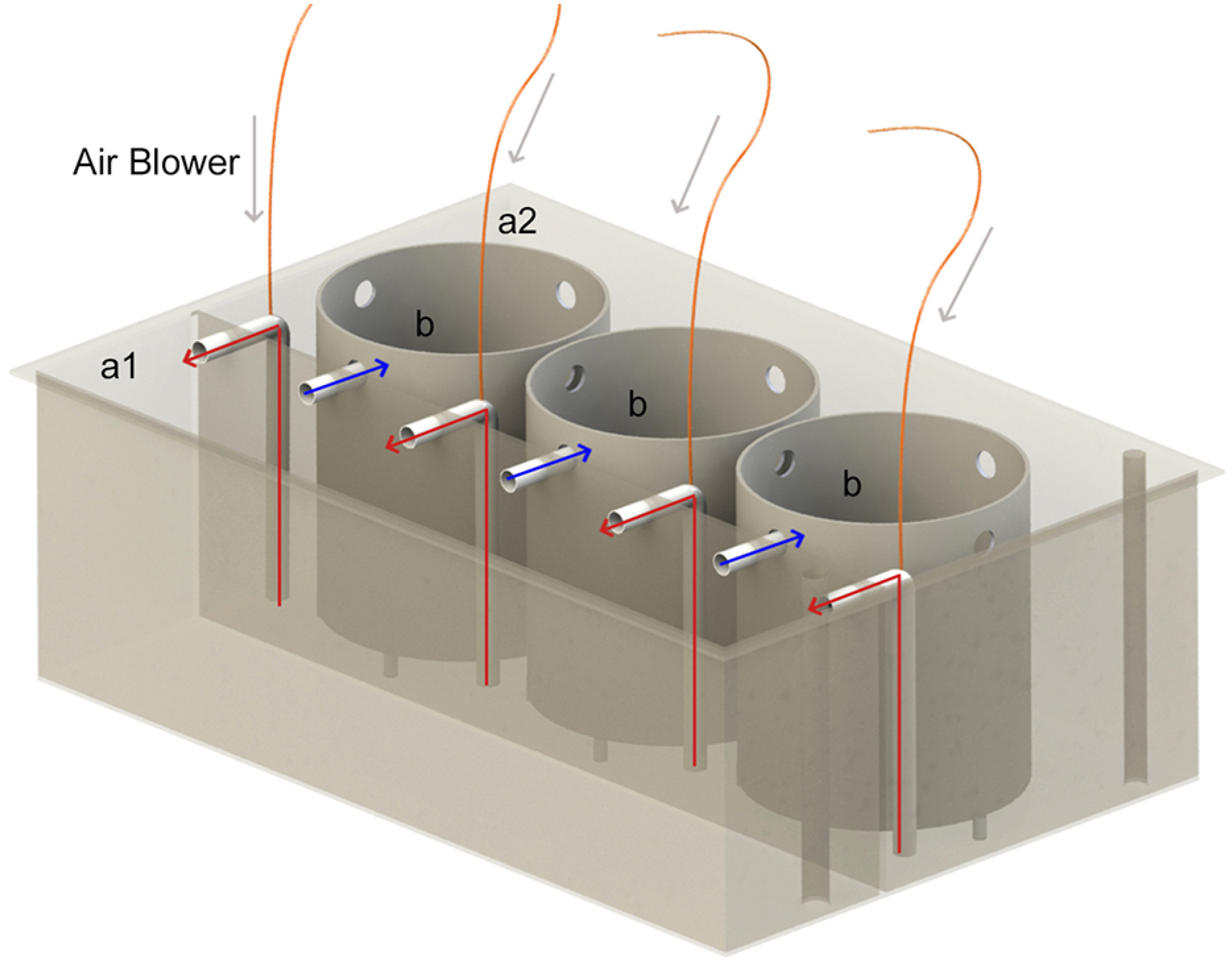
The cultivation system commonly used at LMM is a weller tank with a maximum volume of 1450 L (600 L in the food compartment (Figure 1) and 850 L in the portion intended for cultivation units and a capacity for three downweller cylinders with meshes (experimental units (EU)). Each downweller EU contains meshes with a diagonal opening of 200 µm and an approximate useful volume of 200 L, with a circular area of 2826 cm². The dynamics of the system operation occur through the movement of water by airlift, generated by air blowers, from the cultivation units to the portion containing the food (Helm et al., 2004). The excess volume in the food compartment of the tank led the water to a direct outlet in the EU at a flow velocity of 4000 L h–1 (with a flow rate per the EU area of 1.41 L (h cm2)–1), in a cyclical movement. The percentage of input volume in the EU per hour from the total system volume corresponds to 275.86 %.
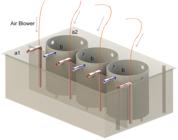
Downweller static tanks containing three cultivation units with a useful volume of 200 L. a1 = downweller food compartment (600 L); a2 = downweller cultivation portion intended for cultivation units (850 L); b = cultivation units composed of cylinders with meshes (experimental units). Blue arrows = water directional flow from the food compartment to the experimental units; Red arrows = water directional flow after the output from the experimental units to the food compartment.
Fluidized (F) bed system
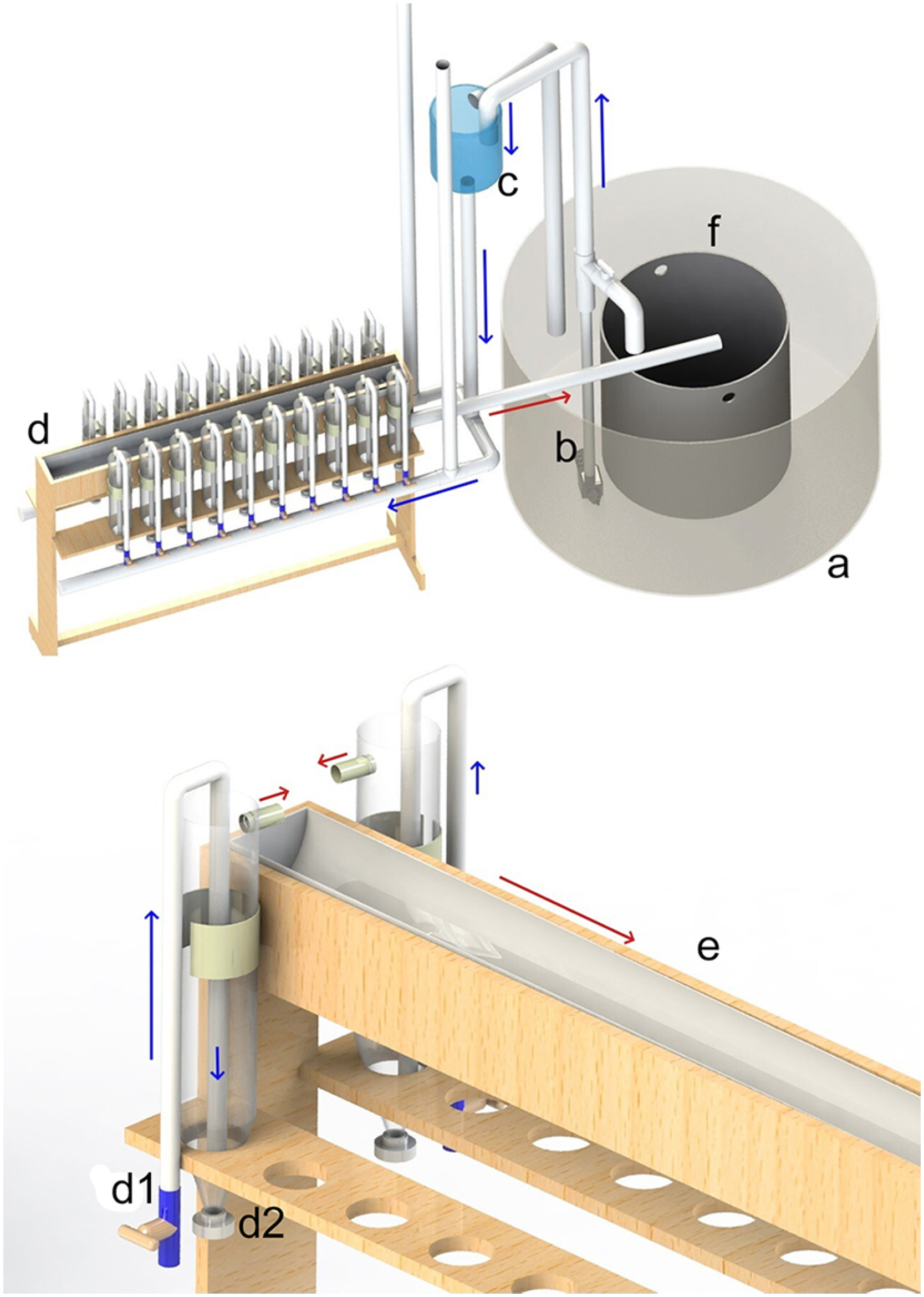
The fluidized bed system adapted to the operation analogous to McDonald bottles was composed of three 3.93 L bottles, with 78.5 cm2 circular area (EU) (Figure 2), a supply tank with a volume of 2000 L (in which we used only 1450 L for pairwise comparison), a submerged pump in the supply tank (with a maximum capacity of 8000 L h–1) that streamlines the fluidized system, and a wooden supporter for the EUs containing a small reservoir tank of 20 L at the top. The EUs were hung laterally on a wooden support with a middle discharge channel for the return of water and food, which had not yet been filtered to the supply tank. Water containing the microalgae was pumped from the supply tank to a small reservoir tank. The reservoir tank had a basal opening, and water flowed through the conducting pipes to the base parallel to the EU via gravity. The water flow to the EU was regulated at 200 L h–1 (with a flow rate per EU area of 2.55 L (h cm2)–1) using a smaller hydraulic register and a flowmeter to guarantee the uniformity of the water effects in each EU, as well as allowing the conditioning of the oyster seeds. Water exited the EU from the apical part to the middle discharge channel of the wooden support and was recirculated to the supply tank. The percentage of input volume in the EU per hour of the total system volume is 13.79 %.
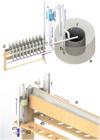
General view of the fluidized bed system containing bottles (3,930 mL) with individual flow and registers for oyster seed cultivation (Up). Detailed view of an experimental unit from the fluidized bed system (Down). a = supply tank; b = submerged pump; c = small reservoir tank of 20 L; d = wooden supporter for the experimental units; d1 = pipe canalization with a basal water register for flow input in experimental unit; d2 = experimental unit; e = water channel output from experimental unit; f = cylinder wish basal meshes positioned inside on supply tank to collect dead oyster shells carried out from the experimental unit. Blue arrows = water directional flow from the supply tank to the experimental units; Red arrows = water directional flow after the output from the experimental unit to the supply tank.
Experimental design
The experimental design was completely randomized, with two treatments (D and F bed systems) and three repetitions per treatment. Each EU in D (cylinder, ∼200 L) and F (bottle, ∼3.93 L) contained 1,100,000 C. gigas seeds (100 mL), corresponding to a density of 5,000 and 324,484 oyster seeds L–1, respectively. The 21-day cultivation involved weekly performance evaluations via sieving, providing a three-week nursery run and grading events, a standard hatchery procedure (Reynaga-Franco et al., 2020). Daily, a monospecific Isochrysis galbana Parke (ISO) diet was supplied at 40 × 104 cells mL–1. Performance was assessed by oyster seed growth (height/length), survival, yield, and microalgae consumption.
Cultivation conditions
The evaluated systems have a daily renewal of filtered seawater using a 1 µm mesh filter, and the seawater is sterilized with ultraviolet light. The supply tanks were cleaned between water renewals. The daily ISO diet was provided from static 4000 L algal tanks cultivated using the F/2 production protocol of Guillard (1975). Cultivation conditions in D and F systems for 21 days were uniform, presenting an average temperature of 22.14 ± 1.96 °C and an average salinity of 35.57 ± 0.73.
Data collection
Data were collected every seven days over a 21-day cultivation period. Seeds were separated using 500, 710, and 1000 µm sieves to evaluate growth performance, following the method of Gomes et al. (2024). Oyster seeds retained by the 1000 µm sieve on days seven and 14 were counted and removed.
The survival rate was calculated as the difference between initial and final seed counts, considering living seeds retained on the 1000 µm mesh. Total seed count was estimated by multiplying the total seed volume (mL) by the average of three seed samples (0.2 mL for 500 and 710 µm, 0.5 mL for 1000 µm), as analyzed with CountThings in Photos software. Dead seeds were counted visually under an optical microscope.
To assess growth patterns, a random sample of 30 seeds from each size class was taken, and shell height (SH) (from umbo to shell mouth) and shell length (SL) (laterolateral line) were measured according to Galtsoff (1964). Measurements were conducted using ZEISS Axiocam 280 color and Zen Image Blue 3.2 software.
Microalgal cell consumption by C. gigas seeds was measured on the second day after acclimatization. Remaining microalgal cells were counted using a microscope across several time points (1, 2, 4, and 6 h post-feeding) to calculate the average consumption rate using linear regression.
Statistical analysis
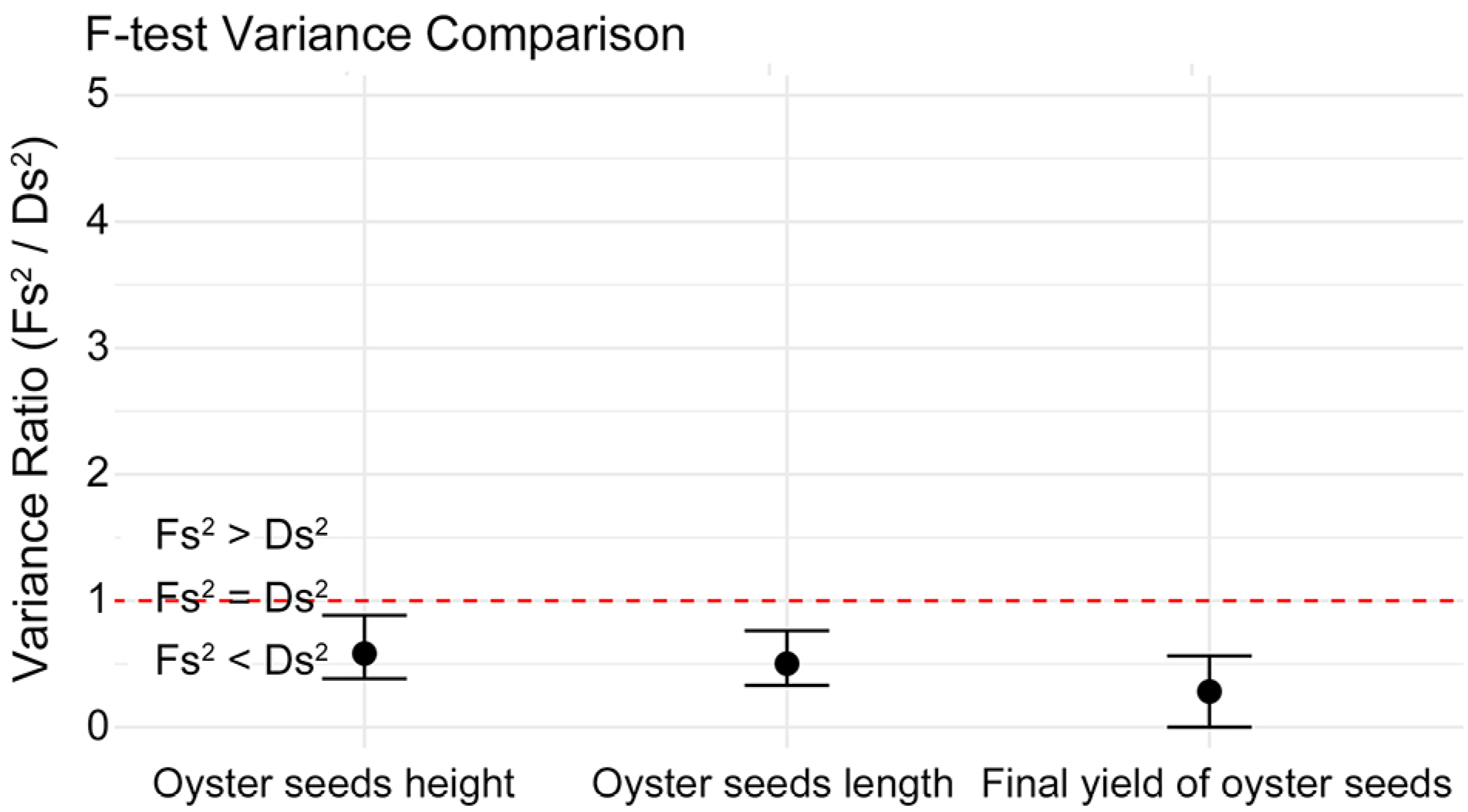
Survival and yield data were analyzed for normality (Shapiro-Wilk) and homoscedasticity (F-test) before analysis of variance (ANOVA) (p < 0.05), with a Welch-test used for heteroscedastic final yield. We calculated confidence intervals for variances of final yield, shell height, and length for each system, using an F-test to assess whether system F showed significantly more concentrated variances (indicating consistent production). A rate of F to D confidence intervals < 1 would confirm greater consistency in F.
To evaluate management-relevant consistency in nursery seed yield and survival, a Bayesian estimate test determined the probability of system F (proposed) outperforming D (traditional). The Markov Chain Monte Carlo algorithm generated credible values for effect size and mean differences (Kruschke, 2013). The Relative Mean Effect Size (RMES) quantifies the scientific significance of mean differences between systems, as defined by Huang (2022).
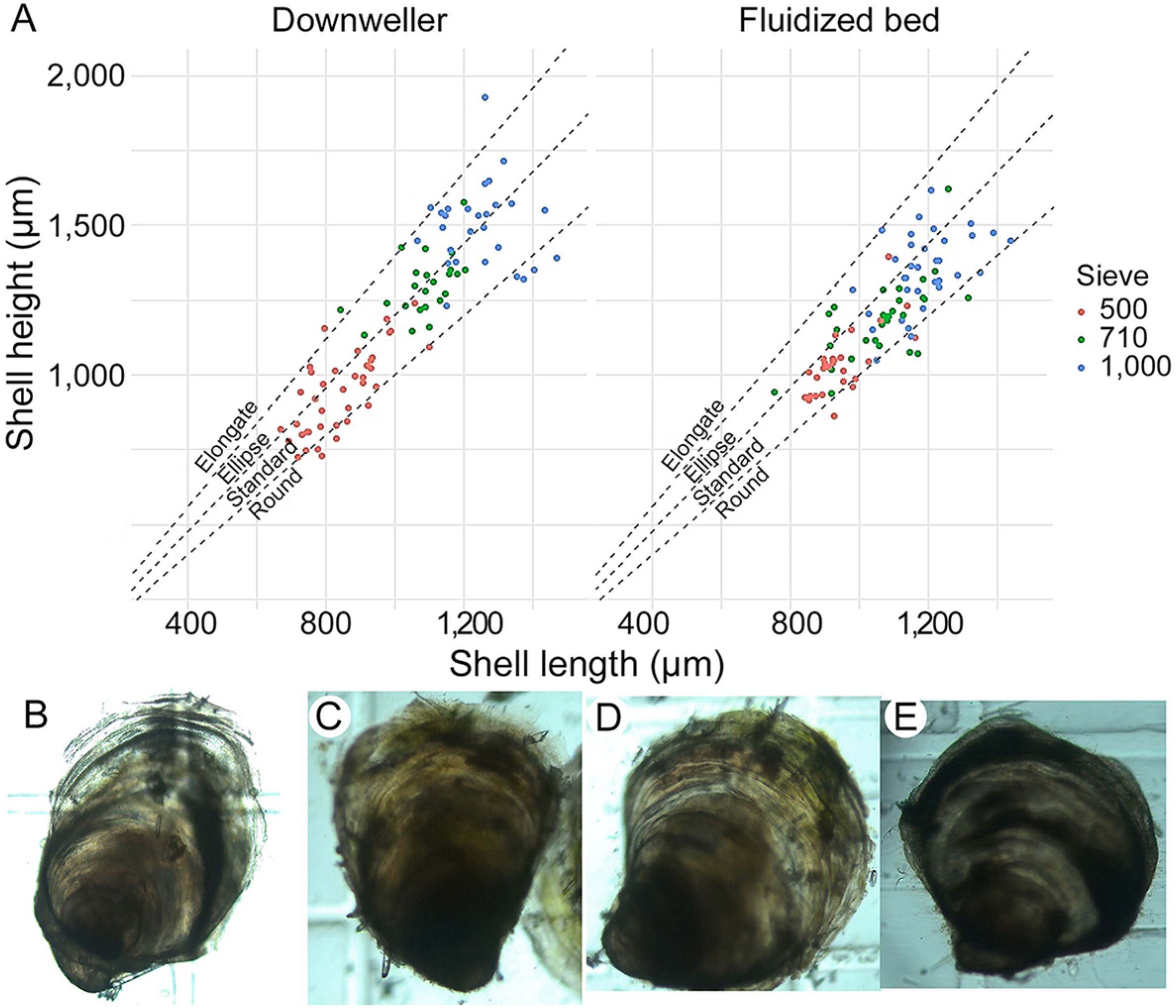
Final oyster seed height and length were subjected to a pairwise permutation t-test. A non-parametric X square test assessed the proportion of oysters in different size classes (500, 710, 1000 µm) and format classes (>1.4 for elongate, > 1.2 for ellipse or elliptical, >1 for standard or oboelliptical, and < 1 for round in Carter et al. (2012) with height/length ratio adaptations according to Radford et al. (1976) as shown in Figure 6-13-2). All these analyses used a 5 % probability.
The microalgal consumption rate was calculated in each system based on the total amount of microalgae remaining in the system after 2, 4, and 6 h had passed since feeding, also computing the amount of microalgae consumption by the function of flow input in each EU, recalculated each time by the amount of remaining microalgae. Both analyses were constructed by applying a linear model (LM). All analyses were carried out using the RStudio software v. 2025.05.1+513.
Results
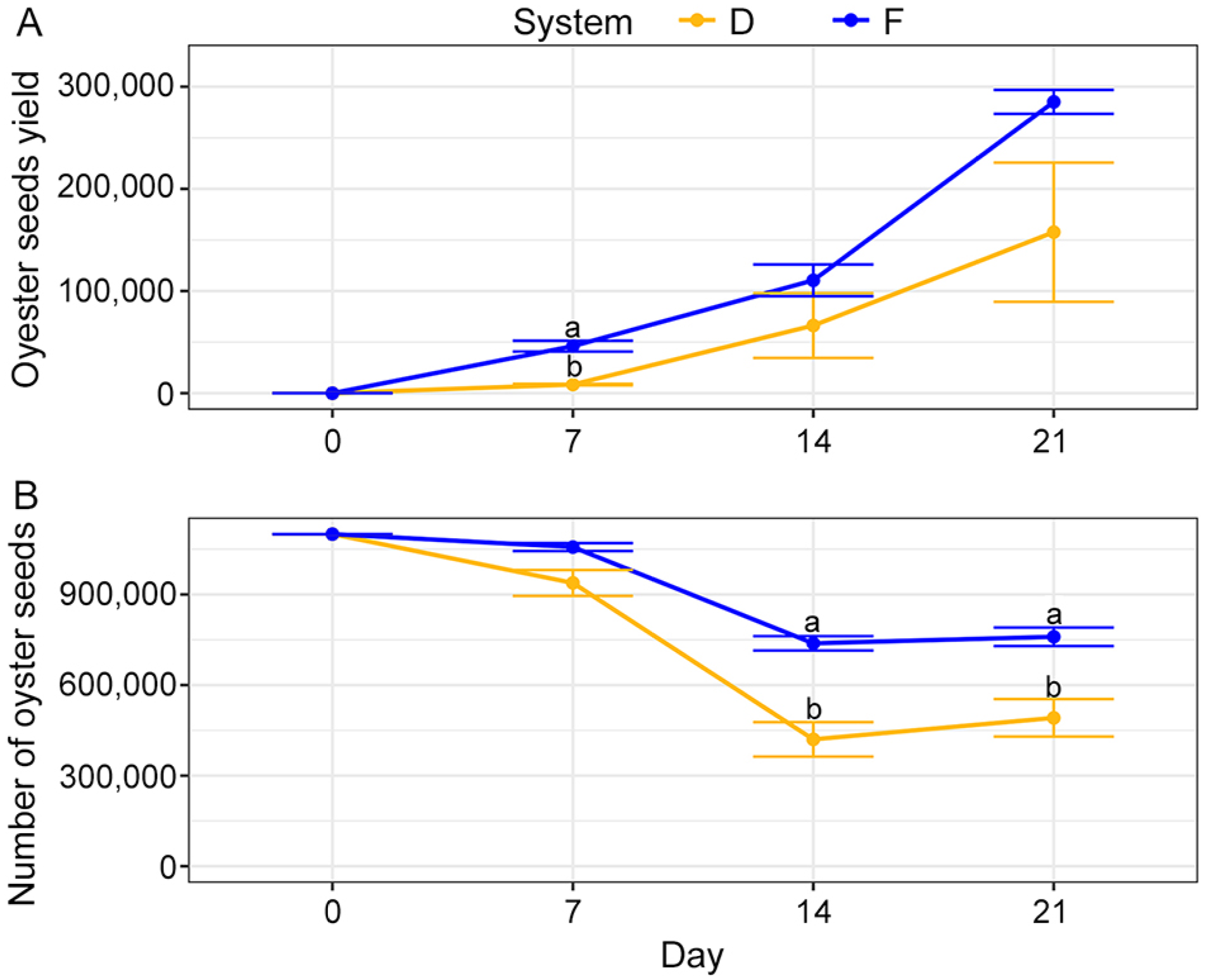
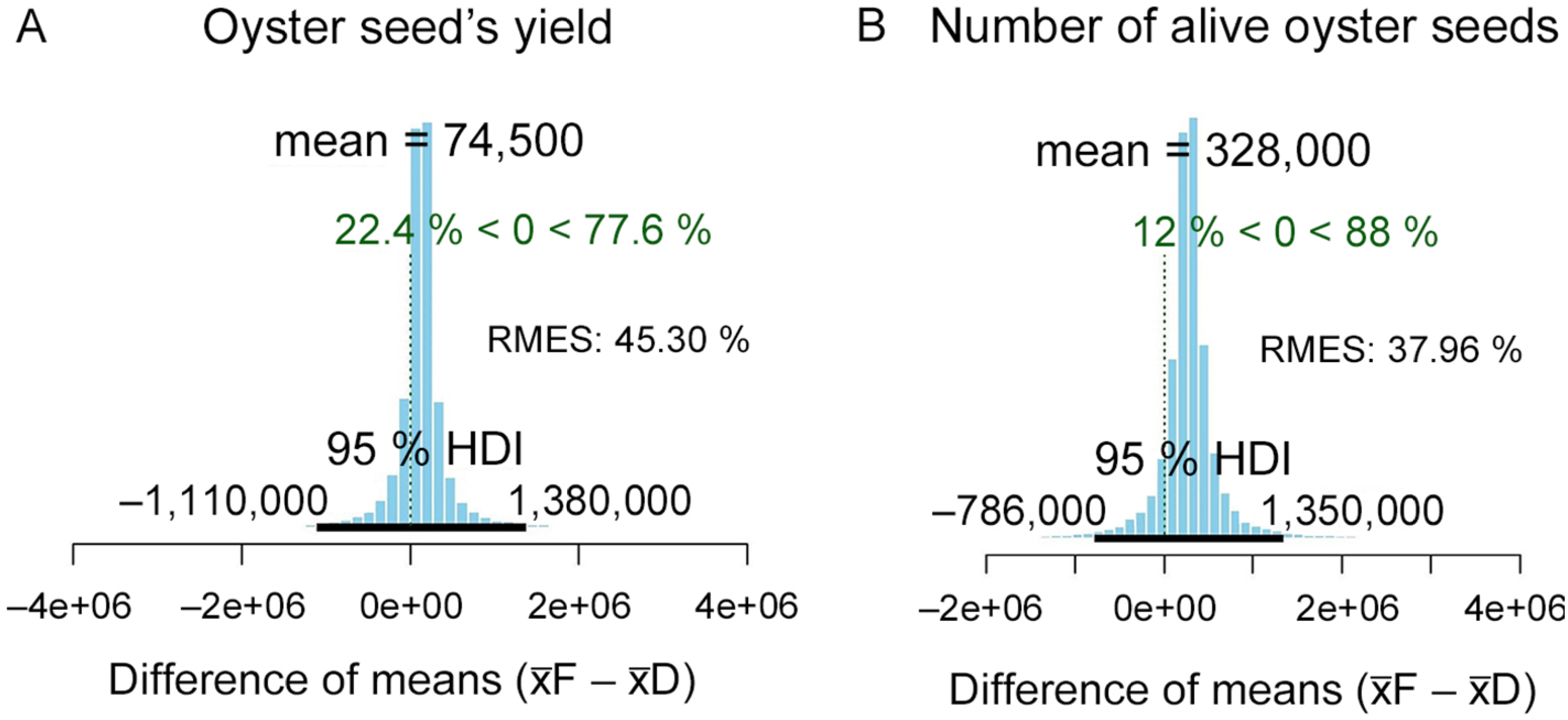
The mean oyster seed yield in system F (46,065.78 ± 9,187.47) was higher than in D (8,448 ± 1,300.66) on day seven, with differences subsiding thereafter (Figure 3A). Despite equal ANOVA data distribution for final yield, Bayesian estimation indicated F's mean yield up to 45.3 % greater than D's, with a 3.46:1 probability (Figure 4A). Furthermore, F showed more consistent final yield production than D (Figure 5), as evidenced by its variance ratio (0-0.5635347).
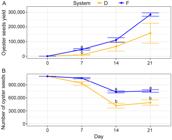
A) Average number of yield performance of Crassostrea gigas oyster seeds after 7, 14, and 21 days of cultivation in fluidized (F) bed and downweller (D) systems (p < 0.05). B) Average number of living C. gigas oyster seeds after 7, 14, and 21 days of cultivation in both systems D and F systems (p < 0.05).
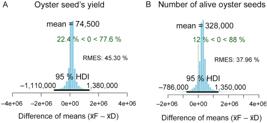
A) Bayesian estimation for the probability of the mean oyster seeds’ yield after 21 days of cultivation in a fluidized (F) bed being greater than that in a downweller (D). B) Bayesian estimation for the probability of a higher mean survival of cultivated oyster seeds in F being greater than that in D. RMES = relative mean effect size; HDI = highest density interval.
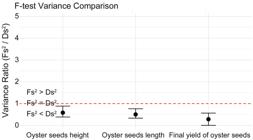
Interval of confidence values (0.95) of the rate of variance in fluidized (F) bed by that verified on downweller (D) related to final yield (right), oyster seed's length (middle), and oyster seeds height (left). A range of values < 1 indicates that data deviation in F is significantly more closely related to its mean than in D, attesting to a more consistent oyster production.
As for the number of alive oyster seeds, system F exhibited higher average survival after 14 (738,152 ± 41,285) and 21 (759,891 ± 53,248) days compared to D (14 days: 420,143 ± 98,919; 21 days: 491,413 ± 107,791) (Figure 3B). Bayesian estimation further confirmed F's superior live oyster seed count over D, with a 7.33:1 probability on day 21, showing an average survival in F up to 37.96 % greater than in D (Figure 4B).
Oyster seed growth showed no statistical differences between systems D and F. Final mean SH and SL were 1,192.55 ± 210.97 µm and 1,076.04 ± 143.18 µm in F, versus 1,205.95 ± 276.46 µm and 1,042.67 ± 231.48 µm in D, respectively. However, F exhibited more consistent growth across all seed sizes, unlike D, which showed varied growth (Figure 6A, Figure 5). No statistical differences were found in the mean proportion of seeds retained in sieve meshes (1000, 710, 500) (Table 1). Yet, D had a higher proportion of elongate (Figure 6B) and elliptical (Figure 6C) formats, while F had more standard (Figure 6D) oysters (Table 1), and the round (Figure 6E) format was found equally in both systems. This standard format in F correlated positively with retention in 1000 µm meshes (Table 1), indicating a higher proportion of single, well-sized oysters.
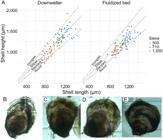
A) Scatterplot of growth aspects of Crassostrea gigas oyster seeds after 21 days of cultivation in each system (downweller and fluidized bed) concerning their shell height and shell length, as well as their proportion in each shell format (elongate, ellipse, standard and round), and also the mean proportion of oyster seed retained in each size of sieve meshes (1000, 710, 500); B) Example of an elongate shell format in C. gigas oyster seeds; C) ellipse shell format; D) standard shell format; E) round shell format.
X square analysis between the proportion of shell format of C. gigas’ oyster seeds per cultivation system, mean proportion of total oyster seeds retained in each sieve mesh per cultivation system, and the interaction of both properties per cultivation system.
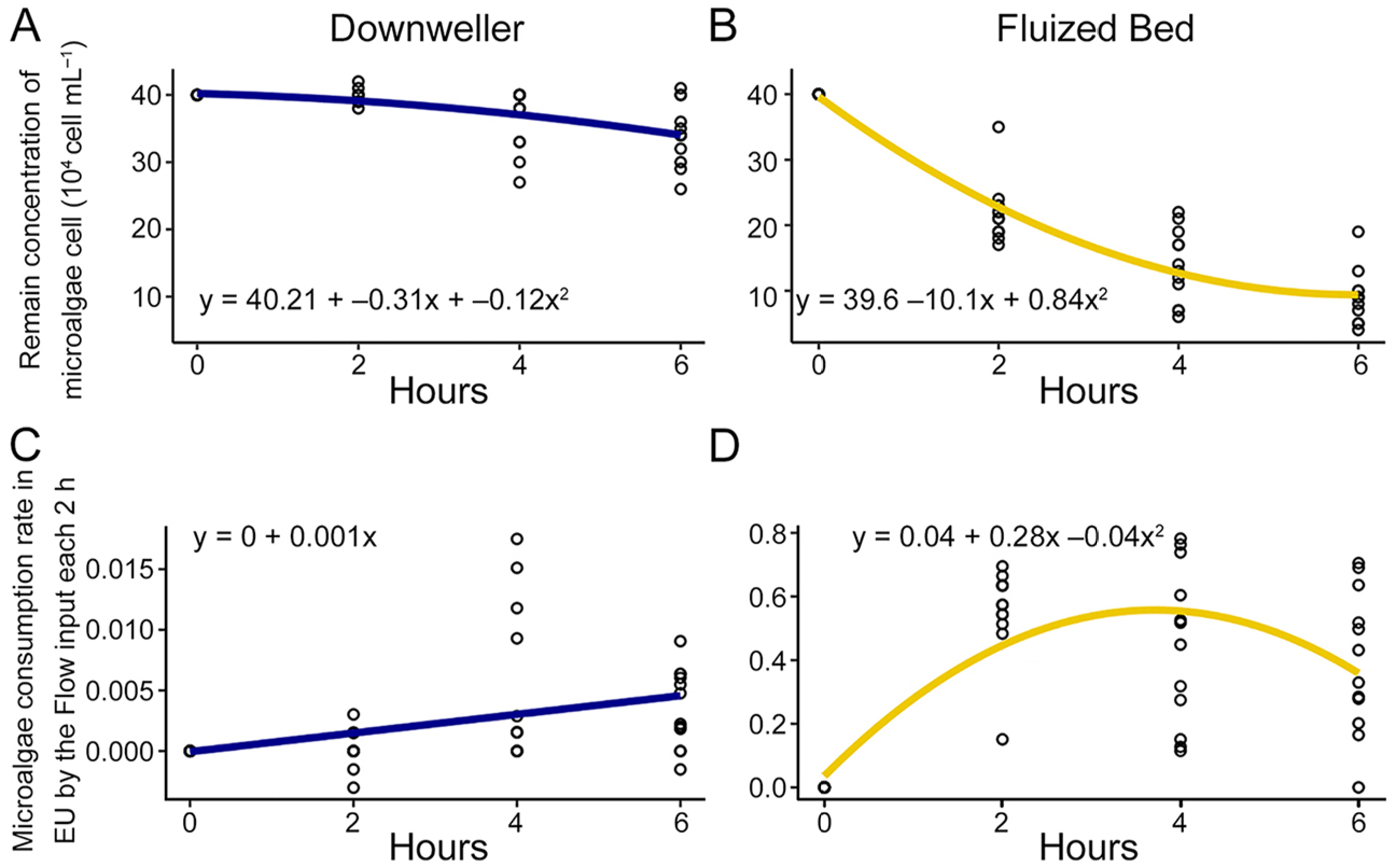
Both the D and F systems showed negative quadratic trends for microalgae depletion and consumption. While system D showed less decay (y = 40.21 – 0.31x – 0.12x2) (Figure 7A), system F exhibited a higher decay of microalgae in the supply tank (y = 39.62 – 10.1x + 0.84x2) (Figure 7B), indicating rapid consumption. The consumption rate in system D demonstrated a nearly constant consumption activity of less than 1 % (y = 0 + 0.001x) (Figure 7C). In comparison, system F remained near 50 % until microalgae concentration dropped below 15 × 104 cells mL–1 after 4 h (y = 0.04 + 0.28x – 0.04x2) (Figure 7D). System F yielded higher adjusted R2 values (0.889 for depletion and 0.484 for consumption) compared to system D (0.326 and 0.153, respectively), indicating greater data variability (Table 2).
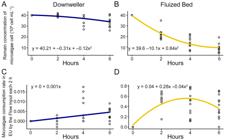
Characteristic of average microalgae consumption of downweller (D) and fluidized (F) bed systems through 6 h of evaluation. Quad regression of microalgae depletion dynamics in A) D system and B) F system. C) Regression of the total rate of microalgae consumption by the total flow input in the experimental units of D system and D) F system after 2 h, recalculated by the remaining microalgae cells available after 2 h and then after 4 h. EU = experimental units.
Statistical properties of microalgae consumption regressions verified by each cultivation system.
Discussion
The nursery of oyster seeds in the F system demonstrated superior performance compared to the D system across several critical traits. Notably, seeds cultivated in the F system exhibited higher survival rates, a greater probability of achieving a better oyster yield, and a more significant proportion of seeds belonging to the desirable larger size class (1000 µm). This enhanced performance is further supported by the F system's higher microalgae consumption and its capacity for more consistent production of high-quality seeds. As the nursery phase is a cornerstone of ensuring excellent cultivation outcomes and meeting stringent quality standards (Anderson, 2002), the F system's ability to produce high-quality oyster seeds with lower mortality rates directly translates into improved oyster productivity, growth, and survival until harvest (Ferreira et al., 2011).
Culturing bivalve seeds in fluidized-bed systems is often considered a promising method for producing high-quality animals. A higher growth and survival rate of oyster seeds nursed in fluidized bed systems than "weller" systems was seen for Crassostrea bilineata (Röding) (Hwai et al., 2023), Mercenaria mercenaria (Linneaus) (Pfeiffer and Rusch, 2000), as well as for Crassostrea gasar (Dillwyn) and C. gigas (Sühnel et al., 2024). The performance of the F system was also verified for Crassostrea virginica (Gmelin) juveniles, which exhibited an exponential growth rate surpassing that of other up-flow systems, and the capability to provide marketable-sized oysters within 6-12 months (Ver and Wang, 1995; Wang, 2003). Bayesian estimation indicated that oysters in F systems consistently achieve superior growth, surpassing D system yields by up to 45.3 % in over 75 % of cases. This consistency, with fewer deviations in final yield, is a valuable advantage in aquaculture when aligning with sustainable market demands (Little et al., 2018).
The inferior performance of the D system stems from its aggregated oyster seed disposition, leading to increased individual impacts, lower survival, and reduced growth (Alunno-Bruscia et al., 2001; Roncarati et al., 2017; Abarca et al., 2025). Despite higher flow input per unit, the limited water permeability within crowded oysters results in uneven resource access and accumulation of uneaten food and fecal particles in lower culture areas (El-Hashash et al., 2023), disadvantaging a portion of the population.
The F system's consistent growth pattern is attributed to superior water quality maintenance through higher renewal rates and the free suspension of oyster seeds, which minimize the adverse effects of high stocking densities and water deterioration (Ver and Wang, 1995). The continuous rotation of oysters further ensures uniform food distribution (Hwai et al., 2023), virtually eliminating positional effects on growth. Consequently, growth differences in the F system are primarily linked to endogenous individual physiological characteristics (Tamayo et al., 2014).
The F system's high water flow creates friction, shaping oysters into a rounder form and promoting a more proportional SH and SL (Ver and Wang, 1995). This tumbling action, where oysters scrape against culture unit surfaces, thickens and cups their shells, enhancing shell strength and optimizing width and length relative to height (Mizuta and Wikfors, 2019). A balanced SH/SL ratio is vital for commercial value, as it indicates a desirable shell shape and potentially higher meat content (Jiang et al., 2024).
Our observations during cultivation revealed that many oysters experience growth in both SH and SL during a brief period. However, as stocking density increases and oyster seeds grow, SL growth tends to diminish. This might be due to lateral pressure from neighboring individuals, which encourages them to grow primarily in height (Seed, 1968). As oysters grow taller, the longest dimension of the shell increasingly shifts from being closer to the oyster's mouth, where shell growth occurs, to being near the umbo.
Suppose the SL approaches the size of the SH (up to a SH/SL ratio of 1.2, as reported in the present study). In that case, it suggests that oysters may have experienced loose spaced growth, and the SL tends to be measured nearer the oyster's mouth, which somewhat relates with intended "teardrop" oyster shape provided by Heath and Wilson (1999). Regarding the higher SH/SL ratio, which relates to the elongate and elliptical shapes, the main difference between these shapes pertains to when stocking density occurs during cultivation: either in the early days (elongate) or during the later stages (elliptical), when increased oyster volume in the cultivation units creates lateral pressure.
Stocking density typically negatively impacts oyster shell growth and survival (Marshall and Dunham, 2013; Roncarati et al., 2017). Despite F systems having over 50 times higher stocking density than D systems, oysters in D systems exhibit more irregular, elongated shapes. Conversely, F systems are positively associated with a significant proportion of standard and higher-quality oysters, suggesting that increased density in fluidized beds does not necessarily lead to the typical negative effects observed in D systems.
Oyster seed growth correlates with food availability, is influenced by flow and concentration (Héral and Deslous-Paoli, 1991), and filtration rate (Walne, 1972). F-system oysters consumed microalgae significantly faster, near-completely depleting food within 6 h, mirroring observations for M. mercenaria (Pfeiffer and Rusch, 2000). Despite both systems receiving 40 × 104 cells mL–1, D-system oysters likely reduced feeding and filtration due to the high concentration (Tamayo et al., 2014). Conversely, F-system oysters benefited from frequent microalgae refills (3-6 h), enhancing growth by extending food access (Langton and McKay, 1974; Langton and McKay, 1976). While C. gigas can be sufficiently supported by I. galbana (Walne, 1979; Sühnel et al., 2024), oysters in F systems might experience stress responses to particle concentration fluctuations or food depletion (Hawkins et al., 2001; Troost et al., 2009), thereby potentially hindering performance if energy conditions regress (Vélez and Epifanio, 1981).
Cultivation conditions in the F system are favorable for the cultivation of Crassostrea gigas’ oyster seeds, especially after the oyster settlement phase. The cultivation in this system enabled consistent growth in SH and SL, and yield performance, while maintaining a higher survival rate, and attaining a higher probability (over 75 %) of better yield performance than oysters cultivated in the D system. In addition, oyster seeds in F systems also acquire a higher proportion of standard shape, especially for the individuals retained at a 1000 µm sieve, which also corroborates the implementation of this system for greater single-seed oyster production.
Data availability statement
The authors confirm that the data supporting the findings of this study will be available from the corresponding author upon request.
Acknowledgments
This study received financial support from the Conselho Nacional de Desenvolvimento Científico e Tecnológico (CNPq) and Coordenação de Aperfeiçoamento de Pessoal de Nível Superior (CAPES).
References
-
Abarca A, Lira G, Bakit J. 2025. Pacific oyster (Crassostrea gigas aquaculture production in Chile: a review. Latin American Journal of Aquatic Research 53: 39-55. https://doi.org/10.3856/vol53-issue1-fulltext-3271
» https://doi.org/10.3856/vol53-issue1-fulltext-3271 - Alunno-Bruscia M, Vercelii C, Chabirand JM, Oheix J, Buestel D. 2001. Study of the influence of stocking density on growth and quality of oysters (Crassostrea gigas in Thau lagoon. Ifremer, Sète, France (in French, with abstract in English).
-
Anderson JL. 2002. Aquaculture and the future: why fisheries economists should care. Marine Resource Economics 17: 133-151. https://doi.org/10.1086/mre.17.2.42629357
» https://doi.org/10.1086/mre.17.2.42629357 -
Botta R, Asche F, Borsum JS, Camp EV. 2020. A review of global oyster aquaculture production and consumption. Marine Policy 117: 103952. https://doi.org/10.1016/j.marpol.2020.103952
» https://doi.org/10.1016/j.marpol.2020.103952 -
Bush SR, Belton B, Little DC, Islam MS. 2019. Emerging trends in aquaculture value chain research. Aquaculture 498: 428-434. https://doi.org/10.1016/j.aquaculture.2018.08.077
» https://doi.org/10.1016/j.aquaculture.2018.08.077 -
Campbell MD, Hall SG. 2019. Hydrodynamic effects on oyster aquaculture systems: a review. Reviews in Aquaculture 11: 896-906. https://doi.org/10.1111/raq.12271
» https://doi.org/10.1111/raq.12271 -
Carter JG, Harries PJ, Malchus N, Sartori AF, Anderson LC, Bieler R, et al. 2012. Treatise Online no. 48: Illustrated Glossary of the Bivalvia. KU Paleontolological Institute, Lawrence, KS, USA. https://doi.org/10.17161/to.v0i0.4322
» https://doi.org/10.17161/to.v0i0.4322 - Davis JP, Davis CV, Walton W. 2021. Farming oysters for food and profit. p. 1-40. In: Shumway SE. ed. Molluscan shellfish aquaculture: a practical guide. CABI, Wallingford, England.
-
Dodd Q. 2015. Chilean oyster seed a life saver for Canadian growers. Hatchery International. Available at: https://www.hatcheryinternational.com/chilean-oyster-seed-a-life-saver-for-canadian-growers-1414/ [Accessed Feb 19, 2025]
» https://www.hatcheryinternational.com/chilean-oyster-seed-a-life-saver-for-canadian-growers-1414/ -
El-Hashash DZ, Ali SA, Ashour TH, Khater EG. 2023. Evaluation of settleable solids removal methods in recirculating aquaculture system. Misr Journal of Agricultural Engineering 40: 75-88. https://doi.org/10.21608/mjae.2022.173696.1089
» https://doi.org/10.21608/mjae.2022.173696.1089 -
European Union. 2022. Oysters in the EU: Price structure in the supply chain: focus on France, Ireland and the Netherlands: case study. Publications Office of the European Union, Luxembourg. https://doi.org/10.2771/802589
» https://doi.org/10.2771/802589 -
Food and Agriculture Organization [FAO]. 2024. The State of World Fisheries and Aquaculture 2024: Blue Transformation in Action. FAO, Rome, Italy. https://doi.org/10.4060/cd0683en
» https://doi.org/10.4060/cd0683en -
Ferreira JF, Silva FC, Gomes CHAM, Ferreira FM. 2011. Programmed production and traceability for larvae and seeds of mollusks in Santa Catarina. Revista Brasileira de Reprodução Animal 35: 192-197. http://www.cbra.org.br/pages/publicacoes/rbra/v35n2/RB371%20Ferreira%20pag192-197.pdf (in Portuguese, with abstract in English)
» http://www.cbra.org.br/pages/publicacoes/rbra/v35n2/RB371%20Ferreira%20pag192-197.pdf - Galtsoff PS. 1964. The American oyster Crassostrea virginica Gmelin. Fishery Bulletin. United States Fish and Wildlife Service 64: 21-82.
-
Gjedrem T, Baranski M. 2009. Selective Breeding in Aquaculture: An Introduction. Springer, New York, NY, USA. https://doi.org/10.1007/978-90-481-2773-3
» https://doi.org/10.1007/978-90-481-2773-3 -
Gomes HM, Sühnel S, Gomes CHAM, Silva E, Silva FC, Melo CMR. 2024. Effect of diet on larval settlement, growth, and spat survival of the oyster Crassostrea gigas (Thunberg, 1793). Latin American Journal of Aquatic Research 52: 521-535. https://doi.org/10.3856/vol52-issue4-fulltext-3213
» https://doi.org/10.3856/vol52-issue4-fulltext-3213 -
Guertler C, Speck GM, Mannrich G, Merino GSAD, Merino EAD, Seifertt WD. 2016. Occupational health and safety management in Oyster culture. Aquacultural Engineering 70: 63-72. http://dx.doi.org/10.1016/j.aquaeng.2015.11.002
» http://dx.doi.org/10.1016/j.aquaeng.2015.11.002 -
Guillard RRL. 1975. Culture of phytoplankton for feeding marine invertebrates. p. 29-60. In: Smith WL, Chanley MH. eds. Culture of marine invertebrate animals. Springer, Boston, MA, USA. https://doi.org/10.1007/978-1-4615-8714-9_3
» https://doi.org/10.1007/978-1-4615-8714-9_3 -
Hawkins AJS, Fang JG, Pascoe PL, Zhang JH, Zhang XL, Zhu MY. 2001. Modelling short-term responsive adjustments in particle clearance rate among bivalve suspension-feeders: Separate unimodal effects of seston volume and composition in the scallop Chlamys farreri Journal of Experimental Marine Biology and Ecology 262: 61-73. https://doi.org/10.1016/S0022-0981(01)00282-9
» https://doi.org/10.1016/S0022-0981(01)00282-9 -
Haworth J. 2001. Single seed oyster spat improves production. Aquaculture info list. Available at: https://aquaculture.ugent.be/Services/newsl/2001/nl139/a8.htm [Accessed Feb 19, 2025]
» https://aquaculture.ugent.be/Services/newsl/2001/nl139/a8.htm -
Heath PL, Wilson JH. 1999. Assessment of Pacific oyster, Crassostrea gigas (Thunberg), size and quality using a computer-based shape analysis technique. Aquaculture Research 30: 299-303. https://doi.org/10.1046/j.1365-2109.1999.00319.x
» https://doi.org/10.1046/j.1365-2109.1999.00319.x - Helm MM, Bourne N, Lovatelli A. 2004. Hatchery Culture of Bivalves: A Practical Manual. FAO, Rome, Italy.
-
Héral M, Deslous-Paoli JM. 1991. Oyster culture in European countries. p. 153-190. In: Menzel W. ed. Estuarine and marine bivalve mollusk culture. CRC Press, Boca Raton, FL, USA. https://doi.org/10.1201/9781351071918-13
» https://doi.org/10.1201/9781351071918-13 -
Huang H. 2022. Exceedance probability analysis: a practical and effective alternative to t-tests. Journal of Probability and Statistical Science 20: 80-97. https://doi.org/10.37119/jpss2022.v20i1.513
» https://doi.org/10.37119/jpss2022.v20i1.513 -
Hwai ATS, Yasin Z, Nilamani N, Razalli N, Syahira N, Illias N, et al. 2023. The comparative growth and survival of juvenile tropical oyster (Magallana bilineata, Roding, 1798) using different intensive nursery systems. International Journal of Aquatic Research and Environmental Studies 3: 69-79. https://doi.org/10.70102/IJARES/V3I2/4
» https://doi.org/10.70102/IJARES/V3I2/4 -
Iitembu JA, Fitzgerald D, Altintzoglou T, Boudry P, Britz P, Byron CJ, et al. 2023. Comparative description and analysis of Oyster aquaculture in selected Atlantic regions: production, market dynamics, and consumption patterns. Fishes 8: 584. https://doi.org/10.3390/fishes8120584
» https://doi.org/10.3390/fishes8120584 -
Jiang K, Chen C, Jiang G, Chi Y, Xu C, Kong L, et al. 2024. Genetic improvement of oysters: current status, challenges, and prospects. Reviews in Aquaculture 16: 796-817. https://doi.org/10.1111/raq.12868
» https://doi.org/10.1111/raq.12868 -
Koike Y, Komatsu T. 2024. Exchanges between Japan and France in the field of fisheries science, triggered by the mass oyster die-off in France and the export of Sanriku oyster seeds to France. La mer 61: 107-127. https://doi.org/10.32211/lamer.61.3-4_107
» https://doi.org/10.32211/lamer.61.3-4_107 -
Kruschke JK. 2013. Bayesian estimation supersedes the t test. Journal of Experimental Psychology: General 142: 573-603. https://doi.org/10.1037/a0029146
» https://doi.org/10.1037/a0029146 - Laing I, Earl NH. 1998. The lipid content, spatfall and subsequent growth of early and late settling hatchery-reared pacific oyster, Crassostrea gigas Thunberg, larvae. Aquaculture Research 29: 19-25.
-
Langton RW, McKay GU. 1974. The effect of continuous versus discontinuous feeding on the growth of hatchery reared spat of Crassostrea gigas Thunberg. ICES Journal of Marine Science 35: 361-363. https://doi.org/10.1093/icesjms/35.3.361
» https://doi.org/10.1093/icesjms/35.3.361 -
Langton RW, McKay GU. 1976. Growth of Crassostrea gigas (Thunberg) spat under different feeding regimes in a hatchery. Aquaculture 7: 225-233. https://doi.org/10.1016/0044-8486(76)90141-1
» https://doi.org/10.1016/0044-8486(76)90141-1 -
Lima RCD, Ferreira JPR, Santo CME, Silva FC, Gomes CHAM, Ramos CO, et al. 2023. Spat of pacific oysters (Crassostrea gigas grown in subtropical environments. Journal of Applied Aquaculture 36: 342-364. https://doi.org/10.1080/10454438.2023.2231432
» https://doi.org/10.1080/10454438.2023.2231432 -
Little DC, Young JA, Zhang W, Newton RW, Al-Mamun A, Murray FJ. 2018. Sustainable intensification of aquaculture value chains between Asia and Europe: a framework for understanding impacts and challenges. Aquaculture 493: 338-354. https://doi.org/10.1016/j.aquaculture.2017.12.033
» https://doi.org/10.1016/j.aquaculture.2017.12.033 -
Marshall RD, Dunham A. 2013. Effects of culture media and stocking density on biofouling, shell shape, growth, and survival of the Pacific oyster (Crassostrea gigas and the Manila clam (Venerupis philippinarum in suspended culture. Aquaculture 406-407: 68-78. https://doi.org/10.1016/j.aquaculture.2013.05.003
» https://doi.org/10.1016/j.aquaculture.2013.05.003 -
Mizuta DD, Wikfors GH. 2019. Seeking the perfect oyster shell: a brief review of current knowledge. Reviews in Aquaculture 11: 586-602. https://doi.org/10.1111/raq.12247
» https://doi.org/10.1111/raq.12247 -
Pfeiffer TJ, Rusch KA. 2000. An integrated system for microalgal and nursery seed clam culture. Aquacultural Engineering 24: 15-31. https://doi.org/10.1016/S0144-8609(00)00063-7
» https://doi.org/10.1016/S0144-8609(00)00063-7 -
Pfeiffer TJ, Rusch KA. 2001. Comparison of three culture methods for the intensive culture of northern Quahog seed, Mercenaria mercenaria Journal of the World Aquaculture Society 32: 11-20. https://doi.org/10.1111/j.1749-7345.2001.tb00917.x
» https://doi.org/10.1111/j.1749-7345.2001.tb00917.x - Radford AE, Dickison WC, Massey JR, Bell CR. 1976. Vascular Plant Systematics. Harper & Row, New York, NY, USA.
-
Reynaga-Franco FJ, Grijalva-Chon JM, Castro-Longoria R, Barraza-Guardado RH, Arreola-Lizárraga JA, Chávez-Villalba J. 2020. Designing a protocol to evaluate Crassostrea gigas spat production in hatcheries: identification of critical aspects. Aquacultural Engineering 89: 102055. https://doi.org/10.1016/j.aquaeng.2020.102055
» https://doi.org/10.1016/j.aquaeng.2020.102055 -
Roncarati A, Felici A, Magi GE, Bilandžić N, Melotti P. 2017. Growth and survival of cupped oysters (Crassostrea gigas during nursery and pregrowing stages in open sea facilities using different stocking densities. Aquaculture International 25: 1777-1785. https://doi.org/10.1007/s10499-017-0152-z
» https://doi.org/10.1007/s10499-017-0152-z -
Seed R. 1968. Factors influencing shell shape in the mussel Mytilus edulis Journal of the Marine Biological Association of the United Kingdom 48: 561-584. https://doi.org/10.1017/S0025315400019159
» https://doi.org/10.1017/S0025315400019159 -
Sturmer LN, Kane AS, Philips EJ, Lovestrand E, Harris H, Anderson N. 2022. Addressing Oyster mortalities in Florida’S off-bottom oyster aquaculture industry. UF-IFAS Support for Emerging Enterprise Development Integration Teams (SEEDIT) Program. Available at: https://shellfish.ifas.ufl.edu/wp-content/uploads/Oyster-Culture-SEEDIT-Final-Report-3.07.22-compressed.pdf [Accessed Feb 19, 2025]
» https://shellfish.ifas.ufl.edu/wp-content/uploads/Oyster-Culture-SEEDIT-Final-Report-3.07.22-compressed.pdf -
Sühnel S, Lagreze-Squella FJ, Corrêa GN, Araújo J, Souza G, Ferreira JPR, et al. 2024. Stocking density and diet of two oyster (Crassostrea gasar and Crassostrea gigas seeds in fluidized bed bottle nursery system. Fishes 9: 183. https://doi.org/10.3390/fishes9050183
» https://doi.org/10.3390/fishes9050183 -
Tamayo D, Ibarrola I, Urrutxurtu I, Navarro E. 2014. Physiological basis of extreme growth rate differences in the spat of oyster (Crassostrea gigas Marine Biology 161: 1627-1637. https://doi.org/10.1007/s00227-014-2447-1
» https://doi.org/10.1007/s00227-014-2447-1 -
Troost K, Stamhuis EJ, Van Duren LA, Wolff WJ. 2009. Feeding current characteristics of three morphologically different bivalve suspension feeders, Crassostrea gigas, Mytilus edulis and Cerastoderma edule, in relation to food competition. Marine Biology 156: 355-372. https://doi.org/10.1007/s00227-008-1088-7
» https://doi.org/10.1007/s00227-008-1088-7 -
Vélez A, Epifanio CE. 1981. Effects of temperature and ration on gametogenesis and growth in the tropical mussel Perna perna (L.). Aquaculture 22: 21-26. https://doi.org/10.1016/0044-8486(81)90129-0
» https://doi.org/10.1016/0044-8486(81)90129-0 -
Ver LMB, Wang JK. 1995. Design criteria of a fluidized bed oyster nursery. Aquacultural Engineering 14: 229-249. https://doi.org/10.1016/0144-8609(95)93438-S
» https://doi.org/10.1016/0144-8609(95)93438-S - Wallace RK, Waters P, Rikard FS. 2008. Oyster Hatchery Techniques. Southern Regional Aquaculture Center Publication 4302. SRAC, Stoneville, MS, USA.
-
Walne PR. 1972. The influence of current speed, body size and water temperature on the filtration rate of five species of bivalves. Journal of the Marine Biological Association of the United Kingdom 52: 345-374. https://doi.org/10.1017/S0025315400018737
» https://doi.org/10.1017/S0025315400018737 - Walne PR. 1979. Culture of Bivalve Molluscs: 50 Years’ Experience at Conwy. Fishing New Books, Surrey, England.
-
Wang JK. 2003. Conceptual design of a microalgae-based recirculating oyster and shrimp system. Aquacultural Engineering 28: 37-46. https://doi.org/10.1016/S0144-8609(03)00020-7
» https://doi.org/10.1016/S0144-8609(03)00020-7
Edited by
-
Edited by:
Renato Massaaki Honji https://orcid.org/0000-0001-7198-7728