
 Sociobiodiversity, collective health, and innovation in the Cerrado biome: The role of Organized Civil Society in cooperation networks for sustainable territories
ABSTRACT
This article analyzes the role of Organized Civil Society (SCO) in the Brazilian Cerrado biome, focusing on its contributions to the conservation of sociobiodiversity, the strengthening of traditional communities, and the health of these populations. Based on a survey of public data from 68 institutions conducted between June and December 2024, the study mapped their fields of action, institutional part-nerships, and technological innovation strategies. The results highlight the central role of SCOs in the articulation of traditional and technical-scientific knowledge, the use of social and digital technologies, and the promotion of socioenvironmental justice. The analysis also underscores the need for greater integration between public health policies and environmental conservation, aiming to expand the reach and effectiveness of actions aimed at safeguarding Cerrado sociobiodiversity.
KEYWORDS
Cerrado; Public health; Biodiversity; Non-Governmental Organizations.
RESUMO
Este artigo analisa a atuação da Sociedade Civil Organizada (SCO) no Cerrado brasileiro, com enfoque em suas contribuições para a conservação da sociobiodiversidade, para o fortalecimento das comunidades tradicionais e saúde dessas comunidades. A partir de um levantamento de dados públicos de 68 instituições, realizado entre junho e dezembro de 2024, foram mapeadas as áreas de atuação, as parcerias institucionais e a estratégias de inovação tecnológica. Os resultados apontam a centralidade da SCO na articulação de saberes tradicionais e técnico-científicos, no uso de tecnologias sociais e digitais e na promoção da justiça socioambiental. A análise destaca, ainda, a necessidade de maior integração entre as políticas de saúde pública e a conservação ambiental, visando ampliar o alcance e a efetividade das ações em defesa da sociobiodiversidade dos Cerrados.
PALAVRAS-CHAVE
Cerrado; Saúde coletiva; Biodiversidade; Organizações Não Governamentais.
Introduction
The Brazilian Cerrado is the second-largest biome in South America, covering approximately 23.3% of the national territory, according to the Brazilian Institute of Geography and Statistics (IBGE), as cited by the Ministry of the Environment and Climate Change1. This ecosystem is not only a vast repository of biodiversity, but also a complex sociocultural mosaic with strategic implications for public health. Recognized as the ‘Brazilian savanna’, the Cerrado is home to more than 12,000 catalogued plant species, of which approximately 4,400 are endemic, reaffirming its status as one of the most diverse-and at the same time most threatened-biomes on the planet2, in addition to its rich fauna and the many traditional communities that have established, over generations, deep symbiotic relationships with the territory3.
The relationship between the Cerrado and public health remains underexplored, despite its significant relevance to the development of territorially contextualized public health policies. In this context, understanding the social and informational processes that shape interactions among local actors, institutions, and policies is essential, as network dynamics play a decisive role in articulating knowledge, disseminating practices, and sustaining socio-environmental governance strategies4. As a state policy grounded in the principles of universality, comprehensiveness, and equity, Brazil’s Unified Health System (SUS) faces distinct challenges in the Cerrado while also presenting opportunities to advance its organizational objectives. In this scenario, the incorporation of social technologies-understood as participatory practices and forms of social appropriation of scientific knowledge-emerges as a strategic pathway for aligning public policies more closely with territorial realities and enhancing the system’s effectiveness5. Accordingly, overcoming barriers and harnessing regional potential require innovative and participatory strategies, consistent with the understanding of social technology as a tool for inclusive and territorially grounded development6.
When examining the interrelationships between Cerrado conservation and the promotion of public health, the inseparability of socio-environmental determinants and population health conditions becomes evident. Ecosystem degradation and biodiversity loss, widely documented within the biome, underscore the need for integrated policies that link health and environmental conservation2. Sociobiodiversity, understood as the integration of biological and cultural diversity7, represents an invaluable heritage to be preserved both for its intrinsic value and for its potential to promote health and well-being.
Amid increasing anthropogenic pressures-such as the expansion of the agricultural frontier and the development of large-scale infrastructure projects8-there is a pressing need to promote interdisciplinary dialogue capable of informing development models that reconcile environmental conservation with respect for traditional territorialities. In this context, Brazil’s Unified Health System (SUS) plays a pivotal role, particularly through the National Policy on Integrative and Complementary Practices (PNPIC), which formally acknowledges and values traditional health knowledge. This policy may be understood as part of the broader institutionalization of social technologies within public policy, as discussed by Dagnino9, both by recognizing traditional knowledge linked to the Cerrado’s biodiversity and by highlighting the need to incorporate such practices into public health and sustainability frameworks. From this perspective, acknowledging the biome’s ecological diversity is a fundamental prerequisite for understanding the interconnections among territory, culture, and conservation10.
This paper offers a critical reflection on the potential intersections between public health policies and environmental conservation, prioritizing the defense and promotion of sociobiodiversity within Cerrado territories. It is grounded in the assumption, articulated by Porto11, that strengthening these connections can contribute to the development of a model of health care that is ecologically sustainable, culturally sensitive, and socially just. The analysis presented here draws on an analytical subset of Organized Civil Society (OCS) collectives identified in a report produced by the Prospecção FIOCRUZ Cerrados team-a FIOCRUZ foresight initiative focused on the Cerrado biome- based on the collection and systematization of data available on institutional websites. The survey, conducted between June and December 2024, mapped 68 institutions with significant engagement in the biome, enabling the identification of strategies, partnerships, and initiatives aimed at defending Cerrado peoples and biodiversity.
Collective health, sociobiodiversity, and the Cerrado biome
The Cerrado is home to a wide range of traditional communities, including Indigenous peoples, Quilombola groups, and family farmers, who maintain a long-standing and symbiotic relationship with the territory1,2. Its strategic importance extends beyond the ecological domain, also encompassing the development of public health policies that take into account social and environmental determinants.
The performance of SUS within the Cerrado faces significant barriers, including dispersed populations, a shortage of specialized services, and persistent inequalities in access to health care12,13. A study involving health managers linked to the Intermunicipal Consortium Cerrado Araguaia/GO shows that intermunicipal coordination strengthens the problem-solving capacity of the SUS and promotes more efficient and humanized health governance14.
The 11th Brazilian Congress on Collective Health (ABRASCÃO), held in Goiânia in 2015, reaffirmed the importance of integrating health, social justice, and environmental conservation in the context of the Cerrado15. Environmental degradation linked to the expansion of the agricultural frontier-particularly the intensive use of pesticides-has had direct and significant impacts on the health of local populations. This reality is documented in the ‘ABRASCO Dossier: An Alert on the Impacts of Pesticides on Health’, which underscores the need for intersectoral responses capable of bringing together different fields and institutions in the design of policies and initiatives aimed at protecting territories and communities16.
Sociobiodiversity is a key determinant of health. In this perspective, the journal Saúde em Debate, from the Brazilian Center for Health Studies (CEBES), has proposed an analysis of the Cerrado from a critical public health standpoint, highlighting the role of the National Policy on Integrative and Complementary Practices (PNPIC) within the SUS in valuing traditional knowledge17. In their work, Minayo18 and Porto11 advocate for an ecosystemic view of health, one that integrates environmental, social, and cultural dimensions.
In this context, Organized Civil Society (OCS) plays a prominent collective role by acting as a mediator between local communities and the state, fostering dialogue between local knowledge and technical-scientific knowledge1,2. These organizations develop strategies grounded in social innovation aimed at health and sustainability, including the use of geotechnologies, participatory methodologies, and digital platforms3,4. They also contribute to analyses and interpretations of social and political dynamics within the Cerrado region, where they connect local demands with global sustainability agendas9.
Although organized civil society plays a fundamental role in defending social causes, promoting civic association, and engaging in environmental advocacy, it is important to acknowledge its specificities and internal contradictions. Often perceived as inherently positive actors, these organizations also face dilemmas that affect their legitimacy and the way they operate, such as a lack of financial and administrative transparency, dependence on funding sources that may shape or constrain their agendas, and the complex relationships they establish with the state-either as partners in public policy implementation or as service providers. These aspects reveal that, despite their central role in contemporary society, their actions must be examined critically, considering both their contributions and their limitations and internal tensions.
The social technologies employed by these collectives-understood as replicable solutions developed in collaboration with local communities-have contributed to ecological restoration processes, territorial management, and the strengthening of agroecology in the Cerrado19. According to Little20, traditional ecological knowledge constitutes a legitimate form of environmental rationality and should be incorporated into socio-environmental governance.
Network-based action, as described by Castells2, enables new forms of socio-environmental governance by facilitating the circulation of information, the coordination of collective struggles, and the formation of inter-institutional alliances. This dynamic can be observed in the partnerships established between organized civil society collectives, universities, social movements, and international organizations, fostering networks of cooperation that strengthen the defense of territories and promote environmental justice.
The articulation between social innovation and environmental justice provides a key analytical lens for understanding the work of organizations in the Cerrado. Social innovation, by valuing participatory practices and the community appropriation of knowledge, enhances the capacity of traditional populations to respond to contexts of vulnerability and exclusion, emerging as an alternative to hegemonic development models5,6. Environmental justice, in turn, highlights the need to recognize and address socio-environmental inequalities that disproportionately affect Indigenous peoples, Quilombola communities, and family farmers, foregrounding their right to healthy and sustainable territories3. Integrating these two concepts allows the experiences analyzed here to be interpreted not only as forms of resistance but also as strategies of structural transformation that connect health, environment, and social rights.
Finally, the literature shows that the Cerrado must be understood as a strategic territory that is essential to public health in Brazil. The integration of the SUS, environmental conservation policies, and the recognition of traditional ways of life offers a promising pathway for addressing current and future socio-environmental challenges. Developing governance models that respond to the cultural and ecological specificities of the Cerrado represents both a major challenge and an opportunity to strengthen sustainable development practices, fostering more inclusive and effective approaches to health care.
Material and methods
This article is based on an analytical subset of Organized Civil Society (OCS) collectives identified in a report produced by the Prospecção FIOCRUZ Cerrados team. The study draws on secondary data, with a focus on public sources, particularly institutional websites of organizations operating within the biome. Data collection was carried out between June 20 and December 5, 2024, encompassing a total of 68 organizations (table 1), selected according to criteria of thematic relevance, territorial scope, and experience in socio-environmental policy engagement. The collected data were systematized and analyzed to understand the contribution of these institutions to the defense of sociobiodiversity and the strengthening of traditional communities in the Cerrado.
The methodology adopted was structured in four main stages: (a) Data collection and organization; (b) Data systematization; (c) Interpretative analysis; and (d) Validation through triangulation.
Data collection and organization
Data collection focused on secondary data available from public sources, particularly the institutional websites of organizations operating in the Cerrado. The selection of organizations was guided by inclusion criteria that considered:
-
Thematic relevance (work in areas related to sociobiodiversity, public health, agroecology, environmental justice, or social technologies);
-
Territorial scope (presence in priority Cerrado territories, including Indigenous communities, Quilombola groups, family farmers, and conservation areas);
-
Track record of engagement (continuity of projects or participation in networks/consortia focused on socio-environmental policies).
Organizations without sufficient publicly available information, without direct activity in the Cerrado biome, or without a clear link to the socio-environmental themes under analysis were excluded.
The information compiled included geographical location, thematic areas of activity, target populations, institutional partnerships, initiative in Science, Technology and Innovation (ST&I), as well as the use of social and digital technologies.
Data systematization
The collected data were categorized and organized in order to enable the identification of patterns and recurring elements. The variables analyzed were:
-
Area of operation (local, regional, national, international);
-
Beneficiary profile (types of communities and groups served);
-
Communication strategies (digital presence, social media, newsletters, interactive platforms);
-
Scope of actions (scale and reach of projects);
-
Types of technological innovations applied (social, digital, and environmental technologies).
This distinction between selection/exclusion criteria and analytical variables allows for a clearer understanding of the relationship between the data collection process (focused on basic information and institutional characterization) and the systematization phase (centered on comparative variables that guided the analysis).
Interpretative analysis
Critical reading of the data made it possible to identify patterns of action, innovative practices, as well as gaps in thematic and territorial coverage. This analysis was guided by theoretical frameworks related to sociobiodiversity, social innovation, sustainable technologies, and environmental justice.
Validation through triangulation
The systematized information was cross-checked with qualitative data derived from seminars, technical meetings, and thematic workshops held within the scope of the Prospecção FIOCRUZ Cerrados project. Methodological triangulation aimed to complement documentary data with insights, reflections, and experiences shared in these collective knowledge-building spaces.
The accuracy and currency of the information are the responsibility of the institutions surveyed. Nevertheless, additional validation measures were adopted to enhance reliability. Initially, the application of selection and exclusion criteria served as a first-level filter, prioritizing organizations with documented activities, an established public presence, and accessible information available in reports, institutional websites, or official databases. Subsequently, information was triangulated by cross-checking the collected data against records of the organizations’ participation in academic, political, and community events, as well as their involvement in recognized cooperation networks. This process made it possible to assess the consistency, timeliness, and relevance of the information, thereby strengthening the credibility of the mapping exercise.
This methodological approach made it possible to produce a broad and systematic overview of the strategic role played by organized civil society in protecting the Cerrado, while also identifying good practices, recurring challenges, and opportunities to strengthen the socio-environmental networks operating in the region.
Results and discussion
Characterization of Non-Governmental Organizations in the Cerrado: territorial distribution and scope of action
The OCS collectives engaged in defending the sociobiodiversity of the Cerrado display a broad and diverse territorial distribution. A total of 68 institutions with significant activity in the biome were mapped, revealing notable capillarity, with a presence in states such as Goiás, Tocantins, Maranhão, Bahia, Minas Gerais, and the Federal District, as well as cross-cutting activities in adjacent biomes, including the Amazon and the Caatinga.
Among the 68 institutions analyzed, there is substantial diversity in institutional profiles and modes of engagement. The organizations range from the Articulação dos Povos Indígenas do Brasil (APIB) to the Observatório do Clima, encompassing both grassroots collectives rooted in specific peoples and communities and networks with nationwide reach. Initiatives such as APIB, the Coordenação Nacional de Articulação das Comunidades Negras Rurais Quilombolas (CONAQ), and the Coalizão Vozes do Tocantins por Justiça Climática play a collective role in representing social groups within political and institutional arenas. Others, such as MapBiomas and the Centro de Pesquisa em Agricultura Sintrópica (CEPEAS), are technical-scientific initiatives focused on monitoring, research, and knowledge production. The former operates as a nationwide consortium of institutions, while the latter is a research and rural extension center grounded in the principles of syntropic agriculture developed by Ernst Götsch, originally formulated in southern Bahia and not restricted to the Cerrado biome. This plurality of organizational forms highlights the networking among social movements, community-based organizations, and scientific institutions operating across different scales and fields of action4.
Graph 1 below shows the distribution of the territories in which the identified organizations operate.
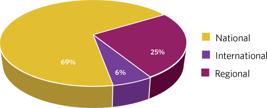
The survey shows that many of these OCS organizations focus their activities exclusively on the Cerrado, such as the Rede de Sementes do Cerrado, Instituto Cerrados, Associação Cerrado de Pé, ARATICUM, Associação Onça D’Água, and the campaign ‘Em Defesa do Cerrado’ (In Defense of the Cerrado). These organizations carry out initiatives in environmental conservation, strengthening of traditional communities, and ecological restoration, with a particular focus on the biome’s ecological and cultural specificities.
In addition, several organizations with national or international reach also play a significant role in the Cerrado, including The Nature Conservancy (TNC), Socioenvironmental Institute (ISA), and WWF-Brazil, contributing resources, expertise, and technologies for environmental protection and sustainable development in the region. Other institutions, such as AVINC, ARATICUM, and Instituto Cerrados, focus specifically on the biome.
The collectives analyzed focus their work across a wide range of territories, from urban and peri-urban areas to remote rural zones, Indigenous lands, and Quilombola communities. This distribution enables a multi-scalar approach, addressing both local and regional needs while also contributing to broader global agendas on conservation and socio-environmental justice.
The engagement of traditional communities is vital to conserving the Cerrado’s biodiversity and natural resources. As holders of long-standing knowledge related to sustainable land and resource management, these communities play a central role in environmental stewardship and in sustaining territorial dynamics. Within this framework, Non-Governmental Organizations (NGOs) act as key intermediaries, fostering connections among people and communities and strengthening population health, environmental conservation, and the recognition of their social and cultural rights21.
Traditional communities, Indigenous peoples, family farmers, and quilombola groups constitute the primary beneficiaries of these organizations’ initiatives, reflecting a strong commitment to social and territorial rights.
Priority thematic areas
The work of OCSs in the Brazilian Cerrado is marked by substantial thematic diversity, organized around strategic axes that respond to the biome’s key socio-environmental challenges. Analysis of the initiatives identified reveals a concentration of efforts in interrelated areas that integrate environmental conservation, the promotion of social justice, and the recognition of traditional knowledge.
According to the information gathered, biodiversity conservation is one of the main priorities, supported by numerous organizations working to protect native flora and fauna, restore degraded ecosystems, and promote the sustainable use of natural resources. Alongside these efforts, ecological restoration and native seed production play a key role, led by networks such as the Rede de Sementes do Cerrado, the Rede de Sementes do Xingu, and the organization Quintais Cerratenses Project (PEQUI). Through seed collection, processing, distribution, and planting, these initiatives help restore degraded areas by combining technical expertise with traditional knowledge.
In agroecology and food sovereignty, initiatives such as those led by Articulação Tocantinense de Agroecologia (ATA) and by the Associação Agroecológica Tijupá encourage sustainable farming practices that support food security, reinforce local ways of life, and strengthen the resilience of production systems. At the same time, other organizations are dedicated to defending the territorial rights of traditional peoples and communities, including APIB, CONAQ, and the Associação Quilombo Kalunga. Their work focuses on securing legal protection for traditional territories and affirming ancestral cultures and knowledge, echoing the perspective of Santilli22, who highlights the central role of sustainable practices and ancestral knowledge in the Cerrado and links the rights of farmers and traditional communities to the legal safeguarding of their lands
Another important area focuses on climate justice and advocacy, through initiatives such as the Observatório do Clima and the Coalizão Vozes do Tocantins por Justiça Climática. Although they operate at different scales-the Observatório do Clima at the national level, and the Tocantins coalition at the regional level-both engage in public campaigns, policy advocacy, and institutional coordination aimed at shaping socio-environmental policies. In addition, there has been a growing adoption of Science, Technology, and Innovation (ST&I) by these organizations, an area that will be explored in greater detail below.
The analysis of the thematic areas thus highlights the complementarity among the different fields of action and underscores the strategic role of SCOs as key actors in coordinating sustainable, inclusive, and territorially grounded initiatives. The mapping also identifies the intersection of social justice and environmental conservation as a structuring axis of these organizations’ institutional action, particularly within the context of traditional territories in the Cerrado.
Innovation, science, and technology in NGOs
The integration of ST&I has emerged as a strategic axis for SCO collectives operating in the Cerrado, as evidenced by the analysis of 68 institutions. These organizations not only incorporate technological tools into their practices but also foster connections between traditional knowledge and scientific expertise, seeking sustainable solutions to the biome’s socio-environmental challenges23-26.
The organizations analyzed show, in their public communications, that they engage in significant innovation-related activities, with the majority (over 70%) developing projects or initiatives that integrate ST&I. These actions range from the use of environmental monitoring technologies-such as remote sensing and drones-to the implementation of digital platforms for data management and communication. For example, ARATICUM, in partnership with the Laboratory of Image Processing and Geoprocessing at the Federal University of Goiás (LAPIG/UFG), developed a platform to monitor ecological restoration, combining geospatial data with practices for restoring degraded areas.
Another notable example is the work of the Rede de Sementes do Xingu, which uses the ancestral technique known as ‘muvuca de sementes’ (seed mix) - a mixture of native species sown directly in the soil - combining Indigenous traditional knowledge with scientific research to enhance the effectiveness of ecological restoration. The ISPN, in turn, applies social technologies such as retention basins and contour lines in collaboration with local communities, highlighting the synergy between innovation and social inclusion.
Partnerships with research institutions and universities are critical to the success of these initiatives. The International Institute of Education of Brazil (IEB) and the World Agroforestry (ICRAF) maintain collaborations with universities and research centers to develop agroecological methodologies and sustainable management systems. These partnerships broaden the impact of their actions and strengthen the scientific foundation of the strategies they adopt.
In addition, organizations such as MapBiomas stand out for creating collaborative networks that bring together NGOs, universities, and technology companies to produce annual land-cover and land-use maps. These tools are essential for environmental monitoring and enforcement, as well as for the formulation of public policies.
Despite recent advances, the analysis also reveals persistent challenges, such as limited resources to maintain specialized communication and technology teams, which in turn constrain the scale and effectiveness of these initiatives. Even so, there is a growing adoption of digital tools and an increasing emphasis on inter-institutional partnerships, suggesting a promising pathway for the consolidation of innovation networks in the Cerrado region.
Highlights in innovation
The work of SCOs in the Brazilian Cerrado highlights a shift from traditional forms of activism toward approaches grounded in ST&I, integrating traditional knowledge, appropriate technologies, and strategies for socio-territorial inclusion. Based on the analysis of 68 institutions mapped by the Prospecção FIOCRUZ Cerrados project, a significant range of innovative practices can be identified, focused on the conservation of sociobiodiversity, the strengthening of communities, and the promotion of ecological sustainability.
Initiatives such as the PEQUI, the ARATICUM projects, and the Solar Stove project, from Casa 8 de Março Organização Feminista do Tocantins, illustrate actions that combine environmental sustainability, social justice, and low-cost technology, reflecting the organizations’ capacity to adapt to the diversity of local territories. These initiatives show how innovation can emerge from local needs, fostering integrated and effective solutions.
In collaboration with LAPIG/UFG and WWF-Brasil, ARATICUM developed a digital platform that uses geospatial data to monitor ecological restoration in the biome. This tool strengthens environmental governance by providing real-time information, enhancing transparency and enabling social participation in the monitoring of ecosystem restoration projects.
Regarding the recognition of traditional knowledge, the work of the Articulação Pacari and CEPEAS stands out. The former has been engaged in the research, use, and participatory certification of medicinal plants, contributing to community health, the preservation of local knowledge, and the recognition of traditional healing practices. CEPEAS, in turn, develops agroecological production systems adapted to the conditions of Brazil’s diverse biomes, including the Cerrado, while promoting training and applied research for family farmers.
Furthermore, the importance of Redário (Brazilian Network of Seed Collectors) can be highlighted as a network that organizes ecological restoration supply chains based on groups of native seed collectors. Its approach involves seed collection and commercialization, alongside training activities in logistics, communication, management, and legal security. It has become a consolidated model of community-based social technology.
APIB stands out for its use of digital technologies, including online platforms and satellite imagery for environmental monitoring and advocacy, helping to identify and report invasions and deforestation in Indigenous territories. Another relevant initiative is the Cerrado Museum, a fully virtual project that promotes environmental education and the dissemination of both scientific and traditional knowledge about the biome, fostering an interdisciplinary approach and improving accessibility.
Other innovative practices include the ‘muvuca de sementes’ technique-an ancestral method that uses a mixture of native species for direct sowing in restoration processes-which was introduced into Cerrado restoration and further refined within the context of the Rede de Sementes do Xingu. Also noteworthy are the activities of the Associação das Mulheres Extrativistas do Cantão, which combine traditional knowledge with the production of goods in the local bioeconomy.
These experiences point to a broader use of innovation, recognizing and empowering traditional communities as active agents in knowledge production. The organizations analyzed operate within an ecology of knowledges, linking science, technology, and socio-environmental justice. In this context, they emerge as actors in an alternative development model, guided by ecological resistance, social inclusion, and the recognition of the Cerrado’s territorial dynamics. This alternative development model resonates with Sachs27, particularly in relation to ecological resistance, social inclusion, and the valuation of local territories and cultures.
Technological development
The analysis highlights a strong investment in environmental technologies, including remote sensors, mobile applications, participatory methodologies, and data analysis systems. These tools are used to improve the planning, implementation, and evaluation of socio-environmental policies. Collaboration with universities and research centers further drives these innovations and promotes evidence-based solutions grounded in scientific research.
Technological development among SCO collectives operating in the Cerrado has emerged as a strategic component for the protection of sociobiodiversity, the strengthening of traditional communities, and the sustainable management of natural resources. The collectives analyzed have been incorporating environmental monitoring technologies, territorial management tools, information systems, and ecological management methodologies adapted to the specific characteristics of the biome.
According to data collected by the Prospecção FIOCRUZ Cerrados team, more than 70% of the mapped organizations develop or use some form of technology applied to environmental conservation, sustainable agriculture, or the social and political organization of communities. This trend is evident across three main areas: (i) geoprocessing and remote monitoring technologies; (ii) social and appropriate technologies; and (iii) digital information and communication platforms.
Organizations such as MapBiomas, Greenpeace Brasil, and the International Institute for Sustainability (IIS) make extensive use of remote sensing data, satellite imagery, and climate data analysis to map deforestation, estimate carbon stocks, and identify priority conservation areas. These technologies are essential for informing public policies, producing socio-environmental assessments, and guiding local actions for climate change mitigation and adaptation.
At the same time, initiatives such as Redário, the Rede de Sementes do Cerrado, and the Rede de Sementes do Xingu demonstrate the use of social technologies oriented toward the production, processing, storage, and commercialization of native seeds. Developed through strong community participation and grounded in the integration of traditional knowledge, these experiences offer sustainable alternatives to extractive and environmentally harmful practices, reinforcing the concept of social technology as a strategy for inclusive development that is embedded in specific territorial contexts6. Within this framework, the ‘muvuca de sementes’ technique used by the Xingu network exemplifies an approach that combines traditional and scientific knowledge, generating ecological innovation that brings together high species diversity and economic efficiency in Cerrado restoration processes.
In the field of territorial management and environmental governance, the work of ISA stands out, particularly through its use of Geographic Information Systems (GIS) integrated into the management of Indigenous territories, as well as software and mobile applications that support territorial surveillance and participatory monitoring. APIB also stands out for its use of geolocation tools and satellite monitoring to report invasions and promote the self-determination of Indigenous peoples in the Cerrado and the Amazon.
Despite the development of new tools, many organizations are also focused on technical training and capacity-building for community leaders in the use of digital and environmental technologies. The Instituto Cerrados, for instance, runs workshops and pilot projects introducing apps and sensors in local communities, strengthening their autonomy in ecosystem monitoring and in the management of sustainable agroecological practices.
Finally, the technological development driven by these organizations goes beyond the mere transfer of technical solutions, involving instead a process of co-creation with local communities, with a strong emphasis on autonomy, inclusion, and sustainability. When technical and scientific knowledge is combined with local knowledge, it gives rise to innovations that not only enhance environmental effectiveness but also strengthen socio-political resilience in the face of territorial threats such as the expansion of agribusiness, mining, and environmental degradation.
Thus, SCOs operate as incubators of technologies adapted to the Cerrado context, enhancing the strategic use of information, science, and innovation as instruments for ecological transformation and socio-environmental justice.
Analysis of partnerships and collaborations
Examining the institutional partnerships established by the 68 organizations studied reveals a broad and diverse network of cooperation that supports their activities across the Cerrado. These connections involve NGOs, academic institutions, government agencies, private-sector companies, and international organizations, forming an intersectoral and collaborative framework.
These partnerships prove essential for enabling integrated actions to protect sociobiodiversity, strengthen traditional communities, and promote sustainable practices across the territories.
Based on this survey, the following were identified:
-
130 NGOs, highlighting the strength of the third sector and social movements as key actors in Cerrado conservation;
-
50 academic institutions and research centers, underscoring the essential role of universities in providing methodological support and generating applied knowledge;
-
50 traditional communities, which form the territorial and cultural foundation of these initiatives and stand out as guardians of the knowledge and practices essential for conservation and sustainable development in the Cerrado;
-
40 government agencies, highlighting the institutional nature of these actions, particularly in supporting conservation, restoration, and public policy formulation;
-
35 networks, coalitions, and forums, which play a key role in political coordination, fostering synergies, and strengthening advocacy, are crucial in expanding the impact of these initiatives;
-
25 private-sector companies, indicating a growing trend of corporate engagement in sustainability agendas, with a focus on environmental compensation and corporate social responsibility initiatives;
-
20 international organizations, reinforcing the global dimension of socio-environmental issues in the Cerrado, as well as the need for funding to ensure the effectiveness of these actions.
Unified Health System: public health and implementation challenges in the Cerrado
The Unified Health System (SUS) is a landmark of Brazilian public policy, playing a central role in promoting public health and ensuring social rights, particularly in more vulnerable regions such as the Cerrado. Beyond guaranteeing access to healthcare services, the SUS has the potential to foster sustainable practices and recognize the traditional knowledge of local communities, linking health, environment, and ways of life28.
The reach of the SUS among traditional and Indigenous populations in the Cerrado remains limited. This gap is reflected in the data analyzed, which shows that, of the 68 organizations mapped, only two carry out actions specifically focused on health, revealing the low visibility of this issue in the territory. One of these is ABRASTT, whose work centers on research and interventions related to working conditions and the physical and mental health impacts experienced by workers in traditional contexts. The second is the Articulação Pacari, whose activities stand out for the use, documentation, and promotion of phytotherapy through community-based initiatives that recover and strengthen the use of medicinal plants widely known among Cerrado peoples. This work aligns with the principles of the National Policy on Integrative and Complementary Practices (PNPIC) within the SUS18, which recognizes the value of traditional knowledge and legitimizes the inclusion of practices such as phytotherapy in public health policy.
The data indicate the need to further investigate the interrelations between health, environment, and ways of life, particularly in regions marked by greater social and environmental vulnerability. It is also essential to expand institutional support and funding for intersectoral initiatives, integrating public health policies, environmental conservation, and the recognition of traditional knowledge. Such measures are necessary to ensure the effectiveness, continuity, and reach of these actions, so that the rights to health and territorial sustainability effectively extend to Cerrado communities.
Final considerations
The analysis presented in this article suggests that SCOs may be playing a strategic role in safeguarding sociobiodiversity and promoting collective health in the Cerrado biome. The mapped actions reveal a broad and integrated approach, combining social technologies, scientific innovation, and the recognition of traditional knowledge to address the region’s socio-environmental challenges.
By building networks of cooperation with universities, traditional communities, international organizations, and public agencies, these organizations not only expand the reach of environmental and social policies but also foster new forms of territorial governance and knowledge production. It is also important to emphasize the need to strengthen the links between public health and environmental conservation policies, particularly in rural areas and in the territories of traditional peoples and communities.
Despite the limitations in access to healthcare identified in the survey, particularly among populations in the remote Cerrado, the analyzed experiences point to promising pathways for a model of healthcare that is ecologically sustainable, culturally appropriate, and socially just. It can therefore be concluded that strengthening the institutional, technical, and financial capacities of SCOs, together with the expansion of intersectoral policies, is essential to ensure territorial protection, health equity, and the recognition of sociobiodiversity in the Brazilian Cerrado.
-
Financial support:
Non-existent
Data availability:
The research data is contained within the manuscript itself
References
-
1 Ministério do Meio Ambiente e Mudança do Clima (BR) [Internet]. [Brasília, DF]: Gov.br; 2026. Cerrado; 2022 jan 28 [atualizado em 2024 set 5; acesso em 2025 jun 2]. Disponível em: https://www.gov.br/mma/pt-br/assuntos/biodiversidade-e-biomas/biomas-e-ecossistemas/biomas/cerrado
» https://www.gov.br/mma/pt-br/assuntos/biodiversidade-e-biomas/biomas-e-ecossistemas/biomas/cerrado -
2 Klink CA, Machado RB. A conservação do Cerrado brasileiro. Megadiversidade [Internet]. 2005 [acesso em 2025 jun 2];1(1):147-55. Disponível em: https://www.researchgate.net/publication/228342037_A_conservacao_do_Cerrado_brasileiro
» https://www.researchgate.net/publication/228342037_A_conservacao_do_Cerrado_brasileiro - 3 Porto MF. Justiça ambiental: construção e defesa de um campo. São Paulo: Instituto Polis; 2009.
- 4 Castells M. A sociedade em rede. 6ª ed. São Paulo: Paz e Terra; 2000.
- 5 Dagnino R. Tecnologia social: contribuições conceituais e metodológicas. 2ª ed. Campinas: Unicamp; 2004.
-
6 Fundação Banco do Brasil. Tecnologia social: uma estratégia para o desenvolvimento [Internet]. Brasília, DF: Fundação Banco do Brasil; 2004 [acesso em 2025 jun 2]. Disponível em: https://sinapse.gife.org.br/download/tecnologia-social-uma-estrategia-para-o-desenvolvimento
» https://sinapse.gife.org.br/download/tecnologia-social-uma-estrategia-para-o-desenvolvimento - 7 Leff E. Racionalidade ambiental: a reapropriação social da natureza. Rio de Janeiro: Civilização Brasileira; 2006.
- 8 Sachs I. Desenvolvimento: includente, sustentável, sustentado. Rio de Janeiro: Garamond; 2004.
- 9 Dagnino R. Tecnologia social: ferramenta para construir outra sociedade. 2ª ed. Campinas: Komedi; 2010.
-
10 Ribeiro JF, Walter BMT. As principais fitofisionomias do bioma Cerrado [Internet]. In: Sano SM, Almeida SP, Ribeiro JF, editores. Cerrado: ecologia e flora. Brasília, DF: Embrapa Cerrados; 2008 [acesso em 2025 jun 2]. p. 151-212. Disponível em: https://www.researchgate.net/publication/283072910_As_principais_fitofisionomias_do_bioma_Cerrado
» https://www.researchgate.net/publication/283072910_As_principais_fitofisionomias_do_bioma_Cerrado -
11 Porto MF, Martinez-Alier J. Ecologia política, economia ecológica e saúde coletiva: interfaces para a sustentabilidade do desenvolvimento e para a promoção da saúde. Cad Saúde Pública. 2007;23:S503-12. DOI: https://doi.org/10.1590/S0102-311X2007001600011
» https://doi.org/10.1590/S0102-311X2007001600011 -
12 Oliveira APC, Gabriel M, Poz MRD, et al. Desafios para assegurar a disponibilidade e acessibilidade à assistência médica no Sistema Único de Saúde. Ciênc saúde coletiva. 2017;22(4):1165-80. DOI: https://doi.org/10.1590/1413-81232017224.31382016
» https://doi.org/10.1590/1413-81232017224.31382016 -
13 Fausto MCR, Almeida PF, Bousquat A, et al. Atenção Primária à Saúde em municípios rurais remotos brasileiros: contexto, organização e acesso à atenção integral no Sistema Único de Saúde. Saude Soc. 2023;32(1):e220382pt. DOI: https://doi.org/10.1590/S0104-12902023220382pt
» https://doi.org/10.1590/S0104-12902023220382pt -
14 Morais VS, Chaves APL. Percepção dos gestores municipais de saúde relacionada à saúde ambiental: consórcio intermunicipal de saúde Cerrado Tocantins Araguaia. Saúde Soc. 2016;25(2):349-60. DOI: https://doi.org/10.1590/S0104-12902016149984
» https://doi.org/10.1590/S0104-12902016149984 -
15 Rassi Neto E. A Saúde Coletiva brasileira no Abrascão 2015: Goiânia, Capital do Cerrado. Cad Saúde Pública. 2015;31(8):1581-2. DOI: https://doi.org/10.1590/0102-311XED010815
» https://doi.org/10.1590/0102-311XED010815 -
16 Carneiro FF, Rigotto RM, Augusto LGS, et al. Dossiê ABRASCO: um alerta sobre os impactos dos agrotóxicos na saúde [Internet]. Rio de Janeiro: EPSJV; São Paulo: Expressão Popular; 2015 [acesso em 2025 jun 2]. Disponível em: https://abrasco.org.br/wp-content/uploads/2016/11/DossieAbrasco_2015_web.pdf
» https://abrasco.org.br/wp-content/uploads/2016/11/DossieAbrasco_2015_web.pdf -
17 Ministério da Saúde (BR). Política Nacional de Práticas Integrativas e Complementares no SUS [Internet]. 2ª ed. Brasília, DF: Ministério da Saúde; 2015 [acesso em 2025 jun 2]. Disponível em: https://bvsms.saude.gov.br/bvs/publicacoes/politica_nacional_praticas_integrativas_complementares_2ed.pdf
» https://bvsms.saude.gov.br/bvs/publicacoes/politica_nacional_praticas_integrativas_complementares_2ed.pdf -
18 Minayo MCS. Enfoque ecossistêmico de saúde e qualidade de vida [Internet]. In: Minayo MCS, Miranda AC, organizadoras. Saúde e meio ambiente sustentável: estreitando nós. Rio de Janeiro: Fiocruz; 2002 [acesso em 2025 jun 2]. p. 173-89. Disponível em: https://books.scielo.org/id/xkvy4/pdf/minayo-9788575413661-10.pdf
» https://books.scielo.org/id/xkvy4/pdf/minayo-9788575413661-10.pdf - 19 Leff E. Saber ambiental: sustentabilidade, racionalidade, complexidade e poder. 5ª ed. Petrópolis: Vozes; 2010.
- 20 Little PE. Territórios sociais e povos tradicionais no Brasil: por uma antropologia da territorialidade. Rio de Janeiro: Tempo Brasileiro; 2004.
- 21 Santilli J. Agrobiodiversidade e direitos dos agricultores. São Paulo: Peirópolis; 2009.
-
22 Moreira CAG. Saberes tradicionais e a preservação sociocultural e ambiental no cerrado brasileiro. Rev Cient Elet Fac Piracanjuba [Internet]. 2025 [acesso em 2025 out 14];5:8. Disponível em: https://www.eadfap.com/revista/index.php/vl1/article/view/50/105
» https://www.eadfap.com/revista/index.php/vl1/article/view/50/105 -
23 Sousa TB, Silva AL, Coutinho JMCP. Strategies for managing agrobiodiversity by peasant farmers in the Cerrado-Caatinga ecotone, Southwest Piauí, Brazil. SustDeb. 2024;15(3):147-83. DOI: https://doi.org/10.18472/SustDeb.v15n3.2024.55679
» https://doi.org/10.18472/SustDeb.v15n3.2024.55679 -
24 Guyot CSD. Comunidades tradicionais e a Conservação do Cerrado [dissertação na Internet]. Brasília: Universidade de Brasília; 2024 [acesso em 2025 out 14]. 53 p. Disponível em: https://repositorio.unb.br/bitstream/10482/51872/1/CarolinaSouzaDiasGuyot_DISSERT.pdf
» https://repositorio.unb.br/bitstream/10482/51872/1/CarolinaSouzaDiasGuyot_DISSERT.pdf -
25 Arruda NA. As contribuições da agroecologia para conservação do cerrado [dissertação na Internet]. Anápolis: Universidade Estadual de Goiás; 2017 [acesso em 2025 out 14]. 94 f. Disponível em: https://www.bdtd.ueg.br/bitstream/tede/739/2/Disserta%C3%A7%C3%A3o_Nariel%20Arruda.pdf
» https://www.bdtd.ueg.br/bitstream/tede/739/2/Disserta%C3%A7%C3%A3o_Nariel%20Arruda.pdf -
26 Rodrigues E, Carlini EA. Plantas com possíveis efeitos psicoativos utilizadas pelos índios Krahô, Brasil. Rev Bras Psiquiatr. 2004;4:277-82. DOI: https://doi.org/10.1590/S1516-44462006005000014
» https://doi.org/10.1590/S1516-44462006005000014 - 27 Sachs I. Caminhos para o desenvolvimento sustentável. Rio de Janeiro: Garamond; 2004.
-
28 Paim J, Travassos C, Almeida C, et al. O sistema de saúde brasileiro: história, avanços e desafios. Lancet [Internet]. 2011 [acesso em 2025 out 14];377(9779):1778-97. Disponível em: https://actbr.org.br/uploads/arquivo/925_brazil1.pdf
» https://actbr.org.br/uploads/arquivo/925_brazil1.pdf
Edited by
-
Editor in charge:
Guilherme Franco Netto, Fundação Oswaldo Cruz (Fiocruz), Rio de Janeiro (Rio de Janeiro/RJ), Brasil. Lattes: http://lattes.cnpq.br/5162760718464160, Orcid: https://orcid.org/0000-0002-8861-8897, e-mail: guilherme.netto@fiocruz.br

 Source: Own elaboration.