
 Primary Health Care medicines in Brazilian capitals: Analysis of items not included in list of essential medicines
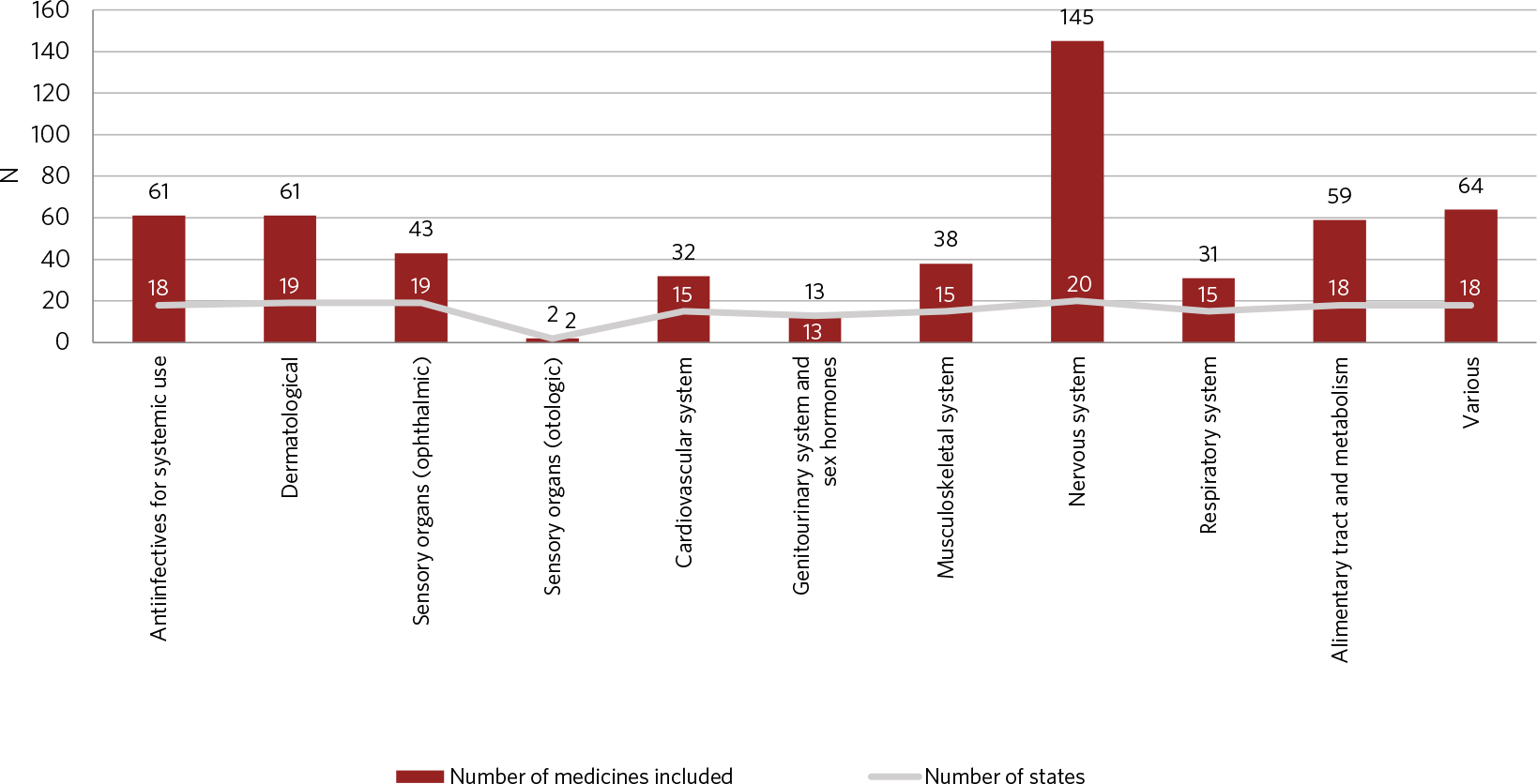
Pharmaceutical Services are a core component of Brazil’s Unified Health System (SUS), ensur-ing access to safe and effective medicines in line with the principles of universality, comprehensiveness, and equity. This study analyzed the Municipal Lists of Essential Medicines (REMUMES) from Brazilian state capitals and the Federal District, comparing them with the Basic Component of the National List of Essential Medicines (RENAME), focusing on medicines included locally but not standardized nationally. A document-based analysis of REMUMES was conducted between August and November 2024. Medicines were classified according to the Anatomical Therapeutic Chemical (ATC) system and analyzed regionally. The results showed a high number of local inclusions, especially medicines acting on the nervous system and those for dermatological, anti-infective, and respiratory conditions, with the North region presenting the highest average number of additions. Thirty-one recurrent active ingredients-such as scopolamine, vitamins, codeine, and cinnarizine-were frequently included in REMUMES but absent from RENAME. Despite updates by the National Commission for the Incorporation of Technologies (CONITEC), a mismatch remains between national standardization and local needs. The limited updating of the Basic Component leads to autonomous municipal decisions, affecting financing and planning, and underscores the need for more dynamic updating of RENAME and funding policies.
KEYWORDS
Pharmaceutical Services; Unified Health System; Drugs essential; Health management.
 Thumbnail
 Source: Authors’ elaboration.