
 Environmental Governance and Degradation Dynamics in the Cerrado - Brazilian Biome: Empirical and Institutional Evidence in the State of Tocantins
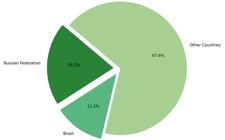
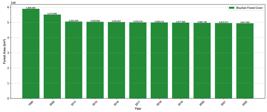
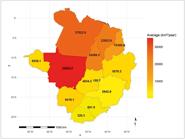
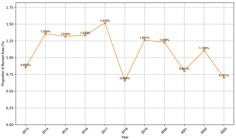
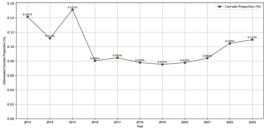
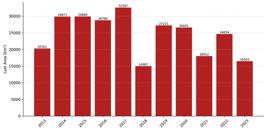
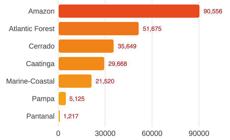
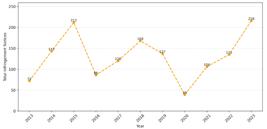
Environmental degradation in tropical biomes has become one of the main contemporary challenges, requiring integrated institutional responses based on evidence. This article analyzes the dynamics of environmental degradation in the Cerrado biome, with an emphasis on the state of Tocantins between 2013 and 2023. The investigation is based on the observation that deforestation, wildfires, and environmental infractions show significant recurrence in this territory, configuring spatiotemporal patterns that demand stronger institutional articulation and reinforcement of environmental governance. The research adopts a mixed methodological approach, combining content analysis and statistical techniques, using secondary data extracted from public and auditable platforms such as INPE, IBAMA, the World Bank, MapBiomas, and IBGE. The data were organized into time series, converted, and standardized to ensure comparability among indicators. The results reveal Tocantins’ significant contribution to vegetation suppression in the Cerrado, both in terms of deforested areas and burned extent, in addition to a high concentration of environmental infraction notices issued in the state. Structural limitations in administrative records were also identified, such as overlapping codifications and terminological inconsistencies, which hinder the proper classification of infringing conduct. The analysis highlights the need to strengthen environmental governance through federal integration, improved monitoring systems, and the formulation of territorially based public policies grounded in technical evidence and committed to the conservation of Cerrado ecosystems.
Keywords:
Ecological infractions; Native vegetation suppression; Spatio temporal dynamics; Territorial indicators; Monitoring using public data
 Thumbnail
 Thumbnail
 Thumbnail
 Thumbnail
 Thumbnail
 Thumbnail
 Thumbnail
 Thumbnail
 Thumbnail
 Source: Elaborated by the authors (2025) from
 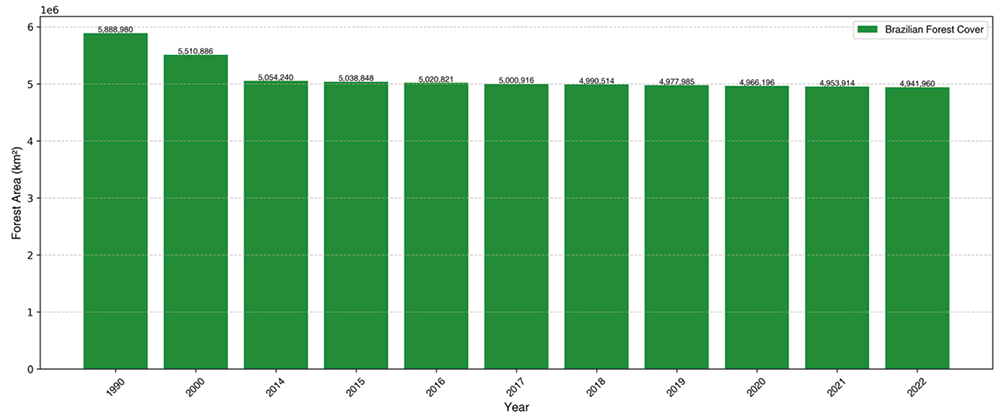 Source: Elaborated by the authors (2025) from
 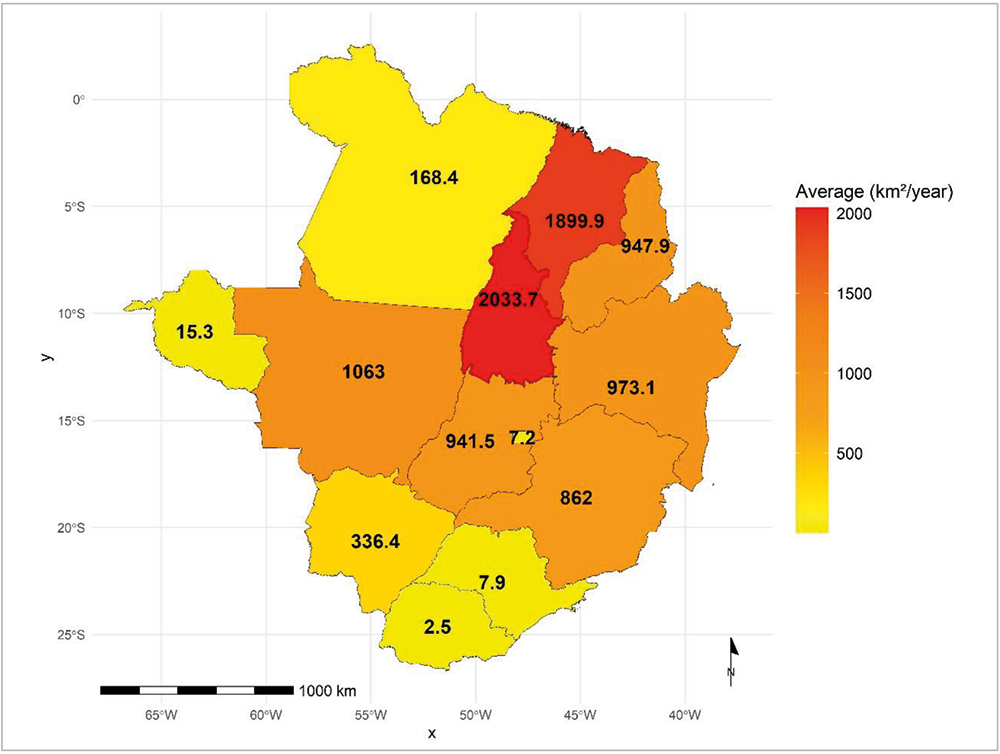 Source: Elaborated by the authors (2025) from
 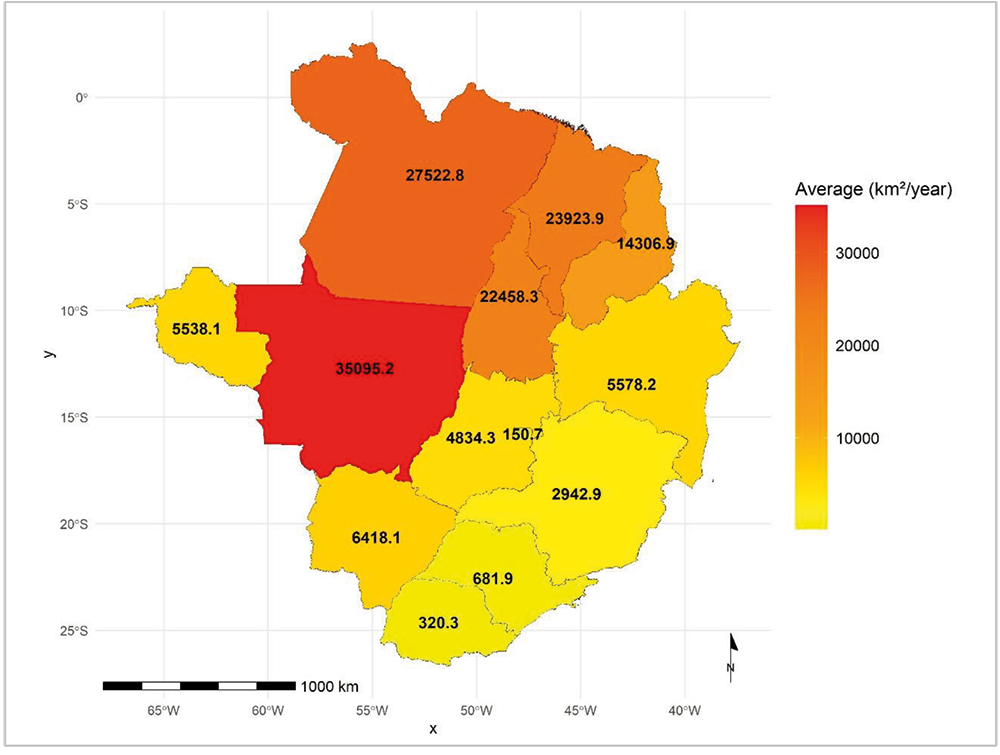 Source: Elaborated by the authors (2025) from
 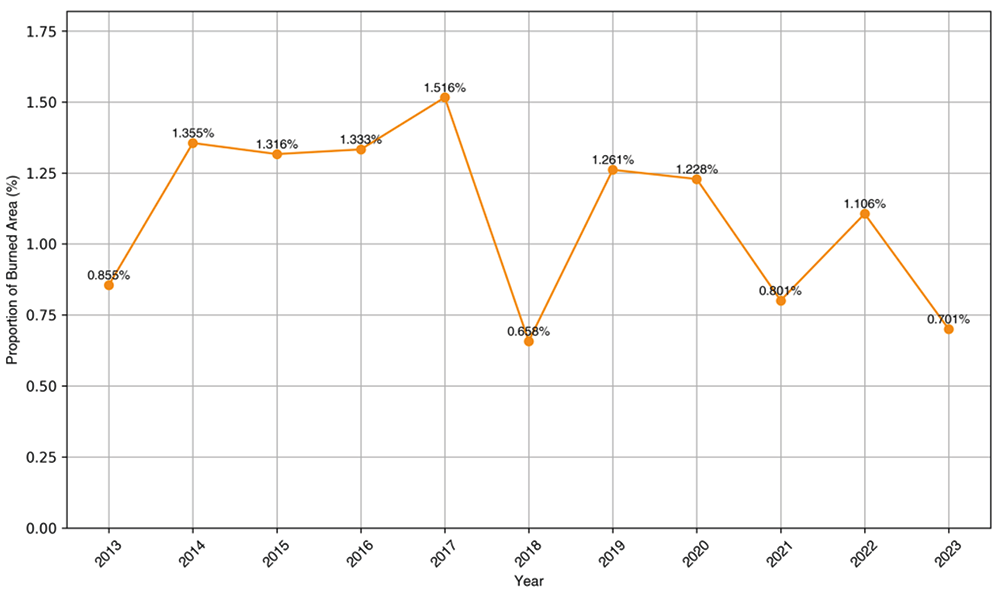 Source: Elaborated by the authors (2025) from
 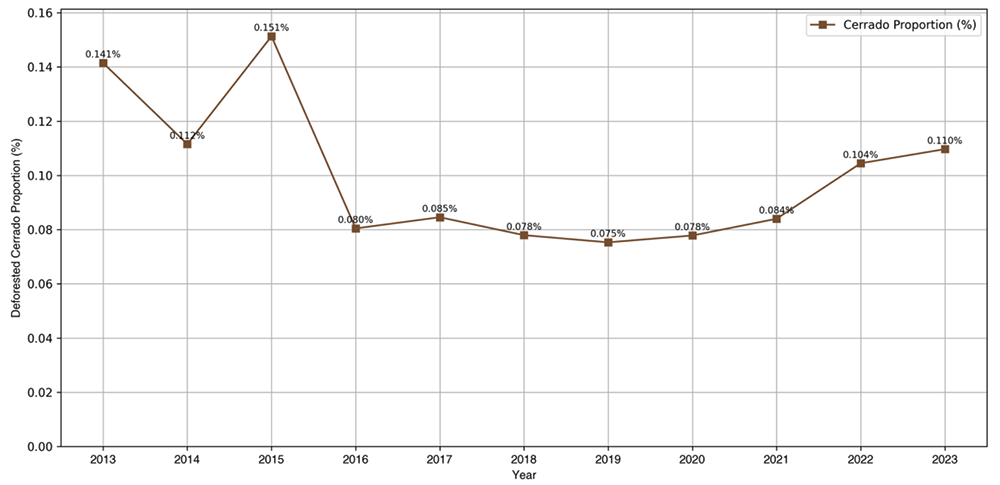 Source: Elaborated by the authors (2025) from
 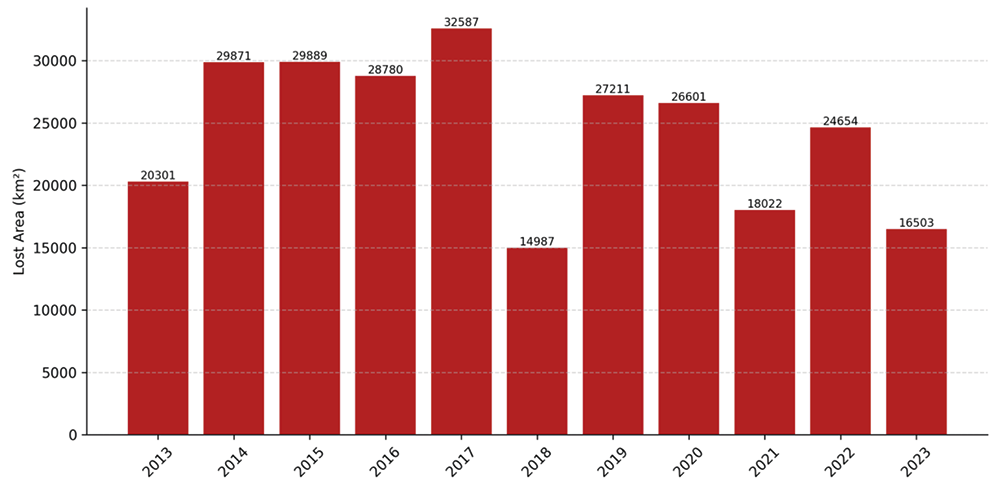 Source: Elaborated by the authors (2025) from
 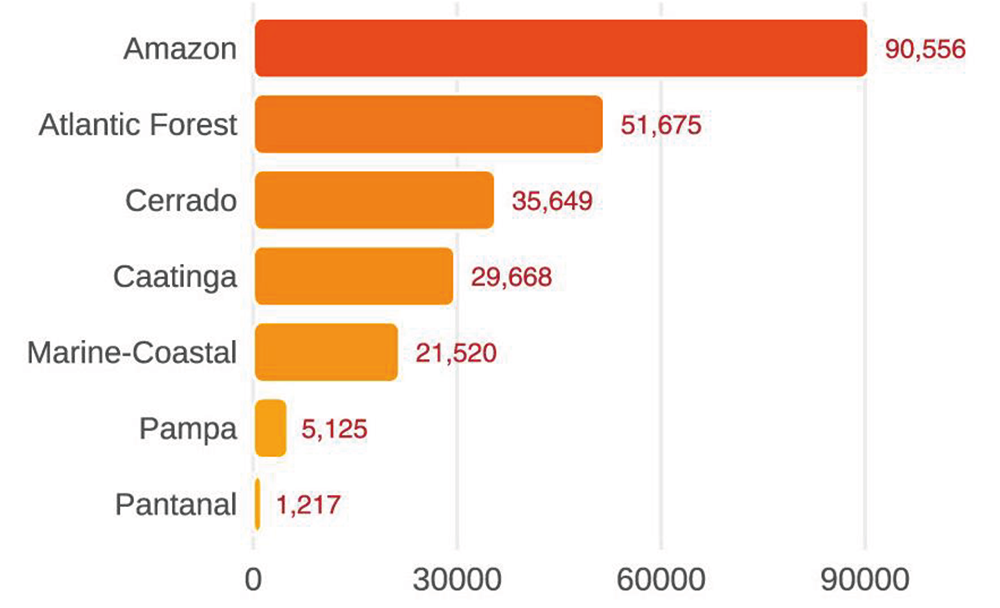 Source: Elaborated by the authors (2025) from
 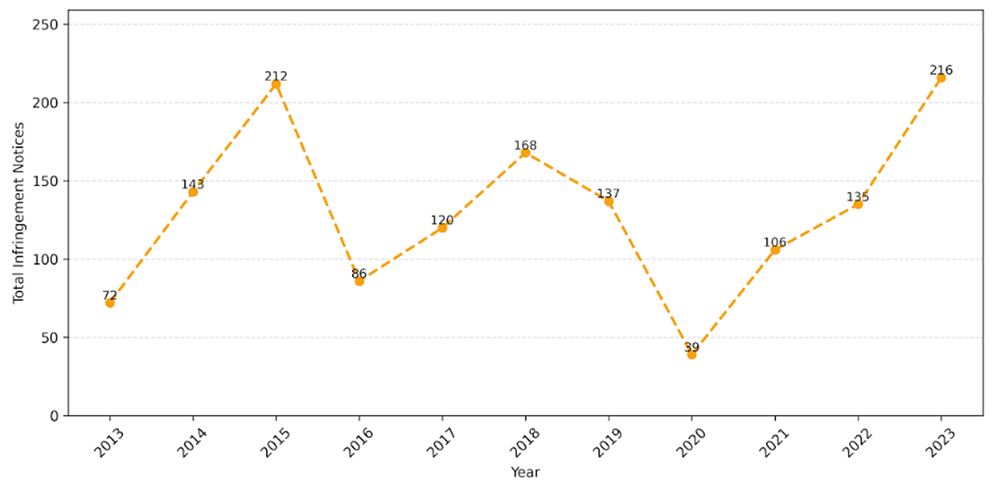 Source: Elaborated by the authors (2025) from