(Under)valuing infrastructures: transformations and frictions in Serbia’s raspberry value chain since late socialism
Abstract
This article proposes to study agriculture by focusing on its infrastructures of value, i.e. the sociomaterial technologies and networks that are essential for the production of commodities but that often remain invisible. Pivoting around the ethnography of a meeting of an association of raspberry producers that was led by an agronomist, the article reconstructs how, since socialism, the once cooperative agronomic infrastructure underwent first (capitalist) deinstitutionalization and later (municipal) re- and deinstitutionalization, while most agronomic modules remained stable. Notably, this agronomic, legal-scientific infrastructure had coproduced its modules—trellising and pruning raspberries in mini-plantations—with local smallholders. The cycles of invisibilization were linked to infrastructural inversion—namely, as long as infrastructures work, their contributions to a value chain tend to be undervalued, while as problems increase, infrastructures become revalued again. In marked contrast to the agronomic infrastructure, the cold chain—an infrastructure of containment and transport including freezing, storage, transport and export—was profitably privatized and selectively upgraded. The invisibility dialectic of infrastructures of value thus describes both selective defunding and investment, which increases the frictions and compatibility issues between infrastructural modules. In Arilje, this led to the overexploitation of the agronomists as people-as-infrastructure that were expected to care without voice. Infrastructures of value thus help to explain political-economic transformations and mobilizations as the result of technoscientific innovations, social transformations, and market fluctuations.
Keywords:
affect; agronomics; infrastructures of value; people as infrastructure; protests
Resumo
Este artigo propõe estudar a agricultura focando em suas infraestruturas de valor, ou seja, as tecnologias e redes sociomateriais essenciais para a produção de mercadorias, mas que frequentemente permanecem invisíveis. A partir da etnografia de um encontro de uma associação de produtores de framboesa liderada por um engenheiro agrônomo, o artigo reconstrói como, desde o socialismo, a infraestrutura agronômica, antes cooperativa, sofreu primeiro uma desinstitucionalização (capitalista) e, posteriormente, uma reinstitucionalização e desinstitucionalização (municipal), enquanto a maioria dos módulos agronômicos permaneceu estável. Notavelmente, essa infraestrutura agronômica, jurídico-científica, coproduzia seus módulos – tutoramento e poda de framboesas em miniplantações – com pequenos agricultores locais. Os ciclos de invisibilização foram associados a inversões infraestruturais – isto é, enquanto as infraestruturas funcionam, suas contribuições para uma cadeia de valor tendem a ser subvalorizadas, enquanto, à medida que os problemas aumentam, as infraestruturas são revalorizadas. Em nítido contraste com a infraestrutura agronômica, a cadeia de frio – uma infraestrutura de contenção e transporte que inclui congelamento, armazenamento, transporte e exportação – foi privatizada de forma lucrativa e modernizada seletivamente. A dialética da invisibilidade das infraestruturas de valor descreve, portanto, tanto o desfinanciamento seletivo quanto o investimento, o que aumenta os atritos e os problemas de compatibilidade entre os módulos infraestruturais. Em Arilje, isso levou à superexploração dos agrônomos, vistos como pessoas-infraestrutura que eram obrigadas a cuidar sem ter voz. As infraestruturas de valor, assim, ajudam a explicar as transformações e mobilizações político-econômicas como resultado de inovações tecnocientíficas, transformações sociais e flutuações de mercado.
Palavras-chave:
afeto; agronomia; infraestruturas de valor; pessoas como infraestrutura; protestos
1. Introduction
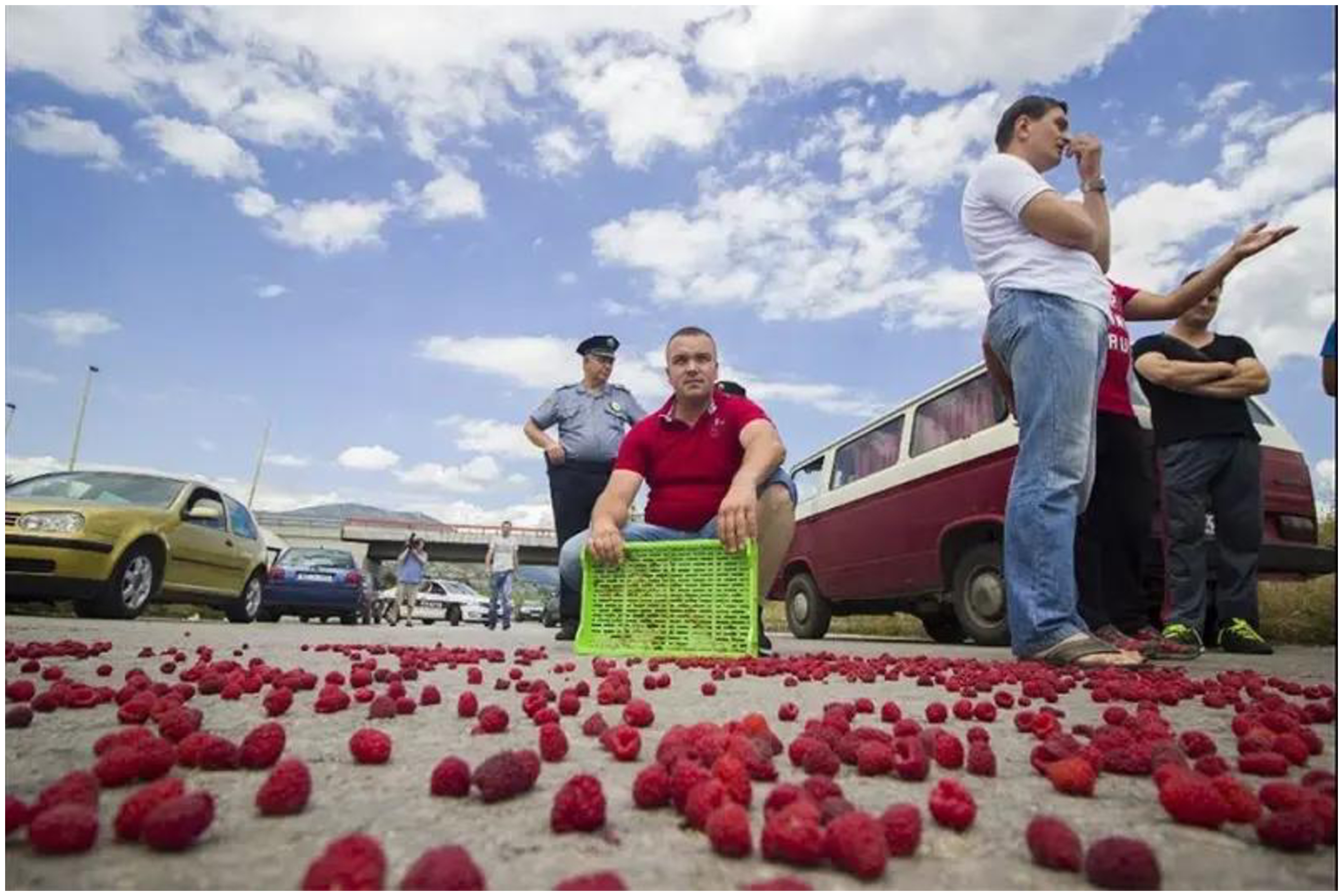
In Serbia, since the 1990s the protests of raspberry farmers have become an anticipated rite of summer. Typically dissatisfied with the advance payment (akontna cena) that the oligopoly of regional cold stores offer, the farmers threaten to block the main roads leading from the centers of raspberry production to the capital Belgrade. As a spectacular form of protest, the farmers often spill out their fresh raspberries. Seeing the sweet, soft red marbles roll over the hot black asphalt is a jarring sight (see Figure 1).
Bosnian raspberry farmers throwing raspberries on the streets, using the same protest tactics and fruit (Willamette) as their counterparts in Serbia. Source: Bljesak.info (2017).
Goran, a tall, broad-shouldered, friendly electrician in his forties has been a raspberry farmer all his life and took part in many of these mobilizations in his native Arilje municipality1. When we first met on the 26th of June 2023, Goran explained to me how two years earlier he had invested a considerable sum of money (“five figures in euros”) so that he now owned three plots of raspberry fields, totaling 1.5 ha. He said he had difficulties repaying his debts, as the announced raspberry prices for this year could not cover the wages for his pickers.
Drawing on decades of experience with social mobilization and reflecting on his close involvement with the Association of raspberry producers “Willamette” (Udruženje proizvođača malina “Vilamet”) through his friendship with Aleksandar, the association’s spokesperson, Goran explained to me how narrow the window of opportunity for a protest cycle was2. Every year, the prices were officially set only in June just before the harvest (although cold storage owners assured him that prices were known since January). According to Goran, few farmers had time to engage in political activism once the harvest was on, and if they did not harvest their fields during the second week, they lost their entire crop. But as the association had to organize the protests at the last minute and the stakes were high, the question of escalation arose, inviting bluffs on all sides.
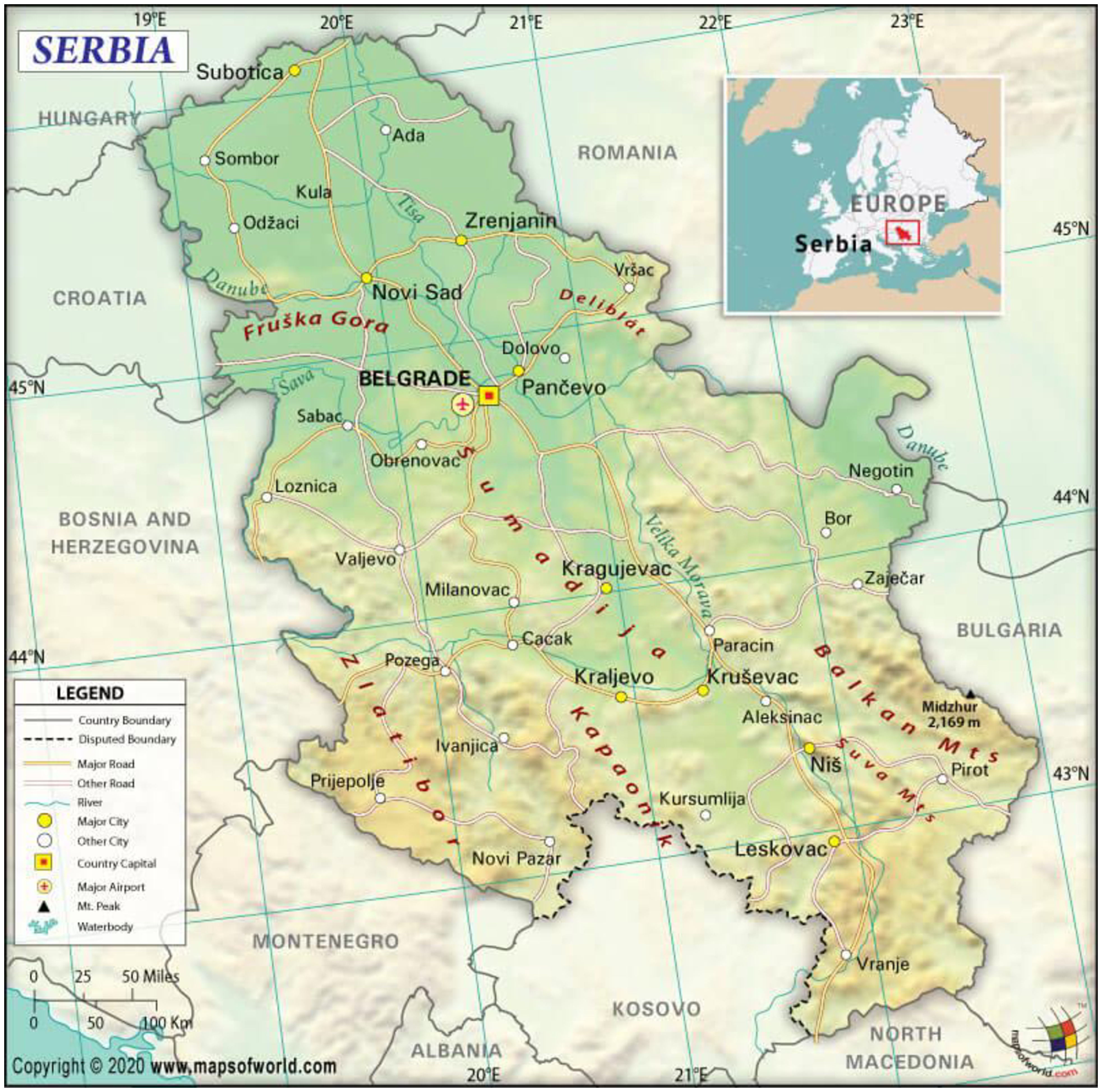
At times, these dynamics get out of hand and lead to direct confrontations with the police, where the farmers “feel the state on [their] own skin” and cultivate “militant subjectivities” (see Razsa, 2015, p. 138-139). Goran’s friend Aleksandar, the agronomist and spokesperson for the Association of raspberry producers, said that, after the clashes in 2011, he had been sued and suspended from work in the Municipal Agricultural Innovation Centre of Arilje (ICA). He was placed under house arrest and had to wear electronic ankle tags. Nonetheless, Aleksandar snuck out to tend to his raspberries, as he said with a mischievous grin. His uncompromising dedication to the raspberry had won him respect in the municipality, where everyone was connected to the fruit. To wit, while the Arilje municipality in southwestern Serbia has a population of around 17,000 people across twenty-two settlements, some 4,500 small raspberry farms are operated there. These are typically made up of one or two miniscule raspberry plantations (of 0.2-0.4 ha) that members of the household and close relations can work and pick (0.1 ha is the daily work norm for a picker). But especially larger farms, those above 0.4 ha, require an estimated 10,000 seasonal laborers who, during harvest season, temporarily in-migrate to Arilje from across Serbia and, for example, neighboring Bosnia-Herzegovina (see Figure 2).
Map of Serbia in Europe. Arilje lies in mountainous south-western Serbia between Požega and Ivanjica. Source: Maps of the World (2020).
This article is based on four months of intermittent participant observation since 2016, during which I interviewed raspberry producers such as Goran and their families, seasonal laborers, agronomists such as Aleksandar, cold store technicians and employees, truck drivers, contractors, scientists, technologists, and international importers. Apart from my fieldwork in Serbia, I also draw on short-term comparative research in Bulgaria, Germany, Hungary, and Latvia. The ethnography pivots around the meeting of the Association of raspberry producers “Willamette” on 26 June 2023, to which Aleksandar invited me. As I will describe in ethnographic detail below, the aim of the meeting was to discuss how to maintain the pressure on the state and the large, refrigerated warehouses to increase the buying price of fresh fruits. This pressure was built up by a thinly veiled threat to organize street demonstrations coinciding with protests by the Serbia Against Violence movement (Srbija protiv nasilja), organized in twenty towns throughout Serbia in reaction to two mass killings that took place in May 2023 in a Belgrade school and a nearby village. Serbia Against Violence criticized that these tragedies were a consequence of the government’s and affiliated media’s “hate speech” (Mašina, 2023). Unfortunately, there have been many incidents of state-organized violence against political opponents and peaceful demonstrators before and since3.
Drawing on Michael Burawoy’s (2009) extended case study method, I will demonstrate how a singular event such as the meeting of the raspberry farmers can shed light on the multiple economic and political issues surrounding the raspberry sector at local, national, and transnational scales. Some fruit as humble and fragile as the raspberry can thus become a veritable tool for analyzing contemporary dynamics and tensions in society. The ethnography offers a glimpse into how wider political antagonisms have become a structural feature of Serbia since the end of Yugoslavia, and especially since 2012, when the Serbian Progressive Party (SNS) became the increasingly authoritarian ruling party. Based on the SNS’s ostensibly pro-western anti-corruption discourse, it rapidly consolidated power and curbed the electoral process, despite spectacular mass protests that led to the unexpected re-emergence of a new left-wing opposition (Štiks; Stojaković, 2024).
In this article I endorse an anthropological approach to infrastructures of value in agriculture that focuses on the technical, legal, economic, political, and symbolic aspects of a value chain. With the concept of infrastructures of value, I propose to transcend the sharp boundary work between historical and new materialism that has produced unfortunate blind spots. Infrastructures of value strive to marry historical materialism’s focus on structural, political-economic transformations with a new materialist focus on how food value chains imply a living economy, taking into account not only the minute care practices of farmers and agronomists but also the characteristics of a crop, its affordances, methods of cultivation, vulnerability to damage, and uses. On the other hand, infrastructures of value strive go beyond a new materialist approach by revealing a people’s political-economic relationship with a plant such as the raspberry, its place in the national narrative and its impact on transformations of the state. In developing this perspective, I draw on recent scholarship on the exploitation of “more than human” labor in plantations that causes “exhaustion and endurance in sick landscapes” (Besky, 2019). I link this to “infrastructural inversion”, a classical concept in the anthropology of infrastructures, which observes that many infrastructures that work flawlessly disappear from scrutiny, becoming hidden in plain sight. But in a so-called “figure-ground reversal”, infrastructures become seen again when they stop functioning properly (see Morita, 2017)4.
Building on ongoing work in Serbia’s raspberry commodity chain since 2016, the article studies the dialectic between two salient infrastructures of value—the cold chain vs. the agronomics. From the mid-1970s, that is, during Yugoslav late socialism, both infrastructures of value had worked in tandem under the umbrella of the municipal cooperative Jedinstvo (Unity) Arilje. This socialist cooperative’s agronomics co-produced ordered knowledge and an ordered society (Jasanoff, 2004) by uniting smallholders and agronomists in the search for adequate, efficient, and productive ways of cultivating raspberries. Over time, this agronomics became invisible, as it worked smoothly for two decades. In the early 1990s, during the early post-socialist period of state-led capitalist accumulation, the societal benefits of the agronomic station were undervalued, and it became independent, having to generate its own income. But the agronomists could not charge individual farmers and businesses for systemwide services. As a result, they went bankrupt within a year. Until today, Arilje’s agronomics has not regained its erstwhile dynamism5. Meanwhile, another intricately entangled infrastructure, the cooperative’s cold chain, became a priced trophy that businesspeople both emulated and fought over.
In Arilje, then, infrastructural inversion led to partial stagnation (defunding) of one and development (investments) of another infrastructure, which led to increased compatibility issues and frictions between stagnant vs improved infrastructural modules. Describing how the agronomics underwent two waves of institutionalization and deinstitutionalization, the article shows how, during phases of deinstitutionalization, the agronomists became superexploited as “people as infrastructure” (Simone, 2004), harmed by market players that, paradoxically, depended on the agronomists’ services. Nonetheless, thousands of farmers across Serbia and in neighboring countries copied their agronomic modules. Serbia thus became a global powerhouse that, based on its smallholder production, successfully competed with agribusinesses across the globe. Thus, while the contributions of the anthropology of infrastructure to political analysis have been well established (see Anand; Gupta; Appel, 2018), I argue that infrastructures of value can also shed important new light on economic transformations.
2. The problem of researching agriculture, science and technology
Observing the worrying growth in scope, scale, and power of agribusiness in Brazil and beyond, this special issue studies the multiple entities and actors entangled in plantation economies. The boom-and-bust cycles of plantations in economic frontiers can be traced back to the onset of the capitalist world market (Wolf, 1982). But plantations gained a new quality with the world financial crisis of 2008. This newest phase of “accumulation by appropriation” (Moore, 2018) was aided by novel assemblages along the plantation-logistics-processing-finance nexus (Mezzadra; Neilson, 2019, Sippel, 2024). Anthropologists have traced how the plantation became both a scalable ideological project that disregards difference (Tsing, 2015, p. 37-43) and “[…] a way of constructing, managing, and controlling landscapes. In this way, the plantation ecology highlights the intertwined relationships between bureaucracy and technical expertise, mobilizing knowledge from administration and modern science” (Camana; Perin, 2023, p. 5). But abolishing large-scale plantation ecologies would not necessarily lead to world hunger. On the contrary, even Indigenous small-scale farmers do not resist commodity production per se. When given a fair opportunity, they have produced for the world market for centuries and often more efficiently than plantations (Li, 2019). Serbia’s raspberry offers a compelling extended case study of how industrial democracy in the form of Yugoslavia’s workers’ self-management successfully entangled smallholders with technoscience in an agricultural model that, even 35 years after Yugoslavia’s demise, successfully competes against neocolonial agribusinesses (for a comparable insight into how the practices of Yugoslav construction concern Energoprojekt can, despite their imperfections, teach us new lessons in more just economics, see Sekulić, 2023, p. 275).
Despite the wealth of social science studies of agriculture, such alternative insights into the global food system remain rare, as we face formidable challenges in navigating the limited access to global commodity chains that translate between incommensurable value worlds (but see Fischer, 2022; and this special issue). In fact, the opacity of the food system even haunts those profiting most from it – the transnational corporations organizing the contemporary buyer-driven “supply-chain capitalism” (Tsing, 2009). According to Susan Freidberg, an US-based ethnographer who has studied sustainability initiatives in and of the capitalist food system, its structural opacity “[…] might, inadvertently, pose bigger challenges to conventional commodity crop-sourcing practices than existing efforts to de-commoditize food through ‘alternative’ provisioning networks” (Freidberg, 2017, p. 500).
This structural opacity is intensified by three forms of “agnotology”—of science and knowledge undone. First, agnotology can be an outcome when agribusinesses use “[…] their financial and political clout to sway, prevent, discredit or distract from scientific research” (Freidberg, 2017, p. 501). Second, agnotology can mean that publicly coproduced science and technology is successfully privatized by proprietary actors, such as when Driscoll’s cheaply bought the agronomic research facilities and patents of the University of California after the second world war. Today, Driscoll’s is a transnational corporation that markets its infrastructural packages for berry production, from patented seeds and cultivars to fertilizers, pesticides and traceability technologies employed by agribusinesses in extractivist, super-exploitative plantation ecologies in the US-Mexican border region and beyond (Guthman, 2019, Zlolniski, 2019). Third, agnotology can also mean the failed privatization of infrastructures of value, which, as in the case of Arilje’s agronomics, paradoxically led both to the oppression of agronomists and the multiplication of their agronomic modules.
To study agnotology in Arilje, i.e., the devaluation and multiplication of its agronomic infrastructure, this study articulates a new-materialist focus on agronomic practices with a historical-materialist focus on the dynamics of capitalist agriculture and its alternatives. This “new-historical materialism” acknowledges the spatio-temporal embeddedness of agricultural practices in multiple value worlds within and beyond plantations, ranging from non-market ethics and use values (such as taste, aesthetics and the production of community) to market-based exchange values (such as price and profit) (see Graeber, 2013, Tsing, 2015). By focusing on the “infrastructures of value” underlying contemporary agriculture (cf. Lammer; Thiemann, 2024), we can study the entanglements of interlocking infrastructures of information, law and science, containment, and transportation, as well as the cross-cutting concept of “people as infrastructure”, in shaping food’s value. And as the case of Arilje’s raspberries demonstrates, this can help us to extend the study of agriculture temporally and spatially beyond supposed ruptures (time periods) and boundaries (borders), by tracing how the “[…] modularity of infrastructures prevents top-down control: it creates not only frictions (Tsing, 2004) and compatibility issues but also space for creativity” (Lammer; Thiemann, 2024, p. 207).
3. Meet the malinari
On Saturday, the 24th of June 2023, during a recent return visit to Arilje, I phoned my new contact, Goran from a village in Arilje’s mountainous periphery. Goran said that he could meet me only the following Monday but suggested that, in the meantime, I should see his friend Aleksandar, the spokesperson of the Association of raspberry producers. Aleksandar agreed to an interview, and when he opened his door, we both realized that we had already met six years earlier, when Aleksandar ran the now defunct Arilje Municipal Agricultural Innovation Centre (ICA).
ICA had been opened in 2006 by the then-ruling socio-liberal Democratic Party with start-up funding from a Scandinavian development fund. It had helped some 2,500 of Arilje’s 4,500 raspberry producers. In addition, ICA had conducted international projects to support the raspberry sector in the context of fierce global competition. Its most ambitious project had been to introduce an export certification scheme (GlobalG.A.P.) for five hundred larger farms and twenty cold stores in 2011-20126.
However, after the multi-scale elections in May 2012, the newly governing far-right SNS put a premature end to the certification project, accusing its leaders of corruption. With a stroke, this reduced ICA’s workforce from twenty to four employees. But the bullying did not stop there, as the municipal leadership began to unofficially describe ICA as an “unprofitable business”. In 2017, when Aleksandar and I first met, ICA was mainly helping farmers with soil analyses and official paperwork, but it had also initiated an application for a geographical indication certificate under the name Ariljska Malina (Arilje’s Raspberry), in conjunction with partners such as the German International Cooperation Agency (GIZ) and the Čačak Fruit Research Institute. When Aleksandar and I met again in July 2019, ICA had moved to the third floor of the municipal office building to save on rental costs, and the instruments in its soil quality and food safety testing laboratory stood unused and wrapped in plastic film.
In November 2019, due to a lack of funding from the municipality, ICA ceased all activities. Its equipment was bought by Stanić Ltd., the largest cold store in the region. I then lost track of Aleksandar, who, for three years, worked as a seasonal laborer on farms in Germany to pay off his debts. When he returned in 2022, he and his wife had their first daughter, and he devoted himself to his raspberries again. In early 2023, he was elected chair of the board of the Association of raspberry producers “Willamette”, a position of strategic importance for Arilje’s raspberry chain.
Upon our meeting I realized that Aleksandar was not only a qualified agronomist but also a well known farmer, from a local family that has been growing raspberries for four decades. Having been practically raised with raspberries, he had distinguished himself already in his youth for his active role in farmers’ protests, which regularly marred their relations with the public authorities during the multiple crises that the industry experienced. Aleksandar was also known for his pioneering role in introducing new varieties (cultivars) to ICA’s experimental plots, such as the Tula Magic floricane cultivar bearing fruits in summer, similar to the conventional Willamette but more resistant to climatic change. Tula Magic had the added advantage that it could be used for both frozen “industrial” raspberries (like Willamette) and for fresh “consumption” raspberries, with an excellent shelf life of six days7.
At the time of our encounter, the situation was tense: in June 2023, just before the harvest, the malinari—literally “raspberry people”8—had learned that this year the advance price (akontna cena) for their raspberries would be between 150 and 180 dinars (1.30-1.50 euros) per kilogram, depending on the cold store they worked with. Unhappy with the price, which barely covered their running costs, the producers’ association called on the Ministry of Agriculture and Forestry to start negotiations. Aleksandar was positively surprised when the new minister, economist Jelena Tanasković, seemed to take their arguments seriously and traveled to the region to speak to them in person. Following this visit, he called a general meeting of the association for Monday, the 26th of June to decide on the next steps—and he invited me to attend.
4. Infrastructures of value as analytical choice
Since the 1970s, Arilje has been the cradle of Serbia’s infrastructures of value concerning raspberries. Using the conceptual lens of infrastructures of value, I pay close attention to the often invisible and therefore underestimated production context that helps making a product valuable by connecting it to specific markets. Christof Lammer and I have identified four types of infrastructures which, in material terms, constitute relevant totalities for creating the value of agricultural production: transport infrastructures connect people; containment infrastructures separate content; information infrastructures communicate qualities; which are evidenced by legal-scientific infrastructures (Lammer; Thiemann, 2024). Infrastructures are made up of several modules, and their friction requires constant tinkering to adapt them to each other and make them work. While some players are more inclined to push for change in an infrastructure of value, none of them has total control. From an ethnographic point of view, the aim of my long-term research has been to “localize” these socio-technical infrastructures by understanding how, in a context of conflict, they relate to kinship, economic, political, and ecological relationships.
As already mentioned, in previous research I discovered that the most strategic infrastructures for Arilje’s raspberry were, on the one hand, its agronomics (a legal-scientific infrastructure) and, on the other, its cold chain (an infrastructure of containment and transport). The latter denoted a socio-material network of technologies and infrastructures for freezing, storing, packaging, and transporting raspberries that had been set up by Arilje’s late-socialist municipal cooperative Jedinstvo. It functioned as an infrastructure of containment, enabling fresh, delicate fruit to be processed for transport to distant markets. The Serbian privatization law (1990) then split the cooperative into different firms that faced fierce competition when small cold stores sprang up to snatch up the harvest, entering the market at lower cost by copying existing modules9.
I will concentrate here on the agronomic infrastructure, which determined the scientific and legal aspects of growing, harvesting, and marketing raspberries. As mentioned above, this agronomic infrastructure both played an essential role in building Arilje’s raspberry industry and was abused by institutional and financial decision-makers. Already at the start of the post-socialist economic transformations, the splitting up of the Jedinstvo cooperative into sub-units led to the closure of its agronomy section in 1993. Nonetheless, two main “agronomic modules” pioneered under socialism have been practiced in the region until today. The first one is the pruning of the shoots of the Willamette “floricane” (second-year fruiting) raspberry variety until shortly before harvest, to channel the vital powers of the whole plant into its fruits (thereby doubling the harvest). The second module, which is the trellising, had replaced an earlier mode of cultivating the raspberry in bushes. The standard procedure became to plant the raspberries in rows and to create a trellis with wires to let the plants get more sunlight and stabilize fruit-bearing side branches. The rows are aligned three meters apart, making cultivation and harvesting easier, allowing small tractors to pass and an increased ventilation, which reduces the build-up of mud and mold on the fruits after rain. Both modules combined were dubbed by the agronomists the “Arilje espalier system” (Nenadić, 1986).
But how did these modules persist after the agronomic station was dissolved? To understand this, we must take note of the “modularity” of infrastructure. According to James Scott, modularity describes the fact that the basic “[…] units of a larger aggregate are generally independent and detachable [...]. In such cases the disappearance of the apical center need not imply much in the way of disorder, let alone trauma, for the more durable, self-sufficient elementary units” (Scott, 2017, p. 187). Thus, the closure of the agronomic station in 1993 did not mean the end of its durable agronomic modules. Furthermore, the re-institutionalization of the agronomic infrastructure with the creation of ICA in 2006 raised the international competitiveness of Serbia’s raspberry, as ICA added GlobalG.A.P. to the mix of modules. But this did not prevent ICA from being shut down again.
As I said above, the SNS-led municipal government not only devalued the agronomics but even attributed a negative value to it (as “corrupt” and “unprofitable”). As such, Arilje’s agronomic infrastructure was first discursively undervalued and materially underfunded before it could be closed. These episodes show the extent to which the relationship between agronomists and the dominant players in the sector—cold stores and municipal authorities—could be ambivalent and conflictual. More broadly, we need to understand how this lack of consideration reflected not only a lack of recognition of the techno-scientific contribution made by the agronomists, but also highly contextual conflicts of political and economic interest.
For my part, I could not help but being fascinated by the many traces agronomists left in Arilje’s landscape, both in terms of structures (political institutions, cooperatives, cold stores, farms, associations, the regional scientific community, NGOs) and actors (agricultural advisors, service providers, insurance agents, input sellers, farmers, employees, team leaders, representatives and managers, etc.). As experts who continued to regularly tinker with their deinstitutionalized infrastructure, the agronomists slowly became “people as infrastructure:” They were acting in “conjunctions” made up of “[…] complex combinations of objects, spaces, people and practices” and thus became “[…] a platform providing for and reproducing life in the city” (Simone, 2004, p. 408). One difference from Simone’s marginalized traders in Johannesburg is that Arilje’s agronomists-as-infrastructure connected life in the city and in the country. But more significantly, we must not romanticize “people-as-infrastructure”. On the contrary, the embodied involvement of people in an infrastructure can be hazardous for them.
As I observed, when a problem occurred in the value chain, Ariljans often sought agronomists to help solve it, though seldom for money. The same reflex was at play when the Association of raspberry producers “Willamette” elected Aleksandar to become its spokesperson in 2023. He accepted, I argue, because he saw an entry point to reinstitutionalize the agronomic infrastructure of value. But how can being a people-as-infrastructure be hazardous for your life and wellbeing? In what follows, I adapt an argument that was made first for scientists in Uganda, who, by standing in for faulty equipment in their biology lab, exposed themselves to toxic materials (Calkins, 2021). Similarly, when in a Chinese ecological village an agronomist ordered farmers to perform everyday labor in the unprofitable vegetable gardens to “evidence” to urban customers that the profitable rice was ecological, too, he objectified the farmers’ agency and curtailed their self-determination (Lammer, 2024). Alexandar would be exposed to comparable hazards by different scales of the state.
5. Emergence of a local-global crisis
It is important to note that this ethnography also involves considering global dynamics that have a direct impact on the local level. So far, my investigation has coincided with two cycles of oscillating world prices in the raspberry chain. In 2016, prices peaked at €3.50/kg for export, earning farmers an excellent farm gate price of €2/kg. This overlapped with a record production volume in Serbia (ca. 113,000 tons) and new investments. Serbia became a world leader in frozen raspberry production, on par with its main competitor Poland (Mexico produced a comparable amount of fresh consumption raspberries). But already in 2017 and 2018, the value of frozen raspberries fell to around eighty cents/kg for farmers in Arilje. Due to the “[…] incredibly low prices for frozen raspberries, which unexpectedly became one of the most affordable raw materials on the market of frozen fruits and berries”, international processors “[…] massively introduced [raspberries] into the recipes of dairy and confectionery products, teas, breakfast cereals, snacks, bakery products, etc. This means that the demand for raspberries rose sharply just when everyone was massively getting rid of their plantations” (EastFruit, 2023).
In 2019 and 2020, prices stabilized at €1/kg for farmers and €2/kg for exporters. In 2021, prices rose sharply, reaching between €4 and €5.50/kg at the farm gate, under the combined effect of poor harvests in Serbia and Chile and the Covid-19 pandemic, which heightened consumer health awareness. In the summer of 2022, prices collapsed again, to €1/kg for farmers, while farm input prices for labor, planting material, fertilizers, pesticides, and so on rose. By June 2023, prices had recovered slightly to reach around €1.50/kg again10. It was against this backdrop that the producers’ association became so agitated, and I will examine its attempts to mobilize people along three lines: how can a fruit serve as an analytical tool for political and economic change? How do infrastructures of value help us understand how fruit can transform the technological environment? How has the industrial mode underlying the infrastructures transformed the relationships between a fruit such as the raspberry and the “raspberry people”? Hoping to get answers from Goran, Aleksandar, and their association, I went to attend the meeting of raspberry producers and to observe how they discussed their mode of action11.
6. The political economy of the raspberry producers’ protests
On Monday, the 26th of June 2023, when I met Goran for the first time in person, he explained to me how, from February to November, he takes care of the weeding, trellising, pruning, pesticide application, fertilization and so on with members of his family. During the five-week harvest, which usually starts in the second half of June, they employ up to two dozen day laborers. But as the spring of 2023 was unusually cold and wet, the harvest had just begun, and the workers idled around at his farm.
At 7 pm, Goran and I drove to Arilje to pick up Aleksandar, who enthusiastically exclaimed that he would introduce me at this meeting as a representative of the European Union (EU). Aleksandar instructed me to “just tell them what you told me two days ago”, alluding to our earlier conversation on how difficult it was to know the origin of the frozen raspberries sold in Western supermarkets. I was unsure what role he precisely wanted me to play at the meeting. Two days earlier Aleksandar had planned to introduce me at the meeting as a GIZ collaborator whom he had met years ago—but I had declined to lie for him. However, I now grudgingly accepted to “represent” the EU in the meeting, if I could immediately clarify that I was an EU-funded researcher, not politician. As I will show below, my short intervention at the meeting proved insignificant for the further course of events12.
When we left to the “viper’s nest” of the association, I noticed how Aleksandar demonstratively carried his symbolic capital with him in a brown briefcase, which contained his diploma in agricultural engineering awarded by the Faculty of Agronomy in Čačak (2012), the ICA raspberry dossier (2008), his GlobalG.A.P. export certification program for raspberries (2011-2012) and his “Ariljska Malina” national geographical indication certificate (2017). Upon arriving at the House of Culture (sokolski dom), we set up the high table in the cinema room. Soon, as other members of the board arrived, I made my way over to Goran, who sat in the front row playing his accordion with a melancholic air. At 7.55pm, the first people filled the seats around us. Waiting for the meeting to start, someone joked, “I’m sorry I’m a raspberry producer, we must be the worst producers because everyone hates us—the state, the cold store operators and the pickers”. Meanwhile, the association’s secretary, aged sixty-nine but still looking fierce with a scar above his eye, remarked to a white-haired gentleman in the front row that they seemed to have forgotten last week’s decision not to get involved in politics.
At the start of the meeting, there were forty-six people in the audience, compared with over a hundred the previous week. The atmosphere was nevertheless tense and almost surreal. A quiet, slim man sitting to my left, who worked with his five family members a 0.4 ha plot of raspberries because it was too risky to employ day laborers, observed that Aleksandar was behaving almost childlike, frequently getting agitated and interrupting the discussion led by the placid chairman, who in turn tried to reassure people, allow everyone to have their say and call hecklers to order.
Amid the uproar, the fierce-looking secretary asked people to introduce themselves by giving their full names so that their “good suggestions” can be “noted and attributed”. The president suggested that the association was being undermined from within: “there are people who are undermining our morale” (ljudi buše), “we’ve accepted all sorts of people”, implying that some members have no place in the association. Aleksandar added that at some point he would introduce membership checks and would not accept people who do not own raspberries. The association will still be needed in the future, the chair seconded. This proposal was greeted with applause. The uproar slowly died down. I found myself in the middle of this particularly agitated assembly, asking myself a central question: what do raspberries “do” to all these people?
My presence here was anything but clear and led me to adopt a role far removed from the detached anthropologist; I actively had to negotiate my position vis-à-vis my main interlocutor, Aleksandar. So, when he introduced me as an EU representative, I stood up and qualified that I was an anthropologist who happened to come from the EU; that I had done research on Arilje’s raspberries since 2016, and that my research was currently funded by a European Research Council grant, though for another project. I went on to recount my difficulties in buying Serbia’s fresh-frozen raspberries—the taste and quality of which I had come to appreciate—in Western supermarkets, as these raspberries do not have a geographical indication13. I recounted how I had recently bought a 500 g pack of frozen raspberries for €3.50, which I thought came from Serbia because it contained Willamette. Several people shouted me down, insinuating that I was lying because the prices were not that low! I specified the supermarket chain I had shopped in, admitted that prices might be higher in other shops, and sat back down.
Then another guest, the elegantly dressed young vice-president of the municipality (SNS), gave a small speech which had a bigger impact. He warned the farmers: “Don’t get involved in world politics, Ukraine, etc.”, alluding to rumors that in 2022 Serbian cold stores had bought Ukrainian raspberries at knock-down prices, mixed them with local raspberries and repackaged them for export under the name Willamette14. “Behind the big cold stores stands big politics”, continued the vice-president, “just do what’s in your interest, because the cold stores never will”. Someone at the high table contradicted him: “some cold stores are on our side”. One member of the audience insisted on talking politics: “What good would it do us if the inspectors came into the cold stores?” Another retorted: “But our pressure has had some success in terms of raising prices and maybe some cold store owners will go to prison”. An angry, scruffy-looking farmer shouted, “In that case, let them come into our fields and harvest our ‘obligations’ themselves!”, referring to the contracts that bind producers to a cold store in exchange for a financial advance. Aleksandar intervened and warned that this would lead to a failure of the harvest and would be a disaster.
Aleksandar then recounted his meeting with the minister, praising her openness to discussion. After only four months in office, she had shown sensitivity to the farmers’ argument that they need €3/kg to cover costs, compared to just €1.30/kg calculated by the Fruit Research Institute in Čačak, based on 2019 prices. But Alexander also expressed his dissatisfaction that the minister first visited Ivanjica (the municipality just south of Arilje, which has become a serious competitor) instead of coming here directly. The vice-president retorted that the minister had first visited Užice, Ivanjica and Dobrače15, and that the municipality had had difficulty getting her to come to Arilje town. During this meeting, the minister had said that the subsidies could only be paid through intermediary cold stores and not directly to the farmers, there was simply no other way to organize it.
Aleksandar admitted that the meeting with the minister had been cordial—he even gave her roses. But unlike the Association of small and cooperative cold stores and raspberry producers “Our Fruits Serbia” (Udruženje malih i zadružnih hladnjača i proizvođača maline “Naše voće Srbija”), which refrained from demonstrating and called on the Ministry to pay the €2 million in subsidies promised in 2022, Aleksandar wanted to keep up the pressure from the street. He had put five questions to the minister, including when the new agricultural law would be ratified. If there were no answers by the following Monday, the “Willamette” association might well “go for a walk” (i.e., demonstrate). A motion to this effect was accepted, and the meeting was declared closed. The debates continued in small circles in front of the House of Culture. When we bumped into the vice-president of the municipality, Aleksandar recounted how he had been offered any position in the municipality if he “played ball”. But, after taking out his old membership card of the long-defunct Serbian Renewal Movement (SPO)—the long-term nemesis of the SNS—Aleksandar had declared: “This is my one and only party”. The vice-president contented himself with an embarrassed smile.
7. The use of political conjunctures
What can we learn about the political and economic transformations in Serbia using raspberries as an analytical tool? One of the main lessons is that farmers continue to attach strategic importance to state action. So, even though they fear being infiltrated and spied on by the government, they repeatedly invited the state to come and “see them” by asking representatives of the municipal and national authorities to talk to them. As Aleksandar said in an interview:
I’m not in favor of any radicalization, I’m not in favor of anything, but as long as you don’t cry, don’t lament, don’t say you’re sick, Mother Serbia won’t listen to you and won’t support you—Mother Serbia, whom we feed with bread, our state that never receives anything (naša država koja nema reze), except our raspberries.
It is illuminating that, in this elliptical statement16, Aleksandar used expressions of kinship to play on the nationalist discourse and portray farmers as the adult children of an ungrateful but needy “Mother Serbia”, stressing that they deserved her help in times of crisis given the significant tax revenues they generated. As I have shown, the farmers’ claims on the state stem from the historical role that the latter played in shaping the technological environment for agricultural production (Thiemann, 2020, 2024a). Although Serbian farmers are now faced with a highly deregulated neoliberal environment, they still feel deeply attached to the national dimension assigned to them by the state, especially in the hilly regions south of Belgrade, where the fields are too small for landgrabs by national and transnational elites (for the different situation in the flat and fertile Vojvodina province north of Belgrade, see Kušić, 2025). In short, it was not just a question of producing Arilje’s raspberries, but “Serbian raspberries”, with all that this implies in terms of symbolic and political value.
We can also see that the mechanism for calling the state to account depends heavily on events on different scales and in different contexts, ranging from local weather anomalies linked to the global climate crisis to pandemics such as Covid-19 (which increased fluctuations in demand) and international wars such as in Ukraine, which put downward pressure on prices (fearing blackouts, Ukrainian cold stores sold their frozen raspberries as quickly as possible, undercutting prices) and higher production costs (due to rising labor costs because of emigration into the EU). As I mentioned above, in 2023 the mobilization of raspberry producers coincided with national demonstrations by the Serbia Against Violence movement. The demonstrators demanded the resignation of unpopular ministers; some called for new elections. In this delicate situation, maintaining the possibility of a “walk” in front of the municipality could be interpreted as a political escalation, as the secretary of the association feared.
In this conjuncture, the SNS offered the raspberry farmers unusual concessions. Symbolically acknowledging the urgency of their concerns, the Minister of Agriculture, Mrs. Tanasković, met them on their home turf. This convinced Aleksandar that he should try to continue the talks, rather than allying himself with the nation-wide demonstrations against violence. According to my analysis, his tactics consisted of juggling both dialog and threats, to suspend the usual confrontational logic. In this way, he hoped to open a space to discuss the introduction of new agronomic infrastructural modules, such as the geographical indication. In turn, the minister’s focus on the raspberry producers was based on sound financial reasoning: as the SNS party’s trusted financial expert, she hoped to consolidate an important but declining tax item17.
After the initial talks, the Ministry of Agriculture and the Ministry of Finance sent joint teams of inspectors to the cold stores to look for inconsistencies, check how prices were established, whether taxes were paid and whether Ukrainian raspberries were re-exported. These inspections enabled the SNS to kill three birds with one stone. First, they exerted pressure on the cold stores to increase retail prices, which appeased farmers and allowed arbitration between them and the cold stores. Second, the government could exert pressure on the Association of small and cooperative cold stores and raspberry producers “Our Fruits Serbia” to disassociate themselves from street protests, thereby isolating the producers’ association. Thirdly, the inspections enabled the SNS to apply its “anti-corruption” governance as a means of building consensus. The pressure exerted on the cold stores was thus part of a wider political agenda to apparently rectify the “corruption” and fragmentation of society.
At the producers’ association meeting, I met one of the protagonists of the early post-socialist fragmentation. The stern-looking 69-year-old secretary of the association introduced himself to me as the first “big buyer” (veliki otkupljivać) of the early 1990s, “when there were still only three cold stores in the municipality”. He told me that he was politically powerful then because he was active in the football association. He repeatedly mentioned the infamous Arkan, a secret agent in former Yugoslavia and head of the Red Star Belgrade football club hooligans who, on behalf of Serbia, had organized a paramilitary unit that murdered Muslim civilians and pillaged their villages during the war in Bosnia-Herzegovina (1992-1995). The secretary told me how he had physically clashed with Arkan’s men over the activities of the raspberry sector—and won the day. But in the end, not even the post-socialist cooperative in Arilje paid him, and he was “ruined” (propao).
The active participation of this protagonist suggests the extent to which despite—or rather because of—these various events, everyone was attracted by the “raspberry fever”. This way of being affected meant different things to different people, depending on their position in the value chain. This leads me to explore the place held by the plant not only in economic, technical, and political processes, but also in social relationships.
8. Multispecies relationships
When people become finely attuned to, closely observe and intimately interact with plants, they braid affective multispecies relationships in a “plant/people involution” (Myers, 2017). In Yugoslav times raspberries, smallholders and agronomists coproduced a socialist “infrastructural involution” that has affected Arilje’s raspberry people until today (Thiemann, 2024a). As we saw, the malinari were convinced that their classic Willamette cultivar was of extraordinary quality and sought-after on the international market. That is why, at the meeting of the “Willamette” association, my comment that Serbian raspberries were only selling for €3.50 per 500 g shook the farmers’ conviction that they could easily get €3/kg for them at the farmgate. In a sense, the economic value of the raspberry had to reflect its symbolic value (while both the supply-side of the market and strategies of institutional buyers distorted that valuation).
All the farmers were intimately familiar with the raspberry, a living plant that produces delicate fruits. But even though they were aware how raspberries are preserved during the freezing process, they preferred to compare their produce with the fresh raspberries for consumption that sell for 2 euros per 125 g (or 16 euros/kg) in supermarkets across Serbia. The “technical” status of the fruit (fresh or frozen) profoundly influences its economic and symbolic value. But in Europe, most fresh raspberries come from Morocco, Portugal, and Spain, which (unlike Serbia) have invested in Driscoll’s state-of-the-art infrastructures of value for fresh consumption raspberries. As a result of the opening of the market and competitive technical and commercial strategies, global products have partially supplanted local products.
Agronomists knew that agribusinesses producing fresh consumption raspberries operate distinct infrastructures of value from those for frozen raspberries. I think that Aleksandar, who, as mentioned above, grows experimental plots dedicated to fresh consumption raspberries, would have liked me to explain this to his fellow farmers and to support his agronomic point of view. His deep enthusiasm at the association meeting described above shows that the affective links between humans and raspberries were anything but the result of pre-industrial relations of production. Raspberry plantations are evocatively referred to locally as “open-air factories”, and this does not prevent both agronomists and farmers from cultivating real attachments to the fruit.
Among the farmers, it is possible to distinguish two main groups, structured around divergent representations of the raspberry, on both a sentimental and a strategic level. On the one hand, there are those households that have maintained (or returned to) small-scale family farming and who run their plots through domestic labor. For them, raspberries remain an “ally” even when market prices are low, as family members may forego remuneration for their work. However, even these smallholders cannot completely withdraw from farming for the global market and only produce, process, sell or consume their own raspberries18.
On the other hand, there are the bigger farmers, like Goran, who have extended their production far beyond the capacity of domestic labor and run semi-capitalist micro-plantations. For them, autonomy in terms of conserving and processing their raspberries is not up for discussion. During the harvest period, Goran’s family has to employ at least fifteen pickers, house and feed them19. But as more and more seasonal workers emigrated to the West, wages almost tripled between 2016 and 202220. In 2023, the association tried to regulate the rise in labor costs by capping them at 4,000 dinars gross per day (34 euros). So, despite their strong attachment to raspberries and the system of social relations that surrounds them, the semi-capitalist farmers cannot maintain their business model without higher prices at the farmgate or new credit lines (a fortiori when they must repay earlier loans taken out for investments).
9. Conclusion
On the 2nd of July 2023, a week after the association’s meeting, the farmers went on warning strike in front of the House of Culture, because they were not entirely satisfied with the Ministry’s responses. When I got back to the field on the 18th of July, I called Goran to discuss the situation. We met for an evening coffee, sitting in the meadow where he had just bailed hay. Goran told me that, given the way things were going, he thought about working as an electrician in Germany, where he had relatives. He noted bitterly that only 150 to 200 people had turned up to the recent rally, “whereas 1,000 people went to ARLEMM” (Arilje’s summer cultural festival). He also mentioned that they planned a new demonstration for the following day, this time in front of the municipality.
When I asked him what Aleksandar thought about this, Goran looked surprised: “You do not know what happened to him? Some criminals broke into his house and threatened to cut off his ear in front of his family. At the moment, he is in a psychiatric hospital and is still very disturbed”. Aleksandar’s refusal of the “carrot”—a post in the municipality for whatever—had earned him the “stick” for trying to act responsibly and professionally. Now we can answer how being a people-as-infrastructure can be hazardous for your life and wellbeing: this agronomist had devoted himself, body and soul, to the project of maintaining, reshaping, and upgrading Arilje’s infrastructures of value. Instead of rewarding his dedication—which could have benefited the whole infrastructure, including farmers, cold stores, and the Ministry of Finance—, first the municipality defunded his institution and made him unemployed; now presumably (central) state actors sent hooligans to threaten him, scaring his family and psychologically harming Aleksandar. The hazards wrought upon this agronomist-as-infrastructure were a warning to the association and to other agronomists to remain a passive, invisible platform for business-as-usual, rather than exposing themselves as agents of infrastructural transformation.
This worrying act of intimidation demonstrates the extent to which the political and economic issues surrounding the raspberry in Arilje go beyond mere opposition between divergent interests. In fact, as mentioned above, criminal groups have been investing in this sector since the 1990s, supported by their political connections. These groups operate notably in the sports arena (like Arkan’s Tigers in the past). After suffering a relative decline in the liberal period of the 2000s, they have regained notoriety under the far right SNS (Worth, 2023). As for Goran, he did not know whether to attend the demonstration or follow his wife’s advice and stay at home.
What do raspberries and their infrastructures of value tell us about the difference between (post-) socialist agriculture and postcolonial agribusiness? First, Arilje’s raspberry value chain, which since socialism has become a leading actor in the global market, was based on sociomaterial relationships that are often relatively invisible even to their users and that only fieldwork can reveal. Second, powerful assemblages such as the state can influence, exploit, and tax agricultural value chains without understanding, assimilating, or fully controlling its underlying infrastructures. Furthermore, it is clear that the legal, technical and scientific infrastructures created in the context of the socialist economy had a major impact on the current capitalist economy in terms of skills, technical training and the representation of progress, right through to attempts to market the raspberry by creating a geographical indication. In other words, non-capitalist relations of production that had been established under rural workers’ self-management continued to contribute to Arilje’s successful competition against global agribusinesses that operated on Driscoll’s proprietary infrastructural modules and the super-exploitation of farmers, workers, raspberries, and the environment. We can only assume how Serbia could have dominated the market had it continued to invest in its agronomic infrastructure in cooperation with smallholders.
While linked to industrialized forms of containment and preservation in the cold chain, the globalization of Arilje’s raspberry was locally perceived as mainly dependent on the arduous work of smallholders and a landscape favorable to raspberries. Whenever this environment became volatile due to either climate change or the oscillations of the market, the farmers repeatedly called on agronomists as “people-infrastructure”. On a wider scale, Arilje’s assemblage of raspberries, farmers, agronomists, technicians, roads, electricity networks, etc. has evolved—through much tinkering and infrastructuring—from Yugoslav socialism via the early capitalist markets of violence and liberal capitalism to today’s illiberal democracy and the geopolitical effects of the war in Ukraine. By examining food issues and processes through the lens of infrastructures of value, we can thus trace the continuities and changes that affect a living entity across scales, shedding light on transformations of ecologies and technological systems, as well as focusing on the social actors who invent, domesticate and manipulate them. When considered through the sociotechnical lens of infrastructures of value, food chains help us grasp, in a new way, the links between local, national, and global transformations in contemporary agriculture.
Paradoxically, the establishment of legal, scientific, and technical infrastructures of value (agronomy, cold chain) has not transformed the raspberry into a purely technical product detached from local considerations but has encouraged the expression of affective relationships between raspberries and humans, from smallholders focused on domestic production to semi-capitalist farms. The diversity of Arilje’s raspberry sector arguably increases its resilience in the face of multiple crises (changes in prices and wages, weather anomalies, climate change and so on). The agronomists-as-infrastructure tried to foster this diversity by exploring new forms of market diversification, by lobbying for Arilje’s raspberry to be marketed internationally under a geographical indication of origin and by trying to establish the value-added segment of fresh consumption raspberries.
Looking for systemic support in the times of polycrisis, a majority in Arilje’s producers’ association became aware of the infrastructuring role of the agronomists and elected one of them to challenge the authorities. But in view of the dysfunctions of the government and despite its fiscal interest in protecting local agriculture against the competition by global agribusinesses, the state has not yet seized the opportunity to reinvest—economically and symbolically—in the agronomic infrastructure of Arilje’s raspberry.
-
1
Names of persons have been changed to preserve the anonymity of my interlocutors, except for toponyms such as Arilje, which is known in Serbia as the “world capital of the raspberry”.
-
2
The association was founded in 1997.
-
3
From 2016, Serbia has experienced recurring waves of protest against the violation of basic human rights, including the right of access to clean water, air, and thus life as such. These demonstrations have been routinely met by violence. The biggest, and still ongoing, mobilizations began on the 1st of November 2024, after a recently renovated canopy of the Novi Sad train station collapsed, killing 16 people. Peaceful protesters were infuriated by the impunity of state corruption in infrastructure works and its lethal consequences. After vigils for the deceased were attacked by regime goons, students organized nationwide university occupations and demonstrations. On the 23rd of October 2025, the EU Parliament adopted a joint resolution on the “polarisation and increased repression in Serbia, one year after the Novi Sad tragedy”, critiquing the authoritarian tendencies and brutalization of demonstrators (European Parliament, 2025, Papp, 2025).
-
4
Think of driving on a smooth asphalt road: you hardly notice its material features. Compare this to driving towards a road eroded by a flood: you train your eyes on the road to avoid harm.
-
5
This negatively affected average productivity, which fell from ca. 12 to 5 tons of fruit/ha.
-
6
That project was funded by the EU (worth 800,000 euros) and employed twenty agronomists.
-
7
Shelf life is crucial for marketing higher-value fresh “consumption” fruits (unfortunately, fresh Willamette raspberries only last for a day). Aleksandar also showcased the Himbo Top primocane raspberry with summer and autumn fruit that was specifically for fresh consumption.
-
8
The term malinari indexes the success of socialist cooperative’s interventions that had shaped the infrastructures of value in Arilje to the point of transforming smallholders pursuing multi-sectoral income strategies into self-identified “raspberry people”.
-
9
Arilje’s infrastructural modules have also been copied elsewhere—for example, in the 1980s by farmers and cold storages in Ivanjica, who learned to grow and preserve raspberries.
-
10
By May 2025, Serbian raspberry producers, who faced adverse weather patterns (spring frosts, excessive rainfall), disease and pest pressure (grey mold, raspberry ringspot virus, aphids and nematodes), aging plantations and shrinking cultivation areas (because of depopulation and outmigration) anticipated prices of at least 3.50 euros/kg (EastFruit, 2025).
-
11
The following account is adapted from my field notes.
-
12
But after the meeting several old warhorses came to share with me their raspberry stories.
-
13
In 2018, the geographical indication “Ariljska Malina” was ratified by the Serbian Parliament. However, as part of the negotiations on the acquis communautaire with the EU, the introduction of a new agricultural law has become a prerequisite for the approval of national geographical indications at EU level. This new law still awaits ratification by the Serbian Parliament (Thiemann, 2025).
-
14
As I was told privately, until recently, the vice-president had owned a medium-sized cold store, but he could not pay his farmers and declared bankruptcy. Shortly afterwards, he joined the SNS and assumed his municipal office, apparently in exchange for a write-off of his debts.
-
15
Dobrače is a scattered village of 300 inhabitants in the mountainous periphery of Arilje bordering Ivanjica. A rural epicenter of the raspberry value chain, it has been my main field site on Arilje’s raspberry (Thiemann, 2020).
-
16
The statement combined multiple positions: the locally rooted villager, the strategist alternating between conciliation and protest, the model farmer, the citizen and former civil servant.
-
17
In 2023, according to agronomic analysts, the “exports of frozen raspberries from Serbia fell to the lowest level in the recent four years. Serbian frozen raspberries export revenues dropped down to US $300-310 million, which indicates the loss of a third of the export earnings on a year. If we compare it with 2021, the revenue of Serbian raspberry exporters crushed by 42% from a record US $523 million” (EastFruit, 2023).
-
18
Take my neighbor at the meeting, who grew 0.4 hectares of raspberries with five household members and harvested ca. four tons of raspberries in 2023 (assuming an average yield of 10 tons/ha). Without access to a cold store, he could not at the same time harvest and process so much easily perishable fruit.
-
19
As is customary, Goran’s family houses the seasonal workers at their farmstead and, in a mode typical for a semi-domestic economy, his wife and mother serve them three hot meals a day.
-
20
From 2,000 dinars (16 euros) in 2016 to 3,500 dinars (30 euros) in 2020 and 5,000 dinars (43 euros) in 2022 (Thiemann, 2024b).
-
Financial support:
None.
-
Ethics Committee Approval:
Nothing to declare.
-
Data Availability:
Research data is available in the body of the article.
References
- ANAND, Nikhil; GUPTA, Akhil; APPEL, Hannah (ed.). The promise of infrastructure Durham: Duke University Press, 2018.
- BESKY, Sarah. Exhaustion and endurance in sick landscapes: cheap tea and the work of monoculture in the Dooars, India. In: BESKY, Sarah; BLANCHETTE, Alex (ed.). How nature works: rethinking labor on a troubled planet. Santa Fe: University of New Mexico Press, 2019. p. 23-40.
-
BLJESAK.INFO. Malinari odbijaju cijene manju od tri KM i najavili izlazak na ulice 31 Aug 2017. Available from: https://bljesak.info/gospodarstvo/novac/malinari-odbijaju-cijene-manju-od-tri-km-i-najavili-izlazak-na-ulice/210578 Access in: 23 June 2025.
» https://bljesak.info/gospodarstvo/novac/malinari-odbijaju-cijene-manju-od-tri-km-i-najavili-izlazak-na-ulice/210578 - BURAWOY, Michael. The extended case method: four countries, four decades, four great transformations, and one theoretical tradition. Berkeley: University of California Press, 2009.
-
CALKINS, Sandra. Toxic remains: infrastructural failure in a Ugandan molecular biology lab. Social Studies of Science, v. 51, n. 5, p. 707-728, 2021. PMid:33899617. DOI: https://doi.org/10.1177/03063127211011531.
» https://doi.org/DOI: https://doi.org/10.1177/03063127211011531 -
CAMANA, Ângela; PERIN, Vanessa. Tracing out scalable landscapes: interpretative layers over plantation designs. Tapuya: Latin American Science, Technology and Society, v. 6, n. 1, p. 2281079, 2023. DOI: https://doi.org/10.1080/25729861.2023.2281079.
» https://doi.org/DOI: https://doi.org/10.1080/25729861.2023.2281079 -
EASTFRUIT. Raspberry price cycles and forecasts for 2023 17 Mar 2023. Available from: https://east-fruit.com/en/news/raspberry-price-cycles-and-forecasts-for-2023/ Access in: 23 June 2025.
» https://east-fruit.com/en/news/raspberry-price-cycles-and-forecasts-for-2023/ -
EASTFRUIT. Raspberry price forecast for 2025/26: will crop losses in Serbia make Ukraine a clear global export leader? 14 May 2025. Available from: https://east-fruit.com/en/horticulture-market/market-reviews/raspberry-price-forecast-for-2025-26-will-crop-losses-in-serbia-make-ukraine-a-clear-global-export-leader/ Access in: 23 June 2025.
» https://east-fruit.com/en/horticulture-market/market-reviews/raspberry-price-forecast-for-2025-26-will-crop-losses-in-serbia-make-ukraine-a-clear-global-export-leader/ -
EUROPEAN PARLIAMENT. RC-B10-0459/2025: joint motion for a resolution on the polarisation and increased repression in Serbia, one year after the Novi Sad tragedy. Luxembourg, 21 Oct 2025. Available from: https://www.europarl.europa.eu/doceo/document/RC-10-2025-0459_EN.html Access in: 23 June 2025.
» https://www.europarl.europa.eu/doceo/document/RC-10-2025-0459_EN.html - FISCHER, Edward. Making better coffee: how Maya farmers and third wave tastemakers create value. Oakland: University of California Press, 2022.
-
FREIDBERG, Susanne. Trading in the secretive commodity. Economy and Society, v. 46, n. 3-4, p. 499-521, 2017. DOI: https://doi.org/10.1080/03085147.2017.1397359.
» https://doi.org/DOI: https://doi.org/10.1080/03085147.2017.1397359 -
GRAEBER, David. It is value that brings universes into being. HAU: Journal of Ethnographic Theory, v. 3, n. 2, p. 219-243, 2013. DOI: https://doi.org/10.14318/hau3.2.012.
» https://doi.org/DOI: https://doi.org/10.14318/hau3.2.012 - GUTHMAN, Julie. Wilted: pathogens, chemicals, and the fragile future of the strawberry industry. Oakland: University of California Press, 2019.
- JASANOFF, Sheila (ed.). States of knowledge: the co-production of science and social order. London: Routledge, 2004.
- KUŠIĆ, Katarina. Beyond international intervention: politics of improvement in Serbia. Ann Arbor: University of Michigan Press, 2025.
-
LAMMER, Christof. Valuing organics: labels, people, and the materiality of information infrastructure in China. Ethnos, v. 89, n. 2, p. 269-288, 2024. DOI: https://doi.org/10.1080/00141844.2022.2163272.
» https://doi.org/DOI: https://doi.org/10.1080/00141844.2022.2163272 -
LAMMER, Christof; THIEMANN, André. Introduction: infrastructuring value. Ethnos, v. 89, n. 2, p. 195-218, 2024. DOI: https://doi.org/10.1080/00141844.2023.2180063.
» https://doi.org/DOI: https://doi.org/10.1080/00141844.2023.2180063 -
LI, Tania. Politics, interrupted. Anthropological Theory, v. 19, n. 1, p. 29-53, 2019. DOI: https://doi.org/10.1177/1463499618785330.
» https://doi.org/DOI: https://doi.org/10.1177/1463499618785330 -
MAPS OF THE WORLD. Serbia map 2020. Available from: https://www.mapsofworld.com/answers/geography/what-are-the-key-facts-of-serbia/attachment/map-of-serbia/# Access in: 23 June 2025.
» https://www.mapsofworld.com/answers/geography/what-are-the-key-facts-of-serbia/attachment/map-of-serbia/# -
MAŠINA. Za proteste ‘Srbija protiv nasilja’ znaju skoro svi 11 July 2023. Available from: https://www.masina.rs/za-proteste-srbija-protiv-nasilja-znaju-skoro-svi/ Access in: 23 June 2025.
» https://www.masina.rs/za-proteste-srbija-protiv-nasilja-znaju-skoro-svi/ - MEZZADRA, Sandro; NEILSON, Brett. The politics of operations: excavating contemporary capitalism. Durham: Duke University Press, 2019.
-
MOORE, Jason. The Capitalocene part II: accumulation by appropriation and the centrality of unpaid work/energy. The Journal of Peasant Studies, v. 45, n. 2, p. 237-279, 2018. DOI: https://doi.org/10.1080/03066150.2016.1272587.
» https://doi.org/DOI: https://doi.org/10.1080/03066150.2016.1272587 -
MORITA, Atsuro. Multispecies infrastructure: infrastructural inversion and involutionary entanglements in the Chao Phraya delta, Thailand. Ethnos, v. 82, n. 4, p. 738-757, 2017. DOI: https://doi.org/10.1080/00141844.2015.1119175.
» https://doi.org/DOI: https://doi.org/10.1080/00141844.2015.1119175 -
MYERS, Natasha. From the Anthropocene to the Planthroposcene: designing gardens for plant/people involution. History and Anthropology, v. 28, n. 3, p. 297-301, 2017. DOI: https://doi.org/10.1080/02757206.2017.1289934.
» https://doi.org/DOI: https://doi.org/10.1080/02757206.2017.1289934 - NENADIĆ, Dobrivoje. Uklanjanje prve serije izdanaka maline – nova metoda u gajenju maline. Jugoslovensko Voćarstvo, v. 20, n. 75-76, p. 539-543, 1986.
-
PAPP, Roland. Serbia faces harsh criticism from EU but consequences depend on EPP. Balkan Insight, 27 Oct. 2025. Available from: https://balkaninsight.com/2025/10/27/serbia-faces-harsh-criticism-from-eu-but-consequences-depend-on-epp/ Access in: 23 June 2025.
» https://balkaninsight.com/2025/10/27/serbia-faces-harsh-criticism-from-eu-but-consequences-depend-on-epp/ - RAZSA, Maple. Bastards of utopia: living radical politics after socialism. Bloomington: Indiana University Press, 2015.
- SCOTT, James. Against the grain: a deep history of the earliest states. New Haven: Yale University Press, 2017.
- SEKULIĆ, Dubravka. ‘The sun never sets on Energoprojekt … until it does:’ the Yugoslav construction industry in the non-aligned world. In: STUBBS, P. (ed.). Socialist Yugoslavia and the non-aligned movement: social, cultural, political, and economic imaginaries. Montreal: McGill-Queen’s University Press, 2023. p. 257-279.
-
SIMONE, AbdouMaliq. People as infrastructure: intersecting fragments in Johannesburg. Public Culture, v. 16, n. 3, p. 407-429, 2004. DOI: https://doi.org/10.1215/08992363-16-3-407.
» https://doi.org/DOI: https://doi.org/10.1215/08992363-16-3-407 -
SIPPEL, Sarah. Infrastructures of farmland valuation in Australia. Ethnos, v. 89, n. 2, p. 219-236, 2024. DOI: https://doi.org/10.1080/00141844.2022.2163275.
» https://doi.org/DOI: https://doi.org/10.1080/00141844.2022.2163275 - ŠTIKS, Igor; STOJAKOVIĆ, Krunoslav. The new Balkan left: struggles, successes, failures. 2nd ed. Belgrade: RLS, 2024.
-
THIEMANN, André. The red gold of Serbia: a historical ethnography of Serbian raspberry production for the global market. Vienna: University of Vienna, 2020. (Vienna Working Papers in Ethnography, n. 10). Available from: https://ksa.univie.ac.at/fileadmin/user_upload/i_ksa/PDFs/Vienna_Working_Papers_in_Ethnography/vwpe10.pdf Access in: 23 June 2025.
» https://ksa.univie.ac.at/fileadmin/user_upload/i_ksa/PDFs/Vienna_Working_Papers_in_Ethnography/vwpe10.pdf -
THIEMANN, André. Infrastructuring ‘red gold:’ agronomists, cold chains, and the involution of Serbia’s raspberry country. Ethnos, v. 89, n. 2, p. 289-311, 2024a. DOI: https://doi.org/10.1080/00141844.2022.2163271.
» https://doi.org/DOI: https://doi.org/10.1080/00141844.2022.2163271 -
THIEMANN, André. Fledgling farms and failing health: how the polypore state transforms the multispecies relations in Serbia’s raspberry fields. Journal of Labor and Society, v. 27, n. 3, p. 344-369, 2024b. DOI: https://doi.org/10.1163/24714607-bja10129.
» https://doi.org/DOI: https://doi.org/10.1163/24714607-bja10129 -
THIEMANN, André. Information infrastructure: shaping raspberries through geographical indication? Roadsides, n. 14, p. 27-34, 2025. DOI: https://doi.org/10.26034/roadsides-202501404.
» https://doi.org/DOI: https://doi.org/10.26034/roadsides-202501404 - TSING, Anna. Friction: an ethnography of global connection. Princeton: Princeton University Press, 2004.
-
TSING, Anna. Supply chains and the human condition. Rethinking Marxism, v. 21, n. 2, p. 148-176, 2009. DOI: https://doi.org/10.1080/08935690902743088.
» https://doi.org/DOI: https://doi.org/10.1080/08935690902743088 - TSING, Anna. The mushroom at the end of the world: on the possibility of life in capitalist ruins. Princeton: Princeton University Press, 2015.
- WOLF, Eric. Europe and the people without history Berkeley: University of California Press, 1982.
- WORTH, Robert. The president, the soccer hooligans and an underworld ‘house of horrors’. The New York Times, New York, 1 June 2023.
- ZLOLNISKI, Christian. Made in Baja: the lives of farmworkers and growers behind Mexico’s transnational agricultural boom. Oakland: University of California Press, 2019.
Edited by
-
Editor:
Tiago Ribeiro Duarte (UnB, Brasil).
Research data is available in the body of the article.