Bridging theory and reality: a dual perspective analysis of digital nomadism
Abstract
This study explores the gap between academic conceptions of digital nomadism and the lived experiences of individuals who aspire to this lifestyle. While the literature often portrays digital nomadism as a symbol of autonomy, creativity, and flexibility, the voices of potential digital nomads reveal a more complex and ambivalent reality. Using a sequential mixed-methods design, the research combines bibliometric analysis, content analysis (guided by the PRISMA framework), and computational techniques—such as LDA topic modeling, sentiment analysis, and emotion analysis—applied to semi-structured interview data. The findings identify four main thematic areas: technological requirements for digital work, flexible work structures, neo-tribal dynamics, and concerns about labor rights. Participants express both appreciation for the opportunities digital nomadism offers and anxiety over legal uncertainty, technostress, and socioeconomic precarity. Rather than an idealized lifestyle, digital nomadism emerges as a negotiation between desired autonomy and real vulnerability. This study contributes an integrative conceptual model that bridges theoretical and empirical perspectives. Methodologically, it advances the use of mixed approaches in analyzing digital labor trends. It also offers practical implications for public policy, labor regulation, and educational initiatives aimed at better supporting the needs and rights of mobile digital workers in an evolving global labor market.
Keywords:
digital nomadism; discourse analysis; text mining; labor regulation; education
Resumen
Este estudio explora la brecha entre las concepciones académicas del nomadismo digital y las experiencias vividas por las personas que aspiran a este estilo de vida. Mientras que la literatura a menudo retrata el nomadismo digital como un símbolo de autonomía, creatividad y flexibilidad, las voces de los posibles nómadas digitales revelan una realidad más compleja y ambivalente. Utilizando un diseño secuencial de métodos mixtos, la investigación combina análisis bibliométrico, análisis de contenido (guiado por el marco PRISMA) y técnicas computacionales —como el modelado de temas LDA, el análisis de sentimientos y el análisis de emociones— aplicadas a datos de entrevistas semiestructuradas. Los hallazgos identifican cuatro áreas temáticas principales: requisitos tecnológicos para el trabajo digital, estructuras de trabajo flexibles, dinámicas neotribales y preocupaciones sobre los derechos laborales. Los participantes expresan tanto aprecio por las oportunidades que ofrece el nomadismo digital como ansiedad por la incertidumbre legal, el tecnoestrés y la precariedad socioeconómica. En lugar de un estilo de vida idealizado, el nomadismo digital surge como una negociación entre la autonomía deseada y la vulnerabilidad real. Este estudio aporta un modelo conceptual integrador que tiende puentes entre las perspectivas teóricas y empíricas. Metodológicamente, avanza en el uso de enfoques mixtos para analizar las tendencias del trabajo digital. También ofrece implicaciones prácticas para las políticas públicas, la regulación laboral y las iniciativas educativas dirigidas a apoyar mejor las necesidades y los derechos de los trabajadores digitales móviles en un mercado laboral global en evolución.
Palabras clave:
nomadismo digital; análisis del discurso; minería de textos; regulación laboral; educación
1. Introduction
With the spread of remote work, the digitalization of the economy and the sharing economy, a new class of entrepreneurs (Stumpf et al., 2022, Tyutyuryukov; Guseva, 2021) or labor providers known as “digital nomads” (Lipniewicz, 2024) emerged. The digital nomad encompasses a diverse range of individuals, groups, communities, and identities (Cook, 2023), and is gaining significance in contemporary society as it represents a holistic lifestyle focused on creating value independent of location (Garcez et al., 2024). Digital nomads are often depicted as young professionals whose work and lifestyle (Borges et al., 2022) depend entirely on an online environment, enabling a location-independent and travel-dependent lifestyle where work, leisure, and travel overlap (Reichenberger, 2018). However, categorizing them solely as location-independent workers is a miscategorization, perpetuated by social media and publications (Nash et al., 2021), and their potential for mobility should be emphasized instead (Matos; Ardévol, 2021).
Several taxonomies have been proposed to classify digital nomads. Cook (2023) dentifies five types: self-employed, business-owning, salaried, experimental, and armchair digital nomads. Nash et al. (2018) define them through four key elements: digital, temporary, nomadic work, and global travel. Meanwhile, Stumpf et al. (2022) propose a “Digital Nomad Lifestyle and Entrepreneurship Design Process” with four stages: Pre-Day Zero (Lamentation and Discovery), Getting Connected (Transition and Acculturation), Just Getting Started (1000 Messy Days), and The Other Side (Mindset Shifts and Lessons in Scaling).
Among the gaps identified in resarch while refering to digital nomads as employees, the literature highlights a need for further research on employees’ human motivation, psychological needs, and self-determination in the context of digital workplace transformation (Selimović et al., 2021). This includes exploring HR practices and employee training programs that could help manage technostress in daily work (Wang et al., 2023). Additionally, a comparative study of digital nomad families from Eastern and Western cultures could provide valuable insights into how diverse identities adapt to a global audience (Günay et al., 2024).
External to digital nomads issues related to digital work environments reveal several gaps in research. One area focuses on analyzing digital workplace designs that support employees, including automation levels and algorithm understanding (Leyer; Strohhecker, 2020). Also, there is a need to explore workplace tasks, leadership styles, and organizational culture (Selimović et al., 2021). External to organization, further research is needed on the effects of digital nomadism on local communities and economies, addressing sustainability and integration (Özgen Çiğdemli et al., 2024). Key areas include (1) spatial and operational characteristics of coworking spaces, user collaboration, social well-being (von Zumbusch; Lalicic, 2020), and creativity (Yang et al., 2019); (2) long-term impacts of digital nomads on local economies (Zhou et al., 2024); (3) travel patterns and the role of specialized travel blogs and online communities in coworking space selection (Garcez et al., 2024); and (4) the use of insurance and social policies by governments, considering the heterogeneity of digital nomads (Genceli et al., 2024).
Methodological gaps suggest that future studies should diversify data sources by incorporating empirical methods such as interviews, surveys, and ethnographic approaches (Mancinelli, 2020, Nash et al., 2018) to better understand digital nomads’ lives (Özgen Çiğdemli et al., 2024). Additionally, mixed methods research combining qualitative approaches (Shawkat et al., 2021) with analytical tools for statistical data analysis is recommended (Xiao; Lutz, 2024). Finally, it is essential to examine the impact of artificial intelligence (AI) on digital nomads (Shawkat et al., 2021).
This study addresses the observed gap between theoretical frameworks and lived experiences of digital nomadism. To investigate the central research question, What is the connection between theoretical and real perspectives on digital nomadism?, a sequential mixed-methods approach is employed. The research begins by systematically reviewing theoretical debates and establishing a conceptual framework. This theoretical foundation is then empirically validated through bibliometric and content analyses of existing literature, followed by triangulation via consultations with potential digital nomads. This integrated methodology aims to illuminate the current state of digital nomadism and specifically delineate the relationship between academic conceptualizations and real-world viewpoints.
2. The theoretical framework of Digital Nomads
Despite the growing prevalence of digital nomadism as a lifesty, a common understanding and a holistic perspective on the phenomenon remain lacking (Hannonen, 2020). While the body of knowledge in this area is expanding, its growth rate is still slower than that of the industry itself (Garcez et al., 2024, Yang et al., 2019). The study of the digitalization of work has led to a variety of approaches for its operationalization (Marx et al., 2022) across fields such as information technology, tourism (Shawkat et al., 2021), management, organizational behavior, mobility studies (Kozak et al., 2024), ideology, economic policy (Mancinelli, 2020), taxation, gentrification, cultural exchanges, and identity transformation (Arslan, 2024). Specifically, when examining digital nomadism and its intersection with tourism, where work and continuous travel are integrated (Bonneau; Aroles, 2021), several ambiguities arise (Kaya Sayarı; Coşkun, 2024). Some studies attempt to define the key characteristics, mobility drivers, destination selection processes, and distinctive features of digital nomads, distinguishing them from conventional business and leisure tourists (Kozak et al., 2024).
One aspect that has been largely neglected thus far is the role of employees in the context of digital transformation. As in previous periods of corporate change, organizational transformation cannot be successfully achieved without the presence of skilled and, crucially, well-trained employees (Urbach; Ahlemann, 2019). Today, digital work environments are reshaping employees’ learning experiences (Leyer; Strohhecker, 2020), while also presenting new challenges for educators, who must now focus on enhancing students’ competencies and preparing them for the demands of the digital workplace (Coetzee et al., 2023). Specifically, when considering employees, it becomes evident that, compared to previous generations, younger cohorts possess a distinct value system and a strong inclination towards individual entrepreneurship (Urbach; Ahlemann, 2019). Within this new value system, it is essential to implement solutions that foster working conditions conducive to employee well-being (Bregenzer; Jimenez, 2021), improve workplace climate, strengthen employee loyalty, and enable employees to fully develop their potential (Kluge et al., 2020). However, there are also associated risks tied to this evolving value framework, especially with the growing digitalization of the workplace. In addition to traditional risk factors, new challenges have emerged, such as increased professional costs, informal overtime, and psychosocial issues (Avogaro, 2022). Workers also face digital fatigue (Zalewska-Turzyńska, 2022) and technostress, which includes problems like techno-overload, techno-complexity, techno-insecurity, and techno-uncertainty, all of which negatively affect employees’ occupational well-being by depleting their emotional and physical resources (Wang et al., 2023).
The transformation towards digital work environments is a central task for organizations, extending beyond mere technological adoption (Kluge et al., 2020). Digital technologies have redefined job requirements (Billett, 2021) and reshaped how individuals define their roles at work (Prester et al., 2019). Companies now face the challenge of ensuring timely staffing to remain competitive, with the right talent becoming a strategic asset (Urbach; Ahlemann, 2019). Addressing the digital skills gap requires changes in HR management, corporate culture, workplace design, leadership, and business development (Selimović et al., 2021). The rise of ‘gig work’ facilitated by digital platforms has sparked debates over the classification of workers, especially regarding their entitlement to benefits such as minimum wage or sick pay (von Zumbusch; Lalicic, 2020). This necessitates defining work practices, such as the nature of work (virtual, offline, or hybrid), working hours, and ownership structures (Nagpal et al., 2023). Lastly, as digital work grows, companies increasingly handle sensitive employee data, raising concerns about privacy (Polst; Kelbert; Feth, 2019).
3. Materials and methods for analysis
The proposed methodology follows a sequential mixed-methods approach, where the results of each phase serve as input for the subsequent phase, as outlined by Mingers (2001). This approach aligns with the methodology described by Escobar-Sierra et al., (2021). The process was carried out in three phases. In the first phase, we performed a detailed bibliometric analysis using VosViewer® 1.6.19 software (van Eck; Waltman, 2007, 2010) to generate indices and indicators related to scientific publications on topics such as universities, school dropout, and its management (Durieux; Gevenois, 2010). These documents were extracted from the “Web of Science” database using the search equation detailed below, which was developed using the citation pearl growing technique (Schlosser et al., 2006). In the second phase, we conducted a content analysis of the relevant literature on the topic. To determine document relevance, we refined the search equation from phase one using the PRISMA technique (Moher et al., 2009). Finally, in the third phase, we triangulated the theoretical findings from the previous phases with an exploratory analysis, employing text-mining techniques on data obtained from semi-structured interviews with experts. The research protocol employed is presented in Table 1. The rationale for this mixed-methods design is to contrast the ‘idealized’ global academic discourse (captured via bibliometrics) against the ‘lived’ local reality (captured via interviews). Quantitative text mining serves as a bridge, allowing us to objectively map the semantic distance between what theory predicts (e.g., freedom) and what workers experience (e.g., hyper-connectivity).
4. Analysis of the results
In the following sections, we will present the results for each phase, beginning with the bibliometric analysis, then the content analysis, and ending with the exploratory analysis.
4.1 Results of the bibliometric analysis
The study uses bibliometric analysis with VosViewer® 1.6.19 software (van Eck; Waltman, 2007, 2010) to derive indexes and indicators from scientific publications (Durieux; Gevenois, 2010). Data is retrieved from Scopus using the citation pearl growing technique (Schlosser et al., 2006). Figure 1 presents the knowledge map of digital nomadism, categorized by year and cluster, based on data from titles, abstracts, and keywords.
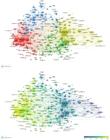
Regarding the title, abstract and keywords, the software groups the terms into four clusters. Table 2 presents the terms in each cluster and the categories derived from the identified terms. The fourth category proposed will be integral for the subsequent analysis and development phases.
4.2 Results of the content analysis
After completing the bibliometric analysis, we move on to the content analysis, concentrating on the categories derived from the initial search. To handle the substantial volume of data, we employ the PRISMA technique (Moher et al., 2009) to identify and scrutinize the most pertinent publications. The resulting five categories are as follows: (1) Digital work requirements, (2) Digital work arrangements, (3) Neo-tribal culture, and (4) Digital work rights.
-
Cluster (1) Digital work requirements
The digitalization of work has profoundly reshaped the demands of various occupations, altering how work is organized, managed, and experienced (Billett, 2021). As remote work becomes more widespread, research has increasingly focused on digital nomads—a growing group that values autonomy, freedom, and work-life balance (Günay et al., 2024, Matos; Ardévol, 2021). However, this shift also brings new challenges, such as managing blurred boundaries between work and leisure, sustaining productivity without traditional workplaces, and coordinating distributed teams (Bregenzer; Jimenez, 2021). This section explores the emerging requirements of digital work, emphasizing employee well-being, the role of leadership in mitigating stress, and the use of technological tools to foster creativity and collaboration in virtual environments, highlighting the need for both individuals and organizations to adapt to this evolving landscape.
The digital nomad lifestyle—marked by location independence, autonomy, and the blending of work and leisure—has attracted growing scholarly interest. Motivated by values such as “freedom,” “inspiration,” and “work-life balance” (Matos; Ardévol, 2021), digital nomads seek both personal and professional autonomy through travel and novel experiences (Tiberius et al., 2024). Yet, maintaining well-being hinges on establishing clear boundaries between work and leisure (von Zumbusch; Lalicic, 2020). In response, HR strategies have emerged, including the use of digital platforms for social support, mindfulness practices, and job crafting tools (Du Plessis, 2022). Practical considerations also shape location choices—especially for women—such as mild climates, reliable transport, and strong internet access (Özoğul Balyali, 2024). Despite its appeal, this lifestyle presents challenges, particularly in sustaining work-life balance while constantly on the move (Reichenberger, 2018). Further inquiry is needed into the role of digital platforms in managing employer-worker dynamics and supporting balance in nomadic work settings (Shawkat et al., 2021).
The evolving expectations of digital nomads underscore a growing demand for workspaces that offer comfort, quiet, reliable internet, affordability, and coworking opportunities (Garcez et al., 2024). Unlike traditional tourists, digital nomads require destinations that meet comprehensive needs—ranging from work-related and social to financial and basic living necessities (Zhou et al., 2024). Flexible schedules and freedom in choosing work locations are central to their decision-making (Xiao; Lutz, 2024). Challenging the myth of ubiquitous workability, recent studies stress the importance of physical space in shaping productivity and routines (Nash et al., 2021). Additionally, nomads seek environments that encourage social interaction and knowledge sharing, fostering community and collaboration (Borges et al., 2022). The lack of a fixed workspace complicates patterns of connection and disconnection, emphasizing the significance of place and social reinforcement in sustaining their lifestyle (Ingvarsson, 2023).
At the same time, digital work introduces challenges linked to stress and well-being. Key risk factors—such as distributed teams, mobile work, constant availability, and inadequate technical support—are associated with heightened stress levels (Bregenzer; Jimenez, 2021). While health-oriented leadership can alleviate some of these issues, diverse leadership styles may be required to address the unique demands of virtual and mobile work. The rise of digital nomadism also raises concerns about effective recruitment, leadership, and retention of remote workers (Frick; Marx, 2021). Moreover, the intensification of digital work contributes to technostress—manifested as techno-overload and techno-complexity—draining both emotional and physical resources (Wang et al., 2023). In this regard, the Ability–Motivation–Opportunity (AMO) framework offers useful perspectives on how contextual variables influence employee creativity (Cai et al., 2020). While virtual work can enhance work-life balance, it also poses challenges related to ambiance, productivity, and resource access (Nagpal et al., 2023). Additionally, the lack of physical presence in virtual teams may weaken team identification, though strategies like shared goals and digital leadership can help sustain motivation and cohesion (von Thülen; Hartl, 2021).
-
Cluster (2) Digital work arrangement
The digitalization of work—encompassing new technologies, evolving processes, and shifting labor markets—has given rise to alternative work arrangements that challenge traditional organizational models. Yet, as Marx et al. (2022) observe, standardized measures for digital work remain undeveloped. This transformation, driven by advances in digital technologies, disrupts the conventional model of work bound to fixed locations and employer oversight (Lipniewicz, 2024) and highlights the growing relevance of digital leadership, defined by vision, innovation, digital empowerment, and adaptive collaboration (Lin, 2024).
Among the most prominent expressions of these changes are digital nomads, often viewed as “contemporary entrepreneurs” who operate outside classical organizational structures and introduce disruptive models across industries (Mourato et al., 2023). While their destination choices often resemble those of traditional tourists, safety is a key consideration (Meyerİlhan et al., 2024). Tourism firms must also account for social responsibility and offer flexibility and community, especially given that many digital nomads are solo travelers (Mourato et al., 2023). Additionally, organizations are increasingly engaging digital nomads as external talent to address skill shortages (Tiberius et al., 2024).
This digital transformation necessitates a reimagining of the workplace. Technological advancement and global labor shifts have propelled many workers into more flexible, less hierarchical arrangements (Prester et al., 2019). However, these models introduce new tensions. Employee preferences for virtual or flexible work vary based on commuting time, family roles, and infrastructure (Nagpal et al., 2023), while demographic factors like age, gender, and lifestyle shape engagement with these arrangements. Such shifts redefine employer-employee relationships, generating both opportunities and challenges (Alfes et al., 2022).
Moreover, the expansion of digital work forms such as offshoring introduces complex communication barriers—both interpersonal and between people and systems (Meyer et al., 2015). In this context, HR departments play a crucial role in balancing technological adoption with human needs (Alfes et al., 2022). Key competencies like stress resilience and communication, moderated by adaptability, are vital for navigating the complexities of digital work-life (Mutsuddi et al., 2023). Ultimately, while flexible digital work models offer greater autonomy and new opportunities, they also prompt critical reflection on the future of work, its effects on well-being, and the evolving nature of work relationships.
-
Cluster (3) Neo-tribe culture
The rise of neo-tribe culture within digital nomadism is reshaping conventional notions of community and belonging. Rather than being anchored to geographic locations, digital nomads form communities based on shared values, lifestyles, and work practices, often facilitated by coworking and coliving spaces that promote collaboration, socialization, and idea exchange. As Pacheco and Azevedo (2023) argue, coliving environments blur the lines between work and home, offering flexible, community-driven alternatives to traditional living. This reflects a broader trend in the digital nomad lifestyle, which integrates work and leisure in dynamic, shared settings such as coworking hubs and makerspaces (Lee et al., 2019), creating a sense of belonging while supporting both productivity and personal connection.
Understanding the social dynamics of these communities requires exploring their integration within host locations and their broader impact on urban and economic development (Matsushita, 2023). Migration patterns among digital nomads, which often diverge from traditional North–South trajectories, are shaped by online social networks that foster connections beyond geographic limits (Bahri, 2024). Social capital and the availability of social infrastructure—like established nomad populations and knowledge-sharing opportunities—are increasingly central to destination choice (Borges et al., 2022), underscoring the importance of connectivity and place attachment in a digital context.
Coliving and coworking spaces go beyond functional roles to support well-being and identity formation. As von Zumbusch and Lalicic (2020) note, these environments are designed to counteract the isolation often experienced by digital nomads, facilitating social interaction and community formation. Community managers play a key role in curating these interactions, offering nomads a sense of stability and home within a fluid lifestyle. In this context, community building becomes vital, prioritizing social bonds over geographical permanence (de Loryn, 2022).
Despite offering autonomy, the digital nomad lifestyle demands self-discipline and organizational skills to achieve work-life integration (Cook, 2020). This tension is reflected in the growth of coworking spaces, which provide flexible settings conducive to collaboration and innovation. These hubs also contribute to the knowledge economy in nomadic destinations (Yang et al., 2019), though more research is needed to assess how their design and operations influence creativity, collaboration, and well-being—key concerns for optimizing digital nomad workspaces (Yang et al., 2019).
Ultimately, the sense of community and place fostered in coliving environments profoundly shapes digital nomads’ well-being. As Pacheco and Azevedo (2023) emphasize, the immersive experience of coliving generates strong emotional bonds to place, often reinforced through digital word-of-mouth and social media. These interactions contribute to the consolidation of digital nomad communities and influence perceptions of potential destinations. Applying neo-tribe theory, destination management organizations (DMOs) can better address the unique needs of digital nomads, whose decision-making is driven more by social connectedness than by geographic considerations (von Zumbusch; Lalicic, 2020). This shift highlights a fundamental transformation in how place attachment and belonging are conceptualized in the era of mobile, digitally mediated work.
-
Cluster (4) Digital work rights
The increasing prominence of digital work rights, particularly within the expanding realm of digital nomadism, marks a critical area of research and policy development. Digital nomads—mobile workers who use technology to work remotely while traveling—embody a hybrid category that merges tourism with employment. These individuals contribute meaningfully to local economies through spending on accommodation, food, and services, and by promoting tourism in their host locations (Arbutina et al., 2023). However, the freedoms they enjoy are often accompanied by complex legal and fiscal challenges due to the absence of standardized definitions and regulatory frameworks, leaving them in a legal “gray area” (Christiansen et al., 2023).
Several countries, such as Croatia, have responded to this growing trend by offering specialized visas and tax incentives to attract digital nomads (Arbutina et al., 2023, Koskela; Beckers, 2024). Croatia’s introduction of one of the first digital nomad visas in the EU, targeting non-EU remote workers, reflects an effort to integrate these workers into local economies and support entrepreneurship (Arbutina et al., 2023). These initiatives also aim to enhance the development of local business ecosystems and stimulate socio-economic growth (Sánchez-Vergara et al., 2023). Nevertheless, the long-term effects of these programs remain underexplored, especially concerning their impact on host communities (Jiwasiddi et al., 2024). Despite such advancements, unresolved issues in taxation persist. Many digital nomads, operating as independent workers, opt to register as self-employed to take advantage of favorable tax regimes where available (Tyutyuryukov; Guseva, 2021). However, inconsistencies in international tax laws, including risks of double taxation, continue to pose significant barriers. The global rise of this workforce underscores the urgent need for enhanced international collaboration to establish coherent tax policies that ensure fair contributions to both host and home economies.
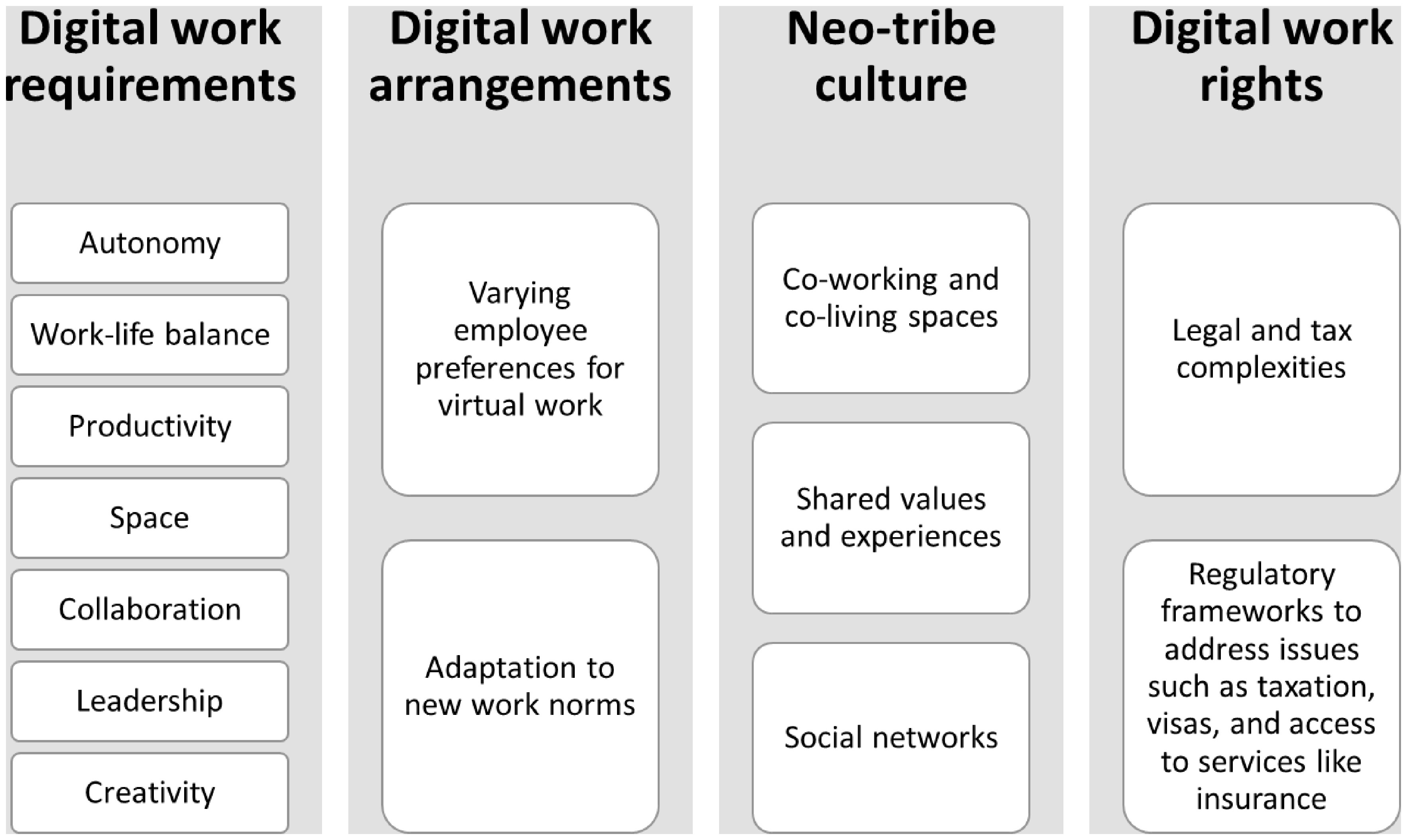
In parallel, the rise of digital nomadism presents opportunities and challenges for service industries, particularly in sectors like insurance. The demand for personalized offerings—such as mobile, flexible insurance plans—has surged (Çetin, 2024). Still, ensuring that these “global citizens” (Cook, 2022) have access to essential services within legally and economically secure environments remains a pressing concern. This underscores the broader reality that digital work rights cannot be disentangled from the legal, economic, and social systems that shape the nomadic work experience. Policymakers must therefore craft adaptive regulatory frameworks that balance the benefits of mobility with the responsibilities of governance, ensuring sustainable and equitable growth for all stakeholders (Özgen Çiğdemli et al., 2024). Following the content and bibliometric analyses, the synthesized results are presented in figure 2.
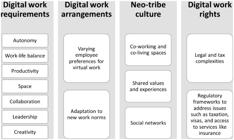
Synthesizing the content and bibliometric analyses, four interconnected thematic areas emerge as fundamental to understanding digital nomadism: digital work requirements, evolving work arrangements, neo-tribe cultural formations, and the formalization of digital work rights. Core requirements—such as autonomy, work-life balance, and access to productive environments—influence how work is structured, encouraging flexible and non-hierarchical models that simultaneously introduce new communication and psychological demands. These evolving work modes foster the emergence of neo-tribes: non-geographically bound communities formed in coliving and coworking environments that challenge traditional concepts of place and community. At the same time, the operational realities of this lifestyle necessitate attention to digital work rights, especially regarding visas, taxation, and access to protections.
Understanding the interplay between these dimensions is essential for developing inclusive policies and infrastructure that support the sustainable expansion of the digital nomad economy. This holistic approach ensures that both mobile workers and host communities benefit from the evolving landscape of digital labor.
4.3 Quantitative approach results - text mining
To present the results, we rely on the methodology proposed by Myatt’s (2007) for exploratory analysis, which consists of four phases. In the first phase, the problem is defined; in the second, the data is prepared; in the third phase, the analysis is carried out; and finally, in the fourth phase, the results are visualized. During these stages, natural language processing (NLP) is used along with its libraries in Python, such as NLTK and scikit-learn (Kaye et al., 2017).
4.3.1 Problem definition
As a result, we wonder how theoretical frameworks on digital nomadism align with the expectations of potential digital nomads. We conducted a content characterization using artificial intelligence algorithms to address this question. This includes the extraction of relevant data (Pang; Lee, 2008), the identification of named entities such as adjectives, nouns, and verbs (Mohit, 2014), the analysis of document content and the meaning of words using techniques like LDA (Latent Dirichlet Allocation) (Sestino; De Mauro, 2022), as well as the calculation of additional features, such as the analysis of emotions, feelings, or polarity (Liu, 2012).
4.3.2 Presentation of data
To ensure strict methodological transparency, it is imperative to detail the empirical corpus. Data collection involved semi-structured interviews conducted via Zoom with 33 participants located in Colombia (specifically in regions like Antioquia and Chocó). The sample was selected using purposive sampling, targeting university students and recent graduates (ages ranging from 18 to 31, with a strong concentration in their early 20s) from diverse academic backgrounds, including Law, Engineering, Business Administration, and Audiovisual Communication.
Sociologically, this demographic is highly significant: they represent the ‘future workforce’ and ‘potential digital nomads.’ Unlike seasoned corporate employees, these young individuals (predominantly Generation Z and Millennials) are constructing their professional identities entirely within the digital era. The interviews captured their expectations, imaginaries, and anxieties before fully integrating into the globalized remote labor market. Consequently, the questions posed (e.g., ‘What rights should a virtual worker have?’ or ‘How do you imagine a digital work contract?’) elicited responses that reflect not just practical concerns, but the internalization of contemporary discourses on digital labor in the Global South.
These sentences were analyzed using computational text-mining techniques (Giudici, 2003). The analyses were conducted using Jupyter Notebook®, a web-based environment that facilitates the documentation and execution of data analysis processes in a format understandable to humans.
-
Q1: What is digital work?
-
Q2: Who are the digital nomads?
-
Q3: What do you think about the idea of digital work?
-
Q4: What would be the requirements for digital work?
-
Q5: How do you imagine a digital work contract?
-
Q6: How do you imagine the culture of a nomadic tribe?
-
Q7: What rights should a virtual worker have?
-
Q8: What contextual situations would trigger virtual work?
-
Q9: How should digital work environments be?
-
Q10: What digital jobs are you aware of?
-
Q11: What risks do you see in digital work?
-
Q12: What opportunities do you find in digital work?
-
Q13: What do you think the educational sector should do in the era of digital work?
-
Q14: What essential aspects of digital work do you think I haven’t asked you about?
-
Q15: How would you like to access more information about digital work?
Participant responses from the semi-structured interviews were transcribed, cleaned, standardized, and lemmatized. Descriptive metrics were analyzed, followed by the application of emotion analysis and category synthesis algorithms to enhance interpretive insights.
4.3.3 Implementation of the analysis
This phase represents the most rigorous and detailed part of the exploratory analysis. Its goal is to identify patterns or differences that may help solve the research problem using charts, tables, and statistics. In other words, this stage aims to understand the data’s behavior to infer general issues about them and their relationships (Downey, 2015), as developed below.
4.3.3.1 Length of each response
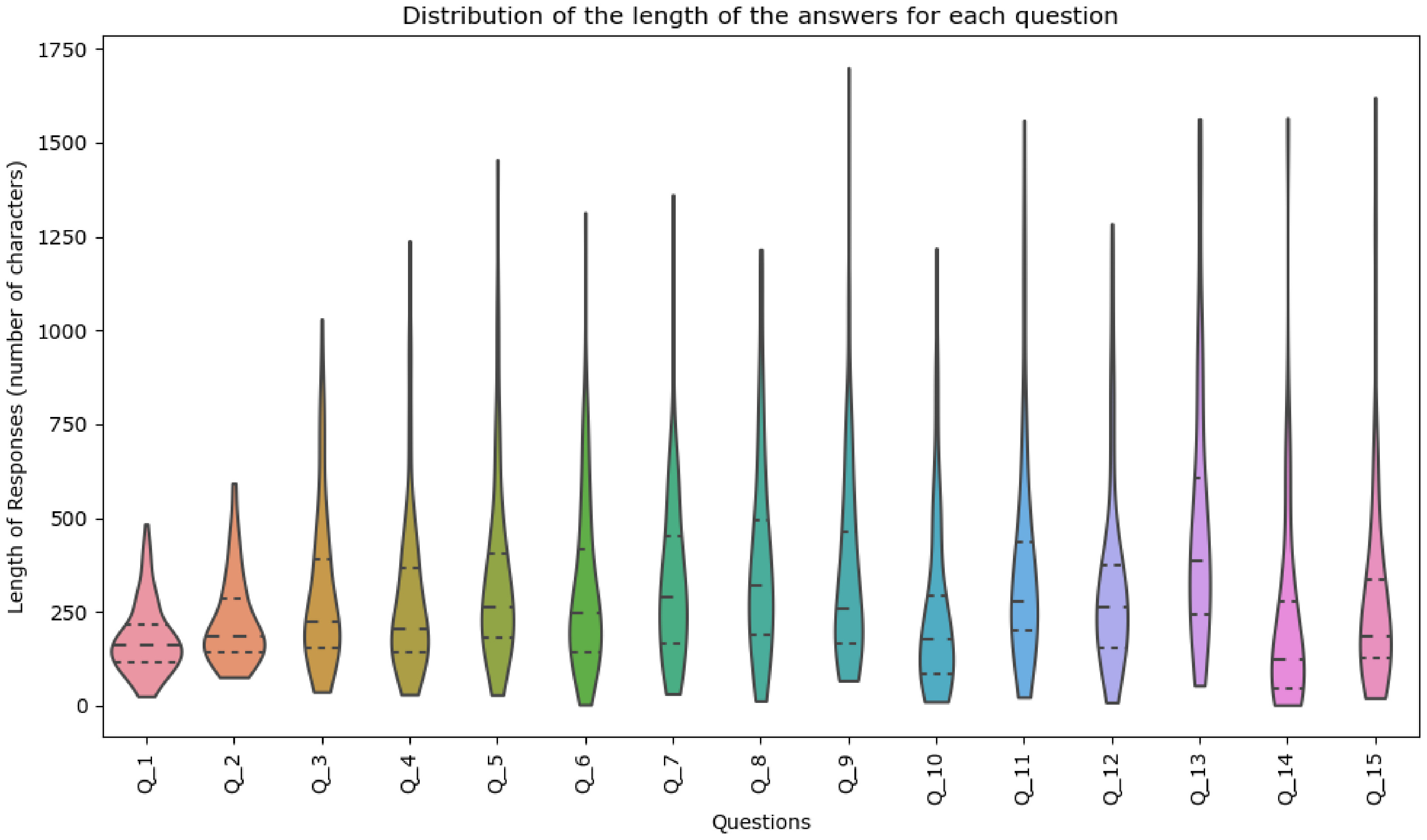
Rather than focusing purely on the statistical density of the responses (visualized in Figure 3), the sociological value of this analysis lies in the engagement levels. Simple definitional questions yielded short, mechanical responses. In contrast, questions demanding imagination or projecting future working conditions (e.g., Q9: ‘How should digital work environments be?’) generated the longest, most detailed narratives. This suggests that for these young future workers, digital nomadism is not merely a predefined concept, but a highly speculative and emotional terrain where they actively project their desires for autonomy against their fears of precarity.

4.3.3.2 Word Cloud of each response
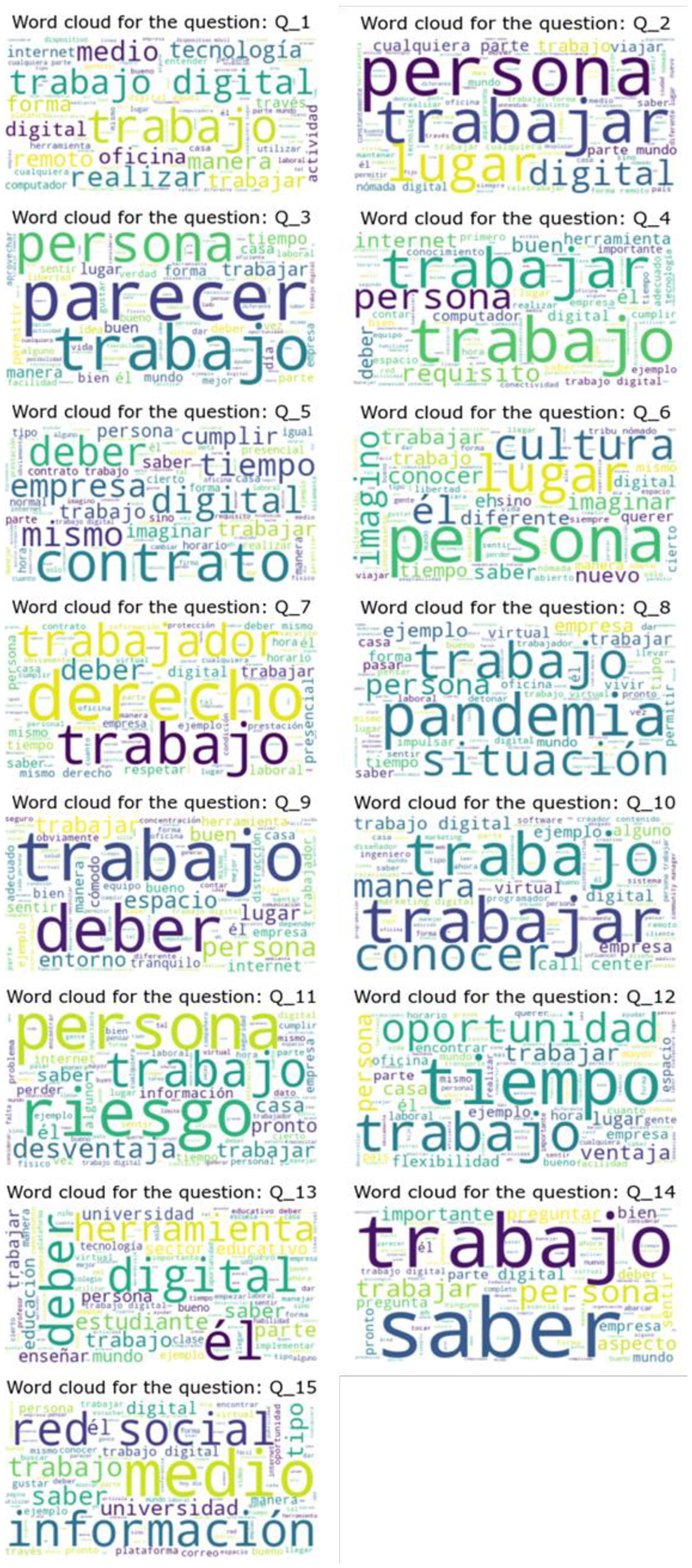
Figure 4 illustrates the lexical frequency within the participants’ discourse. However, beyond the visual representation of terms, the semantic grouping reveals how vocabulary shifts depending on the theme. The constant presence of human-centric words (‘persona’, ‘trabajo’) juxtaposed with structural terms (‘empresa’, ‘contrato’, ‘riesgo’) demonstrates that the respondents do not view digital labor as a post-institutional utopia. Instead, they recognize it as a formal labor relationship that still requires traditional protection, albeit in a dematerialized environment.
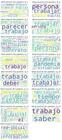
Word Cloud illustrating the most frequently occurring terms in responses to individual questions.
This series of word clouds visually summarizes key terms from responses to 15 questions about digital work, showing how vocabulary shifts with each theme. Foundational questions highlight terms like trabajo (work), digital, tecnología (technology), and persona (person) working from any lugar (place). Opinion (Q3) and requirement (Q4) questions emphasize relevant words like parecer (opinion), requisito (requirement), and internet. Specific concepts arise directly in related questions, such as contrato (contract) and empresa (company) (Q5), cultura (culture) (Q6), derecho (right) (Q7), riesgo (risk) (Q11), oportunidad (opportunity) and flexibilidad (flexibility) (Q12), and educación (education) (Q13). The term pandemia dominates triggering situations (Q8), while información (information), medio (medium), and red social (social network) are key for accessing information (Q15). Throughout, trabajo and persona remain frequent, underscoring the human focus across digital labor topics.
4.3.3.3 Adjectives preceding and following work as key-word
Named Entity Recognition (NER) is a natural language processing technique intricately designed to extract specified entities from raw textual data, categorizing them based on their grammatical roles, such as nouns, adjectives, and prepositions (Mohit, 2014). In this study, we have employed this methodology to identify terms, specifically “problem” and “university,” along with the corresponding adjectives that precede and follow them within the responses to the provided inquiries.
A significant portion of the adjectives reflects optimism and opportunity. Terms such as: diferente, nuevo, bueno, viable, práctico, adecuado, importante, eficiente, avanzado, acogedor, agradable, esencial, fundamental, social, and sustantivo suggest that participants perceive digital work as innovative, transformative, and socially valuable. This discourse aligns with theoretical perspectives that frame digital labor as enabling flexibility, creativity, and mobility (e.g., Matos; Ardévol, 2021, Garcez et al., 2024). Another cluster of adjectives points to a technological and infrastructural vision of digital work, with terms such as digital, remoto, virtual, presencial, horario, dirigido, enfocado, and conectado. This suggests that participants often define digital work through its operational features—mediums, spaces, and temporal structures—more than by its socio-economic or cultural dimensions. This view resonates with approaches emphasizing the technical mediation of remote labor (e.g., Lipniewicz, 2024). At the same time, a notable presence of adjectives with negative or cautionary connotations emerges: complicado, grave, distraído, entorpecido, mínimo. These qualifiers point to risks of instability, cognitive overload, and precariousness associated with digital work. This emotional nuance challenges the purely celebratory views of digital nomadism and aligns with literature that discusses technostress and labor vulnerabilities (e.g., Wang et al., 2023, Christiansen et al., 2023).
By moving beyond the raw computational outputs of the text mining, a profound sociological tension emerges in the discourse of these potential digital nomads. The algorithmic analysis reveals a dual imaginary regarding digital labor. On one hand, the prevalent use of terms like ‘libertad’ (freedom), ‘comodidad’ (comfort), and ‘viajar’ (travel) illustrates the successful penetration of the neoliberal entrepreneurial narrative. The youth perceive digital nomadism as an escape from traditional disciplinary office structures.
However, the sentiment and frequency analyses concurrently expose deep structural anxieties. Participants frequently associated digital work with terms like ‘aislamiento’ (isolation), ‘estrés’ (stress), ‘sedentarismo’ (sedentary lifestyle), and critical infrastructural barriers such as ‘mala conexión’ (poor internet connection)—a reality heavily emphasized by participants from peripheral regions like Chocó. Sociologically, this demonstrates that the upcoming workforce is acutely aware of the precariousness embedded in platformized labor. They desire autonomy but fear the erasure of boundaries between the domestic and professional spheres, reflecting the paradox of what Han terms the ‘achievement society’.
4.3.3.4 Emotion classification for each response
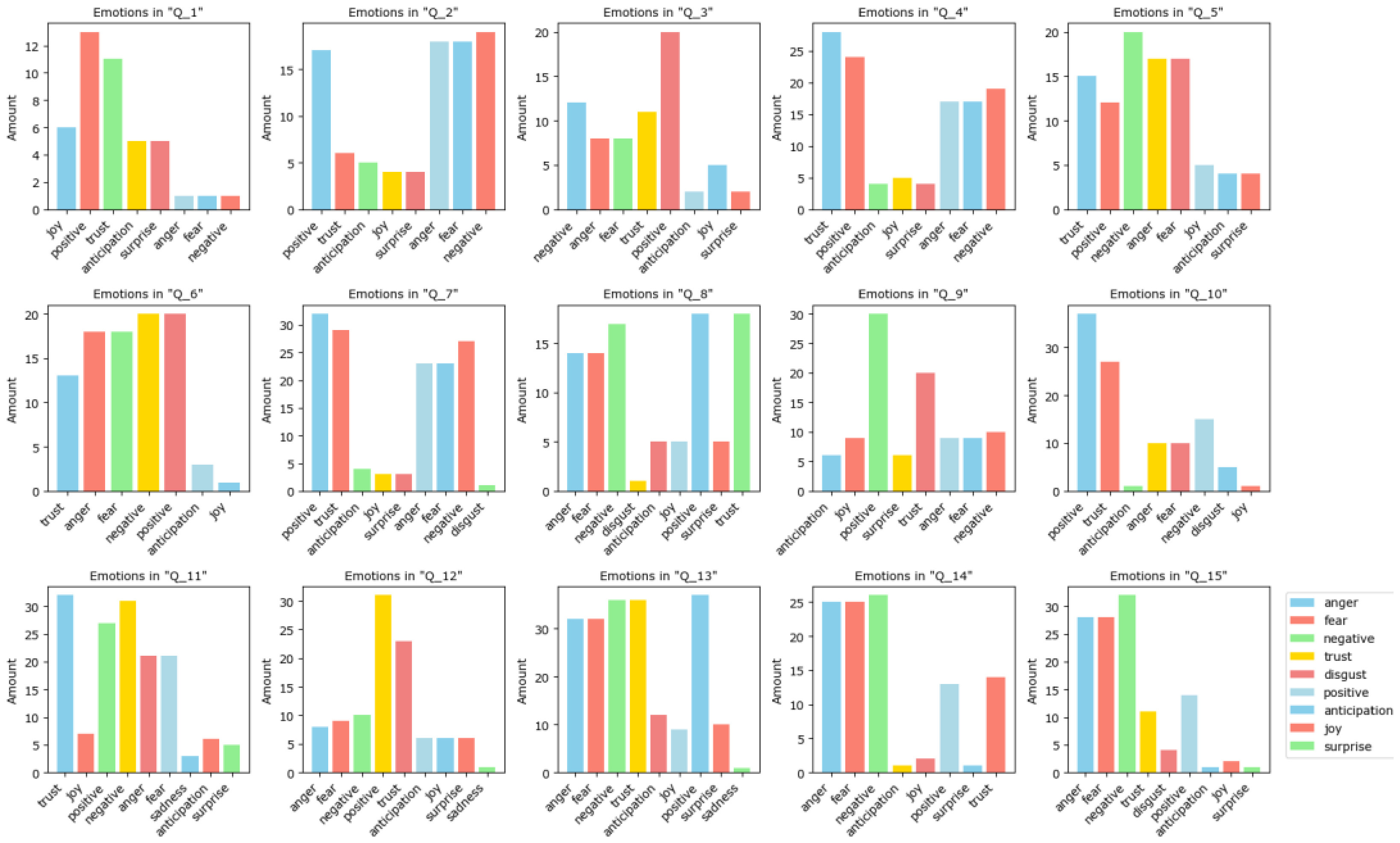
Subsequently, we intend to employ natural language processing algorithms, specifically utilizing classification methods outlined by Zulkifli and Lee (2019), to systematically categorize the responses to the provided questions based on their emotional attributes, as seen in Figure 5.
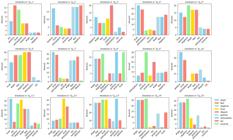
The emotional analysis of participants’ responses across the 15 interview questions reveals a complex affective landscape marked by ambivalence. Positive emotions—such as trust, anticipation, and joy—are prevalent when discussing digital work requirements, educational needs, and perceived opportunities (notably in Q4, Q9, and Q13). These responses reflect optimism toward the transformative potential of digital labor and learning. Conversely, negative emotions—especially fear, sadness, and anger—emerge prominently in questions addressing risks (Q11), legal uncertainties (Q7), and work conditions (Q5). Fear and sadness are consistently high in these areas, suggesting deep concerns about instability, lack of protection, and emotional strain linked to digital work. Interestingly, even in opportunity-related responses (Q12), emotions are mixed: while anticipation and joy are present, fear and disgust indicate critical awareness of the challenges embedded within seemingly positive narratives. Overall, the data reveal that digital nomadism is emotionally perceived as a double-edged phenomenon: it is seen as a source of empowerment and a locus of vulnerability.
4.3.3.5 Content analysis of documents and word meaning - i.e., LDA (Latent Dirichlet Allocation)
Text mining involves various tasks, one of which is text summarization, aimed at identifying primary categories within a text string (Yogish et al., 2019). Among these techniques lies LDA, a commonly used generative probabilistic model for uncovering the thematic structure of a document corpus. In this approach, the input text is treated as a collection of observations derived from a generative random process, which includes hidden variables. These variables reflect the thematic structure of the documents and can define the relationship between the relative presence of words and the topic discussed in the text (Sestino; De Mauro, 2022).
Instead of listing the raw probabilistic distributions of the LDA model, we focus on the sociological implications of the emerged topics. The topic modeling revealed a structural tension in the discourse:
-
The Bureaucratization of Spontaneity: In responses regarding ‘Team Articulation’ and ‘Communication’ (Q6, Q9), participants expressed a longing for the ‘informal spaces’ of the office (coffee breaks, hallway chats). The algorithm grouped terms like ‘reunión’ (meeting), ‘teams’, and ‘agenda’, highlighting how digital nomadism in a corporate setting paradoxically leads to hyper-scheduling. As one participant noted, ‘virtual work killed the spontaneous space,’ turning every interaction into a formal transaction.
-
The Double-Edged Sword of Autonomy: While terms like ‘tiempo’ (time), ‘transporte’ (transport), and ‘calidad de vida’ (quality of life) appear frequently associated with positive sentiments (Q12), they are counterbalanced by terms reflecting ‘disponibilidad’ (availability) and ‘extensión’ (extension of hours). The data suggests that the time saved in commuting is often reinvested into labor, aligning with Byung-Chul Han’s concept of self-exploitation. The ‘freedom’ of the digital nomad is constrained by the digital tether of the platform (Teams/WhatsApp).
4.3.4 Deployment of results
This multi-method analysis of interview data reveals nuanced perceptions of digital nomadism. The analysis of response lengths indicated that participants engaged more deeply with questions about rights, risks, and culture than with straightforward definitions. Word clouds and adjective analysis related to “trabajo” (work) highlighted key technological terms, alongside a recurring contrast: aspirational ideas such as freedom and opportunity were often paired with words reflecting risk, insecurity, and difficulty. Emotion analysis reinforced this duality. While participants expressed positive feelings about the opportunities digital nomadism offers, they also reported strong negative emotions—such as fear and anger—particularly in relation to legal uncertainty, instability, and labor rights. Latent Dirichlet Allocation (LDA) revealed five main themes: technological requirements; the tension between autonomy and burnout; gaps in labor regulation; the desire for community; and the emotional and psychological risks, including technostress, isolation, and instability. Together, these findings suggest that digital nomadism is not simply seen as a lifestyle choice, but rather as a complex negotiation between the pursuit of autonomy and the realities of vulnerability.
5. Discussion
Critically analyzing these findings through the sociology of work, it becomes evident that the ‘digital nomad’ identity among Latin American youth functions as a complex socio-technical imaginary. The students’ narratives confirm the mechanisms of ‘platform capitalism’ (Srnicek, 2017). While global North literature often romanticizes nomadism as a lifestyle choice, for these young individuals in Colombia, it represents an intersection of technological aspiration and labor vulnerability. As highlighted by Latin American scholars (Antunes, 2018, Grohmann, 2020), the platformization of work in the Global South often acts as a laboratory for extreme flexibilization. The participants’ constant demands for state regulation, clear contracts, and ‘digital disconnection rights’ reveal an underlying fear: that the promised entrepreneurial autonomy will merely serve to mask the transfer of infrastructural costs (internet, workspace) and emotional risks from the employer to the individual. Their discourse moves away from Foucault’s disciplinary society, recognizing instead a decentralized, algorithmic control where self-exploitation is normalized.
The findings of this study align with several key authors cited in the introduction and theoretical framework. The identification of digital nomadism as a lifestyle characterized by autonomy, flexibility, and the blending of work and leisure echoes the descriptions by Matos and Ardévol (2021) and Reichenberger (2018), who emphasized the pursuit of freedom and balance among nomadic workers. Similarly, the formation of neo-tribal communities through coworking and coliving spaces, observed in the empirical data, supports the perspectives of Borges et al. (2022) and von Zumbusch and Lalicic (2020) on the importance of social spaces for digital nomads. Additionally, the regulatory ambiguity and challenges regarding labor rights found in this study correspond with the concerns outlined by Tyutyuryukov and Guseva (2021) and Christiansen et al. (2023), who highlighted the legal grey zones digital nomads often face. The critical role of education and skills development in adapting to digital work environments also confirms the emphasis placed by Coetzee et al. (2023) and Urbach and Ahlemann (2019) on the need for preparing individuals for the demands of a digital economy.
However, not all results align neatly with prior literature. Unlike the largely optimistic projections of the digital nomad lifestyle portrayed by Lipniewicz (2024) and Garcez et al. (2024), the participants in this study exhibited a greater degree of emotional ambivalence, expressing not only enthusiasm but also significant apprehension regarding precarity, technostress, and work instability. Moreover, while several sources, such as Garcez et al. (2024) and Zhou et al. (2024), emphasized the positive economic contributions of digital nomads to local economies, the interviews revealed concerns about limited integration into local communities and potential negative social impacts, echoing critical perspectives less explored in mainstream narratives. Finally, although some studies (Bonneau; Aroles, 2021) framed digital nomadism primarily through the lens of lifestyle tourism, the participants here emphasized professional aspirations and socio-economic stability over leisure-driven motivations, suggesting a more complex relationship between work, identity, and mobility than previously depicted.
Critically analyzing these findings through the lens of the sociology of work, the ‘digital nomad’ identity in this context appears less as a liberation from labor constraints and more as an internalization of neoliberal productivity imperatives. The participants’ discourse reveals a transition from ‘disciplinary societies’—Foucault—to ‘achievement societies’—Han—, where the physical boss is replaced by digital surveillance and self-imposed availability.
The reliance on platforms (Teams, SAP, Ariba) mentioned by participants indicates a ‘platformization’ of corporate work. While the literature often romanticizes the nomad as an entrepreneur of the self, our data shows that for corporate employees, this mobility comes with a cost: the erosion of the social fabric of work (camaraderie, informal support) and the invasion of the domestic sphere by professional demands. Technology is not neutral; it acts as a mechanism that enables mobility while simultaneously intensifying labor control.
6. Conclusion and limitations
This study confirms a significant gap between theoretical frameworks and the real-life experiences of digital nomads. While existing literature often portrays digital nomadism as a flexible and aspirational lifestyle centered on freedom, autonomy, and innovation, the empirical findings reveal a more complex and fragmented reality. Participants appreciate the opportunities offered by digital work but also express concerns about legal uncertainties, emotional well-being, and socio-economic vulnerability. As such, the link between theory and practice is shaped by tensions: theoretical ideals often overlook the structural and emotional challenges faced by digital nomads.
The sequential mixed-methods approach—combining bibliometric analysis, content analysis, and exploratory text mining—proved effective in bridging the gap between academic discourse and lived experience. The integration of computational tools with qualitative interpretation enabled a more nuanced understanding of discourse patterns, emotions, and underlying themes. This approach highlights the value of mixed methods in studying emerging socio-digital phenomena.
Methodologically, it is vital to acknowledge the epistemological limitations of using computational tools like NLP and LDA in sociology. Algorithms are not neutral; they treat language as ‘bags of words,’ which can obscure the cultural, economic, and infrastructural nuances inherent in the Latin American context. For instance, when a participant from Chocó mentions ‘working from home’, the algorithm might classify it positively, missing the underlying structural anxiety about frequent power outages and lack of technological access in that specific region. Therefore, in this research, computational outputs were utilized not as absolute truths, but as heuristic devices requiring human, critical sociological interpretation to avoid techno-determinism.
Further studies should broaden the empirical scope through cross-cultural comparisons to better reflect the diversity of digital nomad experiences across socio-economic and regulatory contexts. Longitudinal research could offer more dynamic insights into how digital nomads’ perspectives and practices evolve over time. Moreover, exploring the influence of emerging technologies—such as artificial intelligence and the metaverse—on digital work environments would be a valuable extension. Participatory research involving digital nomad communities is also recommended to ensure their voices are included in academic and policy discussions.
-
Financial support:
None.
-
Ethics Committee Approval:
Nothing to declare.
-
Data Availability:
Research data is only available upon request.
-
Use of artificial intelligence-assisted technology: The authors declare that no artificial intelligence tools were used in the research reported here or in the preparation of this article.
References
-
ALFES, Kerstin et al New ways of working and the implications for employees: a systematic framework and suggestions for future research. International Journal of Human Resource Management, v. 33, n. 22, p. 4361-4385, 2022. DOI: https://doi.org/10.1080/09585192.2022.2149151.
» https://doi.org/DOI: https://doi.org/10.1080/09585192.2022.2149151 - ANTUNES, Ricardo.O privilégio da servidão: o novo proletariado de serviços na era digital. São Paulo: Boitempo Editorial, 2018.
-
ARBUTINA, H.; SINKOVIC, Z.; PRIBISALIC, L. The legal status of digital nomads. In: 2023 46TH ICT AND ELECTRONICS CONVENTION, MIPRO 2023, 46., 2023, Opatija, Croatia. Proceedings […] New York: IEEE, 2023. p. 1422-1427. DOI: https://doi.org/10.23919/MIPRO57284.2023.10159694.
» https://doi.org/DOI: https://doi.org/10.23919/MIPRO57284.2023.10159694 -
ARSLAN, Erdal. From tourists to nomads: unveiling the transformative potential of digital nomads in travel and tourism. Worldwide Hospitality and Tourism Themes, v. 16, n. 3, p. 269-281, 2024. DOI: https://doi.org/10.1108/WHATT-03-2024-0046.
» https://doi.org/DOI: https://doi.org/10.1108/WHATT-03-2024-0046 -
AVOGARO, Matteo. A holistic approach to remote digital work: from the inconveniences suffered by employees to a comprehensive ‘fair compensation’. Revista de Internet - Derecho y Politica, n. 36, p. 1-16, 2022. DOI: https://doi.org/10.7238/idp.v0i36.400857.
» https://doi.org/DOI: https://doi.org/10.7238/idp.v0i36.400857 -
BAHRI, Mohammad Thoriq. Evidence of the digital nomad phenomenon: From “Reinventing” migration theory to destination countries readiness. Heliyon, v. 10, n. 17, p. e36655, 2024. DOI: https://doi.org/10.1016/j.heliyon.2024.e36655. PMid:39263067.
» https://doi.org/DOI: https://doi.org/10.1016/j.heliyon.2024.e36655 -
BILLETT, Stephen. Mediating worklife learning and the digitalisation of work. British Journal of Educational Technology, v. 52, n. 4, p. 1580-1593, 2021. DOI: https://doi.org/10.1111/bjet.13115.
» https://doi.org/DOI: https://doi.org/10.1111/bjet.13115 -
BONNEAU, Claudine; AROLES, Jeremy. Digital Nomads. In: AROLES, Jeremy; VAUJANY, François-Xavier; DALE, Karen (ed.). Experiencing the New World of work Cambridge: Cambridge University Press, 2021. p. 157-178. DOI: https://doi.org/10.1017/9781108865814.011.
» https://doi.org/DOI: https://doi.org/10.1017/9781108865814.011 -
BORGES, Isabel et al Digital nomads: a growing trend in hospitality in Portugal. Smart Innovation Systems and Technologies, v. 284, p. 549-559, 2022. DOI: https://doi.org/10.1007/978-981-16-9701-2_45.
» https://doi.org/DOI: https://doi.org/10.1007/978-981-16-9701-2_45 -
BREGENZER, Anita; JIMENEZ, Paulino. Risk factors and leadership in a digitalized working world and their effects on employees’ stress and resources: Web-based questionnaire study. Journal of Medical Internet Research, v. 23, n. 3, p. e24906, 2021. DOI: https://doi.org/10.2196/24906. PMid:33709933.
» https://doi.org/DOI: https://doi.org/10.2196/24906 -
CAI, Wenjing et al Optimizing employee creativity in the digital era: Uncovering the interactional effects of abilities, motivations, and opportunities. International Journal of Environmental Research and Public Health, v. 17, n. 3, p. 1038, 2020. DOI: https://doi.org/10.3390/ijerph17031038. PMid:32041278.
» https://doi.org/DOI: https://doi.org/10.3390/ijerph17031038 -
ÇETIN, Mesut. Insurance needs of digital nomads and predictions for future. Worldwide Hospitality and Tourism Themes, v. 16, n. 3, p. 379-382, 2024. DOI: https://doi.org/10.1108/WHATT-03-2024-0065.
» https://doi.org/DOI: https://doi.org/10.1108/WHATT-03-2024-0065 -
CHRISTIANSEN, Rina A. et al Developing digital nomads as a new market segment and their role in the local digital ecosystem. Journal of System and Management Sciences, v. 13, n. 2, p. 1-16, 2023. DOI: https://doi.org/10.33168/JSMS.2023.0201.
» https://doi.org/DOI: https://doi.org/10.33168/JSMS.2023.0201 -
COETZEE, Melinde; FERREIRA, Nadia; POTGIETER, Ingrid L. Employees’ career mindsets as career capital for a digital work world orientation. SA Journal of Industrial Psychology, v. 49, p. 10, 2023. DOI: https://doi.org/10.4102/sajip.v49i0.2088.
» https://doi.org/DOI: https://doi.org/10.4102/sajip.v49i0.2088 -
COOK, Dave. The freedom trap: digital nomads and the use of disciplining practices to manage work/leisure boundaries. Information Technology & Tourism, v. 22, n. 3, p. 355-390, 2020. DOI: https://doi.org/10.1007/s40558-020-00172-4.
» https://doi.org/DOI: https://doi.org/10.1007/s40558-020-00172-4 -
COOK, Dave. Breaking the contract: digital nomads and the state. Critique of Anthropology, v. 42, n. 3, p. 304-323, 2022. DOI: https://doi.org/10.1177/0308275X221120172.
» https://doi.org/DOI: https://doi.org/10.1177/0308275X221120172 -
COOK, Dave. What is a digital nomad? Definition and taxonomy in the era of mainstream remote work. World Leisure Journal, v. 65, n. 2, p. 256-275, 2023. DOI: https://doi.org/10.1080/16078055.2023.2190608.
» https://doi.org/DOI: https://doi.org/10.1080/16078055.2023.2190608 -
DE LORYN, Bianca. Not necessarily a place: How mobile transnational online workers (digital nomads) construct and experience ‘home’. Global Networks, v. 22, n. 1, p. 103-118, 2022. DOI: https://doi.org/10.1111/glob.12333.
» https://doi.org/DOI: https://doi.org/10.1111/glob.12333 - DOWNEY, Allen. Think stats: exploratory data analysis. 2nd ed. Sebastopol, CA: O’Reilly, 2015.
-
DU PLESSIS, Melissa. Working remotely in the new normal: towards a conceptual framework for managing employee well-being. In: POTGIETER, Ingrid L.; FERREIRA, Nadia (ed.). Managing human resources: the new normal. Cham: Springer, 2022. p. 165-192. DOI: https://doi.org/10.1007/978-3-031-09803-1_10.
» https://doi.org/DOI: https://doi.org/10.1007/978-3-031-09803-1_10 -
DURIEUX, Valérie; GEVENOIS, Pierre Alain. Bibliometric indicators: quality measurements of scientific publication. Radiology, v. 255, n. 2, p. 342-351, 2010. DOI: https://doi.org/10.1148/radiol.09090626. PMid:20413749.
» https://doi.org/DOI: https://doi.org/10.1148/radiol.09090626 -
ESCOBAR-SIERRA, Manuela; LARA-VALENCIA, Luis-Augusto; VALENCIA-DELARA, Pilar. ‘Step-by-step’ method to conduct applied research in organizational engineering and business management (Método ‘paso a paso’ para la investigación aplicada en el ámbito de la ingeniería organizacional y la gestión empresarial). C&E, Cultura y Educación, v. 33, n. 1, p. 28-77, 2021. DOI: https://doi.org/10.1080/11356405.2020.1859735.
» https://doi.org/DOI: https://doi.org/10.1080/11356405.2020.1859735 -
FRICK, Nicholas; MARX, Julian. Integrating digital nomads in corporate structures: Managerial contemplations. Proceedings of the Annual Hawaii International Conference on System Sciences, v. 2020-Janua, p. 2111-2120, 2021. DOI: https://doi.org/10.24251/HICSS.2021.260.
» https://doi.org/DOI: https://doi.org/10.24251/HICSS.2021.260 -
GARCEZ, Ana; CORREIA, Ricardo; CARVALHO, Aida. Digital nomads: who they are and what they want from the destinations? Smart Innovation Systems and Technologies, v. 344, p. 483-495, 2024. DOI: https://doi.org/10.1007/978-981-99-0333-7_35.
» https://doi.org/DOI: https://doi.org/10.1007/978-981-99-0333-7_35 -
GENCELI, Demet; YÜKSEK, Gökçe; UCA, Selda. Travel insurance behaviors of digital nomads. Worldwide Hospitality and Tourism Themes, v. 16, n. 3, p. 365-374, 2024. DOI: https://doi.org/10.1108/WHATT-03-2024-0047.
» https://doi.org/DOI: https://doi.org/10.1108/WHATT-03-2024-0047 - GIUDICI, Paolo. Applied data mining: statistical methods for business and industry. Hoboken: Wiley, 2003.
- GROHMANN, Rafael. Plataformização do trabalho: entre a dataficação, a financeirização e a racionalidade neoliberal. Eptic, v. 22, n. 1, p. 106-122, 2020.
-
GÜNAY, Fatih; TOKSÖZ, Derya; ASLAN, Zeynep. The causes, process and result of becoming a digital nomad family: a phenomenological case study. Worldwide Hospitality and Tourism Themes, v. 16, n. 3, p. 294-302, 2024. DOI: https://doi.org/10.1108/WHATT-03-2024-0042.
» https://doi.org/DOI: https://doi.org/10.1108/WHATT-03-2024-0042 -
INGVARSSON, Caroline. Connecting and disconnecting: how digital nomads manage work in absence of a workplace. Proceedings of the Annual Hawaii International Conference on System Sciences, v. 2023-Janua, p. 6270-6279, 2023. DOI: https://doi.org/10.24251/HICSS.2023.759.
» https://doi.org/DOI: https://doi.org/10.24251/HICSS.2023.759 -
JIWASIDDI, Angtyasti et al Digital nomadism as a new part of the visitor economy: The case of the “digital nomad capital” Chiang Mai, Thailand. Information Systems Journal, v. 34, n. 5, p. 1493-1535, 2024. DOI: https://doi.org/10.1111/isj.12496.
» https://doi.org/DOI: https://doi.org/10.1111/isj.12496 -
KAYA SAYARI, Burcu; COŞKUN, İnci Oya. Deconstructing digital nomads: are they the last frontiers of the post-tourist? Worldwide Hospitality and Tourism Themes, v. 16, n. 3, p. 258-268, 2024. DOI: https://doi.org/10.1108/WHATT-03-2024-0049.
» https://doi.org/DOI: https://doi.org/10.1108/WHATT-03-2024-0049 -
KAYE, Linda K.; MALONE, Stephanie A.; WALL, Helen J. Emojis: insights, affordances, and possibilities for psychological science. Trends in Cognitive Sciences, v. 21, n. 2, p. 66-68, 2017. DOI: https://doi.org/10.1016/j.tics.2016.10.007. PMid:28107838.
» https://doi.org/DOI: https://doi.org/10.1016/j.tics.2016.10.007 -
KLUGE, Johanna et al Transformation action cycle: Suggestions for employee centered transformation to digital work in smes. In: NAH, Fiona Fui-Hoon; SIAU, Keng (ed.). Lecture notes in computer science (Including subseries lecture notes in artificial intelligence and lecture notes in bioinformatics) Cham: Springer, 2020. p. 91-109. DOI: https://doi.org/10.1007/978-3-030-50341-3_8.
» https://doi.org/DOI: https://doi.org/10.1007/978-3-030-50341-3_8 -
KOSKELA, Kaisu; BECKERS, Pascal. Typologizing digital nomad visas: comparing policy rationales from tourism to wealth accumulation to immigration. Journal of Comparative Policy Analysis, v. 26, n. 5, p. 407-425, 2024. DOI: https://doi.org/10.1080/13876988.2024.2343696.
» https://doi.org/DOI: https://doi.org/10.1080/13876988.2024.2343696 -
KOZAK, Metin; CETIN, Gurel; ALRAWADIEH, Zaid. Repositioning work and leisure: digital nomads versus tourists. International Journal of Tourism Research, v. 26, n. 4, p. e2732, 2024. DOI: https://doi.org/10.1002/jtr.2732.
» https://doi.org/DOI: https://doi.org/10.1002/jtr.2732 -
LEE, Ahreum et al The social infrastructure of Co-spaces: Home, work, and sociable places for digital nomads. Proceedings of the ACM on Human-Computer Interaction, v. 3, n. 142, p. 1-23, 2019. DOI: https://doi.org/10.1145/3359244.
» https://doi.org/DOI: https://doi.org/10.1145/3359244 - LEYER, Michael; STROHHECKER, Jürgen. (2020). Cognition and experience of employees in digital work environments. Lecture Notes in Informatics (LNI), Proceedings - Series of the Gesellschaft Fur Informatik (GI), v. P-303, p. 153-158.
-
LIN, Qin. Digital leadership: a systematic literature review and future research agenda. European Journal of Innovation Management, v. 28, n. 6, p. 2469-2488, 2024. DOI: https://doi.org/10.1108/EJIM-07-2023-0522.
» https://doi.org/DOI: https://doi.org/10.1108/EJIM-07-2023-0522 -
LIPNIEWICZ, Rafał. Digital nomads and international taxation of income from employment. Krytyka Prawa, v. 16, n. 2, p. 268-285, 2024. DOI: https://doi.org/10.7206/kp.2080-1084.690.
» https://doi.org/DOI: https://doi.org/10.7206/kp.2080-1084.690 -
LIU, Bing. Sentiment analysis and opinion mining. Synthesis Lectures on Human Language Technologies, v. 5, n. 1, p. 1-184, 2012. DOI: https://doi.org/10.1007/978-3-031-02145-9.
» https://doi.org/DOI: https://doi.org/10.1007/978-3-031-02145-9 -
MANCINELLI, Fabiola. Digital nomads: freedom, responsibility and the neoliberal order. Information Technology & Tourism, v. 22, n. 3, p. 417-437, 2020. DOI: https://doi.org/10.1007/s40558-020-00174-2.
» https://doi.org/DOI: https://doi.org/10.1007/s40558-020-00174-2 -
MARX, Charlotte K. et al Measuring digital work in (German) employee surveys: an overview and proposal of systematization. Journal of Contextual Economics-Schmollers Jahrbuch, v. 142, n. 1, p. 67-92, 2022. DOI: https://doi.org/10.3790/schm.142.1.67.
» https://doi.org/DOI: https://doi.org/10.3790/schm.142.1.67 -
MATOS, Patrícia; ARDÉVOL, Elisenda. The potentiality to move mobility and future in digital nomads’ practices. Transfers, v. 11, n. 3, p. 62-79, 2021. DOI: https://doi.org/10.3167/TRANS.2021.110304.
» https://doi.org/DOI: https://doi.org/10.3167/TRANS.2021.110304 -
MATSUSHITA, Keita. How the Japanese workcation embraces digital nomadic work style employees. World Leisure Journal, v. 65, n. 2, p. 218-235, 2023. DOI: https://doi.org/10.1080/16078055.2022.2156594.
» https://doi.org/DOI: https://doi.org/10.1080/16078055.2022.2156594 -
MEYER, Samantha R. et al Offshoring digital work, but not physical output: Differential access to task objects and coordination in globally distributed automotive engineering and graphic design work. Proceedings of the Annual Hawaii International Conference on System Sciences, v. 2015-March, p. 1758-1767, 2015. DOI: https://doi.org/10.1109/HICSS.2015.213.
» https://doi.org/DOI: https://doi.org/10.1109/HICSS.2015.213 -
MINGERS, John. Combining IS research methods: towards a pluralist methodology. Information Systems Research, v. 12, n. 3, p. 240-259, 2001. DOI: https://doi.org/10.1287/isre.12.3.240.9709.
» https://doi.org/DOI: https://doi.org/10.1287/isre.12.3.240.9709 -
MOHER, David et al Preferred reporting items for systematic reviews and meta-analyses: The PRISMA statement. Annals of Internal Medicine, v. 151, n. 4, p. 264-270, 2009. DOI: https://doi.org/10.7326/0003-4819-151-4-200908180-00135. PMid:19622511.
» https://doi.org/DOI: https://doi.org/10.7326/0003-4819-151-4-200908180-00135 -
MOHIT, Behrang. Named entity recognition. In: ZITOUNI, Imed (ed.). Natural language processing ofsemitic languages, theory and applications of natural language processing Berlin: Springer, 2014. p. 221-245. DOI: https://doi.org/10.1007/978-3-642-45358-8_7.
» https://doi.org/DOI: https://doi.org/10.1007/978-3-642-45358-8_7 -
MOURATO, Inês; DIAS, Álvaro; PEREIRA, Leandro. Estimating the impact of digital nomads’ sustainable responsibility on entrepreneurial self-efficacy. Social Sciences, v. 12, n. 2, p. 97, 2023. DOI: https://doi.org/10.3390/socsci12020097.
» https://doi.org/DOI: https://doi.org/10.3390/socsci12020097 -
MUTSUDDI, Indranil et al Role of emerging job skills for adjusting with digital work–life challenges. Vision, p. 09722629221145806, 2023. DOI: https://doi.org/10.1177/09722629221145806.
» https://doi.org/DOI: https://doi.org/10.1177/09722629221145806 -
MYATT, Glenn J. Making sense of data, a practical guide to exploratory data analysis and data mining Hoboken: John Wiley & Sons, Inc., 2007. DOI: https://doi.org/10.1002/0470101024.
» https://doi.org/DOI: https://doi.org/10.1002/0470101024 -
NAGPAL, Gaurav; NAGPAL, Ankita; JASTI, Naga Vamsi K. Conjoint analysis based predictive analytics to study the employee attitude towards virtual and digital work practices in IoT work environments. In: PROCEEDINGS OF THE 2023 INTERNATIONAL CONFERENCE ON INTELLIGENT SYSTEMS FOR COMMUNICATION, IOT AND SECURITY, ICISCOIS 2023, 2023, Coimbatore, India. Proceedings […] New York: IEEE, 2023. p. 89-94. DOI: https://doi.org/10.1109/ICISCoIS56541.2023.10100481.
» https://doi.org/DOI: https://doi.org/10.1109/ICISCoIS56541.2023.10100481 -
NASH, Caleece; JARRAHI, Mohammad H.; SUTHERLAND, Will. Nomadic work and location independence: The role of space in shaping the work of digital nomads. Human Behavior and Emerging Technologies, v. 3, n. 2, p. 271-282, 2021. DOI: https://doi.org/10.1002/hbe2.234.
» https://doi.org/DOI: https://doi.org/10.1002/hbe2.234 -
NASH, Caleece et al Digital nomads beyond the buzzword: Defining digital nomadic work and use of digital technologies. In: CHOWDHURY, Gobinda et al (ed.). Lecture notes in computer science (Including subseries lecture notes in artificial intelligence and lecture notes in bioinformatics) Cham: Springer, 2018. p. 207-217. DOI: https://doi.org/10.1007/978-3-319-78105-1_25.
» https://doi.org/DOI: https://doi.org/10.1007/978-3-319-78105-1_25 -
HANNONEN, Olga. In search of a digital nomad: defining the phenomenon. Information Technology & Tourism, v. 22, n. 3, p. 335-353, 2020. DOI: https://doi.org/10.1007/s40558-020-00177-z.
» https://doi.org/DOI: https://doi.org/10.1007/s40558-020-00177-z -
ÖZGEN ÇIĞDEMLI, Aslı Özge; YAYLA, Şeyda; ÇIĞDEMLI, Bülent Semih. The world from the perspective of digital nomads: exploring sentiments in destination reviews. Worldwide Hospitality and Tourism Themes, v. 16, n. 3, p. 303-315, 2024. DOI: https://doi.org/10.1108/WHATT-03-2024-0044.
» https://doi.org/DOI: https://doi.org/10.1108/WHATT-03-2024-0044 -
ÖZOĞUL BALYALI, Tuğçe. Female digital nomads’ destination experiencescape perspective. Worldwide Hospitality and Tourism Themes, v. 16, n. 3, p. 282-293, 2024. DOI: https://doi.org/10.1108/WHATT-03-2024-0051.
» https://doi.org/DOI: https://doi.org/10.1108/WHATT-03-2024-0051 -
PACHECO, Catarina; AZEVEDO, António. Mapping the journey of the CoLiving experience of digital nomads, using verbal and visual narratives. World Leisure Journal, v. 65, n. 2, p. 192-217, 2023. DOI: https://doi.org/10.1080/16078055.2022.2156593.
» https://doi.org/DOI: https://doi.org/10.1080/16078055.2022.2156593 -
PANG, Bo; LEE, Lillian. Opinion mining and sentiment analysis. Foundations and Trends in Information Retrieval, v. 2, n. 1-2, p. 1-135, 2008. DOI: https://doi.org/10.1561/1500000011.
» https://doi.org/DOI: https://doi.org/10.1561/1500000011 -
POLST, Svenja; KELBERT, Patricia; FETH, Denis. Company privacy dashboards: employee needs and requirements. In: MOALLEM, Abbas (ed.). HCI for cybersecurity, privacy and trust Cham: Springer Verlag, 2019. p. 429–440. DOI: https://doi.org/10.1007/978-3-030-22351-9_29.
» https://doi.org/DOI: https://doi.org/10.1007/978-3-030-22351-9_29 - PRESTER, Julian; CECEZ-KECMANOVIC, Dubravka; SCHLAGWEIN, Daniel. Becoming a digital nomad: Identity emergence in the flow of practice. In: 40TH INTERNATIONAL CONFERENCE ON INFORMATION SYSTEMS, ICIS 2019, 40., 2019, Munich, Germany. Munich: ICIS, 2019.
-
REICHENBERGER, Ina. Digital nomads–a quest for holistic freedom in work and leisure. Annals of Leisure Research, v. 21, n. 3, p. 364-380, 2018. DOI: https://doi.org/10.1080/11745398.2017.1358098.
» https://doi.org/DOI: https://doi.org/10.1080/11745398.2017.1358098 -
SÁNCHEZ-VERGARA, José Ignacio; OREL, Marko; CAPDEVILA, Ignasi. “Home office is the here and now.” Digital nomad visa systems and remote work-focused leisure policies. World Leisure Journal, v. 65, n. 2, p. 236-255, 2023. DOI: https://doi.org/10.1080/16078055.2023.2165142.
» https://doi.org/DOI: https://doi.org/10.1080/16078055.2023.2165142 -
SCHLOSSER, Ralf W. et al Use of information-seeking strategies for developing systematic reviews and engaging in evidence-based practice: The application of traditional and comprehensive Pearl Growing. A review. International Journal of Language & Communication Disorders, v. 41, n. 5, p. 567-582, 2006. DOI: https://doi.org/10.1080/13682820600742190. PMid:17050471.
» https://doi.org/DOI: https://doi.org/10.1080/13682820600742190 -
SELIMOVIĆ, Jasmina; PILAV-VELIĆ, Amila; KRNDŽIJA, Lamija. Digital workplace transformation in the financial service sector: Investigating the relationship between employees’ expectations and intentions. Technology in Society, v. 66, p. 101640, 2021. DOI: https://doi.org/10.1016/j.techsoc.2021.101640.
» https://doi.org/DOI: https://doi.org/10.1016/j.techsoc.2021.101640 -
SESTINO, Andrea; DE MAURO, Andrea. Leveraging artificial intelligence in business: implications, applications and methods. Technology Analysis and Strategic Management, v. 34, n. 1, p. 16-29, 2022. DOI: https://doi.org/10.1080/09537325.2021.1883583.
» https://doi.org/DOI: https://doi.org/10.1080/09537325.2021.1883583 -
SHAWKAT, Shahan et al Digital nomads: a systematic literature review. In: INTERNATIONAL CONFERENCE ON RESEARCH AND INNOVATION IN INFORMATION SYSTEMS, ICRIIS, 2021, Johor Bahru, Malaysia. Proceedings […] New York: IEEE, 2021. DOI: https://doi.org/10.1109/ICRIIS53035.2021.9617008.
» https://doi.org/DOI: https://doi.org/10.1109/ICRIIS53035.2021.9617008 - SRNICEK, Nick.Platform capitalism Cambridge, UK: Polity Press, 2017.
-
STUMPF, T. S.; CALIFF, Christopher; LANCASTER, Jaime. Digital nomad entrepreneurship and lifestyle design: a process theory. Proceedings of the Annual Hawaii International Conference on System Sciences, v. 2022-Janua, p. 5201-5210, 2022. DOI: https://doi.org/10.24251/HICSS.2022.634
» https://doi.org/DOI: https://doi.org/10.24251/HICSS.2022.634 -
TIBERIUS, Victor et al Breaking out! A netnography study on motives of a digital nomad lifestyle. Technology in Society, v. 78, p. 102678, 2024. DOI: https://doi.org/10.1016/j.techsoc.2024.102678.
» https://doi.org/DOI: https://doi.org/10.1016/j.techsoc.2024.102678 -
TYUTYURYUKOV, Vladimir; GUSEVA, Natalia. From remote work to digital nomads: Tax issues and tax opportunities of digital lifestyle. IFAC-PapersOnLine, v. 54, n. 13, p. 188-193, 2021. DOI: https://doi.org/10.1016/j.ifacol.2021.10.443.
» https://doi.org/DOI: https://doi.org/10.1016/j.ifacol.2021.10.443 -
URBACH, Nils; AHLEMANN, Frederik. Demography, digital natives, and individual entrepreneurship: employees become a strategic competitive factor. In: URBACH, Nils; AHLEMANN, Frederik (ed.). Management for professionals Cham: Springer, 2019. p. 109-118. DOI: https://doi.org/10.1007/978-3-319-96187-3_12.
» https://doi.org/DOI: https://doi.org/10.1007/978-3-319-96187-3_12 -
VAN ECK, Nees Jan; WALTMAN, Ludo. Bibliometric mapping of the computational intelligence field. International Journal of Uncertainty, Fuzziness and Knowledge-based Systems, v. 15, n. 5, p. 625-645, 2007. DOI: https://doi.org/10.1142/S0218488507004911.
» https://doi.org/DOI: https://doi.org/10.1142/S0218488507004911 -
VAN ECK, Nees Jan; WALTMAN, Ludo. Software survey: VOSviewer, a computer program for bibliometric mapping. Scientometrics, v. 84, n. 2, p. 523-538, 2010. DOI: https://doi.org/10.1007/s11192-009-0146-3. PMid:20585380.
» https://doi.org/DOI: https://doi.org/10.1007/s11192-009-0146-3 -
VON THÜLEN, Geeske; HARTL, Eva. Challenges in digital work – Exploring solutions to improve team identification in virtual teams. Lecture Notes in Information Systems and Organisation, v. 47, p. 459-474, 2021. DOI: https://doi.org/10.1007/978-3-030-86797-3_31.
» https://doi.org/DOI: https://doi.org/10.1007/978-3-030-86797-3_31 -
VON ZUMBUSCH, Jennifer Sin Hung; LALICIC, Lidija. The role of co-living spaces in digital nomads’ well-being. Information Technology & Tourism, v. 22, n. 3, p. 439-453, 2020. DOI: https://doi.org/10.1007/s40558-020-00182-2.
» https://doi.org/DOI: https://doi.org/10.1007/s40558-020-00182-2 -
WANG, Huatian; DING, Hua; KONG, Xiansui. Understanding technostress and employee well-being in digital work: the roles of work exhaustion and workplace knowledge diversity. International Journal of Manpower, v. 44, n. 2, p. 334-353, 2023. DOI: https://doi.org/10.1108/IJM-08-2021-0480.
» https://doi.org/DOI: https://doi.org/10.1108/IJM-08-2021-0480 -
XIAO, Yunhao; LUTZ, Christoph. Wayfarers in cyberspace: A temporal investigation of digital nomads based on liquid modernity theory. Journal of Travel Research, v. 64, n. 4, p. 966-984, 2024. DOI: https://doi.org/10.1177/00472875231224242.
» https://doi.org/DOI: https://doi.org/10.1177/00472875231224242 -
YANG, Eunhwa; BISSON, Catherine; SANBORN, Bonnie Eaton. Coworking space as a third-fourth place: changing models of a hybrid space in corporate real estate. Journal of Corporate Real Estate, v. 21, n. 4, p. 324-345, 2019. DOI: https://doi.org/10.1108/JCRE-12-2018-0051.
» https://doi.org/DOI: https://doi.org/10.1108/JCRE-12-2018-0051 -
YOGISH, Deepa; MANJUNATH, T. N.; HEGADI, Ravindra S. Review on natural language processing trends and techniques using NLTK. In: SANTOSH, Ravindra; HEGADI, K. (ed.). Recent trends in image processing and pattern recognition Singapore: Springer, 2019. p. 589-606. DOI: https://doi.org/10.1007/978-981-13-9187-3_53.
» https://doi.org/DOI: https://doi.org/10.1007/978-981-13-9187-3_53 -
ZALEWSKA-TURZYŃSKA, Magdalena. Can bots support employees in lessening digital fatigue during e-work: research results. Proceedings of the European Conference on Knowledge Management, v. 23, n. 2, p. 1251-1259, 2022. DOI: https://doi.org/10.34190/eckm.23.2.409.
» https://doi.org/DOI: https://doi.org/10.34190/eckm.23.2.409 -
ZHOU, Lingxu et al Attracting digital nomads: Smart destination strategies, innovation and competitiveness. Journal of Destination Marketing & Management, v. 31, p. 100850, 2024. DOI: https://doi.org/10.1016/j.jdmm.2023.100850.
» https://doi.org/DOI: https://doi.org/10.1016/j.jdmm.2023.100850 -
ZULKIFLI, Nor Saradatul Akmar; LEE, Allen Wei Kiat. Sentiment analysis in social media based on english language multilingual processing using three different analysis techniques. Communications in Computer and Information Science, v. 1100, p. 375-385, 2019. DOI: https://doi.org/10.1007/978-981-15-0399-3_30.
» https://doi.org/DOI: https://doi.org/10.1007/978-981-15-0399-3_30
Edited by
-
Editor:
Enio Passiani.
Research data is only available upon request.