 THE HOPE OF THE FAMILY FROM THE PERSPECTIVE OF MOTHERS OF CHILDREN WITH RARE DISEASES
ABSTRACT
Objective: to describe the levels, relationships, and attributes of hope present in families of children with rare diseases, from the maternal perspective.
Method: this is a descriptive, cross-sectional study with a quantitative and qualitative approach conducted with 16 mothers recruited through the Rare Diseases Outpatient Clinic of a public hospital in Brasília, Federal District; and complementarily using the snowball sampling strategy. Data collection took place from February to May 2024 through application of the Herth Hope Scale and the construction of the family’s ecomap and hope genogram, guided by a semi-structured and audio-recorded interview. The analysis followed the scores of the hope scale and the thematic content analysis method.
Results: most mothers presented high levels of hope (scores above 40), standing out in the dimension of ‘sense of positive readiness and expectation’. The lowest scores were in ‘interconnections with oneself and with others’. Relationships linked to family support networks, religious communities, mutual support groups for parents, friends, neighbors, school, work environment, and healthcare professionals were important in promoting hope. Positive energy and affection stood out in personal attributes, while courage and serenity were less perceived. Coping strategies included moralizing memories and spiritual support, present in mothers and their families.
Conclusion: hope, in the experience of a child’s rare disease, proved essential to coping and the well-being of mothers and family, and should be central to healthcare. The study guides development of relational skills to assess and intervene in hope.
DESCRIPTORS:
Hope; Family; Mothers; Child; Rare diseases
RESUMO
Objetivo: descrever os níveis, relacionamentos e atributos de esperança presentes nas famílias de crianças com doenças raras, na perspectiva materna.
Método: pesquisa descritiva, transversal, de abordagem quantitativa e qualitativa, realizada com 16 mães, captadas via Ambulatório de Doenças Raras de um hospital público, de Brasília, Distrito Federal; e, de forma complementar, utilizando-se a estratégia Bola de Neve. A coleta de dados ocorreu de fevereiro a maio de 2024, por meio da aplicação da Escala de Esperança de Herth e construção do ecomapa e do genograma de esperança da família, guiada por entrevista semiestruturada e audiogravada. A análise seguiu os escores da escala de esperança e o método de análise de conteúdo temática.
Resultados: a maioria das mães apresentou altos níveis de esperança (escores acima de 40), destacando-se na dimensão de 'senso de prontidão positiva e expectativa'. As menores pontuações foram em 'interconexões consigo e com outros'. Os relacionamentos vinculados a redes de apoio familiar, comunidades religiosas, grupos de apoio mútuo de pais, amigos, vizinhos, escola, ambiente de trabalho e profissionais de saúde foram importantes para promover esperança. Nos atributos pessoais, destacaram-se energia positiva e carinho, enquanto coragem e serenidade foram menos percebidas. Estratégias de enfrentamento incluíram memórias moralizantes e base espiritual, presentes nas mães e suas famílias.
Conclusão: A esperança, na vivência da doença rara da criança, mostrou-se essencial ao enfrentamento e ao bem-estar das mães e da família, devendo ser central no cuidado em saúde. O estudo orienta o desenvolvimento de competências relacionais para avaliar e intervir em esperança.
DESCRITORES:
Esperança; Família; Mães; Criança; Doenças raras
RESUMEN
Objetivo: describir los niveles, las relaciones y los atributos de la esperanza presentes en familias de niños con enfermedades raras, desde la perspectiva materna.
Método: estudio descriptivo transversal con enfoque cuantitativo y cualitativo, realizado con 16 madres reclutadas en el Ambulatorio de Enfermedades Raras de un hospital público de Brasilia, Distrito Federal; y, complementariamente, utilizando la estrategia de muestreo Bola de Nieve. La recolección de datos se realizó de febrero a mayo de 2024, mediante la aplicación de la Escala de Esperanza de Herth y la construcción del ecomapa y el genograma de la esperanza familiar, guiados por una entrevista semiestructurada y grabada en audio. El análisis se basó en las puntuaciones de la escala de esperanza y el método de análisis de contenido temático.
Resultados: la mayoría de las madres presentaron altos niveles de esperanza (puntuaciones superiores a 40), destacando en la dimensión de «sensación de preparación y expectativa positiva». Las puntuaciones más bajas se registraron en «interconexiones consigo mismas y con los demás». Las relaciones vinculadas a redes de apoyo familiar, comunidades religiosas, grupos de apoyo mutuo de padres, amigos, vecinos, la escuela, el entorno laboral y profesionales de la salud fueron importantes para fomentar la esperanza. En cuanto a los atributos personales, sobresalieron la energía positiva y el afecto, mientras que la valentía y la serenidad fueron menos percibidas. Las estrategias de afrontamiento incluyeron recuerdos moralizantes y apoyo espiritual, presentes en las madres y sus familias.
Conclusión: la esperanza, en la experiencia de una enfermedad rara infantil, resultó esencial para el afrontamiento y el bienestar de las madres y la familia, y debería ser fundamental en la atención médica. El estudio guía el desarrollo de habilidades relacionales para evaluar e intervenir en la esperanza.
DESCRIPTORES:
Esperanza; Familia; Madres; Niño; Enfermedades raras
INTRODUCTION
A rare disease (RD) is one that affects 65 people out of every 100,000 individuals - 1.3 people for every 2000 individuals1. Its occurrence in Brazil is estimated in about 13 to 15 million people, of which about 5 % are children born with some genetic anomaly, being the second leading cause of proportional infant mortality1. Most RDs (80 %) have a genetic origin, with an uncertain prognosis and no curative treatment1.
The signs and symptoms of RDs are varied and diverse, depending on the disease and the child’s characteristics. The trajectory between the appearance of symptoms, diagnosis and start of treatment is usually long and complex1-3. This aspect generates stress for the child and their family and makes RD a challenge to public health, especially in guaranteeing access to health and psychosocial services1,3,4.
Brazil has had a National Policy for Comprehensive Care for People with Rare Diseases (Política Nacional de Atenção Integral às Pessoas com Doenças Raras) since 2014, which directs attention to this population5. Despite this, difficulties in accessing safe and effective technologies persist6. Furthermore, drug treatments are usually expensive and access is often dependent on legal action6.
The impact of RD on the lives of children, parental caregivers, and families is significant, directly dependent on the disease and its prognosis3. Living with RD is a continuous learning experience for children, young people, and their families7, involving negative psychosocial impacts, leading to decreased self-esteem and resilience7. Stigma, prejudice, and invisibility are present and directly affect their lives2,7. Families of children with RD experience greater psychological suffering, lower quality of life, greater caregiver burden, and lack of social support compared to those whose lives are impacted by more common diseases8,9.
The welcoming and support offered by health services and professionals directly interfere in the trajectory and coping with the situation of living with RD in the family3,7,9-12. There is a unanimous discourse among family members and caregivers regarding the emotional, physical and social impact of experiencing the child’s RD3,7-9. The absence of informational support and specific care in the relationship with professionals generates feelings of helplessness and potentiates psychological stress in families2,3. In this sense, a change in vision about RDs is urgently needed, from a perspective of cure to care centered on recognizing and prioritizing the multifaceted needs of children and families3.
Hope is perceived as an emotional coping resource in the face of this challenging, threatening and uncertain scenario. It is associated with anticipation of a realistic future with regard to the possibility of improvement in relation to the past and the present, thus acting as a mediator of an outcome that is intended to be achieved13. Hope is an essential care dimension, strengthening itself in times of crisis14. It manifests itself in chronic situations within the care trajectory for the child and is used by family members to maintain a positive perspective, which can be stimulated or compromised, considering the context and the encounters that are established15.
It is known that the diagnosis of a condition considered rare is a threat to the hope of parents/family, as it places them in front of the unknown and in a high level of uncertainty. On the other hand, there is insufficient research with practical indications regarding the needs of children with rare diseases and their families7.
Thus, understanding the dynamics of hope and hopelessness in this context is fundamental for advancing knowledge and care in health and nursing. The question is: What are the feelings and levels of hope/hopelessness present in mothers of children with rare diseases? What are the relationships and attributes of hope present in the family, from the maternal perspective? The objective was to describe the levels, relationships, and attributes of hope present in the families of children with rare diseases from the maternal perspective.
METHOD
The ethical aspects involved in the research process with human beings were guaranteed, as stipulated in CNS Resolution No. 466/2012 and CNS Resolution No. 510/2016. The study began after ethical approval. All participants signed the informed consent form and authorization for the use of their image and voice.
This is a descriptive study with a cross-sectional design and a quantitative and qualitative approach, conducted in two independent stages16. The quantitative stage consisted of applying the Herth Hope Scale17 and the qualitative stage in the dialogued construction of the ecomap and the family’s hope genogram18, guided by a semi-structured interview.
The recruitment of potential participants initially took place at the Rare Diseases Outpatient Clinic of a Public Hospital located in Brasília, Federal District, Brazil, a national reference service for multidisciplinary follow-up of children with suspected or diagnosed RD. The service integrates primary and specialized care and diagnostic, treatment and psychosocial support services.
A total of 25 families were approached, of which four did not respond to attempts to contact them, three gave up, and two refused. Thus, 16 mothers of children with confirmed RD in the first two years of age participated in the study. All participated in the quantitative phase, and 10 in both of the study phases; two of them did not respond to the attempt to schedule the interview, and four chose not to participate due to time constraints and other personal demands. The mothers were approached during the child’s care and invited to participate in the study. The snowball strategy was used in a complementary way, a type of sampling which uses referral chains to access groups of people with greater difficulty in contact19. This strategy enabled recruiting participants residing in various states of Brazil and therefore experiencing different realities of life and child healthcare. These participants were approached by telephone contact and text messages via the Whatsapp® application.
It is noteworthy that despite combining sampling strategies, means, and interview locations, only mothers effectively participated in the study, defined herein as “mother,” “legal representative,” or anyone “exercising the parental role,” aged 18 or older at the time of the approach. Exclusion criteria included mothers of children undergoing clinical investigation; mothers of children with other chronic diseases not considered rare; and mothers with any condition that prevented their ability to understand, write, or orally verbalize the narrative.
Data were collected from February to May 2024. The data collection strategies were the self-completion of the Herth Hope Scale (HHS)17, translated and validated for Portuguese20, and the semi-structured interview was aimed at dialogical construction of the ecomap and the genogram of hope18.
The Herth Hope Scale consists of 12 items that receive scores from 1 to 4, with 4 representing the highest level of hope and 1 the lowest level - except for items 3 and 6, which are negative, so the score is reversed - thus, the score can range from 12 to 48, with 12 being the lowest level of hope found and 48 the highest. The 12 items of the scale were divided into 3 dimensions with 4 items each, namely: internal sense of temporality and future, sense of positive readiness and expectation, and interconnections with oneself and with others17,20. The data from the hope scales were compiled in an Excel spreadsheet and applied to the overall scores of the instrument. The analysis and calculation of scores were done from each item of the scale and the overall score by dimensions.
The ecomap and genogram of hope instruments were used to characterize the interactions and attributes that promote or threaten hope18. The dialogue to construct the ecomap of hope began with a demonstration of the family diagram and the question: What relationships exist today between you, your family, and the community where you live? What resources does your family access in this community? With which institutions and people do you have ties? After identifying the relationships, a scale question was introduced: On a scale of 1 to 10, what score would you give to the relationships you identified in the ecomap, with 10 being the one that made you feel the most hopeful and 1 being the absence? The construction of the genogram of hope began with a dialogue about the personal attributes of each family member (courage, serenity, strength, energy, affection, future orientation, and optimism), moralizing memories, and the spiritual foundation, followed by the questions: “Who currently gives you the most hope and in what situation?” and “Who currently do you identify as a threat to maintaining your hope?”18.
The interviews were audio-recorded and transcribed in full. The average duration was 40 minutes. One of the interviews was conducted in person, in a private location at the child’s follow-up clinic, and nine were conducted by telephone via video call. All were conducted by two trained researchers under the indirect supervision of a third, more experienced researcher.
The interview data was analyzed descriptively and in accordance with the content analysis method21. The transcription, coding, and thematic categorization steps of the data were followed21. Coding was performed through repeated and intensive readings to identify content of interest and to achieve coherence and uniqueness21. After coding, the categorization stage was conducted, the coded text was interpreted, organized, and grouped within a structure of thematic conceptions (categories) representative of the mother’s and family’s hope21.
In turn, the participants were represented with the letter M (mother) followed by the numerical order of their inclusion in the study (M1, M2, M3... M16) to preserve their identity and ensure anonymity. Fictitious names were used in the presentation of the cases.
Considering the nature of the phenomenon and the study objectives, the report was structured based on the guidelines of the Consolidated Criteria for Reporting Qualitative Research (COREQ).
RESULTS
Characterization of the participating mothers and family structure
The participants’ ages ranged from 19 to 45 years old; three of them had only one child; all had a stable partner, residing in the same house; their education levels ranged from incomplete elementary school to higher education; four participants had formal employment, and the others were housewives or self-employed; two self-identified as white and eight as mixed-race. Religion in the form of faith was indicated as present in all families, but a link with a religious institution was only present in five. Furthermore, the geographical distribution of the families presented one residing in the state of Rio Grande do Sul, one in Rio Grande do Norte, one in Rio de Janeiro, two in Goiás, two in Minas Gerais, and nine in the Federal District and surrounding area.
The children’s diagnoses varied between: Phenylketonuria (5); Congenital Adrenal Hyperplasia (4); Galactosemia (3); Glutaric Acidemia type I (2); Homocystinuria (1); and Biotinidase Deficiency (1). All were identified through newborn screening and confirmed within the first two years of the child’s life.
Characterization of maternal hope
The score on Herth’s Hope Scale was above 40 points (high levels of hope) for most mothers (n=10), and only one scored below 30 (intermediate level of hope).
The topics with the lowest scores were ‘I feel very lonely’ (dimension related to interconnections with oneself and others) and ‘I am afraid of my future’ (dimension related to the internal sense of temporality and future). The highest score was for the statement ‘I have a faith that comforts me’ (dimension related to interconnections with oneself and others). Most mothers (n=11) reported completely agreeing with this statement. The responses by topic on the hope scale are presented in Table 1.
With regard to the dimensions included in the scale (‘internal sense of temporality and future’; ‘sense of positive readiness and expectation’; and ‘interconnections with oneself and with others’), the dimension relating to ‘sense of positive readiness and expectation’ had the highest score, and the dimension relating to ‘interconnections with oneself and with others’ had the lowest score, although the difference is slight in relation to the ‘internal sense of temporality and future’ dimension.The scores for each dimension of the hope scale are presented in Table 2.
Sum of participants’ scores according to the Herth scale dimensions, Brasília, Federal District, Brazil, 2025. (n=16)
Relationships and family attributes: promoting and threatening hope
The data from the ecomaps of hope enabled identifying resources and relationships which both promote and threaten hope, with emphasis on those established in ‘family support networks’, with ‘religious institutions and communities’; with ‘parent mutual support groups’; ‘relationships with friends and neighbors’; ‘relationships with school’, with the ‘work environment’ and with ‘health professionals’.
The relationship established within the family and with the extended family (beyond the central family nucleus) is presented as relevant support for mothers, being significant and important for all (score above 9 for most), since the support network in many of the analyzed cases is limited, being restricted to the family and not reaching other dimensions in a significant way, such as friends, neighbors, school and work (for example). Family relationships, even those limited to a few people (father/partner, grandmother, aunts, and siblings), are highlighted as fundamental for coping: One of the mothers exemplifies her relationship with her brother as [...] lots of dialogue and support, he says he will always be there for me, regardless of the situation or circumstances; he really enjoys listening to me (M4) and alongside her mother as [...] a safe haven (M4). Mother 6 stated [...] the only ones present in her life (M6), and reports having a great relationship with her aunt [...] she understands me so well, she gives me more support, more stability, she’s my foundation (M6).
It is noteworthy that seven of the 10 interviewees were recruited through support groups composed of parents of children with developmental delays. For these mothers, the groups represent important support by offering information and accounts of experiences similar to their own; only three of the seven did not give a score of 10 to the bond (scores of 9, 9.5, and 7), the main reason being a lack of involvement. One of the mothers described: [...] before I joined this group, I had a lot of difficulty finding information. I have much more information through the group, and I can connect with other mothers who are going through the same situation (M4).
Furthermore, the relationship with personal faith is presented in this dimension as the main support factor, being positive and described as essential and indispensable for them, including those who do not attend any religious institution. Only one of the five mothers who report attending church did not give this resource a score of 10 (a score of 9), justifying this by saying there is a lack of guidance in the community. The importance of this dimension can be exemplified by the statements of three mothers: [...] Having faith in God is what makes us stronger (M4), [...] I think my faith is strength (M8), [...] The closer we get to God, have faith, pray, the better things get (M7).
Healthcare professionals were overwhelmingly identified as resources and sources of support, with their welcoming atmosphere being reported as crucial for maintaining hope and optimism. Relational skills such as attention, empathy, respect, affection, and humanity were highlighted as comforting and encouraging. Continuous informational support, tailored to the family’s current situation and preparing them for the future, provided feelings of relief and greater peace of mind. One mother described the professionals as: [...] angels in my life (M1), and another symbolized it as: [...] my heart was truly warmed by them (M2), referring to the support received in acquiring formula for her son; another mother described: [...] the entire team of professionals who are monitoring my son is very attentive, caring, and humane (M10).
On the other hand, relationships with professionals were also perceived as a threat to hope. Two mothers identified conflicting and harmful relationships with the professionals responsible for monitoring the children, assigning scores of 5 and 3 and pointing out problems such as lack of professionalism, arrogance, antipathy, and emotional detachment: [...] the care does not go beyond my daughter’s condition (illness) (M9), resulting in feelings of discouragement and lack of support. In addition to these, three other interviewees did not assign the maximum score in this item (scores 8, 7, and 6), denouncing irresponsibility, disrespect, and lack of empathy: [...] very rude, very arrogant… they don’t treat us with empathy, you go from one place to another only to arrive and be mistreated, to be kind of humiliated… I go in there and come back discouraged, I come back devastated (M8).
The school is recognized as an important resource for the child’s development, and access to it is a right: [...] my daughter made a huge leap when she started school, the professionals (teachers) were very humane (M1). Furthermore, being able to share the child’s situation with the school in a dialogical way and finding humane, helpful, and understanding professionals promotes confidence, security, and optimism, contributing to a sense of direction for the future. However, there are gaps in support in the school inclusion of a child with RD, as reported by two mothers: [...] they don’t give the support we need, he (her son) has been studying there for five years at that school, and they (the professionals) can’t adapt a diet for him (her son) (M4); [...] there is no dialogue, there is no planning (M9).
For the mothers with formal employment, it was pointed out as an important resource for maintaining hope due to the financial and emotional resources it provides; it contributes to coping, promotes mental health, as one of the mothers says: [...] I have always had a great relationship with work, there has always been some flexibility in schedules to adapt to my son’s routine, the coordinators have always been understanding... I really like to work, I always get involved in many projects and this helps me a lot emotionally and psychologically (M10).
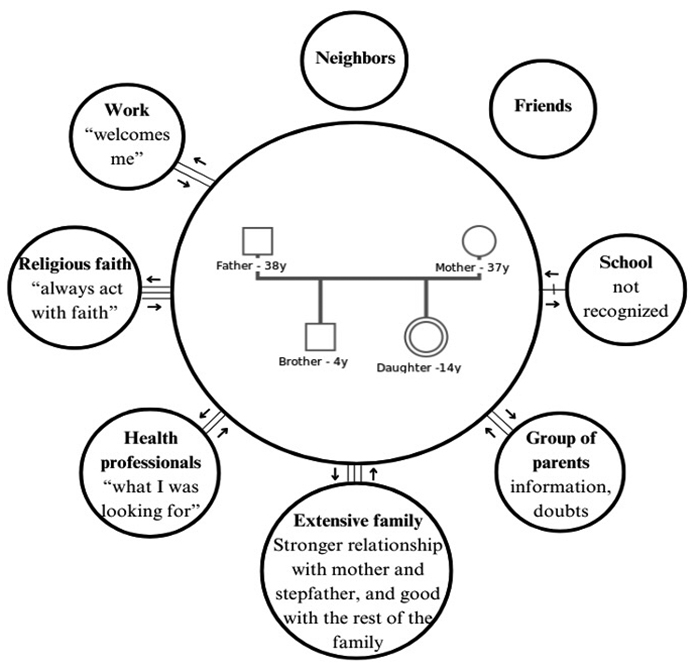
The example shown below in Figure 1 is from mother 6, mother of Luísa (fictitious name), 14 years old, diagnosed with phenylketonuria. She reports that she does not have relationships with neighbors or friends. However, she does not identify her daughter’s school as a relevant resource in the context of her daughter’s diagnosis. She describes healthcare professionals as a support network, but this does not extend beyond the dimension of her daughter’s diagnosis. A similar situation also permeates the work environment: [...] whatever I need, they welcome me, but it’s not a complete support network… it’s just a work relationship (M6). Religious faith appears as the main resource. Within the family, she identifies her relationships with her mother and stepfather as the most relevant. Despite having minor disagreements, she reports having good ties with the other members of her extended family group. She participates in a support group for parents of children diagnosed with phenylketonuria; this group is a relevant resource for support and informational assistance.

In the analysis of the hope genograms, the interactions established with partners, parents, and the child with RD were the most frequently pointed out as promoters of hope, as exemplified by one of the mothers who recognizes her partner as a promoter of hope [...] he is the strongest, he has lived with her since the beginning, giving her strength (M3), and her daughter with RD who promotes hope: [...] teaching her to be patient, this helps our minds, it helps us to deal with these moments (M3).
Only three interviewees identified intrafamilial relationships that threatened hope, one with the couple’s son, one with the partner, and one with the mother. All of them indicated complaints and negativity, which generates interpersonal conflicts.
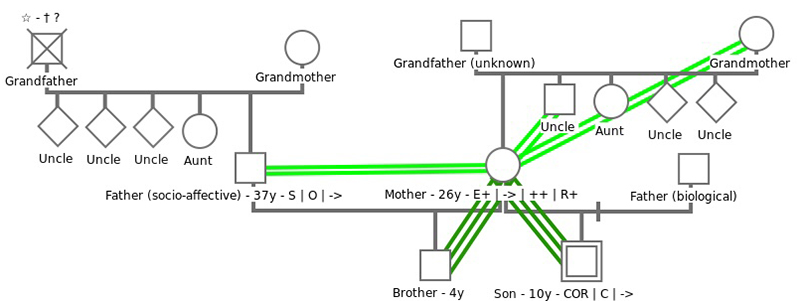
Regarding personal attributes, such as courage (COR), affection (A), serenity (S), optimism (O), positive energy (E+), and future orientation (→), the interviewed mothers mainly assigned them to themselves and their partners. The most recognized characteristics were positive energy (in 6 out of 10 cases) and affection (in 5 out of 10 cases), and the least identified were courage and serenity (both in 2 out of 10 cases).
The two coping mechanisms analyzed - moralizing memories, symbolized by positive recollections (R+) and spiritual basis, presence of spiritual beliefs and practices (++) - were significantly present in the mothers and their families. Religiosity/faith was identified as an important resource for promoting and one of the main ways of maintaining hope in all cases, even in families that did not have an official religion or did not attend church. Positive recollections were mentioned by six of the 10 interviewees, and two who did not recognize their presence had lower levels of hope (score 31) according to the characterization obtained from Herth’s hope scale.
The example of a genogram of hope below in Figure 2 is that of mother 4, the mother of João (fictitious name), 10 years old, diagnosed with phenylketonuria in the neonatal screening test. She recognizes her two children as the main promoters of hope, highlighting her son with RD: [...] I feel that sometimes he is stronger than me (M4). Her partner, brother, and mother are important people for promoting hope. No threatening relationships to hope were identified, and both coping mechanisms were present (positive memories and the presence of spiritual beliefs and practices), with emphasis on faith [...] we have faith in God, that’s what makes us stronger (M4). Regarding personal attributes, she identified in herself the presence of positive energy and future orientation; serenity, optimism, and also future orientation in her partner; and courage, affection, and future orientation in her son with RD.
In comparing hope levels obtained through the hope scale, along with the characterization data, genograms, and ecomaps of the 10 mothers who participated in the two stages of the study, it was found that those with the lowest hope levels (M4, M6, M8, and M9) were self-declared as mixed-race; had a limited social support network; and lacked formal employment and income (M4, M6, and M8). Conversely, mothers with the highest hope scores shared the common characteristics of having formal paid employment (M1, M2, M3, M5, and M10). Age, education level, and place of residence did not prove to be determining factors considering the number of participants and the heterogeneity of these data. Furthermore, mothers with the lowest hope levels (score 31) revealed the presence of threatening relationships and the absence of moralizing memories and personal attributes which promote hope. These data are summarised in Table 3.
Comparison of maternal hope levels with attributes and relationships that promote and threaten hope, Brasília, DF, 2025. (n=10)
DISCUSSION
The mothers of children diagnosed with RD in this study mostly showed good levels of hope. However, feelings of loneliness, fear of the future, and faith are aspects experienced and influential in the dynamics of hope.
A study on how parents construct their identity in caring for children with RDs reveals it to be a process of balance between love and fear11. Fear generates existential unease and hopelessness; at the same time, it demands an increase in emotional strength11. This capacity depends on two interrelated qualities: trust and faith. Faith opens a possibility of hope and provides emotional energy to continue and not become discouraged in the face of challenges11. Faith represents the spiritual dimension of the parental experience and is linked to the search for meaning11. Faith and trust move parents to act out of unconditional love and ethical duty inherent in the parental role11.
Parental hope promotes developing characteristics and skills such as persistence, goal setting, problem-solving, intimacy, and demonstration of affection, in addition to offering resistance against psychological stressors and strengthening family relationships22.
The discovery of RD in a child impacts family dynamics and relationships given the need for continuous care23. In this circumstance, hope presents itself as a factor of resilience and coping for the family, especially for mothers, since social and communicative processes of seeking support networks are established through it, helping to reduce loneliness and depressive symptoms24,25. Groups for parents of children with RD played this role in our study.
Hope generates motivational strength and is central to the individual’s quality of life, composing important generalized resistance resources for health promotion24. Thus, hope is essential for coping with the inevitable difficulties26 for a family that has received an unexpected diagnosis of RD in a child.
Hope has already been shown to bring several benefits in the pediatric population, such as better adherence to treatments, positive changes in clinical status, and overall improvement in quality of life25-27. Therefore, maintaining it within the family is an important mechanism for the child’s own well-being, also proving to be a mediator in contexts of pain tolerance, coping, and mental health27.
The care work performed by family members includes physical, emotional, and social aspects. Furthermore, it requires redefining roles, time availability, financial and routine reorganization15. The burden on parental caregivers often leads to exhaustion and prevents them from maintaining their individual lives in social and work aspects26. In addition, the social expectation imposed on mothers - to occupy the role of caregivers, patients, resilient, altruistic, compassionate, problem solvers, and to sacrifice themselves for their children - leads to neglect and devaluation of the subjective experiences and difficulties experienced by these women27.
Parenting experience can bring negative emotions such as stress, anxiety, fear, exhaustion, anger, guilt, vulnerability, and helplessness, but one must have the ability to manage them and prevent them from influencing the child’s own feelings26. Uncertainty is prominent, both regarding the future and one’s own abilities to provide the necessary care for the child15.
Considering that the process of chronic illness involves different moments, the family experience and the dynamics of hope in such a context are presented as ‘waves’, resulting from various variables such as time, external resources, social interactions, and possible sources of stress and anxiety23.
Regarding factors that promote and threaten the maintenance of hope, it is noteworthy that social, family, and health professional support; spirituality, participation in support groups, the child themselves, and positive thinking are facilitators, while negativism, exhaustion, lack of empathy and support networks, overload, fears, and uncertainties appear as threats to family and parental hope15. The literature also shows that stigmatization of the disease and parental awareness of worsening clinical conditions are barriers in the process of maintaining hope2,7, as well as increasing individual confidence and confidence in health professionals, which helps increase emotional strength and consequently hope11.
The results of this study highlight the ambiguity present in relationships with health professionals, which can promote or threaten parental and family hope; they are similar to another study which explored factors of hope in experiences of chronic illness in childhood15. The decrease in parental and family hope in the relationship with professionals potentiates uncertainties, fears, anxieties and emotional suffering. The lack of preparation of the professional leads to inadequate care3. Therefore, the need to expand relational skills essential for family-centered care is evident, in which support for coping with uncertainty, empathetic communication, practical, informational, emotional and social support are relevant8.
Considering that a child’s health is closely linked to family health11 and that the absence of hope can cause despair and hinder the relationship with health teams28,29, it is extremely important that the professional pays attention to the emotional health of the family, offering support for coping mechanisms and maintaining hope. The relationship between accumulated uncertainties, stress, anxiety and fear is well established in the context of the child’s RD, and progress needs to be made in helping parents manage uncertainties, accept inevitable certainties and build realistic hope28,29.
Empathetic, sensitive, transparent and respectful communication is the crucial point in establishing a good relationship with the family11. An essential process for parental hope is through building trust based on honesty28,29. In addition to communication, it is important that professionals offer effective support, incorporating instructions, training, recommendations and information, aiming to minimize insecurity, improve quality of life and coping skills30.
Thus, nursing plays an important role in welcoming, alleviating insecurities and fears, supporting and maintaining the process of parental and family hope, ensuring comprehensive, humanized and holistic care. Furthermore, instruments such as the Herth Hope Scale, as well as the ecomap and the hope genogram used in this study are possibilities which can be implemented in the care of the family of children diagnosed with RD to characterize hope, the dimensions and relationships that can interfere with levels of hope, and therefore direct interventions which promote hope, positive coping and resilience.
The findings of this study highlight innovative perspectives on maternal and family hope for understanding coping experiences in the face of a child’s RD diagnosis. In this context, existing knowledge is expanded by focusing on the dimensions and facets of hope forged in intra- and extra-familial relationships, mediating between suffering, coping and subjective well-being. The findings of this study can guide professionals in developing relational competencies and practices aimed at assessing and intervening in hope. Considering the broader social context, the construction of public policies and inclusive care, as well as specific support for the needs of children with rare diseases and their families present challenges.
The size and characteristics of the sample group are noted as limitations of this study. Studies with other family members, such as parents and siblings, are necessary. It is important to highlight that there is a diversity of diagnoses regarding the typologies of rare diseases, with different repercussions on the lives of the child and family, and that these can therefore interfere with levels and factors of hope beyond those portrayed in this study. Furthermore, mixed-methods and correlation studies between hope scale scores and subjective data from the experiences of parents and families of children diagnosed with rare diseases are recommended for future research.
CONCLUSION
The discovery and experience of a rare disease in a child represents an intense and arduous challenge for mothers and their families. Despite the difficulties, they demonstrate a significant effort to maintain hope, recognizing it as essential for the well-being of the entire family. In this context, social relationships, mutual support groups, intra-family support, religious faith/belief, and a positive relationship with healthcare professionals stand out as the main factors influencing maternal hope levels.
Interaction with healthcare professionals has a direct impact on hope and consequently on the behavior of mothers/families. Therefore, recognizing and valuing the experience and dynamics of hope in parents and families of children with rare diseases is a premise for healthcare with an emphasis on promoting quality of life, and in turn a professional commitment.
In this scenario, the nurse should adopt a continuous and family-centered care approach ensuring sensitive and empathetic communication aimed at understanding the experience of hope, as well as offering informational and emotional support. These elements are essential for maintaining high levels of hope and promoting family well-being, as well as fostering development of positive coping strategies in the face of challenging situations, helping mothers and families to (re)build moralizing memories, social relationships, and belief systems that facilitate the process of hope.
The centrality of hope in healthcare is reinforced, as is the professional’s duty to include it as a dimension of assessment and intervention, recognizing the unique and specific subjectivities and needs of each child with RD and their family.
REFERENCES
-
1. Iriart JAB, Nucci MF, Muniz T, Viana GB, Aureliano WA, Gibbon S. Da busca pelo diagnóstico às incertezas do tratamento: desafios do cuidado para as doenças genéticas raras no Brasil. Ciên Saúde Colet [Internet]. 2019 [cited 2025 Feb 5];24(10):3637-50. Available from: https://doi.org/10.1590/1413-812320182410.01612019
» https://doi.org/10.1590/1413-812320182410.01612019 -
2. Domaradzki J, Walkowiak D. Invisible patients in rare diseases: Parental experiences with the healthcare and social services for children with rare diseases. Sci Rep [Internet]. 2024 [cited 2025 Aug 5];14:14016. Available from: https://doi.org/10.1038/s41598-024-63962-4
» https://doi.org/10.1038/s41598-024-63962-4 -
3. Witt S, Schuett K, Wiegand-Grefe S, Boettcher J, Quitmann J. Living with a rare disease - experiences and needs in pediatric patients and their parents. Orphanet J Rare Dis [Internet]. 2023 [cited 2025 Aug 5];18(1):242. Available from: https://doi.org/10.1186/s13023-023-02837-9
» https://doi.org/10.1186/s13023-023-02837-9 -
4. Chung CCY, Chu ATW, Chung BHY, Hong Kong Genome Project. Rare disease emerging as a global public health priority. Front Public Health [Internet]. 2022 [cited 2025 Aug 5];10:1028545. Available from: https://doi.org/10.3389/fpubh.2022.1028545
» https://doi.org/10.3389/fpubh.2022.1028545 -
5. Ministério da Saúde - Brasil. Diretrizes para Atenção Integral às Pessoas com Doenças Raras no Sistema Único de Saúde - SUS [Internet]. 2014 [cited 2025 Aug 5]. Available from: https://bvsms.saude.gov.br/bvs/publicacoes/diretrizes_atencao_integral_pessoa_doencas_raras_SUS.pdf
» https://bvsms.saude.gov.br/bvs/publicacoes/diretrizes_atencao_integral_pessoa_doencas_raras_SUS.pdf -
6. Pepe VLE, Baptista MR, Ventura M, Hora MFVP, Alvarez NR, Pinto GS et al. Acesso judicial a medicamentos para doenças raras: características das demandas contra a União Federal. Ciên Saúde Colet [Internet]. 2026 [cited 2026 Feb 12];31(1):e14312025. Available from: https://doi.org/10.1590/1413-81232026311.14312025
» https://doi.org/10.1590/1413-81232026311.14312025 -
7. Somanadhan S, O'Donnell R, Bracken S, McNulty S, Sweeney A, O'Toole D et al. Children and young people's experiences of living with rare diseases: An integrative review. J Pediatr Nurs [Internet]. 2023 [cited 2025 Aug 1];68:e16-e26. Available from: https://doi.org/10.1016/j.pedn.2022.10.014
» https://doi.org/10.1016/j.pedn.2022.10.014 -
8. Smits RM, Vissers E, Pas R, Roebbers N, Feitz WFJ, Rooij IALM et al. Common needs in uncommon conditions: A qualitative study to explore the need for care in pediatric patients with rare diseases. Orphanet J Rare Dis [Internet]. 2022 [cited 2025 Aug 1];17(153):1-9. Available from: https://doi.org/10.1186/s13023-022-02305-w
» https://doi.org/10.1186/s13023-022-02305-w -
9. Atkins JC, Padgett CR. Living with a rare disease: Psychosocial impacts for parents and family members - a systematic review. J Child Fam Stud [Internet]. 2024 [cited 2025 Aug 1];33(2):617-36. Available from: https://doi.org/10.1007/s10826-024-02790-6
» https://doi.org/10.1007/s10826-024-02790-6 -
10. Franciscatto LHG, Silva RS, Santos AM, Oliveira AMN, Salvador K. Doença genética na família: trajetórias e experiências em serviços públicos de saúde. Esc Anna Nery [Internet]. 2020 [cited 2025 Feb 5];24:e20190158. Available from: https://www.scielo.br/j/ean/a/WrV6hk6t8NnMSQm543dBPys/?format=pdf⟨=pt
» https://www.scielo.br/j/ean/a/WrV6hk6t8NnMSQm543dBPys/?format=pdf⟨=pt -
11. Gómez-Zúñiga B, Pulido R, Pousada M, Armayones M. The Role of Parent/Caregiver with Children Affected by Rare Diseases: Navigating between Love and Fear. Int J Environ Res Public Health[Internet]. 2021 [cited 2025 Aug 1];18(7):3724. Available from: https://doi.org/10.3390/ijerph18073724
» https://doi.org/10.3390/ijerph18073724 -
12. Gesteira ECR, Szylit R, Santos MR, Ichikawa CRF, Oliveira PP, Silveira EAA. Manejo familiar de crianças que vivenciam a doença falciforme: um estudo qualitativo. Rev Bras Enferm [Internt]. 2020 [cited 2025 Feb 5];73 Suppl 4:e20190521. Available from: https://doi.org/10.1590/0034-7167-2019-0521
» https://doi.org/10.1590/0034-7167-2019-0521 -
13. Murphy ER. Hope and well-being. Curr Opin Psychol [Internet]. 2023 [cited 2025 Feb 5];50:101558. Available from: https://doi.org/10.1016/j.copsyc.2023.101558
» https://doi.org/10.1016/j.copsyc.2023.101558 -
14. Corn BW, Fellman DB, Wexler I. The science of hope. Lancet Oncol [Internet]. 2020 [cited 2025 Feb 5];21(5):e240. Available from: https://doi.org/10.1016/S1470-2045(20)30210-2
» https://doi.org/10.1016/S1470-2045(20)30210-2 -
15. Henriques NL, Silva JB, Charepe ZB, Braga PP, Duarte ED. Factors that promote and threaten hope in caregivers of children with chronic conditions. Rev Latino-Am Enferm [Internet]. 2023 [cited 2025 Feb 5];31:e3897. Available from: https://doi.org/10.1590/1518-8345.6366.3897
» https://doi.org/10.1590/1518-8345.6366.3897 - 16. Hunter A, Cervejeiro J. Projetando Pesquisa multimétodo. In: Hesse-Biber S, Johnson RB, editors. Oxford Handbook of Multimethod and Mixed Methods Research Inquiry. London, UK(EN): Oxford University Press; 2015. p. 185-205.
-
17. Herth K. Abbreviated instrument to measure hope: Development and psychometric evaluation. J Adv Nurs [Internet]. 1992 [cited 2025 Feb 5];17:1251-9. Available from: https://doi.org/10.1111/j.1365-2648.1992.tb01843.x
» https://doi.org/10.1111/j.1365-2648.1992.tb01843.x - 18. Charepe ZB. O impacto dos grupos de ajuda mútua no desenvolvimento da esperança dos pais de crianças com doença crônica: construção de um modelo de intervenção colaborativa 2011. [tese]. Lisboa, (PT): Instituto de Ciências da Saúde, Universidade Católica Portuguesa; 2011.
-
19. Vinuto JA. A amostragem em bola de neve na pesquisa qualitativa: um debate em aberto. Temáticas [Internet]. 2014 [cited 2025 Feb 5];22(44):203-20. Available from: https://doi:10.20396/tematicas.v22i44.10977
» https://doi:10.20396/tematicas.v22i44.10977 -
20. Sartore AC, Grossi SAA. Escala de esperança de Herth: instrumento adaptado e validado para língua portuguesa. Rev Esc Enferm USP [Internet]. 2008 [cited 2025 Feb 5];42(2):227-32. Available from: https://doi.org/10.1590/S0080-62342008000200003
» https://doi.org/10.1590/S0080-62342008000200003 - 21. Gibbs G. Análise de dados qualitativos. Porto Alegre, RS(BR): Artmed; 2009.
-
22. Cole BP, Molloy S. Hope and parenting. Curr Opin Psychol [Internet]. 2023 [cited 2025 Feb 5];49:101554. Available from: https://doi.org/10.1016/j.copsyc.2022.101554
» https://doi.org/10.1016/j.copsyc.2022.101554 -
23. Leite ACAB, García-Vivar C, DeMontigny F, Nascimento LC. Waves of family hope: Narratives of families in the context of pediatric chronic illness. Rev Latino-Am Enferm [Internet]. 2021 [cited 2025 Feb 5];29:e3504. Available from: https://doi.org/10.1590/1518-8345.5515.3504
» https://doi.org/10.1590/1518-8345.5515.3504 -
24. Lancaster BD, Van Allen J. Hope and pediatric health. Curr Opin Psychol [Internet]. 2023 [cited 2025 Feb 5];49:101500. Available from: https://doi.org/10.1016/j.copsyc.2022.101500
» https://doi.org/10.1016/j.copsyc.2022.101500 -
25. Rustøen T. Hope: A health promotion resource. In: Haugan G, Eriksson M, editors. Health Promotion in Health Care - Vital Theories and Research [Internet]. Cham, (CH): Springer; 2021 [cited 2025 Feb 5]. p. 61-70. Available from: https://doi.org/10.1007/978-3-030-63135-2_
» https://doi.org/10.1007/978-3-030-63135-2_ -
26. Wu C, Chu X, Tang K, Cheng D, Ren L. Caregiving experiences of caregivers of children with rare diseases: A qualitative meta-synthesis. J Pediatr Nurs [Internet]. 2024 [cited 2025 Feb 5];75:31-40. Available from: https://doi.org/10.1016/j.pedn.2023.12.003
» https://doi.org/10.1016/j.pedn.2023.12.003 -
27. Currie G, Szabo J. ‘It would be much easier if we were just quiet and disappeared’: Parents silenced in the experience of caring for children with rare diseases. Health Expect [Internet]. 2019 [cited 2025 Feb 5];22:1251-9. Available from: https://doi.org/10.1111/hex.12958
» https://doi.org/10.1111/hex.12958 -
28. Palmer EE, Sachdev R, Beavis E, Macintosh R, Le Marne FA, Nevin SM et al. Hope in the uncertainties and certainty for parents of children with rare neurological disorders. Part I (of 3): Uncertainty. J Paediatr Child Health [Internet]. 2022 [cited 2025 Feb 5];58(10):1718-21. Available from: https://doi.org/10.1111/jpc.16165
» https://doi.org/10.1111/jpc.16165 -
29. Bye AM, Le Marne FA, Beavis E, Macintosh R, Nevin SM, Palmer EE et al. Hope in the uncertainties and certainty for parents of children with rare neurological disorders: Part 3 (of 3): Hope. J Paediatr Child Health [Internet]. 2022 [cited 2025 Feb 5];58(10):1726-8. Available from:Available from:https://doi.org/10.1111/jpc.16187
» https://doi.org/10.1111/jpc.16187 -
30. Spurr S, Bally J, Burles M, Mcharo K. An investigation into hope, self-efficacy, distress and uncertainty in parents who have a child with a life-threatening or life-limiting illness. J Pediatr Nurs [Internet]. 2022 [cited 2025 Feb 5];66:9-15. Available from: https://doi.org/10.1016/j.pedn.2022.07.002
» https://doi.org/10.1016/j.pedn.2022.07.002
NOTES
-
ORIGIN OF THE ARTICLE
Extracted from the dissertation: “Enfrentamento, esperança e resiliência: experiências de mães frente a doença rara da criança”, presented to the Postgraduate Program in Nursing of the Universidade de Brasília, in 2024.
-
FUNDING INFORMATION
Study linked to the project “A esperança da família mediante o diagnostico de uma condição ameaçadora a vida da criança” (Family Hope Research and Care), financed by the Conselho Nacional de Desenvolvimento Científico e Tecnológico (CNPq), Proposal CNPq/MCTI No 10/2023. Process No. 420985/2023-9.
-
APPROVAL OF ETHICS COMMITTEE IN RESEARCH
Approved by the Ethics Committee in Research of the Faculty of Health Sciences of the Universidade de Brasília, opinion no. 6.742.390 and opinion no. 6.742.390 (Amendment), and by the Foundation for Teaching and Research in Health Sciences (FEPECS), opinion no. 6.497.220. Certificate of Presentation for Ethical Review 70012623.0.0000.0030 and 70012623.0.3001.5553.
-
TRANSLATED BY
Christopher J. Quinn.
-
DATA AVAILABILITY
The entire database supporting the results of this study is available upon request from the corresponding author, Aline Oliveira Silveira. The database is not publicly available because it contains information that compromises the privacy of research participants.
Edited by
The entire database supporting the results of this study is available upon request from the corresponding author, Aline Oliveira Silveira. The database is not publicly available because it contains information that compromises the privacy of research participants.